Anne Rice might be best known for her Vampire Chronicles novels, amongst which the bestselling Interview with the Vampire has now seen multiple adaptations, most recently brought to life in AMC’s 2022 television series by the same name.
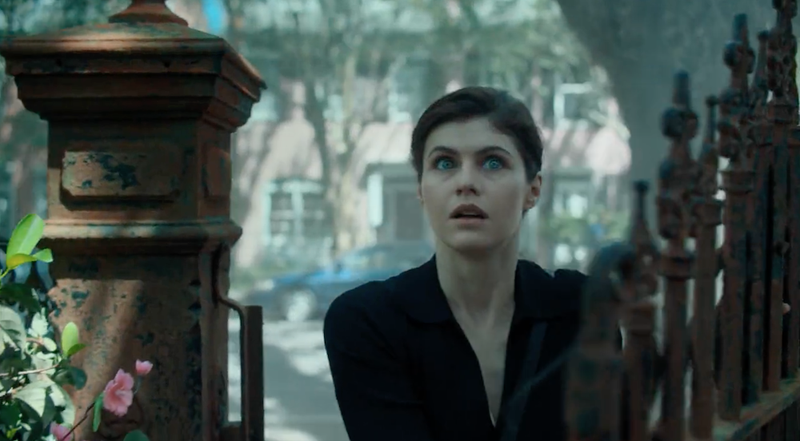
But within Rice’s gothic horror world, which AMC has dubbed the Anne Rice Immortal Universe, there be witches, and the Mayfair Witches have a dark and compelling history taut with mystery that should lend itself well to a chilling mystery series. Based on Rice’s best-selling trilogy, Lives of the Mayfair Witches, the eight-episode series centers on Rowan Fielding (Alexandra Daddario), who discovers she is descended from a powerful family of witches haunted by a powerful spirit known as Lasher (Jack Huston). Rowan’s seemingly confident and calculated life—she’s a gifted neurosurgeon, after all—is thrown into chaos when she discovers a burgeoning power within herself that she cannot control.
Harry Hamlin as Cortland Mayfair
Rice’s love for New Orleans and its rich, gothic history has always made for gorgeous film and television adaptations, and Mayfair Witches is no exception. In the debut episode, “The Witching Hour,” the lush and haunting backdrop of Mayfair Manor is outshone only by the lavish mansion and decadent parties of Cortland Mayfair (Harry Hamlin). In the recent past, a young Deirdre Mayfair (Cameron Inman) escapes to the seeming freedom of Cortland’s estate, but behind the scenes it’s clear he’s manipulating events to achieve his own ends. For what purpose is unclear, but his laissez-bon-temps-rouler sort of attitude is more uncomfortable than disarming. What is clear is Lasher, the sometimes-companion of young Deirdre, is not at all welcome to the rest of the Mayfair clan.
Jack Huston as Lasher
Throughout the frenetic first episode, Rowan is anxious to discover her biological family history. While she has an incredibly close emotional bond with her adoptive mother, events lead to Rowan questioning her new supernatural gifts. In present-day, adult Deirdre (Annabeth Gish) is seemingly a withered invalid, kept safe and under control using antipsychotics. When her new physician decides to stop her treatment, Lasher appears again. Coincidentally, Rowan will find herself haunted as well.
If you’re not quite following the time-hopping storyline, you’re not alone. It would presumably take an in-depth knowledge of the novels to see the connections being teased out in this first episode, they’re so ethereal. Showrunner Esta Spalding (On Becoming a God in Central Florida), Writer Michelle Ashford (Masters of Sex), and Director Michael Uppendahl (American Horror Story, Walking Dead)have delivered a turbulent first episode that, given a little more runtime, might settle into compelling television. While the series debut doesn’t quite achieve anything particularly novel or emotionally riveting, it manages to satisfy a “just-one-more-episode” sort of intrigue that confirms Mayfair Witches is more mystery/thriller than its drama/horror counterpart, Interview with the Vampire. While the plot might tug you along throughout the first half of the season, Rowan is unlikely to capture your interest beyond her immediate predicament. Her whirlwind backstory is at times both empowering and flailing. Which isn’t to say she isn’t interesting—who wouldn’t want to follow a supernaturally gifted, brilliant, and beautiful neurosurgeon around? But you’re much more likely to stick around to find out what happens to Rowan, rather than what she chooses to do.
Episode one of Mayfair Witches debuts on AMC and AMC+ on Sunday, January 8 at 9:00 pm ET/PT. The eight-episode series then releases weekly.
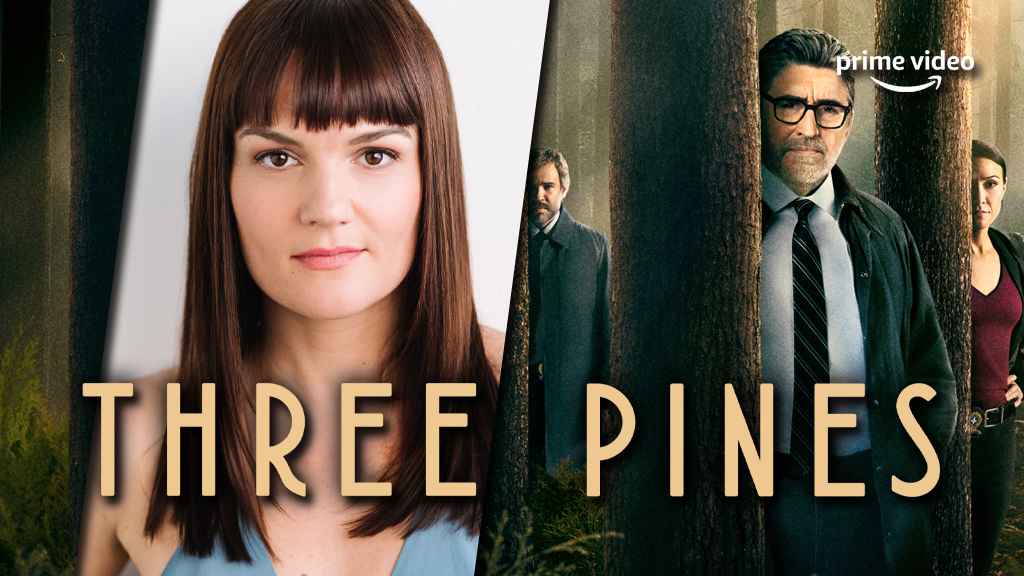
Amazon Prime’s Three Pines, which recently completed its first season, has already climbed to the number-one spot on the streaming service’s platform. Based on Louise Penny’s wildly successful Inspector Gamache mystery series, the TV adaptation has received rave reviews globally. We sat down with actress Sarah Booth to discuss her role as Yvette Nichol and the show’s rising success.
Louise Penny’s Inspector Gamache books have been a huge success and her latest release—World of Curiosities—is already a bestseller. What was it like to jump into this universe and take on a character with such a rich history? Did you go in with knowledge of the books or a fresh slate?
When I got the audition breakdown, I wasn’t aware of Louise Penny. I went and researched her right away and thought, oh my gosh, how do I not know who Louise Penny is? (laughs) I started researching and reading some of the books and I realized that my character is quite different than what they were asking for in the audition breakdown, so I went with [it] because I was like, well they’re casting the series, not the books. The audition breakdown asked for… She’s a little bit awkward, accident-prone, very eager, very brilliant in her own way. So I took that and made my own interpretation of what I thought that character would be …. I really didn’t expect to get the role because of the caliber of people behind this project, so I kind of just did it for myself to have fun.
They got back to my agent and said, “We love Sarah, but we feel like she pushed the comedy too much, so let’s just ground this character.” So we had a work session together with the director and producer and we found a middle ground that we were both happy with. It was kind of a creation with the whole team, which was fun. She’s different from the books for sure.
Sarah Booth as Yvette Nichol
How nice both that you got notes and an opportunity to hone the character! What were some of those adjustments you were asked to make? You mentioned the comedy.
The bulk of my career I’ve done a lot of dramatic roles, very physical roles, so [my career] has definitely been more on the dramatic side. Although in theater school what was funny, I got cast always as the comedic relief in a lot of shows. So I feel like maybe its truer to myself—this character—than I thought? (laughs) That playful nature. They were describing all of her characteristics and saying “she just really wants to be part of the team; she really just wants to fit in.” And I was like, “Like I feel right now?” (laughs)
I was able to parallel a lot of the situations she was in with what I was feeling, like the imposter syndrome, all that stuff I was going through during the first season and my first big role as a series regular… I felt like I used a lot of what I was going through to find her and hone her. But the comedy did scare me, so I was lucky that the director and producers were so open and vocal. I never felt embarrassed to try anything. It was such a safe space.
I was like the props girl. I love things, I love to eat, I love touching things.
There are some great, funny moments where Nichol is sort of mindlessly munching something. (laughs) It highlights how she stands out from the team.
Absolutely. It’s like a nervousness, too. She can’t just sit there, so she’s like, “I’ll go over here and eat.” I feel like that accident-proneness of her just comes out of that self-consciousness of wanting to fit in.
Nichol is mentored onscreen by Inspector Gamache, played by Alfred Molina, who has become quite an iconic actor in his own right at this point. You’ve also got Indigenous actors like Tantoo Cardinal, who has already had an expansive career, and you’re working with the producers of The Crown. You’ve got quite the environment that you’re settling into. Did any of that mentoring happen in real life?
Absolutely. I was able to have some amazing conversations with Alfred and talk about his career and his journey. He taught me so many things but a few things that really stick out are to never take yourself too seriously; always have fun. We’re so privileged to do this job that we’re all so desperate to do. He was trained in theater, so he has this very ensemble feel to him where there’s no hierarchy, no ego. He wants play during a scene, he wants to try things. He just felt like an equal which was really awesome to be around and helped set the tone of the set.
Elle-Máijá Tailfeathers as Isabelle Lacoste, Sarah Booth as Yvette Nichol, and Alfred Molina as Chief Inspector Gamache
I was able to speak to Tantoo, who is incredible. She’s an icon. And her again, too, I feel like they all taught me to really enjoy it and have fun. Tantoo was like, “The fact that I’m still doing this is awesome. I’m loving it.” So I just really took away that even though they’re quite advanced in their careers, they don’t take anything for granted and they make it really fun.
Nichol is definitely very smart and contributes to the team’s effectiveness, but there’s an interesting dichotomy in her because she’s an incredibly useful detective, but clearly a rookie and kind of bumbling along. What is it like to prepare a character who isn’t universally liked and has grudges with the other characters?
(Laughs) It’s actually kind of fun to be the person that no one likes. It was fun to be unpredictable. I just made sure I really knew my lines because if I was super prepared, then my behavior could be very intuitive. Also to have French versions of my lines was really important because sometimes I would pitch, “Oh I feel like she would say this word or this phrase in French,” and the producers were like “Yes, yes, yes. The more French, the better.” I describe her as having puppy energy. She’s like a little beagle. She’s like “I will hunt for you, but oh, what’s this…” (laughs)
Three Pines plays as a big role in the series. It really becomes this cozy, comforting sort of place that seems almost as important to the story as any of the characters. What was it like being so close to home and preparing a role like this essentially in your hometown?
Yeah, pretty much! I spend a lot of time in my hometown on my weekends and some of the locations were as close as 20 minutes from where I grew up. When I started reading the books I was like, “oh my gosh, this is Ormstown!,” where I’m from—with less murders, I think. (laughs)
It very much felt similar to the town I grew up in. We still don’t have a stoplight to this day. Everyone knows each other’s business. It was very bilingual—English, French, Frenglish. It felt very much like my character feels in the series. She’s from the town over. She knows the town; she knows the vibe.
So, hopping into this town through this character felt like I was going back home. It was also full circle to come home and play the biggest character I’ve ever played. I loved that I could bring my childhood to this role and add to the authenticity of her.
So the accent that Yvette Nichol has, is that from home?
That’s my mom. That’s 100% my mom. Some people were asking, “Oh my gosh, your accent is so great! Did you get dialect coaching?” And I was like, “Yeah, my whole life.” (laughs)
One of the things that blew me away as a longtime fan of the books is that there is a completely new overarching story about Indigenous women framing the show. I absolutely loved this very powerful inclusion of that fact that Canada has a very complicated past with its Indigenous peoples. As a native Canadian, what did you think of that inclusion?
I was so proud. When I read the scripts, at first I was like “Oh, wow, okay. We’re going there.” This is great. Because no one ever goes there, really. I know Alaska Daily is definitely highlighting missing Indigenous women stories as well. But what I thought was so interesting too is—I thought, “Okay, this is super powerful and I’m so on board, but who is consulting…?” And right away [the producers] said Tracy Deer is directing [some episodes], we have multiple Indigenous organizations who are consulting on the scripts, Elle-Maija Tailfeathers is consulting on the scripts… Tantoo is involved, Crystle Lightning, Georgina Lightning, all these amazing actors were involved. And I was also told by the Indigenous actors and creators on set that every single note that they gave to production was taken. I think that’s so important. The scripts were changed with these notes. I feel like the stories were really told from their point of view.
Arisawe (Georgina Lynn Lightning) and Kara Two-Rivers (Isabel Deroy-Olson) with other protestors at the MMIWG protest.
We’ve seen so many Indigenous stories on screen that are told from a white gaze and it’s just not accurate to what these communities have gone through. I also think putting an emotional aspect to these “headlines” is so important because like school shootings and so many other things, we read a headline and think “Oh, that’s so sad. How can someone do that?” But if you watch someone go through that, that opens up your heart and that changes it all. I’m really impressed they made it the main storyline. I think it’s so important.
There’s this sort of brilliant moment where Nichol asks Detective Lacoste about some writing they find on a wall that they’re investigating, assuming she can read it or understand the writing because she’s indigenous, and Lacoste sort of bristles and says “I don’t know.” It was such an amazing portrayal of ignorance, or maybe naivete. I’m curious what it was like to share that moment.
What was really interesting about that moment is that initially in the script it was written I ask the question, “What does it say?” She says, “I can’t read it.” And then right away, I’m like, “Oh.” But when we were rehearsing it, my instincts wanted to be like, “but aren’t you Native? Shouldn’t you know what that says?”
I was like, “Oh I want to say this, but eww.” You know? That’s not really [politically correct]. But Tracy [Deer] was directing, so I was like “Can I say this? Is this offensive?” And she responded, “It is offensive, but it happens all the time, so please say it.”
It just changed my perspective. I didn’t want to do it to be funny, but I just wanted to do it because that’s the truth, right? We put people in boxes. I think it was great we had that conversation before because then I could fully commit to that line and not feel weird about it. It was well-represented from their stories because they have to deal with this crap all the time.
In terms of your own experience of Canada’s history with Indigenous People, was a lot of this new to you? Do you think Canada’s history is well-known there or are you hearing it’s new to a lot of people?
I feel like it’s new to a lot of people. I think people know of the general history that [colonizers] came and took land and that there’s stories of spreading disease and get rid of people. I think overall there’s knowledge of that happening. But the residential schools, the fact that they were open until 1996, the fact that they tore children away from their parents, that [Indigenous children] were sexually abused and physically abused and mentally abused, I think that’s new for a lot of people.
I think right when we started to shoot the series or the Spring before is when they discovered all the unmarked graves [of children from residential schools] in BC, so I feel like that was something that highlighted or brought into the public knowledge the [fact of] residential schools.
The show has been very well received. Have you heard any hints about a season two for Three Pines?
Well, we are hearing a lot of great things which is very exciting. We’re #1 on Prime in Canada, the US, and the UK. It’s the biggest Canadian show on Prime ever which is fantastic feedback. People are loving it. So, in my heart, I think we’re going to have a season two. But we don’t know yet. There has been no official greenlight yet, but I do know that people are anticipating a season two. I’m feeling really good about it.
The Three Pinesis streaming now on Amazon Prime. Since wrapping season one, Booth has appeared in episodes of Murdoch Mysteries and Transplant. You can also see her in Last Call, the tale of a bitterly alone man, Scott, played by Daved Wilkins who calls the Suicide prevention hotline, but accidentally calls Beth, a janitor played by Booth.
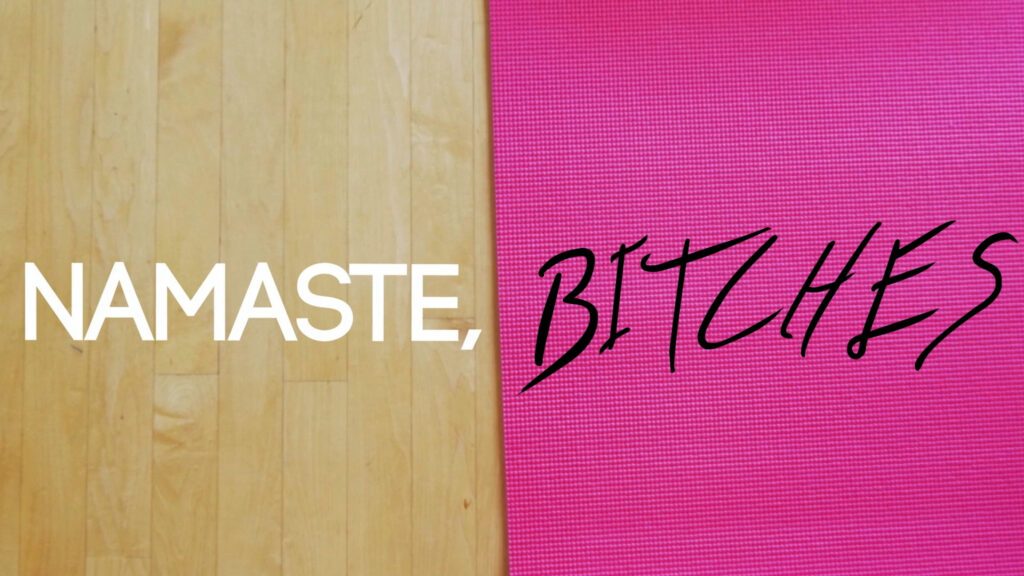
Ready for some well-being and re-centering? Try yoga! Want a snarky, scathing criticism of the commercialization of yoga and its devolution into a mainstream social media contest for followers? Watch season 2 of Namaste, Bitches, a comedic web series from Creator and Director, Summer Chastant.
Chastant stars in the series as yoga instructor Sabine, who’s been teaching at What Up Dog Yoga Studio for six years and is eager to for a promotion to Senior Teacher. Tania Verafield reprises her role as Gina, now an unemployed yoga instructor crashing on Sabine’s couch, who’s beginning to spiral down a rabbit hole of wild conspiracy theories. When yoga studio owner Beth (Christina Piazza) asks Sabine to mentor her young niece and help her become a better instructor, Sabine accepts the role despite misgivings with Holly (Rebekah Kennedy), who will clearly stop at nothing to gain her own following of yoga enthusiasts.
Rebekah Kennedy as Holly and Summer Chastant as Sabine in Namaste, Bitches.
Sabine confronts Gina about her conspiracy theories and finally gets news about the Senior Teacher position she’s been longing for. But she’s in for a wicked surprise! Murphy’s Multiverse has an exclusive look at episode 4, “Downward Facing Twerk” here first.
Chastant launched season one of Namaste, Bitches in 2015, showcasing the underbelly of the yoga scene in Los Angeles. The story is close to home for Chastant, who taught yoga for over a decade in New York, but was forced to adapt her yoga practice after moving to California to pursue her acting and directing career. In a phone discussion earlier this month, Chastant said she had a more alignment-focused practice valued by a population who moved more. New Yorkers walk, take the stairs, walk to the subway, and valued that slower, aligning-focused practice. Vehicle-bound Californians, however, were looking for a workout. She found yoga practices attached to crystal meditation rooms and sound baths—with a much bigger focus on “energy” healing. When I asked her what she thought about those practices, Chastant laughed and explained “I appreciate people who appreciate them.”
Chastant, a certified yoga teacher, was concerned with the yoga community’s embrace of certain conspiracy theories during the pandemic—particularly with QAnon and its anti-vaccination movements which seemed to resonate among a subset of yoga’s cult-like followers looking for nontraditional healing. She confronts those trends and cancel culture in season two of the series. Guru Seasonal (Katarina Morhacova) serves as a sort of stand-in for the god-like yogis who are no longer questioned by their followers but blindly followed to dire ends. When someone dares to speak out? They’re canceled, never to be mentioned again amongst yoga practitioners. This worried Chastant, who urges people to be wary of any situations where people stop asking questions of their leaders. “Do your research!” she says playfully, parroting the QAnon catchphrase.
The yoga instructors of What Up Dog embrace Guru Seasonal’s conspiracies as cult-like followers.
With season two, Chastant took on directing and producing duties in addition to starring in the series. She says it was definitely more work, but directing allowed her to execute the vision she had for the show while writing it. She hopes the series can continue to evolve, perhaps even into a feature-length film. Chastant’s recent project, Plug, placed in the Austin Film Festival. Plug tells the story of a teenage girl who, after the death of Kurt Cobain, must confront her own tragic past in order to fulfill her dream of being the lead singer in a band.
You can catch up on Namaste, Bitches on YouTube now. All six episodes of season one are available now, as well as episodes 1-3 of season 2. Episodes 4-6 of season 2 will be available on December 2.
The New York Times bestselling Inspector Armand Gamache novel series from author Louise Penny is what I would call a perfect winter read: cozy mysteries set in the fictional village of Three Pines, inhabited by a colorful, but lovable group of people who have found both friendship and refuge in each other, away from the bustle of surrounding Quebec. Imagine a quaint, wintry village where you can just as easily ice skate on the frozen pond in the square as you can enjoy a gourmet dinner and lively book discussion in front of a roaring fire at the local bistro. It’s easy to imagine Penny took her inspiration for the Three Pines from a Thomas Kinkade painting–if his paintings just happened to be filled with a whole bunch of murderers.
Alfred Molina as Chief Inspector Armand Gamache
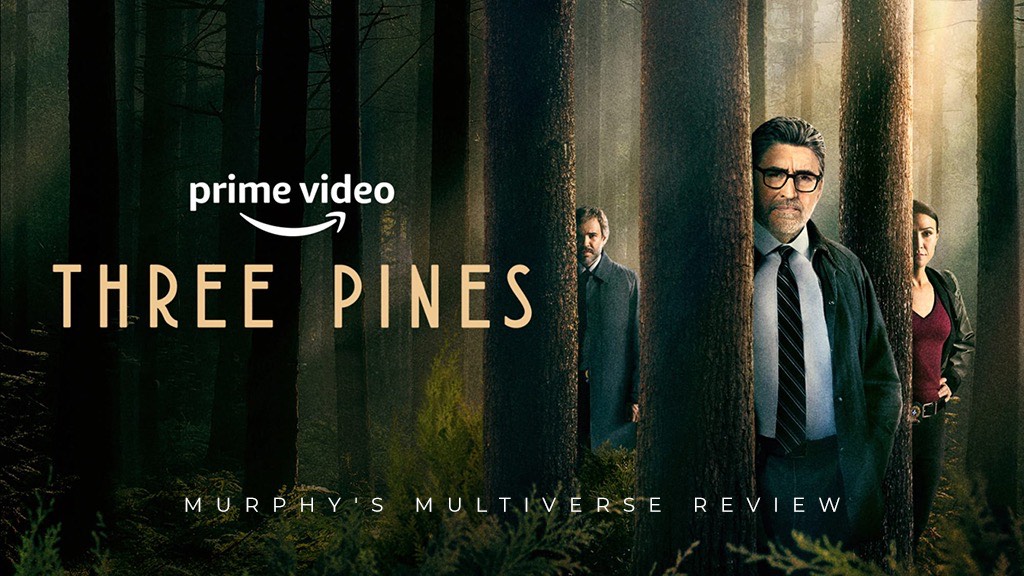
Amazon Prime Video’s adaptation of the series, The Three Pines, promises all the coziness of those charming mystery novels, sure to delight fans of Agatha Christie and Hercule Poirot. But while the novels balance a delicate line of calculating thrill and disarming charm, the show suffers from pacing that is practically rocket-speed by comparison—every two episodes tackles the plot of one novel. That said, The Three Pinesis a brilliant introduction to Inspector Gamache and viewers need no prior familiarity with Penny’s books to enjoy a series that’s perfect for your wintry evenings.
The series opens with Chief Inspector Armand Gamache (Alfred Molina), head of Homicide for the Surêté du Québec, arriving in the Three Pines to investigate the murder of the incredibly unlikable CC de Poitiers. While this is surely meant to be a sort of punishment for the Head of Homicide after a recent dispute with superiors, Gamache seems nonplussed by the slight and dives into the case with his familiar team, Jean-Guy Beauvior (Rossif Sutherland) and Isabelle Lacoste (Elle-Máijá Tailfeathers). Bumbling, accident-prone Yvette Nichol (Sarah Booth) challenges the team’s patience as the local rookie detective. Molina is particularly likable as Gamache, whose level-headedness and insightful observations require a measured approach. Molina is incredible at depicting both empathy and patience onscreen, traits so unique to Gamache that he is often called a coward for his failure to react. But in a time when both the United States and Canada are plagued by overreactive police, it’s rather understandable to see how this makes Gamache an outlier.
Arisawe (Georgina Lynn Lightning) and Kara Two-Rivers (Isabel Deroy-Olson) with other protestors at the MMIWG protest.
Indeed, the series tackles some rather bold societal issues head-on. Years of systemic abuse towards Indigenous Peoples by Christians and the Canadian government forms the overarching mystery spanning all eight episodes. The series opens with the shouts from a protest by First Nations people who’ve gathered outside the Police Headquarters. They are calling for intervention in the cases of hundreds of Indigenous girls who go missing each year that see no resolution. Blue Two-Rivers (Anna Lambe) is one of those girls and it’s here Gamache meets her mother, Arisawe Two-Rivers (Georgina Lightning). Gamache and Lacoste, a Native herself, are haunted by the mother’s anguish and the seeming dead-end case. Georgina Lightning is powerful in this role as a fearless mother taking on the entirety of the Surêté du Québec. While the series might have been focused on monochromatic—read: White People—problems and centered entirely on the idyllic village of Three Pines, here it lifts its head towards a larger picture, aware of its own problematic Quebecois backyard and the longstanding racial troubles plaguing it. It’s this mystery that is perhaps the most compelling and with the highest stakes, and reason enough to binge all eight episodes.
Chief Inspector Armand Gamache (Alred Molina) and Jean-Guy Beauvoir (Rossif Sutherland) interrupt a meeting of the Three Pines book club.
That said, it’s the quirky and delightful villagers who will endear you to Three Pines, all of whom are suspects in the rather awful CC de Poitiers’ death: psychologist-turned-bookseller Myrna, strongly opinionated and fiercely protective played by Tamara Brown; sweet and sensitive artiste Clara Marrow (Anna Tierney); Olivier and Gabri, the oddly-matched gay couple who own and operate the bistro (Frederic-Antoine Guimond and Pierre Simpson); Bea Mayer, the indigenous art gallery owner (Tantoo Cardinal); and the delightfully obscene and strange reclusive poet Ruth Zardo, brilliantly played by Clare Coulter. Louise Penny has said she yearned for a sense of belonging and an end to loneliness, and so it makes good sense that The Three Pines is a sort of safe harbor for this found family, “only ever found by people lost.” The immediacy of the murder introduced in Whiteout Part One and Part Two (episodes 1-2) is also its challenge; it’s hard to connect to a bunch of murder suspects who all appear to be hiding secrets. But by episode three Gamache (and viewers) are part of the fold and the sense of magic that envelops the village.
Ruth Zardo (Clare Coulter) and Myrna Landers (Tamara Brown) at the annual Three Pines curling match.
The Three Pines is a compelling watch made even more likable by its own social awareness. Indeed, the case of the missing Blue Two-Rivers is echoed throughout each episode with haunting art installations in Be Calm, Bea Mayer’s art gallery. In one, striking red dresses hang from empty tree limbs, each one representing a missing Indigenous girl or woman. It’s hard not to draw comparisons to the striking visuals in Handmaid’s Tale. But where the latter is often heavy and difficult to watch with its dystopian vision, The Three Pines manages to balance its reality with a sense of hope. It’s an easily bingeable, enjoyable mystery series with a talented cast, perfect for cozy fireplace viewing. The first two episodes are available from Amazon Prime on December 2, with two new episodes released weekly until the finale on December 23.
Louise Penny’s latest novel in the Inspector Gamache series, A World of Curiosities, is due out November 29.
Think Night of the Living Dead, but with Adderall! Sleep. Walk. Kill. is a funny, campy horror film built on a fresh concept and worth toughing out through its slow opening. When a strange alien sound blares across the skies of Yardley, Pennsylvania, folks rise from their sleep with murder on their minds. Wives butcher husbands; children murder parents; and, presumably, the only way to stay alive is to stay awake. Though at times it feels like the cast is still finding its footing in the early minutes, there’s plenty of tension and compelling storytelling worth staying through the third act. I spoke with Director and Screenwriter Justin Miller and lead actor Bill Reick about the creation of the film and the comedically-talented cast in this independent horror debut.
Tell me about the creation of Sleep. Walk. Kill. How long has this project been in the works?
Justin Miller (JM): It was actually shot three years ago. About a year before that is when I started to write it. I’ve always been fascinated with dreams and night terrors and people talking in their sleep (like my wife sometimes does). But what really got me to write a script I could shoot was I wrote comedy for a theater in Philly and my daughter never really got to see that. But I’d watch movies when I was home and she’d refer to me as “the guy on the sofa.” (laughs) I didn’t want to be that to her! So I started writing something I could shoot. I knew I was going to have to do a lot of it and thank goodness I had a lot of help on this project with Bill (Reick) and Samantha Russell. So that really got me started on it.
That’s a good motivation! Not being the guy on the sofa. (laughs)
JM: Exactly! (laughs) I showed her hard work. It was really hard work. Everyone put in a lot of time and effort on this.
So you shot this film three years ago. Was that at the beginning of the COVID-19 pandemic, or just before?
JM: Just before. We finished shooting about two months or so before the pandemic. We were pretty fortunate in that respect because there’s no way we could have shot in that tiny, cramped basement during the pandemic.
Sleep. Walk. Kill. is sure to invoke memories of Night of the Living Dead with its taut basement scenes.
The basement scenes especially were very reminiscent of some of my favorite horror films. Night of the Living Dead comes to mind. Maybe Shaun of the Dead? That forced closeness always ratchets up the tension between people who are confined together. What were your biggest influences for the film?
JM: Definitely Night of the Living Dead. I try, though, when I’m writing to not specifically think of “I want to make it seem like this…” but it definitely has a strong Night of the Living Dead feel. I can see the connection also between Shaun of the Dead. The Thing. John Carpenter is definitely a big influence. I just wanted to show what happens to this family when they’re put in extreme circumstances.
Yeah! Very fun practical effects in the film, speaking of The Thing and John Carpenter. And speaking of Carpenter, is it true that you also did the score, Justin?
JM: Yes, that is true. You know, pretty much everyone on this film—actors included—did more than just one thing. (laughs) They’d be like, “Hey I’m not in this scene, hold this light.” Or “Pour blood on somebody.” Everyone worked pretty hard on this!
You have a very talented and funny cast that assembles in that basement. Those later scenes are a lot of fun. Ellen Boscov is fantastic as Edgar’s Mom—funny, annoying, frustrating—I mean that in the best of ways.
JM: Yeah, if you hate her than she did her job.
Yes! And The Legendary WID, who maybe had some of the best one-liners in the film. And of course Bill, who plays Edgar, who has to bounce off each of these characters in different ways. Tell me a little bit about assembling this cast and what it was like wrangling their comedic skills into a horror film.
JM: Samantha Russell, she’s a sketch director from Philly, she helped assemble the cast. She did an amazing job. Actually the first thing she said when she read the script was, “I thought it would be funnier.” (laughs) But I wanted to write a horror movie that had comedic elements, not specifically a comedy, though that’s what we do in sketch writing.
I had a few people audition for the dad and one of the people I was considering was Bob Quintana. I knew he was in theater productions around the area and he knocked it out of the park. And working with them was such a blast. We had such a fun time on set—sometimes a little too fun. (laughs) When it was time to get serious everyone turned it on and did an amazing job.
I think maybe that’s who we’re aiming for. People who’ve been left a little bit cold by multi-million-dollar productions and want something a little more human and a little less decided by committee.
Bill Reick
Bill, can you talk a little about the role of Edgar and your approach to it, and also riding that line between horror and comedy?
Bill Reick (BR): Well the character is a real slob so I didn’t really have to try to get in the role or anything. (laughs) I can be a loser. That’s not too far out of my wheelhouse.
The only real adjustment I had to make is on set is when Justin would say, “Hey thank you for that last take. It was really funny. But let’s make it serious this time. Let’s convey that somebody just died. Let’s give it the weight it deserves.” (JM laughs) Justin did a really good job of helping me tune things into what he was looking for.
It’s interesting to hear that the approach was more horror film with comedic elements because you did have a very funny cast. I imagine that almost might have been a bit of a challenge with that team to work with.
BR: Yeah it was definitely a bunch of cut-ups in there. It was going to be a funny movie whether Justin set out for it to be or not, just because of who he put in it. It was definitely great to be able to utilize that. But everyone was talented enough to be able to fine-tune their approach so that if a given scene wasn’t calling for a comedic approach, Justin was able to step in, like any great director, and say “hey, let’s dial it this way,” just so we could keep a more consistent tone.
Sure. And it seems like Edgar has quite the arc in the film.
BR: Oh my gosh, does he.
Maybe he starts off as a slob, but especially toward the end he becomes our point person and our sort of a savior. But Edgar definitely does get a little beat up in the film emotionally.
BR: Oh, and physically.
And physically. Do you have a lot of experience with physicality in your roles or with horror?
BR: Oh, definitely I have a lot of experience being physical on stage. Prior to this film—and during, and after it—I was doing a lot of sketch comedy. If there’s a chance I could get one person to laugh, I will grievously injure myself at the drop of a hat. (JM laughs) It was nice to be able to take those… skills? (laughs) and apply them to a recorded medium where I don’t have to hurt myself every time to get the laugh. They can just press play.
(laughs) Any injuries sustained on set for this one?
BR: Oh plenty! (Thinks for a moment.) Yeah, none that… Maybe… Well, I don’t think I should have gone to hospital for any of them. (JM laughs) But definitely lots of really, really solid bumps and bruises where I’d come home and my girlfriend would say, “I thought you were making a movie.”
Ellen Boscov delights and annoys as Edgar’s mom in Sleep. Walk. Kill.
There’s very much a lot centering around how Edgar relates to his mom and his ex-wife in the film. Which relationship was maybe most fun to work with?
BR: Ellen Boscov was just a howl to work with. We knew each other and we’d bump into one another in Philly, but as soon as we started to work on this project—she must have some crazy acting training I don’t have—because she was getting herself super in-the-zone and treating me like her son right away. She’d come up to me and give me big smooches. (laughs) She made a scrapbook, like a photo album, and she found pictures of me that I’d never given her. And that was really cool, really interesting.
I was definitely one of the least experienced people on set. Everyday was a lesson and everybody was a teacher. I was super grateful to learn by watching John Reshetar and Melanie Rosedale, same with Raquel Watson, who auditioned to be in this film. They were actors. I got to say, “Oh hey they did that. That worked well. Maybe I’ll apply that next time.”
Same with (Bob) Quintana too. I feel like I learned how to deliver dialogue by just watching him because he’s tasked with explaining the science of the story and it was quite a monologue. But he was able to handle it with the gravitas that it deserved. I learned so much from just observing everybody.
Ellen Boscov showed up with a scrapbook? Was that the scrapbook that’s in the film?
BR:(laughs) Yeah she showed up with it.
JM:Yeah it’s in the script, but she… (laughs) she showed up with a scrapbook full of memories.
That’s amazing! (laughs)
BR: It was a trip to see this other life with my face on it. (BR and JM laugh)
No spoilers, but as we approach the end of the film, we really see that relationship with Edgar’s mom… blossom. (BR laughs) How did you feel about the gore? Was it fun? Was it gross?
BR: Oh, I was there for the gore. I was showing up early for the gore. (laughs) Allison Goetz was the professional who did all of our makeup effects and blood spray… She was just really fantastic in making blood go where it needed to be.
The only parts that were gross were at the end of the day when I’d go to peel something off (laughs), when I had dried, peeled up, fake blood and it would get caught in my arm hair. That was a little nasty. But as far as everything on camera, no I’m a gore-hound. I love it.
Actor Bill Reick as Edgar with Samantha Russell as Ady in Sleep. Walk. Kill.
So for the both of you, I’m curious, promotion about the film includes the line “This is a message-in-a-bottle we hope will reach like-minded misfits.” Who do you have in mind as fans for this film? Who do you hope sees this film?
JM: Anyone who dreamed of making a movie and wants to go out and do it no matter what. It didn’t matter if I hired 10 people and they all backed out, I was going to get this done. It didn’t matter the budget. I hope it just inspires people to go out and make something. Make something because they want to because it’s something they’ve always wanted to do. What do you think Bill?
BR: That piece of artsy-fartsy copy came out of me. (BR and JM laugh) I really see this movie as a flare going off from Yardley, Pennsylvania. I just hope somebody else sees this and goes “Oh yeah, I could do that.” And I think that’s what I love about a lot of horror movies, some of my favorites being Dead Alive, Evil Dead 2… There’s a quality about it that says it’s not the traditional studio system. So I think maybe that’s who we’re aiming for. People who’ve been left a little bit cold by multi-million-dollar productions and want something a little more human and a little less decided by committee.
That’s an aspiration worth reaching for. You can check out Sleep. Walk. Kill. streaming now on Vudu, Google Play, and Amazon Prime, and coming soon to Tubi and other platforms.
Cookie Consent
We use cookies to improve your experience on our site. By using our site, you consent to cookies.
This website uses cookies
Websites store cookies to enhance functionality and personalise your experience. You can manage your preferences, but blocking some cookies may impact site performance and services.
Essential cookies enable basic functions and are necessary for the proper function of the website.
Name
Description
Duration
Cookie Preferences
This cookie is used to store the user's cookie consent preferences.
30 days
These cookies are needed for adding comments on this website.
Name
Description
Duration
comment_author_email
Used to track the user across multiple sessions.
Session
comment_author_url
Used to track the user across multiple sessions.
Session
comment_author
Used to track the user across multiple sessions.
Session
Statistics cookies collect information anonymously. This information helps us understand how visitors use our website.
Google Analytics is a powerful tool that tracks and analyzes website traffic for informed marketing decisions.
Contains information related to marketing campaigns of the user. These are shared with Google AdWords / Google Ads when the Google Ads and Google Analytics accounts are linked together.
90 days
__utma
ID used to identify users and sessions
2 years after last activity
__utmt
Used to monitor number of Google Analytics server requests
10 minutes
__utmb
Used to distinguish new sessions and visits. This cookie is set when the GA.js javascript library is loaded and there is no existing __utmb cookie. The cookie is updated every time data is sent to the Google Analytics server.
30 minutes after last activity
__utmc
Used only with old Urchin versions of Google Analytics and not with GA.js. Was used to distinguish between new sessions and visits at the end of a session.
End of session (browser)
__utmz
Contains information about the traffic source or campaign that directed user to the website. The cookie is set when the GA.js javascript is loaded and updated when data is sent to the Google Anaytics server
6 months after last activity
__utmv
Contains custom information set by the web developer via the _setCustomVar method in Google Analytics. This cookie is updated every time new data is sent to the Google Analytics server.
2 years after last activity
__utmx
Used to determine whether a user is included in an A / B or Multivariate test.
18 months
_ga
ID used to identify users
2 years
_gali
Used by Google Analytics to determine which links on a page are being clicked
30 seconds
_ga_
ID used to identify users
2 years
_gid
ID used to identify users for 24 hours after last activity
24 hours
_gat
Used to monitor number of Google Analytics server requests when using Google Tag Manager
1 minute
Marketing cookies are used to follow visitors to websites. The intention is to show ads that are relevant and engaging to the individual user.
Pinterest Tag is a web analytics service that tracks and reports website traffic.