Tag: Comic Features

  • 7 Years Later: A Look Back at Bobby Drake’s Coming Out

    7 Years Later: A Look Back at Bobby Drake’s Coming Out

    It’s been 7 years since Marvel Comics made the decision to have Iceman, one of the most iconic original X-Men characters, come out as gay. As a gay man who understands the impact of proper mass media representation of minority communities, this was a big deal for me. The X-Men comics have always been an allegory for marginalized and oppressed communities, so all of these characters’ stories have helped me learn how to face the same type of discrimination and bigotry in the real world. When it was announced in 2015 that we would see Iceman coming out of the closet, I was so excited about the potential to show general audiences an authentic gay character through a name they would recognize. Now that it’s been years since the announcement, we can reflect on how the character has developed and how well Marvel has represented the gay community through this character.

    First, a little context. In Brian Michael Bendis‘ 2012 The All-New X-Men, the young versions of the original 5 X-Men were sent to the present by Beast to attempt to change how some of the older versions of themselves had turned out. This resulted in normally aged adult versions of the X-Men interacting with the teenage versions of the original members in our modern time. It was at this point that Marvel decided to reveal the teenage version of Iceman as a gay man.

    The backlash was predictable: “Why change a character that’s been around forever?” “But Iceman has been with women in the past!” “They’re shoving the gay agenda down our throats.” The only thing I’m going to address with the homophobia surrounding this character coming out (besides that hatred is obviously wrong) is that bigots should really avoid the “down our throat” analogy when it comes to criticizing gay content. It just makes us giggle.

    The All-New X-Men #40

    Marvel created a major problem by robbing Bobby of his agency with the way they handled his coming out. Long story short, in issue #40, teenage Jean Grey reads some of Bobby’s thoughts without permission and discovers he’s gay. After this brazen invasion of privacy, she confronts him after he makes an objectifying comment about Magik, literally dragging him out of the closet. Setting aside the fantastical concept of telepathy, it is never okay to force someone out of the closet. Instead of pulling Bobby aside to corner him about the gay thoughts she spied on and forcing him to admit he was gay, Jean Grey should have been ashamed of violating his privacy and respected his decision not to tell anyone. As someone who was forced into the closet at age 12, I can confirm that there are an infinite number of reasons why someone would choose to stay there. Coming out of the closet is a moment that the person themselves decides to admit to everyone that matters to them (including themselves) that they’re gay, and it is no one else’s business how or when that happens. In this regard, Marvel really messed up with Iceman’s coming out story.

    A year after young Bobby was forced out of the closet by Jean, Marvel used the older version of Iceman to portray the struggle some gay people face with the internalized homophobia that comes with living a long time in the closet. They addressed his previous relationships with women, which we gays would call a “beard” because being in a heterosexual relationship is part of the mask we wear to hide our sexuality. In 2015’s Extraordinary X-Men #6, Old Iceman has a great conversation with Anole, a younger gay mutant. He explains to Anole how much he admires the Young Iceman’s bravery to live out of the closet after he had lived his own life making the opposite choice. Old Iceman tells Anole that he chose to come out to him now because he figured Anole “already dealt with the stuff I’m grappling with now.” This was a great example of how coming out happens differently for each of us, and how a younger openly gay person can be a role model for older people still struggling to come out.

    Extraordinary X-Men #6

    Since the initial debacle with young Bobby’s coming out, Marvel has taken steps to listen to gay fans about telling more authentic representations of gay stories. Iceman has had two solo comic book runs that have explored his life as an out gay man, and the stories seem to have struck a good balance between his personal life and his duties as a superhero. My favorite place to find Iceman outside of his solo books is in The Marauders as he sails the sea under the Red Queen Kate Pride. The storyline has really brought him back to his roots as a wise-cracking Omega-level mutant without ignoring the progress the character has made.

    I can definitively conclude that, seven years after Iceman was revealed to be a gay character, and despite some of the missteps along the way, Marvel has done a great service to the gay community by giving us more mass media representation through the character of Iceman. His storyline is a great example of how being gay is not the same experience for all gay people in many ways. Marvel has also done a wonderful job showing how being gay isn’t at all the only aspect of life that’s important to a gay person. Iceman has become a truly spectacular representation of the gay community and I’m excited to see where the comics take his story next!

    #HappyPrideMonth
  • Exploring the Inspiration of Luffy’s Gear 5 in ‘One Piece’ Chapter 1045

    Exploring the Inspiration of Luffy’s Gear 5 in ‘One Piece’ Chapter 1045

    Chapter 1045 of One Piece has been quite the wild ride for readers. The previous entry has already pushed our understanding of just how Monkey D. Luffy’s powers work. Up to the revelation that his Gomu Gomu no Mi was actually the Hito Hito no Mi: Model Nika, he simply had a rubber body. While he could stretch his limbs in creative ways, it never reached the level it has now. Kaido’s Thunder Bagua left an imprint on his face as if he shaped permanently like the spike club that hit him. Hell, he even runs back like a Looney Tune after being pushed off the floating island. So, what exactly is going on?

    While it seems quite bizarre, mangaka Eiichiro Oda is still sticking to his rule that Luffy’s powers are based on rubber. The only difference is what kind he is currently referencing. Up to this point, most of our theories were connected to the concept of synthetic or even natural rubber. That was why most of theories pointed to it potentiality being the Resin fruit, as natural rubber is commonly created through latex from the so-called rubber tree. Yet, Oda threw us a curve ball like no other with Luffy acting on some more cartoon-inspired moves.

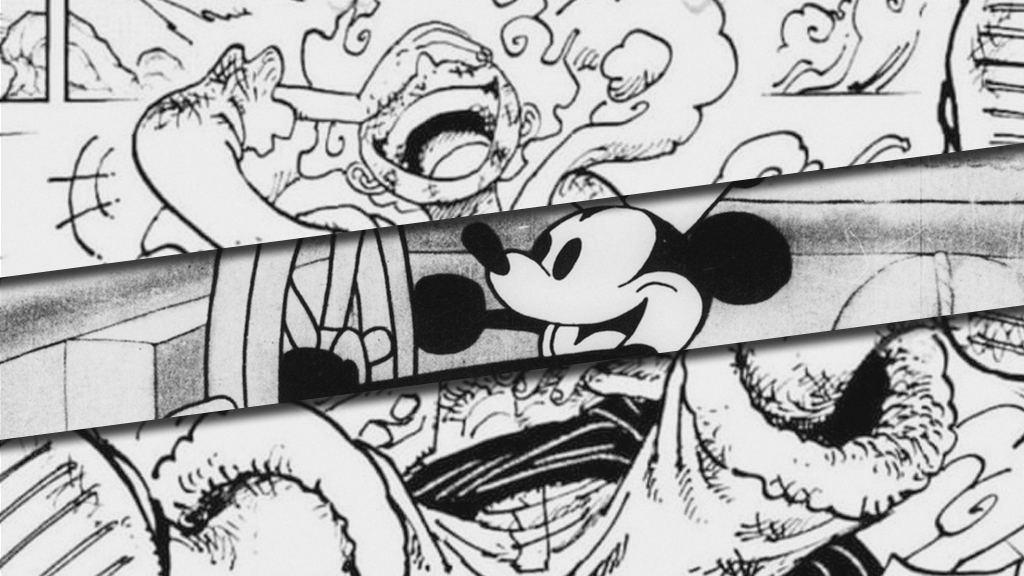
    Luffy’s power are technically still based on rubber, but one that is non-tangible. Most of the way Luffy is moving is clearly inspired by cartoons. It’s common knowledge he was inspired by watching the German-Austrian-Japanese animated series Vicky the Viking. So, the franchise has its roots in cartoons, especially looking back at the creative ways Luffy tackled each encounter throughout his travels in the East Blue and the Grand Line. Yet, now he’s truly embraced that aspect with his new powers that are based on rubber hose animation.

    The name of this animation style is based on how limbs of characters are simple, without any specific articulation. It’s the grandfather of all modern animation before running out of style in 1930s, yet has seen a bit of a revival as of late. Steven Universe introduced the character of Spinel that moved in a similar fashion. The recently released The Cuphead Show! bases its entire animation style from that very era. So, it technically could be seen as the origin of the entire Western animation industry.

    It even connects with the origin of his power. Nika was teased as the Sun God, a being that has quite the history. He was known to bring smiles to the faces of many’s for centuries. Perhaps that is why Oda took inspiration from the grandfather of all animation as the basis for the Devil Fruit’s abilities. Kaido has no idea what is happening, as his abilities seemingly force everything to apply to his rules. We literally see him grab the Beast Pirates’ nostril through his eyeballs before yanking himself out of the dragon’s stomach.

    It’ll take some time to adjust to the ability, as it is quite a bit different from the Haki-focused combat from the New World. Yet, the power does also call back to some of his earliest and quite “inventive” ways of taking on his enemies. We’ve discussed it frequently on our Den Den Murphy podcast, but Water Luffy from Alabasta was one of the funniest and most out-of-nowhere ways of taking on his most fearsome foe yet. So, as we near the end for the franchise, we might see him get even more creative beyond what we already saw here.

    Oda‘s creativity seemingly has no limits and the idea to stick true to Luffy’s powers being based on rubber. It always had some “cartoon”-inspired elements. So, rubber hose animation as part of his newly awakened power set is such a perfect way of staying true to what he set up while still catching people off-guard. This series never was about someone becoming the most powerful like Dragonball Z. It’s always been about freedom. If you’re powers are so ridiculous, you seemingly can do anything, why not embrace it?

  • Marvel Comics New Iron Fist Revealed

    Marvel Comics New Iron Fist Revealed

    Over the past week, Marvel Comics teased the coming of a new Iron Fist. First, a drawing, reminiscent of John Romita’s famous Spider-Man No More panel teased Danny Rand abandoning the identity; that was quickly followed up the next day by another sketch of a mysterious character sporting the classic colors of the Immortal Weapon of K’un-Lun. Now, after a closer look at the details of the two drawings, it seems the identity of the new Iron Fist can be deduced.

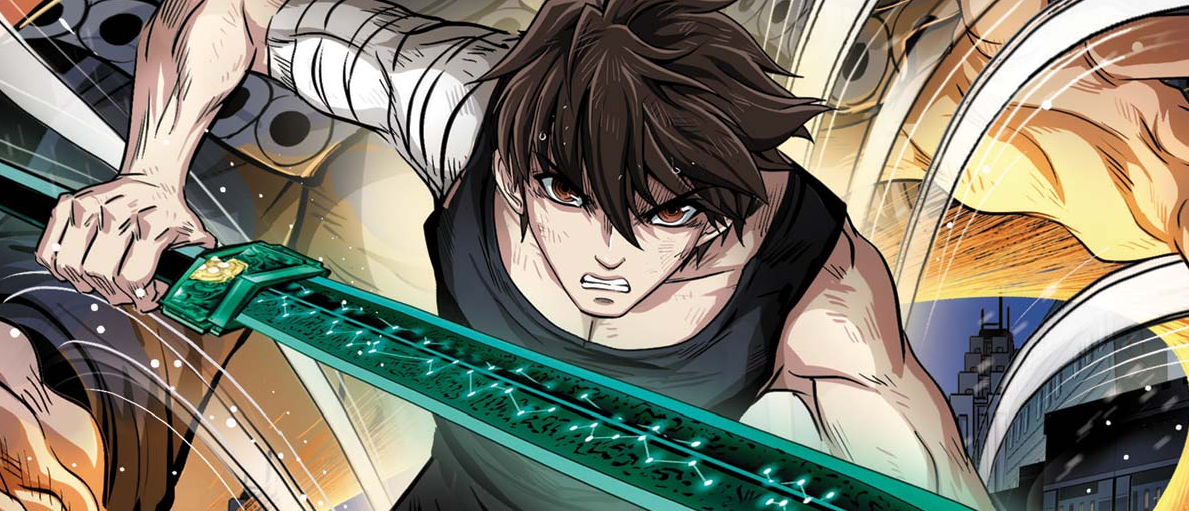
    A closer look at the “Iron Fist No More” teaser shows turquoise shards scattered around the dumpster in which Danny Rand has deposited his Iron Fist costume. Those shards share an uncanny resemblance to the Sword of Fu Xi, the millennia-old sword wielded by Lin Lie, aka Sword Master. It’s probably then no coincidence that the character on display in the follow-up image is sporting the very same belt worn by Lie since he first appeared in Marvel Comics.

    The Sword of Fu Xi, much like the Ebony Blade wielded by the Black Knight, gives its owner incredible power while also leading them down a dark road. Both blades were recently used to help dispatch of Knull in the King in Black event. The sword’s destruction and the appearance of the demons in the “Iron Fist No More” sketch (take a close look) could explain both how Lie gains his new powers and the threat he will face in the new 5-issue limited series.

    Marvel Comics Iron Fist will be on shelves in your LCS in February and available for pre-order soon!

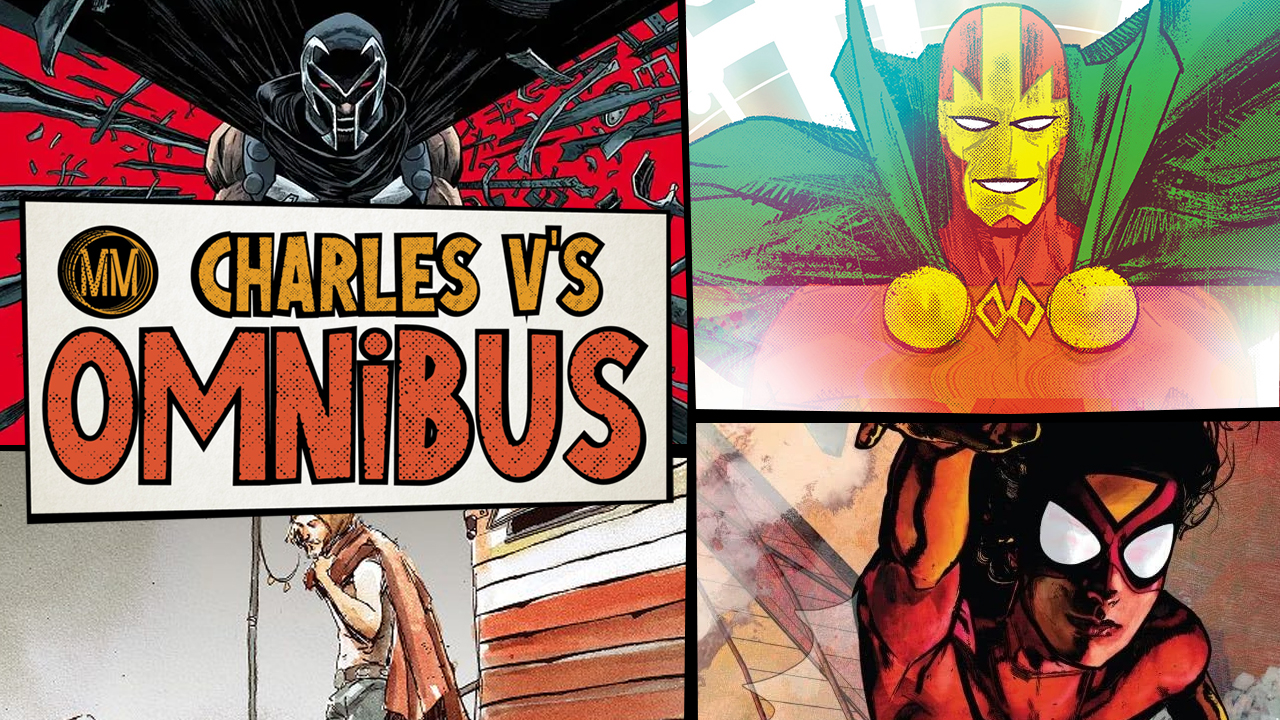
  • Charles V’s OMNIBUS #1

    Charles V’s OMNIBUS #1

    I’ve been a comic book reader for as long as I can remember. Given how my dad was a former collector, there’s a good chance I read through a comic before even getting my hands on a coloring book. And I’m still at it reading comics on a daily basis to this day.

    I figured that, with the dozens of titles I read in a year, it might be productive to share my thoughts on them in this new series I’m trying called OMNIBUS. I read a lot of bad comics as much as I read good ones so not all the books you’ll see in this series will be recommendations. Think of this as a comic book diary.

    MAGNETO

    Remember that scene in X-Men: First Class where Magneto visits some Nazis chilling in a bar and gleefully murders them? That’s pretty much the selling point for this Magneto solo run.

    Cullen Bunn and Gabriel Walta’s take on the Master of Magnetism is relatively simple yet so precise. A no-frills John Wick-esque revenge tale of Magneto hunting down people who have wronged mutantkind. There are elements of a forensic procedural to it as the story cuts between Magneto’s bloody road of vengeance with the S.H.I.E.L.D. officers hunting him down. 

    The premise gets muddled halfway when the then-event Axis ties in but Bunn still manages to stay true to the core of Magneto’s pursuit of ending bigotry against mutantkind no matter the cost. If you’re itching to see a relatively standalone arc starring one of Marvel’s greatest villains, this is the book.

    GRASS KINGS 

    A sheriff’s wife vanishes without a trace. With no leads in sight, he places his suspicion on a community of squatters settling in a nearby unclaimed piece of land called the Grass Kingdom, with whom also the sheriff is feuding. That particular piece of land has had its own fair share of troubles, dating back to the pre-colonial days when Native American tribes inhabited the land. In the not-so-distant past, a notorious serial killer may have once lived in the Kingdom too. As the mystery of the missing wife unravels, the Grass Kingdom is forced to look into its own past and come to terms with its secrets. 

    Grass Kings is a part murder mystery, part character drama, and part history lesson written by Matt Kindt, one of the most underrated creators in the business, and drawn by artist Tyler Jenkins. It’s an old-fashioned tale of betrayal and grief, told through Jenkins’ beautifully rustic watercolor drawings and Kindt’s reflective writing. Its characters are a diverse lot and the Grass Kingdom itself feels lived in. It’s a surprise this hasn’t been made into a show yet because it has the makings of a great small-town drama.

    SPIDER-WOMAN

    Jessica Drew can’t catch a break. After remaining in comic book obscurity from the late 80s onwards, the character eventually experienced a renaissance in the 2000s when Brian Michael Bendis made her one of the lead Avengers of that era. There was one catch though: the Jessica Drew of this New Avengers era was a Skrull and had been for quite some time. This Skrull impersonating Drew was, in fact, the Skrull queen Veranke and had orchestrated a decade-long secret invasion of Earth.

    That brings us to the Spider-Woman solo series by Bendis and Alex Maleev, which tackles the aftermath of the Skrull invasion from the real Jessica Drew’s perspective. The miniseries is a spy thriller that has Jessica Drew dealing with the world’s worst hangover. What do you do when you wake up missing four years of life and find out that someone took over the world in your identity? You hunt the remaining people involved in it.

    The comic isn’t remarkable by any means; it starts off great but eventually goes nowhere interesting. Part of me has a hunch that the upcoming Secret Invasion show will have a similar tone to this comic. You won’t miss out on anything if you don’t ever read this.

    MISTER MIRACLE

    Tom King furthered his penchant for turning superhero stories into existential domestic crises with the wonderfully manic Mister Miracle miniseries for DC in 2018. In essence a companion piece to his thematic Marvel counterpart Vision, Mister Miracle is a deeply complex examination of what it’s like to be a son of Darkseid and all the craziness that comes with being a New God.

    The complexities of being a son of Darkseid are examined through the homelife of Mister Miracle, as he lives his day-to-day with his loving wife Big Barda. The story’s vantage jumps from their home to Mister Miracle’s professional life as an escape artist to their duties fighting a war against Apokolips for New Genesis.

    As someone who has never read a comic featuring these characters before, what blows me away is how Tom King and collaborator Mitch Gerads managed to draw me in through the banality of it all. The comic isn’t afraid of exploring the silliness of Mister Miracle calling Big Barda to talk about babysitting in the middle of a war or debating whether the Female Furies would make good party guests the same way it is bold enough to examine heavy themes of suicide and trauma.

    These characters have always been intimidating to my non-DC fan self so see them in this new light is refreshing.

    BLACK ROAD

    You can never go wrong with a good Viking story and Black Road is exactly just that. Somewhat of a spiritual spinoff from Vertigo’s pseudo-historic epic Northlanders, Black Road chronicles the road of vengeance a Pagan warrior named Magnus the Black takes after witnessing a helpless Catholic priest get killed by his kind. Throughout his journey, Magnus reflects on the harsh realities Scandinavia is faced as the Christians forcefully take over all that he has known.

    The comic is absolutely brutal in all regards. It doesn’t mince words in its criticism of Christianity as much as it doesn’t hold back with gore. But even in the face of all that darkness, the book has some really empowering things to say about faith and life.

  • ‘One Piece’: Exploring Blackbeard’s Third Devil Fruit

    ‘One Piece’: Exploring Blackbeard’s Third Devil Fruit

    There are many theories out there on the ongoing development of the One Piece mangaOf course, many focus on the Void Century, or what exactly is the One Piece and how it ties into the finale. There’s one rather important mystery that’s been teased throughout the manga’s entire run but never given much insight even as we’ve passed the 1000th chapter mark. It’s a dominant figure that remains a blank slate throughout, the infamous pirate Blackbeard, Marshall D. Teach. The first canon wielder of two Devil Fruits broke every single rule, and there’s a chance he might even be the wielder of a third when we meet him again.

    ONE PIECE CHAPTER 925 LIVE REVIEW - AN ACTUAL BLACK BEARD - YouTube

    When he first meets our crew in chapter 223, they imply that he isn’t just a singular person but rather a “they.” Many believed it could simply be a shoutout to his crew scattered across the town. Yet, we get more hints that something is different about the wielder of the Yami Yami no Mi, the Darkness fruit. The moment he stole Whitebeard’s Gura Gura no Mi, the Quake fruit, and used it alongside his first fruit broke everything we know about the established rules of this franchise. It also added more questions to the earlier comments on him being more than one person.

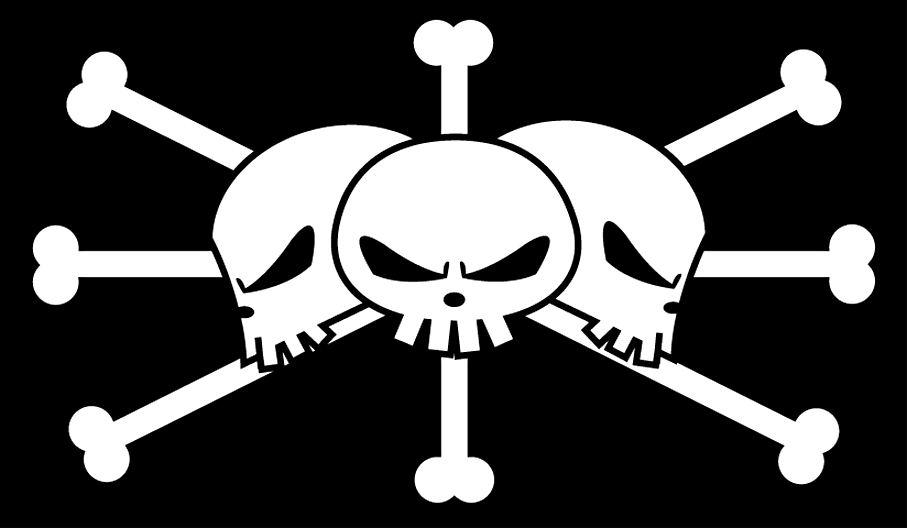
    The reason there’s strong evidence for Blackbeard to one day own a third Devil fruits lies in the use of the number three throughout the franchise. Oda is infamous for using numbers in creative ways, such as Luffy repeatedly receiving the 59. In Japanese, they get pronounced as “Gomu,” which is the Japanese word for rubber. The three connection exists in Teach’s design and prominently jolly roger, which consists of three skulls. He also wields three pistols, and, after the time skip, he has three braids in his beard. The number also exists in how many types of Devil Fruit exist in this world, Paramecia, Logia, and Zoan. He currently possesses the Logia fruit of darkness and the Paramecia fruit of quake. So, naturally, it seems likely he’ll gain access to a Zoan fruit ahead of the final confrontation with Luffy.

    Blackbeard Pirates Flag by TheFlagmaker on DeviantArt

    So, we know the likelihood of what fruit he’ll gain, but the question remains which one. Popular theories believe he’ll steal his last fruit from the current Wano arc and take over Kaido’s Uo Uo no Mi (Model: Seiryu). Yet, it would be strange to have Luffy fight another dragon after being the main focus of this arc. Plus, we already have Momonosuke with the same abilities, which would make his inclusion repetitive. Yet, at the same time, it would be in line with the use of threes in the series. Yet, the path of it being a mythical Zoan doesn’t seem so out of this realm. YouTuber 333VIL believed that the three might correlate to a Kraken-type Devil Fruit, as octopi possess three hearts.

    In the Enies Lobby arc, Jabra thought he’d exploded if he is near the literal fruit as a devil might jump out of his body. So, perhaps a person requires multiple hearts to resist the curse of inhabiting more than one fruit. Yet, it still opens up why his jolly roger highlights three skulls. We learn that Teach doesn’t sleep, which would match up with how octopuses sleep in intervals of seconds. That would explain why people believe he is never fully asleep. Yet, one could easily also use the fact that he may inhabit multiple personalities to circumvent that. There just hasn’t been a time where we witnessed any personality changes throughout the series or a real hint at him possessing a devil fruit before he joins the Whitebeard pirates.

    Young blackbeard begs whitebeard to join his crew - YouTube

    The final and a personal favorite theory is that he most likely will have the mystical Zoan fruit modeled after Cerberus. Not only would the three heads match his flag, but it also might add to the revelation of what exactly is so special about this pirate. There’s also the theming we’ve seen with past Emperors. Kaido has a strong following of dinosaur-themed Zoan users, while Big Mom’s crew utilizes food-related abilities. Blackbeard’s crew are more varied, but one prominent member wields a dog fruit, the Inu Ino no Mi, of the Kyubi no Kitsune model. Her prominence as the first real new fruit reveal could be a subtle hint at the correlation. It’s also one of the more recurring fruit variants throughout the series.

    What adds a curious layer to him possessing three personalities is that his inspiration, the real-life Blackbeard pirate Edward Teach, was split into three characters. Edward Newgate, also known as Whitebeard, Blackbeard and the man he murdered for the Yami Yami no Mi, Thatch. It further creates a connection between the three characters that make up “Blackbeard” in this series. Perhaps Oda creates a parallel that this Blackbeard splits up into three characters, which could best get brought to the forefront by giving him three literal heads like a Cerberus. He also would be protecting the “Gates to Hell” as the last milestone before Luffy and his crew uncover Laugh Tale.

    Blackbeard and Thatch: OnePiece

    There’s one last aspect that might add some credence to the Cerberus theory. Throughout the Straw Hats travels, Usopp’s various lies seem to always come true at one point. We’ve seen it most notably with the giant goldfish on Little Garden. In an early flashback, we see the Usopp pirates hunting down a poor dog, as he calls it a Cerberus. In Thriller Bark, we do meet one that has a fox head. It’s a curious detail that not only works for a fun joke but also to grab our attention that he’s not fully formed. So, technically it’s not a true “Cerberus” but could act as foreshadowing. It could be a way to distract viewers from the creature’s actual debut later down the road.

    It’s still speculation for now as One Piece is still wrapping up its story on Wano. Elbaf seems like a safe bet for their next destination before the story enters its final arc. While we don’t know if Blackbeard will make his move on the island of the giants, he is likely to make his grand return soon now that Luffy is potentially taking down both Kaido and Big Mom. Yet, it seems like a fitting location to uncover his final fruit as it’s also the home to Shanks, who also has an element three inflicted upon him by Teach. The iconic three scars on his face inflicted upon him at some point may hint at there being something Shanks isn’t telling the world about this very dangerous pirate.

    Source: YouTube (Kraken), YouTube (Cerberus), YouTube (Grandline Review)

  • A Farewell To The AMERICAN VAMPIRE

    A Farewell To The AMERICAN VAMPIRE

    Let The Right One In. Thirst. What We Do In The Shadows. The Castlevania series. Shadow of the Vampire. Legacy of Kain. Vampyr.

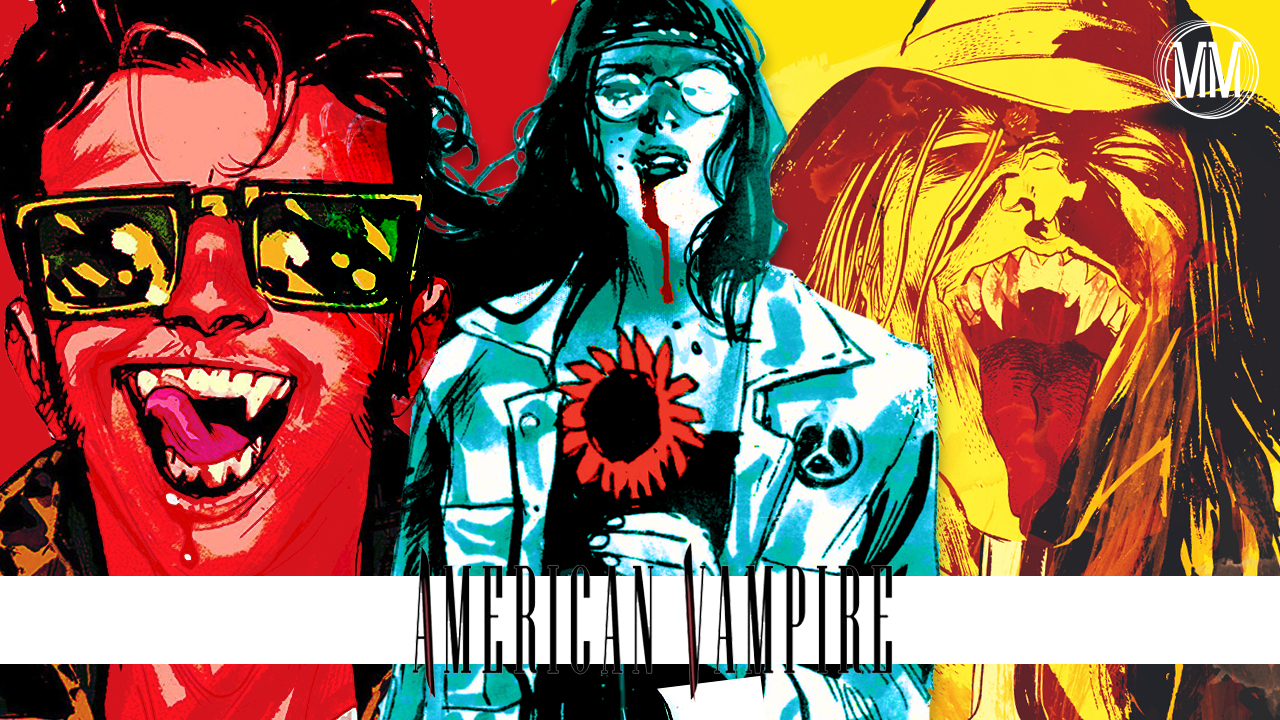
    There’s really never been a shortage of amazing vampire media in the last 20 years. Yet by the 2010s, vampires had been run into the ground. Twilight, True Blood, and other vampire teen dramas had exhausted the idea of vampires in the mainstream and with it any semblance of cool. But in the world of comics, a truly great vampire story was gestating in the mind of writer Scott Snyder. Just as vampires were becoming passe, in came Snyder and artist Rafael Albuquerque with American Vampire, a neo-western horror saga spanning decades of lives and countless people. 

    At the center of this saga is Skinner Sweet, an outlaw from the Wild West who in a twist of fate ends up being the first in a line of American-bred vampires. Opposite Skinner Sweet is Pearl Jones, an aspiring actress in 1920’s Hollywood whose life forever changes after an unfortunate encounter with a vampire coven made of Hollywood’s most elite. Together, their intertwined fates put them at odds with the vampire race.

    The modern anthology runs deep in American Vampire’s blood. Each arc deals with a different character’s perspective, often set in a totally different time period from the last, with lots of genre trappings. The first arc starts as your quintessential Hollywood fairy tale but then switches gears into a bloody horror movie. Some arcs go full Western when Snyder explores vampirism in the age of frontiersmen and cowboys. The book goes even bigger with two vampire WW2 stories: one set in the Pacific Theater of the war ala Band of Brothers and an Indiana Jones caper set in the Carpathian mountains of Nazi-occupied Europe. Hell, if you’re itching for something lower stakes (pun intended), there’s a coming-of-age story set in the 50s that taps into the delinquent cruising culture of the era. 

    That’s not even counting the standalone short stories written by the medium’s best writers and artists, including Stephen King, set in this world. Skinner and Pearl may serve as American Vampire’s linchpins but they aren’t the only stars in this joint as the comic explores the stories of other numerous characters in the saga, all the while connecting them in very meaningful ways. 

    And goodness does American Vampire boast an ensemble of characters that would give the most famous movie vampires a run for their money if this book is ever adapted for the live-action big leagues. You have Skinner Sweet, whose arc spans an entire century; he starts off robbing trains in the Wild West, becomes a soldier in WW2, a gangster running a brothel, a highway smuggler in the 60s, and by the end of the book, he’s an Evel Knievel death-defying stunt man in the 70s. Pearl Jones, who begins as a meek country girl seeking to make it big in Hollywood transforms into a battle-hardened crusader for her kind. Travis Kidd is a teenage vampire hunter in the 50s who poses as a womanizing delinquent in order to sniff out vampire families in the suburbs. His secret weapon is a pair of wooden fanged dentures he uses to bite vampires back. 

    Central to the story are the Vassals of the Morning Star, an organization dedicated to the eradication of vampires. Leading this organization are Linden Hobbes, a ruthless company man, and Felicia Book, a star agent with deep ties to Skinner Sweet. Calvin Poole is the resident genius and taxonomist, who himself gets caught in the hellish path carved out by Skinner Sweet. The Vassals also have an agent who moonlights as a traveling musician and relays information to other traveling Vassal agents via the color of the suit he wears on stage. This book is as nerdy as any Marvel or DC comic.

    Scott Snyder and Rafael Albuquerque have created a world so immersive, lived-in, and intricate that they’ve even created their own elaborate vampire taxonomy. Usually, you think of vampires, you think of the most generic kind. In American Vampire, those are the Carpathians; standard, basic bitch vampires who have the most famous of weaknesses. This kind makes up most of the vampire status quo in America. Synder brilliantly establishes that a lot of Carpathians were included in the first settlers of the New World. 

    In addition to that, you have the Gaelic Prime; vampires that can transform into monstrous bat-creatures, the Canis Asiatic; this book’s version of werewolves, Iberian and Caspian breeds, mummified vampires from Ancient Egypt with corrosive fluids, mindless bloodsuckers in the Pacific, and of course, the Abominus Americana; the titular strain that sets the vampire world on fire. Unlike the usual vampires, the American vampire has a unique set of traits and weaknesses, which make them feared by most breeds. Snyder even goes as far as introducing ancient vampire gods within the lore of American Vampire

    With numerous characters, storylines, and minute details, it’s easy to get lost in a saga as complex as American Vampire but its emotional storytelling makes it a very welcoming read. Be it Pearl Jones’ decades-long romance with her mortal, everyman husband Hank Preston or Agent Cash McCogan’s desperate mission to rid his infant son’s disease at any cost, there’s always something human beneath the blood and fangs. Snyder and Albuquerque masterfully interweave all these elements together for most of the run.

    American Vampire recently bid its final farewell with issue #10 of its 1976 run. That final run was frankly, disappointing. The finale was paced at a breakneck speed that disserviced a lot of the stories and character work that came before it. One of the best things about this book prior to the ending was how it took its time in exploring the world, showing perspectives of everyone, and letting us readers grow with them. The finale does none of that and plays out like those big Marvel/DC event miniseries where the 5 main issues make no sense if you don’t read the 100 tie-ins. Except here, there are no tie-ins that flesh out what’s happening in the main event. It’s all gracelessly shoved in together. 

    The finale goes big in a save-the-universe kind of way which takes away from a lot of the smaller personal conflicts that made most of American Vampire amazing. The scope feels ambitious but the ambition doesn’t pay off. It instead dilutes a lot of the magic of the comic. You’re invested in this book for the characters, their aspirations, their conflicts with one another, so when the story becomes about defeating the devil himself, it’s just not as exciting.

    I can’t help but wonder what exactly happened to the story during its lengthy hiatus. The first run ceased production around 2013 and then resumed for a brief run that ran through 2015-2016. It was slated to resume the year after but never did. During that time, Vertigo was dissolved and was replaced by DC Black Label. Did the hiatus cause them to rethink how the story was getting told? Was Snyder just too busy working on his countless new projects that they decided to just rush through the ending? Were they only contracted to do 10 issues only?

    Nonetheless, American Vampire will go down as one of the best reading experiences I’ve had as a comic reader. Even in the face of a rushed and unengaging finale, getting to know these characters was worth it. I was 22 and still in college when I first picked this book up. There are specific songs from that time period that was on heavy rotation when I was reading this book that I can never ever separate from certain panels. If I could discover the book’s emotional revelations and the surprising connections between each character for the first time, I would all over again.

    Thanks, Scott and Rafael for creating my favorite kind of vampire.

  • ‘Y: The Last Man’’s Turbulent Journey to FX

    ‘Y: The Last Man’’s Turbulent Journey to FX

    After what seems like an eternity, the Y: The Last Man trailer finally got released. With a little over a month to go before its September 13th premiere on FX, it feels like a good time to go back and remember just how difficult it was bringing the Brian K. Vaughan and Pia Guerra iconic comic series to the small screen. In 2015, the series was announced to enter development over at FX. Since, the show has not only gone through different showrunners, a different main cast, but also a different title. From just the initial Y, it has since moved back to the source material’s original title, Y: The Last Man.

    Michael Green (Smallville, Heroes, American Gods) was once slated to serve as showrunner, and was co-writing the pilot with Brian K. Vaughan., After working on the show for four years, he left the production in 2019 following “creative differences” being replaced by Eliza Clark (Extant, Animal Kingdom). With principal photography for the pilot taking place in 2018, it’s perhaps fair to assume that, following the changes to the leadership behind the show, we’ll be getting little to no footage of that period to show up in the final product.


    Due to the COVID-19 pandemic, filming got postponed to later 2020. It only concluded last month, July 2021. Around the time filming began, it was also announced that the show would feature an almost entirely different cast from the one initially announced in 2018. Barry Keoghan (Eternals), Diane LaneImogen Poots (28 Weeks Later), Lashana Lynch (Captain Marvel), Juliana Canfield, Marin Ireland, Amber Tamblyn, and Timothy Hutton were all set to star in the show, but perhaps due to delays and the way the approach towards the show evolved, some ended up getting replaced. Ashley Romans and Olivia Thirlby (Dredd) stepped into the roles which initially belonged to Lynch and Poots. Ben Schnetzer replaced Keoghan as Yorick Brown, the series lead. Paul Gross also joined the show at a later stage as Hutton, another of the big names from the original cast list, left following a restructuring surrounding his role.

    Getting the show off the ground was obviously an extremely turbulent affair, something that might probably end up hurting the series’ quality. But it’s rather poetic if a show that focuses on a global cataclysmic event, that got postponed due to a global pandemic, somehow found redemption to its lackluster development story in a series that does justice to the brilliant, Eisner Award-winning comic series it’s based upon.


    As stated above, the show focuses on the aftermath of a cataclysmic event that ends up killing every single mammal on planet earth with a Y chromosome. In layman’s terms, only females survived. Enter Yorick Brown, who mysteriously manages to survive with no idea of how that came to be. Alongside Ampersand, his pet monkey, he becomes involved in a world of governmental espionage and international intrigue. All of this with the backdrop of humanity possibly being on the verge of extinction for simply not being able to reproduce. We’re led in a globetrotting adventure, across multiple continents as Yorick, the Last Man, fights not only for his own future but also for his race. It is set to premiere on September 13th, 2021, on FX.

    Source: Hollywood Reporter, Deadline, Variety, Deadline, GameSpot, Collider, Deadline, ScreenRant

  • Comics You Should Read Ahead of ‘The Suicide Squad’s Premiere

    Comics You Should Read Ahead of ‘The Suicide Squad’s Premiere

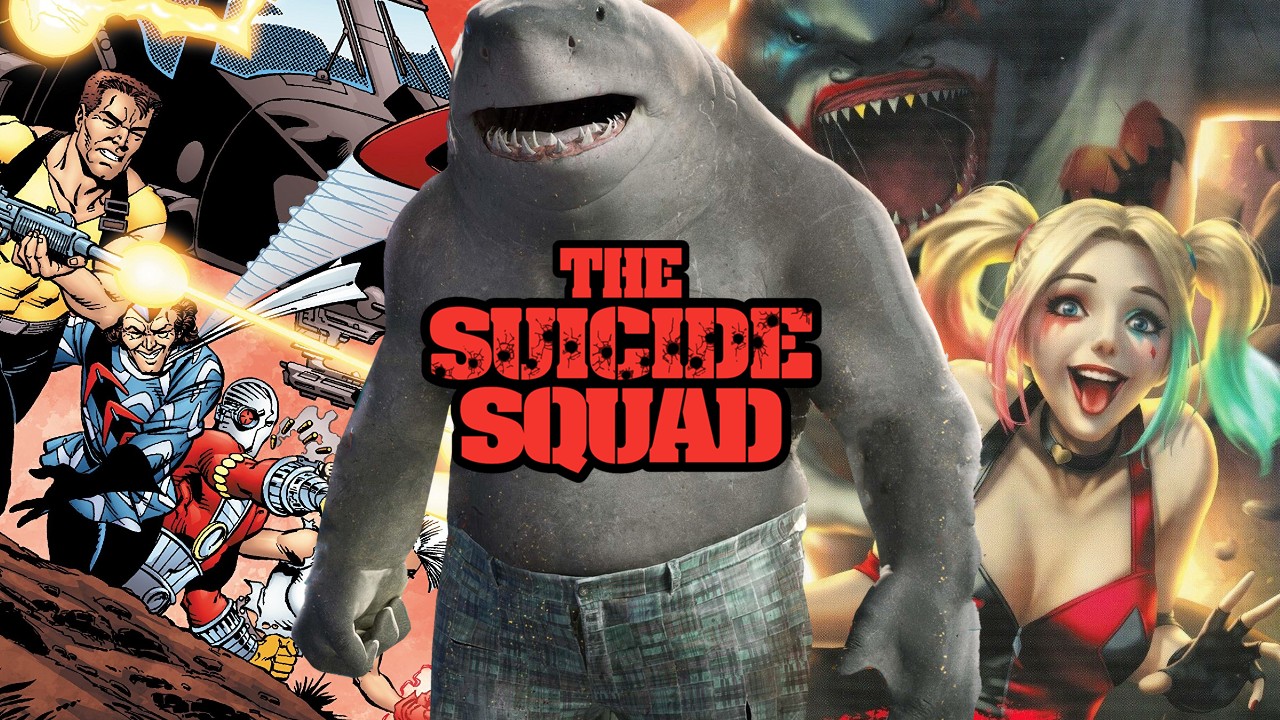
    With how vocal writer and director James Gunn has been about how the original Suicide Squad comics inspired his film, you may want to get familiar with whom you’re dealing with this time around. In this explosive romp in Corto Maltese, the squad finds themselves up against Starro The Conquerer, a cosmic starfish, who, as his name implies, conquers worlds throughout the universe. While it won’t exactly be following the storyline, the absolute best place to start would be none other than John Ostrander’s original run on the team, the book that inspired Gunn to bring The Suicide Squad to life.


    John Ostrander’s Suicide Squad


    Without John Ostrander, the team we know today would’ve never come to be. While the Squad had already existed, In Legends #3, which was co-written by Ostrander, the modern team would debut with a roster made up of some of the worst DC had to offer. The newest roster included Rick Flag, Captain Boomerang, Deadshot, Bronze Tiger, Nightshade, Enchantress, Tarantula, and Mindboggler. The run on this team would become definitive and the basis for James Gunn’s The Suicide Squad, with the writer even making a cameo in the upcoming film.


    Paul Kupperberg’s Peacemaker 


    Peacemaker made his explosive DC Comics debut in the Crisis on Infinite Earths run before scoring his own four-part mini-series in 1988 from writer Paul Kupperberg. The series would follow Peacemakers’ introduction into the universe as he struggles to deal with the fact terrorism doesn’t save lives. The mini-series sees him up against the terrorist Doctor Tzin-Tzin. It will get you quickly up to speed with John Cena’s character and figure out how the chrome-dome thinks.


    Paul Dini’s Batman: Harley Quinn


    The return of the infamous Harley Quinn in The Suicide Squad marks the character’s third appearance in the DCEU. It follows Birds of Prey and the first Suicide Squad film. Margot Robbie has excellently tied the vision of each unique director together to keep the character consistent. This time around, director James Gunn teased that Harley is strongly based on Paul Dini, the man who created the character all the way back in the days of Batman: The Animated Series. He then wrote the story known as Batman: Harley Quinn that follows her story after she got abandoned by the Joker. The story perfectly captures the chaotic and rambunctious nature that she’s known for and shows just what makes her just as dangerous as Joker, if not more.


    Giffen and Jones’ Justice League Europe 


    Starro appears in a few issues of the series Justice League Europe #24 up until #27. He’s a threat that can’t get rid of easily, as it only requires one surviving star to go through the same process again. This time around, however, we see the League assisting the conqueror, as he is dying. Their plan would save an innocent village from the invader and send him back into space. But when the mission goes wrong, the JLE must fight their way through a city of civilians and their teammates controlled by the starfish. With quite the obscure villain, whether you read it before or after, all should be warned of the might of Starro The Conqueror.


    Tom Taylor’s Bad Blood


    Tom Taylor took the Suicide Squad and flipped it on its head when he reinvented the team with a roster of original characters. When a battle between the Squad and a terrorist group results in multiple casualties, the teams are forcibly combined. It leads to some overwhelming hostility, as no one knows who they can trust. The only exception is Harley and Deadshot, who are the only survivors of Task Force X. While it’s a vast departure from the upcoming film, it’s an incredible read for people who might just be craving more from the team after the film, and could inspire a film down the line.

  • Brian Michael Bendis’ MOON KNIGHT Is Still Worth A Shot

    Brian Michael Bendis’ MOON KNIGHT Is Still Worth A Shot

    Brian Michael Bendis can be a tough pill to swallow for a lot of readers. For an entire decade, his name ruled the Marvel stratosphere which a lot of fans grew tired of. He wrote an unreal amount of comics, having practically written almost all the mainline Marvel titles over the course of his tenure with the company. His work arguably served as the lynchpin for the creative direction of the company in the years that followed. It was in the Bendis era that the modern Marvel crossover event was introduced which a lot of people perceive to be one of the worst aspects of the industry. His distinct style of decompressing storylines, making them more drawn out than most, and his quippy Sorkin dialogue makes his work all the more polarizing.

    As a storyteller, his strengths were always rooted in more grounded street stories. It’s no surprise that Bendis’ big picture stories such as Secret Invasion and Age of Ultron pale in comparison to his street-level stuff. The reason why Ultimate Spider-Man, Daredevil, and Jessica Jones were huge breakout successes is that Bendis has a full grasp of that seedy world. His impeccable skill in understanding the language of crime stories is due in part to his long stint writing film noir comics. So for him to take the reins of Moon Knight seemed like a no-brainer on paper. 


    Moon Knight has always been a tough cookie to crack. The logline for the character, in my head, has always been, “Fight Club but with Marvel’s Bruce Wayne.” As a character with a multiple personality disorder, a lot of his stories have leaned towards the unconventional. Writers and artists have taken numerous creative liberties in the ways they could tell a story of a superhero with a multiple personality disorder. Some of them are really introspective and almost surreal, like Jeff Lemire and Jordie Bellaire’s take a few years back. Some barely scratch the surface of the comic’s potential and are more action-oriented like Charlie Huston’s run. Bendis’ stuff falls somewhere in between.

    This version of Moon Knight was written at a time where Bendis was riding high on his long-tenure with the Avengers. He had just finished a long run with the New Avengers and was beginning a new run under Marvel’s Heroic Age event. In this new event, Steve Rogers was running his own covert ops Avengers team called the Secret Avengers which happened to have Moon Knight on the roster. The character stepping up to the big leagues may explain why Captain America, Spider-Man, and Wolverine are all crammed into a Moon Knight book. 

    But crammed as they are, there is a twist to them appearing. You see, Moon Knight has three distinct personalities within him: Marc Spector, the main guy and mercenary, Steven Grant, the playboy millionaire, and Jake Lockley, the Taxi Driver who patrols the grimy streets of the criminal underbelly. Bendis nixes Grant and Lockley from this story and instead has Spector interacting with apparitions of Cap, Spidey, and Logan in his head. It’s a wild departure from Spector’s status quo but has its own merits. 


    For one, I think the whole thing makes the book a fine entry point for the character. As I said, he is already a fringe character, to begin with. His mythology feels far removed from the standard mythos we usually see in marquee characters (a CIA officer getting killed in Egypt but is revived by an Egyptian moon god and develops multiple personalities along the way isn’t an origin story made for normies). His rogue’s gallery is practically unrecognizable even to well-versed fans. Yet, you see this figure cloaked in ivory white cloth hanging out with the most famous Marvel characters, suddenly he’s a guy that you yourself can hang with. 

    Part of why Moon Knight gets likened to Batman is the high-tech gadgetry at his disposal. He’s got his own moon-themed vehicles, such as the appropriately named Moon Copter. This aspect of the character is on full display in Bendis’ story, albeit in a fresh utilitarian way, as his version of Moon Knight has gadgets that directly correlate with Cap, Spidey, and Logan. He has a web shooter, an energy shield, and collapsible claws on his forearms. This jack-of-all-trades approach to being an Avenger makes for some really interesting fight sequences. They can go in a slew of ways, some good and bad, but overall just makes Bendis’ core premise work on a utilitarian level. Moon Knight having imaginary Avenger friends isn’t a bug, it’s a totally new feature. 


    Like most New York-based heroes in the Marvel Universe, they’re bound to migrate to a new location at some point for a change of scenery. California seems to be the go-to for these characters. Even Moon Knight joins the fray of West Coast transplants alongside Daredevil (who made the move to San Francisco a bunch of times) and plants himself into Hollywood, where he gets an opportunity to cash in on his mercenary history by creating a TV series around it. It’s wacky as shit and a drastic departure from the character’s more grounded and serious trappings, but an undeniably interesting one. Bendis really does the job of refreshing the character for new audiences. 

    One thing that he also does in strides, he puts otherwise B-list characters into the forefront of the more popular stories. Bendis did that when he turned Luke Cage and Jessica Drew into full-fledged Avengers. He’s somewhat doing it here by bringing back long-forgotten Avengers baddie, Count Nefaria, and Echo, Daredevil characters he used during his Avengers run. Anytime an under-utilized character gets pushed into the limelight is always something I appreciate. 

    The actual plot of this 12-issue comic is, sadly, half-baked. Unfortunately, Bendis doesn’t reach the highs of his other street-level fare with Moon Knight. I think there simply just wasn’t enough meat in the story. As the story goes: Moon Knight discovers that a new crime boss is slowly making their play for Los Angeles. His investigation leads him to the McGuffin of the story: a smuggled head of Ultron. You’d think that in a span of 12-issues, Bendis would delve deep into the complexities of the underbelly of LA and give us a neo-noir hardboiled thriller disguised as a Moon Knight story, but the whole thing ends up whiffing into a plodding story.


    Bendis‘s worst habits are on full display in Moon Knight. For one, this is a very slow-paced story. During his pitch-perfect Daredevil run, Matt Murdock would have already gone to hell and back in just a handful of issues. In twelve issues, Moon Knight just kinda lumbers to solve this one case. There’s barely any intrigue to what could otherwise be a really good hardboiled detective story. There’s a fish-out-of-the-water premise to the whole thing that is interesting but doesn’t get explored in any meaningful way. It’s not outright terrible but very little happens in a story with a lot of real estate spread out. I’ve seen writers do more with so much less. It certainly doesn’t help that the story’s ending is a hamfisted tie-in to Bendis’ then-upcoming Age of Ultron event (which ended up being a hot pile of a mess too).

    Despite all this, I still think this book is still worth looking at. It’s far from the best Moon Knight run on the market. Several writers have proven that there is more to the character than the generic Fight Club logline I mentioned. But as rough as it can get, a lot of Bendis’s ideas have a cinematic flair to them. It’s no surprise that next to Stan Lee and Jack Kirby, he has the most Marvel creations to ever make it into the live-action realm. His ideas, regardless of execution, resonate well in this modern franchise-driven world we live in. I think using Echo as a foil to Marc Spector is a great choice. I don’t necessarily agree with how Bendis writes Echo at a later point in the story but anytime Echo shows up, I love it. Count Nefaria is in the annals of Avengers history as one of the team’s most vicious villains. The fact that he’s a big bad, in a Moon Knight story no less, is pretty damn fun. I’d love to see Echo and Nefaria in the Moon Knight show. 

    Lastly, I wanna talk about Alex Maleev’s art. Even the story description didn’t quite work for you, the art of this book alone makes it worth looking at. I’ve long celebrated Maleev as the greatest artist to ever draw Daredevil (sorry, Frank). So, to see him do another street character like Moon Knight is unreal. He has a full grasp of this grimy world’s visual language. His panels always feel huge and grand despite it being set intimately on the ground level. Maleev’s vision is concretely bleak and rustic and brings to life a world in the Marvel Universe unlike any other. 

  • FANTASTIC 1234: Grant Morrison and Jae Lee’s Vision of the First Family is a Wild Fever Dream

    FANTASTIC 1234: Grant Morrison and Jae Lee’s Vision of the First Family is a Wild Fever Dream

    Grant Morrison and Jae Lee’s take on the Fantastic Four opens with First Family going through a routine that’s all too familiar for fans. Reed Richards is locked in his lab deep in thought while Sue rants about her husband’s unwillingness to make time for their relationship. Johnny runs off to get laid while Ben tells another sob story about how no one ever likes him. Meanwhile, Doom sets in motion his plan to destroy his enemies with the help of Namor and Mole Man while they get distracted by their squabbles. It’s business as usual for the first family, so how could this story be any different from the rest? In true Grant Morrison fashion, what seems to be like your run-of-the-mill story soon descends into a fever dream of Doom’s madness.


    In the late 90s, Marvel was in the shitter. They had no money. People were getting let go. Office furniture was literally being sold to keep the lights on. The glory days of the very lucrative early 90s had clearly ended. It was the lowest of the low so there was no place left to go but up. So up they went. 

    Editors Joe Quesada and Jimmy Palmiotti were given the keys to the kingdom and created the Marvel Knights brand, an imprint where creators were given as much freedom as they could have to create a Marvel comic. They brought in the industry’s most exciting writers to do their own take on Marvel’s most iconic characters. Established names like Kevin Smith, Peter Milligan, and Grant Morrison were brought in along with burgeoning names such as Brian Michael Bendis and David Mack.

    They probably were given too much freedom at first as Grant Morrison approached their own take of Marvel’s First Family in the most insane way possible. In an interview he did before the comic even came out, Morrison said: 

    I’ve worked out this whole Freudian shit. The incest thing in The Fantastic Four. What you’ve got is a family. There’s Reed and Sue, the Mom and Dad. Johnny’s the big brother and Ben’s the little crazy baby. But in that situation you’ve got Johnny and Sue — brother and sister! So there’s an incest thing that the Fantastic Four hides.I looked at it and said, okay, Sue actually wants to fuck Johnny and Johnny wants to fuck Sue. So how do you do that? They make Namor, the Sub-Mariner who is always a linked pair with Johnny. The Human Torch and the Sub Mariner have always been together since the ’40s. Namor is the dark, seedy, watery, wet, dirty side of it. And Johnny’s bright, mercurial. So he doesn’t fuck his sister — but Namor does.”

    Thankfully, that idea never came to fruition as Morrison insisted their intention was to simply create a story out of that idea and not have Johnny literally bang his sister. Still, it’s a fucked up notion to begin but one that’s in Morrison’s wheelhouse, for better or worse. All that said, Morrison’s idea of the First Family was never going to be one that we fully recognize despite the story delving into each of the characters’ archetypes. 

    Fantastic Four 1234 is a great read for a bunch of reasons, not the least of which is how Morrison and artist Jee Lee managed to concoct this unique tale of Doom attempting to destroy the First Family. Lee’s artwork is one of the most distinct in the business. His style, what I’d describe as gracefully grotesque, beautifully coalesces with Morrison’s bizarre sensibilities. The result is stunning; a vivid portrait of Marvel’s most iconic characters that cascades into nightmarish imagery with each turn of the page.


    Morrison explores each of the family members’ pathos and desires in different ways. By far their most interesting exploration is that of The Thing. The mopey Ben Grimm is thrust into an It’s a Wonderful Life scenario where he’s freed from his monstrous form. Unfortunately, this life is wildly unrecognizable to Ben Grimm, who’s a total normie now. Reed is a rockstar scientist while Ben is thrust into obscurity. Ben’s notion of what a good life for him means is put into question.

    As for Johnny, he does the only thing he knows how to do: have a good time. A chunk of the story has him driving with a girl who likes hanging out with him for his celebrity. However, the charade of being too cool for everything quickly wears off on Johnny, who soon decides to patch things up with Ben, who he fought with earlier. 

    Sue is visiting family friend Alicia Masters to vent about her marital woes when she is interrupted by the Sub-Mariner. Namor and Sue have always had a steamy dynamic, even more so than her and Reed. The sexual tension between the two is on full-display as Namor makes an argument to leave the life she complains about daily.  Sue has always been the family’s keeper so for her to be devilishly seduced by Namor, who is essentially the antithesis of Reed (handsome, attentive, and rich), is something to see. 

    And then you have Reed. The galaxy’s smartest being doesn’t do much until the very last issue when his master plan is revealed. I don’t wanna spoil it but his fight with Doom is one of the coolest showdowns I’ve seen with these two icons. It’s a highly cerebral battle of wits that spans the warping of reality and it brilliantly showcases what these two characters can really do when up against the wall. 


    Doom is absolutely stellar in this. His plan is over-the-top that it’s almost reminiscent of the silliness of the Silver Age days of Marvel.  Morrison writes Doom’s monologues as overindulgent poetry and it fits the madman perfectly. This version of Doom is grandiose and theatrical, something that tends to get lost in depictions of him throughout the decades I think. Jonathan Hickman does it the best but Morrison’s take on the character holds up. 

    With only four issues to it, some of the story beats don’t align as smoothly as Morrison’s deft take on thematics. I wonder if Morrison personally confined themself into doing 4-issues as a ludicrous easter egg of sorts. Moments feel rushed and don’t really get to simmer. I imagine that if this was a 5 or 6-issue arc, the story would be a lot more explorative. But even with all its flaws, Fantastic 1234 is a must-read for anyone interested in learning about Marvel’s First Family.