Tag: Movie Reviews

  • Review: ‘Supergirl’

    Review: ‘Supergirl’

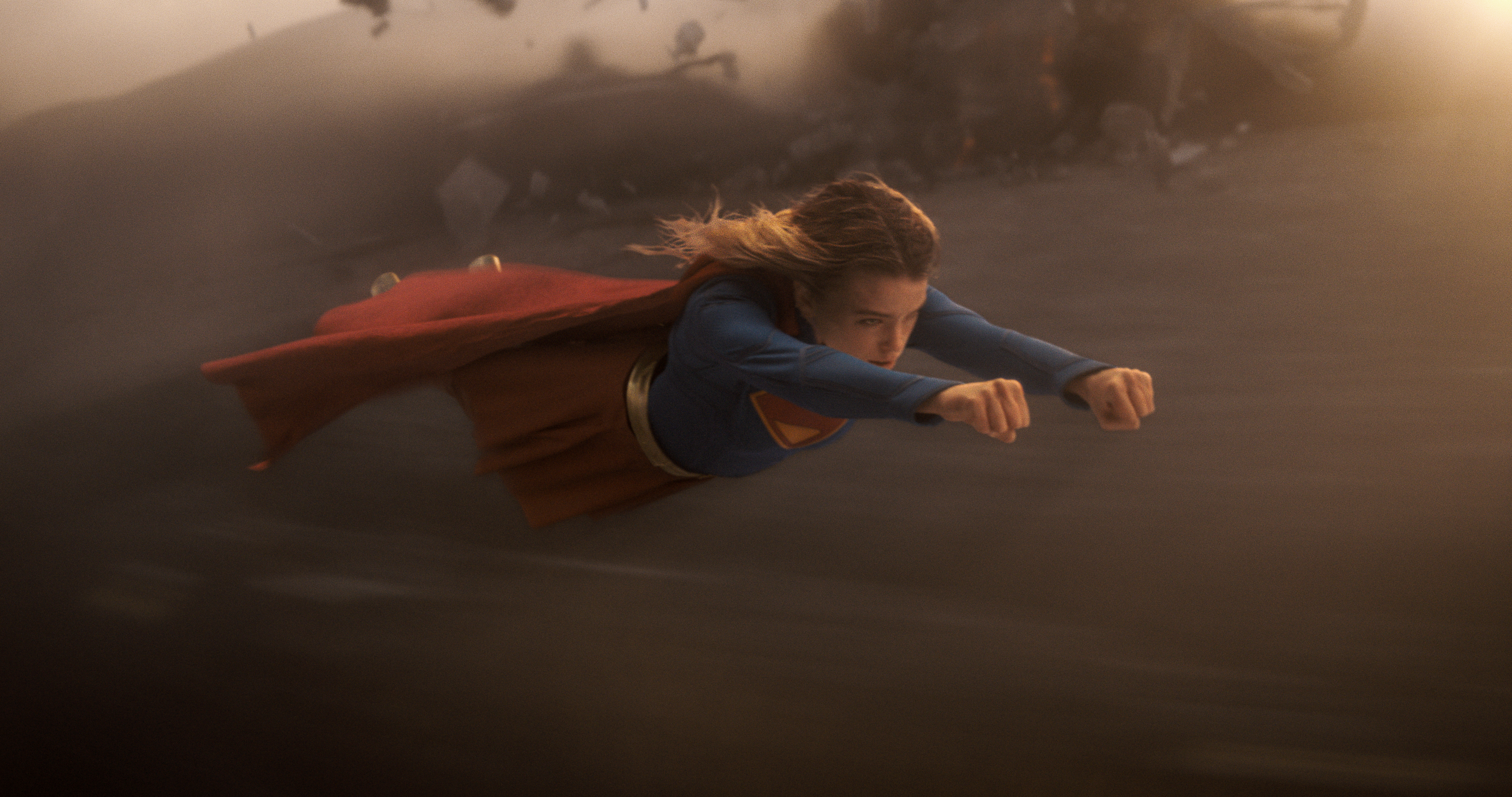
    As Tom King crafted the story that ultimately became Supergirl: Woman of Tomorrow, he searched for a way to boil Kara Zor-El down to reveal her inner essence and, in doing so, help the audience come to understand a character whose comic book history was both chaotic and, to be blunt, absurd. For decades, writers had sturggled to understand the core of the character who King believed should be “one of the big pillars of the DC universe.

    As stated in a 2021 interview with Screen Rant, King’s intent with Supergirl: Woman of Tomorrow was to craft a narrative that would answer three questions for the audience:“Why is Supergirl great? Why is she important to the DC Universe? What is her future in the DC Universe?‘” In adapting King‘s work for the still young DCU, the DC Studios braintrust clearly had a similar agenda, hoping to establish Kara as a key player the young cinematic universe and, given such strong source material, it seemed a slam dunk; however, there’s many a slip ‘twixt the cup and the lip and, unfortunately, Supergirl only answers one of the questions King believed his story should address.
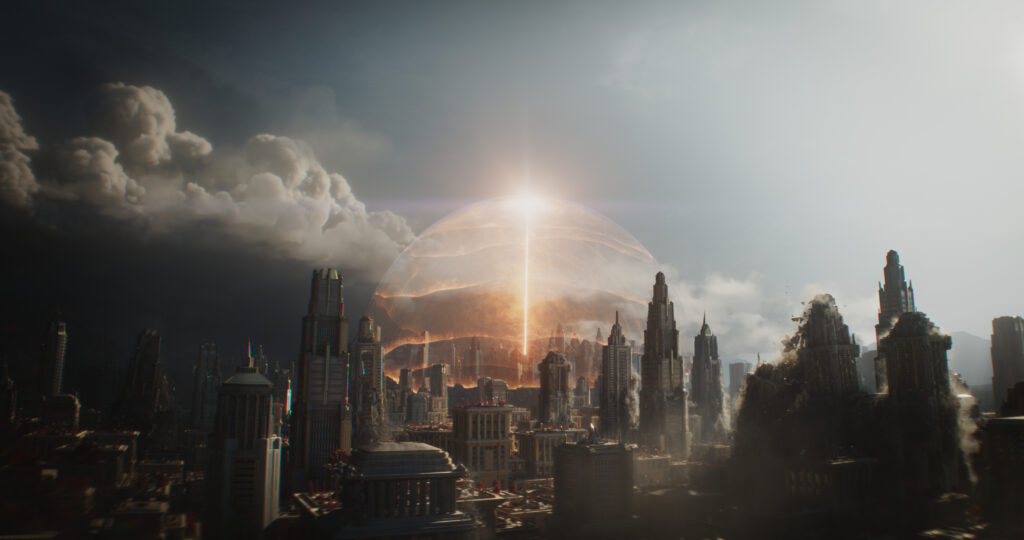
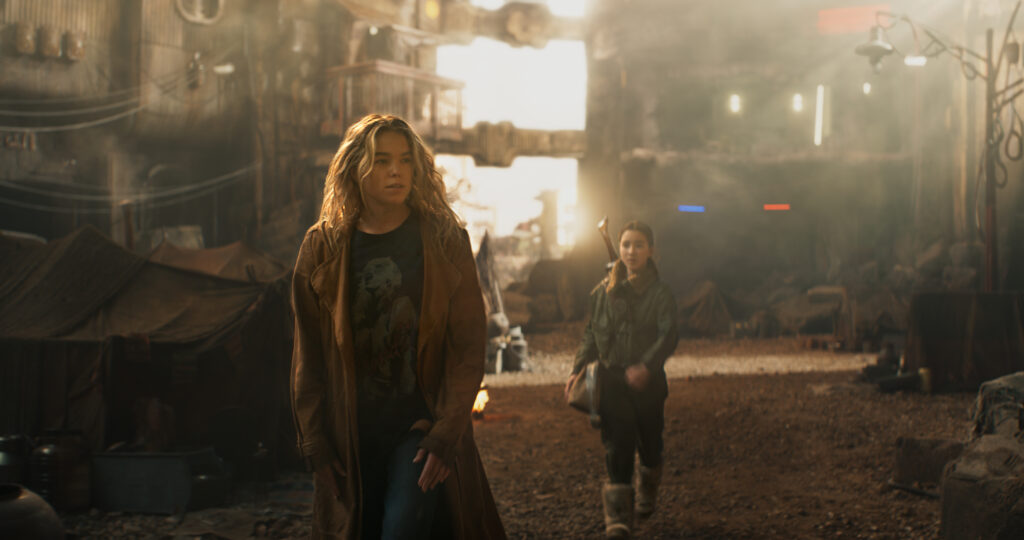
    Like King‘s limited comic book series, DC Studios’ Supergirl is a space Western set on the fringes of the galaxy. A classic frontier revenge story in which Kara acts as the hardened, jaded gunslinger, the film sees her team up with a young girl to hunt down a ruthless brigand across a lawless frontier. Eschewing Bilquis Evely’s sublime and sparkling source material art, Supergirl trades the high-tech, shiny aesthetic of a traditional space opera for dusty planets, dreary space taverns, and a harsher, grittier atmosphere, leaning, perhaps far too heavily into that particular aesthetic. But that’s hardly the biggest issue with the adaptation.

    The film introduces Kara as deeply cynical, struggling with the trauma of watching Krypton destroy itself, and living a chaotic, free-spirited life on the lawless fringes of the galaxy. Completely disillusioned with the expectations of the hero gig, Kara travels around on a clunky, rattling space bus, hangs out in dingy cosmic rest stops, and carries herself with a gritty, reluctant swagger.
    Critically, Supergirl can fairly be examined through at least four lenses : as an adaptation of Supergirl: Woman of Tomorrow; as a space Western; as a modern superhero film; as an installment in DC Studios’ DCU. Though the film is far from disastrous, it fails to shine brightly through any of those four lenses, leaving unclear exactly why Kara is great, why she is important to the DCU and in what way she’ll be utilized as one of the big pillars of a universe that continues to expand on a core as unstable as Krypton’s. She’s brave, she’s strong and she’s now willing to unselfishly stand up for those who cannot stand for themselves…but so are the other few heroes we’ve seen in the DCU so far. In perhaps the most disappointing development of all, director Craig Gillespie and writer Ana Nogueira painted Supergirl into the same corner King so desperately worked to write her out of. Despite telling a fine story about the jaded Kara discovering her purpose, undeniably, the creative decisions–which seem to have a very heavy does of James Gunn‘s influence–don’t ultimately serve the character’s best interests.

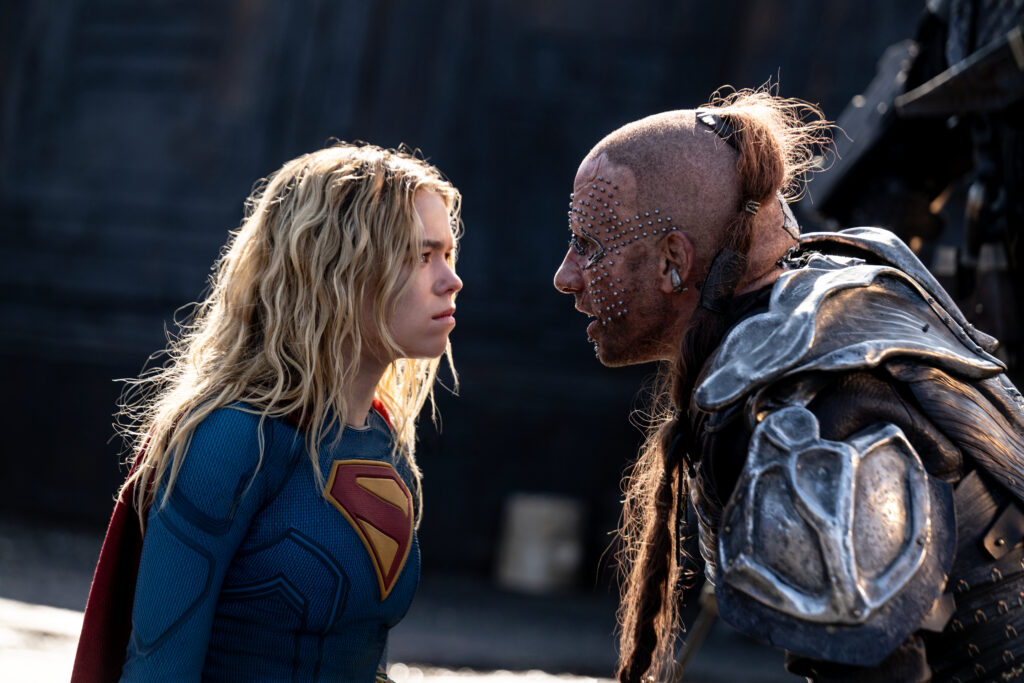
    Certainly it’s not in any studio’s playbook to translate comics directly to the screen; however, as an adaptation of King‘s work, Supergirl strays far too far from home. The poorly reimagined Krem of the Yellow Hills and his Brigands–who give more “mutant bikers from Weird Science” than any sort of riff on Fury Roads Immortan Joe and his War Boys–offer nothing to chew on, making it easy to wonder why any changes needed to be made at all. Staggeringly, nearly every change from the 2021 comic misses the mark, which can be understood when the a recent interview with the film’s writer revealed her complete misinterpretation of the comic book’s ending despite the book’s author being a collaborative partner on the project. Obviously, having Kara murder Krem must serve some purpose to the story Gunn wants to tell next (if you weren’t sure, they made sure you were sure by having Jason Momoa‘s Lobo grin and chuckle about the deed) but what’s less obvious is what purpose the change had in the story at hand. King‘s ending–which boils down to Ruthye having lived a life so wonderful that Krem was worth nothing more than a knock to the dome–would have, at the very least, introuduced the Phantom Zone to the DCU which would be preferable to being introduced to whatever character it is that Seth Rogan voiced.
    As an installment in the still fledgling DCU, Supergirl finds itself in the wrong place at the wrong time…though that is hardly its own fault. Since James Gunn and Peter Safran‘s initial slate reveal, multiple projects have either fallen apart enitrely or developed glacially. Superman succesfully launched the DCU and with Man of Tomorrow set for a 2027 release and Kara set to play a major role in it, Supergirl simply had to be released now. And so despite Gunn’s insistence that film’s would never move into production without top tier scripts, Supergirl seems like a project made out of necessity–both to fill a calendar slot and to introduce a character–rather than because it was built on a can’t-miss script. Resultant of those intersecting realities, is a film that is watchable but does not demand a rewatch. Fortunately, Milly Alcock is incredibly watchable as Kara.

    In that sense, there’s actually some hope for Kara, provided the studio proceed a little more carefully. After launching with the incredibly successful and wonderfully inventive Iron Man, Kevin Feige rolled out The Incredible Hulk, a film whose narrative relevance to the MCU was reduced to the fact that it introduced Bruce Banner…until a decade and a half later when its plot and characters were weaved back into the narrative tapestry of the MCU. Perhaps that fate awaits Supergirl…if the DCU can last another 15 years. Perhaps a better comparison among modern superhero films is Captain Marvel. While it dominated the box office in a way that Supergirl will not manage to do, it shared a similar problem: the movie was made to rush Carol Danvers into the MCU when her purpose in the larger, shared narrative wasn’t yet defined. As a result, Captain Marvel remains an underultilized character without a firm narrative foothold. Only two films in, DC Studios cannot afford for that fate to befall Kara. On the strength of Alcock‘s portrayal of Kara, the character will live on in the DCU; but as a franchise, Supergirl is dead on arrival and will probably be repurposed as part of the Superman Saga rather than launching its own series of films.

    Up against classic space Western heavyweights such as the original Cowboy Bebop anime and Firefly, Supergirl doesn’t put up much of a fight. Outside of the extended cameo by the Main Man, setting Supergirl in space doesn’t offer much and whatever it hoped to offer in terms of interesting aliens and locations was lost in its dark and muted filter. It seems as though it’s set in space for two main purposes: to establish how different radiation from different suns impacts Kryptonians and because Supergirl: Woman of Tomorrow was set in space. But in entirely changing the aesthetic from Woman of Tomorrow, Supergirl excised the best parts of Woman of Tomorrow being set in space.
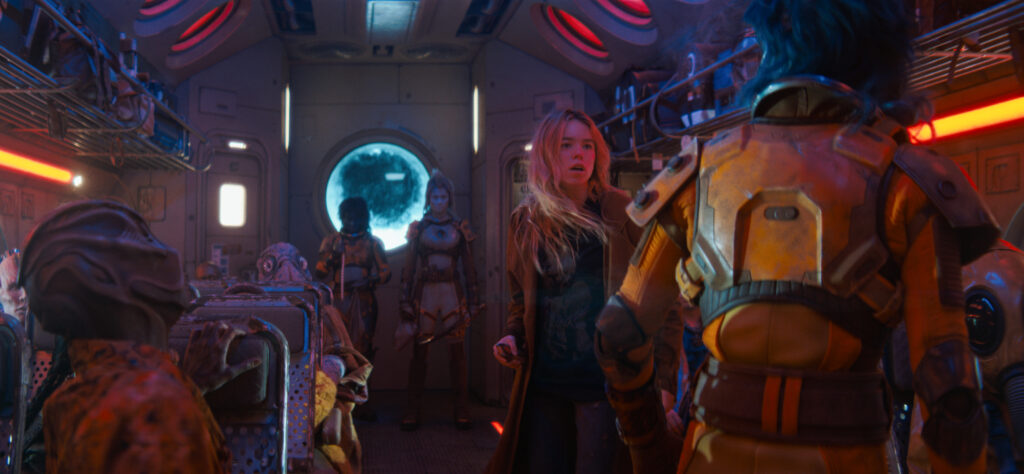
    The one question Supergirl does provide a solid answer to is what the future holds for Alcock‘s Kara. Set to star alongside David Corenswet‘s Superman and Nicholas Hoult‘s Lex Luthor in Man of Tomorrow, the second installment in Gunn‘s Superman Saga, Alcock‘s iteration of Supergirl certainly provides a unique foil to the Big Blue Boy Scout’s mantra of “truth, justice and the American way” which is a key ingredient in the DNA of Corenswet’s version of Superman. Whereas Superman’s moral compass is unshakable, Supergirl’s true North is a little skewed, perhaps even after her cathartic adventure ends with her back on Earth.

    A curious collison of ill-advised creative decisions and questoinable timing, Supergirl finds itself, ironically, in the same peril its heroine does while left alone in a cave following exposure to a green sun. While intended to save the day, it arrives in the wrong place and at the wrong time, unable to defend itself against the harsh criticisims levled against it and in need of the dawn of a new day to save it. Perhaps, down the road–should the DCU get to pave that road–it will settle into a more endearing place; however, for now, Supergirl is left for dead in landscape no longer forgiving to middle of the road superhero stories.
  • Review: ‘Predator: Badlands’

    Review: ‘Predator: Badlands’

    Since acquiring Lucasfilm in 2012, fans have largely lamented Disney’s efforts to create feature films in George Lucas Star Wars universe. With 2015’s The Force Awakens, Star Wars super fan J.J. Abrams was supposed to provide a new hope for the franchise, launching a sequel trilogy intended to reestablish the Skywalker Saga as a global brand. And while Episode VII had plenty of nostalgia, heart and energy, the lack of a planned, cohesive narrative for the new trilogy led to unprecedented polarization among the fanbase, earning Abrams another star on his franchise-ruining sash.

    Since acquiring 20th Century Studios from Fox in 2019, fans have largely lauded Disney’s efforts to create new projects in the Predator universe. Under Dan Trachtenberg, whose feature film directorial debut came ironically on the Abrams-produced 10 Cloverfield Lane, the Predator franchise has evolved along a very divergent path than the Star Wars franchise, making it, perhaps, Disney’s premiere sci-fi action property.

    Dek (Dimitrius Schuster-Koloamatangi) in 20th Century Studios’ PREDATOR: BADLANDS film. Photo courtesy of 20th Century Studios. © 2025 20th Century Studios. All Rights Reserved.

    After Shane Black‘s soulless The Predator put the series on life support in 2018, Trachtenberg resuscitated the property, beginning with 2022’s Prey and continuing with this year’s animated anthology, Killer of Killers. The latter effort made clear that the seeds of a wide-ranging Yautja mythology sown in 1990’s Predator 2 took root in the young mind of Trachtenberg, growing into a lush and savage garden of possibilities.

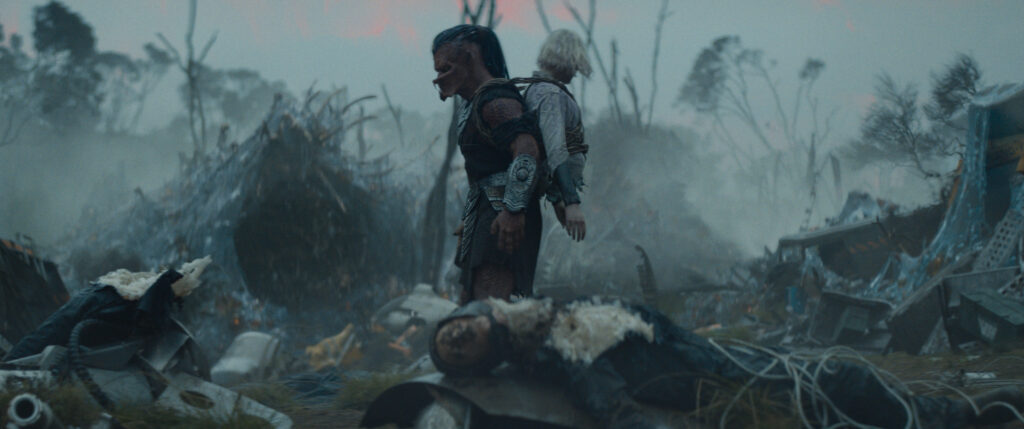
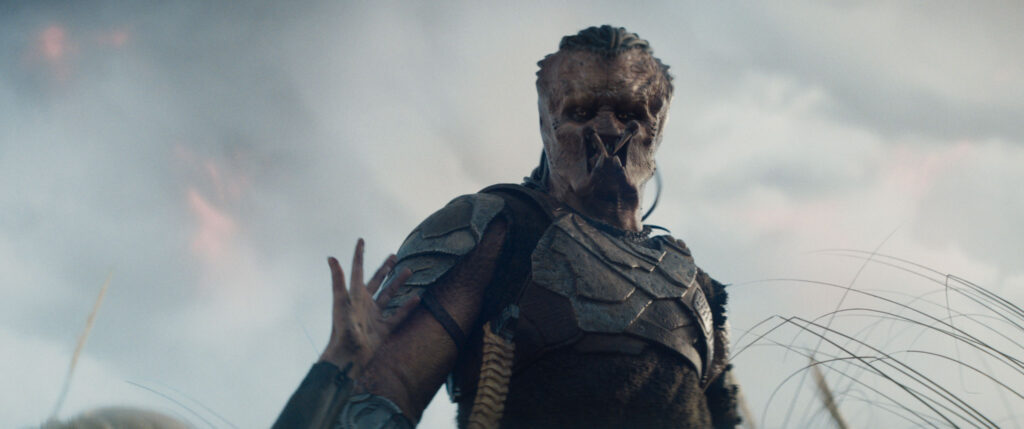
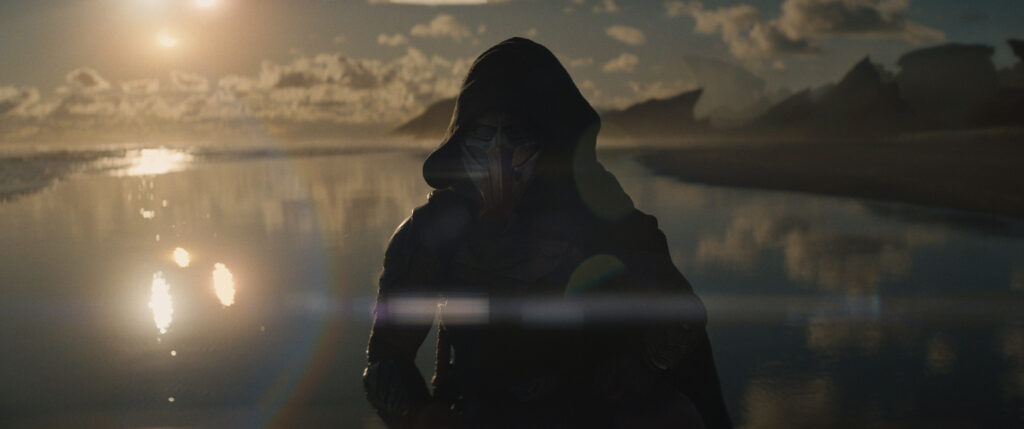
    From that garden, emerged Predator: Badlands, the very conceit of which is among the most bold moves any sci-fi franchise has ever made. Expertly crafted, both visually and narratively, Trachtenberg‘s third installment in the franchise balances beauty and brutality through the lens of the ugliest mother fuckers in the galaxy. Trachtenberg‘s decision to set Dex, an outcast Yautja runt, as the protagonist of the film borders on mad science but, against tall odds, it worked. You son of a bitch!

    (L-R) Dek (Dimitrius Schuster-Koloamatangi) and Thia (Elle Fanning) in 20th Century Studios’ PREDATOR: BADLANDS film. Photo courtesy of 20th Century Studios. © 2025 20th Century Studios. All Rights Reserved.

    Unlike Alien–another former Fox franchise that’s been given new life since being acquired by Disney–the Predator franchise under Trachtenberg‘s watch is not afraid to take chances. Fede Alvarez‘s solid Alien: Romulus played as an homage to prior installments in the franchise, carefully curated to not stray too far from what fans expected while also hoping to be a steady onboarding point for new viewers. From its opening scene, set on the predators homeworld of Yautja Prime, Predator: Badlands, eschews nostalgia, and comfortable tropes, foregoing the underlying structure of a “Predator movie.” And then, when you least expect it, it becomes a “Predator movie” again in all the best ways.

    Outlandishly, the result of Trachtenberg‘s choices in crafting Predator: Badlands is a film that could (perhaps) rightly be described as John Rambo carrying C-3P0 on his back and hanging out with Paddington while fighting the Kaiju from Pacific Rim. And it works! It works so well that Badlands will undoubtedly find itself in the discussion with Predator and Prey as the best in the franchise.

    Dimitrius Schuster-Koloamatangi as Dek in 20th Century Studios’ PREDATOR: BADLANDS film. Photo courtesy of 20th Century Studios. © 2025 20th Century Studios. All Rights Reserved.

    The film allows Trachtenberg to continue the exploration of Yautja culture that he began in Killer of Killers and that’s ultimately the engine that makes the film run so smoothly. Coming into the film, fans should have a rudimentary understanding of what these monstrous hunters are all about; and if you didn’t, little time is wasted making clear how Yautja clans deal with weakness and failure. As Dek’s journey unfolds, the audience rides a parallel rail to the protagonist. Just as Dek must betray his nature in order to survive,  so must the audience’s conditioning be subverted in order to see the layers woven into the film’s narrative tapestry.

    Ultimately, Predator: Badlands offers audiences the opportunity to have an incredibly good time at the movies, meshing action with emotion without a single human character being seen on screen. It’s an incredible accomplishment for the genre, as is having the film’s protagonist speak only in his native Yautja, never uttering a word of English. Like Dek,  Predator: Badlands shouldn’t be able to stand toe-to-toe with the heavy hitters of its own franchise, much less the genre. But like Dek, it stands defiant of expectations, daring you to challenge it.

  • Review: ‘Thunderbolts*’

    Review: ‘Thunderbolts*’

    Over the years, Marvel Studios’ approach to storytelling has increasingly been the focus of criticism. The framework within which the studio chooses to spin its narrative, the “Marvel formula,” has come under fire for its predictable plot structure, overreliance on humor, and willingness to sacrifice character-driven stories to advance the MCU’s longform story. As the studio’s Multiverse Saga has moved forward, the type of nuanced performances that allow for true excavation of a character have been forgone in favor of spectacle and it has become increasingly difficult to “spectacle” an audience that grew up with fully realized heroes flying around on screen. That hasn’t stopped Marvel from attempting to outspectacle its latest spectacle and the result has been a saga largely composed of vapid films, void of any emotional resonance. And along comes Thunderbolts*

    Piecemealed together by a series of writers, Thunderbolts* cavorts in insouciance for the Marvel formula, delivering something audiences haven’t seen from the studio in quite some time: a story galvanized and energized by its characters rather than visual effects and nostalgia. Eric Pearson, Joanna Calo and Lee Sung Jin Frankensteined a script that provided director Jake Schreier the opportunity to tell an MCU-set Jekyll and Hyde (that’s an entirely different monster) story, steeped in metaphysics and exploring ontological dependence. A non-empty set depends on its elements and the respective successes of both the Thunderbolts and the Thunderbolts* are entirely dependent on their respective elements.

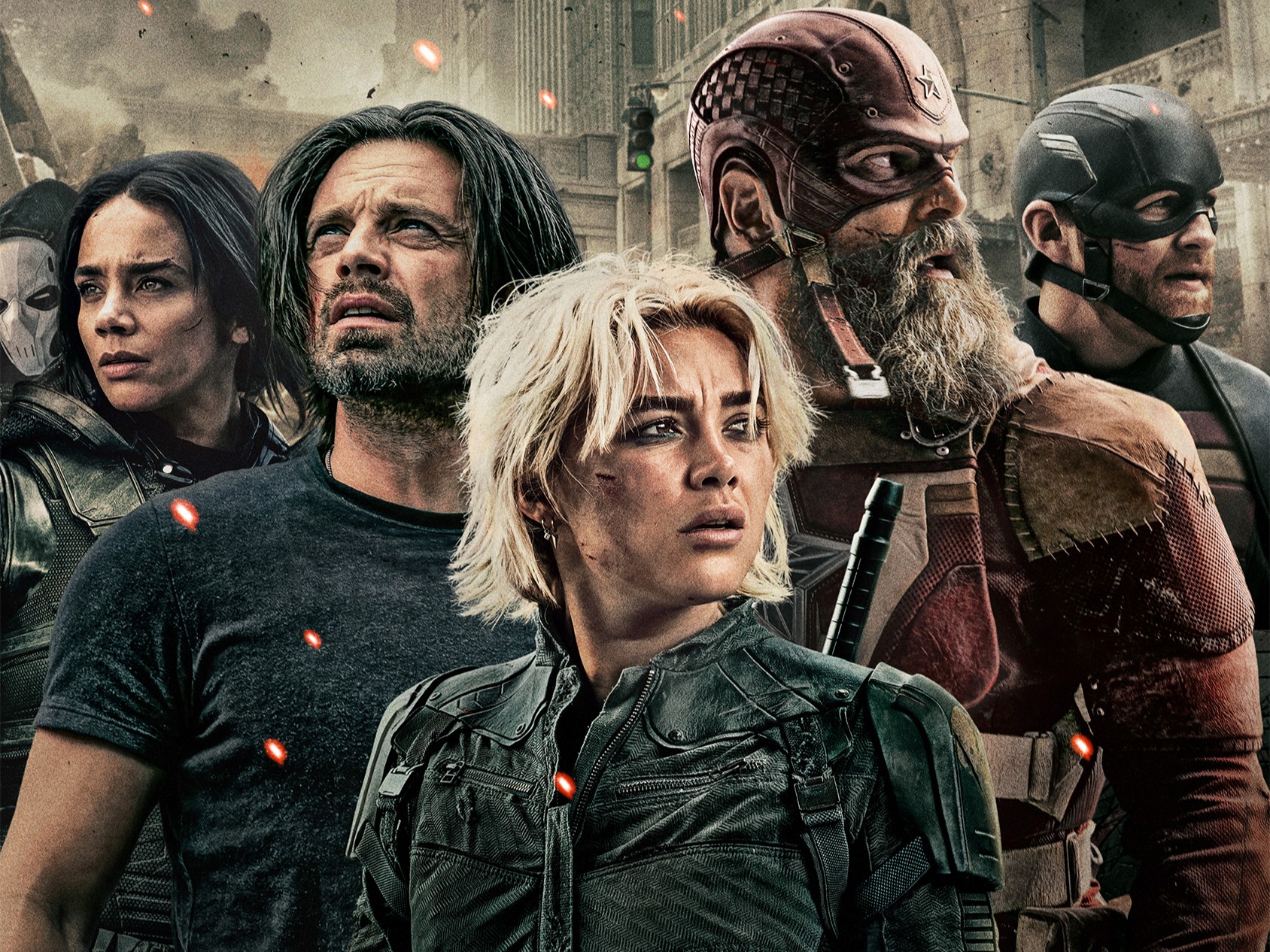
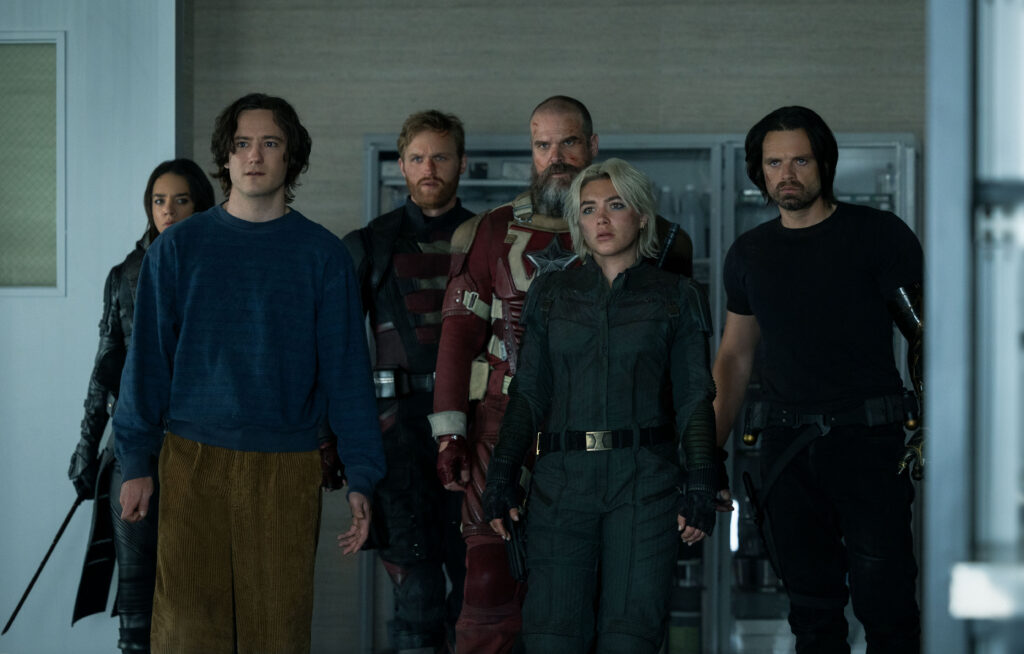
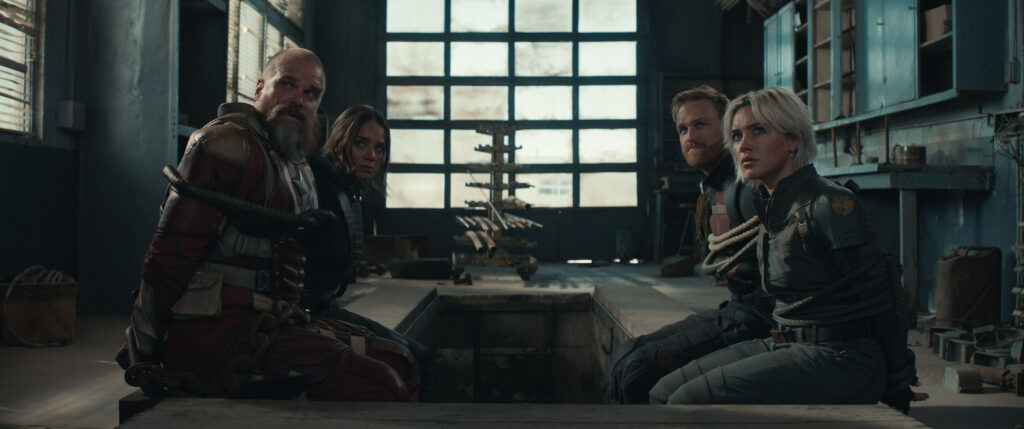
    Ghost (Hannah John-Kamen), Bob (Lewis Pullman), John Walker (Wyatt Russell), Alexei Shostakov/Red Guardian (David Harbour), Yelena Belova (Florence Pugh) and Bucky Barnes (Sebastian Stan)in Marvel Studios’ THUNDERBOLTS*. Photo by Chuck Zlotnick. © 2025 MARVEL.

    You’re talking about a group of characters that have done a lot of bad things, and maybe are struggling with feeling good about themselves. There’s an element that does speak to mental health, and loneliness, and how some of the darkness that we experience in our lives can’t be necessarily fixed, but can only really be made lighter through connection and finding others

    Director Jake Schreier

    Working solo, the titular team wouldn’t survive the film’s first act and, reading between the lines of some comments recently made by Schreier, it sounds as if the film might have been on track to turn out to be another hollow, one-note action flick (Schreier described it as a small-scale “Die Hard thing”) that wouldn’t have survived a critical bashing before Calo and Sung Jin weaved heart and emotion into Pearson‘s original script. Instead of another potential dud, the reworked script turned into the studio’s most impressive Multiverse Saga film to date, putting character first without sacrificing spectacle, delivering some of the most impressive action sequences the MCU has seen in a decade, while telling a story about human trauma that powerfully reverberates with the audience. Whatever Thunderbolts* originally was, it evolved into one of the studio’s most entertaining and evocative films.

    Making a superhero film featuring a cast of charming, misfit losers meant that Thunderbolts* was inevitably going to be compared to Warner Bros. Suicide Squad films and Marvel’s own Guardians of the Galaxy. Thunderbolts* never feels derivative of those projects, however, because it leans so much harder into darker, more uncomfortable emotions and corners of human nature that are typically not part of superhero fare. For reasons each their own, Yelena Belova, John Walker, Ava Starr and Antonia Dreykov–all of whom find themselves in the employ of Julia Louis-Dreyfus‘ Valentina Allegra de Fontaine–have lived large portions of their lives as disposable tools to be used at the whims of others. Bucky Barnes and Alexi Shostakov–neither of whom are working for Julia Louis-Dreyfus‘ Valentina Allegra de Fontaine–have suffered the same fate. In one of the film’s more powerful moments, Bucky, who should know better than anyone given his past as The Winter Soldier, finds himself standing in the same shoes as those who were his masters in the past, seeking only to use the others as tools for his own ends without any value for consideration for them as human beings. Indeed his desire to succeed and inability to see them as anything other than means to an end prevents him from acknowledging their warnings about the film’s true threat. While parts of the scene are played off humurosly, it’s deeply tied to the film’s exploration of how emptiness can consume and how power can corrupt.

    L-R): Alexei Shostakov/Red Guardian (David Harbour), Ghost (Hannah John-Kamen), John Walker (Wyatt Russell) and Yelena Belova (Florence Pugh) in Marvel Studios’ THUNDERBOLTS*. Photo courtesy of Marvel Studios. © 2025 MARVEL.

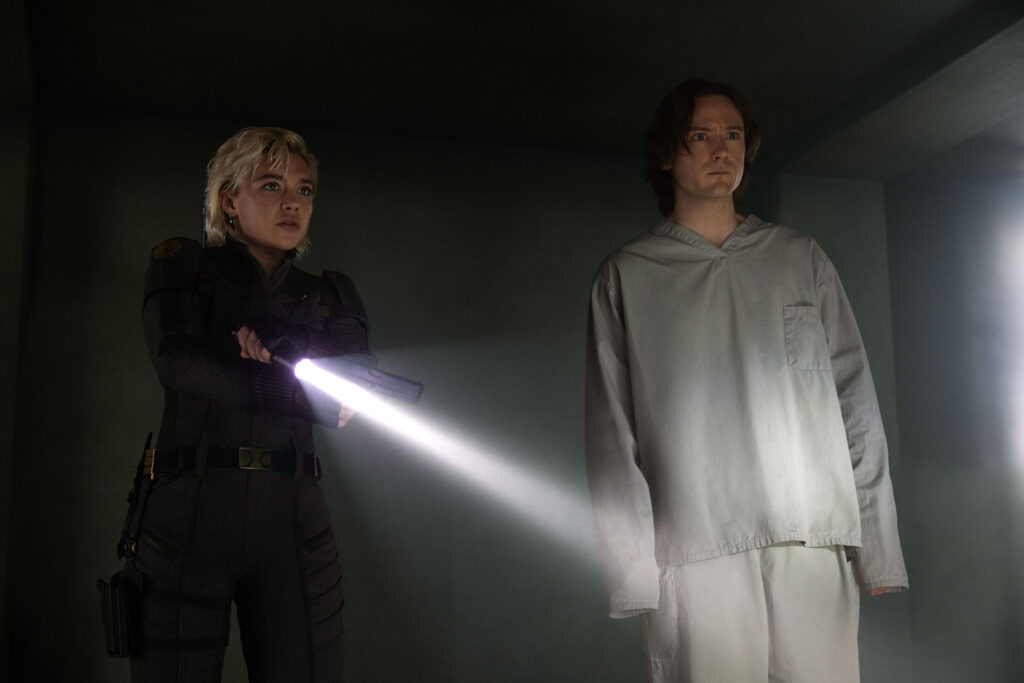
    And we all have Paul Jenkins to thank for that. At the center of Thunderbolts* is Lewis Pullman‘s Bob, a tortured meth addict who volunteered to be a test subject for a program he’s told will help him and humanity reach new heights: Project Sentry. Though the studio kinda-sorta tried to hide it, Bob is Robert Reynolds, aka The Sentry, a Marvel Comics character created by Paul Jenkins. Jenkins always intended for Reynolds to be a study in mental health and while the MCU’s iteration of the character is not a beat-for-beat adaptation, he is as Jenkins intended him to be. Pullman‘s quirky, unassuming Bob–the only new character on the film’s main cast–enters the fray in the first act and quickly becomes the centerpiece of a story that subverts what fans have come to expect from the Marvel Cinematic Universe.

    So I knew from the beginning that Sentry was the Void, and this story was about mental health. It was about two sides of him. And in part, it was about the part that he couldn’t accept. The Void is part of him.

    Paul Jenkins
    (L-R) Yelena Belova (Florence Pugh) and Bob (Lewis Pullman) in Marvel Studios’ THUNDERBOLTS*. Photo by Chuck Zlotnick. © 2025 MARVEL.

    Schreier‘s subversion of the Marvel formula comes attached to a story centered around the continued bastardization of a formula foundational to the ongoing MCU narrative: the Super Soldier Serum. As Stanley Tucci‘s Abraham Erskine forewarned, the Super Soldier Serum amplifies everything that already exists inside the subject. Steve Rogers–a good man–became Captain America, the Senintel of Liberty and the Symbol of Truth–while Johann Shmidt became the Red Skull–the aberrant face of the Nazi Third Reich. A bit of dialogue in the second act of Thunderbolts* illumintates just how far the science of the MCU has progressed since then, however, as Bucky Barnes, Alexis Shostakov and John Walker compare and contrast their varieties of the serum, all while the most volatile and unethical version of the serum has created the most imperfect Super Soldier yet in the Sentry. By injecting the latest and greatest version of the serum into someone broken and hollow, Valentina Allegra de Fontaine makes good on Erskine’s warning, amplifying the void inside Robert Reynolds to the point where it manifests itself as The Void, an omnipotent shadow version of The Sentry. Over the course of the film, The Void seems to be held at bay by Bob, though physical contact with him drags the characters into memories of their own, dark traumas. However, once he’s finally unleashed in what begins as an Avengers-esque third act, the film takes a welcome detour from the Marvel formula. This Battle of New York, fought inside The Void, is the battle we must all fight from time to time: a battle against our worst self. And none of these characters can make it out without the others.

    It’s no surprise to me, I am my own worst enemy, ’cause every now I then I beat the living shit out of me.

    -Lit

    Fascinatingly, Thunderbolts* instantly becomes the standard for “new Marvel” while paying homage to one of the MCU’s most important legacies. Perhps coincidentally, it also works wonderfully as commentary on the struggles of the Multiverse Saga. The Thunderbolts and Thunderbolts* ride parallel rails. Pullman‘s Bob becomes analogous with Marvel’s Multiverse Saga struggles. Just as Julia Louis-Dreyfus‘ Valentina Allegra de Fontaine carelessly dosed Robert Reynolds, a hollow shell of a man, with an all-new, all-different formula intended to grant him the power of a thousand exploding suns, the studio carelessly assumed the Marvel formula would carry the hollow shells that were Ant-Man and The Wasp: Quantumania and Thor: Love and Thunder to all-new heights. But that did not happen. The MCU was in jeopardy, both in and out of universe…and along came the Thunderbolts and Thunderbolts*.

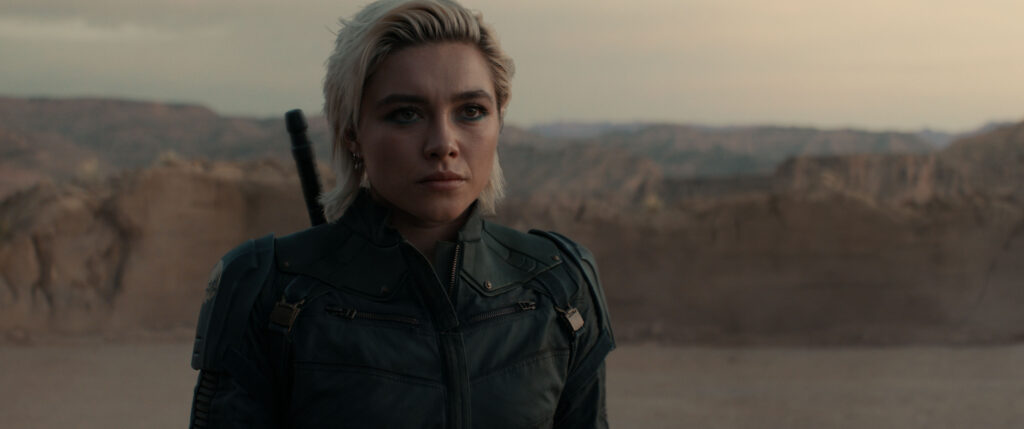
    Yelena Belova (Florence Pugh) in Marvel Studios’ THUNDERBOLTS*. Photo courtesy of Marvel Studios. © 2025 MARVEL.

    The serum amplifies everything that is inside, so good becomes great; bad becomes worse. This is why you were chosen. Because the strong man who has known power all his life, may lose respect for that power, but a weak man knows the value of strength, and knows… compassion.

    -Doctor Abraham Erskine, Captain America: The First Avenger

    Playing with a stacked deck that nobody saw coming, Thunderbolts* combines fresh visuals (Schreier‘s eye for action and unique shots will have him on every studio’s list), a pair of emotionally powerful performances by Marvel’s brightest star, Florence Pugh, and Pullman, and, yeah, some MCU humor delivered by David Harbour and, surprisingly, Wyatt Russell. If Thunderbolts* is representative of what can be accomplished when the studio is willing to tinker with its formula, these new* heroes will be at the forefront of an intriguing renaissance for Marvel Studios.

    Sources: Comic Frontier, EW

  • REVIEW: ‘Alexander and the Terrible, Horrible, No Good, Very Bad Road Trip’

    REVIEW: ‘Alexander and the Terrible, Horrible, No Good, Very Bad Road Trip’

    More than a decade after Disney adapted Judith Viorst‘s beloved children’s book, Alexander and the Terrible, Horrible, No Good, Very Bad Day, into a film starring Steve Carell and Jennifer Garner as the parents of the title character, the studio reunited with Sean Levy‘s 21 Laps Entertainment for a reimagined take on the tale. Written by Matt Lopez and directed by Marvin Lemus, Alexander and the Terrible, Horrible, No Good, Very Bad Road Trip pays homage to both the book and the 2014 film through a very different lens. Stuffed with all the elements of a classic road movie, Alexander and the Terrible, Horrible, No Good, Very Bad Road Trip proves to be a tightly spun story that, thanks to its easily digestible runtime, plays as a tolerable, not-so-bad watch that fits the bill for a family looking for something appropriate to watch for all ages.

    Alexander and the Terrible, Horrible, No Good, Very Bad Road Trip follows 11-year-old Alexander and his family as they embark on a dream Spring Break vacation to Mexico City only to have all their plans go terribly wrong when they discover a cursed idol. The family is put to the test until they resolve to return the idol to its rightful home.

    -Official synopsis for Alexander and the Terrible, Horrible, No Good, Very Bad Road Trip

    In looking to avoid a direct remake of 2014’s Alexander and the Terrible, Horrible, No Good, Very Bad Day, the producers sought a “universal family experience” that would allow for a story full of challenges and experiences that would bring the family at the center of the new film closer together. And thus the road trip came to be. Road movies remain a staple of the American film industry and Alexander and the Terrible, Horrible, No Good, Very Bad Road Trip riffs on some of the classics. Full of the ridiculous mishaps that befall all families who dare pack up for a family vacation, the film channels National Lampoons Vacation, RV, Planes,Trains and Automobiles and, for just a minute, maybe even Thelma and Louise. Cars crash, folks get left behind and the family even loses their IDs and has to rely on a “scary” stranger they just met for some kindness. By the time it’s all over, however, everyone is exactly where they are meant to be and despite the chaos, the Garcia family comes out of it all in a better place than when it started.

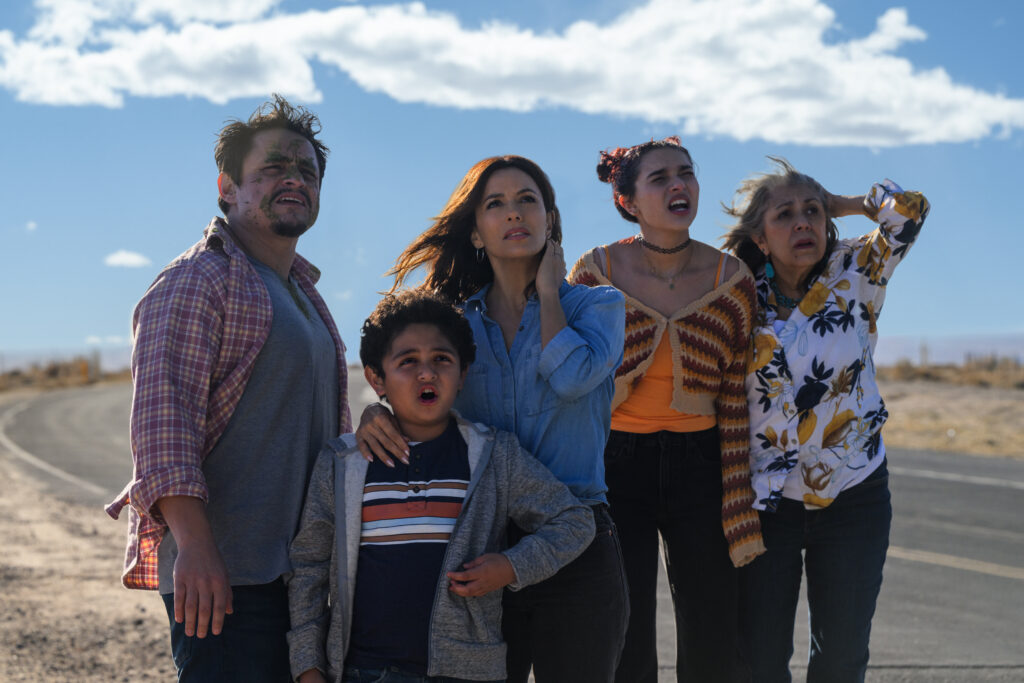
    (L-R) Jesse Garcia as Frank Garcia, Thom Nemer as Alexander Garcia, Eva Longoria as Val Garcia, Paulina Chavez as Mia Garcia and Rose Portillo as Lidia in Disney’s ALEXANDER AND THE TERRIBLE, HORRIBLE, NO GOOD, VERY BAD ROAD TRIP. Photo by Anna Kooris. © 2024 Disney Enterprises, Inc. All Rights Reserved.

    If anything is holding the film back, it’s that the cast isn’t exceptionally strong. In an ironic twist, perhaps the best addition to the cast was Cheech Marin, who replaced George Lopez. Lopez had long been attached to the film as the Garcia family’s tough-talking, motorcycle-riding abuelo and would have certainly had fun in the role; however, Marin’s trademark high-energy delivery add a spark to an adult cast that sometimes sorely needs it. Landman‘s Paulina Chávez more than holds her own as Mia, the big sister to Thom Nemer‘s title character, whose belief in bad luck and a family curse seems to hold more water as the film moves on.

    Alexander Garcia (Thom Nemer) has always believed he has the worst luck in the world, so when
    his mom Val (Eva Longoria) devises a plan to bring her seemingly disconnected family on a fancy
    vacation to Mexico City aboard a luxury RV as part of her travel writing job, he is sure it will end
    in disaster. Despite his fears, the family including dad Frank (Jesse Garcia), teen sister Mia
    (Paulina Chávez), Grandma Lidia (Rose Portillo), and Grandpa Gil (Cheech Marin) – set out, only
    to find absolutely everything is going chaotically, hilariously wrong. When the family discovers an
    ancient, cursed idol may be to blame, they must work together to return it to where it belongs.

    -Official boilerplate for Alexander and the Terrible, Horrible, No Good, Very Bad Road Trip

    Presented as a fairly typical modern family, the Garcias begin the film seemingly without a real sense of who the other members of their family are. As road movies tend to do, the time together helps them understand themselves, each other and, in this case, their heritage. And, as Alexander comes to understand, bad luck is just good luck in disguise and not every day is so terrible, horrible or very bad after all.

    Alexander and the Terrible, Horrible, No Good, Very Bad Road Trip is now streaming on Disney Plus.

  • Review: ‘Alien: Romulus’

    Review: ‘Alien: Romulus’

    In 1979, Ridley Scott‘s Alien traumatized unsuspecting audiences with its lack of adherence to traditional sci-fi norms and indulgence in abject body horror. Forty-five years later, the film is recognized as one of the best horror films ever made. In 1986, James Cameron delivered Aliens, an undisputed masterpiece that is recognized as one of the best sequels ever made. Since then, the Alien franchise continued on through multiple mediums while never quite reaching the heights of its building blocks. Like the Xenomorphs that inhabit its fictional universe, the franchise has sought out perfection through adaptation and evolution though it seems that too often, the creators behind each project seemingly selected the wrong traits to help their creations maintain the necessary fitness to survive in a changing world. Even Scott’s return to the franchise in 2012’s Prometheus and 2017’s Alien: Covenant, while being major improvements over the two poorly received sequels to Aliens, failed to provoke the same sense of awe as the franchise’s first two installments. It seemed, unfortunately, as though it might be time for the franchise to be jettisoned into the vacuum of space where, as the saying goes, no one can hear you scream. And then…Disney stepped in.

    In 2019, as part of its acquisition of 21st Century Fox, Disney acquired the rights to the intellectual property of the Alien franchise. Despite some bogus online dramatics raising concern that Disney would somehow ruin the legacy of the franchise or crown Ellen Ripley and the Xenomorph Queen as Disney Princesses, the company chose to take its time developing the next installment, even as Scott hoped to push out a sequel to Alien: Covenant and complete his prequel trilogy. After a five-year gestational period, Alien: Romulus has emerged as the result of Disney’s careful curation of the property and it comes complete with the necessary components to put the Alien franchise back on its rightful throne.

    Xenomorph in 20th Century Studios’ ALIEN: ROMULUS. Photo courtesy of 20th Century Studios. © 2024 20th Century Studios. All Rights Reserved.

    Disney turned to horror director Fede Álvarez to not only bring Alien back to the big screen after a seven-year hiatus but also to reinvigorate the franchise for a new generation of moviegoers who may well not be familiar with previous installments. Scott’s work on Prometheus and Alien: Covenant may not have landed well because, in some sense, it was work the director was doing for himself to flesh out a mythology he had been building in his mind for over thirty years. While a third film in that prequel series may yet come to fruition, it also seems a little self-indulgent (and when you’re Ridley Scott that’s actually just fine) and/or made for longtime, hardcore fans of Alien; however, Disney probably saw the writing on the wall that a Covenant sequel was unlikely to attract new viewers or do big bucks at the box office and wisely set a new course for the property.

    Alien: Romulus remarkably stands on its own legs as one of the best horror films in recent years while also serving as a gateway to the Alien franchise of newcomers and an installment worthy of admiration by longtime fans. There’s a reverence to the works of Scott, Cameron and others who have shepherded the franchise over the last forty-five years without feeling entirely derivative. AI: check. Jump scares: check. Body horror: check. But even while checking all the right boxes and channeling the past greatness of the franchise, Alien: Romulus goes further and does more by not being weighed down by connectivity and mythology. So while Álvarez clearly made choices to include echoes of the property’s predecessors, including lore from the video games and graphic novels, he also bravely laid out his own path by subverting an expectation here and there. The cumulative effect of those choices is a film that will shock you–even if it doesn’t surprise you–and could be rightfully said to challenge Alien and Aliens as a top-tier entry in the franchise.
    (L-R): Cailee Spaeny as Rain Carradine and David Jonsson as Andy in 20th Century Studios’ ALIEN: ROMULUS. Photo by Murray Close. © 2024 20th Century Studios. All Rights Reserved.

    While Ridley Scott certainly cannot be labeled as a “sci-fi director”, he did indeed set out to make a sci-fi film in Alien and in the making of that film, he measured out the right amount of horror to make a classic. Though he loves the Alien franchise as a fan, Álvarez clearly did not ask Scott if he could borrow his cookbook before directing Alien: Romulus. Álvarez is a horror director making a sci-fi film and masterfully uses every tool in his toolbox to create tension, trauma and horror. Alien: Romulus is viscerally grating and stunning. It is barbaric and sanguinary while also tapping into deeply rooted emotions by pushing the audience to the edge of what is comfortable and acceptable and then savagely crossing the line. Simply put: you are highly unlikely to walk out of the theater feeling really great about the human condition.

    In addition to creating an incredible horror flick, Álvarez also deserves credit for making the much-talked-about decision to explore familiar territory with a young cast. One of the new turns Alien: Romulus takes is centering the story around a group of close friends who are among the many, many colonists the previous installments always talked about but never showed. The straightforward first act feels far less contrived than the openers of both Prometheus and Alien: Covenant while also feeling totally relatable: young folks being overworked and underpaid by a big company decide to head for greener pastures. And thus Cailee Spaeny‘s Rain, Isabel Merced‘s Kay and David Jonsson‘s wonderfully wonky synthetic, Andy, embark on a journey that none of them could have predicted. While you think you’ve seen this journey before–and again, in parts, there’s an intent by Álvarez to rhyme with what the audience expects and knows–Álvarez‘s horror chops make a familiar journey almost untenably uncomfortable. If there’s a better use of sound to create tension and distress, I’ve never seen it.

    Akin to what Disney accomplished by redirecting the course of the dying Predator franchise with 2022’s Prey, Alien: Romulus gives new life to the Alien franchise. While it might not be quite the perfect organism, Alien: Romulus shows that the House of Mouse isn’t afraid to embrace the darkness of their 21st Century properties and provides a wonderful example of how the influence of iconic visionaries like Scott can inspire greatness in others. Fans becoming directors of their beloved franchises has proven dangerous in the past but Álvarez avoided those pitfalls here and created something that even the creator himself must have loved.

    4 out of 4 stars and the best movie I’ve seen in 2024.

    Moderate

    Alien: Romulus hits theaters on August 16th.

  • Arlyn Reviews ‘Diary of a Wimpy Kid Christmas: Cabin Fever’

    Arlyn Reviews ‘Diary of a Wimpy Kid Christmas: Cabin Fever’

    Just in time for the holiday season, Disney+ has released a new Diary of a Wimpy Kid animated movie. Loosely based on the 2011 book Diary of a Wimpy Kid: Cabin Fever, Diary of a Wimpy Kid Christmas: Cabin Fever follows Greg on mischievous winter adventures with his best friend Rowley while also enjoying Christmas with his family. It may not be a direct adaptation of the book, but it keeps many of the same storylines and overall is another solid entry into the animated franchise.

    With the movie debuting during the holiday season, it’s key that it touches on some traditional holiday themes. When a big snowstorm shuts everything down it forces Greg to spend time with his family at a time when he wants nothing more than to be away from them. Another one of Greg and Rowley’s typical dumb ideas leads to a series of events that brings Greg face-to-face with the driver of a broken snow plow. Their interaction leads Greg to realize that being with his family isn’t the worst thing in the world and he learns to start to cherish those moments.

    (L-R): Manny (voiced by Gracen Newton), Frank Heffley (voiced by Chris Diamantopoulos), Susan (voiced by Erica Cerra), Greg (voiced by Wesley Kimmel) and Rodrick (voiced by Hunter Dillon) in Disney’s DIARY OF A WIMPY KID CHRISTMAS: CABIN FEVER, exclusively on Disney+. © 2023 20th Century Studios. All Rights Reserved.

    From a kid’s perspective, Christmas is too often all about presents and that’s definitely something Greg deals with in this movie. For most of the movie, Greg is obsessed with this year’s “best gift ever”: a gaming system. Also in typical kid fashion, Greg justifies his snooping and grows paranoid about his elf on the shelf observing his behavior. Greg’s obsessive behavior over the present ultimately leads Greg to learn the most important lessons about the holiday season, not everyone is as fortunate as him, and giving is better than receiving.

    Author Jeff Kinney’s continued creative input into the movies allows him to tweak the storylines for the new medium and for modern times. Aimed at younger viewers, Diary of a Wimpy Kid Christmas: Cabin Fever offers laughs and lessons wrapped up in a cute animated package delivered on Disney+.

    About Diary of a Wimpy Kid Christmas: Cabin Fever

    Get ready for the Wimpiest Christmas ever! The original animated adventure, Diary of a Wimpy Kid Christmas: Cabin Fever, the latest animated movie based on Jeff Kinney’s wildly successful book series, will premiere December 8, 2023, exclusively on Disney+. The film is a hilarious and heartfelt holiday tale centered around everyone’s favorite disaster-prone middle school student.

    The winter holidays are turning out to be especially stressful for Greg Heffley this year. After
    accidentally damaging a snowplow while making a snowman with best friend Rowley Jefferson, Greg worries he won’t get the new video game console he so desperately wants for Christmas. To make matters worse, he gets snowed in with his family, including his grumpy older brother Rodrick and annoying younger brother Manny.

    Directed by Luke Cormican (Teen Titans Go!) and written and produced by Jeff Kinney, Diary of a Wimpy Kid Christmas: Cabin Fever features the voices of Wesley Kimmel (The Mandalorian), Spencer Howell (Ithaca), Chris Diamantopoulos (Beavis and Butt-Head), Erica Cerra (Power Rangers), and Hunter Dillon (Deadpool 2).

    The Characters

    (L-R): Manny (voiced by Gracen Newton), Frank Heffley (voiced by Chris Diamantopoulos), Susan (voiced by Erica Cerra) holding Elfrendo, Greg (voiced by Wesley Kimmel) and Rodrick (voiced by Hunter Dillon) in Disney’s Diary of a Wimpy Kid Christmas: Cabin Fever, exclusively on Disney+. © 2023 20th Century Studios. All Rights Reserved.

    Wesley Kimmel (The Mandalorian) is the voice of Greg Heffley, the disaster-prone middle
    school student having a stressful winter holiday. He is trying to be on his best behavior so he will get the new video game console he desperately wants for Christmas but gets into trouble with best friend Rowley Jefferson when they damage a snowplow while innocently building a snowman.

    Spencer Howell (Ithaca) voices Rowley Jefferson, who enjoys spending the winter holidays
    inside sipping hot cocoa and singing Christmas carols with his parents, eagerly anticipating the arrival of Santa Claus on the big night. He is an unwilling accomplice to Greg Heffley’s snowplow cover-up.

    Erica Cerra (Power Rangers) is the voice of Greg Heffley’s mother, Susan, who lives for the
    Christmas holiday season and all its traditions. She is happiest when the family can celebrate the Yuletide season together.

    Chris Diamantopoulos (Beavis and Butt-Head) voices Frank, Greg Heffley’s father, who is so busy anticipating a massive winter snowstorm that he is missing out on the family’s holiday
    traditions that are so important to his wife Susan.

    Hunter Dillon (Deadpool 2) is the voice of Greg’s older brother, Rodrick Heffley, who is spending the winter holidays lazy and unmoving from the couch until he decides he will find the culprits wanted by the police so he can take the reward money for himself.

    Lisa Ann Walter (Abbott Elementary) voices Gabby, who drives a snowplow to make extra
    money for the holidays. She is a single mother to her son Tyler, who is the light of her life.

    Elfriendo is a homemade doll from Susan Heffley’s childhood who keeps watch over children and reports any bad behavior to Santa and his elves at the North Pole.

    The Filmmakers

    Jeff Kinney (Writer/Producer) is the #1 New York Times bestselling author of the Diary of a
    Wimpy Kid series and the Awesome Friendly Kid series. He is a six-time Nickelodeon Kids’ Choice Award winner for Favorite Book and has been named one of Time magazine’s 100 Most Influential People in the World. He spent his childhood in the Washington, D.C., area and moved to New England, where he and his wife own a bookstore named An Unlikely Story.

    Luke Cormican’s (Director) numerous animated credits include over 78 episodes of Teen Titans Go, on which he served as writer, producer, and director, as well as The Penguins of
    Madagascar
    , Brandy and Mr. Whiskers, The Buzz on Maggie, and Ren and Stimpy Adult
    Party Cartoon, among others. Cormican also served as head of story on Teen Titans Go to the Movies.

    John Paesano (Composer) is a BAFTA-winning, Emmy®-nominated composer with a range of credits that include The Maze Runner film trilogy, both of PlayStation’s Spider-Man videogames, 50 episodes of Marvel’s Defenders and Daredevil and 100 episodes of
    the How to Train Your Dragon series (for which he won an Annie Award).

    https://youtu.be/A–mvyHQhcc
  • REVIEW: ‘Nimona’ is a Movie Worth the Wait

    REVIEW: ‘Nimona’ is a Movie Worth the Wait

    Nimona is based on a graphic novel of the same name by ND Stevenson. The book was originally published as a webtoon by Stevenson in 2012, before being collected as a single graphic novel by Harpercollins in 2015. That same year, the graphic novel was optioned for film by Fox. Unfortunately, though, the film’s adaptation would take a long time to come to fruition – and following the Disney-Fox merger, the movie’s release looked rather grim. The movie was well into production, but Disney ended up shuttering the movie. Shapeshifter Films would later team up with Annapurna Pictures, though, after finishing production on the film to find a new home for the film with Netflix.

    Nimona tells the story of Ballister Boldheart, voiced by Riz Ahmed, and the titular character, Nimona (Chloë Grace Moretz). Growing up as a outsider in a futuristic medieval world, Ballister is framed for the murder of Queen Valerin. Deemed a murderer, Ballister spends his days in the shadows, eager to clear his name but failing to do so… until he meets the mysterious, mischievous teen, Nimona. The duo couldn’t be more different from one another – with Nimona constantly threatening to kill and Ballister eager to do anything but kill someone. But she seems to be the only person capable of helping him, so together, the duo form an unlikely friendship that’ll force them to reevaluate everything they thought they knew.

    Fans that have been eagerly awaiting the release of the Nimona film will find the wait well worth it. The road to the screen might’ve been bumpy, but the final product successfully captures the feel and tone of the comic and features a hell of a cast. Joining Ahmed and Moretz in the film are Eugene Lee Yang (The Try Guys), Frances Conroy (Six Feet Under), Beck Bennett (The Mitchells vs. the Machines), RuPaul and Indya Moore (Pose). Each actor is perfectly cast in their roles, with Yang and Conroy, specifically, both delivering noteworthy performances.

    It’s hard to really find an issue with Nimona. The film is full of action, charm and humor. It’s delightful from start to finish, filled with excellent voice performances and a wonderful message. If one were to find any fault with Nimona, it would be the art style as it is very similar to Stevenson’s animated She-Ra series, which drew criticism from fans for its art style. But even if you’re not a fan of the style, the film is well-crafted and full of love.

    Nimona is everything audiences can want in an animated movie. There’s humor, there’s plenty of action, there’s heart and there’s a story everyone can relate to. It’s ultimately about finding your place in the world and finding your people. That’s something we can all truly understand.

    (Side Note: There is a pretty great use of Metric‘s “Gold Gun Girls” in the movie.)

  • REVIEW: ‘Transformers: Rise of the Beasts’

    REVIEW: ‘Transformers: Rise of the Beasts’

    When the first live-action Transformers film came out in 2007, no one could have imagined that the film would launch a mega-franchise. The first film, directed by Michael Bay, went on to earn an impressive $709.71 million at the worldwide box office and launched a new film franchise for Paramount. There was a total of five Transformers films that, while they performed well at the box office, seemed to take a dive in quality with each new installment. Bumblebee, a standalone film starring Hailee Steinfeld, seemed to bring back a love of the franchise, but only managed to secure $467.99 million at the worldwide box office. With Rise of the Beasts, Paramount hopes to launch a brand-new Transformers franchise. Thankfully, the film is a much-needed new direction for the franchise, one full of promise.

    Transformers: Rise of the Beasts takes place in 1994. The film stars Anthony Ramos (Hamilton) as Noah Diaz, a former soldier who is doing his best to support his family. With a sick brother and a mother trying to make ends meet, Noah just wants to be able to provide some sort of financial stability for his family, but he can’t seem to catch a break. Until one day he stumbles upon a certain car that’ll change his life forever. Right off the bat, it’s hard not to enjoy Rise of the Beasts. Noah is a charming character who wants to do whatever he can to help his younger brother, Kris (Dean Scott Vazquez). It’s his desperation to help Kris that leads to him meeting the Autobots. What ensures after is a chaotic thrill ride that shows there’s plenty of steam left in the franchise.

    Ramos and Dominique Fishback, who plays Elena Wallace, are a hell of a duo. Both young actors are absolutely captivating, and Rise of the Beasts easily proves Ramos and Fishback are worthy of leading more blockbusters like Transformers. (Of course, Ramos is already set for a villainous role in Marvel Studios’ Ironheart.)

    As great as Ramos and Fishback are, though, the robots themselves are better than they’ve ever been. The charm that Bay’s Transformers films lacked is more than evident in Rise of the Beasts. Their character designs are great, the action scenes are absolutely thrilling, and fans will easily find themselves on the edge of their seats wondering what will come next. The CGI is never overdone, and neither are the fights. Rise of the Beasts is everything fans wanted from the first films; it’s thrilling, charming and exciting.

    And the ending? Well, it seems Paramount has a lot in store for fans. Try to avoid spoilers as much as possible because the surprise ending is sure to delight.

    Overall, Rise of the Beasts is everything Transformers fans have been wanting from the films. It’s action-packed, led by two of Hollywood’s most promising young actors and serves as a great new starting point for the Transformers franchise.

  • REVIEW: ‘The Boogeyman’ Reminds Us Why We Used To Be Afraid of the Dark

    REVIEW: ‘The Boogeyman’ Reminds Us Why We Used To Be Afraid of the Dark

    The Boogeyman, at its core, gets at the most basic of premises: What if the monster in the shadows that we feared as a child was real? Our protagonist Harper Family — a recently widowed father and his two daughters — represent the stages of life where that fear goes from real to remote, and as the story progresses, we experience the foreboding and the terror of a monster lurking in the place you forgot to look.

    The film is carried by its cast, as Sophie Thatcher of Yellowjackets fame brings a certain outcast quality along with her savvy. As the teenage daughter Sadie Harper, she’s too old for monsters, but she is nonetheless no stranger to trauma, as she is still steeped in sadness about her mother’s death. She’s the big sister that is expected to be the strong one, but grief casts a pall over her ability to see what she needs to see to protect her sister Sawyer from the very real danger that stalks them.

    (L-R): Sophie Thatcher as Sadie Harper, Chris Messina as Will Harper, and Vivien Lyra Blair as Sawyer Harper in 20th Century Studios’ THE BOOGEYMAN. Photo by Patti Perret. © 2023 20th Century Studios. All Rights Reserved.

    In her portrayal of Sawyer, Vivien Lyra Blair (Young Leia from Obi-Wan Kenobi) gives us a child who is desperate not to be the monster’s next victim but is also terrified (and rightfully so). As these types of movies are wont to do, we get a lot of scenes where we’re alone with her in rooms where the monster can be anywhere, and as viewers, her paranoia becomes ours, and her frustration at no one believing her invests us in her fate.

    Chris Messina, on the other hand, is in the toughest spot as Will. He’s the dad, a therapist whose patient tells him about a monster, and whose children tell him about a monster as well, but his natural response is to conclude that the answer is more therapy, because monsters couldn’t possibly be real. His own grief, as he grapples with the loss of his wife is conveyed well by Messina, so even though his decisions aren’t particularly helpful in the face of the dangers his daughters face, he never crosses the line into unsympathetic.

    Sophie Thatcher as Sadie in 20th Century Studios’ THE BOOGEYMAN. Photo courtesy of 20th Century Studios. © 2023 20th Century Studios. All Rights Reserved.

    This is a really good script, economical and well-paced, and director Rob Savage gives us the suspense shots and jump scares at the appropriate times. Characters get the right amount of screen time and don’t outstay their welcome. I won’t spoil the final body count here, but unsurprisingly, not everyone we meet makes it. And the creature design is solid. The screams are earned. I would say that if you’re a fan of gore, it might not scratch that particular itch, as it’s less about blood and guts and more about the psychological horror of a monster that doesn’t just want to gut you, but wants you to anticipate it.

    Overall, The Boogeyman is a good thriller of a horror movie. It doesn’t necessarily tread new ground or push the genre forward, but with its capable leads, a solid emotional core, and terrifying sequences that will have you reconsidering every creepy crevice in your own home, it delivers the goods.

  • REVIEW: ‘The Little Mermaid’ Is A Lively Update Worthy of Standing Alongside A Classic

    REVIEW: ‘The Little Mermaid’ Is A Lively Update Worthy of Standing Alongside A Classic

    The original version of The Little Mermaid is widely regarded as the film that kicked off Disney’s animated renaissance. Back in 1989, the studio wasn’t the box office juggernaut it is today, with lucrative franchises in its grasp like Infinity Stones, so you can imagine how now, 34 years later, expectations are through the roof for the latest in a long line of mixed reviewed, but fairly reliable box office performers drawing from the creative well of that period. And charitably, one could attribute some of the negativity around this updated original to fans who cling to nostalgia amidst the tempest that is modern media criticism. It’s hard to say whether diehard fans of the original will give the 2023 version of The Little Mermaid a fair shake, but viewed through the lens of today, it’s a delightful, all-ages romp with heart, humor, and a hopeful message about seeing past our differences and forging peaceful understanding.

    Off top, Halle Bailey‘s Princess Ariel brings vocal ability to the role that’s undeniable, and in her acting performance, she captures the innocence and eye for mischief that the story needs to propel its plot forward. The longing in her rendition of “Part Of Your World” helps to economically convey not only her curiosity about the surface world but the notion that her destiny lies beyond the shoreline. And when (spoiler alert) Ms. Bailey has to deliver a voiceless performance, her physical and facial acting ensures that we remain in touch with her POV.

    (L-R): Scuttle (voiced by Awkwafina), Flounder (voiced by Jacob Tremblay), and Halle Bailey as Ariel in Disney’s live-action THE LITTLE MERMAID. Photo courtesy of Disney. © 2023 Disney Enterprises, Inc. All Rights Reserved.

    But with Jonah Hauer-King‘s Prince Eric, however, the story forces the audience to have to work a bit harder to get to his center. Yes, we’re introduced to an almost textbook romantic lead, with an appetite for danger and a heroic heart (and of course he has an adorable pet upper!). And yes, his love for the spoils of the underwater world mirrors Ariel’s love for the surface, and he too feels restricted by responsibility. But were it not for the chemistry between the two leads that crackles whenever they’re paired, a viewer might find him a little too flimsy to be a compelling partner for our Ariel. But sometimes, part of being a heartthrob is being enough of a cipher that desirable qualities can be projected upon you…and smiling nice. So 10/10 in that respect.

    Ursula the Sea Witch is one of the more iconic Disney villains, and I’d imagine that for most fans, how they feel about her will sink or sail this film for them. Melissa McCarthy chews the seaweeded scenery here, and while it certainly felt like there were additional levels of menace yet to reach, she made for an entertaining antagonist who made her rendition of “Poor Unfortunate Souls” her own, in one of the film’s standout musical numbers.

    Melissa McCarthy as Ursula in Disney’s live-action THE LITTLE MERMAID. Photo courtesy of Disney. © 2023 Disney Enterprises, Inc. All Rights Reserved.

    Speaking of standout musical numbers, the scene-stealers in this film were Daveed Diggs‘ Sebastian the Crab and Awkwafina‘s Scuttle the Seagull. The Grammy-winning “Under The Sea” is the original’s signature song, and Daveed puts his all into delivering a version that is worthy of comparison to Samuel E. Wright‘s classic. Awkwafina, on the other hand, performs a Lin-Manuel Miranda original that is an absolute bop. And comedically, the chemistry and banter between the two characters were great. As comic relief sidekicks go, the two were top-tier. Sign me up for a spinoff!

    Alongside the winning soundtrack, the visuals of the film were also a highlight, one that unfortunately the trailers didn’t do justice. While certainly there are dark and murky moments in the early going, they’re meant to create a sense of mystery and danger that contrasts with the vibrance and wonder of the undersea. But once we’re on dry land in earnest, the bright Caribbean setting and the variety of flavors in director Rob Marshall‘s visual palette allow us to enjoy the excursion alongside Ariel and experience a different kind of wonder. And that all culminates in another amazing musical sequence, “Kiss The Girl,” where water and land life alike try to bring our leads together in romance.

    (L-R): Halle Bailey as Ariel and Jonah Hauer-King as Prince Eric in Disney’s live-action THE LITTLE MERMAID. Photo courtesy of Disney. © 2023 Disney Enterprises, Inc. All Rights Reserved.

    Overall, everything works. King Triton, played admirably by Javier Bardem, strikes the right notes of distrustful dad who lays down the law a little too forcefully, and Norma Dumezweni‘s Queen Selina is appropriately regal, but frustrated by her son’s childish love of trifles, yet supportive of his search for true romantic love. And as the rising action puts the two figures into conflict, their respective sympathetic performances keep us buoyed long enough for a satisfying resolution.

    Obviously, like many Disney movies, the ending might be a bit too tidy and the victories might feel a tad unearned. However, as family-friendly films go, that can be forgiven when it’s a fun time in the cinema that makes you smile and laugh throughout and leaves you feeling good at the end. It’s best not to compare it beat by beat to the original, and to appreciate it as a film that puts its own spin on a familiar story. On that level, it works as one of the Disney live-action retellings you can love alongside its animated counterpart.