Tag: Movie Reviews

  • REVIEW: ‘Avatar: The Way of Water’ is Cameron’s Magnum Opus (For Now)

    REVIEW: ‘Avatar: The Way of Water’ is Cameron’s Magnum Opus (For Now)

    Never bet against James Cameron. The director’s latest, Avatar: The Way of Water, was a project over ten years in the making, something that gave many people an understandable hesitation leading up to its premiere. Cameron had spent that period of time essentially boasting about the film as a singularity, or at least, something more than just a sequel. It seemed he planned on the follow-up to 2009’s Avatar being so impressive, it demanded more time to gestate than any regular movie. An unspoken promise that, upon release, The Way of Water would be unlike anything ever before seen on a theater screen. That’s a very, very big expectation to meet, and plenty of folks were convinced it would simply be impossible for Cameron pull off. As it turns out, those folks were wrong.

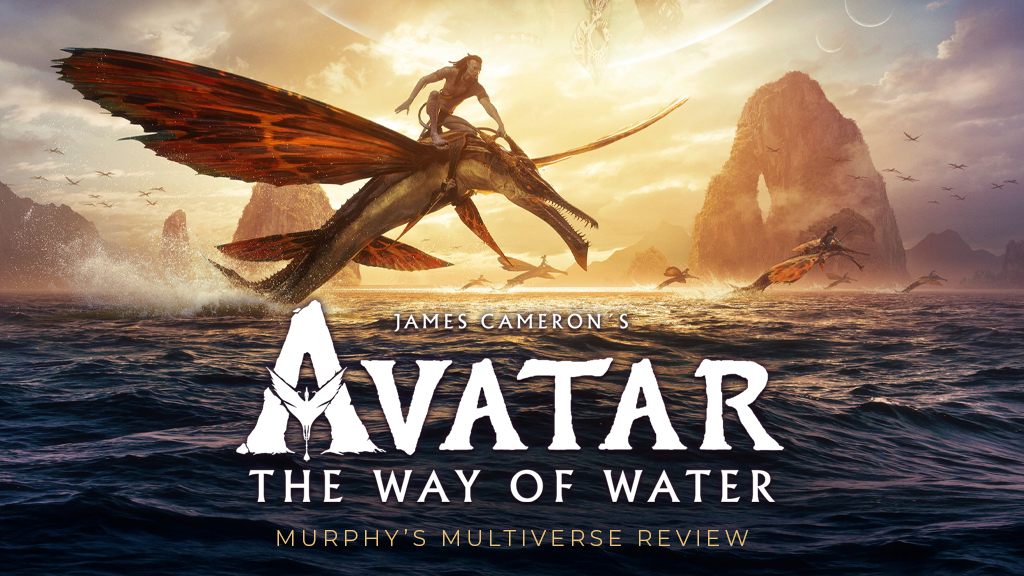
    From a technical standpoint, The Way of Water is an astounding achievement. Without exaggeration, the film feels like it could be the next step in blockbuster evolution. The world of Pandora is so exquisitely realized, that there are several moments that are likely to make audience members try reaching out to touch it. It cannot be accurately stated just how breathtaking the visuals are able to materialize in full Dolby 3D. Seeing the glisten of minuscule water droplets on the skin of a computer-generated alien should not feel so real. In some ways, it’s sort of unnatural just how practical it appears when a neon-colored fish glides through refracting sunbeams over rippling subaqueous sand dunes. Pure cinematic wizardry, which can only be described as real-life magic. It’s very clear how much time and money were sunk into this project, which is – if one is hoping to get what they paid for – a really good thing for Cameron and his team.

    What will be truly interesting, however, is the long-term public reaction to the sequel’s plot. The Way of Water is clearly a movie meant to capitalize on the visual medium of the theatrical experience, with special effects that push the boundary of cinema far further than its actual storytelling. Of course, this is not to say the storyline is in any way bad. It’s actually pretty darn good. There are several crowd-pleasing moments, heartbreaking developments, and sequences that remind the viewer why they love going to the movies. It’s just, at the end of the day, nothing that happens is all that surprising. Historically, Cameron is remarkably skilled at taking fairly simplistic, predictable plots and stretching them to their full potential. This doesn’t change in the second Avatar.

    The Way of Water doubles down on every trope Cameron has relied upon in the past, and even brings back a few devices the director used in the previous outing. It’s a whirlwind of cornball MacGuffins storming through a sea of undeniably cool set pieces. In fact, it might just be the most James Cameron movie to ever exist, both optically and narratively, and persists in being so at a ridiculously high level. A movie does not always need to be unique, plot-wise, to be memorable. It’s possible to stand by and revolve around the Joseph Campbell theory of a hero’s journey and do it so well that the audience leaves the theater feeling fulfilled and refreshed. In this regard, The Way of Water is Cameron‘s magnum opus. It’s everything he has produced thus far in his career, only amped to the next degree of entertainment.

    A minor gripe may be the film’s slight lack of resolve in its closing moments. While the major plot points are sufficiently wrapped up and reliably executed, there are a handful of plotlines emphasized earlier in the three-hour runtime that slowly fade away by the time of its conclusion. Assumedly, these are ideas that will be picked back up in the multiple planned sequels, but it is a little frustrating to see Cameron lean ever-so-lightly into the messiness of modern franchise-ifacation when the rest of the film is so tight. Shockingly tight, it must be said, for a movie so notably long. The pacing is excellent, and allows for quite a few ideas to be packed into one picture, but it would have been nice if all of those ideas were more efficiently packaged in the end.

    Avatar: The Way of Water is flawed, yes, but at length, it’s a force to be reckoned with. The film meets nearly every expectation set before it. A wild ride full of heart and astonishment, which sets a high bar for the next films to follow. Its inconsistencies are so few and far between that they’re often lost to the overall grandiosity of the cinematic experience. Truthfully, it’s hard to comprehend the idea of watching it on anything other than the biggest, loudest screen a person can find. $250 million went into the production of this sequel and every penny can be seen in the details. If there was a lack of hype for the Avatar franchise before The Way of Water, there absolutely will not be once it’s available to the public. Again, and this is important to remember, never bet against Cameron.

  • REVIEW: ‘Night at the Musem: Kamunrah Rises Again’

    REVIEW: ‘Night at the Musem: Kamunrah Rises Again’

    Over the course of 8 years, 20th Century Fox released a trio of Shawn Levy-helmed Night at the Museum films. While none of the films ever reached blockbuster status, 2006’s Night at the Museum sits at #100 on the all-time North American box office list and the series introduced some memorable and loveable characters to audiences. Disney acquired the franchise in its merger with Fox and decided to return the franchise to its animated roots (the film series is based on a 1993 children’s picture book written by Milan Trenc) and while the short film smartly shifts the focus to a new main character, it ultimately falls short of capitalizing on any nostalgia the audience might have for the original.

    One would assume that Disney’s decision to produce an animated follow-up was intended, at least in part, to rekindle some spark in a generation of people who found the magic in the franchise when it kicked off 16 years ago. Though it was never well-received critically, Night at the Museum has had a long shelf life and is the sort of film that audiences might find themselves sticking around to watch when they flip through the channels and find it on network television. Its first direct sequel, 2009’s Battle at the Smithsonian, did a little less business at the box office and dropped off in terms of audience engagement and by the time Secret of the Tomb debuted in 2014, audiences seemed to lose interest (indeed I did not recall a third film in the series had ever been made). In that sense, Disney had a big job to do in order to draw initiated fans back in and despite Kahmunrah Rises Again serving as essentially a highlight reel of everything fans loved about the live-action films, there’s too much missing to make fans of those films love this.

    The biggest obstacle for Kahmunrah Rises Again comes from an at times jarring replacement of the talent behind the characters. None of the original cast returns to voice their animated counterparts and the results range from heartbreaking (seeing Teddy Roosevelt and not hearing Robin Williams‘ trademark gusto hurts), to head-scratching (it took me the majority of the film to realize Zachary Levi was voicing Larry) to downright infuriating (Steve Zahn trying to imitate Owen Wilson). The final straw in this discombobulating exercise was the absence of one of the world’s preeminent and prolific voice actors as the villain of the piece; Hank Azaria, whose performance as Kahmunra stands as one of the funniest of his career, was replaced by Joseph Kamal. It’s not that the new voice actors dropped the ball; it’s simply that for fans of the original films, their presence can’t overcome the absences they mask.

    While Kahmunrah Rises Again’s reliance on the figures from the museum exhibits certainly takes familiar audience members out of the experience, the decision to shift to a new lead character does give the franchise a bit of hope. Now a high schooler, Night Guard Larry Daley’s son Nick, who has grown up aware of the magic of the museum, becomes the protagonist as he takes on the post of Night Guard for the Summer. While he mostly just stumbles through the same experiences his father has before, the new perspective does ultimately allow for a nice coming-of-age story for Nick.

    Night at the Museum probably isn’t among the major franchises Disney had in mind when they acquired some heavy assets from Fox. It’s not Alien, Predator or the boatload of Marvel characters that they’ve already put to use; rather, it’s a franchise that was already mostly abandoned by fans, making an attempt at a revival a curious choice. This animated feature film, while having no major deficiencies of its own and telling a fine story, isn’t likely to change anyone’s mind about the franchise and fans of the live-action films might find themselves feeling more cynical than anything.

    Night at the Museum: Kahmunrah Rises Again is now streaming on Disney Plus.

  • REVIEW: ‘Diary of a Wimpy Kid: Rodrick Rules’

    REVIEW: ‘Diary of a Wimpy Kid: Rodrick Rules’

    Jeff Kinney’s Diary of a Wimpy Kid series has sold over 275 million books since the original was published in 2007. Over the last 15 years, Kinney has published 17 books in the main series, including Diary of a Wimpy Kid: Diper Överlöde, which was released just this past October. The beloved series has expanded into supplemental books, a spinoff series and live-action films, and, most recently, animated films on Disney Plus. The first film, Diary of a Wimpy Kid, debuted on the streaming service in December of 2021 and now the first sequel, Diary of a Wimpy Kid: Rodrick Rules, has followed.

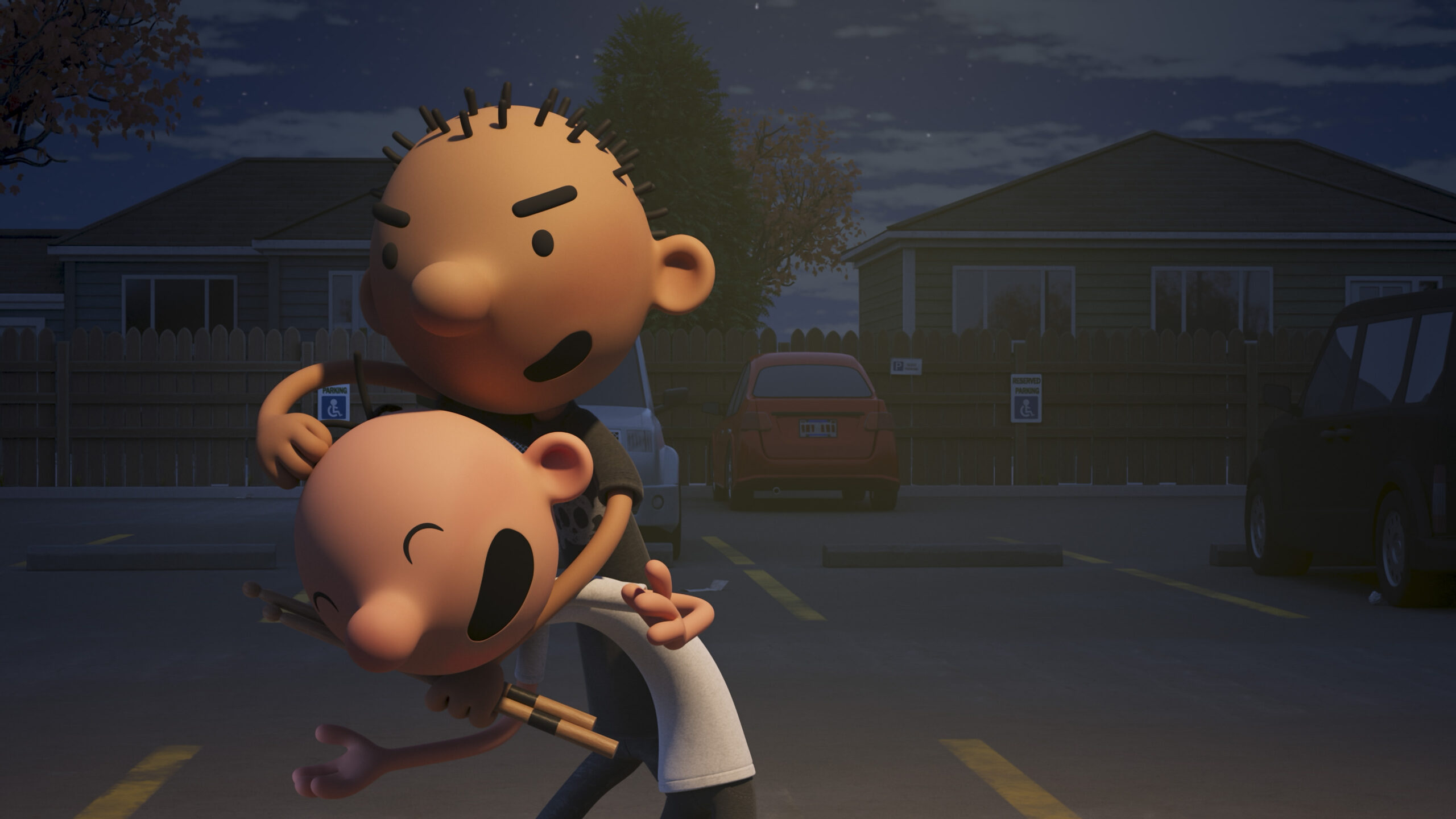
    Much like 2021’s entry into what looks to be a growing animated franchise (the third book in the series is already being developed for release on Disney Plus) plays out over an easily-digestible runtime. Also, like 2021’s entry (and presumably all future entries) Kinney has adapted his own original work into the screenplay which makes Rodrick Rules feel like a bit of a highlight reel of all the important beats from the book. At the heart of the story is the relationship between the franchise’s central character, Greg, and his older brother, notorious slacker Rodrick. Greg, voiced by a returning Brady Noon, finds himself with some leverage over Rodrick when the older brother throws a huge party when their parents are away. Over the course of the film, Greg’s relationship with Rodrick is tested and strained as a result of said leverage allowing the nature of family, specifically sibling relationships, to be explored. A visit with their grandfather, voiced by Ed Asner in his final role, sets the stage for Greg to do some tough thinking about the present and future of his relationship with Rodrick.

    (L-R): Mackie (voiced by Nathan Arenas), Bill (voiced by Jimmy Tatro), Rodrick (voiced by Hunter Dillon), and Larry (voiced by Hudson Yang) from 20th Century Studios’ DIARY OF A WIMPY KID: RODRICK RULES. © 2022 20th Century Studios.

    Though Diary of a Wimpy Kid: Rodrick Rules plays as a CliffsNotes version of either the novel or the 2011 live-action film, the theme comes across loud and clear, especially during the climax at the talent show in which Greg, following an emotional conversation with his grandfather, makes a choice about where he will stand in his relationship with Rodrick. Like 2021’s Diary of a Wimpy Kid, Rodrick Rules seems aimed at younger audiences. The animation, the short runtime, the shortened plot and the simple themes should all make this and future installments fit Kinney’s goals of telling more emotional stories on Disney Plus.

  • REVIEW: Guillermo del Toro and Mark Gustafson’s ‘Pinocchio’

    REVIEW: Guillermo del Toro and Mark Gustafson’s ‘Pinocchio’

    Pinocchio, once a beloved animated classic from Disney, was given new life this year thanks to a hybrid live-action film from Disney and director Robert Zemeckis and a stop-motion take from Guillermo del Toro and Mark Gustafson. Disney’s take, which starred Tom Hanks as Geppetto, was considered a misfire by both audiences and critics alike. While featuring an all-star cast, the movie itself often felt wooden. There was no charm to it, no spark, so it’s not entirely surprising then that many have been curious about Del Toro’s take on the legendary tale, especially given he has called the fable one close to his heart. While it’s often uneven, Del Toro and Gustafson have crafted a visually stunning adaptation that is incredibly emotional and worthy of a watch.

    When it comes to the tale of Pinocchio, the story basics of the story are well-known. A boy puppet eager to become a real boy, and who must prove himself worthy of doing so. That story is still at the center of this take, but Del Toro and Gustafson manage to craft an even more compelling tale around it. While the Disney remake suggested Geppetto had a son, we never really learned much about him or what happened to him. In this version of Pinocchio, though, we get to see Geppetto and his son, Carlo, and their relationship before a tragedy cuts their time together short. It’s an incredibly heartbreaking moment that is handled with such care. It’s this particular scene that separates this version of Pinocchio from those before it – this isn’t a sugar-coated child’s tale. The emotion radiates off the screen thanks to the beautifully done stop-motion and the agony in the voice work.

    That isn’t to say this adaptation of Pinocchio is without its flaws. This stop-motion take often feels like it drags, while somehow also managing to jump all over the place. It can be incredibly off-putting, but those able to make it beyond those moments will find that the uneven journey results in a beautifully told story. In a letter to the press, Del Toro explained that when crafting this take on Pinocchio, he wanted to showcase just how “brief and significant we are in our time with each other.” And although the film sometimes stumbles over its handling of death, it ultimately does highlight the heartbreaking reality of life and death.

    I longed to do a film full of light, that would explain how brief and significant we are in our time with each other – and I wanted to do it with heartbreaking beauty and rendered by the most human craftsmanship. So, I chose one of the most delicate, artisanal forms of our art form – stop motion animation – and pushed it as much as possible.

    Del Toro

    The classic Disney songs will, obviously, not be present in this take. And that does, unfortunately, hurt the movie as the songs introduced in their place are forgettable and don’t really add much to the film overall. In fact, most of them go on far longer than necessary. Much like the film itself. While a visual feast packed with an emotional story, the movie’s nearly two-hour runtime is definitely felt by the end.

    All in all: Pinocchio is a heartfelt movie that welcomes its viewers to reconsider what we leave in our wake upon death. It’s a heartbreaking tale meant to remind us to live.

  • REVIEW: ‘Disenchanted’

    REVIEW: ‘Disenchanted’

    Disney’s Enchanted, which saw Amy Adams star as the out of place princess, Giselle, was a huge hit for the studio when it was first released. The movie managed to move swiftly between animation and live action to tell its fairy tale, whether it be through dialogue or song. It was a special movie, one filled with magic and heart, that seemed to resonate with audiences given its $340 million box office haul. So, it’s not entirely surprising then that the studio gave the film a sequel – albeit fifteen years later. And while it’s a fun follow-up, Disenchanted often lacks the spark that made Enchanted so wonderful.

    Disenchanted, like Enchanted, sees Adams’ Giselle longing for her life in Andalasia. She misses the magic and the charm of her home, but also wants to remain with the family she’s created with Robert (Patrick Dempsey) and Morgan (Gabriella Baldacchino). She’s become the mother she always wanted to be to both Morgan and Sofia, the child she had with Patrick. But as she feels Morgan, who is now a teenager, start to pull away, Giselle becomes desperate to reclaim some of the magic the two shared. And so, a wish is made that she hopes will fix her relationship with Morgan and her wish to feel more at home. Unfortunately, though, Giselle’s wish might just cost her everything in the process – including herself.

    The movie as a whole is delightful. It’s fun, and it does a pretty great job at taking the evil stepmother trope from fairy tales and using it to its advantage. There are moments the story is predictable, sure, but for the most part, it’s a solid story about love and family. The main problem Disenchanted faces is that it simply can’t recapture the true magic of Enchanted. The blending of animation, live-action and music in Enchanted was one of its greatest strengths; it might’ve taken the audience a bit to get a feel for the film, but once they did, they were easily hooked. The acting was superb. The writing was fun. And the music, the music was one of the film’s biggest selling points. The same cannot be said for Disenchanted. The songs are nowhere near as memorable as True Love’s Kiss”, “That’s How You Knowor even “Happy Working Song.” This, of course, is not because the cast lacks the talent to deliver the songs properly. (As previously noted, the songs were written expertly for the actors and their strengths.) The cast absolutely nails the vocals – especially Idina Menzel – it’s just that the music is easy to forget. It doesn’t leave a lasting impression. And some of the songs simply seem to go on far too long.

    Thankfully, though, the music is admittedly the only big problem Disenchanted suffers from. Adams, as always, is fantastic as Giselle; the character is given a bigger storyline in this film, one that allows her to both grow and fail, and Adams fully commits to the role. In her scenes alongside Maya Rudolph, a great actress in her own right, Adams still manages to steal the show. It’s fascinating watching her switch between both charming and menacing, and she does it with such ease. And the supporting cast – Dempsey, Baldacchino, Menzel, and James Marsden – are all great, too, with each being far more to do this time around. Dempsey and Menzel, two characters that while good in the first film, finally feel like they’ve had time to truly develop their characters – Menzel, especially. Two actresses that are sadly wasted in their roles, though, are Yvette Nicole Brown as Rosaleen and Jayma Mays as Ruby who serve as sidekicks to Rudolph’s villainous character. While the film was trying to retain the usual stereotypes found in fairytales, both Rosaleen and Ruby felt like characters that lacked any substance. They were merely minions that, outside of a single key scene, really seemed to lack purpose which is unfortunate as both actresses are incredibly talented.

    Even with its flaws, though, Disenchanted manages to be enchanting. It’s not a perfect film by any means, and it’ll never be as good as the first film, but it’s still an enjoyable time. The music is forgettable, and the plot is rather predictable, but Disenchanted still has a special sort of charm to it. One can only hope Adams gets to return as Giselle at least one more time to craft the perfect fairytale ending once and for all.

  • REVIEW: ‘Christmas with You’

    REVIEW: ‘Christmas with You’

    November marks that time of year when networks and retailers begin their seasonal push for the holidays. The Hallmark Channel essentially becomes the Christmas movie channel, and commercials seek to remind customers the Holidays are fast approaching. Over the years, Netflix has sought to try and capture some of that Christmas magic. And the streaming giant has successfully done so with The Princess Switch films and the Christmas Prince series. Now, Netflix is looking to expand its holiday collection even further with the addition of Christmas with You.

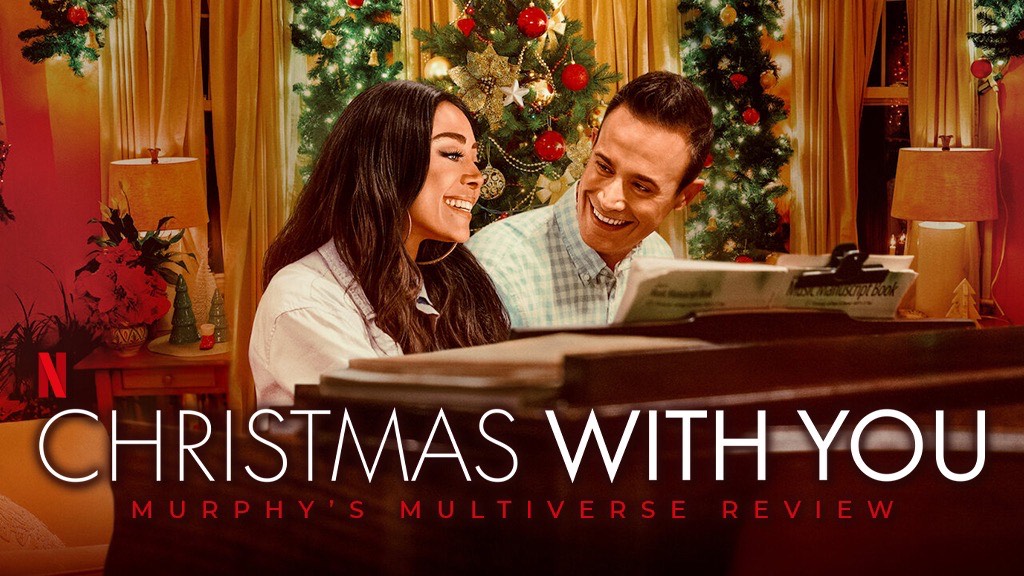
    Christmas with You follows the usual Christmas movie formula. One party forgets why Christmas is special, while the other party helps to remind them after they return “home” or “to their roots” for answers. It’s a popular trope because it works so wonderfully with the holidays. This movie, however, decides to throw in a teeny-tiny hiccup into the mix as it includes the harsh realities of the music industry. Christmas with You opens with a very early 2000s pop-star sequence as our leading lady, Angelina (Aimee Garcia), films a video for one of her songs. She’s had a long music career and has done everything in her power to stay relevant in a constantly changing climate – including restricting her diet, faking a relationship and changing up her look and sound as needed. But when she’s told she needs to deliver a hit Christmas song in order to stay relevant, Angelina decides it is time to do something different and truly connect with her fans. What happens next will change everything for the pop star.

    Simple premise, absolutely, and yet, Christmas with You still manages to be a delight to watch. Garcia delivers a great performance – and a believable one at that – while her leading man, played by Freddy Prinze Jr., seems to struggle from start to finish. Despite Prinze Jr. overacting each and every scene he’s in, Christmas with You is somehow captivating. Is any of it realistic? No. But is it a nice escapist fantasy? Yes. It’s a movie about family, love, and allowing oneself to be authentic.

    It also tackles the realities female artists face within the music industry – things we’ve seen mentioned by some of pop’s biggest stars. Angelina struggles with eating, fearful of gaining weight. She struggles with being perceived as older or old, knowing how quickly the industry will write her off in favor of a younger star. She also seems keen to forgo her own happiness in favor of appeasing the record label because she spent so long trying to build her career, she’s fearful of losing it. It’s a rather depressing topic to take in with such a cheerful movie, but the two blend together wonderfully. Realistic or not, the fact that Christmas with You exists as more than a Christmas movie is notable. The cheese factor is there, yes, and that only makes it all the better — but there’s also heart in this movie, a whole lot of it.

    Final verdict: Netflix’s Christmas with You is an adorable Christmas movie that is a million times better than anything Hallmark has to offer.

  • REVIEW: ‘The English’ Tells a Bleak Story on a Beautiful Canvas

    REVIEW: ‘The English’ Tells a Bleak Story on a Beautiful Canvas

    There’s always something about the Wild West that has been turned into a more “heroic” showcase of the good Sherrif taking down the bad. Even when people are being shown at their worst, there’s generally a very specific view that is offered with these kinds of stories to not lose the audience in the depravity reflected of a time we barely can imagine the way it was lived. The English doesn’t hold back in that regard to offer the bleak view you’d expect from that time. At its center, it keeps two hopeful souls to center the story’s most bleak moments.

    There is something honest about the portrayal of that time and the people that lived through it. In this story, there’s no true right or wrong but people simply trying to find a way to survive. At its center, we have the simple story of Emily Blunt‘s Cornelia Locke and Chaske Spencer‘s Sgt. Eli Whipp. Two strangers meet at a crossroads of fate which ends up intertwining in unlikely ways throughout their journey. There’s a tough balance this story has to handle to not fall into rather questionable territory, but it manages to keep that sturdy line throughout.

    The series is on the slower side of pacing, which is surprising given the six episodes given to explore a rather simple story. At many points in time, a story is being spun beyond our leading two which works at times but also leaves you wanting more from the dynamic that was set up. A lot of time is spent in this time period with an unflinching eye that does evoke a “who do you trust” mentality in the viewer throughout. It’s the series’ most effective weapon to establish a believable world these characters live in and the challenges set given their own unique backgrounds.

    Spencer‘s performance is strong throughout, as Whipp is put into positions that ostracize him from either side of the conflict in this world. Once the safety belt is off early on, the series doesn’t waste time to showcase just how brutal this world is and it adds to the bleak outlook of this time period. He’s put to the test often, and there’s a subtlety in how he handles the character; fitting for the world he’s living through. We see how these challenges try to push him in one direction, while he tries to stay true to his own path.

    On the other side, Emily Blunt gives us the look at a person changing as a result of events unfolding around her. She starts off innocent in a world ready to devour her. It almost does if it weren’t for surprising help that would push her further down a path of change. It’s refreshing to see a character that starts off on the meeker side and see her adapt to this dangerous place. She still shows her softer side throughout and it’s not that consequences don’t affect her; she simply has to live with it for as long as possible.

    There are some moments where the story tends to take its time before suddenly rushing. Given its mostly slow pace, it feels like a suprrising rush through plotlines that seemingly are relevant before completely left behind. It also seems to set up a mystery with additional characters that sometimes get sidelined and creates this uncertainty about how exactly it’ll tie together. At times the story feels like it could’ve been told with fewer episodes, but in others, it feels just right.

    It should be highlighted that this bleak story is punctuated by the irony of its beautiful shots. Some of the beautiful shots act as a contrast to the dark world they live in. The cinematography is worth highlighting at times even if it does seem to rely mainly on dialogue. It doesn’t reinvent the wheel, but there’s no necessity to do so. Director Hugo Blick makes great use of shot composition to build up tension, which is highlighted by a great score by Federico Jusid.

    The English is a recommendation for those that enjoy something with a slower pace and more personal storytelling. It’s not quite your typical Western but doesn’t shy away from elements that are familiar to fans of the genre. What makes it stand out is how it tells a bleak story on a beautiful canvas, not shying away from the darker sides of a world long forgotten while still trying to keep that glimmer of hope alive. We all face our personal demons, but sometimes the question is if the world around us makes us confront them.

  • REVIEW: ‘Nope’ Blu-Ray

    REVIEW: ‘Nope’ Blu-Ray

    Jordan Peele’s latest film, Nope, is officially out on Blu-Ray and DVD today. To celebrate the movie’s home release, we were provided a Blu-Ray copy of Nope in advance for review. With that in mind, we take a closer look at the extras included on the Nope Blu-Ray and determine if the film is worth picking up.

    There’s no denying Peele’s talent – both as a filmmaker and actor. He has a unique vision and each of his films brings something new. While Nope isn’t as strong as his prior efforts, Get Out and Us, it’s still a hell of a ride that audiences will thoroughly enjoy. For that reason alone, Nope is surely worth picking up. Nothing will beat experiencing this one on a huge screen with an audience, but even at home, Nope is still a well-crafted film worthy of repeat viewings.

    While a good movie, the extras, unfortunately, don’t really offer much. For fans, deleted scenes are often a huge selling point, because they’re eager to see what had to be cut. Sometimes, those deleted scenes are great. In this case, though, it’s clear they were cut for a reason. Not a single one would’ve added anything special to Nope; watching them, you can understand why they were cut because they ultimately would’ve halted the story’s progression. So, in this instance, there’s no reason to pick up a physical copy of Nope for deleted scenes. And even the gag scenes are pretty boring. They’re short, and honestly, lack any real charm or humor. There’s simply not much there, and that’s not necessarily a bad thing. But the two usual things fans look forward to with home releases just lack any importance here.

    What does prove to be a selling point for Nope, however, is the inclusion of Shadows: The Making of Nope. This behind-the-scenes feature that includes Peele, as well as his leading cast, is a pretty great exploration of the film and how it was made. Getting a deep dive into Peele’s world and the movie itself is fascinating. Two other featurettes included on the Blu-Ray are Call Him Jean Jacket and Mystery Man of the Muybridge also prove to be worthy of a view. While not as intriguing as Shadows, both featurettes are entertaining in their own right.

    In the end, while the Blu-Ray doesn’t offer much in the way of bonus features, there’s still plenty of reason to pick up a copy of Nope on Blu-Ray. With stellar performances by both Keke Palmer and Daniel Kaluuya, Nope on Blu-Ray is still worth picking up. After all, it’s not often a film this ambitious, weird, and thrilling hits.

  • REVIEW: ‘Black Adam’ Brings A Lot of Lightning, But Very Little Spark

    REVIEW: ‘Black Adam’ Brings A Lot of Lightning, But Very Little Spark

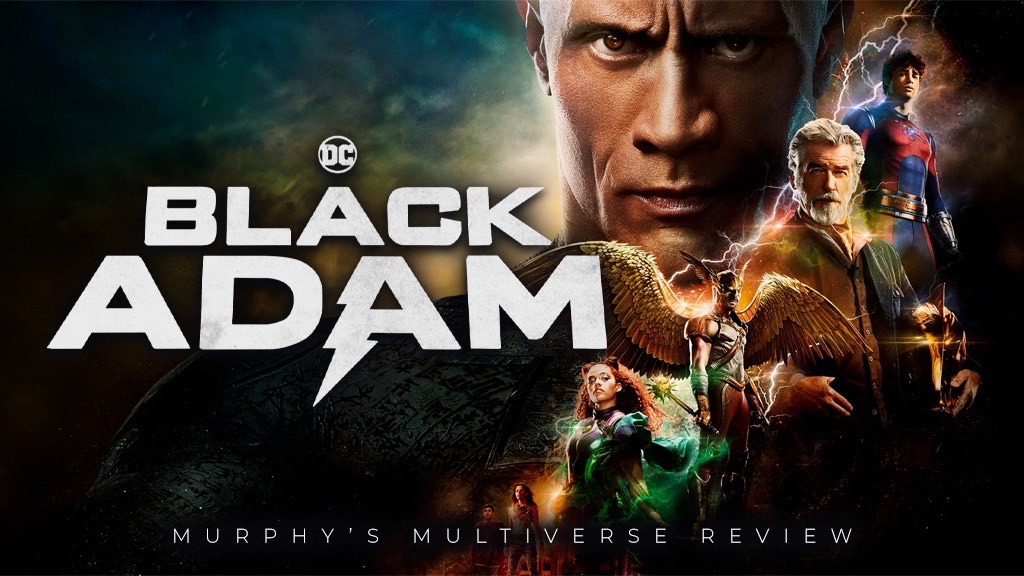
    Black Adam is a movie that is trying very hard. It is perhaps the perfect artifact of the ethos of its star, who has toiled endlessly for over a decade to bring it to the big screen, and has tried through force of will alone to make the title character as ubiquitous in the comic movie landscape as he is. Dwayne “The Rock” Johnson, and his tireless work ethic, is all over the movie. But sadly, effort doesn’t equal excellence, and when it comes to the execution of filmmaking, Black Adam falls quite short of the mark.

    By now, you’re probably privy to the big spoiler, which I won’t get into here. However, it is the unstoppable nature of its hero (with a pretty massive exception that I’ll get to later) that looms large over every minute of the runtime, putting a massive drag on the film’s stakes. Even though the Justice Society of America — played with varying levels of charisma and watchability by Pierce Brosnan (Dr. Fate), Aldis Hodge (Hawkman), Quintessa Swindell (Cyclone) and Noah Centineo (Atom Smasher) — are positioned as formidable heroes in their own right, a film which tells us and shows us over and over again that Johnson’s Teth-Adam is without peer can only truly evoke one possible other, even as it ostensibly builds to giving our protagonist his equal and opposite antagonist. And indeed, the largest audience reaction by far came in the stinger, when the true payoff happens.

    But as for the “true” movie, it centers around an ancient hero imbued with the powers of SHAZAM (a multifaceted acronym, it would appear, as the god powers that comprise his set of abilities come from Egyptian deities instead of Greek ones) who defeats an ancient despot in the ancient fictitious country of Kahndaq before being lost to history. In present-day Kahndaq, a vague international group of foreign mercenaries and military occupiers repress the modern citizenry, who still look favorably to their legendary “champion” from five millennia previous, and are eager to embrace the force of destruction that is Teth-Adam as their modern-day defender, despite the fact that his methods are far more extreme than the ones traditional superheroes embrace.

    Sarah Shahi‘s Adrianna Tomaz, her son Amon (Bodhi Sabonghi), and her brother Karim (Mohammed Amer) try really hard to ground this story in something real and human, with very mixed results. On one hand, you want to root for the archeologist who wants to preserve her family’s tradition and her country’s history from the would-be colonizers who mine the land of its (definitely not a plot contrivance) natural resources and seek to use a (100% MacGuffin) ancient artifact to unleash undefinable power upon the world. But on the other hand, Shahi’s earnest likability can only do so much to hide a pretty standard and predictable plot, with such generic villains and the betrayals and life-or-death situations exactly where you’d expect them to be.

    The dynamic between Amon and Teth-Adam wants to be comparable to Edward Furlong and Arnold Schwarzenegger‘s dynamic in Terminator 2, with the plucky teenager playing off of the fairly wooden and unfeeling killing machine while teaching him how to navigate the familiar world. (There’s a recurring catchphrase gag that tries really hard to land.) It’s definitely admirable that through him, the film has a lot to say about the universal nature of superhero fandom, even in the face of superheroes who seem to favor a particular aesthetic and pursue a more narrow agenda.

    The JSA represent this idea, and it’s in the execution of this story that the flaws in the script are at their most apparent. As the movie chooses to present them, they are a quasi-covert superhero strike force who act at the behest of Amanda Waller and can go anywhere in the world to execute police actions, with little to no regard for the will of the locals. Their (super-vague) general mission is to prevent destabilization, and their specific mission is to neutralize Teth-Adam, who, according to the vagaries of the plot, cannot be permitted to exist in the modern world as a living weapon of mass destruction. Any excuses to see superheroes fight, I suppose.

    The fights, and the action overall, are solid, but they are marred by distractingly bad needle drops and overuse of slow-mo. Jaume Collet-Serra seemed almost amateurish in his employment of those techniques, as they represented the most glaring aspect of the movie that a director with a better eye and ear would have elevated. And the less said about the third-act CGI fight the better.

    Then there’s [SPOILER ALERT] the Eternium of it all. The plot required that the Kahndaqi people be forced to mine a very valuable mineral both in the past and present, but the name is almost unforgivable, as it signaled to the audience that they would have to stomach a magical metal that would figure prominently into the story. But making Eternium into essentially Teth-Adam’s kryptonite was unnecessary and misguided, especially because it was simultaneously overutilized and underutilized as a “do everything” material, in a film that already includes Nth metal.

    Overall, Black Adam, while fun, wants to be better than it is. The themes, the emotional stakes, and the desire to do DCEU world-building are admirable. And if future films wanted to build on this, I wouldn’t be opposed to it. But this film is trying too hard. There was a lot of potential – both in the cast and the story. But in its execution, Black Adam nets out at “aggressively mediocre.” The hierarchy of power in the DC Extended Universe may have changed, but the hierarchy of quality did not.

    6/10

  • REVIEW: ‘The School For Good & Evil’

    REVIEW: ‘The School For Good & Evil’

    Netflix’s The School For Good and Evil is based on the bestselling series of novels by author Soman Chainani and illustrator Iacopo Bruno. It tells the story of two young girls – Sophia and Agatha – who soon find their less-than-stellar lives changed forever once they’re transported to the School of Good and Evil. It’s a simple plot, one that isn’t exactly brand new, and yet, it was given the movie treatment by Netflix with some huge stars attached. It should’ve been incredibly exciting, right? Sadly, that wasn’t necessarily the case.

    The School For Good and Evil stars Sophia Anne Caruso as Sophie and Sofia Wylie as Agatha/Auggie. The young girls are the best of friends, having formed a bond after the death of Sophie’s mother when they were both younger. They’re both outcasts in their small town of Gavaldon; Sophie is teased because of her love of fairy tales while Auggie is deemed a witch by the folks in her town. After one bad day too many, Sophie seeks to escape to The School of Good and Evil, a school she’s heard about where she believes she’ll have a chance at the life she’s longed for. But Auggie isn’t willing to let her leave, not wanting to be left behind in Gavaldon where she’ll be tormented daily with no one to confide in without Sophie. This leads to both girls being pulled to the School of Good and Evil, but with surprising results.

    The movie isn’t entirely bad. In fact, most of the film is rather delightful, but it is quite messy. From so-so CGI work to off-putting music choices, The School For Good and Evil often feels rushed. With a cast that includes the likes of Charlize Theron, Kerry Washington and Laurence Fishburne, it’s hard not to enjoy the absurdity of it all. Theron and Washington are a delight and deserve far more screentime than they are allotted. Theron chews the scenery as the headmistress of the School of Evil, while Washington charms as the headmistress of the School of Good. And in the very limited time she’s on screen, Michelle Yeoh as Professor Anemone is fantastic. Perhaps the best surprise, though, is how great Fishburne is as the School Master. He’s charming, mysterious and can sometimes be conniving. With a stellar adult cast, it’s a shame that the younger cast is so inconsistent. Wylie’s Agatha carries the movie, and Caruso’s performance often wavers. The emotional moments the duo share, though, are great and help to sell the story of friendship at the film’s core.

    While The School For Good and Evil often feels like a poor Disney Channel Original Movie, it does pack a hell of an emotional punch. The movie is ultimately about the complexities of humanity – people are not merely good or bad, and the movie explores this with ease. All in all, The School For Good & Evil can often be uneven, but it’s still an enjoyable watch in the end. For young tweens struggling to understand themselves, The School For Good & Evil offers a positive message of friendship and learning to love ourselves. So, despite the bad, there’s plenty of good in The School For Good and Evil… but the good doesn’t come without the bad.