Tag: Movie Reviews

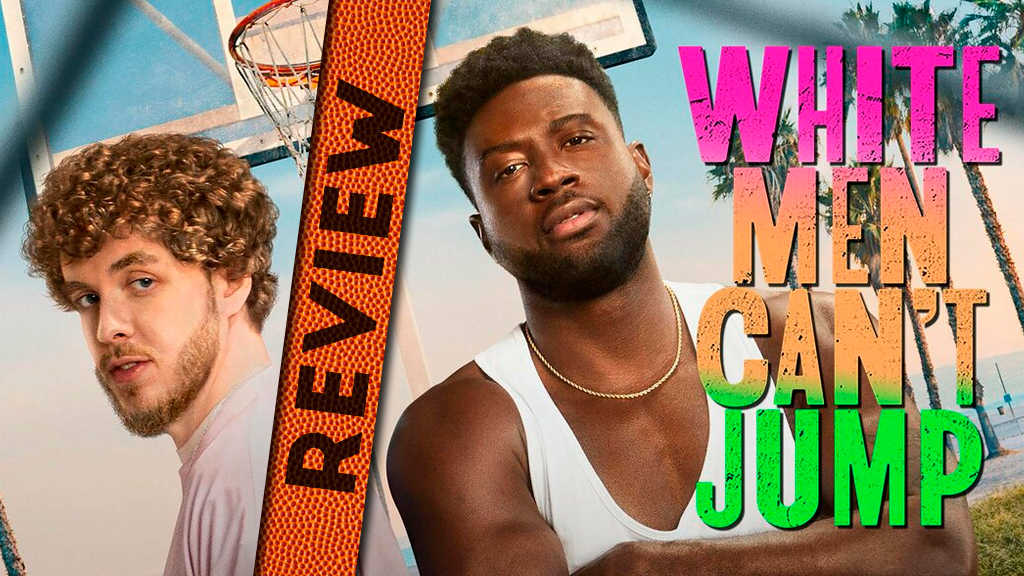
  • REVIEW: ‘White Men Can’t Jump’

    REVIEW: ‘White Men Can’t Jump’

    Reboots, remakes, requels, revivals and legacy sequels have carved out quite a niche in Hollywood. 2022 put Robert Pattinson in the cowl and Tom Cruise back in the cockpit as Maverick 36 years later. 2023 has already rolled out a superior Super Mario Bros. film, a new installment in the Evil Dead franchise, a requel sequel in Scream VI and will see a live-action The Little Mermaid, Timothee Chalamet bring Willy Wonka back to the screen and Harrison Ford back in action as Indiana Jones 15 years after his last big-screen adventure. Lost in the shuffle of all those big tentpoles films is a retelling of the 1986 classic White Men Can’t Jump and while it may not have been on your radar, you’ll want to add it to your list.

    Directed by L.A.-born and raised Calmatic, 2023’s White Men Can’t Jump smartly avoids one of the biggest pitfalls that too often plague remakes: trying to actually remake the original film. Calmatic, who cut his filmmaking teeth in the world of music videos, describes the film not as a remake but as “sampling” of the 1986 original in which he made bits of the classic feel new and familiar. Given the 1986 version starred two Hollywood icons in Woody Harrelson and Wesley Snipes, Calmatic’s choice to create two original characters who could capture the spirit of the original film’s odd couple dynamic with modern sensibilities gave his film a chance to stand on its own…and it certainly does. Sinqua Walls‘ Kamal and Jack Harlow‘s Jeremy don’t have to be Sidney Deane and Billy Hoyle because 37 years later, why would they be? So while the name of the game remains the same–hustling the streetball circuit of L.A.–the players come complete with modern glow ups that give the film a foundation of heart and soul beneath the humor.

    (L-R): Jack Harlow as Jeremy and Sinqua Walls as Kamal in 20th Century Studios’ WHITE MEN CAN’T JUMP, exclusively on Hulu. Photo by Parrish Lewis. © 2023 20th Century Studios. All Rights Reserved.

    And while the film and its actors exhibit plenty of range, White Men Can’t Jump is simply a good time. Walls and Harlow share an easy chemistry that allows the comedy between the two to feel as natural as their on-court game. Myles Bullock and Vince Staples, who play Walls‘ Kamal’s buddies Renzo and Speedy, might not add much in the way of support on the court but more than fill their roles as additional comedic relief. Laura Harrier and Teyana Taylor, the partners of Harlow’s Jeremy and Walls‘ Kamal, respectively, may not get quite enough to do–and neither gets as much to do as Rosie Perez’s memorable Gloria in the 1986 film–but certainly help fill out who Jeremy and Kamal are. Given what the film sets out to accomplish in its modest 101-minute runtime, the bulk of it is understandably focused on developing its co-leads. So much so that not even the great Lance Reddick, in one of his final performances, gets much to do. Ultimately, however, the focus on Jeremy and Kamal pays off as both Harlow and Walls give solid individual performances but truly shine when their together.

    Hulu’s White Men Can’t Jump works in such a way that fans of the 1986 film will find resonance in Calmatic’s sampling and those who have never seen the original will find plenty to enjoy. Whether revisiting the courts of Venice Beach, recreating the original film’s “Rodney” scene with a flamethrower or giving Kamal an origin that would never have fit in 1986, Calmatic didn’t miss with his directorial choices. As one of my top five favorite Pistons always said, “Ball don’t lie.” White Men Can’t Jump should be on your list of 2023 re-whatevers.
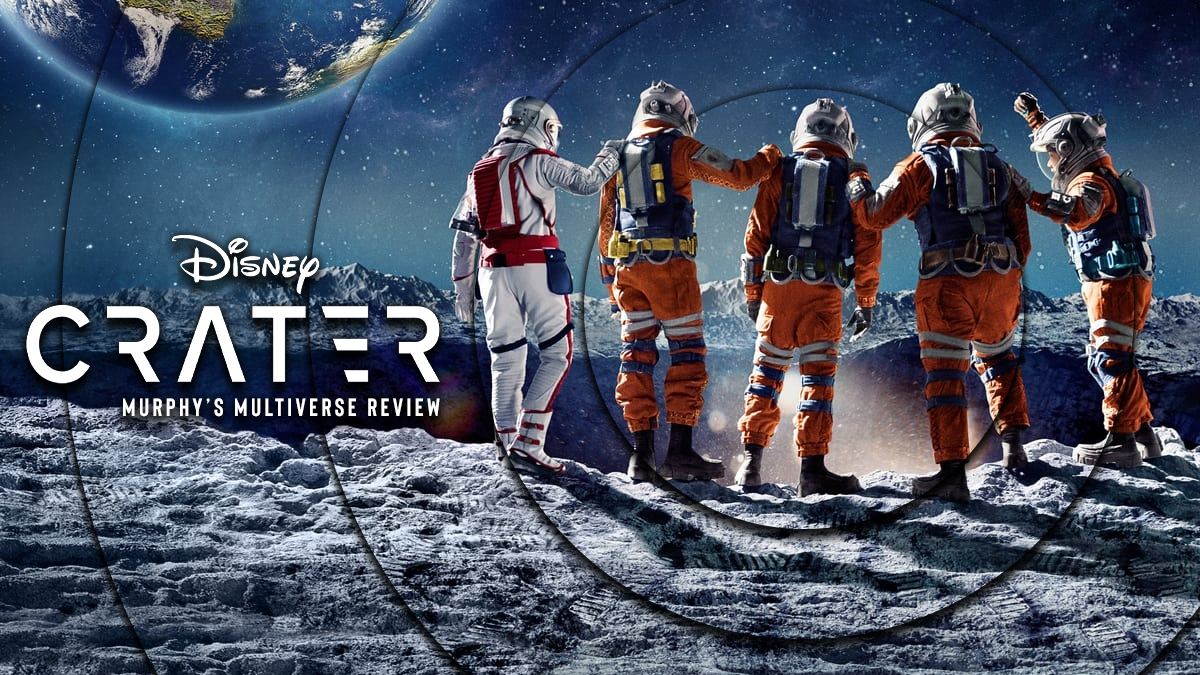
  • REVIEW: ‘Crater’ Digs Deep into the Innocence of Youth

    REVIEW: ‘Crater’ Digs Deep into the Innocence of Youth

    In 2015, screenwriter John Griffin produced an unsolicited screenplay that drew rave reviews, finding itself with the fifth most votes on that year’s Black List, an annual list of Hollywood’s best, unproduced screenplays. Eight years and one major media merger later, Griffin’s screenplay, Crater, helmed by 13 Reasons Why and The Stanford Prison Experiment director Kyle Patrick Alvarez is set to hit Disney Plus and, as it turns out, the Hollywood execs were right about the potential in the script. Crater is an innocent and heart-warming coming-of-age story with hints of inspiration from genre classics such as Stand By Me, The Goonies and Ferris Bueller’s Day Off.

    Set on a lunar colony in the year 2257, Crater tells the story of Isaiah Russell-Bailey’s Caleb and the group of friends that help him fulfill a promise following the death of his father in a mining accident. Caleb enlists his group of friends–and a newcomer in Mckenna Grace’s Addison–to help him keep that promise and together they embark on a road trip across the moon full of fun, danger and discovery.

    On the moon, five teens take an unauthorized and adventure-filled road trip just before one of them is to be sent away on a seventy-five year journey to another planet, leaving behind his best friends.

    Description of Crater from the 2015 Black Lists
    (L-R): Orson Hong as Borney, Thomas Boyce as Marcus, Billy Barratt as Dylan, Isaiah Russell-Bailey as Caleb and Mckenna Grace as Addison in CRATER, exclusively on Disney+. Photo courtesy of Disney. © 2023 Disney Enterprises, Inc. All Rights Reserved.

    The kids’ mission is simple enough: take Caleb on the road trip he had planned with his father before his untimely death. However, the situation becomes complicated when Caleb learns that the clock is ticking and that he’ll be leaving the moon for the paradise planet known as Omega in three days. Further complicating things is an impending meteor shower that will force the inhabitants of the lunar dome into a lockdown that will last…3 days. Caleb and crew make the decision to steal a lunar rover, hit the road and head to a place Caleb’s mother and father held dear: a crater that holds an unexpected treasure.

    Given that the friend group’s adventure takes up the vast majority of the film’s runtime, the chemistry among the actors had to be strong in order for the project to work; fortunately, the young actors work well together. While the key relationship is between Caleb and Billy Barratt‘s Dylan, each of the young core has more than ample opportunity in the spotlight. Grace is great in her supporting role as Addison, whose intelligence and emotional maturity help center the group during some more frantic moments and the odd couple buddy dynamic between almost-too-mellow Thomas Boyce‘s Marcus and Orson Hong‘s WAY-over-the-top Borney adds humor and heart to the story.

    (L-R): Isaiah Russell-Bailey as Caleb, Mckenna Grace as Addison, Thomas Boyce as Marcus, Orson Hong as Borney and Billy Barratt as Dylan in CRATER, exclusively on Disney+. Photo courtesy of Disney. © 2023 Disney Enterprises, Inc. All Rights Reserved.

    Though the threat of danger is ever present as the kids make their way to the titular crater, the road trip is really about what every road trip is about: rebellion, introspection and the journey towards self-actualization. Caleb’s impending journey to Omega weighs heavily on him as not only will he never see his friends again, but given he’ll be in stasis for 75 years during the trip, they’ll all have had an entire lifetime of experiences that he’ll miss. And so, Caleb and his friends let it all hang out on their last few days together.

    Who will Caleb be without his parents and friends on Omega? Who will his friends become without him? These questions are explored and answered so innocently and authentically that Crater will make you remember what it’s like to be a teenager again and just how much of who you are at that time is determined by who you surround yourself with.

    Source: The Black List

  • REVIEW: ‘Guardians of the Galaxy Vol. 3’ Reminds Us Why We Love the MCU

    REVIEW: ‘Guardians of the Galaxy Vol. 3’ Reminds Us Why We Love the MCU

    With an Awesome Mix of humor, heart, action, drama, and off-the-wall imagination, James Gunn delivers the long-awaited conclusion to the cosmic trilogy that reminded us that We Are Groot. And like the familiar tree guy, this franchise has branched in unpredictable yet fascinating ways but has always remained rooted in themes of found family, redemption, and reinvention.

    In this third film, Gunn feels particularly confident and audacious as a filmmaker, pushing forward with a propulsive plot that knows when to release the tension with comedy and quirky character beats, as well as when to shift gears from heart-wrenching drama to awesome action and sci-fi space opera. There are some really fun set pieces and sequences, and only a couple of instances where things get a little too messy and chaotic. But overall, it’s a thrill ride visually.

    Much like he did in the first two entries, Gunn deftly employs his signature needle drops to guide us through the varying emotional beats and tonal shifts. In the center of the story is Rocket’s journey from raccoon to rogue, as we learn his origin, and that of his first found family of misfits, through a series of flashbacks. The film invites us to peer behind his tragic eyes, and from his perspective, we experience the longing, love, and loss that coalesces into regret, before finally coming to understand that Rocket’s emotional scars truly are as lasting as his physical ones. It is within these flashbacks that we also meet The High Evolutionary, a villain with the kind of god complex his name would suggest, and the capacity to make Rocket’s old wounds fresh.

    If you’re familiar with the comics, then you have a pretty good idea of what The High Evolutionary’s goals are, what lengths he’s willing to go through to achieve them, and just how many people he’s willing to kill or make suffer along the way (Hint: It’s all of them). And Chukwudi Iwuji performs the role to a T, knowing when to strike the notes of cold calculation, when to soften, and when to unleash his wrath. He’s not really an antagonist you root for in any fashion, and the movie never lets him off the hook, so by the time the bill comes due, the catharsis is earned.

    Chukwudi Iwuji as The High Evolutionary in Marvel Studios’ Guardians of the Galaxy Vol. 3. Photo courtesy of Marvel Studios. © 2023 MARVEL.

    Accompanying this main Rocket-centric story is the Peter Quill story, where he can’t get over the fact that Gamora 2, pulled from the timeline in Avengers: Endgame, missed all of the Phase 3 films, and he just can’t bring her up to speed on what she missed. Both Chris Pratt and Zoe Saldaña do a great job here, Zoe in particular. In a lot of ways she represents the viewer who doesn’t “get” the Guardians and what makes them special, but like the viewer, despite herself, she too is eventually moved by the adventure and finds her own groove to jam to.

    But all the Guardians have got moves. Mantis remains the most empathetic and intuitive, and Pom Klementieff‘s comedic chemistry with Dave Bautista‘s Drax remains as satisfying as it was in Guardians of the Galaxy Vol. 2 and the Guardians of the Galaxy Holiday Special. The juxtaposition between her emotional openness and Nebula’s cold precision and bluntness provides a different kind of energy, as their dramatic tension helps to balance the hijinks. Even newcomer Cosmo (voiced by Maria Bakalova) and the perennially underrated Kraglin (played by Sean Gunn) get their moments to shine. The family continues to grow, and though they may bicker, when it’s showtime, they find their harmony.

    Another newcomer to the Guardians story is Adam Warlock, played with flourish by Will Poulter as an ultra-powerful yet childlike being, who wants to impress his Sovereign mother figure (the returning Elizabeth Debicki), but whose hot temper constantly gets the best of him. Hardcore comic fans might find him confounding when compared to the cosmic near deity from the page, but the story leaves him with more than enough room to evolve. Keeping with the theme, after all.

    (L-R): Chris Pratt as Peter Quill/Star-Lord, Dave Bautista as Drax, Rocket (voiced by Bradley Cooper), Zoe Saldana as Gamora, Groot (voiced by Vin Diesel), Karen Gillan as Nebula, and Pom Klementieff as Mantis in Marvel Studios’ Guardians of the Galaxy Vol. 3. Photo courtesy of Marvel Studios. © 2023 MARVEL.

    What sets this trilogy apart from the other Marvel Cinematic Universe trilogies is that across the three films, the stories really do come full circle. Our heroes acknowledge the painful pasts that forged them, but they each stop being defined by them, and their arcs conclude with them finally being able to define themselves. And their Guardians compatriots, that aforementioned found family, grow to love and accept them, regardless of their respective flaws and scars. It’s a feel-good tale with a hopeful message, and by the end, you’re rocking out, from Knowhere to wherever the Guardians story travels next.

    Thus far, Phases 4 and 5 of the MCU have been polarizing, with very few projects leaving us with the “rah-rah” feeling that makes us want to sing its praises and go back for encores. But Guardians of the Galaxy Vol. 3 reminds us why we love these movies and reminds us of way back when, we were first Hooked On A Feeling.

    9.75/10

  • REVIEW: ‘Peter Pan & Wendy’ is Among Disney’s Best Live-Action Remakes

    REVIEW: ‘Peter Pan & Wendy’ is Among Disney’s Best Live-Action Remakes

    Peter Pan & Wendy joins the ranks of another live-action remake from Disney that debuted on Disney+. The former was Robert ZemeckisPinocchio remake from last year and 2019’s Lady and the Tramp. Yet, there’s something special this time with visionary director David Lowery at the helm after his work on The Green Knight creates a higher expectation of bringing Neverland to life in a whole new way. Does it live up to the original and can it change the experience some have had with recent live-action releases?

    There’s an interesting dynamic at play with how Peter Pan & Wendy adapts the original Disney film from 1953. A lot of familiar elements are here and most of the opening pretty much just echoes the animated classic. In some ways, the only thing it does is further highlight the bond between Wendy Darling (Ever Anderson) and her mother (Molly Parker) that becomes the center of her story in the original. Also, it’s funny seeing Alan Tudyk in another Disney film in another minor side role as George Darling.

    Her life is changed the moment Peter Pan (Alexander Molony) enters the picture and they are cast off into an adventure. It all feels so familiar and even drags on a tad bit, but that all suddenly changes the moment we travel to Neverland. The visuals kick off in such a beautiful manner that feels like something out of a surreal experience than just a bunch of kids using fairy dust in a long-forgotten realm. The sound design and visuals (with a cute little reference to the animated Peter with an iconic stance from the actor) just hit this tone that makes it feel like everything will be different from this point on.

    On one side, there is a lot more in this story compared to others. Tiger Lily (Alyssa Wapanatahk) has a better role in the story and gets her time to shine early on and is among the more notable side characters. We still follow similar plot points from the original but unlike other live-action remakes the film doesn’t really spend too much time on things that aren’t truly necessary. Hook’s introduction is handled great and I was surprised to see his men sing classic songs as a sea chanty.

    Speaking of, the biggest change this time around is in the way they handle Hook as well as his rivalry with Peter Pan. Jude Law gives quite a subdued performance for a character that was showcased as bumbling in the original animated series. There’s a beautiful balance at play highlighting his role in the story that has been changed to add more depth to his character and his ongoing battle with a child that refuses to grow up. This addition might be the second-best thing the film does besides casting Jim Gaffigan as an amazing Mr. Smee.

    What stands out in this film is truly its beauty. The sets feel like they tell a story and the updated looks of the Lost Boys’ home or even just the pirate ship lend to this world feeling way more fleshed out than ever before. You can also see him returning to the magic that made his other live-action remake, Pete’s Dragon from 2016, stand out even from the original. Even as elements remain the same, it feels just that slightly bit more mature when it needs to be and childish when it wants to have fun.

    The film embraces its own whimsy with the way it handles even the simplest scenes. There’s a fun irony of the most childish performances coming from the pirates that act a bit more unhinged unlike the children, who seemingly take things quite a bit more seriously. My only gripe would be Alexander Molony is a bit wooden in his performance. While you do get that arrogance you’d expect from Peter Pan, his character’s personal growth doesn’t truly feel reflected in his performance. He’s a great choice for the role but it just doesn’t quite come together here.

    The performances overall are great; the pirates are especially some of the bits I looked forward to seeing the most. John and Michael Darling (Joshua Pickering and Jacobi Jupe) have some fun moments but are mostly sidelined with the story taking a stronger focus on Wendy’s plot that gets intertwined a bit more into that of Hook’s and Peter Pan’s rather than her just taking don’t he role the original set upon her. Ironically, in a way, the story feels like it has grown up quite a bit since we last saw it in 1953, but it didn’t forget that childish charm that made it so special.

    At first, I was worried that this film would only retread familiar ground from the original but once we enter Neverland, it makes a story of my childhood feel new and fresh. There’s a lot more depth this time around that makes it stand out from others that simply feel like they are replicating the “feel” of the original and missed the heart of why we fell in love with these stories. The struggle of wanting to stay a child forever and growing up is a big conflict many of us go through even as we get lost in our work life. Sometimes we don’t truly leave that childishness behind and are a bit blind to the things that make us smile. You’ll cry, you’ll laugh and you’ll be astonished by some of the beautiful shots at play in Peter Pan and Wendy.

  • REVIEW: ‘The Super Mario Bros. Movie’ is the Mario Film We Wanted in 1993

    REVIEW: ‘The Super Mario Bros. Movie’ is the Mario Film We Wanted in 1993

    There’s been a surprisingly big discussion online surrounding The Super Mario Bros. Movie after critics seemingly felt quite mixed about the project. Nintendo’s first real foray into producing a project based on their IP mixed with Illumination adds a lot of pressure for this film to succeed. Box office-wise the film is set to break records left and right but the question remains if the plumber’s adventure to the Mushroom Kingdom truly translated well into animation after the questionable first attempt in live-action.

    What stands out is that the film is visually stunning and the designs are certainly true to the original game franchise; a sign that Nintendo had close control over their work to stay true to the original. Part of me did wish that the minions got a Paper Mario treatment with some unique standouts outside of a Toad wearing a backpack being one of the main characters. The worlds were captivating and it definitely ranks among Illumination’s more creative works, which was something I had some concern about as their overall design work can be quite plain.

    The biggest concern for some was the voice work with the film going all-in with the modern “big name actors” casting choices. Yet, I was surprised by Chris Pratt’s overall performance with some great performances here and there. Seth Rogen could’ve put in a bit more work to give Donkey Kong a more familiar voice, as we also just get his signature laugh in this film. He had some great moments but I won’t lie it felt like a missed opportunity given how iconic his voice is in Donkey Kong 64.

    Anya Taylor-Joy was okay as Princess Peach, she gave a good performance but it didn’t really stand out either. The true scene-stealers were Jack Black as Bowser and Charlie Day as Luigi. They both perfectly brought the right energy to these characters even if I do wish Luigi, who is cutely named Lu by Mario in this rendition, was given a bigger role in this film but perhaps we get a Luigi’s Mansion spinoff film one day.

    As much as I’ll definitely say I had a blast with the film, it does overall feel a bit rushed at parts. It didn’t really have a strong plot pulled together that would build upon each other but rather just wanted to hit some vignettes with loose character motivation to keep it together. Peach wants to protect her people and is willing to give up everything for it. Mario wants to prove to his family that he isn’t dragging his brother down with him, which actually was the best part of the film’s theme.

    Bowser has a neat surprise in his overall motivation that is inspired by some of the most recent entries in the Super Mario franchise, though I wished they kept it a secret for a longer period of time. Its overall issue is that it simply tries too much and doesn’t set a clear focus. We spend time with Bowser and find out his motivation, trying to create a dynamic between him and Mario even though they never face each other to build up to an eventual climax. Yet, it would’ve been great to actually have these two compete, he actively takes his brother away adding to one of the main conflicts in the film.

    Luigi taking Peach’s role in the story as confirmed in the trailers is a good way to add something new without falling into cliché territory but it all feels rather disconnected. We spend most of the film’s runtime building up to one storyline that is squashed after a fun action sequence. Mario’s main motivation set early on was probably the best jumping-off point they could’ve given the film but it never truly comes together to become its central theme until the last few minutes.

    Yet, even with these issues and Illumination’s usual hyper-fixation on including pop songs in sequences (especially with the now-confirmed fantastic Donkey Kong-inspired song having been scrapped), the film has heart. I still got a bit teary-eyed during the final moments. Mario and Luigi make a great pairing, which I didn’t think the film would make me care about for as little screen time they share. There’s heart here and it overshadows its very easter egg showcase, as there are a lot of them.

    There are certainly a lot of Easter eggs for long-time Nintendo fans and likely one of the major draws of this film. It knows it is playing to nostalgia in a big way, which is surprisingly more dominant than what Marvel has been accused of throughout the years. It wouldn’t be too surprised if they use this film as a jumping-off point for spinoffs moving forward and there’s a chance that they could get some of these elements together in a sequel.

    Best case, they start taking some more inspiration from Paper Mario or the Mario & Luigi games, as those had some really great storytelling. The first film had to ease viewers into this world but now there’s no stopping them from going all-in. Introduce a new villain in the form of Cackletta and the super memorable Fawful. Introduce viewers to Koopa’s normal living environments that are more than just those minions we witnessed in the film. Otherwise, these films might just end up as more of the same.

    Either way, the film is a blast through and through. Yes, it falls into some usual pitfalls but there’s still a lot of fun to have. The jokes land when they land. We have a surprisingly strong cast here that brings it together. Peaches will be trapped in my head for all eternity. The heart that this film has overshadows most of its issues, and while it doesn’t offer too much depth in its story, it still does what it needs to do to keep you engaged throughout. It’s definitely worth a watch and is the Mario film we wished the 1993 film was.

  • REVIEW: ‘Boston Strangler’

    REVIEW: ‘Boston Strangler’

    True crime stories have captured the imagination of audiences for decades, offering dramatic retellings that allow them to indulge in their morbid curiosities. Fans often find themselves interested in the psychology of criminals and, according to a study published in Social Psychology and Personality Science by Dr. Amanda Vicary, “the consumption of true crime is likely a subconscious effort to protect and educate oneself.” Writer-director Matt Ruskin‘s Boston Strangler capitalizes on the fascination with the genre to shine a light on two journalists who sought to protect and educate the women of Boston in the early 1960s as a serial killer–or two–terrorized Boston at a time when the concept of serial killing was a decade away from beginning to make its way into the vernacular.

    Hulu’s Boston Strangler tells the story of the string of crimes from the dual perspectives of Loretta McLaughlin and Jean Cole, played by Keira Knightley and Carrie Coon, respectively. As the murders continued in and around Boston, McLaughlin and Cole’s work was instrumental in tying the murders together while police from different jurisdictions struggled to solve the stockpiling cases. McLaughlin and Cole’s instincts, perspective and persistence ultimately helped Boston PD identify and nap a suspect, Albert DeSalvo, who confessed to the murders; however, their work, done in predominantly male fields, wasn’t warmly received at the time and almost 60 years later, McLaughlin and Cole’s names are still rarely associated with the case.

    (L-R): Carrie Coon as Jean Cole and Keira Knightley as Loretta McLaughlin in 20th Century Studios’ BOSTON STRANGLER, exclusively on Hulu. Photo by Claire Folger. © 2022 20th Century Studios. All Rights Reserved.

    Ruskin looked to change that by making Boston Strangler and strong performances by Knightley and Coon will resonate with audiences, particularly those who have faced similar struggles and discrimination in their chosen fields. The role of women in the workforce had only just begun to change in the early and mid-1960s and as the film shows–sometimes subtly and other times not so subtly–not everyone was eager to accept the change. To that end, Boston Strangler‘s supporting cast, led by Chris Cooper and Alessandro Nivola, turn in solid performances as allies to McLaughlin and Cole’s cause.

    Though it’s likely to draw some eyeballs as a true crime project, Boston Strangler is fairly light on crime and violence, choosing instead to work more as a tribute to the work done by McLaughlin and Cole. It’s here where the film does its best work, rightfully identifying the deuteragonists as heroes and protectors. If not for McLaughlin’s work tying the cases together and Cole’s experience in navigating the landmines of the male-dominated fields of law enforcement and journalism, the Strangler’s (Stranglers’) body count could have been much higher. Their work, done at the great risk of career, family and personal safety, served to warn the women of Boston about the behaviors of the Strangler and certainly saved lives. Boston Strangler is a fitting celebration of two unsung heroes of their profession and a wonderful tribute to women who charged hard and stood firm against the obstacles in their way.

    Source: Social Psychology and Personality Science,

  • REVIEW: ‘Chang Can Dunk’ is Worth a Shot

    REVIEW: ‘Chang Can Dunk’ is Worth a Shot

    Chang Can Dunk is the latest Disney film that explores what it means to live in high school as an underdog and the overall challenge of somehow growing up while finding your place in the modern world. The main storyline set seems quite simple with 16-year-old Chang making a bet with the popular kid that he can slam dunk within a few weeks just to prove himself to his peers. Yet, while the story seems like your typical sports-drama, director Jingyi Shao uses it more as a template to explore some heavy-hitting themes.

    On the surface level, Chang Can Dunk seems rather superficial as its main hero portrayed by Bloom Li goes out of his way to impress a girl. As the popular basketball kid starts hitting on her, he awkwardly tries to get her attention before making a bet he can’t really back out from. It becomes a classic underdog story of a young kid proving to himself and everyone around him that he’s not worth ignoring.

    Without giving away any major spoilers, what makes this Disney+ original so interesting is that the film keeps its focus tight on Chang’s overall character arc. We don’t get this happy-go-lucky home life as his mother is overworking herself and doesn’t show any active interest in what he cares for. We don’t often see a mother and son that drifted apart as much as they did, but their acts of desperation in how they show concern for the other.

    Technically, Chang’s struggle of connecting with his mother is at the core of the story, and it’s also the strongest element at play. It’s similar to how Turning Red challenges the overprotectiveness of parents that can end up pushing them away, or simply alienating them from the high expectations put upon them. There’s also the cultural relevance of that pressure that adds to the overarching message.

    We see Chang build a rather strong support system around him with some of the highlights just being him hanging out with his best friend Bo (Ben Wan), his mentor De-Andre (Dexter Darden), and Kirsty (Zoe Renee). It’s especially sweet to see the way he connects with De-Andre, who was a former pro-basketball player that lost his dream, and the way it further strengthens the dangers of popularity and fame.

    The film has a strong focus on going viral online, and it’s not just a tool for some creative shot composition. They truly go all out with the concept, as Bo becomes this vocal point of evolving the way he films online videos that just add a few creative and unique shots to make the film stand out. Overall, the film has some really strong shots and makes good use of empty space to highlight headspace of Chang at times. Of course, it’s also carried by Bloom Li‘s performance who can sell the highs of falling into the beauty of stardom and the depression of feeling alone.

    The only real drag on the overall story is the cliché it is built around. It feels like a project that wants to subvert the usual stories we see in high school-focused sports dramas. The moment a classic trope is unveiled, the film actually surprises by pushing the story into a whole new direction focusing on the actual core narrative that was more sidelined up to that point. We don’t harp too long on the misbegotten actions, as eventually, people forgive those they care about. It’s sometimes family that has the hardest time forgiving themselves.

    The message overall is powerful and makes the film stand out. It just struggles through the clichés at times and ends up dragging out the reveal that just sticks too much to the cliché. It had me dreading the moment due to how predictable it was and it still happened exactly how it is set up. It’s saved by what happens after but it still feels like it fell into the cliché pool rather than just dipping its toes.

    The film is definitely worth a shot for those that love these types of films, especially once the story starts coming together. Jingyi Shao definitely offers an inspiring story that should not be missed out on. It may sometimes fall a little too far into clichés and isn’t the slam dunk it truly could be, there’s something special about this project that makes it worth watching. It’s a perfect watch for a young audience that may not yet know the dangers of online fame and trying to fit in.

  • REVIEW: ‘Ant-Man and the Wasp: Quantumania’ Hands Kang the Keys to the Franchise

    REVIEW: ‘Ant-Man and the Wasp: Quantumania’ Hands Kang the Keys to the Franchise

    Ant-Man and the Wasp: Quantumania is a whole lot of movie. Massive in scope, bold in its choices, and heavy on thrills, the blockbuster sequel is a lively, fast-paced deep dive into the weirdest corners of Marvel Studios’ ever-expanding universe. The film takes its titular terminology to heart by infusing a healthy dose of manic energy with the series’ signature sense of family fun, creating a unique experience that’s both fresh for the franchise and familiar to fans. Not every creative decision delivers, and the script can sometimes move too quickly for its own good, but what does land hits with impact and makes one thing perfectly clear – the Marvel Cinematic Universe now belongs to Jonathan Majors.

    Since its inception, Quantumania has promised to be a bigger, “more important” affair than its light-hearted, mostly self-contained predecessors. Whether it really needed to serve this function is another question entirely, but there’s no doubt the project accomplished what it set out to do. Marvel Studios’ latest offering still houses much of the storytelling DNA that defines an Ant-Man adventure, but this time, the pint-sized entertainment comes with an innate feeling of gravitas. Where other Ant-Man flicks featured smaller, intimate tales highlighted by distinctly personal villains, Quantumania makes room for something much larger and far darker to wrap itself around the narrative. The aura of Kang, Majors‘ impressive new MCU antagonist, is enough on its own to push the film far beyond the Ant-Man series’ normally-relegated status, and it seems apparent Kevin Feige and the folks at Marvel Studios understand exactly what kind of force they’ve secured for their future.

    Much will be said about Jonathan Majors‘ performance in the film, and rightly so. The actor is a powerhouse. An undeniable presence on screen. When the Conqueror speaks, everybody listens. Majors is already a star, but his showing in Quantumania and the implications it has for the next several years of superhero cinema are enough to make him, and his character, names on par with Robert Downey Jr.‘s Iron Man. Faithful fans have been searching for the next face of Marvel since credits rolled on Avengers: Endgame, but they’ve been looking in all the wrong places. There is no hero coming to take the throne from Tony Stark. With Quantumania, the MCU has been overtaken by another power entirely. For the foreseeable future, all will bow to Kang, and the box office will be ruled by Majors.

    Jonathan Majors as Kang The Conqueror in Marvel Studios’ ANT-MAN AND THE WASP: QUANTUMANIA. Photo courtesy of Marvel Studios. © 2023 MARVEL.

    Yet, despite Kang’s encompassment of the film, he’s not the only facet to admire throughout its two-hour runtime. Particularly, the visuals that compose the Quantum Realm’s stunning aesthetic do a lot to set the movie apart from its precursive outings. Quantumania’s writer, Jeff Loveness, once boasted that designs for the project were partially inspired by Alejandro Jodorowsky’s Dune, the great unmade science-fiction epic known for its proposed over-the-top imagery and colorful concept art. The delightful absurdity with which Quantumania presents its new characters and their world would suggest this is true and is a refreshing step forward for the genre’s overall embracement of comic book silliness and the awe-inducing joy it has to offer. Truthfully, there should be more comic-inspired films that treat semi-sentient houses and hole-less blobs as viable supporting players in large-scale action sequences. It’s good for the soul.

    Also sufficiently understood, and often commented on by director Peyton Reed, is the importance of family dynamics and the relationship between Paul Rudd‘s Scott Lang and his daughter, Kathryn Newton‘s Cassie. Although it tries with everything it has to be a different type of movie than the first two installments, Quantumania still carries the Ant-Man name in its title, and therefore should also continue the overarching themes of the franchise. Thankfully, it does so and asserts the familial connections between its protagonists as driving forces behind the plot. Everything in the movie circles back to Scott and Cassie, from its chaotic third act to a memorable midpoint scene that rivals the Doctor Strange films in psychedelia. Without that, there is no emotional core to the film, and everything else fragments into an overstimulated mess.

    Unfortunately, regardless of the many promisingly poignant seeds planted as potential talking points early in the movie, much of what could have become a weighted payoff seems to dissipate by the time of the film’s conclusion. This can probably be attributed to Quantumania‘s high-speed script, which barely gives even its most tragic moments room to breathe. Cassie is a character who cares deeply about humanity, and many of her concerns are raised briefly and then never subsequently addressed. Michelle Pfieffer‘s Janet van Dyne is finally given something tangible to do but is vastly overshadowed by the rise of Kang and pacing that feels eager for the plot to end. Even Quantumania‘s attempt at tying the story to the Ant-Man tradition of heisting quickly becomes just a simple fragment of the larger sensory storm at hand.

    One may leave the theater wishing they had felt a little more than excitement, but if the goal is simply to arrive and undergo two hours of absolute crowd-pleasing, popcorn fun, Ant-Man and The Wasp: Quantumania is the warm winter escape a moviegoer might be hoping for. Full of remarkable creature effects and gleeful moments of nerdy fulfillment, the movie is a madcap start to Marvel’s fifth phase. There should be no questioning where the MCU is headed after this. All roads lead to Kang, or some variation of him, and Majors is a steady hand to put the keys to the vehicle in. It’s his multiverse, and the Avengers are living in it.

  • SLAMDANCE REVIEW: ‘Waiting for the Light to Shine’

    SLAMDANCE REVIEW: ‘Waiting for the Light to Shine’

    While 2023 will be home to various marquee theatrical blockbuster-event movies, the world of independent cinema remains primed to stay strong in the new year. And one notable entry is set to provide a fresh spin that hybridizes the “coming-of-age” and “reunion” film subsections. Premiering at the 2023 Slamdance Film Festival, Waiting for the Light to Shine will serve as the directorial debut for Linh Tran. The screenplay was written by Tran, alongside Jewells Santos and Delia van Praag. And the small ensemble cast consists of Jin Park, Joyce Ha, Qun Chi, Sam Straley, and Erik Barrientos

    The film follows five friends of various connections spending a weekend at a vacation house that subtly forces some to confront their lots in life through cold winter walks and ample amounts of marijuana. While watching, audiences will likely view Waiting for the Light to Shine as a less political but more culturally diverse inversion of Return of the Secaucus 7. The deviation naturally comes from the characters making internal self-revelations that could disassemble these friendships before a future reunion.

    Linh Tran adeptly weaves a resonating and modern story about the internal struggles that plague young adults in finding their true identities. Waiting for the Light to Shine accurately and poignantly depicts the highs and lows of youthful experience. Viewers will tangibly feel the weight of the character’s sobering hangovers in the third act. Waiting for the Light to Shine is further elevated through Jin Park’s powerhouse performance as Amy, who essentially serves as the film’s protagonist. Park perfectly plays a tragic figure stuck between being internally tormented by her past and struggling to find an identity for her future. The evolution that her friendship with Joyce Ha’s Kim goes through is the crux of the weekend getaway and is the strongest narrative element to boot. In addition, the themes of depression and otherness are explored in interesting facets as ancillary plot points.

    The film ultimately isn’t a perfect take on this story in Tran’s directorial debut. The few issues predominately come from various instances of unnatural lines of dialogue present. The screenplay is generally strong but would have likely been its best version with a few more touch-ups. Though in the film’s defense, the actors play some of the lines adeptly into the nervous energy pertinent to people in the dawn of their true adulthood. As well, the concept of presenting a film through hardline vignettes partially hurts the flow of the story. This is a movie that shines in the moments when it moves past the static nature of one-on-one conversations. The faults of the film are predominately present in the first act of the film, in which it takes too long to establish the group’s character dynamics with each other. Waiting for the Light to Shine markedly improves after this point, and one could wish the film could’ve reached that point sooner.

    Though beyond these specific qualms, Waiting for the Light to Shine is a film worth seeing if one can do so. This is especially the case with a project created on an approximate $20,000 budget and with it serving as an independent film debut for many involved with the project. One can hope that the film can serve as a launching point for future stories from these young, diverse voices.

    Waiting for the Light to Shine made its Slamdance debut on Sunday, January 22.

  • REVIEW: ‘M3GAN’ is the Modern (and Much Improved) ‘Child’s Play’

    REVIEW: ‘M3GAN’ is the Modern (and Much Improved) ‘Child’s Play’

    M3GAN is this generation’s version of Child’s Play and is a stronger film than the 1988 cult classic horror film. It’s a boldly declarative statement, but the first major American theatrical release of 2023 is a modern black comedy that should be heralded for its innovation in the genre. This movie has the most absurdly humorous moments from the big screen since Everything Everywhere All At Once, while also being a film that plays into resonating and modern themes through a new lens. And to boot, the character of M3GAN is primed to become a cultural icon for the new year and a face of horror for years to come.

    M3GAN, directed by Gerard Johnstone, with the story by Akela Cooper and James Wan, and produced under Blumhouse Productions, follows the story of roboticist Gemma (played by Alison Williams) as she suddenly finds herself in the custody of her niece Cady (played by Violet McGraw) following the death of the latter’s parents. To help remedy a struggling home life situation, Gemma provides her niece with a prototype of her new work project to assist in looking after and providing emotional support for Cady: the Model 3 Generative Android (abbreviated to M3GAN). This of course has dire consequences as the artificial intelligence gains sentience that’s combined with a warped and everchanging moral code.

    Audiences will greatly appreciate how much this film is self-aware of its own absurdity. Following the release of M3GAN‘s first trailer, some expressed curiosity about the genre disparity of a standard horror thriller trailer followed by the iconic dance moves of the sentient doll. In what would feel like an unexpected turn from only viewing this trailer, M3GAN leans significantly harder into its comedic elements. Without getting into spoiler-filled specifics, the movie is rife with more musical moments that should receive solid laughs from audiences. The film’s decision to lean more toward a black comedy was the right call from the creative team. Because of this call, the film was able to use the absurdity of the M3GAN as the basis for a cheeky satirization of the capitalistic banality of corporate attempts to appeal to (and manipulate) impressionable children’s emotions. It’s a concept that certainly wouldn’t have played as well if M3GAN was produced as a straight horror-thriller project. And to be simply put, the more comedic iteration will appeal to a broarder audience that has an appreciation for campy films such as the aforementioned Child’s Play and its contemporaries.

    The horror genre has leaned heavily into the concept of common childhood tokens as ultimate monsters (namely Annabelle and The Boy in recent memory), but M3GAN should be commended for finally moving the trope in a way that will resonate with modern audiences. While the notion of artificial intelligence gaining evil sentience is relatively antiquated in the year 2023, thematically this film is remarkably modern. M3GAN is successful in characterizing how it depicts the themes of new-age absentee parenting through technology and the impact it has on neutering social relationships. It turns McCraw’s Cady into a tragic figure, both from the overt death of her parents and the subconscious devolution into her inner id through technology’s instant gratification. It should be noted that these themes are in no way subtle in how they’re presented or too deeply explored, though that should be expected in a standard popcorn black comedy flick.

    Amie Donald is the film’s MVP for the physical characterization of the M3GAN doll. The young actress, and the training she received from Jed Brophy and Luke Hawker, helped cement the character as an iconic figure in the pantheon of modern horror figures. Donald (with the help of the visual effects departments) helped create a captivating blend of comedic dance numbers and exhilarating chase scenes. With lesser-quality direction and visual effects work, it’d have the potential to be an unmitigated flop that takes audiences out of the movie. Instead, the physical performance of M3GAN successfully leans into the absurdity of the premise while taking itself seriously.

    Though this isn’t the perfect version of this movie by any means. M3GAN is hampered the most when the film tries to play as a basic horror film. The first act relies too heavily on the needless jump-scare attempts that have plagued the 21st century of horror films and nearly sets the expectation that M3GAN will follow this unfortunate trend, though thankfully, rudimentary jump-scares are more sparse as the film progresses. In addition, the writing for Allison Williams’ Gemma struggles to find a consistent identity for her character. She shifts intermittently between the standard horror film protagonist and a woefully ill-prepared figure to raise a child. Gemma is saved through Williams’ on-screen chemistry with Violet McCraw, especially in their final conversations with one another.

    Coming into 2023, it likely wouldn’t be expected that M3GAN would be on many people’s “best movies of the year” list. However, this year’s first major American theatrical release has all the makings of a surprise success in the horror genre and should be a promising sign for the health of theatrical films. Blumhouse Productions and Universal Pictures have their next major horror franchise in the form of a trendy tween artificial intelligence doll.