Tag: Movie Reviews

  • MORTAL KOMBAT: A Painful Sheeva Stomp to the Franchise’s Mythology

    MORTAL KOMBAT: A Painful Sheeva Stomp to the Franchise’s Mythology

    Approaching this review has been a contemplative battle for me. Mortal Kombat 11, in the past year or so, has revitalized my long-lost love for video games. A chunk of my 2020 was spent online, at least 2 hours daily, losing my mind over getting teabagged and fatalitied by a scrubs on wifi playing Searing Rage Scorpion and crackhead Kung Lao players that do cross-up divekicks every 2 seconds. Over 800 hours was tallied for Mortal Kombat 11 alone in my 2020 Playstation Network wrap-up. When I was in high school, while all my classmates were into playing Tekken, I immersed myself in the lore-heavy era of MK games from Deadly Alliance to Armageddon. Needless to say, Mortal Kombat has been a huge part of my life in general. So do I approach this review first as a diehard fan? 

    The thing is, I’m also a fan of filmmaking. I love a well-written story: characters that have fleshed out motivations and a plot with some semblance of functionality. Video game movies are still as bad as they’ve always been and I think that’s in due part to everyone’s resignation that as long as a film replicates the dumb, mindless fun offered by a game, it gets a pass. While “It’s not that deep. It doesn’t need to be serious,” can be at times a valid argument, it’s oftentimes used to validate bad filmmaking. The bar will always be low if we think violent fight scenes solely make a Mortal Kombat movie great. So should I be uptight about how video game movies can’t seem to be ever good movies? 

    The lore of Mortal Kombat has always been difficult to fully comprehend. Even for myself, who partakes in an incomprehensible canon such as the Marvel Universe, still cannot process why things are a certain way in this world. I don’t understand how the modernity of Sonya Blade’s world manages to clash with the foregone feudal age of Scorpion’s on a daily basis and that’s okay. The Mortal Kombat lore is so overwhelming and rich that it’s bound to have some inaccessibility which leads to creative liberties in any attempted adaptation. This modern version is no exception.

    For starters, there is no tournament in the movie about the tournament. The movie establishes that Earthrealm is on a 9-tourney losing streak to the evil Outworld. Mortal Kombat stipulates that if a realm wins against another in a FT10 (first-to-10, a fighting game staple), said winner may invade the losing realm. So it’s match point for Outworld and one more win would doom Earthrealm for good. There’s one catch though: Shang Tsung doesn’t want Earthrealm to have a fighting chance against him so he hatches a plan to kill off all the good guys before the tournament begins, while they’re all training. Instead of giving us one final tournament to rule them all, the movie just gives us the pre-game locker room rumbles. That’s when the movie starts falling apart. 

    The problem isn’t that having no tournament is bad. The games have been far removed from the tournament concept for several years now. If anything, the current Mortal Kombat landscape is more Days of Future Past than Bloodsport, the movie the franchise built itself on. The problem is that the plot predicates itself on the tournament and spends time building on it, only for it to get ignored completely by the finale. The entire first 2 acts are already plodding to begin with, solely about exposition about Mortal Kombat and the heroes preparing themselves for the tournament. With the promise of a tournament, those 2 acts work in spite of the plodding but without it, they end up feeling not only pointless but also undermined. 

    And then there’s that thing about dragon marks and arcanas. In order to streamline some of the more fantastical concepts in the lore, they introduce these two things. Dragon marks are markings found on people who are worthy of joining Mortal Kombat. These markings are passed on by killing those who have the mark. It’s an absolutely ludicrous concept that barely makes any sense. Not to mention it kinda defeats the purpose of lineages and bloodlines. Also if anything, it adds more wrinkles to Shang Tsung’s master plan. What happens when a 60-year old housewife accidentally runs over Liu Kang with her car? Does she have to join Mortal Kombat? 

    Being a marked person also means you are eligible to acquire a random power called arcanas. The movie makes it clear that being a good fighter isn’t enough for Mortal Kombat and that arcanas are needed to level the playing field. Problem is, arcanas can’t seem to be acquired through training. When we see Cole Young and Kano get theirs, it’s during highly emotional situations. The movie treats the concept like it’s a latent mutant power that manifests when you need it the most. This lore change is easily my biggest nitpick in the film. I say nitpick because fundamentally I understand what they’re trying to do but just as a fan of the material, I don’t agree with the need to explain why everyone has powers. They just do. Liu Kang can throw fireballs. Kabal has super speed. Kung Lao can teleport and manipulate his hat. This isn’t the early-2000s anymore. Audiences can get by seeing powered people in a fantastical world without explanation. It’s even dumber seeing that applied to tech-based characters like Kano, Sonya, and Jax. 

    Cole Young is on the frontier of all these changes. This character raised a lot of eyebrows when it was revealed the filmmakers were introducing a brand new character in the film. In a mythology rich with diverse characters that could have functioned as a surrogate for audiences, creating a new one just seemed pointless. Having seen the movie now, he’s mostly fine albeit cookie-cutter. There’s not much to his character other than being a family man. There’s no intrigue to his lineage nor does there seem to be any pathos as to why he’s a has-been fighter. It doesn’t help that Lewis Tan isn’t that great of an actor. But despite all that, he certainly wasn’t a sore spot in the film like some people initially expected. The question still stands as to whether creating him was the way to go but his barebones character arc serves the story enough. 

    The filmmaking of this movie is interesting. It’s certainly a shinier, sleeker, more expensive, next-gen version of the 1995 classic but it also has a weird choppiness to the way the movie is edited that is at odds with the impactful energy the scenes desire to have. And it’s a problem that you can feel in a lot of scenes, from the fights to the transitions. There’s a moment where Raiden teleports himself in between the good guys and bad guys and it’s evident that it’s supposed to be this momentous badass arrival. Instead of showing the full scale of his electrifying entrance, they cut to him several frames after he arrives. There’s a Twitter thread out there that perfectly articulates why some of the fight scenes don’t feel as impactful as they should be and it’s down to the editing once more. The inconsistent editing becomes a disservice to the skilled real-life fighters they brought to star in the film. 

    All of this is not to say that Mortal Kombat is a movie you should write off. The movie gets a lot of the game’s spirit correct. Not the least of which is how it handles the core roster. I think more than anything, a lot of fans – casual and diehard – are coming out of the woodwork to express their happiness with how these iconic characters are portrayed. Kano for me and many others is probably the surprise MVP. They get the personality right; he’s an asshole you love to hate and hate to love. 

    The Shaolin Monks are done right. Ludi Lin and Max Huang as Liu Kang and Kung Lao, respectively, are pitch-perfect in the role. Lin plays the textbook teacher’s pet really nicely while Huang nails Kung Lao’s brash persona. Jessica McNamee’s take on Sonya feels familiar in a good way though I wish we got more of her military expertise in the movie. Like Sonya, Jax doesn’t really get to flex his military expertise but it’s hard to complain when he gets to fatality Reiko’s head. 

    Clearly, the true stars of this movie are Joe Taslim and Hiroyuki Sanada. Two legends playing two icons, what else can you ask for? Much of this movie is anchored around Scorpion and Sub-Zero and the pay-off we get in that 3rd fight almost makes all bad stuff in this movie forgivable. Granted, Taslim doesn’t get much to do but stare coldly at his fellow cast members but his version of Bi-Han absolutely works. If he doesn’t return as Noob Saibot in the sequel, what’s the point of this franchise? Sanada’s turn as the vengeful specter Scorpion is so good to see. He even manages to add a bit of pathos to the role in the film’s really strong opening sequence. It’s a shame it takes the movie 90-minutes to get to his showstopping appearance but it’s worth it in the end. 

    Because they’re such key players in the lore, there’s a lot to be desired from this film’s Raiden and Shang Tsung (two of my mains in the game!). Chin Han is unfortunately tasked to ape Cary Hiroyuki-Tagawa’s version of the sorcerer. In most scenes, it feels like a forced imitation of a role with such an iconic disposition. Should a sequel be in the books, I want this Shang Tsung to actually do some stuff for once. Give Chin Han more to do than just sit and watch and distinguish him better from the 1995 version. 

    Tadanobu Asano’s weary take on the character is a far cry from the broad version of the Thunder God voiced by Richard Epcar diehard fans like myself have gotten used to (I could care less about Christopher Lambert’s version, sorry). Like Shang Tsung, part of the problem is they don’t really give Asano’s Raiden anything to do other than to teleport people. Raiden in the lore functions a lot like Optimus Prime; he’s the guy who brings everyone together, holds the fort down, and gives inspirational speeches when the team hits their bottom. I would’ve loved to have seen Asano’s world-weary grumpy Raiden come into his own here.

    But really, the only two reasons people partake in anything Mortal Kombat related are violence and kombat. This movie offers a lot of that. The movie even goes so far as to replicate Kung Lao’s MK9 buzzsaw fatality, which to me is still the most disgusting fatality they’ve put out to date. And even though not all the fights are up to par, when they’re good, they’re pretty damn good. That Scorpion and Sub-Zero fights alone are worth the admission.

    Mortal Kombat does its due diligence as it will have fans recreate the OUATIH DiCaprio meme whenever a catchphrase or signature move plays on screen. It’s violent, indulgent, and nonsensical most of the time which in many ways lines up with the video game’s basic tenets.  But getting basic stuff right can only give a film so much mileage. Mortal Kombat’s lasting legacy to the public may be its gore but to diehards like me, it’s the widely imaginative mythology that keeps drawing us back. It’s why the 1995 film is still so beloved despite it being a bad film (and there’s barely even blood in it!). That awe is, unfortunately, missing in this brand new iteration. Like a scrubby Sheeva player with no other strings at their disposal, this film leans heavily on the unblockable stomp; the easy win by way of the franchise’s lucrative brand of violence. If anything, watch this for the gore but play the game instead for the full Mortal Kombat experience.
  • ‘Raya and The Last Dragon’: A Very Average Movie with Very Superficial Representation

    ‘Raya and The Last Dragon’: A Very Average Movie with Very Superficial Representation

    WARNING: MILD SPOILERS FOR THE MOVIE

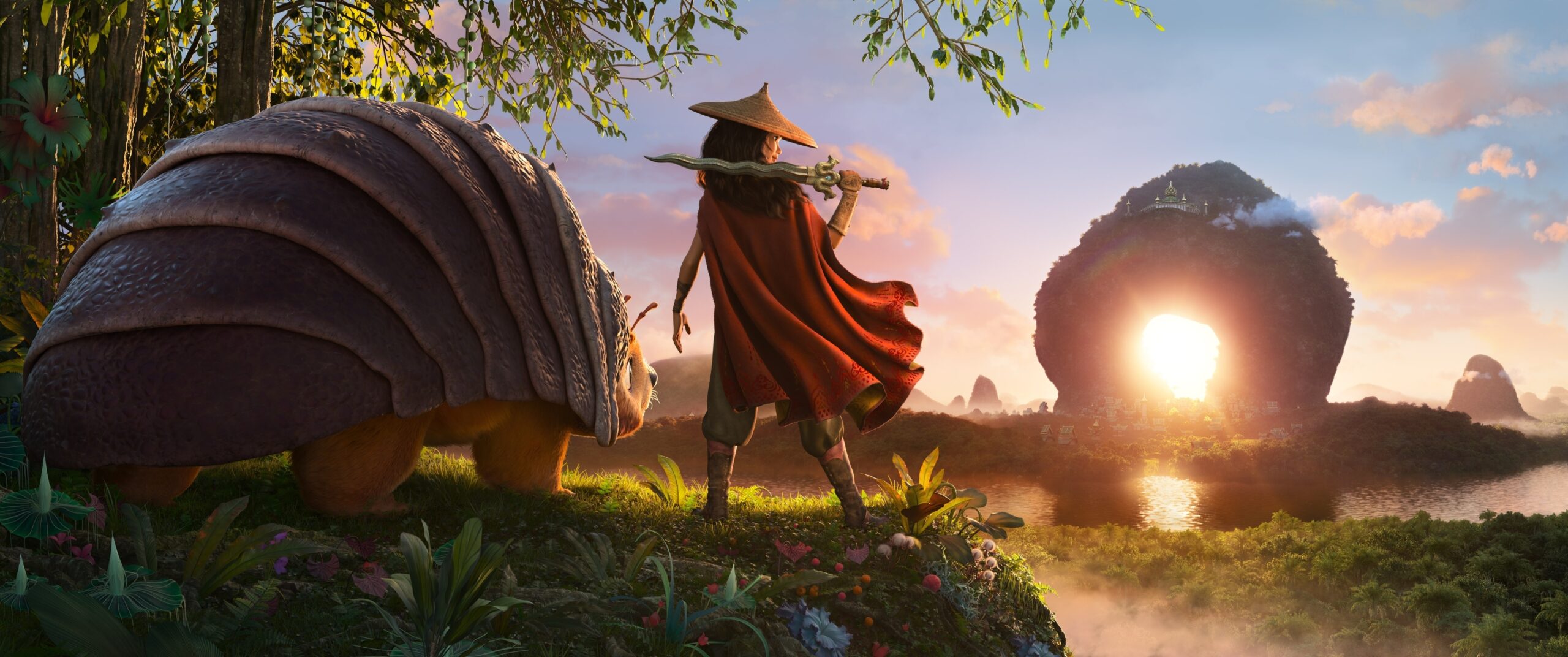
    Approaching Raya and the Last Dragon as a movie and not a benchmark for Asian representation in big media, it’s mostly just okay. It has all you need in a Disney movie; stellar animation, a color palette that’s bursting, cutesy characters, and moments of warmth to boot. And like a handful of these animated Disney movies, this one has tremendous action. Seriously. I haven’t been caught up with all the Disney animated films of the past decade but seeing how great the action was here left me impressed with the stuff they’ve been serving kids these past few years. The story falls short of having enough elements to make it a great movie on its own such as a complete arc for some of the characters but the film still manages to watchable. Kelly Marie Tran‘s voice acting breathes life into Raya fantastically. Awkwafina sounds adorable as the dragon Sisu. However, beyond the things that make a serviceable Disney animated film, it’s evident that Raya and the Last Dragon aspires to be something more. From the all-Asian cast to the Southeast Asian backdrop, the movie is meant to represent a culture that isn’t always seen by global audiences. 

    There’s a moment in the lengthy prologue where the estranged tribes of Kumandra convene in the prosperous land of the Heart tribe for a gathering. The Heart tribe at this point is established as the keeper of the divine dragon gem of Sisu, believed to be the source of the tribe’s prosperity. As they all gathered at the domain’s steps, I couldn’t help but feel anxious yet excited about how these tribes would be portrayed beyond the mishmash of Southeast Asian visuals and design. Being a Southeast Asian myself, there was already a bit of trepidation because of how the majority of the cast was made up of East Asian actors. Were they gonna screw up the other aspects of representation? 

    So there they were – the Fang, Talon, Spine, and Tail tribes – standing gloriously before the wide-eyed Raya. The Tail tribe in particular was the one I saw my Filipino culture in the most. Their complexion looked like mine. Their native attire looked inspired by our native attire. I was ready to be content in simply seeing the distilled image of the Filipino people in a movie as huge as this one. 

    But then they make you realize right away that all the other tribes, save for Raya’s, are totally unlikeable people. 


    Right from the get-go, we learn about the dynamics of a tribal Kumandra. All the tribes are jealous of Heart for keeping the gem to themselves and are desperate to betray each other no matter the cost. We see them do real despicable stuff as they ruin the gathering fast.  “Oh, I guess we’re the jerks in the story,” I thought to myself as these tribes were competing to see who the bigger jerk was.  Now, I understand that this is a story-driven choice but it’s not exactly mindful towards the goal of encouraging representation.  At least, it certainly wasn’t the way I was hoping my people would be represented in their first big Disney outing.

    Raya and the Last Dragon at its core is supposedly a story about unity and trust. About how wounds can be mended if everyone could just get along and trust one another. Raya’s dad Chief Benja repeatedly shares his sentiment in one day reuniting the kingdom of Kumandra as a whole before he gets turned into stone. Being disillusioned by the ugliness displayed by the other tribes that started this whole mess, Raya feels otherwise and doesn’t believe in uniting a kingdom that is so self-centered. But throughout her journey, this outlook changes when she gets to know the other tribes and understands their differences. 

    Or that’s how I wish it happened. 

    The problem is that the film squanders the opportunity to redeem the ugliness displayed by the tribes. This comes in the form of the other tribe members she meets during her journey. Normally, this would make for an ideal time, not only for Raya to mend wounds and sow trust in her heart in place of doubt but for the filmmakers to actually give these cultures they’re claiming to give representation to some depth. 

    Instead, the voices of the other tribes are relegated to literal children (one is an actual toddler). With the exception of Benedict Wong’s Tong, nearly most of Raya’s supporting ensemble are children. Even the titular last dragon, Sisu, is portrayed as a naive child-like deity who has difficulty understanding humanity. The kids and Tong want one thing which is to bring back their families who were touched by the Druun and nothing more. That’s not to say that isn’t valid motivation but it’s clearly one that doesn’t lend itself to the film’s key themes. There’s not one discussion in the movie where the tribes get to settle their differences and realize that despite it all, they’re all one and the same under Kumandra. The movie fails to reconcile all these thematic pieces meaningfully.

    The film also has a seemingly unintentional subtext about privilege and wealth as Raya continually laments how awful people are for fighting over a gem without realizing that her people benefitted the most from the gem out of all the tribes. How or why the Heart tribe came to be the keepers of the gem is never addressed too. She doesn’t take a moment to think what the other tribes’ notions were of being deprived of the gem in the first place. Raya just thinks everyone is totally jealous of them.


    And look, I’m fully aware that this is a kids’ movie. But in an era of Disney animation where films like Inside Out and Soul tackle real existential themes of humanity in the most poignant way possible, missing the mark on thematics is very careless. Seriously, there are some straight-up contemptible characters here whose errors are never pointed out. All the bad stuff they do is magically handwaved away when the credits roll. And I’m not also asking for a reckoning for these characters nor am I saying that my people can never ever be portrayed as people with questionable morals, but on a stage as huge as a Disney film that a lot of eyes will be glued to, at least give us the benefit of having depth and somewhat of a redemption.

    These issues only outline the bane of this movie: representation. More nuanced and educated people have said their piece about the glaring lack of Southeast Asian talent in a film that’s supposed to pay tribute to Southeast Asian culture but I’d be remiss as a Filipino if I didn’t say they could’ve done a better job in representing the world I grew up in. They absolutely could have done a better job. I don’t understand why they couldn’t find any other Southeast Asian voice talent to round off the cast when not one cast member wields a name brand that would instantly sell a movie. Box-office economics clearly isn’t a worthy argument. From a design standpoint, some creative choices are questionable. They even based one tribal location on the Wild West which is totally baffling. The dragon designs feel so far removed from how dragons and serpents have been culturally and historically depicted in select Southeast Asian countries. I understand that they wanted to make it the next furry stuff toy kids can buy but they end up being so unrecognizable. They almost look like My Little Pony characters, even. 

    Had they treated all these characters with more nuance, with some semblance of a meaningful payoff in the end, my tune would be different. Parts of this movie left me with a bad taste in my mouth. There’s a moment where a young Raya just totally bad-mouths each of the tribes in front of her father. She describes the tribe that resembles Filipinos as “mercenaries who fight dirty,” and makes more comments on how worrisome, weird and exotic the other tribes are from theirs. Those tiny digs may seem innocuous coming from cute characters but they end up sounding like microaggressions, intentional or not.

    To the outsider, these qualms may feel very nitpicky, almost to a fault, even. But in a global platform where Southeast Asian representation is few and far in between, wasted opportunities like this feel frustrating. I’m sure the filmmakers’ intentions and efforts to pay respects to Southeast Asian culture aren’t mired in malice but in light of its shortcomings, it definitely feels superficial.

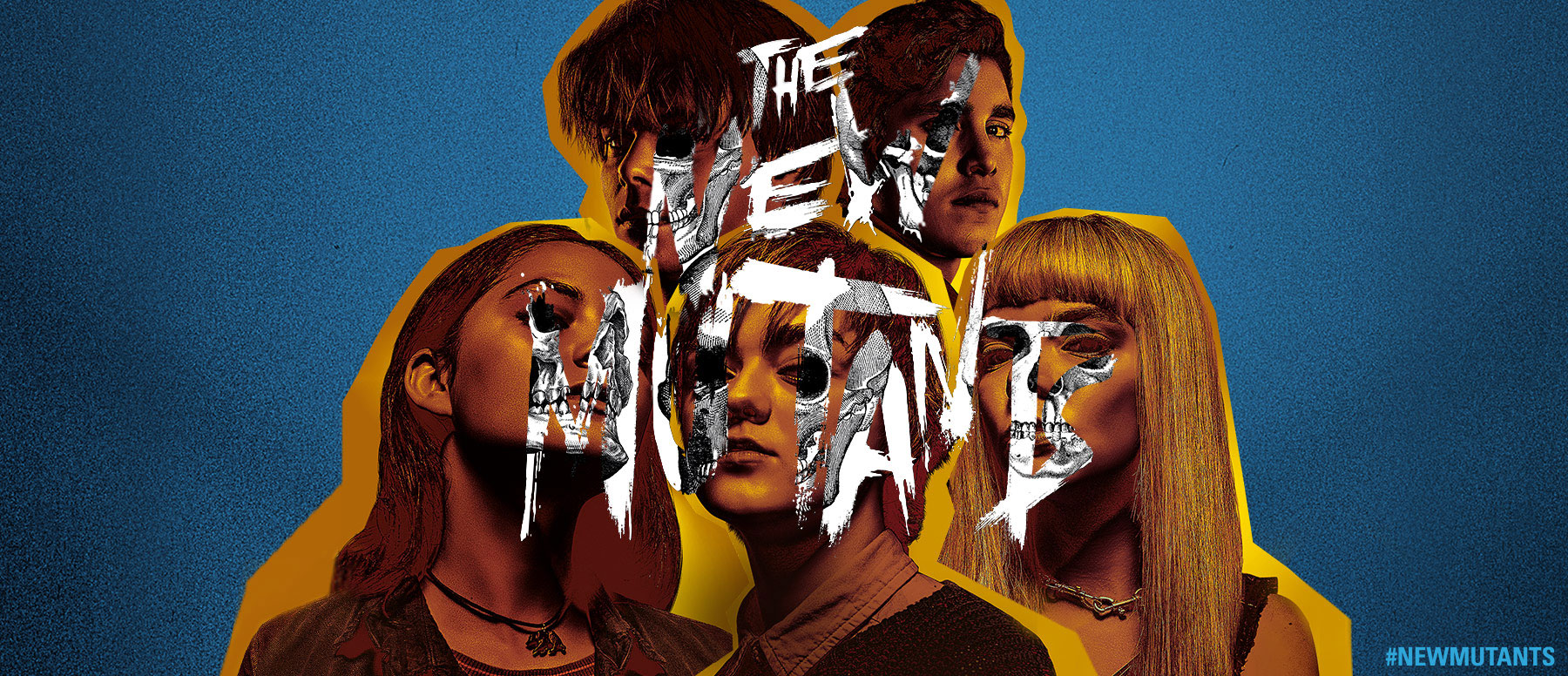
  • The Scariest Thing About ‘NEW MUTANTS’ Is How Terrible It is

    The Scariest Thing About ‘NEW MUTANTS’ Is How Terrible It is

    SPOILERS FOR THE FILM BELOW


    In the span it took New Mutants to get from pre-production to being released to our homes, we saw a presidency change, Tony Stark go from prehensile suits to nanobots, a pandemic turn the world on its head, as well as saw the X-Men franchise crash and burn to die a sad death. That said death got marked by the release of New Mutants, a film plagued by endless delays whose final output is a new kind of low for the franchise. From the studio that gave us X-Men Origins: Wolverine, that’s saying something. 

    Directed by Josh Boone, best known for his work on the hit teen drama The Fault in Our StarsNew Mutants is Fox’s somewhat commendable attempt to do something different with their IP of X-stories. The plan was to make a horror teen movie but in the vein of The Breakfast Club using Chris Claremont and Bill Sienkiewicz‘s Demon Bear Saga as the basis of the film. Interesting enough to stand out in a market chock full of superhero IPs, right? Fox disagreed. 

    An in-depth report by Vulture detailed just how rocky the development process of New Mutants was. Basically, the studio didn’t exactly gel with the Breakfast Club horror take and meddled with it heavily. The studio’s mandated changes were endless as uncredited writers were hired left and right. Judging from the report, it seemed like Fox was still the quintessential villain for the X-Men once more. But as the Vulture report states, even Boone was making some questionable decisions, such as turning Storm into an evil jail warden. So yeah, everything that led up to this home release was a shit show, and the finished product shows it in strides. 


    From the get-go, the core premise of the film gets barred with contrivances. For example, the film tries to play with the idea of these kids getting confined to this limited space. Trapped against their will, they live in this institution with nowhere to go and no means of escape via an energy barrier created by the baddie Dr. Reyes. This notion of isolation should work if it weren’t for a couple of egregious things. For one, the hospital seems to be criminally understaffed, with Dr. Reyes being the sole person lording over these kids. Where are the nurses? Why wasn’t there any security personnel? I get that they want this to be the Breakfast Club of superhero films but did they have to make this setting feel like juvenile middle school detention? 

    The idea of their every movement being scrutinized and observed also gets rendered pointless when they can roam around free on the premises like it’s a damn mall. They sneak out in the evenings to hang around and party but only when Dr. Reyes is asleep. WTF?! If Dr. Reyes falling asleep gives them the freedom to party around the hospital, why shouldn’t it allow them to, you know, actually escape the premises? They explicitly state at some point in the film that incapacitating Reyes would mean the barriers outside would disappear. Why don’t they do anything about it? There’s literally no one around to stop them. It’s easy as spiking Reyes’ drink as Magik revealed! The setting is entirely moot with these contrivances that they practically have no reason for it to take place at a hospital. You could have told a more interesting story by setting it in the X-mansion. 

    That in itself brings up another major blunder for the film: there’s no agency for the characters, let alone meaningful arcs. Dani Moonstar is sent to this institution after a tragic incident befalls her reservation and kills her relatives. She wakes up from those events and finds herself strapped to a hospital bed. Dr. Reyes explains the situation and Dani just accepts it without question or any desire to fight this circumstance strange people are enforcing on her. The same sort of goes for everyone else. There’s no clear point as to why they’re all in that institution – being experiments and test subjects don’t count because we never actually see it count – so it’s more baffling to see everyone just shrug and accept their situation. Hell, except for Wolfsbane and Moonstar, we don’t even see the characters have any meaningful relationships with one another. Early in the film, Magik and Sunspot are being explicitly racist towards Moonstar. Magik, in particular, consistently bullies Moonstar, treats her like shit, and at one point, tries to murder her in front of everyone. The film makes no attempt to reconcile their relationships or even redeem these bad traits, but, somehow, they’re all besties when the movie ends. It’s maddening to see the filmmakers miss the obvious marks that made The Breakfast Club such a great film.

    The film also seems to be interested in exploring some of the trauma of these by having them face it via nightmare sequences. That’s a neat idea in itself, as we’ve seen it done decently in Avengers: Age of Ultron. The problem is that facing the most terrifying ghosts of their past doesn’t amount to any growth or change. There’s never any reflection of what they saw or how they want to overcome it. Sunspot sees the undead corpse of his ex-girlfriend one moment, and the next, he’s back to washing dishes listening to some tunes. These characters have such interesting backstories! Show us what life was like for them before they entered the institution or what they want for themselves. 

    All these problems contribute to the baffling fact that there’s practically no plot in this film. Like I said above, there’s no agency for any of the characters to consciously move forward and progress their story. The entire time it is just them waiting for shit to happen. The shit being these nightmares unintentionally caused by Dani Moonstar. The film plods like this: the new mutants hang around, bicker like teens, and then something scary happens to one of them. Rinse and repeat until the movie ends. That’s pretty much the entire movie. There’s no sense of discovery or even a semblance of a goal for the team. 


    A lot of people often give the MCU shit for forcing moments in favor of the more organic fanservice pay-off. New Mutants has a bunch of them that are pretty bad. Remember that absolutely lame post-credits scene in X-Men: Apocalypse with the Essex Corporation? That makes a return in a smug wink-wink moment where they unveil that Dr. Reyes’ superiors are, gasp, The Essex Corporation. Like no one gave a shit about it when it was a post-credits scene, so why would they think it’d be cool to revisit it this time? The film also tries to have its Avengers Assemble moment where Magik finally comes into her own and unveils in slow motion just what her powers are. It’s an undeniably sick looking scene, made better by the fact that Anya Taylor Joy is pitch-perfect for this role. The only problem is that we see her use her power multiple times before that scene, making that big slow-mo reveal a laughably flat moment. Imagine if Cap said Avengers Assemble three times in Endgame before that final fight. Moments like these are aplenty in the movie; unearned character needle drops or pay-offs for things that weren’t even seeded in the first place. Even the Breakfast Club montage in the film doesn’t work because these characters simply don’t have the chemistry for it to be believable.

    I’d remiss if I didn’t give credit where it’s due. Blu Hunt, Anya Taylor Joy, and Maisie Williams are bar none the best aspects in this movie. Williams is fantastic as Rahne Sinclair, and she brings so much heart to a dull fart of a film. Her character’s relationship with Moonstar, while rushed, is the only relationship in the entire film that feels tangible and real. Hunt’s film debut as Dani Moonstar is enough for me to want to see her more in the role. Anya Taylor Joy is slowly on her way to becoming a massive superstar right now, but ever since The Witch, I’ve wanted her to be in a superhero film. Magik is the perfect role for her to play that I kinda want to see this role salvaged over to the MCU along with the two other female leads. Charlie Heaton is just okay as Sam Guthrie. He brings that very likable “aww shucks” demeanor he’s been known for in Stranger Things but doesn’t get to do anything substantial in the film. The less that can be said about this version of Sunspot, the better. Director Josh Boone‘s comments on ignoring the racism dark-skinned Brazilians face in favor of casting Henry Zaga are now more embarrassing in the face of how bland his performance is. Alice Braga gets no quarter playing the most boring comic book movie villain in years; it’s baffling how they settled on such a boring character when the X-Men stories are filled with compelling and fascinating villains. Hell, because Fox has such a boner for Essex Corp, they might as well have put Mister Sinister as the big bad.

    In a franchise filled to the brim with bad films, I don’t know why I expected anything better from New Mutants. Maybe it was the idea of seeing something different that drew me into feeling hopeful for this film, despite all the troubles it faced during production. The Demon Bear Saga is one of Claremont’s classic X-stories. A story in theory that shouldn’t be that big of a tall order to adapt compared to, say, Dark Phoenix. But somehow, everyone involved in the decision-making managed to turn a story of a bunch of superpowered teens dealing with their worst nightmares in a horror into a total bore.