Tag: Movie Reviews

  • REVIEW: ‘Eternals’

    REVIEW: ‘Eternals’

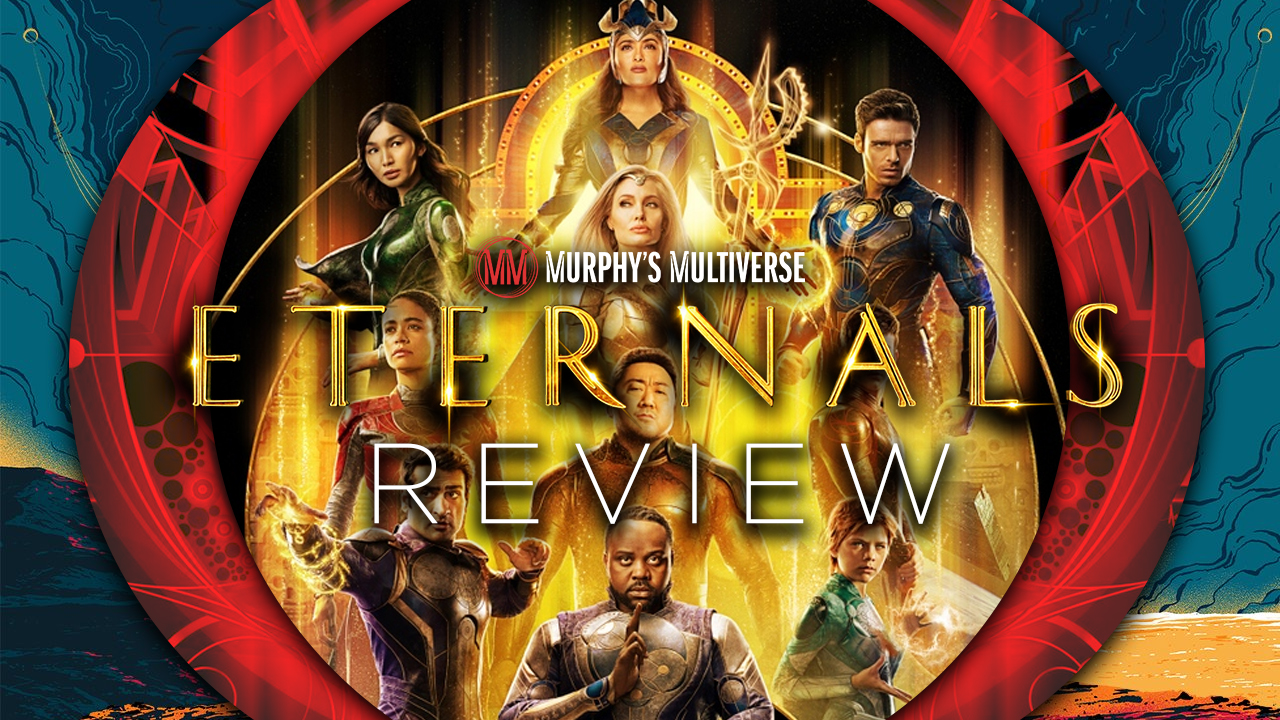
    Eternals is a study in contradictions. It’s a movie that’s epic in scope and scale, which endeavors to not only detail the cosmic origins of life in the universe, but also the role of godlike beings in shaping human development and its mythologies over the course of millennia, all over the world. Yet it’s also about a family estranged, and the cleaves formed by divergences of faith, hope, and duty. In a genre driven by spectacle, Chloé Zhao delivers a film that is carried by heart and drama.

    The story of Eternals centers on ten immortal cosmic characters created by the godlike Celestials and sent to Earth 7000 years ago to protect sentient life from the Deviants, a predatory race of beings bred to adapt and kill. They were once thought to be eradicated hundreds of years before, but they return in present day, led by the mysterious Kro, and as such, the Eternals emerge from the shadows and the lives they adopted to defeat them, all while a cosmic event called The Emergence poses an even more looming threat.

    The outstanding ensemble cast includes Salma Hayek as Ajak, their leader and maternal figure; Richard Madden as Ikaris, the all-powerful soldier who can’t help but evoke a certain Kryptonian; Angelina Jolie as Thena, the fierce warrior woman who could stand toe to toe with a certain lassoed heroine; Gemma Chan as Sersi, the soulful, humankind-loving heart of the group, who possesses the ability to transmute matter; Kumail Nanjiani as Kingo, the Bollywood star who boasts the ability to generate cosmic blasts; Brian Tyree Henry as Phastos, the brilliant inventor with a penchant for fabricating highly complex machines; Lia McHugh as Sprite, who is part Loki, part Tinkerbell, and eternally youthful; Lauren Ridloff as Makkari, the speedster; Barry Keoghan as Druig, who possesses mental powers as well as a sullen disposition; and Don Lee as Gilgamesh, the powerhouse. Kit Harrington, Jon Snow himself, portrays Dane Whitman, Sersi’s lover and potential future MCU Black Knight.

    Much consternation has been voiced in the leadup to the film’s release about the color palette, and I’m not going to lie to you — if you’re expecting bombastic blasts of color lifted right out of Jack Kirby panels, you will be disappointed. There are definitely visual flourishes, and the rendering of Celestials in particular stand out as true to the Marvel Cosmic we’ve seen rendered in the Guardians movies and Thor: Ragnarok. But there’s an understated nature to how these sequences are shot that give it an almost dreamlike quality. Cinematographer Ben Davis, no stranger to MCU films with five under his belt, used his camera to convey a sense of mood and connect to the characters’ respective emotional journeys.

    I do think that some of the initial criticisms of the film being heavy on exposition are valid. It starts with an opening scroll, a la Star Wars. There is a lot being set up in the opening minutes, to the point that you’re wondering if there will be a test later. And the first act table-setting meanders somewhat, as the movie struggles out of the gate to show you what it is. It’s big cosmic god stuff, and if you enjoy more grounded, emotionally-driven plot propulsion, the story will lose you a bit. But luckily, Zhao seems more interested in the humanity of it all than the godliness of it all, and once the character dynamics lock-in, the need for giant Celestial godheads to regale us with cosmic PowerPoint presentations melt away, and you can invest in character stakes just as much as fate-of-mankind stakes. 

    As for the characters themselves, Zhao’s script actually does justice to the star-studded cast the movie boasts. With ten named Eternals and a Dane Whitman, you’d worry about characters getting the short shrift, and this is where the movie’s ability to do more with less really shines. In its pairings and the qualities of each character that are teased out by these pairings, Eternals is able to round out these archetypes into characters who yearn, who misstep, and who regret, and do so over the course of many lifetimes.

    The clear standout here is Madden, who, along with Chan, commands the bulk of the screen time. They are, more than anyone else, the “faces” of the Eternals. If you only know him from his time on Game of Thrones, you will appreciate the range he shows here, as his dynamics with each of the characters tease out a different aspect of his personality that lies beneath his stoic soldier’s veneer. It’s played for laughs in the trailer, but the notion that he can lead heroes rather than simply be a dutiful lieutenant figures prominently in his motivations, and Madden manages subtlety well. The other side of the coin is McHugh’s Sprite, who at first glance is locked in wisecracking trickster mode, but whose particular pathos as a perpetual preteen informs her character arc. McHugh does “old soul” well, and I’d love to see what the future holds for her as an actress.

    Barry Keoghan’s Druig is another high point, as there’s a darkness and a danger to his performance that is really compelling. However, it is in his chemistry with Ridloff’s Makkari that we see his softer side. Speaking of Ridloff, she was by far given the least to do, but the time she was given was impactful, especially when it came to the action sequences. As to her importance as the first prominent deaf character in the MCU, her signed dialogue was seamlessly integrated and her emotions were still effectively conveyed by her expressions.

    Angelina Jolie’s Thena, however, might be the stealth MVP here. Jolie’s an Academy Award-winning actress, and her ability to balance fierceness and vulnerability, to almost wink at the audience when it’s time for action, but still convey a broken, battle-weary heart in quieter moments, reminds us that she’s still got the chops. Don Lee, both in his ensemble scenes where he verbally spars with Nanjiani and his scenes with Jolie where the sparring is more literal, holds his own and brings good energy to the film.

    One of the crucial themes of the movie is love, and the characters convey that well. The love triangle between Ikaris, Sersi, and Dane, teased throughout the film’s marketing, doesn’t overwhelm the plot, but the love between Ikaris and Sersi — which features the MCU’s first love scene — is central to the film’s emotional journey. Madden and Chan have great chemistry, and yet for both characters, the tension between love and duty is apparent. Brian Tyree Henry’s Phastos, who made headlines as the MCU’s first openly gay main character, is portrayed as a loving father and husband, and his scenes are particularly touching, as we see the extent to which he has found a family that means more to him than the one he had for millennia, and how that unlocks parts of him that seem like abstractions to the others. There are other love stories at work that I won’t spoil here, but rest assured that Eternals is a film meant to be viewed with an open heart.

    Where the characterization is lacking, however, is in the fleshing out of the motivations of the villains. Admittedly, there are always narrative challenges when your primary antagonists are mindless monsters, and the movie does overcome them somewhat, as there is more to the Deviant story than meets the eye. Kro, best understood as the Alpha Deviant, gets close to becoming compelling as the film progresses but falls short. However, the movie does a fairly good job of presenting the Deviants as formidable enough for us to feel the peril they pose to humans and Eternals alike. The action sequences that pit Eternal against Deviant work as showcases for the unique power sets of the main characters, even if they don’t necessarily deliver the Holy Shit! moments we typically associate with our superhero films.

    But that’s because Eternals isn’t really interested in being a superhero film. Yes, it could certainly be argued that the plot positions them as Earth’s First Mightiest Heroes, who protected the planet for over 5000 years. But it also positions them as humanity’s shepherds, with each of them coping with the various ways the human race has gone astray, and grappling with the immortal question of whether we are a people worth saving. And for a group of beings created for the express purpose of saving us, how then do they reckon with their own identities?

    Is the movie deep? For sure. Philosophy majors and film students alike could have a field day exploring the movie’s themes. Is it fun? Definitely, as it delivers the Marvel quippery we have grown to know and love, mixed in with exciting set pieces and power displays. Is it beautiful? It’s stunning — whether in the day or night, in the desert or in the jungle, everyone is perfectly lit and dazzles on screen. I think it’s worth an IMAX screening to immerse yourself in the sense of grandeur and scope. Overall, it’s a strong jumping-off point for a new series of stories featuring a new series of characters, and by the end, Eternals is a worthy entrant into Marvel Phase Four.
  • REVIEW: ‘Paw Patrol: The Movie’

    REVIEW: ‘Paw Patrol: The Movie’

    PAW Patrol: The Movie gives the franchise’s popular characters the feature film treatment. The animation and action supply enough entertainment for the movie’s intended audience, with some particular moments that clearly benefit from a larger budget. PAW Patrol unfortunately leaves a few puppies behind, and rescue events leave some to be desired from the fluffy heroes. Overall, the film sets forth a coherent and organized story that leans on the pre-existing success of its brand. While it is not unforgettable, it is decent, and its portrayal of emotional trauma in its lead character does allow it to stand out. 

    The PAW Patrol is a group of puppies, led by a human boy named Ryder, who specialize in search and rescue-type operations. Each puppy has a specific set of skills that render them big-eyed icons of emergency and/or municipal services professions such as a police officer, a firefighter, or a pilot. There’s even a recycling-focused puppy. More importantly, each puppy has an elaborate vehicle with every possible function and tool in existence that might even put Transformers to shame. 

    The group ordinarily works together on missions in their hometown of Adventure Bay, but they are called to action in nearby Adventure City by newcomer puppy Liberty because the notoriously bad Humdinger has become the mayor of the City and his newfound position generically threatens the City. While Mayor Humdinger has several snafus to keep the PAW Patrol employed throughout the movie, the main threat is his abuse of a cloud-catching machine that ultimately creates a massive superstorm that threatens serious damage to Adventure City. 

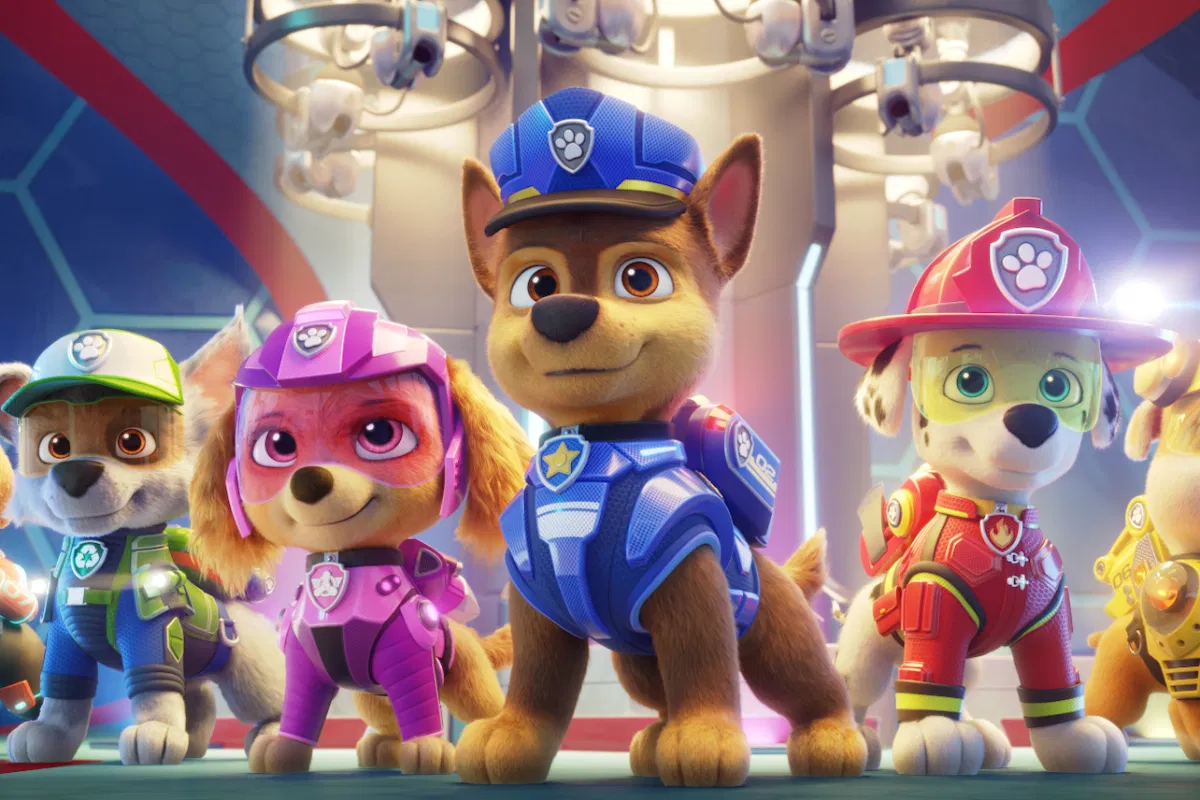
    The appeal of PAW Patrol is, obviously, the cute puppies. The movie definitely devotes ample time to watching the puppies frolic around just for the sake of it, and each one has a dedicated identity and color-scheme to distinguish him from the others. Similar to franchises like Power Rangers or Care Bears, the intended audience likely has an easy time picking a favorite and latching on to her. If your favorite is not Chase the police dog, Skye the pilot, or Liberty the brand-new street-smart dog, PAW Patrol might be disappointing. Anyone watching the movie likely has some history with the crew, but if you are not familiar you might not have even learned several of the puppies’ names by the time the credits roll. 

    The PAW Patrol itself is without a doubt an innocent and fuzzy version of a superhero team, and the movie and franchise benefit from the comparison. Instead of fighting or having direct confrontation with a threat, however, the puppies are passive heroes. As rescuers in the form of, essentially, law enforcement, the underlying message of what a “hero” is in PAW Patrol is distinguishable from most of its more mature counterparts. Here, the value is in adhering to rules, following instructions, and knowing your place. 

    Typically, in the “hero” story, the hero’s worth is based on their individual merit and respective skills. In PAW Patrol, that message is greatly diluted if not mostly absent. The Patrol and their work are not actually a product of the puppies’ skills, unless you count driving some sort of car and pushing some buttons. All action in the movie is centered around the wildly extravagant and nearly omnipotent tank-like vehicle they each control. Because there is virtually no function that the vehicles do not have, all problems are immediate solved with some simple paw-to-button effort. Problem-solving or technical skills are not highlighted, and the cars can be better idols than the puppies. 

    But PAW Patrol is still shiny enough and had a satisfyingly organized plot to be effective for its intended viewers. Not only do you have the animation style that emphasizes how adorable baby animals can be, but watching the puppies take on the City with the most high-tech gear in existence provides enough fast-paced excitement. It is simple enough that a younger audience can keep up with it, and the new and larger setting likely distinguishes the movie from the television series. Plenty of the humor seems to rely on running jokes and gags that already-existing PAW Patrol fans would be familiar with, so the comedy in the movie probably hits the right note though does not steal the show. 

    Somewhat surprisingly, the movie depicts “danger” more aggressively than one would think. While there is generally nothing scary about any situation, there are a couple of moments that come across far more destructive and brutal than the puppy energy could match. The final rescue sequence is visually strong between the dark foreboding superstorm cloud in the sky, the rain, the lightning, a glowing puppy-led motorbike scaling a skyscraper, and a giant puppy-caused explosion in the sky.

    Mayor Humdinger is an interesting character. While not unique to the movie, his political aspirations are what make him stand out to an older audience here. He is depicted as grandiose, self-indulgent, politically corrupt, media-obsessed, scientifically ignorant, generally incompetent, and has childlike immaturity. It is somewhat difficult—though maybe not for a child—to not immediately see a potential real-life counterpart. To the extent that a comparison of that sort can actually be made, it does add a curious additional layer to the story considering we are watching young puppies literally clean up his messes. 

    In any event, the real backbone and highlight of PAW Patrol is Chase the police dog’s emotional journey. Amongst the colorful puppy joyrides, Chase is forced to deal with the trauma of his past. Scarred by his abandonment in Adventure City as an even younger puppy, returning means relieving the fear and pain he thought he had left behind. It is a concept that is more than just glossed over, as Chase experiences actual panic attacks that almost cause some of the rescues to fail. The lead puppy ultimately feels worthless and unworthy of being a PAW Patrol member. Of course, it is all resolved by the end of the movie after Ryder’s encouragement allows Chase to accept his past as something that makes him stronger. Still, the movie gave the situation more depth and grit than expected, and the extra attention could potentially lead it to helping a younger audience cope with similar issues.

    While the puppies go above and beyond to protect, PAW Patrol stays fairly average. There are no glaring defects in the movie itself and, in terms of adapting its source material into a feature-length film, it does a fine job at making the story coherent for the PAW Patrol uninitiated and still paced appropriately for those with background knowledge. At the end of the day, PAW Patrol’s key stand-out feature is its surprisingly genuine take on trauma and coping.

  • REVIEW: ‘DUNE’ Is A Mesmerizing Cinematic Experience

    REVIEW: ‘DUNE’ Is A Mesmerizing Cinematic Experience

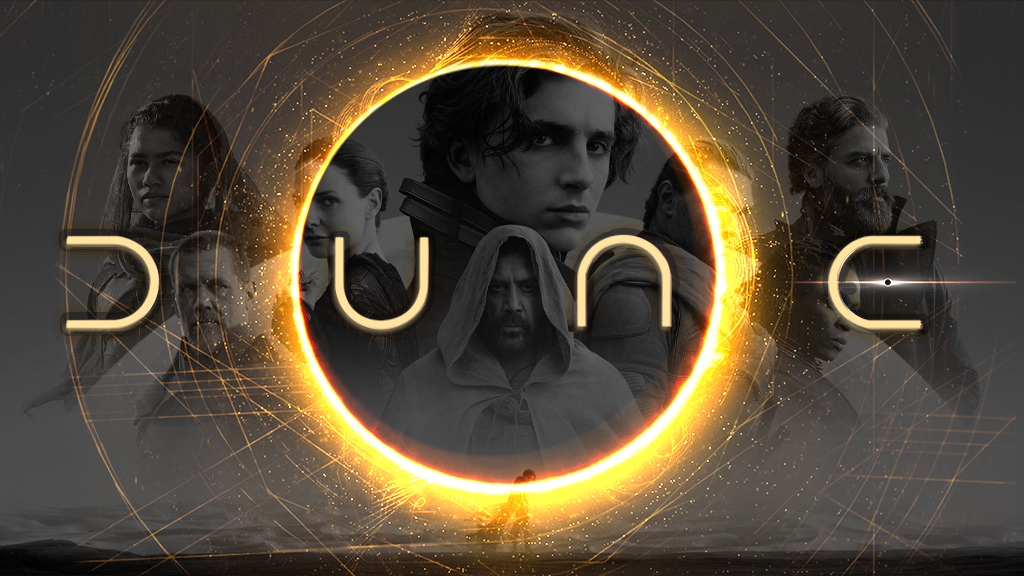
    Dune was without a doubt my most anticipated movie ever. After years of waiting, I had the chance to finally see the movie (twice!) and I can confidently say that Dune is another brilliant film in Villeneuve‘s career. Is it the best? I think not. But it’s certainly the most personal in terms of form as well as themes. It is the kind of film that will go down as one of the most unique blockbusters of this century, one that has brought a lot of fresh air into the landscape of mainstream cinema.

    Dune is a coming-of-age story of a young man named Paul Atreides who is frightened of leaving Caladan – his home planet full of water and a variety of life. House Atreides is supposed to go Arrakis, also known as Dune, which is a desert planet with a rough ecosystem. However, Dune is full of spice called melange, a psychoactive chemical that is the main natural resource in the entire Empire. Melange enables interstellar travels and without it, the economy of the empire would collapse. As soon as Paul enters the Arrakis’ environment imbued with spice, his powers awaken.

    Denis Villeneuve has created a work that is enthralling in its immersion and scale. The editing makes the film feel like a dream, which resonates with Paul’s storyline and the film’s narrative. From the very beginning, we step into the shoes of Paul Atreides who is faced with strange dreams, and from a certain point, he loses his footing and stops fighting both his nature and the environment of Arrakis.

    Dune delivers a solid story about adapting our bodies and subconsciousness to a new environment, showing the power of nature over our petty human issues. Paul, being the (false) messiah, is faced with the sandworm Shai-Hulud, a sacred and religious manifestation of the power of nature. From the beginning of the movie, it’s clear that Paul’s journey isn’t a pleasant one but a sad one and at the very end of the film, I felt the emptiness and imprisonment that Paul suffered.

    Dune’s source material is very dense and comprehensive, as it deconstructs the journey of a white hero while providing readers with a treatise on many sociopolitical issues. The filmmakers had a tough task to fit all of this neatly into the film’s narrative without losing focus on the main plot. I had a lot of concerns about this but as a fan of the book, I am really satisfied with how skillfully they were able to adapt 2/3 of the book’s material.

    While Villeneuve’s vision has an emphasis on the sacred and metaphysical parts of Dune, he doesn’t lose sight of the sociopolitical issues. From the very opening scene, the movie criticizes colonialism and the exploitation of the planet’s natural resources by the Empire’s great houses. It is a theme that is consistently built upon by Villeneuve, including Fremen’s tribalist lifestyle and their relationship with the otherworldly people. Moreover, Paul’s journey fits symbolically into the ecological thesis of the Dune universe and provides a good foundation for the sequel.

    As the movie adapts 2/3 of the book, some conscious flaws in the production are hard to judge after one movie. I have to state that my biggest disappointment and simultaneously the movie’s biggest flaw is the pacing. After the director’s work and the characterization of Dune itself, I had expected the picture to be calmly paced, in a style similar to Blade Runner 2049.

    But the movie is spectacle after spectacle with little room to breathe in between. The beginning of the second act, where the heroes find themselves on Arrakis, suffers the most as it never takes time to deepen the relationships of the characters. At this point, I felt that the movie was just ticking off some of the scenes from the book that only bring us closer to the midpoint of the story, robbing any weight from the build to the story’s pivotal moment.

    Denis Villeneuve is a genuinely talented filmmaker and presents the story gracefully but either the film should have paced better or should have been 10 minutes longer. Many relationships would have benefited from it. One of those characters that suffered from the pace is Doctor Yueh. I don’t want to reveal too much, but his character and his tragedy were completely swept under the rug.

    Villeneuve makes the most out of his canvas, using sound and design to tell stories, and building the atmosphere with Greig Fraser‘s cinematography. The entire film evokes a sense of historic real-world scale because of many vast panoramic shots, which takes us back to the first films of the Canadian filmmaker from Quebec. Arrakis, the culture, ecology, and religion of this planet are treated with non-fictional aesthetics. On the other hand, the more intimate, personal character moments are shot in a slightly more static tone. Many wide frames show us the scale and size of this universe and it never feels empty. It feels alive, breathing, and lived-in. Villeneuve and Fraser brilliantly draw the contrast between the humid and wet Kaladan and the sultry and hot Arrakis. Every frame is treated with reverence and care.

    As for the music, Hans Zimmer has probably delivered the best soundtrack of his career. The soundtrack is extremely diverse and feels a lot of electronics, oriental music, or strong vocals. The soundtrack in itself is a distinct character in the story.

    However, the most important element, which was supposed to highlight the internal state of the characters, is of course the acting. Overall, I would rate it as really good and I wouldn’t be able to point out a bad performance. I would say that some of the performances are simply unsatisfying due to lack of screen time or script problems, like Josh Brolin as Gurney Halleck or Chen Chang as Doctor Wellington Yueh, among others.

    The rest of the cast brings stellar performances The absolute MVP of the film is Rebbeca Ferguson as Lady Jessica. She is outstanding and brilliant in this role, providing a wealth of emotion and character simply with the most nuanced of expressions. She is genius in the fluidity of her mannerisms and switching between being a mother, Bene Gesserit, a concubine of a duke, or a warrior. Her interpretation of Lady Jessica perfectly corresponds with my idea of this character who from the beginning of the film plays chess with everyone.

    Timothée Chamalet as Paul Atreides is also great, and I could say he was born for this role. As in the case of Jessica, his performance matched my idea of the character. Timothée smuggles in a lot of nuances and also smoothly transitions from this scared boy to a person who has to face the fatalism of his existence.

    Dune is an event-like film and an experience that has stuck with me. I feel as if I have entered someone’s dream and seen images that have been in the mind of the creator for decades. It’s not a film without flaws, and I think it may turn a lot of viewers from it. In my opinion, it’s a film that breaks out of the blockbuster mold and tells a story through a visual and aural experience. This is a film that must be seen in a cinema, preferably in IMAX. This is the kind of movie that breathes and lives its own life, introducing us to this alien world with grace and a touch of style.

  • REVIEW: Not Even John Cena Can Save ‘VACATION FRIENDS’

    REVIEW: Not Even John Cena Can Save ‘VACATION FRIENDS’

    Vacations generally suck.  They’re expensive. They’re a pain in the ass to plan especially when there are other people involved. The traveling is so draining that after you spend all that time relaxing, you’re back home tired from the trip. If you’re lucky or unlucky, you’ll meet people that will make the experience etched in memory, in good or bad ways. Hulu’s latest comedy, Vacation Friends, a rowdy comedy in the vein of classic nightmare vacation films with a touch of Meet the Parents, has it in both ways.

    Lil Rel Howrey and Yvonne Orji play soon-to-be-engaged couple Marcus and Emily, who both live straight-laced upstanding lives. As part of his proposal plan, Marcus organizes a trip to Mexico with Emily in the guise of an unsuspecting getaway. Things don’t go well in true vacation movie fashion when Marcus and Emily cross paths with Ron and Kyla, a crazy couple with a knack for getting themselves into deep trouble. The two couples fall into all sorts of drunken craziness during their trip but eventually part ways when they return to the real world outside their vacation bubble. That is until the crazies get wind of Marcus and Emily’s very exclusive wedding date in the real world. 

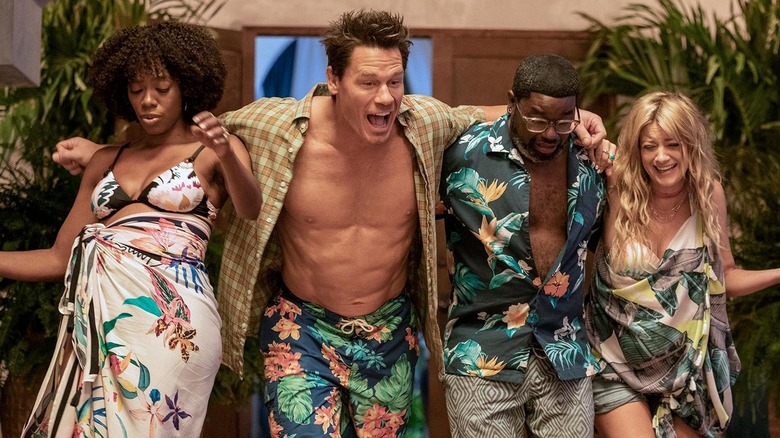
    Hot off the heels of his acclaimed role as Peacemaker in The Suicide Squad, John Cena plays Ron, a jack-of-all-trades Green Beret/mountain ranger with a penchant for sniffing out mushrooms and bird shit. But despite those seemingly fun quirks, Cena is surprisingly dull as Ron. A big problem here is that Cena is constantly going for the bit whereas in Suicide Squad, Peacemaker’s astute subdued demeanor is the bit. When Cena reaches for that laugh – and he really reaches for it – the bit gets played out before it even ends. In contrast to his numerous scene-stealing one-liners in Suicide Squad, it’s almost baffling to see Cena fumble here. 

    This movie doesn’t have a great script nor focused story to start with so Cena’s chemistry with Lil Rel Howrey is this film’s strongest foundation. The movie knows that these two guys have something special going on so it spends a lot of time just honing on these two polar opposites at odds with each other. It’s the classic tandem of uptight straight man and wild card and it works for those two. Howrey plays Marcus’ grumpy uptight straight man persona to the T while Cena’s carefree lumbering take on Ron contrasts it nicely. It doesn’t reinvent the wheel but it’s a cog that makes the whole thing run smoothly. Without their chemistry, this movie would’ve been a total misfire.

    And Vacation Friends falls close to being a misfire. The idea of mixing a nightmare vacation comedy with a Meet the Parents wedding movie may seem like a fun combo at first but this film makes neither of those ideas work beyond the surface. The vacation aspect  of the film just isn’t crazy enough nor does its definition of “crazy” – basically getting drunk and doing drunk shit – make the Meet the Parents aspect an entertaining riot. Ron and Marcus getting high on shrooms just isn’t as wild as Greg Focker spray painting a stray cat’s tail to pass it off as his father-in-law’s lost cat. The outcome is a totally dull affair. 

    Even more frustrating is the inklings of good ideas they have. The movie makes you think that there is more than meets the eye to the crazy couple. Ron and Kyla constantly allude to their wildly dubious backgrounds throughout the film that it comes off as a setup to some crazy reveal. There’s even a bit early in the film that plays with the idea of something tonally sinister behind who these people are. Sadly, none of those entertaining ideas ever materialize at any point in the film which feels like a complete waste. Their characters are completely laid straight, devoid of any true whimsy that underpins why they are the way they are. Having some kind of spin to these characters would have at least made it a funner watch. 

    Vacation Friends drops the ball on a lot of things it tries hard to do that not even a fairly good cast can pick it back up. Robert Wisdom, who took The Wire to a whole new level as Bunny Colvin, is fully disserviced by a bad script. Yvonne Orji and Meredith Hagner, who have absolutely killed it in their own respective shows, aren’t really given the space to be funny the way they are in those shows. 

  • REVIEW: ‘SHANG-CHI’ Sets a New Bar for Origin Stories

    REVIEW: ‘SHANG-CHI’ Sets a New Bar for Origin Stories

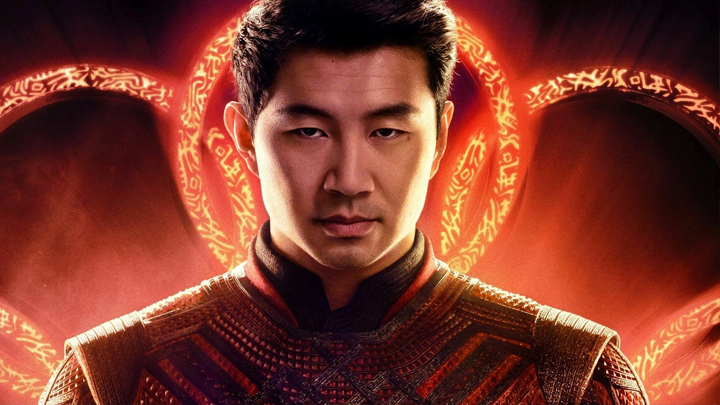
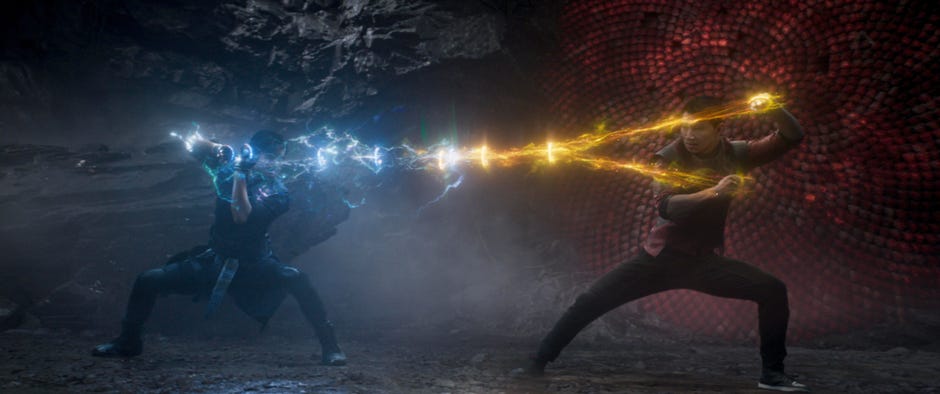
    It’s not hyperbole to say that Shang-Chi and The Legend of the Ten Rings is a movie that I’ve waited nearly my entire life to see. I fell in love with the pulpy, walk-the-Earth character as a kid and anticipated his MCU debut long before any official announcements were made. I’ve followed the development of the film closely and joyfully as Marvel Studios followed through on their promise to make this film a vehicle for an Asian cast, crew, and creatives. And what Marvel Studios created is something not only truly unlike they have ever put on a big screen, but also arguably their best effort at recreating a character, his supporting characters, and the world which they inhabit. The result is an origin film that rivals (and connects with) 2008’s Iron Man, introduces one of the MCU’s most well-developed antagonists, and sets up a future that promises greater things for the film’s core cast.

    New Shang-Chi Trailer Shows Tony Leung As the Real Mandarin

    As advertised, the film introduces us to a brand new Marvel hero in Shang-Chi and addresses the origins of the Ten Rings organization which has inhabited the Marvel Cinematic Universe from its inception. The film’s prologue tells the story of the organization, the man who founded it, and the ten rings of power that have helped the organization secretly shape the history of the MCU. While we get plenty of backstory on the organization, the nature of the rings themselves remains nebulous even as the film concludes, though they remain integral to the film, almost a character unto themselves. Even as the MCU charges into the future, it continues to satisfyingly establish events set in its past. We’ve seen it done more frequently of late and it serves the purpose of informing fans that Shang-Chi has spent a decade of his young life trying to hide from his father, his family, and his fate. Director Destin Daniel Cretton should be lauded for the way he cleverly uses the prologue and the early moments of the first act to set the audience up for their expectations to be subverted.

    Structurally, the film deftly meshes three disparate acts into an incredibly imaginative and fertile plot that never feels drawn out despite the film’s 2+ hour runtime. The first act feels like a martial arts short paying homage to legends like Bruce Lee and Jackie Chan. The second part plays out as an ever-evolving family tragedy on the level of Shakespeare’s King Lear before the film’s final act delivers an amazing fantasy story worthy of the Marvel comic book title’s rich history. Together, they tell the story of how love can both create or destroy, how power can both corrupt or enable and how, when the family is involved, there might not be such a thing as a point of no return. The film is beautifully written in service of these things and directed to emphasize them. The creatives behind the film deserve accolades for working together to deliver a film that manages to invoke empathy, sympathy, and apathy in the audience. When you’re watching this film, expect to experience a wide range of emotions.

    Shang-Chi y la leyenda de los diez anillos' recibe el primer tráiler -  Olhar Digital

    If there’s anything that keeps the film from ascending into the absolute upper echelon of the 25 Marvel Cinematic Universe films it is, unfortunately, that the title character is, at best, the second most interesting character in the film. The great news is that this is in no way the fault of star Simu Liu, who is positioned to become one of the faces of the MCU over the next 5 years. Liu takes full ownership of Shang-Chi, a character who has a lot to do in this film and for whom there are clearly incredibly large-scale plans moving forward. Liu absolutely nails what he’s given here: he is equal parts charismatic, emotional, and an action star. He’s probably Marvel’s most instantly loveable hero since Chadwick Boseman‘s T’Challa. Also noteworthy is Liu‘s incredible chemistry with Awkwafina, who plays Shang-Chi’s attached-at-the-hip bestie, Katy. Marvel Studios targeted Awkwafina for the role early and her MCU original character – who experiences all the film’s big twists and turns right along with the audience – gets her own time to shine. She and Liu will continue to be paired together in the future and that’s something that’s going to be fun to see develop as they meet some of the universe’s established characters.

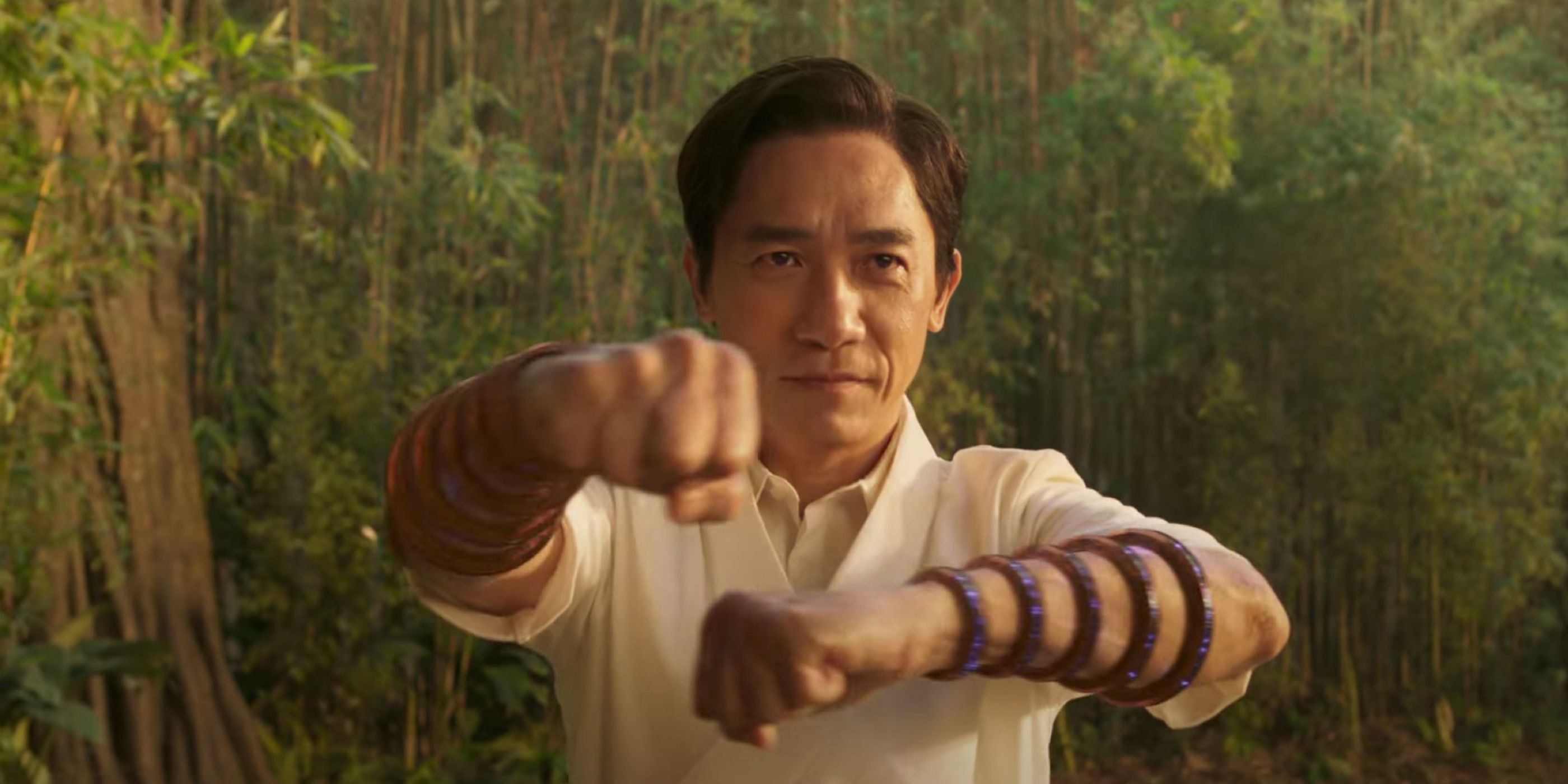
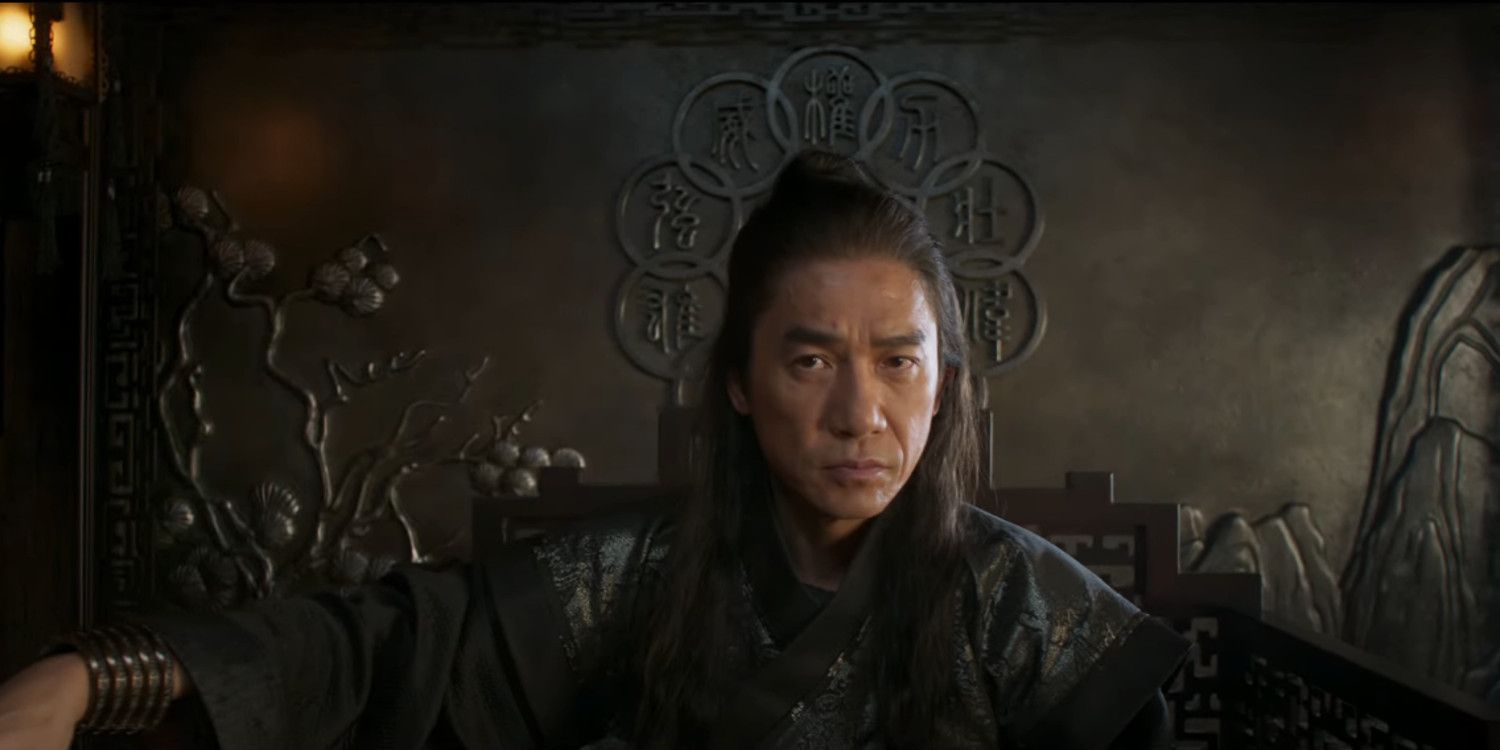
    In reality, however, this film could have been titled Wenwu and The Legend of The Ten Rings because Hong Kong legend Tony Leung owns every second of screen time. Without getting spoilery, he is technically the film’s protagonist and his character arc is befitting of that title. Cretton creatively uses flashbacks to alter the audience’s perception of Wenwu (and indeed of more than one character) much to the advancement of not only the plot of the film but to the overall strength of the story. His use of non-linear storytelling elevates the cast and the film in an incredibly crafty way that can make one hope that he’s negotiated a long-term deal with the studio. His investment into these characters and this world bodes incredibly well for the future of the franchise(s) this origin film may spawn.

    Shang-Chi's Mandarin Isn't What Marvel Comics Fans Expect, Teases Producer

    The greatest payoff of this investment is Leung‘s Wenwu: an entirely original character derived from Marvel Studios’ alchemical task of combining classic and stereotypically offensive characters, the Mandarin and Fu Manchu, into a brand new and beautifully complex character. The trailers intentionally tell a very specific story about Wenwu, that story is a lie. Leung‘s Wenwu is the furthest thing from a boring, one-note villain. In fact, he arguably has the film’s greatest and most fulfilling character arc. One struggles to find a comparable one-off villain in the rich history of the Marvel Cinematic Universe.

    While the trailers prepared us for that martial arts action and father-son showdown, they did leave a couple of surprises for the audience. The most pleasant surprise of the film was the performance of Meng’er Zhang as Shang-Chi’s estranged sister, Xialing. Kept in the background by her father’s old ways, Xialing decided to carve her own path without her father and brother. Zhang played Xialing with confidence and an edge that made her ascension in the film feel both earned and deserved. As the film’s central plot resolves, Xialing finds herself positioned to be a key player in the MCU’s near future, perhaps even on the same level as her long-lost brother.

    Shang-Chi Tickets Go on Sale With Marvel Legends Teaser

    The film is also surprised with its hard lean into fantasy. Promotional material and merchandise indicated that the film would feature the Great Protector and some other mythological beasts, though there was no real indication of how large a role those fantastical elements would play in the film. Shang-Chi and Xialing’s mother, Jiang Li, brought to life gracefully and beautifully by Fala Chen, serves to introduce fans to the other-dimensional realm of Ta-Lo where the film’s resolution plays out. Ta-Lo showcases a number of mythological beasts, including Morris, a cute faceless critter who aids our heroes and serves to help Shang-Chi connect to his secret and sacred inheritance. The final act features action, unlike anything the MCU has ever put to film against a beautiful backdrop of plates from across Asia.

    The big showdown, which features breathtaking action and heartbreaking consequences, feels like an anime of Donghua feature brought to life. The creative team took some big swings during the final battle and should be applauded for being brave enough to make something so divergent from what Marvel fans are used to seeing.

    Shang-Chi trailer hints at classic Marvel villain's return - CNET

    A common complaint of mine is that Marvel Studios origin stories have often spent too much time setting up the future of their titular characters at the expense of telling the story at hand. Much like the aforementioned Iron Man, Shang-Chi and The Legend of the Ten Rings saves the setup for the mid and post-credit scenes, devoting almost the entirety of its run time to the development of the characters and the curation of the plot.

    The dedication to the story and its characters, the exploration of genres and pathways previously unexplored in the 13-year history of the MCU, and the fulfillment of a promise to make films that represent the world we inhabit give Shang-Chi and The Legend of the Ten Rings a firm foundation for success, even as the global box office climate continues to be volatile. For me, the true measure of success for an MCU film is its rewatchability, and this film promises to be one that fans will want to revisit over the years; the action shots and loveable characters make that all but a certainty. As the MCU grows and evolves, fans can only hope to have wonderful first entries such as this be a part of it.

  • REVIEW: ‘The Suicide Squad’ is an A-List Film With C-List Villains

    REVIEW: ‘The Suicide Squad’ is an A-List Film With C-List Villains

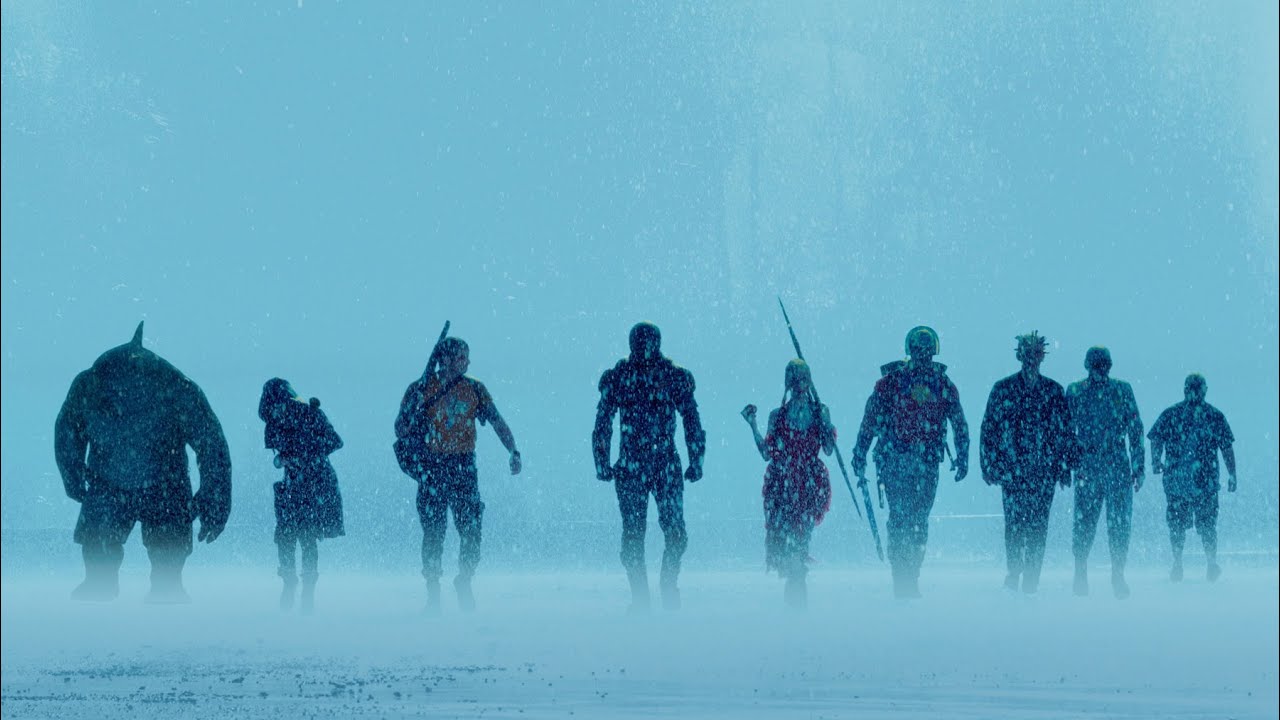
    The line “Sad souls in silly costume” summarizes the motley crew that serves as the world’s last line of defense against a towering galactic starfish that conquers worlds perfectly. James Gunn makes his grandiose return to the genre with The Suicide Squad. It is a fast-paced firefight that features some stellar characters with individual, fulfilling arcs. While the film tends to drag a bit at certain points and some characters feel underutilized, those at the heart of the film’s eccentric story keep the ball moving and allows for an action-packed third act that ties the film together almost perfectly. So, without further ado, let’s jump into the highs and lows of the latest DC film.


    There will be spoilers in this review. So only continue at your own risk if you haven’t seen it yet. 


    The Suicide Squad · Film 2021 · Trailer · Kritik · KINO.de


    Let’s start with some minor shortcomings of the film. The part that I felt could’ve benefitted from more time is the opening sequence. When we land on the beach with our initial team, we really meet the duds of the bunch. They are obvious cannon fodder. Characters like Javelin, Mongal, Captain Boomerang, Savant, Weasel, and Blackguard don’t get the slightest chance to show off before they meet gruesome ends. The only exception is Nathan Fillion‘s TDK for a joke on the absurdity of his abilities. While this sequence felt rushed, Harley’s time with the new president of Corto Maltese was on the other side of the spectrum. It just dragged on a little too long, and I felt she could’ve got her ‘red flags’ speech out earlier when he mentioned hanging an entire family.

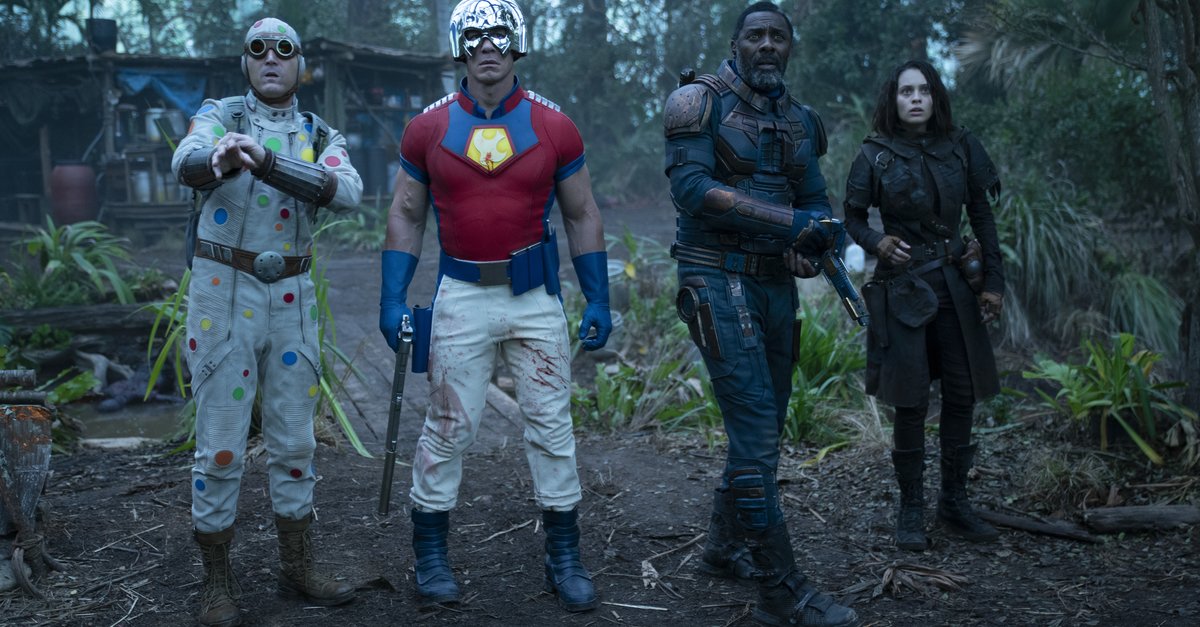
    But we’ve really got to talk about the parts that sing louder than the rest, which is 90% of the film. From the get-go, you can tell who the main characters are, and it’s difficult to choose a standout among them. I loved the dynamic between Bloodsport and Ratcatcher 2. Idris Elba’s mercenary acts as a  surrogate father, while she helps find the good within him. What truly stands out is the group dynamic perfectly complemented by Peacemaker, King Shark, Polka-Dot Man, and Harley Quinn. Margot delivers yet another fantastic turn at Quinn. All of this comes together in the third act, where the film truly shines.  Polka-Dot Man overcomes his fears and manages to become the superhero his mother had always tried to force him to be but on his own terms.


    The Suicide Squad“ im Kino: Die Knalltüten aus der Superhelden-Liga - Kultur - Tagesspiegel


    The Suicide Squad truly feels like a comic book brought to life in all the right ways. The film excels at what it sets out to do and told a fantastic story with an excellent roster of actors. Everyone brings their A-game, no matter how small the role. While the film may not be for the weakest of stomachs, it’s got a ton of heart, quite literally.

  • REVIEW: BLACK WIDOW Is On The Cusp of MCU Greatness

    REVIEW: BLACK WIDOW Is On The Cusp of MCU Greatness

    There are minor spoilers in the review. So, only continue at your own risk if you are trying to avoid any context on plot points, characters, or the villain.


    If there’s one thing keeping Black Widow from sinking into the lower tier of MCU films, it’s because of Natasha Romanoff, who is undeniably one of the three most important characters in the cinematic universe. Tony Stark and Steve Rogers may be the Avengers’ brains and hearts respectively, but it’s Natasha’s humanity that makes up for the team’s soul. More than any other Avenger, she’s the most flawed, carrying a darkness in her heart that gives the character a perspective on life that no one else on the team has. It’s probably no surprise that Natasha is the only Avenger to have a close and personal relationship with all the members of the original team except for Thor. Natasha has seen, experienced, and occasionally, carried out the worst things humanity has to offer but it’s her ability to rise above that pain to turn that darkness into something heroic and meaningful that makes her one of the greatest Marvel characters yet. As the film’s own mantra goes: “Pain makes you stronger.” 

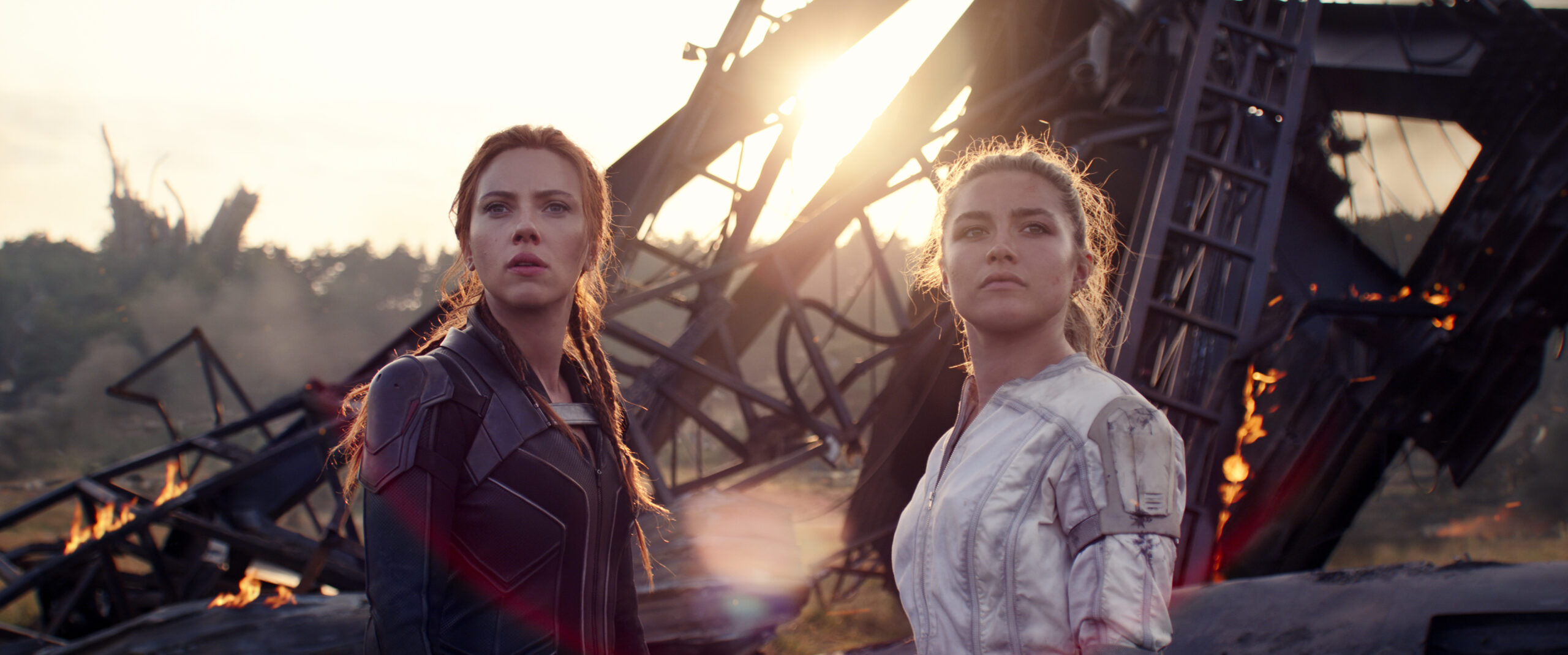
    Filling in the blanks of a past we’ve only heard anecdotes of, Black Widow sees Natasha Romanoff on the run from the authorities following the Avengers’ disastrous skirmish at the Leipzig Airport. She’s looking for a way out of the craziness but before she can do so, she’s pulled back into it by her foster sister, Yelena. Natasha learns that the program that turned her into a killer is still somehow up and running. It continues to turn girls into assassins like her, despite the fact she put an end to it a decade earlier. So Natasha and Yelena employ the help of their adoptive spy parents, Alexei and Melina, to put a stop to the Red Room’s schemes once and for all.


    The movie starts incredibly with a Black Widow history lesson I can only describe as a really good riff on The Americans, a show about a Russian family living a double life as KGB agents (which everyone should watch). Before the Red Room and the Avengers, there was Ohio in 1995, where a preteen Natasha spent 3 years living the life with her aforementioned family. It wasn’t a fancy life, mind you, but a life of comfort and love. Unfortunately, that life is brutally stripped away from Nat and Yelena when the secret spy identities of their parents are blown.

    The ensuing chase scene is nothing short of horrifying as it puts the audience right in the shoes of two children seeing their happiness and innocence be ripped apart before their very eyes. The image of two kids crying, confused out of their mind as to why their parents have gunshot wounds feels almost too intense for a Marvel movie but it hammers one point home: these kids will never be the same after this. This set-piece and the opening credits that follow make for one of the MCU’s most powerful prologues as it uses striking imagery to set the stage for its potent thematics surrounding abuse and violence against children.

    If the film’s opening has Marvel riffing on The Americans’ domestic Cold War intrigue, the succeeding set-pieces has Marvel tapping into the Bond/Mission Impossible sensibilities of the MCU’s world of espionage. Nat and Yelena are forced on this exhilarating goose chase through the streets of Budapest when they are ambushed by the Red Room. The entire sequence feels straight out of a Bond/Mission Impossible movie with its very European setting and crazy vehicular action. The same goes for that big snowy gulag prison breakout from the trailer. You can almost imagine Tom Cruise jumping off a helicopter into a fortress as an avalanche comes crashing down before him in real life. The action is engrossing enough that actually covers up a lot of the flimsier plot issues. 

    However, as fun as those scenes are, I’d be remiss if I didn’t say that I would have preferred them to dial up all the Bond or Mission Impossible riffs a lot more. More over-the-top equipment and spycraft; the MCU is weird enough to allow it. OT Fagbenle’s Mason doesn’t get to do much in this film despite being their tech guy and a sequence like that gulag breakout feels like the perfect way to utilize him as the Q/Benji Dunn analog. It’s a movie about a family of spies! Make it feel like a spy ensemble.


    But thrilling action scenes mean nothing at the end of the characters in them aren’t engaging and Black Widow has some great characters. Florence Pugh, David Harbour, and Rachel Weisz make up a wildly memorable ensemble as Natasha’s foster family of spies. They bicker, nag, hurt one another but intimately share a deep trust that feels compelling and never corny. The pitch-perfect chemistry they all have serves as the foundation for the film’s ideas of family, which I’ve always felt the Avengers films only gave us in mere doses. When this movie talks about family, it means it. 

    Individually, the three newcomers make for the best new additions the MCU has seen since maybe Thor: Ragnarok. David Harbour is Alexei Shostakov, an out-of-commission superhero who can’t stop reliving his glory days. He’s brash, dumb, lumbering, and egotistical but he’s got dad-like silliness to him that softens his rough edges. Harbour leans hard on his patriarchal role and really feels like a father to these kids at certain points. The character is, unfortunately, the butt of trite overweight jokes but the actor’s cuddly charm makes it palatable.

    Rachel Weisz is so fun in this as a former Red Room scientist named Melina Vostokoff. She has all the mom trademarks checked but adds in this hilarious layer of friskiness to the role. Melina and Alexei genuinely feel like divorced parents about to fall in love again, much to the chagrin of their kids and Weisz’s spunk makes it a blast to see. But beyond the fun, she also taps into the character’s regret and loneliness. While on the surface a fun mom, Melina carries a lot of baggage in her heart and you feel it in the moments when she gets serious.

    I wasn’t convinced when word came about that Florence Pugh was to be the potential successor to the Black Widow mantle but this film proved me wrong real fast. Pugh is a godsend as Yelena Belova, bringing a childlike pathos to this world of spies. She’s deadly with a pencil in her hand but is likely to draw a cute picture with the same pencil she murdered you with. She’s cold and calculating with words but may also cry when you tease her. Pugh makes the balancing act look way too easy. As the runt of the family, Yelena has an unspoken reverence towards her famous Avenger sister but also a lot of deep angst as to how their lives panned out differently. Yelena’s dynamic with Natasha is contentious and prickly in just the right parts. You will wish that they were in more movies together.

    And then there’s Scarlett Johansson, who has truly become the best version of the character. Her decade-long performances as Natasha Romanoff have recontextualized the character in ways that deepen your perception of her appearances in the comics. The only other MCU actor I can say that for is Chris Evans, whose version of the Sentinel of Liberty is idealized in live-action. Now, I don’t think Black Widow is necessarily Johansson’s best go at the character – the two Captain America films are where you see her shape the character with her chops – but she is, unsurprisingly, great in this. The actress has embodied the character for so long now that she’s at a point where she can just autopilot it and give us the character’s greatest hits. Luckily, she doesn’t do that. There are some fun touches to Natasha in this film that we’ve never seen before and you can see how much fun Johansson had with the character this time.


    Black Widow feels like a roller coaster on descent for its first half. Exhilarating set pieces are attached at the hip and little momentum is lost. Every moment feels punctuated with some crazy ambush happening on screen. Its second half, weirdly enough, has almost no momentum and feels more like a roller coaster that gets stuck halfway just as you’re about to hit that crazy loop. You’re left hanging and waiting for things to pick up back to where it was. It’s a truly odd way to pace the film that it almost feels lacking at parts. Like some set pieces leading up to the climactic third act were missing.

    Despite its successes, the MCU for some reason, still can’t get over bad third acts. You have a handful of good ones such as the Doctor Strange and Civil War climax but a chunk of them are still egregiously bland. Black Widow is unfortunately part of that bad batch. There are some nice sleight-of-hand tricks here and there that make it exciting for a moment but it quickly becomes tedious as you realize how artless and ham-fisted the conceit comes together. Much of the third act is poorly staged, plotted, and executed.

    The entire premise of what the team sets out to do against the big bad Dreykov, frankly, sucks and is totally uninspired. For one, there’s no ticking clock which, in turn, shortchanges the premise and stakes, making everything feel inert and without urgency. A character is forced to do something boneheaded to give the mission some tension but ends up feeling like a plot hole more than anything. The big climax also doesn’t give the main heroes anything exciting to do. Red Guardian is just kind of there, Yelena strolls through a bunch of corridors, and Melina hacks a computer. That’s boring! These are super spies infiltrating an evil lair filled with a dozen more evil super spies. Why is there nothing interesting going on?

    Bad third acts don’t always come with bad villains but Black Widow comes with a doozy in the form of General Dreykov, who is the latest in a long line of boring MCU baddies. Dreykov is the guy behind the Red Room and is essentially responsible for bringing Natasha, her family, and all the Widows into this violent world. He is, in all respects, evil incarnate: a trafficker with zero regard for human life. He may even give Thanos a run for his money in the MCU’s Worst Dad race.

    However, Dreykov being evil isn’t what makes him wack. Countless movie villains are truly evil that is engaging to watch on screen (Anton Chigurh from No Country For Old Men, is an all-timer). Writing in a tragic origin isn’t the way to go either, as nothing is redeeming in regards to human traffickers no matter their backstory. The problem is that he’s played awfully one-note by a grumbling Ray Winstone, with a kind of pathetic anger that old man has when his viagra doesn’t work. The movie has big Bond energy so why not make a Bond character out of Dreykov? Make him go broader and kooky. Give him some distinction beyond his grumbles. He has the craziest evil lair that would make any Bond villain jealous and an army of deadly assassins at his disposal. There’s no need to play the character straight. He can be the evilest character in the MCU but be still entertaining to watch.


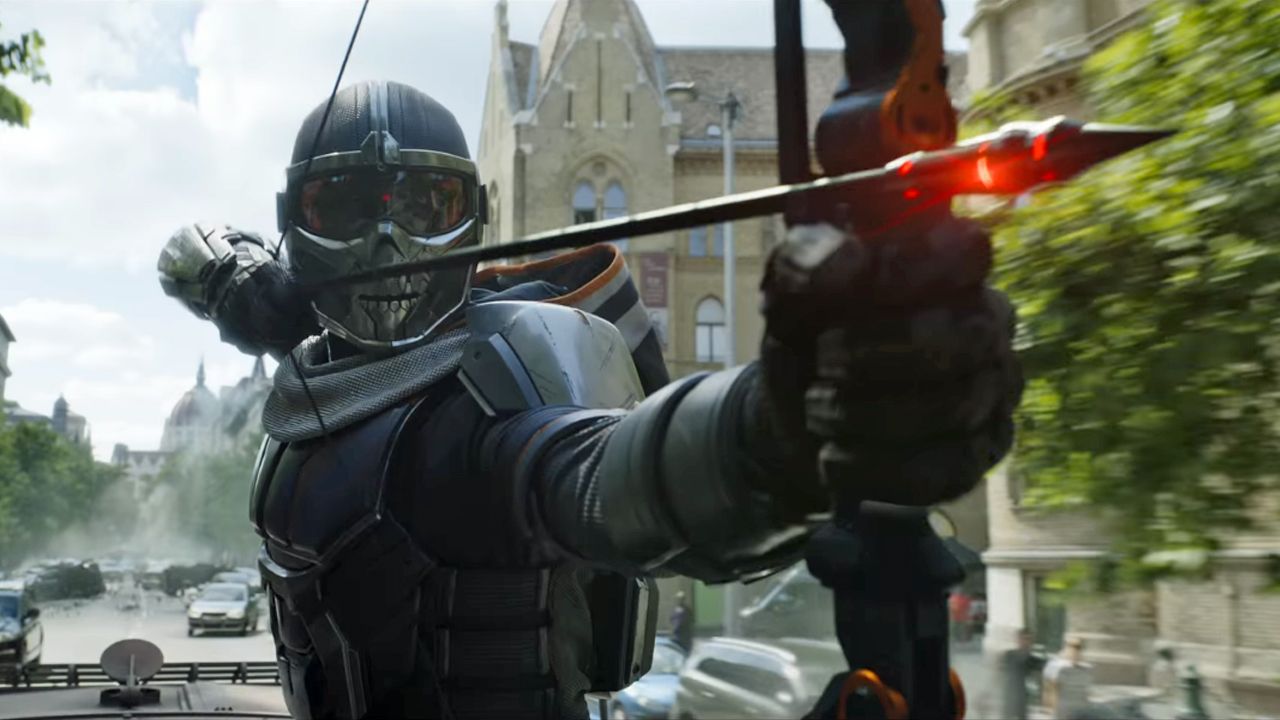
    But enough about Dreykov as he’s not really the villain we all paid to see. We’re all here for Taskmaster, who is inarguably one of the most exciting villains the MCU has ever attempted to put on screen. The trailers did a tremendous job of selling the character’s gimmick of being able to mimic any single action in real-time. It’s an ability that has stumped way too many Marvel heroes in the comics and the mere thought of seeing it in live-action was exciting to just think about. If the Winter Soldier highway fight blew everyone away, what’s Taskmaster going to be like in live-action?

    The answer is: pretty underwhelming, specifically in the ways the character is underused in the film.  The direction they take with the character is actually pretty exciting. I won’t spoil it as it has been the big talking point since they chose to keep the character’s identity a complete mystery but it is the kind of reimagining that completely feels fresh and perfect for the MCU, albeit somewhat unexplored. The problem with Taskmaster is that they don’t give the character that much to do. Taskmaster shows up to fight in all the trailer scenes and then some. The trailers give away roughly 70% of the character’s big action beats and leave almost nothing exciting for us to discover with the exception being the character’s identity. Mind you, this is the comic fan in me complaining. The character’s mileage for some comic fans may vary but I reckon a huge part of the populace won’t mind.


    Spoiler zu Bösewicht Taskmaster in "Black Widow": Hat sich ein Star (schon wieder) verplappert? - Kino News - FILMSTARTS.de


    That the character doesn’t feel like a cerebral fighter only exacerbates the frustrating lack of action. In the comics, Taskmaster’s whole schtick is that he can read, predict, and counter any move his opponent makes, making him not only a complete physical threat but a mental one. He’s a supercomputer that can kick your ass. In the fighting game community, we call his schtick downloading; the instance of fully understanding and predicting (or downloading) your opponent’s game plan. That idea is lost in this film, as it renders Taskmaster as somewhat of a computer but one that doesn’t need to be understood or as I put it, downloaded. The character is treated like a fighter simply a few notches above Natasha but one that doesn’t require a whole new set of skills to beat. The combat isn’t bad, by any stretch, but the way it lacks feels like a disservice to a character who is known for kicking everyone’s ass at an impossible level. Here you’ll see Taskmaster mimic some of Natasha’s moves here and there but it’s a footnote. There’s no sense of awe, struggle, or even tension in overcoming the character. I’m convinced Natasha had a harder time fighting Bucky.

    Now, Black Widow is not a bad film per se but it’s also not a great one. What the movie gets right is full of promise but what if whiffs on feels frustrating. If you’re a glass-half-full kind of person, you can look at that as a positive as the film does have a solid foundation of great ideas. Cate Shortland successfully made a film that does the character’s legacy justice, with a honed-in cast that elevates the film’s themes on family, and a story expands the world in exciting ways. But if you’re a glass-half-empty kind of person like me, you may be dissatisfied at how the film falls short of being a great MCU movie, especially in the back half where the seams of the film come apart. The third act is painfully dull, the film’s flagship villain is criminally underused, and it doesn’t embrace its spy trappings as much as it should have. It’s a fine MCU movie but with just a stronger emphasis on blockbuster spy fun, a tighter third act, and a generous take on Taskmaster, Black Widow could have been a truly great one. Though there probably is a variant of this film in our multiverse where it’s one of the best modern spy films.

  • REVIEW: ‘Luca’ Feels Like Pixar’s First Studio Ghibli Film

    REVIEW: ‘Luca’ Feels Like Pixar’s First Studio Ghibli Film

    To say that Luca is Pixar’s best work to date feels trite given the brilliance of each film the company puts on a consistent level, which is unlike any other animation studio. I mean, last year saw the release of the beautifully gut-wrenching existential reflection that was Soul, which I absolutely adored. In the years before that, you had Coco, Inside Out, and The Incredibles sequel! If Pixar was a band, they’d probably be the Beatles during their studio years, where every single album was of note. We live in an age of Pixar films where there’s an argument to be made that each release is their best so there’s almost no point in proclaiming why Luca is the best when their next one might just surpass it.

    But with that said, it’s hard not to look at Luca as one of “those” Disney classics. The spirit of the film feels like a homage to the quaint stories of old that brim with wonder and awe. When I spoke to director Enrico Casarosa, he mentioned the huge influence Hayao Miyazaki and the Studio Ghibli films had on his own ideations of friendship and adolescence as he was making the film. And you can truly feel that emanate from Luca; the way the film captures the innocent gaze a child casts onto its world, the nostalgia invoked by a homely summer setting, and the conflict of having to conquer one’s fears. There’s an undeniable timelessness in Miyazaki‘s and Studio Ghibli’s work and Luca bats for the same feeling by painting the perfect time with you and your childhood friends.  There’s poignancy in simplicity and the film has that in earnest.

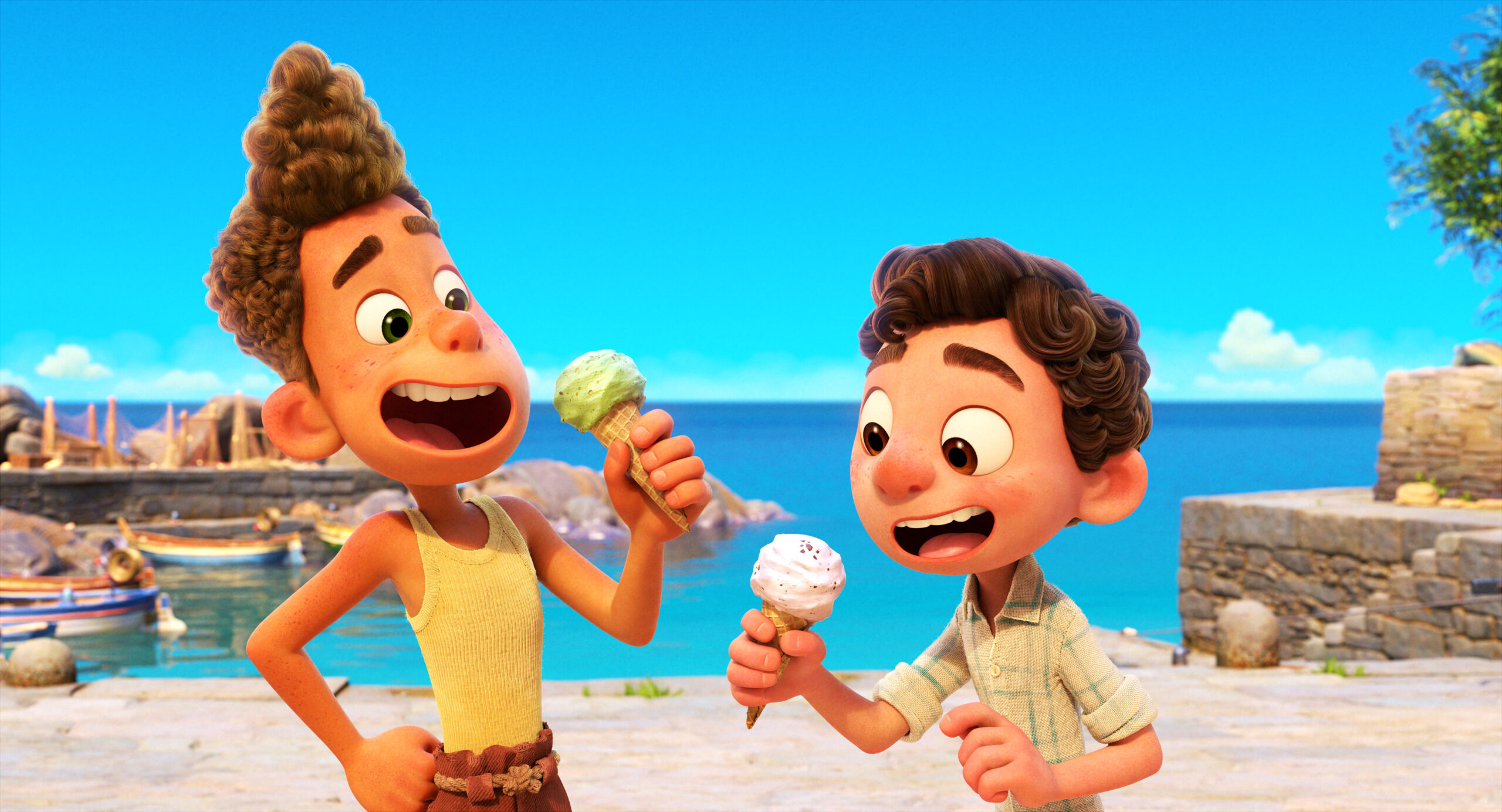
    Luca, the titular lead, is voiced by Jacob Tremblay and he’s a young sea monster who spends his days shepherding fish (fisherding?) on his family’s underwater farm while daydreaming of a more exciting life. He lives with his overbearing mother, absent-minded father, and carefree grandma. One day, his curiosity is piqued by life outside the ocean. Problem is, the surface world either means trouble or death for their kind because of fishermen hunting for sea monsters. As such, Luca spends his days cooped up under the stern rule of his mother.

    This all changes when he meets a troublemaker named Alberto, voiced by Shazam star Jack Dylan Grazer, who spends his days scavenging human belongings in the surface world (sea monsters, by the way, turn into humans outside of water). The two bond over a shared dream of one day owning a Vespa, which they believe to be the most beautiful invention known to man. Alberto, being an unruly kid, forces Luca to step outside of his comfort zone as they partake in shenanigans on a nearby remote island. This, of course, doesn’t sit well with Luca’s mom. 


    Watch Pixar's New Official Luca Trailer Deliver A Stunning Coming of Age story - The Illuminerdi


    From there on out, the story’s fabric unravels as a slice-of-life vignette across an Italian riviera. It takes place in a poor fishing village called Porto Rosso (an obvious reference to Porco Rosso). Luca and Alberto find themselves living their best days, learning the ropes of the surface world while keeping their monstrous side a secret. There, they meet a friend in Giulia, who helps them realize their dream of owning a Vespa by signing up for the local triathlon. This may all seem not exciting compared to Pixar films that have sprawling adventures into fantastical worlds but it’s in these unadorned, reserved vignettes of life where much of the film’s heart truly beats.

    Stand by Me was a movie that came to mind several times while watching Luca. Not because it had a bunch of kids cursing and smoking as they hiked to see a dead body, but for how it manages to capture the kinds of friendships a lot of people have during their youth. Alberto is the Chris Chambers here; a misfit that’s dismissive, reckless, protective, but deeply woeful while Luca, of course, is Gordie Lachance; wide-eyed, naive, and full of innocence. Their friendship feels tenuous at times, strained by the surface world they dream of living in but in spite of that, there’s a real undercurrent of love. And like in the Rob Reiner classic, the characters are inevitably faced with the hard choice of taking the first steps into maturity. “Silenzio, Bruno,” a mantra about conquering your fears is one you’ll often hear in the film and it’s one that ultimately crescendos into an absolutely beautiful finale that made my eyes bawl out.


    Tremblay and Grazer are phenomenal in this. They truly feel like the real-life counterparts of their characters. This was a movie that was wholly produced during COVID meaning the stars weren’t able to record in the same room as they normally would in these films. But their performances nonetheless feel so authentic and true. I don’t know if Grazer and Tremblay are good friends in real life but this movie convinces you they are. Grazer is fantastic in this and really carries that brazen vulnerability that makes Alberto such a resonant character. You can’t stand him at one point but then totally shed a tear for him later on. 

    The supporting characters are all so fun to watch too. Maya Rudolph and Jim Gaffigan voice the wacky sea monster parents of Luca. While they obviously play a critical emotional role in Luca’s journey, they really bring all of the laughs for a chunk of the film. Certain residents of Porto Rosso are also of note, specifically Giulia’s father Massimo and his cat Machiavelli, who feel like the most Ghibli-esque characters in the film. Even the film’s de facto bad guy/bully Ercole, while one-note at times, is entertaining to watch. 


    VIDEO: New Trailer for Pixar's "Luca", Coming to Disney+ June 18 - WDW News Today


    And then you have the obviously gorgeous visuals by the Pixar team. Their version of the Italian Riviera is breathtaking, albeit exaggerated to feel more like an impressionistic painting. Knowing Casarosa’s admiration for Miyazaki, I can’t help but imagine how even more spectacular this film would be as a hand-drawn film. Nonetheless, the film stands as a pure treat for the eyes and ears with its vibrant vistas and Dan Romer’s vintage-inspired Italian score. 

    With its big Studio Ghibli energy and old-fashioned tale of friendship and overcoming fears, Luca is a fresh kind of Pixar movie in and of itself. It may not have the existential ambition of Soul nor the superhero fun offered by the Incredibles but it has a heart unlike any other and that makes for the perfect feel-good movie to watch these days. 

  • ‘CRUELLA’: Fun, Edgy, and Messy

    ‘CRUELLA’: Fun, Edgy, and Messy

    Disney’s choice to cash in on Cruella de Vil, arguably one of the most problematic villains in their library, and humanize her in an origin movie has always baffled me. Mainly because she’s out to harm animals. She reveled in the suffering of animals and was unashamed by the cruelty of her actions. For a company that is synonymous with the most popular animated critters in pop culture history, the choice to humanize Cruella was very questionable. But having seen the film and how they made everything work to their advantage, I can see somewhat see where their heads are at. 

    Credit where it’s due, Disney did the assignment and rebuilt the character from the ground up. In classic retcon fashion, we learn that Cruella’s real name was actually Estella. Raised by a kind hapless woman, the young sweet girl develops a knack for defying the norm and personifies it as Cruella. Mom is quick to tell her to keep that mean alter-ego at bay So, she does not screw up her chances at getting good in life. But this doesn’t go well for Estella, as she quickly learns that the only way to survive in a cruel world is to give that cruelty back. Tragedy eventually befalls her mom and she is left to fend for herself in the streets of England. In those streets, she meets two of her closest allies, Jasper and Horace. 


    Cruella' Trailer: Emma Stone Plays Punk Rock Villain in Disney Remake - Variety


    Compared to all the other live-action adaptations Disney has ever done, Cruella might be the most fun. Part-fashion show, part-heist film, the movie has a cadence that’s been sorely missing from a villainous character piece like Maleficent. It has a distinct personality that you’ll never find in a movie like Lion King or Aladdin. For one, the movie has some actual edge, which is almost unheard of in a Disney flick. Even Maleficent, whose story and visuals have their darker moments, is still draped in a cloak of high fantasy. It makes some of that darkness distant for the viewer. But for Cruella, the edge feels palpable all thanks to its stylistic approach to a grounded cautionary tale. 

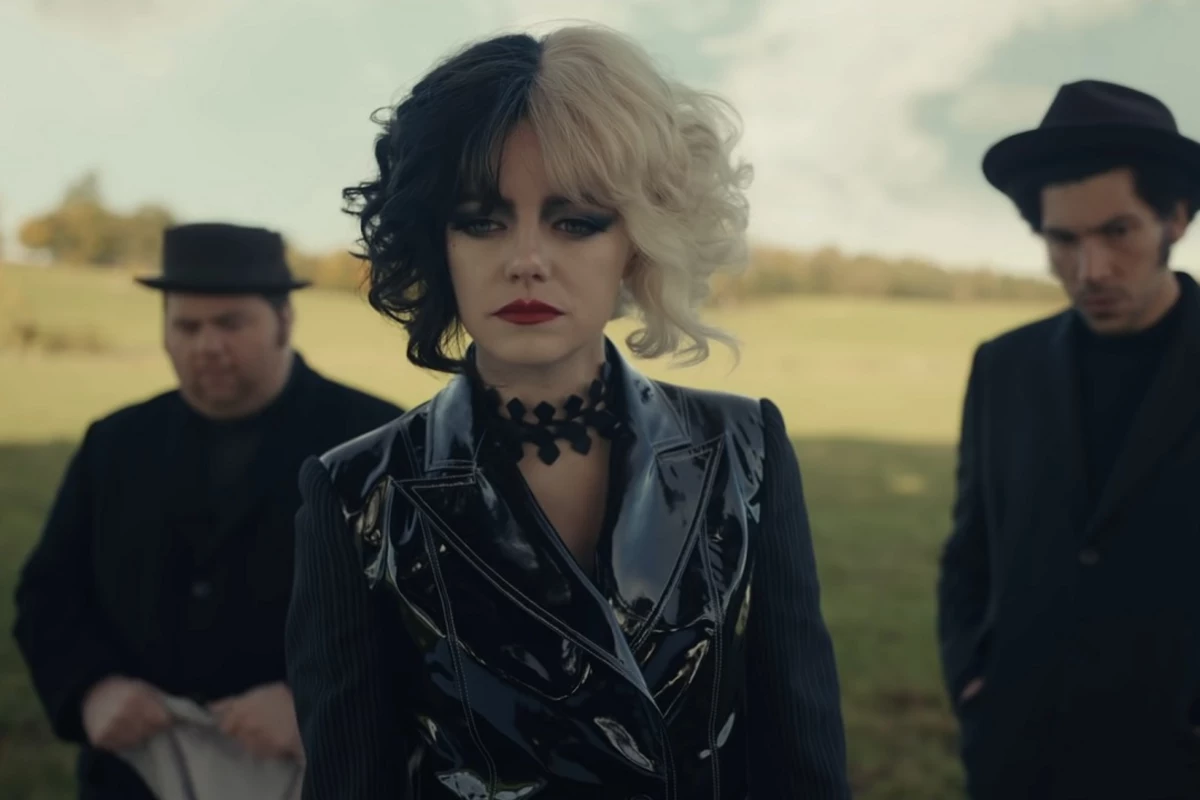
    Visually, there’s a sleekness to the film that further reinforces its style. Its visual language feels calculated and meticulous without losing its elegance nor its edge. Combine that with the absolutely stunning work of Mad Max: Fury Road costume designer, Jenny Beavan, it plays out like the most entertaining runway show in the best way possible. I mean, just take a look at that fiery ballroom costume unveiling in the trailer. Just imagine seeing moments and works of art like that throughout the film. The film will be the foundation of many cosplayers to come once COVID ends.

    Emma Stone has fun as the eponymous character. Her interpretation of Disney’s villain is a lot more complex and subdued than Close’s take which was a more devilish socialite than a tortured artist. As we get to see a pre-Cruella version of the character, there’s a lot more color in Stone’s palette. She flawlessly transforms with precision between the meek submissiveness that Estella carries and the rebellious ethos Cruella lives her life by. She’s a total blast to watch from start to finish. 

    Opposite Emma Stone is Emma Thompson, who plays a character called the Baroness She is a viciously mean-spirited fashion designer who the young girl takes up as a mentor. Thompson is fun to watch in the role because her stature as an on-screen legend gives gravitas to this original character. The downside is that she doesn’t really get to do much more than acting super snooty and mean, but for what it’s worth, her performance makes for a great foil for Stone’s Cruella. 


    How to Watch 'Cruella' + Everything We Know


    At the heart of the film are Cruella’s best friends Jasper and Horace, who are played by Joel Fry and Paul Walter Hauser. I’ll admit, it took me a while to accept Hauser playing a wholesome character after seeing him for years as these despicable people, but it grew on me as the film went on. Jasper and Horace get overhauled in a pretty big way here. Instead of them being just Cruella’s lackeys, they’re actually her friends. Joel Fry does the heavy lifting as the emotional foil to Stone’s Cruella. Together, the chemistry these three characters have is nothing short of endearing. 

    A glaring missed opportunity in the film is how it relegates Anita Darling to the sideline. That Anita becomes a non-character in the main part of the film despite her being introduced in an early yet definitive time of Estella’s life is a bummer. The characters don’t ever interact in a meaningful way. In a film exploring Cruella’s past, making Anita the anchor to a life she once recognized could have made for some interesting character work. 


    Cruella' Steals Dogs and Promises More Bad Things to Come in New Trailer for Disney's Villain Origin Story - Bloody Disgusting


    And then there’s the key task of handling Cruella’s reinvention. The rework is interesting as it departs from all the wickedness associated with the most infamous iteration of the character. For one, Cruella isn’t out to harm animals. In fact, she’s constantly surrounded by furry allies. The movie is quick to establish her fondness for dogs. She gets an adorable sidekick named Buddy and eventually, another furry friend in the form of Horace and Jasper’s dog, Wink. The movie does pay lip service to her tumultuous relationship with dalmatians but even by the end of the film, this version of Cruella ends up as her own thing in the best ways possible. I can’t imagine this version of Cruella ending up like Glenn Close‘s interpretation. I don’t like their choice to put heinous characters in a good light but the changes in Cruella are ones that I can get behind with. 

    The film’s biggest problem is that it is oftentimes at odds with what it wants to be and what it has to be. By design, the film is made up of varying tones that are constantly vying for control and it results in this haze that prevents it from being truly a great film. The film wants to be this edgy character study in the vein of nihilistic films like Joker but is also aware that it’s a Disney movie and has to have Disney-fied moments of wackiness. It doesn’t ever find a middle ground for these two things to mesh, resulting in a messy tone.

    And this movie gets really silly at times. The center plot of the movie has Estella interning for the Baroness while moonlighting as her nemesis in a totally silly Hannah Montana scheme. There are scenes of dogs wearing cute disguises and committing heists. Heck, there are some sequences that feel downright slapstick. Now, there’s nothing wrong with having wacky ideas but when those ideas are trying to engage the audience in a straight-faced way, it feels disjointed. Like, imagine watching The Three Stooges while a song by The Doors plays in the background. It takes you out of the scene and it just doesn’t feel cohesive.

    Luckily, with a great cast, diverse soundtrack, and stunning production, Cruella manages to bypass its own confusing DNA by delivering a palatable caper under the guise of a 101 Dalmatians spin-off. With a freshened nuanced take on the character, perhaps this is Disney’s attempt to better the character for a new generation of fans. 

  • REVIEW: ’22 vs. Earth’ is a Welcome Expansion of ‘Soul’

    REVIEW: ’22 vs. Earth’ is a Welcome Expansion of ‘Soul’

    One of the great things about this era of Pixar is that they’re no longer catering their content to just kids. Sure, all their films since Toy Story have been four-quadrant endeavors. If you remotely have an imagination and appreciation for good stories, all their offerings are bangs for your buck. In the past few years, something started to change with these films. They became deeper and deeper as they grew bolder with their storytelling choices. The themes became darker and the subject matter explored existential questions. Much of this is in due part to Pete Doctor, director of Inside Out, Up, and last year’s Soul.

    Soul was the encapsulation of all that. A wildly complex study on purpose, identity, and notions of what makes each of us whole. You know, all the kinds of ideas we’re terrified to examine as adults. But examine we did thanks to the mesmerizing pull of Soul. The movie was a hit critically, garnering numerous awards from multiple organizations, eventually winning the Academy Award for Best Animated Feature. The massive success amassed movie makes it all unsurprising that they decided further explore the Great Before in a brand new short titled 22 vs. Earth


    22 vs Earth': Pixar Follows up 'Soul' with a Prequel Short | IndieWire


    Directed by one of Pete Doctor‘s main collaborators, award-winning editor Kevin Nolting, 22 vs. Earth is a mini-examination of one of Soul’s main characters, 22, voiced by Tina Fey. We last saw 22 in the emotional ending of the film. She finds her elusive purpose after eons of waiting and makes her way to Earth, all thanks to her friendship with Joe Gardner. However, things are very different for 22 in this prequel. I’d argue even worse than when we meet her in Soul. She’s deeply bitter at all the souls finding their purpose like it’s no big deal. While that bitterness manifests in silly gags, her isolation is felt strongly here.

    The short film almost feels like a deleted scene in many ways, which is unsurprising given how they tried working in the short film’s premise in the development process of Soul. While the short film could have functionally existed in the final cut of the film, it being a short film makes it work regardless.


    22 vs Earth': Pixar Follows up 'Soul' with a Prequel Short | IndieWire


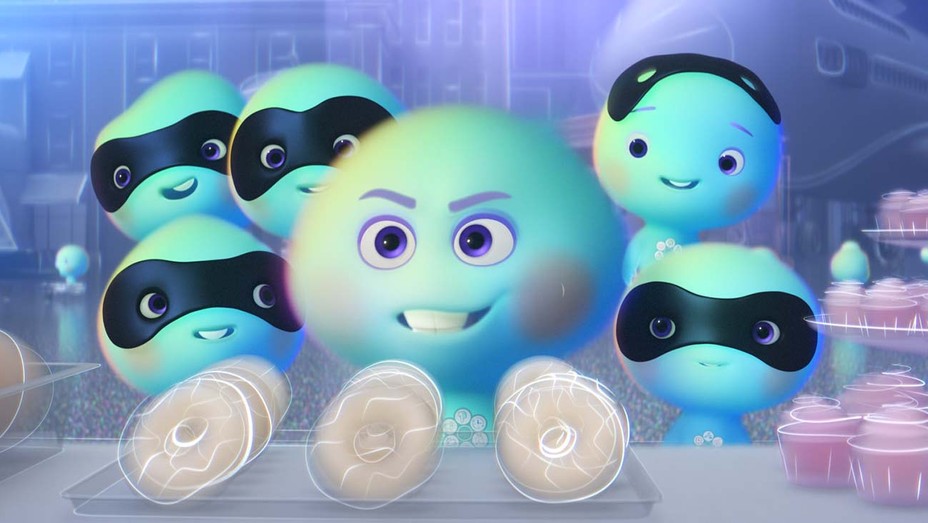
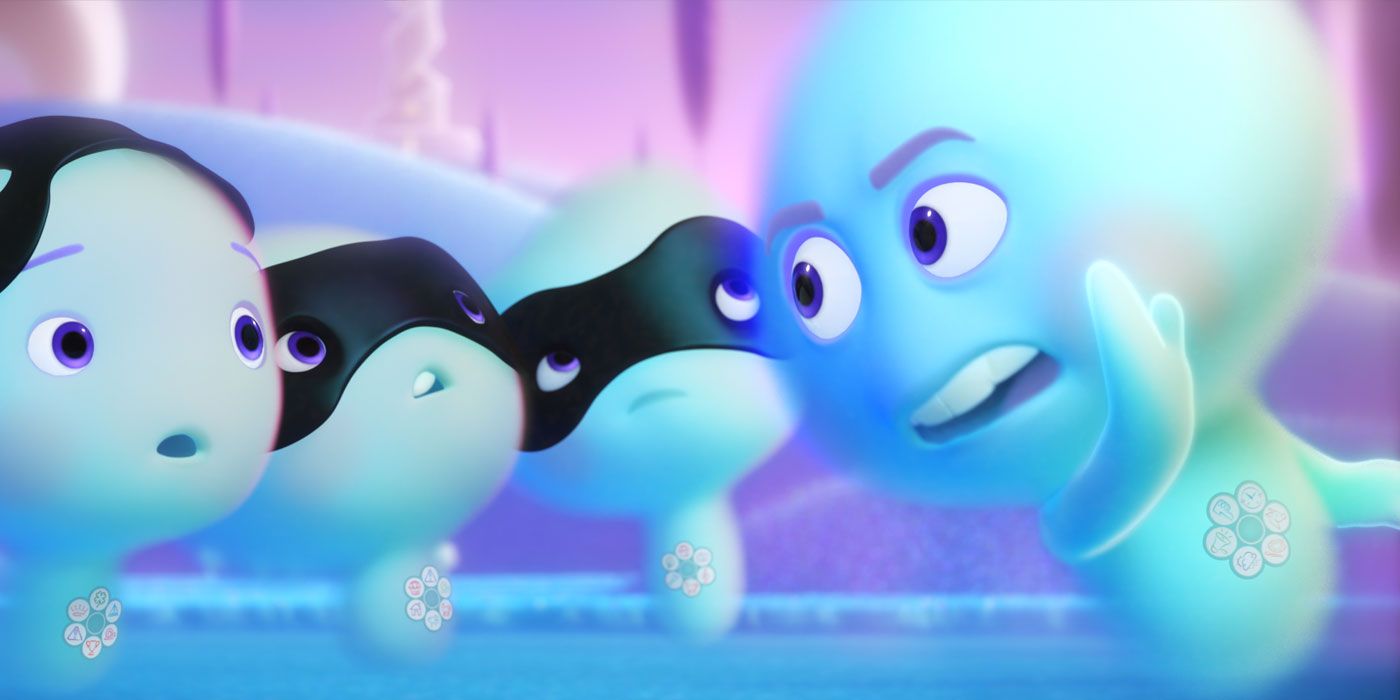
    But if there’s anything that 22 vs. Earth does better than Soul, it’s definitely the cute factor. I cannot stress how adorable the ensemble cast of souls they put together in this short. They all have adorable names (Macaroni is mine and will be everyone else’s favorite, no doubt) and wear domino masks to boot. 22 forms a coalition with them to stop souls from reaching Earth, dubbed as A.P.O.C.A.L.Y.P.S.E. which might give S.H.I.E.L.D. a run for its money as far as abbreviated organizations go. Their plan, of course, goes sideways in the most adorable ways possible. 

    22 vs. Earth doesn’t have the full emotional heft of Soul and I think that’s fine. This short film isn’t trying to replicate the tear-jerking moments of the film nor is it trying to explore the complexities and nuances of human identity. What it is: a charming vignette of what 22’s day-to-day life was like in the Great Before. We learn right away that she used to spend her days hatching adorable plans to stop fellow souls from finding their purpose. But despite the short film is a mostly cute affair, there is somewhat of an underlying emotion to the whole thing. A sadness that drives 22 to scheme as she does. She’s lonely and just wants to find someone lost like her. However, knowing 22’s eventual fate makes this period more striking.


    Pixar Debuts Clip from Its Soul Prequel Short, 22 vs Earth | CBR


    All in all, 22 vs. Earth does the job of telling the untold tale of 22’s origin. It’s concise, charming, and most importantly, fun. Seeing all these characters, new and old (the soul councilors are here!), makes me wish there was a sequel in the works. But even if there never will be, this short film fills that void nicely.