Tag: Movie Reviews

  • REVIEW: ‘Margaux’ is a Flawed but Terrifying Thriller

    REVIEW: ‘Margaux’ is a Flawed but Terrifying Thriller

    In 1999, the Disney Channel released a movie called Smart House that showcased how quickly artificial intelligence can become terrifying. While the film wasn’t exactly terrifying, given it was a Disney Channel original movie, it still presented a scary reality of a world driven by AI. Margaux takes the concept of Smart House and ups the ante, resulting in a terrifying thriller.

    Margaux is a film that centers on a group of college friends as they rent a smart house for a weekend of partying. Simple enough concept, right? Unfortunately, though, things soon begin to turn into a disaster for the students. The smart house, which prefers to be called Margaux, first tries to cater to the students by giving them the house of their dreams. It takes their social media information and any other easily accessible information to design their rooms to their liking. It also uses the information to know their likes and dislikes. That in itself is terrifying, but the film only continues to become horrifying from then on.

    Drew (Jedidiah Goodacre) rented the smart house to try and reconnect with his college friends after the quartet managed to become more distant over the years. However, from the get-go, things do not go as planned. His girlfriend, Lexi (Vanessa Morgan), ends up joining them and creating an uneasy tension within the group. This is where the film struggles initially, as it becomes all about tropes. Lexi is the social media influencer girlfriend, Drew is the model boyfriend, while Hannah (Madison Pettis) is the nerd of the group, Clay (Richard Harmon) is the stereotypical stoner, and Kayla (Phoebe Miu) and Devon (Jordan Buhat) are the adventurous couple. It’s frustrating how much time the film spends on these stereotypes. Lexi is made out to be an airhead and Clay seems incapable of being anything besides a stoner — the film’s two strongest actors are so poorly underused because their characters are underdeveloped.

    If viewers can get beyond these frustrating moments, they are sure to find some enjoyable moments in Margaux. Hannah isn’t the best character, but she does get to shine in the third act. It is at this point that Margaux excels. While the scenarios presented on screen are far from realistic, they are so well-written, it’s hard not to be engulfed by the chaos occurring on screen. If the film had managed to perform at this level throughout? It could’ve been something special. But it spends too much time trying to be Cabin in the Woods if that movie had been made in a smart house.

    Is Margaux a great film? No. It has plenty of faults and, honestly, some of the acting is rather subpar. However, despite all of this, it’s a terrifying thriller that takes our obsession with social media and technology and shows how easily it can destroy us. If you’re looking for a thrill ride heading into the Halloween season, Margaux is certainly worth a watch. It’s a fun ride for what it is.

    Margaux is available on digital now.
  • REVIEW: ‘Pinocchio’ is Visually Stunning but Unnecessary

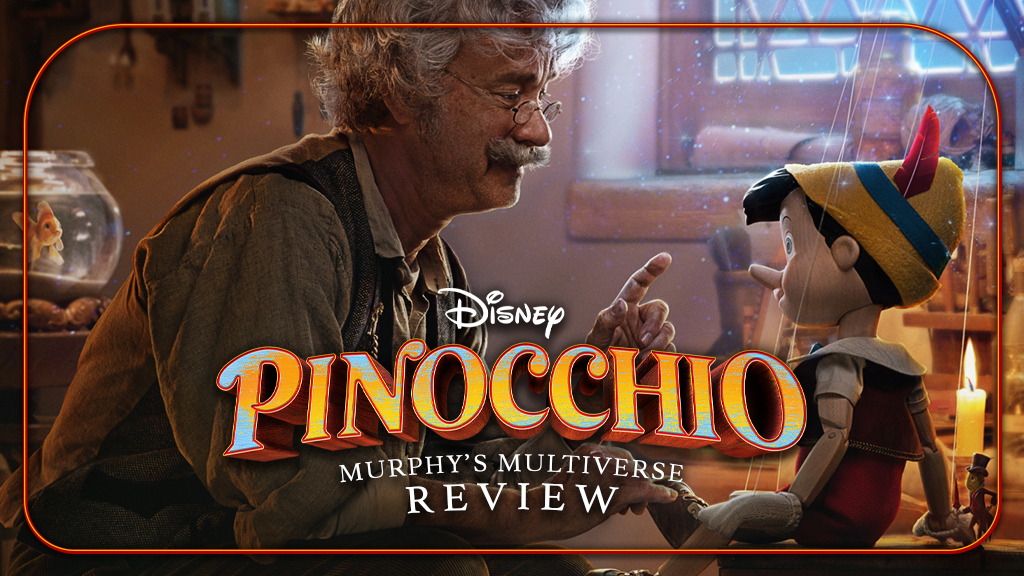
    REVIEW: ‘Pinocchio’ is Visually Stunning but Unnecessary

    Over the past decade, Disney has made it a habit of remaking some of its biggest animated classics in live action. Sometimes the decision to remake these films works out well (Cinderella), but oftentimes, audiences are left feeling as though the remakes don’t live up to par (Dumbo). Unfortunately, while visually stunning, Pinocchio seems likely to fall in the latter category. It feels like a lifeless remake that does a poor job at adapting such a beloved animated classic.

    Disney’s animated Pinocchio was released on February 23, 1940, and was based on the novel The Adventures of Pinocchio by Carlo Collodi. The animated movie told the story of the living puppet, Pinocchio, and the cricket that serves as his conscience to help Pinocchio as he seeks to become a real boy. The live-action remake, of course, follows the same path. Unfortunately, though, it lacks the same charm and care as its predecessor. Sure, Tom Hanks‘ casting as Geppetto is fantastic. He captures the oddities of the character and easily steals every moment that he appears on the screen. The problem, however, is Hanks’ time as Geppetto is short, and when he isn’t around? This take on Pinocchio struggles to find its footing.

    Benjamin Evan Ainsworth does an excellent job voicing Pinocchio. He captures the emotions wonderfully, from confusion, to love and sadness – his vocal performance is up there with Hanks’ take on Geppetto. But as great as the two leads are, the secondary cast is forgettable – albeit not through any faults of their own. Giuseppe Battiston‘s Stromboli isn’t given much to work with and fails to be as imposing of a character as he should’ve been. And Honest John and Gideon feel underused despite essentially serving their purpose. It’s frustrating because, by the end of the movie, it’s hard to recall what should’ve been a noteworthy performance by Keegan-Michael Key (Honest John). And while Luke Evans does get to shine in the few moments he’s on screen as the Coachman, this is mainly due to the iconic numbers he gets to belt out. Ultimately, for such a stellar cast, the film fails to truly use any of them properly and it’s frustrating.

    The fact of the matter is this take on Pinocchio never truly feels necessary. Yes, there are good moments, and there’s no denying the visuals are stunning. Outside of that, though, there’s truly nothing new that the animated classic doesn’t already have to offer audiences. To remake something, there needs to be a good reason to do so, but that special charm and wonder provided by the animated film does not exist in this remake. The musical numbers are still catchy – and Cynthia Erivo‘s brief musical moment as the Blue Fairy is stunningly done – but outside of that? There’s nothing truly memorable here.

    That isn’t to say families won’t find joy in this film. For audiences not yet introduced to the animated film, Pinocchio will probably delight. Those that grew up on the classic, however, will struggle to find anything of note in this live action remake. Well-done visuals does not a great movie make. Pinocchio needed a bit more room to breathe. While the movie does a good job modernizing certain scenes – Pleasure Island, mainly – it often falls short elsewhere because it omits scenes that help to make the animated film the classic that it has become.

    Perhaps Netflix’s version, coming later this year, will offer an exciting new take on a beloved classic. For now, fans can check out Pinocchio only on Disney+.

  • REVIEW: ‘Barbarian’ is an Unexpected Delight

    REVIEW: ‘Barbarian’ is an Unexpected Delight

    Choosing what to watch is never easy. Far too often do people sit on their couches, late at night, scrolling endlessly through extensive catalogs of content, hoping to find something that might catch their eye. What they rarely consider, however, is the riskiest option available to them – just sort of clicking on something and hoping it’s good. Time is a precious commodity, and most of society would rather not waste it on a sub-par movie. Of course, this extends two-fold to the moviegoing experience. A theatrical flop means the viewer has wasted their time and their money, and not a soul goes home happy after losing out on both. Sometimes, though, the risk is totally worth it. Every once in a while, a person goes to the theater on a whim and discovers something unexpected. Something absolutely delightful. Get those tickets ready, because this year, Barbarian is that unexpected delight.

    Let it first be said that Barbarian is the type of film best experienced with little-to-no knowledge of the plot heading into it. It’s designed to take people by surprise, and it does so gloriously. As such, it’s highly recommended that anyone who plans on going to see it avoids spoilers and spoiler-filled reviews at all costs. All anyone needs to know before they seat themselves in the theater can be found in the trailers, which do an excellent job of advertising the film without giving much away. Written and directed by Zach Cregger, the movie stars Georgina Campbell as Tess, a woman who arrives at her Airbnb to find it’s already occupied by someone else. Scream king Bill Skarsgård co-stars as the mysterious stranger who opens the door and invites Tess inside – where she quickly discovers there’s a lot more going on than just a reservation mix-up.

    Cregger‘s background in comedy – he was a founding member of the famous The Whitest Kids U’Know sketch troupe – works wonders in horror as the opposite side of the same coin. The script always knows when to hold back and when to go full speed ahead, expertly setting up scares and plot twists in much the same way a stand-up might lay the path for their closing remarks. Barbarian doesn’t feel as long as its runtime either, flying by with excellent pacing that makes it easy to become engrossed in what’s on the screen. If the length of the film wasn’t already so perfect, one might even find themselves wishing there was more by the time the credits start rolling. Thankfully, however, the movie knows exactly where to stop. An excellent example of the celebrated tight 90.

    Thematically, Barbarian is also a bit of a shock. The basic premise itself, as stated above, suggests the plot will tackle some feminist topics, but the actual extent to which the movie commits to this is astounding. Cregger himself has mentioned on multiple occasions that the original idea behind the project came from reading a book about situational red flags women deal with on a daily basis. If one pays attention, they’ll notice this concept is the backbone of the entire film. The subtlety involved with seeding these moments around the story varies depending on the scenario, but it’s always present, no matter how insane the events on screen become. In this way, Barbarian competes with the recent trend of horror projects intent on delivering valuable messages on top of freaky frights, though it maintains more of a classic slasher feel than it does the artsy vibe of Jordan Peele‘s now-iconic work.

    Campbell solidifies herself as a leading performer with this movie, and hopefully, will be treated as such following its release. She stands tall alongside Skarsgård and fellow cast member Justin Long, who himself brings something unique to the big picture. Long plays a bit out-of-type, in a crucial role, but also manages to provide some comedic relief in an otherwise tense film. With him, Cregger is able to flex a bit of his comedy muscle, without compromising the intensity that is so important to making Barbarian work. In fact, it’s the intensity of Barbarian that will keep butts on the edge of their seats as the story progresses and becomes increasingly enthralling.

    Not much more can be said without starting to give away too much, but the baseline remains the same – Barbarian is a near-perfect horror film. There is little it can’t do, between screams and laughter, and is admirably unafraid to be as strange as it wants while keeping with its very real messages. Admittedly, the marketing for the movie hasn’t conjured much hype, likely due to its inability to show everything that goes on in the depths beneath the Airbnb. So, let this be the rallying cry. Go see Barbarian, and afterward, tell everyone else to head towards the theater as well. It may be flying under the radar right now, but with time, this one might just become a modern horror classic.

  • REVIEW: ‘Prey’ is Beautiful, Brutal, and Stunningly Good

    REVIEW: ‘Prey’ is Beautiful, Brutal, and Stunningly Good

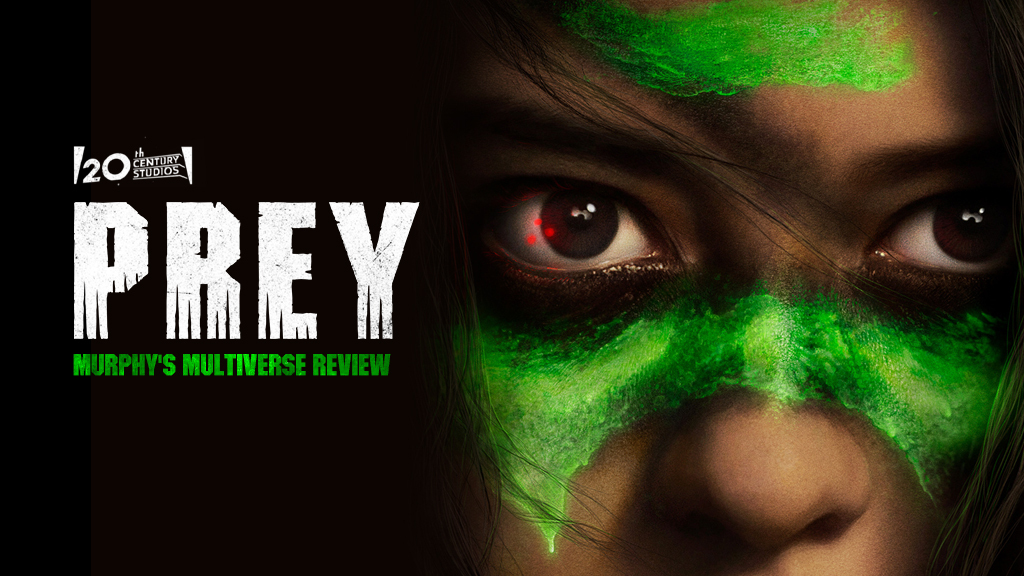
    It’s been said that, after killing their prey, a hunter should use every part of the body. The meat is obviously for feasting, the hide can be used for clothing or shelter, and the bones can be fashioned into weapons and tools. A life is taken, but it’s done so with reasonable intent. It’s an elegant trade-off for a harsh reality, that sometimes something must die for something else to live. The thing is, Prey is not a movie about hunters. It’s about Predators, and they only kill for a single goal – the spine and the skull attached to it. They want a trophy to bring back to their tribe, so that everyone may know they’re the apex in the wild. It’s this dichotomy between those who hunt with honor and those who hunt for honor that makes Prey such a force to be reckoned with. And the really, really cool death scenes don’t hurt either.

    To be clear, Prey is the latest entry in the decades-old Predator franchise. Yet, somehow, it feels like something entirely brand new. A prequel set in 1719, away from the complicated timeline muddled by 2018’s The Predator, director Dan Trachtenberg has crafted an incredibly fresh take on a series that was beginning to come off as a bit stale. The recipe for success starts with the title, which is indicative of the way Trachtenberg and writer Patrick Aison flip the story’s usual structure on its head. In Prey, a young Comanche woman defies the gender norms of the Great Plains, and embarks on the hunt of a lifetime to prove she’s the best warrior her people have to offer. Although, contrary to what many may have assumed, Prey does not refer to Amber Midthunder‘s assertive lead. Every installment in the franchise thus far has utilized the Predator as its title character, and this project is no exception.

    Fans have seen variations on this concept before, with the final human survivor turning the tables and facing the Predator head-on, but it’s never been executed quite like this. Naru, the protagonist, is the focus from the very start, with the film only picking up on the Predator’s activities to confirm it’s still somewhere on the prowl. In fact, at almost no point in the film is the Predator ever actually hunting Naru. She is on her own journey, running parallel to the beast’s increasingly destructive murder spree, hell-bent on emerging from their inevitable clash the victor. Much like the Predator itself, Naru knows the only way to prove herself is to return home with a trophy unlike anything her people have seen. She craves defeating the apex so she can become the apex. Prey introduces audiences to a different kind of predator, and in the process, dares to ask where man falls on the Venn diagram between glory and integrity. This is a violent, engaging coming-of-age tale that just so happens to feature an iconic extraterrestrial killing machine as its main foil.

    Fear not, however, as the Predator itself is still given plenty of time to leave its mark. Trachtenberg manages to design some of the best kills the franchise has ever produced. There were multiple sequences that should probably elicit a discussion as to whether or not New Line Cinema could still let the filmmaker take over their Mortal Kombat fold. It feels almost grotesque to say that the violence in Prey is borderline beautiful, especially in light of recent world events, but it absolutely is. Actually, it’s worth stating that the entire project is a spectacle, shot to perfection by cinematographer Jeff Cutter. It’s a shame this film won’t be released in theaters because so much of it is exactly the kind of experience everyone hopes to have at the movies.

    Propped against the breathtaking backdrop of the vast American wilderness, Prey might also use its setting better than any Predator film before it. The movie expertly uses a variety of natural predators, the kind often found in stories of the frontier, as a means of building tension throughout its first two acts. With tricky camera angles and creative framing, viewers can never be certain exactly what it is they’re watching creep through the trees, and it almost always leads to a satisfying payoff when whatever is lurking finally emerges to attempt a fatal strike. This also goes for the time period itself, which offers all sorts of adversity for Naru, in the form of both people and culture, as she fights her way towards dominance. It makes the deaths, and the survivals, seem far more rewarding. Arnold Schwarzenegger may have taken down a Predator, but he never had to worry about much else while doing it.

    It’s difficult to put into words the energy this movie brings with it, but the most accurate sentiment may be this – it absolutely rips. The Urban Dictionary exemplifies this phrasing as, “when a dog runs laps around the yard, typically at full speed, and it’s highly entertaining to watch.” Watching Prey is like watching a dog run laps at full speed, only the dog is an alien killer and the laps are swift, brutal, stunning kills. The only way it could possibly be better were if it had a well-constructed, thematic story to go with it. Luckily, it does. Every Predator film has promised to be what this one actually delivers, which is why Prey is probably the best of the bunch, a must-watch for anyone who loves movies.

  • REVIEW: ‘Love Accidentally’

    REVIEW: ‘Love Accidentally’

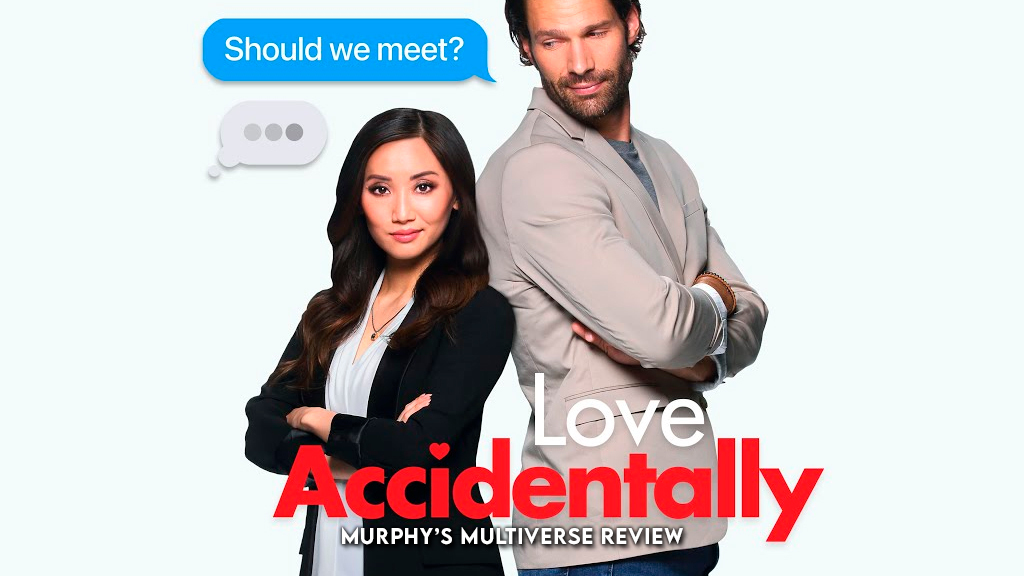
    Freevee’s Love Accidentally is everything fans expect from a Hallmark movie, but perhaps not in a good way. This cheesy romance is an easy watch, but it’s far from good. While the cast is decent – Brenda Song is the leading lady – the film is impractical and poorly acted.

    Love Accidentally follows Song’s Alexa Parker as she seeks to earn a promotion at her job. This being a cheesy rom-com, however, Parker finds herself facing competition in Aaron O’Connell‘s Jason, who will do absolutely anything to earn the promotion over Parker. They despise each other, so naturally, their story soon turns into a mysterious love story, right? (This is not a spoiler as it is evident in the trailer.) It’s a love story that sees plenty of issues as it unfolds, and ultimately ends with the truth being unveiled.

    After her boyfriend dumps her in a restaurant on her birthday, Parker accidentally drops her phone into liquid and ruins it. Even worse? She forgot to back it up in the cloud, so when IT gives her a new phone, she’s lost all of her contacts. Eager to talk to her friend about her broken heart, Parker texts a number she believes to be her friend, only to discover it is a wrong number. That wrong number? None other than Jason, who was also dumped earlier in the day. They spend the rest of the movie secretly texting – well, using voice to text – throughout the rest of the movie, failing to realize who they are talking to all along. At last, not for some time.

    It’s a very cliché storyline, which is fine. Romantic comedies are great when they embrace clichés and Love Accidentally would’ve easily been one of them if the story was stronger. While the whole voice to text thing was more than likely used to keep the audience engaged, it does come across as awkward, especially when they’re doing it in public and spelling their hearts out to one another. It’s an odd choice, and in it is those moments were the acting seems to suffer because of how awkward it is. Song and O’Connell make for an attractive couple, but there is absolutely no on-screen chemistry between the two of them. It’s all the more evident in the final moments they share together on screen. They work well with the banter part of the film, but when they’re brought together and supposed to share a connection, it fails to come across the screen.

    The film was written by Robert Dean Klein, whose biggest film is perhaps Little Fish, Strange Pond, and directed by Peter Sullivan, who has directed a slew of television movies. While there’s certainly nothing wrong with two men working on a romantic comedy, there are eyeroll worthy moments in the film that feel like this was written by men who had no business crafting a romantic comedy. There’s a comment made in the film regarding the leading man’s reading material, where a character dubs it chick-lit and gives him crap for reading it. It’s a scene that feels entirely unnecessary; it serves no real purpose other than to get a jab in.

    In the end, Love Accidentally has all of the ingredients for a cute romance, but the film doesn’t know what to do with them. Overall, the basis of the story just feels unrealistic and it is made all the worse by the poor acting. It might not be the worst rom-com out there, sure, and I did enjoy it to an extent… but it’s painful to watch at times. Still, Love Accidentally is not the worst way to spend a rainy afternoon.

  • REVIEW: Netflix’s ‘Resident Evil’ is Surprisingly Enjoyable

    REVIEW: Netflix’s ‘Resident Evil’ is Surprisingly Enjoyable

    SPOILER-FREE REVIEW!

    When it comes to video games, Resident Evil is one of the most beloved video game franchises. It is also one of the worst-reviewed film franchises, which, unlike its inspiration, continued to see a decline in profit throughout the years. So, knowing that Netflix’s adaptation of Resident Evil would draw inspiration from both the games and the films was worrisome, to say the least. And yet, the series manages to be everything that the films were not. Yes, there are drastic changes from the characters fans have come to love – or hate – in the games. Yet, they somehow work.

    Fans of Resident Evil will most likely know Albert Wesker as one of the most memorable villains of the video game series. He’s the captain of the Raccoon City Police Department’s Special Tactics And Rescue Service unit in the video games. In the series, however, Wesker is a scientist who works for Umbrella and has been working with them to develop a product called Joy that can present some issues for those that take it. While fans are sure to expect the asshole Wesker from the games, the Wesker presented in the series – at least, initially – is a much more levelheaded character who is eager to protect his kids: Billie Wesker and Jade Wesker.

    The first episode of Resident Evil is a bit of a slog at times. In fact, it almost feels like it wants to be a Resident Evil take on The Walking Dead. However, as the story progresses, it becomes an exciting story of family, deception, love and pain. It is of note that Resident Evil moves between the past and present frequently and often without warning. While it can be frustrating, there is a reason the story is told this way. It allows for the world and its characters to be established quickly, while also propelling the story forward. It’s an odd choice, sure, but by each episode’s end, the story manages to come together with ease.

    Ella Balinska is wonderful as Jade Wesker. As frustrating as the character’s choices can be from time to time, Balinska proves to be a star in the making. She commands the screen and often outshines the rest of the cast, including her “twin.” The character is reckless, but operates from a good place and when Balinska nails those moments of conflict within Jade? She does so wonderfully. Then there’s the always excellent Lance Reddick who is a force to be reckoned with in Resident Evil. Not only is his casting in the series stellar, but Reddick delivers some of his best work in the series.

    This is very much a story about a father and his daughters, but it’s also a story about the Umbrella Corporation, the T-virus, and corruption. Perhaps that is one of the best things Resident Evil manages to successfully do: craft two connecting stories that blend seamlessly when all is said and done. The story of the girls and their father is just as vital to the story as are the various creatures that occupy the screen. It’s the perfect blend of horror and heart. Especially when the series introduces some of the most iconic elements from the video games.

    The series serves as an origin story. Not just for the characters, but also the world of Umbrella and the T-Virus. It tells a cohesive story that weaves together into one larger-scale story that moves between timelines. It’s massive in scope, and yet grounded at the same time. Perhaps not a phrase one expects to hear when referencing a horror video game franchise, but it’s the most accurate description. And while these characters and their stories are only getting started, Netflix’s Resident Evil doesn’t waste any time teasing its future.

    The only place where Resident Evil stumbles occasionally is with its cinematography. That isn’t to say all of the shots are muted and unaesthetically pleasing – in fact, that’s far from the case. The set pieces are so well constructed that, when shot appropriately, the imagery can be stunning. As for the music, Resident Evil does a great job incorporating music here and there, and even manages to include some of the piano music from the video games.

    The first season of Netflix’s Resident Evil proves a good adaptation of these games is entirely possible. The films might’ve been a disaster, but Andrew Dabb has been very vocal about his love for the games and, despite some changes, that love is evident in the final product. From the well-thought-out Easter eggs, to the inclusion of key story points, Netflix’s Resident Evil is the only adaptation of the video games that matters. (Sorry, Resident Evil: Welcome to Raccoon Citythis is a Resident Evil story worth watching.)

  • REVIEW: ‘Thor: Love and Thunder’ Is a Comic Book Come to Life

    REVIEW: ‘Thor: Love and Thunder’ Is a Comic Book Come to Life

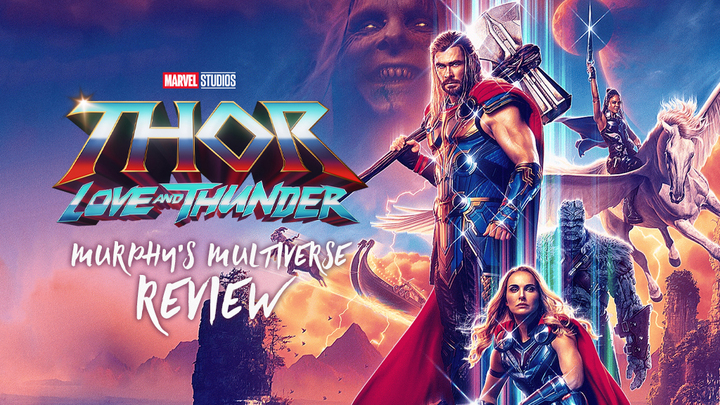
    When superheroes first became a fixture on the big screen, they were saddled with a pretty specific caveat. Studios seemed to believe that if these movies were going to land with the mainstream culture, they had to find a way to ground themselves in reality. Cartoonish oddities would only be allowed if they were coated by some form of gritty, down-to-Earth paint job. Whether it be swapping colorful spandex for solid black leather or trading the Batmobile for a speedy tank, the unwritten rule was that comic book movies should not actually feel like comic books. On July 7th, when Thor: Love and Thunder hammers its way into theaters, audiences will learn this is no longer the case.

    One of the best sketches to come out of Key & Peele‘s impeccable run was Gremlins 2′ Brainstorm, in which Hollywood’s greatest “sequel doctor” raids the creative meeting for Gremlins 2 and radiantly exaggerates every idea the writers have. “What about a brainy Gremlin?,” one scripter asks. The doctor replies excitedly, “You’re talking about a Gremlin with glasses who can talk and sing ‘New York, New York’? That’s brilliant. It’s in the movie. Done.” This is how I imagine the writers’ room for Love and Thunder played out, but with Taika Waititi at the helm instead. The level of absurdity that the film operates on suggests that the famously eccentric writer/director never encountered an idea that he wasn’t able to use. It’s Ragnarok on steroids, filled to the brim with vibrant hilarity, energetic chaos, and ball-breaking action.

    Most importantly, however, it feels like watching a comic book. Marvel Studios has spent the past few years dipping further and further into full-blown funny paper territory, and the fourth Thor may be the project that has finally put the studio over the edge. Fans have known since the release of the film’s early trailers that several shots during its runtime are lifted directly from the illustrated page. Yet, it’s the essence of nonconformity that really sells the schtick. There’s a certain emotional freedom that comes with watching a movie so completely free of expectation. Of course, no direct adaptation can exist without some degree of presupposition, it’s just that Love and Thunder doesn’t care what logic says it’s “supposed” to be. It simply lives as itself, and viewers will be better off surrendering to the magic of the moment than they will be trying to fight it off.

    The title, Love and Thunder, has more than one meaning, which will become apparent to fans by the time the credits roll. Taken literally though, the titular nouns represent the two main aspects of the film. “Love,” for the central plot concerning the protagonist’s growing dependence on his own emotions, and “Thunder,” for the absolute exuberance emitted from every scene. The backbone of the movie is composed of “Love,” which is why it works as well as it does. Always present amongst the madness is a central theme connecting it all back to an admittedly endearing sense of humanity. Fantasy is fun, but it can’t work if it isn’t somehow relatable. It’s the “Love” that permits the “Thunder” to continue rolling, and roll it does. Thor, Mighty Thor, and their supporting cast have never been funnier or, simultaneously, cooler than they are here. The action is often creatively jaw-dropping, and the project’s unending well of energy means you probably won’t find a good time to use the bathroom.

    Adding to the joy is the movie’s cast, arguably the only ones having a better time than the viewers themselves. Chris Hemsworth, who was once ready to throw in his godly towel, appears to be more comfortable in the role than ever, and Natalie Portman, who really did once walk away from the franchise, no longer seems to be playing Dr. Jane Foster against her will. The actors also suddenly have genuine chemistry with each other, something that was never present in their previous interactions, perhaps as a result of both actually wanting to be there. Tessa Thompson is a predictable delight, portraying a more developed Valkyrie than we’ve seen before. It’s truly a feat when a performer can be in the majority of a movie and still leave the audience wishing she was around for more.

    In actuality, though, it’s likely Christian Bale‘s scene-stealing Gorr the God Butcher who deserved more screen time. The villain isn’t in a ton of the film, even if his presence is always looming over the general merriment, and that may be the story’s greatest weakness. Nevertheless, when he is on screen, the Academy Award winner demands to be watched. Bale plays the character with an unexpectedly terrifying glee. His menacing, sickening smile, combined with an intensely threatening aura, makes for one of the more intriguing Marvel Cinematic Universe baddies in recent memory. Gorr’s motives take up the recent trend of superhero antagonists with a tinge of sympathy, but make no mistake, he’s still out for blood. When the God Butcher enters the room, all manner of commotion stands still.

    Altogether, Thor: Love and Thunder is the most entertaining a comic book adaptation has been in a while, and it feels like Hemsworth and Marvel Studios are just getting started with this fresh take on the God of Thunder. While this sort of thing has been said about most recent blockbuster releases, this time it could actually be true. It’s a comic book come to life, with all the vibrant colors and out-of-this-world surrealism one might expect from the pages of a Walt Simonson, or more accurately, Jason Aaron monthly magazine. If you don’t believe me, go find out for yourself. I promise it’ll be worth it.

  • REVIEW: The Princess

    REVIEW: The Princess

    What do you get when you try to mash The Raid with The Princess Bride? You get The Princess, a roaring concoction of martial arts, claustrophobic thrills, and medieval swords that may very well turn Joey King into the next rising action star. Like those aforementioned films, The Princess has cult classic written all over it. It has an unabashedly over-the-top approach to its gore and sense of flair, is light on story but very generous on sweaty fight sequences, and borders on satire, subverting a lot of tropes associated with its genre. While its own conflicting attempts to be taken seriously prevent the film from being great, the film manages to fill the ever-widening gap of mid-budget action films.  

    King plays the eponymous Princess who wakes up one day locked in her castle’s highest tower. When bandits enter her room to accost her, the Princess quickly brutalizes them, revealing that she’s more Hit-Girl and less Princess Buttercup. She soon realizes that the entire castle has been overrun by the man she refused to marry, Dominic Coopers’ pompous Julius, and that her family has been imprisoned in the dungeon. The Princess then begins a descent down to rescue her family trapped in the dungeons, with banquet halls and stairwells filled with bandits and all sorts of buffooning warriors. 

    The Princess takes immense pride in its conceptual conceit, flipping the convention of the damsel in distress on its head and executing it without restraint. Throats get impaled, people are burned alive, and heads fall off. The action, which toes the line between modern martial arts films and 80s schlock, serves as the exhilarating foundation upon which the gore builds. Set pieces are intuitive, cleverly designed, and constantly entertaining. Cinematographer Lorenzo Senatore’s eye for movement allows sequences such as the big close-quarters stairwell fight to feel boundless.

    Much of the well-executed action is what allows King, mostly known to the masses for a string of huge romcom successes, to live up to the caliber of action set by martial arts director Le-Van Kiet. King settles into the role with enough grace and finesse to convince audiences she’s been doing roles like this her whole career, even as a threadbare script robs her of any opportunity to meaningfully act. The Princess won’t be King’s seminal entry into the pantheon of action heroes but it nonetheless remains a promising start to what might be a very successful stint in the genre. 

    Flanking King’s freshman status in the action world are genre staples Olga Kurylenko and Veronica Ngo. Both Kurylenko and Ngo’s statures as action heroes legitimize a film that painfully underserves them. Moira, the lover and second-in-command of Julius, is played with an undercurrent of lethality by Kurylenko that comes off as subtextual more often than literal (she is, however, quite deadly with a whip) as the film never goes beyond her locking lips with him. Were it not for the film’s focus on the dull failed marriage plot, Moira as the big bad would elevate the film. The same can be said for Ngo as Linh, the Princess’ mentor and close confidant, whose enigmatic presence alone pervades every scene she’s in. The few flashback scenes of her in the film reveal a familial story that’s waiting to be told. 

    Quite possibly the film’s biggest failing is its reluctance in embracing the material. The script lingers between a rock and a hard place as it struggles to maintain a somber tone in the face of all its excesses. It refuses to acknowledge just how silly some of the characters are, how audacious the fights are, and how its efforts to subvert the fantasy genre counts as satire. A great version of this film would have gone the way of The Princess Bride; self-aware and self-referential, and where every side character is a character. Instead, the film trudges through scenes of Cooper playing a live-action version of Lord Farquaad with the fervor of an A24 drama. Its thematics somberly examine the patriarchy as characters ripped from the WWE are beat to death. The Princess doesn’t quite find its footing in balancing themes with tone and the end result is a film that is both confident yet unsure of itself.

  • REVIEW: ‘Rise’ is an Inspiring Retelling

    REVIEW: ‘Rise’ is an Inspiring Retelling

    It’s never easy adapting a real story like the tale of the Antetokounmpo family. These are real people that are seeing their own story romanticized to tell a story within a specific format. Disney+ has undertaken this tale with Rise, as Nigerian director Akin Omotoso explores the story of basketball stars and the history that their family faced moving from Nigeria to Greece before they’d eventually find themselves in the NBA playing field making a name for themselves. Yet, can the Disney+ film pull off their story?

    Surprisingly, this film takes a heartfelt direction and avoids the general trappings of any sports film by simply not really being about the sport. Yes, we do get elements of that sprinkled throughout, but it’s not a basketball film. It’s more about the family of Antetokounmpo and their journey to the point that Giannis (Uche Agada) and Athanasios (Ral Agada) find their passion in the sport. The National Basketball Association is a big part of their journey but it’s mostly the big tension builder within the climax that brings their journey together into the successful career the brothers have built.

    What this film is about is the Antetokounmpo family. It’s exploring their roots as they fled Nigeria and started their life in Greece, which is where most of the film takes place. It was great to get a focus on their story and a lot of time is spent with their parents Veronica (Yetide Badaki) and Charles (Dayo Okeniyi). Especially with an emotional speech at the end, you see why this choice was made. It’s a story about immigrants and the challenges they faced being undocumented. It’s a story that will always be relevant and it doesn’t shy away from the harsh treatment they had to face.

    Still, there’s a hopeful message here. It’s about finding your passion and going for it. Charles Antekounmpo‘s past as a soccer player and he wants his kids to enjoy sports the same way he did. Yet, there’s the constant fear of losing everything due to their undocumented status and putting his family at risk throughout. The story isn’t creating a definite “villain” but does showcase various people as selfish that are trying to benefit from the family’s situation. The conflict is simply the constant fear of them being discovered and fighting the system that refuses to give them documents, to begin with.

    Once the spark of passion is discovered for Giannis and Athanasios, it gives us some truly heartwarming moments. Seeing the brothers share shoes due to them only being able to afford a single pair is powerful. We don’t have traditional “bullies” but have some typical reactions from people, but the story isn’t then suddenly about them handling people mocking them for poverty. The film focuses on the hopeful message at its core and it does that wonderfully. There are times when the story drags slightly, but it’s an emotional tale that takes its time.

    Rise is a film about inspiring people and it does that well. It also needs to be highlighted to not focus only on their NBA history. This is a story about a Nigerian-Greek family struggling in that environment and trying to get by. Finding hope and passion in basketball, but never purely focusing or defining its story by it. The act that Akin Omotoso tells this story is a delight, as the Nigerian director brings something to the table that makes this project stand out in interesting ways. Nothing is truly glorified in this story, it feels grounded and human with many influences from the many countries that represent the Antetokounmpo.

    If you’ve been looking for a film to just give you that spark to follow your dreams again, this film might be exactly the one you’re looking for. It’s also a story that definitely was worth telling and gives some talented newcomers a chance to tell this story. The ending hits you emotionally, even for those that may not have a connection to the NBA and these players’ stories prior to watching this film. There’s something powerful about a hopeful message and just seeing a success story that seemingly beats the odds.

  • REVIEW: ‘Keeping Company’

    REVIEW: ‘Keeping Company’

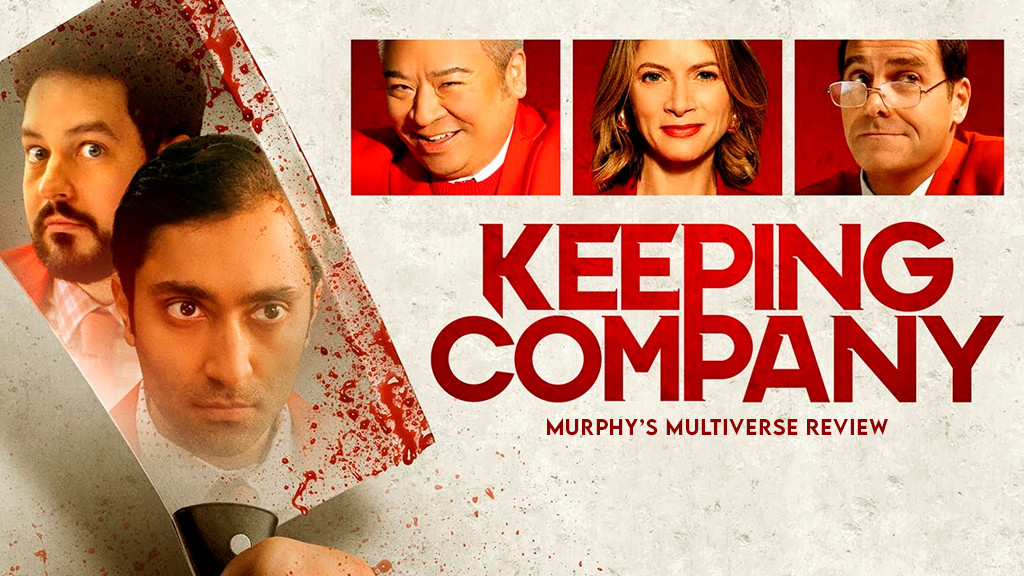
    Keeping Company is billed as a movie that mixes ruthless corporate salesmen with vicious suburban serial killers, and boy, does it do so beautifully. It’s hard to sense what Keeping Company wants to be when it starts. Is it going to be a comedy? Is it going to be about two murdering insurance salesmen? Off the bat, it’s pretty unclear, and that’s something the movie uses to its advantage.

    The movie begins with two men, Sonny and Noah, who are door-to-door insurance salesmen. They’re always looking to get their numbers up, no matter the cost, whether it is to impress a parental figure (in Sonny’s case) or simply to climb the corporate ladder. Their methods are questionable, and they’ll stop at nothing to raise their numbers — even if it means harassing a questionable man. Enter Lucas. After he hits their car, Sonny and Noah are unwilling to let him go free and insist on following him despite his pleas for privacy. Is it the smartest move? Absolutely not. But their ignorance prevents them from thinking of the consequences of their actions.

    It is in this moment that Keeping Company becomes one of the rare indie horror movies to get it right, and it’s a thrilling ride until the end moments. There are plenty of what-the-hell moments including one involving Sonny’s dad’s restaurant. It’s such a surprising moment that will surely leave a taste in the mouths of viewers – and not necessarily in the best way. As the movie moves away from Sonny and Noah, turning the focus toward Lucas and his grandmother, Keeping Company thrives.

    One of the most impressive bits of the movie is that it does successfully mark the similarities between the sinister household and the ruthless worth of business as promised in the synopsis. The corporate world is a vicious one and it’s not entirely surprising that a movie might try to compare serial killers to the business world. However, Keeping Company succeeds in making the serial killers look no worse than the money-hungry insurance folks desperate to up their sales numbers. When a woman goes in trying to claim the money from her plan for her husband? They tell her that, by the company’s rules, her husband is still considered alive and she’ll need to continue paying the premium to receive the benefits should she be able to prove his death. It’s a messed-up scene in a film full of death, but it hits harder than those because it’s realistic.

    Is Keeping Company perfect? No. Is it enjoyable? Yes. Its relatively short run-time of an hour and twenty-two minutes flies by with ease. The only issue with the film would be its editing. The cutaways are frustrating and do take away from some of the emotional impact. And the score isn’t exactly memorable. But even still, Keeping Company is a fascinating look at how despicable humanity can be when it comes to achieving their desires; they’ll do whatever is needed to benefit themselves, even if it means murder or robbing a financially insecure person blind.