Tag: Movie Reviews

  • REVIEW: ‘Polar Bear’ is a Memorable Documentary

    REVIEW: ‘Polar Bear’ is a Memorable Documentary

    Disneynature’s newest wildlife documentary, Polar Bear, is an astounding achievement. It is directed by Alastair Fothergill and Jeff Wilson, the team behind Disneynature’s Penguins, and narrated by two-time Academy Award nominee Catherine Keener. While it accomplishes what it set out to be—a beautiful and engaging family-friendly film—it also manages to go a bit deeper due to the inescapable reality of climate change on the film’s subjects.

    Polar Bear is almost as true to its title as any film could get. The documentary follows one specific female bear for over 15 years in the Arctic. While it is somewhat framed from the perspective of this bear when she is a mother herself later in the film, most of the runtime seems to explore her coming of age. Indeed, perhaps the most memorable moments of Polar Bear come from her youth when she is living and learning from her mother alongside her twin brother. The true artistry of the story comes from the meticulous process of selecting a bear and committing to her for well over a decade. While she ultimately has a cub of her own, her journey is permanently set against the backdrop of her adventures with her own mother and the documentary emphasizes how significant ice bear heritage is to the continued survival of the species, both in the short- and long-term. 

    Polar Bear is undoubtedly a family-friendly movie that does not “talk down” to a younger audience. The pure joy of watching furry, cuddly-looking cubs play and learn new behaviors is a basic treat in and of itself. The majesty and power of watching adult bears in their native environment is captured brilliantly by the filmmakers. The visuals and cinematography are absolutely stunning. From the close-ups to the aerial shots, Polar Bear does not leave anything wanting in that space. Much of what makes the documentary special is that it captures polar bear behavior never before seen on camera. And while that might not be obvious while watching it, some moments are undeniably special, and the visuals, score, narration, and more work together in unison to paint those moments in an unforgettable light. 

    While the documentary is clearly an engaging and fun family-friendly movie, as a wildlife documentary Polar Bear does inevitably include somber moments. One of the most powerful aspects of the film ae the occasional flash-forwards to our bear with her cub, navigating an Arctic environment drastically changed by climate change since her youth. Despite the unavoidable presence of climate change, Polar Bear does not spend much time detailing or unpacking it. The documentary is the story of our bear—but the story of our bear cannot be told without showing the environment she is raising a cub into. The film ends on a noticeably much more optimistic and resilient note than it feels in the most recent footage. While the bear (through narration) struggles through harsh new terrain, she proclaims that her daughter will learn to be a great ice bear and will survive.

    Polar Bear is a strong installment in the Disneynature collection. The documentary’s ability to capture scenes in such an extreme environment over such an extreme period of time undoubtedly paid off in the final product. The result is a memorable look at the lives, behaviors, and environments of one of the most charismatic species on the planet. 

  • REVIEW: ‘Bubble’ is a Beautiful Film With a Messy Pacing

    REVIEW: ‘Bubble’ is a Beautiful Film With a Messy Pacing

    Netflix’s latest anime film to grace the streaming service is Bubble. Tetsurō Araki‘s latest film after his work on Kabaneri of the Iron Fortress: The Battle of Unato is based on a script by Gen Urobuchi and its character designs are from the mind behind Death Note, Takeshi Obata. So, the film has gathered quite a talented group to explore a world where strange bubbles have scattered across the world and turned Tokyo into a strange post-apocalyptic world that has been flooded after a mysterious explosion created a new world for the young people to turn into their personal playground. Can the latest film by WIT Studio offer a compelling mystery and heartfelt story?

    Our story mainly focuses on a young boy named Hibiki, who is voiced by Jun Shison, and a group of kids that made the best of the strange gravity phenomenon that has reshaped Tokyo. Various groups have formed that started their own game to capture the flag while running around the overgrown and flooded city. Hibiki is his team’s ace as he has the strange ability to use bubbles as a way to get across dangerous rifts, but prefers working on his own. That is until a mysterious girl saves him and he starts to open up to others.

    Hibiki’s story is generally the strongest aspect of this film, as we see this longer slowly open up and fully embrace the importance of working with his team. Uta, the name given to the girl, becomes a key part of that journey and there also are some underlying romantic teases added in to further build their relationship. At the core of the story, it’s more a character study than anything else and it’s given a beautiful package, as the animation is definitely a stand-out in this project.

    It really needs to be praised for just how beautifully animated the film is. The bubbles from the title are visually stunning and there’s a great combination of 3D with traditional animation. Yet, when the series decides to close in on a character’s face, especially Uta, they push their animation budget to its limit. The finale especially had some stunning visuals that were quite memorable, as they make the most out of a simple concept of a bubble-filled world. It also has some creative camera work to add some tension to the Parkour that is heavily present in this film, as they jump from one collapsed building to the next.

    With all this praise, I sadly have to say that the overall experience with the film didn’t quite land for me. The world they live in is quite memorable, and while I do wish I spent more time with it, the way it ties its world-building to the core narrative feels quite disconnected. We set up a grand mystery on why Tokyo ends up being flooded, especially as it’s the only location that is going through this scenario. The youth seemingly used it as a safe haven to live their life and barter resources through competitions of capture the flag. All sounds good and helps flesh out this world, but the problem is that it acts more like a distraction than an integral aspect of the story.

    The games feel like a great bridge to introduce characters at a fast pace, while also giving us some genuine fun action sequences. At first, the parkour inclusion felt natural but as the film went on, you slowly get this sinking feeling that the film was built around that concept rather than vice versa. The film takes a sudden break for a music video of parkour and bubbles. It looks great, but sometimes it just turns into a music video or the biggest threat is the environment. We get introduced to concepts that should add, but we never get a feeling of just how dangerous it really is. At times, there’s a lack of really letting sink in just how dangerous this post-apocalyptic environment truly is.

    Throughout the film’s runtime, it feels like two separate stories are meshed together rather than them weaving in and out of each other. There’s a moment that comes out of nowhere to paint and briefly derails the story for a bit before introducing the actual threat for the finale. There’s no real build-up throughout the film to really sink in what their life is like, which isn’t helped by the pacing throughout. The only real connective tissue from one event to the next is Uta and a musical theme that introduces a rather abstract concept into the story.

    Bubble‘s strongest moments are when we just get some slice of life. Every time this cast of characters interacts or talks, it’s a fun film as they play off of their dynamic. You get a feeling of how they live in this world. While I do think it could’ve used more showcase of how dangerous it is, especially as later moments suddenly amp up the dangers which weren’t present earlier, it was great to see this group make the best of the situation. We get some adorable moments, and great character development but sadly just not a strong enough focus on what exactly the story wants to be about.

    It’s definitely a visual spectacle and the team behind it must be huge fans of parkour for how many movements they threw in. Sadly, it does seem like that takes over and downplays a really interesting world to play around with. I would gladly revisit a story in this world, but I do feel like the one presented here struggled to really bring its ideas together. So, even with my complaints the film is worth checking out but may be a one-time watch.

  • REVIEW: ‘Reed’s Point’ Tried Too Much With Too Little

    REVIEW: ‘Reed’s Point’ Tried Too Much With Too Little

    There’s something charming about small-budget films that try to tell a compelling story with the little they have available. While not everything manages to make it work the way they imagine due to those limitations; they do say that it breeds creativity. Sadly, that isn’t always the case as some projects have a big vision that is hard to translate with such restrictions. Dale Fabrigar‘s Reed’s Point sadly falls right into that category, as a film that had a good idea but didn’t know how to quite fill its runtime.

    The film is on the shorter time, as it doesn’t even truly fill out a full 90 minutes. Even so, it still feels like it could’ve been cut down to a third given the premise of the story. After a tragic crash leads to the disappearance of a young girl at the hands of the Jersey Devil, two friends are on the hunt to find out what truly happened that day and cope with their grief. Most of the film is spent with Evan Adams‘ Alex and Sasha Anne‘s Sarah as they face the urban legend to uncover the truth.

    It sounds like a decent storyline, especially as you witness the accident earlier in the film that sets up a mystery. We see the Jersey Devil kidnap someone while also managing to rip someone’s arm off with ease. While the costume isn’t going to fool anyone, the fact that it chose to abduct Madison Ekstrand‘s Kelsey does set up a curious mystery even if they spell out the twist early on. Sadly, it’s afterward that the film struggles to bring everything together.

    After a time jump, Sarah and a surprisingly alive Alex–the film told us everyone died but suddenly he kind of appears out of nowhere–are investigating the events. Unable to cope with their grief, their convenient internships as journalists helps them chase a story they are told to leave behind. Without any supervision, the two head out investigate as they believe Kelsey is still alive out there somewhere. The base premise feels like Safety Not Guaranteed with a horror spin.

    What happens in town is no one takes them seriously until one random person does and introduces them to Anthony Jensen‘s Hank, who’s by far the best part of the film with how much fun he has with the role. Most of the film after a short visit to a diner takes place in a forest. Yet, this isn’t a dense forest like in The Ritual that would make you forget where you are and drive you mad. It’s an open field with a few trees. Sadly, the production location took away from the “mystery” element they were going for with the fear of the Jersey Devil around the corner at all times. It takes away from the illusion that Alex suddenly panics and stumbles only to break his leg–an absolute random event that feels inserted just to further pad the story.

    Even as the film nears its end, we suddenly get introduced to new characters, whose motivations are all over the place. Rather quickly, you learn that the Jersey Devil storyline is connected to a family feud which at least was hinted at earlier in the film. Yes, they technically set it up but the execution feels a bit sudden. The problem is that it’s not really a revelation by the characters but spelled out to them, which takes away from the initial pitch of the story. Rather than focusing on the Jersey Devil and them wandering the forest, seeing them investigate the town could’ve benefitted here to create more suspense.

    What drags it down an extra peg is that the ending is quite a mess. Most of the film is padding and it’s already a shorter feature film, to begin with. We build up this one storyline to suddenly add a twist that doesn’t really connect to the core story. While yes, they technically tease it–even adding in a character that was just there for the sake of some extra gore–it doesn’t mix quite as well as they might’ve thought. The thing that makes it worse is that it pulls a Friday the 13th type of ending that made no sense. Especially in how the transition between the events prior feels completely disconnected.

    Sasha Anne takes on the leading role in this story, but sadly her reactions don’t really feel connected to what’s happening at times. Some lines feel a bit phoned in and even after terrible things happen, she just seems oddly calm about it. Out of our main trio, Madison Ekstrand gets the most to do, as her character faces the most change throughout the story. As I pointed out earlier though, Jensen‘s Hank is the stand-out, as he is just having a blast with the role throughout and you can definitely see it come to life with his character.

    At the end of the day, everyone involved with the film tried and gave it their best. You can see that they had fun with the project and wanted to bring the vision to life. I do think it may have benefitted from sticking to a shorter format, as the story could’ve benefitted from it. It describes itself as a psychological thriller and also acts as a creature feature, but it loses focus along the way. Reed’s Point simply tried to do too much with too little.

  • ‘Sonic the Hedgehog 2’ is a Saturday Morning Cartoon For Better and Worse

    ‘Sonic the Hedgehog 2’ is a Saturday Morning Cartoon For Better and Worse

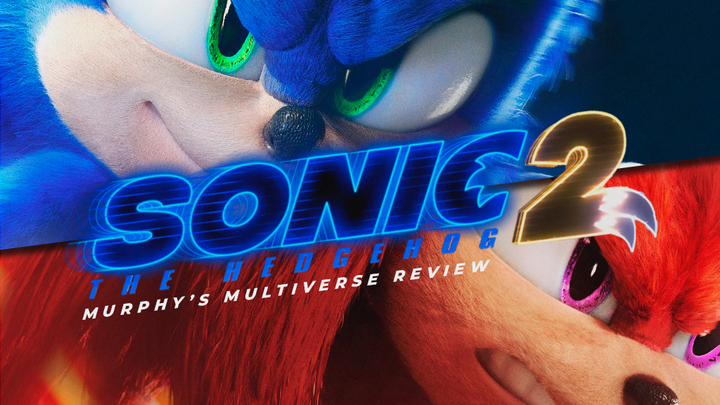
    Sonic the Hedgehog was a big surprise when it released back in 2019. It was one of the few films that managed to get a decent box office run before everything shut down. It’s success led to a quick renewal and director Jeff Fowler returned. It’s not bad if your directorial debut leads to the birth of a new franchise, especially avoiding the usual video game adaptations falling. Now, the big question lies in if the sequel can keep up the momentum or fall back into some bad habits.

    I’ll say straight-away that the film knows exactly who its audience is. A lot of the runtime is filled with references, jokes, and fast-paced action to keep a younger viewer entertained. In a way, it’s like a live-action take on a Saturday Morning Cartoon. The only thing is, this series is more like 1993’s Adventures of Sonic the Hedgehog rather than its darker Sonic SatAM counterpart. There’s a lot happening with some great jokes sprinkled throughout, but it does suffer at times from not focusing on its strongoint. Plus, to appeal to a younger crowd, it includes some references that quickly get dated, and overshadow the more sincere moments due to its frantic pace. Even the more grounded characters suddenly have their humor dialed up to eleven.

    As with most live-action and CG hybrid projects, the film tries to not fully rely on its blue hedgehog to carry scenes. So, to balance it out we also spend time with the returning cast of James Marsden‘s Tom Wachowski and Tika Sumpter‘s Maddie Wachowski. They were the heart of the first entry’s story, but take a backseat for most of the main action. Yet, the film moves away from its main plot to focus on their “shenanigans.” The plot doesn’t really lead into the story, as most of their purpose was already solidified early on. They do get redeemed in the finale, and we did get the introduction of a classic gaming element, but it just felt a bit detached from the rest of the film.

    They alongside the always great Natasha Rothwell as Maddie’s sister Rachel still bring a lot of heart to the series, but they’ve also been dialed up in the comedic part. Ben Schwartz is still a great choice for a younger Sonic, who has quite a lot of fun throwing out quip after quip. Though, they could’ve dialed it back just a bit. The same goes for Jim Carrey‘s return as Robotnik. While I do wish he was built up more, he still is one of the best parts of the films. He brings a lot of energy to the role, and just seems to be having a blast. The only issue is, he also seemingly is using the “was alone for too long” as a way to make the character even cookier. To be fair, almost everyone is in “cartoon” mode and some of the grounded elements have gotten lost in the shuffle from the first entry. The live-action bits are just as “cartoony” as the ones featuring Sonic, Tails, and Knuckles. It’s not a bad thing, there’s just sometimes a stronger focus on spectacle.

    Still, while I can’t really do anything with a flossing reference, there’s still a lot to love here. Long-time voice of Miles “Tails” Prowler, Colleen O’Schaughnessey jumps from the games to the live-action series and still offers a heart-warming performance for the character. We once again go through their first meeting after Tails’ tease in the first entries’ post-credit sequence. My only gripe would be with how they try to build up their friendship in this film. The bond is believable, even if I wished it was given more focus instead of Hawaii shenanigans, but the big scene is intertwined with a out-of-left field confrontation in Syberia. It tries to pull a Guardians of the Galaxy but without any of the self-awareness and is more like something out of Fortnite.

    The biggest addition is Idris Elba as Knuckles the Echidna. He gets quite an intimidating introduction and is given quite a bit of screen time, which was great to see. Though, I will say that the direction given to Elba is a rather bizarre at times. He has some amazing lines, such as one including a text which actually had me laughing out loud. He was a more straight-faced character that worked well as a contrast with Robotnik, even if I still wished that he held back his performance a bit more. Some lines, however, did stick out and seemed a bit too over-the-top that continue the Saturday Morning Cartoon vibe the film is going for.

    The best moments of the film are when it plays into the mythology set up by the games. It pulls a lot in this film, especially with the introduction of the Master Emerald. Plus, it also builds upon storylines set up in the introduction of the previous entry while also staying vague enough that something can still be paid off in the already confirmed threequel. I do wish that they spent more time with these elements and built up the Indiana Jones-inspired story more. Introducing game environments and elements into this world is what makes these franchises so interesting while building up lovable character. Sadly, the comedy this time around was at the forefront, which may get dated fast with its references or build up a franchise that simply is more focused on kids.

    I did not expect Sonic SatAM going in, but I was hoping for the story to find its focus a bit more and move away from the weaker aspects of the previous entry. Sadly, it’s more of the same but with some great additions. The dynamic we’re left with at the end of the film was ironically a highlight and I would love to see more of it, even if the tease for the sequel was probably one of the most hand-holding post-credit sequences I’ve ever seen. They could’ve dialed back some of the cheesiness that comes with the territory they’re exploring, and definitely focus the story more around Sonic rather than forcing in B-plots that have no direct connection.

    To be fair, most of my complaints don’t really overshadow the fact that I had a fun time with the film. There were families with kids having a blast and it does accomplish just that. While I would wish that they leaned more into the mythology and world-building, its a film that doesn’t take itself too serious and is very self-aware. Carrey is a standout once again and Idris Elba is a perfect choice for Knuckles. I am still excited to see more of these characters and worlds, but I do hope that Fowler and his team dial back a few elements.

  • REVIEW: ‘Morbius’ Just Sort Of… Happens

    REVIEW: ‘Morbius’ Just Sort Of… Happens

    In 1623, famed playwright William Shakespeare published a comedy about love and hijinks. Despite its lighthearted nature, the story dealt with a variety of themes that included heavier topics like deceit and the woes of an identity crisis. Its title, Much Ado About Nothing, was a play on the fact that, despite a rather complicated plot, the events of the story would ultimately be insignificant in the lives of its protagonists. Morbius, the latest entry in Sony’s universe of spider-adjacent characters, is a lot like Much Ado About Nothing. Like the aforementioned work, it deals with brotherly betrayal and the struggle of lacking control. The main difference between the two is that, while Shakespeare‘s play used “nothing” as a motif, Sony’s film uses the same concept as a plot device.

    Over the course of nearly two hours, Jared Leto‘s new starring vehicle essentially just exists. Incidents occur, one after the other, but they come in what feels like a series of manufactured moments. There are sometimes interesting visuals, and on paper, there are developments that should serve to keep the audience invested, but somehow the movie never manages to achieve the sensation of being complete. Materially a paint-by-the-number, beats come and go like colorless shapes quickly filled with gaudy pigmentation, with the lines between sections still oddly discernable to the human eye. From really far away, with a squinty eye, it might seem like director Daniel Espinosa and his crew have constructed something worthwhile, but any further inspection reveals they were likely just making somebody else’s idea look as pretty as their minds could muster.

    The production tries to fool you, and occasionally it verges on working. A triumphant score from Jon Ekstrand blasts over the loudspeakers as the titular antihero, surrounded by screeching vampire bats, rises from certain defeat to conquer his foe. Scenes transition to spectacular slow motion as Dr. Michael Morbius plays with the outer limits of his newfound power. An impressive neon-lit landscape functions as the backdrop to a passionate rooftop kiss. Classic movie moments, which have worked before and are certain to work again. Just not here. Any of these concepts could have performed perfectly had they been set up properly, but instead they are just thrown together without much glue to keep them intact.

    To get a better sense of what I mean by this, just take a look at a few key plot points and examine how they’re executed in the film. For starters — and this is the official spoiler warning to skip to the next paragraph if need be — the first transformation of Morbius into the Living Vampire is not even shown on screen. After a couple of clunky time jumps between adult Morbius illegally collecting bats in Costa Rica and child Morbius delivering a lot of exposition to a new friend in the hospital (who should probably already know about his own rare blood disease), viewers are suddenly vaulted into the midst of the character finishing his experimental cure. Then, after a few more quick scenes, Morbius is already strapped to a chair on a boat in international waters, about to test his new creation on himself. An intrusion causes the camera to cut away, and moments later when it cuts back, Morbius is fully transformed and clinging to the ceiling, not having made a peep.

    It’s an almost jarring shift in tone, with the music doing its absolute best to convince anyone watching that what just happened made sense. Although, once again, therein lies the problem. Events going on in the movie are simply happening, not as the result of any prior build-up or payoff, but purely because they’re what’s supposed to happen next. Skipping to the end of the movie, Adria Arjona‘s Dr. Martine Bancroft has been murdered by Matt Smith‘s predictable, yet admittedly kind-of-fun baddie, Milo. Mostly off-screen. Immediately after Milo has just killed an entirely different major supporting character. There’s not really any time to mourn either of them, even if the VFX department put a lot of money into the look on Morbius’ pained vampire face as he screams in emotional agony to convince viewers otherwise. Just one thing after the other, coming about as the plot deems it so.

    These are two notable bookends, but it’s more or less how the entire film functions. When the credits began to roll, many of us in the theater found ourselves sitting there still waiting for more. Not because we thought there would be, but because our brains had not yet registered that a full movie had played out in front of us. We were still waiting for somebody to come in and paint over the visible lines. Instead, we were treated to a handful of sequel teases played at lightspeed, almost all of which violated previously established character arcs and universal rules for the sake of forcing future conflict. Truly just a mess, and hopefully one that never needs to be spoken of at length again. If Sony and Marvel wanted to forget that Morbius ever happened, it probably wouldn’t take much convincing for general audiences to follow suit.

  • REVIEW: ‘Windfall’ Is Neo-Noir Prestige

    REVIEW: ‘Windfall’ Is Neo-Noir Prestige

    Set in a quaint vacation home where an embittered man robs the home of a mogul, Windfall proudly touts itself as a Hitchcockian thriller and does its damnedest to feel like one. The opening credits alone, where cinematographer Isiah Donte Lee’s motionless image of a lavish patio conspires with the thumping Bernard Hermann-inspired score and vintage typography fading on-screen, paints an eerie picture of the suspense creeping up in this vacation home. As the camera dollies closer to Jason Segel‘s character named Nobody enjoying the panoramic view of a lush orchard, Danny Bensi and Saunder Jurriaans‘ score fades out, tethering dread and silence together. And when the owners discover the Nobody robbing their home and are held hostage, director Charlie McDowell begins to slowly appoint the audience as voyeurs in this uncanny unraveling of marriage, wealth, and power.

    Contrary to McDowell’s Hitchcockian virtues is Andrew Kevin Walker‘s screenplay co-written with Justin Lader, which is low on plot but heavy on themes. Walker’s celebrated screenplay for Se7en pings back-and-forth from scene to scene, building a mystery that asks audiences to connect the dots alongside its characters. Windfall, on the other hand, simmers mostly in thought, leaving wide-open spaces in the storytelling that feels too loose. The mystique the screenplay tries to construct by having all three leads unnamed and their backstories obscured mostly fails to materialize in any meaningful way. Walker’s script reckons heavily with populist views of excess and capitalism and uses it to subtly define the characters. The character referred to as the CEO, played by Jesse Plemons, rambles about hustle and opportunity while the disenfranchised Nobody preaches equality. These traits wouldn’t be so bad if the characters weren’t just those identifiers; Plemons and Segel end up caricatures rather than autonomous, with nothing else to say beyond class arguments progressives and conservatives argue about daily on Twitter.

    The Nobody may be a tiresome character but Segel’s performance is not. Segel does decent work as he aptly embodies a man clinging to what dignity he has left. Segel’s pathetic bumbling may seem like a fumble on the actor’s part but in the little we learn from his disputes with the CEO, it’s evident that the pathos comes from conviction. Plemons, on the other hand, borders on generic as an unapologetically rude man of wealth. There’s fun to be had in seeing Plemons chew up the scenery with jackassery but the performance feels uninterested in leveling itself with the taciturn of the film.

    Ironically, the character we end up learning about the most ends up the most engaging. As the Wife, Lily Collins gets to define her character in a way that isn’t encumbered by Walker’s social commentary. Little is explicitly said about the Wife but Collins fills in the gaps with hefty anecdotes that hint at a backstory that is pained and at odds with her current disposition. While the Nobody rants about the vague and cruel ramifications of the CEO’s technology, the Wife is unconcerned with neither and is musing about her own past and future. When her marriage with the CEO is put into question along with her autonomy as their cozy hostage situation draws on, Collins embraces the noirish ambiguity of it all and displays a subdued darkness. Collins’ performance is emblematic of the potential of a script concerned with character more than proving a point.

    Windfall ultimately works thanks to Collins’ enigmatic presence, McDowell’s precise understanding of Hitchcock’s work and his deftness in distilling that influence into a rambling script. With a meticulously constructed atmosphere and a haunting conclusion, Windfall is a thriller rife with noir prestige.

  • REVIEW: ‘Cheaper By The Dozen’ Should Have Been a TV Show

    REVIEW: ‘Cheaper By The Dozen’ Should Have Been a TV Show

    Disney+’s Cheaper By The Dozen has all the makings of a successful TV show. It features a wholesome family-friendly premise with two great leads in Zach Braff and Gabrielle Union, who command the perfect kind of star power a series like this would need. The film has a mostly-good ensemble of kids that may become the next big sitcom stars. Most notably, though, it has an all-star producer in Kenya Barris, whose eye for network-friendly sappiness that turned Black-ish into a massive sitcom empire is in full effect here. But that’s also a problem with the film. That it’s paced, stitched, and filmed like a TV show, it crams in so much more than any film can service. 

    Based on the Steve Martin film of the same name based on the novel by Frank Bunker Gilbreth, Jr. and Ernestine Gilbreth Carey, this new Cheaper By The Dozen follows the same concept of its predecessors as it explores the life of a family with a dozen children. The film sees Paul and Zoe Baker chase their dream of becoming successful franchise restauranteurs as a family of clashing personalities together. This new version helmed by Black-ish director and creator Gail Lerner and Kenya Barris respectively sees a more diversified Baker family with millennial cultural touches.

    Paul Baker, the quintessential white dorky dad, is going through a mid-life crisis. His restaurant has a backlog of bills to pay, he’s not maximizing his profits, he has a dozen kids to feed, and top it all off, his wife’s ex-husband and the biological father of two of his step-kids, Dom, is a glamorous football star who has everything he hasn’t. So when the opportunity to be the next Chef Boyardee comes, Paul takes it, hoping to provide for his family in a way he hasn’t before.

    For the next hour and a half, Cheaper By The Dozen rushes through one scenario after another as it tries to hit emotional beats for more than a dozen characters like a TV show would in one entire season. Storylines about racism, stealing, bullying, and dating are all shortchanged simply from the script tackling everything at a breakneck pace. It certainly doesn’t help that some of the plot points don’t fit the homely spirit the film tries to embody from its predecessors. Tiktok, glamour, and high society living are of the few things this next-gen Cheaper By The Dozen wears on its sleeve. Paul moves his family to a giant mansion in Hollywood after his hot sauce hits grocery shelves, it doesn’t quite work as the film’s attempts to engage the idea of excess and wealth fails to make a point.

    Thankfully, the cast holds most of the film together with such charming chemistry and wit. Braff and Union have an emotional foothold of Kenya Barris‘ and Jenifer Rice-Genzuk‘s script, which allows them to deepen the hastened drama from the page through earnest performances on screen. The Baker kids are a joy to watch; several of them are so fearless on-screen and steal scenes right from under Braff and Union. Mykal-Michelle Harris, in particular, is a huge stand-out.

    For better or worse, sitcom alum Gail Lerner directs Cheaper By The Dozen like it’s an episode of Black-ish, as every scene’s visual language looks ripped from a single-cam sitcom. You’re almost half-expecting Dre and Rainbow to show up at any moment. This isn’t to argue that Lerner’s direction is bad but it’s to point out how peculiar the film looks given how so much of the text is already begging to be just formatted for a serialized show. Perhaps the plan is for this film to be a proof-of-concept of just how great a Cheaper By The Dozen TV series would be.

    Once more, Kenya Barris and co. prove how strong their eye is for newly-fashioned wholesome family fun. With a cast as strong as this and relatable growing pains all families experience, Cheaper By The Dozen accomplishes the job it sets out to do in spite of all its shortcomings.

  • REVIEW: ‘Deep Water’ Shows Its Hand Too Early

    REVIEW: ‘Deep Water’ Shows Its Hand Too Early

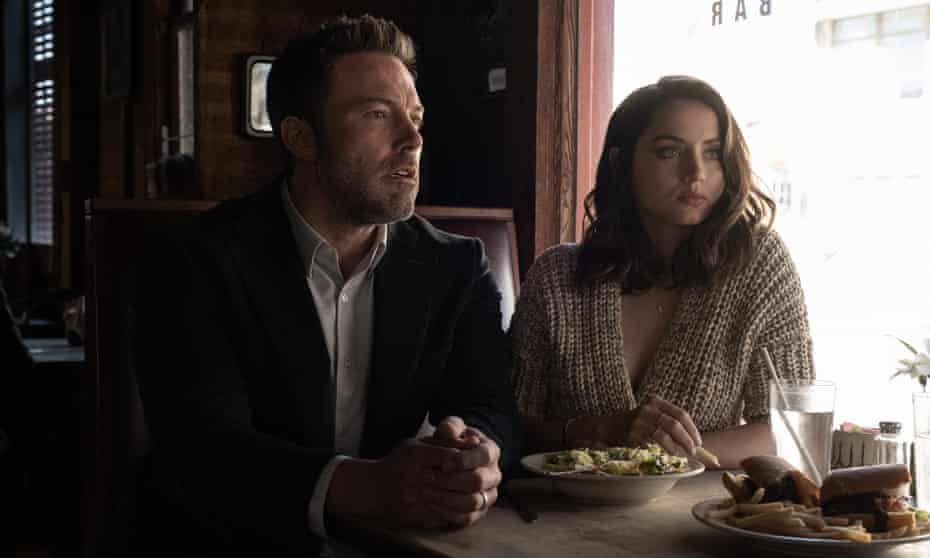
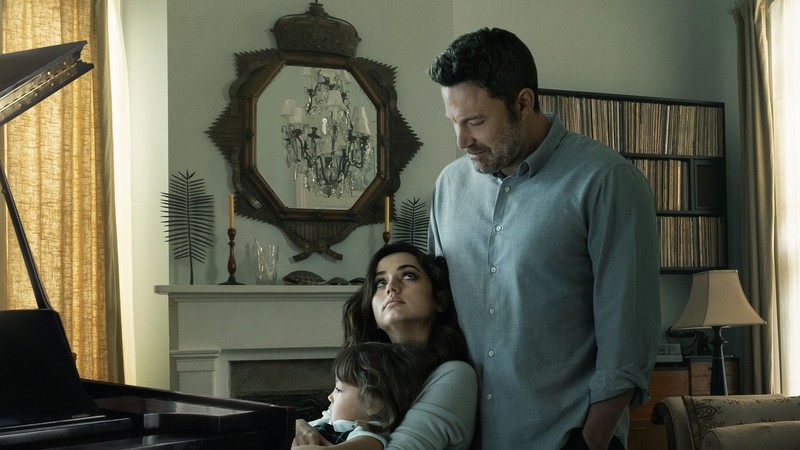
    There was quite some excitement to see the return of director Adrian Lyne, who hasn’t made a film since 2002’s Unfaithful. His psychological thriller Deep Water explores the story of a married couple that has fallen out of love, but their mind games might have deadly consequences. With a star-studded cast including Ben Affleck, Ana de Armas, Tracy Letts, Lil Rel Howery, and more, it seemed like the perfect blend with the promise of a suspenseful erotic thriller. Yet, the film underdelivers on both sides by showing his hand too early and taking away any suspense that could’ve been built throughout the film’s nearly two-hour runtime.

    The premise promises that this Hulu original film would explore a tug-of-war between a couple that is pushing each other to extremes. Ben Affleck and Ana de Armas do play their parts well when it comes to this romance that has lost its spark–ironic given they were dating for some time. Most of the movie’s conflict is carried by Armas‘ Melinda Van Allen, who pretty openly cheats on him; something that is put into the spotlight very early on in the film and was highlighted in the trailers. She consistently pushes him to the edge throughout that leads to some dangerous consequences. Sadly, her character feels maliciously one-note, even if there are shining moments where you get a better grasp of why their relationship is the way it is.

    Deep Water review – erotic thriller loves Ben Affleck's slack-jawed look |  Movies | The Guardian

    The only issue is that it’s not as interesting as the film tries to play it. We don’t really get a moment with Affleck‘s Vic to really understand what he sees in his wife. He’s a typical “I love her no matter what” type of guy, but there’s never really a moment that sells you on it. Plus, it drags Armas‘ character down an extra notch because she’s always portrayed as the bad one just pushing him. It’s there to make his character look good, but the film reveals way too much that it doesn’t really convince you that he’s a good guy. They want you to sympathize with him, but then they kind of just have him stare a lot and not even hide aspects of his character that should’ve been built up and kept a secret until much later in the film.

    What adds to that issue is that there’s no redeeming factor or even a playful evil to balance it out. Armas‘ character is built up without a goal in mind. All she does is provoke him but you’re never sure what she’s getting out of it, especially given the film’s overall direction. It creates a disconnect between the story and the character’s development. Actually, it’s better described as character whiplash, because some scenes don’t flow as well as they should. Melinda suffers the most because she never is consistent with her actions. After an emotional moment, she just boomerangs back to default and there’s nothing later on to add any real tension.

    Deep Water (2022) | MUBI

    As I am writing this I realize that the only character with an arc is Tracy Letts‘ Lionel Washington, who barely has a role in the story. Even the rest of the cast is just there to spout exposition or react to whatever is happening. Lil Rel Howery gets one or two funny scenes, but the rest of the cast or mostly forgettable. In a way, it makes you wonder why they had such an extensive cast of characters to begin it if none of them factor into the story in any way. It’s a shame to just use them as window dressing, especially because the film undermines their mission to make characters look better than they are if only the film didn’t flat out tell you. They don’t factor into the story, they’re distractions at best.

    That’s kind of the core issue though, there’s no real suspense because everything is pretty obviously laid out. When a major turning point in the story happens, it’s not shocking nor is it leaving a lasting impression because the film doesn’t let it stick with you long enough to make it suspenseful A lot of this film was eerily similar to Gone Girl for me. The only thing that was missing would be the media subplot and it’s a more one-sided take on the story. Yet, unlike that film, it doesn’t feel as tightly knit to make it feel more like vignettes than a full-encompassing arc.

    Deep Water' trailer: Watch Ben Affleck, Ana de Armas in new Hulu movie

    It just can’t build suspense because it shows its hand too early and it’s trying to be clever about it. Worse, it doesn’t even add anything besides what you would expect. Even the “erotic” aspect is half-baked. It would’ve worked exactly the same without its inclusion. It’s sad to say it because the conflict of love and passion is the most interesting aspect of the film. In a way, if Deep Water was purely about exploring Vic’s obsession with his wife and never knowing if she really was cheating on him, it could’ve worked better as a psychological game. If it focused more on the erotic thriller aspect, the film could’ve benefitted and focused more on its characters.

    As it stands, the film simply lacks the punch to really nail its concept. If you’re looking for a decent distraction and something to fill that Gone Girl vibe, the film might be for you. Personally, if it kept more elements vague, the film would’ve benefited greatly from it. There is some nice cinematography here, and the music does add a little flair but the lack of suspense kills any mood it’s trying to create. It’s a shame that Lyne‘s return to directing isn’t as memorable as one would expect from the former Jacob’s Ladder director, but perhaps dipping his toes with this project could lead to him pursuing more in the future.

  • REVIEW: ‘The Adam Project’ is a Delightful Time Travel Movie

    REVIEW: ‘The Adam Project’ is a Delightful Time Travel Movie

    When it comes to time travel, it often feels like it has been overdone. Most of the time, the concept of time travel in the media we consume can be overly complicated for no apparent reason. And then there are the instances in which it feels as though little to no thought was put into the science of it all. Thankfully, The Adam Project seems to comprehend how to tell a good story with the use of time travel, opting not to complicate things, but also ensuring it tries to explain the science for the general audience. The film is everything viewers can want from a time-travel moment; it’s smart, it has heart, and the cast is pretty dang stellar, but more importantly, it never forgets to tell a good story throughout it all.

    The Adam Project kicks things off with Ryan Reynolds‘ Adam in a ship seemingly crashing down to Earth. It’s a hell of a sequence, and one that immediately pulls viewers in. It doesn’t waste time trying to set anything up, it wants to let viewers know they’re in for a bumpy ride. What follows is the introduction of young Adam and his mom, played by Jennifer Garner, as he finds himself at the center of a fight in school. Much like the introduction to Reynolds‘ adult Adam, this helps to set up the character of young Adam, proving he’s always been a bit of a troublemaker. Naturally, the two soon come into contact, resulting in a chaotic story that soon follows.

    There’s much to love about The Adam Project. It’s a family film that is full of adventure and heart. It’s visually stunning with a soundtrack that perfectly matches the tone of the film. As for the action? There’s one particular action sequence involving Zoe Saldaña‘s character that is so well-done, it feels like it is pulled from a superhero film. The action is big and explosive, and yet, it still feels as if it’s purposeful; the action doesn’t exist merely to look cool. Each sequence serves a purpose and helps to move the story forward. 

    Where the film truly excels is in its small moments. For such a large story that takes place across multiple timelines, The Adam Project knows when to scale things back. Shawn Levy does a great job directing the film from a script penned by Jonathan Tropper, T.S. Nowlin, Jennifer Flackett and Mark Levin. The scenes between Mark Ruffalo and the Adams are heartfelt and wonderfully shot. They feel intimate and provide some of the best character development throughout the movie. The only issue with the film? It doesn’t make nearly enough use of Ruffalo and Saldaña.

    All in all, The Adam Project is a blast. It’s full of fantastic performances — especially Jennifer Garner, who plays the role of a widowed mother so heartbreakingly well — and wonderful character moments. Sure, it might occasionally fall into the typical Reynolds humor, however, it works in this film. This is the perfect family film to watch over the weekend. There’s plenty of action, the dialogue is well-written and the small cast allows the creatives to maintain control of what could have otherwise been a cluster of a film. If you’re looking for something to watch this weekend on Netflix? Give The Adam Project a watch, you won’t be disappointed.

  • REVIEW: ‘Tyson’s Run’ is Well-Meaning But Unfocused

    REVIEW: ‘Tyson’s Run’ is Well-Meaning But Unfocused

    It’s never easy tackling sensitive topics like autism in media. While some have explored the honest side of how it affects people and families, like Amazon’s As We See It, others tend to veer off into very stereotypical territory. Sadly, Planet 9 Productions’ latest film Tyson’s Run falls into the latter category. A story about a 15-year old boy with autism, who finds the passion to run a marathon while also finding a way to mend his family. While there’s a heartwarming story of a broken family bonding once again at its core, the film is distractingly unfocused in a world without consequence that leads to an unsatisfying payoff.

    There will be spoilers in this review. So, if you want to watch the film spoiler-free, only continue at your own risk.

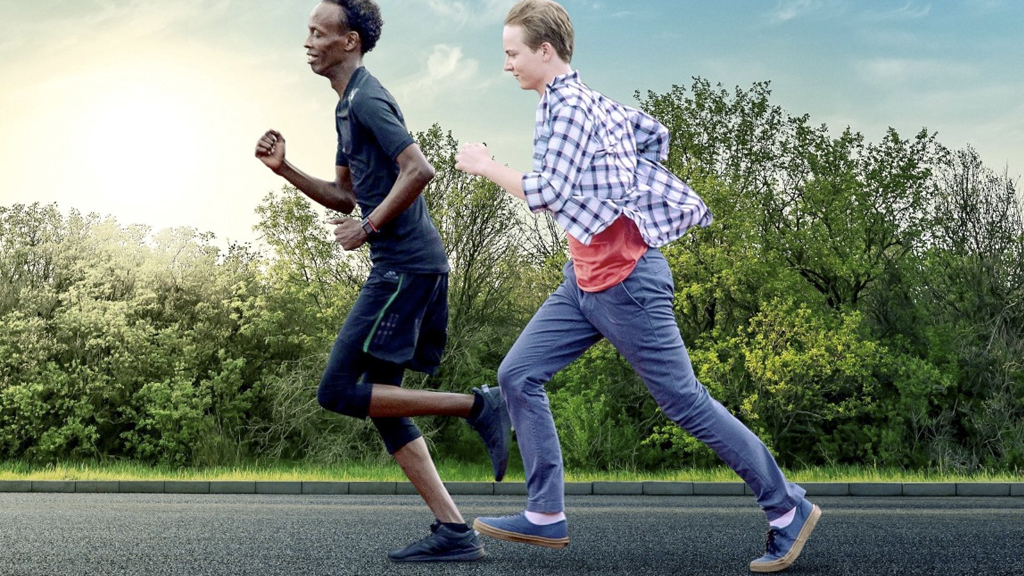
    It’s odd to say, but there are so many moments in this film where I couldn’t pinpoint where it fits into the overarching narrative. The Kim Bass-directed project has a very straightforward story set out from the beginning but has an issue with weaving every story beat cohesively. It’s trying to sell a lot of moments as a sporadic character action, but it happens for the sake of happening. There’s no real natural lead into Major Dodson‘s Tyson wanting to run a marathon, which is the grand finale of the story.

    He only gets into running once he sees Barkhad Abdi‘s Akilu randomly showing up in the background while he’s helping his dad. We don’t meet this character or get any teases in advance. Tyson then just suddenly runs alongside him, which is played off as part of his autism but there’s never a hint or slow build-up that eases the viewer into seeing his interest in that topic. For all we know, he just really wants to learn algebra. Glances or stares at the marathon, seeing people run in the background to build a rapport for the character would help ease viewers into the idea and make it a stronger moment, but it’s just there.

    The biggest issue I have with this film is that there is a complete absence of consequence. Even handling a sensitive topic like autism, the actions characters take would still have some kind of effect on their environment, something a show like As We See It handled very well. Yet, in this film, Tyson starts running away at random points. There’s a massive storm, flood warnings, and after overhearing his parent’s fight, he runs off. Now, that makes for drama and there’s a reason why he does it, but later on, we learn it was just him running to see how far he can do it in the rain. No one’s mad at him for running off–for the second time mind you, especially after almost drowning.

    No, I am not kidding, he randomly gets trapped under a branch. Still not sure how that happened. The spot he’s at is getting flooded and if his dad (Rory Cochrane) didn’t find him he’d have drowned. Actually, his father also gets injured in the process. So, if Akilu also didn’t somehow find his way to the same location after Tyson’s mother (Amy Smart) asks for his help after meeting him once, they’d both be dead. We spend so much time on the hunt for this kid that it’s full of unnecessary scenes. We meet a cop, he catches up with the dad with a team so that they go through the woods. Yet, no joke, one of them randomly gets bitten by a snake so that the father is alone again in the woods.

    Somehow, Tyson running away only makes the family stronger without anyone getting mad at him. Both parents are hinted at having some massive weights on their shoulders, their marriage is on the brink and now he realizes he should spend some time with his family. What just drags an actual heartfelt moment down, is that Tyson shows absolutely no remorse, learns nothing from the event and the film doesn’t try to grow him as a character. There was such a disconnect to the rest; they’ve could’ve just cut chunks of this sequence out and the film would’ve actually benefitted.

    There are moments where the acting is very over-the-top which just adds to that disconnect. Smart‘s approach to being mad is mostly awkward yelling, and Cochrane‘s Coach is the epitome of a cliché football coach. You can tell Dodson cared about the role and is trying to make it more than just a cliché but the lack of actual character development just takes away any nuance it could’ve had. We get to a point when he suddenly has a girlfriend, but we’ve only spent like three scenes with her. It’s a sweet moment but we don’t spend time with how that affects him. He just ends up having a girlfriend and nothing is done with it. We even have a bully character who literally laughs at him while pointing like a cartoon character and he never learns his lesson. One guy stands up to him, and he’s never seen again.

    Speaking of a bully, on top of all of it, we randomly get a villain moment with Reno Wilson’s mayor near the end of the film. And again, there’s no payoff or consequence to him threatening Tyson’s dad. The only thing that happens is a sudden has big reveal that is swiftly solved minutes later by Tyson. It just makes you wonder why no one in this family thinks to lock their kid’s window, especially if he has a tendency to run away constantly. It highlights the problem that Tyson is a plot device and not a character. It is a disservice to a story exploring the topic of autism and the challenge for families that deal with it daily.

    It’s all perfectly encapsulated in the titular run of Tyson’s Run. We have news reporters that are there to explain word-for-word what we know, or even explain running terms in the most obvious exposition I’ve ever witnessed in a film. There’s such a perfect bow on everything that it just adds to the fact that everything comes together as it needs to be. Without any consequences, no one changes by the end of the story outside of the workaholic dad spending time with his family. There’s not even a consequence to him just ditching his job randomly. The film has good intentions, but it really doesn’t know how to bring it all together.