Tag: Movie Reviews

  • REVIEW: ‘Batman Returns’ Could’ve Used More Batman

    REVIEW: ‘Batman Returns’ Could’ve Used More Batman

    Tim Burton‘s return to Gotham City was surely going to be bigger than before, as his notorious gothic style might get more focus this time around. His work on the first brought the Caped Crusader and the Clown Prince of Crime to life, especially with Jack Nicholson’s performance as the Joker quickly becoming a cultural icon. Even in its sequel, Batman Returns, the villains are its crowning achievement that often overshadows its titular protagonist.

    Throughout the first hour of the film, the main character is barely in it, as we spend most of its runtime setting up its main foes, Catwoman and Penguin. While the setup is well done, it’s just a noticeable absence and feels more like we’re walking into a Catwoman film than we are one focused on the titular Caped Crusader.

    While what we do get of Keaton throughout the film is an interesting duel of identities, the antagonists just outshine him. The standout performance and possibly one of the best in a comic book film belongs to Danny DeVito’s Penguin. He could waddle around without saying a peep, and still speak a thousand words. His work as the character is deliciously repulsive in all the right ways. It is a much more feral take on the character but DeVito shines with his barbarous line delivery even rising from the sewers beneath Gotham City. All of this is hiding a man desperate of reclaiming what he feels owed. It is also implied that Penguin is only 33 years old so take that into consideration if you ever debate living under a zoo.

    Along with Penguin, we see a bit more of a wild and untamed take on Catwoman. Probably the weakest part of this character is her origin. She simply gets pushed from a window high up and resulting in a few screws knocked loose. Next thing we know, she’s running around in a noticeably DIY leather suit whipping it like a Devo song. Once we get to spend time with Catwoman, Michelle Pfeiffer does indeed shine in the role and her chemistry with Keaton‘s Bruce Wayne is undeniable. They are perfect parallels of each other throughout the film.

    Probably the weakest villain in the film is Christopher Walken‘s Max Shreck. His main function is to create the film’s actual antagonists and is then quickly overshadowed. It makes sense, as they are infinitely more interesting than the dude who looks like he stuck a fork in an outlet. His whole shtick at the beginning of the film is getting his capacitor built to store Gotham’s energy, but it’s quickly abandoned once the film realizes who is way more interesting. There definitely could’ve been better ways to push Selina and Oswald in the right direction without Shreck taking up as much screentime.

    As mentioned previously, one of the film’s most underutilized elements is its titular character. The problem is that Batman feels more like a supporting character in his own film. It’s a waste of Keaton‘s talents who is not only a great actor but someone who nailed both personalities of his character. It would’ve been more beneficial for the character and his relationship with Selina Kyle if they played more into his inner conflict with Bruce Wayne being the real mask.

    What is worth praising is this version of Gotham. It still remains one of the best adaptions of the fictional city. You can see Burton‘s influence in the set designs with his Gothic background clashing with the comic roots of the city in the best way possible. Even if the city is dark, it is very much alive and full of interesting characters. It was always meant to feel at odds with its aesthetic and the people that inhabit it.

    Batman Returns is a solid film that’s provided some iconic performances from DeVito and Pfeiffer. That mixed with some beautiful set design and costumes just offer a unique experience. The film has its problems and but you’ll spend too much time focusing on the parts that are good because they’re just so attention-grabbing. Sadly this was the last we saw of Burtons‘ run in Gotham, but it won’t be the last time we see Keaton in the role, as he’ll put on the cowl once again in the DC Extended Universe’s The Flash.
  • REVIEW: ‘No Exit’ Is A Cold, Bloody Mess

    REVIEW: ‘No Exit’ Is A Cold, Bloody Mess

    No Exit has the makings of a decent thriller: an intimate premise, a best-selling airport novel that serves as its source material, a producer who wrote Logan, arguably the best X-Men movie in 20 years, and The Little Cast That Could that has Dennis Haysbert and the always-great Dale Dickey. But for every Panic Room, there are a dozen thrillers that fall into the bargain bin of basic cable fodder. The aptly named No Exit, sadly, has no way out of that hole even with all the bells and whistles it has. The problem isn’t so much that No Exit is outright awful, it’s that it fails to bring all its good pieces together, rendering the film as cold as the corpses it leaves in its wake. 

    Darby is a recovering addict who spends her days in rehab full of regret and self-loathing. When Darby receives a call from her estranged family that her mom may be hours away from her deathbed, she breaks out of rehab to visit her mom one last time. In true Murphy’s Law fashion, the night she breaks out happens to be in the middle of a blizzard and she has no choice but to shack in an isolated rest stop for cover. It’s in this rest stop where she finds herself in an inescapable predicament with four strangers and a kidnapped child in a van.

    Any exciting thriller would know to examine the pathos that comes with sobriety, addiction, and paranoia, themes that our protagonist Darby is faced with all throughout the film. To trap someone in crisis in a scenario as cruel as the plot of No Exit would be to bare their demons, exposing their true self in the process. But No Exit forgoes this when it punctures the raging tension all too soon with a reveal that’s all too dull, and a change in tone that’s all too trite. No quarter is given to the potentially fascinating exploration of Darby’s soul, which is a shame given how fantastic Havana Rose Liu is.

    No Exit lives and dies by Liu’s electrifying turn as Darby. Like a seasoned pro, Liu layers Darby with palpable self-affliction and resolve. A mere gaze from Liu conveys a depth of pain that cuts through the film’s noise, cementing her as the film’s singular best asset. That she manages to be so watchable despite the script handicapping the rest of her abilities makes for a performance that may leave audiences wanting more. And No Exit’s mortal sin is not giving her more to do. 

    Precious character work is also not afforded to the rest of the cast as they too are hamstrung by the film’s insistence on being a by-the-book survival screamfest instead of a potent mystery thriller. The great Dennis Haysbert commands what little screen time he has playing cards and standing in a room but loses footing the moment No Exit decides to get rowdy. His addition to the cast adds legitimacy to the ensemble but does little to make the movie feel legitimate. It’s through no fault of his own that his casting was in vain; the script simply does not give Haysbert the space to do anything worthwhile despite being primed to do so. 

    Indie darling Dale Dickey cushions the film’s sharp edges with a tender performance in the film’s former half, only for that tenderness to turn coarse later on Dickey’s performance doesn’t come off as thankless as Haysbert’s but a recklessly jammed twist in the third act exposes the gaps in what could’ve been a more rounded character. 

    Newcomer David Rysdahl’s Lars is central to the film’s crux of claustrophobic unrest and he surprisingly lives up to the task. His very neurotic Lars quickly proves to be a great foil to Liu’s very twitchy Darby and their combined presence coalesces into a mass of unease. Underneath Lars’ ugliness and unpredictability, Rysdahl manages to give the character troubled humanity. 

    Lastly, there’s Danny Ramirez, who goes against the clean-cut babyface type fans got acquainted with in Falcon and the Winter Soldier. Ramirez sheds the ‘aww shucks’ charm of Joaquin Torres to reveal his inner Patrick Bateman. It’s a commendable attempt that ultimately doesn’t live up to the venom of the material because he’s simply too cute to look at. 

    With all that said, it shouldn’t come as a surprise that a middling script that goes awry halfway is what holds ultimately all the film’s best players back. Screenwriters Andrew Barrer and Gabriel Ferrari are credited on the uber-delightful Ant-Man and the Wasp, and yet No Exit is sorely lacking the playful looseness of the Marvel blockbuster. Restraint and compactness are usual staples of a great thriller script but neither are native to No Exit’s screenplay. Without both touchstones, No Exit might as well embrace the range of its premise which it doesn’t.

    The screenplay is at its best in moments of stillness, when the tension calmly simmers to raging levels of unease. It’s during these scenes that the ensemble is at their most gripping, delivering performances that prove why they’re The Little Cast That Could. The screenplay is at its worst when it shifts gears into a loud mess of a cookie-cutter survival story rife with highly questionable story beats. The film makes a big deal of a sudden twist that feels empty and adds nothing to the tension. Characters are heavily dumbed down for bargain-bin levels of suspense and shock. For example, all throughout the film, certain characters make use of a very accessible backdoor to enter the rest stop. But during the story’s boiling point, when the same characters are forcibly trapped outdoors with seemingly no way in the front door, they’ve somehow forgotten about the back door they frequently used prior. 

    Like the screenplay, No Exit‘s photography is two-sided. Given its limited scope, the set is essentially split into two locations: inside the rest stop and out in the parking lot. Inside the rest stop is where No Exit looks its worst. The set’s harsh lighting makes it seem like the cast is doing a one-act play instead of a film. Staging, blocking, and camera movement feel uninspired, unwieldy and ends up making the film’s tensest moments feel lifeless. Ironically, outside in the unforgiving cold is where the film visually comes alive. The snowy set’s authentic craftsmanship allows director Damien Power the space to be aesthetically playful, utilizing the icy atmosphere to stage and compose the film’s most striking images.

    Fans of Taylor Adams‘ novel may find solace in the wanton violence No Exit dishes out to its cast of characters. The tonal shift the film takes halfway through comes with a few exciting brutal and bloody sequences that are almost bordering on comical B-movie schlock. The violent climax isn’t quite the second wind the movie so desperately needs nor does it live up to the novel’s extremities but it closes the movie with a playfulness it should have had from the beginning.

  • REVIEW: ‘Batman’ is a Love Story for the Ages

    REVIEW: ‘Batman’ is a Love Story for the Ages

    The Batman‘s release is just around the corner, and it seemed fitting to take a look back at the many films that defined the character on the silver screen. So, welcome to our latest review-a-thon revisiting the Caped Crusader’s cinematic history. To kick it off, you can’t really talk about the franchise without mentioning Tim Burton‘s 1989 film simply titled Batman. Even back then, people doubted Michael Keaton in the titular role, but he would go on to define not only his career but also comic book history by bringing the character to life. Later this year, he’ll even return in the role for a new generation to meet THE Batman that defined many people’s childhood. Yet, after over 30 years, does the film still hold up, or is it hiding behind a Gothic mask?

    After rewatching it, I’ve remembered that most of the main plotlines of this story surround Vicky Vale. Not only is Bruce Wayne strangely obsessed with her, but even the Joker has a liking to the young reporter. He ends up ditching his romantic interest, who he uses for questionable experiments, as soon as she catches his eyes. Wait, that’s not even it, as her reporting partner, Alexander Knox, seemingly you – guessed it – has a crush on her. This rhombus of a love triangle permeates throughout the entire film, it makes you wonder why they didn’t have Bob join in just for the hell of it. Though that’s the same guy who thought a dude in a rubber bat suit had a wallet on him somewhere; he probably has other worries at the time.

    But you can’t forget that Bruce Wayne, the moment he sees Jack Napier return as the Joker, just wanders around starring at him. While I know Jack Nicholson‘s performance is mesmerizing throughout the film’s runtime, he already saw the guy earlier when he threw him into the vat of whatever can turn a man into the human equivalent of an eggshell. So, either he just really loves clowns, or it was love at first sight. He is the greatest detective after all. So, he must’ve known that quietly following a murderer – in broad daylight mind you – won’t get him killed but a flirty wave goodbye. The moment Vicky steps in, he just bolts without a word. If you ask me, that’s suspicious.

    The more I think about it, was the line “let’s get nuts” bit more a test. I mean, Joker goes on to pull off the line “never rub another man’s rhubarb” and the whole room really thinks there’s no sexual undertone at play here? I think not! The more you think about it, everything the Clown Prince of Crime does is to get Batman’s attention. Yes, he claims it’s about being more famous than the bat-themed Power Ranger, but he can’t lie. He knows the guy is going to show up if he makes enough people smile to death. The guy walks around with a gun in his pants that screams “compensating for something” and definitely trying to show off. Batman is no exception with his “Batmobile” that can’t take a turn even if its life depended on it.

    Before he turned into a mad clown, he was a calculating gangster. Just because he is selling make-up that puts permanent death grins on its victims, and starts obsessing about a woman’s photos of dead people – by the way, what the hell was up with that, Vicky? – that doesn’t mean there’s a plan at play here. If you ignore the dramatic implications of Joker turning out as the murderer of Bruce’s parents, you start to realize where the inspiration of their relationship in The LEGO Batman Movie came from. It was in our faces since 1989, but we were just too focused on the fun superhero action and a great story to really look a little deeper.

    Let’s be honest, the Vicky Vale romance may have been hiding the true love story all along, as two different worlds collide and are desperate for each other’s attention. Even during the finale, he’s just waiting for his prince in plastic rubber. Dancing with Vale in his arms, while Batsy is desperately trying to get close. If he really was as obsessed with her as the film is implying, they would’ve been gone a long time. Hell, he could’ve taken out Batman if he wanted to. Even as they are hanging, the one to fall is Vicky and not the Caped Crusader. He’s obsessed with the man that just manages to put a smile on his face, a permanent one.

    There’s just something about the romantic setting of Burton‘s Gotham and the slower pace that lets you take it all in. We’ve really been enjoying a superhero epic that was hiding an unlikely love story for so long. Vicky Vale is in the middle of a story that may not actually be about her. The true reason Batman wasn’t there to meet her wasn’t because of the Bat symbol, but the memory it holds for what was lost during the final confrontation. Perhaps he really did want to dance with the devil in the pale moonlight.

  • REVIEW: ‘The King’s Man’ Blu-Ray is Full of Special Features

    REVIEW: ‘The King’s Man’ Blu-Ray is Full of Special Features

    There’s no denying The King’s Man is arguably the weakest installment of the franchise. It is never truly sure what it wants to be, and while there are fun moments, they are few and far between. While The King’s Man comes with plenty of extras, they’re not enough to make fans want to revisit the film.

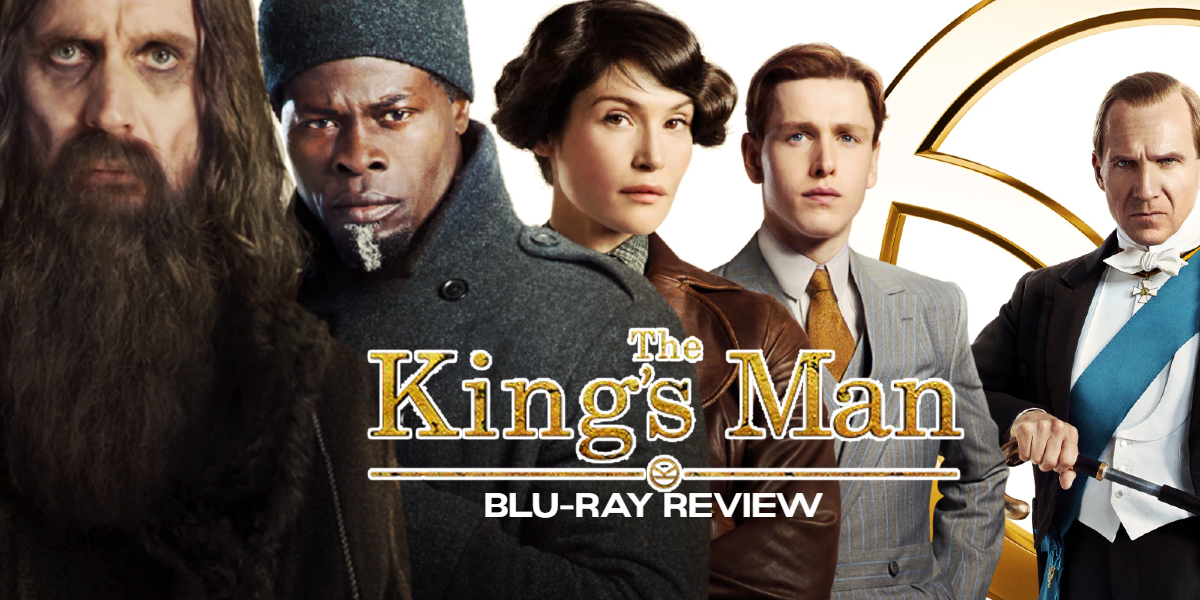
    The Blu-Ray for The King’s Man is packed full of extras including The King’s Man: The Great Game Begins. For fans of Rhys Ifans‘ over-the-top performance as Grigori Rasputin, there’s plenty to enjoy. “A Generation Lost” has director Matthew Vaughn explaining his decision to go back to the beginning with this latest installment. As he reveals, he initially envisioned the prequel as a television series rather than a movie. He ultimately wanted to make a war epic, though, and thus he decided to make it into a film instead. The segment spends most of its 11-minute timeframe reflecting on the franchise as a whole and the birth of the prequel. It’s not the most interesting bit on the extras.

    “Oxfords and Rogues” features Vaughn and the cast talking about the film, with the director acknowledging the cast is what makes the film. At eighteen minutes in length, “Oxford and Rogues” doesn’t have too much to offer, but for those looking for the cast’s input, it’s a fun watch. “All the World’s a Stage” is one of the longer featurettes, clocking in at twenty-six minutes. It delves into how the crew went about crafting this vast world. Of the featurettes, “All the World’s a Stage” is one of the more interesting clips because you get to see how Vaughn and the others built this stunning world; from war zones, to the Kingsman storefront and a goat filled mountain, the stage work remains one of the better parts of the film.

    “Instruments of War” breaks down the variety of weapons in the film. Oddly enough, the featurette on the weapons is more exciting than the use of the weapons on screen. The reasoning for this? The fight scenes were lacking in The King’s Man, so it makes it difficult to truly care to be familiarized with the weapons. “Fortune Favors the Bold” turns the focus to the film’s score as it takes viewers behind the scenes to see the orchestra at work. The final featurette is “Long Live the Kingsman.” The shortest of the featurettes, “Long Live the Kingsman” focuses on the future of the Kingsman series, as well as its impact. As far as features go, this is, unfortunately, the weakest of the bunch. It’s something that could’ve easily been used to advertise the Blu-Ray, rather than as a bonus feature.

    The No Man’s Land featurette, “The Silent Knife Fight Sequence Breakdown” is one of the better featurettes. It showcases actual footage from stunt practice, as well as a look at the storyboards and actual footage from that time used as a guide. Although the film fails to have great fight scenes, the silent knife fight is admittedly one of the most fascinating scenes in the film — it’s powerful, thrilling and well-executed.

    The final featurette “Remembrance and Finding Purpose” honors actual members of the military. While this doesn’t necessarily focus on the film, it’s a nice touch given that it’s set during WWI. It’s one of the best extras because it offers a real-world aspect to this otherwise fictitious world.

    Overall, if you enjoyed The King’s Man, you’ll love the extras on the Blu-Ray. If you didn’t care for the movie, though? It’s sadly not worth the time.

    You can read our review of The King’s Man here.

  • REVIEW: ‘Uncharted’ – Please, Just Play the Games

    REVIEW: ‘Uncharted’ – Please, Just Play the Games

    On December 21, 2015, Sony and Naughty Dog released a short advertisement in preparation for the upcoming debut of Uncharted 4: A Thief’s End, clocking in at just over thirty seconds. The slow-motion spot features the game’s intrepid protagonist lunging forward toward a flipping gold coin just beyond his reach, begging to be caught. As the scene around him erupts into chaos, a voice-over beings. “Nathan Drake. That two-bit thief, risking it all for some piece of treasure.” As the camera continues to pan, however, we see that the floor of this ancient, loot-filled room has begun to collapse, and Nate’s brother Sam is falling through it. “I guess that’s how they know me, how they’ll remember me.” With this comes the big reveal; Nate was never reaching for the coin. He only wants to save his brother, a choice he’s made time and time again. “But that’s not who I am.”

    These thirty seconds are the epitome of the Uncharted franchise. A hero who must choose between honor and glory, lost ancient treasure, massive set pieces filled with pulse-pounding action, and a surprising amount of heart woven between the seams of it all. The games have had such an impact on fans because of their ability to engage the player in Drake’s adventures, on both an emotional and intellectual level. They are cinematic escapades you can take part in, with every aforementioned characteristic merging together to create a fully-formed, well-rounded experience. Drama flows into excitement, which in turn becomes triumph. Even the worst of the video game installments managed to tap this narrative oil well, and reap the rewards that come with competent storytelling. That advertisement, titled Man Behind the Treasure, was able to encompass all of this in a mere half-minute runtime. So why, with a $120 million budget and multiple years worth of creative turnovers and rewrites, was Ruben Fleischer‘s film adaptation not able to do it in two hours?

    The answer is simple. Uncharted, the long-awaited movie, does not understand why people loved the franchise in the first place. Or, at the very least, it doesn’t understand how to execute the game’s ideas in a way that means anything. To be honest, it’s not the worst adventure film that’s ever been made. It’s no National Treasure, and it certainly pales in comparison to the great Raiders of the Lost Ark, but it’s not unwatchable. It offers a few charming moments from a cast with decent chemistry, and it’s sporadic set pieces are exhilarating enough. Tom Holland actually makes for a pretty charming Nate, and newcomer Sophia Ali makes a case for herself as the dynamic Chloe Frazer. Mark Wahlberg is horribly miscast as Sully, but he bounces off the younger cast well enough to keep his presence entertaining. Antonio Banderas and Tati Gabrielle, especially Tati Gabrielle, are able to keep the danger alive as actually-pretty-good villains. If this were a review for a generic action flick, it may even be getting higher marks. Unfortunately, it carries the Uncharted name on it’s title card, which makes it’s status as serviceably generic all the more depressing.

    The main problems with the film stem from two conflicting arguments. Firstly, and most importantly, the movie seems to adapt all the wrong parts of it’s namesake. Uncharted seems to think that all audiences wanted translated from console to cinema was the franchise’s signature flair. Blanketed over the one-note plotline are dressings designed to make viewers go, “oh, they did the Uncharted thing!” There are live-action recreations of iconic moments, plenty of witty comments, several rants about global history, double-crossing, a plethora of “craps”, knowing cameos, and even a bar named ‘Kitty Got Wet’ (if you know, you know). Nate’s relationship with his long-lost brother Sam is the crux of the film, which attempts to paint the protagonist in the same big-hearted light as the games, even if it fails to add the same intrigue. It’s mostly all there. Yet, somehow, every bit of it feels so passionless. The heart that strings all the charm together is simply not there. It’s like Sony, and it does feel like Sony directed this movie themselves, had all the tools necessary to create a complex mosaic, but opted instead to pump out a paint-by-the-numbers and hope nobody noticed. Sure, the final image looks like Uncharted, but it just doesn’t have the same soul.

    When it does do Uncharted things, it doesn’t even commit to them hard enough for it to matter. Aside from an admittedly solid final sequence, most of the small things that compliment the series’ larger attributes find themselves replaced by forgettable, cheaper alternatives. The movie borrows an entire scene directly from Uncharted 4, but sets it in the middle of urban New York City as opposed to it’s original Italian countryside. Where the games’ scores are known for using slightly more exotic compositions, the film waits until the very end to do anything unique or exciting with it’s music. Until that point, the soundtrack might as well have been playing over literally any other action film released in the past ten years. Ultimately, fans are probably better off just staying home and replaying their favorite sequences on whichever PlayStation they may possess. And if anyone unfamiliar with Uncharted watched the movie, liked it, and came here hoping for validation, they’d only find a recommendation to, well – just play the games instead. They feel, and look, more like a big-budget film anyway.

  • REVIEW: ‘Student Body’ Fails to Thrill

    REVIEW: ‘Student Body’ Fails to Thrill

    It’s hard to describe what Student Body is by the end of the film. While it tries hard to be terrifying and thrilling, it’s often predictable and frustrating with a very thin plot barely holding together. And yet, it’s not terrible. It’s not necessarily good, but it’s not necessarily bad, either. It’s the type of film that is easy to watch if you need a good popcorn flick on the couch, unfortunately, though it seems likely to not leave a lasting impression.

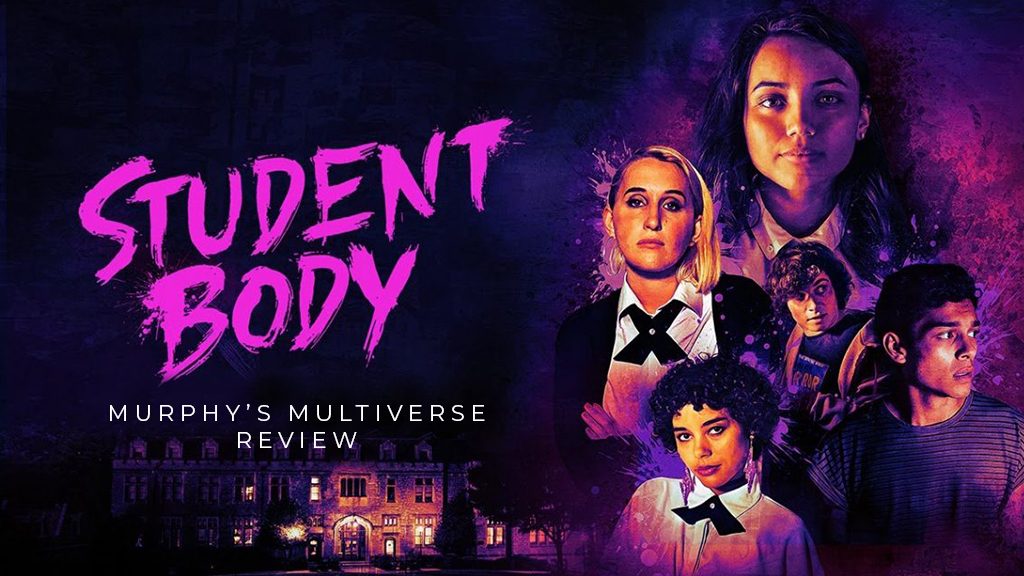
    Student Body is a horror thriller written and directed by Lee Ann Kurr. This marks Kurr’s feature film directorial debut, having previously helmed the TV mini-series, Wonder, as well as a couple of shorts. While the script does have its flaws, Kurr does do a good job at bringing out the best in the young cast. Where the film falls apart, however, is when it tries to make the leap into a horror film in its final moments. Up until that point, it’s the stereotypical high school flick that sees one student trying to fit in with the “cool kids.” It’s a cliché story, and one that would benefit from a unique plot. Student Body, unfortunately, lacks a unique story.

    Perhaps the easiest way to describe Student Body is by noting that it’s a story of obsession, one that tries to treat some of its subject matter with a sense of ease, but continually throws it in the viewers faces. It’s the typical high school film full of toxic friends, trying to fit in and trying to balance school and home. This one, however, just has murder thrown in to spice things up.

    This is a film that could have greatly benefited from a larger budget — perhaps to actually make it feel like a school with more than five students. It also could have benefited from a tighter and more cohesive story. Again, this isn’t to say the final product is terrible. It’s still an easy watch under two hours, and it does feature Christian Camargo as Mr. Aunspach, with the actor bringing his signature charm to the film. It’s just that, horror/thriller films need to be memorable if the story isn’t going to be tight. The score only managed to stand out in one scene near the end, proving to be otherwise forgetful throughout the rest of the film. The cinematography was lacking, especially in shots of the school. And the acting, at times, was subpar. Thankfully, though, those moments were few and far between. Harley Quinn Smith put everything she had into delivering a stern, yet vulnerable Nadia Parker, while Montse Hernandez shined as Jane Shipley.

    While Student Body wasn’t a favorite of mine, and one I probably won’t return to for future viewings, that doesn’t mean I’d encourage others to write it off. Give it a chance. It’s a quick film you can stream over the weekend while sitting at home. You may just enjoy the craziness that awaits.

  • REVIEW: Finding Charm in the Different Through ‘Safety Not Guaranteed’

    REVIEW: Finding Charm in the Different Through ‘Safety Not Guaranteed’

    The final screening of malta film Week was of Colin Trevorrow‘s premiere film, Safety Not Guaranteed. Its final scene, as mentioned in the live Q&A with the film’s director, would eventually be what convinced Steven Spielberg of handing him Jurassic World. Still, the film is more than just one scene, as he explored a simple idea. What happened if a group of journalists followed a strange ad hinting at time travel with the weary statement of “Safety Not Guaranteed” printed in the ad? Well, it introduces us to a story that is heartfelt and explores what it means to be different and to dream in an unrelenting world.

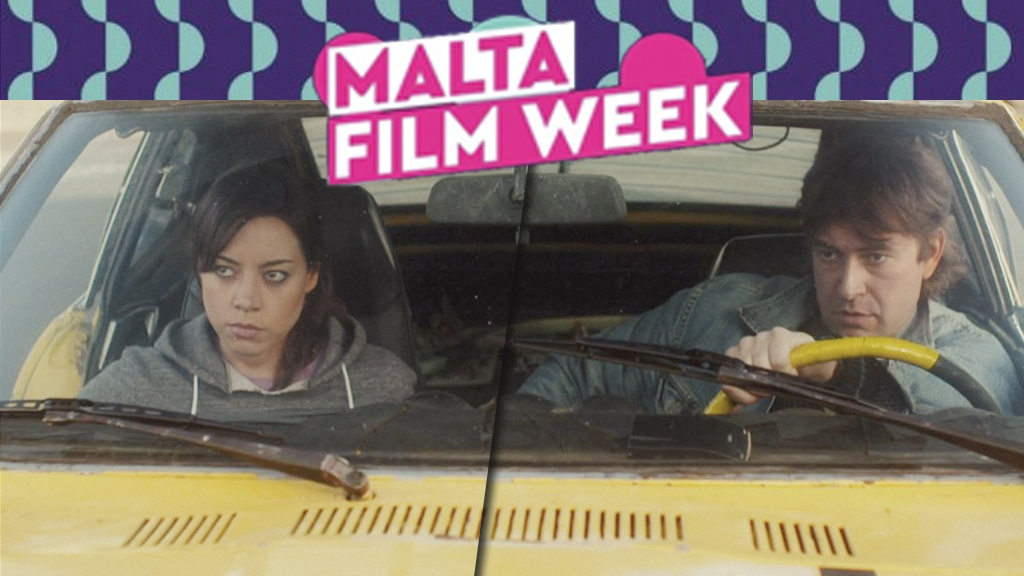
    The concept of the film is based on a joke classified ad that was posted in the Backwoods Home Magazine back in 1997. We follow Darius Britt (Aubrey Plaza) who graduated from university and is trying to find her place in the world, as she interns at Seattle Magazine. There, writer Jeff Schwensen (Jake Johnson) gets the idea to follow the classified ad that talks about time travel, as they head out alongside student and fellow intern Arnau (Karan Soni) to investigate.

    The concept and general demeanor early on from the storyline hint at a certain skepticism. It was my first time seeing the film that was originally released back in 2012. So, going in with the knowledge of Jake Johnson and Aubrey Plaza’s go-to characteristics in their projects, I had a certain expectation of this being a very cynical dark comedy. To my surprise, while there were still elements at play, it was a much more hopeful story than I would’ve thought going in.

    Mark Duplass plays Kenneth Calloway, the man who published the ad. The film doesn’t drag him down as a character. Rather, it uses the mystery surrounding his strong belief in time travel to make us sympathize and wonder what is going on. Trevorrow had a good handle on when to sprinkle in just enough mystery to keep your interest going throughout the rather subdued film. Yet, the mystery is pretty much just an addition rather than the main focus.

    Most of this film is more thematic rather than story-driven. Yes, there is a core narrative with Calloway’s end goal and his relationship with Darius, as they prepare for their travel into the past, but it’s not relevant. The film isn’t about time travel, but rather how dreams and beliefs can either bring us together or even push us apart. Jeff is perfectly summarized in this story when he revisits his teenage love, Liz. At first, she’s not what he expected but ends up falling head over heels for her. The film purposely makes her this perfect individual only for her to push him away once he gets serious about it.

    The past cannot be changed and we cannot pretend we can still live in the past. Yet, the ending embraces the fact that the only way to change the past, or at least how you handle it, lies in those you spend it with. That is why it’s not a film about time travel but purely about how we spend our time. Even the smallest side story in the film, such as Jeff being the one to push Arnau to finally “live a little” to hook up with a girl, is about that narrative theme. The people around us shape us to do the things we want to but are too scared to take that leap of faith on our own. His entire arc is about not running away from living in the present, as all he is focused on is finishing his studies to look to the future.

    In a way Darius represents a look into an unknown future, Arnau desperately tries to avoid the present, and Jeff clings to the past. Each one of them is forced to face a different fact. Darius confronts her past to learn about where she wants to go. While Arnau learns to embrace the difficulties of the present, Jeff is forced to confront his future. Of course, it could be a misreading on my part, but I quite enjoyed the way time played a role in each of the character’s arcs while exploring an ad about traveling through time.

    I expected the film to end on a cynical note and loved the direction that Trevorrow and writer Derek Connolly went with. There’s hope that no matter how bad the past, present, or future might be, maybe you can make a change. The big thing is, it’s for anyone. Duplass‘ Calloway is shown as a flawed man and “different” from the norm. We learn to love the character even as some dark revelations make you wonder if he’s telling the truth or if his plan worked.

    A time travel movie all about our life with time teaches you that there’s love to be found no matter how strange your beliefs might seem to be. Safety Not Guaranteed is a charming film about the different and coping with the difficulties with life. It’s not an action-driven piece that gets the heart pumping and sometimes not even really that focused on getting you to think about the complexity of time travel. It’s a personal story of individuals trying to cope with life and it finds a perfect balance, as you leave the theater realizing you do the same every day.

  • REVIEW: ‘Book of Love’ is a Delightful Rom-Com

    REVIEW: ‘Book of Love’ is a Delightful Rom-Com

    If you’re looking for a fun, romantic comedy to enjoy this Valentine’s Day, Amazon Studios’ Book of Love should easily fit the bill. The film stars Sam Claflin as Henry and Verónica Echegui as Maria, two very different people who soon find themselves at odds over a book.

    Henry is an up-tight male author who managed to get his debut book, The Sensible Heart, published. Unfortunately, though, the book is performing poorly despite his continued attempts at promoting it; reviewers have dubbed it boring and it seems as though he’s about to be dropped by his publisher until… the book becomes a hit in Mexico. As it turns out, the book has been translated and is a top-seller in Mexico, much to Henry’s surprise. What he doesn’t know, however, is that the translator took a lot of liberties with his novel and turned it into an erotic story that was full of passion rather than a passionless love story. With the book becoming a success in Mexico, the publisher quickly throws together a book tour for Henry in Mexico, where he’s joined by his translator, Maria. What ensues is a love story that, while by the book, is still delightful and sure to keep viewers smiling.

    As someone that writes books when I’m not working, it was easy to lose myself in this story. Henry can, admittedly, be very frustrating upon introduction. His book isn’t selling, but he refuses to give up on it and move on to the next thing. For him, The Sensible Heart, is his main focus because he spent years of his life trying to get it right. Trying to accept that readers simply are not interested in a passionless love story is not something he can do. He’s forced to accept the truth, though, when he realizes the only reason his book is selling well in Mexico is because of the changes the translator made. At times, it feels as though the film is picking at the romance genre as a whole, but by the end, it’s clear the film is merely trying to prove there’s nothing wrong with a bit of passion.

    There’s no denying Book of Love is a cliché story. It features two unlikely individuals who find something in one another with the usual bumps along the way. It’s not a film that’s going to win awards, but not every film needs to. Sometimes, we just need something to help us escape from the reality we’re in and Book of Love does that exceptionally well. It’s a heartwarming love story that will make you laugh, make you frustrated and then keep you smiling as the ridiculousness continues to unravel. (Courtesy of Jen, Henry’s British publisher.)

    Claflin nails the role of Henry; he’s awkward, arrogant and vulnerable when needed. Yet, while he is the lead, Book of Love is ultimately a showcase for Echegui who lights up the screen as Maria. The passion between them is rather great, too. They feed off each other which helps to sell this romantic story of two unlikely individuals.

    In the end, Book of Love is a love story that reminds us love is never what we imagine it to be – it’s both better and worse, but always worth the fight in the end. It’s a romantic comedy you’ll want to add to your watch list this Valentine’s Day. Allow yourself to get lost in the ridiculousness of these two characters, it’s a sweet trip.

  • REVIEW: ‘Clifford the Big Red Dog’

    REVIEW: ‘Clifford the Big Red Dog’

    Clifford The Big Red Dog is ultimately a mild-mannered but generic adaptation of the beloved book series by the same name. While the titular Clifford, a giant red puppy, is as massive as one would want, the film lacks much of the whimsy of—and seems particularly confused about—the Clifford mythos. At the end of the day, Clifford is solid and consistent family fun even if it feels like a cut-and-paste from most movies in the genre. 

    Even though Clifford himself cannot fit in any box, Clifford is as inside-the-box as any film in the general family-friendly genre can be. Every step is by the book—while the film lifts up “being different”, it falls flat on its advice. To be fair, the movie passes every trope with flying colors, and the fun moments promised are unpretentiously fun. Clifford also offers some themes a bit more mature than expected, such as classist struggles and the threat of homelessness looming over the main characters at all times. 

    Ironically, the titular Clifford does very little of the heavy lifting in the movie. While an enormous red puppy should ordinarily keep someone’s attention above anything else, it is interestingly not the case in Clifford. The giant puppy has little personality beyond being a puppy, and the CGI companion has the stage presence of a second-string Paw Patrol member. Still, he is ultimately a good boy as he acts as the glue that holds the often-nonsensical plot together while a more sincere story plays out around him.

    What keeps Clifford from being stale, however, is its star-studded cast. Jack Whitehall ends up shining as the most interesting protagonist despite his cliché “fun uncle” role. Izaac Wang is funnier than the rest of the already-pretty-funny cast combined, including Tony HaleKenan Thompson, and Alex Moffat. Add in the ensemble that portrays the main character Emily Elizabeth’s Harlem neighbors, and the cast ends up breathing life into a movie that otherwise might have died on the vine. 

    Clifford the Big Red Dog is fine. Kids will certainly be plenty entertained by the spirited romp, and the cast maybe bring enough humor for general audiences to sit and stay for the entire film. While it does not quite accomplish anything as impressive as Clifford himself, there is plenty of family fun to fetch.

  • REVIEW: ‘One Shot’ Feels Like a Soulless Gimmick

    REVIEW: ‘One Shot’ Feels Like a Soulless Gimmick

    As part of the Malta Film Week, I was given the opportunity to attend a screening of the 2021 film One Shot. Director James Nunn‘s shared during the live Q&A that he had the idea for the project six years ago and the success of films like Birdman or (The Unexpected Virtue of Ignorance) would eventually convince producers to greenlight his dream project of an action film made to look like a singular shot. Yet, as the title of the review might give away, this didn’t quite work out.

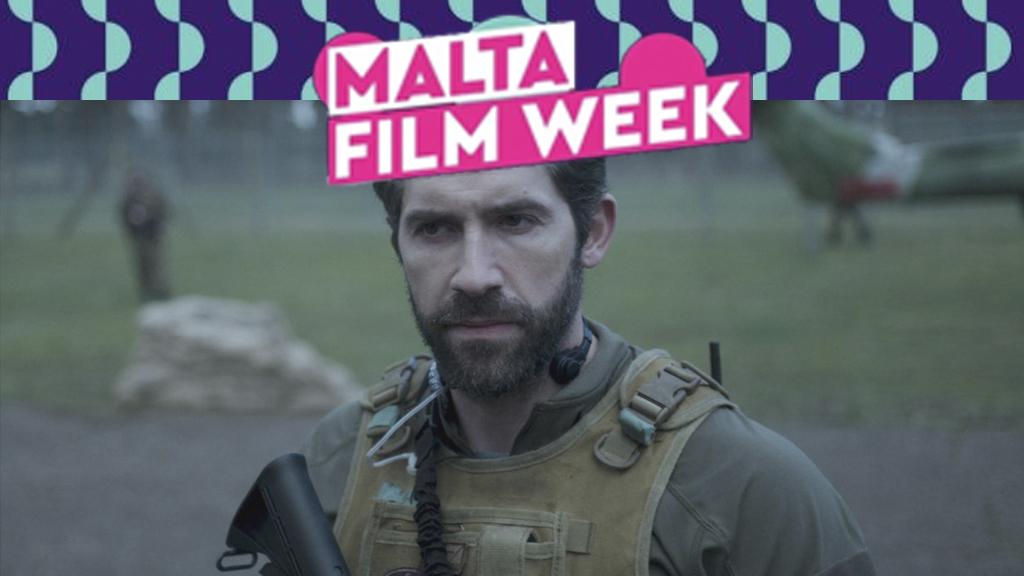
    Nunn’s concept isn’t a bad one. The tension of closely following a Navy SEAL (Scott Adkins) during a covert prisoner transport as terrorists attack the camp works on paper. Yet, the project went with a style over substance approach in how the one-shot turns more into a gimmick rather than a way to enhance the experience. I will state that the action choreography is impressive, especially as he revealed they only had three weeks time to prepare everything in pre-production and it shows that the film mainly focuses on it.

    There are characters here, but they are quite one-note. Adkins‘ Jake Harris is a blank slate by-the-numbers action hero that seemingly survives any scenario. Ashley Greene‘s Zoe is introduced as what seemed like another main character that is underutilized outside of long exposition sequences early on. We technically have a villain, but his character is mostly every villain cliché you can imagine. We get a tragic character in the form of Waleed Elgadi‘s Amin Mansur, but he repeats the same lines throughout the entirety of the film that just drags down a good performance by the actor.

    The only character with any real personality is Terence Maynard‘s Tom Shields, but mostly due to him chewing the scenery throughout most of the film. He’s also the only one that doesn’t talk in pure exposition but actually gives us some personality. Even the more jokey characters that are part of Harris’ SEAL team talk in mostly clichés that pretty much give away their fate for anyone that has seen a film like this.

    Cliché is a fitting way to describe the film overall. There’s just nothing to make it stand out from other films in the genre, especially those with a lot to say about the current climate surrounding soldiers and war. The film mostly uses a good base concept – which could’ve built up an incredible amount of tension for viewers – and is more focused on showcasing how cool Adkins is taking down evil bad guys while the camera never cuts away.

    There are drawn-out sections in this film that are just pure action. It tries to build up some kind of tension, and there are small moments of it, but overall it felt like a non-interactive video game. If Call of Duty ever had a movie adaptation, this film pretty much is that with some Metal Gear Solid sneaking thrown into the mix. Not just that, we spend hours of people talking as they just shoot down goon after goon with their main issue being the lack of ammo that only becomes relevant when the story requires it to build some last-minute tension.

    Speaking of, there’s an uncomfortable element on how this film approaches its “antagonists.” Not only do we see Americans torturing prisoners – mostly to make you feel bad for Mansur – and it comes at the cost of not caring for any of our supposed “heroes.” We get gratuitous violence with the camera shying away from people getting stabbed but forces us to watch as an innocent civilian is shot in the head. It just feels like it’s sending the wrong message and lacks any nuance.

    I want to especially highlight one sequence that comes at a later point in the film. So, beware of spoilers in this paragraph before continuing. The film does take some time to “flesh out” its villains and we get a brief sequence of a young soldier being convinced to sacrifice his life with a bomb vest. Besides the obvious problems with this, there’s a lot of build-up for this and he just randomly shows up in another sequence. And, the results of his action made me scratch my head and wonder what was the point of this film.

    There are a lot of sequences that drag out, and Nunn confirmed in the Q&A that his initial script only truly worked for a 60-minute film. The fact he had to add another 30 minutes to meet his quota shows It’s just action for the sake of action. The opening is pure exposition without any real character development. So, the only selling point is the gimmick in the title – which also seems depressing that it doesn’t actually play into the story of the film – and it doesn’t add anything. The shot composition is restricted as a result and you mostly can see some fun action choreography. If that is something you’re interested in, then you can give this one a shot.