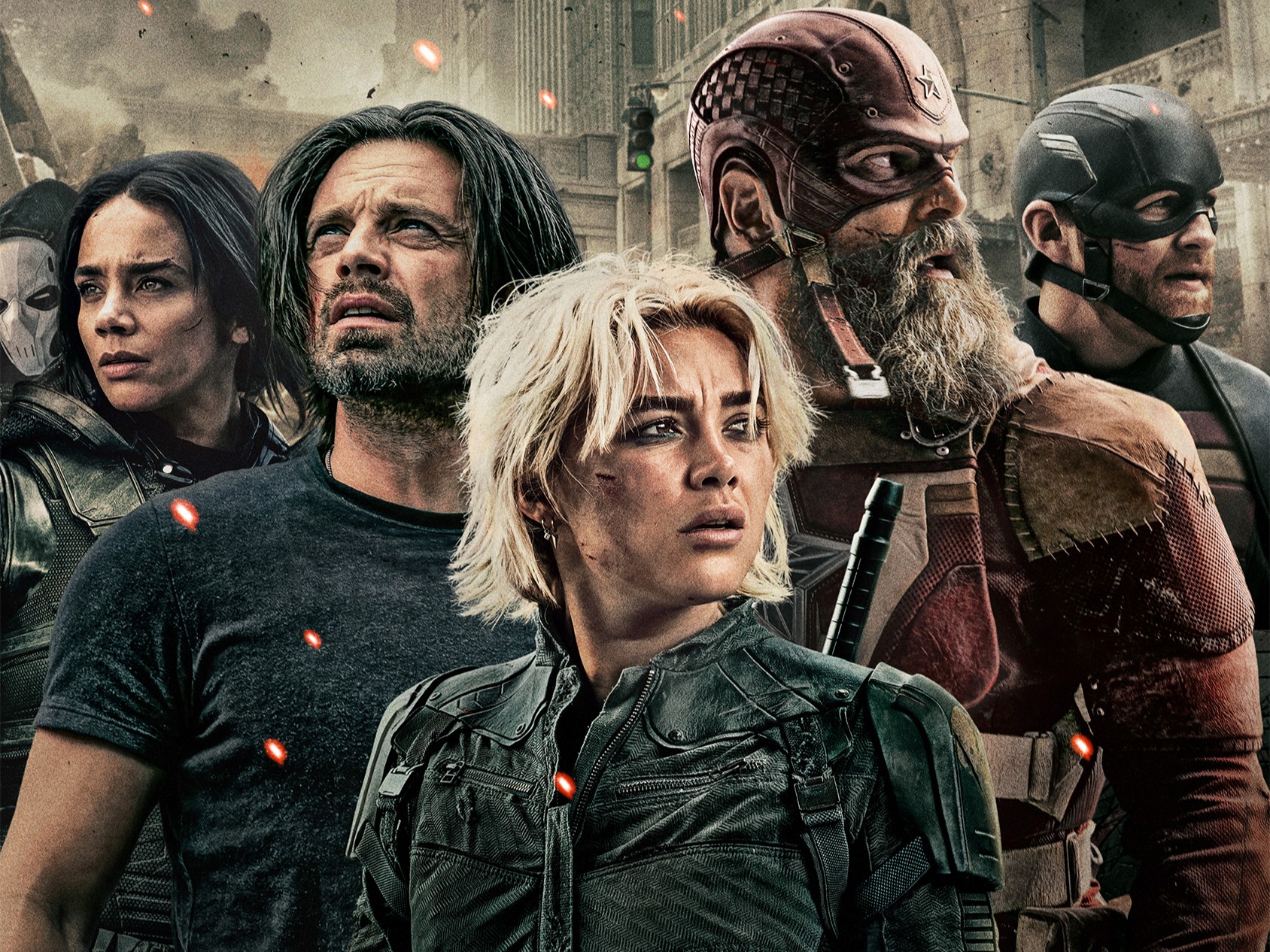
Over the years, Marvel Studios’ approach to storytelling has increasingly been the focus of criticism. The framework within which the studio chooses to spin its narrative, the “Marvel formula,” has come under fire for its predictable plot structure, overreliance on humor, and willingness to sacrifice character-driven stories to advance the MCU’s longform story. As the studio’s Multiverse Saga has moved forward, the type of nuanced performances that allow for true excavation of a character have been forgone in favor of spectacle and it has become increasingly difficult to “spectacle” an audience that grew up with fully realized heroes flying around on screen. That hasn’t stopped Marvel from attempting to outspectacle its latest spectacle and the result has been a saga largely composed of vapid films, void of any emotional resonance. And along comes Thunderbolts*…
Piecemealed together by a series of writers, Thunderbolts* cavorts in insouciance for the Marvel formula, delivering something audiences haven’t seen from the studio in quite some time: a story galvanized and energized by its characters rather than visual effects and nostalgia. Eric Pearson, Joanna Calo and Lee Sung Jin Frankensteined a script that provided director Jake Schreier the opportunity to tell an MCU-set Jekyll and Hyde (that’s an entirely different monster) story, steeped in metaphysics and exploring ontological dependence. A non-empty set depends on its elements and the respective successes of both the Thunderbolts and the Thunderbolts* are entirely dependent on their respective elements.
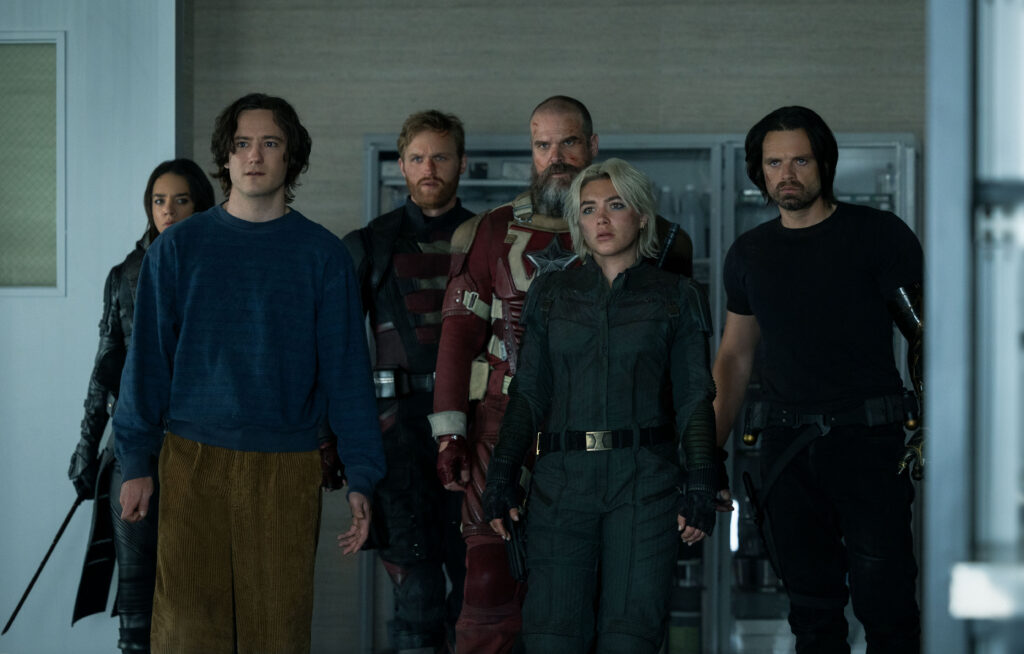
You’re talking about a group of characters that have done a lot of bad things, and maybe are struggling with feeling good about themselves. There’s an element that does speak to mental health, and loneliness, and how some of the darkness that we experience in our lives can’t be necessarily fixed, but can only really be made lighter through connection and finding others
–Director Jake Schreier
Working solo, the titular team wouldn’t survive the film’s first act and, reading between the lines of some comments recently made by Schreier, it sounds as if the film might have been on track to turn out to be another hollow, one-note action flick (Schreier described it as a small-scale “Die Hard thing”) that wouldn’t have survived a critical bashing before Calo and Sung Jin weaved heart and emotion into Pearson‘s original script. Instead of another potential dud, the reworked script turned into the studio’s most impressive Multiverse Saga film to date, putting character first without sacrificing spectacle, delivering some of the most impressive action sequences the MCU has seen in a decade, while telling a story about human trauma that powerfully reverberates with the audience. Whatever Thunderbolts* originally was, it evolved into one of the studio’s most entertaining and evocative films.
Making a superhero film featuring a cast of charming, misfit losers meant that Thunderbolts* was inevitably going to be compared to Warner Bros. Suicide Squad films and Marvel’s own Guardians of the Galaxy. Thunderbolts* never feels derivative of those projects, however, because it leans so much harder into darker, more uncomfortable emotions and corners of human nature that are typically not part of superhero fare. For reasons each their own, Yelena Belova, John Walker, Ava Starr and Antonia Dreykov–all of whom find themselves in the employ of Julia Louis-Dreyfus‘ Valentina Allegra de Fontaine–have lived large portions of their lives as disposable tools to be used at the whims of others. Bucky Barnes and Alexi Shostakov–neither of whom are working for Julia Louis-Dreyfus‘ Valentina Allegra de Fontaine–have suffered the same fate. In one of the film’s more powerful moments, Bucky, who should know better than anyone given his past as The Winter Soldier, finds himself standing in the same shoes as those who were his masters in the past, seeking only to use the others as tools for his own ends without any value for consideration for them as human beings. Indeed his desire to succeed and inability to see them as anything other than means to an end prevents him from acknowledging their warnings about the film’s true threat. While parts of the scene are played off humurosly, it’s deeply tied to the film’s exploration of how emptiness can consume and how power can corrupt.
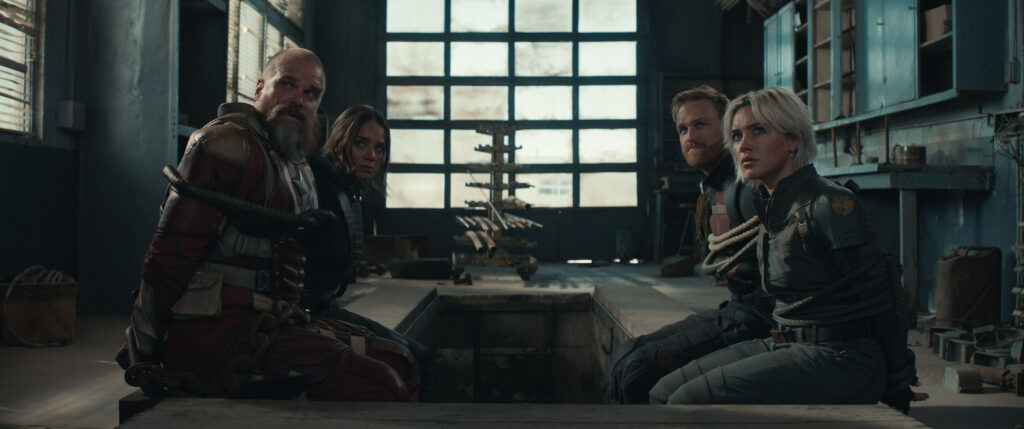
And we all have Paul Jenkins to thank for that. At the center of Thunderbolts* is Lewis Pullman‘s Bob, a tortured meth addict who volunteered to be a test subject for a program he’s told will help him and humanity reach new heights: Project Sentry. Though the studio kinda-sorta tried to hide it, Bob is Robert Reynolds, aka The Sentry, a Marvel Comics character created by Paul Jenkins. Jenkins always intended for Reynolds to be a study in mental health and while the MCU’s iteration of the character is not a beat-for-beat adaptation, he is as Jenkins intended him to be. Pullman‘s quirky, unassuming Bob–the only new character on the film’s main cast–enters the fray in the first act and quickly becomes the centerpiece of a story that subverts what fans have come to expect from the Marvel Cinematic Universe.
So I knew from the beginning that Sentry was the Void, and this story was about mental health. It was about two sides of him. And in part, it was about the part that he couldn’t accept. The Void is part of him.
–Paul Jenkins
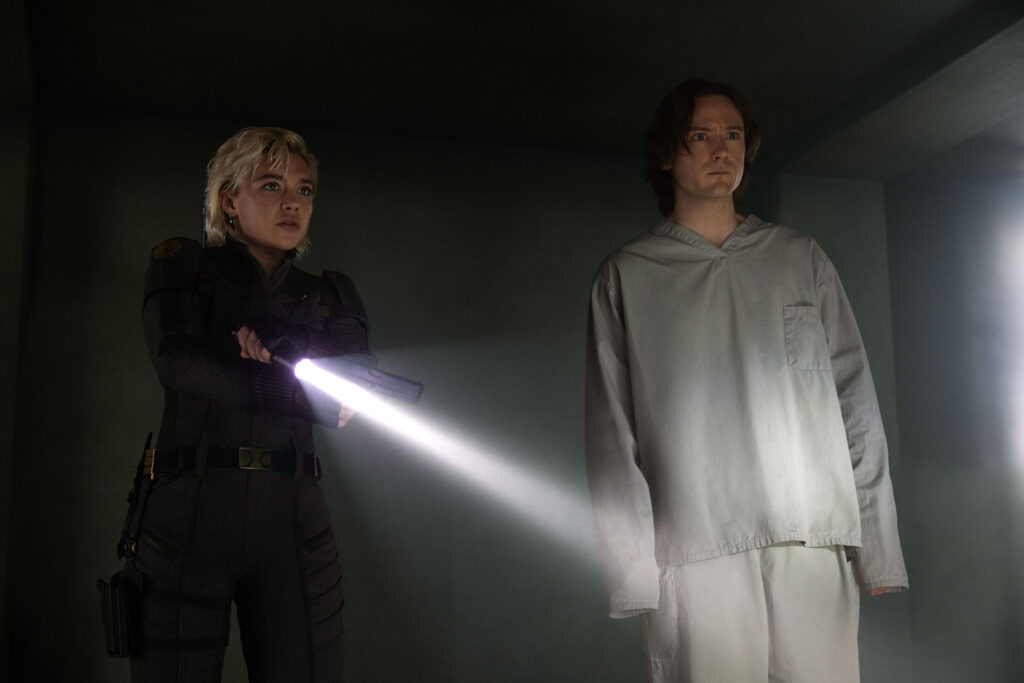
Schreier‘s subversion of the Marvel formula comes attached to a story centered around the continued bastardization of a formula foundational to the ongoing MCU narrative: the Super Soldier Serum. As Stanley Tucci‘s Abraham Erskine forewarned, the Super Soldier Serum amplifies everything that already exists inside the subject. Steve Rogers–a good man–became Captain America, the Senintel of Liberty and the Symbol of Truth–while Johann Shmidt became the Red Skull–the aberrant face of the Nazi Third Reich. A bit of dialogue in the second act of Thunderbolts* illumintates just how far the science of the MCU has progressed since then, however, as Bucky Barnes, Alexis Shostakov and John Walker compare and contrast their varieties of the serum, all while the most volatile and unethical version of the serum has created the most imperfect Super Soldier yet in the Sentry. By injecting the latest and greatest version of the serum into someone broken and hollow, Valentina Allegra de Fontaine makes good on Erskine’s warning, amplifying the void inside Robert Reynolds to the point where it manifests itself as The Void, an omnipotent shadow version of The Sentry. Over the course of the film, The Void seems to be held at bay by Bob, though physical contact with him drags the characters into memories of their own, dark traumas. However, once he’s finally unleashed in what begins as an Avengers-esque third act, the film takes a welcome detour from the Marvel formula. This Battle of New York, fought inside The Void, is the battle we must all fight from time to time: a battle against our worst self. And none of these characters can make it out without the others.
It’s no surprise to me, I am my own worst enemy, ’cause every now I then I beat the living shit out of me.
-Lit
Fascinatingly, Thunderbolts* instantly becomes the standard for “new Marvel” while paying homage to one of the MCU’s most important legacies. Perhps coincidentally, it also works wonderfully as commentary on the struggles of the Multiverse Saga. The Thunderbolts and Thunderbolts* ride parallel rails. Pullman‘s Bob becomes analogous with Marvel’s Multiverse Saga struggles. Just as Julia Louis-Dreyfus‘ Valentina Allegra de Fontaine carelessly dosed Robert Reynolds, a hollow shell of a man, with an all-new, all-different formula intended to grant him the power of a thousand exploding suns, the studio carelessly assumed the Marvel formula would carry the hollow shells that were Ant-Man and The Wasp: Quantumania and Thor: Love and Thunder to all-new heights. But that did not happen. The MCU was in jeopardy, both in and out of universe…and along came the Thunderbolts and Thunderbolts*.
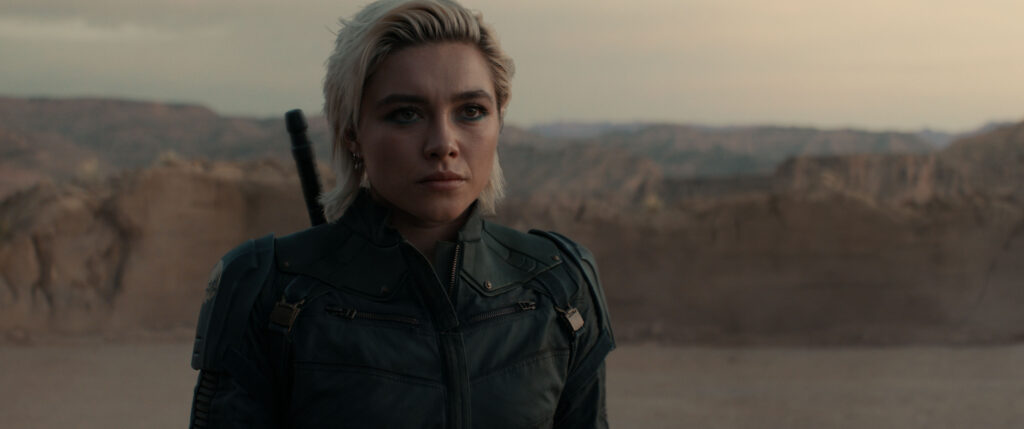
The serum amplifies everything that is inside, so good becomes great; bad becomes worse. This is why you were chosen. Because the strong man who has known power all his life, may lose respect for that power, but a weak man knows the value of strength, and knows… compassion.
-Doctor Abraham Erskine, Captain America: The First Avenger
Playing with a stacked deck that nobody saw coming, Thunderbolts* combines fresh visuals (Schreier‘s eye for action and unique shots will have him on every studio’s list), a pair of emotionally powerful performances by Marvel’s brightest star, Florence Pugh, and Pullman, and, yeah, some MCU humor delivered by David Harbour and, surprisingly, Wyatt Russell. If Thunderbolts* is representative of what can be accomplished when the studio is willing to tinker with its formula, these new* heroes will be at the forefront of an intriguing renaissance for Marvel Studios.
Sources: Comic Frontier, EW

Leave a Reply