Tag: Marvel Features

  • Review: ‘Wonder Man’ Provides a Perfect and Perplexing Profile of a Misunderstood Hero

    Review: ‘Wonder Man’ Provides a Perfect and Perplexing Profile of a Misunderstood Hero

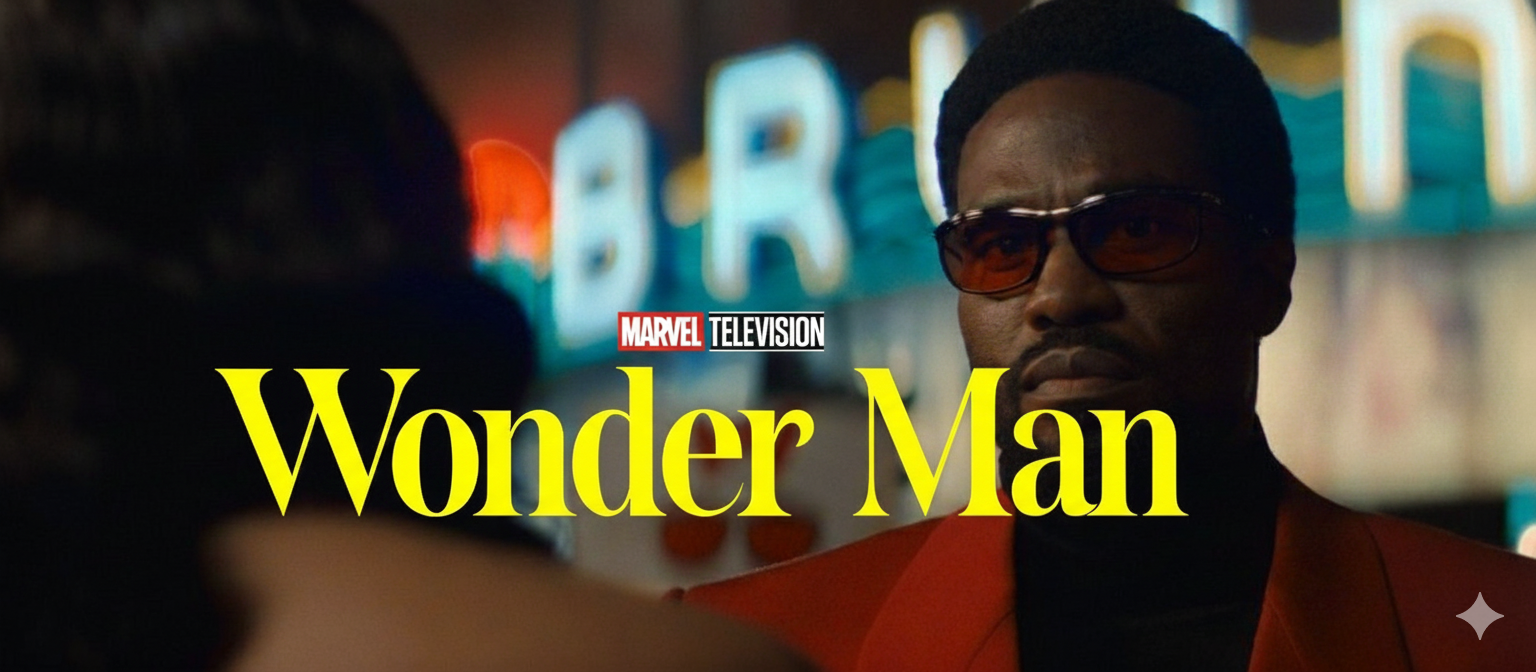
    Described by Marvel Studios’ Head of TV, Streaming, and Animation, Brad Winderbaum, as a “love letter to Hollywood” and a story “that anyone who came up in Hollywood or in the arts in general can relate to,” Marvel Television’s Wonder Man may indeed be just that…though at times anyone who did not come up in Hollywood might find themselves feeling a bit like a fifth grader on the outside of an inside joke. True to the word of Winderbaum, Wonder Man is entirely unlike anything Marvel has done because, at least in part, it feels as though it was created for the enjoyment of those who create.

    A character study at its core, Wonder Man is almost entirely devoid of superhero action, choosing rather to spend its narrative currency peeling back the layers of the psyches of Simon Williams and Trevor Slattery. Like Midnight Cowboy, the film that brings the two together, Wonder Man is indeed, as advertised, a two-hander in which each of the dual protagonists recognizes the other as, perhaps, the first genuine human connection either has ever had. Over the course of seven of the eight episodes (an entire episode of Wonder Man is dedicated to NEITHER Simon nor Trevor), the leads’ personas are stripped bare, with Simon’s history told through fragmented flashbacks that deconstruct the damaged and insecure boy that lives behind the facade of an overconfident man. Simon is ALWAYS acting; however, it’s only when he realizes that he’s acting that he struggles.
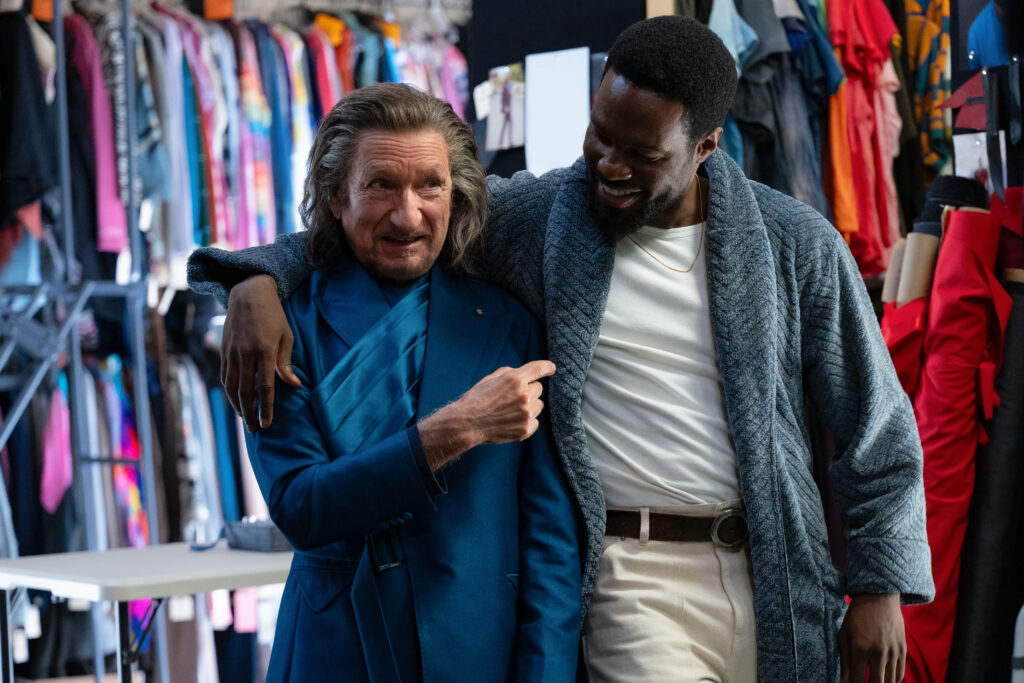
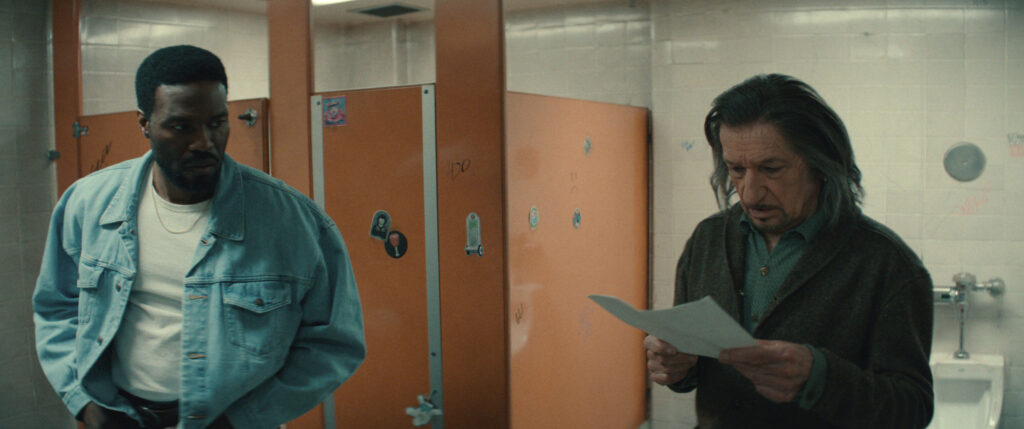
    (L-R): Simon Williams/Wonder Man (Yahya Adbul-Mateen II) and Trevor Slattery (Sir Ben Kingsley) in Marvel Television’s WONDER MAN, exclusively on Disney+. Photo by Suzanne Tenner. © 2026 MARVEL.

    As a character study devoted to the genre, Wonder Man stands apart from traditional superhero fare. By the design of co-creators Destin Daniel Cretton and Andrew Guest, the stakes of its plot are emotional rather than physical. Despite Simon being perhaps one of the MCU’s most powerful individuals, the series eschews the genre’s classic climax for one that is simply anticlimactic. The earliest marketing for the series gave away the fate of Simon’s pursuit of his dream role, even if it did cleverly conceal the project’s best twist which isn’t a revelation about Simon. As such, Wonder Man follows a couple of actors talking about acting while pursuing acting roles for the vast majority of its runtime, with very little time spent on the unnatural abilities possessed by Simon Williams. By focusing on the mundane aspects of being a powered individual in the film industry (auditions, stunt work, publicists), the show humanizes Simon. While Wonder Man does provide Simon with the occasional opportunity to show off his powers on street-level cannon fodder, there’s more tension present in scenes where he’s trying to crack the backstory of his character in American Horror Story.

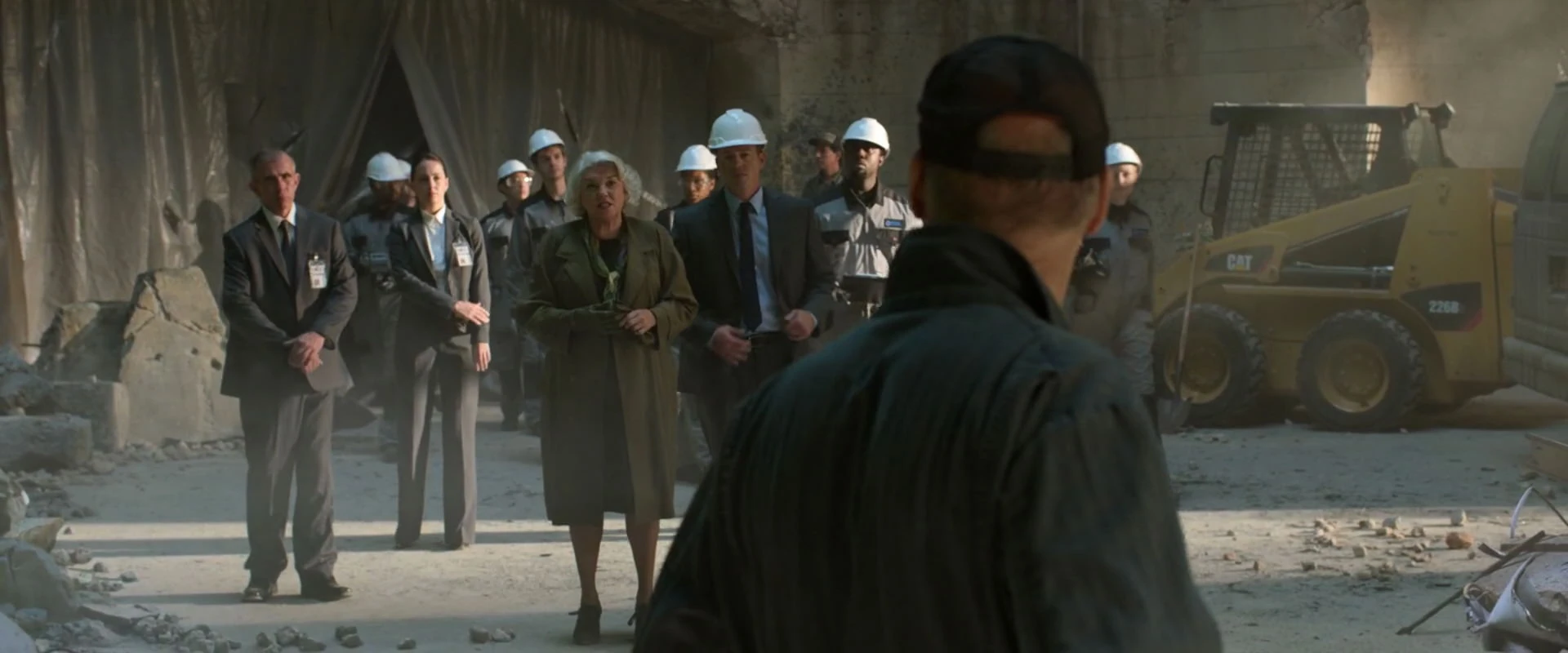
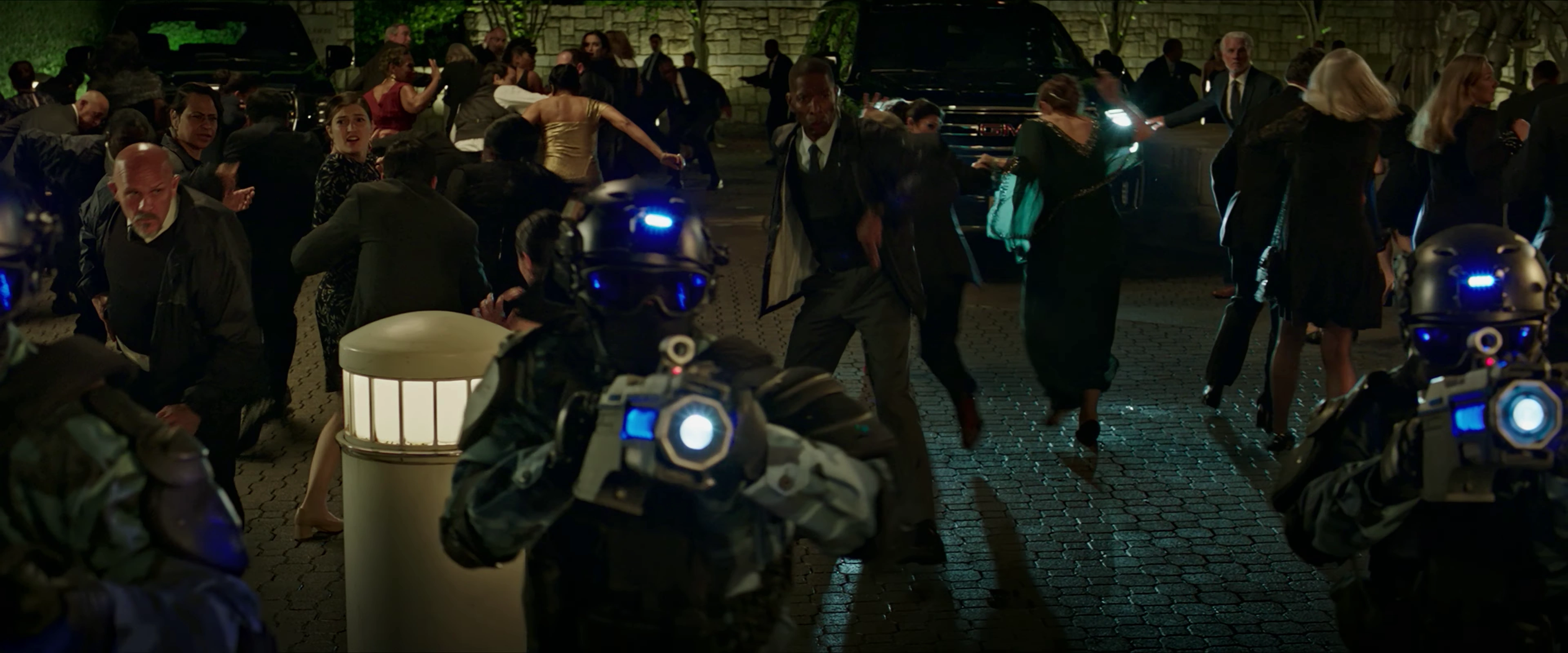
    Though the time spent with Simon is rewarding, such little time is devoted to his innate ionic powers that the presence of the series de facto antagonists, the Department of Damage Control, feels shoehorned and contrived. Arguably, this is the one area in which Wonder Man taking place within a deeply developed shared universe based on superheroes forces a betrayal of Cretton and Guest‘s intent. Classic character studies rarely involve a conflict with an external aggressor, focusing rather on how the protagonist’s psyche prevents him from achieving his desired purpose. Given that Wonder Man thoroughly and expertly explores that avenue, it seems clear that the DODC’s inclusion was *suggested* by the Marvel Parliament rather than being narratively native. While it seems Marvel’s intent is that the DODC is destined to become the precursor of the MCU’s anti-Mutant division–even though it is not clear if Simon is a mutant in the MCU–their presence is one of the primary perplexities of the series.
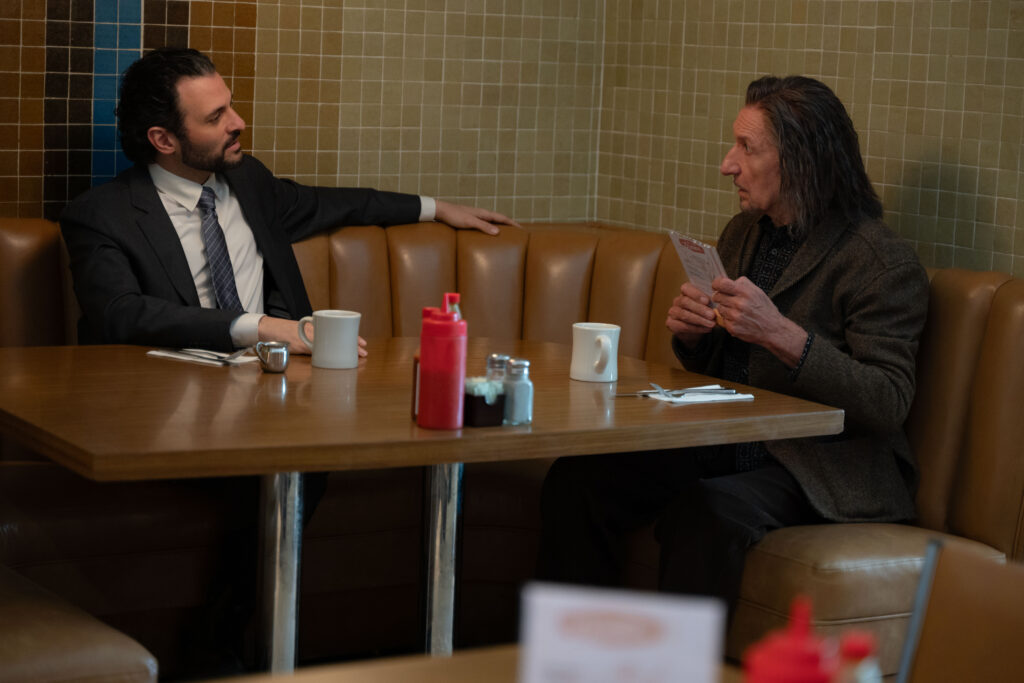
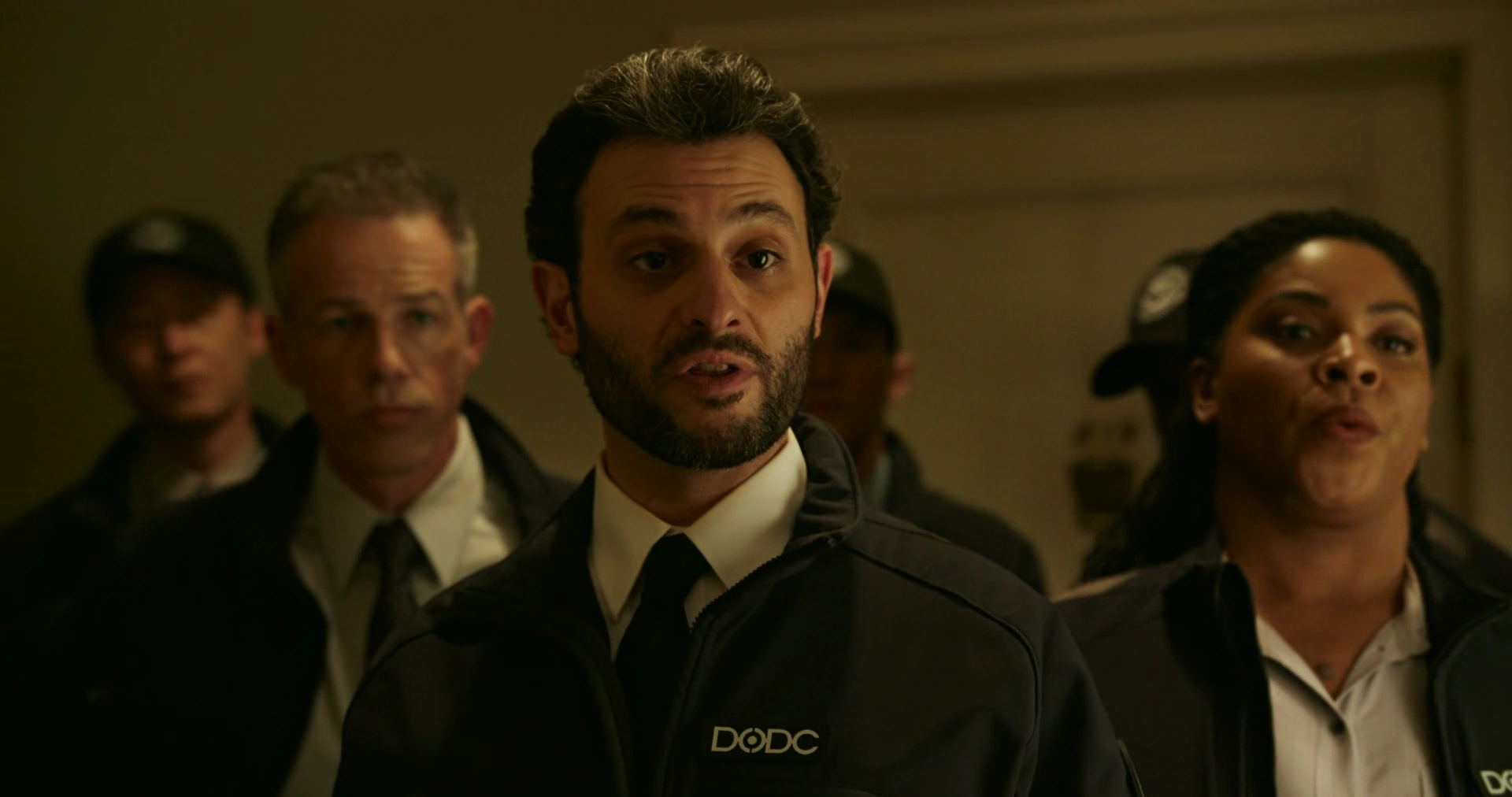
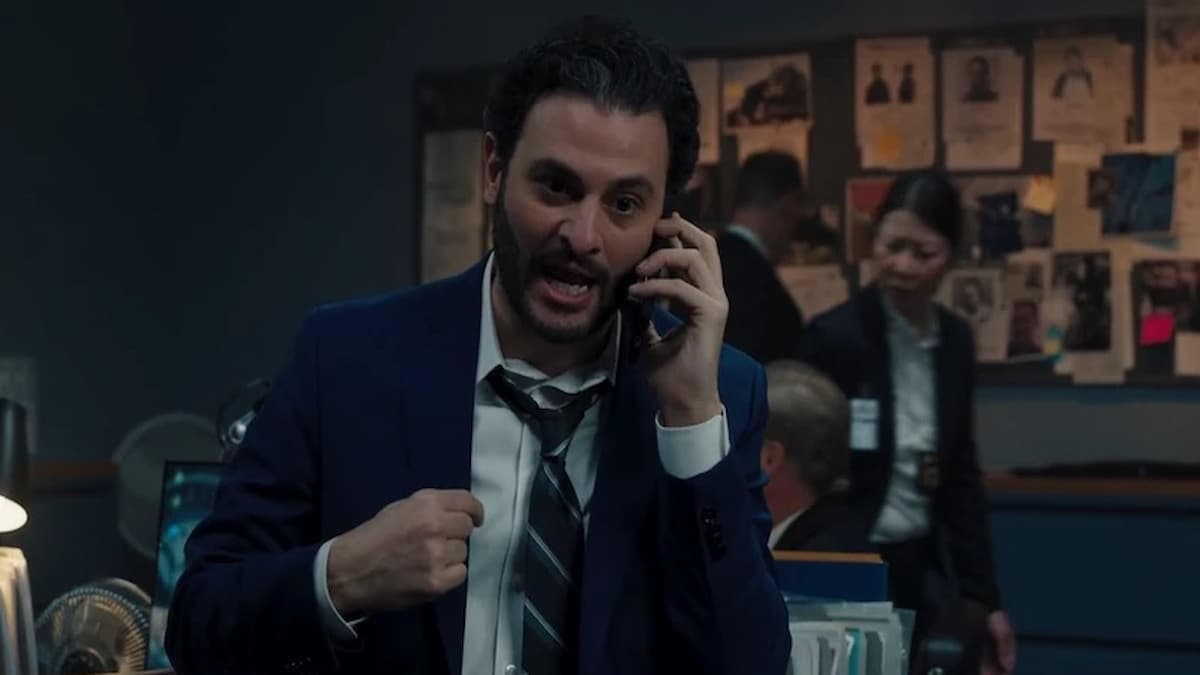
    (L-R): Agent Cleary (Arian Moayed) and Trevor Slattery (Sir Ben Kingsley) in Marvel Television’s WONDER MAN, exclusively on Disney+. Photo by Suzanne Tenner. © 2026 MARVEL.

    Another is why Simon William is the protagonist of Wonder Man at all. Though it’s hardly the first time it has done so, Marvel Studios significantly reinvents Simon Williams–and those around him–for the MCU. And strangely, given the series’ designation as a Marvel Spotlight project–there’s no guarantee the decision to do so will eventually be paid off or explained. Yes, this Simon is prone to bouts of self-doubt, works in Hollywood and has incredible ionic powers; however, the decision to make Simon a mutant rather than a mutate strips him of the agency that made him such a polarizing character in his early adventures in the pages of Marvel Comics. An interesting choice to be sure and one that may never be liquidated. From his background to his family connections to the source of his powers, the MCU’s Simon has surprisingly little in common with his comic book counterpart…but nearly none of that matters when a star the caliber of Yahya Abul-Mateen II is involved.

    In Wonder Man, Cretton and Guest created the equivalent of an HBO prestige streaming series. Rather than fill the runtime with superhero moments, Wonder Man lingers on the mundane, revealing the true natures of Simon and Trevor in a strangely slow burn for a series with such short runtimes. In the case of Simon, Wonder Man introduces an insecure man seeking validation. But brilliantly, the series uses Trevor as a dark mirror to Simon. If Wonder Man presents Simon as a study of a man trying to find himself through fame, Trevor is a study of a man who has completely lost himself to the performance. Trevor’s character study is built on the tragedy of a failed artist who finally found his greatest role by accident.
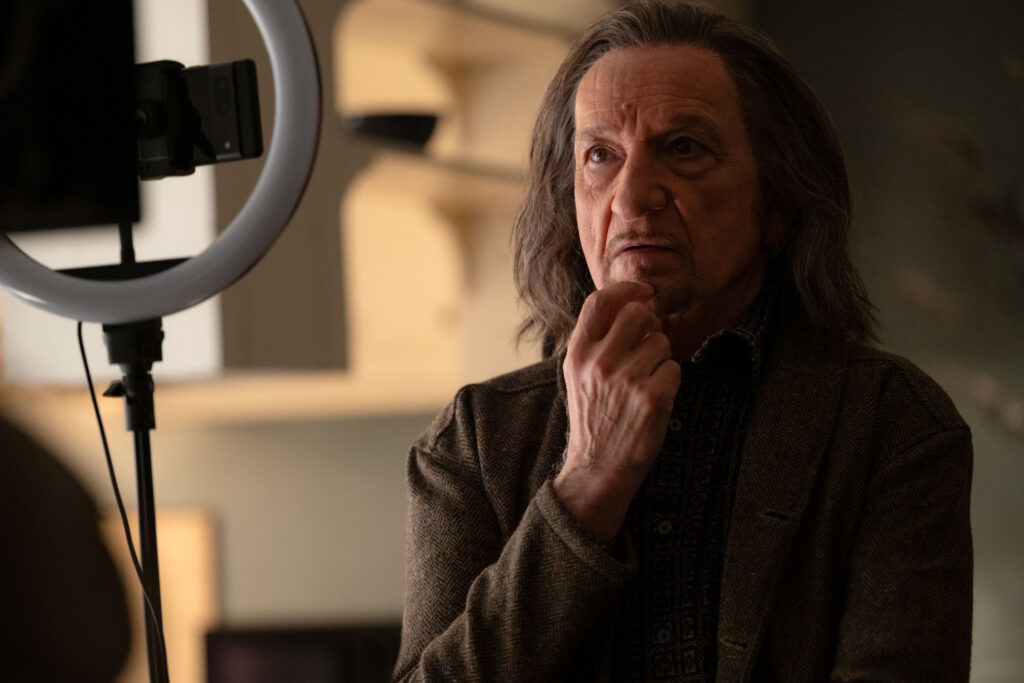
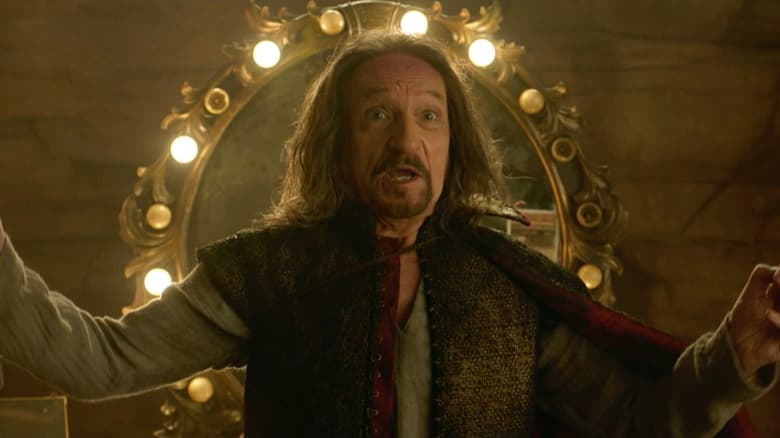
    (L-R) Trevor Slattery (Sir Ben Kingsley) in Marvel Television’s WONDER MAN, exclusively on Disney+. Photo by Suzanne Tenner. © 2025 MARVEL.

    Whether he’s in a high-security prison or a warlord’s compound, Trevor’s constant performing ensures people find him too entertaining to kill. This reveals a deep instinct for self-preservation: Trevor doesn’t know how to be authentic because, in his world, being yourself gets you hurt. Strip away the accents and the anecdotes about “the stage” and his “mum” and you meet a man with a fundamental void of identity. Trevor is a character study in codependency. He needs an audience to tell him he exists. Without someone watching him, Slattery effectively vanishes. Using Trevor as a secondary character study reveals a man who uses acting as a survival mechanism and a psychological shield, serving as a near-perfect foil to Simon Williams’s worldview. And in Simon, he meets his co-dependent.

    Where Trevor’s patience and experience provide him the relief of being the consummate actor, Simon holds the power of a god but the temperament of a struggling artist, creating a fish-out-of-water dynamic that makes Wonder Man such a particularly clever choice for a character study. While most superhero projects focus on the hero’s journey, Wonder Man is designed as a satirical character study, peeling back the layers of a man who is literally and figuratively performing for a living.

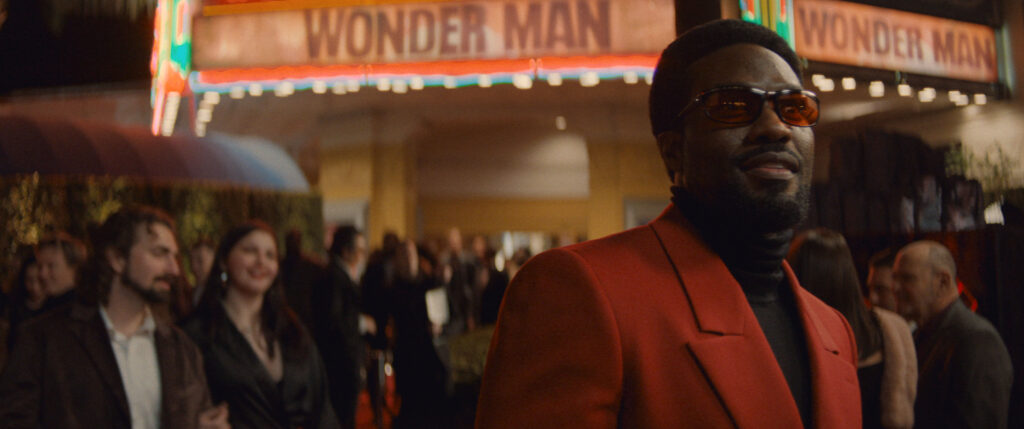
    Simon Williams/Wonder Man (Yahya Adbul-Mateen II) in Marvel Television’s WONDER MAN, exclusively on Disney+. Photo courtesy of Marvel Television. © 2025 MARVEL.

    Tonally, Wonder Man balances comedy with a sense of isolation. Tragicomical character studies often use humor to mask a character’s deep-seated loneliness and Wonder Man is no different here, other than that it is led by Yahya Abdul-Matteen II, whose filmography reveals a generational talent.

    Despite the series’ shortcomings in terms of its utility as another entry in the MCU’s shared narrative tapestry (it’s only in its last 15 minutes that Wonder Man feels like it belongs in the MCU), the series is undoubtedly one of Marvel Television’s best and, despite some other heavy competition, is carried by the studio’s strongest cast. At the end of the day, the only question that remains is why is was developed as a superhero study at all.
  • The Ultimate List of What to Watch Before ‘Wonder Man’

    The Ultimate List of What to Watch Before ‘Wonder Man’

    Marvel’s 2026 slate kicks off on January 27th with the eight-episode streaming series Wonder Man. Revealed to be in development in the summer of 2022, Wonder Man was shrouded so heavily in mystery that some fans questioned its existence. Developed for Disney Plus by Shang Chi and the Legend of the Ten Rings and Spider-Man: Brand New Day director Destin Daniel Cretton and Hawkeye and Brooklyn Nine-Nine writer Andrew Guest, the series will see Yaha Abdul-Mateen II step into the role of Simon Williams, a longtime Avenger in the pages of Marvel Comics whose jump to the MCU took a little longer than expected after Avengers and Avengers: Age of Ultron director Joss Whedon divulged he could never “figure out what he was for.”

    You know it’s a two-hander between two amazing characters. There’s this odd couple of Simon Williams and Trevor Slattery and you get a little bit of glimpse of that in the trailer. I don’t wanna go too much into story details, it’s very fun to see people speculating about what the plot will be.

    With Whedon long-since out of the loop, the Marvel Parliament determined that the best way to use Simon Williams was to satirize Hollywood. Marvel Television top dog Brad Winderbaum has said that the Marvel Spotlight series “is a love letter to Hollywood in a lot of ways,” including providing the audience with “a peek behind the curtain of the entertainment industry.”

    Simon Williams/Wonder Man (Yahya Adbul-Mateen II) in Marvel Television’s WONDER MAN, exclusively on Disney+. Photo courtesy of Marvel Television. © 2025 MARVEL.

    As the viral and meta marketing for the project has revealed, the series will follow Williams as he attempts to land the role of a lifetime as the lead in a remake of the classic, in-universe superhero film Wonder Man. However, with super-powered folks not allowed to work in the industry, Simon will be forced to try to hide his powers from not only those in Hollywood but also the Department of Damage Control, the organization first seen on screen in Spider-Man: Homecoming and the de facto villains of the series


    That is part of the fun of it. If you’re a fan of West Coast Avengers and know a little bit about Simon Williams you’re going to be… I mean, I hope if you’re anything like me, you’re going to be very excited to see how much homage to the source material there is.

    -Brad Winderbaum
    (L-R): Simon Williams/Wonder Man (Yahya Adbul-Mateen II) and Trevor Slattery (Sir Ben Kingsley) in Marvel Television’s WONDER MAN, exclusively on Disney+. Photo Courtesy of Marvel Television. © 2025 MARVEL.

    Unlike Ironheart, which followed up on Riri Williams after her MCU debut in Black Panther: Wakanda Forever, Wonder Man marks the first MCU appearance of the character but that doesn’t mean there’s not a little homework to do before checking out the Marvel Spotlight series. And so we bring you the Ultimate List of What to Watch Before Wonder Man!

    Iron Man 3 (2013)

    🍅 79%

    Though Simon Williams is making his MCU debut in Wonder Man, the other half of the show’s odd couple, Trevor Slattery, has had plenty of screentime over the last decade and change.

    When we look back at the Infinity Saga, few moments caused quite the seismic divide in the fandom as the “Mandarin Twist” in Shane Black’s Iron Man 3. At the center of that controversy? A washed-up, drug-addled British actor named Trevor Slattery. To understand Slattery’s role, you have to separate the marketing from the movie, because that was the genius—and for some, the betrayal—of the character.

    It kind of has this trilogy feeling. After ‘Wonder Man’ Season 1 you can map out…

    -Brad Winderbaum

    For the first half of the film, Slattery (played to perfection by Sir Ben Kingsley) was presented as The Mandarin. He was the ultimate boogeyman, a classic warlord broadcasting lessons of terror to the United States. Then came the scene in the Miami stronghold. Tony infiltrates the headquarters, expecting a final showdown with a mastermind. Instead, he finds Slattery fresh out of the bathroom, popping open a beer, and rambling about his drug supply in a thick Liverpudlian accent.

    Slattery wasn’t a warlord. He was a struggling stage actor with a substance abuse problem and a history of failed pilots. Aldrich Killian, the film’s real villain, hired Slattery to be the face of his Extremis experiments. Killian needed a terrorist narrative to cover up the volatile explosions caused by his unstable super-soldiers.

    Despite the hate, Slattery’s role was crucial for Tony Stark’s character arc. It forced Tony to stop chasing ghosts and face the reality that his demons were of his own making, not some foreign mystic.

    All Hail the King (2014)

    If Iron Man 3 was the movie that divided the fanbase, All Hail the King was the olive branch Kevin Feige and crew extended to bring us all back together. Released with Thor: The Dark World‘s home media, this 14-minute short film is arguably one of the most important pieces of canon in the Infinity Saga, fundamentally retconning the MCU to make room for the real Mandarin.

    We pick up with Trevor Slattery living his absolute best life inside Seagate Prison. He’s not being treated like a terrorist; he’s being treated like a celebrity. He has his own “butler,” a fan club, and he’s still completely oblivious to the gravity of the crimes in which he was complicit.

    The narrative frame is a documentary being filmed by a journalist named Jackson Norriss, played by Scoot McNairy. Norriss is digging into Trevor’s past, looking at his failed pilots and his childhood. Trevor thinks this is just another puff piece to stroke his ego. He’s rambling about his acting method, completely unaware that the vibe in the room is shifting. Norriss isn’t there to celebrate Trevor; he’s there to bury him. In the final act, Norriss drops the act. He pulls a gun, kills the guards, and reveals his true allegiance. He isn’t a journalist. He is a member of the Ten Rings.

    The Ten Rings are furious that a drug-addled British actor made a mockery of their leader’s name. Norriss isn’t there to kill Trevor in prison. He’s breaking him out to take him to the boss. As Norriss puts it, the boss “wants his name back.”

    By revealing that Killian merely co-opted the iconography of a real ancient warlord, they satisfied the comic purists without invalidating the events of Iron Man 3. It was a brilliant bit of retroactive continuity that kept Trevor Slattery on the board as a comedic pawn while setting the stage for Wenwu’s eventual debut in Shang-Chi and the Legend of the Ten Rings.

    Spider-Man: Homecoming (2017)

    🍅 92%

    While everyone was busy watching Tom Holland stick the landing as the friendly neighborhood Spider-Man in Homecoming, what appears to have been a massive piece of world-building was also taking place with the introduction of the Department of Damage Control (DODC).

    A construction company that cleans up after superhero battles, in the comics, Homecoming rebranded them as a federal executive department that’s part of a joint venture between the U.S. Government and Stark Industries. After the Battle of New York in 2012, the city originally hired Michael Keaton‘s Adrian Toomes for the cleanup. But then, in swooped Anne Marie Hoag and the DODC, flashing federal badges and ultimately forcing Toomes and his crew into the choice to become weapons dealers.

    It’s a brilliant narrative flip for the MCU where organizations like S.H.I.E.L.D. or the Avengers are meant to be the “good guys.” Here, the DODC represents the cold, corporate side of heroism. They locked down the alien tech not just to keep people safe, but to hoard it.

    The DODC’s debut in Homecoming set a dark precedent. They started as a cleanup crew, but as seen No Way Home and Ms. Marvel, they’ve evolved into a much more aggressive, enforcement-heavy agency.

    Shang-Chi and the Legend of the Ten Rings (2022)

    🍅 92%

    After being dragged out of Seagate Prison by the Ten Rings, presumably to face a gruesome execution at the hands of the real Mandarin, Slattery disappeared from the MCU for nearly a decade. Rather than killing him, Wenwu kept Trevor as a sort of “court jester” to perform Shakespeare recitals whenever the warlord needed entertainment. In a hilarious twist, the terrifying terrorist from Iron Man 3 saved his own skin solely by doing acting improvisations of Macbeth and Planet of the Apes.

    He manages to escape from the real Mandarin and from Shang-Chi land, and he flies back into Hollywood to give his career a second chance and to prove to his dear mother Dorothy, who always had faith in him and his talents, that he was truly the actor his mom always hoped he would be and that he always aspired to be.

    -Ben Kingsley on Trevor Slattery’s role in Wonder Man

    Slattery’s inclusion here isn’t just comic relief; it’s narrative utility. He is the only person who can communicate with Morris, the mythological Dijiang, who knows the safe path through the dangerous bamboo forest to reach Ta Lo. During the final battle against the Soul Eaters, Trevor pulls off his greatest performance yet: playing dead. He survives the chaos by pretending to be a corpse, a meta-commentary on his cowardly nature that somehow ends up saving him.

    Trevor sees in Simon a friend, a colleague, but he also sees Simon as someone he can absolutely exploit for his own ends,” Kingsley teases. “It’s quite a classic, basic human condition story. You are associated with somebody and you have an affinity with that person, but at the same time, you know that you’re going to have to exploit that person to get to where you need to be.

    -Ben Kingsley

    Director Destin Daniel Cretton pulled off a magic trick. He took a character that half the fanbase hated because of the “Mandarin Twist” and made him undeniably lovable. By pairing him with Morris and stripping away the drug-addled malice of Iron Man 3, Slattery became a sympathetic, wholesome uncle figure, setting him up for his role in Wonder Man, which Cretton co-created.

    Spider-Man: No Way Home (2021)

    🍅 93%

    Though Spider-Man: Homecoming introduced the DODC as a bureaucratic nuisance, Spider-Man: No Way Home took the gloves off. In No Way Home, the DODC stopped being the janitors and started being the cops. The moment Mysterio outed Peter Parker’s identity, the DODC was on the scene—and not to help. The DODC, led by Arian Moayed’s Agent Cleary, took lead on the investigation, seized Stark Industries’ assets, putting Happy Hogan in legal limbo, and dragged Peter, MJ, Ned, and May into interrogation rooms.

    Beginning with No Way Home, the DODC has absorbed massive legal authority regarding “enhanced individuals.” They aren’t just managing the tech anymore; they are managing the people connected to it. The DODC is no longer the “Stark Joint Venture” trying to do good. With Tony gone, the checks and balances seem to have evaporated. They are now a government entity with access to the most dangerous tech on Earth and a mandate to police superheroes without oversight. If you are looking for the bad guys in the post-Endgame world, look no further than the windbreaker-wearing DODC.

    She-Hulk: Attorney at Law (2022)

    🍅 80%

    While She-Hulk was lighter in tone, the implications for the DODC were arguably the most dystopian yet. They aren’t just investigating “enhanced” individuals anymore; they are now the primary jailers of the MCU.

    She-Hulk gave us our best look yet at the DODC Supermax Prison. This facility, located in the middle of nowhere, is where they were holding Emil Blonsky. This is a massive shift in power dynamics. A long way from cleaning up rubble, the DODC now manages long-term incarceration for high-threat assets.

    Taking it a step further, She-Hulk showed the weaponization of bureaucracy via the inhibitor chip. When Jennifer Walters “hulked out” at the Gala, thanks to Intelligencia’s provocation, the DODC was on the scene instantly to detain her. But they didn’t just lock her up; they forced a plea deal that required her to wear an inhibitor device preventing her transformation.

    This is a game-changer for the MCU:
    the DODC now possesses the legal and technical ability to strip a superhero of their identity. They aren’t just arresting villains; they are regulating heroes. They turned She-Hulk into a monitored civilian with the stroke of a pen.

    Ms. Marvel (2022)

    🍅 98%

    No Way Home and She-Hulk acted as a bridge for the DODC’s portrayal in Ms. Marvel. The aggressive tactics we saw Cleary use against a teenager (Peter) were dialed up to eleven when they went after Kamala Khan. In Ms. Marvel, the DODC officially crossed the line from antagonists to straight-up villains and the Jersey City incident wasn’t just an investigation; it was a witch hunt.

    The DODC’s good cop/bad cop bit in Ms. Marvel gave a closer look at the agency’s internal friction. While Agent P. Cleary, represented the bureaucratic, “by the book” side of the agency, Agent Sadie Deever represented the radicalized arm of the DODC—agents who view enhanced individuals not as assets to be managed, but as threats to be neutralized. This dynamic is crucial because it shows the DODC isn’t a monolith; it’s a volatile organization struggling to control its own power.

    The most disturbing aspect of the DODC’s role in this series was the targeted harassment of the Muslim community. The DODC is now effectively the MCU’s version of the Sentinel program’s early days—a government body driven by fear and prejudice against the “other” and it’s clear that will be further explored not only in Wonder Man but also in Spider-Man: Brand New Day.

    About Marvel Television’s Wonder Man:

    The eight-episode series is created by Destin Daniel Cretton (Shang-Chi and the Legend of the Ten Rings, Spider-Man: Brand New Day) and Andrew Guest (Community, Hawkeye) and stars Emmy Award winner Yahya Abdul-Mateen II as Simon Williams and Academy Award winner Ben Kingsley, who reprises his role as Trevor Slattery following appearances in Iron Man 3, Shang-Chi and the Legend of the Ten Rings, and All Hail the King.

    Aspiring Hollywood actor Simon Williams is struggling to get his career off the ground. During a chance meeting with Trevor Slattery, an actor whose biggest roles may be well behind him, Simon learns legendary director Von Kovak is remaking the superhero film “Wonder Man.”
    These two actors at opposite ends of their careers doggedly pursue life-changing roles in this film as audiences get a peek behind the curtain of the entertainment industry.

    -Official synopsis for Wonder Man

    All eight episodes will stream exclusively on Disney+ at 6pm PT January 27.

  • In the Case of the People vs. ‘Thunderbolts*’, the Defense Calls ‘Lilo & Stitch’

    In the Case of the People vs. ‘Thunderbolts*’, the Defense Calls ‘Lilo & Stitch’

    Of Disney’s three major Summer theatrical releases, only one truly took charge at the box office. Even with a pair of critically acclaimed Marvel Studios projects opening on either side of it, it was Walt Disney Studios’ live-action Lilo & Stitch that took in the cash. The film’s $423.5M domestic box office total was nearly equal to the combined cash brought in by Thunderbolts* and The Fantastic Four: First Steps, despite each of those films being expected to factor heavily into the final phase of Marvel’s Multiverse Saga. But that’s the problem…or at least it’s one problem that is frequently cited on social media as folks explain why they have stopped watching Marvel Studios movies.

    Setting aside the truth (people haven’t stopped watching them, though they’ve certainly quit watching them in theaters but that’s a different article for a different day), fans certainly didn’t NOT go to see The Fantastic Four: First Steps because it was too connected to prior projects and required too much homework. Kevin Feige made it clear ahead of the film’s release that “it is a no-homework-required movie. It literally is not connected to anything we’ve made before.” And even if that’s why they thought they didn’t go see it, it still made 1.3 times the amount of money at the box office that Thunderbolts*, a movie that did have connections to more previous MCU projects than any non-Avengers film before it. But did it really require a first-time audience member to watch each of the associated projects in order to enjoy or understand it?

    The answer is a definitive no; however, a prevailing complaint about Thunderbolts* was that there were just too many characters and too many back stories to follow in order for a Marvel newbie–or oldie–to keep up. Unfortunately, that’s just nonsense and, ironically, Disney’s biggest box office success of the Summer provides a wonderful example of just how silly the Thunderbolts* narrative (that took over social media and message boards and became internet “fact”) truly is.

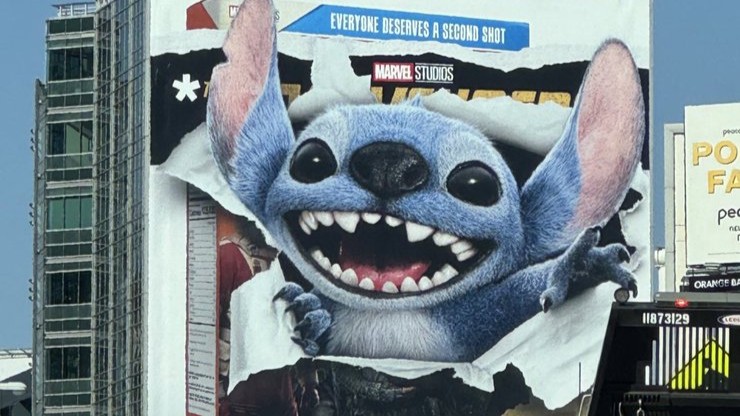
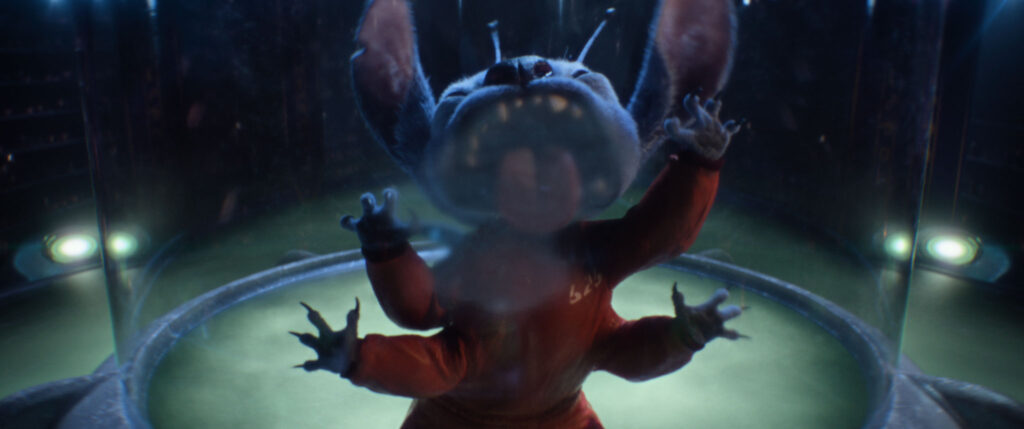
    Stitch in Disney’s live-action LILO & STITCH. Photo courtesy of Disney. © 2025 Disney Enterprises Inc. All Rights Reserved.

    You’re not bad. You just do bad things sometimes.

    Lilo & Stitch may be a remake but before we begin, let’s reject the preposterous notion that “everyone” had seen the original or knew the story ahead of time, or, even if you refuse to do that, remember that the original animated film was also wildly successful when it was released in theaters in 2002.

    And then realize that whichever of the two films you want to think about, audiences knew absolutely nothing about any of the characters and relied on exposition to learn what they needed to know. Stitch is an experiment gone wrong, but who are Jumba and Pleakley? There was no Jumba and Agent Pleakley  D+ streaming series introduing the devious evil genius and the Earth expert, yet audiences, including young children, are completely capable of deducing what they need to know about them from what they learn in the film. Wondering about what happened to Lilo’s parents? You didn’t miss the prequel where one of Jumba’s prior experiments came to Earth and assassinated them. Wait…Cobra Bubbles is CIA or MIB? Nope, there was no Cobra Bubbles film or series. Audiences didn’t know the characters before they watched the film and things turned out wonderfully.

    In the case of Thunderbolts*, a convincing argument could be made that having seen Black Widow would have added to the experience; however, it’s debatable if even that was necessary. Yelena is sad because her sister died. Do you need to know her sister was Natasha to understand that she’s sad? Alexi is unhappy. It’s obvious he and Yelena are family. Nothing he did in Black Widow matters in Thunderbolts*. Didn’t know he was a super soldier? Give him a minute and he’ll tell you.

    Everything you needed to know about John Walker (dime store Captain America), Ghost a S.H.I.E.L.D. reject), Taskmaster (the dead one who destroyed half of Budapest) and even Val…all in the exposition provided mostly by Walker in the first act of the film. Bucky, obviously, provides a problem IF you need to understand every reference or need to know who the Winter Soldier is to enjoy the film. If you missed the exposition during the fight in Val’s O.X.E. stronghold where you SHOULD have learned everything you needed to know, give Alexi a minute and he’ll tell you what you need to know. They’re a bunch of people who have done bad things sometimes, but aren’t bad.

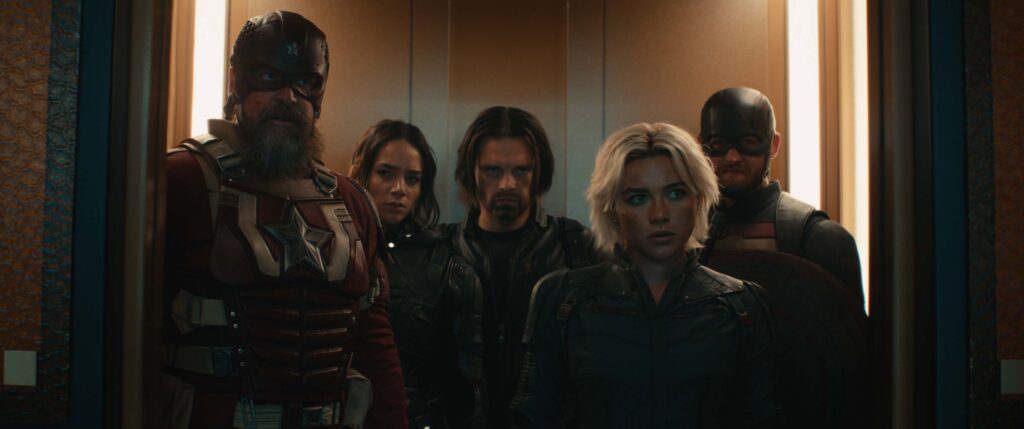
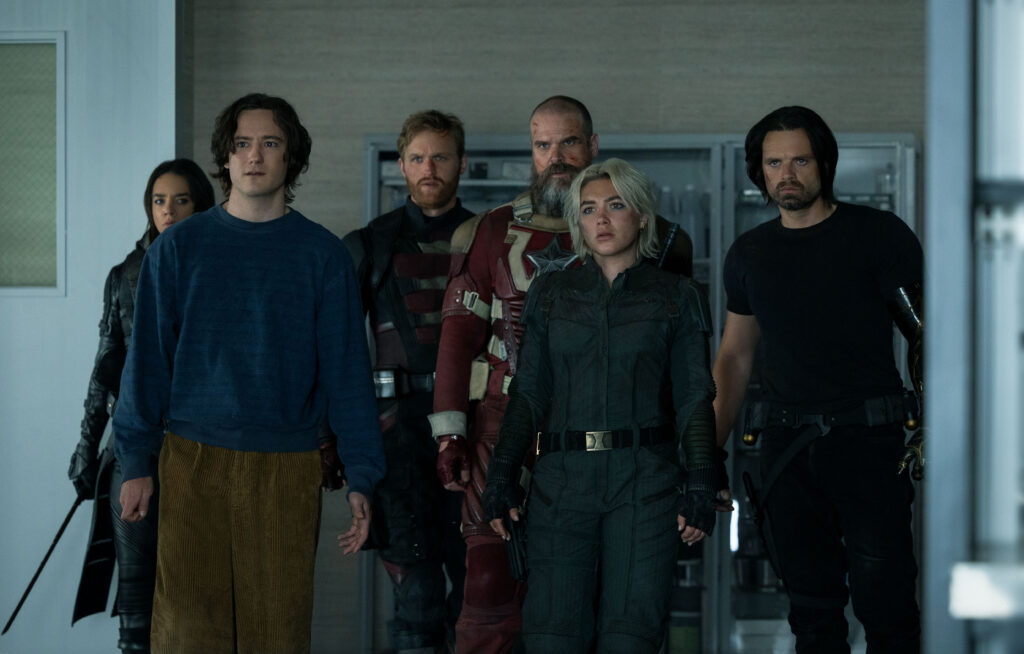
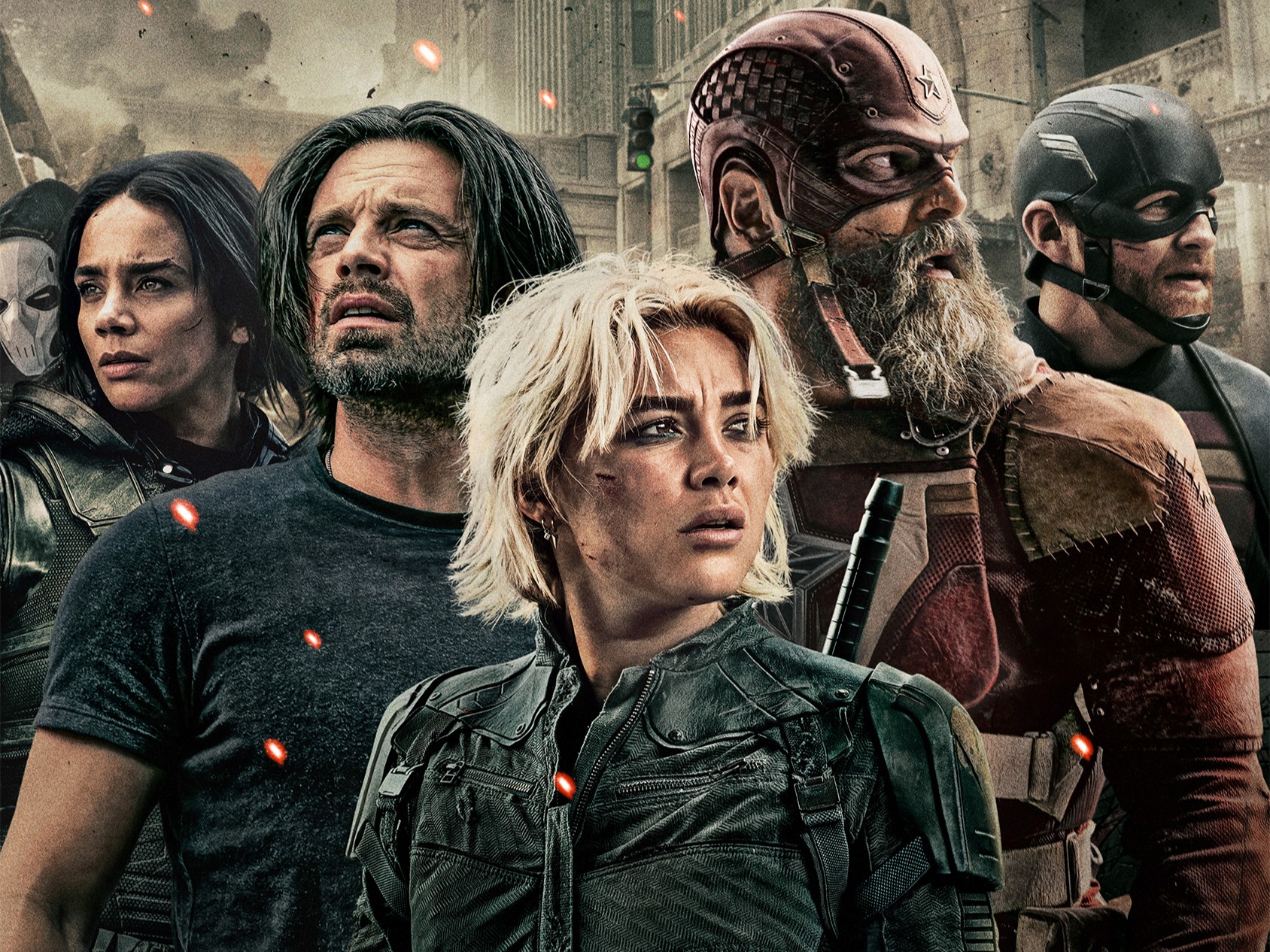
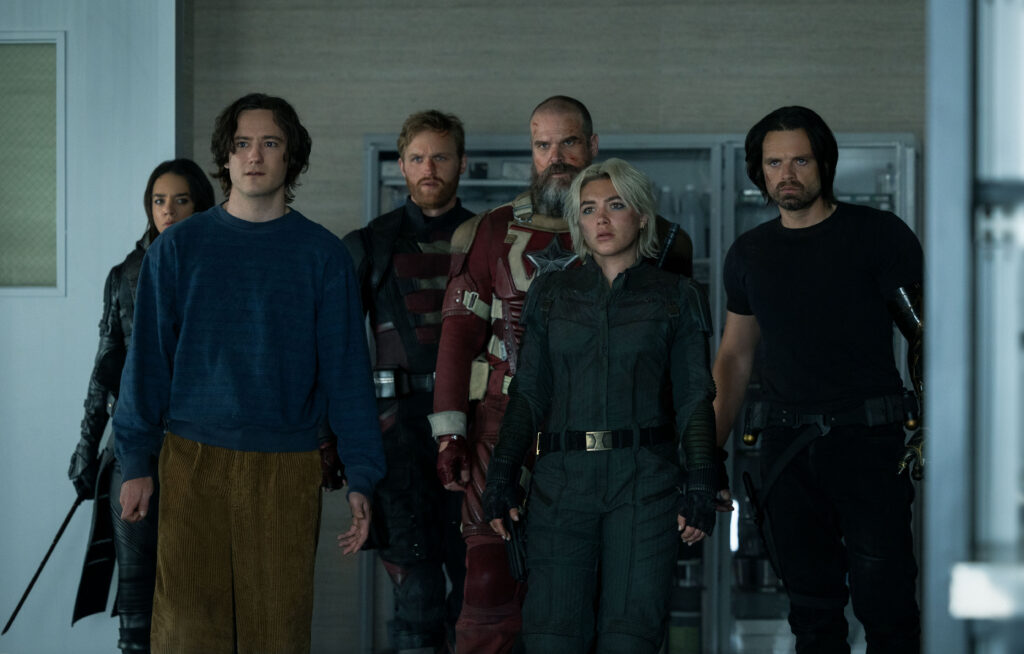
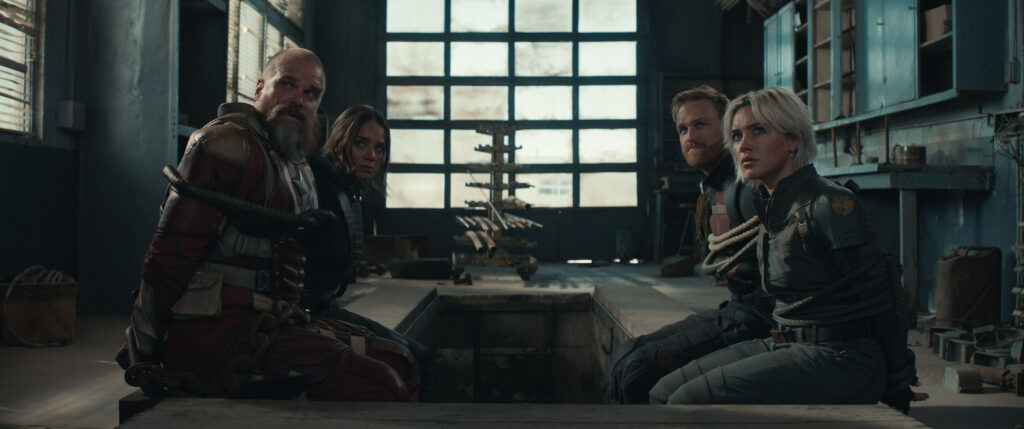
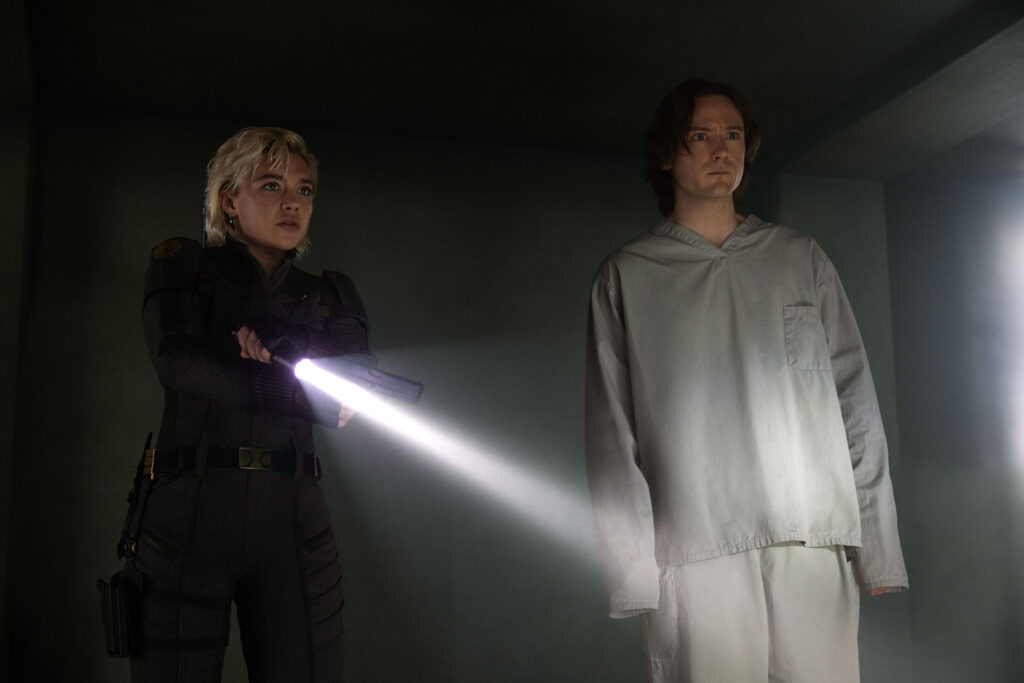
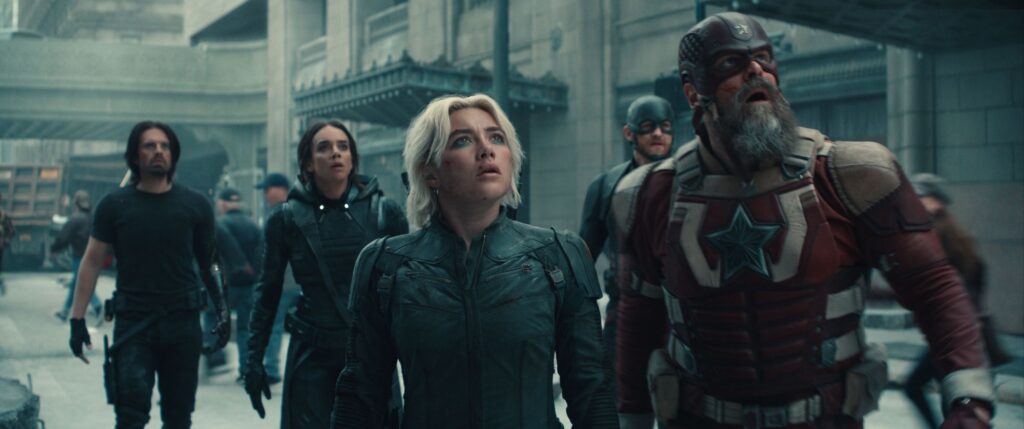
    (L-R): Alexei Shostakov/Red Guardian (David Harbour), Ghost (Hannah John-Kamen), Bucky Barnes (Sebastian Stan), Yelena Belova (Florence Pugh), and John Walker (Wyatt Russell) in Marvel Studios’ THUNDERBOLTS*. Photo courtesy of Marvel Studios. © 2024 MARVEL.

    Ohana means family. Family means nobody gets left behind or forgotten.

    Like Stitch, Bob is an experiment gone wrong and, like Stitch, his story requires and is given a fair bit of exposition. And in a wonderfully serendipitous moment, like Stitch, it’s Bob’s ohana, which he finds during the course of the film, that allows him to finally put the monster away and saves him from a terrible fate.

    The similarities between Lilo & Stitch and Thunderbolts* run deeper than what’s been discussed here but they are both incredibly enjoyable films and if you can enjoy one, you can also enjoy the other…even if you don’t know anything about any of the characters before you sit down to watch.

  • ‘Thunderbolts*’: Explaining the Film’s Two Credit Cookies

    ‘Thunderbolts*’: Explaining the Film’s Two Credit Cookies

    Marvel Studios took a chance with Thunderbolts* but all signs point toward the film, directed by Jake Schreier, opening to a solid weekend at the box office following very positive reviews by critics. With the surviving members of the eclectic group of anti-heroes already confirmed to appear in Avengers: Doomsday, it looks like the Thunderbolts are here to stay…at least in the short term. But in what capacity?

    As explained here, following the team’s battle against The Void–the omnipotent dark shadow of Lewis Pullman‘s Sentry–Julia Louis-Dreyfus Valentina Allegra de Fontaine, who is facing impeachment charges, saves face by introducing the group as The New Avengers…and Bob. With that big reveal, the 2-hour and 6-minute run time of Thunderbolts* draws to a close but, as audiences have come to expect from Marvel Studios’ projects, there’s more in store for those who stick around for the credits.

    Mid-Credits

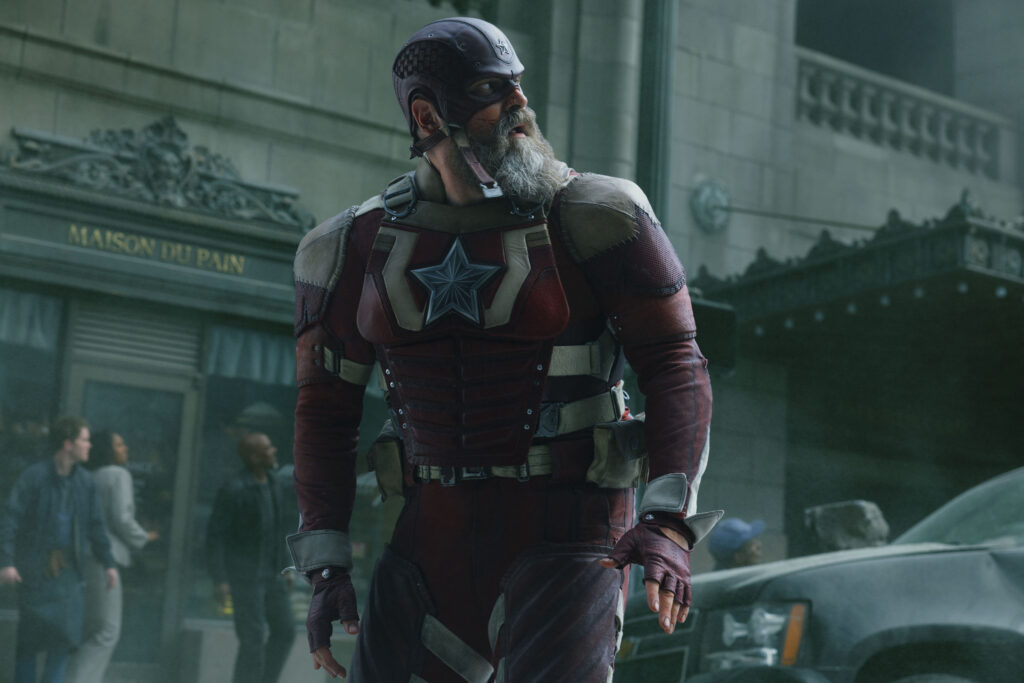
    Alexei Shostakov/Red Guardian (David Harbour) in Marvel Studios’ THUNDERBOLTS*. Photo by Chuck Zlotnick. © 2025 MARVEL.

    The film’s Mid-Credits scene features David Harbour‘s bombastic Alexi Shostakov and makes good on the Wheaties box premise of one of the project’s promotional posters. While out grocery shopping, a cleaned-up Alexi proudly shows off a box of The Breakfast of Champions, which features the New Avengers on the front. Though it’s mostly there to add another laugh when Alexi fails to convince a woman to purchase a box, the scene implies that the cast of castoffs have indeed become the public-facing heroes Yelena aspired to be, completing their redemption arcs.

    Post-Credit

    Set 14 months after the conclusion of the film, the second scene–which runs a Marvel record 2 minutes and 54 seconds–finds the team, complete with fancy new uniforms–regrouping at their new HQ, The Watchtower. Though it’s not clearly stated, the New Avengers seem to have an assistive AI helping them out as that may well be an homage to C.L.O.C. or Centrally Located Organic Computer, who helped run The Watchtower in the pages of Marvel Comics. While the team’s discussion about Sam Wilson filing a lawsuit to prevent them from calling themselves The Avengers leads Shostakov to reveal his “New Avengerz” outfit, Yelena’s conversation discloses that they are aware of a “space crisis.” As they process that, the computer warns them of an extra-dimensional ship entering Earth’s atmosphere. That ship? The Excelsior, belonging to The Fantastic Four!

    Ghost (Hannah John-Kamen), Bob (Lewis Pullman), John Walker (Wyatt Russell), Alexei Shostakov/Red Guardian (David Harbour), Yelena Belova (Florence Pugh) and Bucky Barnes (Sebastian Stan)in Marvel Studios’ THUNDERBOLTS*. Photo by Chuck Zlotnick. © 2025 MARVEL.

    While it’s not entirely clear what circumstances bring The First Family from their Earth to Earth-616, trailers for The Fantastic Four: First Steps have shown Reed Richards to be working on the math behind inter-dimensioal travel and with both The New Avengers and Fantastic Four slated to play big roles in Avengers: Doomsday, the scene teases the first meeting between the two.

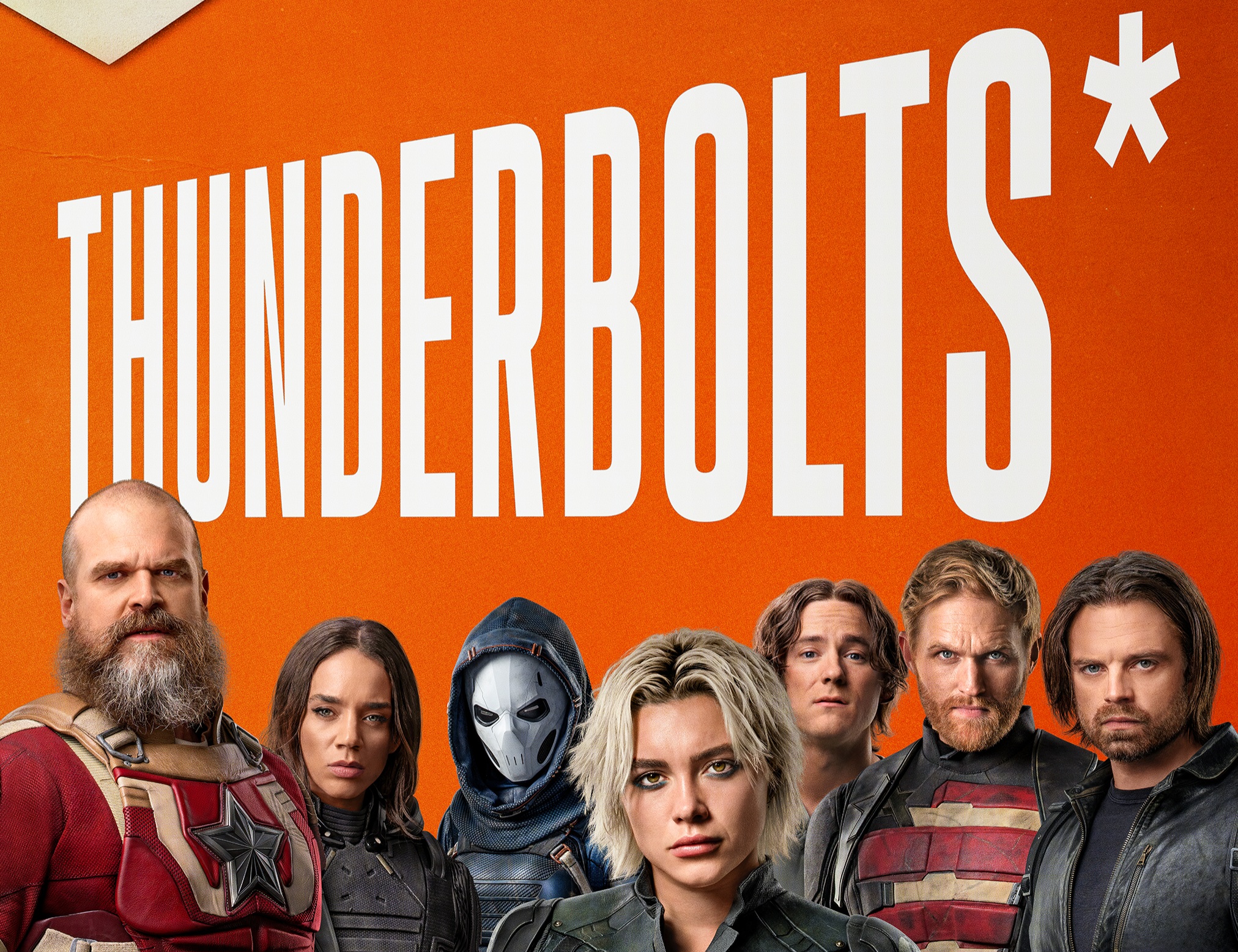
  • Here’s Why ‘Thunderbolts’ Became ‘Thunderbolts*’

    Here’s Why ‘Thunderbolts’ Became ‘Thunderbolts*’

    During Marvel Studios’ CinemaCon presentation in April 2024, a minor change was confirmed to the title of one of the studio’s 2025 films, sparking interest among MCU fans. Without addressing its meaning, Marvel’s Head Honcho, Kevin Feige, revealed that the official title of Thunderbolts now included an asterisk. And the wild speculation about Thunderbolts* began.

    Yes, you’ll notice the asterisk on Thunderbolts. That is the official title of Thunderbolts and we won’t talk more about that until after the movie comes out.

    -Kevin Feige

    As is always the case, speculation ran from absurd to astute, with many deducing a chance in the team’s name as the reason behind the mysterious addition of the symbol.

    Now that the film has finally made its way into theaters, we can finally talk about why the asterisk was added to the title and it is exactly what we thought it was: a name change for the titular team of heroes.

    After discovering that her Project Sentry was not a complete failure and that Lewis Pullman‘s Bob survived the process, Julia Louis-Dreyfus‘ Valentina Allegra de Fontaine plans to reveal Earth’s Mightiest Hero, The Sentry, to the public in a bid to make herself untouchable amidst her impeachment hearing. As the Thunderbolts arrive at the old Avengers Tower, now owned by Val and known as The Watchtower, in hopes of stopping her and helping Bob, Val reveals an all-new, all-different Bob, one who she’s not-so-subtly manipulated and attempts to use to kill the Thunderbolts, riding herself of the people who made up her CIA wetwork network…only Bob realizes he doesn’t have to play by the rules.

    The asterisk tells us there’s so much more to the story.

    -David Harbour

    After saving Bob and all of New York City from The Void, the dark and powerful shadow of The Sentry that took control of Bob, the team turns its attention to Val who leads them directly to the press she had assembled for Sentry and introduces them as The New Avengers, revealing the meaning of the film’s cryptic asterisk.

    With the Multiverse Saga headed toward its conclusion and Sam Wilson assembling his own Avengers, it’s not quite clear what the future holds for Yelena, Bucky, John Walker, Ava and Alexi; however, as promised during the credits of Thunderbolts*, The New Avengers will return with Avengers: Doomsday next up on their docket.

  • Review: ‘Thunderbolts*’

    Review: ‘Thunderbolts*’

    Over the years, Marvel Studios’ approach to storytelling has increasingly been the focus of criticism. The framework within which the studio chooses to spin its narrative, the “Marvel formula,” has come under fire for its predictable plot structure, overreliance on humor, and willingness to sacrifice character-driven stories to advance the MCU’s longform story. As the studio’s Multiverse Saga has moved forward, the type of nuanced performances that allow for true excavation of a character have been forgone in favor of spectacle and it has become increasingly difficult to “spectacle” an audience that grew up with fully realized heroes flying around on screen. That hasn’t stopped Marvel from attempting to outspectacle its latest spectacle and the result has been a saga largely composed of vapid films, void of any emotional resonance. And along comes Thunderbolts*

    Piecemealed together by a series of writers, Thunderbolts* cavorts in insouciance for the Marvel formula, delivering something audiences haven’t seen from the studio in quite some time: a story galvanized and energized by its characters rather than visual effects and nostalgia. Eric Pearson, Joanna Calo and Lee Sung Jin Frankensteined a script that provided director Jake Schreier the opportunity to tell an MCU-set Jekyll and Hyde (that’s an entirely different monster) story, steeped in metaphysics and exploring ontological dependence. A non-empty set depends on its elements and the respective successes of both the Thunderbolts and the Thunderbolts* are entirely dependent on their respective elements.

    Ghost (Hannah John-Kamen), Bob (Lewis Pullman), John Walker (Wyatt Russell), Alexei Shostakov/Red Guardian (David Harbour), Yelena Belova (Florence Pugh) and Bucky Barnes (Sebastian Stan)in Marvel Studios’ THUNDERBOLTS*. Photo by Chuck Zlotnick. © 2025 MARVEL.

    You’re talking about a group of characters that have done a lot of bad things, and maybe are struggling with feeling good about themselves. There’s an element that does speak to mental health, and loneliness, and how some of the darkness that we experience in our lives can’t be necessarily fixed, but can only really be made lighter through connection and finding others

    Director Jake Schreier

    Working solo, the titular team wouldn’t survive the film’s first act and, reading between the lines of some comments recently made by Schreier, it sounds as if the film might have been on track to turn out to be another hollow, one-note action flick (Schreier described it as a small-scale “Die Hard thing”) that wouldn’t have survived a critical bashing before Calo and Sung Jin weaved heart and emotion into Pearson‘s original script. Instead of another potential dud, the reworked script turned into the studio’s most impressive Multiverse Saga film to date, putting character first without sacrificing spectacle, delivering some of the most impressive action sequences the MCU has seen in a decade, while telling a story about human trauma that powerfully reverberates with the audience. Whatever Thunderbolts* originally was, it evolved into one of the studio’s most entertaining and evocative films.

    Making a superhero film featuring a cast of charming, misfit losers meant that Thunderbolts* was inevitably going to be compared to Warner Bros. Suicide Squad films and Marvel’s own Guardians of the Galaxy. Thunderbolts* never feels derivative of those projects, however, because it leans so much harder into darker, more uncomfortable emotions and corners of human nature that are typically not part of superhero fare. For reasons each their own, Yelena Belova, John Walker, Ava Starr and Antonia Dreykov–all of whom find themselves in the employ of Julia Louis-Dreyfus‘ Valentina Allegra de Fontaine–have lived large portions of their lives as disposable tools to be used at the whims of others. Bucky Barnes and Alexi Shostakov–neither of whom are working for Julia Louis-Dreyfus‘ Valentina Allegra de Fontaine–have suffered the same fate. In one of the film’s more powerful moments, Bucky, who should know better than anyone given his past as The Winter Soldier, finds himself standing in the same shoes as those who were his masters in the past, seeking only to use the others as tools for his own ends without any value for consideration for them as human beings. Indeed his desire to succeed and inability to see them as anything other than means to an end prevents him from acknowledging their warnings about the film’s true threat. While parts of the scene are played off humurosly, it’s deeply tied to the film’s exploration of how emptiness can consume and how power can corrupt.

    L-R): Alexei Shostakov/Red Guardian (David Harbour), Ghost (Hannah John-Kamen), John Walker (Wyatt Russell) and Yelena Belova (Florence Pugh) in Marvel Studios’ THUNDERBOLTS*. Photo courtesy of Marvel Studios. © 2025 MARVEL.

    And we all have Paul Jenkins to thank for that. At the center of Thunderbolts* is Lewis Pullman‘s Bob, a tortured meth addict who volunteered to be a test subject for a program he’s told will help him and humanity reach new heights: Project Sentry. Though the studio kinda-sorta tried to hide it, Bob is Robert Reynolds, aka The Sentry, a Marvel Comics character created by Paul Jenkins. Jenkins always intended for Reynolds to be a study in mental health and while the MCU’s iteration of the character is not a beat-for-beat adaptation, he is as Jenkins intended him to be. Pullman‘s quirky, unassuming Bob–the only new character on the film’s main cast–enters the fray in the first act and quickly becomes the centerpiece of a story that subverts what fans have come to expect from the Marvel Cinematic Universe.

    So I knew from the beginning that Sentry was the Void, and this story was about mental health. It was about two sides of him. And in part, it was about the part that he couldn’t accept. The Void is part of him.

    Paul Jenkins
    (L-R) Yelena Belova (Florence Pugh) and Bob (Lewis Pullman) in Marvel Studios’ THUNDERBOLTS*. Photo by Chuck Zlotnick. © 2025 MARVEL.

    Schreier‘s subversion of the Marvel formula comes attached to a story centered around the continued bastardization of a formula foundational to the ongoing MCU narrative: the Super Soldier Serum. As Stanley Tucci‘s Abraham Erskine forewarned, the Super Soldier Serum amplifies everything that already exists inside the subject. Steve Rogers–a good man–became Captain America, the Senintel of Liberty and the Symbol of Truth–while Johann Shmidt became the Red Skull–the aberrant face of the Nazi Third Reich. A bit of dialogue in the second act of Thunderbolts* illumintates just how far the science of the MCU has progressed since then, however, as Bucky Barnes, Alexis Shostakov and John Walker compare and contrast their varieties of the serum, all while the most volatile and unethical version of the serum has created the most imperfect Super Soldier yet in the Sentry. By injecting the latest and greatest version of the serum into someone broken and hollow, Valentina Allegra de Fontaine makes good on Erskine’s warning, amplifying the void inside Robert Reynolds to the point where it manifests itself as The Void, an omnipotent shadow version of The Sentry. Over the course of the film, The Void seems to be held at bay by Bob, though physical contact with him drags the characters into memories of their own, dark traumas. However, once he’s finally unleashed in what begins as an Avengers-esque third act, the film takes a welcome detour from the Marvel formula. This Battle of New York, fought inside The Void, is the battle we must all fight from time to time: a battle against our worst self. And none of these characters can make it out without the others.

    It’s no surprise to me, I am my own worst enemy, ’cause every now I then I beat the living shit out of me.

    -Lit

    Fascinatingly, Thunderbolts* instantly becomes the standard for “new Marvel” while paying homage to one of the MCU’s most important legacies. Perhps coincidentally, it also works wonderfully as commentary on the struggles of the Multiverse Saga. The Thunderbolts and Thunderbolts* ride parallel rails. Pullman‘s Bob becomes analogous with Marvel’s Multiverse Saga struggles. Just as Julia Louis-Dreyfus‘ Valentina Allegra de Fontaine carelessly dosed Robert Reynolds, a hollow shell of a man, with an all-new, all-different formula intended to grant him the power of a thousand exploding suns, the studio carelessly assumed the Marvel formula would carry the hollow shells that were Ant-Man and The Wasp: Quantumania and Thor: Love and Thunder to all-new heights. But that did not happen. The MCU was in jeopardy, both in and out of universe…and along came the Thunderbolts and Thunderbolts*.

    Yelena Belova (Florence Pugh) in Marvel Studios’ THUNDERBOLTS*. Photo courtesy of Marvel Studios. © 2025 MARVEL.

    The serum amplifies everything that is inside, so good becomes great; bad becomes worse. This is why you were chosen. Because the strong man who has known power all his life, may lose respect for that power, but a weak man knows the value of strength, and knows… compassion.

    -Doctor Abraham Erskine, Captain America: The First Avenger

    Playing with a stacked deck that nobody saw coming, Thunderbolts* combines fresh visuals (Schreier‘s eye for action and unique shots will have him on every studio’s list), a pair of emotionally powerful performances by Marvel’s brightest star, Florence Pugh, and Pullman, and, yeah, some MCU humor delivered by David Harbour and, surprisingly, Wyatt Russell. If Thunderbolts* is representative of what can be accomplished when the studio is willing to tinker with its formula, these new* heroes will be at the forefront of an intriguing renaissance for Marvel Studios.
    Sources: Comic Frontier, EW

  • What We Learned about ‘Avengers: Doomsday’ from the Cast Reveal

    What We Learned about ‘Avengers: Doomsday’ from the Cast Reveal

    While it was nothing more than a line of empty chairs, Marvel Studios’ Avengers: Doomsday cast reveal left fans with a whole lot of questions about what might be going on in the 2026 flick. We certainly have no idea but there seems to have been a few key cast reveals that might give some clues…

    Wakanda Forever…and Ever

    With the announcements of Letitia Wright, Winston Duke and, most surprisingly, Tenoch Huerta Mejia, it became clear that, once again, Wakanda will play a major role in an Avengers film. While Wakanda is likely still recovering from the devastating attack by Namor, the uneasy alliance with the Talokanil King does mean that not one but two Vibranium-powered armies stand ready to fight. However, if you don’t think Namor will stab Shuri in the back the minute it serves his best interests, which may actually align with Doom’s, you don’t know the man’s true nature.

    Without a clear understanding of precisely what’s going to be going on in Avengers: Doomsday, it’s hard to say exactly what might be going on in Wakanda; however, it is worth remembering that Julia Louis-Dreyfus‘ Val made her ambitions to take over the country clear in Black Panther: Wakanda Forever and she now has her own group of Avengers Thunderbolts* to help her reach her goals. Other intriguing options for the location exist as well, including–but certainly not limited to–a loose adaptation of Doomwar that would see Robert Downey Jr.’s villain on Earth-616 and after the precious metal and the delicious opportunity to see Ian McKellen‘s Master of Magnetism turned loose over the Vibranium Mounds of Wakanda. While Vibranbium is not magnetic in the comics, that has not been the case in the MCU.

    The Thunderbolts Are Here to Stay…At Least Some of Them

    (L-R) Bucky Barnes (Sebastian Stan), Ghost (Hannah John-Kamen), Yelena Belova (Florence Pugh), John Walker (Wyatt Russell), and Red Guardian/Alexei Shostakov (David Harbour) in Marvel Studios’ THUNDERBOLTS*. Photo courtesy of Marvel Studios. ?? 2024 MARVEL.

    Thunderbolts* doesn’t hit theaters for another five weeks but it now seems pretty clear that none of the members of the team will face any serious threat…other than poor Tasky. Whether or not Taskmaster makes it out of Thunderbolts* alive hardly seems like a major game-changer for the future of the MCU; to the contrary, however, the inclusion of Lewis Pullman‘s Sentry in Avengers: Doomsday does. Having a powerhouse like Sentry at her disposal puts Val in an enviable place, but are the Thunderbolts at her disposal? Is it Bucky’s team? Are they the U.S. Avengers now? Whatever the case, it seems as though The Watchtower will likely be visited in the film.

    The fallout from Captain America: Brave New World is almost certain to ripple into both Thunderbolts* and Avengers: Doomsday. Without Ross in office, it’s worth wondering just how much pull Val might have in the government now and how she intends to use it. How might Sam react to Bucky leading a team of less-than-good guys? And what about that Adamantium? The inclusion of the Thunderbolts generates more questions than just about anyone on the cast list other than…

    Loki

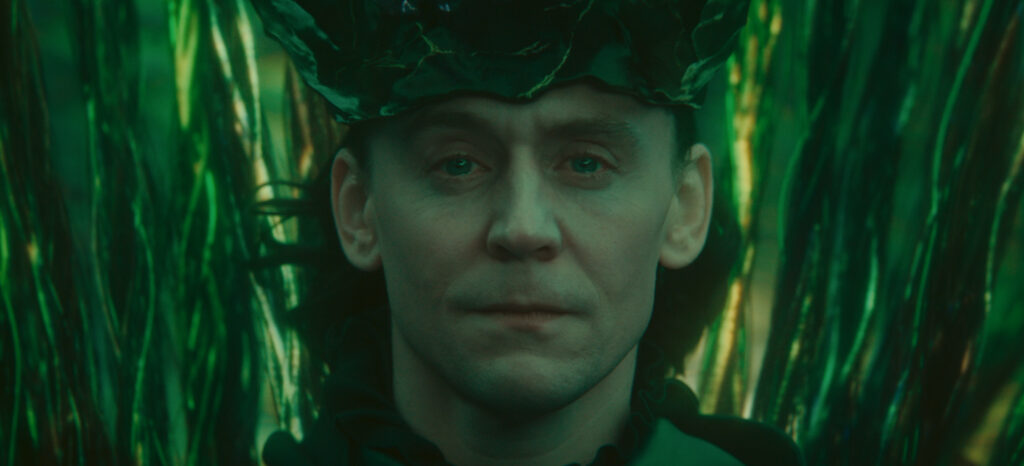
    Tom Hiddleston as Loki in Marvel Studios’ LOKI, Season 2, exclusively on Disney+. Photo courtesy of Marvel Studios. © 2023 MARVEL.

    With the Multiverse likely at stake in Avengers: Doomsday, a trip to the Citadel at the End of Time and a visit to the man who sits on the throne there seemed inevitable. Within hours of the announcement that Tom Hiddleston had joined the cast of the film, theories had already begun to fly that Loki would fill the role played by Molecule Man in the different iterations of Marvel Comics’ Secret Wars events. Whether it’s to steal his powers for himself or use them to destroy the current iteration of the MCU, it seems as though Victor Von Doom will come face to face with Loki, God of Stories.

    Avengers vs. X-Men

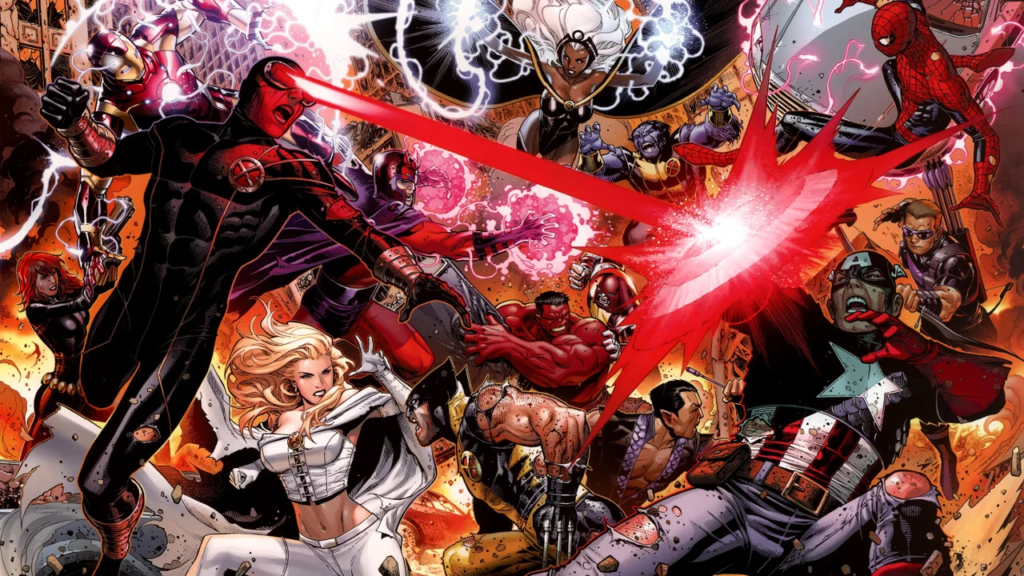
    The inclusion of several of Fox’s original, early 2000s X-Men would seem to set up an incursion event that would see the heroes of Earth-616 take on a unified front of X-Men and members of the Brotherhood from whatever Earth these versions of Charles, Magneto, Cyclops et al are from. It seems relevant that while it’s clear members of the cast were left off the list, Marvel made sure to include Mystique actress Rebecca Romijn to make it clear that it would be all hands on deck when the two worlds collide. Call it Avengers vs. X-Men if you want but it seems like it will riff on Jonathan Hickman‘s Earth-616 vs. Earth-1610 Time Runs Out battle, forcing each world to fight until the end.

    They’re Holding Back

    avengers 5

    Just as interesting as who was announced was, of course, who was not announced. By now, it’s been made clear by the studio that more stars will be joining the cast but that was already obvious. Very new rumors suggest that Tom Holland won’t be joining the film as Spider-Man 4 will be set concurrently with Avengers: Doomsday. Chris Evans is another notable omission, as is Lizzie Olsen, who recently claimed she will not be in either of the next two Avengers films. One name missing from the list that seems like a must (unless the studio has cooked up another project to deal with her character’s situation) is Teyonah Paris. The Multiverse Saga has been a mess but Monica’s presence in another reality is one of the only loose ends from the Saga that actually ties directly into what’s about to go down in Avengers: Doomsday and Avengers: Secret Wars.

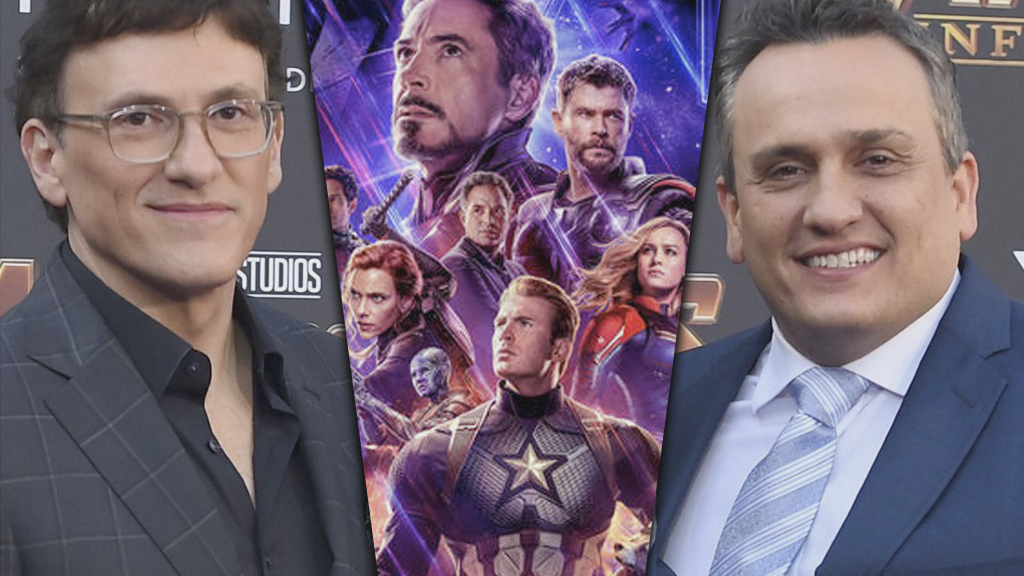
    Beyond that, several characters have entered the MCU since the Russo brothers’ last go-around that seem like the type of characters they’d like to have some fun with. Tatiana Maslany‘s She-Hulk seems like a perfect match for the Russos’ sensibilities and might pair perfectly with Chris Hemsworth‘s Thor. Leaving Charlie Cox on the sidelines would seem like a severely missed opportunity to take advantage of his popularity. Finally, it would stand to reason that if the original X-Men are back, more members of that cast, potentially including Hugh Jackman, will join the fray eventually.

    Piecing It Together

    While the cast reveal didn’t give away any plot points, it did point to some plot-related points: key settings. If one imagines a story structure similar to that of Avengers: Infinity War, it’s possible that Avengers: Doomsday might have 10-12 different settings. From the castings, it’s possible to deduce quite a few of them, though there’s always the chance one of two of these won’t be visited.

    Possible Key Settings

    • Wakanda
    • Talokan
    • The Watchtower in New York City
    • The “Binary” X-Men Universe
    • The Citadel at the End of Time
    • Ta Lo
    • Latveria
    • The Fantastic Four Universe

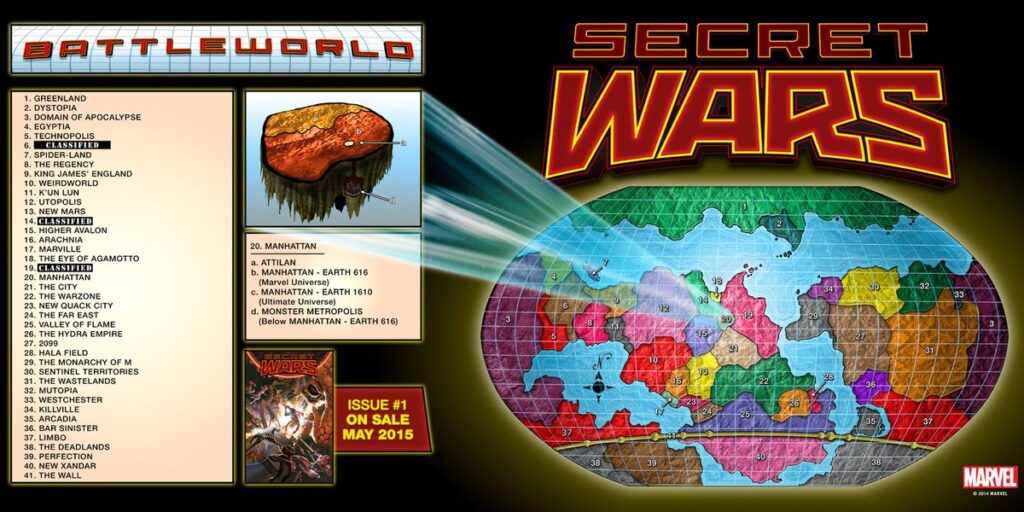
    Does Paul Rudd‘s presence mean another trip to the Quantum Realm? Possibly but we sure hope not, so leave it at 8 potential settings deduced from the casting. Allow for another 2 dozen or so characters to join the film and assume 2-4 more settings, depending on who joins the cast, and you’ve got yourself an event film…and maybe toss in Battleworld at the end to set up the next event film!

  • 3 Under the Radar Possibilities for Sadie Sink’s Mysterious Role in ‘Spider-Man 4’

    3 Under the Radar Possibilities for Sadie Sink’s Mysterious Role in ‘Spider-Man 4’

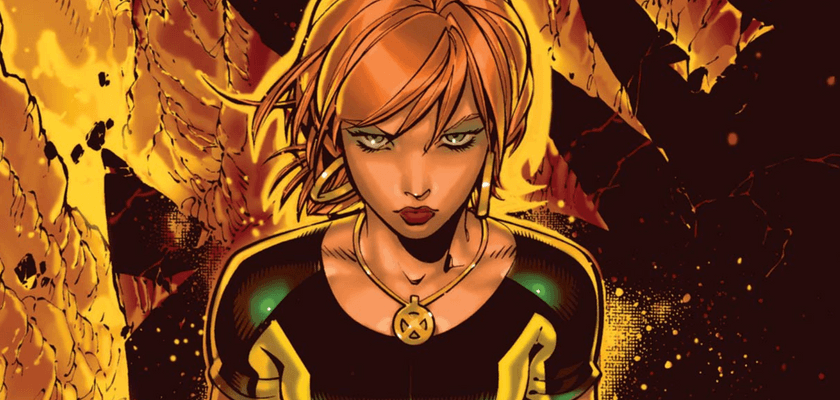
    Stranger Things star Sadie Sink will co-star with MCU vet Tom Holland in Spider-Man 4 in what’s only been described to this point as a large role. Previously rumored to be a front-runner for the role of Omega mutant and original X-Men Jean Grey, the identity of Sink‘s character has generated a lot of conversation online though it remains unknown. With that in mind, we’re jumping into the conversation, adding a few dark horse candidates for the young ginger star’s MCU alter ego.

    Given that the new Spider-Man film will follow Avengers: Doomsday, there’s no telling just yet what the project’s setting might be, so ruling out any one particular character on the grounds of a “why would they be there?” argument is nonsensical at this point. In a collapsing Multiverse, all bets are off.

    Firestar

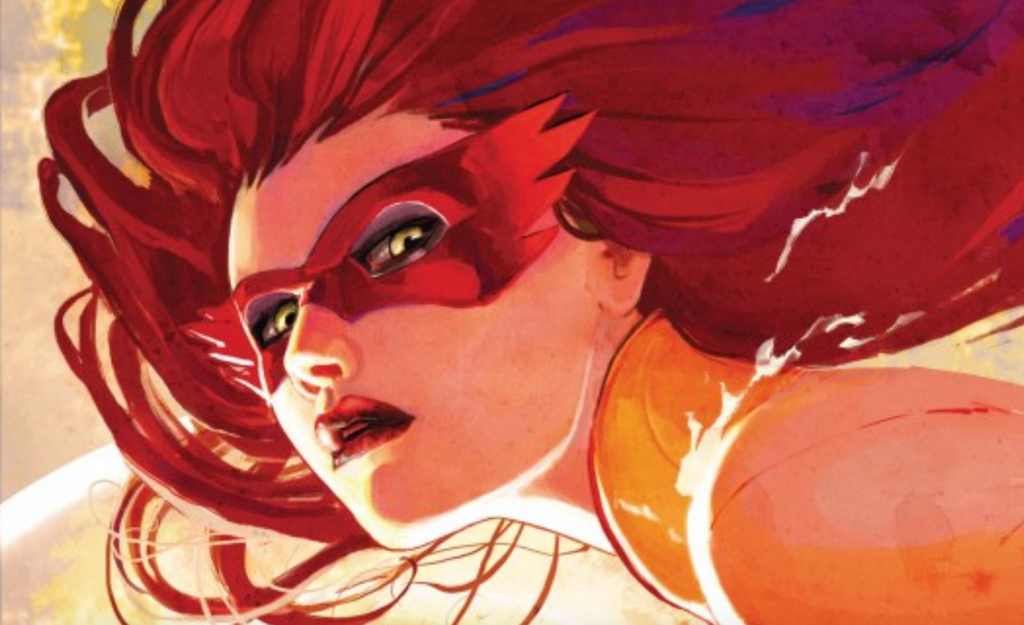
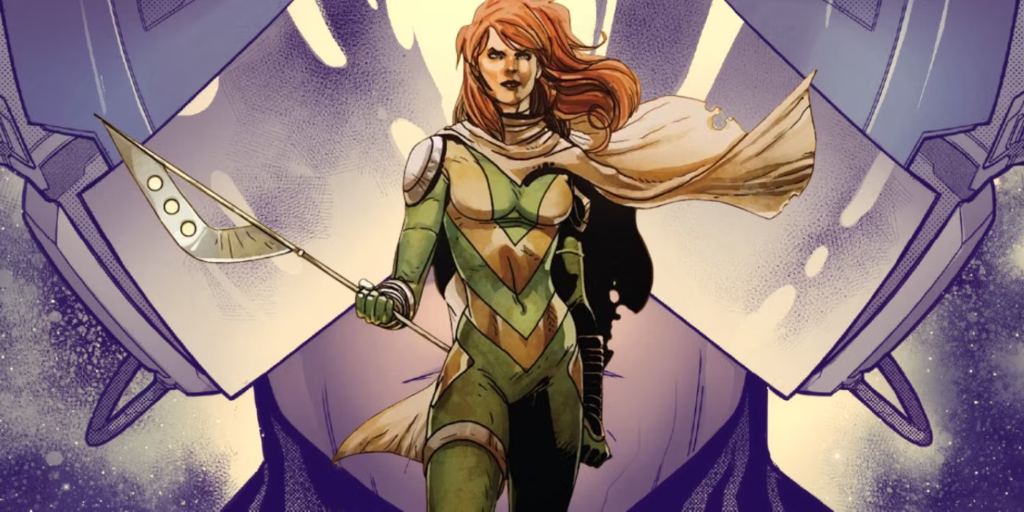
    Insider Jeff “The In” Sneider’s late 2024 report that Sink was leading a pack of actresses for the part of Marvel Studios’ Jean Grey seems to still be carrying a lot of weight in the current conversation about Sink’s Spidey 4 role. On one hand, we’ve heard on more than one occasion that the studio wants to introduce its own variants of the mutant heroes into the MCU before the X-Men film hits in (probably) 2027, so Grey makes a lot of sense for Sink; on the other hand, another red headed mutant has a much richer history with the Web-Slinger.

    When rights issues blocked the use of Johnny Storm in 1981’s for NBC’s animated Spider-Man and His Amazing Friends, Firestar was created to be the fire to Bobby Drake’s ice. In 1985, the character was written into the mainstream Marvel Comics continuity where she has been an X-Man, New Warrior and Avenger. As much as folksight want to write the character off as a random Z-lister, remember a whole generation of kids–the generation that includes director Destin Daniel Cretton–grew up believing Firestar was pretty amazing. And, in some ways, it might be easier for a non-major member of the X-Men to be introduced as native to Earth-616 than for Jean Grey to suddenly appear.

    Hope Summers

    If one host of the Phoenix is possible, why not another? Raised in the future by Cable, Hope Summers, the Mutant Messiah, is as powerful of an Omega-Level mutant as has ever existed and one of the most important X-Men characters created this century.

    Hope was never even close to fully utilized by Fox, only having briefly appeared in Deadpool 2 and Marvel could tap into her role as the mutant savior by throwing her into the mix as the Multiverse (likely) collapses and is then remade. Spidey has long been a mutant ally, so it wouldn’t be out of place for him to work with Hope to solve whatever is going on after the events of Avengers: Doomsday.

    Rachel Summers

    Of all the possibilities here, I actually like this one the best. Rachel Summers stands out among potential choices because of her identity as a Multiversal anomaly: across all timelines, there is only one Rachel Summers. Though not Omega-Level like her mother, Jean Grey, Rachel is a powerful telepath who has also demonstrated the ability to control time and travel to other realities.

    While it may be a bit of a stretch, it’s important to remember that actions have consequences so when Monica Rambeau found herself stuck in whatever reality she ended up in during the third act of The Marvels, a response is due. With the Multiverse in jeopardy, it’s possible an older Rachel Summers, complete with her Hound skills intact, could be sent to explore things in Monica’s home universe where she meets up with Peter Parker.

  • ‘Daredevil: Born Again’ Episode 2 Review: Let the Devil Out

    ‘Daredevil: Born Again’ Episode 2 Review: Let the Devil Out

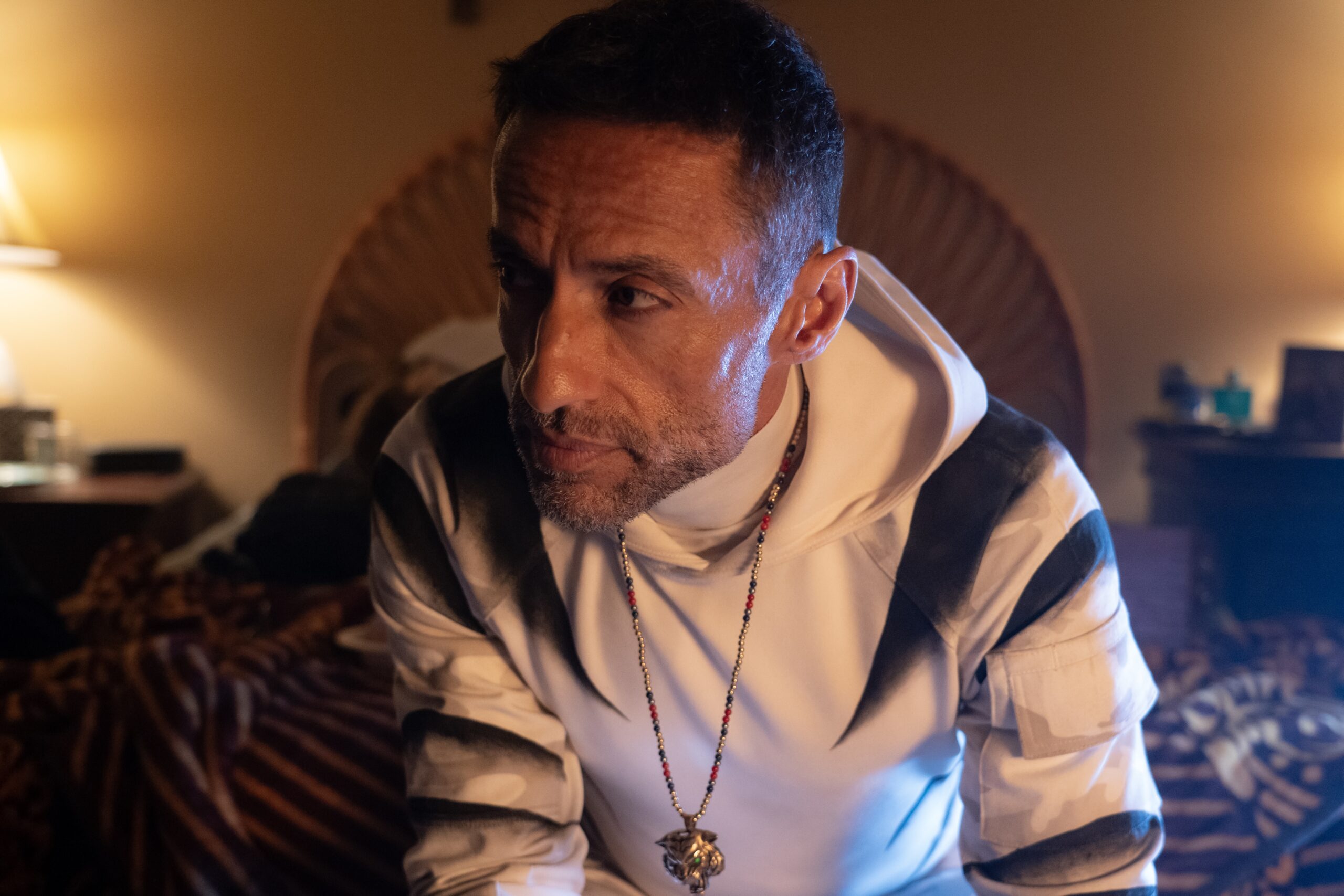
    Marvel Comics’ first Hispanic hero, Hector Ayala, never really got a turn to take the lead. First appearing in the Shang-Chi book, Deadly Hands of Kung Fu, in 1975 and then taking on a semi-regular supporting role in the late 70s/early 80s title, Peter Parker, The Spectacular Spider-Man, Ayala, also known as the White Tiger, had some wild adventures across the Marvel Universe. However, it wasn’t until Brian Michael Bendis‘ early 2000s run on Daredevil that Ayala really took center stage in a popular title. The defendant in Bendis‘ “The Trial of the Century”, Ayala’s vigilante efforts as the White Tiger lead to him being falsely accused of killing a police officer which, interestingly enough, means that the courtroom–and not the streets of New York where he risked his life for his community–became the setting for Ayala’s time in the spotlight. Before he could beat the bunk charges, Ayala was killed by the cops and, ultimately, his legacy and the legacy of the White Tiger grew into something greater than he ever imagined when he first picked up the Jade Tiger amulets that granted him superhuman powers.

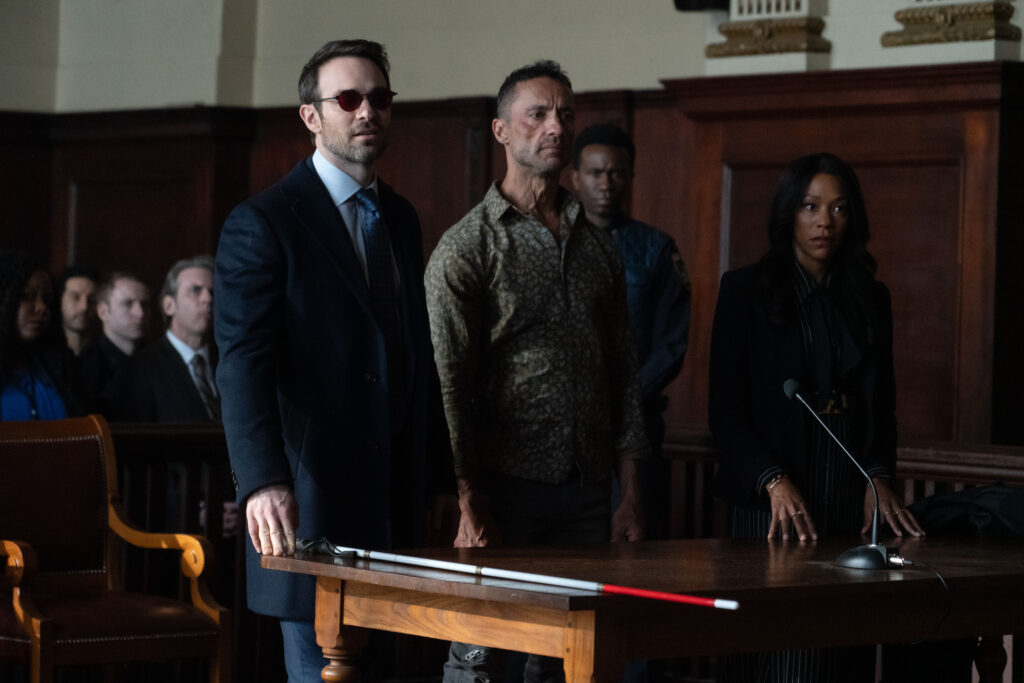
    Episode 2 of Daredevil: Born Again introduces Ayala and his White Tiger alter ego to the MCU, slightly altering the scenario that leads to his arrest and trial but–somewhat incredibly–embracing the mystical nature of his powers in a corner of the world that’s not always taken full advantage of the opportunities such capabilities provide. Highlighted by the late Kamar de los Reyes‘ understated performance as beaten up and washed Ayala, “Optics” is an excellent offering that allows the audience an extended view of the other side of Matt Murdock’s life. Though fans haven’t seen Episode 3 yet, paired with Episode 2, the MCU’s version of The Trial of the Century is must-see DD, allowing Murdock to flex his wits in what is truly a tense courtroom drama. The traits that serve Murdock so well as the Devil of Hell’s Kitchen are indeed the very same that make him a really good lawyer and as Ayala’s trial unfolds, Murdock proves that as in combat, he can take a punch in the courtroom and dig deep to find a way to stay in the fight.

    Though there’s little bloodshed and much of the episode takes place during the day (gasp!), “Optics” proves just as important to the Frank Miller-heavy noir world of Daredevil as any other episode. Any great NYC crime drama will, of course, include dirty piggies and Episode 2 introduces the audience to the dirtiest and though it may not be readily apparent just yet, be sure that your time spent watching this episode will pay off as the series moves forward. A reborn Matt Murdock didn’t need to take Ayala’s case, especially once he became aware that Ayala wasn’t sharing everything with him, but the serendipitous intersection of his commitment to justice and Ayala’s commitment to doing the right thing was too hard to pass up. Up against the NYPD, Ayala is the ultimate underdog as an accused cop killer…but even when outmatched, Murdocks can take a beating and stay in the fight until the devil in ’em comes out.

    (L-R): Wilson Fisk/Kingpin (Vincent D’Onofrio) and Kirsten McDuffie, ADA (Niki M. James) in Marvel Television’s DAREDEVIL: BORN AGAIN, exclusively on Disney+. Photo by Giovanni Rufino. © 2025 MARVEL.

    And following a palpably tense scene in which the dirty NYC cops look to take Murdock’s key witness off the board, the devil that Matt believed he has so securely tucked away does get out. The episode’s violent closing minutes may seem to exist solely to soothe the blood lust of the edge lord crew; however, paired with Wilson Fisk’s lunch meeting with NYC Police Commissioner Gallo, the scenes remind the fans that neither of these men can ever truly be anyone other than who they are. They want–perhaps even truly desire–to become the men they try so hard to be but when push comes to shove, these men, shaped so completely by their environments for so long, will always fall back on the skills of their true identities.

    As the follow-up to the new crew’s violent pilot episode, “Optics” stands in stark contrast and while it may feel slow, it begins scaffolding every major storyline of Season 1 of Daredevil: Born Again. Possibly my favorite episode of the season (if not, it’s Episode 3), “Optics” serves as a prime example of how much can be accomplished in a streaming episode and how this Daredevil revival’s efforts to trim the fat have made it an upgrade over the original Netflix series.

  • Connecting Imaginary Dots: What If…There Were More Children of Thanos?

    Connecting Imaginary Dots: What If…There Were More Children of Thanos?

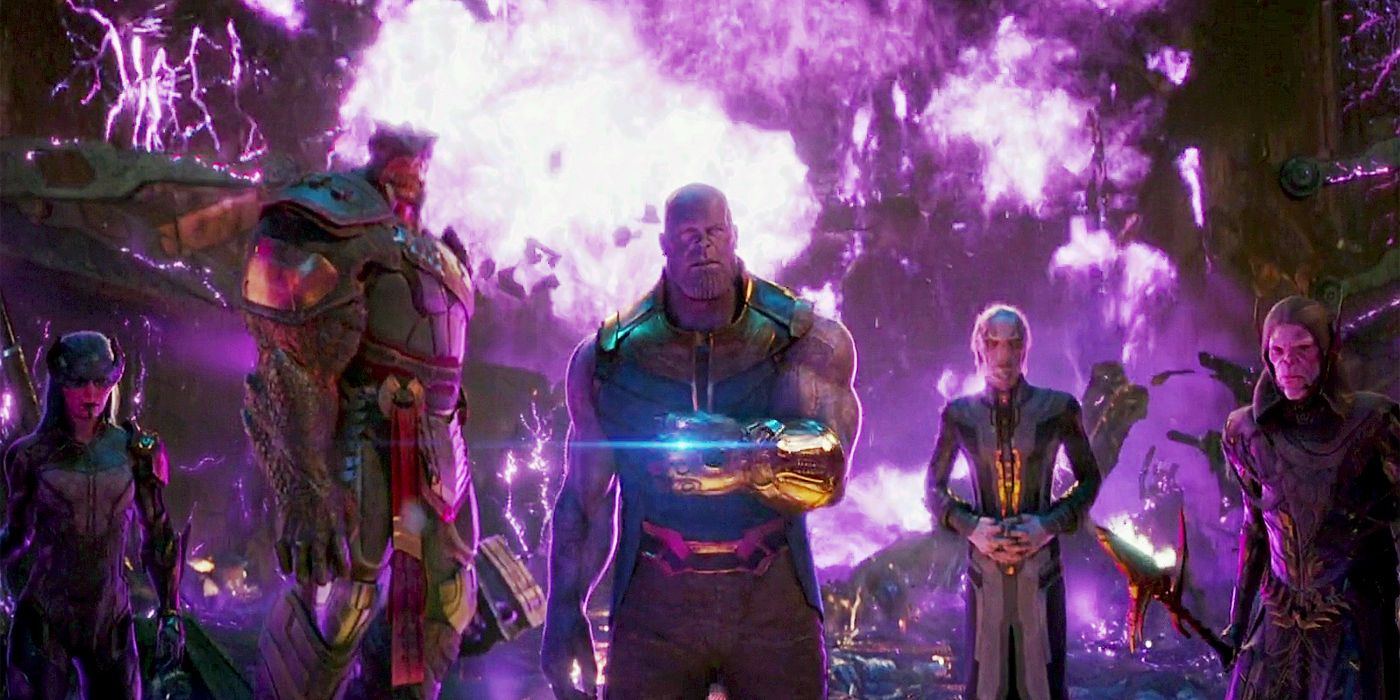
    Assembled by Thanos as he massacred half of the inhabitants of each planet he conquered, the Black Order served the Mad Titan in his efforts to collect the Infinity Stones. Also referred to as The Children of Thanos, Ebony Maw, Proxima Midnight, Corvus Glaive and Cull Obsidian appeared in Avengers: Infinity War and Avengers: Endgame, while thier “siblings”, Gamora and Nebula, played larger roles in the Infinity Saga and beyond.

    Thanos’ children were adopted (read abducted) orphans (read trophies) from the civilizations he conquered. Given his status as one of the most feared and powerful beings in the universe, it would be foolish to believe that he only conquered six planets and took only six trophies. Indeed Avengers: Endgame briefly showed Nebula and Gamora’s attack of the planet Korbin; assuming Thanos is a creature of habit, it would follow that at least one Korbinite could be counted among his “children.” And as much as I wish this was an article about Beta Ray Bill, it isn’t; it is, however, about a pair of characters who served Thanos in the pages of Marvel Comics and may just be set to appear in the Marvel Television Streaming series Ironheart.

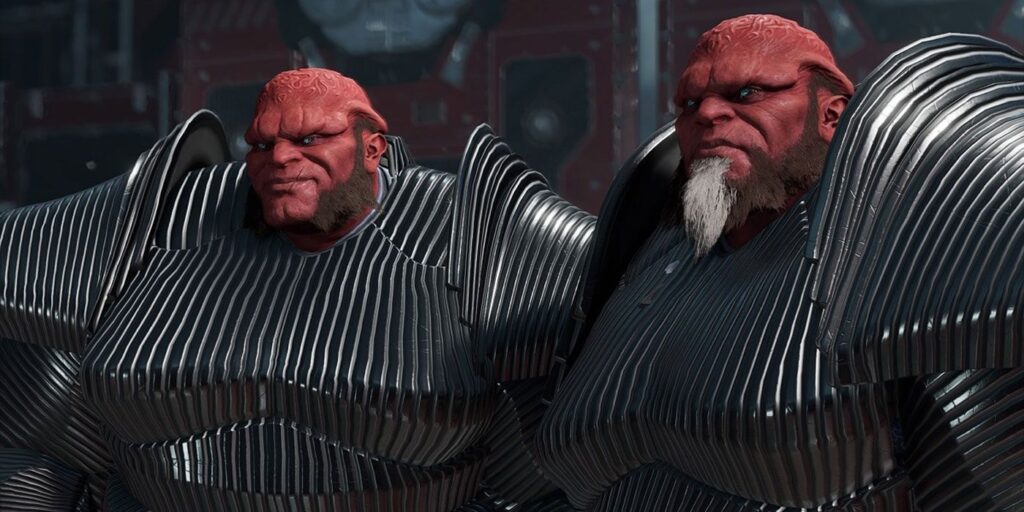
    Created by Jim Starlin and first appearing in Iron Man #55, Roclite siblings Gh’Ree and R’Hos Blood–better known as the Blood Brothers–are massive aliens who originally worked for Thanos. The duo evolved over the years and were interesting enough to make 71 appearances but are still certainly considered minor characters that might not be on many fans radars…but what if they should be?

    Headlining the article “Connecting Imaginary Dots” speaks for itself and I’ll let socmed and message boards have their fun; however, an IMDB listing for Ironheart is interesting enough to ponder if the Blood Brothers might somehow have found their way into the upcoming D+ series.

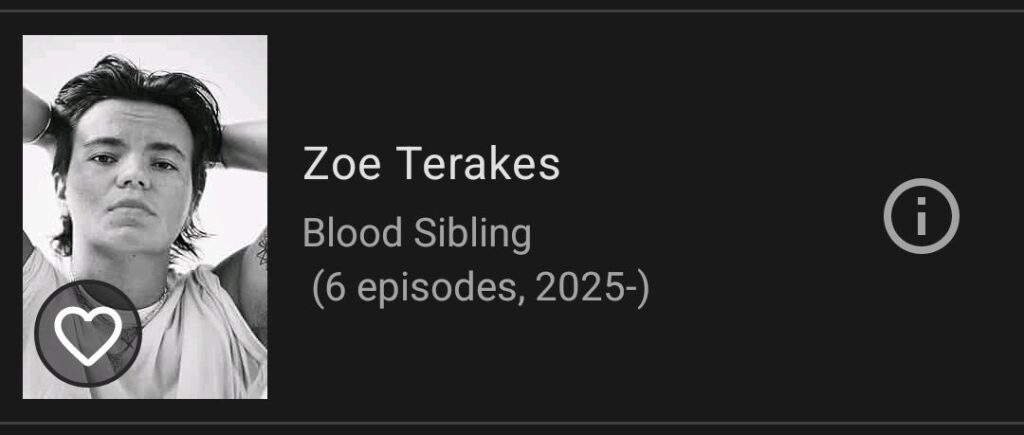
    Zoe Terakes, who joined the cast of Ironheart in 2022, is listed on IMDB as “Blood Sibling.” That’s it. That’s the evidence. But it’s certainly worth considering if the MCU’s iteration of the Blood Brothers may play a role in Riri Williams’ origin story.

    While it’s true that the majority of Ironheart will take place post-Riri’s appearance in Black Panther: Wakanda Forever, it will also dip into her origins, including (probably) why she was building a Stark-esque suit in the first place.

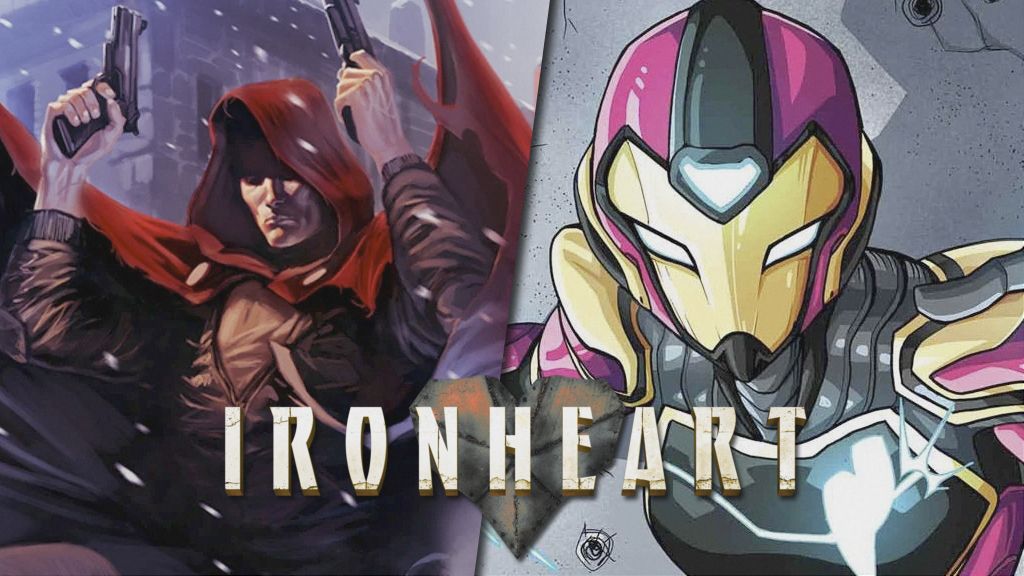
    Set after the events of Black Panther: Wakanda Forever, Marvel Television’s Ironheart pits technology against magic when Riri Williams (Dominique Thorne)—a young, genius inventor determined to make her mark on the world—returns to her hometown of Chicago. Her unique take on building iron suits is brilliant, but in pursuit of her ambitions, she finds herself wrapped up with the mysterious yet charming Parker Robbins aka “The Hood” (Anthony Ramos).

    -Official Synopsis for Marvel Television’s Ironheart

    Ironheart boasts an incredibly impressive cast. Alden Ehrenreich is widely believed to have been cast as Ezekiel Stane, the son of Jeff BridgesIron Man villain, Obadiah Stane. Manny Montana (Cousin John) and Shea Couleé (Slug) look to be members of the crew of Anthony Ramos’ Parker Robins with Couleé likely a version of Marvel Comics Ulysses Lugman and Montana a version of John King, the actual cousin of Robbins. And then there’s Lyric Ross, who looks to be taking on the role of Riri’s best friend, Natalie, who, in the comics, was shot and killed in front of Riri when she was 13. But, what if…she wasn’t shot in the MCU but rather killed by the Children of Thanos as they invaded Earth?.

    Sure, Thanos’ invasion of Earth was all about getting the Time Stone from Doctor Strange but it’s absolutely worth remembering that Chicago was home to Victor Timely for a period of time in the 1860s and might otherwise, for myriad reasons, be a place an alien looking to conquer Earth might send some bad ass Blood Siblings.

    As always, if you’re betting, take the field over this theory. This isn’t inside info; it’s not a rumor worth spreading; it’s just tossing out an idea based on limited info. And even if the Blood Brothers do appear in Ironheart as the Blood Siblings, there are plenty of other options for why and how they are there. So the moral of the story is…Mephisto.

    Ironheart is set to debut (finally) on D+ on June 24th.