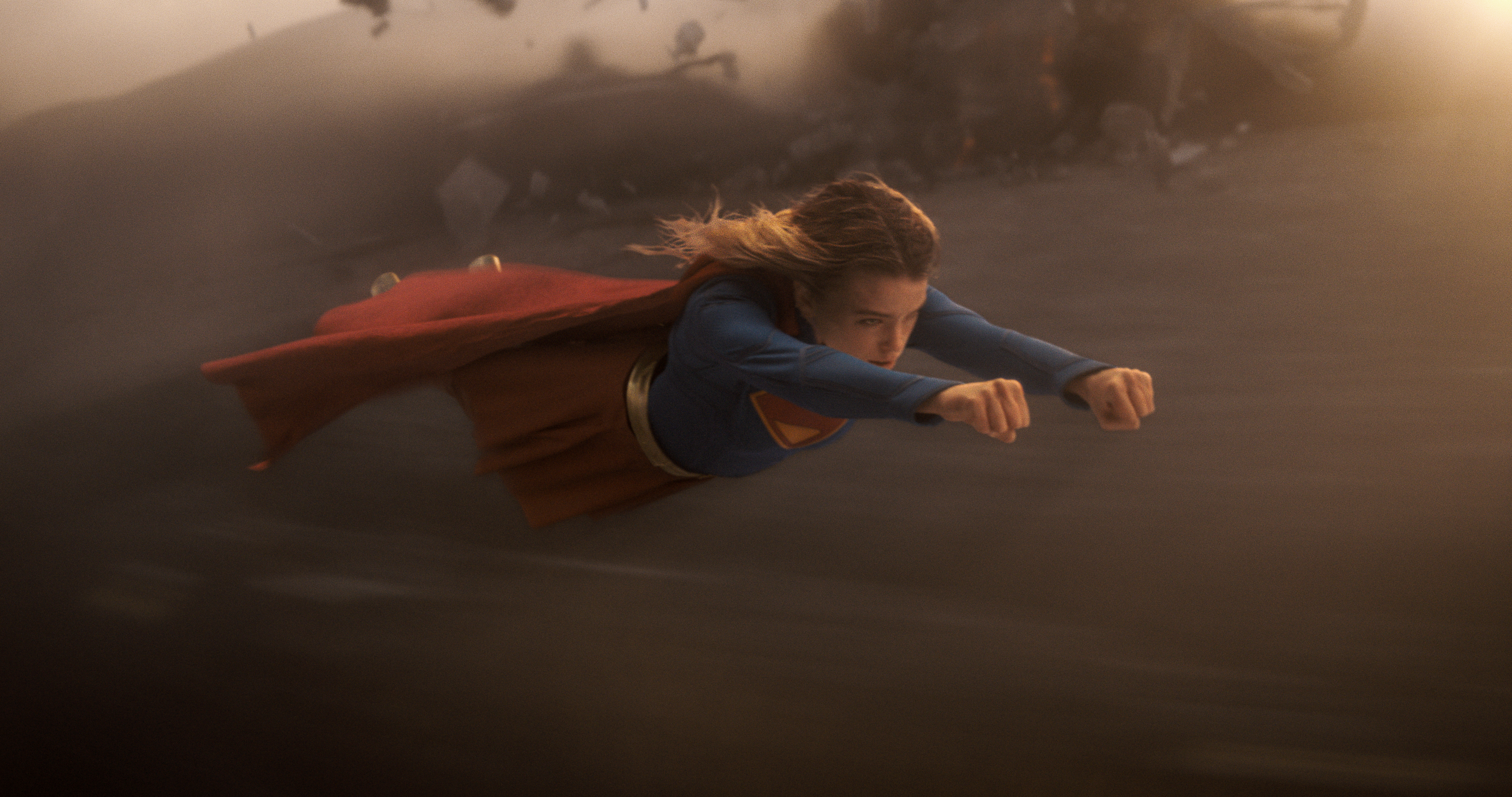
As Tom King crafted the story that ultimately became Supergirl: Woman of Tomorrow, he searched for a way to boil Kara Zor-El down to reveal her inner essence and, in doing so, help the audience come to understand a character whose comic book history was both chaotic and, to be blunt, absurd. For decades, writers had sturggled to understand the core of the character who King believed should be “one of the big pillars of the DC universe.”
As stated in a 2021 interview with Screen Rant, King’s intent with Supergirl: Woman of Tomorrow was to craft a narrative that would answer three questions for the audience:“Why is Supergirl great? Why is she important to the DC Universe? What is her future in the DC Universe?‘” In adapting King‘s work for the still young DCU, the DC Studios braintrust clearly had a similar agenda, hoping to establish Kara as a key player the young cinematic universe and, given such strong source material, it seemed a slam dunk; however, there’s many a slip ‘twixt the cup and the lip and, unfortunately, Supergirl only answers one of the questions King believed his story should address.
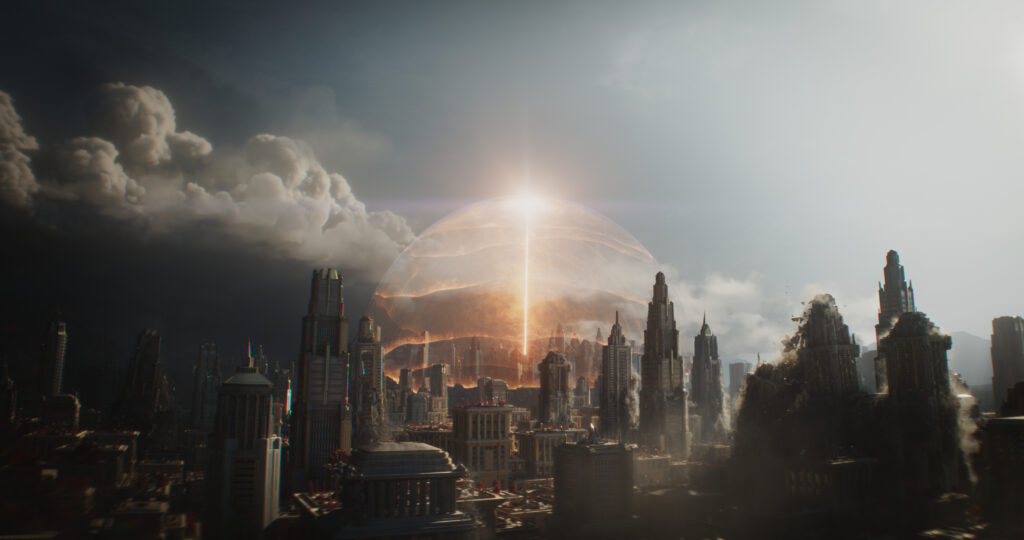
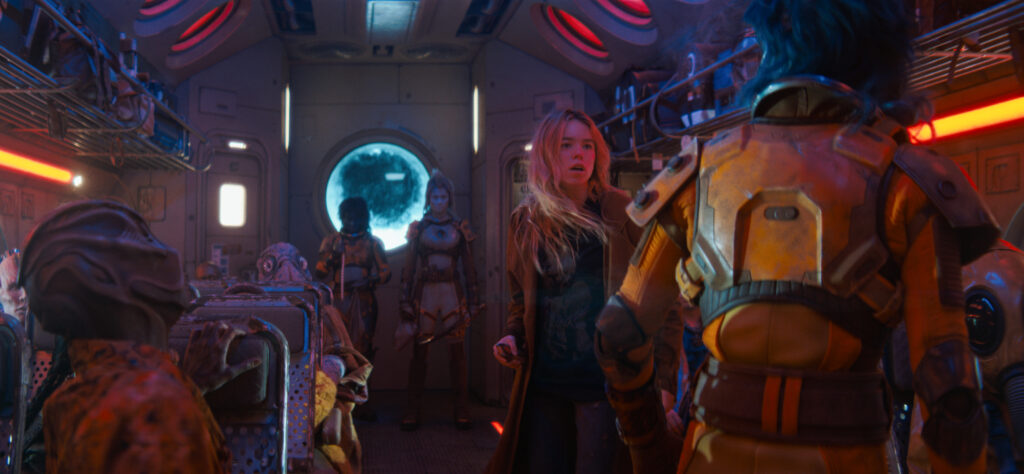
Like King‘s limited comic book series, DC Studios’ Supergirl is a space Western set on the fringes of the galaxy. A classic frontier revenge story in which Kara acts as the hardened, jaded gunslinger, the film sees her team up with a young girl to hunt down a ruthless brigand across a lawless frontier. Eschewing Bilquis Evely’s sublime and sparkling source material art, Supergirl trades the high-tech, shiny aesthetic of a traditional space opera for dusty planets, dreary space taverns, and a harsher, grittier atmosphere, leaning, perhaps far too heavily into that particular aesthetic. But that’s hardly the biggest issue with the adaptation.
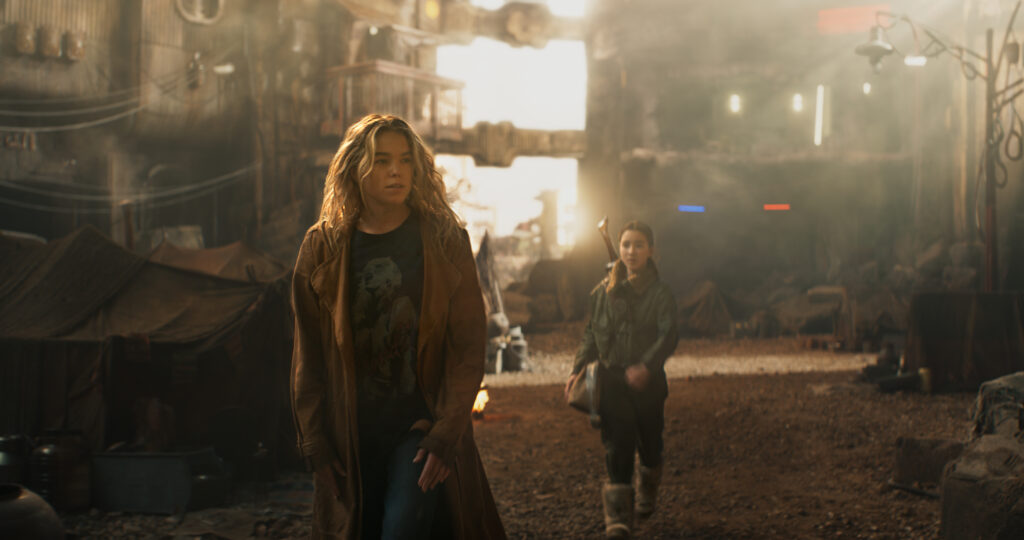
The film introduces Kara as deeply cynical, struggling with the trauma of watching Krypton destroy itself, and living a chaotic, free-spirited life on the lawless fringes of the galaxy. Completely disillusioned with the expectations of the hero gig, Kara travels around on a clunky, rattling space bus, hangs out in dingy cosmic rest stops, and carries herself with a gritty, reluctant swagger.
Critically, Supergirl can fairly be examined through at least four lenses : as an adaptation of Supergirl: Woman of Tomorrow; as a space Western; as a modern superhero film; as an installment in DC Studios’ DCU. Though the film is far from disastrous, it fails to shine brightly through any of those four lenses, leaving unclear exactly why Kara is great, why she is important to the DCU and in what way she’ll be utilized as one of the big pillars of a universe that continues to expand on a core as unstable as Krypton’s. She’s brave, she’s strong and she’s now willing to unselfishly stand up for those who cannot stand for themselves…but so are the other few heroes we’ve seen in the DCU so far. In perhaps the most disappointing development of all, director Craig Gillespie and writer Ana Nogueira painted Supergirl into the same corner King so desperately worked to write her out of. Despite telling a fine story about the jaded Kara discovering her purpose, undeniably, the creative decisions–which seem to have a very heavy does of James Gunn‘s influence–don’t ultimately serve the character’s best interests.
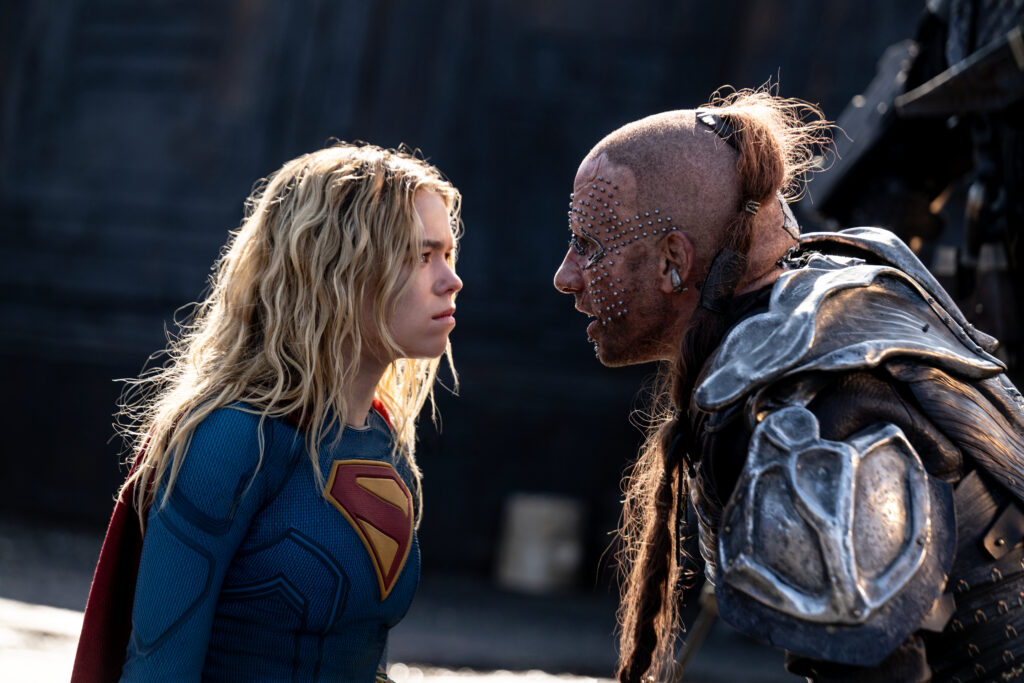
Certainly it’s not in any studio’s playbook to translate comics directly to the screen; however, as an adaptation of King‘s work, Supergirl strays far too far from home. The poorly reimagined Krem of the Yellow Hills and his Brigands–who give more “mutant bikers from Weird Science” than any sort of riff on Fury Road‘s Immortan Joe and his War Boys–offer nothing to chew on, making it easy to wonder why any changes needed to be made at all. Staggeringly, nearly every change from the 2021 comic misses the mark, which can be understood when the a recent interview with the film’s writer revealed her complete misinterpretation of the comic book’s ending despite the book’s author being a collaborative partner on the project. Obviously, having Kara murder Krem must serve some purpose to the story Gunn wants to tell next (if you weren’t sure, they made sure you were sure by having Jason Momoa‘s Lobo gring and chuckle about the deed) but what’s less obvious is what purpose the change had in the story at hand. King‘s ending–which boils down to Ruthye having lived a life so wonderful that Krem was worth nothing more than a knock to the dome–would have, at the very least, introuduced the Phantom Zone to the DCU which would be preferable to being introduced to whatever character it is that Seth Rogan voiced.
As an installment in the still fledgling DCU, Supergirl finds itself in the wrong place at the wrong time…though that is hardly its own fault. Since James Gunn and Peter Safran‘s initial slate reveal, multiple projects have either fallen apart enitrely or developed glacially. Superman succesfully launched the DCU and with Man of Tomorrow set for a 2027 release and Kara set to play a major role in it, Supergirl simply had to be released now. And so despite Gunn’s insistence that film’s would never move into production without top tier scripts, Supergirl seems like a project made out of necessity–both to fill a calendar slot and to introduce a character–rather than because it was built on a can’t-miss script. Resultant of those intersecting realities, is a film that is watchable but does not demand a rewatch. Fortunately, Milly Alcock is incredibly watchable as Kara.
In that sense, there’s actually some hope for Kara, provided the studio proceed a little more carefully. After launching with the incredibly successful and wonderfully inventive Iron Man, Kevin Feige rolled out The Incredible Hulk, a film whose narrative relevance to the MCU was reduced to the fact that it introduced Bruce Banner…until a decade and a half later when its plot and characters were weaved back into the narrative tapestry of the MCU. Perhaps that fate awaits Supergirl…if the DCU can last another 15 years. Perhaps a better comparison among modern superhero films is Captain Marvel. While it dominated the box office in a way that Supergirl will not manage to do, it shared a similar problem: the movie was made to rush Carol Danvers into the MCU when her purpose in the larger, shared narrative wasn’t yet defined. As a result, Captain Marvel remains an underultilized character without a firm narrative foothold. Only two films in, DC Studios cannot afford for that fate to befall Kara. On the strength of Alcock‘s portrayal of Kara, the character will live on in the DCU; but as a franchise, Supergirl is dead on arrival and will probably be repurposed as part of the Superman Saga rather than launching its own series of films.
Up against classic space Western heavyweights such as the original Cowboy Bebop anime and Firefly, Supergirl doesn’t put up much of a fight. Outside of the extended cameo by the Main Man, setting Supergirl in space doesn’t offer much and whatever it hoped to offer in terms of interesting aliens and locations was lost in its dark and muted filter. It seems as though it’s set in space for two main purposes: to establish how different radiation from different suns impacts Kryptonians and because Supergirl: Woman of Tomorrow was set in space. But in entirely changing the aesthetic from Woman of Tomorrow, Supergirl excised the best parts of Woman of Tomorrow being set in space.
The one question Supergirl does provide a solid answer to is what the future holds for Alcock‘s Kara. Set to star alongside David Corenswet‘s Superman and Nicholas Hoult‘s Lex Luthor in Man of Tomorrow, the second installment in Gunn‘s Superman Saga, Alcock‘s iteration of Supergirl certainly provieds a unique foil to the Big Blue Boy Scout’s mantra of “truth, justice and the American way” which is a key ingredient in the DNA of Corenswet’s version of Superman. Whereas Superman’s moral compass is unshakable, Supergirl’s true North is a little skewed, perhaps even after her cathartic adventure ends with her back on Earth.
A curious collison of ill-advised creative decisions and questoinable timing, Supergirl finds itself, ironically, in the same peril its heroine does while left alone in a cave following exposure to a green sun. While intended to save the day, it arrives in the wrong place and at the wrong time, unable to defend itself against the harsh criticisims levled against it and in need of the dawn of a new day to save it. Perhaps, down the road–should the DCU get to pave that road–it will settle into a more endearing place; however, for now, Supergirl is left for dead in landscape no longer forgiving to middle of the road superhero stories.

Leave a Reply