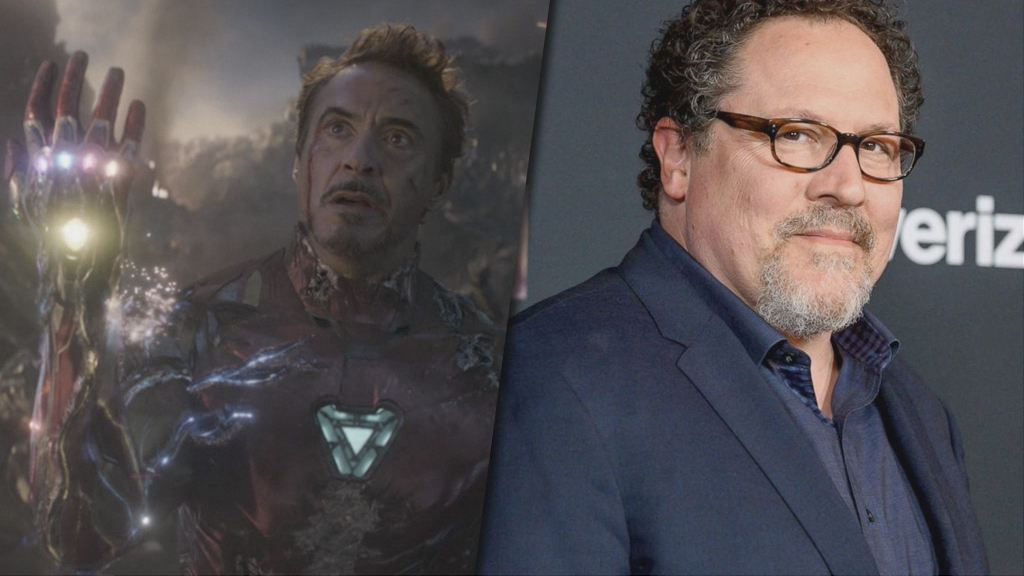
It’s still crazy to think that Marvel Studios and the Russo Brothers decided to end Avengers: Endgame with the death of Tony Stark. Not only was it an emotional punch to the gut for the character that introduced the Marvel Cinematic Universe back in 2008, but it also would mean that the future may become quite uncertain for the studio.
Any normal person wouldn’t dare touch one of the MCU’s most popular characters but the Russos took the risk. Even if it seemingly cost them a few of their nerves, especially when Iron Man director Jon Favreau wasn’t a fan of the idea. In an interview with Vanity Fair, Anthony Russo revealed they had a conversation wth the former MCU director and now Happy Hogan actor where he shared his feelings on the matter.
Part of the pressure came from Jon Favreau, who called us up after he read the script and said to us, ‘Are you guys really going to kill Iron Man?’ He’s like, ‘You can’t do this, it’s gonna devastate people. You don’t want them walking out of the theater and into traffic. We did it anyway.
Anthony Russo
It was certainly a gamble for all parties involved. Fans could’ve been quite upset with the way he left the franchise, and we’re still seeing some post-Endgame blues as people adjust to this new era of the franchise. It would be great to see Favreau return to the director’s chair and potentially also explore the aftermath of Tony’s death in the upcoming Armor Wars project. It would be fitting that he’d also get a chance to give the character a final hurrah.
The Marvel Cinematic Universe is not only the biggest movie franchise of its time but the biggest movie franchise of all time. Even if it might have peaked for some when Avengers: Endgame hit theaters in 2019, there’s little reason to think that its cultural impact in 2022 hasn’t surpassed that. With Disney+ now available, the number of projects being released each year has more than doubled, and Marvel Studios doesn’t seem to be slowing down any time soon with more than two dozen projects set for release in the next few years alone. But all good things must come to an end and this means that the MCU as we know it should eventually do the same, although on its own terms so as to become something more.
New Avengers #1 (2013)
New Avengers #1 (2013)
It certainly does not come down to a lack of demand, but that should not be the only metric Marvel Studios should take into account when making franchise-wide decisions. Identifying issues that might be hurting a massive franchise that has passed its 14th anniversary is extremely important, especially if Marvel has its sights set not only on the next few years but, more significantly, on the next couple of decades.
Storyline Issues
The stories being told are the core of the MCU and issues that prevent them from being as good as can be should be addressed as a top priority. These can be due to several things, but most end up being a consequence of the same core issue: the shared universe.
Avengers: Endgame (2019)
Due to the intricacy of having so many stories being told through different IPs that either need to come together or stay apart in a way that feels justifiable, it’s perhaps fair to say that both movies and TV shows have had to compromise when it comes to the stories they set out to tell. A character that would have been perfect for a certain situation might not be available due to having a scheduled appearance somewhere else. Or maybe it is felt that its introduction deserves a bigger stage. While choices being made always aim at a better overall franchise, they end up not helping each individual project to be as good as it could be. This problem is only getting bigger and more noticeable as the years go by with the number of storylines, characters, and major events being introduced, especially since earlier storylines didn’t take into account the now real possibility of using a number of previously unavailable characters. While it still seems manageable at the moment, Marvel Studios should now be looking into how to stop while they’re ahead, in order not to hurt the entire brand in a way that might put their past achievements on the line.
Accessibility Issues
Going back to 2019, as Avengers: Endgame was set to premiere, both new and old fans were often gearing up for a complete MCU rewatch as the culmination of 11 years of storytelling was soon approaching. At the time, it only took watching 21 movies, something that while being no small feat, pales in comparison to what is needed to accomplish the same thing today.
Doctor Strange in the Multiverse of Madness (2022)
As of now, the post-pandemic MCU has not only added 5 new feature films (soon to be 6), but also 6 new TV shows (soon to be 7), something that likely isn’t helping with how new fans approach the franchise as a whole since it is becoming increasingly difficult to go back and experience it in its entirety. This will probably lead to casual fans choosing select projects to watch while feeling daunted by the magnitude of the rest of the franchise, meaning they’ll probably be missing out on the connective tissue between IPs that makes the MCU so special. So, in a way, and considering the previous point regarding storylines, they might be experiencing lackluster stories without the bonus of the shared universe experience. Die-hard fans will have another vision, as living through the interconnectivity between the projects might somewhat help to hide the imperfections needed to get there. But since Marvel Studios should be focused on bringing in new fans, while of course still appeasing old ones, the fact that the MCU has become too big for newcomers should be a cause for concern. A nice jumping-on point would do the trick, since new fans haven’t gotten that yet, not even after Avengers: Endgame.
How it Should All End
So, considering all this, should Marvel Studios just call it a day and shut down? Of course not. As stated above the MCU as we know it should perhaps end, but only for a neo-MCU to rise from its ashes. And as all signs point to the overall storyline being told at the moment leading to a Secret Wars-inspired event, Marvel Studios might just have an ace up its sleeve when it comes to approaching its future beyond the aforementioned event. If they choose to, obviously.
Secret Wars #0 (2015)
Marvel Studios has been pretty loose when adapting comic events. Age of Ultron, Civil War, and Infinity War are all examples of that. So even if Secret Wars is coming, there is still much room for how it will end up getting translated into live-action. But if the ending somehow stays similar, it may solve just about every issue pointed out above faced by the MCU. At the end of the 2015 comic series, following the collapse of the multiverse and the creation of Battleworld, Earth is restored as Marvel’s Earth-Prime. While not making everything that came before meaningless—in fact, it was everything leading up until then that made this new Earth both a possibility and a reality—this allowed for stories to be retold from a fresh perspective, while also allowing for better integration of all storylines into a single, unified universe. And this is what the MCU will need by the end of its Secret Wars.
Why It Will Be for the Best
For several years, there wasn’t either the budget or the character rights to put the perfect MCU on screen from the start. And nowadays, it has become an issue how to integrate certain characters that should have been a part of it earlier on. Certain storylines were simply avoided due to those constraints while others, even though they worked, had to be adapted in a way that perhaps diminished their appeal and overall impact. Allowing the MCU to scale itself down only to follow that up with a steady-paced growing, aware, and capable franchise that is willing to use all its moving parts/characters/storylines in the best possible way, could only mean good things for this new incarnation of the MCU in the long run.
Secret Wars #9 (2016)
Several actors could keep playing the same characters, new ones would enter the frame, and even legacy characters would be able to return without making audiences feel cheated in the way they were invested in their previous iterations. It would just be a case of letting go in order to both cherish and appreciate the past but also accept that a brighter future might be ahead. No sacrifice made up until then would have been in vain and it would all still have started in a cave with a box of scraps.
Marvel Studios was all-in with their double featured led by the Joe and Anthony Russo, who were fresh off of their success with Captain America: Civil War. At the time, there were rumblings that the films were working with a budget of around $400 million but it was never truly confirmed. Well, that was until now, as Joe Russo revealed during a panel at Sands International Film Festival of St. Andrews that Avengers: Infinity War and its sequel Endgame each cost $500M to make. As such, they had a total budget of a billion making it probably the most expensive productions in Hollywood.
I don’t know if these numbers have ever been accurately reported but in the case of Avengers: Endgame or Infinity War, each of those movies was $500 million plus. So this is an incredible amount of money that is being spent on these films. And you have responsibility, if you have a conscience to in some way deliver a return on that investment for the people that gave you that money. So it is risky to say ‘Hey we got a crazy idea, here’s how we can subvert expectations but we’re going to take your two most popular characters and we’re going to have them try to kill each other.’
Joe Russo
It definitely paid off, as not only did Endgame become the highest grossing film for some time before a re-release of Avatar took back the top spot, but we can only imagine how much money they made on home releases, merchandising and more. You have to also respect the fact that the company was willing to risk it. They believed in two directors that had their humble TV roots that would end up developing some iconic entries in one of the largest franchises of the world.
The discussions surrounding the use of CGI in modern blockbusters have been heated. Most use it as the basis for their take on what makes or breaks a modern blockbuster, even going as far as to break down an entire film into one single screenshot. What is lost in the shuffle is the dire state of the entire industry, as many VFX companies are forced to close shop and work under problematic deadlines.
While a general industry issue, it has been boiled down to the MCU due to their film’s reliance on special effects. Still, VFX veteran ToddSheridan Perry sat down with Inverse to discuss the general situation in the industry and how VFX has to be created within short deadlines, as the count grows while postproduction time windows shrink.
It falls squarely on the shoulders of studios that set a release date and then work backward from there. The time isn’t enough to live up to the ambition of the project.
Todd Sheridan Perry
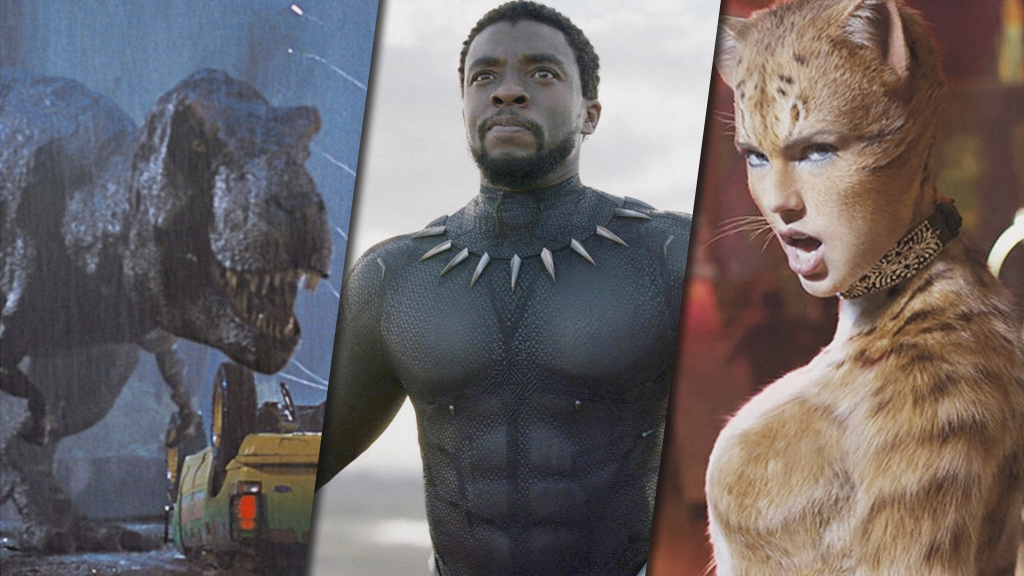
Perry has worked on the infamous Black Panther third act, where the effects have struggled even as the film received critical acclaim. He highlights that “there were multiple things going on in act three” that played a factor. What does paint an interesting picture is that Marvel Studios actually recognized the time crunch and wanted to support the production studio. The only issue is that the good intention accidentally leads to a different issue as they utilize very different software that doesn’t cooperate as well.
We’d already done tons of development work on the vibranium mines and it all had to be packaged up and sent over to DNEG. Even if you’re in the same company and sending it to a different department, packaging all that up and having it work requires a lot of elbow grease. DNEG didn’t have the time to polish their shots as much as other companies who’d been working on the film for seven or eight months, and they were caught at a disadvantage. I’m not saying DNEG is a bad company – they have a closet full of Oscars. They thankfully took it on and it actually got done. We wouldn’t have been able to accomplish it otherwise.
Todd Sheridan Perry
Understanding the context adds up a lot to what exactly happened. Marvel Studios seemingly had good intentions in supporting its VFX company. Yet, they also still fall into some old issues such as some of their biggest films getting finished a week before release, which is something that they hopefully start learning to avoid moving forward.
Even the Marvel films, which have all the resources in the world, play this dangerous game. Avengers: Endgame had 1,000 VFX shots delivered one week before the film was in theaters.
Todd Sheridan Perry
Yet, there are some productions that also push it to their brink, such as the infamous work on Cats, which he also highlights in his interview.
The worst example is Cats. Cats didn’t just suffer from bad CG, but missing CG. And it’s for all the reasons we’ve talked about.
Todd Sheridan Perry
He has praised productions like Parasite and Little Women for “absolutely invisible” VFX work. These films work under very different circumstances with less pressure of putting out a high-budget blockbuster within a specific release date. There’s a general issue in the modern-day that content needs to be dropped at a fast pace, as it is believed to keep interests and franchises alive. That issue is definitely affecting big-budget projects, especially Marvel which only can rely on its singular IP. Demand and supply have created a cycle that will be hard to break. Yet, hopefully, the cycle breaks before the talent that manages to provide amazing work under extreme pressure.
We use cookies to improve your experience on our site. By using our site, you consent to cookies.
This website uses cookies
Websites store cookies to enhance functionality and personalise your experience. You can manage your preferences, but blocking some cookies may impact site performance and services.
Essential cookies enable basic functions and are necessary for the proper function of the website.
Name
Description
Duration
Cookie Preferences
This cookie is used to store the user's cookie consent preferences.
30 days
These cookies are needed for adding comments on this website.
Name
Description
Duration
comment_author_email
Used to track the user across multiple sessions.
Session
comment_author_url
Used to track the user across multiple sessions.
Session
comment_author
Used to track the user across multiple sessions.
Session
Statistics cookies collect information anonymously. This information helps us understand how visitors use our website.
Google Analytics is a powerful tool that tracks and analyzes website traffic for informed marketing decisions.
Contains information related to marketing campaigns of the user. These are shared with Google AdWords / Google Ads when the Google Ads and Google Analytics accounts are linked together.
90 days
__utma
ID used to identify users and sessions
2 years after last activity
__utmt
Used to monitor number of Google Analytics server requests
10 minutes
__utmb
Used to distinguish new sessions and visits. This cookie is set when the GA.js javascript library is loaded and there is no existing __utmb cookie. The cookie is updated every time data is sent to the Google Analytics server.
30 minutes after last activity
__utmc
Used only with old Urchin versions of Google Analytics and not with GA.js. Was used to distinguish between new sessions and visits at the end of a session.
End of session (browser)
__utmz
Contains information about the traffic source or campaign that directed user to the website. The cookie is set when the GA.js javascript is loaded and updated when data is sent to the Google Anaytics server
6 months after last activity
__utmv
Contains custom information set by the web developer via the _setCustomVar method in Google Analytics. This cookie is updated every time new data is sent to the Google Analytics server.
2 years after last activity
__utmx
Used to determine whether a user is included in an A / B or Multivariate test.
18 months
_ga
ID used to identify users
2 years
_gali
Used by Google Analytics to determine which links on a page are being clicked
30 seconds
_ga_
ID used to identify users
2 years
_gid
ID used to identify users for 24 hours after last activity
24 hours
_gat
Used to monitor number of Google Analytics server requests when using Google Tag Manager
1 minute
Marketing cookies are used to follow visitors to websites. The intention is to show ads that are relevant and engaging to the individual user.
Pinterest Tag is a web analytics service that tracks and reports website traffic.