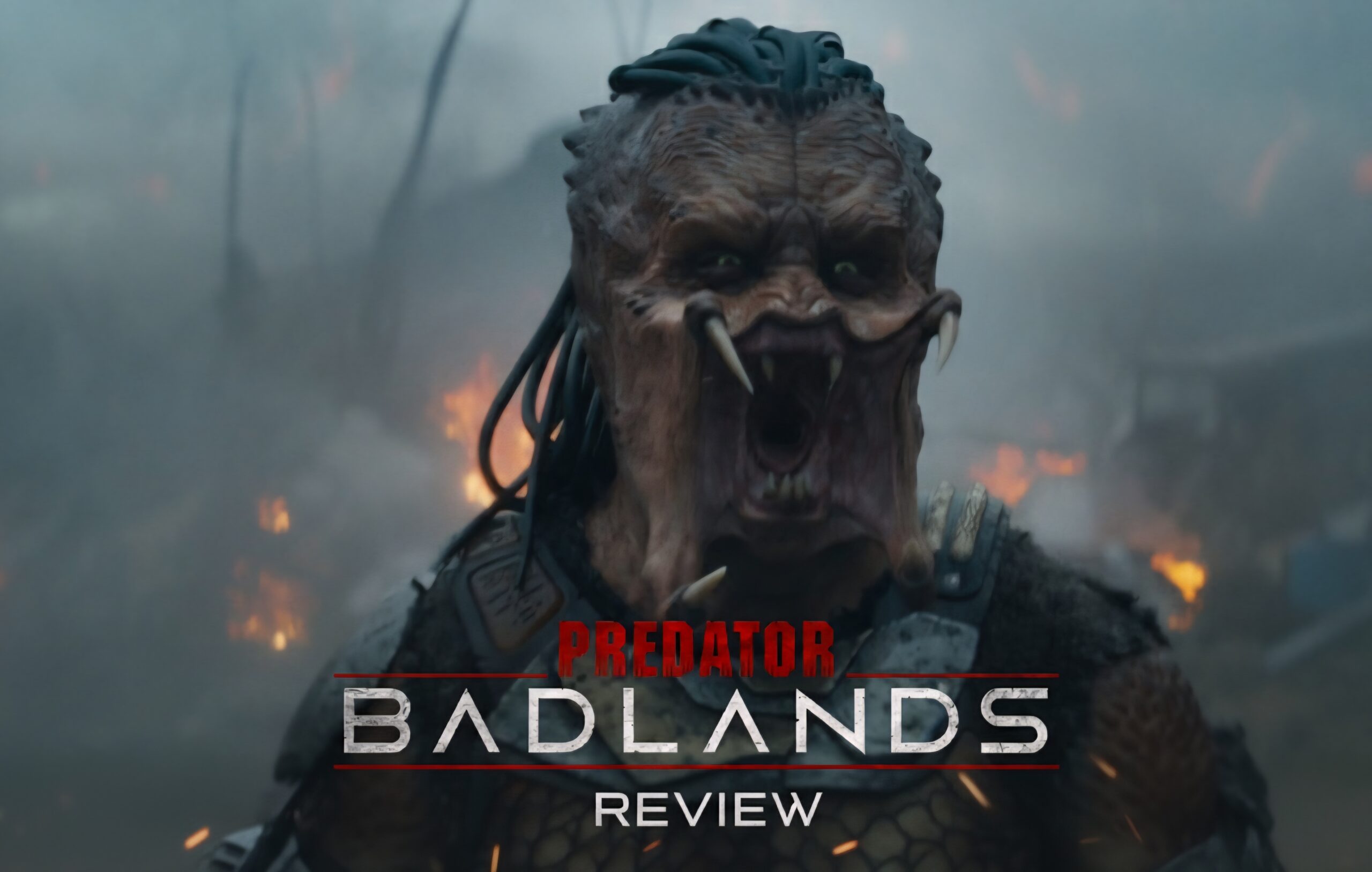
Since acquiring Lucasfilm in 2012, fans have largely lamented Disney’s efforts to create feature films in George Lucas Star Wars universe. With 2015’s The Force Awakens, Star Wars super fan J.J. Abrams was supposed to provide a new hope for the franchise, launching a sequel trilogy intended to reestablish the Skywalker Saga as a global brand. And while Episode VII had plenty of nostalgia, heart and energy, the lack of a planned, cohesive narrative for the new trilogy led to unprecedented polarization among the fanbase, earning Abrams another star on his franchise-ruining sash.
Since acquiring 20th Century Studios from Fox in 2019, fans have largely lauded Disney’s efforts to create new projects in the Predator universe. Under Dan Trachtenberg, whose feature film directorial debut came ironically on the Abrams-produced 10 Cloverfield Lane, the Predator franchise has evolved along a very divergent path than the Star Wars franchise, making it, perhaps, Disney’s premiere sci-fi action property.
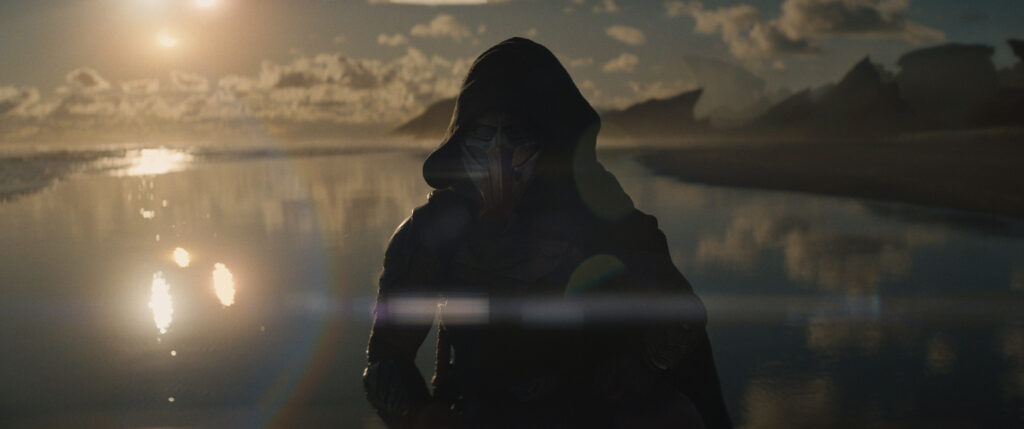
After Shane Black‘s soulless The Predator put the series on life support in 2018, Trachtenberg resuscitated the property, beginning with 2022’s Prey and continuing with this year’s animated anthology, Killer of Killers. The latter effort made clear that the seeds of a wide-ranging Yautja mythology sown in 1990’s Predator 2 took root in the young mind of Trachtenberg, growing into a lush and savage garden of possibilities.
From that garden, emerged Predator: Badlands, the very conceit of which is among the most bold moves any sci-fi franchise has ever made. Expertly crafted, both visually and narratively, Trachtenberg‘s third installment in the franchise balances beauty and brutality through the lens of the ugliest mother fuckers in the galaxy. Trachtenberg‘s decision to set Dex, an outcast Yautja runt, as the protagonist of the film borders on mad science but, against tall odds, it worked. You son of a bitch!
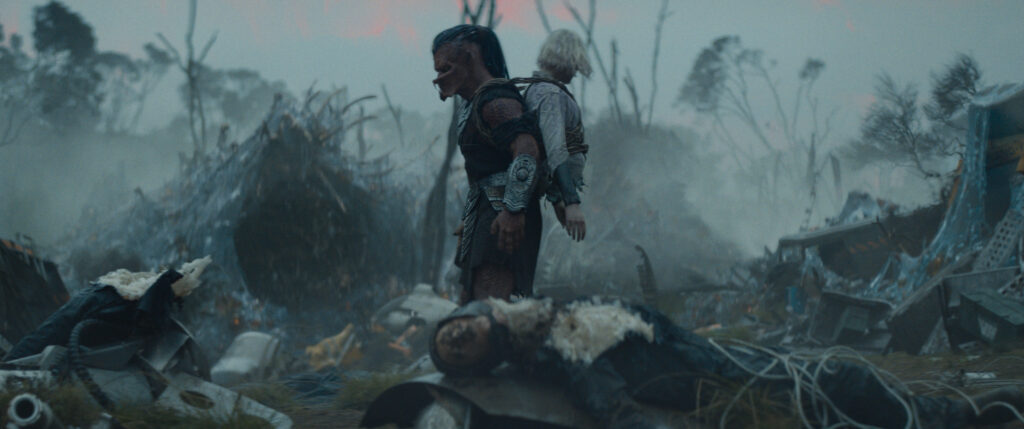
Unlike Alien–another former Fox franchise that’s been given new life since being acquired by Disney–the Predator franchise under Trachtenberg‘s watch is not afraid to take chances. Fede Alvarez‘s solid Alien: Romulus played as an homage to prior installments in the franchise, carefully curated to not stray too far from what fans expected while also hoping to be a steady onboarding point for new viewers. From its opening scene, set on the predators homeworld of Yautja Prime, Predator: Badlands, eschews nostalgia, and comfortable tropes, foregoing the underlying structure of a “Predator movie.” And then, when you least expect it, it becomes a “Predator movie” again in all the best ways.
Outlandishly, the result of Trachtenberg‘s choices in crafting Predator: Badlands is a film that could (perhaps) rightly be described as John Rambo carrying C-3P0 on his back and hanging out with Paddington while fighting the Kaiju from Pacific Rim. And it works! It works so well that Badlands will undoubtedly find itself in the discussion with Predator and Prey as the best in the franchise.
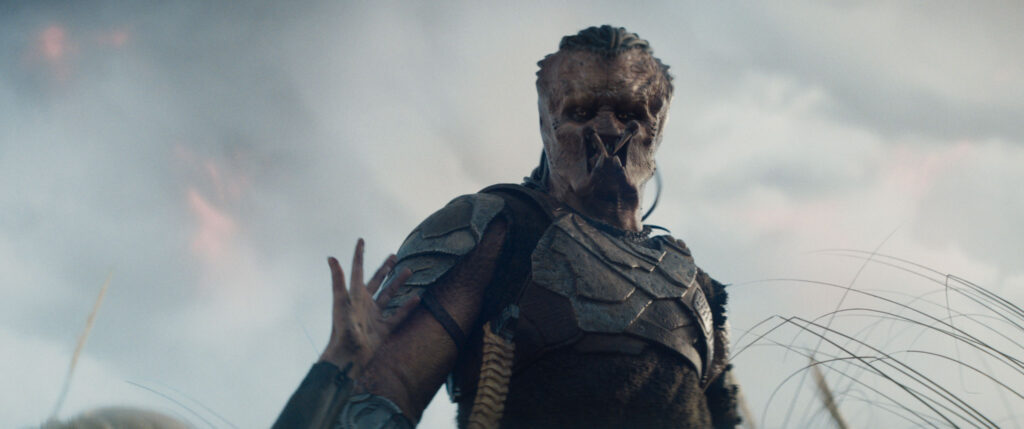
The film allows Trachtenberg to continue the exploration of Yautja culture that he began in Killer of Killers and that’s ultimately the engine that makes the film run so smoothly. Coming into the film, fans should have a rudimentary understanding of what these monstrous hunters are all about; and if you didn’t, little time is wasted making clear how Yautja clans deal with weakness and failure. As Dek’s journey unfolds, the audience rides a parallel rail to the protagonist. Just as Dek must betray his nature in order to survive, so must the audience’s conditioning be subverted in order to see the layers woven into the film’s narrative tapestry.
Ultimately, Predator: Badlands offers audiences the opportunity to have an incredibly good time at the movies, meshing action with emotion without a single human character being seen on screen. It’s an incredible accomplishment for the genre, as is having the film’s protagonist speak only in his native Yautja, never uttering a word of English. Like Dek, Predator: Badlands shouldn’t be able to stand toe-to-toe with the heavy hitters of its own franchise, much less the genre. But like Dek, it stands defiant of expectations, daring you to challenge it.
