Tag: Book Review

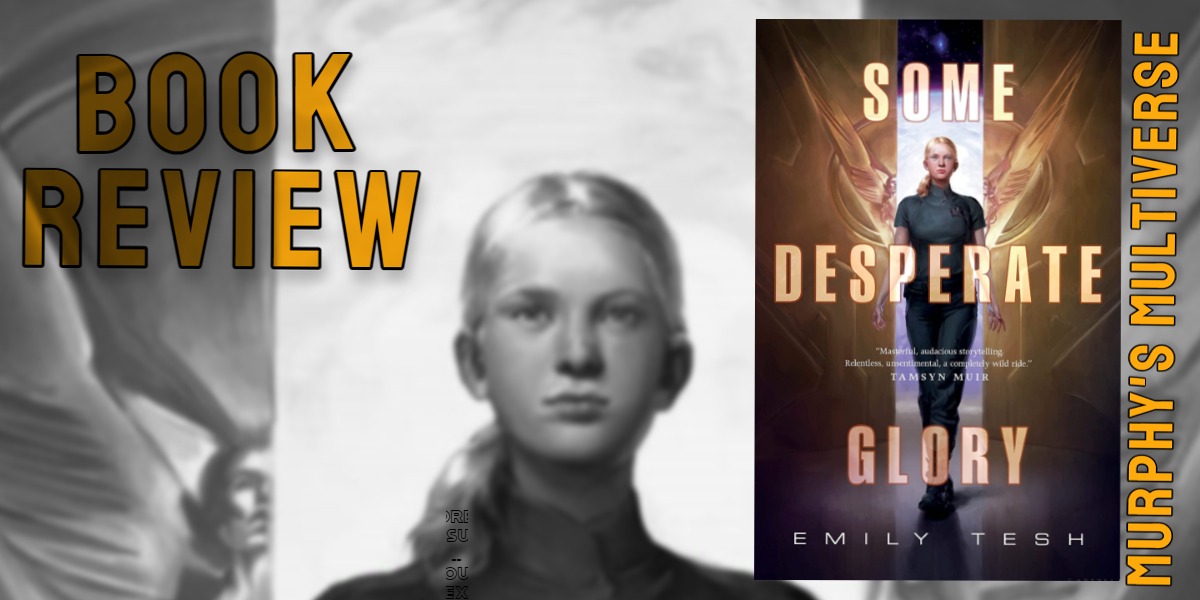
  • BOOK REVIEW: ‘Some Desperate Glory’ by Emily Tesh

    BOOK REVIEW: ‘Some Desperate Glory’ by Emily Tesh

    Some Desperate Glory is an emotional rollercoaster of a book, but it’s a ride readers will be glad they’ve taken when all is said and done. It is a fast-paced, action-packed space story. You will laugh. You will cry. You will question what you’re willing to do when the world is dependent upon you. More importantly, though, this book will break your heart and somehow put it back together at the same time.

    Some Desperate Glory by author Emily Tesh tells the story of a young girl named Valkyr, aka Kyr, and her life aboard Gaea Station. Earth as we know it is long gone, and Kyr and the rest of Gaea Station are humanity’s only hope at survival in an ongoing war against an alien race. It sounds like a simple premise, but there’s so much more to this story.

    Kyr is, admittedly, a pretty unlikable character for most of the book. She’s stubborn, unrelenting and gullible. It can be frustrating as the entire book is told from her point-of-view, but we get to see her grow and became something more. Is she likable in the end? Yes and no. She’s still an incredibly frustrating character, but there’s so much growth by the final pages, that her issues are easy to forgive. She’s a perfectly flawed character who is forced to learn how to live when faced with the possibilities of a world beyond what she knows.

    While a strong story, though, there are some hiccups in the book. The worldbuilding can be lacking occasionally, and sometimes, the way the story jumps around can make it difficult to follow. (This is an issue that happens later in the book.) But Tesh’s writing makes up for any shortcomings. She knows how to tell a fascinating story with complicated characters that you’ll both love and hate.

  • REVIEW: ‘Cowboy Bebop: Supernova Swing’ is a Great Read

    Fans — or at least, some of them –were disappointed when Netflix decided to cancel its live-action Cowboy Bebop series starring John Cho. However, those eager for more Cowboy Bebop will find solace in an accompanying side story coming this November titled Cowboy Bebop: Supernova Swing. Set in the year 2171, this story brings together the Bebop crew to hunt down an ex-gang member who has stolen a vest that gives its wearer unparallel powers. This isn’t an altruistic hunt, mind you: Spike, Faye, and Jet are down on their luck and need both a win and a way to be financially stable for a while, and the original owner of the vest has put a bounty on it that would give them both. However, they are not the only ones after the vest, as the Syndicate is also looking for it. 

    Think of the story as a play on Jason & The Argonauts, and the hunt for the almighty fleece in that story and you have the proverbial skeleton. However, this story is told with that classic Bebop flair. There is a casino heist that does not go the way the group hopes it will, and leads them to a planet that intoxicated the whole crew. This setting gives us more of an opportunity to see how drunken thoughts reveal sober truths for Jet and Faye, and how these three ultimately need each other for more than just good times. The artwork is what you have come to expect from Cowboy Bebop, but it is really the story that brings you in and hooks you from the beginning. Dan Watters, in a way that maybe the Netflix series didn’t get a chance to, captures the tone of the Bebop universe and its need to be multi-layered perfectly. This story goes from emotional (these are three characters thrown together not because they wanted to, but almost out of necessity) to funny (there’s a ramen exchange that works really well) to philosophical (the three characters often find themselves asking each other about the meaning of life in ways that are not often found in these mediums). The humor allows us to breathe during the more emotional beats, and the art helps but does not overwhelm this story.

    Speaking of the art, Lamar Mathurin deserves a shout-out because Cowboy Bebop is not Gumbo (Mathurin’s graphic novel). As such, he is the one tasked with adapting his style to an already existing world, and he knocks it out of the park. Having to juggle so many different settings, stylistically, could have been a challenge for any other artist, but not here. The action itself, had it not been curated properly, could have looked awful on the page, but Mathurin displays both reverence for these characters and a desire to showcase them with his own style.

    If you loved the Netflix series, then you will absolutely love this and the other standalone novels that have been released. If you have been on the fence about giving Cowboy Bebop a shot, this is a quick read that could be a good springboard for you because it doesn’t require past knowledge of the characters. It, also, gives you everything the series gave you in a much more consumable medium, which may whet your appetite to try the series. Watters and Mathurin deserve so much credit for their great work here and for their love of this universe. 

  • REVIEW: ‘Armorclads’ is an Unfortunate Miss

    REVIEW: ‘Armorclads’ is an Unfortunate Miss

    As a big Pacific Rim/Gundam/build robot suits and have them beat the crap out of each other kind of guy, I quickly jumped at the chance to review Armorclads for the site. Mechs? Check. Dystopian future? Check. Legacy-spanning conspiracies? Triple check! So, imagine my disappointment in seeing that Armorclads just did not live up to the expectations I had for it. This could have expanded the Valiant universe in a very real way, but it teeters between nonsensical and lackadaisical, and that is its biggest crime.

    Let’s start with the artwork: Manuel García and Miguel Sepulveda deserve some credit in the world for making this world pop despite an overuse of dark hues. This is a joke: I am admittedly not sure what aesthetic they were going for with their artwork, but unfortunately the color choices they make did nothing to make me excited to return to this world. Their biggest mistake, in my opinion, is they did not make each character distinct enough. When you are building out a world like this, the second most important thing (beyond the actual story) is that every character you’re introducing is memorable even if their appearance is short-lived. In a comic like this, where we are being transported to a world we have very little reference for, the artists have such a responsibility to design this world so that it is both accessible and it pulls you in. They sadly did not deliver here, and that is the first misstep.

    The next misstep is the story. There is so much exposition about the world the story takes place in, which would not have been needed if the artwork was used to show the world. I would much rather have been shown this world, while the story told me about the characters living in it, than to spend half a short read like this being told why I should care about this long-forgotten war. Being told that these suits are capable of legendary fears? Also a mistake. Why were we never shown what they could do? This is where the piss-poor art decision causes the story to dovetail even more, except this time I put more blame on the writers because it is their choice to spend even more time telling us why we should even care about this story to begin with. Building out this world’s inhabitants would have made readers care about the use of these powerful entities, but instead you’re left to quickly have to care about the main characters and everything that happened to get us to this point in this universe. The writing was awful, from start to almost finish, with little redeeming qualities for most of the story.

    Here we get to the little bit of good in this, and why this is so disappointing to write: the story begins to get better around the 3/4th story point, but it is only because the story is now simplified to an extent. The complications of this destiny-like journey our main character is on rear their head at the end when we are just supposed to accept that they’re the “chosen one.” By this point, it was hard to even care that this was pre-ordained or connected to the war from eons ago. The protagonist was forgettable, as was the world, and most of the story, and it just feels like someone dropped a multitude of balls from the idea phase of this story to the implementation.

    Overall, Armorclads feels like a 1-star title. The story should’ve been fleshed out differently, so as to make the final reveal mean more. Instead, we got an exposition-heavy story with a boring protagonist and a forgettable McGuffin amidst really poor art.

  • REVIEW: ‘Prunella & The Cursed Skull Ring’ is a Solid Matthew Loux Story

    REVIEW: ‘Prunella & The Cursed Skull Ring’ is a Solid Matthew Loux Story

    Matthew Loux has developed a solid fanbase with his Time Museum and Salt Water Taffy series, and if you happen to enjoy those two series, then you will absolutely enjoy his newest story. Prunella and the Cursed Skull Ring tells the story of a young girl who has heard the rumors about her town being a breeding ground for monsters but just doesn’t really care to believe them. That is, of course, until she discovers a ring that turns her into a skeleton that proves to be similar to everything she’s heard. 

    While Prunella isn’t really ostracized from her community, there is a sense of general disdain that she both receives and reciprocates to those around her. This is probably more likely due to the village’s desire to keep monsters out (a play on communal trauma, perhaps), and they are willing to do whatever it takes to do so even if it means they’re effectively isolated from the outside world. This plays out painfully for Prunella when she puts the ring on and the village subsequently banishes her. While reading Prunella’s story, it’s hard not to compare it to our own world and politics, and it can be uncomfortable to read at times because it does feel like a terrifying depiction of our own reality.

    However, it is on her journey to break this curse that she discovers that the ones her village has tried to keep out are actually better than the people doing the banishing. This is where an already strong story really shines, as Prunella not only learns about friendship, but she learns about love and acceptance of herself, too. We see the effect that prejudice and not only has on individuals, but on entire communities, and the artwork supports even these really deep themes well. Loux has mastered the art of letting his, well, art, speak for him: indeed, there are parts of this short read where there are no words, and it is up to the reader to decipher what is going on. It is this kind of storytelling that really forces the reader to engage with this world and all the baggage it brings. It is a lot of “show, don’t tell,” and it works really well especially as Prunella has to answer the most important question: Does she even want to break the curse?

    This is an emotional story with incredible art, and an ending that is both earned and a little too hopeful. It is a beautiful story of a young girl who realizes that her community is not as great as it has pretended to be, and that it is in our drive to be inclusionary that we really build the village we want. Stories like these make us believe in change, and growth, and in that respect, it accomplishes what it set out to do. It also pushes us to look inward, but not just at ourselves: no, it asks us to look at who we keep around us and question whether that is how we want to spend the time we have.

  • Book Review: ‘Frizzy’ by Claribel A. Ortega and Rose Bousamra

    Book Review: ‘Frizzy’ by Claribel A. Ortega and Rose Bousamra

    Sometimes, a piece of writing comes along at just the right time. Whether it lines up with a personal reckoning you’re having or speaks to a more significant societal issue, very few things beat that almost serendipitous alignment between whatever is going on and a good read. The upcoming release of Frizzy is one of those moments because the reckoning it is being released in has been a long time coming.

    Frizzy tells the story of a young Afro-Latina named Marlene who absolutely despises going to the salon. She wants to embrace her big curls, but her mother, Paola, has been conditioned to believe that her curls are bad, and that consistently straightening them will make her appear more professional. Paola drags her daughter to the salon every Sunday, until one day, Marlene is fed up and decides she isn’t going anymore. This decision to rebel isn’t one she reaches haphazardly either, as Claribel Ortega writes the angst that we can all relate to as it comes to a pivotal moment in our development. Marlene begins by just doing what she’s told, but she’s always questioning why people have an issue with her curly hair. This line of questioning comes to a crescendo when she begins to be bullied at school.

    The bullying is the usual kids-being-mean-to-other-kids stuff, but there is a tinge of racism mixed in that is deftly touched on by Ortega. It is as subtle as it is nefarious, and it very clearly starts to upset Marlene enough for her to wonder if her mother is right about her curls. It isn’t until she speaks to her Tia that she both realizes the pressure her mother has been under to be perfect and why she needs to break free from that. It is in Marlene’s support system, made up of her aforementioned Tia and her best friend Camellia, that she finds the strength to both stand up to her bullies and embrace who she is meant to be.

    Ortega has written an amazing story that, as we enter a racial awakening for a lot of Afro-Latinx folks who are on their own racial journeys, will resonate with middle schoolers who see themselves in both Marlene and Camellia. Ortega captures both the rebellious streak we all possess when we are growing up, the desire to not disappoint our parents, and the need for acceptance and love at such a young age. She also does an incredible job of writing these characters with depth, and she especially deserves credit for writing Marlene’s mother Paola’s journey with the appreciation for her struggles. Paola’s growth in this story is one of my favorite things to see, as it mirrors what so many of my own friends have gone through with their natural hair and their parents.

    Lastly, we can’t end this review without talking about the artwork. The decision to utilize vibrant colors mirrored that of the movie Encanto, which also dealt with similar themes about generational trauma. The graphics are vivid, and Rose Bousamra‘s color choices really made the story pop in a culturally-relevant fashion.

    Frizzy is an excellent read about self-acceptance and growing pains. Give it a chance when it releases, you’ll be pleasantly surprised.

  • Book Review: ‘Space Trash’, Volume 1

    Book Review: ‘Space Trash’, Volume 1

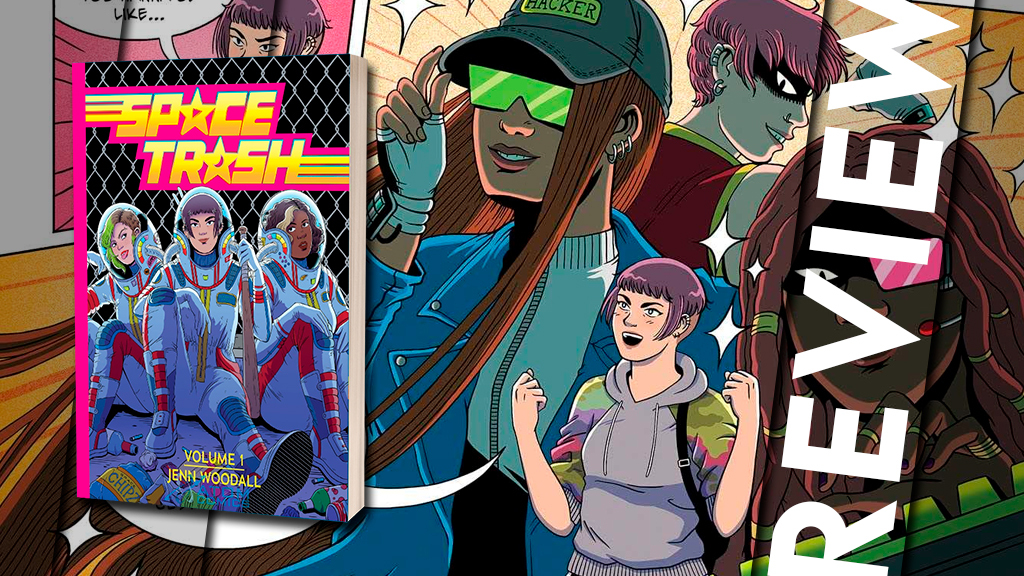
    Space Trash: Vol. 1 hails from Jenn Woodall and tells the story of three kids – Stab, Yuki and Una – as they visit abstract locations while attending high school on the moon. It’s a fascinating premise that is full of promise with the three students discovering something that could change the course of their future forever.

    As a Mass Effect fan, I’ve often wondered how cool it would be to play as Commander Shepherd before they become the legend. Given that players can pick from three distinct backstories, a prequel taking us through each background would’ve been most welcome. So the highest compliment I can pay Space Trash is that it feels like that idea came to life. Introducing Stab, Yuki, and Una amidst some colorful supporting characters isn’t a novel choice, as they might as well be this novel’s Harry, Hermione, and Ron, but making all three of them come from underprivileged communities is a really good choice by Woodall because it allows for the eventual friendship forged to actually mean something. There’s trauma that these three have experienced, and it has made them who they are. It also will have an impact on who they become, and I’m really excited to see what surprising ways that unfolds. 

    Another cool thing the author does is to set the school the children attend in the backdrop of an Earth that has been abandoned. While this all-too-quick read doesn’t give us a lot of insight into this abandoned Earth, it does give us just enough in terms of what the planet meant to these characters for the loss to be felt. There’s also this feeling that they will try to return at some point, and that feeling does cloud the proceedings a bit as it feels like more set-up is needed for that to truly mean something. What the novel does set up better is the complex system that these children are living under: a mix of Hunger Games and Game of Thrones, this dynamic makes sense considering what happened that led to the creation of it.

    All of this set-up comes to life with creative color usage and writing that is top-notch. However, having 2091 look like 1980 didn’t really help set the story apart. You can’t sell a futuristic story and then not really set it in the future, and choosing to not do so really takes you out of a well-written story. The story has queer and non-binary characters, which is great for representation, and that’s always a plus. However, the lack of care given to this world made it hard for the characters to feel truly developed — much like the world they inhabited.

  • Book Review: ‘Squirrel Girl: Universe’

    Book Review: ‘Squirrel Girl: Universe’

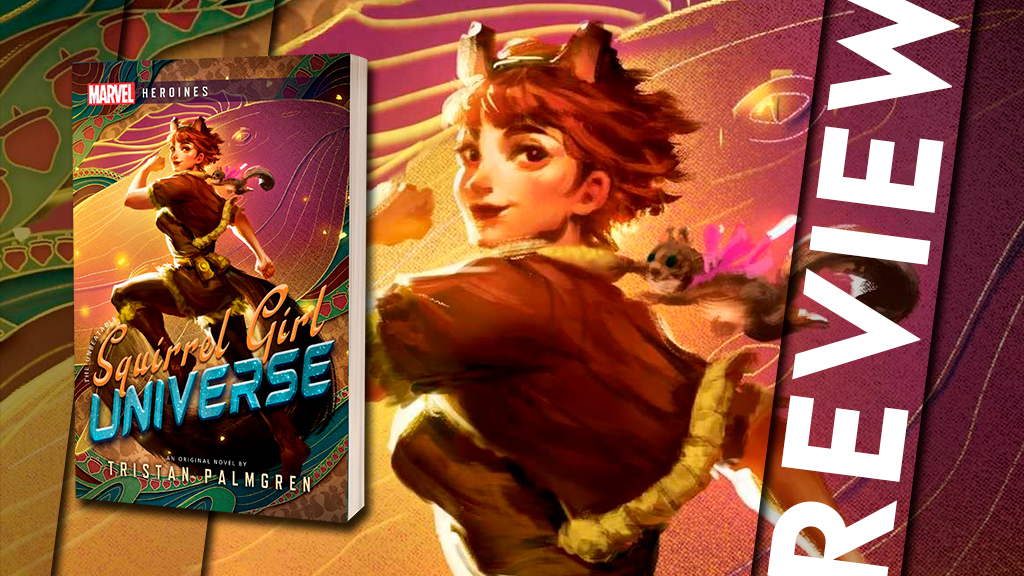
    The latest adventure for the ever-popular Squirrel Girl is heading towards bookstores in the not too distant future. I’ve had the opportunity to read an advanced copy of the latest novel in Simon & Schuster’s Marvel Heroines series. Squirrel Girl: Universe by author Tristan Palmgren is scheduled to be released on August 2, 2022.

    Squirrel Girl: Universe follows the story of Computer Science student Doreen Green, though best known as the superhero Squirrel Girl, on her latest adventure alongside her best friends as they aim to solve a mystery involving strange occurrences involving New York City landmarks. What they come to encounter becomes a plot larger than they could’ve imagined and brings the characters to numerous unexpected locations beyond their comfort zones. Their journey brings the protagonist face to face with impending massive universal stakes and potential galactic doom. Though while having to deal with such large external stakes, the internal struggles with Doreen could weigh just as large.

    Ultimately, Squirrel Girl: Universe was an enjoyable read that has the ability to leave the audience excited for what narrative twists and turns may occur. And this is a novel that certainly places its characters in unexpected situations on multiple occasions. Framed through the literary device of a time capsule, the novel does a strong job in making these events seem like the largest-scale adventure Squirrel Girl faces in her young life as a superhero. Readers will face a major challenge in trying to put down this book based on what may happen after each chapter. In addition, this novel is quite fast-paced and readers are immediately thrown into the crux of the main adventure by the end of the first chapter.

    A make-or-break for the reader’s opinion on this book will be its connection to the larger Marvel Universe. This is a story deeply tied into the lore of Marvel Comics, including numerous references beyond the scope of Squirrel Girl’s immediate world and lexicon. It isn’t enough to necessarily dissuade most readers from being able to appreciate the central plot of the novel, but Squirrel Girl: Universe would certainly be most appreciated by those who can understand at least most of the references sprinkled in throughout.

    In terms of which character will most likely connect the most with readers, Brian Drayne, aka Brain Drain certainly is the most distinct and unique character that’s part of Squirrel Girl’s ensemble. Especially with how he is framed from a literary standpoint, he will be hard to not connect with when reading the novel.

    Though what makes this novel most standout is its thematic messaging. Without delving too deep into the specifics, Squirrel Girl: Universe is a story about internal guilt and how we respond to making the incorrect decision. It’s a challenge often found in humanity, and this novel serves as a resonant way for young readers to have a better understanding of how to deal and move past mistakes made. What makes some of the best young adult novels so powerful is the ability to hold deeper philosophical discussions with the backdrop of some sort of fun action set-piece. And Squirrel Girl: Universe adeptly accomplishes this task with both excitement and heart.

    The Verdict: Squirrel Girl Universe is absolutely worth a purchase for any young adult who is an avid reader, and especially one that already has a penchant for the Marvel Universe. The one caveat might be that a reader could be even better served to have at least some understanding of the Squirrel Girl character before jumping into this novel. Though past that, Tristan Palmgren has successfully provided young adults with an exciting superhero adventure worth reading about.

  • Book Review: ‘Zatanna: The Jewel of Gravesend’ by Alys Arden and Jacquelin de Leon

    Book Review: ‘Zatanna: The Jewel of Gravesend’ by Alys Arden and Jacquelin de Leon

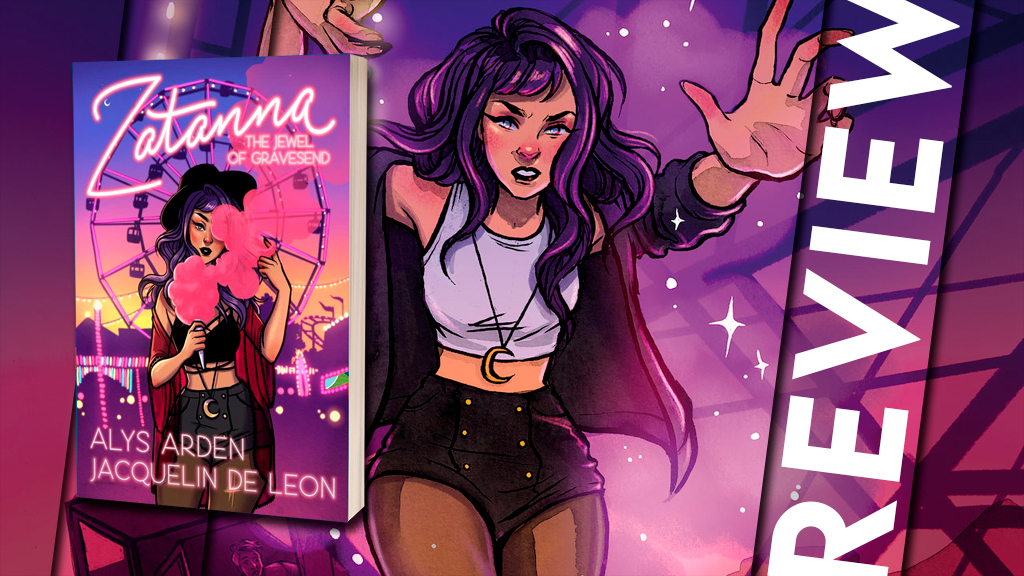
    Zatanna Zatara made her first appearance Hawkman #4 from DC Comics back in 1964. She was created by Gardner Fox and artist Murphy Anderson and has gone on to become one of DC’s most magical characters. So, it’s not entirely surprising that the character was next in line for her own graphic novel origin for young readers. While the graphic novel stumbles occasionally, Zatanna: The Jewel of Gravesend by Alys Arden and Jacquelin de Leon proves to be an exciting take on Zatanna’s origin.

    Zatanna: The Jewel of Gravesend focuses on Zatanna’s search for the truth. The story takes place in Coney Island and follows Zatanna and her family, the Starr family, during their life at the Golden Elephant. Her parents, Ezra Starr and Lola Starr, run an illusionist show on Coney Island along the boardwalk. For the young Zatanna, life in the Golden Elephant and on the boardwalk is all she knows. However, after a series of mysterious events, she soon finds herself questioning everything as she goes on the search for Giovanni Zatara. For fans of the character, Zatanna’s search for Zatara will come as no surprise. However, for those unsure of Zatanna’s origin, the search for Zatara will come as a well-executed surprise.

    Arden does a great job of crafting Zatanna’s beginnings. The way she goes about introducing her magic and the mystery surrounding it is wonderful. There are, of course, some hiccups along the way, though. At times, it feels as though The Jewel of Gravesend spends too much time on the little moments and not enough time on the big moments. This is especially the case in the second-half of the story. While it is great to see Zatanna’s relationships with her friends and Alexei develop, sometimes it felt as though some scenes weren’t entirely necessary. The most frustrating bits came as Zatanna began to come to terms with who she was and what she was capable of doing.

    As she begins to use her newfound abilities, the entire story changes as the bad guys of the story are finally introduced. While that bit is handled incredibly well, it’s frustrating seeing how quickly the story changes because it’s all over so quickly. It’s often expected these books will get sequels, or that new fans will go to the comics in hopes of learning more about the characters. Still, The Jewel of Gravesend could’ve benefited from a somewhat tighter ending. Sure, it’s okay to leave readers wanting to know more and to tease a potential continuation, but most of the bigger questions should be answered by the end to allow for new stories in the next installment.

    Even with an open ending, though, The Jewel of Gravesend is delightful. It’s a great take on Zatanna’s origin story and the artwork is absolutely stunning. The coloring, the shading, the design — all of it is great. It’s hard not to get lost in the pages of the story when the artwork is so expertly crafted.

    These stories might be crafted for a younger audience, but The Jewel of Gravesend is a graphic novel all ages can enjoy.

  • REVIEW: ‘Green Arrow: Stranded’ is Everything ‘Arrow’ Wasn’t – And It’s Delightful

    REVIEW: ‘Green Arrow: Stranded’ is Everything ‘Arrow’ Wasn’t – And It’s Delightful

    These days, it seems like everybody loves a hero with a bow and arrow. Marvel is doubling up on Hawkeyes, Katniss Everdeen is still the gold standard for young adult readers, and Legolas will probably always be the coolest member of Tolkien‘s Fellowship. Yet, one could likely argue that none of these characters have managed to achieve ‘definitive archer’ status in the cultural hive mind. That honor, for at least the last decade, has seemingly belonged to Oliver Queen. While Marvel’s early Avengers films became the cause of an industry-changing uptick in comic book movies, it was DC’s costumed bowman who managed to prove television could pull from the same bag. The CW’s Arrow debuted in 2012, and with it came a new appreciation for the titular vigilante. Green Arrow somehow found himself the center of DC’s most successful live-action universe and a genuine nominee for “most popular superhero.” The only problem was that Arrow never really showed fans why Ollie was so special.

    Stephen Amell‘s take on Oliver was dark, angsty, and violent. These attributes were explained away by the character’s time on a hellish island, with claims that nobody could go through that experience and not come out the other end bent on revenge. It’s fine when an adaptation takes creative liberties like this with its protagonist, but it can be frustrating when that altered version takes over as “the one people think about” going forward. The Oliver Queen found in DC’s comic books is a jovial romanticist, who overcame a dark past and appealed to his better nature. Arrow eventually leaned towards this concept but never committed. Luckily for all, actual comic books still undertake an existence on store shelves and online libraries. This means parents still have the opportunity to introduce children to their favorite heroes via the printed page, which facilitates a special kind of bonding you’d be hard-pressed to find anywhere else. Author Brendan Deneen seemingly agrees, as his latest retelling of the Emerald Archer’s origin, Green Arrow: Stranded, might be the perfect way to get kids into a hero whose most well-known series isn’t meant for them. 

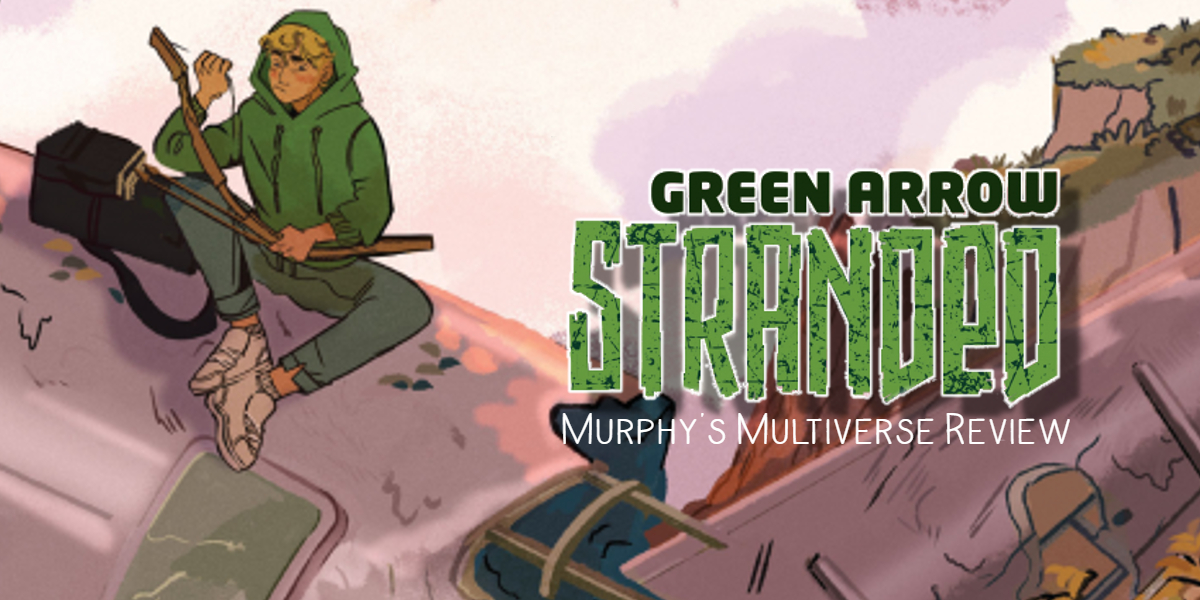
    Stranded is likely the softest, fluffiest iteration of the rather tragic Green Arrow genesis we’ve seen yet. To be clear, this is because the comic was designed to be perused by beginner-level readers and not to scar the nation’s youth. However, the reframing of a once-depressing tale as an optimistic story for kids may have accidentally, or purposefully, brought out the best attributes of its title character. Drawn with beautiful simplicity by Bell Hosalla, the plot sees Oliver, at only 13 years of age, survive a terrible plane crash alongside his dad and a fellow father-son duo, the brutish business associate Sebastian and his angry offspring, Tyler. The adults are severely wounded, and Tyler is mostly inept, so Oliver must find a way to overcome his situation. In a traditional account, this is where things would go downhill for the family, with a dying Robert Queen leaving his son to survive alone on an island for years to come. Instead, Deneen puts a more positive spin on the narrative.

    Not yet a superhero, but still wearing a green hoodie, Oliver maintains his faith and never gives up hope. The other characters in the story, especially Tyler, are shown to be less than kind to Oliver before the fateful wreck. He is made fun of for lacking guts and skill, demonstrated by his inability to take the life of an animal on what appears to be an important hunting trip. He desperately wants approval from his father, who refuses to give it to him out of some misguided belief that he’ll grow more without it. But even with all this against him, Oliver is not full of angst, or spite, or self-pity. He chooses instead to help those who wronged him, and does so without ever breaking his own youthful moral code. Ultimately, Ollie proves that his heart was simply bigger than his desire to meet the traditional standards of masculinity. For some, this notion may induce an exaggerated eye-roll, but it’s actually exactly the kind of comic book story young boys should be reading.

    With StrandedDeneen displays a redefined type of hero. The type Green Arrow has always been. He makes an effort to prove that you can find ways out of even the most worrisome scenarios without succumbing to violence or anger. In the same spirit that made Spider-Man: Into the Spider-Verse so wonderful, the message of this book is that a real hero stays true to themselves and always gets back up. Though clearly not the intent, Stranded almost functions as the anti-Arrow. Obviously, it’s strange to compare a short-form comic to a long-form television series, but Stranded soars everywhere Arrow sank. The limited series is a perfect read for any kid looking to get into comics, and does its best to teach all the right lessons along the way.
  • REVIEW: ‘Batman: The Imposter’ is an Artistic Ode to Despair

    REVIEW: ‘Batman: The Imposter’ is an Artistic Ode to Despair

    The Batman mythos come in a plethora of delicious flavors. Perhaps this is why the character and his world have been able to appeal to such a wide variety of audiences during their time in the cultural spotlight. As times change, so do Gotham City and its iconic hero. For example, in early stories, Gotham and the Dark Knight weren’t actually that dark at all. The Caped Crusader paraded around his bright city with an upbeat sidekick in Adam West‘s live-action series, engraining himself in the public eye as a campy, lovable do-gooder. As time continued, and the world became more complicated, the comics became edgier. Alan Moore and Frank Miller took the character’s troubled youth and turned it into decades of violent, gothic storytelling. Batman became angry, and the lights in his city began to dim. For a while, it’s seemed readers had already witnessed the darkest places a writer could take the protagonist. In all honesty, that may have been true, until Mattson Tomlin stepped into the ring.

    Batman: The Imposter, a three-issue limited series from the Project Power creator, isn’t especially dark because of any specific moment or event. Although, to be clear, it does have plenty of those. It earns it’s anguished tone by nature of it’s most prevalent recurring thematic device: soul-sucking despair. The story sees a young, inexperienced Bruce Wayne encountering his greatest career challenge in the form of a murderous copycat vigilante, while simultaneously falling for and running from GCPD detective Blair Wong. The world in which the book takes place is maybe more realistic than anywhere we’ve ever seen the character operate before, made evident by constant sobering revelations about the consequences of his supposedly heroic actions. When he was still credited as a writer for Matt ReevesThe Batman, the creative gave multiple interviews claiming the protagonist to be representative of “sheer human will and determination.” In his comic, now the most authentically Tomlin take on the character, he puts this opinion to the test. For every minor victory the hero manages to take, it feels there are twice as many setbacks.

    Cops are able to keep a healthy track on Batman by cutting down his deserted ziplines and confiscating his poorly-hidden equipment. Crooks are afraid of the Bat, but never fail to leave him bruised and bloodied after a fight. His single ally, Commissioner Gordon, has been run out of Gotham after only a year of Wayne’s war on crime, with a wave of criminals put back on the street for his mistakes. To top it all off, this version of the character is also without the ever-loyal Alfred Pennyworth, who is shown to have abandoned a young Bruce after the child’s sociopathic tendencies drove him to a near mental breakdown. Yes, that is correct. This is a book in which Bruce Wayne is shown to be an actual sociopath, trading in the typical socialite playboy personality for an angsty, bull-headed recluse convinced the world will never understand him. While all that may sound like a progressive downfall for Batman over the course of the Black Label series, it’s actually just the way Tomlin sets the rest of his story up.

    It’s a strange thing to read about a Batman who, having only just entered the costumed scene, really feels like he may also be facing the end of his crusade. Truthfully, it’s not really until the end of the comic that the intention of the whole thing becomes clear. The Imposter puts Bruce Wayne through the wringer not because it wants to prove how much he can take, but because it wants to show what obscenely deep-rooted emotions can drive a person to do. It is an ode to the complexities of depression. This is not to say it celebrates how immense sadness can manifest inside its host, just that it’s not afraid to explore both the highs and lows of that cerebral rollercoaster. It does this most effectively when it puts Bruce up against other characters with the same depressive qualities. Readers see his willpower when he’s put against would-be villains succumbing to their anxieties, determination when he puts everything on the line to confront his malicious doppelganger, and that small inkling of hope when he meets those that would seek to help him.

    The comic is aided by the use of a Sopranos-esque plot point, where the stubborn Bruce is forced into therapy sessions to prevent his identity from being exposed. These direct conversations are often lapped over incredible artistic design from Andrea Sorrentino, who manages to transform entire splash pages into the same symbols that the characters fear will one day take over Gotham. The added effect increases the impact of the words on the page in the same way a gorgeous score may take a good film to the next level. Ultimately, it makes for a unique comic that achieves a certain ‘film noir’ aesthetic in both its visuals and its script. Batman: The Imposter may not be directed reading for the titular character, but it’s certainly worth checking out if one would like to take a darker look into their favorite hero’s psyche.

    Source: Inverse