Tag: Gaming Review

  • FIRST IMPRESSION: ‘One Piece Odyssey’ Demo Teases Promising JRPG

    FIRST IMPRESSION: ‘One Piece Odyssey’ Demo Teases Promising JRPG

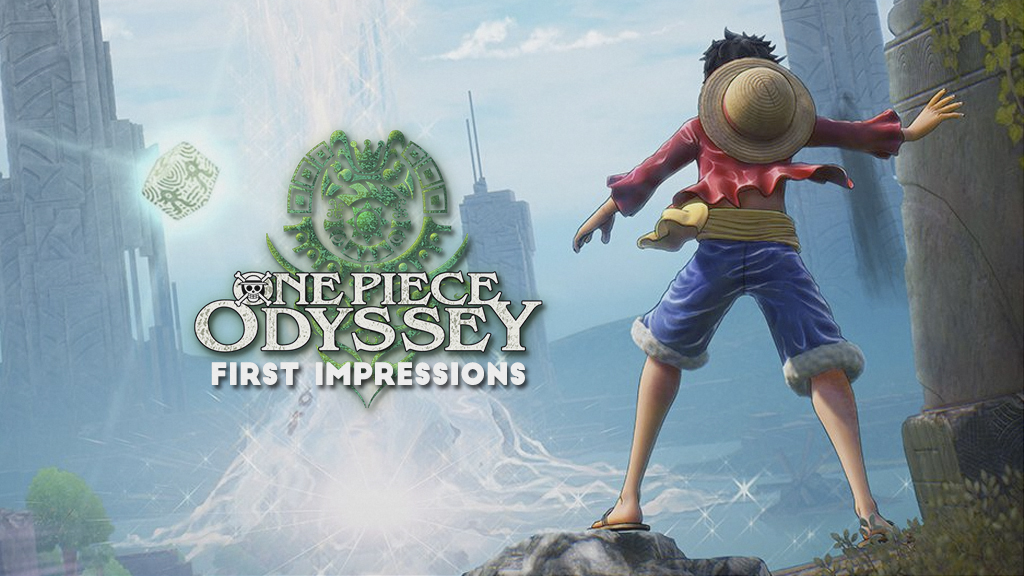
    One Piece is returning in style, as a brand new game is about to release as part of the 25th anniversary of the franchise. One Piece Odyssey was a long-rumored project and might be the franchise’s most ambitious entry into its gaming expansion. It’s the franchise’s first foray into bringing the chaotic Straw Hat crew into the world of JPRGs and trying to bring their unique energy to the normally slower-paced gaming genre. We get a demo release that offers a first look into what we can expect from the full game. As such, here are our first impressions of the game.

    The story of One Piece Odyssey is rather straightforward. The Straw Hats were sailing along the seas before a Knock-Up stream shoots them randomly into the sky. With a last attempt to escape, they end up on the mysterious island of Waford. We start the game at the moment when Luffy wakes up and his crew is scattered, which leads to us having to help them find the rest of their crew and meet some locals along the way.

    After you wake up on the shore of Waford, you’re pretty much thrown into the game. Most of your characters start off at level 40 with quite a few abilities. It lets you try out every character while getting a tutorial on how the basic combat works. The moment you enter your first encounter you’ll instantly see the basic structure of an RPG at play. Yet, there are some interesting additions that do make it stand out.

    The Straw Hats are usually very powerful on their own. So, to ensure no one is nerfed, they created a system that has multiple areas where enemies face a member of the pirate crew. You can move between these zones, but you’ll have to defeat the enemy in front of you to join another. The combat system also allows you to swap out party members per turn to make use of their abilities; though it feels a bit too powerful as theirs no penalty for switching characters on the field or that aren’t on the field.

    A lot of work went into the animations of these attacks, which are very authentic and add a lot of charm to this game. Though, sadly these aren’t always translated to the exploration as the game will fade to black with an effect when showing someone attacking a creature in the overworld. Given the work that was put into the models, it does seem like a shame they rely a bit too often on a fade to black to transition from one moment to the next.

    One drawback is that the game has not really been challenging as of now. The Straw Hats lose their abilities and reset to Level 1 through the story but you still can one-shot specific enemies. There’s not a lot of challenge and even the puzzles are quite barebones. There’s a chance that may change over the course of the story, but there was rarely a time I had to worry about anyone taking too much damage. Though, that is mostly due to abusing the party change function to just swap out a member that would do more damage.

    Still, the mechanics at play are interesting and are fun to play around with. If they start expanding on this system, it would make for a very promising JRPG, especially with the event mechanic where you’ll get a bonus if you fulfill certain requirements. There’s also a chance to use a knockback that takes care of enemies within an area fast; though not as satisfying as the knockback element in Midnight Suns. There are a lot of great elements that make these battles dynamic and interesting, which has me excited to see how they are later in the game.

    The only drawback is that the exploration is very slow, especially in the opening area. It’s not uncommon for JRPGs to take some time before they get going, but there are small elements that seem to take up more time than they should. Luffy can swing to an area by stretching his arm, but you have to wait a certain amount of time before you can move again. Once you go the wrong way during a specific sequence, the loading times take longer than they really should. You’ll even have a cutscene before you can explore only to be halted just moving forward to enter another. Pacing issues could be a problem as some aspects might drag out more than they really should.

    Still, overall, the game is very promising and the story also offers just enough intrigue to keep new and long-time One Piece fans hooked. They make some deep-cut references that feel like elements to help make Waford feel more like a part of this world. The mystery with the weird floating orb and the cubes is just the perfect amount of bizarre that’ll likely keep players guessing. Also, they nailed the dynamics of the Straw Hats with their little interactions during cutscenes, on the map, or even during cutscenes.

    The demo also gets bonus points for letting me save at the end of it, which can be used for once you purchase the full game later on. As such, you’re not forced to replay the entire opening once again and can just leisurely jump in where you left off. Still, the first impression of this game is positive even if some exploration aspects could’ve been tweaked to run longer. With many mini-worlds to visit through memories, it’ll be exciting to see what Bandai Namco has planned for this ambitious JRPG once it releases. From what the demo offers, it definitely is a recommendation for fans of One Piece and worth trying out for those new to it.

  • REVIEW: ‘Citizen Sleeper’ Is A Sci-Fi ‘Disco Elysium’

    REVIEW: ‘Citizen Sleeper’ Is A Sci-Fi ‘Disco Elysium’

    NOTE: This game was played and reviewed by Adam Cartel

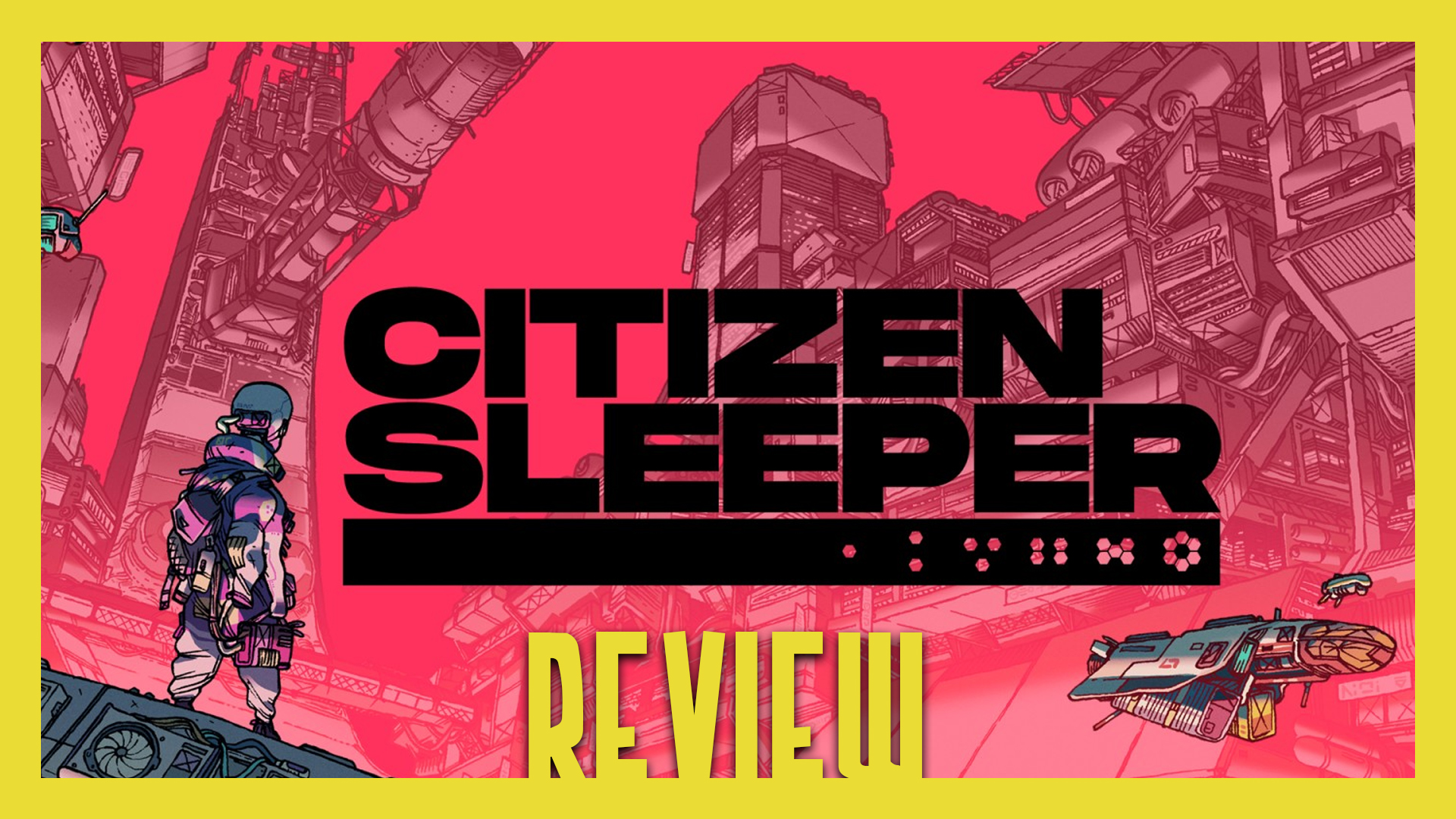
    In Citizen Sleeper, you play as the titular Sleeper, a digital consciousness residing inside an artificial humanoid body that’s slowly dying. Having escaped from an evil organization that created your kind and with very little resources on your person, you find yourself stranded on a massive space station with several factions and citizens trying to either survive everyday… or escape forever.

    You are in Erlin’s Eye, an abandoned space station that is now the home of several factions and alliances seeking freedom from corporate evil. This anarchic space town is populated with blue-collar workers, small-time businessmen, and mercenaries alike, each with their own personal or idealistic goal. This is the kind of world that your Sleeper needs to navigate in order to survive.

    If all this sounds familiar, that’s because you’ve probably played a very similar well-known game that seems like a larger-scale version of this one: Disco Elysium. They both feature an amnesiac protagonist with a deteriorating body, both set in a town with political problems, and both have roots in tabletop RPG mechanics. It’s inevitable for the two to be compared as their similarities extend beyond the base premise.

    Citizen Sleeper plays like a dice-based tabletop RPG. Every game day (called a “cycle”), the game pre-rolls a number of six-sided dice for you, which you could then spend on Skill checks in order to interact with the world in pursuit of your goals (or “Drives” as the game calls them). You have five Skills: Engineer, Interface, Endure, Intuit, and Engage. At the start of the game, you’re given the option to choose between three archetypes: the Machinist, the Operator, and the Extractor. Each of these archetypes has one Skill that’s already upgraded, and another one that’s downgraded. Whichever archetype you choose depends on how you would prefer to approach the world during the early parts of the game.

    You are then thrust into the game’s unskippable tutorial, which would make you realize that your Sleeper’s artificial body is built to die through planned obsolescence. Not only will you have to get a job, but you’d also need to find a way to stay alive by properly managing your Condition and Energy. Fewer dice are rolled for you every cycle for each time your Condition drops a stage. Your Condition, by the way, drains faster whenever you have low Energy. A typical cycle in the world of Citizen Sleeper goes like this: get your dice, pursue one of your Drives, gather resources, discover unexplored areas, spend all of your dice on required Skill checks, make sure your Condition and Energy are high before you sleep, and end your cycle.

    The graphics are above-average for a game using the Unity engine, and it’s smartly presented. It goes without saying that the character designs look great, and pair well with the cel-shaded look of the Eye’s 3D model. Despite being set in the blackness of space, the game’s aesthetic is easy on the eyes thanks to the smattering of cool blues, yellows, and pinks on its color palette.

    The lack of a controllable player avatar might be a complaint for some people, but it actually makes sense for Citizen Sleeper. Navigating a vast abandoned space station as a controllable character would be too much for the Unity engine to handle, let alone for any game developer. For comparison, Disco Elysium has a controllable character but a much smaller map in relation to it. In lieu of walking, Citizen Sleeper lets players scroll through the wheel-shaped game world and click the area that they want to explore.

    As for music, lo-fi sci-fi compositions make up the entirety of the soundtrack. It makes for a very relaxing gameplay experience… perhaps too relaxing, at times, especially after multiple playthroughs. In fact, there is no memorable song: it’s all background music that your brain would eventually forget. That may be a creative decision, but this was also one of the minor concerns with Disco Elysium’s soundtrack, which coincidentally sounds similar to Citizen Sleeper’s.

    Citizen Sleeper boasts several lines of narrative, naturally-flowing dialogue, and well-written characters that all, once again, are reminiscent of the style present in Disco Elysium. Just like the latter, it also starts with a disembodied voice doing a deep monologue about consciousness while in the void and ends with the character waking up in a sorry state. Unlike Disco Elysium, however, there is no option to turn on dubbed dialogue.

    Despite the lack of voice acting, you can still easily connect with the diverse cast of characters living in the Eye. Each one has unique personalities that are effectively portrayed through words and has backstories that make sense within the whole narrative of Citizen Sleeper. It doesn’t take long for anyone to feel invested in any one character, be it a simple street vendor or an ethereal digital entity. It’s not impossible to find yourself tearing up for a fictional character made up of pixels on a monitor screen because of this game.

    Citizen Sleeper has multiple endings depending on the choices that you’ve made throughout the game, and the game gives you enough leeway to change your mind even at the penultimate point before your final decision. However, replaying the game is somewhat discouraged by the lack of save slots and manual saves. The game only provides you with three autosave slots. With all that said, the game does get repetitive after multiple playthroughs, and eventually does feel less like an RPG and more like a cow clicker. Once you figure out the optimal way of doing things, you’ll find yourself walking down the exact same path on any other playthrough, unless you willingly deviate from it.

    Overall, Citizen Sleeper has solid gameplay for a narrative-based RPG, but it could still be better. Despite being a short game with little replay value, going through Citizen Sleeper’s well-written story is worth at least a second playthrough. Jury’s out on whether creator Gareth Damian Martin really was inspired by Disco Elysium when he came up with Citizen Sleeper or not, but it’s definitely not a bad thing for a developer to be inspired by a universally-acclaimed video game like it. Taking the good aspects of an existing game and further improving upon it is a key to innovation within the gaming industry, and Citizen Sleeper is a step in the right direction for its genre.

  • REVIEW: ‘Kaiju Wars’ is Monstrous Fun For Everyone

    REVIEW: ‘Kaiju Wars’ is Monstrous Fun For Everyone

    The year is 1976. Jimmy Carter is running for President, the orbiter Viking 2 has landed on Mars, and you’ve just gone to your local theater to see Paul Leder’s A*P*E. In the film, you watched as a ginormous gorilla terrorized South Korea. Buildings fell, villages were destroyed, and it took the military entirely too long to bring the beast down. You think to yourself, “I really enjoyed that ridiculously campy movie, but honestly, I feel like maybe I could have done a better job handling the situation than any of those incompetent characters.” Then, after some contemplation, you may think, “I also wish the visuals were a little less ‘guy-in-suit’ and a little more ‘chaotic pop art.” Well, flash forward about forty-six years and both of your dreams have come true in the form of Foolish Mortals’ monstrously fun new strategy game Kaiju Wars.

    In Kaiju Wars, you are the Mayor of a fictional city under siege by rampaging Kaiju giants. You have a military advisor, prone to aggressive actions and filled with tactical knowledge, and a scientific advisor, whose level head and peaceful tendencies help you minimize damage and keep citizens alive. The ultimate goal of each level is to use both your military weaponry and the power of science to stop the Kaiju before it tears down a laboratory with the scientist in it. You can defeat the monster outright, gunning up or bombing down enough to scare the beast away, or you can play defense, using obstacles and emergency evacuations to fend the monster off until a scientific breakthrough can win the day. The player accomplishes this by strategically placing airfields, army bases, and new labs around the given map, choosing what to deploy from a variety of different aircrafts, motor vehicles, and experimental projects. These can then be moved and fired in a turn-based format opposing the Kaiju, whose repetitive patterns make it mostly pretty easy to ascertain their next move. Clicking on the boxes of either advisor gives you helpful tips, each in their own special way.

    This is the base concept, but the game does a great job of switching it up occasionally to keep things interesting. For example, some levels leave you with only a single advisor, while others leave you without any of your typical equipment. This forces the player to change tactics and adapt, using prior knowledge and skills to beat stages in creative new ways. This may sound like it could get stressful or monotonous, but it’s actually pretty engaging. The game is easy enough that it doesn’t cross the line into Dark Souls territory, while still giving enough of a challenge that you may have to give some levels more than one try. It’s the perfect mix to keep you entertained and coming back for more. Also, it makes the game playable for a wider audience. The habitual strategy gamer can always up the difficulty if they’d like, and the casual time-killer can still have a blast without overstressing.

    When people consider playing strategy-based games, it’s often accompanied by the fear of boredom. Where mainstream beat-’em-ups and platformers have a reputation for colorful levels and action-packed adventures, the term “strategy” makes the majority of potential players think solitaire or Risk. Too much thought, not enough release. Yet with Kaiju Wars, this couldn’t be further from the truth. The game is just as frantic and full of life as any good action-based monster story should be, and even better, it manages to pull this energy off without compromising the required mind-aerobics of the strategic category. To liven things up even more, an additional boost of adrenaline comes from the sub-genre space the gameplay occupies. Although marketed as turn-based strategy, it truthfully plays as more of a tower defense. This gives each mission an added sense of urgency and heightens the pace with which you play. The simple mechanics also ensure no turn takes too long, as there are only so may moves one can make per round.

    Above all else, however, is the aesthetic with which the developers have chosen to display their work. As soon as the player gets to the home screen, they’ll know they’re in for a good time. Presented as something of a war room, the interactive main menu allows you to select objects that either lead you to something useful or are just sort of fun to mess around with. The campaign is shown through the turning pages of a comic book, the exit sign by the door is actually how you leave the game, little toy soldiers fire on a plastic turtle, and the aforementioned movie A*P*E is actually playing on screens in the background! Small details, like the fact each movie clip comes with a link to the full movie on other sites, radiate the passion that was so obviously held for the project by all it’s behind-the-scenes team. Another place to visit in the room would be the map, which activates another game mode and allows you to design custom stages to challenge yourself and other gamers.

    The bright pop-art used through every aspect of Kaiju Wars injects the game with an energetic, vibrant feeling. Even when you lose a turn and are forced to watch the Kaiju swipe at buildings or emerge from the ground, part of you will be excited just to see the neat little animation that you know will play before it. Foolish Mortals has a great sense of humor as well, giving players the ability to name everything in the game, including Kaiju and their own honorific, however they please. They even incorporate exciting surprises into the gameplay, with a particular standout being the fighter jet that transforms into a robot. Basically, Kaiju Wars is everything you could ask for from a modern tower defense. Engrossing, hilarious, and non-stop fun for everyone.