Tag: Movie Feature

  • Star-Lord Cannot Die in ‘Guardians of the Galaxy Vol. 3’

    Star-Lord Cannot Die in ‘Guardians of the Galaxy Vol. 3’

    Somebody(s) will die in Guardians of the Galaxy Vol. 3. James Gunn has promised an emotional conclusion to his trilogy and we know that the film is the last ride for this version of the Guardians. Vegas should probably open the betting line on who fans think will die in the film (maybe they already have) and pretty much any death will pack a heavy emotional punch, but there’s one character who should have a lot more gas in the tank in the future of the MCU: Star-Lord. Marvel Studios Peter Quill absolutely cannot die in Guardians of the Galaxy Vol. 3.

    Putting aside the argument that could be made about just how hard it might be to actually kill Peter Quill in the first place, Quill needs to survive the events of the final entry in Gunn’s trilogy. Quill has already proven himself among the universe’s greatest heroes, saving Xandar from destruction at the hands of Ronan, participating in the Battle of Titan and the Battle of Earth; however, should Marvel Studios so choose, Quill’s best days could still be ahead of him as well as one of his greatest friendships.

    Surviving Vol. 3 would also mean that whatever comes next for Quill would come from someone other than James Gunn. Gunn has carefully crafted Quill’s arc over the course of the 3 Guardians films and had input into the character’s appearances in Avengers: Infinity War, Avengers: Endgame and Thor: Love and Thunder. Should he survive Vol 3., allowing a new team of creatives to put him on a new path might not be a terrible choice. Chris Hemsworth has indicated that being allowed to reinvent the character has kept him interested in coming back for more adventures as Thor, so it’s possible that Chris Pratt might find a similar chance equally as intriguing. To that end, having Quill go on some solo adventures through the galaxy, as he did in his early days in the comics might result in just that sort of shift in characterization Or, should they be so bold, they could follow Al Ewing’s recent Master of the Sun arc. These solo adventures could be the subject of one of Marvel Studios Special Presentations or a Disney Plus series. Going on a series of solo adventures could be just the type of change Quill might need before facing his biggest adventures yet.

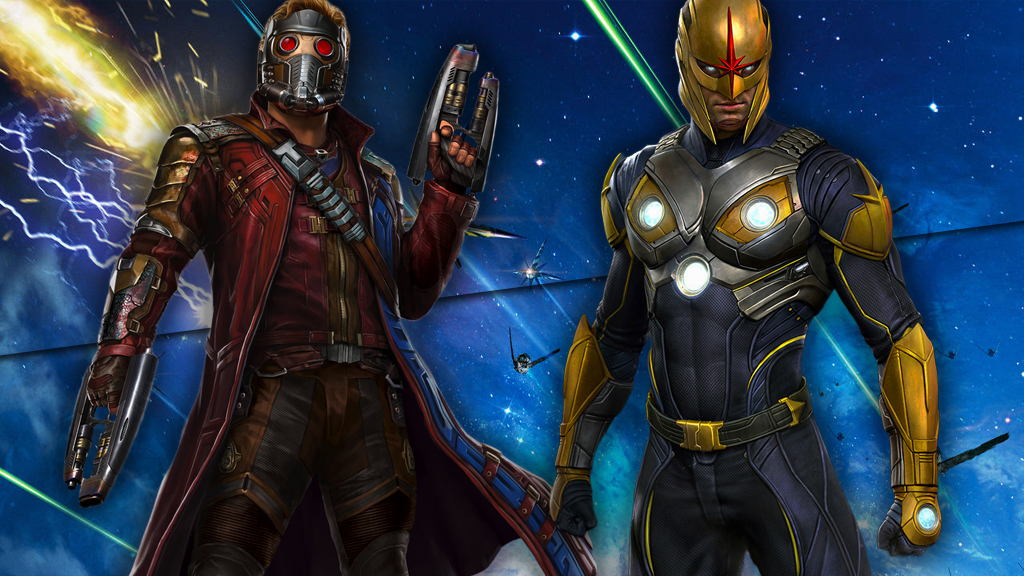
    Over the course of Marvel Studios Infinity Saga, the ebbs and flows of the relationship between Tony Stark and Steve Rogers helped push the plot of the shared narrative going. The tension first felt in Avengers erupted in Captain America: Civil War and left Earth without its Mightiest Heroes when it needed them most. As Marvel Studios moves deeper into its Multiverse Saga and beyond and, hopefully, look to develop more stories in the cosmic corner, a similar relationship could develop between Quill and another cosmic hero who is set to enter the MCU soon: Nova. While Nova was a central figure in Marvel Comics’ modern cosmic comics, Star-Lord was right there beside him most of the time and the two developed a rivalry and a friendship worthy of being told on the screen. While Quill has already done his fair share of saving the universe, pairing him up with Nova as they face threats such as Annihilus and a war that threatens to destroy the galaxy echo the Stark-Rogers relationship and fuel the future of the MCU’s cosmic stories.

    Completing such an arc would likely require Pratt to sign on for another decade or so of MCU projects. At age 43, he’d be playing Star-Lord into his mid-50s, putting him in the company of Robert Downey Jr. who was 53 years old when Avengers: Endgame was released. As Pratt ages, his perspective on playing the character would likely shift, allowing him to find corners of the character he may not have been able to explore 8 years ago when Guardians of the Galaxy hit theaters. In this way, it seems that both Pratt and Quill may have more to give, allowing one of Marvel Studios’ most beloved heroes to keep on keeping on. If Marvel Studios decides to invest as heavily in the cosmos as it did on Earth in the Infinity Saga, Star-Lord absolutely has to be along for the ride. For that reason, Star-Lord cannot die in Guardians of the Galaxy Vol. 3. There’s too much left in the tank both in terms of stories to be told and character development to let Pratt and Star-Lord fade away.

  • It’s Time for Old King Thor to Join the MCU

    It’s Time for Old King Thor to Join the MCU

    I am Thor Odinson. King of a broken Asgard. Last of all the gods. And today I will try yet again to see Valhalla. I vaguely remember how this started, so long ago, with a dead god floating in the sea and later a little girl’s prayer on a world without gods, and now this is how it ends. With blood and thunder, with hammer and sword, with one last stand at the gates of heaven. Whatever happens now, whatever my fate, know that I face it like a god.

    Imagine a Thor movie starting like that, with words ripped right from the page of Jason Aaron’s epic exploration of Thor, and you’ll understand which way we think the fifth installment in the Thor franchise should go. Thor is the only solo character so far to receive four films. While Ragnarok reinvented the franchise after the uneven The Dark World, Love and Thunder veered drastically into Bad Marvel territory. It still had its enjoyable parts (The Mighty Thor was a highlight and the end credit scene was a nice touch), but an under-utilized villain who didn’t do much god butchering and some awful attempts at humor left us with a bad taste in our mouths. One could argue that Love and Thunder was way worse than Eternals, a movie that gets so much more scorn than it deserves. Still, there is a way to reinvent Thor one more time, while also setting the stage for what’s to come, and Marvel need look no further than Jason Aaron for inspiration. 

    There would have to be some adjustments made, but a story where Earth-616 Thor goes on a multiversal adventure and meets some of his other selves would give Chris Hemsworth a chance to play multiple versions of Thor. Sure, you’d get some comedy, but it could be a real introspective look at a character who has lost more than almost anyone in the MCU. You could put Hercules in this, building off of the Love and Thunder end-credit scene, and have Hercules hunting Thor across the multiverse while Thor goes on a journey to find himself.

    Thor could embark on this journey as a response to his grief for losing Jane while trying to teach Love about what it means to be a god. Marvel has really shown different sides of how people deal with their grief during Phase 4: with Wanda never moving past it, and the Wakandans burying themselves in their work to mask it. Thor would be the first character to actively run from their grief. While the idea of a multiversal adventure may seem similar to what Doctor Strange did in Multiverse of Madness, the difference here would be that you could explore what seeing different versions of himself means for Thor. Imagine a Thor that has lost Cap, Iron Man, Black Widow, and Jane Foster meeting a Thor who never returned to Asgard and stayed with Jane. Envision Earth-616’s Thor, a proud member of the Avengers, meeting a Thor who was an adversary for the Avengers. That sounds like the kind of thing Hemsworth is alluding to in what he wants to see in terms of character growth and the opportunity to do something different. Tying his own self-exploration (he saw Thanos coming and didn’t kill him, he didn’t see Gorr coming and couldn’t kill him, and he now wants to be ready for whatever is coming next) into the overarching multiversal war that is coming means that Thor gets the chance to step into the limelight as a leader of the Avengers as his life is winding down. Whereas King Thor fought Dr. Doom for almost 100 years, you could have this version of that character fighting Kang for almost 100 years. 

    Because Loki wasn’t pruned from existence after stealing the Tesseract, there is now an Earth where Thor actually becomes King substantially sooner than he was set to in the Earth-616 timeline. With no Loki to lull Odin into his eternal sleep, thereby replacing him on the throne, you have a Thor that returns to Asgard with no brother and no Tesseract. Putting that grief aside and stepping up to take the throne, he would stand to inherit the Odinforce upon Odin’s passing: in one of the What If…? episodes, Loki becomes King shortly after Thor comes to Earth and is killed by the Wasp, so while one would assume it is Loki’s trickster ways that lead to Odin’s death, it could be the banishment of his son and true heir. Earth-616 meeting this Thor, who warns him of a variant of Kang The Conqueror that he has been at war with, could set the stage for Thor versus Kang before Avengers: The Kang Dynasty

    Earth-616’s Thor being warned of Kang by King Thor would be the first part of this journey. However, having this variant of Kang kill the multiverse’s King Thor so that Earth 616’s Thor becomes the new King of that world’s Asgard would finally allow Hemsworth to be King, briefly. It would be him taking the throne begrudgingly while trying to convince Hercules that they should work together to defeat Kang. Hemsworth would be moving closer to the Thor we see in Avengers: Endgame, albeit with more on his shoulders and returning to a point where he felt a responsibility to Asgard’s people. Having Earth-616’s Thor seek Kang out for revenge much sooner than he’s meant to could really up the ante in terms of what awaits the Avengers. Not only would this confrontation bring Kang The Conqueror from Quantumania’s quote about “have I killed you before” into focus, it lets the general public know that we haven’t met the worst version of him yet. Because I would have Kang kill Earth-616’s Thor and send him to Valhalla. This death would be the catalyst for Hercules swearing to protect Earth-616 for Thor in the war ahead. 

    In the Jason Aaron King Thor run, the only thing that can bring Thor back from Valhalla is the Phoenix Force. In that regard, he’s almost immortal. Saving a bearded Thor’s return, perhaps with the Necrosword in his possession, from Valhalla for Avengers: Secret Wars with all the fallen Avengers (Iron Man, Black Widow, Mighty Thor, Loki, a Star-Lord that dies in Guardians of the Galaxy Vol. 3, Ant-Man after Kang turns him into ant dust) would top the portal scene from Endgame

    All hail King Thor. It’s time. And let Gareth Evans direct it.

  • From Page to Screen: Namora, the Sea Queen

    From Page to Screen: Namora, the Sea Queen

    Black Panther: Wakanda Forever is now in theaters, and when audiences get their chance, they’ll also meet all the new characters introduced within it. While much of the discussion surrounding the film has been focused on Namor and Riri Williams, there are also a handful of other Marvel Cinematic Universe debuts quietly included in the highly-anticipated sequel. Among the less-talked-about is Mabel Cadena‘s Namora, the cousin of Tenoch Huerta‘s undersea monarch and a character with rich history in Marvel’s comics. Of course, Namora doesn’t get quite as much time to shine onscreen as her more-popular relative, but she does manage to leave a mark worth exploring. As such, Murphy’s Multiverse will handle the duties of dissecting her origins from some of America’s earliest funny pages and comparing them to what fans see in Wakanda Forever. It’s humble work, but somebody has to do it.

    Comics – Namora, the Sea Queen

    Namora’s early days of existence are a bit wonky, considering where she would end up decades later. When she debuted in 1947’s Marvel Mystery Comics #82, nearly 20 years after the first appearance of Namor, she was not portrayed as being related to Namor at all. In fact, there was even some romantic chemistry established between the eventual cousins. Fortunately, this was retconned and cleared up in later books, which instead revealed a familial history between the two. Originally named Aquaria Nautica Neptunia, the future “Sea Queen” was, much like Namor, born a hybrid mutant to an Atlantean father and a human mother. Biologically the cousin of the great Prince Namor, the young Aquaria soon had her name changed to reflect her heritage. Namora, based on the Atlantean term for “Avenging Daughter”, after Namor, the Atlantean term for “Avenging Son.” As is apparently common in her family, Namora also had pink skin, which she inherited from her mother in the same way Namor inherited his human appearance from his father. Although, unlike Namor, Namora’s skin only faded to pink from blue once she reached adulthood.

    Namora spent most of her early years as Namor’s close friend and adventure companion, after earning his respect as the only person in Atlantis who could match his strength and wit. However, where Namor confined himself to the oceans and maintained his loyalty to Atlantis, Namora was often more intrigued by her human origins and eventually made the move out of Atlantis and onto the surface world. After years of fighting strictly at the side of her royal cousin, Namora finally went on a journey of her own, taking a more heroic stance than Namor and saving lives across the globe. This period would see Namora on a wide variety of escapades that included battling fascist forces, teaming with Earth’s Mightiest Heroes, joining Ulysses Bloodstone’s fabled Monster Hunters, and even finding love with two different men – Talan, an honorable Atlantean, and, believe it or not, the famed Russian hunter Sergei Kravinoff.

    Eventually, Namora would become involved in a conflict that would cost her life. After a fiasco with Talan and the pressures of marriage left her feeling unwelcome in Atlantis, Namora relocated to the neighboring Lemuria, an underwater home for an ancient race of Deviants, with a newborn daughter (actually a secret clone named Namorita) in tow. There, she found herself targeted by Llyra, a mutant inhabitant of Lemuria who saw Namora as competition. Llyra would eventually poison Namora, sealing her corpse in a coffin, where it would lay for decades before being discovered by Jimmy Woo and the Agents of Atlas. That group manage to resurrect Namora in modern times, where she becomes a member of their team, discovers he “daughter” has taken her place on Earth for the last several years, and becomes involved in many major events that define the time period, such as World War Hulk, Secret Invasion, and the following Dark Reign. She even took action against her cousin during the Secret Empire era, leading a rebellion against his tyrannical rule and ultimately overthrowing him.

    MCU – Namora

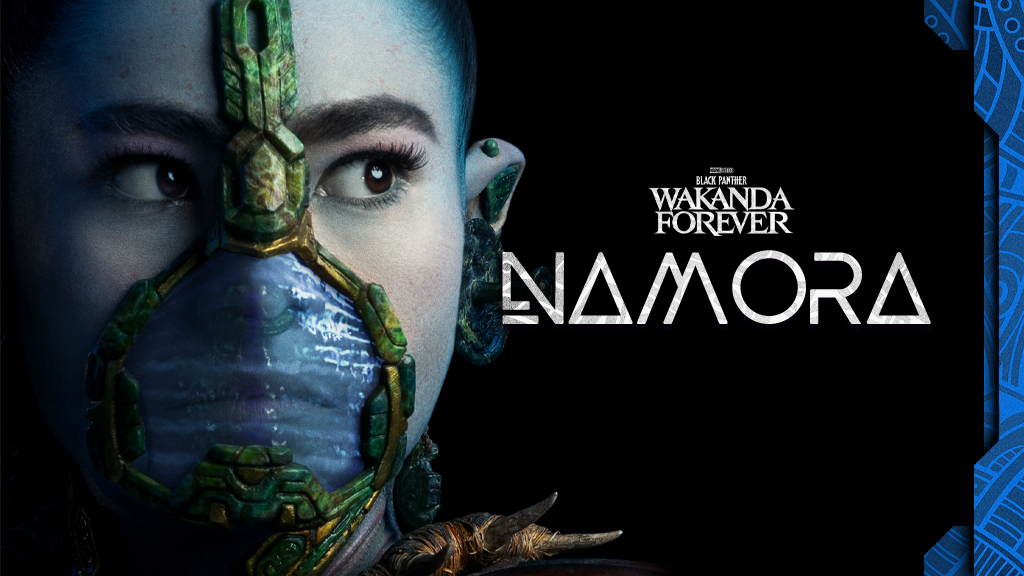
    Namora’s presence in Wakanda Forever is a far cry from her storied history in Marvel lore, but it’s likely only the beginning for the character in the MCU. Her backstory as Namor’s cousin is not explored or elaborated on, but the fact the film maintains her name as Namora instead of Aquaria is a good sign the familial relation is still there. Much like the early source material, Namora appears to be a bit younger than Namor, and functions primarily as his second-in-command of Talokan. She seems to be his confidant and closest ally, and the only one able to question him to his face. Unlike her comic counterpart, Namora is not a mutant and is featured with blue skin when active on the surface world. She cannot breathe surface air without a mask, and it’s unclear if she is as powerful as Namor, furthering her from the abilities she possesses in the books. There is also a line in which Namora mentions always having wanted to fight by Namor’s side, implying that they did not spend their youth adventuring in the way they had in Marvel’s comic universe.

    The end of the film hints that Namora could have a larger role to play in the future of Talokan, but for now, she’s mostly just a formidable warrior and a trusted member of Talokan’s hierarchy. Alongside Attuma, she is often sent to do the work unfit for Namor himself. She is involved with the initial attacks on the United States government and Wakanda and is a key player in the taking of Shuri and Riri Williams from Massachusetts to Talokan. While in the comics she is more open to the surface world, the MCU version of Namora is far more nationalistic and is unable to understand why, in the end, Namor chooses to trust Wakanda and rescind his attack on land-dwellers. Luckily for fans of the character, there is plenty of room for her to grow, and Wakanda Forever serves as an excellent base for Namora in the MCU.