Tag: netgalley

  • REVIEW: ‘Teen Titans Academy’ Vol 1 is Enjoyable, With a Few Missteps

    REVIEW: ‘Teen Titans Academy’ Vol 1 is Enjoyable, With a Few Missteps

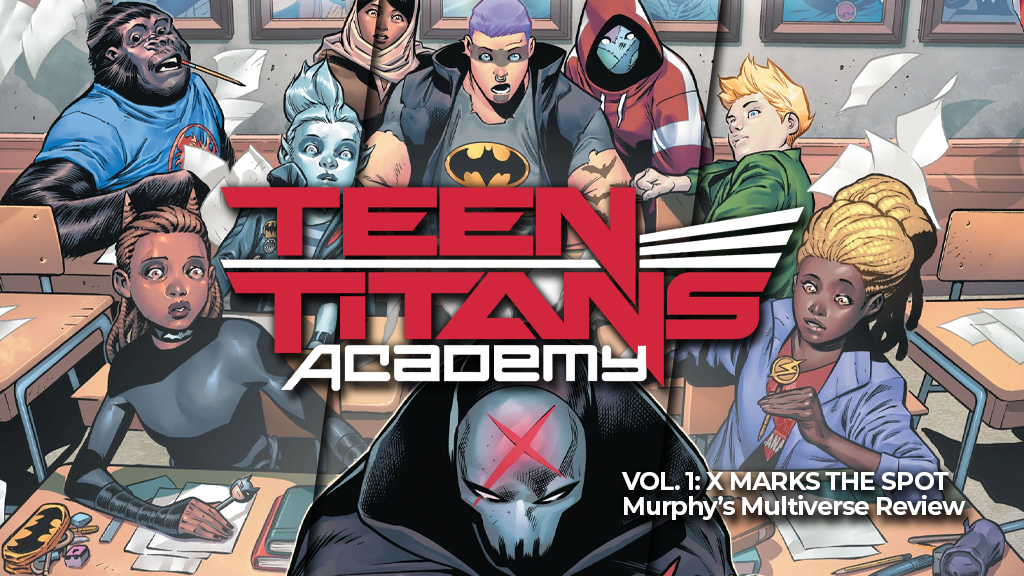
    The Teen Titans have been a staple within the DC Universe since their inception at the hands of George Perez and Marv Wolfman, and the team has seen quite a few revamps throughout the years with its alternating roster. As excellent as those takes might’ve been, Future State and Infinite Frontier set out to do something different with Teen Titans Academy introducing a whole new generation of Titans.

    Teen Titans Academy serves as the prequel for the events of Future State: Teen Titans, where we see the surviving Titans reel with a world-shattering event. Academy is the story leading up to that; this volume helps readers to become more acquainted with the students at the academy before most of them meet a grisly end.

    The characters here are one of the story’s brightest gems, introducing us to students such as Summer Zahid, Totally Tubular, Gorilla Gregg, Bolt, Tress, Dane, Matt Price, Brick Pettirosso, and Stitch, a nonbinary ragdoll who is the apprentice of Doctor Fate. The most interesting of the bunch is the Batpack, a group of orphans rescued from an orphanage that was selling children off for use in science experiments. Megabat, Bratgirl, and Chupacabra were rescued by Nightwing and accepted into the academy. They are fun new additions and could technically be considered members of the Batfamily who are so ripe for their own solo title, it would be a shame to see them fade into the backlog of DC characters who aren’t getting their time to shine.

    The story does fun things with the characters to really build them up and creatively explore their backgrounds. Alinta, aka Bolt, has a standout origin here, revealing Amanda Waller saved her not so long ago, and owes her big, like allegiance to Task Force X big. It feels like the writers figured they’d done enough though, after spotlighting a character for an issue it’s like the focus is ripped away from them and we don’t see them again for a while. Some of the characters here, booming with potential to explore, are kinda just left in the dust as it can feel as if the series is lacking direction. While the stories we are getting in this run with Stitch and the Batpack are great, it would be nice to see the other students like Miguel, Summer, and even Gorilla Gregg, the nephew of Grodd factored into the story more instead of being used when it is convenient to the story. While they are crucial it can at times feel like the OG titans are overwhelming the story just a bit, but the story does route focus back to the students.

    While these solo stories are good, what I’d really like to see moving forward is the students coming together and learning to work as a team, I mean that’s the whole point of them being at the Teen Titans academy, after all. It would be much better to see the students actually working together and developing alongside each other, working much better in both their favor, as well as the story’s favor.

    The main focus of the story is the mystery behind who the new Red X is; Red X is, of course, the brief alter-ego of Dick Grayson in the Teen Titans animated series who made his comic book debut in 2021. The mask has been picked up by another, coming and going from Titans tower as he pleases while the Titans freak out over it. The mystery would be more interesting if the series made an effort to get us to care about Red X. While he’s a cool-looking character, he is also a massive tool, and isn’t very likable with what they are doing with him here, crafting him as on a one-man crusade that just doesn’t seem noble enough to care.

    Thankfully, this is only Vol. 1 of the story and is only comprised of the first few issues of the run. Even with there still being more to read, the story here shouldn’t feel unfinished and should be able to stand on its own. Teen Titans Academy was a creative path to navigate with a lot of potential to spotlight the new characters some may be meeting for the first time. 
  • REVIEW: Action Comics’ ‘Warworld Rising’ is More Brains Than Brawn

    REVIEW: Action Comics’ ‘Warworld Rising’ is More Brains Than Brawn

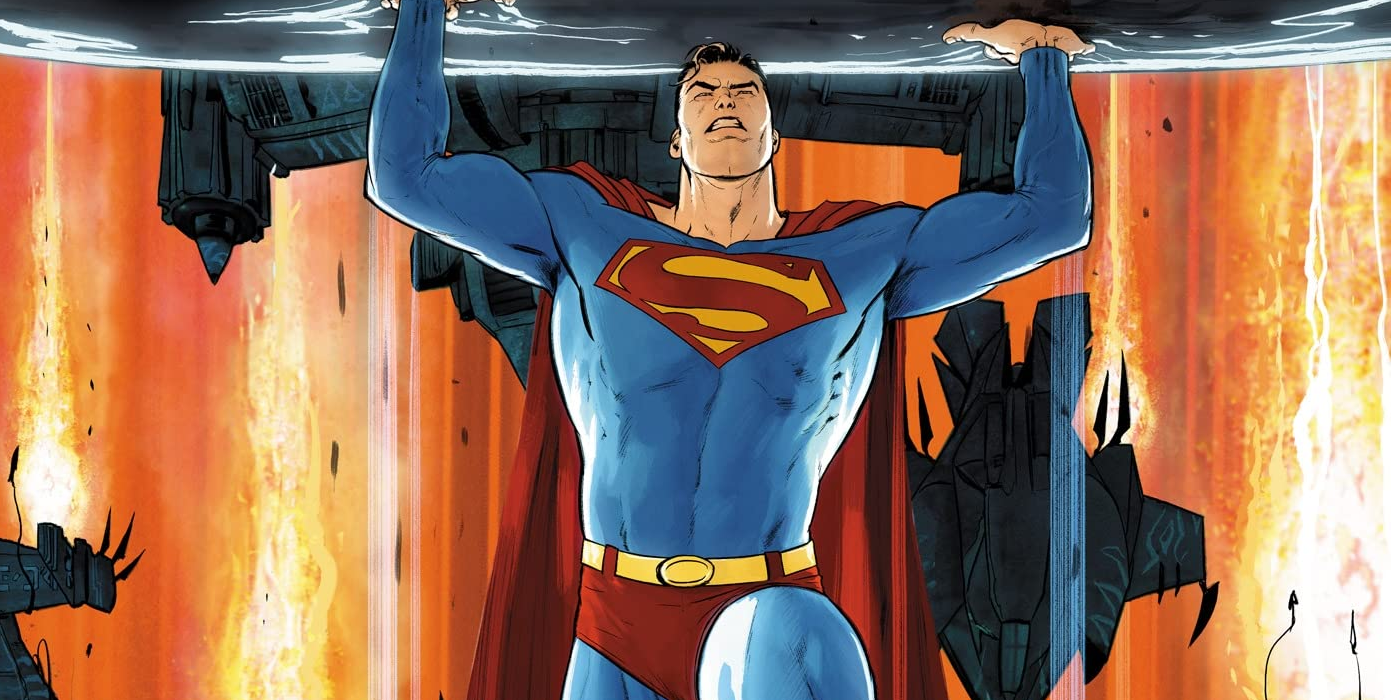
    Admittedly, I’ve never been much of a Superman guy. This is not to say I don’t appreciate his value as a character, which I’ve actually really come around to in the past few years. It’s just that, in the Man of Steel’s extremely long history, I’ve come across very few stories that have managed to grip me. The age-old complaint about the Last Son of Krypton, one that anyone reading this review has probably heard on numerous occasions, is that he’s a little too powerful to be interesting. If he can survive anything, and save anyone, then the stakes can never really be high enough to engage the reader on any significant level. The solution to this, of course, is to challenge the hero mentally rather than physically, a tactic that has been tried time and time again. While a lot of these psychological threats have obviously paid dividends for plenty of fans, they just never really pulled me in the way I’d hoped. Then I read the latest from Action Comics, Warworld Rising, and realized just how intriguing Superman can be.

    The genius of Rising, expertly written by Phillip Kennedy Johnson, is in the type of mental anguish it chooses to push upon its protagonist. Instead of simply squaring Superman up against somebody smarter or more dangerous, the story gives Clark a moral conundrum that impacts nearly every facet of his life. Surprisingly, this is achieved through the use of a villain typically better known for his pure brutality than any form of advanced trickery. Mongul, the masochistic ruler of Warworld, sends a group of ancient, enslaved Kryptonians (or so they seem) to Earth with the aim of emotionally manipulating Superman toward his untimely demise. The plan works like a charm, with a distraught Clark knowingly heading straight into the trap. Normally, this would not be a cause for concern among fans. A fully powered Superman should have no problem jetting off to another planet, kicking it’s leaders bum, and then heading home in time for dinner. However, Johnson uses several pre-existing plot points to install reasonable concern around the situation for both the characters in the story and the readers at home.

    It is established early on that Clark’s powers, for whatever reason, are starting to falter. While Kent himself is not overly concerned, Batman shows a decent amount of hesitation, which usually means there’s a genuine problem at hand. This information, coupled with Jon Kent’s chilling warnings from time spent in the future that Clark is scheduled to soon disappear from history books, aids in heightening the suspense around every decision Superman makes. The character no longer feels infallible, which suddenly makes his and Lois’ constant assertions that he “always comes back” appear foreboding. If Mongul’s plan wasn’t already good enough, he also finds a way to take any form of help from the Justice League off the board. Along with the Kryptonians, an immensely powerful Warworld artifact finds its way into the ocean, causing a political conflict between the United States and Atlantis that threatens large-scale war. With the League preoccupied with humanity’s inability to find peace, Superman is left to deal with his personal obligations alone.

    The book leaves off on a massive cliffhanger, leading directly into a follow-up arc that presumably concludes the whole shebang. Having previously stated that I’m not a huge fan of Superman comics, the fact that I’d like to purchase the next volume should speak to just how good this collection of issues truly is. On top of giving its leading man some juicy drama to chew on, the commentary on human nature and the evils of war and slavery are reason enough to buy the comic on their own. I would support the creation of an entire series of stories that’s just the members of the Justice League sitting in their war room, discussing how they should approach matters of international concern. The issue in question is akin to the excellent Japanese film Shin Godzilla, in which the first Kaiju attack is shown entirely from the perspective of government officials who have more than just human safety on their minds.

    Warworld Rising is Superman at his very best, willing to sacrifice everything if it means even one innocent person can go home to their family. It’s moral and political intrigue on a level few Superman stories have achieved with such palpable authenticity. We’ve seen writers claim that they’ve devised the final Man of Steel story in the past, but the thing that sets this one above and beyond its competition is that it really does feel like Superman may not make it out alive. Of course, he likely will, but any comic that makes you doubt that even for a second is one worth putting on your shelf.

  • REVIEW: ‘Green Arrow: Stranded’ is Everything ‘Arrow’ Wasn’t – And It’s Delightful

    REVIEW: ‘Green Arrow: Stranded’ is Everything ‘Arrow’ Wasn’t – And It’s Delightful

    These days, it seems like everybody loves a hero with a bow and arrow. Marvel is doubling up on Hawkeyes, Katniss Everdeen is still the gold standard for young adult readers, and Legolas will probably always be the coolest member of Tolkien‘s Fellowship. Yet, one could likely argue that none of these characters have managed to achieve ‘definitive archer’ status in the cultural hive mind. That honor, for at least the last decade, has seemingly belonged to Oliver Queen. While Marvel’s early Avengers films became the cause of an industry-changing uptick in comic book movies, it was DC’s costumed bowman who managed to prove television could pull from the same bag. The CW’s Arrow debuted in 2012, and with it came a new appreciation for the titular vigilante. Green Arrow somehow found himself the center of DC’s most successful live-action universe and a genuine nominee for “most popular superhero.” The only problem was that Arrow never really showed fans why Ollie was so special.

    Stephen Amell‘s take on Oliver was dark, angsty, and violent. These attributes were explained away by the character’s time on a hellish island, with claims that nobody could go through that experience and not come out the other end bent on revenge. It’s fine when an adaptation takes creative liberties like this with its protagonist, but it can be frustrating when that altered version takes over as “the one people think about” going forward. The Oliver Queen found in DC’s comic books is a jovial romanticist, who overcame a dark past and appealed to his better nature. Arrow eventually leaned towards this concept but never committed. Luckily for all, actual comic books still undertake an existence on store shelves and online libraries. This means parents still have the opportunity to introduce children to their favorite heroes via the printed page, which facilitates a special kind of bonding you’d be hard-pressed to find anywhere else. Author Brendan Deneen seemingly agrees, as his latest retelling of the Emerald Archer’s origin, Green Arrow: Stranded, might be the perfect way to get kids into a hero whose most well-known series isn’t meant for them. 

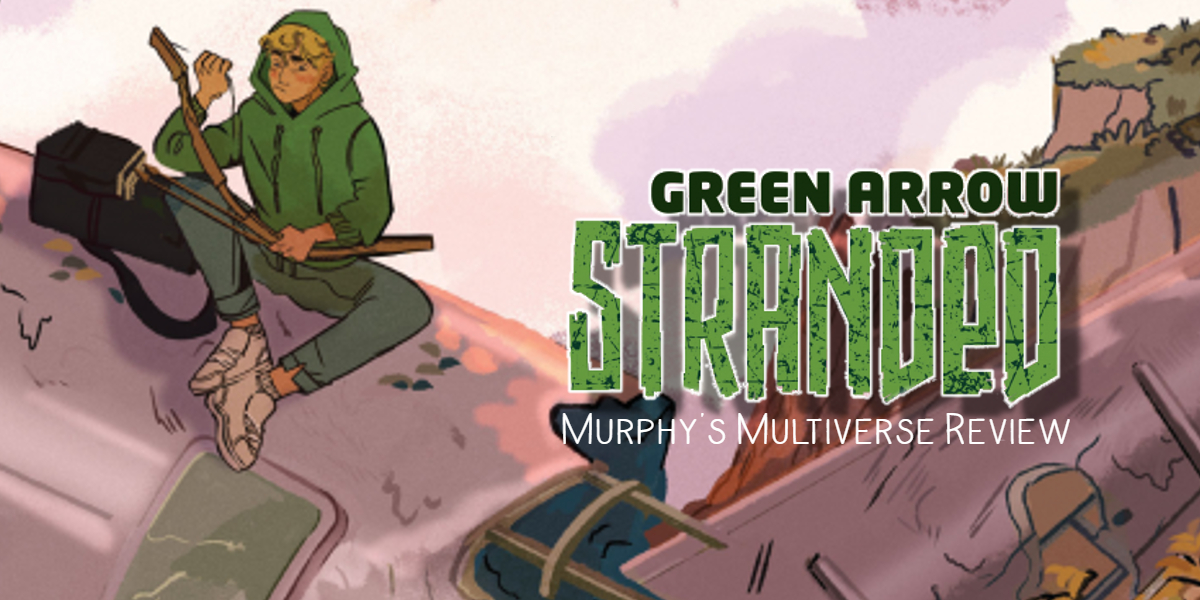
    Stranded is likely the softest, fluffiest iteration of the rather tragic Green Arrow genesis we’ve seen yet. To be clear, this is because the comic was designed to be perused by beginner-level readers and not to scar the nation’s youth. However, the reframing of a once-depressing tale as an optimistic story for kids may have accidentally, or purposefully, brought out the best attributes of its title character. Drawn with beautiful simplicity by Bell Hosalla, the plot sees Oliver, at only 13 years of age, survive a terrible plane crash alongside his dad and a fellow father-son duo, the brutish business associate Sebastian and his angry offspring, Tyler. The adults are severely wounded, and Tyler is mostly inept, so Oliver must find a way to overcome his situation. In a traditional account, this is where things would go downhill for the family, with a dying Robert Queen leaving his son to survive alone on an island for years to come. Instead, Deneen puts a more positive spin on the narrative.

    Not yet a superhero, but still wearing a green hoodie, Oliver maintains his faith and never gives up hope. The other characters in the story, especially Tyler, are shown to be less than kind to Oliver before the fateful wreck. He is made fun of for lacking guts and skill, demonstrated by his inability to take the life of an animal on what appears to be an important hunting trip. He desperately wants approval from his father, who refuses to give it to him out of some misguided belief that he’ll grow more without it. But even with all this against him, Oliver is not full of angst, or spite, or self-pity. He chooses instead to help those who wronged him, and does so without ever breaking his own youthful moral code. Ultimately, Ollie proves that his heart was simply bigger than his desire to meet the traditional standards of masculinity. For some, this notion may induce an exaggerated eye-roll, but it’s actually exactly the kind of comic book story young boys should be reading.

    With StrandedDeneen displays a redefined type of hero. The type Green Arrow has always been. He makes an effort to prove that you can find ways out of even the most worrisome scenarios without succumbing to violence or anger. In the same spirit that made Spider-Man: Into the Spider-Verse so wonderful, the message of this book is that a real hero stays true to themselves and always gets back up. Though clearly not the intent, Stranded almost functions as the anti-Arrow. Obviously, it’s strange to compare a short-form comic to a long-form television series, but Stranded soars everywhere Arrow sank. The limited series is a perfect read for any kid looking to get into comics, and does its best to teach all the right lessons along the way.

  • REVIEW: ‘Batman: The Imposter’ is an Artistic Ode to Despair

    REVIEW: ‘Batman: The Imposter’ is an Artistic Ode to Despair

    The Batman mythos come in a plethora of delicious flavors. Perhaps this is why the character and his world have been able to appeal to such a wide variety of audiences during their time in the cultural spotlight. As times change, so do Gotham City and its iconic hero. For example, in early stories, Gotham and the Dark Knight weren’t actually that dark at all. The Caped Crusader paraded around his bright city with an upbeat sidekick in Adam West‘s live-action series, engraining himself in the public eye as a campy, lovable do-gooder. As time continued, and the world became more complicated, the comics became edgier. Alan Moore and Frank Miller took the character’s troubled youth and turned it into decades of violent, gothic storytelling. Batman became angry, and the lights in his city began to dim. For a while, it’s seemed readers had already witnessed the darkest places a writer could take the protagonist. In all honesty, that may have been true, until Mattson Tomlin stepped into the ring.

    Batman: The Imposter, a three-issue limited series from the Project Power creator, isn’t especially dark because of any specific moment or event. Although, to be clear, it does have plenty of those. It earns it’s anguished tone by nature of it’s most prevalent recurring thematic device: soul-sucking despair. The story sees a young, inexperienced Bruce Wayne encountering his greatest career challenge in the form of a murderous copycat vigilante, while simultaneously falling for and running from GCPD detective Blair Wong. The world in which the book takes place is maybe more realistic than anywhere we’ve ever seen the character operate before, made evident by constant sobering revelations about the consequences of his supposedly heroic actions. When he was still credited as a writer for Matt ReevesThe Batman, the creative gave multiple interviews claiming the protagonist to be representative of “sheer human will and determination.” In his comic, now the most authentically Tomlin take on the character, he puts this opinion to the test. For every minor victory the hero manages to take, it feels there are twice as many setbacks.

    Cops are able to keep a healthy track on Batman by cutting down his deserted ziplines and confiscating his poorly-hidden equipment. Crooks are afraid of the Bat, but never fail to leave him bruised and bloodied after a fight. His single ally, Commissioner Gordon, has been run out of Gotham after only a year of Wayne’s war on crime, with a wave of criminals put back on the street for his mistakes. To top it all off, this version of the character is also without the ever-loyal Alfred Pennyworth, who is shown to have abandoned a young Bruce after the child’s sociopathic tendencies drove him to a near mental breakdown. Yes, that is correct. This is a book in which Bruce Wayne is shown to be an actual sociopath, trading in the typical socialite playboy personality for an angsty, bull-headed recluse convinced the world will never understand him. While all that may sound like a progressive downfall for Batman over the course of the Black Label series, it’s actually just the way Tomlin sets the rest of his story up.

    It’s a strange thing to read about a Batman who, having only just entered the costumed scene, really feels like he may also be facing the end of his crusade. Truthfully, it’s not really until the end of the comic that the intention of the whole thing becomes clear. The Imposter puts Bruce Wayne through the wringer not because it wants to prove how much he can take, but because it wants to show what obscenely deep-rooted emotions can drive a person to do. It is an ode to the complexities of depression. This is not to say it celebrates how immense sadness can manifest inside its host, just that it’s not afraid to explore both the highs and lows of that cerebral rollercoaster. It does this most effectively when it puts Bruce up against other characters with the same depressive qualities. Readers see his willpower when he’s put against would-be villains succumbing to their anxieties, determination when he puts everything on the line to confront his malicious doppelganger, and that small inkling of hope when he meets those that would seek to help him.

    The comic is aided by the use of a Sopranos-esque plot point, where the stubborn Bruce is forced into therapy sessions to prevent his identity from being exposed. These direct conversations are often lapped over incredible artistic design from Andrea Sorrentino, who manages to transform entire splash pages into the same symbols that the characters fear will one day take over Gotham. The added effect increases the impact of the words on the page in the same way a gorgeous score may take a good film to the next level. Ultimately, it makes for a unique comic that achieves a certain ‘film noir’ aesthetic in both its visuals and its script. Batman: The Imposter may not be directed reading for the titular character, but it’s certainly worth checking out if one would like to take a darker look into their favorite hero’s psyche.

    Source: Inverse

  • REVIEW: ‘Batman: The Detective’

    REVIEW: ‘Batman: The Detective’

    When it comes to DC Comics, the one thing that it is never short on is Batman titles. It seems like every week we’re getting the announcement that a new Bat-centric title is on the way and just about everyone is getting their turn at the wheel. So, it’s unsurprising that a Batman solo title would eventually find his way to Tom Taylor, one of DC’s best minds and now an exclusive writer with the publisher. While Taylor’s Batman: The Detective is a fun read that lives up to its name, throwing you into the mind of the world’s greatest detective, its plot can’t help but feel a bit weak. 

    Batman: The Detective finds the caped crusader leaving his life in Gotham City behind and making his way to Europe, Why you ask? well because some folks overseas are dressing as bats and killing people. Its quickly revealed that they aren’t killing just anyone, but people who have been saved by Batman himself. The biggest mystery of the series is why; why are these people in white bat costumes brutally murdering people who’ve been saved by Bruce Wayne? The story here works, and it’s interesting at times, but it didn’t really sink its claws into me like any other mystery.

    One of the strongest parts of the story is the bits that seem to come from within the mind of the bat. He’s breaking down happenings in his head and really digging into the world’s greatest detective angle of the character that’s been absent from a lot of recent interpretations. For a few glimmering moments, the story feels engaging, but ultimately, the story itself is too weak for anything special to come of it.

    Perhaps the weakest part of this story is the villains themselves, they aren’t compelling and there is really nothing special about them. It’s pretty ironic that they wear white batman costumes because they feel lackluster. They’re what you’d expect if you took all the fun out of the characters from Gotham City Imposters and threw them into a European setting. The story here feels like it should be interesting and feels like a unique scenario but it just doesn’t really tie together well in the end, with the reveal being nothing jaw-dropping and kind of generic.

    Perhaps one of the brighter aspects of the story is its reintroduction of the newest Knight and Squire, UK equivalents of Batman and Robin. Here we see the original Squire, Beryl Hutchinson, pick up the mantle of Knight alongside the newest Squire, Amina Eluko working alongside Batman. Their story is something interesting and the two of them could really shine in their own book. Detective Mentee of the Bat, Henri Ducard plays a prominent role where at times it feels like he’s more useful as a punching bag than he does integral to the unfolding story. Thankfully, though, the character does get better as the story progresses but a moment that could’ve been crucial and emotional falls flat.

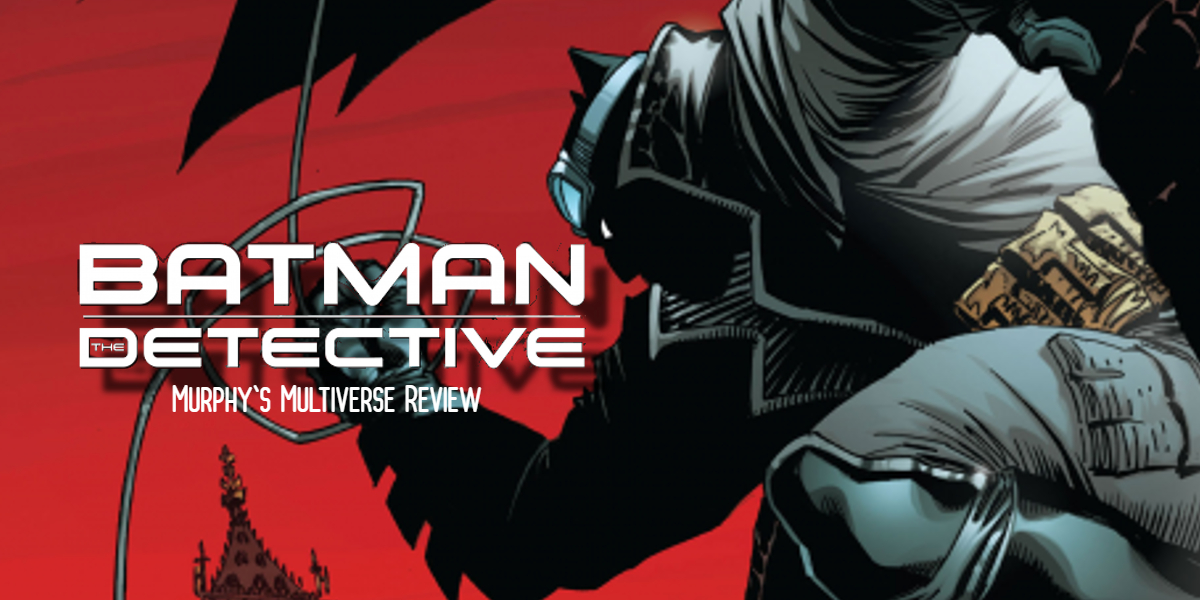
    Despite its story issues, this book is something great to look at, with some stellar artwork from Andy Kubert. Batman gets a stellar redesign here, fitting in with his new European terrain, sporting a trench coat and goggles. Kubert really shines here with his environments and bringing Europe to life. The panels here are truly dynamic and admittedly are the best parts of this book.

    While Batman: The Detective ultimately was not the Batman story I was looking for when it comes to Tom Taylor, it is an interesting premise that features a below-average story with some above-average art. 

  • REVIEW: ‘Three Swords’ is Good, Yet a Missed Opportunity

    REVIEW: ‘Three Swords’ is Good, Yet a Missed Opportunity

    Sometimes we read a synopsis for a novel and think, “Wow, what a great story this is going to be.” We are excited about the main characters and are fans of the writer, so we think we know what to expect. Then we read the actual story and it fails to meet those expectations. It could be because of the characters, or the writing style, or the pace of the story, or it could even be the reader’s own expectations. With Three Swords, this is one of those novels where the story failed to live up to the expectations set by the synopsis.

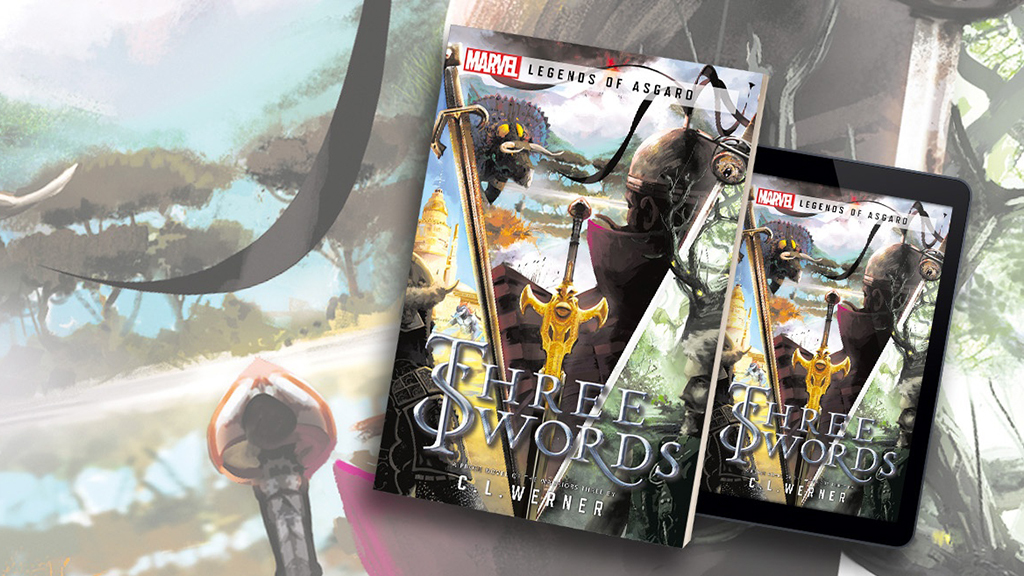
    Penned by C.L. Werner, the veteran writer of numerous short stories set in the Warhammer universe and the Black Plague trilogy, Three Swords tells the story of the Warriors Three as they receive an ominous set of predictions from the Enchanters as it pertains to Asgard. The Warriors Three must venture out into the cosmos to stop the Enchanters from enacting their plan to destroy the universe. This takes our titular heroes to many moments in history, from the actual civil war to important moments in England, and it is there where you really get some highlights that you can enjoy, even if you’re not well-versed in Marvel lore. Unfortunately, the story is not given much time to breathe before jumping to the next set-piece, and it seems Werner is ultimately in a rush to just get through the story. As such, the Warriors Three aren’t as fleshed out as they could’ve been. Whereas the little Easter eggs while they’re traversing the universe work without you having a vast array of Marvel knowledge, the characters are written as if you do have a vast array of Marvel knowledge. Due to this, it creates a disjointed narrative where characters do things and you’re almost expected to just understand why they did that. 

    The set pieces work pretty well, with Werner doing a great job of using words to paint the story of the action we are seeing. Because each Enchanter has a tower, or lair, it feels like a Mortal Kombat video game where you’re fighting waves until getting to the endgame boss. Fandral is the standout here, as he gets some really cool moments where we are reminded how good a swordsman and warrior he truly is. As I was reading it, I kept thinking “man, this would be a really cool adaptation on Disney+” because it kind of feels like the National Treasure films with their reverence for what came before in both Marvel and modern history with some really good action mixed in. I, also, enjoyed that this story really put someone other than Thor in charge of saving Asgard: too often, in Asgard’s history, the Warriors Three are just along for the ride, but putting them in charge here really makes the story feel small enough (their friendship shines) even though there’s so much at stake. 

    Lastly, I’d be remiss if I didn’t mention the twist ending. No spoilers, but it is telegraphed from the beginning, and that made it feel a bit cheap. It lessens everything that came before the end, and it doesn’t really hold up to the rest of the story: if the story was a B before the ending, the twist is like a D and just soured me a bit on the story as a whole.

    All in all, a solid entry but one that could’ve been substantially better had a cheap twist not been added and had more effort been put into developing the characters beyond what we would know as Marvel fans. Werner deserves credit for writing the action and humor in a strong way, but in the end, the story falls to reach the heights teased.

  • REVIEW: “Fearbook Club” is a Story of Growing Up Told Through a Spooky Tale

    REVIEW: “Fearbook Club” is a Story of Growing Up Told Through a Spooky Tale

    When I first stumbled upon Fearbook Club on NetGalley, I was immediately pulled in by the cover. Then I read the description and was easily sold by its premise. A group of middle school students who are deemed the weirdos and forced to join Yearbook Club, only to discover there are ghosts of missing students lingering around campus. It’s a pretty fun concept, and while it isn’t always cohesive, it’s a rather easy read that celebrates the outcasts.

    Fearbook Club, which hails from AfterShock Comics, was created by writer Richard Hamilton, artist Marco Matrone and letterer Dave Sharpe tells the story of four middle school outcasts that are forced to work together in a Yearbook Club. The lead character, Whit, is a shy 6th grader who loves photography and spends most of his free time taking photographs that he develops in his makeshift darkroom at home. It’s when he develops his film after he takes of a fellow student near a condemned building on school that his world becomes entwined in chaos. In the photo, Whit discovers other students in the picture — other students that were only visible through the photograph.

    When Whit and the others try to unravel the mystery, they soon discover their school has a long track record of missing students that are seemingly forgotten. What unravels is a story of overcoming fear and doing what is right in the long run. Unfortunately, this is also where the story falls apart. Things become rushed that the last twenty pages become hard to follow. The mystery of who and what is behind the missing students is fascinating, but it’s not executed in the best way to truly benefit the story.

    As for the artwork, it’s pretty great, honestly. It’s the artwork that carries the story. From the design of the “monster,” to the way the emotions are conveyed in scenes, the artwork tells the story wonderfully.

    Overall, Fearbook Club isn’t a book everyone is going to love and there’s absolutely nothing wrong with that. While it does have its issues, Fearbook Club is a book I would highly recommend to young readers because it tackles important topics such as overcoming fear, handling grief and finding yourself. Even better? It does so in a way to keep them invested in the story — it brings in a spooky element, all while still managing to stay reality-based.

  • REVIEW: ‘Slip’ Uses Art to Tell a Heartbreaking Tale of Mental Illness

    REVIEW: ‘Slip’ Uses Art to Tell a Heartbreaking Tale of Mental Illness

    When I first stumbled upon Slip on NetGalley, I wasn’t entirely sure what to make of the book. There’s no denying the cover is stunning, and the descriptive text is rather intriguing, but it also promises a story self-harm and coping through art. Suicide is something that’s hard enough to deal with in reality; using a friend’s attempted suicide to frame a story? It seemed wrong. Yet, in the end, Slip manages to be a powerful story worthy of your time.

    Slip hails from writer Marika McCoola and debut artist Aatmaja Pandya. It tells the story of a young girl named Jade who finds herself trying to cope with a friend’s hospital stay following a suicide attempt. Just as things seem to be going up for Jade, she finds herself struggling to make it through everyday as her thoughts immediately turn to Phoebe. For Jade, her best friend was supposed to be by her side during art camp, so the idea of getting through it alone is hard to process. She doesn’t feel good enough, as Phoebe was her biggest cheerleader. She moves through the day like a zombie, oblivious to what’s taking place around her. Until she meets fellow art student, Mary.

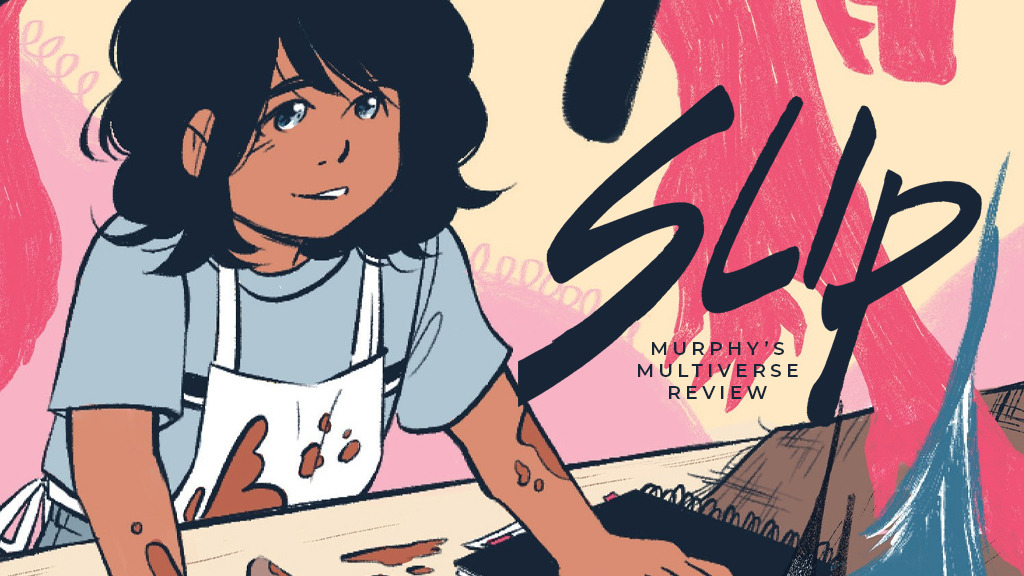
    Mary helps revive her spirit, helping her figure out what she needs to do to get her work back on track. More importantly, though, she helps Jade find a way to cope with Phoebe. It’s an emotional story that is beautifully told thanks greatly to Pandya‘s artwork. You can feel the grief, you can sense the confusion and by the end, you’ll find yourself in the same boat as Jade. It’s a powerful story that isn’t perfect, as it often loses focus but when it gets back on track? It soars like the phoenix Jade crafts.

    The artwork can be choppy, but it only helps to sell the story. It adds to the grief and the uncertainty. It captures Jade’s feelings. The use of the red when Jade is hurting is gorgeous and the way Pandya brings Jade’s pieces to life is wonderful. They’re pieces of clay, that spring to life to help Jade along her way. It can be a bit confusing at times, as the story isn’t the best at transitions, but those moments of uncertainty are some of the biggest moments for Jade’s character.

    Ultimately, Slip isn’t a light read. If you’re looking for a fluffy romance? Slip isn’t your book. If you are, however, looking for a graphic novel that successfully tackles real life issues thanks to artwork, then Slip is the perfect book for you.

    Reviewer’s note: I generally don’t make it a point of adding my own personal bits into reviews. To be fair, though, in most instances? My reality doesn’t relate to the fiction I consume. Slip, though, hits hard. Very, very hard. Eleven years ago, I lost a dear friend to suicide. They remind me a lot of Phoebe. Loved to talk, was always smiling, and in the end, I never understood why they felt the need to end it. (We never know the full truth to someone else’s story.) To say Slip brought back some emotions for me would be putting it lightly. I never got into ceramics – look, I tried in college and it did not go over well – but I still related to the story. Art is a tool to help with grief in Slip, but there’s so much here that many others will, unfortunately, be able to comprehend.

    Slip will go on sale on June 7th from Algonquin Young Readers.