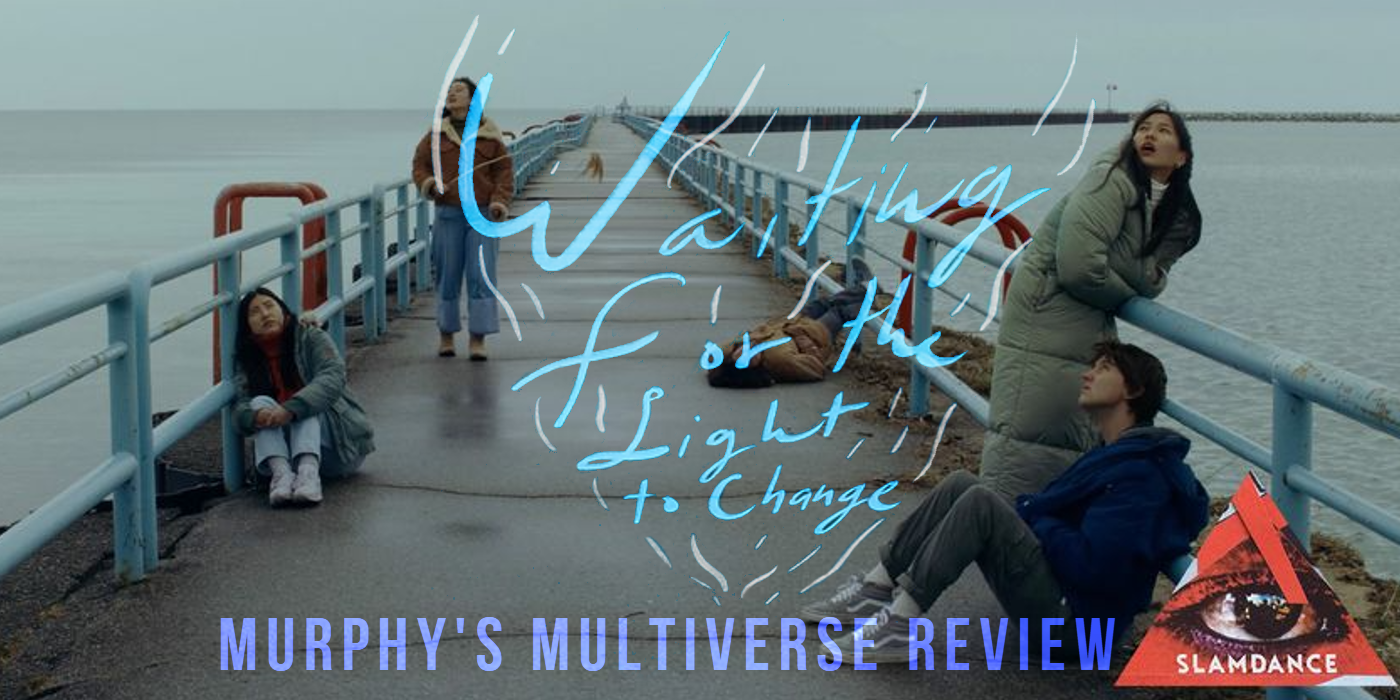
While 2023 will be home to various marquee theatrical blockbuster-event movies, the world of independent cinema remains primed to stay strong in the new year. And one notable entry is set to provide a fresh spin that hybridizes the “coming-of-age” and “reunion” film subsections. Premiering at the 2023 Slamdance Film Festival, Waiting for the Light to Shine will serve as the directorial debut for Linh Tran. The screenplay was written by Tran, alongside Jewells Santos and Delia van Praag. And the small ensemble cast consists of Jin Park, Joyce Ha, Qun Chi, Sam Straley, and Erik Barrientos.
The film follows five friends of various connections spending a weekend at a vacation house that subtly forces some to confront their lots in life through cold winter walks and ample amounts of marijuana. While watching, audiences will likely view Waiting for the Light to Shine as a less political but more culturally diverse inversion of Return of the Secaucus 7. The deviation naturally comes from the characters making internal self-revelations that could disassemble these friendships before a future reunion.
Linh Tran adeptly weaves a resonating and modern story about the internal struggles that plague young adults in finding their true identities. Waiting for the Light to Shine accurately and poignantly depicts the highs and lows of youthful experience. Viewers will tangibly feel the weight of the character’s sobering hangovers in the third act. Waiting for the Light to Shine is further elevated through Jin Park’s powerhouse performance as Amy, who essentially serves as the film’s protagonist. Park perfectly plays a tragic figure stuck between being internally tormented by her past and struggling to find an identity for her future. The evolution that her friendship with Joyce Ha’s Kim goes through is the crux of the weekend getaway and is the strongest narrative element to boot. In addition, the themes of depression and otherness are explored in interesting facets as ancillary plot points.
The film ultimately isn’t a perfect take on this story in Tran’s directorial debut. The few issues predominately come from various instances of unnatural lines of dialogue present. The screenplay is generally strong but would have likely been its best version with a few more touch-ups. Though in the film’s defense, the actors play some of the lines adeptly into the nervous energy pertinent to people in the dawn of their true adulthood. As well, the concept of presenting a film through hardline vignettes partially hurts the flow of the story. This is a movie that shines in the moments when it moves past the static nature of one-on-one conversations. The faults of the film are predominately present in the first act of the film, in which it takes too long to establish the group’s character dynamics with each other. Waiting for the Light to Shine markedly improves after this point, and one could wish the film could’ve reached that point sooner.
Though beyond these specific qualms, Waiting for the Light to Shine is a film worth seeing if one can do so. This is especially the case with a project created on an approximate $20,000 budget and with it serving as an independent film debut for many involved with the project. One can hope that the film can serve as a launching point for future stories from these young, diverse voices.
Waiting for the Light to Shine made its Slamdance debut on Sunday, January 22.