“Tell me…is he the chosen one? He will avenge us.”
-The final words of Maul
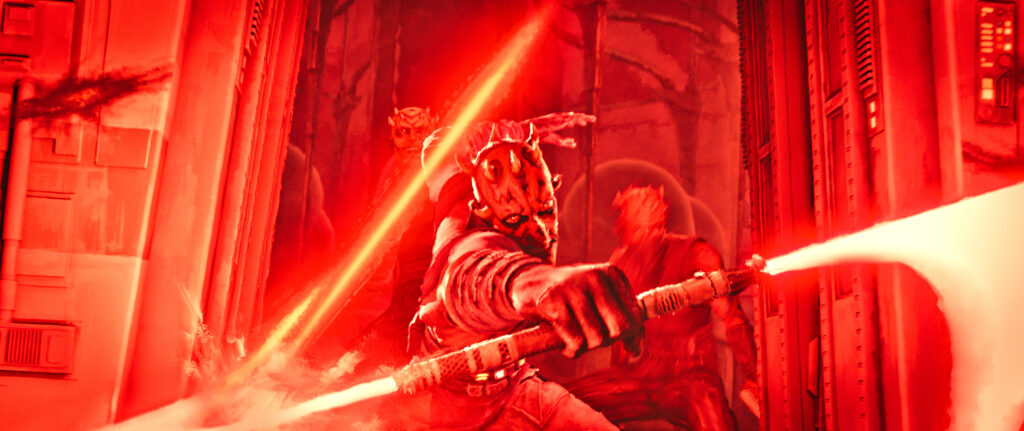
In the closing moments of a life of immense pain, betrayal, madness and loss, Maul’s final words secure his evolution from a silent, stalking slasher baddie into a truly archetypal tragic monster. Sleepy Sheev Palpatine identified Maul and his rage at a young age and saw in him the opportunity to shape him into a living weapon, a tool to destroy the Jedi. Shaped by Palpatine’s cruelty, Maul’s story is one not of success but of stolen potential, systemic abuse, and a total inability to escape his own nature. After being discarded by his former master, the tragedy of Maul took shape as he used the very tools of his tormentor to try to find freedom from who he had become. And in his final moments, dying in the arms of his great enemy, Maul realized that he had lived and died in the service of a cause that never gave him anything and took everything.
Saved from a disappointing abandonment after his apparent death in The Phantom Menace, Maul became an almost Shakespearean villain under the curation of Dave Filoni. Taken from a scrap heap–both in his fictional reality and in Lucasfilm’s meeting rooms–his appearances in Star Wars: The Clone Wars and Star Wars Rebels, where voice actor Sam Witwer gave him new life, excavated the depths of the former Sith lord and found an emotional core that was defined mostly by a broken nature and deep desire for vengeance. When we meet Maul again in his standalone series, Maul-Shadow Lord, his pathos is unchanged: he remains a lost child seeking revenge against all who have wronged him yet years away from the catharsis he would eventually find in his death at the hands of Obi-Wan Kenobi.
You may have forgotten me, but I will never forget you! You cannot imagine the depths I would go to to stay alive, fueled by my singular hatred for you!
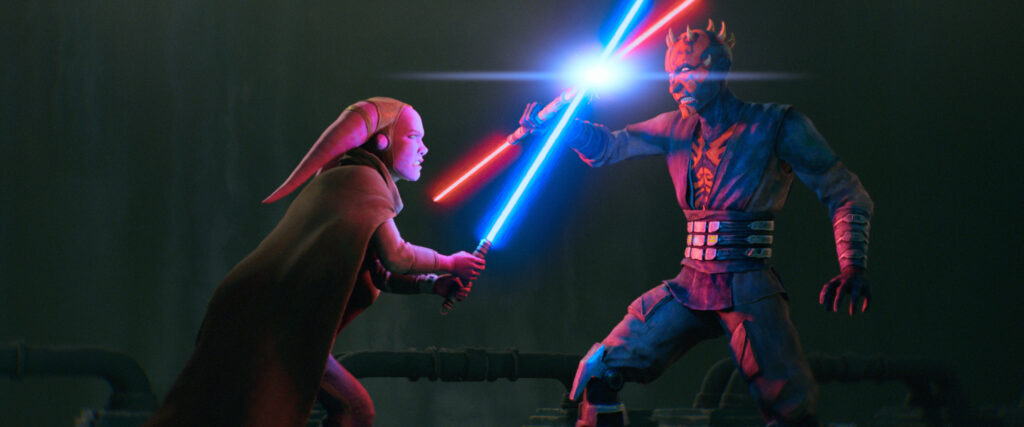
Styled as a neo-noir crime drama, Maul-Shadow Lord Season 1 begins to spin the tale of a new age of Maul, which, while still centered on his quest for vengeance, finds the most interesting villain in the galaxy far, far away monologuing on the nature of good and evil while continuing to battle the paranoia thought left behind. Meant to make good on George Lucas’ original wishes to see Maul become the godfather of crime, the series–which has already been renewed for a second season–gives the character another chance to succeed even though we all know he’s destined to fail. Driven by his quest to reclaim his Shadow Collective and by visions of an apprentice who can help him destroy the Sith, Maul gets to be exactly who we want him to be while allowing for some deep dives into the nature of the Force, right and wrong and all the rest of the things that have allowed Star Wars to endure for 50 years…and he might just be headed for the showdown fans have always wanted.
Set on Janix–which probably feels a bit less like a character than the creators had hoped–Shadow Lord allows Maul to continue carve out his own unique space as an agent of the Force and, in some ways, allow him to work on his sale’s pitch that he will eventually use on Ezra Bridger. Though the first eight episodes of the season Maul, with the help of his crew, has his sights set on those who betrayed their allegiance to him and making Jedi Padawan Devon Izara his apprentice–and it seems as though it is somehow the will of the Force to continue to put the two on convergent paths. Joining their story is savvy cop Brander Larsen, Devon’s Master Eeko-Dio Daki (who, like Maul, is a survivor) and weasly gangster Looti Vario. And in his way: the Empire and the Inquisitorious, represented by Marrok and Eleventh Brother.
Your passions give you strength and through strength you gain power. You have seen it, you feel it. You must break your chains.
-Maul
At times, Shadow Lord feels like an Elmore Leonard novel brought to life in a stylish animated splendor that the Dickens of Detroit would have loved both for its exploration of moral ambiguity and sensationalized action. It is, in the most incredible ways, a worthy successor to the journey undertaken by Maul in The Clone Wars, and an undeniably necessary chapter that bridges the gap not only to Solo but, more urgently and apparently, Rebels.
Sam Witwer‘s exquisite voice work drips with pulpy evil layered with subtextual anquish, making Maul-Shadow Lord not only best Maul to date but also continuing to establush Maul, the discarded son, as perhaps a true cornerstone character in the galaxy. Most interestingly, Maul’s evolution seems to have brought him aroud to an equal but opposite view of the Force as that held by Qui-Gon Jinn. One could make the argument that if the two met now, they might have a nice conversation over a cup of tea. Instead, Maul killed Jinn which was the first of many incidents that lead Anakin Skywalker to the side of Palpatine. From the scrap heap to leading what is sure to become the next truly great animated Star Wars series. If only his mom and brother could see him now.
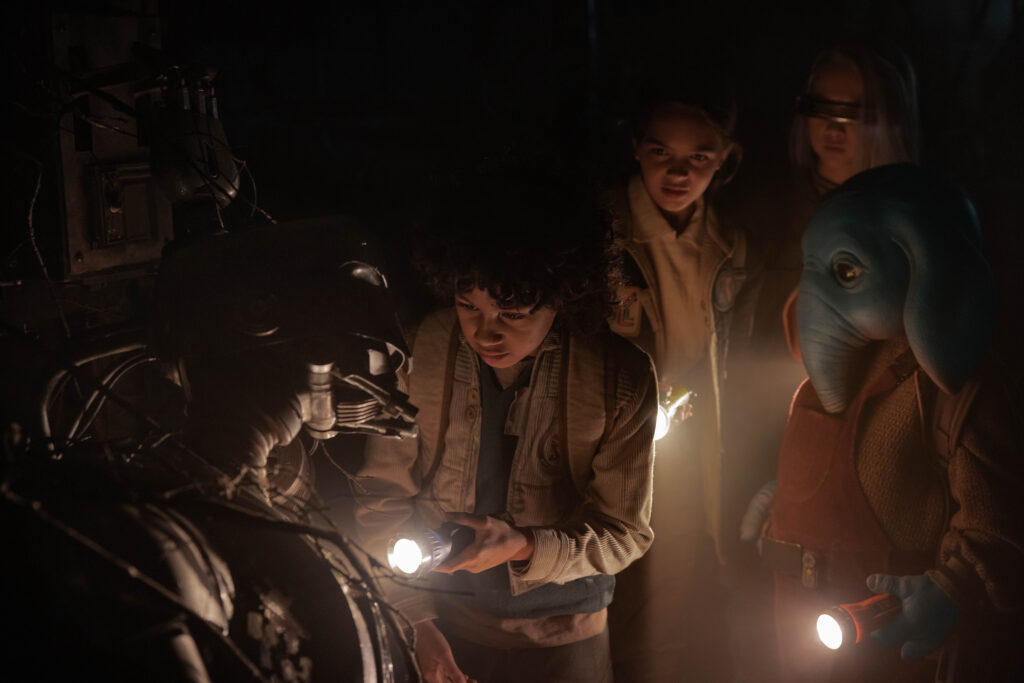
First announced at Star Wars Celebration 2022, Lucasfilm’s Star Wars streaming series, Skeleton Crew, has finally arrived on Disney Plus. After being delayed by over a year, the eight-episode series now finds itself in the unenviable position of following one of the studio’s most harshly treated projects in The Acolyte. While Skeleton Crew is the tonal antithesis of The Acolyte, a growing subset of Star Wars fans have begun to approach every new project with an accumulated skepticism and, in many cases, an increasingly choral disregard for the Dave Filoni era of storytelling in the galaxy far, far away. Skeleton Crew may well provide Lucasfilm’s best effort to combat and contravene the online vitriol that has become endemic to Star Wars fandom. And it does so with kids!
I’ll break protocol for a moment to explain that this review won’t conclude with some judgment of whether Skeleton Crew is “good” or “bad” nor make any accurate predictions about how fans will feel about it. That’s because I cannot know if it is “good” or “bad” or even begin to evaluate how I feel about it. Members of the media were given a screening package that included the first three episodes of an eight-episode series. By the time the third episode ends, it is clear that the show has the potential to continue in an entertaining direction; however, anyone pretending to review a full season after only seeing 38% of a series is at best disingenuous and at worst, deliberately causing chaos and harm.
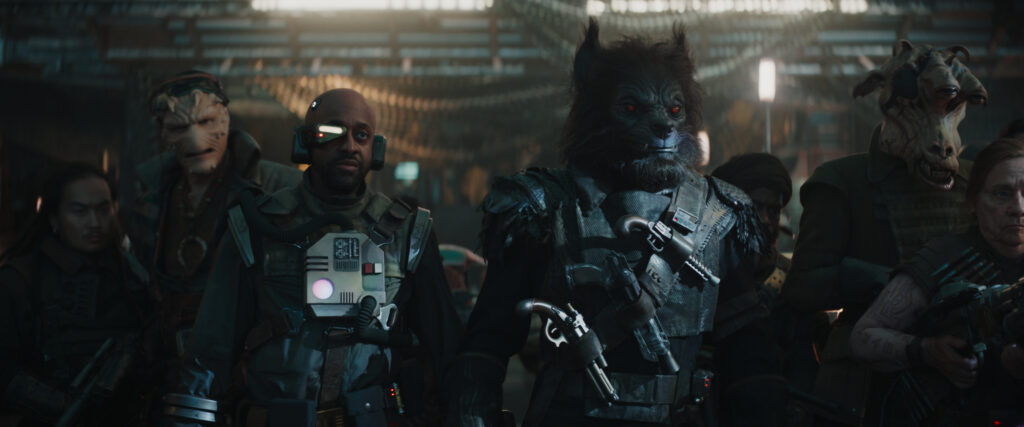
Following an opening scene steeped in Star Wars tradition, Episode 1 of Skeleton Crew presents as a slice-of-life project before quickly morphing into a rollicking and spirited adventure into some peripheral corners of the Star Wars universe that have always existed but have never been explored in live-action. Pirates have played a major role in canonical animation and in Legends continuity and after first popping up in The Mandalorian where the Pirate King Gorian Shard caused some issues, here, there be pirates. From the daring boarding that breaks the silence of space and is Pirates of the Caribbean in space to the boisterous and bawdy Port Borgo full of scurvy swashbucklers, Skeleton Crew is all hands hoay into buccaneering, including some elusive booty that will likely sit as a central mystery throughout the series. That said, calling it a show about pirates wouldn’t be fair.
Despite boasting Jude Law as a key figure who is kind of mysterious and kind of dangerous and definitely none of the people he says he is, Skeleton Crew is a show about children but probably not specifically for children. Rather, in the mold of Stand By Me, it’s a little coming-of-age adventure that also vibes with, yes, The Goonies but also with a less well-known adventure film like 1985’s Explorers and maybe even a little bit with the ridiculous Ice Pirates. Skeleton Crew treats its core kids a bit in the way Stephen Spielberg always did. They get to behave a little older than they are, live out their fantasies, meet people they’ve only read of in legends and be in danger without actually being endangered. And most importantly, not one of these kids is learning any lessons through two episodes.
However, putting children at the center of the story allows co-creators Christopher Ford and Jon Watts to create within their comfort zones As a result, at a time when the Star Wars franchise is in need of renewed hope and a return to the innocence that the first audiences to see Star Wars and Empire Strikes Back took with them into the theater, along comes a Star Wars project full of kids who while vulnerable, are full of true wonder.Skeleton Crew‘s core four are the archetypal rebel (Fern), explorer (Wim), innocent (Neel) and caregiver (KB) who may well provide exactly what audiences need to reconnect with the magic of the Star Wars universe. Despite having kids at its core, Skeleton Crew looks to be intended to do some expansive world-building which seems likely to be why Filoni gave it the green light and set it in the New Republic era. I won’t even tease spoilers here but there are enough hints in the first two episodes to catch on to the fact that At Attin, the homeworld of the leads, is quite unlike any planet we’ve ever seen in the franchise.
Following a bit of a slow, exposition-heavy start, Skeleton Crew does weigh anchor and hoist the mizzen and it looks like it’s going to be one hell of a ride through space as the crew tries to find their way back home. Despite its small sample size, accentuated by Mick Giacchino‘s quirky, uncanny and neo-nostalgic themes, Skeleton Crew checks the boxes of an adventure worth taking. Indeed in the best ways, it feels quite like a successful adaptation of a Disney theme park attraction into a live-action project, except there’s no Disney theme park attraction being adapted. Perhaps it’s best to take it for exactly what it is: a return to innocence that’s been missing from one of the world’s premiere franchises for far too long.
Episodes 1 and 2 of Skeleton Crew are now streaming on Disney Plus.
After a very well recieved debut in 2022’s Tales of the Jedi, the second installment of Lucasfilm’s Star Wars Tales anthology, Tales of the Empire, hits Disney Plus on May 4th as part of the celebration of Star Wars Day. Like its predecessor, Tales of the Empire is a six-episode entry into the already voluminous story of the galaxy far, far away. Created, once again, by Dave Filoni, the new series of shorts (each episode’s story is told in 15 minutes or less) is divided into two wide-ranging three-episode arcs that flesh out the stories of a pair of characters who have, at various times, been key players in other Star Wars projects. The first three episodes recount Morgan Elsbeth’s history before her appearance in The Mandalorian while the final three episodes reveal what became of Barriss Offee following her betrayal of Ahsoka Tano in Star Wars: The Clone Wars. Expertly crafted, beautifully animated and action-packed, Tales of the Empire is must-see non-essential TV.
The paradoxical nature of an anthology that doesn’t need to be seen to fully enjoy other projects set within in the Star Wars universe may be a direct reflection of the true nature of the Tales series. It also may be one of the more perfect examples of how Disney’s major studios could and should use Disney Plus. Like the stories of Count Dooku and Ahsoka told in Tales of the Jedi, none of what plays out in Tales of the Empire could be taken as required reading for a casual fan to understand and enjoy any current Star Wars project; in fact, most of what takes place on screen throughout the three episodes dedicated to Morgan Elsbeth was already known. However, viewers are highly unlikely to come away feeling as though they’ve wasted 45 minutes or so per character. The careful direction behind each arc, the tasteful and effective uses of other characters and the emotional current that runs throughout create two expertly crafted stories of tragic characters. Thematically, Star Wars has always dipped into the fall and the redemption of its characters and Tales of the Empire follows suit, following two characters whose choices have put them a crossroads where their next choices will ultimately define their legacy in the galaxy.
Fear Leads to Anger. Anger Leads to Hate. Hate Leads to Suffering.
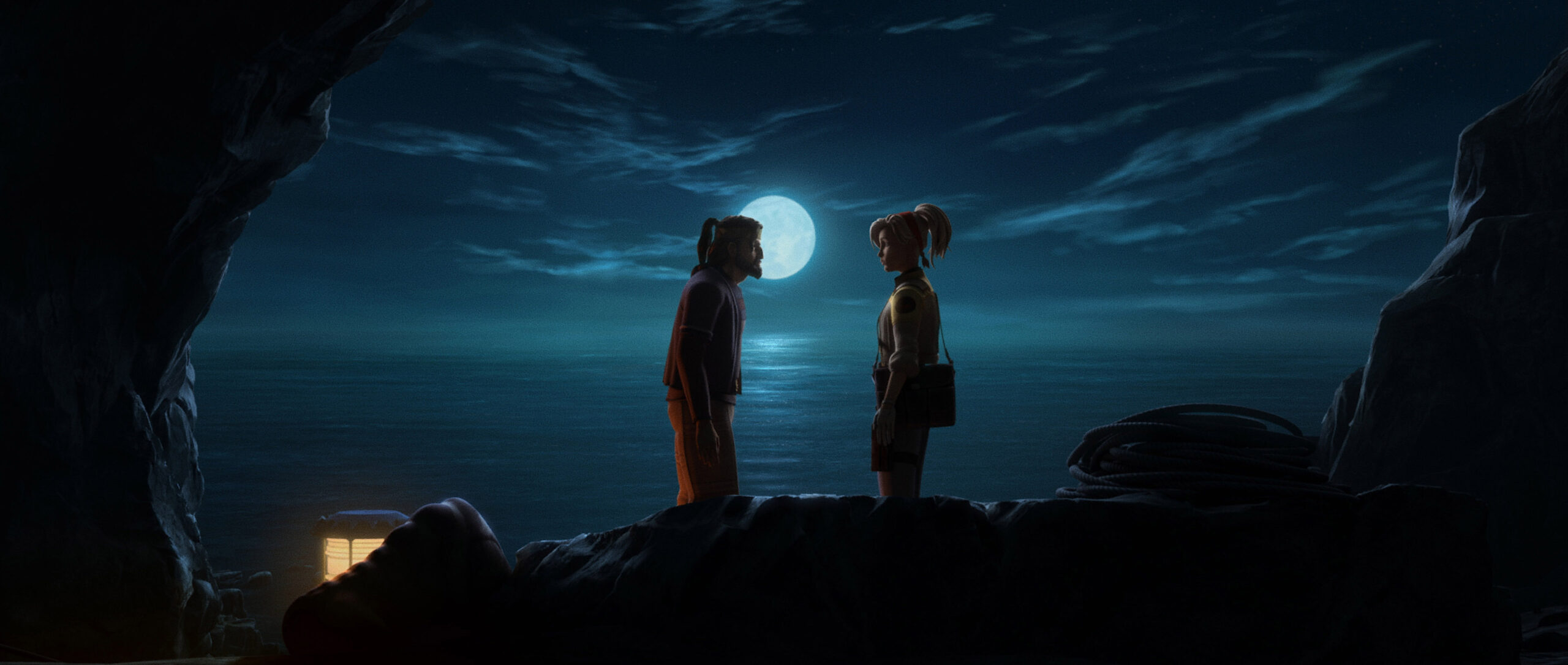
Morgan Elsbeth’s legacy is a known quantity. Introduced as an antagonist in The Madalorian, Elsbeth became a truly central villain in Ahsoka. One of the last surviving Nightsisters of Dathomir, Elsbeth was a known ally of Grand Admiral Thrawn and was willing to give her life in order to allow him and the Great Mothers to escape Peridea. Though details were certainly scarce, the bullet points of her life before the events of The Mandalorian were shared with Din Djarin and the audience by Ahsoka Tano.
During the Clone Wars, her people were massacred. She survived, and let her anger fuel an industry which helped build the Imperial Starfleet. She plundered worlds, destroying them in the process
Ahsoka Tano to Din Djarin on Morgan Elsbeth in The Mandalorian
The first three episodes of Tales of the Empire chronicle nearly 30 years of Elsbeth’s life from the slaughter of her family on Dathomir, to her first meeting with Thrawn to the New Republic era just ahead of her first encounter with Ahsoka. Driven by vengeance and emboldened by anger, Morgan’s descent into villainy doesn’t need to be seen to root against her in The Mandalorian or Ahsoka. However, Morgan’s true motivations, including why she’s so willing to give her life in exchange for the safe return of the Great Mothers to their home galaxy, are fully developed. Bearing witness to the trauma endured by a young Morgan Elsbeth at the hands of General Grievous doesn’t necessarily make her a sympathetic character but it does place her firmly on a path of vengeance and establishes why she became entrenched in the Empire while maintaining a myopic focus of restoring her culture as the last of her kind.
There Are Some Things Far More Frightening Than Death
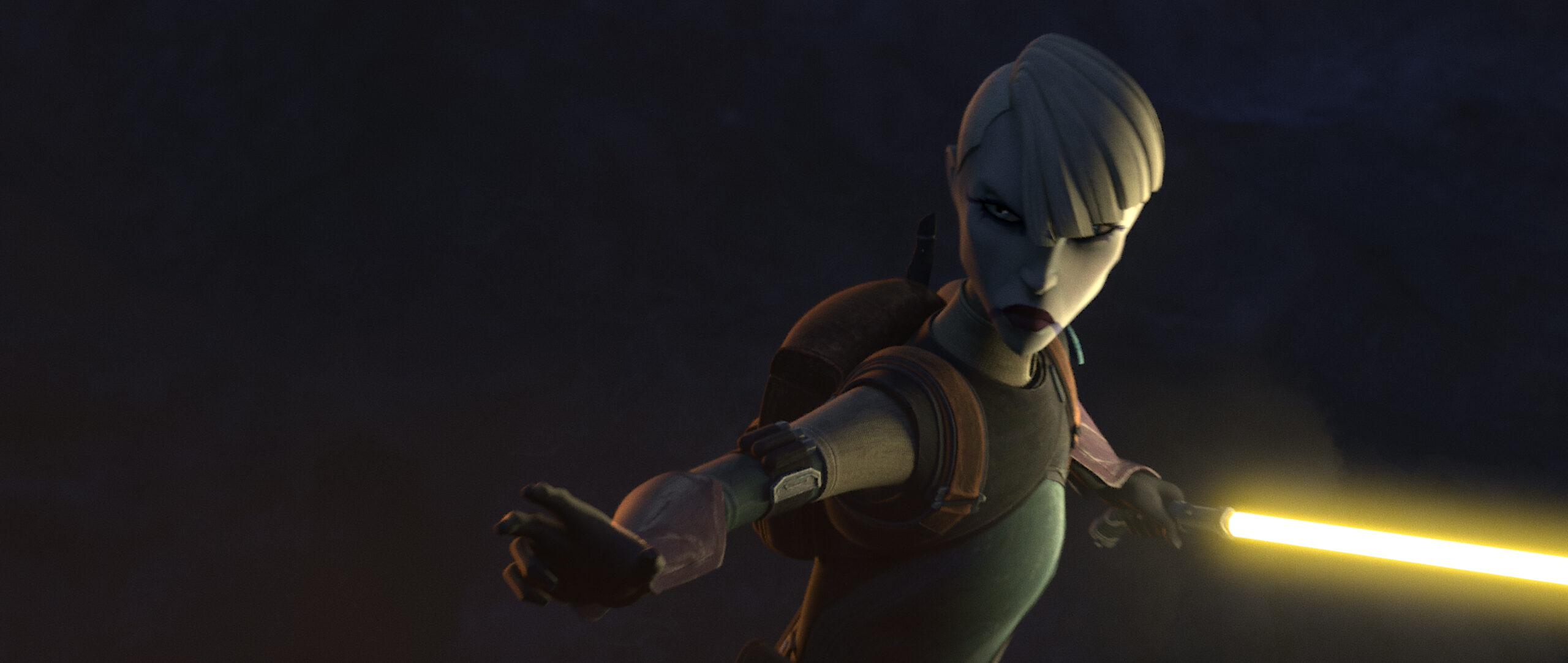
Juxtaposed against the story of how Morgan Elsbeth became who she was is a three-episode story that reveals who Barriss Offee becomes. A key character in later seasons of Star Wars: The Clone Wars, Offee’s final fate following her imprisonment for crimes against the Republic had yet to be explored in any Star Wars project. The winds certainly shifted shortly after Offee was imprisoned and that’s right where the next chapters in Offee’s life begin.
I did it. Because I’ve come to realize what many people in the Republic have come to realize. That the Jedi are the ones responsible for this war. That we’ve so lost our way that we have become villains in this conflict. That we are the ones that should be put on trial. All of us! And my attack on the Temple was an attack on what the Jedi have become. An army fighting for the dark side. Fallen from the light that we once held so dear. This Republic is failing! It’s only a matter of time.
Barriss Offee’s confession as heard in Star Wars: The Clone Wars-The Wrong Jedi
Offee’s three-episode arc, as revealed in the trailer for Tales of the Empire, involves her recruitment into the Inquisitorious by Lyn, the Fourth Sister of the Inquisitorious, who was introduced in Obi-Wan Kenobi. Present throughout Offee’s entire arc, which extends until at least roughly 1 BBY, the Fourth Sister works as a steadfast foil for the former Padawan of Luminara Unduli. Like Elsbeth’s story, Offee’s is not particularly necessary to any greater understanding of the Star Wars galaxy; however, in the larger setting of modern Star Wars storytelling, it offers yet another perspective of what becomes of former Jedi. While superficially similar to characters such as her old friend Ahsoka Tano, Count Dooku and Baylan Skoll, Offee finds a different resolution to her philosophical difference with the Jedi. Losing faith in what the Order became does not necessarily dictate the abandonment of its principles nor cast one eternally into the shadow of the Dark Side. Ironically enough, Offee’s path may more closely follow the one taken by Asajj Ventress, whom she once impersonated in her efforts to take down Ahsoka and the Jedi. Offee’s story is another example of Filoni’s interest in exploring a far wider view of the Force and the overall saga’s examination of redemption.
As was the case with Tales of the Jedi, Tales of the Empire works as a fascinating character study that illuminates the psychology and internal struggles that define its central figures. Set against the ever-present themes of destiny, fate and free will, Tales of the Empire stands alone as a strong entry into the Star Wars franchise and given the quality of the storytelling contained within, stands as an exemplar of how Lucasfilm can use Disney’s streaming service to its advantage. While fans will never need to see it, they’ll not only be glad they did but also find themselves hoping the Tales anthology series continues.
Throughout its 47-episode run, The Bad Batch spun a tale of a crew of wartime veterans searching for an identity in a galaxy that had chewed them up and spit them out. As the third and final season of the show launched in April, the remaining members of Clone Force 99 found themselves reeling from the loss of one of their own and the abduction of another. Though they had hoped their days of running missions were over, Season 3 gave the squad plenty of reason to stay in the fight, though this fight was one of their own choosing. In the final episode of the series, “The Cavalry Has Arrived”, every member of the team puts everything on the line to complete their most important mission yet: holding on to what they fought so hard to get.
“The Cavalry Has Arrived” works wonderfully as a season and series finale by wrapping up three seasons’ worth of plot and by keeping Hunter, Wrecker, Tech, Crosshair and Omega at the center of the action. No heroes dropped in for a cameo appearance and to help save the day; Darth Vader didn’t show up at Tantiss Base and cut down Clone Force 99; no major reveals intended to set up a new Star Wars project stole the spotlight. Indeed short of a brief appearance from Tarkin and a reference to Project Stardust, no connections to the larger Star Wars universe were made. Instead, Omega found herself able to deftly apply all she’d learned from the crew, simultaneously helping the other children held at Tantiss Base to escape and providing a way for Hunter, Wrecker and Crosshair to find their way in. By the time it was over, the Batchers all did what they do best, the bad guys got what they had coming (it was somehow more satisfying to see Rampart meet his end than to see Hemlock meet his) and, somewhat surprisingly, they all made it out alive and returned to Pabu. The end.
Of course, it’s never truly the end. A nice epilogue set roughly 20 years or so later showed a grown Omega heading off to join the Rebellion as a pilot. A touching moment with an older, grayer Hunter served to inform fans that they should not expect to see him, Wrecker or Crosshair taking part in the Rebellion. There war is over. Omega’s, however, is just beginning. Given the care with which the character has been curated by Dave Filoni, Jennifer Corbett and the rest of the crew behind The Bad Batch and given Filoni’s penchant for finding ways to work his favorite creations into other projects, both animated and live-action, it seems incredibly likely that Omega’s story in only just beginning.
Taken as a complete body of work, The Bad Batch will rightfully take its place by the side of Star Wars Rebels and Star Wars: The Clone Wars as foundational pieces of the modern era of Star Wars stories. It established itself as an integral piece of the larger mythology of galaxy far, far away both in its ability to tackle to politics of the Empire and establish the importance of cloning in Palpatine’s ultimate plans. It’s examination of the treatment of war veterans probably doesn’t receive enough attention but the show boldly tackled the topic along with glimpses of post-traumatic stress disorders in soldiers. In a galaxy that’s always just moving from one war to another, those themes alone make The Bad Batch a worthwhile watch. It’s the end of an short-lived era for the best group of good soldiers. Clone Force 99, we thank you for your service.
Star Wars hasn’t always provided room to explore the grey areas of morality. Good is good. Bad is bad. Of course, that’s almost entirely driven by the binary nature of the Force. The Light is good; the Dark is bad. Jedi or Sith. While there’s room for redemption within George Lucas‘ original trilogy, “classic Star Wars” storytelling left no room for Force wielders who were neither Jedi nor Sith. Modern Star Wars storytelling, on the other hand, has found plenty of narrative space for characters who find no use for either Sith or Jedi. Following the collapse of the Republic, Ahsoka Tano and Baylan Skoll no longer consider themselves Jedi and Ahsoka’s good friend Ezra Bridger dabbled in the Dark Side without becoming permanently corrupted. Their journeys through the Force are a natural consequence of new stories being built on the foundation of Lucas’ stories. Modern Star Wars has expanded the scope of Force users beyond Jedi and Sith, including the exploration of other aspects of it and how it’s perceived and wielded by those outside of the binary constraints, such as the Nightsisters. Interestingly enough, there’s one character who has traveled all the paths described above, and in Episode 9 of Season 3 of The Bad Batch, her return antecedes the next round of chaos headed the way of Clone Force 99.
As many fans presumed to be the case, Asajj Ventress is indeed the friend Fennec Shand turned to for information about M-count and, as the episode’s title, “Harbinger”, indicates, her arrival portends dark days for the Batchers. For fans who know Ventress only from Star Wars: The Clone Wars, the Dathomirian Nightsister who was once both a Jedi Padawan and a Sith apprentice seems like the last person anyone would turn to for help; however, after having been a pawn for others, Ventress walks a different path now: her own. And make no mistake, her meeting with Uhmeeguh falls under the category of one of Star Wars most thoroughly explored themes: destiny.
Remember… you always have a choice to be better. You always have a choice to… to pick the right path. Even if that choice comes a little late.
Explored in the canon novel Dark Disciple, Ventress began her ascent from darkness after teaming with Jedi Quinlan Vos to attempt to assassinate Count Dooku. Though it was believed she died while sacrificing herself to save Vos, the trailer for The Bad Batch made it clear that Lucasfilm saw further storytelling currency in Ventress and in “The Harbinger”, head writer Jennifer Corbett seemed to hint at just what that might be. After revealing the meaning of M-count to Clone Force 99 and realizing what danger lurks for Uhmeeguh and her presumably high Midi-chlorian count, Ventress agrees to test the clone’s abilities with the Force. While Uhmeeguh’s potential to wield the Force isn’t made clear to viewers, what is made clear is that Ventress can sense both her latent potential to use the Force and the danger in which it puts her. Though she skitters off at the end of the episode, it seems highly unlikely this is the last time Ventress and Omega meet. In fact, it might just be the start of one of the most unlikely relationships ever to unfold in the galaxy far, far away.
Ventress has seen and done it all. She’s walked the path of light and descended into darkness but now, by her own omission, she walks her own path and it almost certainly is shaded grey. Given the totality of her own experiences, it’s almost impossible for it not to be. And what she sees in Omega is someone who, like her, whose life is being controlled by everyone but her…and it’s at least worth wondering if Ventress means to stop that and give Omega agency moving forward. Ventress mentions training Uhmeeguh during the episode and it would seem that might at least one possible option for what happens to the young clone (she’s somewhere between 12 and 14 years old during Season 3). While it’s known that Project Necromancer is ultimately at least sort of successful (Sleepy Sheev does inhabit a clone body in The Rise of Skywalker but it’s certainly no masterpiece) it doesn’t mean Omega has to die. The Bad Batch producer Brad Rau has teased the potential for more adventures with Ventress down the road and given Dave Filoni’s fascination for bringing animated characters into live-action, any number of possibilities exist including Ventress and Omega still being alive and well during the New Republic era. The producers once explored the possibility of using Ventress in Star Wars Resistance which is set long after The Mandalorian and, as the Nighsister said, she has a few lives left. Star Wars loves destiny; Star Wars loves to tell master and apprentice stories; and it’s starting to show some love to those who live in the grey which gives plenty of room for the continuing story of Asajj Ventress…and maybe Uhmeeguh.
Throughout its first two seasons, The Bad Batch has wonderfully–and sometimes painfully–been thematically centered on identity. While some audiences still struggle to recognize animated series as something more than children’s cartoons, The Bad Batch has been a fascinating psychological study of individual change. Over the course of Season 2, each of the members of Clone Force 99 had more or less worked their way through Robert Dilts’ Pyramid of Logical Levels. For better and for worse, Tech, Wrecker, Hunter and, yes, Crosshair, each reengineered his identity and each rebuilt his personal ethos. As their values and beliefs were challenged, the mutant clones reprogrammed their minds and changed their behavior. Tech, Hunter, Wrecker and Omega settled in on Pabu and Crosshair found himself in what he believed to be a comfortable position with the Empire. And then the two-part season finale shook them all to the core of their new identities; however, rather than halt their journeys of personal growth, the cliffhanger put the Bad Batch exactly where they needed to be to complete them. After a lifetime of running missions for others, Season 3 allows the remaining members of Clone Force 99 to determine their own purpose and take on one last mission of their own choosing.
Crosshair has always been severe and unyielding. It is his nature. You cannot change that. He cannot change that.
Tech, The Bad Batch: Kamino Lost
Thought up by George Lucas while he and Dave Filoni were developing Star Wars: The Clone Wars, Clone Force 99’s path to the Star Wars universe was bumpy and their place within it seemed unclear until about halfway through Season 2. Lucas originally conceived of the Bad Batch as a group of aberrant clones that would undergo further testing by the Empire in their pursuit of producing an elite squad of genetic Super Soldiers. While their connection to the Kaminoan cloners was well-explored in Season 1, the introduction of Doctor Royce Hemlock–and the unknown nature of his sister mission–in Season 2 smoothed that bumpy path for The Bad Batch and set the series up to do some of the heaviest science-fiction lifting yet. Throughout the first eight episodes of Season 3, The Bad Batch completes its evolution from a show you might want to watch if you have some time to a show that serves as an integral piece of Star Wars mythology with story-telling tendrils that touch the prequels, the New Republic era of stories and the sequels.
Those storytelling tendrils are most active, both thematically and in shared plot points, during the first five episodes of Season 3. Star Wars fans will find connections to Andor, The Mandalorian, The Book of Boba Fett and, yes, Star Wars: Episode IX-The Rise of Skywalker. Omega’s abduction by the Empire in Season 2 is, of course, the inciting moment for the action of the first half of Season 3 and her time at Mount Tantiss over the first four episodes is both revelatory and catalytic, exposing a mystery that fans will immediately solve but that will set Clone Force 99 on their true final mission. The first five episodes are easily among the best the series has put forth so far with episodes 1-3, which premiere together, serving not only as the follow-up to the Season 2 cliffhanger but as a wonderful example of how The Bad Batch has carved out a hardcore sci-fi niche within the larger space opera of Star Wars. If you enjoyed the Alien-esque Season 2 episode “Metamorphosis”, the three-episode premiere will be your cup of tea.
I am a soldier of the Empire.
Crosshair, The Bad Batch: The Solitary Clone
Not the only Batcher being held in the Empire’s Weyland facility, Omega’s interactions with Crosshair highlight the strength of head writer Jennifer Corbett in exploring the team’s interpersonal dynamics. Omega and Crosshair couldn’t be much more different from one another than they are but the two form a wonderful bond that ultimately saves them both. As Omega and Crosshair look to escape the facility, Wrecker and an emotionally devastated Hunter work with what they have left to find Omega and an invested audience will surely be anticipating the frosty reunion between Hunter and Crosshair. To that end, episode 5, “The Return”, might be one of the most cathartic episodes of Star Wars TV to date. While it may not hit as hard as Ahsoka’s “Shadow Warrior”, it’s spiritually similar and without it there’s neither a literal nor figurative path forward for what’s left of the team.
Season 3 isn’t all pedal to the metal, however, and is not–as was the case with previous seasons–without its lulls. Episodes 6 and 7 step away from the sci-fi and dip back into some familiar subplots from last season, notably the post-Order 66 politics and the place of discarded Clone Troopers in the Empire. Fans have taken–somewhat understandably and also regrettably–to referring to these episodes as “filler”; however, they’ve become a staple in the modern serial Star Wars narratives and while it’s fair to say they typically slow down the pace of the series (and they do so again here), they also provide the galaxy far, far away with an unparalleled level of verisimilitude by calling to mind the politics of the real world. Star Wars always has and always will delve into politics and the expansion into longer-form narratives simply opens up more space for them to be explored more thoroughly. If you haven’t enjoyed the subplot around Palpatine’s Defense Recruitment Bill or finding out how Rex got his groove back after Order 66, this two-episode arc (“Infiltration and “Extraction”) will not be your cup of tea. If that’s the case, though, you’ll be happy to find that Episode 8, “Bad Territory”, puts the series back on its breakneck pace.
This is who I am.
Crosshair, The Bad Batch: Return to Kamino
With the final 5 episodes withheld from the early screening package, it is unfortunately impossible to make a fair judgment of the final season of The Bad Batch. What can be comfortably and confidently said, however, is that much like the members of Clone Force 99, the show has settled on its identity after wavering on determining just exactly what it was capable of becoming. For it to become truly transformative, though, it will have to become truly impactful by settling on what the ultimate purpose of the Batchers’ three-season journey is and provide true clarity on how the story of Omega and her band of mutant brothers fits into a larger narrative whose ending is already known. And so it’s reasonable to ask that the final five episodes of The Bad Batch deliver an answer to why the show existed in the first place. If they do, Clone Force 99’s last mission will likely establish the series’ place alongside its animated predecessors (Star Wars: The Clone Wars and Star Wars Rebels) as mandatory viewing for anyone whose mission is to connect to the creator’s true vision of Star Wars.
About The Bad Batch Season 3
In the epic final season of Star Wars: The Bad Batch, the Batch will have their limits tested in the fight to reunite with Omega as she faces challenges of her own inside a remote Imperial science lab. With the group fractured and facing threats from all directions, they will have to seek out unexpected allies, embark on dangerous missions, and muster everything they have learned to free themselves from the Empire.
Star Wars: The Bad Batch showcases a talented voice cast, including Dee Bradley Baker (American Dad!), Michelle Ang (Fear the Walking Dead: Flight 462), Keisha Castle-Hughes (Whale Rider), Jimmi Simpson (Westworld), Noshir Dalal (It’s Pony) and Wanda Sykes (The Upshaws).
Star Wars: The Bad Batch is executive produced by Dave Filoni (Ahsoka, The Mandalorian), Athena Portillo (Star Wars: The Clone Wars, Star Wars Rebels), Brad Rau (Star Wars Rebels, Star Wars Resistance), Jennifer Corbett (Star Wars Resistance, NCIS) and Carrie Beck (Ahsoka, The Mandalorian), with Josh Rimes (Star Wars Resistance, Star Wars: Visions) as co-executive producer and Alex Spotswood (Star Wars: The Clone Wars, Star Wars Rebels) as senior producer. Rau is also serving as supervising director with Corbett as head writer.
Cookie Consent
We use cookies to improve your experience on our site. By using our site, you consent to cookies.
This website uses cookies
Websites store cookies to enhance functionality and personalise your experience. You can manage your preferences, but blocking some cookies may impact site performance and services.
Essential cookies enable basic functions and are necessary for the proper function of the website.
Name
Description
Duration
Cookie Preferences
This cookie is used to store the user's cookie consent preferences.
30 days
These cookies are needed for adding comments on this website.
Name
Description
Duration
comment_author_email
Used to track the user across multiple sessions.
Session
comment_author_url
Used to track the user across multiple sessions.
Session
comment_author
Used to track the user across multiple sessions.
Session
Statistics cookies collect information anonymously. This information helps us understand how visitors use our website.
Google Analytics is a powerful tool that tracks and analyzes website traffic for informed marketing decisions.
Contains information related to marketing campaigns of the user. These are shared with Google AdWords / Google Ads when the Google Ads and Google Analytics accounts are linked together.
90 days
__utma
ID used to identify users and sessions
2 years after last activity
__utmt
Used to monitor number of Google Analytics server requests
10 minutes
__utmb
Used to distinguish new sessions and visits. This cookie is set when the GA.js javascript library is loaded and there is no existing __utmb cookie. The cookie is updated every time data is sent to the Google Analytics server.
30 minutes after last activity
__utmc
Used only with old Urchin versions of Google Analytics and not with GA.js. Was used to distinguish between new sessions and visits at the end of a session.
End of session (browser)
__utmz
Contains information about the traffic source or campaign that directed user to the website. The cookie is set when the GA.js javascript is loaded and updated when data is sent to the Google Anaytics server
6 months after last activity
__utmv
Contains custom information set by the web developer via the _setCustomVar method in Google Analytics. This cookie is updated every time new data is sent to the Google Analytics server.
2 years after last activity
__utmx
Used to determine whether a user is included in an A / B or Multivariate test.
18 months
_ga
ID used to identify users
2 years
_gali
Used by Google Analytics to determine which links on a page are being clicked
30 seconds
_ga_
ID used to identify users
2 years
_gid
ID used to identify users for 24 hours after last activity
24 hours
_gat
Used to monitor number of Google Analytics server requests when using Google Tag Manager
1 minute
Marketing cookies are used to follow visitors to websites. The intention is to show ads that are relevant and engaging to the individual user.
Pinterest Tag is a web analytics service that tracks and reports website traffic.