Tag: The Mutants

  • ‘Eternals’: Paving the Way for Mutant Resurrection

    ‘Eternals’: Paving the Way for Mutant Resurrection

    Sometimes what’s left out of Marvel Studios movies could end up being just as relevant as what’s left in. Most of the time we’re talking about plot points that are explored in forthcoming sequels, either to allow them to gain relevance and weight over time or simply because the runtime doesn’t allow for everything to be touched upon. But what’s not so usual is for certain aspects of a superhero’s background to be left out in order to use it on another IP.

    There are rumblings of how Kamala Khan’s powers might be reinterpreted in the Ms. Marvel series, with the reasoning being that they might be too similar to Reed Richard’s, who’s soon joining the MCU. On the other hand, there never seemed to be any issues with the number of super-soldiers running around the MCU, all with similar strengths and weaknesses, so who’s to say if the rumors regarding Ms. Marvel have any truth to them. What is not a rumor, as we’ve now seen in Eternals, is how a pivotal and intrinsic characteristic these characters have in the comics has been mostly disregarded (primarily in terms of easy access to the technology), something that might end up being used when the Mutants come around.

    Even the latest Eternals run, written by Kieron Gillen and launched earlier this year, makes it extremely clear why Eternals have the name that they have. They are, as their name says, eternal. They might die but are quickly resurrected with the help of their own Resurrection Machine, hidden underneath the surface of the Earth. Their bodies are restored with their memories intact, meaning they know why they died, and who might have been responsible for it. By apparently leaving such a defining aspect of the Eternals out of their MCU introduction, Marvel Studios could be setting up something quite big.

    When relaunching the X-Men books in 2019, Jonathan Hickman introduced a similar concept. As part of the creation of the mutant island-nation of Krakoa, it became possible to resurrect mutants who had met a premature end. A telepath would transfer the mutant’s latest Cerebro backup into a developing body inside a cocoon, allowing it to be reborn with memories up to said backup. Both the Eternals’ and the Mutants’ intended resurrections could still hit a few snags, as both the Resurrection Machine and the Krakoan Resurrection Protocols weren’t without flaws and shortcomings, so it’s not like there would be no stakes involved in whatever storyline that ends up being put to screen.

    It’s doubtful that the MCU, which is already sometimes referred to as a universe where nobody stays dead, will introduce the resurrection possibility in two of its Phase-4-and-beyond teams. Even if the Eternals are referred to as being built (therefore capable of being rebuilt when destroyed), the process seems to imply Celestial intervention. So being, and even if this weekend we were all reminded that Salma Hayek signed up for Multiple Marvel films, it certainly appears unlikely Arishem would bring back entities that rebelled against him. Her future appearances might turn out to be through flashbacks (the timeline certainly allows for that) or even portraying a different iteration of the character altogether, not a resurrection per se.

    By rejecting to apply the concept of resurrection to the most obvious of characters (or at least the ease of the process we grew used to) we might get to a point where Marvel Studios end up keeping one of the most groundbreaking changes to the mutant status quo in decades in its X-Men storylines. Hickman’s work has always lent itself to the sort of sci-fi glimpses the MCU has evolved into, and this specific choice would be the perfect response to the no-death complaints: Embrace it. For a while at least. With caveats.
  • How Marvel Studios Solved Everything

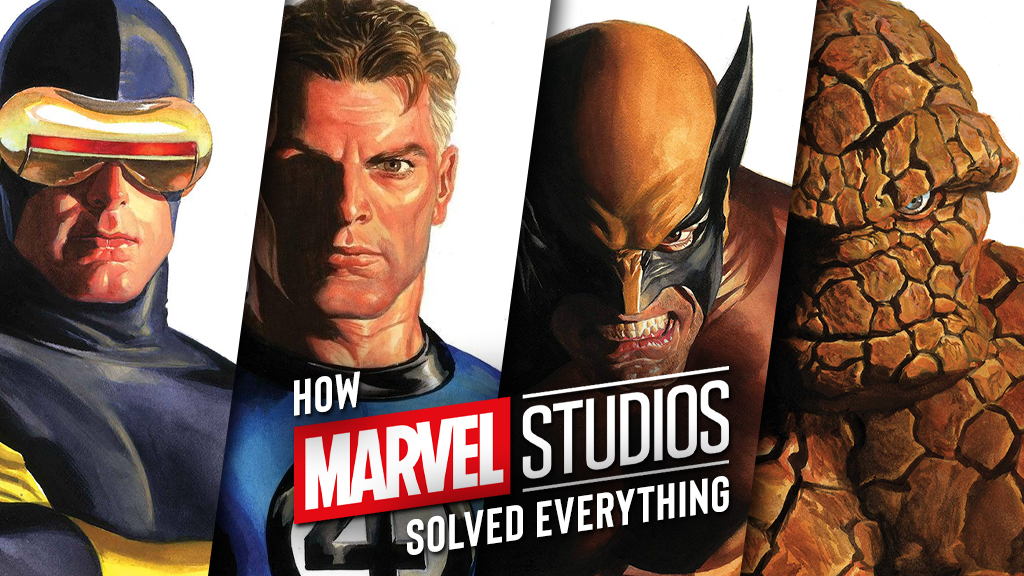
    How Marvel Studios Solved Everything

    It’s been already heavily discussed how the fact that Marvel Studios not having the rights to its current catalog of characters from the start was probably a good thing. It allowed for a number of trilogies devoted to specific characters to have the room to be developed, something that was crucial to the relevance those same characters achieved, not only whiting the MCU itself but in pop culture as a whole. From there, with its Cinematic Universe already established and with a need to infuse it with new characters, Marvel Studios had to figure out how to do so all while also giving audiences a pretty good reason why those characters didn’t show up earlier, at times when the Earth needed every helping hand it could find.

    So being, Marvel decided to tackle introducing new characters in various ways. These were either someone wanting to keep a low profile (Ant-Man), others were in outer space (Guardians of the Galaxy), another was in a secluded African nation that wanted nothing to do with the outside world’s problems (Black Panther), one was a kid from Queens that kept mostly to his part of town (Spider-Man), another was introduced through a prequel meaning she was there all along, just not on earth (Captain Marvel), while a neurosurgeon turned sorcerer managed to fulfill his duty behind the scenes (Doctor Strange). All in all, it went pretty smoothly, but with its growing catalog of characters, and specifically referring to most of the ones Marvel got back from Fox, Kevin Feige, and the Parliament (Marvel’s unifying creative committee) wouldn’t have such an easy task.

    How to introduce both the Fantastic Four and the X-Men to the MCU was always a bit of a head-scratcher, more so with each passing year. Both have an almost inherent need to have been there from the start and, especially in the case of the Mutants, it’d be hard to have them stay away from the public eye since the beginning of the MCU. They have always been the outcasts, the marginalized, enduring a lifetime of being seen as less than they’re worth, which eventually leads to a breaking point. But for this stage to be set, you would need a different context than the one the MCU holds at this time.

    Going back to the Fantastic Four, it would also be tough to swallow that Reed Richards, one of the smartest men on the planet, would be left out of the story being told so far, even if Marvel’s First Family hadn’t gained its powers yet, only to show up now. And even if the route chosen would be to have the team vanish in the middle of the space race that started in the 50s, only to return in the present day, there should be references, technology left behind, something that would have already alerted audiences to their presence in the MCU.

    But after Loki, by going the route we all saw, what Marvel Studios has done is allow for all the optimal scenarios one might conjure to introduce the former Fox residents to the MCU. Ever since the acquisition of 21st Century Fox by Disney we all knew it was coming, but there always seemed to be a few tough decisions left to be made to make the overarching story make sense. One of those would be Magneto’s origin. Someone who was so clearly defined by the horrors of Nazi Germany and their concentration camps. Introducing such a character beyond 2022 would make him an elderly man, far from the ideal age for such a relevant character in the MCU’s coming decade. But now, both this, the issues raised above, and many others, are almost magically solved, without much compromise

    With slight deviations to the Sacred Timeline at specific points in time, you could create these character’s origin stories free from all the constraints more than a decade of MCU projects have ultimately created. With the timeline-hopping we’re probably in store for in the next few years, it won’t take much to get already fully-formed characters with specific backgrounds we already know of (much like we pretty much skipped Spider-Man’s origin in Captain America: Civil War) into the main timeline, with their development from then on being specific to the MCU.

    I’m sure the upcoming Multiverse Saga ended up being developed partially because, much like Reed Richards himself in Jonathan Hickman‘s Fantastic Four run, Feige and his team were on a quest to “solve everything”. To figure out how to best move forward beyond the Infinity Saga by following a different structure, and at the same time deciding on how to best integrate two of the most iconic comic book teams into the character playground the MCU has become. Knowing that arriving late to the party might be a downside, by choosing the Multiverse route they are not only allowing their entrance into the MCU in a fairly straightforward fashion but also for it to become the home of the best versions these characters have ever seen on the big screen.

  • Murphy’s Law Podcast: Episode 84

    Murphy’s Law Podcast: Episode 84

    Charles and Charles are back! Charles M. gives a bunch of Marvel Studios production updates and the guys talk about the big news around Marvel Studios X-Men reboot, the Thor: Love and Thunder set photos, Captain Marvel 2 rumors and more!