Author: Hunter Radesi

  • REVIEW: ‘The Bad Batch’ Find A New Home

    REVIEW: ‘The Bad Batch’ Find A New Home

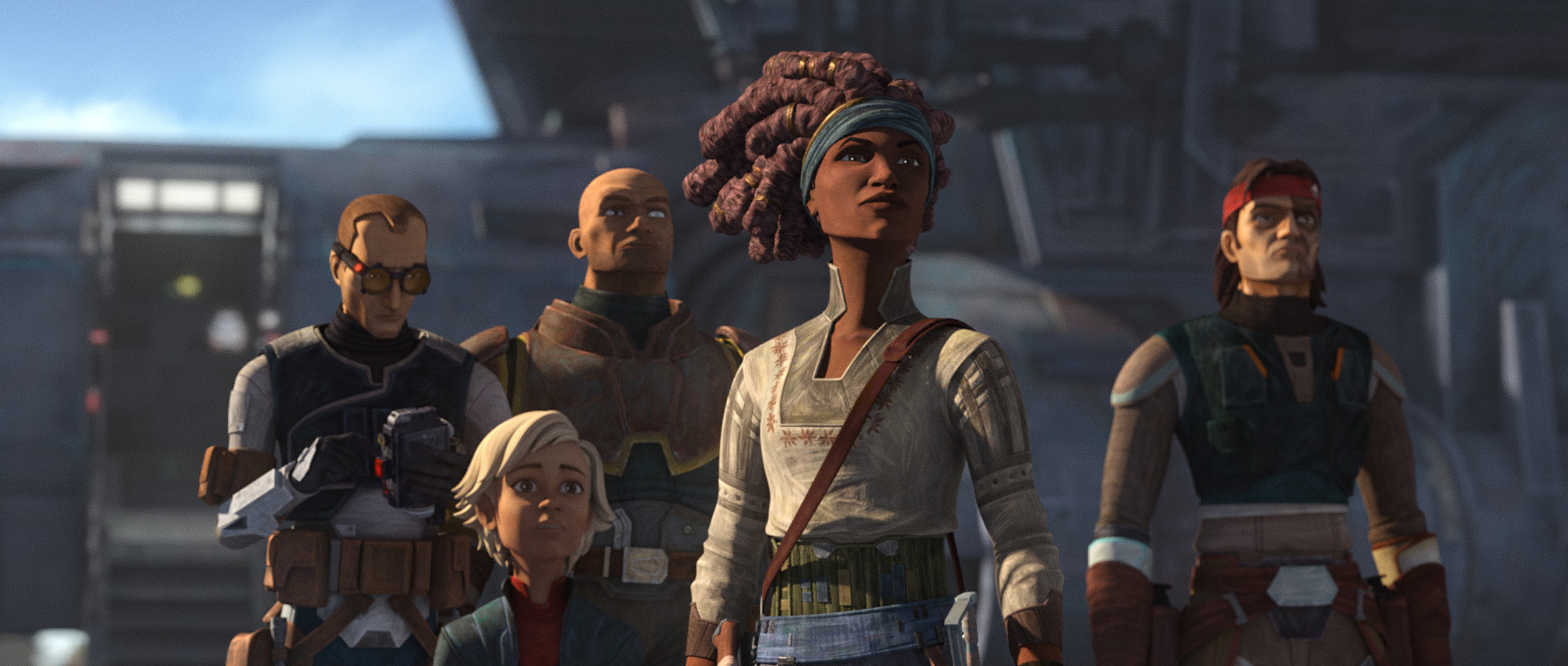
    The last few weeks have been some of The Bad Batch‘s best; a remarkable turnaround from a fairly lame first half of the season. Where episodes once felt flat and pointless, they are now full of life and purpose, aimed towards a clear end goal with actual substance. The latest entry, titled Pabu, continues this trend with a wonderful excursion focused on community, something the leading group of rebels has found themselves severely lacking. A perfect mix of calm and storm, the episode manages to be both a singular adventure and a catalyst for the development of its heroes in one gorgeous outing.

    Pabu sees the Bad Batch accompany their occasional business partner and not-a-pirate Phee Genoa, played by Wanda Sykes, to the episode’s titular planet for a bit of rest and relaxation. After a betrayal by their previous employer, the group needs a safe place to hide and a refresher on what it means to be alive, something Genoa believes she can supply in the form of a peaceful refugee city. Of course, things don’t go exactly as planned, and the group ends up having to protect the citizens from a massive tidal wave that wipes out half the community’s infrastructure. The resulting escapade is a lovely look into what the clones could have, and uphold, if they were willing to lay down their guns and give up the fight.

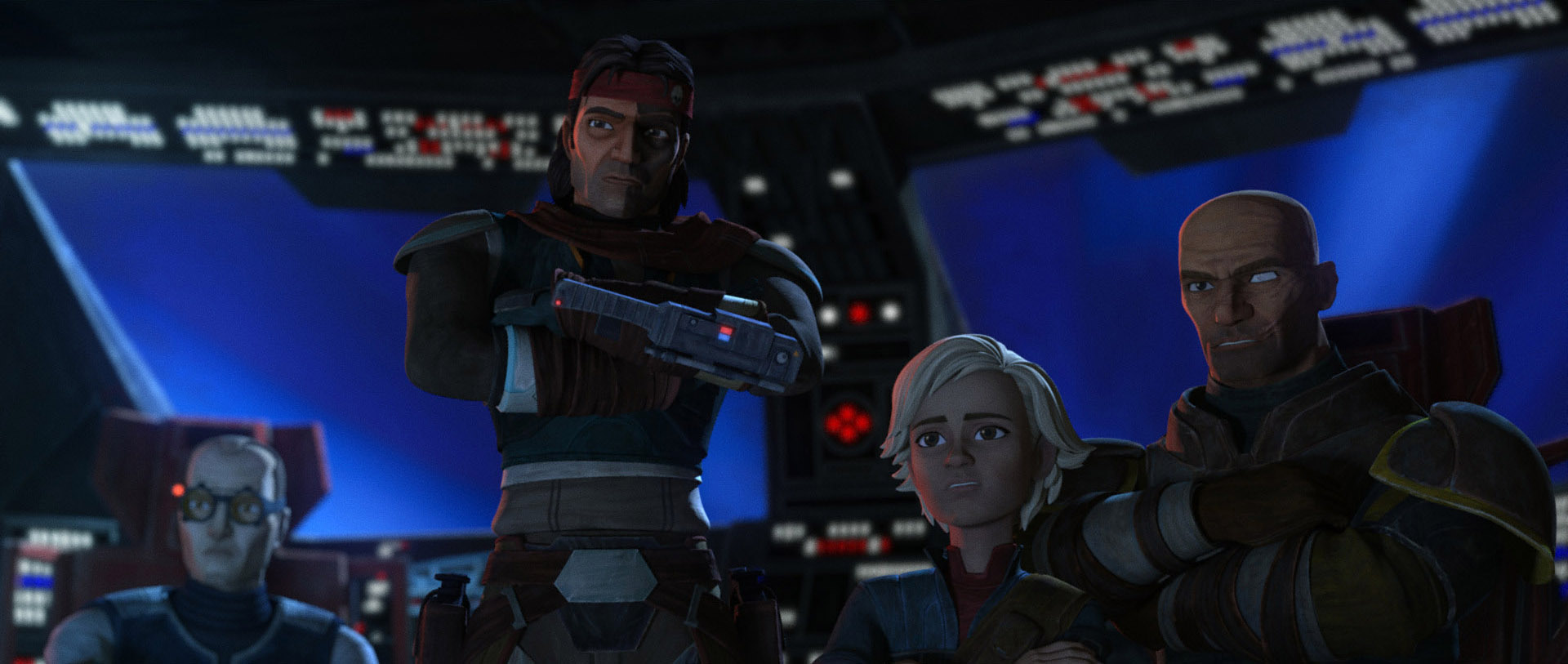
    (L-R): Hunter, Tech, and Wrecker in a scene from “STAR WARS: THE BAD BATCH”, season 2 exclusively on Disney+. © 2023 Lucasfilm Ltd. & ™. All Rights Reserved.

    It’s an excellent follow-up to last week’s installment, The Outpost, which saw Crosshair finally submit to a devastating revelation about the Empire. Similar in fashion, the Bad Batch have come to see their own allegiances in a new light, ditching Rhea Perlman‘s Cid and complimenting their former comrade’s journey in a subtly clever way. The parallel between the two storylines is likely far from accidental, with the show’s nearing finale kicking the series’ overarching plotlines into their final gears. One of the best aspects of Pabu, an episode that appears to be potentially one-off at first glance, is how effectively it pushes the narrative forward for its protagonists. Even if the Bad Batch don’t grow to call the planet home, their experience there opens up new ideas and helps both Dee Bradley Baker‘s Hunter and Michelle Ang‘s Omega consider other methods of living.

    Also of note is the ingenious bait-and-switch of Genoa’s role in the series. After several episodes of the character claiming not to be a pirate, something played as a joke every time, it turns out that she is not, in fact, a pirate. She truly is a “liberator of stolen artifacts”, as she puts it, and an advocator of the downtrodden. This reveal works in a few ways. It’s surprising and endearing, yes, but it’s also another notch in The Bad Batch‘s allegorical belt. From the start, the series has made no false pretenses about its intentions to portray the “soldiers post-war” dilemma, and refugees are a large part of that conversation. It’s truly very intriguing to see The Bad Batch manage to tie another character, one who seemed to be outside of the thematic elements of the show, into the grander image.

    Overall, Pabu is a solid half-hour of television. It’s whimsical in its ideals and thrilling in its execution. The Bad Batch has really hit its stride in the back half of this season, and it really feels as though the show is leading to something special. Hopefully, it can stick the landing.

  • ‘The Last of Us’ Almost Had A Prequel Game

    ‘The Last of Us’ Almost Had A Prequel Game

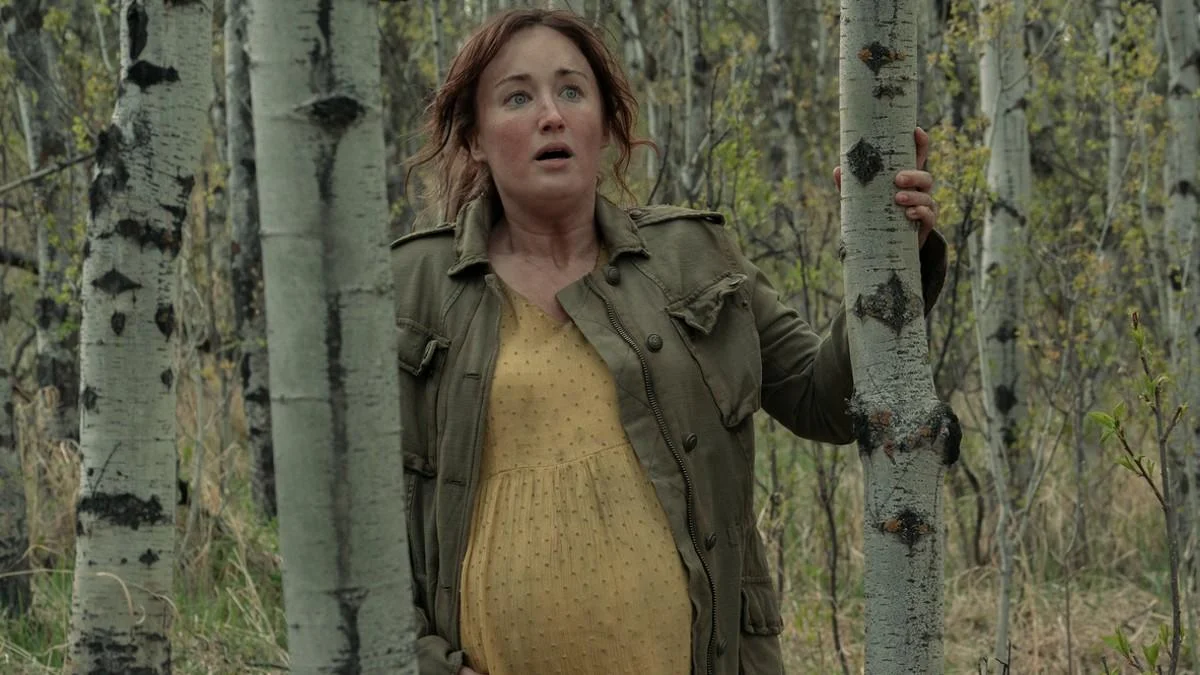
    HBO’s The Last of Us finale was loaded with heartbreaking moments. True to form, the acclaimed adaptation refused to hold back when it came to tear-jerking scenes and shocking acts of violence. While many of those sequences were lifted directly from the original game, there was one that might have come as a surprise to even the most hardcore fans. In a beautifully dark cold open, viewers are treated to their first look at Ellie’s mother Anna, played by the incomparable Ashley Johnson, and the story of Ellie’s birth. Not included in any previous The Last of Us project, the tragic tale has had a long journey towards coming alive, and according to franchise creator Neil Druckmann, was almost its own game entirely.

    With the mainline video games so focused on Ellie and Joel, very little time was left to explore the characters’ connections with anyone in the past. Ellie, specifically, teases multiple important relations from her life before Joel, but only one gets the time to shine. The prequel comic The Last of Us: American Dreams and its follow-up DLC, The Last of Us: Left Behind, detail Ellie’s friends-to-lovers romance with her childhood best friend, Riley, and have become massively popular with fans. Her mother, on the other hand, is often referenced but never shown. The potential telling of Anna’s story is something that Druckmann has spoken on in the past, and has formerly stated was planned to be an expansion of its own. In an interview with Gizmodo, Druckmann reconfirmed this, and added that Anna’s demise was first conceptualized as an animated short:

    The short story of the origin of that little sequence is when we were wrapping up the game, there are these opportunities to do other pieces of art or storytelling to help promote the game. So we did this comic book called American Dreams, and that’s where we developed Riley, which later turned into the Left Behind additional chapter. And there was an opportunity to do an animated short. Trying to come up with a story, I wrote this short script about Ellie’s mom and how she gave birth to Ellie, was bitten at the same time, and wasn’t sure if she was infected during that birth. And it just became this little character drama that felt like it spoke to the same themes of parental love for their child, and how much you’re willing to do even when you’re on death’s door. [But] that deal fell apart.

    Neil Druckmann

    It was Druckmann‘s second attempt at telling Anna’s story, however, that’s likely the real bombshell for gamers. Hidden at the start of his follow-up answer, the creative director nonchalantly reveals he was having discussions about a full-blown prequel game for The Last of Us universe before transitioning to a live-action outlet:

    Then we were talking to another game company to potentially do it as a whole other game. That deal fell apart to tell that story then. Then I became interested in live-action. So I’m like, maybe we should do this as a short. I was talking to Ashley Johnson about her starring in it, and then we both got busy, so that fell apart and I had just kind of forgotten about it until Mr. Mazin over here. We started meeting to talk about the show and he’s like, ‘What do you have that we haven’t seen? What is Ellie’s back story?’ And I was telling him all this stuff and was like, ‘Oh, right there’s this other story about Ellie’s mom,’ and blah blah blah, and kind of told him about it and he’s like, ‘Oh my God, that has to go in the show.’

    Neil Druckmann

    Pushed further by his interviewer, Druckmann elaborated that this mysterious prequel project got as far as some written material, and would have also pulled back the curtain on Ellie’s father. He remains hesitant to give away any more plot details, however, as he’s apparently holding out hope the game could still one day be made:

    I will say there was some stuff written for the mom and the dad. Again, we were talking to this sort of game studio to potentially do a whole Anna game, the climax of which was this scene. So I’m reluctant to say anything about it because as I now found out several times, stories that I think are failures and will never see the light of day, sometimes see the light of day.

    Neil Druckmann

    While the game studio Druckmann is referring to goes unnamed, it seems notable that Naughty Dog – who have developed both existing games and their DLC – was not who the director was negotiating with. Either way, fans can only hope the story of Anna is told in full at some point in the future, with Druckmann at the helm as always.

    All episodes of The Last of Us are now streaming on HBO Max.

    Source: Gizmodo

  • REVIEW: ‘The Last of Us’ Finale Makes A Hard Call

    REVIEW: ‘The Last of Us’ Finale Makes A Hard Call

    *SPOILERS*

    Christopher Nolan‘s Dark Knight films are nothing if not quotable, but there’s perhaps one line that rings truer than most. “It’s not who you are underneath, it’s what you do that defines you.” Spoken as a principle reminder to Christian Bale‘s Bruce Wayne in Batman Begins, the dialogue is just as relevant to Pedro Pascal‘s Joel Miller in the shocking finale of HBO’s The Last of Us – a series that survives on the actions of love and, more importantly, their consequences. The show spent its entirety building the relationship between Joel and Bella Ramsey‘s Ellie to substantiate a wildly controversial, yet immensely effective, ending that will come to redefine its characters and recontextualize the season for all time.

    From the very beginning of The Last of Us‘ 9-episode run, showrunner Craig Mazin and franchise creator Neil Druckmann have emphasized their desire to portray a world filled with grey areas and difficult decisions. The idea of making a hard call, specifically one that may not be morally correct, for the sake of love has been woven into the series’ DNA and made visible in nearly every installment. Whether it be Tess’ final stand, Bill’s choice to drink the wine, Henry’s sell-out for medicine, or even David’s cannibalism, viewers have been shown over and over again what people are capable of when the life of someone they care about is on the line. It’s the fabric that holds The Last of Us together, and the through line that’s pushed each episode past the point of decency. As such, it’s only fitting that the season finale, titled Look For The Light, confront the topic head-on, putting both Joel and the viewers at home in a near-impossible predicament and forcing them to sit with the outcome after it’s all said and done.

    Those who played the original game may have seen it coming, but for first-time watchers, Joel’s ultimate decision to choose Ellie over a universe was likely a heartbreaking surprise. The minds behind the show did an excellent job of seeding the climactic moment beforehand, giving the duo a collection of sweet moments as a lead-in to demonstrate how strong the connection between Joel and Ellie has become and give further evidence of Joel’s thought process. They even successfully adapted one of the game’s most iconic scenes, with the pair encountering giraffes in Salt Lake City, to make a point of Ellie’s innocence and the beauty the world stands to lose. Pascal‘s performance is exquisitely desperate throughout, at first as a wanting father and later as a wounded protector, injecting the episode with the appropriate amount of distress in an underlying, ever-present fashion.

    The true genius of Look For The Light, however, lies in the subtle way it compares two separate reactions to the same difficult decision. With Ellie unconscious for the majority of Joel’s monumental actions, the episode finds itself needing someone else to act as a foil for the protagonist. The season has spent much of its time convincing viewers of Joel and Ellie’s motives, and that’s not easy to shake. It makes people far more apt to root for Joel’s murder spree, saving a character they love, without considering the viewpoint of the other side. The magnitude of what Joel’s done cannot fully sink in unless there’s someone to present an alternative route, and for the audience to actually respect that secondary opinion, the character who vouches for it must be one with a decent amount of credibility. As she did in the original game, Merle Dandridge‘s Marlene is the one who brings that presence to the table.

    Joel and Marlene are two very different types of survivor. Joel, as has been stated countless times, is a protector. In his mind, he exists solely to keep the ones he loves alive. There is no world but his own, and anyone who challenges that is merely an obstacle. Marlene, on the other hand, is fighting for something bigger. She’s trying to revive the planet, an end goal she feels justifies the sacrifice of anyone it may require. It’s a wonderfully dramatic parallel that’s rich for dissection and gives the episode that signature extra layer fans have come to both expect and admire. While this climactic face-off has always been integral to The Last of Us, the finale episode is able to do something with it that Druckmann‘s initial version of the story simply wasn’t allowed to. After numerous references, the extent of Marlene’s ties to Ellie is revealed, and it does wonders for the final moments of the first season.

    Look For The Light opens with the first-ever glimpse at Ellie’s mother Anna, played by Ashley Johnson (who brought Ellie to life in the games), and gives Marlene’s decision to end Ellie’s life an immense added weight. Druckmann has been attempting to grant Anna’s story a space for nearly a decade, and this episode might have been the perfect place to finally place it. The sequence is haunting, further emphasizing the damage even a single Infected can do, and although probably not the full scope of what Druckmann would like to explore with Anna’s character, it’s exactly what’s needed for the hour at hand. The audience gets a peek into the relationship Marlene shared with Anna and a much better idea of what Ellie means to the former. Present for her birth and now the would-be harbinger of her death, despite a promise made to a dear friend, the difficulty behind Marlene’s decision is now clear.

    So, when Joel’s disquieting rampage through the hospital inevitably ends with a confrontation between Marlene and himself, it’s the kind of storytelling payoff that dreams are made of. An entire series focused on the survival of one girl, coming down to two powerful forces who had both been assigned to protect her. One has grown willing to take her life for the larger majority, and the other has grown willing to murder countless innocents to ensure she stays alive. Neither character is entirely in the right. It’s a problem with no real solution, the perfect final example of The Last of Us‘ cherished grey area.

    Ellie, on the other hand, is robbed of her agency. As has always been her draw in life, she is not allowed a say in her own future. A shepherd, once again sedated as a sheep. Every major plotline culminates in these closing moments, punctuated by the last idea left unaddressed – consequence. Joel makes the most dramatic decision of his life, and then to salvage what he has left, he lies. The lie, and the anxiety of what might come with it, is something Joel and the folks watching from home will be forced to sit with for the foreseeable future. It’s been a miracle of a season, and the finale is appropriately breathtaking. One can only hope it’s made the same impact it had on gamers in 2013.

    Just make sure to remember – when you’re lost in the darkness, look for the light.
  • REVIEW: ‘The Last of Us’ Separates Shepherd From Sheep

    REVIEW: ‘The Last of Us’ Separates Shepherd From Sheep

    The latest episode of HBO’s The Last of Us implies there are two types of people in the apocalypse – natural-born leaders and those that follow them. Or, as the Machiavellian cannibal preacher David explains it, fearless shepherds and their simple sheep. This week’s installment of Craig Mazin‘s acclaimed video game adaptation is almost entirely about one thing: proving Bella Ramsey‘s Ellie is among the former, and giving her the most traumatic fulfillment of the status it possibly can. Trapped for the first time without Pedro Pascal‘s Joel, a lone Ellie is forced to fight her way out of an overwhelmingly sticky situation, and the resulting hour of television is a striking look at the immense brutality of a world gone mad.

    Titled When We Are In Need, the eighth episode of The Last of Us is another incredible chapter in Ellie’s long developmental journey. Thus far, throughout her travels, Ellie has been consistently warned about the horrors of humanity, and the far more monstrous consequences their actions have when compared to the Infected. Even so, she has continually underestimated the threat of people, often willing to engage in risky interactions that Joel would not. Until this point, it’s served as a sign of her age. A childlike innocence obtained from a youth behind protected walls. When We Are In Need, however, aims to break that innocence, and it does so with sickening barbarity and some pretty bleak implications.

    If the first half of the season was about solidifying the importance of Ellie’s relationship with Joel, then the second half has been about the validation of her capabilities as an individual. She is a survivor, and she will do anything to survive. Not only that, but she’ll do anything she can to make sure the people she loves survive too. This makes her a force, and one not so easily reckoned with. It’s an attribute that almost everyone she’s come across has been able to see. FEDRA military officers, Storm Reid‘s Riley, Merle Dandridge‘s Marlene, Anna Torv‘s Tess, Rutina Wesley‘s Maria, and now Scott Shepherd‘s David have all found themselves impressed by – and afraid of – what Ellie can do. The only real question has been whether or not Ellie can see her potential herself, having always been able to mask it behind the protection of others.

    When We Are In Need does an excellent job of giving Ellie’s demons a shocking coming-out party, effectively shattering any illusions she may have had about the post-apocalyptic world and the people living in it. The slow building of tension between her and David is a masterful way of making her ultimate, violent breakdown feel more jarring and impactful. Had the episode taken the same route as the game, with Ellie slaughtering most of David’s forces before their climactic showdown, the viciousness of her eventual pyrrhic victory would have been undercut by each of the numerous preceding kills. Instead, viewers are made to watch in horror as Ellie unreservedly chops a man to pieces, tragically revealing herself to be exactly what said man thought she was. It’s a disturbing moment of triumph that promises to haunt the show, and its audience, going forward.

    On the other side of the same clever coin, allowing Joel to take the role of “resort slasher” role from Ellie helps reaffirm his dark side to the audience, who may have been growing too accustomed to his warm, paternal tendencies the last few weeks. Joel is not an altruistic person, a defining trait that the series had begun to stray away from in recent episodes. Reminding viewers of this also has the effect of mirroring his actions with Ellie’s. A man too far gone, and a daughter on the verge of joining him. Again, these characters and the relationship between them define The Last of Us in every way, and it’s rather admirable how Mazin and franchise creator Neil Druckmann can so expertly keep finding ways to make this apparent.

    Ingeniously, however, Joel is not the only character used to reflect Ellie in the episode. David, played to sadistic perfection by the aptly named Shepherd, is essentially another warning for her future. A self-proclaimed shepherd, he correctly points out that Ellie is dangerous, and is likely to one day become a leader herself. His downfall, aside from being an obviously terrible human, is not realizing the intensity of Ellie’s attachment to Joel, who she is already modeling herself after. While there are likely very few timelines in which Ellie ever joins David’s legacy, his commitment to doing whatever he deems necessary to survive and keep his followers alive – admittedly, through cannibalism – is not something foreign to Ellie. Their conflict, and his demise, is a brilliantly disgusting way for the story to tackle Ellie’s growth, and hint at where she could end up down the line.

    With only one episode left, it will be interesting to see how the themes introduced and continued in When We Are In Need play out. The established ending of the original game, on which this first season is based, seems logical when considering what’s been set up here, but there’s still time for the series to pull off a surprise and give viewers something they aren’t expecting.

  • REVIEW: ‘The Bad Batch’ Go Where No One Will Hear Them Scream

    REVIEW: ‘The Bad Batch’ Go Where No One Will Hear Them Scream

    Star Wars: The Bad Batch, as a concept, has so much potential. The context surrounding its titular team, as well as its placement on the galactic timeline, makes the animated series ripe for a mix of cerebral storytelling and unique action scenes. Perhaps this is why it’s so frustrating that the show constantly ignores its best attributes for the sake of forgettable plotlines and run-around episodes, and more importantly, why it feels so good when an episode actually does something interesting. Thankfully, this week’s entry is among the latter. Titled Metamorphosis, the latest chapter in The Bad Batch saga combines serious political intrigue with an exhilarating play on genre to craft a narrative that’s both entertaining to watch and momentous in the grand scheme of the series.

    In Metamorphosis, Dee Bradley Baker‘s Hunter and his tactile band of misfits investigate the mysterious wreckage of an Imperial cargo ship, only to find that what lies inside might have been best left undiscovered. The first half of the episode, especially its opening moments, is maybe the most horrifying Star Wars has been in recent memory. From the beginning sequence, which highlights a lone Imperial Commando desperately fleeing from an unseen terror through dark and silent hallways, Metamorphosis promises to be different from what viewers have grown accustomed to seeing. Most of what follows falls more in line with a suspenseful science-fiction thriller, specifically in the vein of Ridley Scott’s Alien than the protagonists’ usual cookie-cutter escapades. The gimmick, though sadly short-lived, works completely for the time it’s on screen.

    (L-R): Tech, Hunter, and Wrecker in a scene from “STAR WARS: THE BAD BATCH”, season 2 exclusively on Disney+. © 2023 Lucasfilm Ltd. & ™. All Rights Reserved.

    Star Wars is often its most fun when reviving, or replicating, the pulp of old-fashioned adventures. Watching a vintage space horror occur in the galaxy far, far away makes for a wildly enjoyable ten-to-fifteen minutes before the episode takes a surprising turn, shifting from one monster-based genre to another. Halfway through the runtime, the danger at hand is revealed to be a Zillo Beast, an evolving creature first introduced in Star Wars: The Clone Wars. From there, Metamorphosis becomes a miniature kaiju film, with the Bad Batch chasing the larger-than-life organism across an otherworldly cityscape. The change in tone happens pretty organically, resulting in a delightful, pulse-pounding romp that pits the clones against an opponent they’ve never faced before. Especially striking in the climactic scenes is the show’s cinematography, its most consistent positive this season, vividly portraying the power of the beast against a sickly sky.

    The Zillo, however, is not the episode’s true villain. That honor belongs to Dr. Royce Hemlock, a fresh Imperial baddie hellbent on expanding Kaminoan cloning technology for the benefit of the Empire. Played to menacing perfection by the great Jimmi Simpson, Dr. Hemlock is exactly the type of antagonist The Bad Batch has needed. His existence, and ultimate plot to condense and control the galaxy’s cloning operations, immediately tie a loose narrative together and raises numerous thought-provoking questions for the Bad Batch and the show itself to answer going forward. Hopefully, the series doubles down on this seemingly new direction and follows up on it next week, instead of leaving it until the season finale.

  • REVIEW: ‘The Last of Us’ Leaves Nothing Behind In Ellie Showcase

    REVIEW: ‘The Last of Us’ Leaves Nothing Behind In Ellie Showcase

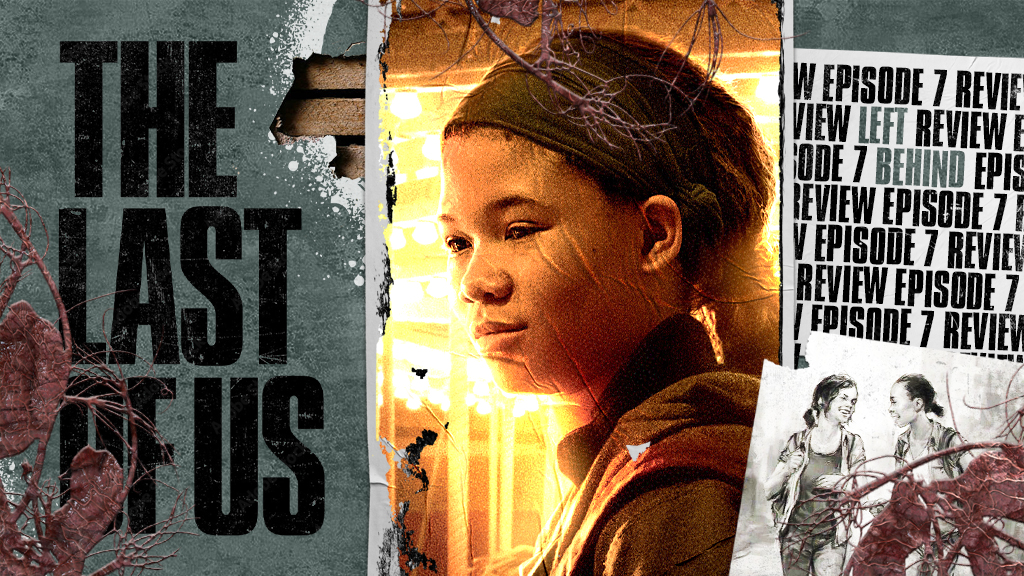
    Ellie is, without a doubt, the strongest character in The Last of Us. A complex, endearing, multi-layered, endlessly interesting survivor. She is, and always has been, the true protagonist of the entire post-apocalyptic franchise, from the original video game to all of its sequels, spin-offs, and adaptations. Without her, there is no The Last of Us, so it’s about time HBO’s acclaimed series finally took the dive into what makes her tick. Based on and titled after the celebrated downloadable expansion Left Behind, this week’s episode steps away from the mainline narrative to explore a bit more of Ellie’s backstory, and give some much-needed context heading into the season’s backend stretch. The result is another beautifully heartbreaking stand-alone outing and the perfect showcase for Bella Ramsey‘s immense talent.

    Ramsey has been incredible from the start. Their portrayal of Ellie, a beloved personality so distinctively brought to life by Ashley Johnson in the video games, has been joyfully spot-on since they first charged Pedro Pascal’s Joel with their signature switchblade and found themselves eating drywall. Left Behind, however, was always going to be their toughest challenge, with its looming presence in the series teased for months via trailers and other promotional materials. The story told in this chapter, yet another rooted in love, is Ellie’s character thesis. It explains almost everything about her constitution, and informs every decision she’s made, or will make, from here on out. Ramsey needed to nail their performance, for the sake of Ellie and the series at large, and unsurprisingly, they pull it off with what seemed like spectacular ease.

    It is important that the audience feel what Ellie is experiencing throughout the hour. To not just see it, but to become immersed in the story and really understand its characters. Of course, this feat can’t be achieved with handholding. It has to be subtle, and it has to appear real. Furthermore, viewers aren’t slow, and they’re likely to recognize Left Behind is leading toward a clear ending. As such, it becomes critical that the episode not do the same thing. The entirety of the entry’s runtime is building towards something tragic, but the final moments of the episode are only effective if the people watching forget what they know is coming. They need to perceive hope and they need to get it from the faces on screen. This is potentially the most difficult task an actor can come up against, which is why it’s so impressive what Ramsey and special guest star Storm Reid are able to accomplish through even the most minor of glances.

    The chemistry shared between the performers is impeccable. In terms of casting, The Last of Us struck gold. Ellie and Reid‘s Riley spend most of Left Behind talking about everything except what they’d actually like to say, yet the actors are still able to convey the rest through hopeful eyes and nervous glares. It makes for a wildly compelling, and far more convincing, exploration of their relationship, something that becomes absolutely essential when the episode swaps out action set pieces for more character-driven conflict. Even if the audience is aware that Riley is bound for death, they still want to believe the same fairytale whimsy that Ellie is clinging to.

    For most of Left Behind, that lie is sold through the ghostly dreamscape of the mall and the soothing winsome with which the leads find ways to interact with it. Though weighted by heavy questions, much of the episode is bolstered by a childlike innocence, used in large part to make the ending pack a harder punch. People often remember Left Behind for its devastating conclusion, but HBO’s take should serve to remind them it’s actually a pretty fun, smile-inducing journey for the large majority. It’s a continuation of what makes The Last of Us, as a whole, so addictive. A dangerous combination of enchanting, heartwarming, fantastic love with the soul-crushing reality of imperfection and consequence. An upper and a downer. The human condition.

    Ultimately, Left Behind is yet another example of television at its best. Ramsey and Reid are flawless, working magic across more gorgeous set design. Thought-provoking ideas bouncing between the walls of a neon-lit cavern, acting as a parabolic playground for emotion. The Last of Us continues to be more of an experience than something simply observed, which may sound dramatic or hyperbolic, but has come to be apparent in its manner of affecting those who view it so drastically. Perhaps this is because, as Left Behind so efficiently demonstrates, The Last of Us taps into something so incredibly human it becomes difficult to deny. People see themselves in Ellie, and thankfully, they’ll get to see more down the line.

  • REVIEW: ‘The Last of Us’ Layers Up In Brilliant Sixth Episode

    REVIEW: ‘The Last of Us’ Layers Up In Brilliant Sixth Episode

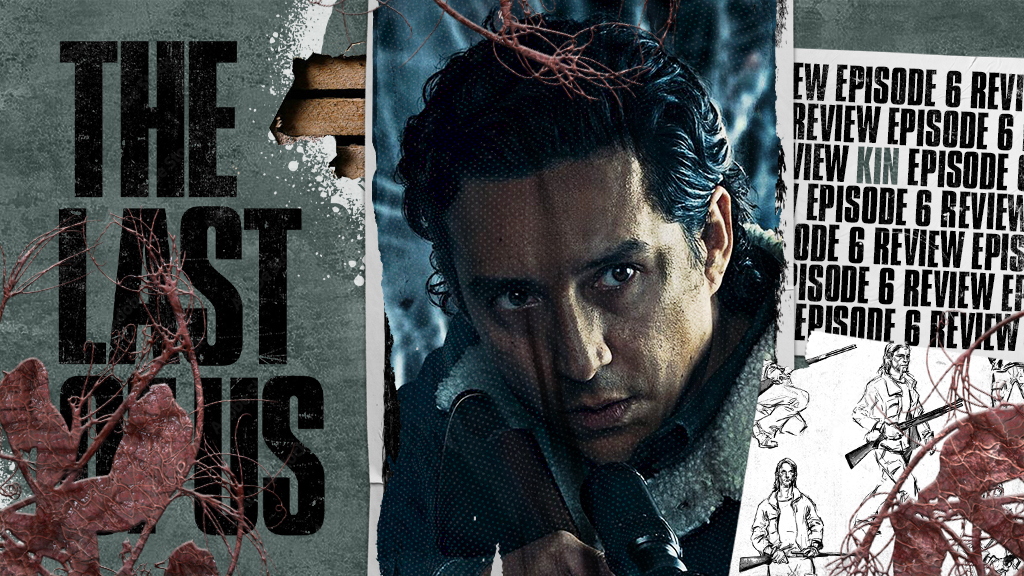
    The Last of Us is shaping up to be something rather special. Kin, the brilliant sixth episode of HBO’s acclaimed video game adaptation, is carried on the back of an incredible performance from Pedro Pascal, who so effectively demonstrates the gripping intimacy with which the franchise has become synonymous. In a stroke of genius, the latest hour from showrunner Craig Mazin and director Jasmila Žbanić expands on an otherwise brief sequence from the game and turns it into one of the series’ best entries, taking full advantage of a talented cast and an immaculate atmosphere to flesh out characters in ways previously thought unimaginable. Kin is, for all intents and purposes, as close to perfect storytelling as one might find on television.

    The true genius of Kin is hidden in its title. At first, it seems remarkably simple, or even more so, straightforward. This chapter of The Last of Us revolves around Joel finally reuniting with his brother, Gabriel Luna‘s Tommy, and meeting his unexpected sister-in-law, Rutina Wesley‘s Maria, for the first time. “Kin” is a rustic way of saying family, so the use of the word in a Wyoming-set episode about folks coming together makes a lot of sense. However, it quickly becomes apparent that “Kin” is referring to more than just the Millers. It’s an episode with a lot of layers, thematically speaking, outside of the many fantastic jackets worn by survivors in the middle-American flatlands, and its moniker is reflective of that in masking the real kinship developed over the course of the hour – Joel, and his begrudgingly paternal role in the life of Bella Ramsey‘s Ellie.

    From the moment viewers are reintroduced to Joel and Ellie, in the midst of traversing gorgeous landscapes, the duo already seems more familiar with each other than in previous outings. There’s a decent time jump between the events of the prior episode and this one, and it’s a credit to Pascal and Ramsey for how naturally that shift takes place. There are plenty of entertaining moments between them early in the episode, but it’s not until the two ultimately arrive in Jackson that the extent of their relationship unfolds. Joel and Ellie are both fairly guarded individuals, so it’s with much resentment that they come to the realization they’ve grown to view each other as family, even if they don’t care to admit it. In the same way that Tommy introduces Joel to his wife, Joel finds himself ostensibly introducing Tommy to his daughter, and that unlocks something wildly profound inside of him.

    Once this awareness comes into play, Pascal begins to shine. Everyone in the episode is doing wonders, including the woefully underrated Luna, but in a series of scenes between the brothers, Pascal delivers a masterclass in complexity. In the original game, Joel mostly confronts his feelings for Ellie in the form of indifference. A grizzled nonacceptance. Here, however, the choice is made to sprint headfirst in the opposite direction. Joel tries to pass Ellie off to Tommy, not because he’s afraid of bonding again, but because he knows he already has, and he cares too much to risk failure. Joel, the toughest man in the apocalypse, suffers from bouts of pearl-clutching anxiety, and his character is infinitely better for it. In a matter of seconds, Pascal and Mazin transform Joel into a frightened, emotional human being. Not a protector, not a machine, and not a monster. A father, and a broken one at that.

    Like Kin itself, he’s given layers to work with. As is Ellie, who sees the potential of family and tribe for the first time through her interactions with Maria and the townsfolk of Jackson. Perhaps this is what loosens her to confront Joel later on, at last revealing that she too understands their dynamic as familial. The climactic argument between the two is heartbreaking and inevitable but results in a healthier connection going into the future. It’s necessary, at this point in the story, for Joel and Ellie to develop past the point of standoffishness. Kin is about their ability to move forward, and evolve. Otherwise, the shocking end of the episode, in which Ellie finds she may be forced to live without the one person who hasn’t given up on her, doesn’t hurt quite as bad.

    The Last of Us continues to impress every week, and this episode is no exception. Aside from exploring the inner workings of Joel and Ellie’s relationship, it also offers plenty of goodies for diehard fans of the franchise, who will notice multiple hints at what’s to come throughout. The set design is stunning, even more than usual, and the sage-like execution of Wesley and Luna‘s roles is admirable. There’s just something so special about the way each installment of the series manages to build upon the last, and how each new episode becomes increasingly layered in the way it weaves plotlines together. With only a handful of entries left, fans can rest assured they’re in good hands as the finale approaches.

  • REVIEW: ‘The Bad Batch’ Remembers How To Use Omega

    REVIEW: ‘The Bad Batch’ Remembers How To Use Omega

    Star Wars: The Bad Batch is usually at its best when it’s tackling one of two ideas – the state of the Galaxy in a post-Order 66 world, or the possible extent of humanity in its titular clones. This week’s episode, titled The Crossing, doubles down on the latter. After a tense midseason event altered the course of the series forever, the latest installment offers a bit of levity with an easier and more straightforward adventure, using its quieter moments as an opportunity for some much-needed character work. It does what more of its one-off episodes should do by standing alone as a semi-independent story while also progressing the development of its protagonists. In balancing these successfully, The Crossing continues the series’ current path toward a more interesting end to the season.

    When fans last saw their favorite band of intrepid misfits, they were bidding a fond farewell to one of their own. Dee Bradley Baker‘s Echo, a Star Wars: The Clone Wars staple who joined the team after their inaugural outing and then never really did much, left to rejoin his old friend, Dee Bradley Baker‘s Captain Rex, on a separate mission in the heart of Imperial territory. There’s no telling whether this means Echo is gone from the series for good, but it’s certainly something that concerns Michelle Ang‘s Omega, as she spends most of the episode coping with her loss alongside either Dee Bradley Baker‘s Wrecker or Dee Bradley Baker‘s Tech. Oddly enough, Echo’s presence is felt much harder when he’s not on the team, used expertly by the writers as a means of exploring Omega’s youthful perception of abandonment.

    (L-R): Omega, Tech, Hunter, and Wrecker in a scene from “STAR WARS: THE BAD BATCH”, season 2 exclusively on Disney+. © 2023 Lucasfilm Ltd. & ™. All Rights Reserved.

    The actual task at hand in The Crossing, which has Dee Bradley Baker‘s Hunter spearhead the group on a mission to extract dangerous resources from a remote mine, is not particularly interesting. If it weren’t for the tender, familial scenes shared between Omega and her older siblings, the episode may fall flat. Most of the action is unremarkable, and the story as a whole is not overly memorable. Luckily, that doesn’t seem to be the main purpose of the plot or its arcs. Throughout it all, Omega expresses immense concern over the fact Echo is no longer part of the Batch. It’s clear that Omega, a child who has just recently found a genuine family, is not used to the prospect of losing one of her own. The Bad Batch utilizes this as a means of taking a deeper dive into the compassion and individuality of the clones, and The Crossing is much better for it.

    So far this season, The Bad Batch has teetered precariously between redundancy and forward progress. Omega, as she’s always been, is the key to maintaining the momentum of the second option. The show is consistently more intriguing when it leans into her and what she has to offer as a wildly unique persona. Hopefully, the series continues to do this as the story moves on, and Omega is used as the centerpiece to a spectacular season finale.

  • REVIEW: ‘Ant-Man and the Wasp: Quantumania’ Hands Kang the Keys to the Franchise

    REVIEW: ‘Ant-Man and the Wasp: Quantumania’ Hands Kang the Keys to the Franchise

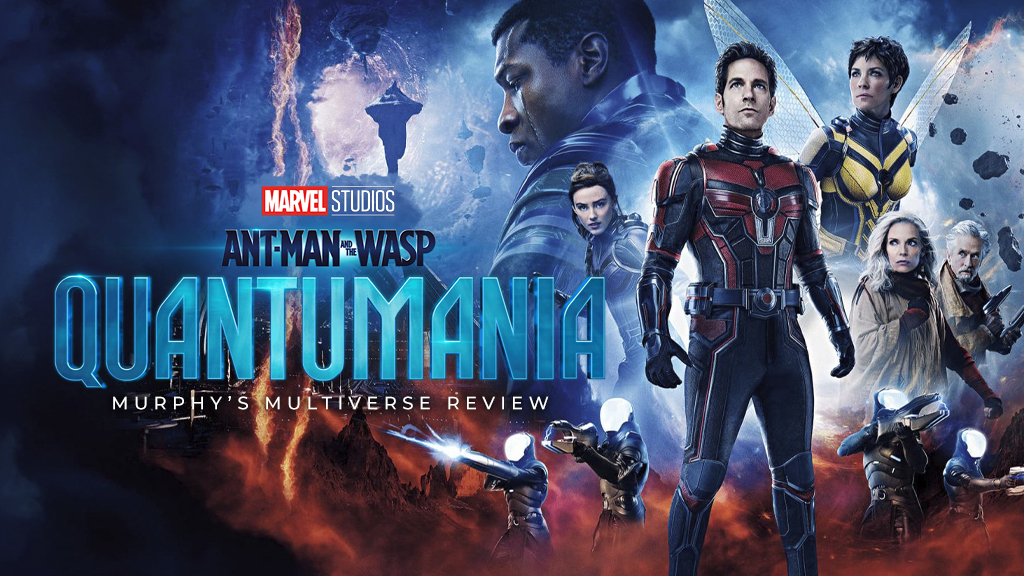
    Ant-Man and the Wasp: Quantumania is a whole lot of movie. Massive in scope, bold in its choices, and heavy on thrills, the blockbuster sequel is a lively, fast-paced deep dive into the weirdest corners of Marvel Studios’ ever-expanding universe. The film takes its titular terminology to heart by infusing a healthy dose of manic energy with the series’ signature sense of family fun, creating a unique experience that’s both fresh for the franchise and familiar to fans. Not every creative decision delivers, and the script can sometimes move too quickly for its own good, but what does land hits with impact and makes one thing perfectly clear – the Marvel Cinematic Universe now belongs to Jonathan Majors.

    Since its inception, Quantumania has promised to be a bigger, “more important” affair than its light-hearted, mostly self-contained predecessors. Whether it really needed to serve this function is another question entirely, but there’s no doubt the project accomplished what it set out to do. Marvel Studios’ latest offering still houses much of the storytelling DNA that defines an Ant-Man adventure, but this time, the pint-sized entertainment comes with an innate feeling of gravitas. Where other Ant-Man flicks featured smaller, intimate tales highlighted by distinctly personal villains, Quantumania makes room for something much larger and far darker to wrap itself around the narrative. The aura of Kang, Majors‘ impressive new MCU antagonist, is enough on its own to push the film far beyond the Ant-Man series’ normally-relegated status, and it seems apparent Kevin Feige and the folks at Marvel Studios understand exactly what kind of force they’ve secured for their future.

    Much will be said about Jonathan Majors‘ performance in the film, and rightly so. The actor is a powerhouse. An undeniable presence on screen. When the Conqueror speaks, everybody listens. Majors is already a star, but his showing in Quantumania and the implications it has for the next several years of superhero cinema are enough to make him, and his character, names on par with Robert Downey Jr.‘s Iron Man. Faithful fans have been searching for the next face of Marvel since credits rolled on Avengers: Endgame, but they’ve been looking in all the wrong places. There is no hero coming to take the throne from Tony Stark. With Quantumania, the MCU has been overtaken by another power entirely. For the foreseeable future, all will bow to Kang, and the box office will be ruled by Majors.

    Jonathan Majors as Kang The Conqueror in Marvel Studios’ ANT-MAN AND THE WASP: QUANTUMANIA. Photo courtesy of Marvel Studios. © 2023 MARVEL.

    Yet, despite Kang’s encompassment of the film, he’s not the only facet to admire throughout its two-hour runtime. Particularly, the visuals that compose the Quantum Realm’s stunning aesthetic do a lot to set the movie apart from its precursive outings. Quantumania’s writer, Jeff Loveness, once boasted that designs for the project were partially inspired by Alejandro Jodorowsky’s Dune, the great unmade science-fiction epic known for its proposed over-the-top imagery and colorful concept art. The delightful absurdity with which Quantumania presents its new characters and their world would suggest this is true and is a refreshing step forward for the genre’s overall embracement of comic book silliness and the awe-inducing joy it has to offer. Truthfully, there should be more comic-inspired films that treat semi-sentient houses and hole-less blobs as viable supporting players in large-scale action sequences. It’s good for the soul.

    Also sufficiently understood, and often commented on by director Peyton Reed, is the importance of family dynamics and the relationship between Paul Rudd‘s Scott Lang and his daughter, Kathryn Newton‘s Cassie. Although it tries with everything it has to be a different type of movie than the first two installments, Quantumania still carries the Ant-Man name in its title, and therefore should also continue the overarching themes of the franchise. Thankfully, it does so and asserts the familial connections between its protagonists as driving forces behind the plot. Everything in the movie circles back to Scott and Cassie, from its chaotic third act to a memorable midpoint scene that rivals the Doctor Strange films in psychedelia. Without that, there is no emotional core to the film, and everything else fragments into an overstimulated mess.

    Unfortunately, regardless of the many promisingly poignant seeds planted as potential talking points early in the movie, much of what could have become a weighted payoff seems to dissipate by the time of the film’s conclusion. This can probably be attributed to Quantumania‘s high-speed script, which barely gives even its most tragic moments room to breathe. Cassie is a character who cares deeply about humanity, and many of her concerns are raised briefly and then never subsequently addressed. Michelle Pfieffer‘s Janet van Dyne is finally given something tangible to do but is vastly overshadowed by the rise of Kang and pacing that feels eager for the plot to end. Even Quantumania‘s attempt at tying the story to the Ant-Man tradition of heisting quickly becomes just a simple fragment of the larger sensory storm at hand.

    One may leave the theater wishing they had felt a little more than excitement, but if the goal is simply to arrive and undergo two hours of absolute crowd-pleasing, popcorn fun, Ant-Man and The Wasp: Quantumania is the warm winter escape a moviegoer might be hoping for. Full of remarkable creature effects and gleeful moments of nerdy fulfillment, the movie is a madcap start to Marvel’s fifth phase. There should be no questioning where the MCU is headed after this. All roads lead to Kang, or some variation of him, and Majors is a steady hand to put the keys to the vehicle in. It’s his multiverse, and the Avengers are living in it.

  • REVIEW: ‘The Last of Us’ Explores the Darker Side of Love in Heartbreaking Fifth Episode

    REVIEW: ‘The Last of Us’ Explores the Darker Side of Love in Heartbreaking Fifth Episode

    *SPOILERS*

    Another week, another reminder: The Last of Us is a love story, and sometimes, love can be destructive. Thus far on their journey, Pedro Pascal‘s Joel and Bella Ramsey‘s Ellie have seen devotion take many forms. They’ve witnessed Marlene and Tess’ reserved commitment to responsibility, Bill’s tender endearment to his beloved partner, and now, Henry’s brotherly protection of his vulnerable sibling, Sam. More importantly, however, they’ve seen the consequences that come with each of those stories, and the variable effects that pure love can have on a person and those around them. In Endure and Survive, the series’ stellar fifth episode, the protagonists are forced to explore the darker side of intimacy and learn that love doesn’t always have a happy ending.

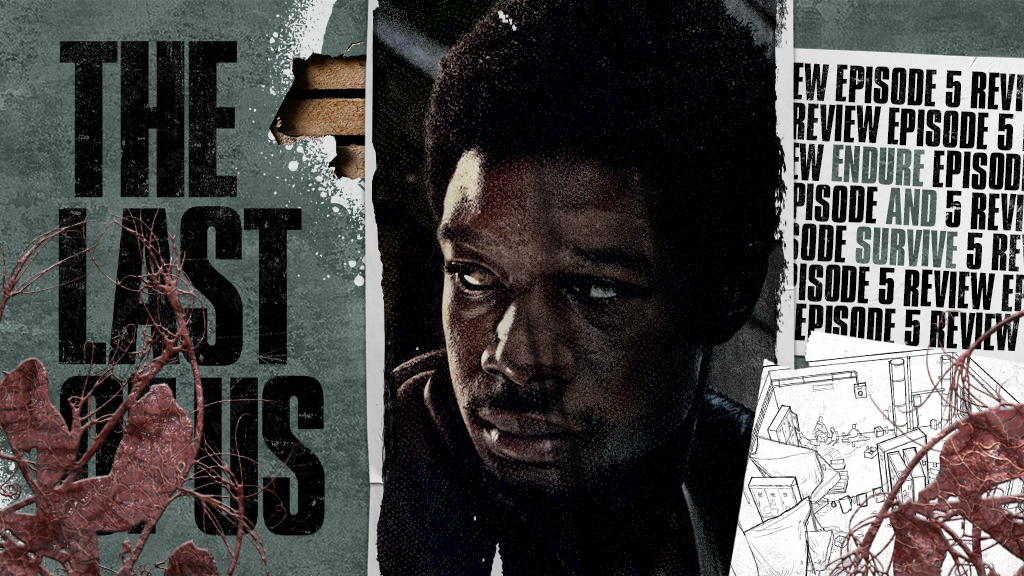
    To address the elephant in the room, the closing moments of Endure and Survive are incredibly difficult to watch. The episode does an extremely efficient job of introducing Lamar Johnson and Keivonn Woodard as their respective characters early, bringing the show back to the uniquely semi-anthological feel it’s crafted throughout the season, and making their ultimate demise hurt all the more. Not only that, but the duo excel in their roles, evoking exactly the same sense of innocence and optimism that Sam and Henry represented in the original 2013 video game. Much like the other pairs of survivors Joel and Ellie have met on their travels, they mean more than the physical function they serve. They are hope, compassion, and the dream of a better future. So, when they inevitably meet their end, it’s absolutely devastating.

    As painful as it is, however, it’s also essential to Joel and Ellie’s own development. No matter what happens in The Last of Us, or who else is present, the story will always come back to Joel and Ellie. That is the singular, unwritten rule of the series. Sam and Henry, as wonderful as they are, exist almost purely to put the show’s protagonists through a certain level of trauma together. The chemistry between the four survivors is immaculate, and for a moment, it seems Joel and Ellie have found a scenario where they can be happy. The beginnings of an informal family. It’s enough for Ellie, and even Joel, to briefly let their emotional guard down, something that they won’t be as quick to do after Sam and Henry’s deaths. Ramsey is particularly excellent in the final scene of Endure and Survive, where Ellie’s freshly hardened exterior is on full display.

    If Bill and Frank, in all their glory, were meant to show Joel the potential of a lasting relationship, then Sam and Henry are there to remind him what can happen on the other end of the spectrum. Love, for all its worth, is also the foundation behind some of life’s cruelest acts. There are consequences to letting people open your heart, both good and bad, and The Last of Us is hellbent on spelling this out at every turn. Luckily, it has a sublime cast and talented creatives bringing its heartbreaking spectacle to life. They make the worst of it all feel immensely human, which is also perhaps why fans are so compelled to watch in spite of all the hurt.

    Also of note in this episode is the work done with Melanie Lynskey‘s Kathleen. The Last of Us operates best in a grey area and has always maintained this by pitting Joel and Ellie against enemies who aren’t exactly straightforward baddies. Yes, Kathleen is willing to perform acts of violence that would even give Joel pause, but showrunner Craig Mazin does his best to make it clear that doesn’t come from nowhere. Just like everything else in this episode, it emerges from the darkest corner of love. She is human, and her susceptibility to grief also makes her volatile. Joel and Ellie may not be there yet, but there’s nothing to say one or both of them couldn’t reach that point eventually. Not even Henry, who reveals he’s also committed ostensibly atrocious acts in the name of love, is safe from his own humanity. It all comes together so nicely and is simply genius storytelling.

    Lastly, as a fan, there’s no way Endure and Survive can be discussed without mention of the Infected horde. Ever since Joel and Ellie survived that Clicker attack in the show’s second episode, the threat of Infected has been far and few between. Several locations of fan-favorite Infected encounters come and go in the series without a hint of the fungal monstrosities in sight. The reasoning behind this, that the heart of the story is about the people and not the creatures, makes total sense, but there has been a wanting desire to see the show’s heroes go up against the living undead again for a while now. With a stirring third act, HBO’s The Last of Us makes up for the intermediate absence of Infected with one fell swoop of chaos, carnage, and a big ole’ Bloater. The resulting exodus of characters is a glorious mix of pain and pleasure.

    Endure and Survive is potentially the best episode the series has yet to offer. It contains nearly every aspect of The Last of Us that makes the story memorable. The desperate exhilaration of survival, antagonists both alive and unwell, the fear of fungus, and a deep dive into the intense complexity of emotion that only Neil Druckmann and Mazin could configure. Everything boiling down to a clipboard, asking Ellie, and everyone at home, to stay awake. It’s beautiful and draining all at the same time. At this point, there’s no doubt audiences will be back for more.