Author: mtfiii

  • The Power 15 List: Which Franchises Have the Most Juice With Fans Right Now?

    The Power 15 List: Which Franchises Have the Most Juice With Fans Right Now?

    1. Marvel Cinematic Universe (Disney/Sony)

    On the heels of winning San Diego Comic-Con with the Avengers news that shook the fandom, and with a film at the box office in Deadpool and Wolverine which is breaking records, the MCU is riding high. And this weekend’s D23 event may provide an additional jolt of enthusiasm about the franchise. However, with only Agatha All Along on Disney Plus to sustain content appetites for the rest of the year, we can expect to see some loss of momentum, particularly when the next shoe drops with respect to the beleaguered Blade film.

      2. Game of Thrones (WBD)

      This weekend’s House of the Dragon finale will likely cap a season that undoubtedly restored the feeling for the television franchise that reigned over the monoculture like a Targaryen Dynasty. And with additional spinoffs in the works, all skepticism about sustainability has been melted away with dragon flame. Warner Brothers Discovery’s flagship franchise is flying high, and we continue to whistle that iconic theme.

      3. Star Wars (Disney)

      The mixed reaction to The Acolyte and the continuing Culture War noise surrounding this franchise have really left Star Wars vulnerable. A Skeleton Crew trailer release is imminent, and maybe an infusion of Stranger Things energy into the graying, embittered fandom will do it some good. This is a franchise built on childlike wonder, and much of the recent content has been lacking in that regard.

      4. The Boys (Amazon)

      Head-to-head against The Acolyte, the most recent season of The Boys held its own in terms of mindshare, and even though Season 4 didn’t hit the highs of previous seasons, that hasn’t stopped Amazon from greenlighting a prequel spinoff to go with the Mexico-set spinoff announced a while back. The fact that the next season will be its final one will center it even more firmly in the discourse, as fans and critics will wonder if it can “stick the landing.” If anything, The Boys’ biggest Achilles heel might be the extent to which real-life steals its absurdist thunder.

      5. Dune (WBD)

      With one of the most critically and commercially successful films of the year, a sequel expected to be fast-tracked, and the spinoff prequel Dune: Prophecy series set for November on HBO, 2024 has been quite the year for the Dune franchise. And that’s before the memes. However, it does still remain to be seen how far the franchise climbs in the pop cultural consciousness, or whether this year will be its apex, given that other franchises were hobbled by the pandemic and the strikes, and given that things get extra weird on Arrakis from here on out.

      6. DC Elseworlds (WBD)

      While James Gunn‘s DCU prepares to pull out of the station, fans of those characters will get to visit Gotham twice this fall, as the HBO series The Penguin returns us to the world of Matt ReevesThe Batman Epic Crime Saga. And although Robert Pattinson’s Batman is unlikely to feature heavily in the series, his shadow will likely loom over the story. And at the cinema, the highly anticipated sequel to the billion-dollar grossing Joker will offer us another glimpse into Todd Phillips’ Scorsese-tinged hyper-reality, as Lady Gaga‘s Harley Quinn enters the fray. Other alternate universe projects have yet to be announced, and details remain limited on the proper sequel to The Batman, but needless to say, the more successful these two projects are, the more likely that others will also see the light of day.

      7. DCU (WBD)

      Superman has recently wrapped, the first teaser trailer for Creature Commandos (dropping in December) has been released, and news items about upcoming projects continue to surface. Still, while anticipation for what James Gunn is cooking up remains high, excitement is muted. There was no SDCC panel, and it’s possible that audiences won’t get non-set leak Superman footage until 2025. So for the remainder of 2024, we could very well be in “wait and see” mode.

      8. Star Trek (Paramount)

      Although it’s been many years since the last Star Trek film (despite Quentin Tarantino‘s best efforts to give audiences “Hard R Trek”), the franchise has been flourishing on streaming, with a number of well-regarded series on Paramount Plus, and more on the way. And the recent announcement of the first live-action comedy in the franchise’s history could push Star Trek further into the mainstream than it’s been in years.

      9. MonsterVerse (Legendary/WBD)

      Godzilla x Kong: The New Empire was moderately successful at the box office, and the Monarch: Legacy of Monsters streaming series was well-received, albeit underappreciated, with a second season on the way. This franchise still has its drawing power, but its days at the top of the zeitgeist may be behind it.

      10. Spider-Verse (Sony)

      Tom Holland‘s MCU Spider-Man franchise is represented elsewhere, but through the power of the Spider-Verse franchise, every possible Spidey and Spidey-adjacent character — be they in the Amazon researching spiders before dying, bonding with goopy alien symbiotes in San Francisco, or…doing whatever Kraven is doing — is connected via multiversal web. And Beyond the Spider-Verse very well might connect these divergent threads. There’s still no word on when that movie will drop, but for now, fans of the Venom films can look forward to the conclusion of that trilogy in Venom: The Last Dance, which releases in October.

      11. Transformers/GI Joe (Paramount)

      Last year’s Transformers: Rise of the Beasts revealed that the two franchises were being merged, and while there’s a degree of uncertainty as to when we’ll get that film, next month’s Transformers: One animated film will give longtime fans the robot-centric big screen adventure they’ve clamored for since they first discovered Stan Bush’s “The Touch.”

      12. Lord of the Rings (WBD/Amazon)

      While technically, the rights to the Tolkien books have been bifurcated, and the Rings of Power series will likely never cross over with the LOTR projects in the works at Warner Brothers, each is capable of elevating the overall excitement around the stories told on Middle Earth. But unfortunately, Season 1 of Rings of Power, despite its budget and the advertising blitz around it, never really hit the mainstream, and it’s hard to see Season 2 breaking through.

      13. Jurassic Park/World (Universal)

      Yes, they’re still making these, and yes, the films still have a billion-dollar upside. But with less than a year until the next film, directed by Gareth Edwards and starring Scarlett Johansson and Mahershala Ali, is slated to hit theaters, it’s hard to see what new ground this franchise could stake out to fire up the fanbase.

      14. Harry Potter (WBD)

      Putting aside the toxic JK Rowling of it all, this franchise needs a cultural reset, and indeed, WBD is looking to introduce a new generation to the world of wizards and wands. They’re still a few years away from getting that project out, though, and who knows what nonsense JK could say or do to further sully the franchise’s legacy before then.

      15. Anne Rice Immortal Universe (AMC)

      Yes, The Walking Dead has been an AMC mainstay, but while that seems to be limping along, the series based on the Anne Rice novels seem to be gathering momentum. However, despite their highly engaged fan followings, particularly for Interview With the Vampire, the media landscape for these shows doesn’t seem favorable for a jump into the mainstream anytime soon.

      Honorable Mention:

      The Walking Dead (AMC), Mission: Impossible (Paramount), Fast & Furious (Universal), Mad Max (WBD), John Wick (Lionsgate), Ghostbusters (Sony), James Bond (EON)
    1. 6 Villains Who Could Replace Kang as the Big Bad of the Multiverse Saga

      6 Villains Who Could Replace Kang as the Big Bad of the Multiverse Saga

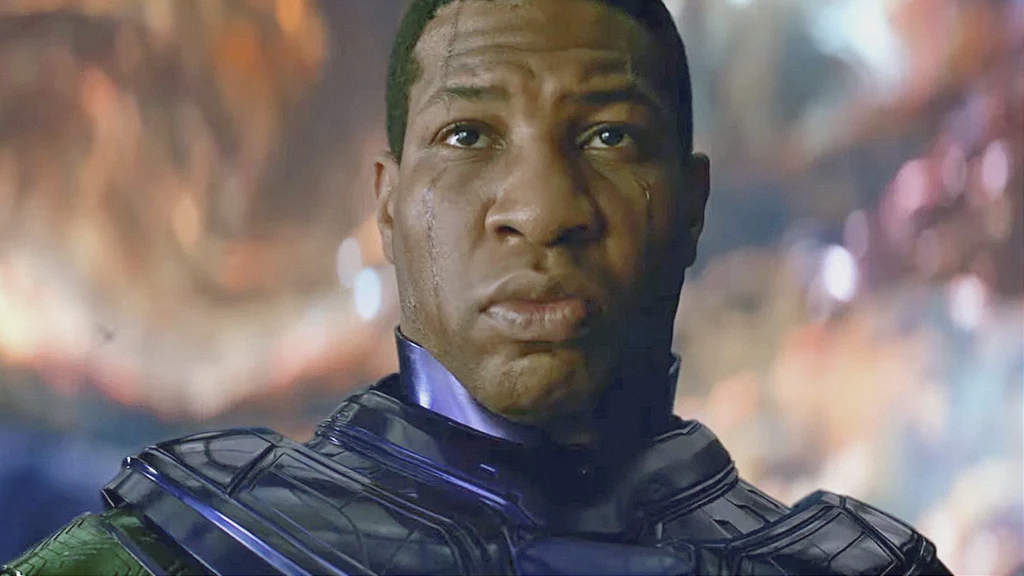
      On the heels of news from a couple of weeks ago that Destin Daniel Crettin will no longer be directing Avengers: Kang Dynasty, the speculation that Jonathan Majors’ Kang will no longer serve as the main antagonist, or “big bad,” of the Marvel Cinematic Universe’s Multiverse Saga has really started to heat up. This is especially true when you consider that the character’s primary influence has been felt on the series side, where Loki just wrapped up its two-season, 12-episode arc in a satisfying way. But even if pivoting away from the character solves one problem, that still raises an even more important question: Who should step in to replace Kang, either for both Avengers: The Kang Dynasty and Avengers: Secret Wars, or just the finale?

      Below are five possible alternatives:

      The Big Name
      1. Doctor Victor Von Doom


      Among superhero fans, this character needs no introduction. Indeed, as far as Marvel villains go, he is at the top of the food chain, capable of matching science with Tony Stark, matching magic with Stephen Strange, and matching kingdoms with the Black Panther. Alongside the X-Men, he was arguably one of the most coveted of the Fox-controlled characters that Marvel Studios acquired when Disney purchased 21st Century Fox in 2017. And Doctor Doom was at the center of not just the original Secret Wars comic event in 1984, but the more multiverse-centric event from 2015. Indeed, “God Doom” featured Victor at his most iconic, reaching his apotheosis and ruling the remnants of a shattered Multiverse as its God Emperor. From that position, it’s easy to see how he could seamlessly fill out the “Dynasty” aspect of The Kang Dynasty.

      However, it is precisely because Doom can be such an enriching asset to the MCU as an ever-present, ongoing antagonist that it would be viewed as a waste to slot him into the role of the “Final Boss” to be vanquished by the Avengers. Telling his story and developing his character over multiple projects and across multiple conflicts can flesh him out and give mainstream audiences more of an opportunity to connect with him over the long term. But having him be the Final Boss of the Multiverse Saga and not be defeated in a satisfying way would be worse, because it won’t provide the closure and sense of culmination. It’s a Catch-22 for Marvel if they were to slot Doom into the role, and that explains why it shouldn’t be him.

      The Variants
      2. Thanos


      This would be one of the more controversial choices, for sure, but in a way, it would bring things full circle. Yes, the Avengers’ inability to deal with their own failure in Avengers: Infinity War led them back to him in Avengers: Endgame. But surely, across an infinite Multiverse, there had to be a Thanos with even grander ambition than snapping away half the lives in the universe. A Thanos who wants to snap away half of the universes, then, is just the kind of leveling up that made The Force Awakens’ “build a bigger Death Star” plan so successful — play the hits, only louder.

      But admittedly, there’s a huge risk in bringing back the villain the MCU successfully pulled off because they couldn’t quite pull off establishing The Next Thanos; it could be seen as an admission of defeat and creatively bankrupt. That said, the idea of time loops and recurring, iterant cycles has been central to the Multiverse Saga so far. Marvel might be able to lean into the deja vu of it all and make it work.

      3. Infinity Ultron


      If Thanos is the Avengers villain who won, then Ultron is the Avengers villain who lost. But What If…? gave us a glimpse into a fully actualized Ultron who, if unleashed on the world could become a threat to every universe in the Multiverse. And right now, with artificial intelligence such a big part of the zeitgeist, there’s a way to bring this upgraded Ultron to the big screen in such a way that it feels not like a retread, but an existential threat.

      On the other hand, there aren’t a lot of ways to make Ultron drones visually interesting, and audiences would probably grow tired of repetitous battles, even if it’s fun to see heroes unleash their full powers on killer robots.

      4. The Maker


      Now it would for sure be a tough sell to fans for newly-introduced Reed Richards and his evil Variant to be thrust into prominent roles in The Multiverse Saga at around the same time. But while it certainly runs the risk of being considered rushed, the fact that the MCU already introduced the Council of Kangs makes a Council of Reeds less likely, and functionally, if Good Reed is going to possibly step up with a plan to save the Multiverse from collapse, an Evil Reed who has a much more sinister plan can capably fill the void left by infinite Kangs.

      The other major upside for using The Maker in this fashion is that unlike Doom, he can be definitively defeated without fans feeling like a character with long term Big Bad potential has been wasted. What better time to introduce us to the ultimate twisted mirror version of a hero as major villain than the Multiverse Saga? Which brings us to the next possibility…

      5. Hydra Cap


      One of the most controversial characters introduced in comics in recent years is the version of Steve Rogers who was actually a sleeper Hydra Agent, ushering in the fascist takeover of the United States. In many ways, Hydra Cap was prescient, but over the years, the polarizing nature of the controversy has waned, so much so that Steve’s “Hail Hydra” in Endgame was viewed as a nod to the character. It’s been nothing new that rumors have swirled around Chris Evans’ possible return to the MCU, and after playing villainous roles in Knives Out and The Gray Man, he’d likely be game for playing an Evil Captain America.

      What are the downsides? Perhaps the “political” aspects of the character would take away from the more cosmic scope of the other presumed antagonists. But across an infinite Multiverse, while our Steve was capable of wielding Mjolnir, perhaps Evil Steve wielded the Infinity Gauntlet or some other immensely powerful weapon as he extended Hydra’s reign across dimensions. In any event, the shot of Chris Evans wearing the Hydra colors as he stepped out of the shadows, a la the train station scene in Infinity War, would be one helluva reveal.

      6. King Killmonger


      If Hydra Cap represents the twisted mirror version of “I Could Do This All Day,” King Killmonger represents the twisted mirror version of “Wakanda Forever.” Another recent comics storyline was the Intergalactic Empire of Wakanda, where the highly advanced African nation first sought to explore space, but turned to conquest, and established an empire across the stars in the name of Wakanda, led by an emperor, N’Jadaka, who was essentially a reincarnated Killmonger. For the MCU, that story doesn’t have to be replicated beat by beat, but if an audience primed for Kang the Conqueror got, essentially, Killmonger the Conqueror instead, with all of the accouterments of a Wakandan ruler but leveled up to cosmic, it would be quite the sight. Not to mention that in Michael B. Jordan, you’d have an established A-list star and charismatic performer who could sell the idea and get audiences to buy in. Yes, it would for sure be an out-of-left field pivot, but it would certainly be provocative and get the people going.

      Shifting the focus of the Multiverse Saga away from Kang would be a bold and controversial move. And surely the brain trust at Marvel Studios are weighing the pros and cons of such a move as we speak. But if they chose to take such a drastic step, each of these choices offers a feasible alternative, and if well-executed, could still lead to a satisfying conclusion to these recent Phases of MCU storytelling.

    2. Fantastic Father: Pedro Pascal’s Reed Richards Casting Suggests Franklin and Valeria Are Coming To the MCU Sooner Than Expected

      Fantastic Father: Pedro Pascal’s Reed Richards Casting Suggests Franklin and Valeria Are Coming To the MCU Sooner Than Expected

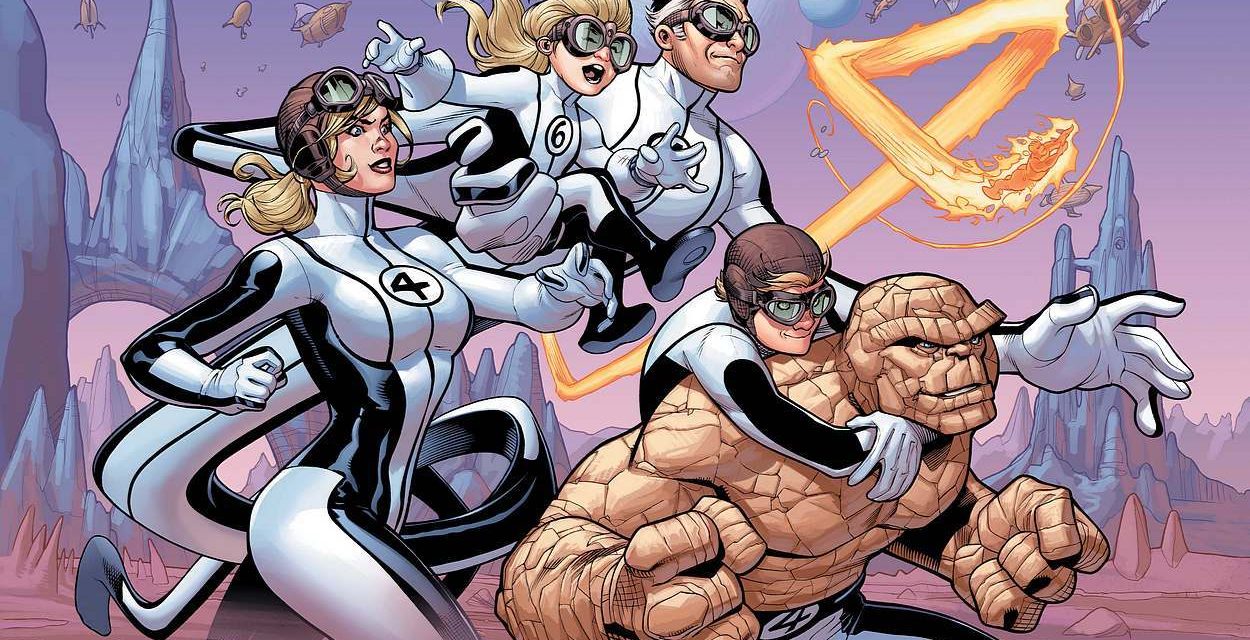
      Last week, fans finally got a long-awaited glimpse into the Marvel Cinematic Universe’s plans for the Fantastic Four, when the story broke that Pedro Pascal, he of The Mandalorian, The Last of Us, and countless “Daddy” memes, was cast as Reed Richards, the patriarch of Marvel’s First Family. And of course, that set the social media sphere aflame. But one aspect of the casting has been underexplored. At 48 years of age, Pascal won’t exactly be a spring chicken when Fantastic Four debuts on the big screen. And what that likely means is that a heretofore never explored aspect of Mister Fantastic in live-action is likely to be explored here: Reed Richards, father.

      Based on Pascal’s age, a story based around the F4’s origin seems unlikely. Reed, Sue, Ben, and Johnny will probably be established heroes, and therefore it’s perfectly reasonable to assume that alongside the core Four, we will be introduced to Reed and Sue’s children, Franklin and Valeria Richards. In fact, it’s quite plausible that they’ll be teenagers, rather than toddlers.

      This is important for a number of reasons. Firstly, as a franchise that debuted in 2008, the MCU is getting a bit long in the tooth, as the Gen Xers and Millennials who were part of what made the MCU a phenomenon are aging into the phases of their lives when they’re no longer dictating what’s cool. And while Marvel has seeded their universe with Young Avengers in order to hopefully connect with Zoomers on their level, the Fantastic Four is a throwback. You couldn’t get more Boomer. So who better to provide the eyes through which we meet them, if not their children? Yes, the F4 are a little bit (or even a lotta bit) uncool to modern audiences, but there can be something charming about Mom and Dad not being cool.

      As stated earlier, the Fantastic Four feel like quaint throwbacks to a bygone era, and it’s for that reason that so many imagined Fantastic Four as a 60s period piece. But Franklin and Valeria are different; they’re not stuck in the amber of any previous generation’s aesthetic. They, more than the others, can bring a Modern Family element to a Father Knows Best dynamic. And it’s because they can look at their parents and uncles — who they love — and tell them that they’re a thousand years old and completely out of touch. Ironically, that kind of Gen Z gaze is how you make the F4 resonant to modern audiences, relatable both to the kids who see their parents in them, and the Gen Xers/Millennials, who see themselves in the context of their own relationships with their kids.

      Which brings us back to Reed. There’s a certain amount of inherent unlikeability to being the smartest man in the world. It was always going to be necessary to smooth Reed’s edges a little bit, and get people to root for him and Sue to make things work. Casting the eminently charming Pedro Pascal helps. He’s already shown an ability to project fatherly qualities, even when his characters are supposedly loners. And when the MCU introduces us to Franklin and Valeria Richards, Pascal will be able to showcase that side of Mister Fantastic and enhance the Fantastic Four’s position as the First Family of the Marvel Cinematic Universe.

    3. With ‘The Flash,’ the DCU Gets A Little Less Meta, and A Little More Human

      With ‘The Flash,’ the DCU Gets A Little Less Meta, and A Little More Human

      First things first. The Flash doesn’t change the hierarchy of power. It’s not the best superhero movie of all time, or this year. Hell, it’s not even the best Multiverse-based superhero movie this year. But it’s good, really good, and course-corrects a lot of what DC films have been lacking in the past, and most importantly, it course-corrects a character who typifies where the now-dead DC Extended Universe went astray.

      Ostensibly, the world between the frames of this film has been untouched by the chaos surrounding DC Films, its parent company Warner Brothers Discovery, the overall creative direction there, and the tumult surrounding the future of their superhero stars, including the star of this film. Quaintly, this film right out of the gates introduces us to a Flash who has undergone several upgrades at the hands of his “fancy friends” in the Justice League, one who can save hundreds of lives hundreds of miles away before his breakfast order is ready, but is still mired in a past that keeps him from living his best life. Within the text of the movie, it’s standard hero origin pathos stuff, but as subtext for the DC filmic enterprise as a whole, it reminds us that it’s important to reckon with the regrets of a past that might have been different and a road not traveled, before ultimately recognizing that not everything can be retconned, then moving forward.

      And the key to unlocking this theme is in our “other” Barry Allen. It’s hard to navigate this without spoiling, but it is in this dual performance that star Ezra Miller really shines. They (as in the actor, Miller) give each Barry his own twisted freaky mirrored experience tinged with a mixture of jealousy and annoyance, as in the other, there’s some of what each wants, and some of what each wishes he’d be better without. And for people who have in the past been put off by Miller’s overly manic portrayal of the role, the movie is savvy and self-aware enough to lampshade those negative aspects and organically turn their dial down. Miller’s also doing the bulk of the emotional heavy lifting here, as they bridge that gap between the loving boy with two doting parents whose happiness was crushed by tragedy, and the young man who may be the fastest alive, but he’s nowhere close to the most invulnerable. Barry can be hurt, and it’s possible that Barry’s hurting all the time, but that’s the price of being a hero. And Miller conveys that.

      But not to be undone, if it’s boyhood trauma as an impetus for heroism you want, this movie treats us to Bruce F’n Wayne, The Batman, times two, played by Ben Affleck and Michael Keaton, each a little bit too old for this shit, but in each case, damn right the old guy’s still got it. While this movie doesn’t establish the kinship of equals that makes their comics relationship so compelling — Bats is still very much the grizzled hero delivering sage wisdom to the up-and-comer — the mentorship feels more lived in and their mutual respect feels more earned. Even when the respect comes from a version of Bruce who has clearly had a long run.

      Visually, the action is solid, but not groundbreaking, as we’ve seen superspeed sequences similarly rendered. (There’s even a nod or two to Quicksilver from the Fox X-Men films in there.) But it doesn’t get old seeing Bruce handle a room full of gun-toting baddies his way, and then seeing Supergirl (more on her later) handle those same baddies hers. The special effects get a little bit messy in the 3rd act, which (sadly) is to be expected nowadays with blockbusters, but it remains mostly visually coherent.

      Sasha Calle‘s Kara Zor-El does a lot with a little, as she has to take us through an entire Kryptonian hero’s journey in the course of minutes. But overall, there’s a fierceness to her performance that’s balanced by the weight of what she’s experienced during her time on Earth, and what she has failed to do. She doesn’t get a ton of screen time, but what she gets makes it easy to root for her.

      On the villain front, General Zod is competent and capable, but you can understand why Michael Shannon considered it unfulfilling compared to his role in Man of Steel. That film did the work of establishing his motivations and complexity. This one just wound him up and let him kill people while glowering and grimacing. But the point of the film isn’t really for The Flash & Friends to win the Battle of Metropolis — it’s for Barry to win the war within himself.

      If you see only one superhero film this year, make it Across the Spider-Verse. Obviously. But on the DC side of things, this more than earns its praise while setting the stage for a bold new era of films under James Gunn and Peter Safran. It delivers heartfelt moments, humorous sequences, lively action, and says hi (and goodbye) to some old DC friends. Plus, it’s colorful and fun. If you choose to check it out (and it’s perfectly reasonable to choose not to), you’ll have a good time.

    4. REVIEW: ‘The Boogeyman’ Reminds Us Why We Used To Be Afraid of the Dark

      REVIEW: ‘The Boogeyman’ Reminds Us Why We Used To Be Afraid of the Dark

      The Boogeyman, at its core, gets at the most basic of premises: What if the monster in the shadows that we feared as a child was real? Our protagonist Harper Family — a recently widowed father and his two daughters — represent the stages of life where that fear goes from real to remote, and as the story progresses, we experience the foreboding and the terror of a monster lurking in the place you forgot to look.

      The film is carried by its cast, as Sophie Thatcher of Yellowjackets fame brings a certain outcast quality along with her savvy. As the teenage daughter Sadie Harper, she’s too old for monsters, but she is nonetheless no stranger to trauma, as she is still steeped in sadness about her mother’s death. She’s the big sister that is expected to be the strong one, but grief casts a pall over her ability to see what she needs to see to protect her sister Sawyer from the very real danger that stalks them.

      (L-R): Sophie Thatcher as Sadie Harper, Chris Messina as Will Harper, and Vivien Lyra Blair as Sawyer Harper in 20th Century Studios’ THE BOOGEYMAN. Photo by Patti Perret. © 2023 20th Century Studios. All Rights Reserved.

      In her portrayal of Sawyer, Vivien Lyra Blair (Young Leia from Obi-Wan Kenobi) gives us a child who is desperate not to be the monster’s next victim but is also terrified (and rightfully so). As these types of movies are wont to do, we get a lot of scenes where we’re alone with her in rooms where the monster can be anywhere, and as viewers, her paranoia becomes ours, and her frustration at no one believing her invests us in her fate.

      Chris Messina, on the other hand, is in the toughest spot as Will. He’s the dad, a therapist whose patient tells him about a monster, and whose children tell him about a monster as well, but his natural response is to conclude that the answer is more therapy, because monsters couldn’t possibly be real. His own grief, as he grapples with the loss of his wife is conveyed well by Messina, so even though his decisions aren’t particularly helpful in the face of the dangers his daughters face, he never crosses the line into unsympathetic.

      Sophie Thatcher as Sadie in 20th Century Studios’ THE BOOGEYMAN. Photo courtesy of 20th Century Studios. © 2023 20th Century Studios. All Rights Reserved.

      This is a really good script, economical and well-paced, and director Rob Savage gives us the suspense shots and jump scares at the appropriate times. Characters get the right amount of screen time and don’t outstay their welcome. I won’t spoil the final body count here, but unsurprisingly, not everyone we meet makes it. And the creature design is solid. The screams are earned. I would say that if you’re a fan of gore, it might not scratch that particular itch, as it’s less about blood and guts and more about the psychological horror of a monster that doesn’t just want to gut you, but wants you to anticipate it.

      Overall, The Boogeyman is a good thriller of a horror movie. It doesn’t necessarily tread new ground or push the genre forward, but with its capable leads, a solid emotional core, and terrifying sequences that will have you reconsidering every creepy crevice in your own home, it delivers the goods.

    5. REVIEW: ‘The Little Mermaid’ Is A Lively Update Worthy of Standing Alongside A Classic

      REVIEW: ‘The Little Mermaid’ Is A Lively Update Worthy of Standing Alongside A Classic

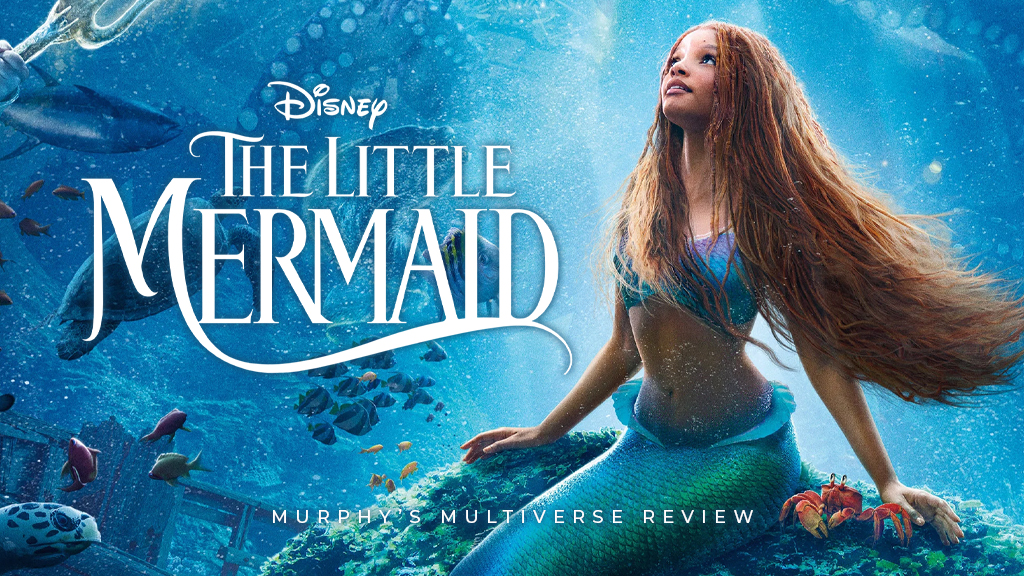
      The original version of The Little Mermaid is widely regarded as the film that kicked off Disney’s animated renaissance. Back in 1989, the studio wasn’t the box office juggernaut it is today, with lucrative franchises in its grasp like Infinity Stones, so you can imagine how now, 34 years later, expectations are through the roof for the latest in a long line of mixed reviewed, but fairly reliable box office performers drawing from the creative well of that period. And charitably, one could attribute some of the negativity around this updated original to fans who cling to nostalgia amidst the tempest that is modern media criticism. It’s hard to say whether diehard fans of the original will give the 2023 version of The Little Mermaid a fair shake, but viewed through the lens of today, it’s a delightful, all-ages romp with heart, humor, and a hopeful message about seeing past our differences and forging peaceful understanding.

      Off top, Halle Bailey‘s Princess Ariel brings vocal ability to the role that’s undeniable, and in her acting performance, she captures the innocence and eye for mischief that the story needs to propel its plot forward. The longing in her rendition of “Part Of Your World” helps to economically convey not only her curiosity about the surface world but the notion that her destiny lies beyond the shoreline. And when (spoiler alert) Ms. Bailey has to deliver a voiceless performance, her physical and facial acting ensures that we remain in touch with her POV.

      (L-R): Scuttle (voiced by Awkwafina), Flounder (voiced by Jacob Tremblay), and Halle Bailey as Ariel in Disney’s live-action THE LITTLE MERMAID. Photo courtesy of Disney. © 2023 Disney Enterprises, Inc. All Rights Reserved.

      But with Jonah Hauer-King‘s Prince Eric, however, the story forces the audience to have to work a bit harder to get to his center. Yes, we’re introduced to an almost textbook romantic lead, with an appetite for danger and a heroic heart (and of course he has an adorable pet upper!). And yes, his love for the spoils of the underwater world mirrors Ariel’s love for the surface, and he too feels restricted by responsibility. But were it not for the chemistry between the two leads that crackles whenever they’re paired, a viewer might find him a little too flimsy to be a compelling partner for our Ariel. But sometimes, part of being a heartthrob is being enough of a cipher that desirable qualities can be projected upon you…and smiling nice. So 10/10 in that respect.

      Ursula the Sea Witch is one of the more iconic Disney villains, and I’d imagine that for most fans, how they feel about her will sink or sail this film for them. Melissa McCarthy chews the seaweeded scenery here, and while it certainly felt like there were additional levels of menace yet to reach, she made for an entertaining antagonist who made her rendition of “Poor Unfortunate Souls” her own, in one of the film’s standout musical numbers.

      Melissa McCarthy as Ursula in Disney’s live-action THE LITTLE MERMAID. Photo courtesy of Disney. © 2023 Disney Enterprises, Inc. All Rights Reserved.

      Speaking of standout musical numbers, the scene-stealers in this film were Daveed Diggs‘ Sebastian the Crab and Awkwafina‘s Scuttle the Seagull. The Grammy-winning “Under The Sea” is the original’s signature song, and Daveed puts his all into delivering a version that is worthy of comparison to Samuel E. Wright‘s classic. Awkwafina, on the other hand, performs a Lin-Manuel Miranda original that is an absolute bop. And comedically, the chemistry and banter between the two characters were great. As comic relief sidekicks go, the two were top-tier. Sign me up for a spinoff!

      Alongside the winning soundtrack, the visuals of the film were also a highlight, one that unfortunately the trailers didn’t do justice. While certainly there are dark and murky moments in the early going, they’re meant to create a sense of mystery and danger that contrasts with the vibrance and wonder of the undersea. But once we’re on dry land in earnest, the bright Caribbean setting and the variety of flavors in director Rob Marshall‘s visual palette allow us to enjoy the excursion alongside Ariel and experience a different kind of wonder. And that all culminates in another amazing musical sequence, “Kiss The Girl,” where water and land life alike try to bring our leads together in romance.

      (L-R): Halle Bailey as Ariel and Jonah Hauer-King as Prince Eric in Disney’s live-action THE LITTLE MERMAID. Photo courtesy of Disney. © 2023 Disney Enterprises, Inc. All Rights Reserved.

      Overall, everything works. King Triton, played admirably by Javier Bardem, strikes the right notes of distrustful dad who lays down the law a little too forcefully, and Norma Dumezweni‘s Queen Selina is appropriately regal, but frustrated by her son’s childish love of trifles, yet supportive of his search for true romantic love. And as the rising action puts the two figures into conflict, their respective sympathetic performances keep us buoyed long enough for a satisfying resolution.

      Obviously, like many Disney movies, the ending might be a bit too tidy and the victories might feel a tad unearned. However, as family-friendly films go, that can be forgiven when it’s a fun time in the cinema that makes you smile and laugh throughout and leaves you feeling good at the end. It’s best not to compare it beat by beat to the original, and to appreciate it as a film that puts its own spin on a familiar story. On that level, it works as one of the Disney live-action retellings you can love alongside its animated counterpart.

    6. REVIEW: ‘Guardians of the Galaxy Vol. 3’ Reminds Us Why We Love the MCU

      REVIEW: ‘Guardians of the Galaxy Vol. 3’ Reminds Us Why We Love the MCU

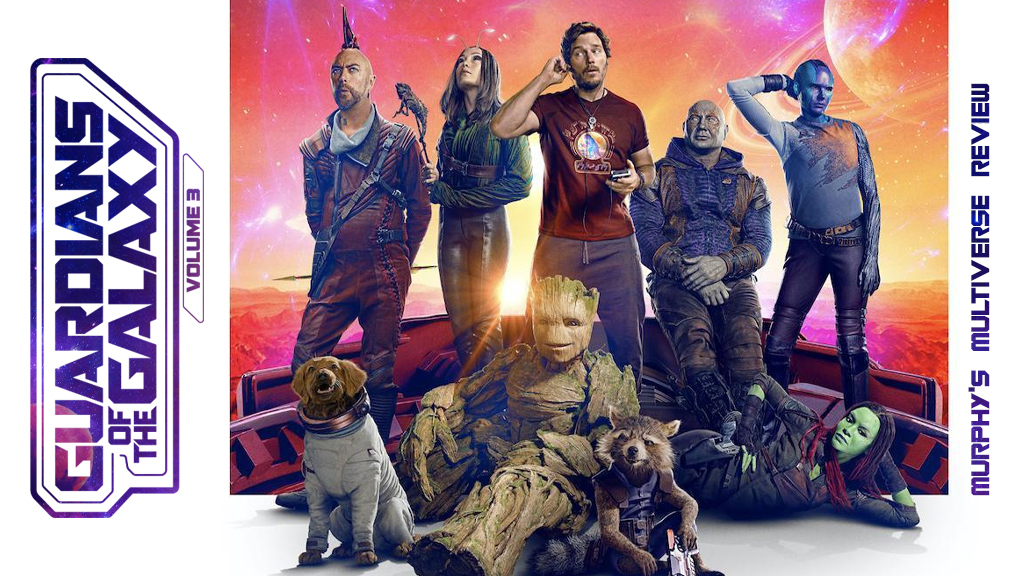
      With an Awesome Mix of humor, heart, action, drama, and off-the-wall imagination, James Gunn delivers the long-awaited conclusion to the cosmic trilogy that reminded us that We Are Groot. And like the familiar tree guy, this franchise has branched in unpredictable yet fascinating ways but has always remained rooted in themes of found family, redemption, and reinvention.

      In this third film, Gunn feels particularly confident and audacious as a filmmaker, pushing forward with a propulsive plot that knows when to release the tension with comedy and quirky character beats, as well as when to shift gears from heart-wrenching drama to awesome action and sci-fi space opera. There are some really fun set pieces and sequences, and only a couple of instances where things get a little too messy and chaotic. But overall, it’s a thrill ride visually.

      Much like he did in the first two entries, Gunn deftly employs his signature needle drops to guide us through the varying emotional beats and tonal shifts. In the center of the story is Rocket’s journey from raccoon to rogue, as we learn his origin, and that of his first found family of misfits, through a series of flashbacks. The film invites us to peer behind his tragic eyes, and from his perspective, we experience the longing, love, and loss that coalesces into regret, before finally coming to understand that Rocket’s emotional scars truly are as lasting as his physical ones. It is within these flashbacks that we also meet The High Evolutionary, a villain with the kind of god complex his name would suggest, and the capacity to make Rocket’s old wounds fresh.

      If you’re familiar with the comics, then you have a pretty good idea of what The High Evolutionary’s goals are, what lengths he’s willing to go through to achieve them, and just how many people he’s willing to kill or make suffer along the way (Hint: It’s all of them). And Chukwudi Iwuji performs the role to a T, knowing when to strike the notes of cold calculation, when to soften, and when to unleash his wrath. He’s not really an antagonist you root for in any fashion, and the movie never lets him off the hook, so by the time the bill comes due, the catharsis is earned.

      Chukwudi Iwuji as The High Evolutionary in Marvel Studios’ Guardians of the Galaxy Vol. 3. Photo courtesy of Marvel Studios. © 2023 MARVEL.

      Accompanying this main Rocket-centric story is the Peter Quill story, where he can’t get over the fact that Gamora 2, pulled from the timeline in Avengers: Endgame, missed all of the Phase 3 films, and he just can’t bring her up to speed on what she missed. Both Chris Pratt and Zoe Saldaña do a great job here, Zoe in particular. In a lot of ways she represents the viewer who doesn’t “get” the Guardians and what makes them special, but like the viewer, despite herself, she too is eventually moved by the adventure and finds her own groove to jam to.

      But all the Guardians have got moves. Mantis remains the most empathetic and intuitive, and Pom Klementieff‘s comedic chemistry with Dave Bautista‘s Drax remains as satisfying as it was in Guardians of the Galaxy Vol. 2 and the Guardians of the Galaxy Holiday Special. The juxtaposition between her emotional openness and Nebula’s cold precision and bluntness provides a different kind of energy, as their dramatic tension helps to balance the hijinks. Even newcomer Cosmo (voiced by Maria Bakalova) and the perennially underrated Kraglin (played by Sean Gunn) get their moments to shine. The family continues to grow, and though they may bicker, when it’s showtime, they find their harmony.

      Another newcomer to the Guardians story is Adam Warlock, played with flourish by Will Poulter as an ultra-powerful yet childlike being, who wants to impress his Sovereign mother figure (the returning Elizabeth Debicki), but whose hot temper constantly gets the best of him. Hardcore comic fans might find him confounding when compared to the cosmic near deity from the page, but the story leaves him with more than enough room to evolve. Keeping with the theme, after all.

      (L-R): Chris Pratt as Peter Quill/Star-Lord, Dave Bautista as Drax, Rocket (voiced by Bradley Cooper), Zoe Saldana as Gamora, Groot (voiced by Vin Diesel), Karen Gillan as Nebula, and Pom Klementieff as Mantis in Marvel Studios’ Guardians of the Galaxy Vol. 3. Photo courtesy of Marvel Studios. © 2023 MARVEL.

      What sets this trilogy apart from the other Marvel Cinematic Universe trilogies is that across the three films, the stories really do come full circle. Our heroes acknowledge the painful pasts that forged them, but they each stop being defined by them, and their arcs conclude with them finally being able to define themselves. And their Guardians compatriots, that aforementioned found family, grow to love and accept them, regardless of their respective flaws and scars. It’s a feel-good tale with a hopeful message, and by the end, you’re rocking out, from Knowhere to wherever the Guardians story travels next.

      Thus far, Phases 4 and 5 of the MCU have been polarizing, with very few projects leaving us with the “rah-rah” feeling that makes us want to sing its praises and go back for encores. But Guardians of the Galaxy Vol. 3 reminds us why we love these movies and reminds us of way back when, we were first Hooked On A Feeling.

      9.75/10

    7. Hope Springs: As ‘Eternals’ Blazes its Post-Zhao Trail, A Prestige Series Would Represent A Bold New Path

      Hope Springs: As ‘Eternals’ Blazes its Post-Zhao Trail, A Prestige Series Would Represent A Bold New Path

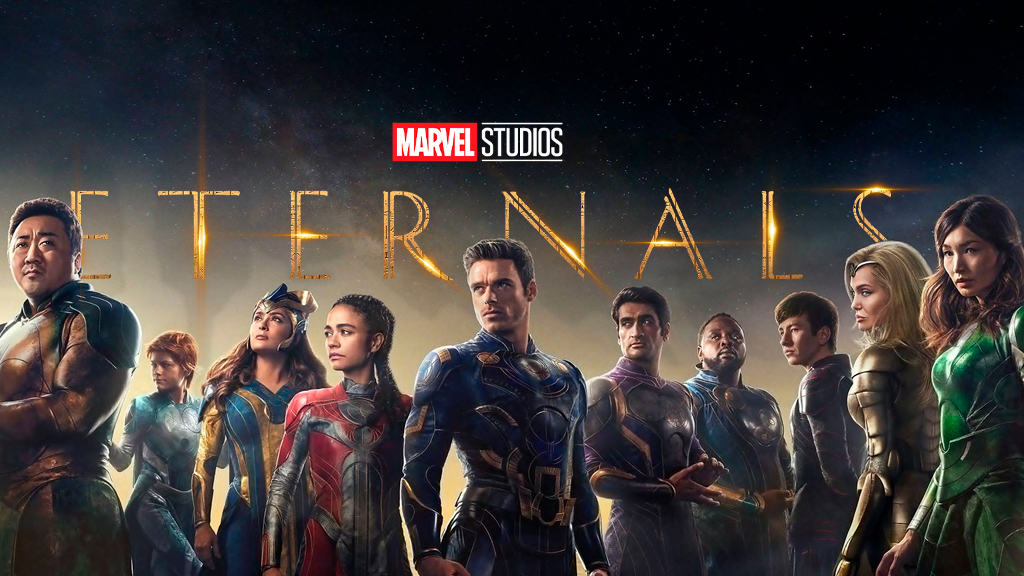
      2021’s Eternals was a divisive film. With an Academy Award-winning director at the helm, it boasted an all-star cast while exploring themes of humanity, spirituality, and sacrifice. It also used Z-list Marvel characters that very few audience members had a connection to, and the course of the movie’s runtime proved inadequate to develop that connection with any of them. Add in a very underdeveloped primary antagonist, and the result is an extremely low consensus as to its quality, with a Rotten Tomatoes score that reflects that.

      But one recurring comment in discussions about the film’s scope was that the story might better have been served by a series instead of a film. And considering that the film stretches from 5000 BCE to the present, there’s a lot of jumping around in the timeline that makes it harder for a viewer to find proper grounding. That being said, Chloé Zhao had a vision, and it’s doubtful that she would have signed on to do the project, nor would have had the ability to attract the wide range of global stars for it, if it was “just” a show.

      But as we reach the cusp of 2023, things have changed quite a bit. A new rumor suggests that Zhao is not expected to return for the Eternals sequel, and the progression of the Marvel Cinematic Universe’s Multiverse Saga has shifted the focus to its Big Bad, Kang. Whatever our interest in the ongoing exploits of our synthetic lifeforms cosplaying as deities while being the harbingers of worldwide cataclysm, they have surely been diminished, Harry Styles notwithstanding. That isn’t to say that these exploits aren’t worth getting into, though. There’s rich storytelling ground and fantastic actors who deserve the opportunity to be showcased. That’s why Eternals should return as a “prestige” series, telling the stories of individual Eternals in an anthology format.

      There are a number of reasons that this is preferable to greenlighting a sequel, shepherding it through the development and production process, and trying to promote it against the backdrop of much more high-profile and anticipated projects featuring more beloved characters. Because of the narrative around the first film, getting people out for the sequel is going to be an even tougher sell. Even though the next director they might choose brings a certain amount of differentiation, it’s hard to do better than the previous year’s Best Director. And the cast was already top-notch. What possible new actor could enter the mix and move the needle?


      But for a streaming show, you’re not getting people to load up the family and settle in for two or three hours in the cinema. You’re asking them to boot up Disney Plus at their leisure and watch something poignant, thought-provoking, and moving. We just recently saw that with Andor, Star Wars was able to reset the narrative around that franchise because of the elevated quality of the storytelling and filmmaking of Tony Gilroy, even with lower-than-average streaming numbers. The calculus was that if you make something truly great, people will find it eventually, even if it isn’t fully steeped in the zeitgeist.

      The Eternals, by their very nature, have stood apart from the MCU meta-narrative until now. And with 7000 years to explore for each character, each Eternal should easily be able to command his or her own standalone narrative, shaped around a different director’s vision, and showcasing that character in more depth. And for each cast member, instead of having to find the time in their busy schedules for a full movie shoot, they can carve out their availability in tandem with the production, unconstrained by the continuity of one main story.

      Just think of the different styles that could be displayed, and the levels of experimentation that would allow them to deviate from the oft-derided “Marvel House Style.” Shooting one episode could be a way to get daring filmmakers like The Daniels in the door without holding them to the parameters of traditional MCU guardrails. And the endpoint of this experimentation would be the differentiation of each Eternal to a greater degree, and a bigger investment in those characters in the future, regardless of whether they appear together or apart.

      As much as we love Marvel, it’s really hard for them to make prestige television that still feels like it fits within the same universe as the films — especially when, for the most part, connectivity is a draw. But in the case of Eternals, they already leaned into the idea of these characters’ limited connections. So stories told in that space can just concentrate on being as interesting and powerful as possible. And Marvel should be able to attract interesting and powerful storytellers and filmmakers as they deepen and add more texture to the world of the Eternals. And that, in many ways, would do a lot more for the Eternals brand than any sequel film could.

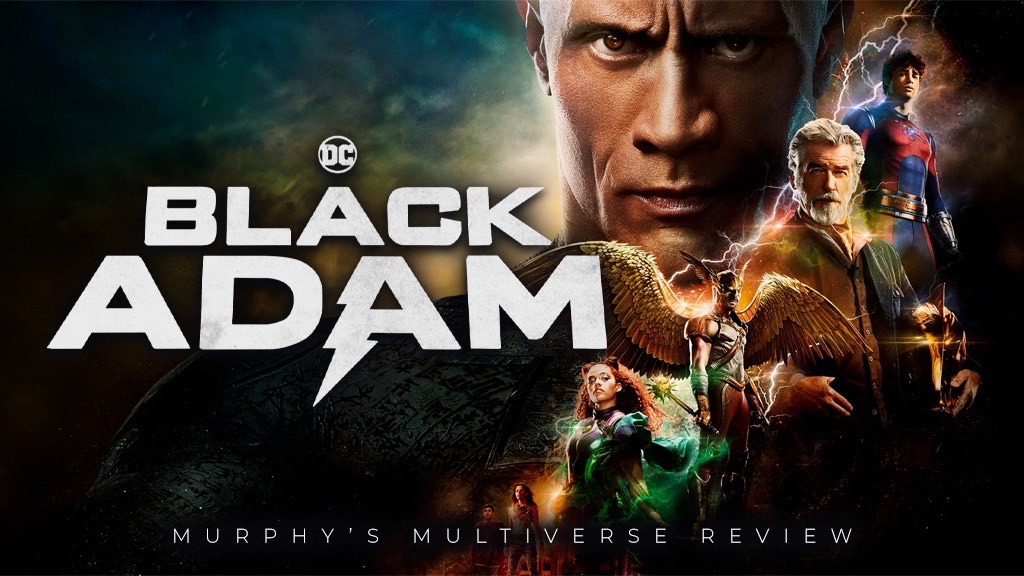
    8. REVIEW: ‘Black Adam’ Brings A Lot of Lightning, But Very Little Spark

      REVIEW: ‘Black Adam’ Brings A Lot of Lightning, But Very Little Spark

      Black Adam is a movie that is trying very hard. It is perhaps the perfect artifact of the ethos of its star, who has toiled endlessly for over a decade to bring it to the big screen, and has tried through force of will alone to make the title character as ubiquitous in the comic movie landscape as he is. Dwayne “The Rock” Johnson, and his tireless work ethic, is all over the movie. But sadly, effort doesn’t equal excellence, and when it comes to the execution of filmmaking, Black Adam falls quite short of the mark.

      By now, you’re probably privy to the big spoiler, which I won’t get into here. However, it is the unstoppable nature of its hero (with a pretty massive exception that I’ll get to later) that looms large over every minute of the runtime, putting a massive drag on the film’s stakes. Even though the Justice Society of America — played with varying levels of charisma and watchability by Pierce Brosnan (Dr. Fate), Aldis Hodge (Hawkman), Quintessa Swindell (Cyclone) and Noah Centineo (Atom Smasher) — are positioned as formidable heroes in their own right, a film which tells us and shows us over and over again that Johnson’s Teth-Adam is without peer can only truly evoke one possible other, even as it ostensibly builds to giving our protagonist his equal and opposite antagonist. And indeed, the largest audience reaction by far came in the stinger, when the true payoff happens.

      But as for the “true” movie, it centers around an ancient hero imbued with the powers of SHAZAM (a multifaceted acronym, it would appear, as the god powers that comprise his set of abilities come from Egyptian deities instead of Greek ones) who defeats an ancient despot in the ancient fictitious country of Kahndaq before being lost to history. In present-day Kahndaq, a vague international group of foreign mercenaries and military occupiers repress the modern citizenry, who still look favorably to their legendary “champion” from five millennia previous, and are eager to embrace the force of destruction that is Teth-Adam as their modern-day defender, despite the fact that his methods are far more extreme than the ones traditional superheroes embrace.

      Sarah Shahi‘s Adrianna Tomaz, her son Amon (Bodhi Sabonghi), and her brother Karim (Mohammed Amer) try really hard to ground this story in something real and human, with very mixed results. On one hand, you want to root for the archeologist who wants to preserve her family’s tradition and her country’s history from the would-be colonizers who mine the land of its (definitely not a plot contrivance) natural resources and seek to use a (100% MacGuffin) ancient artifact to unleash undefinable power upon the world. But on the other hand, Shahi’s earnest likability can only do so much to hide a pretty standard and predictable plot, with such generic villains and the betrayals and life-or-death situations exactly where you’d expect them to be.

      The dynamic between Amon and Teth-Adam wants to be comparable to Edward Furlong and Arnold Schwarzenegger‘s dynamic in Terminator 2, with the plucky teenager playing off of the fairly wooden and unfeeling killing machine while teaching him how to navigate the familiar world. (There’s a recurring catchphrase gag that tries really hard to land.) It’s definitely admirable that through him, the film has a lot to say about the universal nature of superhero fandom, even in the face of superheroes who seem to favor a particular aesthetic and pursue a more narrow agenda.

      The JSA represent this idea, and it’s in the execution of this story that the flaws in the script are at their most apparent. As the movie chooses to present them, they are a quasi-covert superhero strike force who act at the behest of Amanda Waller and can go anywhere in the world to execute police actions, with little to no regard for the will of the locals. Their (super-vague) general mission is to prevent destabilization, and their specific mission is to neutralize Teth-Adam, who, according to the vagaries of the plot, cannot be permitted to exist in the modern world as a living weapon of mass destruction. Any excuses to see superheroes fight, I suppose.

      The fights, and the action overall, are solid, but they are marred by distractingly bad needle drops and overuse of slow-mo. Jaume Collet-Serra seemed almost amateurish in his employment of those techniques, as they represented the most glaring aspect of the movie that a director with a better eye and ear would have elevated. And the less said about the third-act CGI fight the better.

      Then there’s [SPOILER ALERT] the Eternium of it all. The plot required that the Kahndaqi people be forced to mine a very valuable mineral both in the past and present, but the name is almost unforgivable, as it signaled to the audience that they would have to stomach a magical metal that would figure prominently into the story. But making Eternium into essentially Teth-Adam’s kryptonite was unnecessary and misguided, especially because it was simultaneously overutilized and underutilized as a “do everything” material, in a film that already includes Nth metal.

      Overall, Black Adam, while fun, wants to be better than it is. The themes, the emotional stakes, and the desire to do DCEU world-building are admirable. And if future films wanted to build on this, I wouldn’t be opposed to it. But this film is trying too hard. There was a lot of potential – both in the cast and the story. But in its execution, Black Adam nets out at “aggressively mediocre.” The hierarchy of power in the DC Extended Universe may have changed, but the hierarchy of quality did not.

      6/10

    9. Embiggening ‘Ms Marvel’s Season Would Have Made It Even Greater

      Embiggening ‘Ms Marvel’s Season Would Have Made It Even Greater

      Over the last two weeks, comic book fans were treated to two major season finales — The Boys on Amazon and Ms. Marvel on Disney Plus. And both, in their own respective ways, delivered, despite being geared to two totally different viewer demographics and adapting two totally different flavors of source material. However, despite its high praise — the show currently sits at a 98% critics consensus — only Ms. Marvel has had to grapple with the overarching questions that plague the Marvel Cinematic Universe’s Phase 4 enterprise as a whole, namely whether it did enough to not only advance the story of its title character across a satisfying season of television, but also progress the phase’s meta-narrative. And while it may not be fair to put that pressure on any one show, the truth is, that’s always been part of the promise in an MCU offering. Film or series, the story is expected to succeed on its own while also succeeding within a massive serialized storytelling apparatus.

      Seven shows and eighteen months in, then, it’s worth assessing whether the Disney Plus structure has done enough to position its MCU series to succeed. And in particular, whether the SIX-EPISODE structure has done those series any favors. Because, unlike Ms. Marvel, The Boys, like Peacemaker before it, presented audiences with stories told over eight episodes, and it was able to dive deeper into the internal motivations of its leads, all while also doing the requisite amount of worldbuilding, new character introduction, and progression of supporting character arcs that we expect from great television.

      In the cases of The Falcon and the Winter Soldier, which functioned as an extended prologue for Captain America 4, and Loki, which served as a bridge between Avengers: Endgame and the Multiverse Saga to come (not to mention its own second season), Marvel’s stumbles with respect to telling a six-part episodic story weren’t as damning as they could’ve been. But in the case of Hawkeye, Moon Knight, and now Ms. Marvel, which were all intended to be launching pads for new characters, the fact that certain aspects of the plot had to be sloppily executed and certain antagonists had to be left underdeveloped in order to get our main arcs to their respective endpoints hampered the final product.

      In contrast, WandaVision, due to its unique sitcom structure, was afforded an additional three episodes to stretch its legs before diving into the six-part sprint we’ve now grown accustomed to. And while it admittedly didn’t fully stick the landing with respect to its climactic action, it ended on a tremendously satisfying emotional note for our lead characters, and it gave audiences enough insight into what Agatha Harkness and Monica Rambeau’s respective arcs might be to provide emotional stakes for wherever their next steps take them. And of course, the series was able to address the state of the world post-Blip and how the status quo had changed.

      Had Ms. Marvel been afforded an additional two or three episodes to tell its story, the writers would have gotten the opportunity to flesh out what exactly the Clandestines’ motivations were, so that Najma wouldn’t have seemed so one-dimensional, and her villainous turn less abrupt and nonsensical. One more episode in Karachi would have given us more insight into the Red Daggers’ organization and the opportunity for Waleed and Kareem to be made even more compelling as mentors and allies to Kamala. Affording an entire episode to the Partition would have allowed the emotional climax of that story to breathe, instead of abruptly transitioning into poorly articulated Noor mumbo-jumbo which completely undercut the tragic star-crossed love story between Aisha and Hasan, and the part Kamala got to play in it. Not to mention, more time would have given the show more space to explore Kamala’s friendship dynamics, particularly concerning Nakia and Zoe, who not only proved to be bright spots in the finale but also play significant roles in the comics. In short, the things the show did well, we would have been able to luxuriate in, and with respect to the things it didn’t do well, there would have been more time allotted to fixing them.

      Again, this is not to say that any of the MCU series have been bad. However, they’ve all been limited in certain respects, and six episodes hampers the storytellers’ ability to serve their characters in a satisfying way. (What If…? both as an animated series and a hybrid of an anthology show and a serialized show had its own unique challenges, even with nine episodes to work with.) And in the case of Ms. Marvel, while we do expect there to be a second season (which will clearly take place sometime after The Marvels, based on the stinger), some elements of this season can’t be revisited and retroactively improved. Especially when the “mutation” revelation has rendered some questions moot. So its flaws are its flaws, no matter what comes next. But hopefully, a nine-episode season of She-Hulk, paced differently from the six-episode breakneck pace that the other shows have struggled under, will convince Kevin Feige and the producing brain trust that the MCU’s characters — especially ones as thematically rich as Kamala Khan — need at least eight episodes each season to fully flesh their stories out. And then we can look forward to an embiggened Season 2.