Author: mtfiii

  • Frankensteining the Ultimate MCU Villain

    Frankensteining the Ultimate MCU Villain

    There was a time when one of the top criticisms the Marvel Cinematic Universe faced was that the films had a “villain problem.” This wasn’t entirely inaccurate, because unlike with well-known heroes like Batman and Spider-Man, the earliest MCU films were about establishing who our long-term protagonists would be, more than establishing who would be their foils.

    But as the quality of the offerings have improved, so too has Marvel’s ability to introduce heroes and progress their stories in the projects of others, leaving the films with more real estate to give their antagonists room to flourish. Add in the way that some villains’ stories intertwined with those of the heroes, and that has provided the ingredients for the introduction of villains who leave an impression on audiences even after they’re vanquished. And in a storytelling form that thrives on characters returning and resurfacing, that has been invaluable.

    But what if someone were to scour the first 4 phases of the MCU and create a new and formidable villain, stitched together from antagonists past? From which five villains would you take component parts for this unholy union, and which parts would you use? This piece purports to answer that question. Behold, our Villain Frankenstein!

    The Commitment of Thanos

    For most fans, Thanos is either #1 or #1A on their list of favorite MCU villains. And why wouldn’t he? In Avengers: Infinity War he defeated the Avengers handily while throwing timeless verbal barbs in their direction — not to mention fragments of nearby moons. He humbled the Hulk, victimized the Vision, and laid waste to worlds, all in the name of balancing the universe through the eradication of half its sentient life. So thorough was his victory, and so committed was he to achieve that victory, that audiences couldn’t help but begrudgingly give him respect.

    But beyond the respect for how formidable he was, audiences also considered, because of Thanos’ commitment to his vision for the universe, and his willingness to sacrifice and risk everything for it, the possibility that just maybe he had a point. Does the world warrant a biblical-style purge? Indeed, sometimes it feels like it does. Can the idea of killing half of everyone indiscriminately and leaving survivors to make a better universe in its aftermath seem oddly plausible? Yes! So we can understand a villain who takes years, stretched across multiple films, acquiring the MacGuffins and putting the pieces into place, doing so in service of a victory of that scale. That his Snap was ultimately reversed is immaterial; his impact is still being felt. Thanos showed that it was possible for the villain to win, and because it took five years for that win to be overcome, the MCU, and its audience, was forced to marinate in his message.

    The Righteousness of Killmonger

    Before “Thanos Was Right,” it was Erik “Killmonger” Stevens in Black Panther who articulated a worldview that resonated with audiences, despite being ultimately villainous. Colonization and oppression, particularly at the hands of Europeans, have ravaged the Global Majority, marginalizing them, and creating an underclass throughout the world who need to rise up and achieve liberation by striking back. And in the utopian nation of Wakanda reside the tools that could make this global revolution possible. By sitting back and letting all the horrors be visited on people of color throughout the world by imperial powers, Wakanda abdicated a responsibility that should have been a moral imperative. And if Killmonger led them, the formerly powerless would rise up worldwide and become a new power, a new empire, that would strike fear in the hearts of any that opposed them.

    Yes, of course, that goes too far. But up until the point that it goes too far, we find ourselves nodding our heads in condemnation for the “comfortable” who sit idly by while others are oppressed. We admire the fact that a young boy left orphaned in an Oakland housing project was able to mold himself into a fierce fighter, a tactical genius, and an engineering wunderkind, with nary a Bat insignia to speak of. Instead, he wears on his body the scars of all the killing he had to do to put himself on the Wakandan throne — even the killing of his own people. And he scoffs at the fact that Wakandans debate intervention while innocents suffer and die in the imperial yoke. It’s a message that continues to resonate today, as the masses cry out for someone who will do whatever is necessary to defeat tyranny, including getting their hands dirty.

    In our hearts, we know that Erik honed himself into something sharp and hard because his world wouldn’t let him be anything different, and when he does die in Black Panther, it’s tragic. But we also know that there are billions subjected to that same world, many making similar choices, because sharp and hard is what makes survival more likely than not. So villain or no, there’s something to the idea of the Wakandan spear that strikes at the heart of the powers that be in order to liberate the powerless. At times, we wanted to believe Killmonger could be that spear of righteousness, and it’s an epic villain whose cause is so sympathetic that you almost want to take it up alongside them.

    The Resources of Wenwu

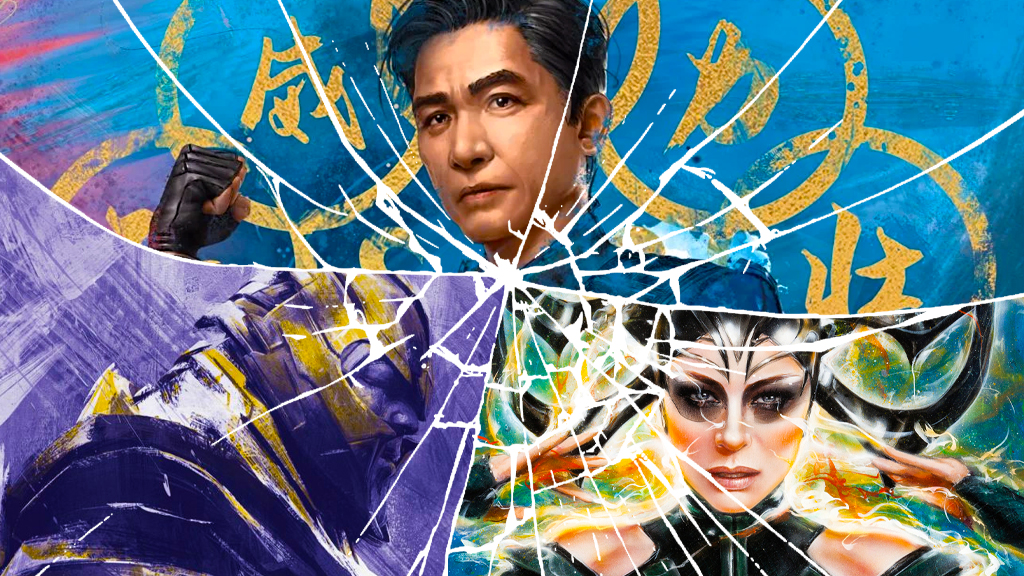
    The Ten Rings organization was introduced to fans in the very first MCU movie, Iron Man as a shadowy terrorist network, yet we learn years later in Shang-Chi and The Legend of The Ten Rings that their roots stretch back millennia, and their origins lie in ten mystical artifacts of immense power, wielded by Xu Wenwu. With these Rings, Wenwu is able to take down kingdoms and annihilate armies singlehandedly and is granted near-immortality, inspiring the devoted and fanatical following which provides the foundation for his international criminal empire.

    In the Ten Rings, Wenwu established a clandestine organization with the resources to rival Hydra, which for the most part had been able to prosper despite the existence of S.H.I.E.L.D., the emergence of the Avengers, and the rampage of the Ronin. And his identity as the head of the organization was secret enough that an actor could be installed as a figurehead with no one in law enforcement having a clue.

    Although by the end of Shang-Chi, leadership of the Ten Rings organization has passed from Wenwu to his daughter Xu Xialing, and custody of the Rings themselves has passed to his son Shang-Chi, it should not be forgotten that for thousands of years, this martial arts master and criminal mastermind possessed ten of Earth’s most powerful weapons, and had an army of operatives at his disposal all over the world. It’s certainly disappointing that we mostly got to see the fall of Wenwu, rather than his rise and reign. But the glimpses we did see were of a formidable man who built an empire that was not to be trifled with. And there is a certain irony to the fact that his other defining characteristic, family man — exemplified by his desire to see his children extend his legacy — ended up being fulfilled in his death. He was a cruel and overbearing dad, and yet, he still managed to get his way. How villainous is that?

    The Sex Appeal of Hela

    Does a great villain have to be sexy? Of course not. However, great villains are often charismatic, confident, graceful, and lithe, and there’s something sensually appealing about a character who is uninhibited and unabashedly bad. From the moment she first steps out of the portal in Thor: Ragnarok like some kind of goth goddess, Hela was capable of stealing the spotlight from both the hunky and handsome Thor and the devilishly charming Loki, chewing scenery, smashing Mjolnir, and establishing her dominance. She laid waste to Asgard and looked fabulous doing it. Whether you’re male or female, a villain who can make you swoon, despite knowing that their intentions are far from pure…well, let’s just say that Tumblr exists for a reason.

    The MCU was reluctant to have female villains for a long time, and I suspect part of the issue was presenting an antagonist who could convincingly present a physical threat to male heroes. Well in the Goddess of Death, Taika Waititi was able to give us all of that, as Hela stepped on the necks of every male character and dared them to beg for more. When she instructs them to take to their knees and submit to her will, we as an audience are kind of hoping she gets to do her worst. Every moment she strokes her hair, tilts her head back, and unleashes her thorny antlers becomes instantly iconic because she’s about to do Very Bad Things that we can’t wait to see.

    There have been a lot of formidable villains in the MCU, but none other than Hela have served such looks while also serving up so much death and destruction. This goddess deserves her spot in the pantheon.

    The Gravitas of the Kingpin

    Wilson Fisk’s physical stature certainly looms large, and so does his influence. Whether he’s the Big Bad of Daredevil willing to bash a head in for embarrassing him in front of Vanessa, or on Hawkeye tearing a car door off the hinges, the unbridled rage of the Kingpin is intimidating. However, even more intimidating is his soft-spoken, measured approach to getting his point across the other 90% of the time. As portrayed by Vincent D’Onofrio, Wilson Fisk is a man capable of conveying menace in an anecdote, inspiring fear in even the pauses between his words. You cross him at your peril, and Fisk speaks like a man who knows that, and most importantly, knows that you know it.

    Kingpin is a villain that commands both our attention and our respect, even though he isn’t the most charismatic in his oratory. He isn’t going to drop a smooth one-liner or dazzle us with his charm. He is, however, going to be riveting in his determined and deliberate delivery of a dramatic monologue. And monologues are a great villain’s stock in trade.

    Villainy is a complex stew. There’s not an exact formula that can be relied upon to create a timeless villain. But if you were trying to create a blueprint, so that you could build an elite supervillain in a lab, this would be a great starting point. We’ve got some great villains coming down the pipeline in the months and years ahead. Let’s see how they measure up.
  • A Caper With Actual Capes: How ‘Thunderbolts’ Can Be More Than the MCU’s Suicide Squad

    A Caper With Actual Capes: How ‘Thunderbolts’ Can Be More Than the MCU’s Suicide Squad

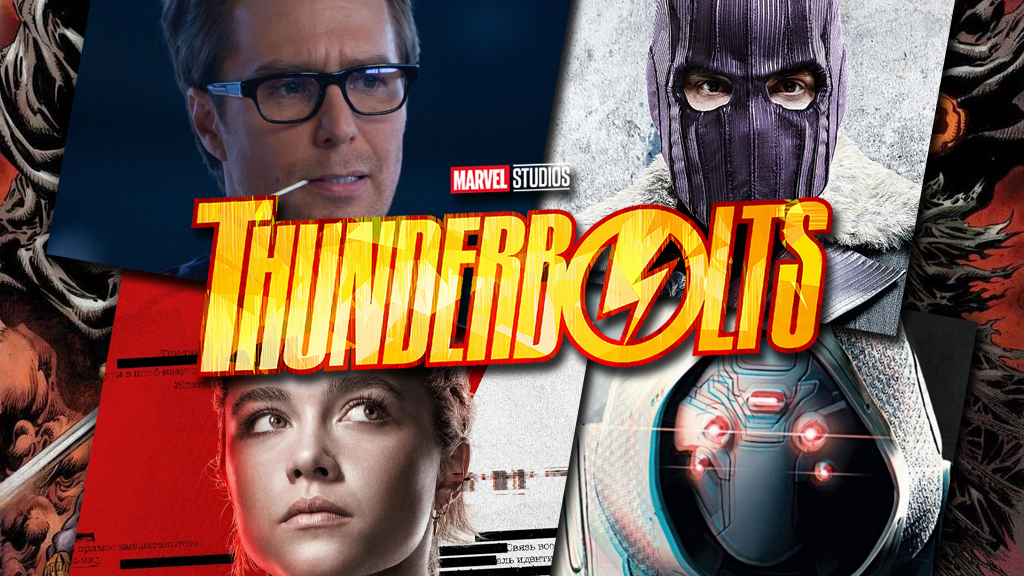
    From the moment Helmut Zemo made his debut in the Marvel Cinematic Universe, comic book film fans have looked forward to the possibility of seeing his signature team, the Thunderbolts, enter the narrative. And recently, it became (semi) official, as it was reported in the industry trades that the long-rumored project was in active development, with a writer and director attached, and an expected filming schedule of Summer 2023. And with speculation season now in full swing, now’s a great time to look at what the MCU’s version of the Thunderbolts could entail, and what form the project could (and should) look like.

    The Thunderbolts is a group that has had several incarnations in the comics, but is best understood to be former villains assuming heroic roles, either at their own behest or at the behest of the government. At first measure, then, it’s easy to understand why one would think of the Thunderbolts as Marvel’s answer to the Suicide Squad. And with two somewhat successful cinematic forays into presenting that kind of team to audiences, it wouldn’t be completely surprising if Feige & Co. decided to go that route. But the original premise for the Thunderbolts, back in 1997 in a story written by Kurt Busiek, was much more groundbreaking, because readers were led to believe that they were in fact new heroes who had stepped up to fill the void in a world without an Avengers team. That is, until the rug was pulled out from under the audience, and the Thunderbolts were revealed to be an elaborate ruse to earn the world’s trust while covering for their villainy. It is that idea that can truly distinguish the T’bolts from the Suicide Squad, because it’s essentially a con job. And a movie based around a con job can allow the MCU to do a full-blown crime caper…with actual capes.

    The heist movie is a familiar genre, and in the Ant-Man films, as well as Avengers: Endgame, we’ve definitely seen nods made to those types of films. But a crime caper where all the characters are criminals is far more intriguing, because there is more potential for shifting loyalties and double-crosses, as everyone’s morality is a little more murky. Captain America isn’t really going to abandon the Time Heist for Peggy Carter, for instance. But if one of the characters in a crime caper gets the opportunity to go for dolo and turn on their teammates, that character just might. And that adds another layer of uncertainty to the stakes.

    Thinking about the film like a con/crime caper also helps us outline how the story might play out, as well as who the best fit for the Thunderbolts lineup would be, both in terms of MCU characters we’ve seen before, and who we might realistically see introduced in the film. Consider this as a loose blueprint for the Thunderbolts film.

    The Con


    In a world where the Avengers are currently disassembled, various players have a stake in getting a piece of The Next Big Thing in superheroics. With the Sokovia Accords still in effect, but public support for them somewhat on the wane, there is significant interest by the US government in having high profile superhero operatives who can do the PR work while also following deployment and stand down orders with minimal pushback.

    Enter Project Thunderbolt. A fully government-sponsored team led by the decorated (but disgraced) super soldier John Walker, the US Agent, and assisted by a cadre of colorful new heroes, recruited through various means by Valentina Allegra de Fontaine, a private off-the-books contractor with ties to several intelligence agencies. The Thunderbolts are provided with enough tech and logistical support to become America’s premier superhero team.

    But in fact, the Thunderbolts are actually a plan by Helmut Zemo to use the government’s desire for an Avengers replacement to engineer his release, gain the public’s trust, and procure access to the Mother Lode, a top secret storage facility that contains the most advanced and powerful confiscated tech in the world, including a working copy of the Ultron AI.

    The Characters


    The Mastermind (Helmut Zemo aka Z) We’ve already seen his penchant for playing the long game in The Falcon and the Winter Soldier. His disdain for superheroes, specifically powered individuals, is well-documented, as is his belief that the people are gullible and easily fooled. So would it be terribly shocking if he played up his Batmanesque penchant for contingencies in order to cook up a caper worthy of the prep time?

    In the comics, Zemo chose “Citizen V,” a star-spangled fighter of fascists, as his cover identity, but that would be redundant with US Agent at the forefront of this Thunderbolts team. The Z persona, then, would be something slightly different, a swashbuckling international man of mystery who would evoke both Bond and Zorro, and allow him to get his Errol Flynn on.

    But how would he get himself freed from international custody? Enter…

    The Partner In Crime (Conrad Mack aka Smiling Tiger – new character): Every Danny Ocean needs a Rusty. DiCaprio in Inception needed a Joseph Gordon-Levitt. The Mastermind typically needs a swiss army knife, a character with all the skills to be the #1, but who is content to be the #2. But currently, there aren’t too many folks in the MCU who’d fit the bill. However, the aforementioned Disney Plus series introduced us to an associate of Zemo’s who is well-known in the Madripoor underworld scene, a flashy dresser, and somewhat resembles Sam Wilson, but little else beyond that. This provides a somewhat blank canvas for introducing a backstory, motivations, and the skill set the stories required.

    A Black man with a cat motif is going to invite Black Panther comparisons, and I think that’s worth leaning into. He should absolutely pretend to be Wakandan, and interactions around that ruse could easily be played for comedic effect. However, none of that should undercut his core competency and ability to excel in a variety of situations. He pitches Zemo as the asset that Project Thunderbolt needs, because of his contacts and vast knowledge of the inner workings of Hydra and other networks.

    The Antagonist (Henry Gyrich – new character): To be clear, Zemo’s scheme is nefarious. But one reason we might be willing to root for him is that it provides an opportunity to defeat an far less likable character. This is who Gyrich is, the government bureaucrat who loves the power that having a fiefdom affords him. And having superheroes that answer to him makes him even more loathsome. With Project Thunderbolt as his crowning achievement, Gyrich’s eventual discovery of its subversion by Zemo should be positioned as an tremendous humiliation for Gyrich, a takedown that the audience should absolutely be rooting for.

    The Benefactor/Backer (Valentina Allegra De Fontaine): So far, we’ve been her as the go-between for her unnamed backers and both John Walker and Yelena Belova (more on them later). Her comics counterpart is an espionage operative on par with Nick Fury, so we can expect this character to have her finger in a lot of pies. And she’s more likable and charming than Gyrich. So far, Val seems unlikely to freelance, as opposed to standing in for the interests she represents. But that situation could change, and she, like a lot of spies, would ultimately serve her own interests. Val, then, wouldn’t be an antagonist per se, but she wouldn’t be a full ally either.

    The Tech Specialist (Justin Hammer aka “HQ”): Be it a hacker, gadget guy, or man in the chair, every heist needs someone who can make the impossible possible through technological shenanigans, and Sam Rockwell’s Hammer stole scenes in Iron Man 2 with his charismatic performance. When we last saw him, he was in custody, but a role in the Thunderbolts as both their “Q” and their man in the chair (and occasionally, quasi-mission participant via remote piloted armor) can afford him the opportunity to secure his release and step into the “superhero mogul” void that Tony Stark left.

    In reality, however, Hammer has been co-opted, and the tech he supplies to the T-Bolts has all been equipped with overrides controlled by Zemo, based on the promise of not only a substantial cut of their score, but access to the Ultron AI, which he believes he can improve upon, and one up Stark for all time.

    The Femme Fatale (Yelena Belova aka “the White Widow”): Trained as a Black Widow assassin, Yelena not only has top notch skills in infiltration and diversion, but a master of weaponry and fight skills. And as the sister of a beloved Avenger, she has a built-in avenue to garner sympathy with the public, as the same “red in her ledger” narrative carries over.

    But despite her ruthlessness, we’ve seen Yelena’s reluctance to behave strictly as a weapon. This would position her as a possible “change of heart” candidate, someone who could actually grow to enjoy the trappings of being a hero, despite her more cynical exchange with Natasha in Black Widow about not wanting to be celebrated as a killer. She’d be most likely to experience misgivings about her role in the con.

    The Thief (Ava Starr, Ghost AKA “Silver Phantom”): On a team with multiple spies, Ghost might seem somewhat redundant, but being able to phase and become invisible makes her uniquely suited to perform side heists while the team is on a mission, as well as be the contingency plan if things go sideways. And her history of being a former SHIELD/Hydra operative means that her orientation tilts towards the morally grey.

    Ava’s constant need for quantum energy made her somewhat easy for Smiling Tiger to co-opt, but it’s more so that she’s pretty cynical about who gets to be viewed as a hero, and who gets to be redeemed. The Silver Phantom persona allows her to reinvent herself as someone not cursed by her abilities, but gifted with them.

    The Muscle (Emil Blonsky AKA “Agent Gamma” ): Formerly the Abomination, this super soldier turned Hulk nemesis has all the strength one would want. He’s morally compromised, yes, but he’d be willing to work with the government in exchange for some degree of freedom, even if his gamma issues make full freedom unlikely. Wearing a helmet that conceals his identity and outfitted with experimental tech that allows him to siphon off the gamma radiation coursing through him, Blonsky can temporarily maintain a more humanoid form (or even full human) before he goes full Code Green. The Agent Gamma persona gives him a heroic rebrand, and affords him the opportunity to capitalize on some of the goodwill Hulk and She-Hulk have been able to garner.

    However, this guy doesn’t want to play nice with authority. Being locked up has embittered him, and as soon as he can get the opportunity to break bad, he will. Zemo has promised him the means to get completely free and start a new life somewhere he can’t be extradited from.

    The Fixer (Toni Masters, Taskmaster AKA “Winter Soldier II” ): The cover story for Antonia Dreykov is that she was part of the Red Room’s continuation of the Winter Soldier project as Taskmaster, and after being freed by Yelena Belova, now she wants to do good in the world. The truth is actually more complicated. After being freed from her father’s control, Toni abandoned her surname and decided that she’d become the “Master” of her fate, choosing to live a hedonistic lifestyle funded by her ability to replicate any skill she sees, and sell her services to the highest bidder.

    The role Taskmaster should play in the caper is the ability to mimic anyone’s mannerisms or skill set, and with her natural androgyny combined with potential false face tech, she should be able to step into anyone’s identity if need be. As for her susceptibility to fall in with Zemo’s scheme, she absolutely should be willing to go along with the con in service of a bigger payday.

    The Inside Man (Rick Mason): A former SHIELD operative turned contractor, he has shown a propensity for acquiring whatever needs being acquired. So while he may not be an official member of the Thunderbolts, he would be an asset to the team.

    Mason’s association with Natasha in defiance of The Sokovia Accords put him in a tough spot, as his business ventures were squeezed by the government in an attempt to draw her out. So really, he is working with the Thunderbolts because he has no choice, and if Zemo can promise him a better deal, he might just take it.

    The Patsy (John Walker AKA the USAgent): For this con to work, Zemo needs to employ an unwitting ally, someone who is meant to be out in front, loud and flashy, to take attention from, while being oblivious to, the caper happening around him. And John Walker fits the bill. He’s a hothead, but he really wants to do good. He’s not averse to taking extreme measures, but he can still find righteousness in the cause. And so, given the opportunity to show that he can be just as inspiring a leader as Steve Rogers, he can be manipulated into thinking he’s modeling for his teammates a course towards redemption, and that he’s keeping Zemo on a short leash.

    In reality, of course, Zemo is running Walker. His compliance tech, already subverted by Zemo. His leadership tactics, anticipated and steered towards Zemo’s contingency plans. His inspiration of his teammates, a way for those teammates to get close enough to gauge his suspicion, and relay what they find to Zemo. And when the day comes for the Big Job, there’s enough doctored evidence secretly planted to make it look like Walker was in on it all along.

    THE COMPLICATION(S)


    The Thunderbolts actually start to make a difference, saving lives and protecting the innocent, and that leads to each of them having misgivings about going through with the Big Job. Walker, as we all know, does want to redeem himself and for the most part wants to see these former villains redeem themselves as well. For Yelena in particular, she begins to understand better what her sister’s legacy was, and that it is a noble pursuit. For Ghost, having people actually see her, as well as look up to her, starts to gnaw at her conscience as well. Other characters have similar existential crises and conflicts.

    Additionally, Val begins to suspect that something is afoot, and starts looking into things in order to report her findings to Gyrich. But thankfully, she and he aren’t 100% on the same page, and when it comes down to it, if she won’t benefit from exposing the con, she just might see how things play out.

    THE CONCLUSION


    I mean, it’s a con job, and it’s a superhero film. Some things go wrong when it’s time for our (anti)heroes to pull off the Big Job. There’s infighting and a betrayal or two. Ultron kind of gets rebooted, and they have to put their differences aside to save the world. The (anti)heroes win, and the heist is ultimately aborted it. Or is it?

    Ultimately, the setup laid out above would make for an innovative and effective introduction of the Thunderbolts concept to a mass audience, while also providing a distinct enough throughline to stave off the Suicide Squad comparisons. The MCU loves to put its own spin on concepts from the comics, and I think that letting the audience know from the outset that there is a caper afoot still pays homage to Busiek’s original story, but sets up new trajectories for the characters involved that would be tremendously intriguing going forward.

  • A Young Avengers Heat Map: Power Ranking Existing MCU Characters’ Chances of Making the Cut

    A Young Avengers Heat Map: Power Ranking Existing MCU Characters’ Chances of Making the Cut

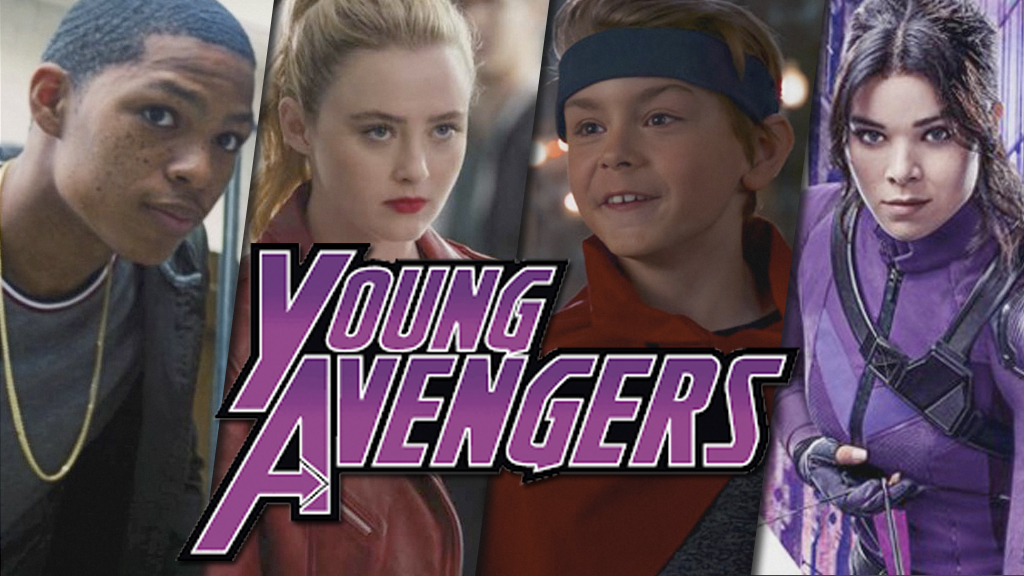
    If the Marvel Cinematic Universe’s Phase 1 was about building to The Avengers, Phase 4 has been about, among other things, introducing the next generation of heroes. All the Disney Plus series (sans What If…?) and a number of the films in this phase have featured, or will feature, at least one younger character who could pick up a superhero mantle in the near future. And most expect that to culminate in a Young Avengers project. So with Ms. Marvel due to make her MCU debut in her eponymous series this week, let’s check in with the younger heroes we’ve met so far, and figure out who we think will be part of that initial lineup.

    Kamala Khan (Ms. Marvel)

    Debut: Ms. Marvel, June 8, 2022
    Where We’ll See Her Next: The Marvels, July 23, 2023

    The Case For/Against:

    With strong reviews already pouring in for the show and its star Iman Vellani, Kamala Khan is poised to be even more of a breakout character in 2022 than she’s been in previous years, where she’s been featured in countless animated series, as well as the Avengers video game. Her brand is already closely associated with the Avengers, and as a youthful character, Kamala could easily be put at the forefront of branding the Young Avengers as the next big thing in the MCU.

    On the other hand, her next appearance being in The Marvels alongside another new hero in Monica Rambeau and an established hero in Carol Danvers might mean that Marvel is interested in establishing that team as a viable brand, especially if A-Force and The Ultimates — two team brands closely associated with Captain Marvel — aren’t being considered as viable options. And if Marvel plans to do subsequent seasons of Ms. Marvel, setting her apart from the other youthful heroes keeps the “hero worship” dynamic going a little bit longer before she steps into an eventual leader role on a team of her own, which hems more closely to her arc in the comics.

    Conclusion: ⚡⚡⚡

    America Chavez

    Debut/Where We Saw Her Last: Doctor Strange In the Multiverse of Madness, May 6, 2022
    Where We’ll See Her Next: TBD


    The Case For/Against:


    At 16, Xochitl Gomez fits firmly in the age demographic for teen superheroes, and is a charismatic, likable screen presence that Marvel will want to feature more. America Chavez has also been associated with the Young Avengers team in the comics. To the extent that there are questions about where her story in the Doctor Strange sequel landed, putting her in a team setting alongside other young heroes could afford her the room to grow, without the pressure of having to carry a project. There aren’t really any downsides here.

    Conclusion: 🌠🌠🌠🌠🌠

    Tommy Maximoff (Speed)


    Debut: WandaVision, May 2021
    Where We Saw Him Last: Doctor Strange In the Multiverse of Madness, May 6, 2022
    Where We’ll See Him Next: TBD

    The Case For/Against:

    The 10-year-old Julian Hilliard has already been prominently featured in two high-profile Marvel projects, and audiences have responded favorably to him. Speed is definitely the less prominent of the two sons of the Scarlet Witch, so whether they ultimately decide to recast him in order to age him up, or let him age in real time as the youngest Young Avenger remains to be seen, but the positive response to his character does bode well for more appearances, and the Young Avengers is the most logical place for him.

    On the other hand, the end of Multiverse of Madness could also be read as the end of the arc for Wanda, and Marvel may want to move on from the characters for a few years, in order to let her storyline land more impactfully, before doing whatever magical shenanigans would be necessary to reintroduce him and his brother to MCU-616. Even still, it feels more likely than not that the shenanigans are already afoot, and I wouldn’t be surprised if he and his brother are back by Ant-Man and the Wasp: Quantumania.

    Conclusion: 👟👟👟👟


    Billy Maximoff (Wiccan)


    Debut: WandaVision, May 2021
    Where We Saw Him Last: Doctor Strange In the Multiverse of Madness, May 6, 2022
    Where We’ll See Him Next: TBD

    The Case For/Against:


    Jett Klyne, at 12, is slightly older than the actor who plays his brother, and based on recent red carpet pictures, he appears to be on the verge of adolescence in terms of appearance, which would put him right in the Young Avengers wheelhouse if they skew younger. Wiccan is definitely the more well-known and popular of the two twins, so his return feels inevitable, and Young Avengers (where a future romance with Teddy “Hulkling” Altman would be in the cards) seems highly likely, notwithstanding the concerns raised above about the conclusion of Wanda’s arc, and his character’s role in it.

    Conclusion: 🪄🪄🪄🪄🪄


    Kate Bishop (Hawkeye)

    Debut/Where We Saw Her Last: Hawkeye, December 2021
    Where We’ll See Her Next: TBD

    The Case For/Against:

    Kate Bishop is probably the character most closely associated with the Young Avengers, and Hailee Steinfeld is a bona fide star who definitely scored rave reviews in Hawkeye. She’s perfectly positioned as a talented but green superhero with a lot to learn, and in need of mentoring. That feels like a Young Avengers slam dunk.

    On the other hand, the character is 22, and Hailee is 25. As most likely a college graduate by the time we see her next, she definitely could be a lot removed from the teen angst and high school problems of her younger teammates (if they don’t age Billy and Tommy up). Maybe the right story for her is a young hero who mentors younger heroes while she herself is mentored. Or, as suggested earlier, maybe Billy and Tommy are aged up to be closer to her. But regardless of the challenges in circling that square, Kate still seems like a lock.

    Conclusion: 🎯🎯🎯🎯🎯


    Yelena Belova

    Debut: Black Widow, July 9, 2021
    Where We Saw Her Last: Hawkeye, December 2021
    Where We’ll See Her Next: TBD


    The Case For/Against:

    Yelena is only being included here because she was introduced as Natasha Romanoff’s little sister in Black Widow, and Florence Pugh plays her character with such youthful exuberance. However, Yelena is almost 30, based on the MCU timeline, and it seems highly unlikely that there will be thirtysomethings mingling with teenagers on this team.

    Conclusion: ⚔️

    Kid Loki


    Debut/Where We Saw Him Last: Loki, June 2021
    Where We’ll See Him Next: TBD

    The Case For/Against:


    Kid Loki played a role in the Young Avengers comic run, and audiences generally do love Loki. The trickster nature of the character makes it fairly easy to drop him into the narrative as a bit of a wildcard within the team dynamic, as he could drive the story as both ally or antagonist.

    On the other hand, Jack Veal, who played the character in Loki, wasn’t particularly well-received, and because he’s hardly necessary to the narrative, it’s easy to imagine him being left out of both the short and long term plans for bringing the Young Avengers team together.

    Conclusion:🐊🐊

    Joaquin Torres (Falcon)


    Debut/Where We Saw Him Last: The Falcon and the Winter Soldier, March 2021
    Where We’ll See Him Next: TBD

    The Case For/Against:


    Danny Ramirez is tremendously likable, as anyone who saw Top Gun: Maverick can attest, so who wouldn’t want to see him take to the skies again, especially since his character inherited Sam Wilson’s Redwing gear? That bit of foreshadowing has to pay off, right?

    On the other hand, despite his baby face, Ramirez will be turning 30 this year, and that takes him way out of the age bracket. Plus, Captain America 4 affords Marvel a much more streamlined path to picking up on that narrative thread, as New Cap might be looking for a New Falcon before it’s all said and done.

    Conclusion: 🦅

    Eli Bradley (Patriot)

    Debut/Where We Saw Him Last: The Falcon and the Winter Soldier, March 2021
    Where We’ll See Him Next: TBD

    The Case For/Against:

    On one hand, Elijah Bradley is a founding member of the Young Avengers in the comics, and it would definitely feel like a slight if he wasn’t there. After the emotional storyline the writers of The Falcon and the Winter Soldier gave Isaiah Bradley in that series, it would be nice for his grandson to get the opportunity to carry on his legacy and be prominently featured as part of the Young Avengers. And at 23, Elijah Richardson (the actor who plays him) would be able to match youthful energy with a Young Avengers team that skews more to college age.

    But on the other hand, while the other Young Avengers in the comics have developed independent fan followings, Bradley has seen Marvel move past him to another character, Rashaun Lucas, wearing the Patriot colors, confusing the marketplace and raising questions about the extent to which Marvel brass has prioritized the character. Add in the fact that in America Chavez, the Young Avengers will have a star-spangled character they are definitely more interested in pushing, and it becomes more of a 50-50 proposition as to whether he will find himself firmly established as a Young Avengers mainstay, or have his story told in Captain America 4 alongside Sam WIlson.

    Conclusion: 🇺🇲🇺🇲🇺🇲

    Cassie Lang (Stature/Stinger)

    Debut: Ant-Man, June 29, 2015
    Where We Saw Her Last: Avengers: Endgame, April 26, 2019
    Where We’ll See Her Next: Ant-Man and The Wasp: Quantumania

    The Case For/Against:


    This character has been in the MCU longer than any of the others, notwithstanding the recent recasting that put a new actress, Kathryn Newton, into the role. And it’s unlikely that they’d recast if they didn’t have big plans for her. Fans have had a while to get invested in her story, and were she to develop powers like her comics counterpart, that would be the culmination of a story eight years in the making (assuming we see those powers in Ant-Man and the Wasp: Quantumania). And Cassie Lang is a founding member of the Young Avengers who has never been associated with any other team. Everything is pointing to Cassie on the squad.

    Conclusion: 🧚🧚🧚🧚🧚

    Riri Williams (Ironheart)


    Debuts: Black Panther: Wakanda Forever, November 11, 2022
    Where We’ll See Her Next: Ironheart

    The Case For/Against:


    Ironheart might be the trickiest character of all to call. Her comics version doesn’t really have a lot of established history with the Young Avengers, whose “Iron” character is Nathaniel Richards, a young Kang variant who has not yet gone down that path. But Riri’s comics version also doesn’t have much of a connection with Wakanda either, despite the fact that she’ll be debuting in the Black Panther sequel. Dominique Thorne is 23, so we can assume the character will be slightly older than her comics counterpart was, but a college-aged Riri is still in the right age bracket for an older skewing Young Avengers team. Plus, she’d be able to fill the tech genius void that the team would be lacking if she wasn’t included. Plus, since we’re already in uncharted territory with the character, who’s to say that Riri couldn’t turn out to be a Kang variant herself, in keeping with the “Iron Lad” role of the comics’ Young Avengers? It’s certainly not a perfect fit, but it could work.

    Conclusion: 💙💙💙💙

    After going through the possible candidates, the most plausible team dynamic would be a team that’s mostly composed of twentysomethings, with America Chavez as the “little sister” of the group who is mature beyond her years due to her life of traveling the Multiverse. In this scenario, it makes sense to age up Billy and Tommy to be peers of Kate, Cassie, Riri, and maybe Elijah. As for whether it makes sense for Kamala to join this mix right off the bat, there are arguments for and arguments against, but ultimately it hinges on how fast Marvel wants to get her out of high school. So much of her grounding in the teenage experience goes away in that scenario, but on the other hand, her going off to college puts her at a similar level of life experience as the other candidates — Young Avengers, but not too young. And I think that’s the vibe Marvel might be going for.

  • How An MCU-616 Earth vs ‘X-Men ’97’ Showdown Could Be the Multiverse Saga’s Endgame

    How An MCU-616 Earth vs ‘X-Men ’97’ Showdown Could Be the Multiverse Saga’s Endgame

    On the heels of Doctor Strange in the Multiverse of Madness, much of MCU fandom is focused on the phases to come, particularly the next Avengers: Endgame-level event. For most of them/us, “Secret Wars” seems to be the destination. But trying to figure out exactly what form the MCU storytelling will take as it prepares to adapt Jonathan Hickman’s 2015 epic has been thorny, especially because the most recent Doctor Strange film gave us another thing to chew on: The Illuminati.

    New Avengers #2 (2013)

    The Illuminati featured prominently in the Hickman New Avengers run that preceded Secret Wars, but unlike in Marvel Comics, where the Fantastic Four and X-Men have been mainstays since the 1960s, the appearance of Reed Richards and Charles Xavier in the MCU (albeit in its Earth-838 universe) was a momentous event, one that jump-started speculation as to how and when we’d see both the F4 and mutants properly introduced into the narrative. And while I do have my ideas about the role the Fantastic Four will play, I think that the bigger question centers on the mutants, and their biggest brand, the X-Men.

    Back in November 2021, Marvel announced during its Disney Plus day special that a revival of the popular 1990s X-Men: The Animated Series, often referred to as “X-Men ‘92,” would debut in 2023 under the title X-Men ‘97. Storylines and continuity from the original series would be picked up on, as the timeline would press ahead. However, now that the MCU Multiverse is firmly in play, questions about the canonicity of these new episodes abound. Which brings us back to Secret Wars.

    Avengers #44 (2015)

    In Hickman’s “Time Runs Out” storyline, the narrative that led directly into Secret Wars, “incursions’” of alternate universes into the main 616 universe led to the Illuminati, among others, taking drastic steps to eradicate those universes so that ours would survive, until only two universes were left — the 616 and the Ultimate Universe, designated 1610, home to Miles Morales, the evil Reed Richards known as The Maker, and others. The finale, which immediately preceded Secret Wars, was an all-out battle between the two universes, which, although ultimately fruitless for both universes, was epic.

    The MCU doesn’t have an Ultimate Universe; if anything its 616 universe, what with its Samuel L. Jackson-inspired Nick Fury and its teenage Peter Parker, shares quite a few similarities to it. And with a 15-year head start, there’s no time for Marvel to build up a new Marvel Universe for us to grow attached to. But what they can do is bring back a universe that we have a preexisting attachment to: the X-Men animated universe.

    Once that classic theme song hits, our nostalgia feels will come rushing back, and an audience that has been fed a steady diet of uneven live-action X-Men content by Fox will be reminded of how good they once had it, and how good it could be again. By the end of the first season, I’m sure that fans will be fully reinvested in the characters and their universe. By the end of the second or third season, when their universe faces an incursion by the 616 MCU, fans won’t be eager to see that universe be sacrificed. And if that means X-Men battling Avengers, so be it.

    Introducing X-Men into the MCU this way has many advantages. For the mutant concept to maximize its potency, the weight of history — of a world where they have been hated and feared for years, and where some characters have formed relationships over decades — should be maintained. That can be highlighted and reinforced, and the animated series can do that far better than the Fox films, which admittedly still have some goodwill, but are nowhere near as universally loved and revered.

    Now, will it be tricky to eventually bring the characters from that animated series into live-action? For sure. But one needs to look no further than Marvel’s Disney Plus sister property, Star Wars, to see that it can be pulled off, and be well-received by audiences. And given the stakes of this universe-destroying cataclysmic battle, Marvel can be forgiven for a stunt casting or two alongside longer-term castings of characters who will return after Secret Wars and the eventual Multiverse realignment. But many of us have been waiting decades to see comic-accurate, iconic looks in live-action, so one should expect the fan reaction to those characters making the transition be massive.

    After Avengers: Endgame, fans and media alike have been trying to figure out how Marvel could top itself, and Secret Wars could definitely be that. But more so than seeing different versions of the MCU heroes squaring off against one another, seeing Avengers face X-Men with their respective universes at stake would be a spectacle unlike any we’ve seen to date. And X-Men ‘97 could play a vital role in bringing that about. Both universes can encounter Kang variants, and both could experience Incursions that would lead the heroes of their respective universes to do whatever it takes to preserve them. It would be a massive, epic storyline, with the potential to energize and galvanize fans. And of, course, it could be the biggest Marvel event of all time.

  • Muerto Menos: Why Sony’s Bad Bunny Superhero Project Is Far From A Lifeless Proposition

    Muerto Menos: Why Sony’s Bad Bunny Superhero Project Is Far From A Lifeless Proposition

    Earlier this week, fans received the news that Latin hip-hop multi-hyphenate Bad Bunny (or if you prefer, Benito Antonio Martínez Ocasio) would be playing a superhero. This announcement came by way of Sony Pictures, who saw the potential in him due to his upcoming appearance in Bullet Train. Sony, on the heels of the tepid reception of Morbius at the box office, was understandably in no position to receive goodwill from comic book movie fandom. Yet, for the general audience, the news was even more perplexing when it became apparent exactly which member of the Sony Universe of Marvel Characters Bad Bunny would be playing: the Lucha pro-wrestling-themed antihero El Muerto.

    It’s obvious that the initial response to the news prompted a million Google searches. I’m sure the Marvel site appreciated the spike in traffic, but in El Muerto, aka, Juan-Carlos Estrada, Sony has gone deeper than the deepest of comic character cuts, and across the social media world, that confusion quickly gave way to negativity as it was perceived as yet another example of Sony misusing the Spider-Man IP. But is it?

    Obviously, one of the reasons to adapt a comic’s character is to capitalize on the existing fanbase of that character as they move to a new medium. And El Muerto has none to speak of, his two appearances in Spidey comics notwithstanding. However, in Bad Bunny, Sony has an international superstar with a global following in music, as he is Spotify’s most-streamed artist for two years running. The 28-year-old is currently well-positioned to leverage his substantial stardom into a Hollywood vehicle, and a superhero movie, like other action films, will afford him the opportunity to show charm, charisma, and likeability to a broad audience.

    And when you consider the fact that the El Muerto character he is portraying has no profile in the source material to speak of, there will be no constituency of fans decrying the manner in which Bad Bunny imbues the character with Bad Bunny qualities. If Juan Carlos Estrada becomes synonymous with Bad Bunny in the minds of the moviegoing audience, that’s no slight to the comic-reading audience, who probably never thought about Juan Carlos Estrada at all before this week. The bar is low for his performance, even if ultimately he just ends up playing a version of himself.

    Furthermore, there’s a pro wrestling aspect to this character. Bad Bunny, a huge wrestling fan, competed in a celebrity wrestling match in 2021’s Wrestlemania that many observers rank among the best celebrity performances of all time. And we’ve seen the pro wrestling audience activated before when it comes to supporting movie projects based around wrestlers. According to Deadline, Bad Bunny himself chose the character as the ideal fit after meeting with Sony executives, no doubt because of the opportunity to bring together heroics, pro wrestling, and perhaps the most important selling point of the movie: Latin culture.

    Yes, right off the bat, we have to acknowledge that the character of Juan Carlos Estrada is Mexican, and he competes in Mexican Lucha libre as a masked performer, while Bad Bunny is Puerto Rican. As of yet, it has not been confirmed whether the character will be reimagined as Puerto Rican or whether Bad Bunny will portray a Mexican, and obviously, either outcome would be less than ideal for an authentic representation of the culture that the character was originally conceived as embodying. However, it should not be discounted that Hollywood projects which cast Latinx leads are tremendously rare, despite that group representing a substantial segment of the moviegoing public, and with respect to major superhero movies, El Muerto and DC/WB’s Blue Beetle will be the first.

    And for all of the things, the Marvel Cinematic Universe has done well, giving Latinx communities the opportunity to enjoy a film that celebrates and features cultural elements that resonate with them is something the studio has somewhat dragged its feet on. There is a tradition of lucha-style wrestling in both the Mexican and Puerto Rican communities, and the El Muerto hero arc in particular touches on themes of family legacy and the responsibilities of carrying on the tradition, which should resonate with these groups if handled by capable creatives.

    And ultimately, that’s the biggest “if” of all with respect to this film. Will the diversity we’ve come to expect behind the camera when a project centers on a demographic other than a white male protagonist be realized, and will that result in a group of creatives on El Muerto that will raise its ceiling in terms of quality and authenticity? In a vacuum, the announcement of a film about a Lucha pro wrestler who is also a superhero might be viewed in a positive light (though when it comes to the project as a celebrity star vehicle, your mileage may vary).

    From a special effects standpoint, the film shouldn’t have to do much to convey the character’s power set, which means that the budget can stay fairly low. And with an international superstar aboard who is enthusiastic about the project, marketing should take care of itself. The movie just has to be good. And while concern about that part is certainly understandable, we fans would have those concerns no matter which Marvel character was being adapted by Sony. But ask yourself: Wouldn’t you rather roll the dice on a character that you don’t care about them getting wrong as opposed to one that you do?

  • Review: ‘Encanto’ Is a Magical Film That Will Put a Song In Your Heart

    Review: ‘Encanto’ Is a Magical Film That Will Put a Song In Your Heart

    Leaving the theater after seeing Encanto, I couldn’t help but hum some of the music and check whether there was a soundtrack streaming. The songwriting flair of Lin-Manuel Miranda was on full display, and if you’re a fan of the Hamilton and In the Heights soundtracks, that’s reason enough to watch. But more than just a showcase for incredible songwriting and musical performances, Encanto also offered up a heartwarming, bright, colorful, and — dare I say it — magical story, one that will dazzle the young ones and move the greybeards. It’s a tale of multigenerational legacy, of familial tradition and responsibility, and learning how to be who you are, rather than who you are expected to be. Familiar themes for sure, but the story is told in a fun and exciting way.

    Co-written and co-directed by Disney veterans Byron Howard (Tangled, Zootopia), Jared Bush (Moana, Zootopia) and first-time feature director Charise Castro-Smith (Devious Maids, Haunting of Hill House), the story centers on a Colombian family, the Madrigals, who were blessed with magical gifts by the titular enchanted charm: a candle whose light both shines and shadows. The story’s 15-year-old protagonist, Maribel, portrayed with aplomb by Stephanie Beatriz, is as plucky as you’d expect a Disney protagonist to be, but her struggle to live up to her family name among aunts, uncles, and cousins who possess superpowers establishes the emotional stakes early. The stakes are raised even further when her family’s magic is imperiled.

    Encanto manages a story that is both fantastical and authentic. It features a voice cast that is almost entirely Latinx, including María Cecilia Botero as Abuela Alma Madrigal, Mirabel’s grandmother; John Leguizamo as Bruno, Mirabel’s uncle; Diane Guerrero as Isabela, Mirabel’s “perfect” eldest sister; Jessica Darrow as Mirabel’s other sister, Luisa, known for her strength and stoicism; Angie Cepeda as Julieta, Mirabel’s mother; and Wilmer Valderrama as Agustín, Mirabel’s father. The filmmakers traveled to Colombian cities and towns in order to really get a sense of the cultural elements they intended to reflect. The story itself grows out of Latin American folklore, and the tradition of magical realism. But while cultural signifiers are present throughout, non-Spanish speakers won’t feel lost or overwhelmed, as the themes, emotional resonance, and interpersonal dynamics are universal.

    But ultimately, it’s the musical numbers, and the visuals that accompany them, that make this movie such a delight. Miranda’s trademark witty lyrics and ability to convey exposition and emotion while serving up absolute bops is fully on display. If this is the film that gets him his EGOT, it will be well-warranted. The animation sequences are kinetic and visually striking, and the vocal performances mesh perfectly with the characterization. Luisa’s solo is a standout, but there’s a third-act Spanish only song that’s an absolute showstopper. Even if you barely speak the language, the emotion comes through loud and clear, and this reviewer isn’t ashamed to admit that it brought tears to his eyes.

    Heavy emotions aside, there’s still an abundance of whimsy, wonder, and fantastical fun. It’s vibrant, lively, and sweet, and the characters, while rooted in archetypes, are layered and complex enough to each have their own unique appeal. This is a family and setting you’ll enjoy spending time with, and will want to revisit over and over. It merits a big screen theatrical watch, but will likely be a big part of your Disney Plus rotation regardless. ¡Me encantó mucho! 

  • REVIEW: ‘Eternals’

    REVIEW: ‘Eternals’

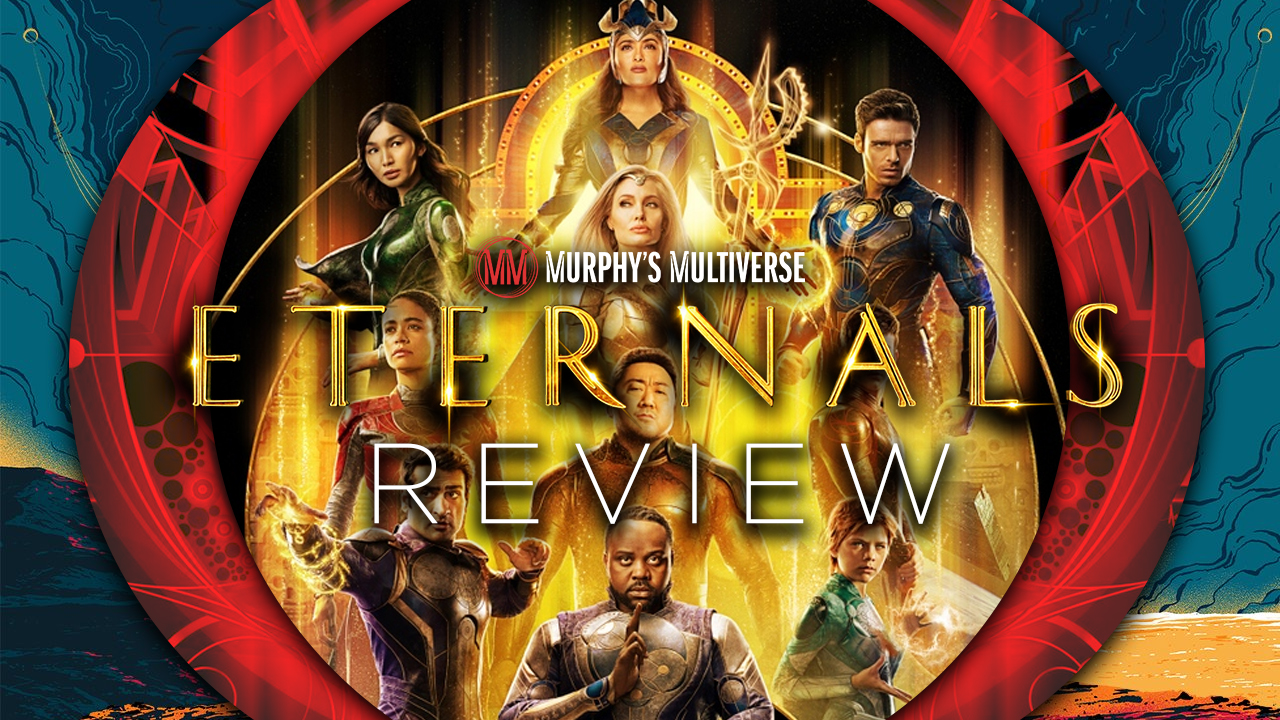
    Eternals is a study in contradictions. It’s a movie that’s epic in scope and scale, which endeavors to not only detail the cosmic origins of life in the universe, but also the role of godlike beings in shaping human development and its mythologies over the course of millennia, all over the world. Yet it’s also about a family estranged, and the cleaves formed by divergences of faith, hope, and duty. In a genre driven by spectacle, Chloé Zhao delivers a film that is carried by heart and drama.

    The story of Eternals centers on ten immortal cosmic characters created by the godlike Celestials and sent to Earth 7000 years ago to protect sentient life from the Deviants, a predatory race of beings bred to adapt and kill. They were once thought to be eradicated hundreds of years before, but they return in present day, led by the mysterious Kro, and as such, the Eternals emerge from the shadows and the lives they adopted to defeat them, all while a cosmic event called The Emergence poses an even more looming threat.

    The outstanding ensemble cast includes Salma Hayek as Ajak, their leader and maternal figure; Richard Madden as Ikaris, the all-powerful soldier who can’t help but evoke a certain Kryptonian; Angelina Jolie as Thena, the fierce warrior woman who could stand toe to toe with a certain lassoed heroine; Gemma Chan as Sersi, the soulful, humankind-loving heart of the group, who possesses the ability to transmute matter; Kumail Nanjiani as Kingo, the Bollywood star who boasts the ability to generate cosmic blasts; Brian Tyree Henry as Phastos, the brilliant inventor with a penchant for fabricating highly complex machines; Lia McHugh as Sprite, who is part Loki, part Tinkerbell, and eternally youthful; Lauren Ridloff as Makkari, the speedster; Barry Keoghan as Druig, who possesses mental powers as well as a sullen disposition; and Don Lee as Gilgamesh, the powerhouse. Kit Harrington, Jon Snow himself, portrays Dane Whitman, Sersi’s lover and potential future MCU Black Knight.

    Much consternation has been voiced in the leadup to the film’s release about the color palette, and I’m not going to lie to you — if you’re expecting bombastic blasts of color lifted right out of Jack Kirby panels, you will be disappointed. There are definitely visual flourishes, and the rendering of Celestials in particular stand out as true to the Marvel Cosmic we’ve seen rendered in the Guardians movies and Thor: Ragnarok. But there’s an understated nature to how these sequences are shot that give it an almost dreamlike quality. Cinematographer Ben Davis, no stranger to MCU films with five under his belt, used his camera to convey a sense of mood and connect to the characters’ respective emotional journeys.

    I do think that some of the initial criticisms of the film being heavy on exposition are valid. It starts with an opening scroll, a la Star Wars. There is a lot being set up in the opening minutes, to the point that you’re wondering if there will be a test later. And the first act table-setting meanders somewhat, as the movie struggles out of the gate to show you what it is. It’s big cosmic god stuff, and if you enjoy more grounded, emotionally-driven plot propulsion, the story will lose you a bit. But luckily, Zhao seems more interested in the humanity of it all than the godliness of it all, and once the character dynamics lock-in, the need for giant Celestial godheads to regale us with cosmic PowerPoint presentations melt away, and you can invest in character stakes just as much as fate-of-mankind stakes. 

    As for the characters themselves, Zhao’s script actually does justice to the star-studded cast the movie boasts. With ten named Eternals and a Dane Whitman, you’d worry about characters getting the short shrift, and this is where the movie’s ability to do more with less really shines. In its pairings and the qualities of each character that are teased out by these pairings, Eternals is able to round out these archetypes into characters who yearn, who misstep, and who regret, and do so over the course of many lifetimes.

    The clear standout here is Madden, who, along with Chan, commands the bulk of the screen time. They are, more than anyone else, the “faces” of the Eternals. If you only know him from his time on Game of Thrones, you will appreciate the range he shows here, as his dynamics with each of the characters tease out a different aspect of his personality that lies beneath his stoic soldier’s veneer. It’s played for laughs in the trailer, but the notion that he can lead heroes rather than simply be a dutiful lieutenant figures prominently in his motivations, and Madden manages subtlety well. The other side of the coin is McHugh’s Sprite, who at first glance is locked in wisecracking trickster mode, but whose particular pathos as a perpetual preteen informs her character arc. McHugh does “old soul” well, and I’d love to see what the future holds for her as an actress.

    Barry Keoghan’s Druig is another high point, as there’s a darkness and a danger to his performance that is really compelling. However, it is in his chemistry with Ridloff’s Makkari that we see his softer side. Speaking of Ridloff, she was by far given the least to do, but the time she was given was impactful, especially when it came to the action sequences. As to her importance as the first prominent deaf character in the MCU, her signed dialogue was seamlessly integrated and her emotions were still effectively conveyed by her expressions.

    Angelina Jolie’s Thena, however, might be the stealth MVP here. Jolie’s an Academy Award-winning actress, and her ability to balance fierceness and vulnerability, to almost wink at the audience when it’s time for action, but still convey a broken, battle-weary heart in quieter moments, reminds us that she’s still got the chops. Don Lee, both in his ensemble scenes where he verbally spars with Nanjiani and his scenes with Jolie where the sparring is more literal, holds his own and brings good energy to the film.

    One of the crucial themes of the movie is love, and the characters convey that well. The love triangle between Ikaris, Sersi, and Dane, teased throughout the film’s marketing, doesn’t overwhelm the plot, but the love between Ikaris and Sersi — which features the MCU’s first love scene — is central to the film’s emotional journey. Madden and Chan have great chemistry, and yet for both characters, the tension between love and duty is apparent. Brian Tyree Henry’s Phastos, who made headlines as the MCU’s first openly gay main character, is portrayed as a loving father and husband, and his scenes are particularly touching, as we see the extent to which he has found a family that means more to him than the one he had for millennia, and how that unlocks parts of him that seem like abstractions to the others. There are other love stories at work that I won’t spoil here, but rest assured that Eternals is a film meant to be viewed with an open heart.

    Where the characterization is lacking, however, is in the fleshing out of the motivations of the villains. Admittedly, there are always narrative challenges when your primary antagonists are mindless monsters, and the movie does overcome them somewhat, as there is more to the Deviant story than meets the eye. Kro, best understood as the Alpha Deviant, gets close to becoming compelling as the film progresses but falls short. However, the movie does a fairly good job of presenting the Deviants as formidable enough for us to feel the peril they pose to humans and Eternals alike. The action sequences that pit Eternal against Deviant work as showcases for the unique power sets of the main characters, even if they don’t necessarily deliver the Holy Shit! moments we typically associate with our superhero films.

    But that’s because Eternals isn’t really interested in being a superhero film. Yes, it could certainly be argued that the plot positions them as Earth’s First Mightiest Heroes, who protected the planet for over 5000 years. But it also positions them as humanity’s shepherds, with each of them coping with the various ways the human race has gone astray, and grappling with the immortal question of whether we are a people worth saving. And for a group of beings created for the express purpose of saving us, how then do they reckon with their own identities?

    Is the movie deep? For sure. Philosophy majors and film students alike could have a field day exploring the movie’s themes. Is it fun? Definitely, as it delivers the Marvel quippery we have grown to know and love, mixed in with exciting set pieces and power displays. Is it beautiful? It’s stunning — whether in the day or night, in the desert or in the jungle, everyone is perfectly lit and dazzles on screen. I think it’s worth an IMAX screening to immerse yourself in the sense of grandeur and scope. Overall, it’s a strong jumping-off point for a new series of stories featuring a new series of characters, and by the end, Eternals is a worthy entrant into Marvel Phase Four.