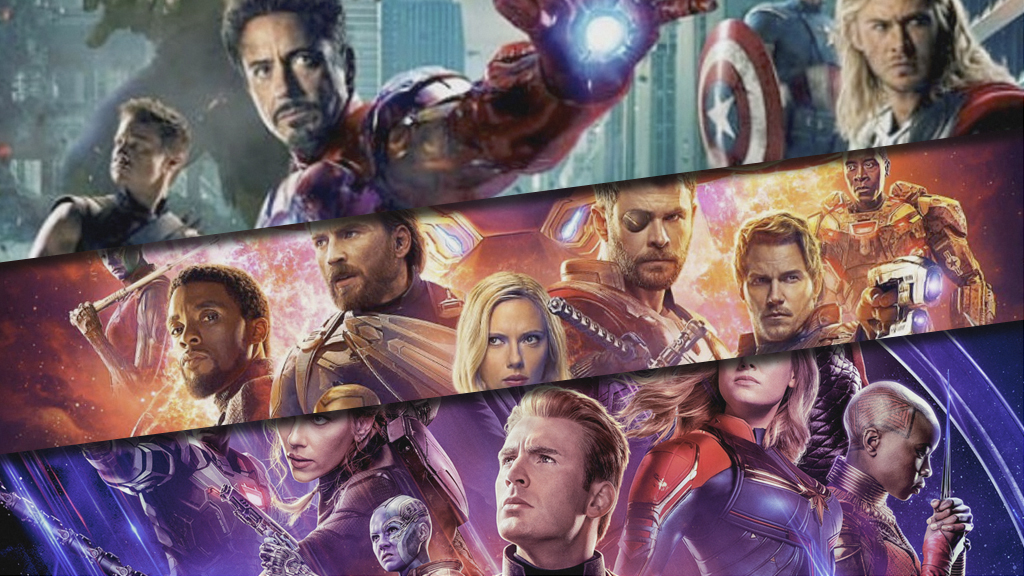
It’s still crazy to think that Marvel Studios and the Russo Brothers decided to end Avengers: Endgame with the death of Tony Stark. Not only was it an emotional punch to the gut for the character that introduced the Marvel Cinematic Universe back in 2008, but it also would mean that the future may become quite uncertain for the studio.
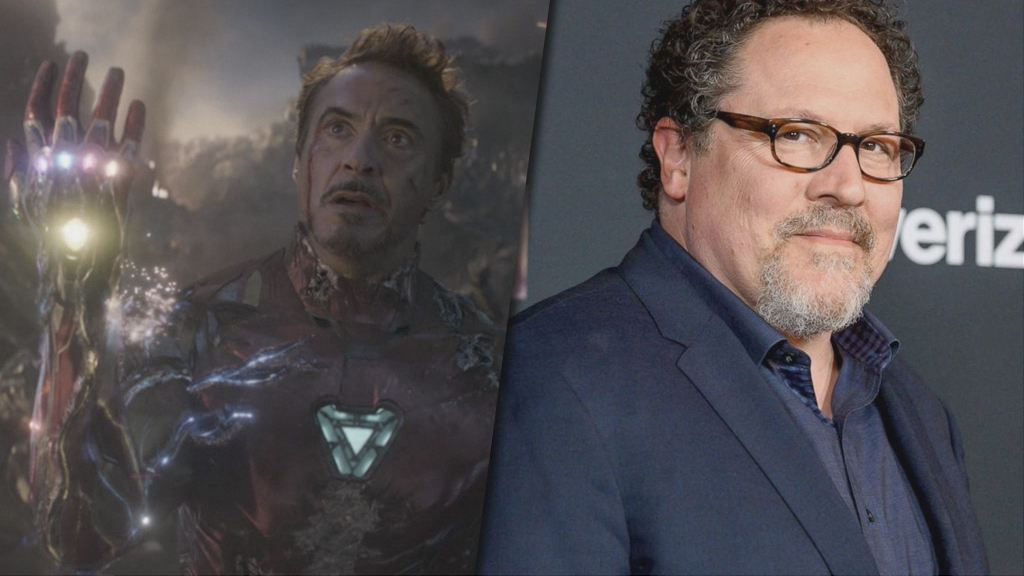
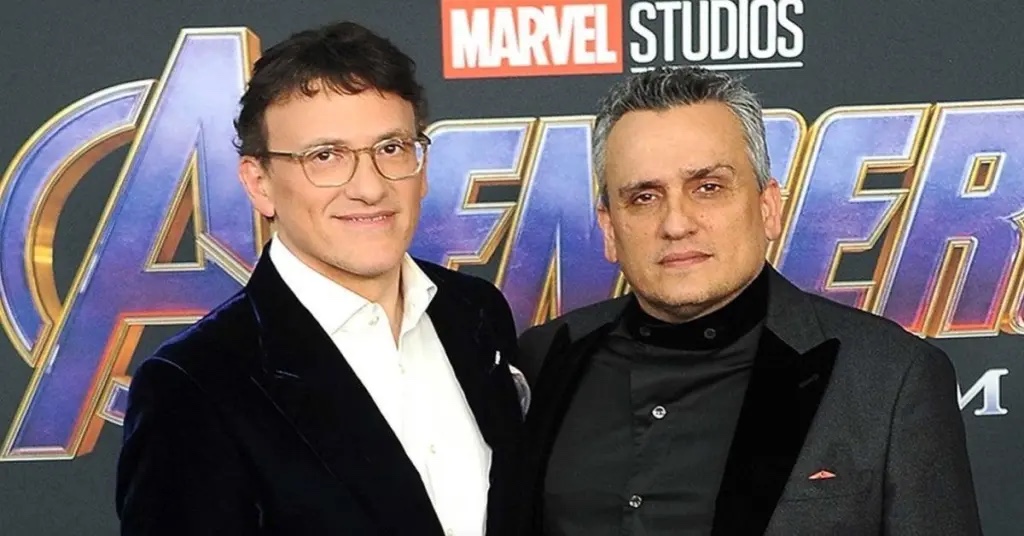
Any normal person wouldn’t dare touch one of the MCU’s most popular characters but the Russos took the risk. Even if it seemingly cost them a few of their nerves, especially when Iron Man director Jon Favreau wasn’t a fan of the idea. In an interview with Vanity Fair, Anthony Russo revealed they had a conversation wth the former MCU director and now Happy Hogan actor where he shared his feelings on the matter.
Part of the pressure came from Jon Favreau, who called us up after he read the script and said to us, ‘Are you guys really going to kill Iron Man?’ He’s like, ‘You can’t do this, it’s gonna devastate people. You don’t want them walking out of the theater and into traffic. We did it anyway.
Anthony Russo
It was certainly a gamble for all parties involved. Fans could’ve been quite upset with the way he left the franchise, and we’re still seeing some post-Endgame blues as people adjust to this new era of the franchise. It would be great to see Favreau return to the director’s chair and potentially also explore the aftermath of Tony’s death in the upcoming Armor Wars project. It would be fitting that he’d also get a chance to give the character a final hurrah.
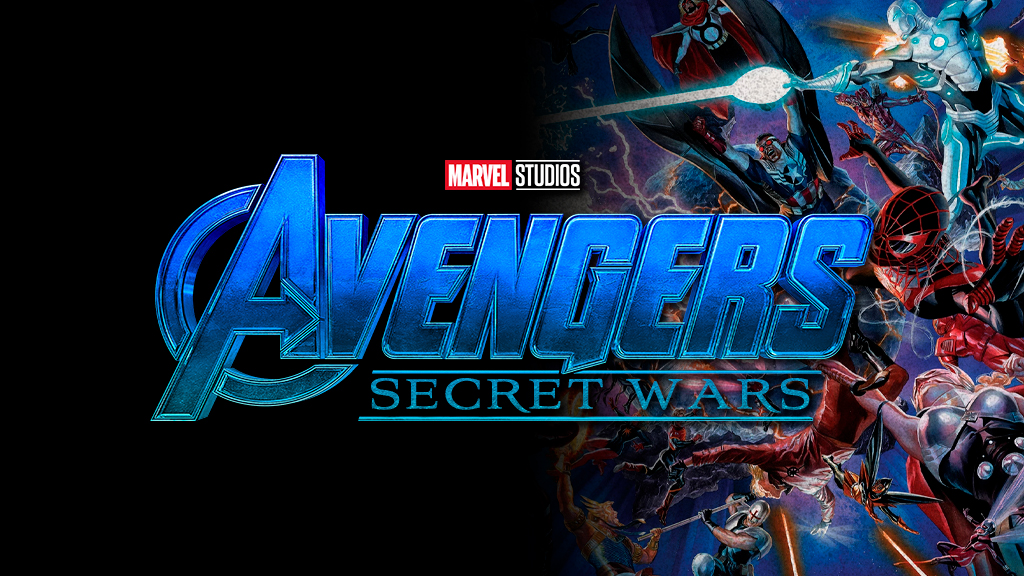
Kevin Feige delighted and confused Marvel Studios’ fans with the announcement that Avengers: Secret Wars is targeting a November 2025 theatrical release. Though the project had been teased as early as June of 2021 in Season One of Loki, the debate about whether or not something on the scale of Secret Wars could be put together in less than a decade raged on amongst fans.
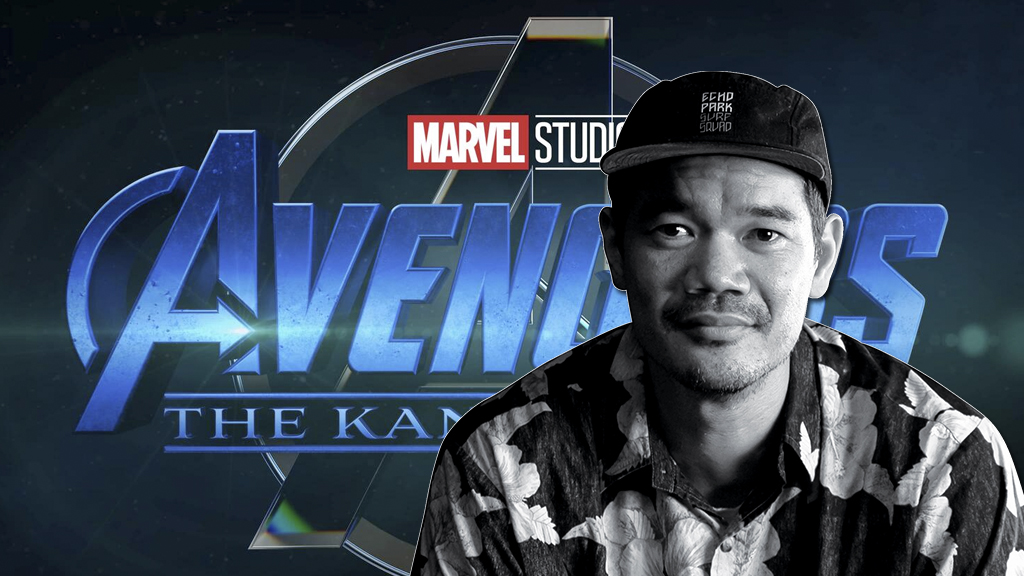
That debate hasn’t ended with the announcement of the film, but some attention has been diverted to who might be directing Avengers: Secret Wars. When it was announced that Destin Daniel Cretton signed on to helm Avengers: The Kang Dynasty, which will debut just six months before Avengers: Secret Wars, it was also revealed that Cretton was not on board for Secret Wars. It’s hardly uncommon for a Marvel Studios’ film that’s over 3 years away to be without a director, but for one of this magnitude, it’s become a talking point and most of the discussion seems to center on directors who have worked with Marvel Studios in the past.
One such director, Scott Derrickson, who directed 2016’s Doctor Strange and served as an executive producer on Doctor Strange in The Multiverse of Madness, has been mentioned as a possible candidate, but according to Derrickson, it’s not in the cards. When asked if there were any possibility of him landing the gig, Derrickson promptly replied with a GIF that provided a firm “NO” as an answer.
If Derrickson is truly out of the running, the pool of candidates who have worked with Marvel Studios in the past is still pretty deep. While Feige has said the Russo brothers aren’t on board for the project, it had the “they aren’t on board YET” feel. Other candidates could include Ryan Coogler, Sam Raimi, Peyton Reed, Nia DaCosta and Jon Favreau, who while he’s been busy with Star Wars, could return for a project the size of Avengers: Secret Wars. And there’s no reason to close the door to directors who haven’t worked with the studio before, as a big project like this could attract the interest of some big names in the industry. Whoever they land, Marvel Studios could have an announcement as early as this September at their D23 presentation in Anaheim.
For the first decade of its existence, Marvel Studios rolled out an Avengers film every three years or so to signal the end of a Phase. Fans were treated to The Avengers in 2012, Avengers: Age of Ultron in 2015 and then double-dipped with Avengers: Infinity War and Avengers: Endgame in 2018 and 2019. Endgame, of course, was the final film in what’s now known as The Infinity Saga, a long-form narrative told over the course of 23 films.
Three years removed from the release of Endgame, Marvel Studios’ next phase is off and running and, in less than two years, has seen the release of more than half of what the studio did in the first eleven years. Thanks to the addition of in-universe streaming series on Disney Plus, Phase 4 is already 13 projects deep with two more coming in 2022 (She-Hulk: Attorney at Law and Black Panther: Wakanda Forever) and 26 more scheduled from 2023 through 2025. As it stands, when Daredevil: Born Again releases on Disney Plus in the Spring of 2024, Marvel Studios’ post-Infinity Saga output will surpass what the studio released in its first 10 years, with 25 total projects released in just over 3 years (2021-24). None of those projects, however, will have been Avengers projects.
At SDCC ’22, Marvel Studios head cheese Kevin Feige revealed the studio’s upcoming slate, which includes two upcoming Avengers films. With both of those films slated to hit theaters in 2025, fans are staring down a six-year stretch in between Avengers films, double what they’ve been accustomed to. Feige explained why the studio has broken free from the pattern they once set for themselves:
The truth is, when we were doing Phase 1, Phase 2 and Phase 3, there were less projects over more years. They were smaller projects and individual character stories, and it felt appropriate at that point, that after every two or three years that it took for a phase, we would do an ‘Avengers’ film. As [Phase] 4, 5 and 6 were coming together, there are more projects in less years – because of all the amazing stuff we’re now allowed to do on Disney+, and getting characters from Fox, Fantastic Four and Deadpool — that it felt like, certainly after ‘Infinity War’ and ‘Endgame,’ that we thought ‘Avengers’ movies aren’t cappers. So many of our movies now — ‘Multiverse of Madness’ and what you’re about to see in [‘Ant-Man and the Wasp: Quantumania’], all are big team-up films introducing big parts of the mythology… ‘Avengers’ films really should be the capper to a saga.
Kevin Feige
Feige left a lot to unpack there, but the key points are that the increase in the number of productions, the ability to tell stories on Disney Plus, the addition of new properties via the Fox merger and the fact that the studio can use the already existing wealth of characters in team-up style films all helped the studio rethink what an Avengers film might need to be. Part of the allure of an Avengers film is seeing multiple heroes working together and that’s something that the studio can do in nearly every project they roll out these days, given that they have dozens of already established characters at their disposal. And so, at the end of the day, what it really means is that the Avengers films will feel like even bigger events than they did before with the ability for them to all include something on the scale of the final battle in Avengers: Endgame. For fans of Marvel Studios, that’s a prospect worth waiting to see on the screen.
It looks like the first Avengers director has been found in a Marvel veteran. According to a new piece by The Hollywood Reporter to continue the San Diego Comic-Con hype, it turns out that they already found their director for Avengers: The Kang Dynasty. Destin Daniel Cretton, who directed the much loved Shang-Chi and the Legend of the Ten Rings is currently set to direct the upcoming first entry of a two-part Avengers film to round out Phase 6 and the Multiverse Saga. It’s currently set to release on May 2nd, 2025.
It’s certainly a highlight of his skill if Marvel Studios sees him as the one to follow up the monolith that was Avengers: Endgame. It’s unclear if they are going to have him also join Secret Wars, but that seems unrealistic given that there is no one-year break in-between films. It may be a plan to have both films simultaneously so actors can jump from one project to the next with the number of potential characters set to appear.
As the name implies, the film will focus on Jonathan Major’s villainous turn as Kang the Conqueror. After first making an appearance in Loki, he’ll be the main antagonist in Ant-Man and the Wasp: Quantumania with many more appearances potentially teased in the future. They have already gathered a talented pool of new directors for their upcoming projects such as Blade‘s Bassam Tariq, Captain America: New World Order‘s Julius Onah, and Thunderbolts‘ Jake Schreier. So, it’s nice to see another familiar face return, especially with the Russo Bros. constantly teasing how they’d approach a film of this scope.
San Diego Comic-Con was quite the experience and have us a first real look at the future of Marvel Studios’ projects. Not only did they unveil Phase 5 but also confirmed that the Multiverse Saga will come to an end with Phase 6. However, what stood out for many was that we won’t be getting an Avengers film to wrap up a Phase as we used to. Many expected that to be the case with a surprise announcement to wrap up Phase 4, but it turns out that Black Panther: Wakanda Forever has the privilege of that placement.
In an interview with MTV News, Marvel Studios president Kevin Feige offered some insight into how they are tackling the new approach, especially with how Disney+ has opened up many new gateways for them to introduce other characters in new and interesting ways. He also compares to how their approach has changed from the previous Infinity Saga.
Well… it’s never about going bigger just to go bigger. Sometimes, by the nature of the number of characters that you have in the toy box to then bring into the sandbox of the story, things can get bigger. But you know, the truth is, when we were doing Phase 1, Phase 2, and Phase 3, there were less projects over more years. And they were smaller projects and individual character stories. And it felt appropriate at that point that after, you know, every two or three years that it took for a phase, we would do an Avengers film. As 4, 5, and 6 were coming together, there are more projects in less years because of all the amazing stuff we’re now allowed to do on Disney+ and getting and getting characters from Fox, for Fantastic Four and Deadpool, that it felt like… and certainly after Infinity War and Endgame that we thought, ‘Avengers movies aren’t cappers
Kevin Feige
While some have seen this as slightly controversial due to the number of projects available in less time than previously offered, they are aware of that fact and are also not trying to just rush out Avengers films as a result. They are trying to keep its place as an “event” within the build-up and have other franchises.
So many of our movies now, the Multiverse of Madness, what you’re about to see in Quantumania, are big team-up films introducing big parts of the mythology and that Avengers films really should be the capper to a saga. Which is really all we wanted to to lay the groundwork for today, is say, ‘We are currently in the midst of the Multiverse saga which will culminate in two Avengers films.
Kevin Feige
Of course,e it’s an interesting strategy to wrap up the Saga with not one but two films. It may be a showcase of what they learned with the success of Infinity War going into Endgame. Yet, it does seem curious they wouldn’t want to keep a year between these projects to build into it. Of course, there’s always the chance that is the plan and they are keeping a potential shift of their release dates just in case, as they still don’t have a director set.
Chris Hemsworth and the cast of the film have been ever busy with promoting Marvel Studios’ latest project, Thor: Love and Thunder. In that process, Hemsworth has described Christian Bale’s Gorr the God Butcher as his “favorite villain” to work against in the Marvel Cinematic Universe.
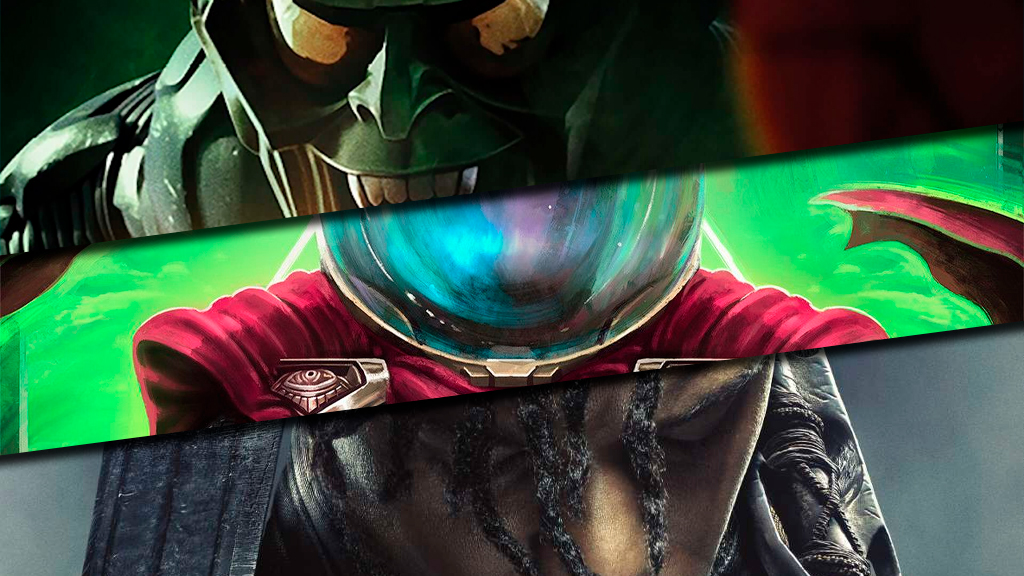
This quote from the lead actor has stirred me into thinking who would qualify as my personal favorite villain within the history of the Marvel Cinematic Universe. With this being a truly daunting task, I’ve thought up a list of my five favorite villains from the MCU. Before getting into this specific list, I want to make it specifically clear that this is a list of my favoritevillains and not necessarily the best villains (in whatever metric you may qualify that to be). These are five characters whose film appearances resonated the most with me for a plethora of reasons, and I encourage the notion of thinking up which five would be your favorites.
Willem Dafoe as Norman Osborn / Green Goblin
5) Norman Osborn / Green Goblin (Earth-96283) – Spider-Man: No Way Home
The argument could be made that Willem Dafoe’s portrayal of the classic villain is technically an MCU villain due to him coming from the universe of the Sam Raimi-directed Spider-Man films, but Green Goblin’s now intrinsic ties to the life of Tom Holland’s Peter Parker should qualify him as a definitive MCU antagonist. Having grown up with said Raimi-directed films, the absurdist camp of Dafoe chewing scenery in his descent into madness left a large imprint on myself and specific turns of phrase were in my lexicon well before Spider-Man: No Way Home. Though with the news of his return into this role in the 2021 blockbuster, I held some reservations that he (and the other returning characters) would feel too incongruous with the more slightly subtle tones of what the Marvel Cinematic Universe had done with Spider-Man. Though fortunately, not only did this version of Norman Osborn fit in extremely well with Holland, I’d argue the campiness of the character enhanced the performance. Willem Dafoe adeptly balanced both sides of the sympathetic figure of a man trapped by a demon inside of him and the sinister villain who killed this universe’s Aunt May and drove Peter into nearly becoming a killer. He was the perfect type of villain to help transition Holland’s Spider-Man into the seemingly more adult version that will continue into the future.
Daniel Bruhl as Helmut Zemo
4) Helmut Zemo – Captain America: Civil War
What makes DanielBrühl‘s portrayal of Helmut Zemo such a memorable villain for me in the history of the MCU is the distinct lack of physical action we see him undertake. Whereas essentially every other villain from the Marvel Cinematic Universe made their claim for power through overt action, Zemo got what he wanted through acting in the shadows and through the power of words. This Machiavellian approach felt extremely fresh at the time of Captain America: Civil War’s release and he still remains one of the most unique villains from the franchise. And then of course, there’s the worthwhile discourse that Zemo is arguably the most effective villain in the MCU thanks to being the catalyst of the Avengers disassembling through only a few distinct actions.
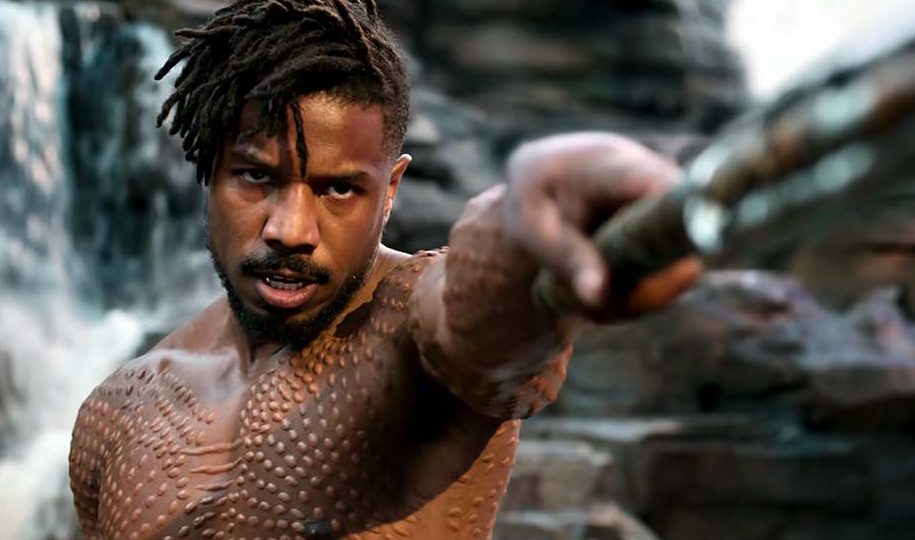
Michael B. Jordan as Killmonger
3) N’Jadaka / Erik Stevens / Killmonger – Black Panther
For a film like Black Panther, its primary villain is what moves the film from a really strong entry into the Marvel Cinematic Universe to an all-time classic. The strong working relationship between director Ryan Coogler and actor Michael B. Jordan is ever present in how much the movie is carried by the actions and motivations of Killmonger (though I certainly don’t mean that as a slight on anyone else involved in the strong ensemble cast). For me, watching Killmonger throughout Black Panther is akin to watching a Shakespearean performance of King Richard III in his titular play or Iago in Othello. There will always be something exciting and intriguing seeing a villain being able to strategically navigate the world around him and end up in ultimate power, only to have a dramatic fall by the end of their story. And what especially makes Killmonger a majorly compelling character is having justifiable motivations for his actions in the world around that has genuinely unfairly wronged him. Some of the most interesting villains to watch are those that have the right moral justifications, but carry them out immorally.
Josh Brolin as Thanos
2) Thanos – Avengers: Infinity War
While Thanos serves as the main antagonist for both Infinity War and Endgame, I particularly want to focus on why the former portrayal of the character is especially one of my favorite MCU villains. The level of nuance that Thanos brings to the table on his quest for all six Infinity Stones was a pleasant surprise for some audience members (including myself). This was a character that very easily could’ve been portrayed as an ultimate “man in the chair” that orchestrates his villainous scheme from a distance while focusing on the large Avengers roster before a large final battle. However, Infinity War gives Josh Brolin some substantial material to work with in terms of character development by making him essentially the protagonist of one of the highest anticipated major blockbuster films. When Marvel Studios could have simply made Thanos the personification of pure evil, they instead made him a complicated figure that truly believes he is acting for the good of the universe (even though his actions clearly show that he isn’t). It was a genuinely risky decision by Marvel Studios, and I greatly appreciate that risk and how well it ended up playing out for them. And on the point of risky decisions, the most critical component for making him one of my favorite cinematic villains is him ultimately being successful in his resoundly defeating Earth’s mightiest heroes destroying half of the universe’s life. While it was obvious in the moment that the killed heroes would rise again by Endgame the following year, it still remains one of the most bold endings to a major studio film and solidified this film as the Star Wars: Empire Strikes Back of this generation. And Avengers: Infinity War would certainly have not reached that status without the all-time great portrayal of Thanos.
Jake Gyllenhaal as Mysterio
1) Quentin Beck / Mysterio – Spider-Man: Far From Home
While generally well received by audiences as an enjoyable villain, I certainly expect this to be considered to be an at least unconventional #1 pick for favorite Marvel Cinematic Universe villain. However, Jake Gyllenhaal gives an all-time great and multi-layered performance as Mysterio that consistently rings in my mind a favorite character from this decade-plus long cinematic saga. While I certainly feel strongly about nuanced characters with complex motivations (as seen in my entries of Zemo, Killmonger, and Thanos), I can find equally great enjoyment out of a villain who has essentially no real redeeming qualities. Quentin Beck is simply an absolute irredeemable villain in his vain attempt to enter the world of celebrity and total willingness to outright murder a teenager. Plus his showmanship is extremely memorable, between his iconic revealing monologue and multi-layered illusion on Spider-Man in Berlin. What I find most interesting with Mysterio is Gyllenhaal’s master-class in acting with this role. Quentin Beck is played as a fairly wooden and generic superhero for the first half Far From Home, and it reaches the point that one could think it’s just an outright bad performance on a first viewing. However, the turn at the midpoint of the film is both extremely fun to watch and recontextualizes his entire role in the film as part of his master scheme (which makes this film extremely rewatchable in my book). Jake Gyllenhaal looks like he’s having the time of his life as an unhinged, vapid Hollywood-esque, mustache-twirling lunatic. And of course Mysterio is responsible for providing this version of Spider-Man with my favorite live-action action scenes with the character throughout the third act. Then of course comes the notion that Mysterio is the catalyst for the status-quo breaking events for Peter Parker, which places him in my pantheon of enjoyable villains that at least semi-successfully achieve their goals.
Of course, this whole thought experiment is ultimately subjective, and I’m very certain any reader of this will have their own variations on a “Top Five Favorite Marvel Cinematic Universe Villain” list. That in itself has been critical in making Marvel Studios as successful as it has been. And hopefully we will be able to see new villains that could be included on these types of lists in the near future as Phase Four continues.
Many have been wondering about the lack of an Avengers title in the current Marvel Cinematic Universe line-up. Many believed that they may be busy mapping out how to tackle the next entry after the Russo Brothers left their mark with Infinity War and Endgame.
As rumors of a potential return make the rounds for a fifth Avengers film, the directing duo have reveled in a recent interview that they are definitely open to return to the MCU at one point.
We’re always open to it. We love those guys, we love everyone over there.
Russo Brothers
They do, however, highlight that their “plate is pretty full.” So, it doesn’t seem like we should expect a return anytime soon. Who knows if the film might not arrive for quite a few more years, leaving the door open for their return.
One thing will be for sure, it’ll be a big task to follow up on the films they’ve created. It set the bar pretty high and we’re still seeing many in a post-Endgame blues. Yet, once the future becomes more clear, we might see a very different MCU moving forward.
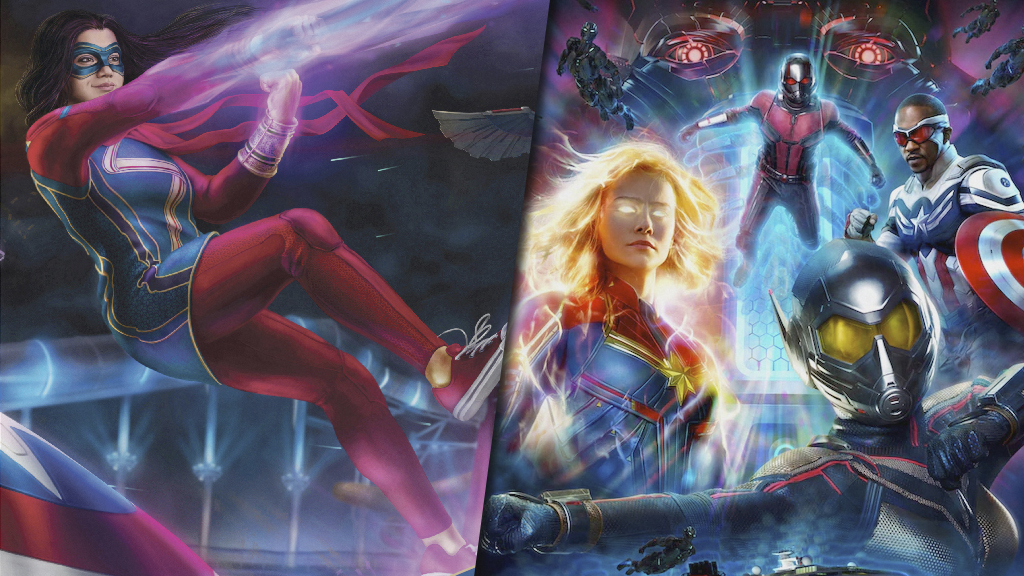
It looks like the upcoming Disney Cruise Line has added another star-studded cast member to its new Avengers: Quantum Encounter interactive show. The project already will see Paul Rudd, Evangeline Lilly, Anthony Mackie, and Brie Larson return to reprise their roles from the films, but now it has been unveiled that Iman Vellani is also going to join the Cruise Line production as her iconic character, Ms. Marvel.
The event is described as Disney’s most ambitious dining experience, where a new dining experience is offered to diners through the help of Pym Tech. Yet, that kind of technology always seems to attract trouble, as the Disney Wish will see Ultron try to take over, who will be once again voiced by Ross Marquand from What If…?. Captain America and Captain Marvel will join in time to take on the threat with Vellani‘s Ms. Marvel as their hero-in-training along for the ride. Unless Larson appears in Ms. Marvel, this may be their first team-up together.
.
It seems like they are going all out for their Worlds of Marvel experience, as even Marvel Studios president Kevin Feige opens up the video teasing the Disney Wish experience. They also just recently opened a new Guardians of the Galaxy rollercoaster, which saw many cast members from the original series return give a little something to those visiting that love the Marvel Cinematic Universe. We might get more hints at how the experience is going to be brought to life with more trailers teasing the unique experience for those that booked a trip on the Disney Wish.
On the heels of Doctor Strange in the Multiverse of Madness, much of MCU fandom is focused on the phases to come, particularly the next Avengers: Endgame-level event. For most of them/us, “Secret Wars” seems to be the destination. But trying to figure out exactly what form the MCU storytelling will take as it prepares to adapt Jonathan Hickman’s 2015 epic has been thorny, especially because the most recent Doctor Strange film gave us another thing to chew on: The Illuminati.
New Avengers #2 (2013)
The Illuminati featured prominently in the Hickman New Avengers run that preceded Secret Wars, but unlike in Marvel Comics, where the Fantastic Four and X-Men have been mainstays since the 1960s, the appearance of Reed Richards and Charles Xavier in the MCU (albeit in its Earth-838 universe) was a momentous event, one that jump-started speculation as to how and when we’d see both the F4 and mutants properly introduced into the narrative. And while I do have my ideas about the role the Fantastic Four will play, I think that the bigger question centers on the mutants, and their biggest brand, the X-Men.
Back in November 2021, Marvel announced during its Disney Plus day special that a revival of the popular 1990s X-Men: The Animated Series, often referred to as “X-Men ‘92,” would debut in 2023 under the title X-Men ‘97. Storylines and continuity from the original series would be picked up on, as the timeline would press ahead. However, now that the MCU Multiverse is firmly in play, questions about the canonicity of these new episodes abound. Which brings us back to Secret Wars.
Avengers #44 (2015)
In Hickman’s “Time Runs Out” storyline, the narrative that led directly into Secret Wars, “incursions’” of alternate universes into the main 616 universe led to the Illuminati, among others, taking drastic steps to eradicate those universes so that ours would survive, until only two universes were left — the 616 and the Ultimate Universe, designated 1610, home to Miles Morales, the evil Reed Richards known as The Maker, and others. The finale, which immediately preceded Secret Wars, was an all-out battle between the two universes, which, although ultimately fruitless for both universes, was epic.
The MCU doesn’t have an Ultimate Universe; if anything its 616 universe, what with its Samuel L. Jackson-inspired Nick Fury and its teenage Peter Parker, shares quite a few similarities to it. And with a 15-year head start, there’s no time for Marvel to build up a new Marvel Universe for us to grow attached to. But what they can do is bring back a universe that we have a preexisting attachment to: the X-Men animated universe.
Once that classic theme song hits, our nostalgia feels will come rushing back, and an audience that has been fed a steady diet of uneven live-action X-Men content by Fox will be reminded of how good they once had it, and how good it could be again. By the end of the first season, I’m sure that fans will be fully reinvested in the characters and their universe. By the end of the second or third season, when their universe faces an incursion by the 616 MCU, fans won’t be eager to see that universe be sacrificed. And if that means X-Men battling Avengers, so be it.
Introducing X-Men into the MCU this way has many advantages. For the mutant concept to maximize its potency, the weight of history — of a world where they have been hated and feared for years, and where some characters have formed relationships over decades — should be maintained. That can be highlighted and reinforced, and the animated series can do that far better than the Fox films, which admittedly still have some goodwill, but are nowhere near as universally loved and revered.
Now, will it be tricky to eventually bring the characters from that animated series into live-action? For sure. But one needs to look no further than Marvel’s Disney Plus sister property, Star Wars, to see that it can be pulled off, and be well-received by audiences. And given the stakes of this universe-destroying cataclysmic battle, Marvel can be forgiven for a stunt casting or two alongside longer-term castings of characters who will return after Secret Wars and the eventual Multiverse realignment. But many of us have been waiting decades to see comic-accurate, iconic looks in live-action, so one should expect the fan reaction to those characters making the transition be massive.
After Avengers: Endgame, fans and media alike have been trying to figure out how Marvel could top itself, and Secret Wars could definitely be that. But more so than seeing different versions of the MCU heroes squaring off against one another, seeing Avengers face X-Men with their respective universes at stake would be a spectacle unlike any we’ve seen to date. And X-Men ‘97 could play a vital role in bringing that about. Both universes can encounter Kang variants, and both could experience Incursions that would lead the heroes of their respective universes to do whatever it takes to preserve them. It would be a massive, epic storyline, with the potential to energize and galvanize fans. And of, course, it could be the biggest Marvel event of all time.
May 4, 2022 is a landmark day in the history of Marvel Studios as the 10 year anniversary of the release of The Avengers. While the true start of the Marvel Cinematic Universe was with 2008’s Iron Man, it wasn’t until the first true crossover that it became fully actualized and proven as a serious force in the movie industry. As the MCU has progressed into new territories since then, let’s stop down and recollect on five ways this film has changed the way major studio films have been made since.
#1: The Rise of the “Cinematic Universe”
The most obvious impact The Avengers has had on the larger film industry is major studios’ insistence on trying to follow suit of Marvel and create their own universes with characters from various connected films. Before, the concept of crossovers within major films were few and far between, and mainly predicated on passing references that’d never be followed up on. A fully interconnected cinematic universe was a concept many were skeptical of before the release of the 2012 summer blockbuster. Doubts were held over whether or not audiences would buy into the concept that a billionaire in an iron suit, a World War II hero, and a god from Norse mythology would fit in together in the same film. However in earning over $1.5 billion in the box office, Marvel Studios proved this idea to be a great success. Following this, general audiences were inundated with various attempts to copy Marvel’s formula to various levels of success. These have ranged between Warner Bros’ modestly successful MonsterVerse and Universal Pictures’ laughably ill-fated attempt with the Dark Universe. However, none have truly matched the level of success found in the Marvel Cinematic Universe and The Avengers.
#2: Relatability in Characters
While the rise in cinematic universe could be considered the most noticeable impact of The Avengers on major studio releases, the largest impact the film had was ushering in a change of the way audiences wanted to perceive their characters. In a vast majority of marquee films before 2012 (especially in relation to superhero films), central protagonists were treated as absolute godly figures. To use the then most recent popular superhero franchise as an example, Christopher Nolan’s Dark Knight trilogy presents Batman as someone with the strongest moral character once he has accepted the responsibilities of his powers and begins fighting crime. He’s not a character with much nuance to him and his struggles are presented to be more based on external threats around him than any meaningful internal pathos. Meanwhile, audiences were leaving The Avengers generally talking more about the moments of character development than the big action set pieces. Viewers made great connections to seeing the protagonists have to struggle with their internal identities to be able to work as a team. Ultimately, The Avengers made us realize we wanted our cinematic pillars to be more human and relatable.
#3: The Anticipation of Post-Credit Scenes
While focusing on essentially a solitary minute of The Avengers 143 minute runtime feels at least partially ridiculous, it can’t be denied that the end of this film changed the way major feature films optimized the coda of their projects. The ominous closing shot of Thanos looking towards the camera set the stage for the long-term destination of the Marvel Cinematic Universe. And with it, this generated large quantities of fan excitement at the thought of the road ahead and how these future films would connect. This indeed ended up becoming a strategically brilliant decision for Marvel Studios and Walt Disney Pictures both creatively and from a business stand-point at the time. Moving forward, large expectations have been made for essentially every blockbuster-type film to close with some hint of the future or how what audiences just saw connects to a bigger picture. Arguments can certainly be made for if this has now grown into more of a net-negative for the film industry and the creative process, but it’s certainly present and can be traced to Marvel Studios first major crossover project.
Reflecting on the ten years since the release of 2012’s The Avengers paints the picture of how the film not only changed the course of Marvel Studios, but the entirety of the Hollywood film industry. And it will be compelling to look further into how this landmark film maintains its impact in the decade to come and beyond.
Cookie Consent
We use cookies to improve your experience on our site. By using our site, you consent to cookies.
This website uses cookies
Websites store cookies to enhance functionality and personalise your experience. You can manage your preferences, but blocking some cookies may impact site performance and services.
Essential cookies enable basic functions and are necessary for the proper function of the website.
Name
Description
Duration
Cookie Preferences
This cookie is used to store the user's cookie consent preferences.
30 days
These cookies are needed for adding comments on this website.
Name
Description
Duration
comment_author_email
Used to track the user across multiple sessions.
Session
comment_author_url
Used to track the user across multiple sessions.
Session
comment_author
Used to track the user across multiple sessions.
Session
Statistics cookies collect information anonymously. This information helps us understand how visitors use our website.
Google Analytics is a powerful tool that tracks and analyzes website traffic for informed marketing decisions.
Contains information related to marketing campaigns of the user. These are shared with Google AdWords / Google Ads when the Google Ads and Google Analytics accounts are linked together.
90 days
__utma
ID used to identify users and sessions
2 years after last activity
__utmt
Used to monitor number of Google Analytics server requests
10 minutes
__utmb
Used to distinguish new sessions and visits. This cookie is set when the GA.js javascript library is loaded and there is no existing __utmb cookie. The cookie is updated every time data is sent to the Google Analytics server.
30 minutes after last activity
__utmc
Used only with old Urchin versions of Google Analytics and not with GA.js. Was used to distinguish between new sessions and visits at the end of a session.
End of session (browser)
__utmz
Contains information about the traffic source or campaign that directed user to the website. The cookie is set when the GA.js javascript is loaded and updated when data is sent to the Google Anaytics server
6 months after last activity
__utmv
Contains custom information set by the web developer via the _setCustomVar method in Google Analytics. This cookie is updated every time new data is sent to the Google Analytics server.
2 years after last activity
__utmx
Used to determine whether a user is included in an A / B or Multivariate test.
18 months
_ga
ID used to identify users
2 years
_gali
Used by Google Analytics to determine which links on a page are being clicked
30 seconds
_ga_
ID used to identify users
2 years
_gid
ID used to identify users for 24 hours after last activity
24 hours
_gat
Used to monitor number of Google Analytics server requests when using Google Tag Manager
1 minute
Marketing cookies are used to follow visitors to websites. The intention is to show ads that are relevant and engaging to the individual user.
Pinterest Tag is a web analytics service that tracks and reports website traffic.