Tag: Marvel Reviews

  • Review: ‘Daredevil: Born Again’ Season 2, Episodes 2 & 3: Sinew and Scar Tissue

    Review: ‘Daredevil: Born Again’ Season 2, Episodes 2 & 3: Sinew and Scar Tissue

    Head of Streaming, Television, and Animation at Marvel Studios, Brad Winderbaum, has made it crystal that the studio views Daredevil: Born Again as its flagship streaming series. With plans to leverage the “extremely rich” world of the “streets of New York” into annual releases that stretch out into “infinity”, Winderbaum sees the forest…but he’s leaving the trees up to showrunner Dario Scardapane.

    While Scardapane probably appreciates the job security, writing a television series that’s expected to stretch out into infinity also places a heavy mandate on his plate. For Daredevil: Born Again to ultimately be judged as a great show, not only will Hell’s Kitchen have to become the same sort of living, breathing enclave Frank Miller created in the comics but it’s cast of characters designed to support its dual protagonists will also need to bear the weight of world building, provide tonal shifts and serve–in one way or another–as moral counterweights to the dilemmas faced by the leads. With a pair of beloved stars like Charlie Cox and Vincent D’Onofrio, protagonist fatigue doesn’t seem likely but Scardapane and the rest of the show’s writers must still build in safeguards against it by creating a supporting cast that does more than fill screentime..and so far, those results have been decidedly mixed.
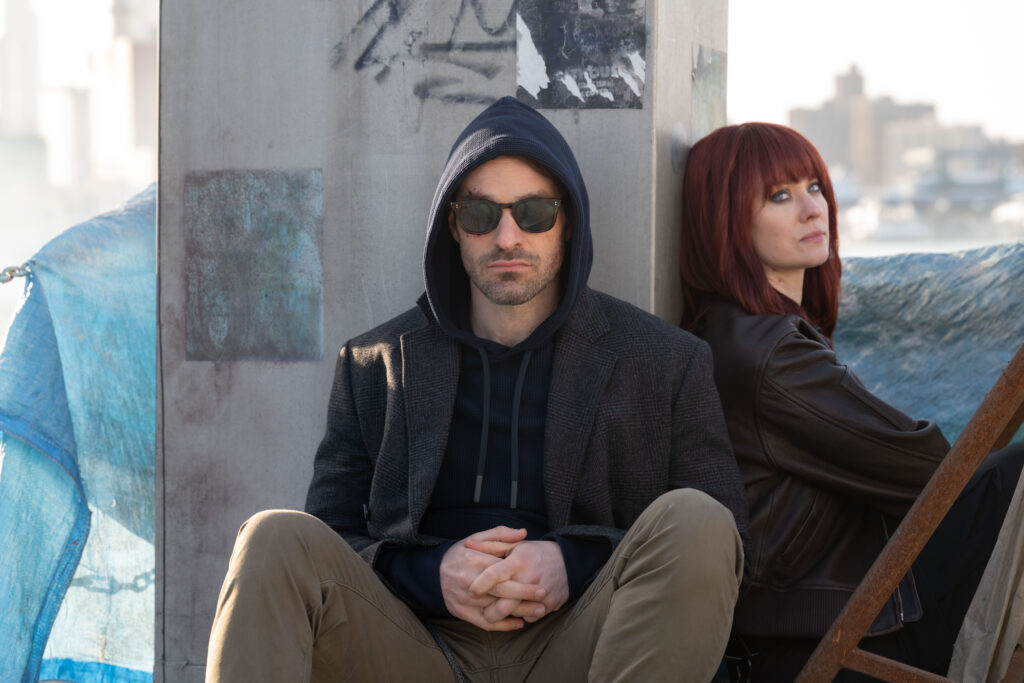
    L-R: Matt Murdock / Daredevil (Charlie Cox) and Karen Page (Deborah Ann Woll) in Marvel Television’s DAREDEVIL: BORN AGAIN, exclusively on Disney+. Photo by Jojo Whilden. © 2025 MARVEL.

    After the opening episode of the new season established Daredevil as the enemy of Wilson Fisk’s police state, episodes 2 and 3, titled “Shoot the Moon” and “The Scales & The Sword”, respectively, spend their narrative currency on the tissue that connects the revolutionary and the regime to the reality faced by those who while not the public-facing symbols of the struggle, belong to the society or are actively taking part in its downfall. While this includes characters such as Karen, Vanessa, Jacque Duquesne and Bullseye, the latest double dip spends more time on Fisk’s collaborators Daniel Blake, Buck Cashman and, and Heather Glenn, in addition to BB Urich, whose role in the propaganda war puts both her and Blake at risk, and Kirsten McDuffie. While each of these characters has a defined role in this revolution, some of them are simply more interesting than others.

    By choosing to canonize the Netflix series, Marvel (and perhaps Scardapane) chose to accept all the consequences of the choices (both good and bad) made by those writers and none resonates more loudly than the decision to kill Ben Urich. An absolute cornerstone of Daredevil’s Marvel Comics lore, Ben was killed by Fisk at the end of Season 1 of Daredevil…an act that you’ll be constantly reminded of in season 2 of Daredevil: Born Again. Without spoiling the entire season, it’s safe to say that not even Scardapane could write himself out of that particular hole and, as such, BB–and her relationship with Blake, the “heir unapparent”– just too often feel as an effort to right that wrong. And don’t get me started on Blake.
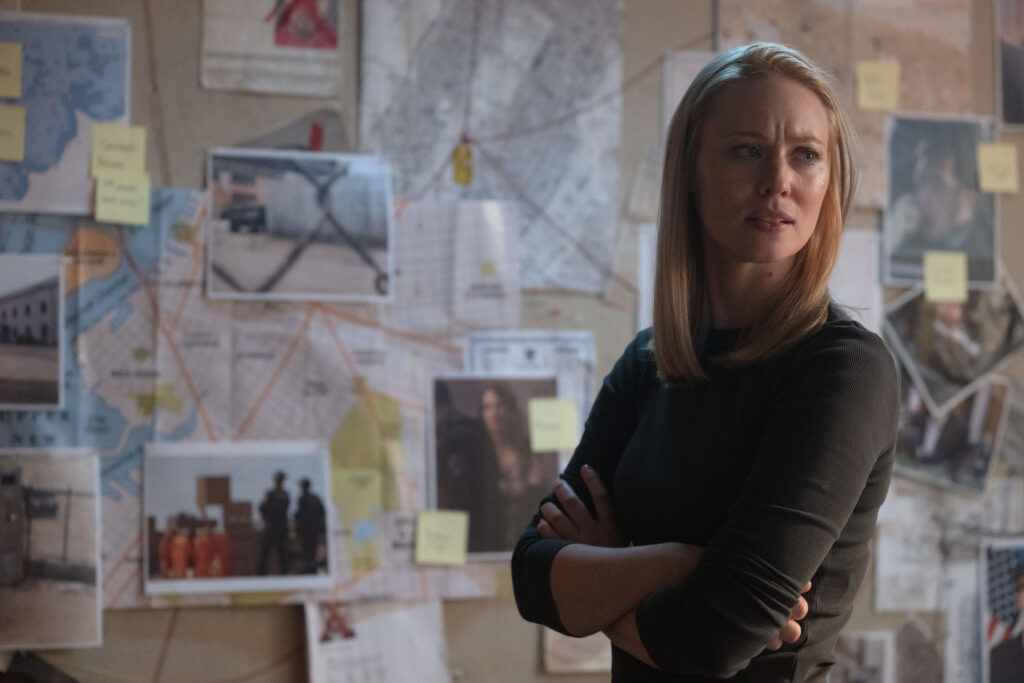
    Karen Page (Deborah Ann Woll) in Marvel Television’s DAREDEVIL: BORN AGAIN SEASON 2, exclusively on Disney+. Photo by Jojo Whilden. © 2026 MARVEL.

    On a positive note, Scardapane seems to enjoy enhancing the parallel paths of Murdock and Fisk by pairing the arcs of characters in their respective orbits. Karen and Vanessa. BB and Blake. Heather and Kirsten. The AVTF and the AdT (Angela del Toro). Buck and…Foggy (gasp). In episodes 2 and 3, the writers leverage the supporting characters by setting them in ideological opposition to one another. As Vanessa tries to convince Wilson to leave New York, Karen and Matt talk about staying put. As the AVTF cracks down, AdT levels up. As the Deputy Mayor of New York City for Communications elevates his position in the regime, BB digs deeper and becomes the underground press, attempting to strip away the facade of fear by mocking the Kingpin. Buck serves as Kingpin’s loyal capo, weaponizing authority, while Foggy’s absence–and his adherence to the idealism of the system–allows Matt to teeter on the edge of disappearing behind the mask.

    The transition between episodes accentuates these polarities as the cracks in both sides begin to show, both literally and figuratively. Karen’s radicalization (Matt compares her thought process to that of Frank Castle) and Vanessa’s gaslighting (convincing Heather of her security while fearing for her own); Heather dissociates and descends into madness as Kirsten grounds herself in the reality of the populace; state-sponsored security becomes state-sponsored terror. The final straw, of course, is the farcical trial of Jack Duquesne, in which Heather’s lack of morality and the Kingpin’s influence over the Vigilante Trials conclude with a guilty verdict handed down to a LARPer. By publicly executing the spirit through the illusion of due process, Fisk unwittingly hands the resistance its eventual winning hand.
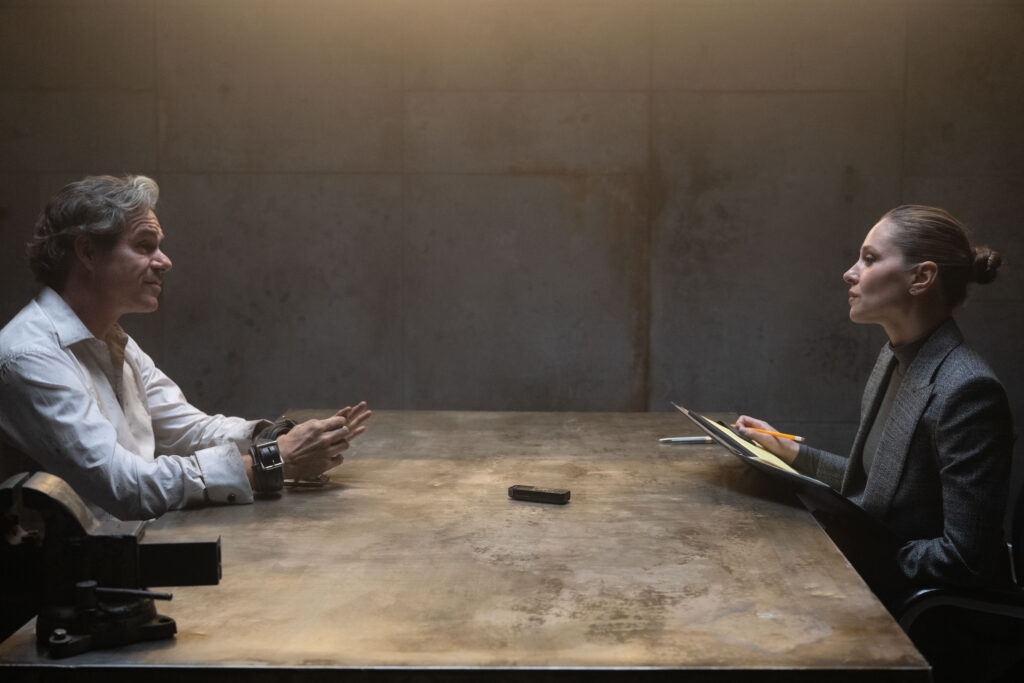
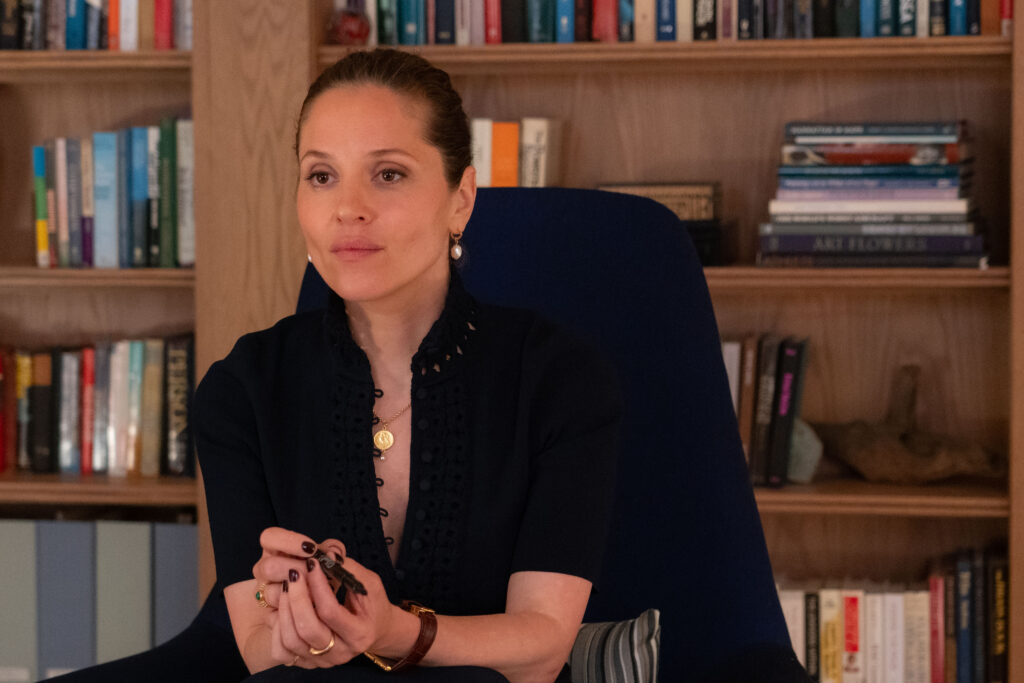
    (L-R) Jack Duquesne (Tony Dalton) and Heather Glen (Margarita Levieva) in Marvel Television’s DAREDEVIL: BORN AGAIN SEASON 2, exclusively on Disney+. Photo by Jojo Whilden. © 2026 MARVEL.

    For the entertainment of the masses. Presented in all it’s ugly glory by then whose hand holds the scale.

    -Jack Duquesne

    And, of course, the wild card becomes increasingly wild…but it’s not time for his story just yet. Through 12 episodes, Daredevil: Born Again has patiently painted a picture of a pair of protagonists prepared to prove his love for his city is greater than the other’s; however, the cumulative scar tissue on the city and its inhabitants–the sinew of the story–and each man is increasingly faced with losing something they love, even if only the blind man can see it coming.

  • Review: ‘Daredevil: Born Again’ Season 2 Delivers the Definitive Devil

    Review: ‘Daredevil: Born Again’ Season 2 Delivers the Definitive Devil

    Since its inception, Marvel’s streaming spin on Daredevil has been heavily inspired by Frank Miller; however, in Daredevil: Born Again Season 2, showrunner Dario Scardapane chose to lean into the theological elements that Miller–who was raised as an Irish Catholic–introduced into the character’s mythos. Indeed, under Miller‘s short-lived pen, Murdock’s Catholicism emerged as an architectural framework for the character.

    Faith is the assurance of things hoped for, the conviction of things not seen.

    Hebrews 11:1

    It’s not just the gritty, noir-inspired spin on the character that Miller made famous that makes him synonymous with Daredevil. It was Miller‘s recognition that a lawyer moonlighting as a vigilante provided a perfect gateway to explore Matt Murdock’s inner-struggle laid the groundwork for the character’s turbulent internal conflict: is he a good man doing bad things or a bad man trying to break good? Miller, an Irish Catholic himself, believed that only a Catholic could manage to handle the contradicting duality that has come to define Daredevil. By leaning heavily into Hell’s Kitchen, a historically Irish-American enclave, Miller was able to build an entire theological scaffold around Murdock, and from it emerged the irony of a guilt-ridden Catholic dressing as the devil while fighting crime. By the time he wrote Born Again in 1986, Miller had codified Catholicism into Daredevil’s DNA. And though it is sometimes only in the subtext, Daredevil: Born Again Season 2 circumspectly examines one of the crucial contradictions that torments Matt Murdock: how does a man who believes in a merciful God go about living in a merciless world? And almost unbelievably, the season finale dares to answer that question.

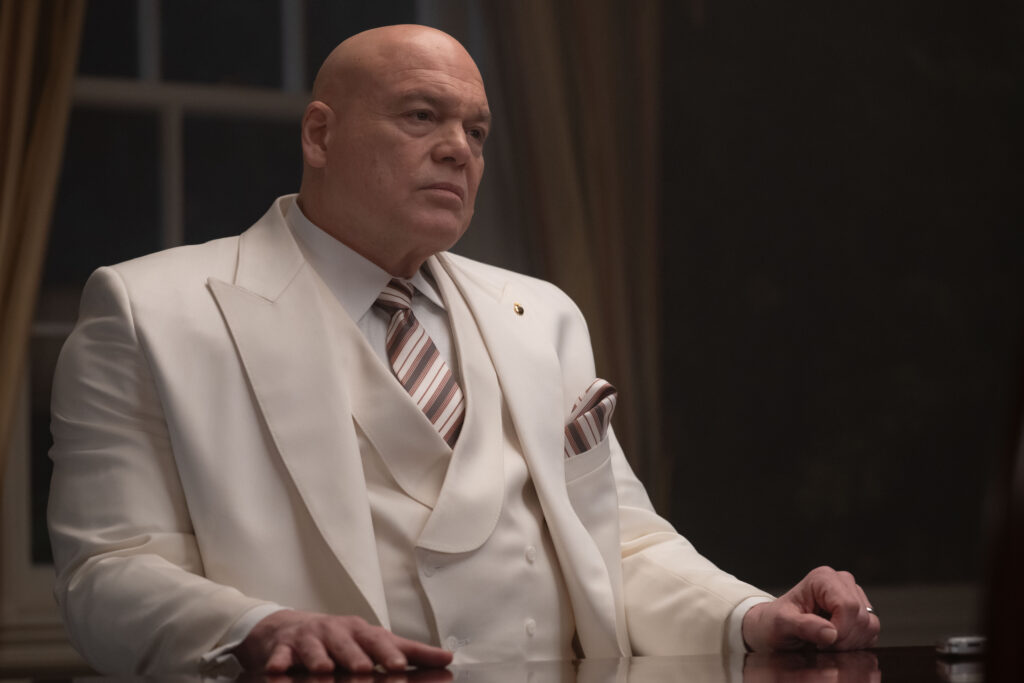
    Wilson Fisk / Kingpin (Vincent D’Onofrio) in Marvel Television’s DAREDEVIL: BORN AGAIN SEASON 2, exclusively on Disney+. Photo by Jojo Whilden. © 2026 MARVEL.

    Mercy. Grace. Justice not vengeance. Forgiveness. Daredevil: Born Again Season 2 balances and explores these and more key tenets of Catholicism but what’s most impressive is how strong writing allows them to emerge organically throughout the season as Matt Murdock, not Daredevil, begins to be reborn. Perhaps one of the show’s strongest elements is how those in Murdock’s orbit react and respond to him as he chooses mercy, forgiveness, justice and grace…and to whom he extends those blessings. In what seems an homage to Miller‘s Born Again, in which the final pages are noticeably brighter despite Matt losing everything, the final scenes of Season 2–which are far too spoilery to be discussed–are noticeably brighter as well, providing a sense of a man no longer at war with himself. As Fisk told Murdock, tragedy can transform a man, and the season finale certainly finds both men transformed. While production on a third season of Born Again is already underway, the Season 2 finale serves as a fitting denouement of the series that was originally announced at SDCC ’23.

    I thought Daredevil was kind of cool because he couldn’t do anything. I mean, he’s blind. It wasn’t that he could fly. His major power was an impediment. So I was intrigued. When I took over he was kind of like Spider-Man lite, but I was able to project a lot of my Catholic imagery onto it. And I’d always wanted to do a crime comic.

    -Frank Miller

    Now fully in creative control, Scardapane deftly uses the second season to provide a definitive resolution to the wonderfully written diner scene from “Heaven’s Half Hour”, the first episode of the revival, in which a tense meeting over coffee ends with both men swearing they’ve left their alter egos behind them, slowly devolves into a pissing match between the better angels of their natures. In it, it is revealed that both of them believe they can transform both themselves and the city they love; however, Season 2 reveals that neither of them is remotely capable of such a change. The new season makes good on the parallel paths of the pilot, bringing them back to confront each other and themselves. Both Murdock and Fisk believed they could save the city, yet their resulting feud set it on fire.

    I was raised to believe in grace. To be touched by the divine and transform. So if you say to me you’re a new man, I say fine. But you should know I was also raised to believe in retribution. So if you step out of line…I will be there.

    -Matt Murdock, “Hell’s Half Hour”
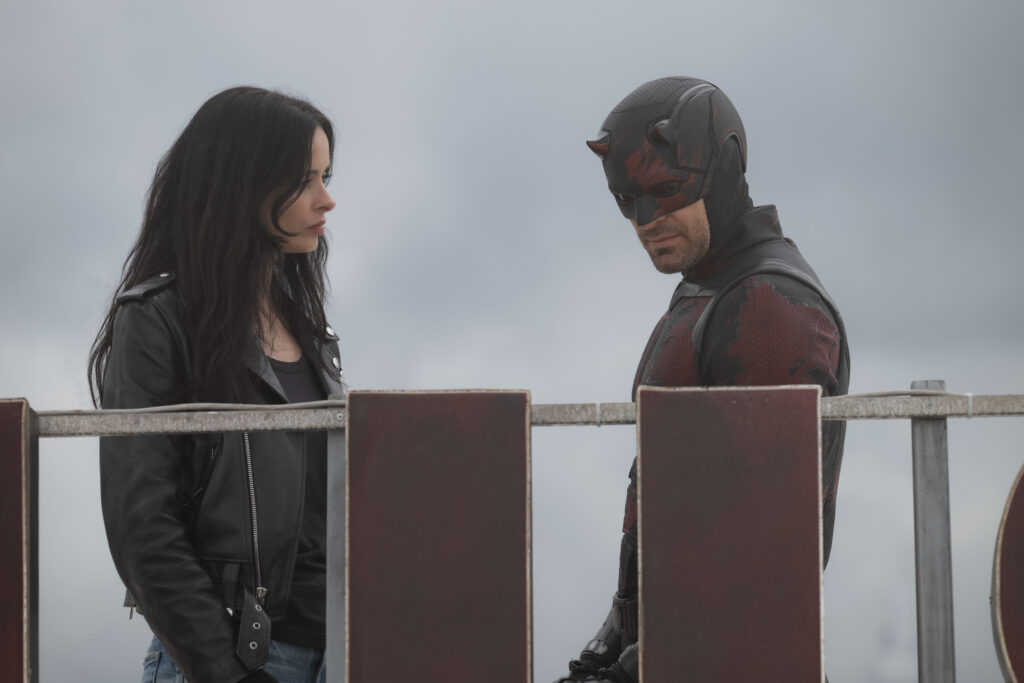
    L-R: Jessica Jones (Krysten Ritter) and Matt Murdock / Daredevil (Charlie Cox) in Marvel Television’s DAREDEVIL: BORN AGAIN, exclusively on Disney+. Photo by Jojo Whilden. © 2025 MARVEL.

    Calculatedly, the new batch of episodes resonate thematically with each of the seasons of Netflix’s Daredevil without exploring those beats through the same lenses. Even as one episode spends significant time doing some retconning in a flashback set during Season 1 of Daredevil, the writers take every opportunity to subvert expectations, challenging characters in scenarios fans would expect other characters to face. As a second season, those challenges and their repercussions allow for character arcs to evolve and resolve and, for some, those resolutions are quite final. The series key players all have agency to make choices without the constraints of external forces, though it’s the choices made by Murdock and Fisk that will reverberate the loudest.

    I cannot see the light. So I will be the light. I am Daredevil. And I am not afraid.

    -Matt Murdock, Daredevil #612

    Built on a narrative framework that honors the heavyweights who created The Man Without Fear, the new season delivers the MCU’s definitive devil, fearlessly ferocious and soaked in equal measures of blood and grace.  Daredevil: Born Again Season 2 shrewdly shares the duality of its title character, dressing itself as its Netflix predecessor while continuing to make bold choices that distance it from the original series. The eight episodes crescendo with the final three standing as perhaps the finest of any season, culminating in a finale that is both unpredictable and astonishing. Truly, Daredevil is born again.

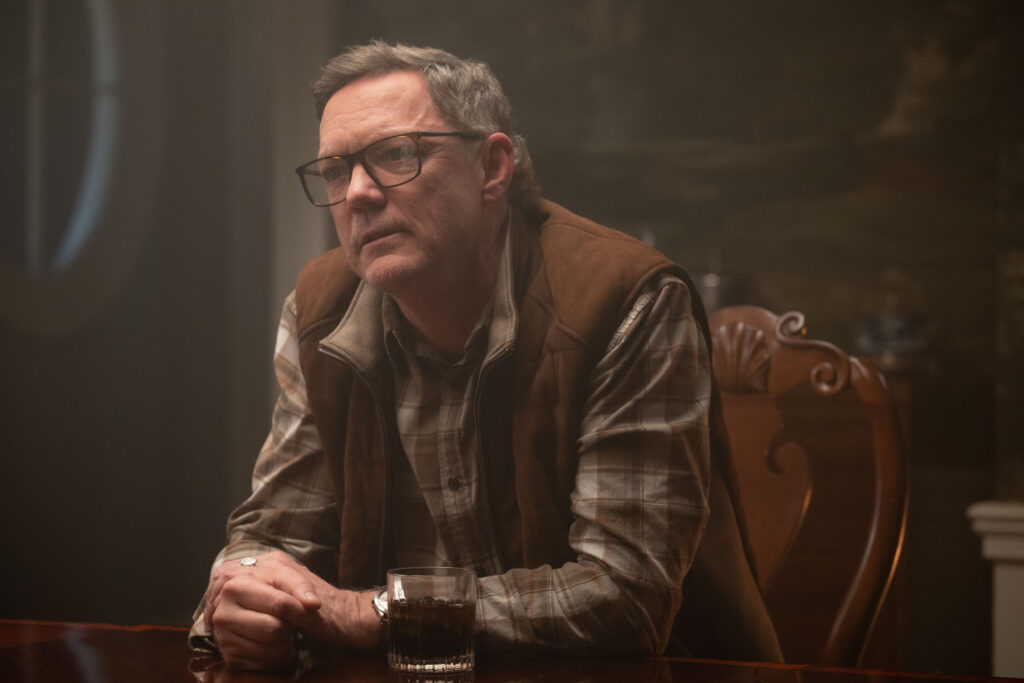
    Mr. Charles (Matthew Lillard) in Marvel Television’s DAREDEVIL: BORN AGAIN SEASON 2, exclusively on Disney+. Photo by Jojo Whilden. © 2026 MARVEL.

    Scardapane is in his bag in Season 2 and it’s clear his plans extend far beyond a third season of the show. Despite being produced by a studio that designed loopholes to escape the weight of its shared universe’s narrative connectedness, the new season boldly pivots from the rebrand.

    As has always been the case in the comics, the supporting cast comes and goes, roles shrink and grow and new players join the game. Of the latter, none are more captivating than Matthew Lillard‘s Mr. Charles, a kingmaker and lynchpin with ties to the MCU’s ongoing narrative and a couple of fan-favorite Defenders. Indeed, it’s once again all connected and the product is truly better for it. Krysten Ritter returns as Jessica Jones, in a role similar in size and impact to Jon Bernthal‘s Season 1 turn, and immediately returns to form, doing significant heavy-lifting, physically and narratively, in a short time. This is representative, perhaps, of Scardapane‘s best decision with Daredevil: Born Again: cutting to the chase with fast-paced episodes that are absent the distended dialogue-heavy scenes that often weighed down the original series.

  • ‘Daredevil: Born Again’Episode 8 Review-The Guardian Devil

    ‘Daredevil: Born Again’Episode 8 Review-The Guardian Devil

    For the bulk of the first seven episodes of Daredevil: Born Again, the series felt as smoothly paced as any streaming series Marvel Studios has produced. While Netflix edge lords may have bemoaned the lack of gratuitous violence, it was rare that the first seven episodes felt either dawdling or rushed. Somehow, Dario Scardapane and Jesse Wigutow’s script for Episode 8, “Isle of Joy”, managed to accomplish both.

    Despite some truly big league cinematography and a major surprise in the closing moments, Episode 8 slothfully moved through some truly meaningless ground while also tackling a half dozen or so subplots. Every second spent with Michael Gandolfini‘s Daniel and Genneya Watson‘s BB Urich feels much like the parts of the Netflix series that the new creative team seemed intent on eliminating. Meanwhile, the pieces to the puzzle the audience has been missing to fully understand Wilson and Vanessa’s plans are more-or-less “oh by the way’d” into the runtime.

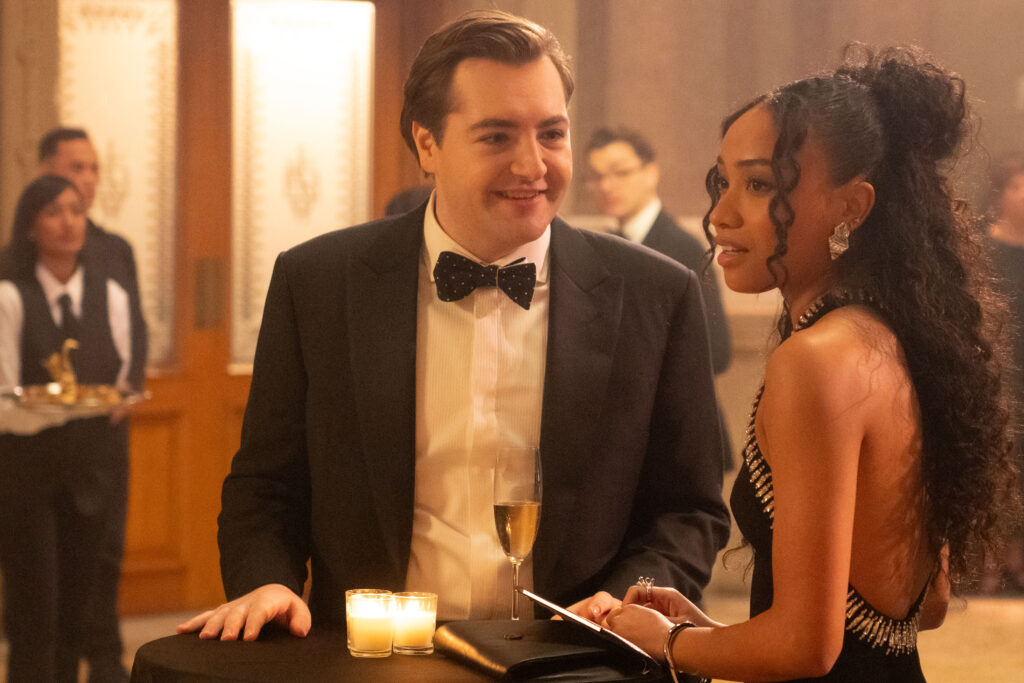
    (L-R) BB Urich (Genneya Walton) and Daniel Blake (Michael Gandolfini) in Marvel Television’s DAREDEVIL: BORN AGAIN, exclusively on Disney+. Photo by Giovanni Rufino. © 2025 MARVEL.

    Of course, without the ability to see the entire two-season plan, some of what took place in Episode 8–and in bits and pieces of other episodes–may still come into play in the future; however, it’s probably worth pointing out now that some moments that may have seemed to matter won’t be followed up on in Episode 9…and maybe never again.

    With the season finale ahead and Matt having made the choice to be a good man and defend his enemies, as Bullseye said he should, the finale could prove interesting. Will Fisk’s near-death experience make him consider backing off his mission to put Daredevil behind bars? On his own and seriously injured, will Matt muster up the energy to put up a fight, as he always has? Will the Netflixers find themselves immersed in the darkness and blood that made them love Daredevil 10 years ago? Will you be able to see what’s happening in the episode of you’re watching in a room where there’s any natural light? We’ll all find out soon, True Believers!

  • ‘Daredevil: Born Again’ Episode 7 Review: Devil By Day

    ‘Daredevil: Born Again’ Episode 7 Review: Devil By Day

    Pablo Picasso once sort of-famously explained that “the purpose of art is washing the dust of daily life off our souls.” That idea put him squarely at odds with the 19th century philosophy of “art for art’s sake,” which valued aesthetics over the idea that art should have some larger utility within society. It’s then worth pondering how Picasso might have felt about Episode 7 of Daredevil: Born Again, “Art for Art’s Sake.” Despite featuring a Daredevil daring to buckle his swash in broad daylight and some shooting and some blood and shit, “Art for Art’s Sake” somehow feels more like the “filler episode” fans seemed convinced Episode 5 would be.

    Though it’s not a poor episode, “Art for Art’s Sake” is the first time—and truly the only time—that Daredevil: Born Again felt like a stitched-together show. It seems unlikely that Disney ironically placed the title it did on the episode; however, that’s essentially how this episode fits into the bigger picture. It exists to exist and nearly all of what happens within its runtime has no larger utility in the structure of the series other than to put a disappointing end to the one arc that was beginning to approach entertaining.

    Heather Glenn (Margarita Levieva) in Marvel Television’s DAREDEVIL: BORN AGAIN, exclusively on Disney+. Photo by Giovanni Rufino. © 2025 MARVEL.

    While screening the series in early March, it was right about the time that Muse died that I began to realize that not only does Daredevil have a Kingpin problem, but also that Daredevil has a Kingpin problem. For the third time in four seasons (and early returns from production on Season 2 would indicate it’ll become the fourth time in five seasons), Wilson Fisk is the primary antagonist of a Daredevil series. Yes, Dex was the physical opponent in Season 3 of Daredevil and Matt got to fight crazy buzzsaw costume guy once but with Muse, the creatives had a chance to do something really special…and instead they made him into background noise so that we could get to some more Matt and Wilson stories. I understand the place Fisk holds in the Daredevil mythos; however, it’s ok to let the Fat Man take a break and give Matt something else to do.

    And so, rather than having an episode that washed the dust of daily life off of our souls, it seemed to just add another layer. Hope does spring eternal, however, and photos from the New York City set of Season 2 have revealed that somehow, some way, Muse will return and showrunner Dario Scardapane also revealed that the character will be a multi-season problem for Matt. However, without any solid idea of what the future holds of the character, it’s easy to feel disappointed in the way he was incorporated into Season 1. Already changed from the (probably) Inhuman-ly powered character in the comics, Hunter Doohan‘s Muse deserved to be a bit more than the catalyst for another round of Daredevil vs. Kingpin.

  • ‘Daredevil: Born Again’ Episode 6 Review: Renaissance

    ‘Daredevil: Born Again’ Episode 6 Review: Renaissance

    For some, the first four episodes of Daredevil: Born Again fell short of expectations. Others, it turned out, enjoyed the lighter tone and lighter tones. Wherever your tastes fell on that spectrum, with Episode 6, “Excessive Force”, the series pivoted aggressively, starting down a far darker path. Episode 5, “With Interest”, bridged the gap between light and dark, allowing Charlie Cox to collect some serious aura farming, slinging  and swinging swag instead of billyclubs but by the time Angela del Toro goes missing, the devil that Matt Murdock let out for a brief romp in the daylight just can’t be out back in the bottle.

    Simply enough, “Excessive Force” IS the episode fans of the Netflix series have been waiting for: the renaissance of The Devil of Hell’s Kitchen. Complicating the matter, however, is that the rebirth of Daredevil coincides with the rebirth of the Kingpin. With his fractured relationship with Vanessa healing quickly, Wilson Fisk finally lets his darker half resurface. Complicating things for both men is the revelation that the City’s most popular street artist, Muse, is a sadistic serial killer with a body count of at least 60 bodies.

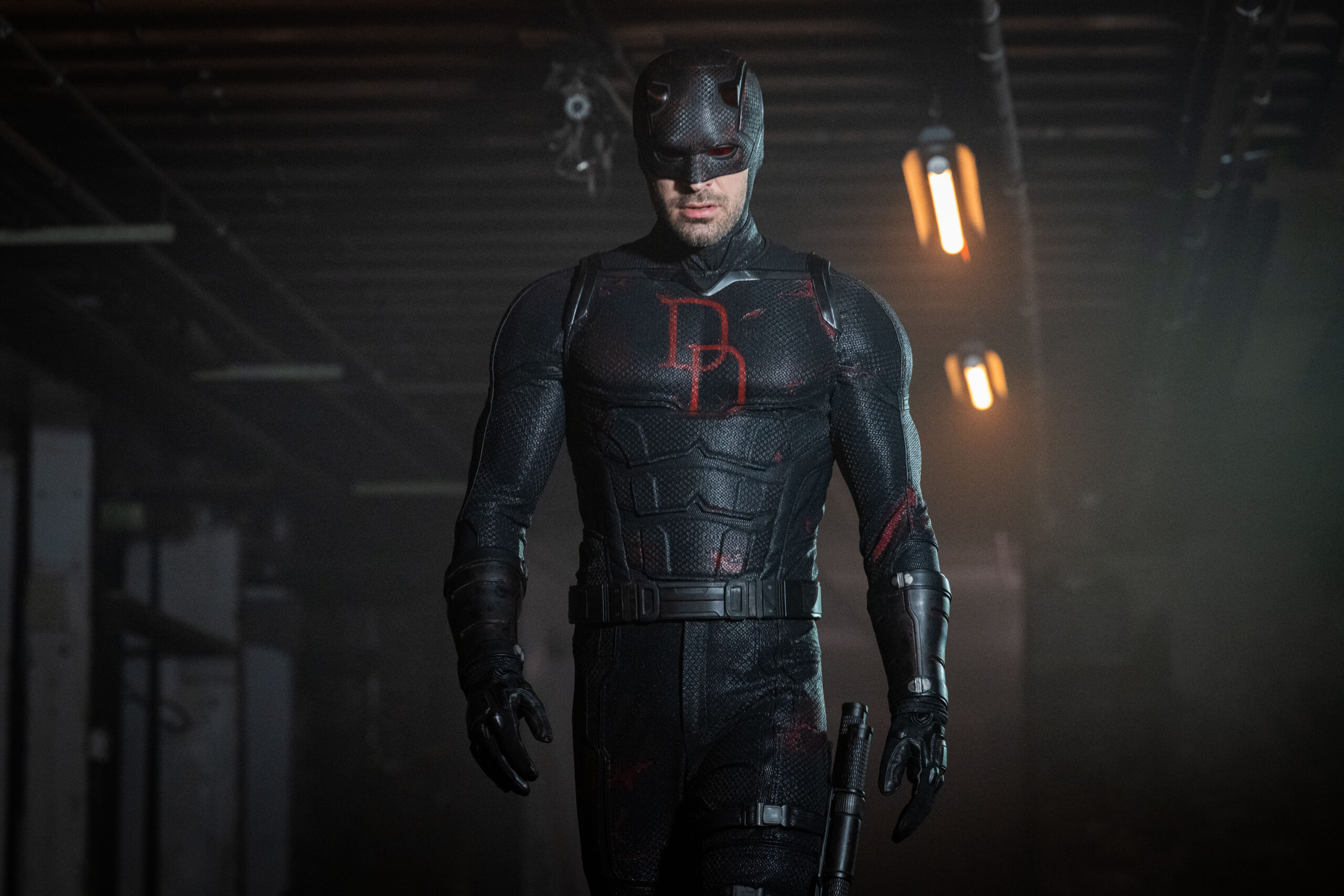
    Daredevil/Matt Murdock (Charlie Cox) in Marvel Television’s DAREDEVIL: BORN AGAIN, exclusively on Disney+. Photo by Giovanni Rufino. © 2025 MARVEL.

    The series has consisted of a series of parallels and the creators allowed those to play out without rushing the inevitable right turn those paths would take, putting the two on an inevitable collision course. As it’s played out, Muse catalyzes collision by becoming something neither man can ignore and neither man can stop without resorting to the depths of their own darkness they had both sworn to leave behind.

    In Matt’s case, Muse’s abduction of Angela del Toro forces him back into his armored suit. The result is a violent confrontation with the killer in his lair which Matt clearly enjoys…perhaps a bit too much. For Fisk, Muse’s spree gives him reason enough to pull together a goon squad of corrupt cops, far more akin to the type of people he “worked” with as the Kingpin than NYC’s finest. And, of course, the episode wouldn’t be complete without Fisk resorting to his own use of “excessive force”, reminding the audience of the brutality of the Fat Man…who is getting fat again. It’s taken some time but through the work of an artist with his own distinct style, Daredevil and Kingpin each experience a renaissance that will certainly put them as odds.

  • ‘Daredevil: Born Again’ Episode 5 Review: Devil in a Bottle

    ‘Daredevil: Born Again’ Episode 5 Review: Devil in a Bottle

    For no discernible or logical reason at all, fandoms–and in particular Marvel fans–have developed and peculiar and excruciatingly idiotic obsession with runtimes of films and episodes of streaming series. Without ever seeing a Marvel Studios production, a growing breed of fan believes it can judge the quality of that production by its runtime. Ahead of the debut of Daredevil: Born Again, the runtimers focused their faux rage on the series’ fifth episode when a social media source revealed it would only run for a paltry 39 minutes. One month later, “With Interest” hit Disney Plus and while you can’t please everyone, the episode has widely been hailed as one of the best not just of the revival series but of any of Charlie Cox‘s four seasons as The Man Without Fear…but there’s just one problem.

    Before addressing that problem–which, like the runtime obsession, seems to be a vestigial construct from the great COVID new media shortage of 2020–all due props must be given to Charlie Cox. As the kids are saying, “With Interest” was essentially an aura showcase for Cox, who flexed every fiber of his formidable talent as the charming and disarming Matt Murdock who has been the focus of the first chunk of the season. Whether in casual conversation with Mohan Kapur‘s Yusuf Khan or distracting the crazy Irish fucks robbing a bank on St. Patrick’s Day (where are the MacManus brothers when you need them?), Cox slayed it as Murdock in the episode. But the time has come for Murdock to take a backseat and let the devil out of the bottle.

    (L-R) Daredevil/Matt Murdock (Charlie Cox) and Devlin (Cillian O’Sullivan) Marvel Television’s DAREDEVIL: BORN AGAIN, exclusively on Disney+. Photo courtesy of Marvel Television. © 2025 MARVEL.

    Throughout the first four episodes, Matt has slowly been losing control of the devil he’s tried to keep bottled up. In “With Interest”, the Devil of Hell’s Kitchen breaks the bottle, kicks the shit out of some bank robbers and gets back in the habit of saving his city. “With Interest” does in 39 minutes what many of the 39 episodes of the Netflix series couldn’t quite do: deliver a slice-of-life episode that stars its star. And while most critics and fans enjoyed it as a “filler episode”, that’s just not what it is.

    “With Interest” certainly fits neatly within the criteria that define a bottle episode: minimal cast, one main location, little-to-no major CGI, etc. However, tagging it as a filler episode is, at best, reductive. Without spoiling the remaining three episodes (Episode 6 aired right after and you’ve already seen it if you’re reading this), Episode 5 serves essentially as a bridge from the bright new life that Matt wanted so badly to live back to the darkness that comes with being Daredevil. For four episodes, Matt fought with all his might to be someone he wasn’t. In “With Interest”, Matt–maybe for the first time in his life–stopped fighting. In cutting from 13 episodes per season to 9 in this first season of Daredevil: Born Again, no room was left for filler. Step back and take a big picture look at what’s been going on and you might just reframe your thoughts about “With Interest” and see it for what it is: a killer, very comic book-like adventure for Matt Murdock before things turn Netflix dark.

  • Review: The Final Season of ‘What If…?’ Prematurely Delivers Megatons of Mulitversal Mayhem

    Review: The Final Season of ‘What If…?’ Prematurely Delivers Megatons of Mulitversal Mayhem

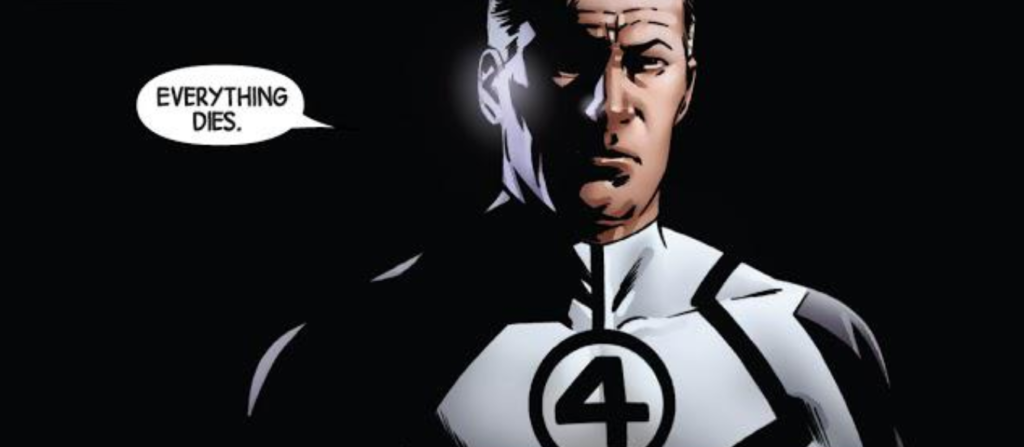
    As one of the world’s greatest minds would tell you, everything dies. People, planets, suns, galaxies and universes all have expiration dates because they all have natural lifespans. Over a decade ago, Reed Richards understood and accepted that and explained it to his fellow heroes as Jonathan Hickman launched the dual runs on Avengers and New Avengers that would ultimately lead to Secret Wars. As Marvel Studios Multiverse Saga makes its way toward the same inevitable end in 2027’s Avengers: Secret Wars, fans of the MCU should start to get comfortable accepting that same inevitability; however, for myriad reasons, Reed Richards isn’t around to help them understand that just yet. So while What If…?, the studio’s multi-season multiversal adventure arrives at its end, it does so too early for fans to fully appreciate its coda.

    Though no fault of its own, the final season of Marvel Animation’s first canonical adventure arrives about two and a half years too early for the magnitude of its multiversal mayhem to make the impact it should. Once upon a time, the Multiverse Saga was set to conclude on November 7, 2025, less than one year from the launch of What If…? Season 3. Had Marvel Studios adhered to that timeline, revealed at SDCC ’22, the final eight episodes of What If…? would almost certainly have hit differently. They didn’t, so they didn’t and so the final season, which contains some of the series’ most imaginative and chaotic offerings, might ultimately find its relative importance delayed by a few years.

    From the opening episode, which introduces a multiversal iteration of the Mighty Avengers, through the final episode, which teases something beyond this iteration of the Multiverse, the final season of What If…? lands as an almost too self-aware commentary on the state of the MCU and could reasonably be viewed, for the most part as one giant size episode of “What If…the Multiverse Saga Had Gone as Planned?” Despite growing sentiment on social media by folks who haven’t watched an episode, the third season does indeed align with the intended premise of the anthological comics. For example, the first episode, “What If…The Hulk Fought the Mech Avengers?”, imagines what would have happened if Sam Wilson encountered Bruce Banner on his morning jog instead of Steve Rogers…and it ain’t good! Indeed Bryan Andrews, Matthew Chauncey, Stephen Franck, Ryan Little and A.C. Bradley deliver some Top 10 What If…? bangers here. Though the two-part finale doesn’t quite live up to the Season 2 double dip, it does deliver a deserving denouement for the series leads while also calling back to key moments from prior seasons. If you’ve liked What If…? so far, you’ll like it again; if you haven’t liked it so far, you won’t be watching it anyway.

    Marvel TV boss Brad Winderbaum has made it clear that, at least for now, the studio is ready to put What If…? out to pasture and though the series ends on a bit of a cliffhanger, that’s probably ok. It’s probably ok, at least partly, because the Multiverse Saga is on its way to its (kind of) natural conclusion and, at least in the comics, realities cycle through birth, destruction and rebirth. However, as fun as two-thirds of this season of What If…? is, the feeling that the studio dropped the ball on its release date is hard to shake. Though it isn’t entirely clear, the series finale feels as though it is at least partially connected to the studio’s intended plans for the end of the Multiverse Saga. Sure, we can all go back and watch it around the time Avengers: Secret Wars hits theaters but it’s probably fair to wonder what the rush was on the studio’s part to get it to D+ now. Everything dies…but What If…? could have stayed in stasis a bit longer, allowing Pedro Pascal‘s Reed Richards to provide some additional context for its super sci-fi, super comic book ending. Watch it and enjoy it for what it is because it may be some time before the studio takes the type of chances it did with this animated adventure.