
Since its inception, Marvel’s streaming spin on Daredevil has been heavily inspired by Frank Miller; however, in Daredevil: Born Again Season 2, showrunner Dario Scardapane chose to lean into the theological elements that Miller–who was raised as an Irish Catholic–introduced into the character’s mythos. Indeed, under Miller‘s short-lived pen, Murdock’s Catholicism emerged as an architectural framework for the character.
Faith is the assurance of things hoped for, the conviction of things not seen.
Hebrews 11:1
It’s not just the gritty, noir-inspired spin on the character that Miller made famous that makes him synonymous with Daredevil. It was Miller‘s recognition that a lawyer moonlighting as a vigilante provided a perfect gateway to explore Matt Murdock’s inner-struggle laid the groundwork for the character’s turbulent internal conflict: is he a good man doing bad things or a bad man trying to break good? Miller, an Irish Catholic himself, believed that only a Catholic could manage to handle the contradicting duality that has come to define Daredevil. By leaning heavily into Hell’s Kitchen, a historically Irish-American enclave, Miller was able to build an entire theological scaffold around Murdock, and from it emerged the irony of a guilt-ridden Catholic dressing as the devil while fighting crime. By the time he wrote Born Again in 1986, Miller had codified Catholicism into Daredevil’s DNA. And though it is sometimes only in the subtext, Daredevil: Born Again Season 2 circumspectly examines one of the crucial contradictions that torments Matt Murdock: how does a man who believes in a merciful God go about living in a merciless world? And almost unbelievably, the season finale dares to answer that question.
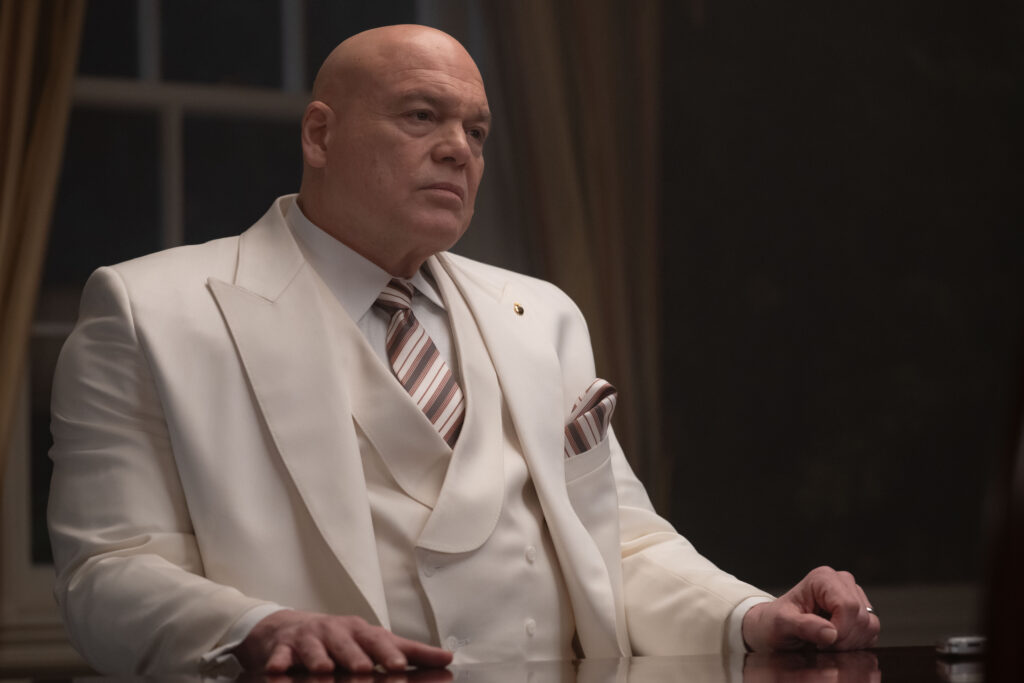
Mercy. Grace. Justice not vengeance. Forgiveness. Daredevil: Born Again Season 2 balances and explores these and more key tenets of Catholicism but what’s most impressive is how strong writing allows them to emerge organically throughout the season as Matt Murdock, not Daredevil, begins to be reborn. Perhaps one of the show’s strongest elements is how those in Murdock’s orbit react and respond to him as he chooses mercy, forgiveness, justice and grace…and to whom he extends those blessings. In what seems an homage to Miller‘s Born Again, in which the final pages are noticeably brighter despite Matt losing everything, the final scenes of Season 2–which are far too spoilery to be discussed–are noticeably brighter as well, providing a sense of a man no longer at war with himself. As Fisk told Murdock, tragedy can transform a man, and the season finale certainly finds both men transformed. While production on a third season of Born Again is already underway, the Season 2 finale serves as a fitting denouement of the series that was originally announced at SDCC ’23.
I thought Daredevil was kind of cool because he couldn’t do anything. I mean, he’s blind. It wasn’t that he could fly. His major power was an impediment. So I was intrigued. When I took over he was kind of like Spider-Man lite, but I was able to project a lot of my Catholic imagery onto it. And I’d always wanted to do a crime comic.
-Frank Miller
Now fully in creative control, Scardapane deftly uses the second season to provide a definitive resolution to the wonderfully written diner scene from “Heaven’s Half Hour”, the first episode of the revival, in which a tense meeting over coffee ends with both men swearing they’ve left their alter egos behind them, slowly devolves into a pissing match between the better angels of their natures. In it, it is revealed that both of them believe they can transform both themselves and the city they love; however, Season 2 reveals that neither of them is remotely capable of such a change. The new season makes good on the parallel paths of the pilot, bringing them back to confront each other and themselves. Both Murdock and Fisk believed they could save the city, yet their resulting feud set it on fire.
I was raised to believe in grace. To be touched by the divine and transform. So if you say to me you’re a new man, I say fine. But you should know I was also raised to believe in retribution. So if you step out of line…I will be there.
-Matt Murdock, “Hell’s Half Hour”
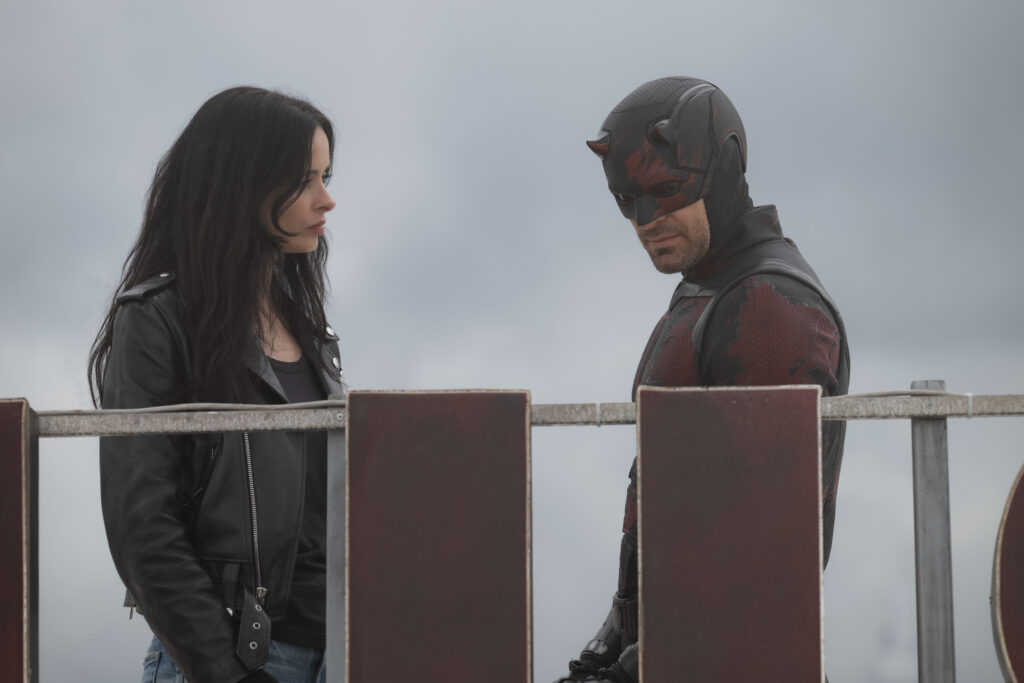
Calculatedly, the new batch of episodes resonate thematically with each of the seasons of Netflix’s Daredevil without exploring those beats through the same lenses. Even as one episode spends significant time doing some retconning in a flashback set during Season 1 of Daredevil, the writers take every opportunity to subvert expectations, challenging characters in scenarios fans would expect other characters to face. As a second season, those challenges and their repercussions allow for character arcs to evolve and resolve and, for some, those resolutions are quite final. The series key players all have agency to make choices without the constraints of external forces, though it’s the choices made by Murdock and Fisk that will reverberate the loudest.
I cannot see the light. So I will be the light. I am Daredevil. And I am not afraid.
-Matt Murdock, Daredevil #612
Built on a narrative framework that honors the heavyweights who created The Man Without Fear, the new season delivers the MCU’s definitive devil, fearlessly ferocious and soaked in equal measures of blood and grace. Daredevil: Born Again Season 2 shrewdly shares the duality of its title character, dressing itself as its Netflix predecessor while continuing to make bold choices that distance it from the original series. The eight episodes crescendo with the final three standing as perhaps the finest of any season, culminating in a finale that is both unpredictable and astonishing. Truly, Daredevil is born again.
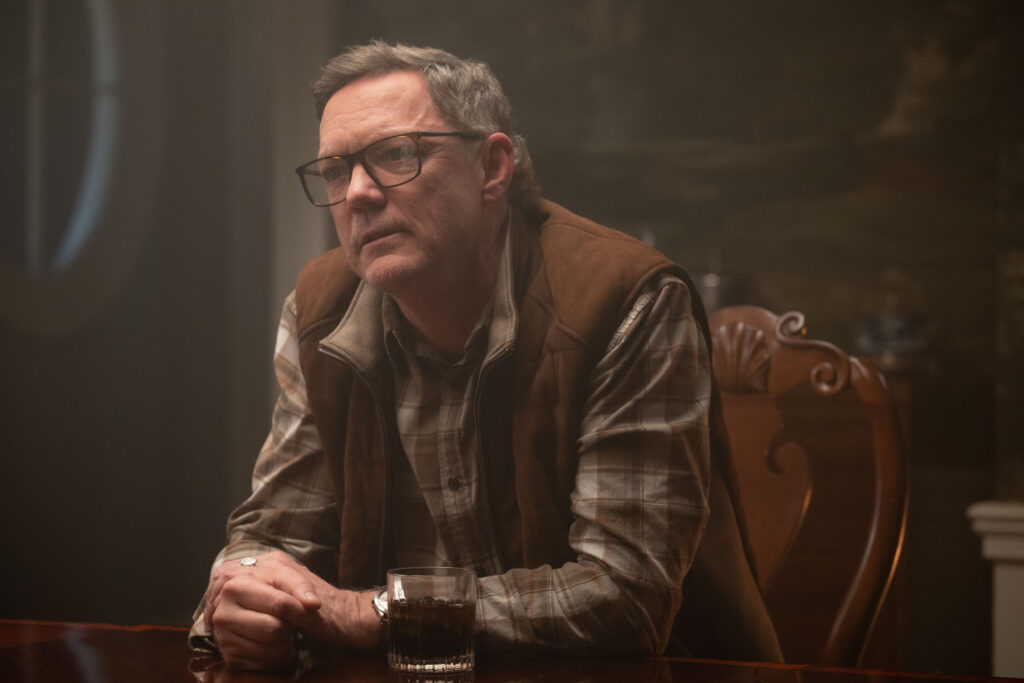
Scardapane is in his bag in Season 2 and it’s clear his plans extend far beyond a third season of the show. Despite being produced by a studio that designed loopholes to escape the weight of its shared universe’s narrative connectedness, the new season boldly pivots from the rebrand.
As has always been the case in the comics, the supporting cast comes and goes, roles shrink and grow and new players join the game. Of the latter, none are more captivating than Matthew Lillard‘s Mr. Charles, a kingmaker and lynchpin with ties to the MCU’s ongoing narrative and a couple of fan-favorite Defenders. Indeed, it’s once again all connected and the product is truly better for it. Krysten Ritter returns as Jessica Jones, in a role similar in size and impact to Jon Bernthal‘s Season 1 turn, and immediately returns to form, doing significant heavy-lifting, physically and narratively, in a short time. This is representative, perhaps, of Scardapane‘s best decision with Daredevil: Born Again: cutting to the chase with fast-paced episodes that are absent the distended dialogue-heavy scenes that often weighed down the original series.

Leave a Reply