As is Marvel Studios’ tradition, Thunderbolts*included some additional scenes during the credits. Though the first scene featuring David Harbour‘s Red Guardian was played for laughs, the second scene jumped 14 months into the MCU’s future, providing a look at the New Avengers regrouping at The Watchtower. Unlike several of the studio’s post-credit scenes, this one felt important, providing information about Captain America and his team of Avengers while also teasing the arrival of the Fantastic Four on Earth-616. Yelena’s New Avengers were decked out in new uniforms, including Bucky sporting a new star logo very reminiscent of the one his character recently sported in the pages of Marvel Comics as The Revolution, and were just learning about a “space crisis,” which is almost certainly an Incursion.
TL:DR, the 2-minute and 54-second scene is doing a lot of table setting for Avengers: Doomsday and it turns out that’s because it was filmed by the directors of the upcoming Marvel project.
In an interview with Comic Book, Thunderbolts* director Jake Schreier revealed that the post-credit scene was filmed on the set of Avengers: Doomsday while strongly hinting that Joe and Anthony Russo were behind the camera for it.
So a couple things about that. I didn’t film that scene. I was there when it was filmed and I can say that it comes from the set of a production that might be starting production right around now. So that might be fun for people to stay and watch.
-Jake Schreier
The knowledge that the Russos filmed the scene adds a little extra weight to the information contained within. Too frequently, the studio’s stingers are poorly thought out and following up on them becomes the problem of “the next guy.” Since the Russos directed this and are “the next guys,” this scene can more or less be thought of as part of Avengers: Doomsday, which we can safely assume begins a year and two months after the events of Thunderbolts*, set in 2027. With that, we now know that the next Avengers film will be set in 2028, keeping the MCU timeline ahead of the real world by a couple of years.
Thunderbolts* is now in theaters and Avengers: Doomsday is now in production ahead of its May 1, 2026 release.
Marvel Studios took a chance with Thunderbolts* but all signs point toward the film, directed by Jake Schreier, opening to a solid weekend at the box office following very positive reviews by critics. With the surviving members of the eclectic group of anti-heroes already confirmed to appear in Avengers: Doomsday, it looks like the Thunderbolts are here to stay…at least in the short term. But in what capacity?
As explained here, following the team’s battle against The Void–the omnipotent dark shadow of Lewis Pullman‘s Sentry–Julia Louis-Dreyfus‘ Valentina Allegra de Fontaine, who is facing impeachment charges, saves face by introducing the group as The New Avengers…and Bob. With that big reveal, the 2-hour and 6-minute run time of Thunderbolts* draws to a close but, as audiences have come to expect from Marvel Studios’ projects, there’s more in store for those who stick around for the credits.
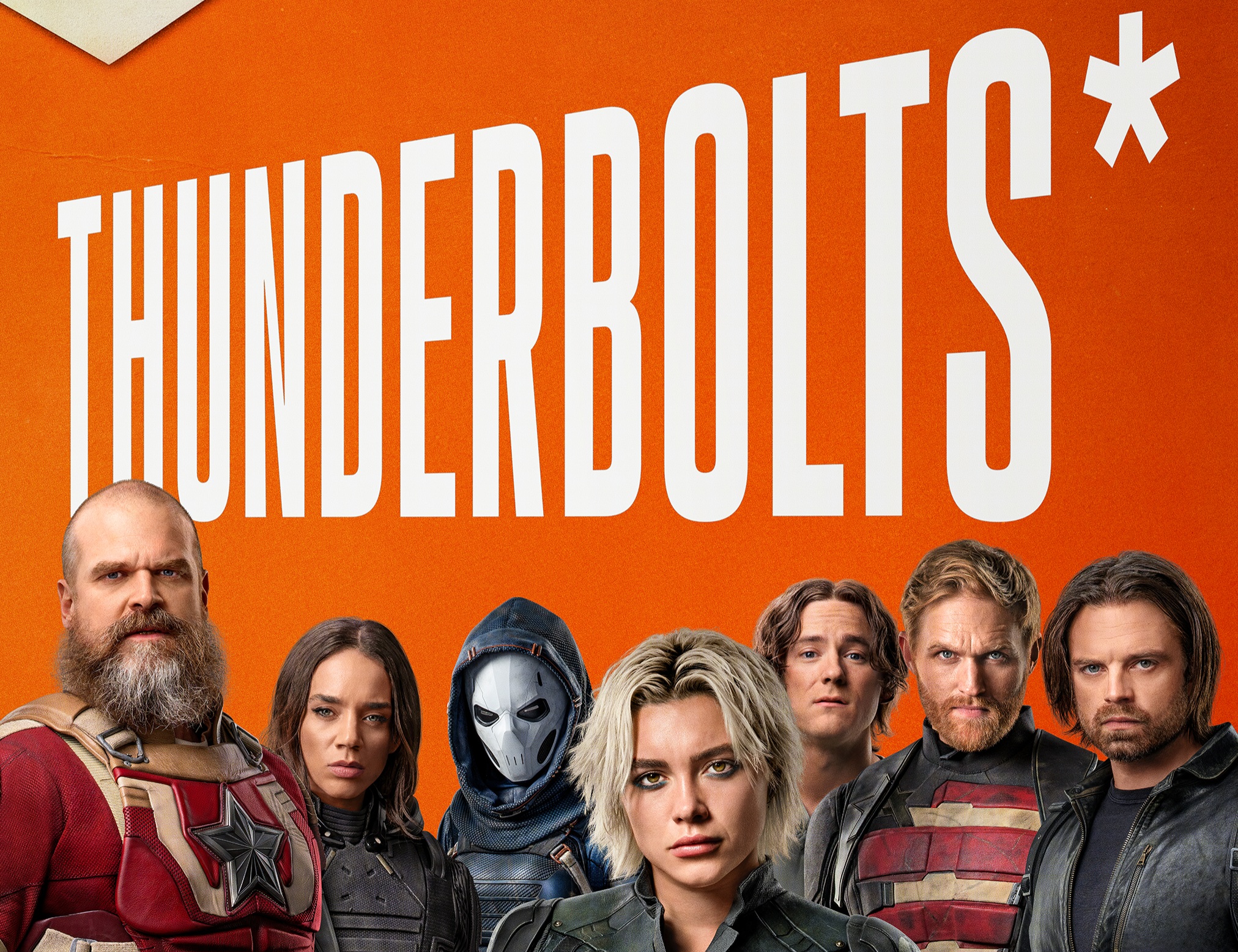
The film’s Mid-Credits scene features David Harbour‘s bombastic Alexi Shostakov and makes good on the Wheaties box premise of one of the project’s promotional posters. While out grocery shopping, a cleaned-up Alexi proudly shows off a box of The Breakfast of Champions, which features the New Avengers on the front. Though it’s mostly there to add another laugh when Alexi fails to convince a woman to purchase a box, the scene implies that the cast of castoffs have indeed become the public-facing heroes Yelena aspired to be, completing their redemption arcs.
Post-Credit
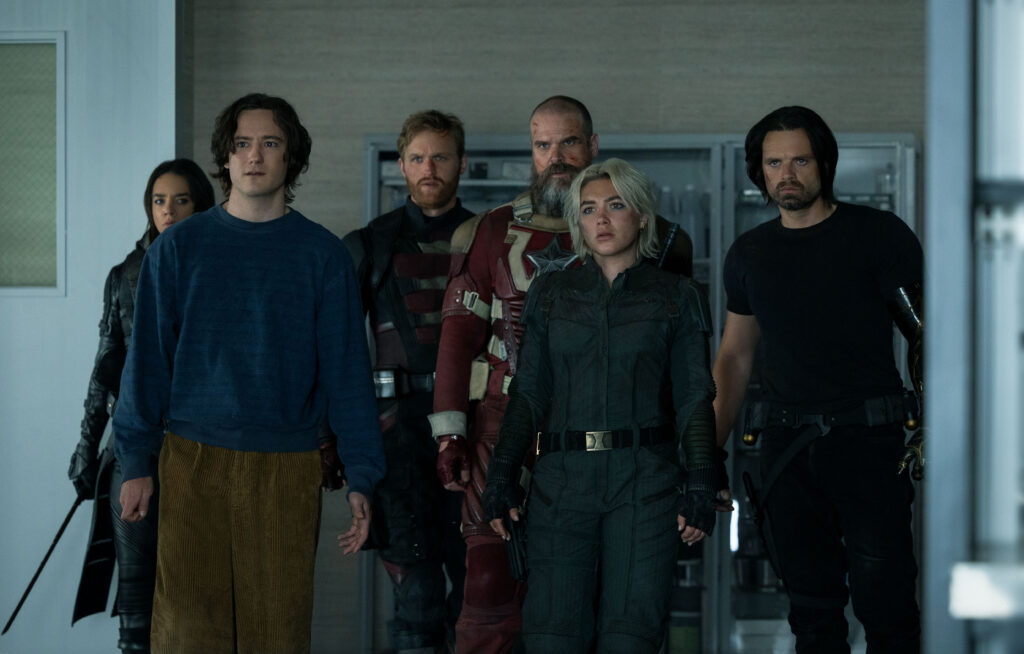
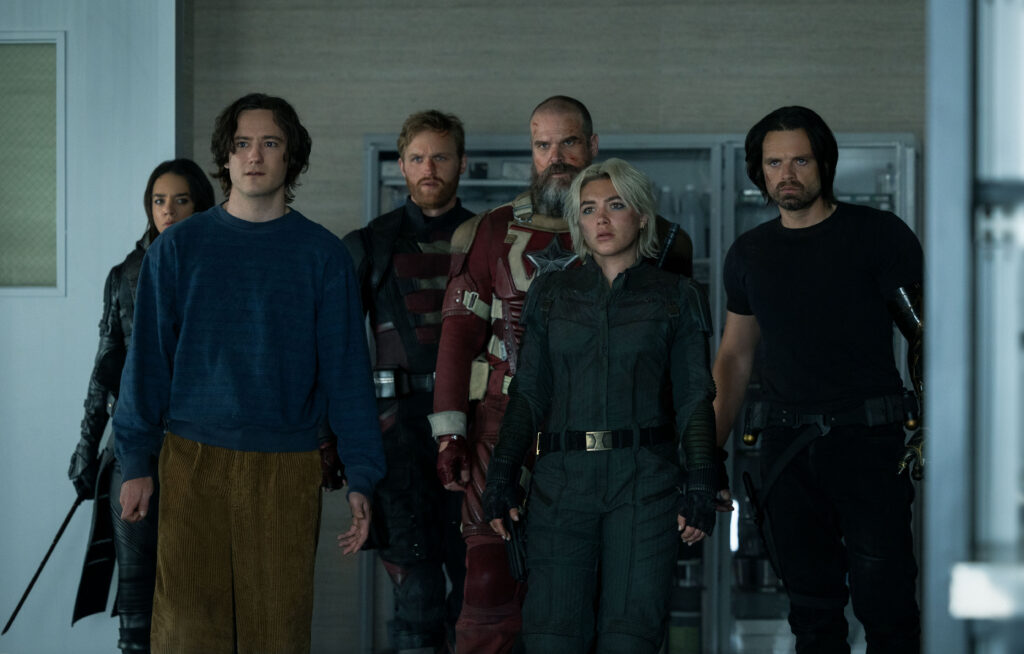
Set 14 months after the conclusion of the film, the second scene–which runs a Marvel record 2 minutes and 54 seconds–finds the team, complete with fancy new uniforms–regrouping at their new HQ, The Watchtower. Though it’s not clearly stated, the New Avengers seem to have an assistive AI helping them out as that may well be an homage to C.L.O.C. or Centrally Located Organic Computer, who helped run The Watchtower in the pages of Marvel Comics. While the team’s discussion about Sam Wilson filing a lawsuit to prevent them from calling themselves The Avengers leads Shostakov to reveal his “New Avengerz” outfit, Yelena’s conversation discloses that they are aware of a “space crisis.” As they process that, the computer warns them of an extra-dimensional ship entering Earth’s atmosphere. That ship? The Excelsior, belonging to The Fantastic Four!
While it’s not entirely clear what circumstances bring The First Family from their Earth to Earth-616, trailers for The Fantastic Four: First Steps have shown Reed Richards to be working on the math behind inter-dimensioal travel and with both The New Avengers and Fantastic Four slated to play big roles in Avengers: Doomsday, the scene teases the first meeting between the two.
During Marvel Studios’ CinemaCon presentation in April 2024, a minor change was confirmed to the title of one of the studio’s 2025 films, sparking interest among MCU fans. Without addressing its meaning, Marvel’s Head Honcho, Kevin Feige, revealed that the official title of Thunderbolts now included an asterisk. And the wild speculation about Thunderbolts* began.
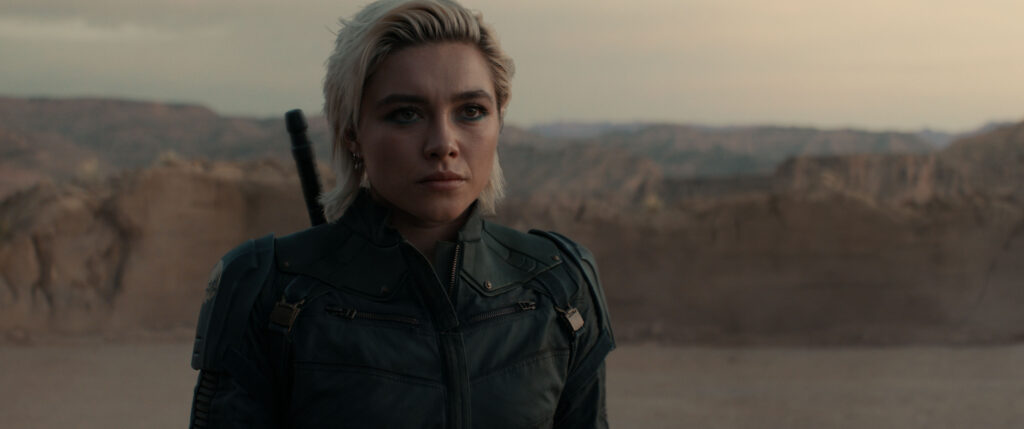
Florence Pugh is here to show you a few things she can't show you.
Yes, you’ll notice the asterisk on Thunderbolts. That is the official title of Thunderbolts and we won’t talk more about that until after the movie comes out.
-Kevin Feige
As is always the case, speculation ran from absurd to astute, with many deducing a chance in the team’s name as the reason behind the mysterious addition of the symbol.
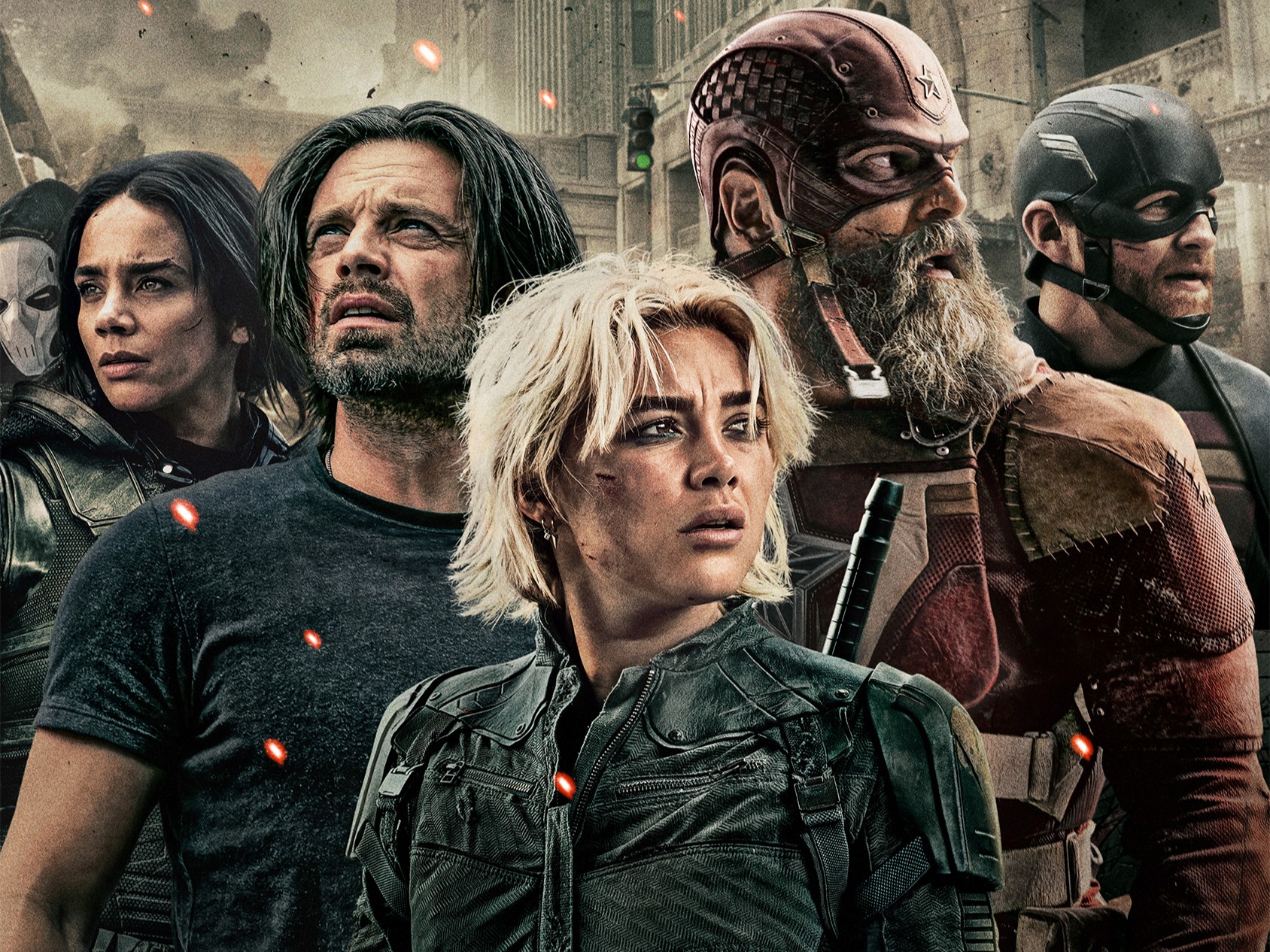
Now that the film has finally made its way into theaters, we can finally talk about why the asterisk was added to the title and it is exactly what we thought it was: a name change for the titular team of heroes.
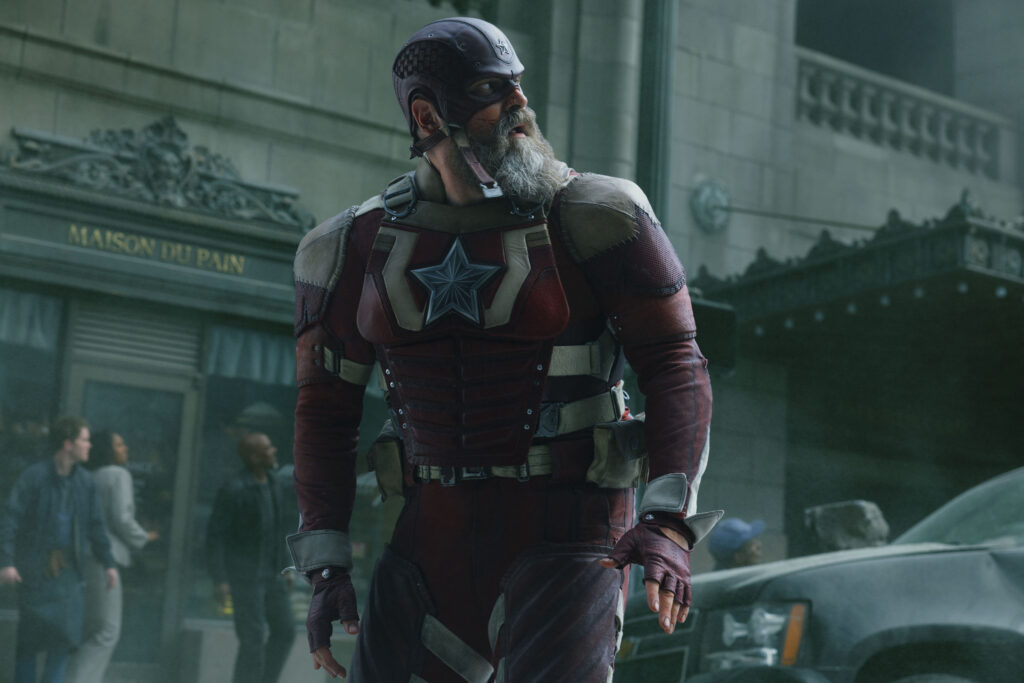
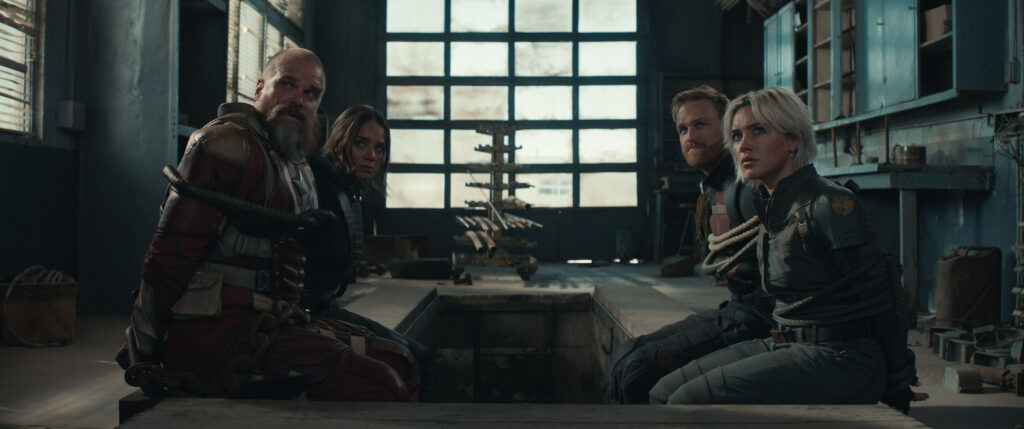
After discovering that her Project Sentry was not a complete failure and that Lewis Pullman‘s Bob survived the process, Julia Louis-Dreyfus‘ Valentina Allegra de Fontaine plans to reveal Earth’s Mightiest Hero, The Sentry, to the public in a bid to make herself untouchable amidst her impeachment hearing. As the Thunderbolts arrive at the old Avengers Tower, now owned by Val and known as The Watchtower, in hopes of stopping her and helping Bob, Val reveals an all-new, all-different Bob, one who she’s not-so-subtly manipulated and attempts to use to kill the Thunderbolts, riding herself of the people who made up her CIA wetwork network…only Bob realizes he doesn’t have to play by the rules.
The asterisk tells us there’s so much more to the story.
-David Harbour
After saving Bob and all of New York City from The Void, the dark and powerful shadow of The Sentry that took control of Bob, the team turns its attention to Val who leads them directly to the press she had assembled for Sentry and introduces them as The New Avengers, revealing the meaning of the film’s cryptic asterisk.
With the Multiverse Saga headed toward its conclusion and Sam Wilson assembling his own Avengers, it’s not quite clear what the future holds for Yelena, Bucky, John Walker, Ava and Alexi; however, as promised during the credits of Thunderbolts*, The New Avengers will return with Avengers: Doomsday next up on their docket.
Over the years, Marvel Studios’ approach to storytelling has increasingly been the focus of criticism. The framework within which the studio chooses to spin its narrative, the “Marvel formula,” has come under fire for its predictable plot structure, overreliance on humor, and willingness to sacrifice character-driven stories to advance the MCU’s longform story. As the studio’s Multiverse Saga has moved forward, the type of nuanced performances that allow for true excavation of a character have been forgone in favor of spectacle and it has become increasingly difficult to “spectacle” an audience that grew up with fully realized heroes flying around on screen. That hasn’t stopped Marvel from attempting to outspectacle its latest spectacle and the result has been a saga largely composed of vapid films, void of any emotional resonance. And along comes Thunderbolts*…
Piecemealed together by a series of writers, Thunderbolts* cavorts in insouciance for the Marvel formula, delivering something audiences haven’t seen from the studio in quite some time: a story galvanized and energized by its characters rather than visual effects and nostalgia. Eric Pearson, Joanna Calo and Lee Sung Jin Frankensteined a script that provided director Jake Schreier the opportunity to tell an MCU-set Jekyll and Hyde (that’s an entirely different monster) story, steeped in metaphysics and exploring ontological dependence. A non-empty set depends on its elements and the respective successes of both the Thunderbolts and the Thunderbolts* are entirely dependent on their respective elements.
You’re talking about a group of characters that have done a lot of bad things, and maybe are struggling with feeling good about themselves. There’s an element that does speak to mental health, and loneliness, and how some of the darkness that we experience in our lives can’t be necessarily fixed, but can only really be made lighter through connection and finding others
Working solo, the titular team wouldn’t survive the film’s first act and, reading between the lines of some comments recently made by Schreier, it sounds as if the film might have been on track to turn out to be another hollow, one-note action flick (Schreier described it as a small-scale “Die Hard thing”) that wouldn’t have survived a critical bashing before Calo and Sung Jin weaved heart and emotion into Pearson‘s original script. Instead of another potential dud, the reworked script turned into the studio’s most impressive Multiverse Saga film to date, putting character first without sacrificing spectacle, delivering some of the most impressive action sequences the MCU has seen in a decade, while telling a story about human trauma that powerfully reverberates with the audience. Whatever Thunderbolts* originally was, it evolved into one of the studio’s most entertaining and evocative films.
Making a superhero film featuring a cast of charming, misfit losers meant that Thunderbolts* was inevitably going to be compared to Warner Bros. Suicide Squad films and Marvel’s own Guardians of the Galaxy. Thunderbolts* never feels derivative of those projects, however, because it leans so much harder into darker, more uncomfortable emotions and corners of human nature that are typically not part of superhero fare. For reasons each their own, Yelena Belova, John Walker, Ava Starr and Antonia Dreykov–all of whom find themselves in the employ of Julia Louis-Dreyfus‘ Valentina Allegra de Fontaine–have lived large portions of their lives as disposable tools to be used at the whims of others. Bucky Barnes and Alexi Shostakov–neither of whom are working for Julia Louis-Dreyfus‘ Valentina Allegra de Fontaine–have suffered the same fate. In one of the film’s more powerful moments, Bucky, who should know better than anyone given his past as The Winter Soldier, finds himself standing in the same shoes as those who were his masters in the past, seeking only to use the others as tools for his own ends without any value for consideration for them as human beings. Indeed his desire to succeed and inability to see them as anything other than means to an end prevents him from acknowledging their warnings about the film’s true threat. While parts of the scene are played off humurosly, it’s deeply tied to the film’s exploration of how emptiness can consume and how power can corrupt.
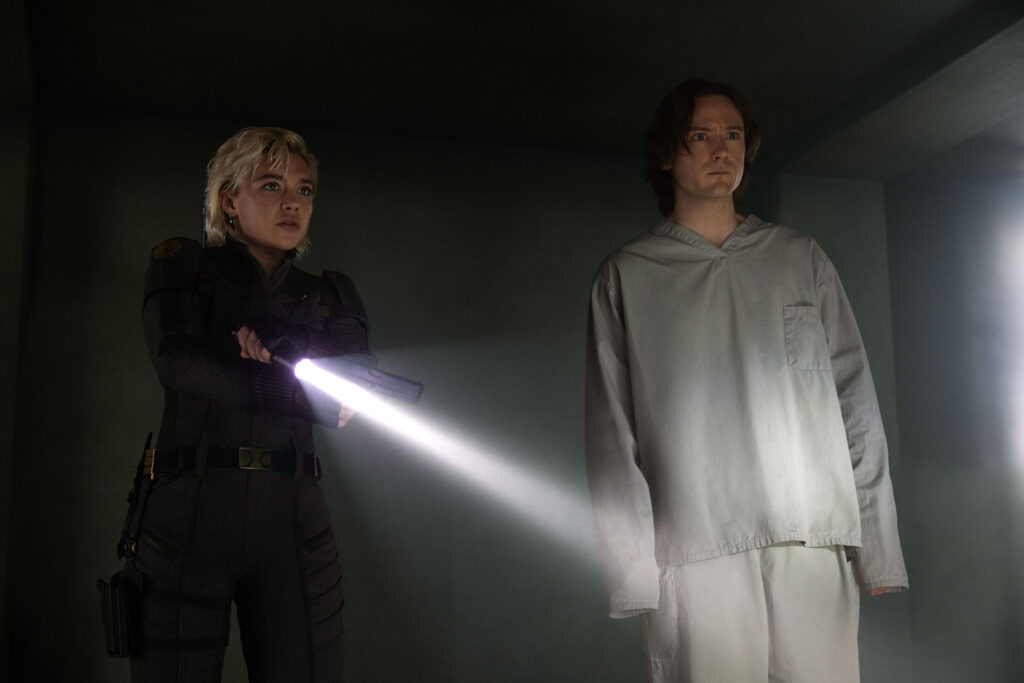
And we all have Paul Jenkins to thank for that. At the center of Thunderbolts* is Lewis Pullman‘s Bob, a tortured meth addict who volunteered to be a test subject for a program he’s told will help him and humanity reach new heights: Project Sentry. Though the studio kinda-sorta tried to hide it, Bob is Robert Reynolds, aka The Sentry, a Marvel Comics character created by Paul Jenkins. Jenkins always intended for Reynolds to be a study in mental health and while the MCU’s iteration of the character is not a beat-for-beat adaptation, he is as Jenkins intended him to be. Pullman‘s quirky, unassuming Bob–the only new character on the film’s main cast–enters the fray in the first act and quickly becomes the centerpiece of a story that subverts what fans have come to expect from the Marvel Cinematic Universe.
So I knew from the beginning that Sentry was the Void, and this story was about mental health. It was about two sides of him. And in part, it was about the part that he couldn’t accept. The Void is part of him.
Schreier‘s subversion of the Marvel formula comes attached to a story centered around the continued bastardization of a formula foundational to the ongoing MCU narrative: the Super Soldier Serum. As Stanley Tucci‘s Abraham Erskine forewarned, the Super Soldier Serum amplifies everything that already exists inside the subject. Steve Rogers–a good man–became Captain America, the Senintel of Liberty and the Symbol of Truth–while Johann Shmidt became the Red Skull–the aberrant face of the Nazi Third Reich. A bit of dialogue in the second act of Thunderbolts* illumintates just how far the science of the MCU has progressed since then, however, as Bucky Barnes, Alexis Shostakov and John Walker compare and contrast their varieties of the serum, all while the most volatile and unethical version of the serum has created the most imperfect Super Soldier yet in the Sentry. By injecting the latest and greatest version of the serum into someone broken and hollow, Valentina Allegra de Fontaine makes good on Erskine’s warning, amplifying the void inside Robert Reynolds to the point where it manifests itself as The Void, an omnipotent shadow version of The Sentry. Over the course of the film, The Void seems to be held at bay by Bob, though physical contact with him drags the characters into memories of their own, dark traumas. However, once he’s finally unleashed in what begins as an Avengers-esque third act, the film takes a welcome detour from the Marvel formula. This Battle of New York, fought inside The Void, is the battle we must all fight from time to time: a battle against our worst self. And none of these characters can make it out without the others.
It’s no surprise to me, I am my own worst enemy, ’cause every now I then I beat the living shit out of me.
-Lit
Fascinatingly, Thunderbolts* instantly becomes the standard for “new Marvel” while paying homage to one of the MCU’s most important legacies. Perhps coincidentally, it also works wonderfully as commentary on the struggles of the Multiverse Saga. The Thunderbolts and Thunderbolts* ride parallel rails. Pullman‘s Bob becomes analogous with Marvel’s Multiverse Saga struggles. Just as Julia Louis-Dreyfus‘ Valentina Allegra de Fontaine carelessly dosed Robert Reynolds, a hollow shell of a man, with an all-new, all-different formula intended to grant him the power of a thousand exploding suns, the studio carelessly assumed the Marvel formula would carry the hollow shells that were Ant-Man and The Wasp: Quantumania and Thor: Love and Thunder to all-new heights. But that did not happen. The MCU was in jeopardy, both in and out of universe…and along came the Thunderbolts and Thunderbolts*.
The serum amplifies everything that is inside, so good becomes great; bad becomes worse. This is why you were chosen. Because the strong man who has known power all his life, may lose respect for that power, but a weak man knows the value of strength, and knows… compassion.
-Doctor Abraham Erskine, Captain America: The First Avenger
Playing with a stacked deck that nobody saw coming, Thunderbolts* combines fresh visuals (Schreier‘s eye for action and unique shots will have him on every studio’s list), a pair of emotionally powerful performances by Marvel’s brightest star, Florence Pugh, and Pullman, and, yeah, some MCU humor delivered by David Harbour and, surprisingly, Wyatt Russell. If Thunderbolts* is representative of what can be accomplished when the studio is willing to tinker with its formula, these new* heroes will be at the forefront of an intriguing renaissance for Marvel Studios.
One month after Marvel Studios slowly revealed over two dozen members of the cast of Avengers: Doomsday, principal photography on the film has officially begun in the UK. Though it’s only just getting underway, photos of the construction of a large-scale practical set and rumblings of an opening scene at the X-Mansion have made their way online in recent weeks; now, a behind-the-scenes photo released by the Russo brothers looks to confirm the latter.
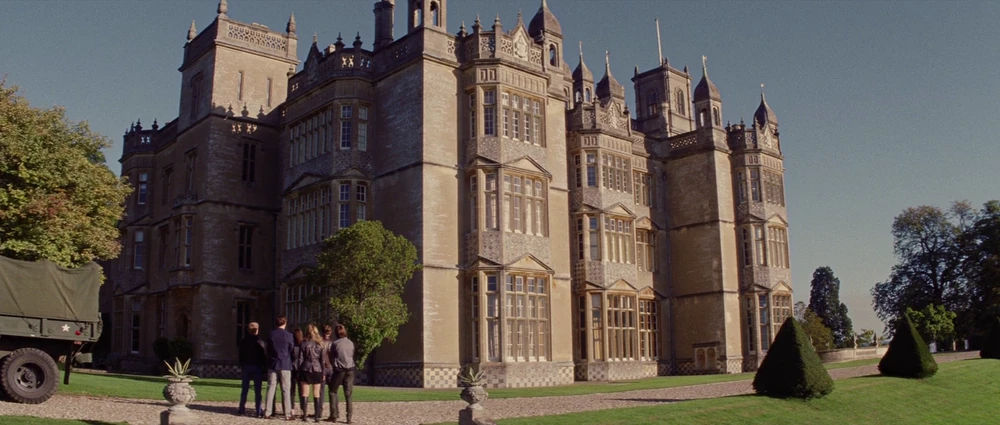
Shared on Instagram, the first official look from the set of Avengers: Doomsday does not seem to give much away at first glance, though some might argue that seeing “Victor Von Doom” on the director’s chair might settle some concerns that Robert Downey Jr. is playing a Stark Variant. However, a closer look at the background could indeed confirm that the first scenes to be filmed for the movie are set at Charles Xavier’s School for Gifted Youngsters.
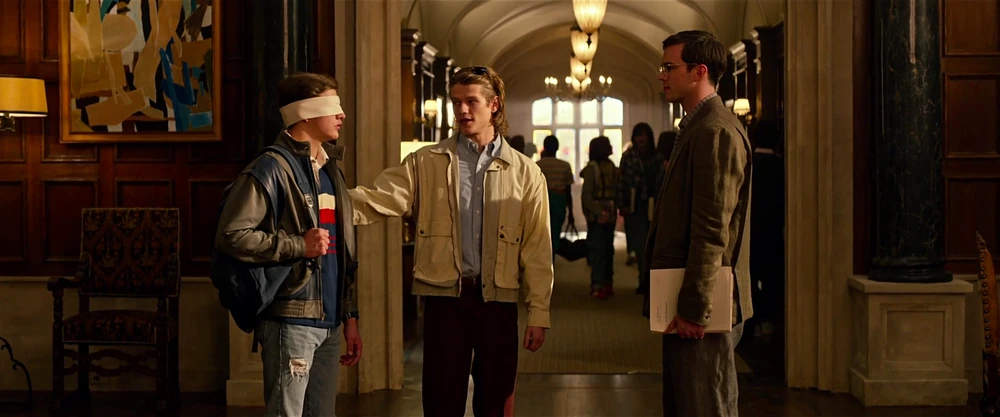
Given that it’s been some time since the interior of the X-Mansion has been visited on screen, it might be easy to overlook that Downey’s chair is positioned to intentionally provide a look at the wall of what can be assumed to be the location for filming on day one…and that wall does indeed look like it belongs inside Xavier’s school. The oak paneling is consistent with how the school has looked in the Fox films and with a large chunk of the cast of the original X-Men trilogy returning for Avengers: Doomsday, that’s unlikely to be a coincidence.
While it’s safe to assume the Russos won’t be following the exact formula they used in making Avengers: Infinity War and Avengers: Endgame, it is likely there will be some resonance in some of the choices they make. Opening Avengers: Doomsday by having Victor Von Doom take on and possibly take out Fox’s OG X-Men would serve the same purpose as having Thanos easily defeat the Hulk and Thor while killing Loki. With X-Men: Days of Future Past having created a divergent timeline in which the events of the original trilogy were undone and the team was alive and well in 2023, the X-Men should be an incredibly formidable superteam and if they can’t stop Doom, who can?
Once upon a time, Thunderbolts* seemed to be on track to be a relatively run of the mill Marvel Studios movie that would serve as a sequel to 2021’s Black Widow. A few rewrites and an almost totally unknown director later, it sounds as though the studio’s work behind the scenes may have transformed Thunderbolts* into an MCU all-timer.
Without giving away too much, a lot of what David [Harbour] and Florence [Pugh] are working with as material in this movie relates to that past relationship. And there’s resonance to that, so I think it’s important to everyone to preserve that legacy of something that emotionally meant so much to people and make sure that we refer to that in the right way, and we protect it and make sure that it means something. I think we’re pulling from all of their histories and then trying to tell something new. I don’t think that it feels like a Black Widow sequel. I think it feels like it’s a sampling of people from different parts [of this universe]. It’s definitely a part of our story but it’s not the driving force that leads into this film.
-Jake Schreier
Following the film’s European premier and series of early screenings Thunderbolts* is being hailed as an overwhelming success, featuring the kind of heart missing from many recent efforts.
Also I need to sit with the film a little more but I think this is the best-looking MCU movie in years, not a single sequence that looks like rushed CGI or anything. Practical action sequences for the win!
THUNDERBOLTS: it was AMAZING, SHOCKING, and AWESOME in every way. Florence Pugh and Lewis Pullman are absolutely STELLAR in this film and they're the highlights of the movie. Also, that asterisk reveal will SURPRISE you and make sure to stick for BOTH POST CREDITS. #Thunderboltspic.twitter.com/qJpZPjyzHY
#Thunderbolts is a real breath of fresh air for the MCU. Absolutely LOVED the team dynamic! It’s also rich with emotions tackling pretty serious self worth issues. Yelena carries the movie. Best part it’s 95% stand alone with 5% setup. But that 5% tho👀 Really felt like old MCU. pic.twitter.com/0O987OkxRI
According to multiple socmed accounts, Thunderbolts* is carried by strong performances across the board with Florence Pugh and Lewis Pullman leading the way.
#Thunderbolts is one of Marvel’s most enjoyable films in a while. It feels different than most of the studio’s projects. Its bold, funny, filled with great action and an unexpected emotional punch.
Florence Pugh is the star that shines the brightest. There’s a lot to love here.… pic.twitter.com/8wjgx9caIS
— The Hollywood Handle (@HollywoodHandle) April 22, 2025
Well #Thunderbolts is easily one of the best MCU movies in a long time (and maybe one of my new personal faves). Has so much spark, charisma, and tells a genuinely emotional story you connect with. A tear was shed. Florence Pugh in particular superb, just walks away with it pic.twitter.com/U7AzBgGZMl
I haven't felt this giddy leaving an MCU movie in YEARS! #Thunderbolts is FANTASTIC. A Phase One style character piece about finding fulfillment, embracing our demons and the support system needed to save us from the pull of the void. A witty, mature, singular vision from Jake… pic.twitter.com/zty4hD2sfj
While early screenings always generate “best ever” reactions, reading between the lines here reveals that Jake Schreier‘s approach to the project injected the film–and perhaps the MCU–with the shot of adrenaline it needed as it heads into the final phase of the Multiverse Saga.
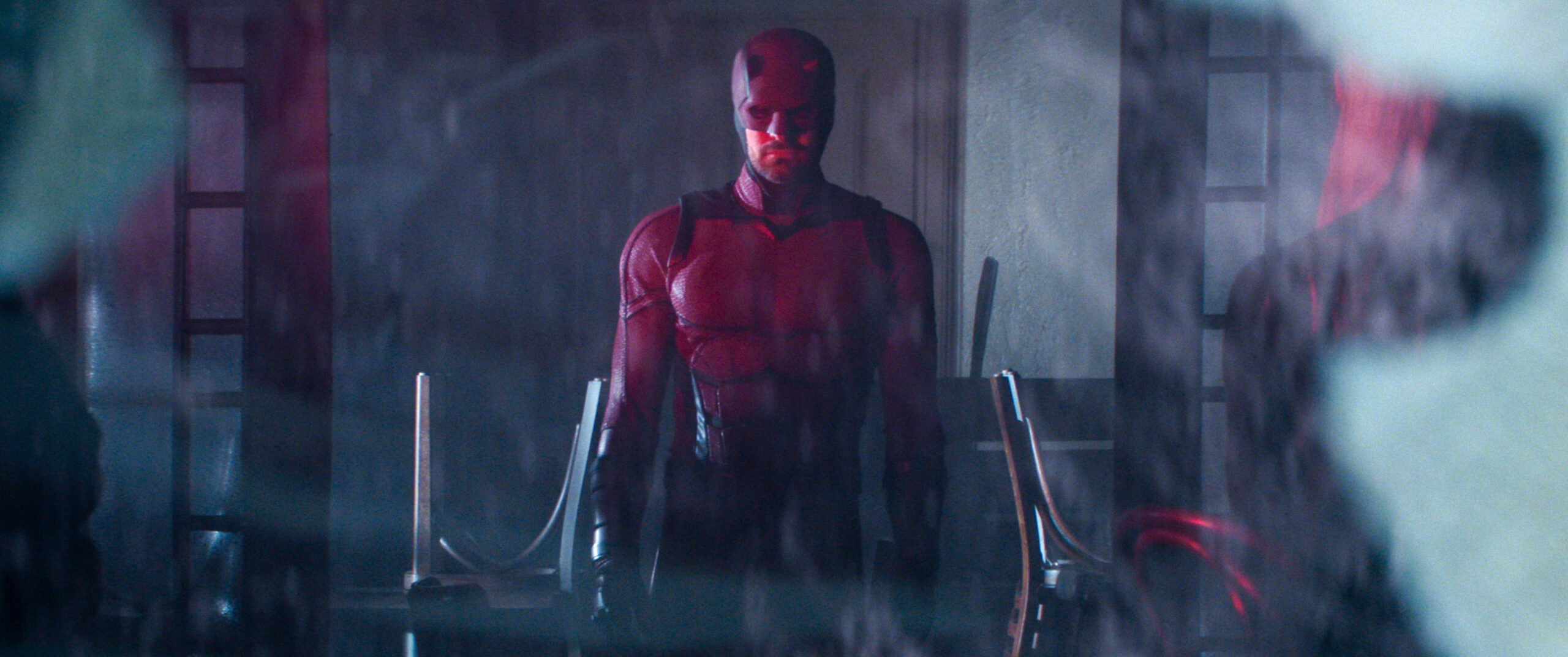
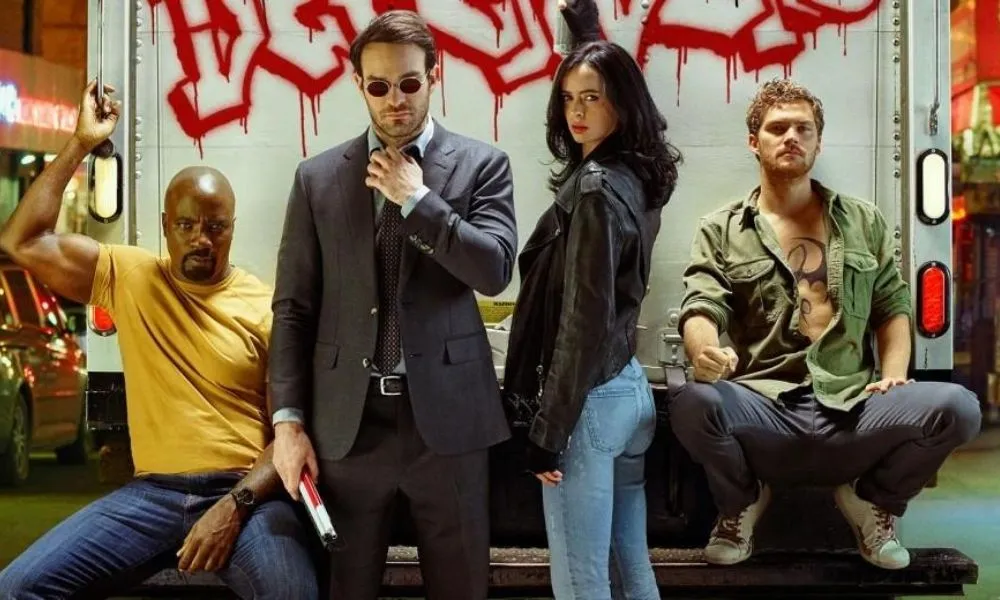
The Season One finale of Daredevil: Born Again left Matt Murdock–and all of New York City– in the shadow of Mayor Kingpin. “Straight to Hell” left no doubt that Wilson Fisk won the battle but it also made it clear that Matt Murdock is regrouping and preparing for war. Faling back to Josie’s, Murdock is now looking to put together an army to take on Fisk and his Anti-vigilante Task Force, an idea that has fans of the Netflix Defenders-verse convinced Jessica Jokes, Luke Cage, Danny Rand and more will ultimately be featured in Season 2.
With the sophomore season already well into production, there’s been no sign of the Defenders yet; however, in a recent interview, showrunner Dario Scardapane made it clear those characters–and others from Matt’s circle of friends–arent far from his mind as he continues work in the show.
“Without giving too much away…when you’re working in what I would call the Hell’s Kitchen corner of the MCU, those iconic characters are always in your mind,” said Scardapane of Jones, Cage and Rand…but those heroes aren’t the only characters with ties to the Kitchen.
“The thing is that — and this is kind of hard, I’m trying to thread a needle here — you want to bring in people and relationships and past figures in Matt’s life because they help the story, particularly in terms of a story where Fisk has taken over the city. And there is a resistance and a rebellion, so to speak, rising. So there’s going to be people, vigilantes, superheroes that are involved in that. There has to be because this is happening to their city,” Scardapane explained. Of course, as integral to his story so far as the Defenders have been, nobody has been a more important figure in Matt’s past than Elektra. However, bringing her back from the dead or even bringing in living Defenders just because isn’t something Scardapane is willing to do.
“…you also want to create a completely organic story for that. So who comes in and why has to be beyond anything earned. So the easiest answer to your question is, yes, those characters that you just listed off are absolutely in my head and everybody’s head as we’re working,” said Scardapane of the trio of heroes who helped save New York City in the Defenders crossover event.
“How that manifests itself is both really tricky writing-wise and a pretty closely guarded secret at this point,” he continued. “So I’m being intentionally cagey, but I’m also saying, ‘Hell yeah!’ in terms of it’s something we’re thinking about.“
Season 2 of Daredevil: Born Again will hit D+ in March 2026.
Ironically, as Season 1 of Daredevil: Born Again enters into its Netflix era, production on Season 2 of the D+ streaming series has returned to one of the Netflix series’ key locations. After what seemed like a daily onslaught of set photos early on, production on the new season of the Marvel Studios revival hadn’t been gathering much attention; however, that’s certainly changed now.
For the past few days, photos from the New York City set revealed that as part of his New York: Born Again campaign, Wilson Fisk was set to take part in a charity boxing match against someone called Matter Horn. Now, new photos and video reveal that the match takes place at Fogwell’s Gym.
Ok, the person I actually trust here is saying that Charlie ISN'T going to be here today but…
Fogwell’s, of course, is the home gym of the Murdocks. It’s the place where Jack Murdock trained and where Matt learned to fight. It would almost certainly seem that since Fisk knows Matt is Daredevil, that he’s chosen the venue to draw the hero out as he continues his anti-vigilante agenda. And further video from the set shows that if that was indeed the plan, it worked.
Wilson Bethel‘s Bullseye has been on set the past few days as well and now we know why…sort of. While it’s not entirely clear what is intent is, the crazed assassin can be seen arriving at Fogwell’s in his tactical suit, once again loaded with knives. And then he can be seen quickly leaving…through the front window!
It would seem that showrunner Dario Scardapane is intent on having Daredevil and Bullseye crash through the front window of every location near and dear to the heart of Matt Murdock. With the frenzy taking place outside Fogwell’s just before the two exit the gym, it’s clear the action inside was likely just as intense as what went down inside Josie’s in Season 1. However, no spoilers have escaped the set just yet but given who was in attendance, it’s incredibly likely Bullseye was there to take someone out…but who?
The Season 1 finale of Daredevil: Born Again streams on April 15th on Disney Plus. Season 2 will debut in 2026.
For the bulk of the first seven episodes of Daredevil: Born Again, the series felt as smoothly paced as any streaming series Marvel Studios has produced. While Netflix edge lords may have bemoaned the lack of gratuitous violence, it was rare that the first seven episodes felt either dawdling or rushed. Somehow, Dario Scardapane and Jesse Wigutow’s script for Episode 8, “Isle of Joy”, managed to accomplish both.
Despite some truly big league cinematography and a major surprise in the closing moments, Episode 8 slothfully moved through some truly meaningless ground while also tackling a half dozen or so subplots. Every second spent with Michael Gandolfini‘s Daniel and Genneya Watson‘s BB Urich feels much like the parts of the Netflix series that the new creative team seemed intent on eliminating. Meanwhile, the pieces to the puzzle the audience has been missing to fully understand Wilson and Vanessa’s plans are more-or-less “oh by the way’d” into the runtime.
Of course, without the ability to see the entire two-season plan, some of what took place in Episode 8–and in bits and pieces of other episodes–may still come into play in the future; however, it’s probably worth pointing out now that some moments that may have seemed to matter won’t be followed up on in Episode 9…and maybe never again.
With the season finale ahead and Matt having made the choice to be a good man and defend his enemies, as Bullseye said he should, the finale could prove interesting. Will Fisk’s near-death experience make him consider backing off his mission to put Daredevil behind bars? On his own and seriously injured, will Matt muster up the energy to put up a fight, as he always has? Will the Netflixers find themselves immersed in the darkness and blood that made them love Daredevil 10 years ago? Will you be able to see what’s happening in the episode of you’re watching in a room where there’s any natural light? We’ll all find out soon, True Believers!
Pablo Picasso once sort of-famously explained that “the purpose of art is washing the dust of daily life off our souls.” That idea put him squarely at odds with the 19th century philosophy of “art for art’s sake,” which valued aesthetics over the idea that art should have some larger utility within society. It’s then worth pondering how Picasso might have felt about Episode 7 of Daredevil: Born Again, “Art for Art’s Sake.” Despite featuring a Daredevil daring to buckle his swash in broad daylight and some shooting and some blood and shit, “Art for Art’s Sake” somehow feels more like the “filler episode” fans seemed convinced Episode 5 would be.
Though it’s not a poor episode, “Art for Art’s Sake” is the first time—and truly the only time—that Daredevil: Born Again felt like a stitched-together show. It seems unlikely that Disney ironically placed the title it did on the episode; however, that’s essentially how this episode fits into the bigger picture. It exists to exist and nearly all of what happens within its runtime has no larger utility in the structure of the series other than to put a disappointing end to the one arc that was beginning to approach entertaining.
While screening the series in early March, it was right about the time that Muse died that I began to realize that not only does Daredevil have a Kingpin problem, but also that Daredevil has a Kingpin problem. For the third time in four seasons (and early returns from production on Season 2 would indicate it’ll become the fourth time in five seasons), Wilson Fisk is the primary antagonist of a Daredevil series. Yes, Dex was the physical opponent in Season 3 of Daredevil and Matt got to fight crazy buzzsaw costume guy once but with Muse, the creatives had a chance to do something really special…and instead they made him into background noise so that we could get to some more Matt and Wilson stories. I understand the place Fisk holds in the Daredevil mythos; however, it’s ok to let the Fat Man take a break and give Matt something else to do.
And so, rather than having an episode that washed the dust of daily life off of our souls, it seemed to just add another layer. Hope does spring eternal, however, and photos from the New York City set of Season 2 have revealed that somehow, some way, Muse will return and showrunner Dario Scardapane also revealed that the character will be a multi-season problem for Matt. However, without any solid idea of what the future holds of the character, it’s easy to feel disappointed in the way he was incorporated into Season 1. Already changed from the (probably) Inhuman-ly powered character in the comics, Hunter Doohan‘s Muse deserved to be a bit more than the catalyst for another round of Daredevil vs. Kingpin.
Cookie Consent
We use cookies to improve your experience on our site. By using our site, you consent to cookies.
This website uses cookies
Websites store cookies to enhance functionality and personalise your experience. You can manage your preferences, but blocking some cookies may impact site performance and services.
Essential cookies enable basic functions and are necessary for the proper function of the website.
Name
Description
Duration
Cookie Preferences
This cookie is used to store the user's cookie consent preferences.
30 days
These cookies are needed for adding comments on this website.
Name
Description
Duration
comment_author_email
Used to track the user across multiple sessions.
Session
comment_author_url
Used to track the user across multiple sessions.
Session
comment_author
Used to track the user across multiple sessions.
Session
Statistics cookies collect information anonymously. This information helps us understand how visitors use our website.
Google Analytics is a powerful tool that tracks and analyzes website traffic for informed marketing decisions.
Contains information related to marketing campaigns of the user. These are shared with Google AdWords / Google Ads when the Google Ads and Google Analytics accounts are linked together.
90 days
__utma
ID used to identify users and sessions
2 years after last activity
__utmt
Used to monitor number of Google Analytics server requests
10 minutes
__utmb
Used to distinguish new sessions and visits. This cookie is set when the GA.js javascript library is loaded and there is no existing __utmb cookie. The cookie is updated every time data is sent to the Google Analytics server.
30 minutes after last activity
__utmc
Used only with old Urchin versions of Google Analytics and not with GA.js. Was used to distinguish between new sessions and visits at the end of a session.
End of session (browser)
__utmz
Contains information about the traffic source or campaign that directed user to the website. The cookie is set when the GA.js javascript is loaded and updated when data is sent to the Google Anaytics server
6 months after last activity
__utmv
Contains custom information set by the web developer via the _setCustomVar method in Google Analytics. This cookie is updated every time new data is sent to the Google Analytics server.
2 years after last activity
__utmx
Used to determine whether a user is included in an A / B or Multivariate test.
18 months
_ga
ID used to identify users
2 years
_gali
Used by Google Analytics to determine which links on a page are being clicked
30 seconds
_ga_
ID used to identify users
2 years
_gid
ID used to identify users for 24 hours after last activity
24 hours
_gat
Used to monitor number of Google Analytics server requests when using Google Tag Manager
1 minute
Marketing cookies are used to follow visitors to websites. The intention is to show ads that are relevant and engaging to the individual user.
Pinterest Tag is a web analytics service that tracks and reports website traffic.

![‘Daredevil: Born Again’: [SPOILER] Returns as Action Moves to Key Netflix Series Location in Latest Set Photos](https://assets.murphysmultiverse.com/uploads/2025/04/DDHittingPunchingBag-S1E1.webp)