Tag: Marvel

  • ‘Ms. Marvel’ From Page to Screen: Episode 5.2

    ‘Ms. Marvel’ From Page to Screen: Episode 5.2

    With Ms. Marvel’s Episode 5, entitled “Time and Again”, the series’ connection to Ms. Marvel comics continues to be present, even if sometimes in a more subtle way. In Episode 1, we looked at how the series adapted from the comics the moment Kamala’s powers were activated; for Episode 2 we delved into the comics’ and series’ introduction and handling so far of the character Kamranin Episode 3 we looked at the interesting source material for the series’ villains, the Clandestinesand in Episode 4 we went into how Red Daggers were introduced and how they compare to the comics’ Red Dagger. As for episode 5, following our dive into Kamala’s ancestors during Partition, we now focus not so much on what happened in the show, but on what future comic events it might be hinting at.

    Episode 5 of Marvel Studios’ Ms. Marvel ended on a somewhat weird note. If on one hand the Clandestines’ subplot was apparently swiftly resolved, the Damage Control threat somehow gained traction with the attack on Kamran and Bruno at the Circle Q. While there is no real perfect counterpart to this sequence in the comics, the aftermath could perhaps lead Bruno down an interesting, yet painful path, taken straight out of the comics.

    Marvel Studios’ Ms. Marvel Episode 5
    Marvel Studios’ Ms. Marvel Episode 5

    Leading up to Secret Wars, Kamala finally met her hero Captain Marvel as New York was soon to be destroyed by an incursion. This later led to Carol making Kamala the leader of a group they named the Carol Cadets. The Cadets were created following the discovery of an Inhuman named Ulysses, who through the use of mathematics could basically predict the future. They were made to go after criminals who were yet to commit any sort of crimes but that Ulysses deemed likely to end up doing so. This was something that began not to sit right with Kamala’s friends, around the same time she also began to fight back against the idea behind the creation of the Cadets by questioning their methods.

    This all led to Bruno trying to break into the Cadets’ facilities in order to set free who, in his eyes, happened to be detained there without a valid reason. Said break-in went wrong and Bruno had to deal with the consequences, being left bedridden with third-degree burns all over the left side of his body, losing the use of his left hand (his dominant one), and with serious doubts if he’d ever be able to walk again.

    Ms. Marvel #10 (2016)

    Once he finally regained conscience, and even though Kamala tried her best to stay by his side throughout his hospital stay, Bruno made it extremely clear that he held her responsible for the situation that left him in the state he found himself in. He considered she was focusing too much on her superhero life without regarding the consequences to the people around her who loved her, taking everyone for granted. He vowed to never want to see her ever again, and that his next step would be moving away to study at the Golden City Polytechnic Prep, in Wakanda.

    Ms. Marvel #18 (2017)

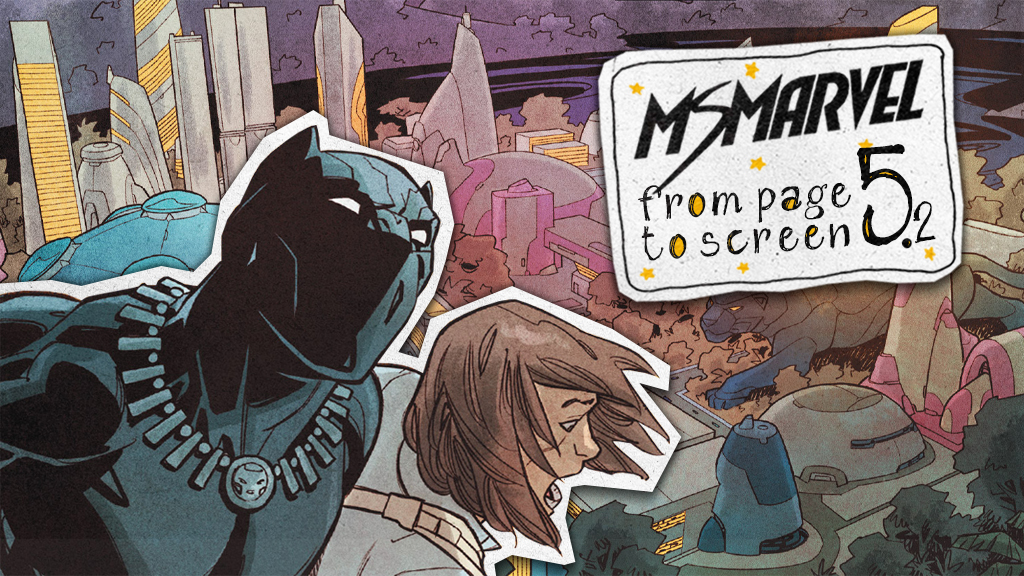
    Once there, he was involved in an attempted vibranium robbery, he met King T’Challa and eventually went back home when he realized that Kamala was who he wanted to be near. Unfortunately for him, Kareem, the Red Dagger, had by then stepped into the frame.

    Marvel Studios’ Ms. Marvel Episode 1

    It’s hard to predict if the Circle Q explosion might end up serving as the catalyst to a similar journey for the MCU’s Bruno. If it does, it would certainly be something worth going into in the second season (?) of the show, with perhaps Black Panther: Wakanda Forever being a possible project in which to feature a Matt Lintz cameo in the meanwhile.

    The first five episodes of Ms. Marvel are now streaming on Disney+.

  • ‘Ms. Marvel’ From Page to Screen: Episode 5.1

    ‘Ms. Marvel’ From Page to Screen: Episode 5.1

    With Ms. Marvel’s Episode 5, entitled “Time and Again”, the series’ connection to Ms. Marvel comics continues to be on full display. In Episode 1, we looked at how the series adapted from the comics the moment Kamala’s powers were activated; for Episode 2 we delved into the comics’ and series’ introduction and handling so far of the character Kamranin Episode 3 we looked at the interesting source material for the series’ villains, the Clandestinesand in Episode 4 we went into how Red Daggers were introduced and how they compare to the comics’ Red Dagger. As for episode 5, we focus on the bulk of the flashback that we got in the first half of the episode.

    One of the most interesting ways in which Ms. Marvel adapted the comics is by expanding upon the story of Kamala’s ancestors during Partition. Of course, it has been obvious since the second episode of the series that what happened with Kamala’s great-grandmother in 1947 was key to understanding Kamala’s powers and the bangle. In Episode 5, the thrust of the story was a flashback to Aisha and her husband, Hasan, in 1942-47, ending with Aisha’s death as Hasan and their daughter, Sana, made it on the last train to Karachi.

    Marvel Studios’ Ms. Marvel Episode 5
    Marvel Studios’ Ms. Marvel Episode 5

    In Ms. Marvel #8 and #9 (2015), we get a small snippet of this same time period in Kamala’s family history. In fact, it begins with a pregnant Aisha hastily getting ready to flee India to Pakistan with many of her family members. She sees a shooting star, which gives her some hope in the dark time. Notably, the comics’ only mention of Aisha’s bangles is in this brief story. She sold her jewelry and hid the money inside her wedding bangles in case she and her husband were separated.

    In the second half of the comics’ version of the flashback, we jump to Kamala’s mother in Karachi around the year 2000. She is living with her mother and family—Aamir is young and she is pregnant with Kamala. She had chosen to move to New Jersey for her family, but she had many doubts and worries about her children’s futures in a new country and culture. Kamala’s grandmother tells Kamala’s mother how strong Aisha was and tells her that they are a family of survivors.

    Ms. Marvel #9 (2016)

    Kamala’s grandmother then passes down Aisha’s wedding bangles to Kamala’s mother. The live-action version of this story is taken from the page yet altered significantly to meet the demands of the Ms. Marvel story. In the comics, the story was mostly to emphasize the struggles and journeys Kamala’s ancestors had to go through during Partition and beyond.

    Ms. Marvel #9 (2016)

    But it does also hint at the family’s Inhuman heritage, as it ends with Kamala’s grandmother saying she always felt there was some sort of secret and strength that the family carried. Ms. Marvel hits those same notes by tying the story to Kamala’s (and her ancestors’) powers and superhuman heritage.

    Marvel Studios’ Ms. Marvel Episode 5

    The first five episodes of Ms. Marvel are now streaming on Disney+.

  • REVIEW: ‘Ms. Marvel’ Episode 5—”Time and Again”

    REVIEW: ‘Ms. Marvel’ Episode 5—”Time and Again”

    In typical penultimate episode fashion, Ms. Marvel’s “Time and Again” spends the thrust of its runtime in 1940s India following the mysterious Aisha. On some level, the episode did what was somewhat expected of it—the viewer got to see the entire “last train to Karachi” story that the series had been hinting at since the second episode. So much of Kamala’s story and super-origin rest on Aisha and her death, so watching it play out resonated on another level than dealing with it through exposition. While every moment of the episode had the potential to reveal an answer to a major question, it was almost surprising how little the audience’s understanding has changed by the end of Episode 5. The episode is another prime example of phenomenal storytelling by the series, but it is the first time it has felt somewhat frustrating in the lack of details and foundation. The rushed Clandestine demise also opened up the door for a very uncertain and unpersuasive final adversary for Kamala. Considering Marvel Studios’ Disney+ track record, the fact that so much is seemingly left for Ms. Marvel’s finale is as nerve-wracking as it is exciting.

    And the larger flashback sequence was beautifully human, even with freckles of Najma and bangle treachery sprinkled in. It invoked pure warmth and love between Aisha and Hasan, and the family stronghold of Ms. Marvel has proven once more to be one of its most expertly crafted elements. Not only was the human element noteworthy, but Marvel Studios took a (relatively) bold step into depicting the real historical world events of Partition. While Captain America: The First Avenger certainly brought a campy, sanitized, and fantasized version of World War II to the table, Episode 5’s portrayal of Partition and the events surrounding it is a far cry from what the Marvel Cinematic Universe has been willing to acknowledge before.

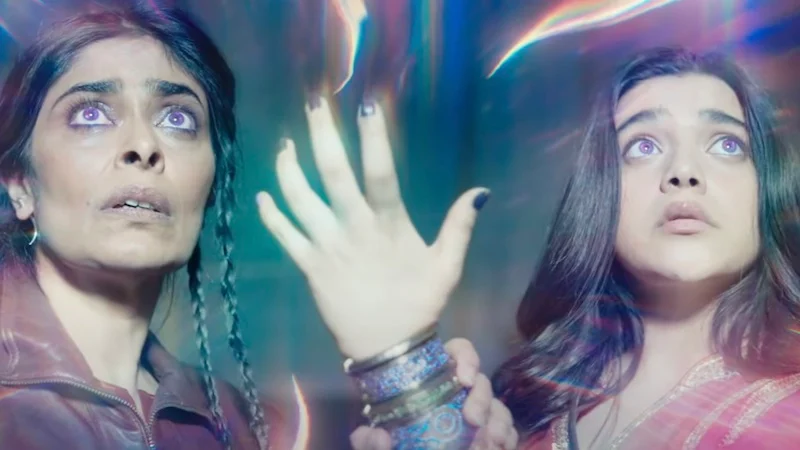
    Even though “Time and Again” undoubtedly tread the path of resolving the underlying mystery of Kamala’s powers, it somehow left even more questions to be answered. Most significantly, Kamala clearly did some version of time traveling to lead Sana back to her father. Such an act has countless and far-reaching potential consequences in the MCU, yet it is not explicitly confirmed or further explained in the episode. It potentially answers the question as to where the second bangle is—Kamala brought her own into the past—but that still is far too uncertain. Sana’s comment that, while everyone would love to know what is going on, is simply just the product of two people in love making something bigger than themselves, is a bit concerning for those wanting answers. That note almost seems to signal that the finale does not intend to fully flesh out the inter-dimensional elephant in the room, which is frustrating.

    The “veil” breakdown toward the end of the episode, unfortunately, fell a bit flat for a similar reason. The Noor Dimension had been built up as the driving plot device and, in a way, adversary. It seems to have come and gone quickly with little explanation for why it opened up a portal in the first place. Moreover, Najma having the ability to close it and transfer completely out-of-nowhere powers to Kamran also invokes far more questions in a series that previously felt like it carried just the right amount of secrets.

    Still, the ups and downs of Episode 5 were genuinely entertaining. While Ms. Marvel has not reinvented the MCU wheel, the edge-of-your-seat feeling during the train station scenes and the longing for answers is a happy consequence of the series’ ability to tell a moving, gripping, and intriguing story. While this penultimate episode maybe did not provide the number of surprises expected or hoped for, the thrill of the ride thus far is, for the most part, unmatched in the MCU.

    Overall, “Time and Again,” is immensely enjoyable as its own story, but it manages to be frustrating in how much it holds back. The MCU series are notorious for rushed and forced-feeling finales, and where this episode leaves off is not particularly encouraging in that context. It is unclear if the ultimate villain is supposed to be Damage Control (which we have not seen do anything of substance or character since Episode 2), or if Kamran will keep the Clandestine adversarial line afloat. Either way, neither of those two options make much sense going into the finale, particularly since Kamran’s status has been so consistently fluffy as to have no real impact. 

    The Ms. Marvel finale certainly has a lot of work to do to wrap up what has so far been a very satisfying series. If a second season lingers, it would make sense that so much still feels unsettled. But if Kamala’s bangle and powers are not legitimately explained in the final episode, the series will be leaving itself a hole considering the gradual reveal has been the most enjoyable part of the series’ plot by far. 

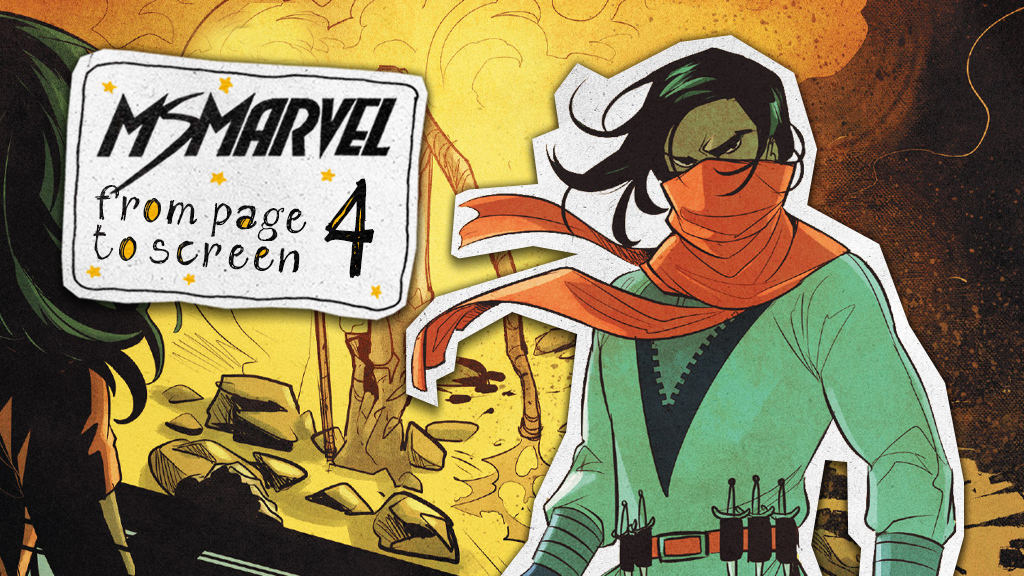
  • ‘Ms. Marvel’ From Page to Screen: Episode 4

    ‘Ms. Marvel’ From Page to Screen: Episode 4

    With Ms. Marvel’s Episode 4, entitled “Seeing Red,” the series’ connection to Ms. Marvel comics is on full display. In Episode 1, we looked at how the series adapted from the comics the moment Kamala’s powers were activated; for Episode 2 we delved into the comics’ and series’ introduction and handling so far of the character Kamran; and in Episode 3 we looked at the interesting source material for the series’ villains, the Clandestines. This week, we look at the Red Dagger(s) introduced and how they compare to Red Dagger in the comics.

    Ms. Marvel #23 (2017)

    In the show, Kamala meets the Red Dagger while in Karachi. When she is investigating the train station looking for answers about the train in her vision, she is attacked by the Red Dagger. He then reveals that he knew she was Djinn because he could sense the Noor energy she was using. When he found out she was related to Aisha, he took her to the base of the Red Daggers where she met fellow Red Dagger Waleed. He explained to her that Clandestines come from another dimension that exists all around ours, but with a veil of energy that separates the two. 

    Marvel Studios’ Ms. Marvel Episode 4
    Marvel Studios’ Ms. Marvel Episode 4

    Red Dagger and Kamala bond in civilian mode as he introduces her to his friends at a bonfire. Ultimately, by the end of Episode 4, the Clandestines had tracked down Kamala and attacked the group, seemingly killing Waleed before Kamala is transported to what appears to be a 1947 Karachi train station.

    What They Kept From the Comics

    Ms. Marvel #12 (2016)
    Ms. Marvel #12 (2016)
    Ms. Marvel #12 (2016)

    In Ms. Marvel, Kamala also meets Red Dagger while visiting Karachi. She does not know his true identity for quite some time, but his name is Kareem and he is a family friend. He acts as a vigilante in Karachi similar to how Ms. Marvel patrols Jersey City. 

    His look and skillset are incredibly comic accurate, and his role in Kamala’s life may track that seen in the comics. The two were introduced in both iterations when Kamala visited Karachi in an attempt to figure out who she was. In the comics, Kareem gave her a new and optimistic perspective on her role as a superhero in Jersey City. Here, he may ultimately be a significant spark in Kamala fully embracing her hero identity.

    Ms. Marvel #23 (2017)

    Kareem is also a romantic interest for Kamala in the comics, and subtle hints of that can be picked up in Episode 4. Kareem is an instrumental figure in advancing Kamala and Bruno’s romantic storyline—Kareem ends up living in Jersey City for some time, creating a love triangle—which is certainly a dynamic Ms. Marvel seems like it could lean into. 

    Ms. Marvel #23 (2017)
    Ms. Marvel #29 (2018)
    Ms. Marvel #29 (2018)

    What They Changed

    The most obvious difference between the live-action and the comics is that Ms. Marvel introduced the Red Daggers as a society with advanced technology working to protect people from things that cannot be seen. In Ms. Marvel comics, Red Dagger is simply Kareem, who is a solo vigilante-type hero. The dramatic expansion of Red Dagger in the live-action likely speaks to the need to aid and support Kamala’s mysterious and complex background/origin mystery. Introducing the Red Daggers certainly seems to have added to and advanced that aspect of the story, while still paying homage to the source material.

    Marvel Studios’ Ms. Marvel Episode 4
    Marvel Studios’ Ms. Marvel Episode 4

    As to other differences, in Ms. Marvel, Kamala meets Kareem/Red Dagger extremely early on in her hero journey. She does not even have the Ms. Marvel mantle yet or donned a full costume. In the comics, she meets him as a well-established hero and Avenger struggling to come to terms with her self-identity and confidence as a hero.

    In her meetings with Red Dagger, she learns humility when she botches a hero job in Karachi because she did not understand the workings of the area. In Jersey City, she struggled with feeling replaceable as Red Dagger immediately got the media’s attention after they stopped a runaway train. 

    Ms. Marvel #12 (2016)
    Ms. Marvel #24 (2017)

    The character’s story will continue throughout the rest of Ms. Marvel at least, but there is every reason to believe Red Dagger can serve as a sort of reflection point for Kamala like he does in the comics, but with more emphasis on her beginnings and growth into a superhero in the first place. 

    Marvel Studios’ Ms. Marvel Episode 4

    The first four episodes of Ms. Marvel are now streaming on Disney+.

  • Theory Thursday: Time Travel and Ms. Marvel’s Quantum Connection

    Theory Thursday: Time Travel and Ms. Marvel’s Quantum Connection

    Part of what has made Ms. Marvel so enjoyable over the past four weeks is the genuine mystery that weaves throughout each episode and keeps viewers on their toes. It all stems from the fact that Kamala Khan does not appear to bring her Inhuman ties to the live-action Marvel Cinematic Universe. So, the source of her powers has left both casual viewers and comic book experts scratching their heads as to where the series is taking the beloved character. Even by the end of Episode 4, fans still aren’t entirely clear as to what’s happening. But we first looked at Kamala’s potential connection to the Quantum Realm and time travel after the series premiere, and more evidence of this theory just keeps rolling in.

    Numerous aspects of Ms. Marvel could lean in this direction. A major theory suggests that the bangle that activated her powers is, in fact, a quantum band, which derives its powers from the Quantum Realm. There were hints of time travel via Kamala’s visions, and it could be important to remember that her comic powers operated based on constant time-traveling on a molecular level.

    What we now know about Kamala’s origins and family history in Ms. Marvel is that her great-grandmother, Aisha, was a “Clandestine” or “Djinn.” While the “Djinn” designation turned out to be more of a red herring based on what we learned in Episode 4, we also know that the Clandestines come from the Noor Dimension, which is separated from the main reality by a veil of energy. Najma and her gang want Kamala to break through that veil, but it has been made clear that if she were to do so, the Noor Dimension would overtake and destroy Kamala’s reality.

    We do not know much about the Noor Dimension other than that supernatural beings, identified in the past as “Djinn”, came from it and that Clandestines and the Red Daggers can sense the Noor energy that Kamala draws from the other dimension. In the MCU, we know about a few realms. Asgard is a great example, and it is even referenced in Episode 4 to help explain the Noor Dimension. Another “realm” we have heard of is the Quantum Realm, which is certainly creeping in as a major player in the future of the MCU.

    As we know from Avengers: Endgame, the Quantum Realm, and quantum energy were the backbones of time travel. What Episode 4 possibly re-emphasizes is Kamala’s connection to time travel. By the end of Episode 4, Kamala seems very much in the 1940s in India after her bangle was attacked and went haywire. While it is not entirely clear yet whether she is actually, physically present there, the ending shots of the episode certainly made it easy to make that conclusion. Obviously, Episode 5 will keep her in that space for the purpose of explaining and resolving Aisha’s mysterious storyline, which is profoundly connected to the exact period Kamala is now in.

    Still worth noting, Ms. Marvel has had quite the number of Ant-Man references. Obviously, Scott Lang and Hank Pym are the characters most associated with the Quantum Realm, and we next expect to see Ant-Man in Ant-Man and the Wasp: Quantumania. “Quantumania” alone should set the expectations for how important the Quantum Realm will be, but that film will also star the time-travelling villain Kang the Conquerer. Following Loki, the Kang Easter egg in Moon Knight, and Phase 4’s focus on the multiverse, Kang is very much set up to potentially be the next MCU saga’s Big Bad.

    Overall, there’s enough evidence to form the theory that Kamala is utilizing some of the same general concepts that we have already been introduced to in the MCU. If the Noor Dimension is actually the Quantum Realm, that major piece of the universe would be served by being better developed in Ms. Marvel. It also could make Kamala’s story more interesting than if the Noor Dimension was a completely original concept that gets limited to her origin story and not much else. Obviously, there is more nuance to why Kamala or Aisha can utilize the bangle while others, like the Clandestines, cannot. We will likely learn virtually all of this information in the next episode, as all MCU DIsney+ series love spending the majority of their penultimate episodes resolving every mystery or question, and ultimately setting the hero up for the final battle fully embracing their identity.

    The first four episodes of Ms. Marvel are now streaming on Disney+.

  • How ‘Ms. Marvel’ Latest Episode Sets Up ‘She-Hulk’s Supermax Prison

    How ‘Ms. Marvel’ Latest Episode Sets Up ‘She-Hulk’s Supermax Prison

    The fourth episode of Ms. Marvel just dropped and brought with it quite a lot of Kamala’s heritage and family history; not to mention some quality action sequences and Marvel Cinematic Universe world-building. But apart from the gradual exploration of what the series has dubbed the Noor Dimension, Ms. Marvel also debuted a connection to a future MCU project. In fact, it looks like a potentially major element of She-Hulk: Attorney At Law has had the foundation laid for it.

    While the Department of Damage Control’s presence has faded since the first two Ms. Marvel episodes, their role in the story has carried on in a more subtle way. At the end of Episode 3, the DODC took the Clandestines into custody after the wedding fight. In Episode 4, we see the follow-up to that, as the Clandestine escape being brought into the DODC Supermax Prison. While we do not see any main area of the prison, we do see a shot of the outside of it. As it turns out, the DODC Supermax was the prison complex seen in the She-Hulk trailer.

    Marvel Studios’ ‘Ms. Marvel’
    Marvel Studios’ ‘She-Hulk’

    By showing up in multiple projects, the Supermax has essentially been established as being a significant element in the MCU. While we got a taste of the Raft in Captain America: Civil War, that high-security prison has not been used since. The fact that the Supermax is run by the DODC is important for a few reasons. First, it means that, unlike the Raft, there is nothing secretive about it—it appears to be on land and is extremely visible and accessible.

    Second, it means that the DODC is likely here to stay as an ongoing source of law enforcement and a thorn in the sides of superpowered people. This confirms the message in the second episode of Ms. Marvel that Damage Control is on a mission to target and incarcerate enhanced people. To what extent is unclear—surely some supers are allowed to operate, but we may find out more in She-Hulk.

    Jennifer Walters, aka She-Hulk, is an attorney who specializes in superhuman law. We know from the She-Hulk trailer that she will deal with people like Emil Blonsky, otherwise known as Abomination. While we do not know for sure where Blonksy is being held, the DODC Supermax is now the top candidate. Practicing superhuman law requires either representing or suing superhumans. A great place to find clients or targets, then, would be a building where a bunch of superhumans is being held prisoner for alleged crimes.

    So what do we know about the DODC Supermax Prison so far? Not a lot, aside from the fact that it is operated by the DODC. We can assume some relatively high-profile people, like Abomination, are there. If it is a sort of catch-all prison like it seems to be, a wide variety of supervillains should pass through. Despite being a Supermax prison, it clearly has terrible security. The Clandestine essentially walked out of that place. Plus, it is almost a given that prison breaks will pop up at least every now and again.

    The first four episodes of Ms. Marvel are now streaming on Disney+.

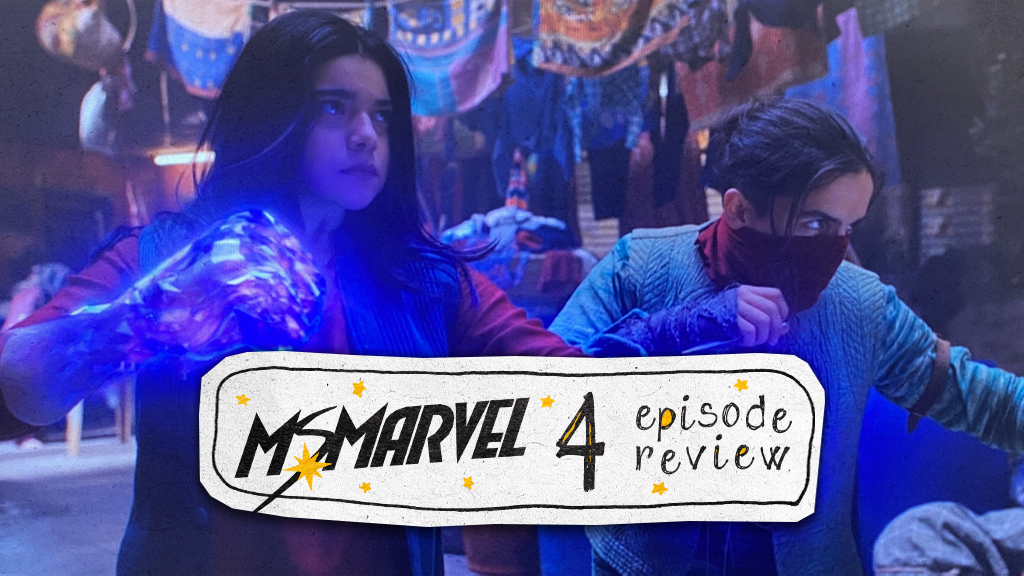
  • REVIEW: ‘Ms. Marvel’ Episode 4—”Seeing Red”

    REVIEW: ‘Ms. Marvel’ Episode 4—”Seeing Red”

    While Ms. Marvel still has to stick the landing in its final two episodes—something that Marvel Cinematic Universe shows tend to struggle with—its Episode 4 was yet another triumph for Kamala Khan’s series. In fact, it manages to follow the MCU series template for four episodes, but yet surpasses all expectations set by previous Disney+ installments. Ultimately, the conclusion, so far, on Ms. Marvel is that from inception to execution it is the highest quality MCU series to date. And it is not particularly close.

    While the mystery of Kamala’s origin continues in Episode 4, it is still developing in more interesting ways in each episode. Quickly, we learn that there is much more depth and nuance to the “Djinn” classification we were introduced to in the previous episode, and we get a hint that the Noor connection may have stronger connections to the more traditional super-aspects of the MCU. What that connection actually is remains the driving energy of the series, and Ms. Marvel expertly stretches the reveal out much like Kamala can stretch out her own hard light energy.

    But one of the most delightfully perplexing aspects of Ms. Marvel is uncovering why exactly this is so well played out. While many substantive aspects of Ms. Marvel are certainly unique from other MCU entries, the actual structure of the series is not. For example, virtually every MCU series has a major cliff-hanging plot twist-type ending to its fourth episode. In WandavIsion’s  Episode 4, Wanda’s sentience in the Hex is formally revealed. In Loki, the titular character wakes up to different variants of himself at the end of time. In Moon Knight, Marc Spector is killed and is awakened in what appears to be a mental asylum. Here, in Ms. Marvel, Kamala seems to have been somewhat transported to the past, as she finds herself engulfed in the scene of the last train to Karachi the night her great-grandmother Aisha disappeared.

    So while this sort of ending was not a true surprise—and the structure of the penultimate episode can likely similarly be guessed to an extent—Ms. Marvel executes it on an absurdly impressive level. The final shots are breathtaking and rely mostly on a realistic reimagining of the past rather than supernatural, magical, or fantastical elements. While the knowledge of Partition and Kamala’s family history has been known to this extent since the second episode, Episode 4 fully opened the door for what Kamala’s very human origin means to the character, and frankly, the world at large. Even Kamala is completely at a loss for words at the tragedy, suffering, and pain she sees around her. 

    Much of the beauty of the series’ focus on Kamala’s mysterious origin is the fact that, as emphasized and written in stone in this episode, Kamala’s origin is as much intertwined with traditional reality as it is with whatever inter-dimensional tie-in is. All superheroes carry the weight and strengths of their non-super past, but Ms. Marvel is unique in truly expressing that Kamala’s foundation is in her family and its history. The bangle is certainly the most important force in her superpowers, but it is every bit as important to Kamala’s character as is her relationship with her mother, her mother’s relationship with her mother, and whatever happened to Aisha during Partition. 

    In the midst of the incredibly rich storyline, even the action sequences of Episode 4 stand out. In particular, the extended chase scene could without a doubt be plopped into a feature film as is and no one would question it. While often in MCU series, even Ms. Marvel, action is rushed and sparing, this scene proved that that is a choice and not a necessity for these shows. 

    So, to go back to the earlier question of why Ms. Marvel seems to be ahead of the curve, there are numerous unique things that the show brings to the table. But it would not be fair to say that the series radically upended the Disney+ MCU model. Not everyone will personally prefer the series over all others, and no one has to. But at the end of the day, in all truthfulness, Ms. Marvel has been written and executed with such quality that it truly stands out. On no level is that an attack on other MCU shows, either—Ms. Marvel is simply that good.

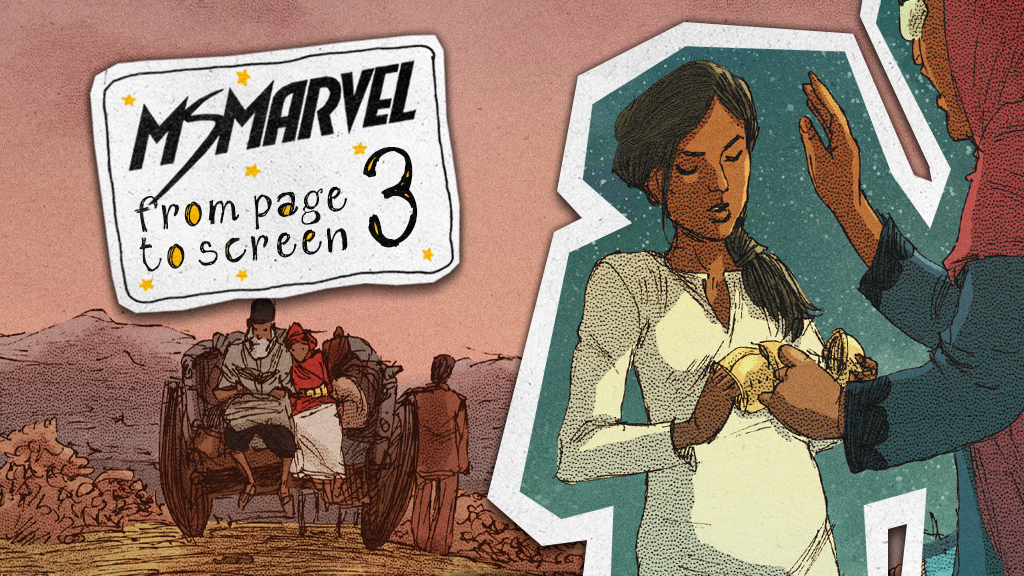
  • ‘Ms. Marvel’ From Page to Screen: Episode 3

    ‘Ms. Marvel’ From Page to Screen: Episode 3

    As Marvel Studios’ series Ms. Marvel reaches its halfway point, it is clear that the show borrows quite a lot from Ms. Marvel comics. With Episode 1, we looked at how the series adapted from the comics the moment Kamala’s powers were activated; and for Episode 2 we delved into the comics’ and series’ introduction and handling so far of the character Kamran. This week, we take a different approach with Episode 3. While the episode incorporates many small references to the comics, arguably its most significant and intriguing inclusion lies far outside Ms. Marvel comics. Below, we look at how and why the Clandestines in Ms. Marvel were brought to life from ClanDestine comics.

    Ms. Marvel’s Clandestines

    Marvel Studios’ Ms. Marvel Episode 3
    Marvel Studios’ Ms. Marvel Episode 3

    The beginning of Episode 3, titled “Destined”, brought forth a lot of information supposedly explaining much of Kamala’s origin and background. Najma, Kamran’s mother and the woman Kamala had visions of, tells Kamala that she and Kamala’s great-grandmother Aishia were not human. Specifically, Najma claims that she and some others she appears to live with are actually Djinn, who were exiled from their home Noor dimension. She states that they are called many names, including Clandestines.

    The explanation of who Djinn are that we get in Episode 3 of Ms. Marvel is pretty sparing. Kamala’s dad reads Bruno’s research, which says that Djinn are mythological beings of pre-Islamic folklore, sometimes referred to as genies. We also know from references throughout the series that Djinn seem to be viewed as demons to the superstitious, including Kamala.

    Marvel Studios’ Ms. Marvel Episode 3
    Marvel Studios’ Ms. Marvel Episode 3

    There are still a lot of questions about the group, but they appear to be a patchwork group of loosely-related Djinn who live together. It is unclear if anyone is closely related other than Kamran and his mother, but there is a clear theme of family and belonging within the Clandestines which Najma uses to manipulate Kamala.

    ClanDestine in the Comics

    ClanDestine #1 (2008)

    The Clandestines of Ms. Marvel are clearly influenced by the ClanDestine comics, although ClanDestine seems to provide minimal inspiration rather than being directly adapted into live-action. In the comics, ClanDestine is a large, kind of odd family comprised of the progeny of Adam Destine and a being named Elayath. All of their children inherited superhuman abilities of some kind. Adam himself is immortal and many of the children are decades or centuries apart in age.

    The family primarily sought to operate in secret rather than identifying themselves as super-powered beings or superheroes, though certain members try to follow this path. ClanDestine stories in the comics are driven by family conflict, such as when Adam killed his son Victor because he believed he had become evil.

    ClanDestine #5 (1994)
    ClanDestine #5 (1994)
    ClanDestine #5 (1994)

    The clear connection that the makers of Ms. Marvel made to ClanDestine is that the matriarch, Elayath, is a Djinn. Adam freed her from a wizard that had trapped her in a jewel around 1200 A.D. In return, she granted him his immortality and invulnerability.

    Why Would Ms. Marvel Adapt ClanDestine?

    ClanDestine #12 (1995)

    The comics’ ClanDestines and Ms. Marvel’s Clandestines seem extremely different in history, nature, and group members. The connection between the two seems to boil down simply to the name and the Djinn aspect. Even so, how the two groups incorporate Djinn is entirely different, as ClanDestine is a family descended from a single Djinn, whereas the Clandestines in the show appear to all be a type of being, known as Djinn, from another dimension.

    Why would Marvel make this connection between an extremely obscure group from the comics and a very different group in live-action? It all likely comes down to the series attempting to give Kamala’s background and origin the same type of explanation as her Inhuman heritage in the comics. Everything in the series suggests that Marvel Studios wants to mimic Kamala’s comic story without invoking Inhumans. So, in Ms. Marvel, the Clandestines are a family-like group of super-powered, or at least mystical, beings that Kamala is related to in some way, similar to her relationship to Inhumans in the comics.

    Ms. Marvel #7 (2014)

    That connection is relatively obvious, but the series clearly wanted that familial theme to be tied to Kamala’s religious and cultural heritage. This leads, of course, to using beings of pre-Islamic folklore, Djinn, as an option to explain why Kamala is more than human. There is very little comic basis for this, but ClanDestine happens to already contain those essential elements of Kamala’s story in Ms. Marvel.

    Marvel Studios’ Ms. Marvel Episode 3

    To be fair, Najma’s explanation of the Clandestines should be taken with a grain of salt given the fact that she is a clear villain and there is not much evidence yet to back up her claims. Still, Ms. Marvel certainly made a bold creative choice in adapting ClanDestine from the comics to build Kamala’s Khan’s story.

    The first three episodes of Ms. Marvel are now streaming on Disney+.

  • Theory Thursday: ‘Ms. Marvel’ Will Lead to an Incursion

    Theory Thursday: ‘Ms. Marvel’ Will Lead to an Incursion

    Episode 3 of Ms. Marvel, entitled “Destined”, made it clear that Kamala Khan will be involved in much more than street-level threats. The young hero clearly has connections to universe and multiverse-spanning abilities and those seem related heavily to her family history. In essence, Ms. Marvel may be opening a very large door into the greater Marvel Cinematic Universe storyline. In particular, Episode 3 gave hints that the events of the series could lead to an incursion and tie into a future Secret Wars adaptation. 

    Ms. Marvels third episode opened with quite the bombardment of new, cosmic-level information and stakes. Najma, Kamran’s mother, reveals to Kamala that the Clandestines are Djinn from a place they refer to as the Noor Dimension. She also tells Kamala that Kamala’s great-grandmother Aisha was also Djinn and that the group was exiled from the Noor Dimension and was trying to use Kamala’s bangle as a way to get back. While Najma is clearly an antagonist and some of the details should not be taken at full face value, the lingering implication is that Kamala has the power to create the means for inter-dimensional travel. 

    Ms. Marvel #16 (2015)

    The last time we got to explore multiple realities was in Doctor Strange in the Multiverse of Madness. There, we first learn that incursions are happening to some extent throughout the multiverse. Incursions are essentially the colliding of two realities that—as described by Earth-838’s Reed Richards—ultimately lead to the destruction of one or both. We do not know much about incursions, other than that a multiverse-traveling sorcerer can cause one by leaving too much of a footprint in another universe. In Ms. Marvel, the Clandestines are implying that inter-dimensional travel could be at play, which may implicate some of the forces behind incursions.

    Still, Kamala’s abilities are mysterious. When she confides in Bruno about the Clandestines and her plan, his research (based on scholarship by Thor’s Dr. Eric Selvig) leads him to believe that she would essentially need the power equivalent to that of the sun to actually make it happen. In other words, he warns her that “if you help them go home, some things might go boom.” The foreshadowing of destruction certainly brings to mind the idea of the demolition of a dimension or universe. To be fair, the MCU has not been overly clear as to the distinction, if any, between other “dimensions” and “universes”, but the same logic might apply. 

    Ms. Marvel #19 (2015)

    By the end of the series, the inter-dimensional and/or multiversal implications of Ms. Marvel could very well lead to this sort of “boom” Bruno warned Kamala about, and there is plenty of reason to think that the fallout could be an incursion. In the comics, the Secret Wars (2015) storyline was a major influence on Kamala’s story early on. She actually first meets Carol Danvers aka Captain Marvel in the lead-up to the final incursion between Earth-616 and Earth-1610. Considering an adaptation of Secret Wars has been hinted at in the MCU for quite some time, incursion-related consequences stemming from Ms. Marvel could easily go on to influence The Marvels and an eventual Secret Wars

    There are still numerous mysteries to be explored in Ms. Marvel, and Kamala’s family history and connection to the bangle are sure to be big reveals. Considering that Kevin Feige recently promised fans that the direction of the MCU in Phase Four and beyond will soon become clear, Ms. Marvel may very well be laying more groundwork for a Secret Wars event in a direct way, coming right off of Multiverse of Madness. Whether she directly or indirectly causes an incursion herself is yet to be seen, but her presence in the universe is definitely cosmic. 

    The first three episodes of Ms. Marvel are now streaming on Disney+.

  • REVIEW: ‘Ms. Marvel’ Episode 3—”Destined”

    REVIEW: ‘Ms. Marvel’ Episode 3—”Destined”

    Ms. Marvel’s third episode, “Destined”, does a remarkable job at maintaining the heart and integrity of the series while also bringing it to new heights in an exciting way. The episode hit the ground running straight off of Episode 2’s cliffhanger in Kamran and his mother’s car. There is a very welcome shift in pace throughout the beginning of the episode, which also takes the series in a very bold new direction. While the bangle remains mysterious, Kamran’s mom, Najma’s, explanation of its history to Kamala suggests that Najma (along with her family) and Kamala’s mysterious great-grandmother Aisha are Clandestines, or Djinn, from another dimension. While their narrative should be taken with a grain of salt at this point, they seek Kamala’s power to get them back to their home Noor dimension from which they had been exiled. The very end of the episode suggests there is more to the story of Aisha’s disappearance still, as Najma shows both Kamala and her grandmother Sana a vision of a train marked “Karachi”, which seems to be a callback to Sana’s family’s escape from India and Aisha’s disappearance. 

    The rest of the third episode once more brought the Kamala Khan charm to the screen. Particularly in the wedding scene, the episode proves that Ms. Marvel is one of the most colorful Marvel Studio’s projects in existence and is filled to the brim with personality. The teenage drama involved in Kamala’s story is amplified here, as she struggles to maintain trust, confidence, and honesty with and from her friends and family. Bruno begins to hesitate about Kamala’s plans with the bangle and tells her he is headed to CalTech, which complicates their adorably awkward crush-type relationship. Nakia angrily discovers that Kamala is actually the masked person who has caused problems for the community, and Kamala’s relationship with her family is further strained by her inability to tell them what she is going through. 

    The episode spends much time celebrating and dissecting the concept of family. This theme was introduced, foreshadowed, and explored in the first two episodes, but Episode 3 featured multiple scenes back to back that explicitly state the importance of family through dialogue. Kamala’s relationship with the Clandestines is yet another layer to that discussion—assuming they are to some extent her family, what is her duty to them? How can Kamala honor her lineage or heritage while not betraying her closer family and community?

    While we have still yet to see Kamala go into full superhero mode, the episode’s first major action scene set to Bon Jovi’s “Livin’ On a Prayer” was a strong start for the series in that regard. This episode also solidified the villains of Ms. Marvel even if there was no surprise to it. The tease of the mask Bruno made Kamala tees up her eventual triumphant debut as her own bona fide superhero, but that moment still seems potentially distant on the horizon.

    Overall, Episode 3 of Ms. Marvel dramatically raises the stakes and implications for both Kamala and the series. While the more “classic” elements of the series are still going strong—teenage awkwardness, crushes, family responsibilities, and self-discovery—there is now an additional element of inter-dimensional or multiversal travel and Kamala’s direct connection to it. The fact that there is a missing bangle is a mystery that foreshadows its inclusion down the line. Sana’s request that Kamala and her mother come to Karachi is clearly setting up an adaptation of the Ms. Marvel comics “Mecca” arc, but it also is the prime (or closer to it) location for exposing the truth about Kamala’s family history, the significance of the bangles, and Kamala’s powers.