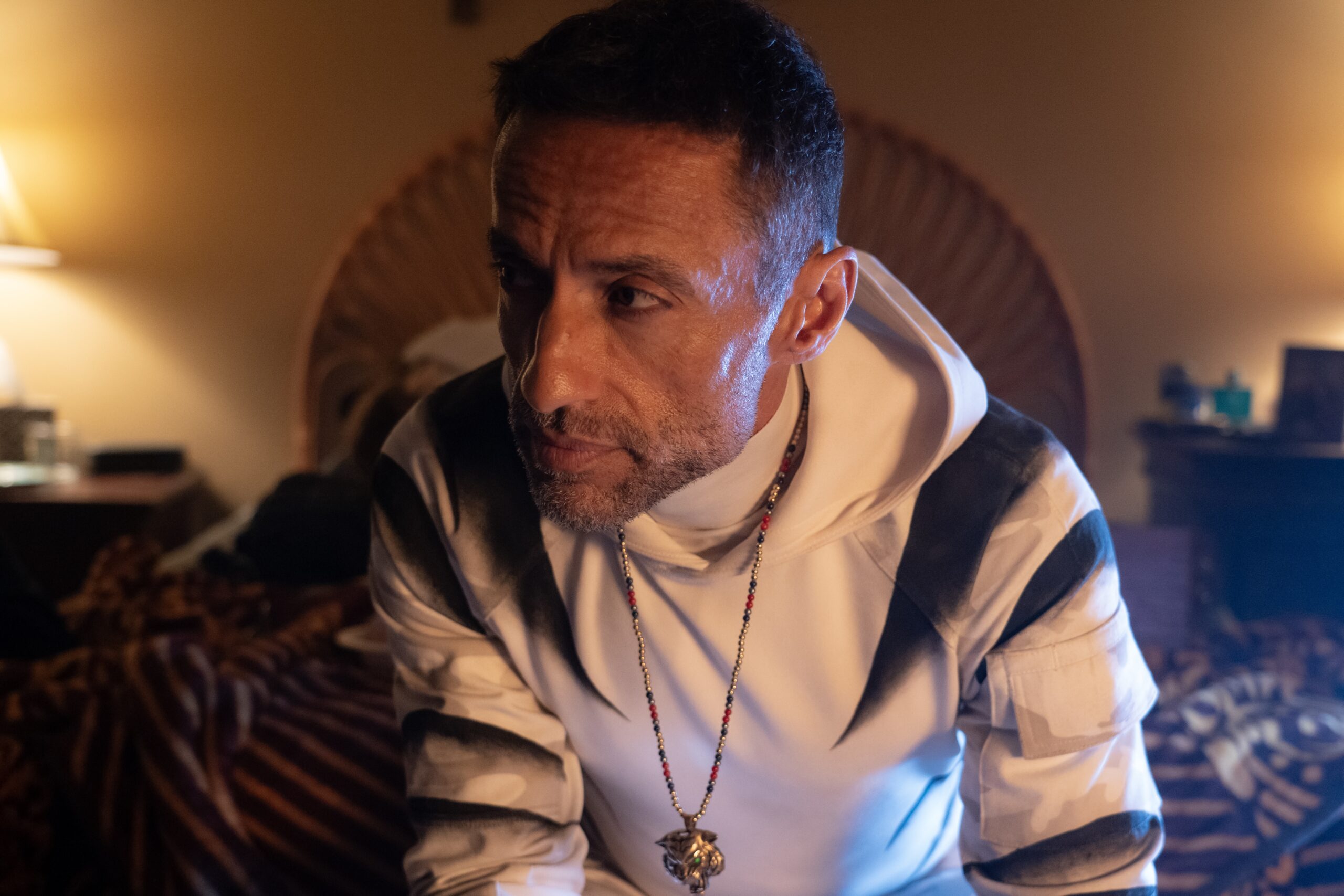
Marvel Comics’ first Hispanic hero, Hector Ayala, never really got a turn to take the lead. First appearing in the Shang-Chi book, Deadly Hands of Kung Fu, in 1975 and then taking on a semi-regular supporting role in the late 70s/early 80s title, Peter Parker, The Spectacular Spider-Man, Ayala, also known as the White Tiger, had some wild adventures across the Marvel Universe. However, it wasn’t until Brian Michael Bendis‘ early 2000s run on Daredevil that Ayala really took center stage in a popular title. The defendant in Bendis‘ “The Trial of the Century”, Ayala’s vigilante efforts as the White Tiger lead to him being falsely accused of killing a police officer which, interestingly enough, means that the courtroom–and not the streets of New York where he risked his life for his community–became the setting for Ayala’s time in the spotlight. Before he could beat the bunk charges, Ayala was killed by the cops and, ultimately, his legacy and the legacy of the White Tiger grew into something greater than he ever imagined when he first picked up the Jade Tiger amulets that granted him superhuman powers.
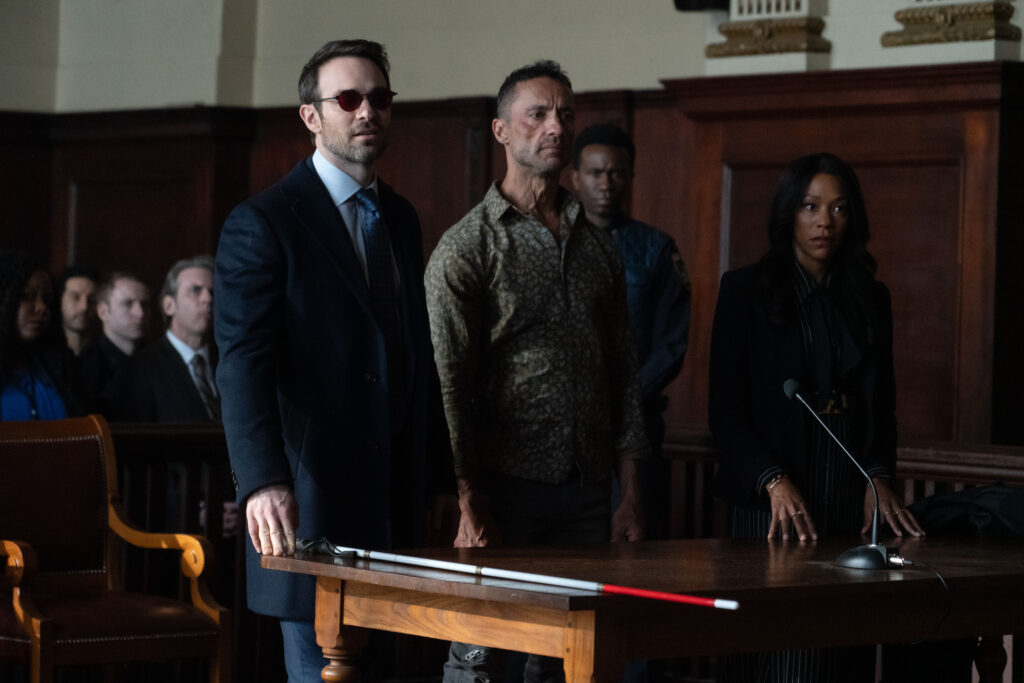
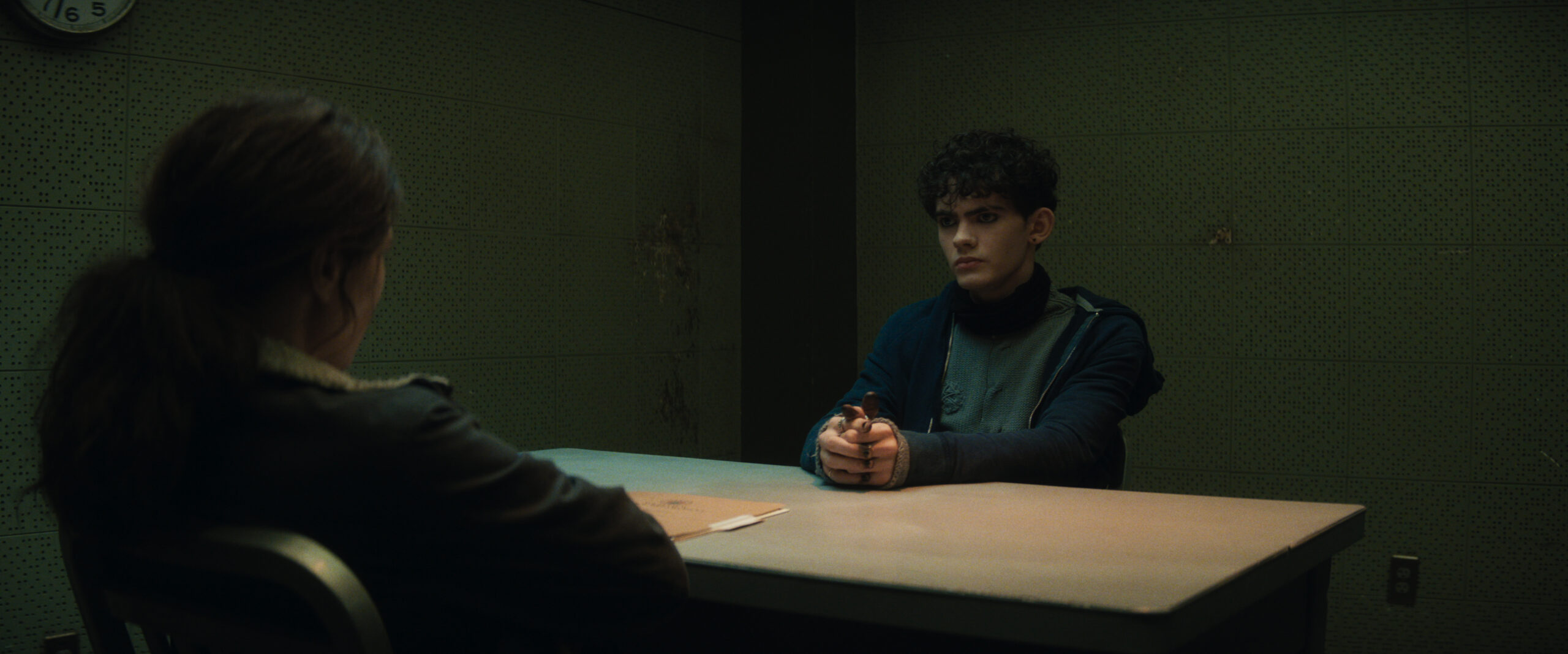
Episode 2 of Daredevil: Born Again introduces Ayala and his White Tiger alter ego to the MCU, slightly altering the scenario that leads to his arrest and trial but–somewhat incredibly–embracing the mystical nature of his powers in a corner of the world that’s not always taken full advantage of the opportunities such capabilities provide. Highlighted by the late Kamar de los Reyes‘ understated performance as beaten up and washed Ayala, “Optics” is an excellent offering that allows the audience an extended view of the other side of Matt Murdock’s life. Though fans haven’t seen Episode 3 yet, paired with Episode 2, the MCU’s version of The Trial of the Century is must-see DD, allowing Murdock to flex his wits in what is truly a tense courtroom drama. The traits that serve Murdock so well as the Devil of Hell’s Kitchen are indeed the very same that make him a really good lawyer and as Ayala’s trial unfolds, Murdock proves that as in combat, he can take a punch in the courtroom and dig deep to find a way to stay in the fight.
Though there’s little bloodshed and much of the episode takes place during the day (gasp!), “Optics” proves just as important to the Frank Miller-heavy noir world of Daredevil as any other episode. Any great NYC crime drama will, of course, include dirty piggies and Episode 2 introduces the audience to the dirtiest and though it may not be readily apparent just yet, be sure that your time spent watching this episode will pay off as the series moves forward. A reborn Matt Murdock didn’t need to take Ayala’s case, especially once he became aware that Ayala wasn’t sharing everything with him, but the serendipitous intersection of his commitment to justice and Ayala’s commitment to doing the right thing was too hard to pass up. Up against the NYPD, Ayala is the ultimate underdog as an accused cop killer…but even when outmatched, Murdocks can take a beating and stay in the fight until the devil in ’em comes out.
And following a palpably tense scene in which the dirty NYC cops look to take Murdock’s key witness off the board, the devil that Matt believed he has so securely tucked away does get out. The episode’s violent closing minutes may seem to exist solely to soothe the blood lust of the edge lord crew; however, paired with Wilson Fisk’s lunch meeting with NYC Police Commissioner Gallo, the scenes remind the fans that neither of these men can ever truly be anyone other than who they are. They want–perhaps even truly desire–to become the men they try so hard to be but when push comes to shove, these men, shaped so completely by their environments for so long, will always fall back on the skills of their true identities.
As the follow-up to the new crew’s violent pilot episode, “Optics” stands in stark contrast and while it may feel slow, it begins scaffolding every major storyline of Season 1 of Daredevil: Born Again. Possibly my favorite episode of the season (if not, it’s Episode 3), “Optics” serves as a prime example of how much can be accomplished in a streaming episode and how this Daredevil revival’s efforts to trim the fat have made it an upgrade over the original Netflix series.
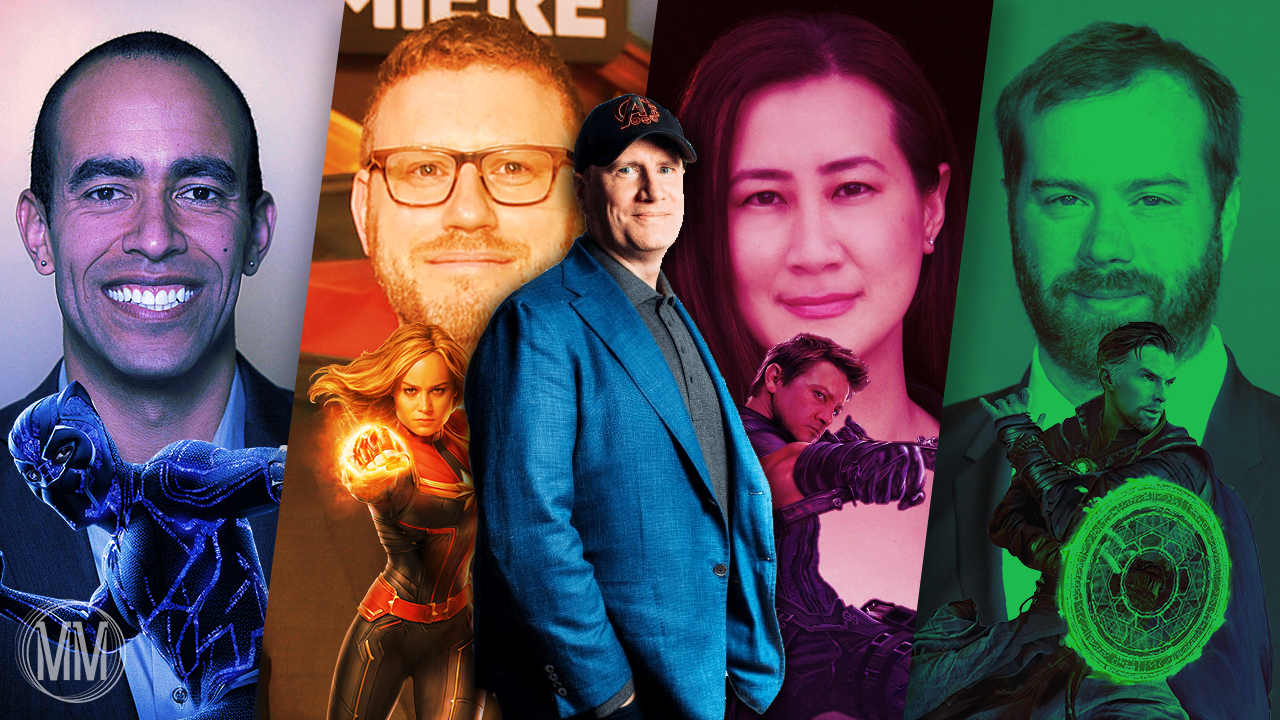
In the early days of Marvel Studios, Marvel Entertainment CEO Ike Perlmutter assembled a group of individuals he called the Creative Committee. Composed of Marvel Comics writer Brian Michael Bendis, Marvel Comics publisher Dan Buckley, Marvel Entertainment President Alan Fine and Marvel Comics editor-in-chief Joe Quesada, the Creative Committee provided feedback on each project as it developed.
Following a series of events that left him frustrated by the Creative Committee, Feige nearly left Marvel before a deal was struck with Disney CEO Bob Iger in 2015 that allowed for significant restructuring. As a result, Feige reported directly to Disney chair Alan Horn, pruning Perlmutter and his creative committee out of the film branch of Marvel Entertainment.
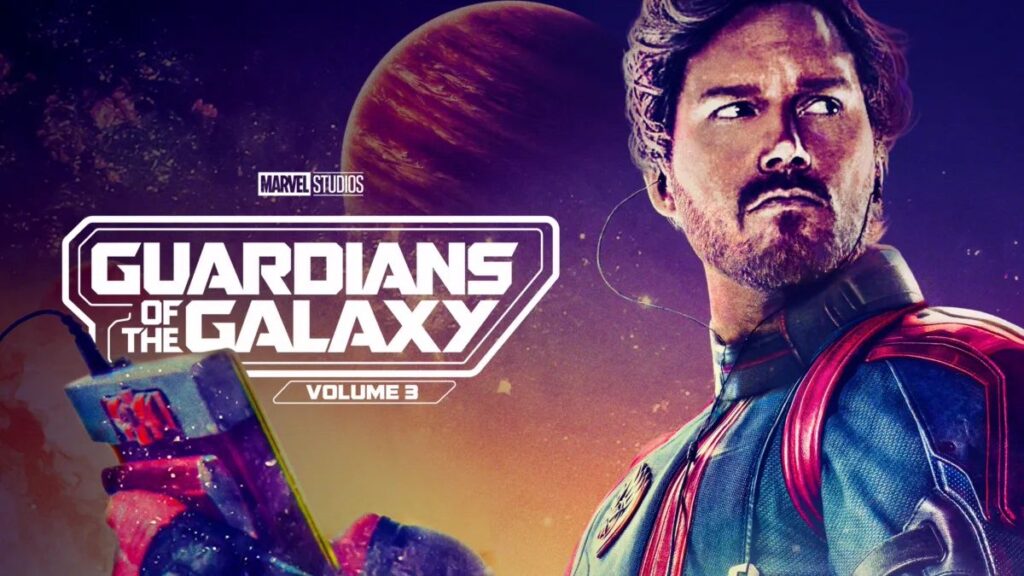
Beginning with 2017’s Guardians of the Galaxy Vol. 2, Marvel Studios began producing films without the influence of Perlmutter ‘s creative committee; however, before long, Feige began assembling his own team to help guide projects behind the scenes. First acknowledged in the credits of Black Panther, a collection of Marvel Studios’ long timers known as the Marvel Studios Parliament have been quietly helping to craft each MCU project.
Feige’s original roster was made up of Stephen Broussard, Eric Hauserman Carroll, Jonathan Schwartz, Trinh Tran and Brad Winderbaum, all of whom worked their way up the ladder and served as producers on several Marvel Studios projects. Nate Moore, who co-produced Captain America: The Winter Soldier before producing Captain America: Civil War and Black Panther, joined the team for Avengers: Endgame.
Since 2018, a member of the Parliament has served as a producer or executive producer on each project; however, it’s a collaborative effort that gets the ball rolling.”There definitely is a camaraderie for a lot of us who have been around for a long time just throwing ideas back and forth,” said Schwartz, who was an executive producer on cosmic corner projects such as Guardians of the Galaxy Vol. 2 and The Marvels while also producing Shang-Chi and the Legend of the Ten Rings.
“It’s great when you have people who have been through the process, and who you trust, and whose creative taste you trust, and everyone’s taste is different, and that’s part of what’s really useful about it,” Schwartz told us in 2021. “Not all of us see movies the same way, so we’re all able to bring something a little bit different.”
It’s not really a genre thing or a speciality thing. We all sort of go off together and talk about who wants to do what and what’s coming up, and we all kind of end up working on stuff we’re excited about. I just like martial arts movies and Shang-Chi felt like the right character to bring a martial arts movie to life, and so that was that I put my hand up and said I wanted to do Shang-Chi. That’s more or less the way it tends to happen, there’s a character we all want to do, or there’s a character one of us one of us wants to do, and we just talk about it and divide it up and things generally work out where people get to work on things they’re excited about.
-Jonathan Schwartz
In a 2022 interview with CinemaBlend, Moore explained that while the primary focus of the Parliament was to act as a “brain trust”, the team did also work as a cohesive continuity police, helping bring together info from Marvel Studios andarbel Television to avoid confusion. “I would say that’s certainly not just our responsibility,” said Moore of monitoring continuity, “because we have colleagues across both the movies and the shows who aren’t technically in Parliament, but who are incredibly instrumental in making sure the continuity maintains itself and that our different properties don’t step on each other.“
Parliament is essentially those of us who’ve been with the company for longer than we want to admit who sort of help each other with ideas across all the properties, regardless of whether it’s my movie or Jonathan [Schwartz]’s movie or Stephen [Broussard] ‘s movie. And so yeah, it’s nothing more than that. We kind of came up with the name as a lark and it kind of stuck, and now I’m forced to answer questions from my friends, like, ‘What’s Parliament?’ I’m like, ‘Oh boy.’ It really is just kind of a brain trust to help elevate the movies when we can.
-Nate Moore
For five years, the Parliament stayed intact and worked to shepherd 25ish projects through the pre and post-production processes. Following Guardians of the Galaxy Vol. 3, Carroll, who co-produced Spider-Man: Homecoming before working as an executive producer on Spider-Man: Far From Home and Doctor Strange in the Multiverse of Madness, was no longer credited as a member of the team.
Beginning with 2024’s Deadpool & Wolverine, Marvel Studios longtime Head of Visual Development, Ryan Meinerding, filled the seat vacated by Carroll. In December 2024, Feige revealed that Moore was leaving Marvel Studios to pursue a new career trajectory. While it’s unclear what Moore’s last project as a member of Parliament might be, he will be working with the studio again in the future as a producer on the as-yet-undated Black Panther 3.
With Moore’s scheduled departure, it’s unclear if Feige will once again look to add to the team’s roster. As it stands, original members Broussard, Schwartz, Tran and Winderbaum, who also oversees Marvel Television and Marvel Animation, join Meinerding as the current iteration of the “brain trust” as the studio looks not only to continue to rebound from a rough couple of years but also bring the Multiverse Saga to a satisfying conclusion while also preparing to launch whatever comes next.
Disney did not respond to our request for comments on Meinerding’s addition to the Parliament.
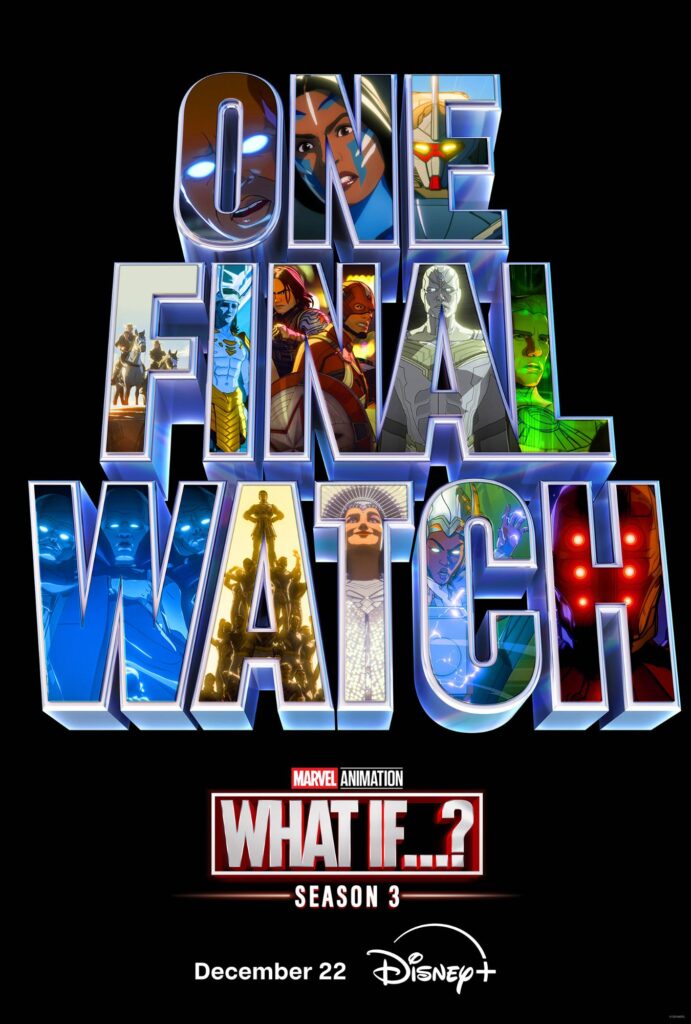
What If…?, Marvel Animation’s first MCU-set adventure, is set to return for its third and final season just in time for folks to be home a bit more for the holidays. As was the case with Season 2, one new episode of What If…? will arrive daily from December 22nd through December 29th.
Season 2 was a marked improvement over Season 1 in part because it expanded beyond the slightly altered retelling of familiar origin stories to take advantage of the true nature of the What If…? premise. Season 3 looks to be headed in that direction as well and will also greatly increase the size of the roster of characters. That said, you’ll likely want to refeesh your memory about some of the stories and characters set to make a splash in the new season. So if you’re looking for something to watch while you wrap your presents and guzzle your egg nog, we present The Ultimate List of What to Watch Before Season 3 of What If…?.
How It Started…
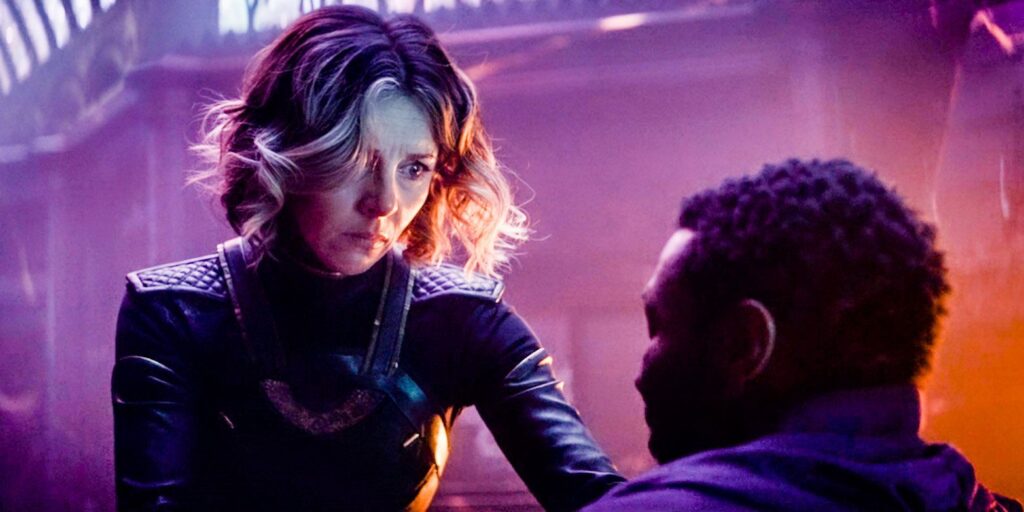
It’s been quite some time since Season 1 of Loki and most of Marvel Studios’ Multiverse Saga plans have been altered since then; however, without Sylvie knifing He Who Remains, there’s no Multiverse at all. That action went down in Season 1, Episode 6, “For All Time Always”, which is one of the best episodes of TV Marvel Studios has put together.
How It Went…
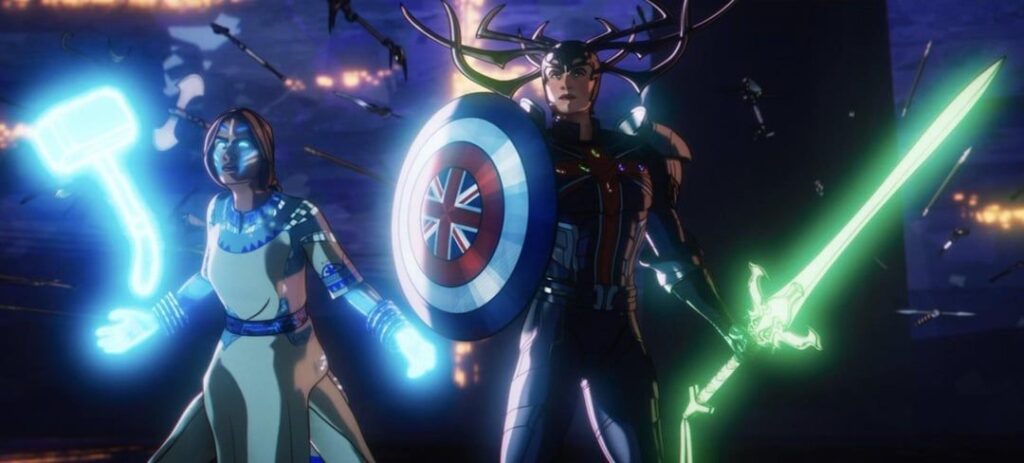
Even though Marvel Animation is adding characters such as Agatha Harkness, Shang-Chi and Moon Knight to the mix in Season 3 you’ll likely want to refresh yourself on some of the series’ central characters. While What If…? is ostensibly Uatu’s show, Captain Carter takes the lead in many episodes across both seasons and will be back for more. Additionally, the MCU original character Kahhori, who debuted in Season 2, is confirmed to return in the new season.
What If…?, Season 1:
Episode 1, What If… Captain Carter Were the First Avenger?
Episode 9, What If…The Watcher Broke His Oath?
What If…?, Season 2:
Episode 5, What If…Captain Carter Fought the HYDRA Stomper?
Episode 6, What If…Kahhori Reshaped the World?
Episode 8, What If…The Avengers Assembled in 1602?
Episode 9, What If…Strange Supreme Intervened?
Where It’s Going Next
Not to beat a dead horse here but…the voice cast for Season 3 is MASSIVE. An unbelievable amount of stars are back to lend their voices to the characters they’ve played in Marvel Studios live-action projects. The list of first timers includes Kathryn Hahn, Oscar Isaac, Hailee Steinfeld, Simu Liu, Dominique Thorne, Kumail Nanjiani and more.
The trick here is that the appearances of each of these characters does not necessarily indicate an alteration of any individual story one of the may have had. For example, Kate Bishop’s appearance in a Western-set episode may not be a result of some small changes to her origin story which means watching Hawkeye may not provide any additional context for her actions in What If…? That’s certainly a change from Seasons 1 and 2 which included quite a few episodes that were just alt takes on familiar stories. All that said, here’s a list of projects that include characters that will appear in Season 3.
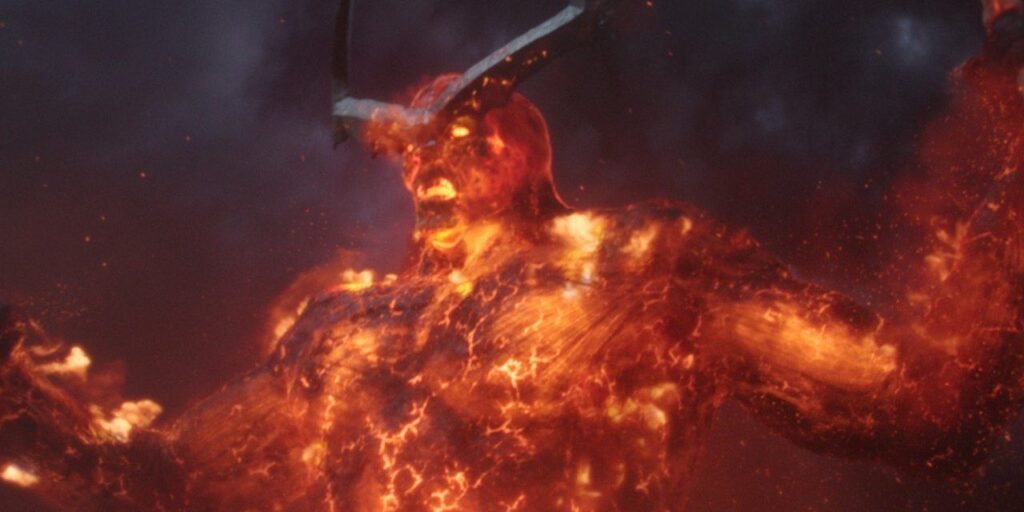
Thor: Ragnarok (2017)
Ant-Man and The Wasp (2018)
Spider-Man: Far From Home (2019)
WandaVision (2021)
The Falcon and The Winter Soldier (2021)
Black Widow (2021)
Eternals (2021)
Hawkeye (2021)
Shang-Chi and the Legend of the Ten Rings (2021)
Moon Knight (2022)
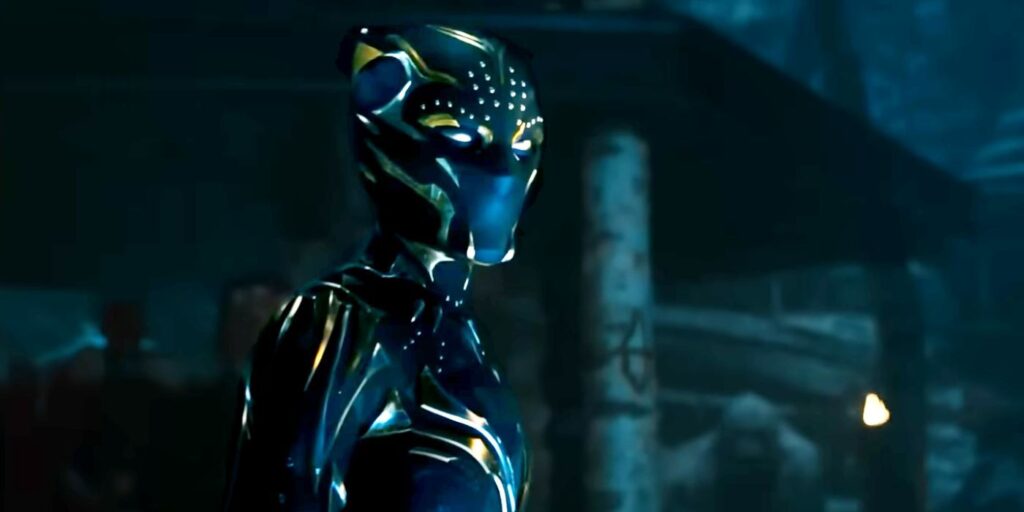
Black Panther: Wakanda Forever (2022)
Secret Invasion (2023)
The Marvels (2023)
X-Men ’97 (2024)
Agatha All Along (2024)
The third and final season of Marvel Animation’s What If…? will debut new episodes daily for eight days beginning on December 22nd.
About What If…?, Season 3
Marvel’s animated series What If…? returns in Season 3 for its culminating adventure through the multiverse. Watch as classic characters make unexpected choices that will mutate their worlds into spectacular alternate versions of the MCU. The Watcher (voice of Jeffrey Wright) will guide viewers as the series traverses new genres, bigger spectacles, and incredible new characters.
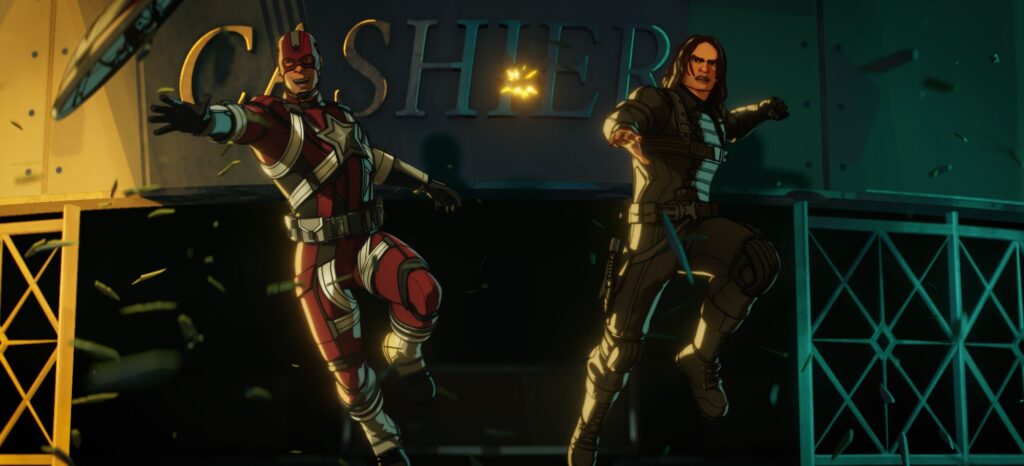
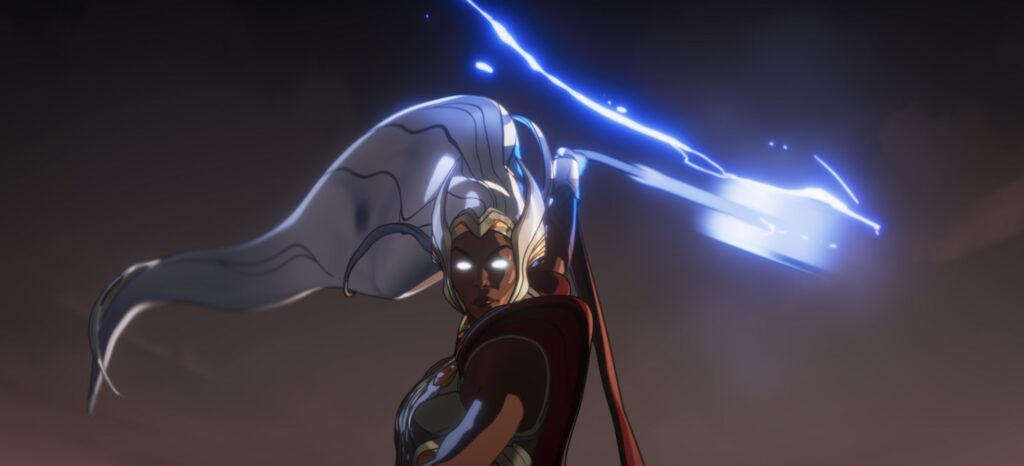
The series features an incredible voice cast that includes a host of stars who reprise their iconic roles. Season 3 features fan-favorite characters like Captain America/Sam Wilson, The Winter Soldier/Bucky Barnes, Hulk/Bruce Banner, The Red Guardian, Captain Peggy Carter, Agatha Harkness, Shang-Chi, Storm the Goddess of Thunder, and numerous others.
Episodes are directed by Bryan Andrews and Stephan Franck and are written by Matthew Chauncey, Ryan Little, and A.C. Bradley. Executive producers are Brad Winderbaum, Kevin Feige, Louis D’Esposito, Dana Vasquez-Eberhardt, and Bryan Andrews, with co-executive producer Matthew Chauncey, and producers Danielle Costa, Carrie Wassenaar, and Alex Scharf.
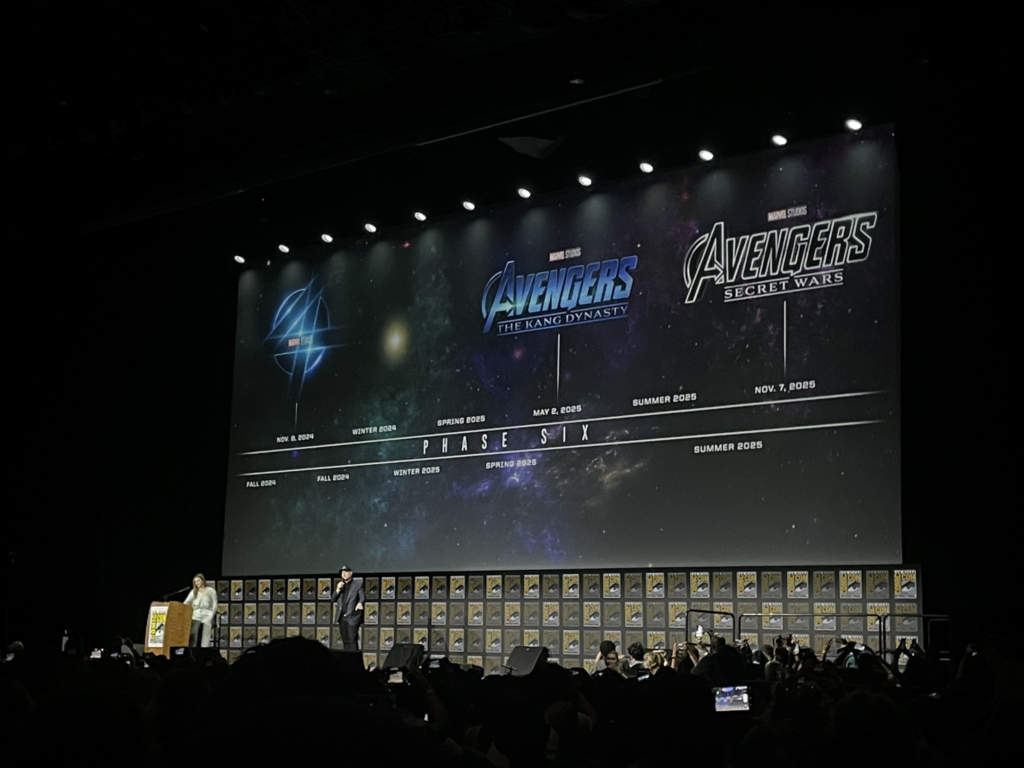
A recent interview with Don Cheadle seemed to confirm what most fans had already come to understand: Marvel Studios’ original plans for Phase 6 have been significantly refigured. During SDCC ’22, the studio’s head honcho, Kevin Feige, showed off an impressive plan for the final phase of the Multiverse Saga that included 11 total projects. At the time, the plan was for Fantastic Four to kick off Phase 6 on November 8, 2024 and for Avengers: The Kang Dynasty and Avengers: Secret Wars to hit theaters only 6 months apart on May 2nd, 2025 and November 7, 2025, respectively. For a multitude of reasons, nothing on that slate made its scheduled release and many of the projects will never come to fruition at all.
Though the nature of the other eight projects may never be disclosed, at least two more of them were likely destined to be films which would mean the other six were planned as streaming series. Given what the studio’s plans looked like at the time, that’s probably how it was meant to shape up.
Avengers: The Kang Dynasty
Following the dismal reception of Ant-Man and The Wasp: Quantumania, a confluence of events led to the plans for the fifth installment in the Avengers franchise to be scrapped. The plans put in place, presumably, in the Quantumania stinger and in Season 2 of Loki were ditched following star Jonathan Majors‘ legal troubles. But what were those plans?
The earliest rumors indicated that Sam Wilson, Shang-Chi and Shuri were set to take on Kang though they were destined to fail. Interestingly enough, that information matched a recent report that indicated the scrapped sequel would have had a heavy focus on Simu Liu‘s hero.
In the original plan for Avengers 5, then called Kang Dynasty, Shang-Chi would’ve been one of the film’s main leads. A lot’s changed since then; Avengers 5 was meant to focus on Kang the Conqueror, but Marvel has since completely retooled the film to introduce Victor Von Doom.
Whether or not “Wreckage or Time” was indeed meant to be the subtitle of the sequel to Shang-Chi and the Legend of the Ten Rings, a sequel was most certainly in development. Even as the first film was being made, the wheels inside Destin Daniel Cretton’s mind were hard at work on the sequel. It’s unclear if some of those ideas would ultimately have been included in The Kang Dynasty, which was reportedly a sort of surprise Shang-Chi sequel, but it is clear that Shang-Chi was originally intended to play a major role in Phase 6 and now, with Cretton taking on Spider-Man 4, it would seem his role has been greatly reduced.
Armor Wars
First announced during Disney’s 2020 Investor Day presentation, Armor Wars will go down as one of the most curious projects in the history of the MCU. Originally developed as a Disney Plus streaming series, the studio made the decision to switch gears on Rhodey’s solo project, choosing to overhaul it for theaters. According to EP Nate Moore, the ideas the studio has were deemed to be “too big” for a D+ series.
Yeah, I mean in that case, there were some great ideas that were coming out for that show but that, to be quite honest, felt too big for that show.
The only project in this list that was never officially announced by Marvel Studios or revealed by a Hollywood trade, the Silver Surfer Special Presentation may or may not have ever been in development; however, if it ever was, it certainly does not seem to be at this point.
Originally rumored to be set to hit Disney Plus ahead of the theatrical release of The Fantastic Four: First Steps, the Silver Surfer project was said to be required reading for the film. Problematically, the rumored plot was said to follow Norrin Radd out and about in the cosmos while serving as the Herald of Galactus despite the fact that Marvel Studios cast Julia Garner as an all+new, all-different Shalla Bal version of the character.
While the studio has not officially indicated when the series might begin filming, Marvel TV head Brad Winderbaum did reveal that that Nova is being developed as “an amazing ensemble piece” before explaining that fans of the comics will know “how heated that Richard Rider kind of world can get.” Should the project get underway in 2025, there’s no reason to believe it will be included in Phase 6 which is expected to wrap up in May 2027 with Avengers: Secret Wars. At this point in time, it would seem that the studio’s Wonder Man and Vision Quest series will debut in 2026 and it’s unclear what role, if any, the Nova Corps would even have in the Multiverse Saga making the project a likely entry in the studio’s post-Multiverse Saga plans.
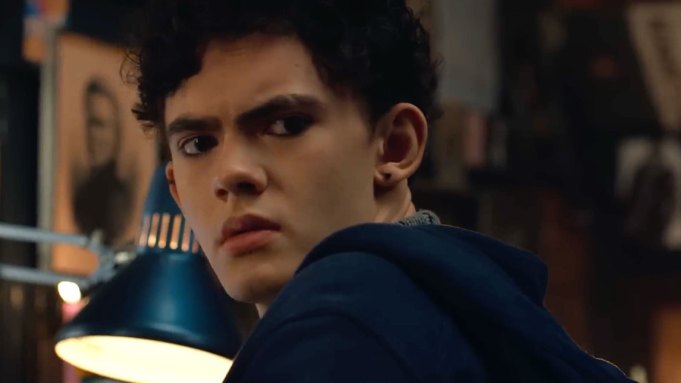
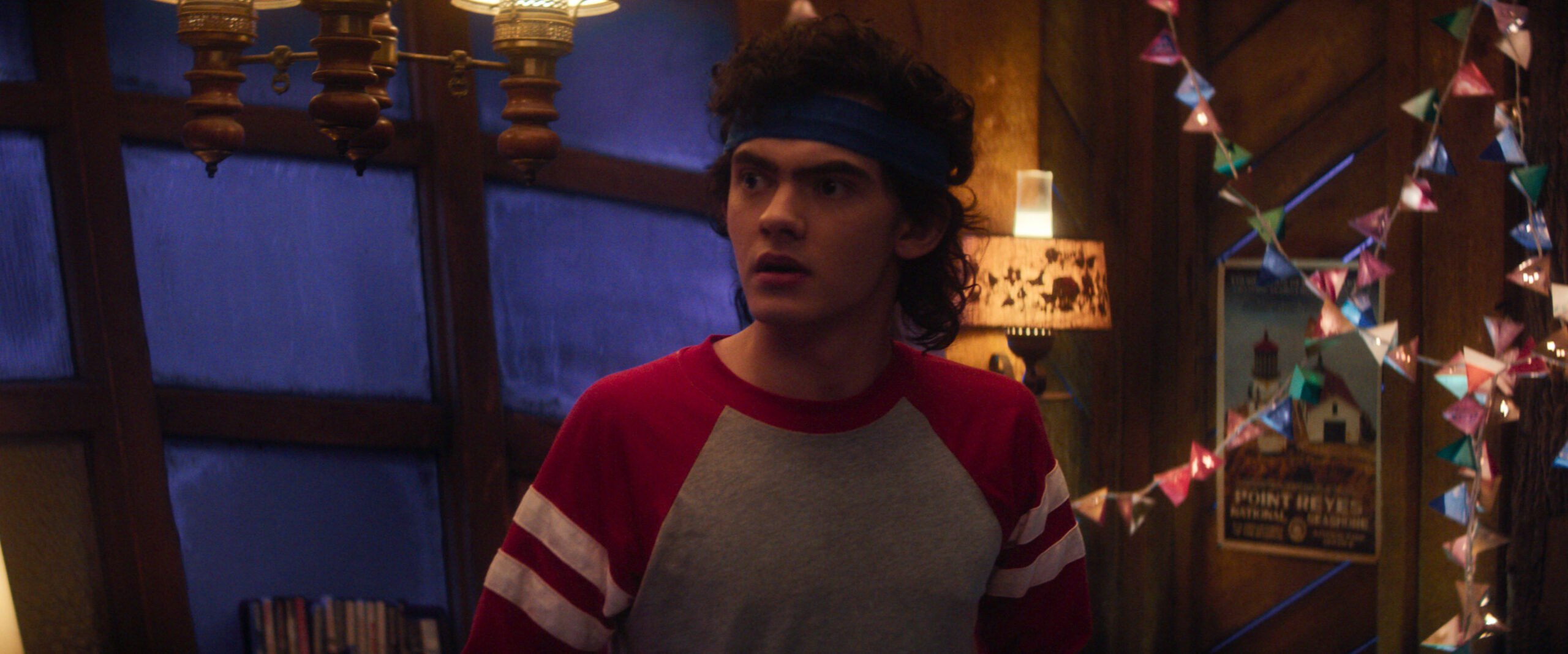
As it moves through its nine-episode season, it’s become increasingly clear that Agatha All Along was never intended to be about Agatha all along. Initially the unassuming familiar of Agatha Harkness’ coven of chaos, Joe Locke‘s Teen has emerged as the true protagonist of the second half of the series. Following the Episode 5 reveal that Teen is Billy Maximoff, the son of Wanda Maximoff believed to have been erased from existence in the WandaVision finale, the true nature of the character immediately changed the focus of the series. With Episode 6 detailing how Billy came to be entangled with William Kaplan, the final three episodes look set to proceed with a new storytelling purpose that was made clear before Episode 5 wrapped.
While the “Billy reveal” wasn’t truly a surprise to a large percentage of the MCU’s fan base, the revelation of why Billy wanted to walk the Witches’ Road may have been a surprise to those unfamiliar with the very detailed leaks about the plot of Agatha All Along. Despite Teen expressing a desire to obtain power at the end of the Road, much of the online discussion about his real motives (most of which were based on the assumption he was truly Billy Maximoff) leaned into the idea that he would use the Road to find his mother. Episode 6 made it clear that the Wanda problem remains one to be solved another day.
Thanks to some detective-esque interrogation from Agatha, Billy’s true motivation for walking the Witches’ Road came bursting forth in a show of strong emotion. What Billy is truly missing and hopes to find at the end of the road is his twin brother, Tommy. Like Billy, Tommy was believed to be erased from existence as Wanda undid the hex. However, as is the case with Billy, Tommy’s soul remains on Earth-616. Moreover, Billy can feel his twin’s presence but is unable to locate him.
With three episodes left to go, there’s still some exploration of other witch’s stories to go, a trial or two and at least one incredibly interesting twist; however, with Billy’s true intention for manipulating Agatha to leading the way down the Witches’ Road having been revealed, the show has changed course and one has to wonder what adventures will be in store for Billy and Tommy, if and when they reunite.
For the first four episodes of Agatha All Along, creator Jac Schaeffer let fans dabble in their theories about who Joe Locke‘s Teen may or may not be. Thankfully, following Agatha Harkness’ heartbreaking trial, there’s no longer any doubt about who Locke is playing or who is in charge on the Witches’ Road.
Those who have enjoyed the mystery of Teen’s true identity shouldn’t despair now that the show revealed him as Wanda Maximoff’s son, Billy. Indeed the mystery was spoiled long ago and more mysteries are yet to be solved. While fans may find themselves a little too focused on the “revelation”, perhaps a little more attention should be paid to the enormous power Billy displayed in the episode’s final moments where he not only took control over two other witches but, possibly, the Road itself.
While Marvel Studios has yet to officially acknowledge Teen as Billy Maximoff, aka Billy Kaplan, aka Wiccan, Episode 5 of Agatha All Along crowned the Demiurge-to-Come and, in doing so, subtly referenced one of the character’s more popular arcs, The Children’s Crusade. Following Agatha mocking Teen for being like his mother, the character proved her right by displaying not only the magnitude of his power but also his apparent lack of control of it when he unleashes it.
Of course, the real question here is if Billy has been capable of these great feats of power all along, why has he been so meekly playing along on the coven’s trip down the Witches’ Road? Or has he been meekly playing along at all? At his strongest in the comics, Billy was a reality warper capable of creation, transmutation and essentially accomplishing any and every thing he wished. Sure, he’s out of control at the end of Episode 5 but what might we have missed along the way?
With any luck, Marvel Studios’ well-documented Multiverse Saga struggles may be on the way to being a thing of the past. Not many studios could have survived the deluge of debacles that Marvel rolled out in 2022 and 2023; however, following a string of successful projects in 2024, it seems as though Kevin Feige and crew–under a mandate from Bob Iger–have found a way back to the top of the food chain. And while the return to form is a welcome one, projects such as Eternals, Thor: Love and Thunder, Ant-Man and The Wasp: Quantumania and Secret Invasion still exist and the events depicted within them cannot be entirely discounted as the MCU forges ahead.
The studio’s mid-2023 course correction hasn’t had time to be fully realized as yet but with a somewhat improved Captain America: Brave New World and a much-improved Thunderbolts* headed to theaters in 2025, the enjoyment of the fruits of Iger‘s mandated labor is within reach. Not every project was given the same grace as those two, however, and as the second half of the Multiverse Saga gets rewritten on the fly, it’s clear that some of the studio’s original plans will never come to fruition. Eternals 2? Nope. Thor 5 starring Hercules/ Maybe. The Kang Dynasty? Ope. Armor Wars? We’ll see. However, even though direct sequels and the big ideas set up to unfold within them may never see the big screen, recent rumors about the future of the MCU may provide a gateway to make good on a pair of projects that probably should have turned out quite a bit better than they did.
Whatever the plans for Phase 6 were in 2022, they have become something quite different in 2024 No one change can tell the whole story of what went down behind the scenes but the shift in the studio’s plans for director Destin Daniel Cretton are very telling. Once on track to helm two of the studio’s most important Phase 6 films (a Shang-Chi sequel and Avengers: The Kang Dynasty) is now helming Spider-Man 4. 1+1 means Spidey 4 is now pretty damn important to whatever plans Marvel Studios has for to start bringing the Multiverse Saga to a close.
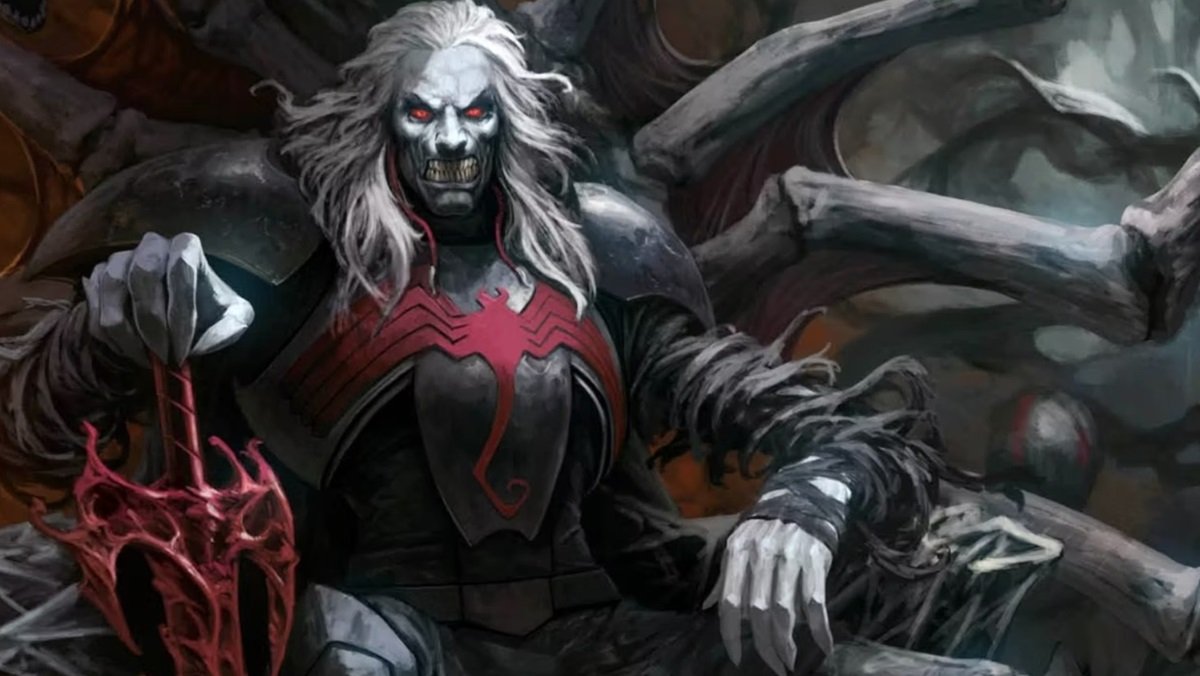
Recent reports indicated that the fourth installment in the Tom Holland-led franchise underwent an overhaul that saw it evolve from a street-level team up to a multiverse story and recent rumblings have begun to reveal the nature of the new script written by Spidey vets Chris McKenna and Erik Sommers. Should the latest rumors prove true, Marvel Studios and Sony will expand their collaboration beyond their already impressive efforts and will oversee a creative crossover event of unprecedented magnitude. An increasingly louder and louder buzz points towards Marvel incorporating Sony’s most marketable Spidey-adjacent star, Tom Hardy, into the MCU following Venom: The Last Dance. Furthermore, as Hardy’s Eddie/Venom joins the narrative, so will the film’s villain, Knull, the creator of the symbiote race and one of Marvel Comics’ most powerful and frightening new villains. And incredibly enough, Knull has connections that extend well-beyond the Spider’s web that could easily be weaved into the character’s MCU arc and, in doing so, make good on a pair of moments that currently sit near the top of the studio’s list of recent missteps.
As fans prematurely bemoan Spider-Man 4 potentially telling “another multiverse story” (like the last one was sooooooo bad), the true nature of Knull and the storytelling potential it offers is being overlooked. Sure Spider-Man: King in Black would feature two characters who originated in a universe other than Earth-616’s but recent retcons to the history of the Klyntar have blazed a trail that, quite honestly, Marvel Studios’ Parliament would be foolish not to explore on the MCU.
The Retcon is On…Hopefully
Retcons have allowed comic book writers the ability to make changes great and small to previously established canon in order to make room for (sometimes) exciting new stories. So far, this is territory into which the MCU hasn’t waded very far but should they choose to work with Sony to bring the terrifying King in Black into their sandbox, they have a great opportunity to easily retcon some small pieces of previous films which might, in the end, make them feel a little more important.
Thor: Love and Thunder had plenty of problems and though the film’s cold open wasn’t one of them, the type of increased creative collaboration with Sony that would allow Marvel Studios to include Knull in Spider-Man 4 could work in favor of at least making the fourth Thor film feel a bit more important than it did. Though it wasn’t seen on screen, the battle between Gorr’s god, Rapu, and the Dark Shadow Lord that left the former dead played out on the pages of 2013’s Thor: God of Thunder #6. However, in Jason Aaron’s iconic run, the character who fought the gold-armored god (and was stabbed in the melon by a spear!) was Knull. And just as in the film, and as one might expect from being stabbed in the head, Knull appeared to be dead and his Necrosword was scooped up by Gorr, who then used it to butcher gods across the cosmos.
It took Knull more than one hundred years to recover from his wounds. After his recovery, the primordial god began to use his powers to create the symbiotic parasites that eventually became the Klyntar race of which Venom is a member. It’s not entirely clear how long Gorr was actively killing gods in the MCU but the point of retcons is that it doesn’t really matter. Thor: Love and Thunder‘s Dark Shadow Lord could easily be retconned as Knull and the Shadow Realm and Shadow Monsters Gorr had access to in the movie could easily be tied to Knull’s title as the King in Black and the god of darkness. Truthfully, it would be incredibly foolish of Marvel Studios not to take advantage of the opportunity to make these changes should Knull be part of the plans for the MCU’s Multiverse Saga.
Thanks to one of the film’s stingers, Kit Harrington‘s Dane Whitman seemed to be destined to do…something…after Eternals. Whitman’s destiny as the Black Knight was teased before being interrupted by the offscreen voice of Samuel L. Jackson‘s Nick FuryMahershala Ali‘s Blade. Two years later, Blade still hasn’t even begun production and Harrington‘s MCU future remains dishearteningly undefined. However, Whitman’s Ebony Blade could be the key to unlocking the potential of one of those two characters and possibly even both.
Marvel Studios has made it clear they’re not interested in pulling directly from the pages of Marvel Comics and in this case, that could work in their favor. Whitman’s Ebony Blade has an interesting history that itself was retconned during the King in Black limited comic book series. Its MCU history is completely unknown which means the creatives have been handed a blank slate and could smartly craft something that could allow Harrington to bolster the supporting cast of Spider-Man 4 while making the Ebony Blade an important MacGuffin in the battle against Knull.
While there once was some chance that Harrington might lead a Black Knight solo project that could serve to tell the long history of the Ebony Blade and the cursed knights who wielded it over the years, that’s incredibly unlikely to happen now given Disney’s new marching orders for their major studios. However, tossing Whitman into the mix of Spider-Man: King in Black would allow for a far more condensed version of the story to be told, as happened in the King in Black event series. And while a one-to-one adaptation of that won’t happen, that’s in the best interest of the potential story. For a long time now, Marvel Studios’ plots have always been simpler than those speculated or made up by fans and it could happen again with Whitman’s Ebony Blade. In the comics, the blade was forged from a substance known as Starstone which was created during the Big Bang. A powerful relic from the beginning of time, the Ebony Blade was sought after by Knull during his attempted conquest of Earth. It’s easy enough to imagine Knull, an Eldritch god who himself came to be during the birth of the cosmos, seeking out such a relic as he comes to Earth-616 in Spider-Man 4, giving Whitman a reason to have existed in the MCU in the first place and allowing for the Eternals‘ stinger to have some serious significance rather than being yet another throwaway scene. Ali’s Blade could provide some exposition while also helping fight off Knull’s horde of invaders and most everyone would start feeling quite a bit better about most everything.
Of course, everything you just read is dependent, first and foremost, on the rumors of Knull joining the MCU being accurate. Beyond that, it’s not hard to start to see pathways that would allow for “yet another multiverse” movie to be one of the more exciting films in what remains in the Multiverse Saga while also upping the profile of some of the MCU’s less-than-beloved projects from its first half.
With Deadpool & Wolverine now available digitally after a record-breaking theatrical run, some fans are catching the buddy comedy for the first time from the comfort of their home theater. Though Ryan Reynolds and Hugh Jackman are the film’s stars and the ones out to save the day, they get plenty of help from a surprising group of heroes.
Despite being made by Marvel Studios and containing a scene set in the MCU’s Sacred Timeline, most of Deadpool & Wolverine takes place on Earth-10005, multiple other Earths across the Multiverse or in The Void at the End of Time. While there’s plenty of fun had as Wade hops from Earth to Earth in search of the right Wolverine for the job, it’s in The Void where the film really flexes its creativity, bringing in a ragtag team of washed up heroes known as The Resistance. The Resistance generated a lot of buzz during the film’s theatrical run and is likely to do so again as the project’s second life begins. So, who are the characters who make up The Resistance and why are they there? Let’s take a look!
The Members of The Resistance
Johnny Storm/The Human Torch
Played by: Chris Evans
References: Fantastic Four (2005) and Fantastic Four: Rise of the Silver Surfer (2007)
The first member of The Resistance met by Wade and Logan, Johnny Storm also meets a horrible fate at the freaky hands of Cassandra Nova. The film cleverly exploited Evans‘ return, baiting the audience into believing they might be seeing the triumphant return of Captain America. While that didn’t turn out to be the case, Evans gave Johnny a proper sendoff which includes a profanity-laced tirade for the ages.
Thank you to Ryan Reynolds, Hugh Jackman and Shawn Levy for letting me be a part of such an incredible movie! They’re three of the nicest guys you’ll ever meet. Special thank you to Ryan for making it all happen. Playing Johnny again was a dream come true and he’ll always have a special place in my heart.
Chris Evans
Elektra Natchios
Played by: Jennifer Garner
References: Daredevil (2003) and Elektra (2005)
After debuting as the character along Ben Affleck‘s Matt Murdock/Daredevil in 2003 and leading an Elektra film in 2005, Jennifer Garner suited back up as the assassin almost 20 years later and didn’t miss a beat.
I didn’t know that Elektra and I needed an ending, but Shawn and Ryan did. They are gifted in many ways, but seeing and elevating people around them is at the top of the list.
Jennifer Garner
Eric Brooks/Blade
Played by: Wesley Snipes
References: Blade (1998), Blade II (2002) and Blade: Trinity (2004)
A decade before the MCU kicked off with Iron Man, Wesley Snipes brought Blade the Vampire Hunter to the big screen, lending legitimacy to superhero properties and changing the pop culture landscape forever. Despite Reynolds and Snipes having a fairly well-known feud with one another while filming Blade: Trinity, Reynolds reached out and the two found a way to not only bring Blade back but give him the proper send-off he never got.
Well, if you can make it happen. Sure. I’ll come and do it. I did not think it was possible. I didn’t think he would be able to pull it off. I didn’t think that Marvel was into it. Disney was into it.
Wesley Snipes
Remy LeBeau/Gambit
Played by: Channing Tatum
Reference: None
Though a version of Gambit appeared in the absolutely awful X-Men Origins: Wolverine, there’s little more to the story of this particular version portrayed by Channing Tatum. When Disney and Fox merged in 2019, Tatum’s long-developing Gambit film went by the wayside as the Fox X-Men franchise was euthanized. Tatum’s passion for the character came through in Deadpool & Wolverine, leading for fans to call for his return as the Cajun down the road.
I thought I had lost Gambit forever.
-Channing Tatum
Laura/X-23
Played by: Dafne Keen
Reference: Logan (2017)
Dafne Keen first starred as X-23, a clone of Wolverine, in 2017’s Logan and instantly became a fan favorite. While her return to the character was rumored months ahead of the film’s premiere, Keen kept the secret from almost everyone. Unlike the other members of The Resistance, Laura eventually ended up on Earth-10005, seemingly promising more in store for the character in the MCU.
Shawn [Levy] told me this lovely story about him reading this scene where Deadpool was telling Wolverine about X–23, and thinking, ‘Maybe we should just have X-23.’ She’s a big emotional motor for Wolverine, and Wolverine is her entire emotional motor.
Dafne Keen
Deadpool & Wolverine is now available for purchase on digital platforms.
The two-episode premiere of Agatha All Along certainly didn’t disappoint the legions of fans who had been waiting to return to Westview. Star Kathryn Hahn stepped right back into the role of the spellbound Agnes O’Connor before quite literally stripping away the layers that created that persona until Agatha Harkness reemerged. And while fans are rightfully looking forward to Agatha and her coven of chaos making their way down the Witches’ Road, series’ creator Jac Schaeffer had a good old Easter egg hunt planned first.
Before Agatha escapes the spell cast on her by Wanda Maximoff, she finds herself living out her days as a Westview PD detective. As she works a mysterious murder case, Detective O’Connor grows frustrated in her attempts to deduce any reasonable conclusions from the clues she’s collected which include a familiar-looking locket. Upon returning home for the evening, a distressed Agnes opens a door to a room in her house which, in turn, opens a great big can of worms related to one of the central mysteries of the series.
Revealed to be the room of her son, the room is shown to be filled with drawings, trophies and otherwise everyday kid stuff…but there’s no kid. Oh, and the kid who isn’t there: it’s Nicholas Scratch. Son of a bitch!
Who Is Nicholas Scratch?
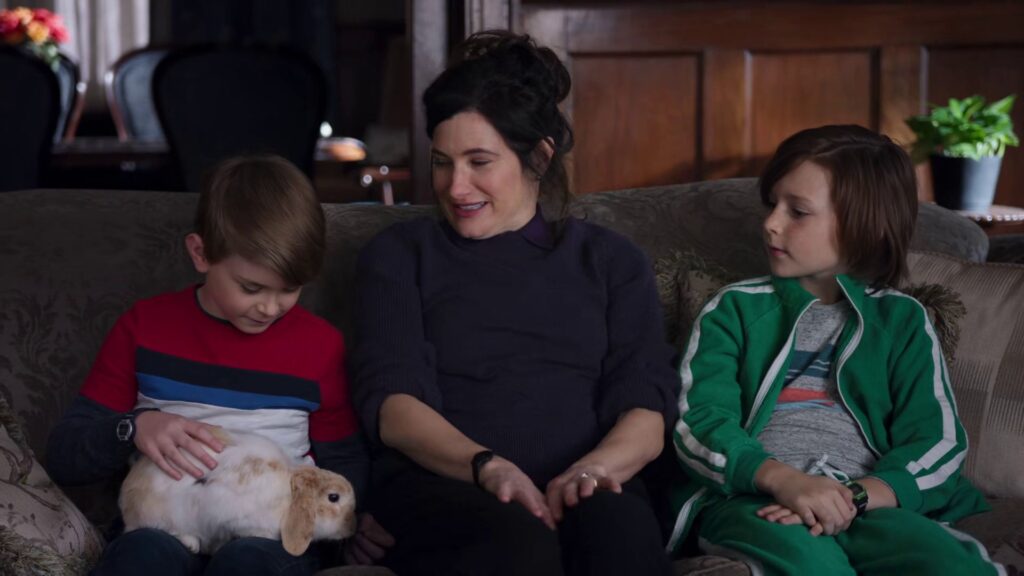
Like his mother, Agatha’s comic book son, Nicholas Scratch, has a bit of a sordid history. Scratch was referenced as somewhat of an Easter egg in WandaVision, with Harnkness’ pet bunny (who returns for Agatha All Along) sharing the name, but in the comics, he was a powerful warlock in his own right who had less than a loving relationship with his mother.
Schaeffer smartly seeded Scratch into the tapestry of Agatha All Along out of the gate…and Episode 1 is hardly the last time he’ll be referenced.
Scratch’s presence in Agatha All Along has been predicted and debated since the series was announced and speculation reached a fever pitch when Joe Locke was cast in a role that has yet to be fully disclosed. Despite some evidence to the contrary, dozens of dedicated fans of Nicholas Scratch and at least one once prominent “leaker” held fast to the belief that Locke was cast as the son of Agatha Harkness.
Unsurprisingly, Schaeffer not only refuses to resolve the debate over the course of the first two episodes but rather encourages further discourse around it. The recovery of Agatha’s Neopaganistic Triple Goddess broach/locket complete with a lock(e) of curly dark hair shrewdly sustains the suspense over the true nature of Locke’s character, providing hope to the Nicholas Scratch fan club, now 36 strong.
The two-episode premiere of Agatha All Along set the stage for plenty of mystery and mischief to unfold over the next six weeks. Though there truly wasn’t much mystery behind the identity of Episode 1’s murder victim, there are still plenty of questions left unanswered by the end of the series’ double-dip debut. There seems to be much to discover about Aubrey Plaza‘s Rio Vidal and her past with Agatha Harkness and, of course, the true identity of Joe Locke‘s Teen will haunt theorists and speculators for the duration of the show. However, creator Jac Schaeffer may have already given away more information about who Teen truly is than you might think.
Episode 1 of Agatha All Along, “Seekest Thou The Road”, makes an overt effort to drag viewers in one particular direction when it comes to the true identity of Teen. While still trapped within Wanda’s spell as Agnes, it’s revealed that Agatha once had a son named Nicholas Scratch. If that name isn’t too familiar to you, you’ll be forgiven, but it is a name that fans and leakers alike threw around as the “true” identity of Locke‘s characters dating back to when he was cast in the series. GIven the way Episode 1 plays out, it’s understandable that fans might conclude that Locke is Scratch; however, the devil (Mephisto!!) is in the details.
Misdirection is well utilized by magicians and it seems as though Schaeffer has employed some “look over here” type shenanigans in Episodes 1 and 2. While fans are busy Googling Nicholas Scratch, growing his fan club to nearly 4 dozen, Detective Agnes O’Connor dropped a fairly important clue of her own in Episode 1 that likely went unnoticed. When she was visited at her home by Rio Vidal, Agnes mentioned a car crash that took place one hour before the time of death of the murder victim she found in the creek. When found in Eastview, the car’s front two airbags had been deployed and there was blood in the backseat. Though Agnes is sure there’s some connection to the dead body that was recently discovered, she’s unable to make all the pieces fit. However, her intuition is sound as the car accident is very likely related to the true identity of Locke’s character.
Schaeffer has sprinkled clues to the identity of Locke’s character everywhere and more will pop up as the show goes on. Everything seen and heard in the first two episodes was seen and heard for a reason. Agnes’ conversation with Rio about the car would be completely unnecessary if it weren’t going to come back into play sometime down, down, down the road. And while the full reveal hasn’t come along just yet, Episode 2 holds further clues that tie to the car accident. While Teen and Agatha go witch shopping, they hop into Teen’s car…or at least a car he says is his.
While Teen is clearly comfortable with the vehicle and familiar enough with its contents to know that there’s a pen in the dashboard compartment, there’s at least one compelling reason to believe that it doesn’t belong to him but rather to his mother. Remember that lovely string of pearls that Agatha “borrows” from the mirror and wears around her neck while collecting the coven? That might just be one of those clues you were supposed to notice but missed. And why might that matter?
If he’s not Nicholas Scratch, Teen is probably Billy Kaplan, a character he’s looooong been rumored to be. And if he’s Billy Kaplan, he’s also Billy Maximoff, kind of…and it’s all pretty confusing how that works out; however, it’s very possible that the car crash has a lot to do with how Billy Maximoff’s disembodied soul might find its way into Billy Kaplan’s body. Unless you had the captions on, you probably missed the dialogue in Episode 2 that revealed that Teen was born and raised in Eastview…where the car crash happened. Delievered during a conversation with Agatha in which she realized she couldn’t hear him speak, it may have seemed like some throwaway lines that were just part of the sigil gimmick but pretend for a minute that it wasn’t. One possible explanation that does provide a somewhat reasonable explanation for what’s going on is that Billy Kaplan died in a car crash, his body was taken over by Billy Maximoff’s soul, he abandoned the car found his way to his house where he took his mom’s car and hatched his plan to get down the Witches’ Road. And why might it be his mom’s car? That string of pearls looks just like the one worn by Rebbecca Kaplan, Billy’s mom, in Avengers: The Children’s Crusade #1.
It’s all conjecture at this point but as the show progresses and we all continue to wonder what Agatha is up to, what’s up with Rio and what surprises await down the Witches’ Road, keep in mind that the most innocent member of the group might just be the one dissembling the most and hiding his true intentions.
The first two episodes of Agatha All Along are now streaming on Disney Plus.
Cookie Consent
We use cookies to improve your experience on our site. By using our site, you consent to cookies.
This website uses cookies
Websites store cookies to enhance functionality and personalise your experience. You can manage your preferences, but blocking some cookies may impact site performance and services.
Essential cookies enable basic functions and are necessary for the proper function of the website.
Name
Description
Duration
Cookie Preferences
This cookie is used to store the user's cookie consent preferences.
30 days
These cookies are needed for adding comments on this website.
Name
Description
Duration
comment_author_email
Used to track the user across multiple sessions.
Session
comment_author_url
Used to track the user across multiple sessions.
Session
comment_author
Used to track the user across multiple sessions.
Session
Statistics cookies collect information anonymously. This information helps us understand how visitors use our website.
Google Analytics is a powerful tool that tracks and analyzes website traffic for informed marketing decisions.
Contains information related to marketing campaigns of the user. These are shared with Google AdWords / Google Ads when the Google Ads and Google Analytics accounts are linked together.
90 days
__utma
ID used to identify users and sessions
2 years after last activity
__utmt
Used to monitor number of Google Analytics server requests
10 minutes
__utmb
Used to distinguish new sessions and visits. This cookie is set when the GA.js javascript library is loaded and there is no existing __utmb cookie. The cookie is updated every time data is sent to the Google Analytics server.
30 minutes after last activity
__utmc
Used only with old Urchin versions of Google Analytics and not with GA.js. Was used to distinguish between new sessions and visits at the end of a session.
End of session (browser)
__utmz
Contains information about the traffic source or campaign that directed user to the website. The cookie is set when the GA.js javascript is loaded and updated when data is sent to the Google Anaytics server
6 months after last activity
__utmv
Contains custom information set by the web developer via the _setCustomVar method in Google Analytics. This cookie is updated every time new data is sent to the Google Analytics server.
2 years after last activity
__utmx
Used to determine whether a user is included in an A / B or Multivariate test.
18 months
_ga
ID used to identify users
2 years
_gali
Used by Google Analytics to determine which links on a page are being clicked
30 seconds
_ga_
ID used to identify users
2 years
_gid
ID used to identify users for 24 hours after last activity
24 hours
_gat
Used to monitor number of Google Analytics server requests when using Google Tag Manager
1 minute
Marketing cookies are used to follow visitors to websites. The intention is to show ads that are relevant and engaging to the individual user.
Pinterest Tag is a web analytics service that tracks and reports website traffic.