Tag: Speed Racer

  • ‘One Piece’s Sandal Debate & the Live-Action Adaptation Rabbit Hole

    ‘One Piece’s Sandal Debate & the Live-Action Adaptation Rabbit Hole

    It’s nothing new that any live-action adaptation of anything has drama surrounding it, but there’s something “special” about the discourse of a manga or anime being brought to the West. We’ve long lived in an era where adaptations have been a pipedream as in the early days of Hollywood they’d simply adapt something for the sake of its popularity, such was the case with Avatar: The Last Airbender or Dragonball Evolution. Those involved seem to have a surface-level understanding of the property and simply rushed out a product that doesn’t reflect the thing most of us grew up with.

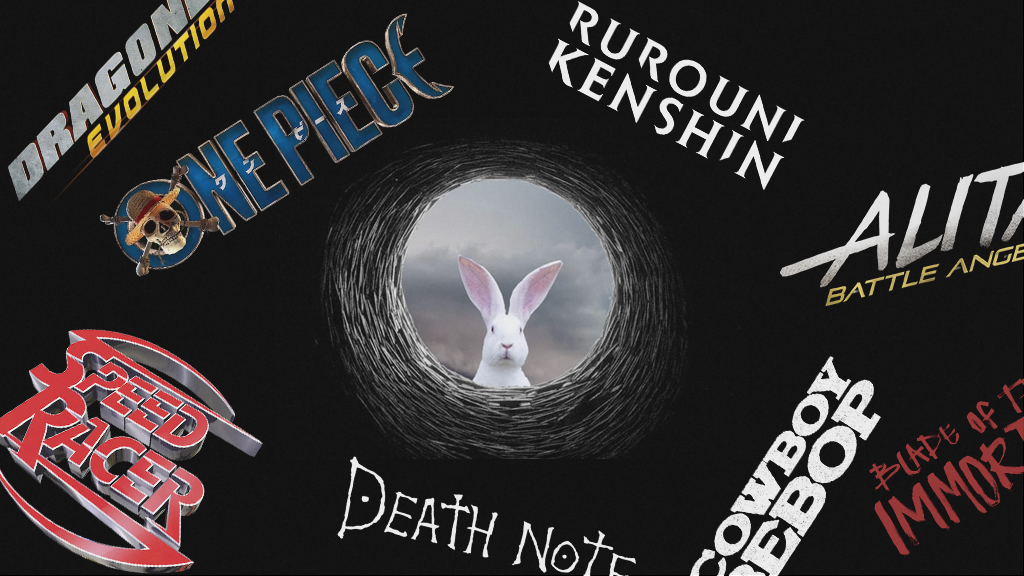
    Netflix hasn’t been that innocent either with their very Americanized Death Note and the recent Cowboy Bebop adaptation, which tried to take an existing property to create something a little more streamlined. Even the anime’s creator, Shinichiro Watanabe, openly spoke out about it was “clearly not Cowboy Bebop” due to a lack of involvement with the project. Even with the existence of actual good adaptations like Alita: Battle Angel, the Rurouni Kenshin movies, Blade of the Immortal, Speed Racer, and others, we still tend to hold on to that Dragonball Evolution comparison even to this day.

    The sad thing is that this focus kind of develops this overall negativity surrounding any discourse. Projects are “dead on arrival” long before we’ve seen anything that actually gives us a good feeling of what exactly we can expect from an adaptation. The same has now happened with the One Piece series with the first look at the Straw Hat crew. We’ve seen a variety of reactions as while there’s a good positive surrounding it, there are also quite a few reactions focusing on some curious details.

    The biggest may be the fact that Monkey D. Luffy, played by Inaki Godoy, does not wear his usual sandals but rather has shoes. Surprisingly no one has pointed out that Nami isn’t wearing her usual high-heels but the debate is if the sandals are a “must” for the character’s carefree attitude. Nami actress Emily Rudd even had to publicly point out that sandals aren’t safe for bringing the stunts to life, especially as they tried to do their own stunts throughout production.

    It’s understandable that people are protective of projects they love, especially something that has been running for 25 years. Yet, the main focus has been on the entire project falling apart and being terrible due to Luffy not wearing sandals. This “Sandalgate” sadly generally reflects a discourse on how the Internet generally handles any live-action adaptations nowadays. In the era of The Last of Us, Marvel films, and so much more, we have gotten quite spoiled by what is and isn’t possible.

    Yet, we see a lot of discourse of the most minute details as a “make or break” for any project. Moon Knight was highly discussed because it wasn’t “comic-accurate” enough but may be one of Marvel’s most diverse characters with a long history behind it. Even Thunderbolts are currently being scrutinized based on who is part of the team and we haven’t seen any footage of it so far. In the digital era, we have access to so much information that it also becomes a challenge to be part of the discourse.

    It’s also a showcase of how often certain groups reflect the same talking points. The Last of Us is praised for recreating specific shots but also dragged down for an episode that takes a character in a new direction, even going as far as having it review-bombed to make a point. Even with the creator’s strong involvement, it’s not something people focus on as we work with what we get. We create content and reactions to be part of the discourse, which subsequently leads to repetition.

    Luffy wearing shoes instead of sandals is sadly a strong reflection of that very discourse. In the end, it has no bearing on the quality of this series and serves a practical purpose. We know that live-action adaptations have to make changes due to the fact of it having real people involved, a different structure, and a media format to work with. To some degree, it feels like people want to be mad about something and don’t have a lot to go off from.

    At this point, it sometimes feels like people want to be upset. To some degree, it’s understandable, as most experiences people have had with live-action adaptations of anime and manga haven’t been the greatest. It also involving Netflix adds to that very concern. So, no matter the quality of the show, the online discourse is very likely going to be a nightmare; something Marvel fans might be familiar with given how each project ends up being discussed. We don’t know if it’s going to be good, especially not going off of a poster alone.

    It becomes even more depressing once you enter the discussion points surrounding Nami, who proclaim that she doesn’t “match Eiichiro Oda‘s original vision” given she doesn’t share the same body type as Who Framed Roger Rabbit‘s Jessica Rabbit. Not only is it an impossible standard to set but given Oda‘s heavy involvement, it creates a similar discourse like how people co-opt Stan Lee to reflect how they personally feel about whatever Marvel Studios is doing they don’t like.

    We’re sadly not learning our lessons but continuing to fall down a deeper rabbit hole. Based on a poster, we have no idea how One Piece will turn out. Some will be more optimistic than others, but there’s a certain level where the discourse becomes absurd. Is it a shame that Luffy doesn’t have his sandals? Yes, but we don’t know if there are scenes where he might still have them on but don’t involve any action.

    Even Netflix’s Cowboy Bebop fell victim to it due to the oversaturated reactions regarding Eden Perkins‘ performance as Edward or even just Daniella Pineda‘s take on Faye Valentine not being “revealing” enough like in the anime. The show had its faults but that is more in how it simply struggled to revive that unique spark that the anime offered us in our childhood back in 1998. It was less episodic and embraced the Bebop we know and love, but it wasn’t the cast.

    John Cho was a great cast Spike Spiegel, even if an older take on the character. Mustafa Shakir gave us an iconic Jet Black on top of it all. Pineda had her moments to shine even if her character was a bit of a departure from the original. Cho gave a heartfelt statement on losing out on the show given he was heavily injured shooting the series and was forced to take a year off. In our discourse, we tend to forget real people are working on these projects.

    Yet at the end of the day, we’ll always tend to jump the gun as fast as possible to be that trendsetter. Instant gratification can feel good and we get swept up by it all. Sadly, we don’t give chances like we used to, which creates a higher barrier of entry for any new project trying to establish itself. One Piece has a chance to do what The Last Of Us, Arcane, The Cuphead Show, and many more did for video game adaptations. But if we draw the line at sandals, we may have never deserved the projects we got.

    Source: YouTube

  • A Look Back at ‘Speed Racer’, a Misunderstood Masterpiece

    A Look Back at ‘Speed Racer’, a Misunderstood Masterpiece

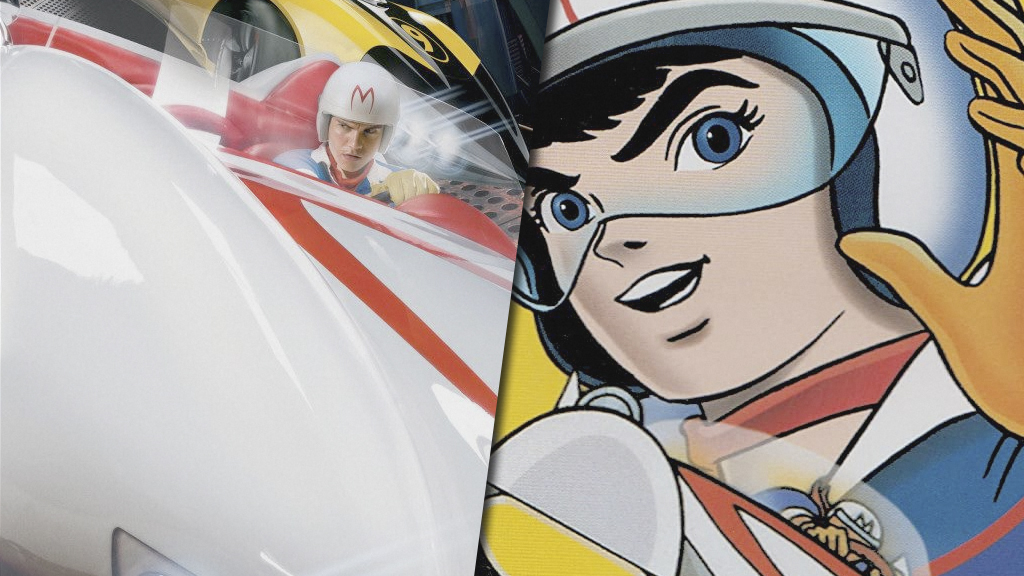
    With the recent news that Apple is working on a live-action Speed Racer series, set to be produced by J.J. Abrams, now is as good a time as any to take a look back at the Wachowski’s 2008 film adaptation of the iconic anime. Not only was the film critically panned, but it also bombed at the box office; however, Speed Racer is better than you remember. In fact, it’s much better than you remember.

    All that’s wonderful about Speed Racer can be explained by a look at the film’s best scene: the interaction between Speed and the film’s villain, E.P. Royalton. Royalton is the business magnate in charge of ‘Royalton Industry’, a company that manufactures cars and does lots of other things. Royalton is essentially Jeff Bezos, except with way more style. Bezos wishes he could rock a cravat like Royalton. At first, Royalton charms the Racer family, but after Speed thinks about Royalton’s deal, he declines, leading to one of the greatest villain monologues in history. But why is this interaction so amazing?

    As an animated franchise, Speed Racer is well-known for its transitions: heads, action lines, and cars, all present in this movie. However, there’s a pretty specific difference in the energy of these edits depending on what emotion the audience is expected to feel. In the middle of a tense race: quick transitions, blurs and lines that simulate speed. But when the scene has low-energy, the audience gets calm transitions, fades and a slow pan. The conversation between Speed and Royalton featured mostly the latter.

    Part of what is so brilliant about this interaction is that the conversation is a framing device for the race that follows. Royalton reveals that he is in complete control of the World Racing League and tells Speed that the Grand Prix is fixed and has been forever. Then he offers Speed a choice: sign or lose. Speed refuses, and then Royalton tells one last story.

    When Royalton tells Speed about the Fuji race, the camera shifts and Royalton materializes a transition that we have only seen before in races, the races controlled by Royalton. It’s his world, and the Wachowski’s use the editing technique to demonstrate that. The screen becomes a blur that ends with Speed in the cockpit of the Mach 5, concerned and uncomfortable. Royalton is able to put Speed in a difficult position because of how much control Royalton has over the race.

    Royalton’s speech to Speed about Carl Potts, the racer he’d never heard of who was actually part of a complicated business maneuver can be jarring. After all, this would be tough to follow in The Wolf of Wall Street, and at least in that movie, every so often we’d recognize a ‘Lehman Brothers’ or ‘Macy’s’. The specifics of the sales mergers associated with Carl Potts and the ’43 Prix are borderline nonsense. We don’t know what ‘Iodyne fuel cells’ are or why they are valuable. But Royalton does, and that’s the point. If Royalton is going to win, it is because he understands this world in a way that we and Speed fundamentally don’t. And no matter how well Speed races, the business behind it all will always keep him from winning. We see this issue come up earlier when Rex was killed during the Casa Cristo Rally race by mobsters that were fixing the sport. And then later, Taejo Togokahn will betray Speed so that his company could drive up the price for their own merger. This world is just too complicated for Speed, and Royalton’s tone while explaining these business dealings spells that out for us.

    Every good villain serves as a dark reflection of the hero. The ‘how’ is super vague, but they usually share some trait or value. Spider-Man and Vulture are both working men. Spider-Man and Doc-Ock are both scientists. Spider-Man and Lizard are both experiments/urban legends. At first blush, it seems like Speed and Royalton have pretty much nothing in common. Sure, they both have ties to the racing industry, but what’s so interesting about Royalton is that he’s actually way more like Speed than almost any other character in the movie. Royalton wants one thing at the end of the day: to win. Not just the race, although that’s part of it, but Royalton views the collection of money as a competition. Royalton talks about being in the gains record book; “the only record book that matters.” And he describes the specifics of the company buyouts that led Iodyne Industries to corner the market on air travel the same way the Racer family talks about building a car. Racing is Speed’s life, his religion. And for Royalton, racing is a part of his life, a tool for his religion. After all, the race isn’t really anything more than an advertising opportunity for Royalton. Interestingly, Royalton doesn’t have anything specific he wants to do with it or have any rivals he wants to destroy with the money he wins. He’s been taught by a lifetime of keeping up with the sport and the business world that the real game is capitalism. He views the financial and legal forces that control Speed and his family as part of his own gain.

    Speed and Royalton are both fierce competitors who are playing different games, but with the same intensity. We never find out what Royalton’s values are that brought him to this point, or what family tragedy or father figure set him on this path, because we understand that sponsors and owners control sports in the real world. And in the end, it might not be that complicated. Speed wants to drive to win the race because he loves the race, and Royalton is Royalton for the love of the game, and his game is capitalism.

  • Live-Action ‘Speed Racer’ Series Heading to Apple, J.J. Abrams on as Executive Producer

    Live-Action ‘Speed Racer’ Series Heading to Apple, J.J. Abrams on as Executive Producer

    In the age of Netflix’s strong focus on bringing iconic anime and manga franchises to live-action, it seems that Apple is the next to throw its hat into the ring. It looks like Apple is working on a live-action adaptation of Speed Racer with J.J. Abrams set as its executive producer. It already got a series order with Ron Fitzgerald and Hiram Martinez writing, as well as executive producing the series. They will also act as showrunners.

    It’ll be part of Bad Robot’s deal with Warner Bros. Television. It’s the second live-action adaptation of the franchise with The Wachowskis still being a cult favorite from back in 2008. While not a financial success, the film found a new life online with its unique visuals. It’s unclear if that’ll be a more grounded take on the franchise, or if it’ll keep its more out-there concepts.

    It’ll be interesting to see how they embrace the anime’s roots as we meet a man whose actual name is Speed Racer, who takes on anime’s original Wacky Races with a Mach 5. He works with his girlfriend Trixie, his father, little brother, and their pet chimpanzee, Chim-Chim, to take on the world. It would be great to see if they pay tribute to some of the cast from the original film, who might be open to returning.

    Source: Variety