Tag: Turning Red

  • ‘Turning Red’ Director and Producer Share Hopes for a Sequel

    ‘Turning Red’ Director and Producer Share Hopes for a Sequel

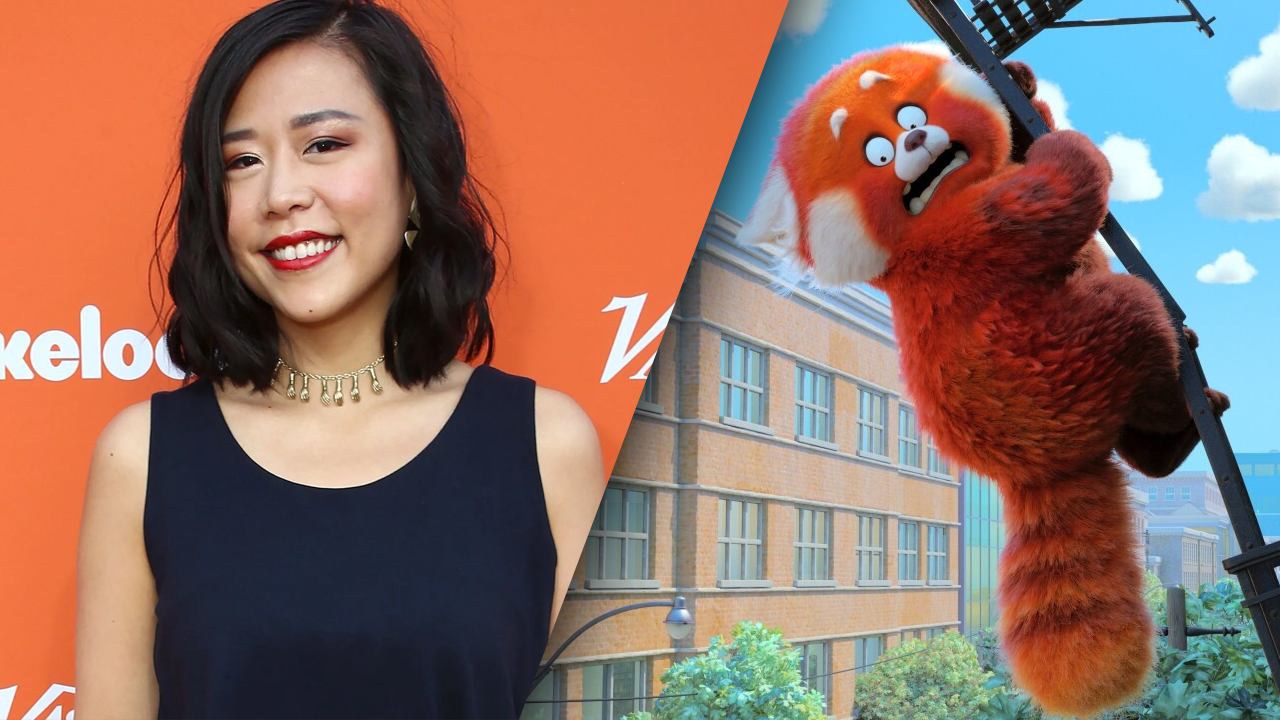
    Director Domee Shi brought a heartwarming story about puberty and family to Disney+ with Turning Red. We get to meet a colorful cast of characters, who introduce us to the magical land of Canada. Jokes aside, our time with Meilin and her friends offers quite a few cute and awkward moments that any teenager goes through. Even though it just arrive don Disney+, there’s quite some interest in a sequel that further explores Mei’s time as a giant red panda and seeing her get to spend more time with her friends. Luckily, Shi has revealed that the ending was meant to keep the door open for more..

    We are open, but we haven’t talked about it. But yeah, it’s an invitation at the end for more stories.

    Domee Shi

    Producer Lindsey Collins also highlights that they hope the audience connects with the film’s cast and that it keeps people wanting a chance to spend more time with them.

    Hopefully, at the end of a movie, you’ve fallen so in love with the characters that you have a hard time letting them go. I mean, as the filmmakers, not even as the audience, I feel that way. I love these characters. I never got tired of them. I was always like, ‘I’d go hang out with those characters again.’ I want to see what they’re up to. So, yeah. Who knows?”

    Lindsey Collins

    While there are no definite plans, it does seem like the team behind the project is definitely all in for a sequel. With Disney’s new streaming home, they aren’t restricted to just a film and could also explore a TV series. They have also been quite vocal about other animated projects being franchises that will continue to grow, and Turning Red is a perfect addition to their ever-growing library moving forward. So, here’s hoping.

    Source: Comic Book

  • EXCLUSIVE: ‘Turning Red’ Producer on The Film’s Big Finale

    EXCLUSIVE: ‘Turning Red’ Producer on The Film’s Big Finale

    Warning: spoilers for Turning Red below

    The intimate story of Turning Red takes a huge turn in the finale when it turns into a massive fight rivaling a tentpole superhero movie. The sequence, which both director Domee Shi and producer Lindsey Collins confirmed to be hardest to get right, shows a big kaiju fight among family members.

    In an interview with both Shi and Collins, I asked how early in the writing process did they come up with such a left turn for the story. Collins had this to say:

    A version of it was in there from the get-go. Not [the final] version but we always had this desire to have this kind of normal mother-and-daughter argument set against this massive monster scale. Especially if you’ve been bottling up that kind of argument for that long, it’s what that feels like. When you finally release all that pent-up anger, frustration, and sadness, it’s like a monster.

    Turning Red’s finale almost makes the story collapse on itself but thanks to Shi’s incredible story instincts, the finale remains tethered to the movie’s most crucial themes. It’s a finale that will go down as one of Pixar’s most memorable ones undoubtedly.

  • EXCLUSIVE: Domee Shi on ‘Turning Red’s Humor and Horror

    EXCLUSIVE: Domee Shi on ‘Turning Red’s Humor and Horror

    More than any other Pixar film, it’s Turning Red that taps into the sensibilities of preteens the most. A film about a preteen going through puberty, the film tackles themes and topics that otherwise wouldn’t be covered by a Disney film. Topics like those inevitably come with a sense of humor apt for its age range, which is what allows Turning Red to be funny in a way audience haven’t seen in a Pixar movie.

    Jokes about strippers, crushes, and bodily changes are some of the things Turning Red doesn’t shy from. I spoke with director Domee Shi and producer Lindsey Collins and asked how they got the green light to do such suggestive jokes. Collins admitted that she was surprised when the executives didn’t bat an eye.

    There are certainly a couple of moments in there that I was surprised we didn’t get pushed back for. I was kind of half-expecting it. But they didn’t. For the most part, they knew the film they were getting. They knew the filmmaker they had. We were also unapologetic from the very first screening. They had the opportunity to say “Uh oh” but they didn’t.

    Shi was confident about their choices, saying that a lot of the jokes were rooted in important character work and thematics.

    We also could defend those decisions too. All of the humor was connected to themes of the movie which were girl adolescence, puberty, and generational perspectives.

    Early in the movie, Turning Red shows a dream sequence that is utterly bizarre and borderline unsettling by Disney standards. In line with the earlier question, I asked Shi what prompted them to create a scene inspired by filmmaker David Lynch and how it tied into the film’s themes.

    I’m so glad you mentioned David Lynch. He was an inspiration for that part. There was an even scarier version that we cut. The version you guys saw was a scaled-back version. I like it because it’s kind of weird and it elicited a lot of laughter from the audience. My intention behind the sequence was that it’s the night that puberty arrives. So what does puberty look like as a dream? It is very Lynchian and nightmarish and weird and funny.

  • REVIEW: ‘Turning Red’ Will Be Your Next Favorite Pixar Film

    REVIEW: ‘Turning Red’ Will Be Your Next Favorite Pixar Film

    There are two particular jokes in Turning Red that are emblematic of the comedic brilliance of director Domee Shi and co-screenwriter Julia Cho and the confident maturity that Pixar has allowed the film to reach. The first occurs early in the film where protagonist Mei reveals her newfound disposition to her best friends. Her erratic and unpredictable transformations into a red panda have put a halt in their plans, mainly their endgame of attending the upcoming concert of the boy band of their dreams, 4*Town. With a whimpering straight face, 13-year old Mei tells her friends, “Go become women without me.” The second happens shortly after when Mei’s friend Abby shares her displeasure at not being allowed to attend the concert by her parents, “Mine called it stripper music. What’s wrong with that?” 

    Humor is one of the many defiant traits that comprise Turning Red’s identity. The film, in more ways than one, is akin to its protagonist Mei Lee in that both are at constant odds with their responsibilities and selves. Within the Pixar canon, Turning Red posits itself as the true rebel of the catalog; brash, anarchic, and spunky just like Mei. Pixar films have long examined complex thematics, especially with Pete Docter’s existentialist double-feature Inside Out and Soul, from a heightened fantastical perspective, oftentimes through characters resembling small children. 

    Soul had 22, a down-on-her-luck soul who can’t seem to find her purpose in life. Then there’s Finding Nemo’s Dory, who in her childlike naivete finds the will to find lost family in the unfathomable ocean. Turning Red departs from this mold with a 13-year old protagonist on the cusp of puberty. The film’s themes, while existentially complex in every sense of the way, are no longer just emotional concepts but physical ones as well. Faced with the overwhelming deluge of hormones, Mei begins to experience everything around her change; her body no longer feels the same, boys elicit feelings she’s never felt, and her parents no longer resonate the same way they did. Both the emotional and physical conflicts Mei and her friends experience allow the space for the filmmakers to examine them through the cultural lenses of a teenager in 2002, all without mincing words. 

    Domee Shi frames this semi-autobiographical tale in 2002, the cusp of 90s nostalgia and the burgeoning days of handheld tech. A child of that era, Shi uses the cultural touchstones of the era to explore how the characters behave among them. Tamagotchis, flip phones, the first wave of Nokia (or in this case, Jokia) phones, and the boyband antecedents of the era all play a key part in defining who these kids are. The songs by 4*Town – written by Billie Eilish and Finneas – are a particular standout. The duo fuses the new jack swing sound of 90s pop with the dance-pop hooks of the 2000s and the modernity of hi-fi KPOP to create a vibe perfect for this version of 2002.

    Contrary to its unruly sense of humor, Turning Red does live up to the Disney brand with its profound and tender sense of heart. Central to this heart is Mei, her mother Ming, and their relationship that keeps that heart beating. Mei, like most Asian children, is weighed down by the expectation of duty and excellence from her stern mother. She’s the top of her class, diligent with extra-curricular activities, honors the family business yet every now and then, feels the urge to not be any of those. It’s only when a generational curse spanning centuries turns Mei into a red panda that those feelings are challenged. By extension, Ming’s role as the well-meaning yet faultless, absolute decision-maker in Mei’s life is also put to the test, as her own dormant trauma is unearthed. Their relationship soon becomes a tug of war between a daughter fighting for identity and a mother escaping from her trauma. 

    Caught in that tug-of-war are Mei’s friends, who prove to be one of Pixar’s most memorable ensembles in years. Made up of the deadpan Priya, the easygoing Miriam, and the hooligan Abby, whose frenetic wit stands out as a constant scene-stealer, the ensemble is to thank for the film’s funniest and most charming moments. Each of them brings a vibrant authenticity that holds the milieu of the early naughts together. They also not only serve as Mei’s support system but also as a tether to her identity. When the mother-and-daughter conflict comes into view, it’s the friends that are caught in the crossfire. The eventual drama that branches is not only somber but also powerful.

    Turning Red nearly falls apart when the torrential family crisis threatens to be an unwieldy explosion of spectacle in its third act; reaching near-superhero levels of scope and literal scale rather than maintaining the intimacy of its earlier conflicts. But director Shi is quick to demonstrate the control she has over the material as she tempers the climax with the emotions of all the characters involved. As the set-piece grows larger, so do the themes that underpin every character’s decision. Character is never lost in the spectacle but also given a chance to shine in a way previous scenes could not. The resulting finale is one that’s not only exhilarating but also full of heart.

    Both Mei and Ming are underpinned by fantastic performances from Rosalie Cheng and Sandra Oh respectively. Cheng, who was originally hired as a stand-in while the production looked for the actor they needed, gives a performance so dimensional that you’d be forgiven for thinking she was voicing her 20th animated film. Mei displays a charming yet weighty tenacity onscreen that could only ever work through the candor and earnestness Cheng yields from her voice. The ever so graceful Sandra Oh braces Cheng’s performance with a commanding warmth she engenders in Ming’s spirit. From the mere timbre of her voice, Oh envelopes each scene with a gravitas that gives the space for Cheng to be delicate and vibrant. Though the solemn gravitas eventually seethes into thunderous roaring, Oh never forgets to make it feel heartfelt. 

    But voice performances can only be so good as a singular element. It falls on the craftsmanship of the animators to make these performances palpable to the eye. Fortunately, Turning Red also happens to be the most expressive Pixar film to date, utilizing a spectrum of techniques derived from anime. An art form known for its stylistic excess, the film embraces the ethos of anime and uses every opportunity to be playful and experimental. Western animation sensibilities are broken frequently as facial expressions frantically contort to mischievous proportions; a star pops up in Mei’s eyes when she’s elated; her pupils shrink to a dot when startled or turn into crescent shapes; giant tears droop from her eyes in times of sadness. Because of this choice, every emote in Turning Red speaks volumes.

    Meeting Turning Red‘s anime influence halfway is Pixar’s fidelity to vibrancy and richness. The film’s palette is aptly dominated by hues of red but is also counteracted by Domee Shi‘s vision of a watercolor painting rendered in full 3D. This visual aesthetic is most present during the film’s cutaway dream sequences, where vivid images of unsettling nightmarish creatures plague Mei’s dreams or hazy fantasies of 4*Town flash onscreen, and serene moments of introspection take place in the divine astral realm.

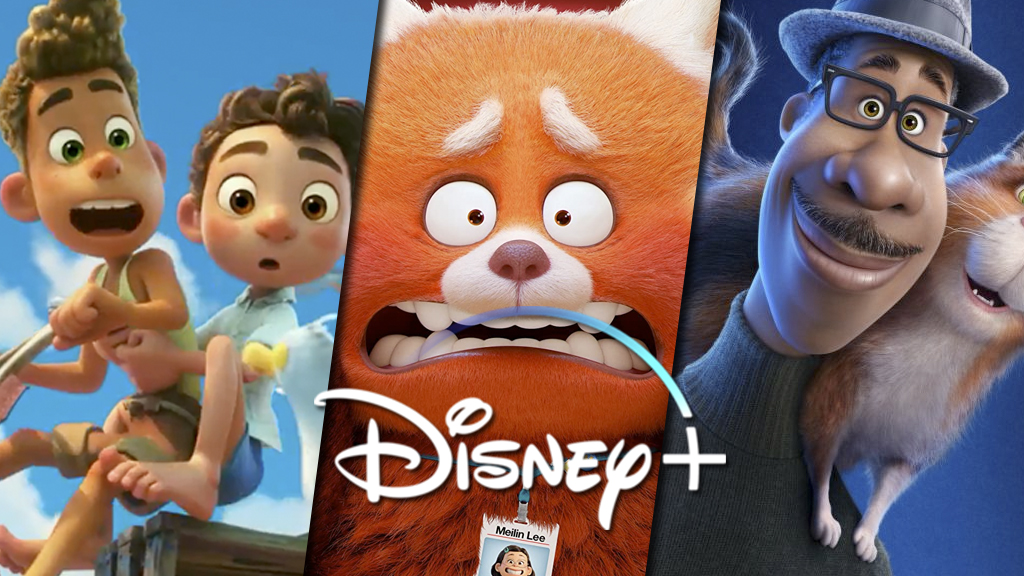
    Turning Red marks Pixar’s third consecutive win in a streak of original ideas beginning with Soul and followed by Luca. While franchise installments like Lightyear and Incredibles 2 make stakeholders happy, it’s films like Turning Red that tap into the ethos that made Pixar so great all those years ago. Domee Shi and co. have crafted a film that has all the makings of a Disney classic while embodying a personality and attitude that hasn’t been seen in any of their animated films prior.

  • Everything You Need To Know About ‘Turning Red’

    Everything You Need To Know About ‘Turning Red’

    March 11th sees the release of Pixar’s first offering of this year, Turning Red. Directed by Academy Award-winner Domee Shi, the film centers on a kid named Mei, a diligent, studious, and sassy pre-teen who one day wakes up as a giant, fluffy red panda. It’s up to Mei and her support system of friends and her mom to help her navigate life as she enters her first phase of adulthood.

    Murphy’s Multiverse were given the chance to attend the film’s press junket that had certain members of the production including Shi herself, producer Lindsey Collins, and their talented crew of production designers and animators. Here are a few things we learned from Turning Red:

    Director Domee Shi wanted to create a Pixar film with a female protagonist that was different from the other films

    Pixar films have always leaned towards the fantastical and otherworldly. Whether it’s about a superhero family trying to normal lives, a robot living in isolation a millennia later, or a journey through the afterlife, these films are usually far removed from what we recognize in real life. Turning Red seeks to upend that. According to director Domee Shi:

    When I first pitched the film, I really wanted it to feel different and unlike any Pixar film you’ve seen before.  This is going to be Pixar’s first contemporary teen girl protagonist and I really wanted the world to reflect her character: colorful, chunky and cute, bold and in your face just like Mei.  The term I used a lot to the crew was ‘Asian tween fever dream.’  We really wanted a fun, specific backdrop to tell this coming-of-age story, so we decided to set it in Toronto, Canada in the early 2000s. 

    The decision to keep it contemporary goes beyond the surface. The culture and norms of the era play a big part in giving the film such a distinct vibe. Shi adds:

    Not just because it’s when I grew up as a tween, but it was also the height of tween-of teen pop mania in the late 90s, early 2000s, you had those boy bands, pop idols.  We also just wanted to avoid social media and just kind of tell this story in a simpler time of flip phones, CDs, jelly bracelets, and Tamagotchis. 

    Rosalie Cheng was originally the film’s stand-in voice actor and not the star

    Rosalie Cheng had no idea she was going to be the star of Pixar’s next big film when she signed on for Turning Red. The plan was to have her voice the protagonist Mei to give the production crew a sense of the character while they were looking for the right talent for the job. As fate would have it, they eventually realized that Rosalie was the right person. Producer Lindsey Collins says:

    In our earliest version of this film, we found this local 12-year-old girl right here in the East Bay to record our temp voice for our lead character. And over the next year, we tried to look for other actors to replace her in the final film.  Frankly, nobody came close.  Rosalie Cheng had become the main character Mei and there was no other choice in our minds. 

    During the junket, they showed me and several members of the press a heartwarming clip of the moment they told Rosalie she was starring in the film.

    It’s a film about growing pains

    Turning Red is a lot of ideas rolled into one. It’s about puberty and the confusing physical changes that come with it. It’s about transitioning into adulthood while honoring yourself in the process. It’s about navigating through the cultures of your immigrant family while assimilating in a world that feels alien. As director Domee Shi described it, all of these ideas are distilled into a mother-daughter story about “finally embracing change and all of its messiness even if it means saying goodbye to the relationship they once had.”

    Expect some fourth-wall-breaking inspired by Lizzie Maguire and Ferris Beuler

    Protagonist Mei is as sassy as they come and with that sass comes the opportunity to have one with storytelling. Turning Red opens with a fun opening sequence that has Mei breaking the fourth wall. The inspirations for that choice are unsurprising but are welcome nonetheless. Shi said:

    I just wanted it to feel different, in every way.  And I don’t think we’ve done a fourth wall breaking sequence yet in a Pixar film.  And, you know, I grew up loving those classic teen movies like Ferris Bueller but also those terrible but awesome Disney TV channel movies, where they had very precocious, sassy fourth wall breaking characters, like Lizzy McGuire. I kind of wanted to just take that energy and put that in this movie.  It also kind of sets it in this nostalgic time period as well.

    Black Panther and Mandalorian composer Ludwig Goransson is doing the score

    Producer Lindsey Collins set out to form the best team, from top to bottom, to make Turning Red as great as possible. That task includes hiring the right composer to breathe new life to the striking animation. Collins settled on Ludwig Goransson, a composer and producer who has worked with the biggest artists today and has scored music for the biggest films. Collins had this to say about Goransson’s work on the film:

    He brought this perfect mix of traditional score and also a deep early 2000s pop knowledge to the movie. I will say that the leap Ludwig’s score took from early demos to final recording was mind-blowing.  I think largely because he added so many unique sounds and tracks on top of the traditional musicians’ tracks, it just made the film pop for us in a way that we were just thrilled for.

    Billie Eilish and Finneas wrote original songs for the film’s in-universe boyband, 4*Town

    Just as they set out to hire the best composer with Goransson, the production team also had the undertaking of hiring someone to compose songs for Turning Red‘s fictional in-universe boyband 4*Town. The boyband plays a huge part in Mei’s journey and therefore needed to be a realized thing. With the help of her kids, Collins’ first choice ended up being the songwriting partnership of Billie Eilish and her brother, Finneas.

    Billie Eilish was relatively unknown but adored by my kids in 2016, and her song Ocean Eyes was playing on repeat in our house.  So when we started thinking about songwriters who could capture the early 2000s sound and bring something fresh to it, Billie’s name came up.  After further research with the Disney music team, we had a better sense of Finneas and Billie and their influences, their style, and figured, you know, why not start with our dream choice? 

    To nab the biggest popstar and her equally successful producer of a brother, the production set out to make a notebook containing pictures, sketches, and diary logs – as if they were made by Mei herself – to convince them to board the project. The production was successful as Eilish and her brother said yes to Turning Red not too long after receiving the notebook.

    Their songs truly brought 4*Town to life.  Finneas actually even sings as one of the band members.  He’s Jesse.  In the end, they wrote three original songs for us. 

    4*Town was inspired by your favorite boy bands

    Being a kid of the 90s, it’s unsurprising to know that Shi drew inspiration from that particular generation of pop culture. 4*Town is made up of a hodgepodge of boy band influences that spans Backstreet Boys and the present-day crazy of K-pop.

    They’re definitely a homage to all the boy bands I loved growing up in the late ’90s and early 2000s: Backstreet Boys, N’Sync, O-Town, 98 Degrees.  We really wanted them to also feel like multicultural and even though they are like a homage to the boy bands of that era, we wanted to bring like a little bit of a modern touch to them too.  One of the boy band members, Tae Young, is a homage to the K-pop boy bands that I got into in-in college.

    Anime is a big part of Turning Red’s DNA

    Turning Red breaks the Pixar mold in a lot of ways, not the least of which is its distinct animation style that heavily draws from anime, a genre that Shi grew up loving. Animation supervisor Aaron Hartline revealed to the press the ways they sought to imbue a recognizable anime touch with Pixar’s signature hi-fi animation.

    We wanted to tap into Domee’s passion for the two genres of animation that she loves, anime being the East and Pixar Disney animation being the West.  Turning Red lives somewhere in between these styles.  We took influences from both genres and merged them together.  We often referenced anime eyes on this film.  And one of the great things about anime is that it’s not afraid to push the characters’ designs to the extreme.  The character’s eye shapes can be drastically different depending on the mood of the character. They even add hearts.  Basically, anything to help the characters emote.  In Turning Red, we wanted to use this same eye language.  We added stars, highlights, shrink the pupils down to tiny dots and create crescent shapes for her eyes.  Luckily, Domee had a really strong design sense.  She would give us drawings for how the characters should look.

    Aaron Hartline

    Turning Red premieres on March 11 in theaters everywhere and Disney+.

  • Pixar is “Really Bummed Out” On ‘Turning Red’ Heading to Disney+ Instead of Theaters

    Pixar is “Really Bummed Out” On ‘Turning Red’ Heading to Disney+ Instead of Theaters

    There has been a rather discouraging trend of Disney sending Pixar films to Disney+ for free. The prestigious animation studio was one of the leading voices in spearheading our modern understanding of CG-animated filmmaking. Yet, as the pandemic hit, things haven’t been easy for everyone in the industry. Especially with uncertainty if families will visit cinemas as they did before the pandemic started in 2020. As such, Disney made the move to release some of its films on their new streaming service.

    Strangely, there still is seemingly no clear strategy moving forward. Only select films were made available through their Premier Access options, where you can purchase the film for a set price. Yet, while their original and Marvel Studios offerings got the special treatment, Pixar’s Soul and Luca didn’t get the same. They were made available for free to push Disney+’s subscription numbers. Turning Red, their next film, was their big return to cinemas but ended up following the same fate. In a new piece by The Hollywood Reporter, they shared a statement by an anonymous Pixar employee on the situation.

    Everyone is really bummed, but most of us get it. Families just aren’t going to the movies

    They highlight that the company isn’t mad about the decision, but more disappointed. There’s a good chance that Encanto’s low box office numbers were one of the reasons they went down this route, especially. Sing 2, the most recent animated film to release in theaters, also didn’t fare much better if compared to pre-pandemic numbers. Here’s hoping that the current omicron development gets better so that Pixar can make its grand return to cinemas once again.

    Source: The Hollywood Reporter

  • Pixar’s ‘Turning Red’ No Longer a Theatrical Release, Heading to Disney+ Exclusively

    Pixar’s ‘Turning Red’ No Longer a Theatrical Release, Heading to Disney+ Exclusively

    Disney seems to be quick in making release decisions when it comes to their Pixar films. It transitioned the studio’s last few films like Soul and Luca to exclusive releases on Disney+ in a heartbeat. With the rising threat of the Omicron variant, Disney seems to have pulled the plug on yet another Pixar project that was initially set to hit theaters and moved it to their streaming service.

    Pixar’s upcoming film Turning Red has been pulled from its intended theatrical release and will instead be made available exclusively on Disney+. The film will still keep its March 11th release date but there are no plans to offer a theatrical showing. The animated feature will stream like any other show or movie on Disney+. We also have to note that it will not be a part of the premier access program that Disney started at the beginning of the pandemic with the release of Mulan.

    Turning Red is a film about a young girl whose ability to turn into a giant red panda, the only catch is that she only turns into this giant red panda when her emotions get the best of her and isn’t able to control some sudden transformations.

    Turning Red is set to star Rosalie Chiang, Maitreyi Ramakrishnan, Sandra Oh, James Hong, Wai Ching Ho, Tristan Allerick Chen, Hyein Park, Ava Morse, Addie Chandler, and Orion Lee. The film was directed by Domee Shi and features music by frequent Disney collaborator Ludwig Göransson

    Source: Twitter