Author: dalbinosorio

  • ‘THE FALCON AND THE WINTER SOLDIER’: I Pledge Allegiance To The Black

    ‘THE FALCON AND THE WINTER SOLDIER’: I Pledge Allegiance To The Black

    “Pledge allegiance to that, my brother.”

     In Game of Thrones, before it went off the rails in the last season, the penultimate episode was always the one to watch. That was the one tasked with settling old scores, giving us big set pieces, and generally moving pieces on and off the board entirely with the finale being responsible for the fallout. With WandaVision, Marvel eschewed that in favor of really going with a more traditional route where they go all out for the final episode. We got Wanda versus Agatha in a Harry Potter-like light show in the Westview sky while Vision schooled White Vision on all things literature. But the real MCU-level movement came in the evolution of Wanda Maximoff into the Scarlet Witch, the origin story of Photon, the deaths of Speed and Wiccan, and the presence of the Skrulls in the FBI in a post-Endgame world months before we see Fury and Talos in Spider-Man: Far From Home. With that fresh in my mind, I was curious if Marvel would opt for a more traditional penultimate episode or go full-on Thrones for The Falcon and the Winter Soldier

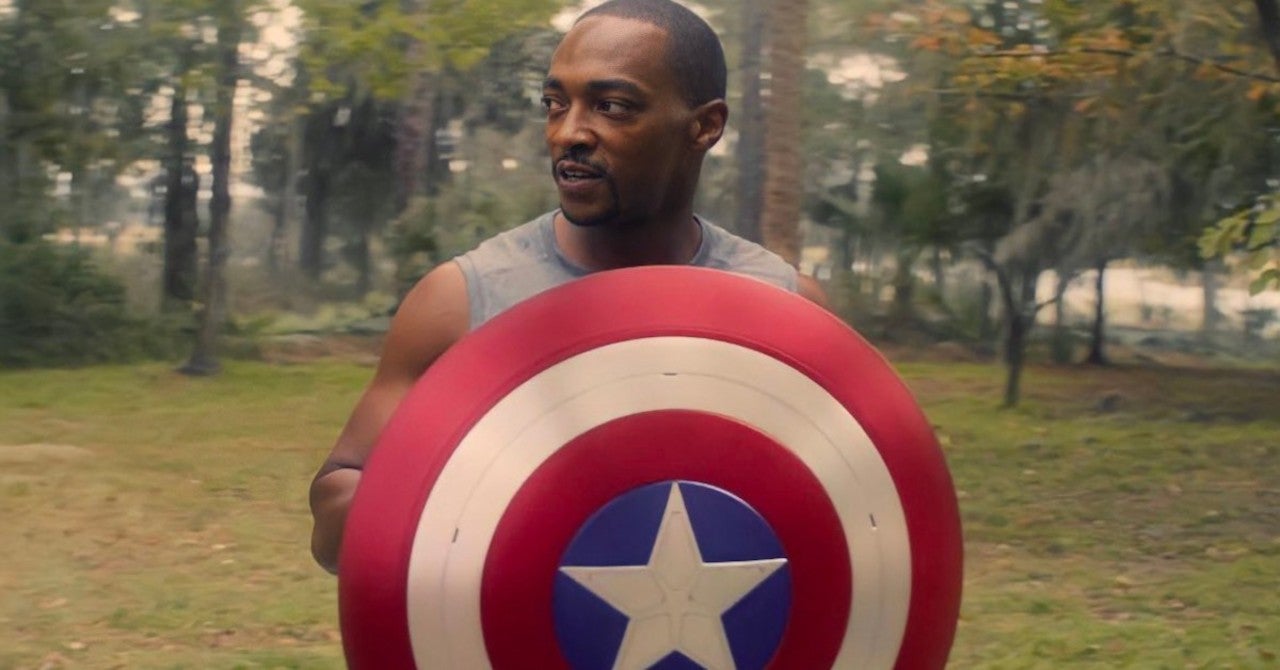
    The answer was a resounding hell no, as Marvel continued their run of strong episodes that tell this world’s story while pushing the status quo of the MCU. Sam Wilson is the first legacy hero we are being introduced to in the new MCU, as we can all wager a guess that he will be Captain America at the end of this. It’s why any talk about season two’s for this show is so silly: you can’t have a Falcon and Winter Soldier season two when you’re not going to have this Falcon and this Winter Soldier anymore. You’re going to have Captain America and the White Wolf, and potentially a new Falcon who now has bequeathed the original Falcon suit created by Tony Stark to Joaquin Torres. Something tells me that the seeds have been planted for the next Captain America movie, wherever that comes from. 

    Anthony Canton and I have jokingly said that we have essentially run a pick and roll with our articles, where he breaks down the episodes from one angle and I break them down from another. In a lot of ways, this episode mirrors that: we check in with each other, are both Fathers, and are both men of color in a world where the heroes do not typically look like us. Anthony is a little older than I am, and I tend to defer to my elders much in the same way that Sam Wilson really deferred to Isaiah Bradley here. It isn’t enough for Sam to realize that he is meant to wield the shield, but he has to know why the story of the Black Captain America is so important to the legacy of that shield. It mirrors conversations we have in communities that identify as Black, Indigenous or People of Color: is it better to buck the system or to be a part of it, and how do you enact the real change your people need? As City On A Hill, another great show that I’m hooked on, recently said: there’s always room for a revolutionary. This show is driving us to think about what it means to be that revolutionary, particularly a Black revolutionary, in a pre and post-Blip world.
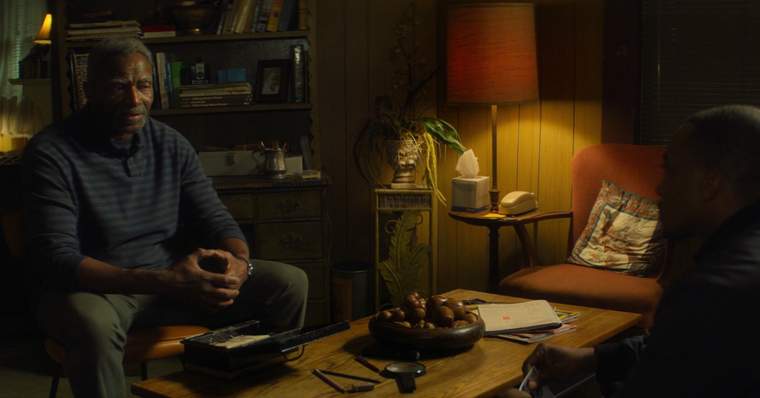
    9 The Falcon and The Winter Soldier Easter Eggs: Episode 5

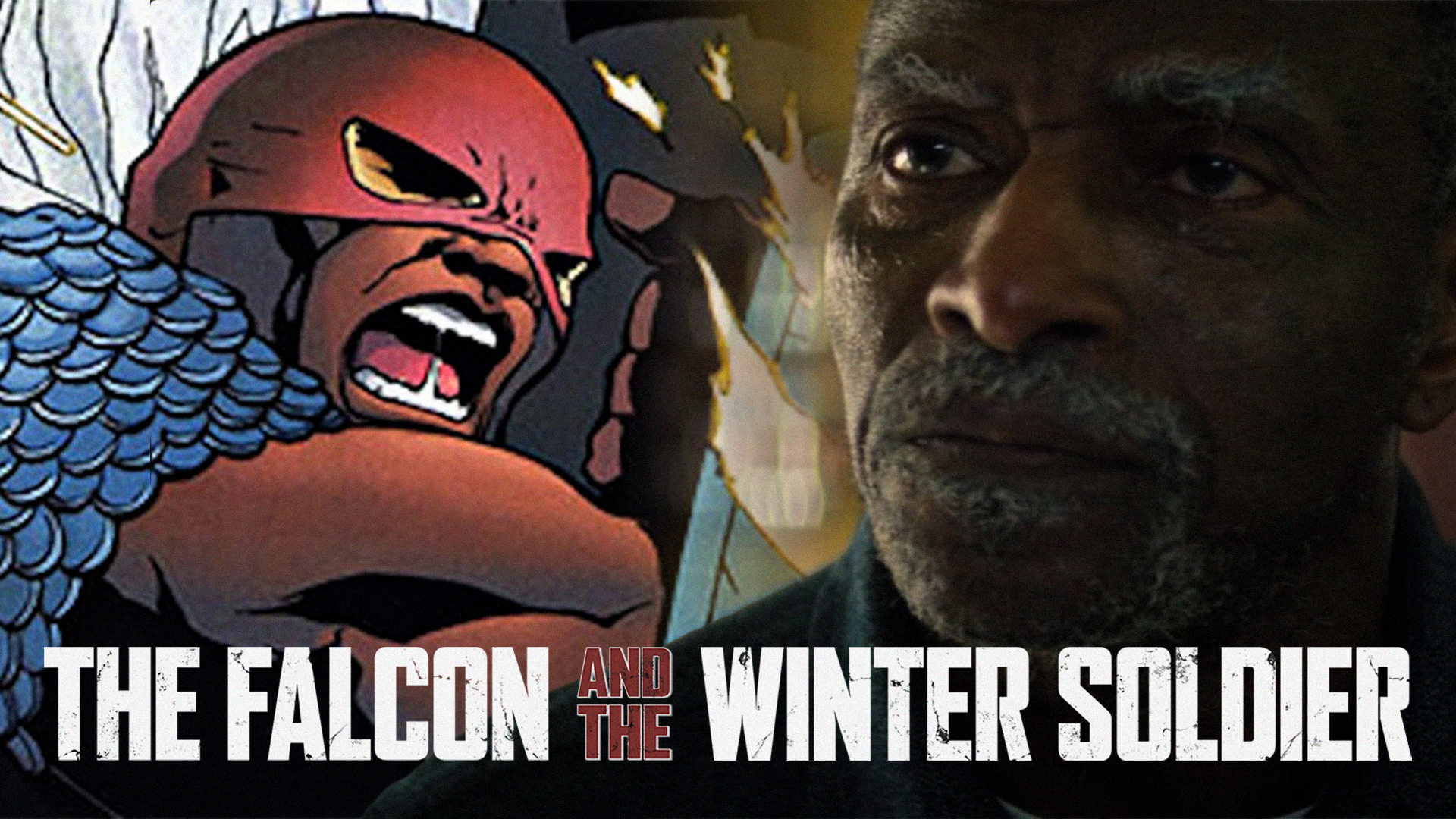
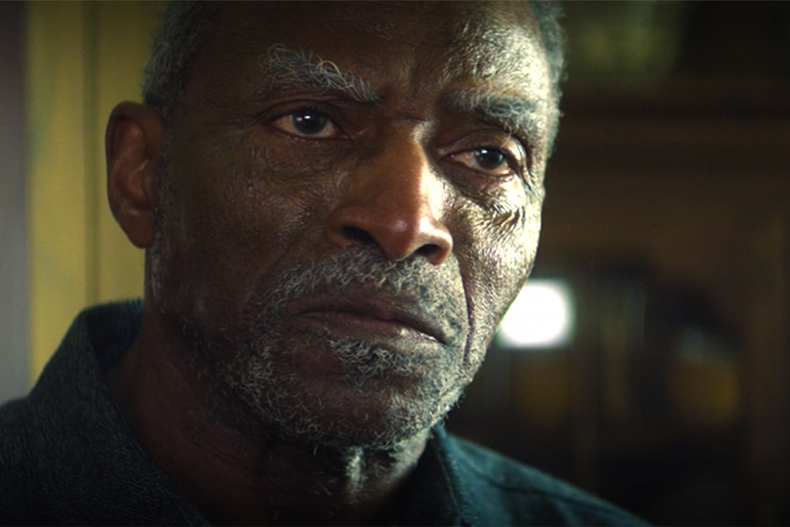
    Isaiah heartbreakingly shared the story that comic readers are familiar with: how Bradley and a large group of Black soldiers were experimented on. He still has the scars to prove it, too, and it’s in these scars that we get a callback to what formerly enslaved free folks had to endure when they were taken from their homes and brought across to the US on ships. What makes it even more painful is that Bradley, after the government got what they wanted from him and his brothers, chose to go behind enemy lines and save the soldiers that America decided weren’t valuable anymore. Compare that to the government’s reaction when Steve went behind enemy lines to save the men that would become the Howling Commandos: Steve got a new shield, new uniform, and was given free rein to lead an assault on Hydra after his first mission where he violated all sorts of international agreements and his superior officer’s direct order, but Isaiah does the same and he was thrown in jail for thirty years. Jailed, experimented on, and lied to all until a nurse forged his papers and had him declared dead, this was the experience of the Black Captain America. 

    Fast forward to the present day, where after murdering someone in broad daylight on camera we are reminded that this Marvel world is still really make-believe as John Walker is actually held accountable for his actions. This episode felt like a shift for the MCU, and a precursor for an expanded Accords, because during Civil War Wanda Maximoff accidentally killed Crossbones and was referred to as “not a US citizen and a weapon of mass destruction” by her own teammate and here’s Walker not only losing his shield and rank but his benefits too. It’s another shift, but one that still settles on how even the worst of us are still useful to some people since Elaine is now seemingly recruiting the soon-to-be US Agent for her rendition of the Thunderbolts. We’re left with a coda of Walker building his own shield, but not before we see that Falcon’s new suit was built by the Wakandans. 

    And this is where Marvel hit the home run they had been trying really hard to hit during this series. The shield that has always belonged to Sam Wilson in this post-Blip world, the one that was created from Vibranium, will now be part of his Vibranium-created uniform. There’s a moment in the comics when King T’Challa gives Sam the power of flight: with Chadwick’s tragic passing, there was no time for a proverbial passing of the mantle from King to Leader, but the baton has now been passed metaphorically. Another scene in the comics sees Sam ask Captain America if the Wakandans can help him because T’Challa is Black and it’ll make him feel easier. Here is a character who had proven his mettle at that point in the comics, but had always felt like something was missing when standing next to his white peers. The MCU Sam mirrors some of that: just as we figured out in that moment why Steve picked Sam, so too did Sam figure it out. Even as Isaiah pointed out how no self-respecting Black man would be Captain America, Sam realized that it was up to him to change the legacy of that moniker as well.

    O say, did Sam see?

    He did.
  • ‘THE FALCON AND THE WINTER SOLDIER’: Sam Wilson’s Time is Now

    ‘THE FALCON AND THE WINTER SOLDIER’: Sam Wilson’s Time is Now

    “My world doesn’t matter to America, so why should I care about its mascot?”

    Through three episodes, I kept asking myself “why did Steve pick Sam to wield the shield?”, and at the end of this episode, I FINALLY understood. When Dr. Abraham Erskine created the Super Soldier serum, he told Steve that it was not that he was a better soldier that made him the ideal choice over Hodge but that he was a fundamentally better person. Through his time in the MCU, Captain America’s arc was driven by two things: his willingness to be a better person regardless of the consequences and his constant belief in people. Sam Wilson, in this episode and really the entire series so far, displayed that in spades. He doesn’t want to break Zemo out, he wants to help Sharon, and, yes like Steve, he believes in Bucky. He doesn’t want to see the Dora Milaje beat up Walker; he, also, doesn’t want to beat him up himself despite Walker antagonizing him. This episode gave us our first confirmation that Sam was really the best person to wield the shield in a post-Steve Rogers world. What stood out was that the moment that solidified it came after some micro and macro-aggressions.

    Falcon and Winter Soldier episode 4: New Captain America takes an extreme turn - CNET

    At this point, the Flag Smashers have been cast in an ambiguous light. More revolutionaries than terrorists, their goal is to ensure that everybody has what they need. That’s an equity lens if I’ve ever seen one, and them bombing a location in order to achieve that goal is no different than the Black Panthers being ready to kill law enforcement if need be. By any means necessary didn’t mean “except for violence” when uttered by Malcolm X, and Karli’s decision to use violence doesn’t suddenly make her a supremacist. Movements led by people who identify as Black, Indigenous, People of Color (BIPOC) tend to always be labeled as such, and it was nice to see Sam push back when Zemo pointed that out: none of us are free if we’re all not free and all that. It reminded me of Steve Rogers’s willingness to trust Wanda Maximoff in Age of Ultron and to defend her when Tony Stark labeled her a weapon of mass destruction. Steve didn’t have to want to help Wanda the same way Sam didn’t have to want to help Karli, but they both chose to try because of who they are. Yet Walker is so blinded by a hate that had really been on the surface for most of the show but now really came out when a Black woman proceeded to wash him all over Zemo’s villa.

    The writers gave Walker a Black partner and a Black colleague and, yet, in interactions with Sam you could tell he viewed Sam as lesser than him. When he referred to Wilson as Cap’s sidekick? Check. When he told Wilson to stay out of his way? Check. When he refused to acknowledge Cap’s last wish regarding who would get the shield? Check. All of this despite the fact that Sam’s military prowess is the stuff of legend, as highlighted by Black Widow in Captain America: The Winter Soldier, and that they both enlisted to serve their country. That didn’t seem good enough for Walker, who has spent the entire series genuinely being annoyed at Sam. Our own Anthony Canton highlighted what finally broke Walker in this episode and I keep coming back to him not being able to punch his way through a Black woman. He thought he could flex his symbol in front of Ayo, a warrior from the Country that is responsible for that symbol existing. Steve respected T’Challa enough to call him “Your Highness” and it’s no accident that the first person through the portals in Endgame is the King of Wakanda: there is a nod of acknowledgment and respect from T’Challa to Cap because Cap had succeeded in bringing them back. Sam was there too, flying in out of the Wakandan portal with Ayo and the Dora Milaje, so there is that level of respect there as well. Walker doesn’t seem to pick up on it, to be generous, or he just doesn’t care, to be frank, and ceremoniously gets his ass kicked. When Bucky intervenes, Ayo proceeds to take his arm right off. A fate worse than beating him up, to be honest, because it serves as a reminder to Bucky that his loyalty should’ve been to the Wakandans and the woman who had a hand in giving him back his humanity. All Walker can say is “they weren’t even super soldiers”, and it’s in THIS moment that we get confirmation that Walker really never understood what made Steve a Super Soldier. The Dora Milaje didn’t need strength or a serum: they were there on a rightful mission to bring Zemo to justice, and Walker couldn’t fathom being both told what to do and then subsequently getting beaten up by a Black woman. This pushes him to the brink, despite Sam trying to reason with him beforehand.

    The Falcon and the Winter Soldier Episode 4 – What Did You Think?!

    The final straw, as Anthony mentioned, would seem to be Battlestar being killed by Karli. However, I don’t think its that at all: its that Sam tried to reason with Karli first instead of letting him handle it. It’s Sam taking the lead despite Walker being Captain America. It’s Sam being given the shield in the first place despite Walker feeling like he was more qualified. It was Sam not staying out of his way and not willing to work for him that set Walker off to the point where he killed a man of color in broad daylight with the whole world watching. As the Derek Chauvin trial is occurring, another white man who murdered a man of color in broad daylight, we are treated to a pan of people with their camera phones out recording the entire thing as art mirrors life. What we land on is Walker holding the shield that doesn’t belong to him as it’s covered in the blood of a revolutionary. Forget for a second that Zemo has escaped and that Sharon Carter has access to a satellite: the takeaway from this episode should be that Walker, in his anger, killed an innocent man of color in broad daylight because he couldn’t stomach his own insecurities without the serum and ended up taking it. Erskine said the serum magnifies who you are: we saw that with Emil Blonsky in The Incredible Hulk, and this seems to be no different as we see a man with insecurities try to circumvent them with something they don’t fully understand.

    Sam looks on shocked at the symbol his friend gave him is no longer representative of what Steve meant. Sam has tried his hardest to carve his own path, but all along he was very much the person Steve saw when he handed him the shield. Walker spent the entire episode reminding us why Sam was the best choice and, like Steve, he just wanted to do the right thing. How often have people of color been brought in to clean up the mess that a beloved bigot makes? Our country is littered with moments like these in recent memory alone, and this show has done a really good job of touching on these themes without making it overt. You have to make it palatable, I guess, but every BIPOC person I know can relate to that very moment when Sam is looking at Walker. It’s the realization that the country you try and save still will lift up the worst version of you in your place.

    Sam’s world may not matter to America, but he’s about to become its mascot.

  • ‘THE FALCON AND THE WINTER SOLDIER’ Episode 2: Ah, This Is Familiar

    ‘THE FALCON AND THE WINTER SOLDIER’ Episode 2: Ah, This Is Familiar

    “Excuse me, sir, is this man bothering you?”

    Eight words uttered by police officers that every person of color knows all too well is where The Falcon and The Winter Soldier took us during episode two. The episode also confirmed the arrival of the Power Broker, introduced the 2nd Captain America in Isaiah Bradley, introduced the leader of the Young Avengers in Elijah Bradley, and gave us our first look at the clearly still-detained Helmut Zemo. We will get to that on the site, Anthony Canton III did a great job recapping the episode, but we’d be remiss if we didn’t discuss what this episode continued to peel away in regards to a Post-Blip MCU painfully resembling the real world. 

    Start with Isaiah Bradley, and the director’s very inspired choice to have the former Captain America now living in Baltimore, Maryland with a young caretaker. At least that’s what it appears like, at first, until we get a good look at the young man upon Sam and Bucky’s entrance into the house. If you read Murphy’s Multiverse’s scoop from about a year ago, you’d know that it is at this moment that we meet Isaiah’s grandson Elijah Bradley. Bradley’s introduction here now gives us every member of the Young Avengers accounted for with the exception of one: Hulkling, the partner of Wanda’s missing son, Wiccan. For those unfamiliar with the younger Bradley, this episode didn’t give us much, but it is exciting to think about him leading the new Hawkeye, Wiccan, Speed, Stature, and the yet-to-be introduced Hulkling. 

    What this episode does give us in an all-too-short scene with the elder Bradley is a pain-ridden retelling of what happened to this man that has led him to essentially throwing Bucky and Sam out of his house. Bradley’s story included a reference to him being sent in to bring down the Winter Soldier in the 1950s, post-Steve going in the ice, and even taking half his arm. In the comics, Bradley was born in New York where he met his wife: in fact, their honeymoon took place at the First World Fair that occurred in 1943. That’s right: where Steve finally successfully enlisted not two years prior, so this scene gives us a connection not just to the original Captain America but to Howard Stark as well as Stark mentions him planning to continue returning to the Fair after the first one shows his flying car blowing up. As Bradley’s voice breaks at the reliving of the trauma he faced at the hands of the U.S. Government, he tells Sam and Bucky how when he took the shield he was imprisoned for thirty years. “Your people did this to me”, Bradley practically growls. A Lot of people on social media felt that this was clearly Bradley mentioning Hydra, but that isn’t it at all: he’s confirming that his story in the MCU is very much like the comics, where Project Rebirth was rebooted after Rogers went into the ice and Black soldiers were used as test subjects by the United States Government.

    The Falcon and the Winter Soldier' Episode 2 Explained: Who is Isaiah  Bradley?

    In the MCU, this shifts the universe in a very real way because up until now not much attention has been paid to the way absolute power corrupts in regards to the government. In this timeline, Rogers goes into the ice, the U.S. Government experiments repeatedly on Isaiah Bradley before sending him after the Winter Soldier, and then throwing him in a cell for thirty years, all while Project Paperclip’s implementation has led to Hydra infiltrating the very same organization that created the Super Soldier serum in the first place. That is a lot of trauma for one man to carry this long, and it is very clearly exhibited in Bradley’s movements and dialogue. He wanted to save a country that, very much, did not care enough to save him. 

    His story resembles the story of countless Black veterans who sacrificed their lives, missing birthday parties and baptisms, only to return to a country where men that looked like the men they were tasked with jailing and killing could jail and kill them with no regard. The transition from Bradley’s palpable pain to Sam’s gnawing frustration outside is jarring for all the reasons you can imagine.

    The Falcon and The Winter Soldier Fans Infuriated Over Sam Being Racial  Profiled by Police

    As Sam steps outside, two police officers approach him and Bucky as they’re arguing about what just happened. The officers are demanding Sam’s ID, to which Bucky says “just give it to them.” The same anger you hear from Sam mirrors the deep fury that emanates from Isaiah when the cops get close to him. It was at this moment that I stood up in my bed and thought “oh, no, they’re going there.” Please keep in mind that the director’s choice to have the Bradleys living in Baltimore, the location for one of the most brutal police brutality cases ever, was not by accident. As aware as these first two episodes had been up until this very point, Kari Skogland knew exactly what she was doing at this very moment, and for me, it landed like a gut punch. I immediately thought “they’re going to brutalize Sam.” It has become commonplace for me, as a man of color, to believe that every interaction with police on television does not end well for us. One of the best movies I’ve seen in recent memory, Sylvie’s Love, was a beautiful movie that had me waiting for the other shoe to drop in terms of Hollywood monetizing our trauma. I expected more of the same, but Skogland, Mackie, and Lumbly displayed a deft touch in this moment where you felt Wilson and Bradley’s righteous anger and a world stretched thin by that pain. 

    We’d also be remiss if we didn’t mention the new Captain America and two moments that give us an idea of why he is much more dangerous than an in-your-face bigot who may be found storming federal buildings in the dead of winter. When he shows up to save Sam and Bucky, he makes a comment about how he’d love to have Cap’s wingman by his side. This is what we’d call a microaggression because Walker doesn’t have the shield if Wilson doesn’t give it up and he doesn’t seem to really realize that. Instead of attempting to endear himself to Wilson and Barnes, he seems as if he is trying to justify him having the shield. There is no acknowledgment of what Wilson gave up and no acknowledgment that Walker may not really be qualified to wield the shield. In fact, the episode does a bang-up job highlighting the awards he has, his physical attributes, and they seemingly attempt to ward off any outright racist claims by putting characters of color in his proximity. With a director like Skogland, I have no doubt that this is intentional as it is meant to have us doubt what Walker really is ideologically. If the people of color around him trust him, why shouldn’t we?

    Isaiah Bradley is an example of exactly why. 

    The new Captain America represents what was done to Bradley and what is being done to Sam, and he’s the connective thread between past and continued traumas that both of them carry.

    “Excuse me, sir, is this man bothering you”, the officer asked.

    I just wished they would’ve asked it when Walker told Sam to stay out of his way.

  • What The First Episode of ‘The Falcon & The Winter Soldier’ Says About Being A Black Man

    What The First Episode of ‘The Falcon & The Winter Soldier’ Says About Being A Black Man

    My Friday morning routines since the new year have consisted of me waking up before my soon-to-be threenager, sitting up in bed, and watching the latest episode of WandaVision. Marvel delivered literal magic with that show, but attention has now rightfully shifted to what comes next as we barrel through Phase 4. We have the time-hopping adventure starring the 2012 version of the God of Mischief, a Secret Invasion subtly set up by the end of the aforementioned trip through Westview, a Black Widow movie still on the way, and an animated What If…? series that may give us even more information about the MCU’s multiverse all headed our way through the summer. 

    However, as WandaVision dealt with a very self-contained story within Wanda’s reality post-Blip The Falcon and The Winter Soldier is the first time we are really on the ground on this Earth that has now had a few months to adjust to 5 billion people returning and is seemingly back up and running enough to where a Captain America memorial has been unveiled and groups trying to restore the world to a Pre-Blip status quo have been able to mobilize pretty effectively. There are a lot of questions that came out of the first episode, especially when it pertains to an easter egg of Shawn Bradley-like size and whether a non-Accords supporting Sam has his own rogue army personnel working with him considering WandaVision told us the Accords were still in place, but there’s also our main characters dealing with the trauma that accompanies not just them being snapped away and then coming back: no, they’re each also dealing with the subsequent loss of their best friend and the consequences of what it meant to leave behind a past that didn’t suit you anymore. 

    With Bucky, that trauma has manifested itself in the form of a list he keeps to make amends. As a therapist, I can tell you this is not a bad tool to use: I’ve recommended it for kids who feel they have let down their parents, but it eventually morphs into a lesson about how no matter how much we try to make amends the person we really have to make amends with is ourselves. We’ll talk more about that as the series goes on. 

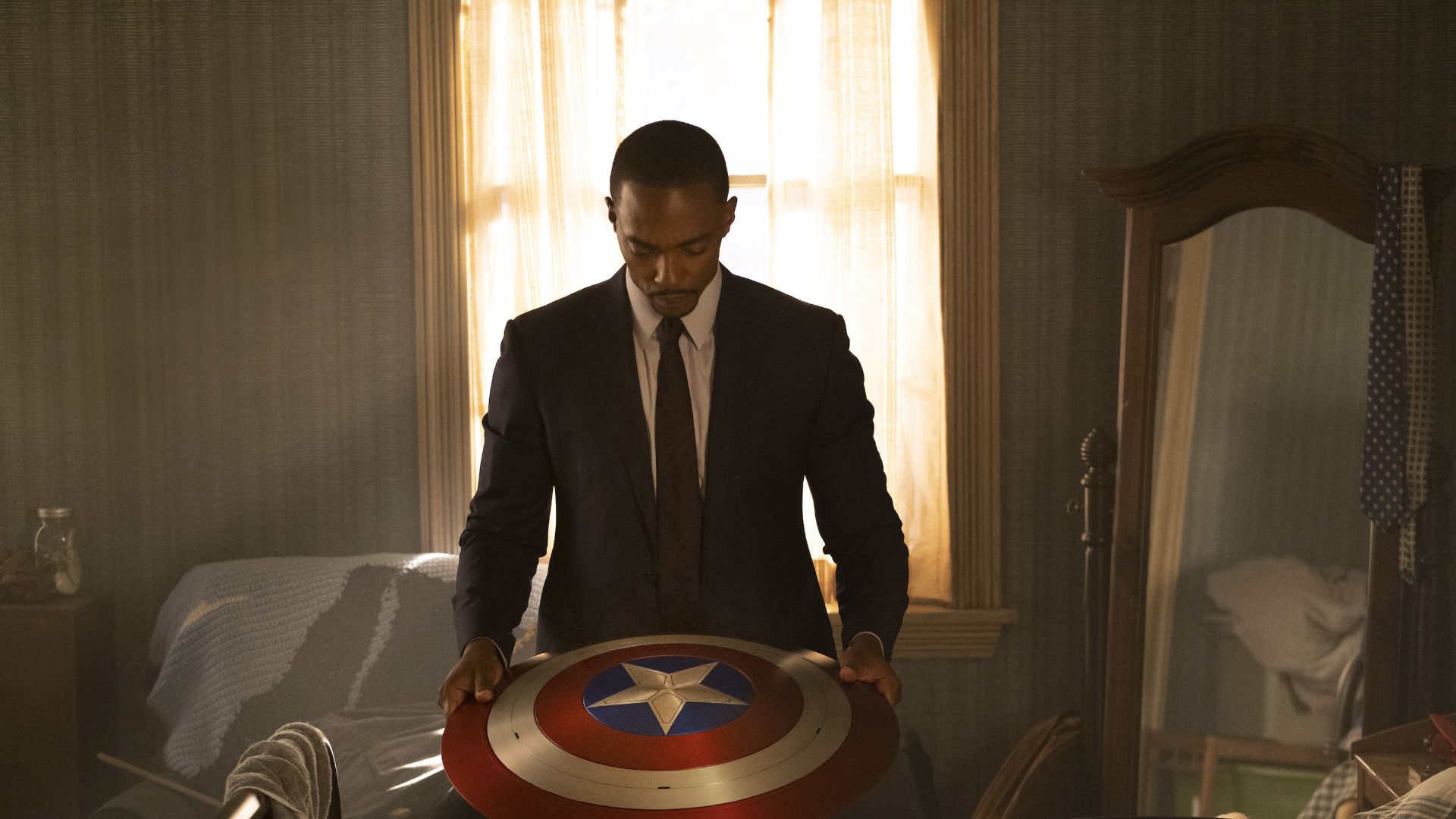
    With Sam, he was handed a symbol that was created by Howard Stark, the father of dearly-departed Tony Stark, and was carried by Steve Rogers. In a lot of ways, Sam Wilson is the amalgamation of Stark and Rogers in the MCU in that he represents their combined strengths (Tony’s ingenuity as evidenced when he is working on Redwing plus Steve’s desire to do what he feels is right even if it’s unpopular as evidenced by his willingness to give up the shield) and none of their weaknesses. Sam emerging from the Blip and not being able to save his family’s business is evident of Stark emerging from the cave and losing his father’s company to Stane in Iron Man, and the way he doesn’t understand how things work financially in this new world mirrors Rogers’s awakening in Times Square in The First Avenger. However, there is one distinguishing characteristic that is very evident in episode one.

    Falcon and the Winter Soldier episode 1 review: "The most grounded Marvel  series yet" | GamesRadar+

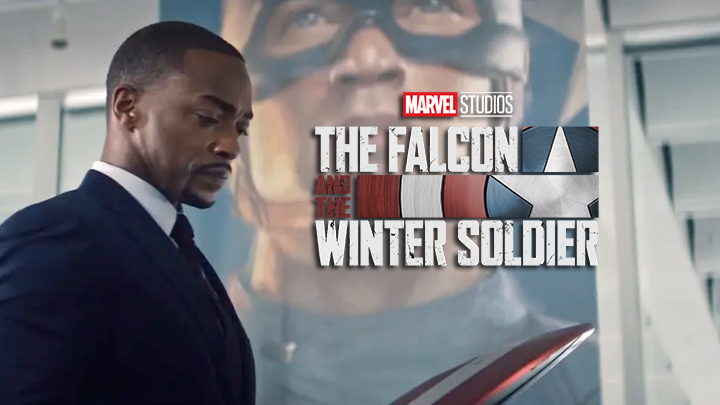
    Sam is a Black man in the MCU in the same way Anthony Mackie is a Black man in the Marvel universe in the aftermath of the death of Chadwick Boseman. Sam was denied a bank loan: as his sister painfully mentions, things have a way of tightening up when it comes to loans for Black folks. The banker tries to shush that away and highlights Sam’s heroics, but those heroics don’t allow for the loan to go through. The gentleman from the Smithsonian, upon receiving the shield from Sam, tells Sam he is doing the right thing: in The First Avenger, the Army cannot wait to push Steve’s face and the shield to sell bonds to pay for a world war despite Steve not being allowed on the battlefield. Think about that: Steve never fired a bullet until he found out Bucky was behind enemy lines and was still able to earn a living, but Sam just helped save the entire universe during an alien invasion yet somehow he isn’t qualified to be Captain America!? Rhodey seems to understand what’s happening, as a Black man also set to follow the legacy of a white man battling demons in bottles, and tries to counsel Sam out of giving up the shield but Sam’s decision seems made up. 

    The Falcon And The Winter Soldier Episode 1 Breakdown & Easter Eggs  Explained

    After Chadwick Boseman’s death, Anthony Mackie now has the highest-profile role in the MCU for a Black man. Chadwick was the King of Wakanda and was positioned to assume the mantle of leader of Earth’s Mightiest Heroes, at least one of them, and now that will inevitably fall to the MCU’s new Captain America. For a guy who has taken so many twists and turns in his career, Mackie’s time in the spotlight syncs up eerily with the timing of Marvel needing a new face of their most successful franchises: as it stands the Avengers and Captain America films, respectively, are Marvel’s most lucrative and critically-acclaimed respectively, and they’re both set to be led by Falcon. Sam’s inability to get a bank loan is something many Black folks are familiar with as much as we are familiar with us grinding and finally getting the opportunity to lead. We’ve also heard folks brought in to lead us talked about in terms like the Smithsonian dude described the man with the most punchable face: the new Captain America. 

    Real American values, he said. 

    Somebody real white, we heard. 

    Nick Spencer, take a bow. 

    Sam Wilson? This IS America.

  • ‘SHANG-CHI AND THE LEGEND OF THE TEN RINGS’: How The Tournament Could Really Introduce Everybody

    ‘SHANG-CHI AND THE LEGEND OF THE TEN RINGS’: How The Tournament Could Really Introduce Everybody

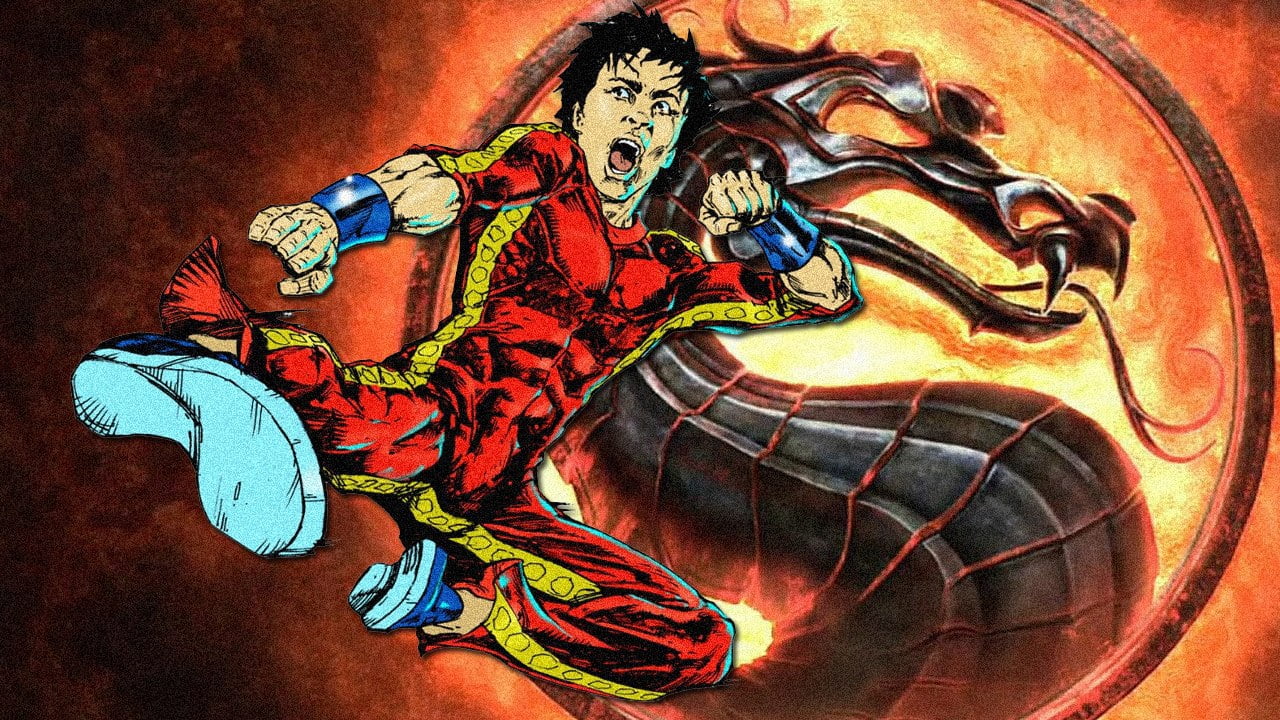
    Shang-Chi and The Legend of the Ten Rings is my most-anticipated MCU movie coming down the line. I’m a big Eternals fan, cannot wait to see sequels to Black Panther and Captain Marvel, am curious where they take Spider-Man, but Shang-Chi is the only MCU movie (that we know of) that is set in the aftermath of The Blip. The Avengers were essentially disbanded for five years, with Iron Man hanging up his suit, Captain America leading support groups, Thor drinking himself into a stupor, and Hulk merging him and Banner into one person. It stands to reason that other threats popped up during this five year gap from when Thanos first snapped his fingers to 2023, where the Avengers eventually brought everybody back. Keep in mind: Thanos’s snap disintegrated half of the life in the universe, and it also stands to reason that were some pretty serious consequences. With Tony’s snap at the Endgame, I’d wager there were some other unintended consequences too, though I will save that for another article.

    During the five year time gap, my thinking is that Shang-Chi is one of the heroes that popped up during that time. I, also, believe that the time gap they implemented in Endgame was deliberately implemented in order for Marvel to use Disney+ and other feature films to fill in those gaps. One of the things we did not see a lot of in Endgame was how the rest of the world was dealing with the Avengers disbanding. The Sokovia Accords most likely remained in place, and it is a very different world than when the Avengers first fought Thanos in 2018. That means whatever heroes and villains popped up had to do so in secret. Wakanda had no King, as far as we know. The Defenders vanished (even if Feige wants to pretend those Netflix shows did not happen). Ant Man learned the Quantum Realm, and who knows what other fantastic things he ran into while he was trapped in there. Needless to say, there is a lot of story to tell, and Shang-Chi’s tournament feels like the right place to start re-populating this world with heroes and villains alike.

    Backstory:

    Shang Chi #112 revolves around Shang-Chi fighting in an underground martial arts tournament. While Marvel has been loose with the adaptations, this feels like something that could directly translate into making this movie very different compared to other Marvel movies, and our own Charles has found evidence to support that there will be a tournament in Shang-Chi. The basis of the film will most likely see an exiled Shang-Chi is trying to do whatever it takes to get to the Mandarin, aka his Father, and stop the reign of terror he has inflicted with his 10 Rings of Power. With no Avengers to lean on, especially on this side of the world, he enters this tournament to go after him himself. The tournament is held in Madripoor, an island in Southeast Asia that is shrouded in mystery. This island, we already know, plays a role in the upcoming The Falcon and The Winter Soldier Disney+ series, but I do not think Kevin Feige would use such an iconic Marvel location one time. Looking through the comics, there are countless characters that have crossed paths with this location and Shang-Chi, and they’d do well to make up the other participants of this tournament.


    Who Fights?

    Let’s kick this off with Wolverine, but he’s not known as Wolverine but as Patch during this time. The ageless X-Men has very often been depicted as the same age as the other X-Men, but he is actually 103 years old when he first encounters the X-Men in 1993. I think Feige honors this part of Wolverine’s origin and doesn’t let him cross paths with the X-Men until much later in his story. For this story, I believe Wolverine is on a mission to hunt the man responsible for blowing up the embassy during the signing of the Sokovia Accords and starting Civil War and after attempting to visit Wakanda and not finding any answers as to Bucky’s whereabouts, he travels 4300 miles East to an island in Asia and ends up in Madripoor, where he falls in love with a mutant operative named Leiku Rose Wu, and befriends a daywalker named Blade.

    Blade is in Madripoor for two reasons: Blade has heard that one of the Mandarin’s 10 Rings, the Remaker, can rearrange the atoms and molecules of a substance, or speed up or slow down their movement, so as to produce various effects. With Blade refusing to feed on human blood, he believes this ring can help him speed up the effects of the animal blood he has been feeding on. The other reason he ends up in Madripoor is that he felt this could be the safest place for him to be given General Ross and SHIELD’s interest in his blood. This is a storyline, at least SHIELD’s hunt for Blade’s blood, derived from the 8th issue of Blade.

    You, then, have a master archer by the name of Bullseye, who after killing Hugo Kostas Natchios and his wife Christina Natchios in 2018, leaves the United States and ventures to Madripoor seeking refuge. He enters the tournament because the Mandarin has offered to keep him safe if he wins, provided he kills Shang-Chi in the process.

    Following Bullseye to Madripoor after he murdered her parents, we have Elektra. Elektra first went searching for Bullseye in K’un-Lun and, believing that he was being hidden by monks, slaughtered everybody except one fighter and left. She uses her family’s resources to track Bullseye to Madripoor, where she is convinced to enter the tournament by a mysterious character.

    Danny Rand aka Iron Fist (after ascending to Iron Fist) leaves K’un Lun in search of the female assassin he saw murder his family. He believes it was Elektra, and receives a message from the Mandarin that leads him Madripoor.

    King M’Baku, who ascended to the throne in T’Challa and Shuri’s absence, ends up in Madripoor when T’Challa vanishes after The Snap: he ventures there because Patch tried to enter Wakanda looking for Bucky. M’Baku wants answers, as he is frightened after the alien invasion in Wakanda and wants to keep his people safe. He enters the tournament to fight Patch and get answers from him.

    Lastly, a mysterious fighter named Mister X, also, enters the tournament, though his intentions are a bit unclear. He is, later, revealed to be Taskmaster, who worked with Zemo to orchestrate the events that led to Civil War and who actually survives his fight with Black Widow in the upcoming Black Widow movie.

    Tournament Results:

    First Round:

    Wolverine beats Mister X pretty soundly but, while sleeping, is captured by the Thunderbolts, who want to hand him over to Weapon X

    Blade defeats Bullseye but is stopped by Elektra before he can kill him, and Bullseye escapes. As Blade goes to kill Elektra for stopping him, Iron Fist stops Blade from killing her with the thinking that he wants to be the one to kill Elektra.

    M’Baku beats Iron Fist, who is still reeling from earlier fight with Blade

    Shang Chi and Elektra fight to a draw, Mandarin orders there must be a winner, they escape once Elektra confirms she wasn’t in K’un Lun.

    2nd Round:

    Blade advances because Patch is gone

    Shang-Chi defeats M’Baku and tells him what happened to Patch

    Finals:

    Shang-Chi defeats Blade and shows him how to escape Madripoor.

    The End

    Mandarin descends and fights Shang-Chi, revealing that he was the one that turned Wolverine into Weapon X because of Wolverine’s relationship with Shang-Chi’s sister. The Mandarin, Taskmaster and Zemo are revealed to have orchestrated the events that led to all the fighters in the tournament ending up in Madripoor in order to capture Blade to steal his blood, torture Iron Fist for the location of K’un-Lun, kill Elektra to ensure she receives the blame for the killing of the monks when it is revealed that the new Black Widow was really responsible, rescue Bullseye so he can join the Thunderbolts, and capture Shang-Chi if he happened to take possession of the 10 Rings. Shang-Chi and the Mandarin fight and Blade, M’Baku, Iron Fist, and Elektra fight the Thunderbolts while Shang-Chi and Mandarin fight one on one. Shang-Chi defeats the Mandarin and, not willing to let him live, kills him. The Thunderbolts escape.

    Post Credit Scene:

    Zemo returns to Madripoor to recruit a wounded Bullseye and Bullseye joins Thunderbolts (who now have Zemo, Red Hulk, Taskmaster, Black Widow, and Bullseye)

    Post Credit Scene 2:

    Wolverine in a tent washing his wounds, after escaping from Weapon X, when he hears a voice in his head say “Logan”

  • Scarlet Witch & The Mutants: Why Wanda Maximoff Will Bring The X-Men to the MCU

    While the Marvel Cinematic Universe does not follow the comics to an exact letter, the MCU undoubtedly takes inspiration from the comics. Redwing is not an actual bird that Falcon communicates with, but it is a mechanical bird that he controls. Black Widow did not betray the Avengers in the MCU, though her relationship with the team in the comics is ambiguous at best. Needless to say, there are certain liberties taken when the MCU adopts from the source material. With that in mind, it stands to reason that where Wanda Maximoff in the comics was the reason mutants vanished the MCU’s Scarlet Witch is going to be the reason mutants join this shared universe over the course of WandaVision and Doctor Strange 2.

    In the comics, Wanda Maximoff was trained by an actual witch named Agatha Harkness, who is set to be played by the criminally underrated Kathryn Hahn in WandaVision. Agatha is the Morpheus to Wanda’s Neo and she shows her how to unlock the true strength of her powers. With the ever-expanding MCU set to embrace the more supernatural elements of the comics (Doctor Strange has already been introduced, and Moon Knight, Ghost Rider, and Blade have all either been announced or teased by Kevin Feige and that’s before we even get to the multiverse shenanigans that would need to occur to make Jared Leto’s Morbius interacting with Tom Holland’s Spider Man a logical reality), it stands to reason that the MCU takes those first steps with their Witch, Wanda, and an actual witch in Agatha. With casting calls being put out for Wanda and Vision’s twins Wiccan and Speed, one need not speculate very far as to what could be the cause of Wanda’s potential mental break. In the comics, Wiccan’s powers very much resemble his mother’s, while Speed’s powers resemble his uncle Quicksilver’s powers. At the end of Winter Soldier, Baron Van Strucker said that Quicksilver and Scarlet Witch represented the Age of Miracles. I can think of a different M word that one could use in the 1950s, the rumored Scarlet Witch setting, if they saw two kids running really fast and warping reality. Imagine if, in 1950, a devastated Scarlet Witch utters the words “More Mutants” because she wishes that someone could’ve protected her children after Agatha was responsible for taking them away.

    Wanda’s nightmare, indeed.

    The MCU’s Scarlet Witch losing her children after she lost her twin brother, her partner Vision right in front of her after being forced to kill him herself, turned to ash herself by the Mad Titan, and then resurrected only to be robbed of her vengeance is undoubtedly enough to push her over the edge. Feige has already said that, entering Phase Four, Wanda is the most powerful character they have. Throw in Wanda’s presence in Doctor Strange 2, existing in one universe where she has to potentially deal with The Wasp jokingly mocking Wanda’s desire to be a mother after having that reality brutally ripped away by Agatha. You can clearly see a scenario where losing her children leads her to not only bring the mutants from another universe into the main MCU universe due to the sheer loss she has experienced, but also leads to the Sorcerer Supreme to have to intervene to eventually put the Scarlet Witch down like in the House of M comic. This becomes even more likely when Wanda realizes that the reason Thanos was able to turn back time and kill Vision in front of her, and ergo rob her of the future she thought they’d have, is because Doctor Strange gave up the Time Stone.

    With a new Doctor Strange synopsis being released, and a new director being brought in (three cheers for Jordan Peele being the one who takes the helm), Strange’s continued study of the now gone Time Stone has been teased. Mordo’s decision to eradicate the world of sorcerers could bring him into contact with Wanda Maximoff. Could Mordo be in cahoots with another villain, one that has been here for hundreds of years, and who the Scarlet Witch has an extended history with? And could her past interaction be the reason mutants will now exist in the MCU?

    Time will tell.