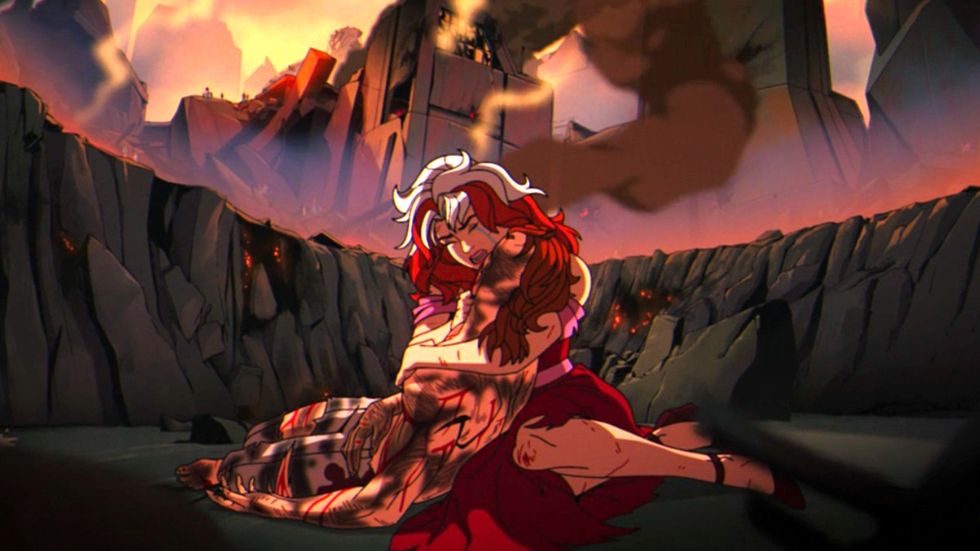
In what was almost certainly the best episode of Marvel Studios’ streaming era, X-Men ’97‘s “Remember It” shattered the peaceful feelings of nostalgia it had established with an emphatic and traumatic blow. The episode’s carnage, caused by a Wild Sentinel, may have been equally deleterious to mutants and fans of the series; however, both must push on and with the series just past its halfway mark, it’s time to look back in order to look ahead and see what might be coming for the remaining X-Men following the massacre on Genosha.
It looks as though showrunner Beau DeMayo thoughtfully provided fans a week to recover from “Remember It” by spending Episode 6 wrapping up Storm’s very personal side story in “Lifedeath Part 2.” That looks to be followed by a Rogue-centric episode, “Bright Eyes”, before the three-part season finale, “Tolerance is Extinction.” Extinction is a pretty common theme for the X-Men and has been central to more than one major arc in the comics, however, the series has provided enough clues to help zero in on which of those arcs may have served as the prime inspiration for the final three episodes.
Who Was Behind the Wild Sentinel?
Episode 5’s attack on Genosha was clearly inspired by Grant Morrison’s first three issues of New X-Men; however, to say it was ripped straight from the pages of that run, titled “E for Extinction” would be wildly incorrect. In fact, the episode seemed to draw at least some inspiration from the X-Men’s Krakoan era with its stylish gala taking center stage, an event at which the most recent mutant massacre occurred. So, rather than a straight adaptation, it seems as though X-Men ’97 is doing a little mixing and matching in mass murder and will probably do so again with the revelation of who is behind the attack on Genosha.
Morrison‘s New X-Men introduced Cassandra Nova into the X-Men lore and immediately made her one of the most vile villains within it. The beginning of the end of the Krakoan Age was orchestrated by Orchis in Gerry Duggan‘s X-Men: Hellfire Gala 2023. As fun of a theory as it is, there’s no evidence Nova was behind the attack and there’s been no mention of Orchis so far. However, upon closer look, a prime suspect for the attack arises and it’s one who was behind another large-scale attack against the X-Men in the comics.
Who Is Your Baddy and What Does He Do?
I’m 1997, Marvel Comics published Operation: Zero Tolerance, an event that ran across its major X-titles. In it, the Sentinel Android known as Bastion set out to –you guessed it–exterminate mutants. As many outlets and social media types have speculated and theorized, Bastion is almost certainly behind the attack on Genosha, which definitely set his extinction plan off on the right foot. And, as it turns out, Bastion has already appeared in the series at least once, if not twice.
In search of regaining a connection to her mutant powers in Episode 4, Storm agreed to enter one of Forge’s wondrous inventions. As she and Forge walked through the maker’s lab, several pictures could be seen on the wall, including one in which half of a very comic-accurate-looking Bastion could be seen along with Forge. Additionally, there’s a mysterious white-haired man spotted passing right in front of “the camera” in Episode 5 just after Magneto enters the gala. It’s impossible to confirm that’s Bastion, however, it’s entirely possible he was there to make sure his terror attack would be as deadly as possible. And, since he’s just getting started, he’ll likely unleash his greatest creations on the mutants: Prime Sentinels.
A final piece of evidence that could indicate that Bastion is the mastermind of the attack on Genosha could be the arrival of Cable at the gala. While he was unable to save everyone, the Askani’son’s attempt to stop the attack and share that “he” is coming is still informative. “He” rules out Cassandra Nova and it’s also worth pointing out that Nathan Summers plays a key role in Operation: Zero Tolerance over a three-issue run of James Robinson‘s Cable title.
Is It Really Bastion?
With so many stories from which to draw inspiration, it’s possible that several villains could be behind the Genoshan massacre. That said, there’s enough evidence to strongly support a reasonable claim that Bastion will be revealed as the key conspirator. As in the comics, he almost certainly won’t be working alone, bringing some of the team’s most hated foes from X-Men: The Animated Series back into play but, as of now, it seems that this game of Clue ends with the reveal was Bastion, in the lobby, with the Wild Sentinel. Buckle up for the final five episodes of Season 1 of X-Men ’97!
About Operation: Zero Tolerance
“Operation: Zero Tolerance” emerges as a pivotal saga within Marvel Comics X-Men mythology, featuring a widespread crackdown on mutants orchestrated by the formidable adversary Bastion. Bastion, driven by a deep-seated animosity towards mutantkind, spearheads the deployment of an army of advanced Sentinel robots and Prime Sentinels, including cybernetic operatives infused with nanotechnology, to systematically eradicate mutants.
In the heart of the conflict are the X-Men and their allies, with Cable playing a crucial role as both a warrior and a strategic leader. As tensions escalate and the stakes soar, Cable’s tactical brilliance and combat prowess become invaluable assets in the battle against Bastion’s relentless assault.
“Operation: Zero Tolerance” unfolds as a gripping exploration of persecution and resilience, as the X-Men confront insurmountable odds while striving to protect their own. Amid the chaos and danger, alliances fracture, sacrifices are made, and the bonds of friendship and family are tested like never before.
Through the interplay of characters like Bastion and Cable, the storyline delves deep into themes of prejudice, heroism, and the enduring struggle for survival in a world plagued by fear and bigotry.
About Prime Sentinels?
The Prime Sentinels are a formidable faction within Marvel Comics’ expansive universe, originating as a byproduct of the mutant-hunting Sentinels program. These cybernetic entities were initially ordinary humans implanted with nanotechnology, transforming them into enhanced operatives programmed to track and neutralize mutants. Introduced during the “Operation: Zero Tolerance” storyline, they were engineered by Bastion, a powerful adversary with a deep-seated hatred for mutants.
What distinguishes the Prime Sentinels is their ability to mimic human behavior, seamlessly infiltrating society while secretly executing their anti-mutant agenda. Their integration into various societal roles, including law enforcement and corporate positions, makes them particularly insidious adversaries for mutantkind.
Despite their human appearance, the Prime Sentinels possess advanced combat capabilities, including enhanced strength, agility, and energy projection, making them formidable adversaries even for seasoned mutants. Over time, they have proven to be persistent threats, adapting and evolving their tactics to counter mutant resistance.
Driven by a relentless dedication to their mission, the Prime Sentinels serve as a chilling reminder of the ongoing struggle between mutants and those who seek to eradicate them, embodying the ever-present threat of persecution and discrimination in the Marvel Universe.
For a film that hasn’t even begun principal photography, Marvel Studios’ The Fantastic Four is certainly generating a lot of hype. Known for typically keeping secrets locked up tightly until big events, the studio has been uncharacteristically forthcoming with information about the film, using social media to drive interest in the project. First, it was a Valentine’s Day reveal of the cast through some stylized concept art, new title and new release date; then, on April 4th, another piece of concept art was shared along with a link to Marvel.com that ultimately landed fans on a page created by the Future Foundation. That page contained links to five Marvel Comics that fans have (probably) rightly concluded have had some level of influence on the plot of the 2025 film. And then, of course, scoopers and leakers have been scooping and leaking and much of what they have had to share lately has led to some interesting discussion at all the usual places. What’s the latest buzz? What’s real and what’s bullshit? Let’s take a look!
Alternate Universe
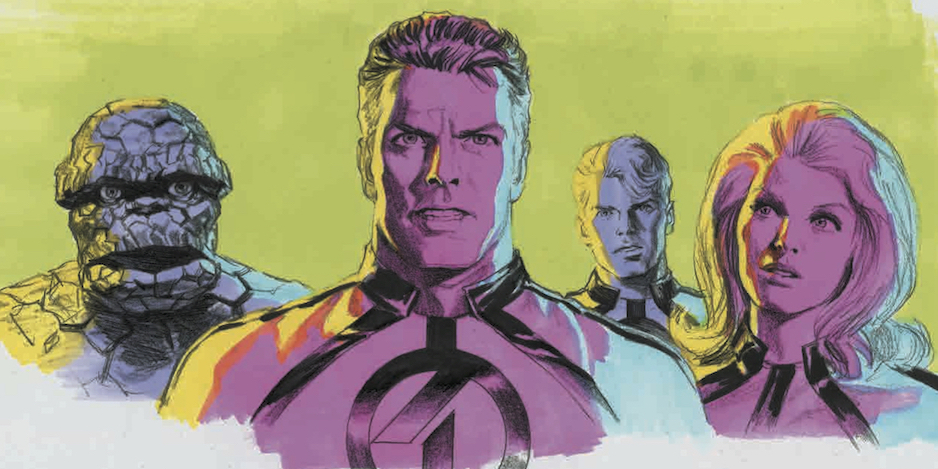
The most notable rumor making the rounds is that Marvel Studios The Fantastic Four will be set in a universe other than the MCU’s version of the 616. To be totally fair, given what Marvel Studios has provided for fans to look over, no insider access is necessary to come to that conclusion. Both the original cast photo and the new concept art of the Human Torch provide plenty of inferences that the film is set elsewhere in the Multiverse. The Valentine’s Day artwork which was used to announce the cast made it clear that the First Family was active during the 1960s. There’s a lot we don’t know about the past of the MCU but it’s almost impossible to imagine what sort of horrific retcons director Matt Shakman and the film’s team of writers would have had to fabricate in order to explain how nobody in the MCU’s 616 knows who the Fantastic Four are.
While there were still potential arguments to be made (after all, Doctor Strange made everyone forget Peter Parker), the retrofuturistic city in the background of the “Happy 4-4 Day!” poster really erases any doubt that The Fantastic Four will take place in an alternate universe. What’s more interesting though is that the retofuturistic city also sort of implies that Doctor Reed Richards and his Future Foundation have had a profound impact on the Earth they inhabit. Honestly, it’s interesting that the Future Founation exists at all on this new Earth because it implies that Reed has done an admirable job of solving everything which makes one wonder if this Reed Variant is so intelligent that he’s become aware of the Multiverse, has built The Bridge and has met other Reeds.
Whether Reed has knowledge of the Multiverse or not, the audience certainly does. Beginning with Avengers: Endgame and continuing throughout several Multiverse Saga projects (Loki, Spider-Man: No Way Home, Doctor Strange in the Multiverse of Madness, The Marvels and What If…?), Marvel Studios has opened the floodgates to the Multiverse. MoM alone introduced over a dozen new universes. So where is The Fantastic Four set? Definitely not in the 616 and definitely not on Earth-838 because that universe’s Reed wasn’t so smart, as it turns out. As much as fans might want to see the film set in a familiar universe–or at least one that’s been seen on screen before–that really doesn’t make sense from a story telling perspective. Any “known” universe would come with pre-existing limitations, no matter how small (sorry, Binary and Beast universe). To open it up to truly unlimited creativity and potential, the story would simply just have to be set in a universe that has previously not been seen. No muss, no fuss.
Rumor Control: Yes, The Fantastic Four is set in another universe and it is one that has yet to be explored in the MCU.
Franklin Richards and Galactus
One of the more interesting rumors to follow Marvel Studios’ new last week was that Reed and Sue’s son, Franklin, will appear in the film. The rumor suggests that Sue will be pregnant when she’s first seen in the film and that Franklin will be born in space. If Marvel Studios has proven anything, it’s that they aren’t particularly concerned about faithfully adapting stories or characters from the comics; however, Franklin Richards is a singular character even in a world of marvels, so his inclusion is of note.
In the comics, Franklin is a mutant with immeasurable telepathic and telekinetic abilities who also happens to be capable of reshaping reality. Indeed as a young child, Franklin saved Earth’s heroes from Onslaught by creating an entire pocket dimension for them. Following the 2015 event Secret Wars, Franklin restored the Multiverse by creating all-new, all-different realities. Recent events in the comics have stripped Franklin of all his powers but for one day a year, however, thanks to time travel and flashforwards in the comics, some of his future has also been told and those stories may factor into The Fantastic Four.
Relevant to the film’s potential plot, Franklin Richards has a long history with Galactus. When Franklin was just a young boy, The Great Devourer of Worlds already feared his power. By the time he was an adult, Franklin became so powerful that Galactus served as his herald. In the alternate Earth-X universe, Franklin became Galactus. It’s not clear exactly what ties Matt Shakman’sThe Fantastic Four will establish between the two characters but some buzz has reached our ears that there will be some connection between Franklin and Galactus in the film.
It’s clear that Reed, Sue, Johnny and Ben have been active for quite some time in their universe and that Franklin’s birth takes place after the team is well-established as heroes. That means it’s likely that whatever Galactus is up to, this may not be the first time the team has encountered him.
Rumor Control: Franklin Richards does look to play an integral role in the film, which will establish some connection between the young powerhouse and Galactus.
The Fantastic Four starts production this Summer and is currently scheduled to hit theaters on July 25, 2025.
Marvel Studios waded into the shallow end of the nostalgia pool with X-Men ’97. It was a low-risk project for them in that it had a very high floor thanks to the deeply revered X-Men: The Animated Series. Through three episodes, ’97 has performed well above that floor and the only question left to answer is just how high of a ceiling the project has, especially with new viewers. Once the wistful sentiment wears off of those who grew up watching TAS on Saturday mornings, the series still has to keep the attention of a new, younger audience in order to sustain success into a second season.
Should it do so, however, Marvel Studios May have found a new recipe to success in Grandma’s ’90s cookbook and may just decide to continue to go backward to go forward and revive some of their other ’90s animated series. While there’s currently no indication they are planning to do so nor any guarantee they could replicate the microwaved hype of X-Men ’97, previous animated series such as Silver Surfer, Fantastic Four and, yes, Spider-Man preemptively and unknowingly put the pieces in place for Marvel Animation to adapt some of Marvel Comics greatest hits of the ’00s.
It’s in the DnA
Beginning in 2006, Marvel Comics published a related series of cosmic crossover events largely created by Dan Abnett and Andy Lanning, aka DnA, with a kickstart from Keith Giffen. Over the course the next five years, Marvel’s publishing house redefined the cosmic corner of Marvel Comics for the first time since Jim Starlin‘s decade and change time as the defining voice of their space operas. Through Annihilation, Annihilation: Conquest, War of Kings, Realm of Kings, The Thanos Imperative and The Annihilators, the House of Ideas revitalized old heroes and villains, reimagined others and reminded readers just how broad the the cosmos is. Serendipitously, Marvel Animation could be poised to repeat the success of their publishing partner by simply retelling these incredible stories on a stage that has already been set for them.
More than five years passed between the end of the run of Marvel and Saban Entertainment’s animated series (X-Men, Fantastic Four, Iron Man, Spider-Man, The Incredible Hulk, Silver Surfer, Spider-Man Unlimited and Avengers: United They Stand) and the publication of Annihilation; however, those series laid enough foundation to allow Marvel Animation to orchestrate a run through Abnett and Lanning’s cosmic opus. Incredibly, most of the main players of the DnA’s cosmic stories were introduced in the ’90s animated series and those who weren’t could easily be worked into an episode of one of a few series that would most likely be revived.
The Dope Old School ’90s Animated Series Introduced Some O.G. Peeps Who Will Play a Phat Part in the Cosmic Stories
Before looking at how Marvel Animation could move ahead, let’s take a quick look at the work that was done in the ’90s that could provide the springboard into the Cosmic crossover events.
X-Men
The granddaddy of them all, as it were, X-Men: The Animated Series brought new life to Marvel’s properties in 1992, paving the way for Fox to roll out their X-Men films which, along with 1998’s Blade, put things into place for Marvel Studios to roll the dice on the Marvel Cinematic Universe. Ironically, the success of X-Men ’97 may now convince Disney to further invest in animation. The circle of life. X-Men: The Animated Series largely took its inspiration from Chris Claremont‘s work on Marvel Comics’ Uncanny X-Men but also drew on plenty of other issues and runs. Outside of the core X-Men themselves, the original animated series introduced several characters and locations during its five-season, 76-episode run that would be key players in an animated Cosmic arc.
Key Characters and Places Introduced in X-Men: The Animated Series
The Shi’ar (Season 3)
The Starjammers (Season 3)
The Blue Area of the Moon (Season 3)
The Kree (Season 3)
The High Evolutionary (Season 4)
Moondragon (Season 4)
The Phalanx (Season 5)
Fantastic Four
Paired with Iron Man as part of the Marvel Action Hour, Fantastic Four ran for 26 episodes over two seasons from 1994-1996. For the most part, the series adapted the earliest adventures of the team from the comics and introduced dozens of characters that would fit neatly into Marvel Animation’s Cosmic narrative.
Key Characters and Places Introduced in Fantastic Four
Skrulls (Season 1)
Silver Surfer (Season 1)
Galactus (Season 1)
Firelord (Season 1)
Terrax (Season 1)
Kl’rt, the Super-Skrull (Season 1)
The Negative Zone (Season 1)
Annihilus (Season 1)
Blastaar (Season 1)
The Inhuman Royal Family (Season 2)
Attilan (Season 2)
Darkhawk (Season 2)
The Incredible Hulk
The Jade Giant was given 2 seasons of his own animated series that totaled 21 episodes which aired in 1996 and 1997. Though neither Banner nor Hulk are key characters in any of the Cosmic stories, his children are and including him also allows for some great stories to be told in the revivals which can’t just be about the Cosmic stories.
Key Characters and Places Introduced in The Incredible Hulk
Bruce Banner/The Hulk
Silver Surfer
Possibly a bit too far out even for the ’90s, Silver Surfer ran for only one, 13-episode season after a legal dispute between Saban and Marvel killed the partially developed second season. Though it wasn’t connected to Fantastic Four and aired after the cancellation, I’m not entirely sure it contradicts any story arcs from it either. Silver Surfer introduced so many of Marvel Comics’ major Cosmic players in its one and only season, making it an integral part of the foundation needed for Marvel Animation to tell the DnA stories.
Key Characters and Places Introduced in Silver Surfer
Thanos
Drax
Gamora
Ronan
Nebula
Adam Warlock
Beta Ray Bill
Kree Supreme Intelligence
The Avengers: United They Stand
The last of the series to be produced through the collaborative efforts of Marvel Entertainment Group and Saban Entertainment, The Avengers: United They Stand pales in comparison to the superior Avengers: Earth’s Mightiest Heroes; however, it put one key character in play (sparing us all another origin story) and a revival for a second season could carve out an episode or two for an adaptation of a mid-2000s crossover event that could be used to help us out.
Key Characters and Places Introduced in The Avengers: United They Stand
Ultron
Incredibly, without any possible way of knowing what they were doing, the folks at Marvel Entertainment Group introduced almost every main player in DnA’s Cosmic run. A few big guns are missing but that can all be easily fixed in subsequent revival seasons of the shows listed above.
POV: How Letting Marvel Animation Cook and Giving the Cheugy ’90s Series Glow Ups Will Lead to a Bussin Shared Universe
No cap: making this revival work as a way to adapt the DnA stories through the animated series is my Roman Empire. So, how do we get there based on what’s been done in X-Men: The Animated Series, Season 1 of X-Men ’97, Fantastic Four and Silver Surfer? That’s the easy part and it just requires giving a few key individuals that main character energy. Here’s a road map to make sure we’re all eating good in our revival era.
The reality is that even if this were to happen, it would be years before it unfolds on our small screens. (Cue Invincible reference): Animation takes a long time. However, with two more seasons of X-Men ’97 already ordered up, Marvel Animation seems like it’s here to stay for at least a while. For the purposes of this totally made-up series of events, we’re operating under the assumption that Season 2 of X-Men ’97 streams before the first DnA domino falls.
The Incredible Hulk Season 3
There’s no such thing as too much Hulk. A third season of the animated series could continue the exploration of his fractured psyche, introduce the animated iteration of the Illuminati and send him off to Sakaar in a cliffhanger episode where he could meet a familiar face. The continued adventures of The Sentinel of the Spaceways will be an integral part of the infrastructure of the shared universe simply because he can be any and everywhere. Season 1 of Silver Surfer ended on a cliffhanger and it provides the perfect opportunity to open Season 2 with him unaware of how he’s come to be on Sakaar and under the control of the Red King. This could be a classic Marvel Animation two or three-parter to wrap up the third season of The Incredible Hulk with an adaptation of Planet Hulk.
Key Characters and Places Introduced in The Incredible Hulk Season 3
Caiera the Oldstrong
Silver Surfer Season 2
In the comics, Surfer’s time on Sakaar immediately preceded the awful chain of events that befell the galaxy and having Season 2 of Silver Surfer spin out of Season 3 of The Incredible Hulk provides the perfect opportunity for the first big event to unfold. Assuming a 10-episode season and the pace at which stories are told in animation, Season 2 could open with a two-part adaptation of Kurt Busiek‘s Maximum Security crossover event. Though it preceded Planet Hulk in publication, it could serve as a great way to integrate the X-Men, Fantastic Four and some cosmic heavy hitters into the narrative. A few changes could introduce the Kyln and one of its prisoners, Star-Lord, who will play a big role later in the season. A flashback episode somewhere along the line can introduce Mar-Vell to the mix, paving the way to explore his legacy later. A quick stop on Xandar in Episode 5 could introduce Xandar, Richard Rider and the Nova Corps and then a three-part season finale could adapt the incredible Annihilation event.
Key Characters and Places Introduced in Silver Surfer Season 2
The Blood Brothers (Maximum Security arc)
Quasar (Maximum Security arc)
The Kyln (Maximum Security arc)
Star-Lord (Maximum Security arc)
Xandar
The Nova Corps
Richard Rider
Mar-Vell
Phyla-Vell
Genis-Vell
The Avengers: United They Stand Season 2
The first season only introduced a handful of Avengers and the focus was on the West Coast team. A second season could add to the roster but its real purpose is to allow for an adaptation of Secret Invasion that involves the X-Men. Sure, that story was done in Avengers: EMH but it fits so well here and allows for an interesting path to Annihilation: Conquest being adapted as well. According to its creator, Brian Michael Bendis, Secret Invasion was the result of the Skrull homeworld being destroyed in Annihilation, so let Season 2 of The Avengers: United They Stand handle that story while working as a huge crossover while revealing that the Richard Rider who found himself back on Earth and involved in the battle was a Skrull.
Fantastic Four Season 3
Following the events of Secret Invasion and the revelation that the man Earth’s Mightiest Heroes thought to be Nova was a Skrull, the third season of Fantastic Four will open with an episode dedicated to recovering all heroes that had been simmed by the Skrulls. What a story Richard Rider will have to tell once he comes around. Told during an extended two-episode flashback, Rider, reunited with his brother Robbie, will detail his role as the central hero in the fight against the Phalanx and its leader, Ultron, following the fight against the Annihilation Wave. These episodes are a huge payoff from storylines set in motion both in the ’90s series and in the revival seasons. As the episodes draw to a close, Rider can reveal that as the war against the Phalanx came to an end, his ally Kl’rt alerted him that the Skrulls were planning to invade Earth and that as he attempted to return home to warn his friends, he was captured by the shapeshifting aliens.
Annihilation: Conquest is arguably the best story in the Cosmic series and plays a pivotal role in the future of the universe. Should Marvel Animation be so inclined, they could use it to launch a Guardians of the Galaxy animated series that would be far different from the MCU’s live-action films and prior animated series featuring the team. The Guardians still have a major role to play in the next act.
Key Characters and Places Introduced in Fantastic Four Season 3
Zak-Del/Wraith
Robbie Rider
X-Men ’97 Season 3
Without knowing what stories Season 2 of X-Men ’97 will explore, we can’t really be sure how this will go but we’re just playing here so it’s fine. To keep things on track, Season 3 will need to bring back the Starjammers and update the story of Chris Summers, aka Corsair, to include his third son, Gabriel. A nice, three-episode arc could tell the Rise and Fall of the Shi’ar Empire and put Emperor Vulcan on the throne just in time for a war.
Key Characters and Places Introduced in X-Men ’97 Season 3
Gabriel Summers/Vulcan
Guardians of the Galaxy Season 1
A brand new series with a heavy load to carry, Guardians of the Galaxy Season 1 can take a the majority of its episodes to get rolling and give the feel for the team before a two-episode adaptation of War of Kings. The Shi’ar, the Inhumans, the Starjammers and Blastaar, King of the Negative Zone, all get big payoffs in a crazy, all-out war that heavily involves the Guardians and Nova. The mid-season two-parter should leave audiences on a cliffhanger as the consequences of the war are made clear when Quasar’s exploration of “The Fault” leads to his disappearance.
Key Characters and Places Introduced in Guardians of the Galaxy
The Fraternity of Raptors
The Universal Church of Truth
The Incredible Hulk Season 3 and Guardians of the Galaxy Season 1
Quite a proposal here but if Marvel Animation could pull it off, it would be epic! While audiences have been following events of War of Kings in the middle of Season 1 of Guardians of the Galaxy, Season 3 of The Incredible Hulk will have been setting the stage and telling the tale of World War Hulk. Following the WWH story, an episode or two of The Incredible Hulk will be spent revisiting the planet of Sakaar and its people, including the Hulk’s two sons, Skaar and Hiro-Kala. The stage is now set for part of the story of Realm of Kings to be told in The Incredible Hulk and part to be told at the end of Season 1 of Guardians of the Galaxy.
Key Characters and Places Introduced in The Incredible Hulk Season 3
Hiro-Kala
Silver Surfer Season 3
DnA’s Cosmic run ended with two limited runs: The Thanos Imperative and Annihilators. There’s no better place to tell these two stories than in the third season of Silver Surfer. By this point in time, all the main players for both stories are not only on the board but also incredibly well-developed. Characters such as Thanos, Adam Warlock, Ronan and Beta Ray Bill–who first appeared in the ’90s Silver Surfer series–all get major payoffs through the two stories and the audience gets to see one of the great Marvel Comics’ teams in action. While it marks the end of the great Cosmic confluence, a final episode “stinger” could reveal that Thanos is still alive and set the stage for a return to Earth-bound stories based on Jonathan Hickman‘s Infinity story.
This is an ambitious road map, no doubt, and not something anyone should ever expect to see; however, it shines a light on the animation’s ability to adapt great Marvel Comics’ stories a little more faithfully and tell some of them that are likely not going to unfold in the MCU anytime soon…if ever.
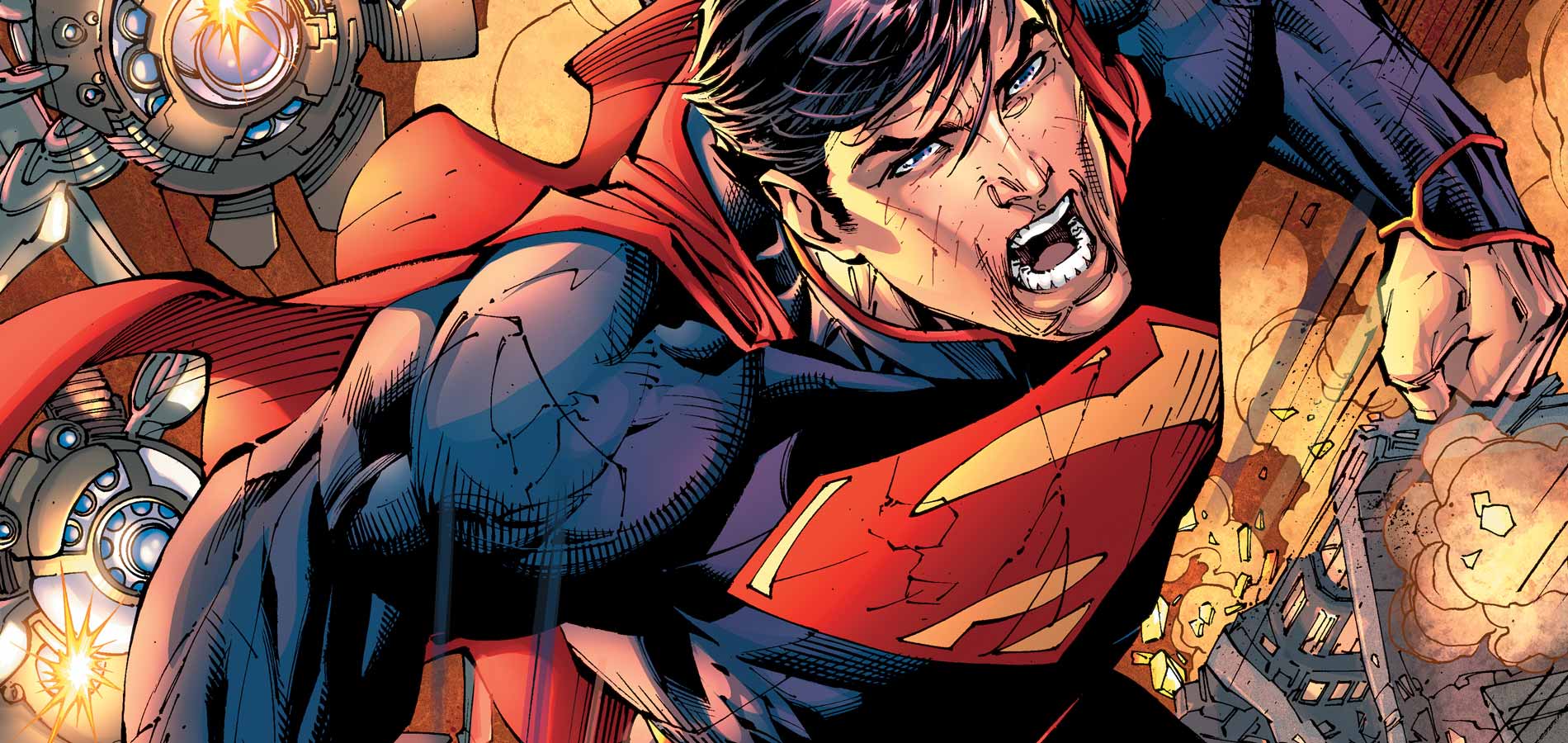
Buzz has grown that DC Studios’ Superman will feature some sort of evil doppelgänger of the Man of Steel that David Corenswet‘s Kal-El will have to take on. Is it true? Who knows? Also, who cares? This type of buzz around CBMs is part of the process and it’s always fun to play with the possibilities and so we present…
5 Alternate Versions of Superman Who Could Appear in Superman!
To be fair, not everyone on this list is truly an alternate universe Superman. Perhaps it’s more accurate to label some as copies or imitations of the real deal. Regardless of the description, the idea remains the same: a Supes vs. Supes type battle will ensue.
Bizarro
Certainly the most well-known alt Supes, El-Kal is probably not the odds-on- favorite to actually appear should these rumblings prove accurate. The idea of Nicholas Hoult‘s Lex Luthor already having been hard at work cloning Superman doesn’t seem to fit with what little is known about the film but a Bizarro World Bizarro does seem a bit more reasonable.
Cyborg Superman
The Snyderverse tackled xenophobia pretty well so the Hank Henshaw version of the character may not make his way into the DCU but as is almost always the case with DC’s stable of characters, there’s another option. Would Kal-El’s uncle, Zor-El, the father of Kara Zor-El, aka Supergirl, be an option? Kara is rumored to be showing up in Superman, so perhaps her believed-to-be-dead daddy could show up…but that wouldn’t require Corenswet to double up, as is the rumor. So maybe a full-on cyborg built by one of Kal’s enemies could do the trick.
The Eradicator
The buzz around a potential “second Superman” appearing in DC Studios’ Superman has grown steadily over the past few weeks. Nothing has been officially shared about James Gunn‘s 2025 film but with production underway, it’s possible that bits and pieces of the plot could have trickled out and the one heard the most is that David Corenswet will be playing two versions of Kal-El.
A character who has been reinvented over the years, the most recent version of the Eradicator went head-to-head with Kal-El over his choice to father a human/Kryptonian hybrid, Jonathan Kent. They won’t work in Gunn’sSuperman since Corenswet’s Kal is still in the early days of his heroic journey; however, the original idea of the Eradicator–as devised by Roger Stern and Curt Swan–as a creation intent on preserving Kryptonian culture by ERADICATING all non-Kryptonian cultures could work.
Red Son
In 2003, Mark Millar‘s Superman: Red Son brilliantly explored a “what if” scenario that revolves around baby Kal-El being found and raised by Russians rather than in Smallville. In Red Son, Lex Luthor uses some of Soviet Superman’s DNA to create “Superman Two”, an abomination of a clone who becomes weaponized by the U.S. government. Gunn could pull a switcheroo in Superman, having the Russians creating Супермен 2 to take on the original version. Gunn would certainly take some heat for coming so close to the plot of Superman IV but it would likely only come from people who never saw that movie anyway.
Ultraman
Outside of the Nazi version of Overman, Ultraman is the most despicable version of Kal-El in the Multiverse. The Kal-El of Earth-Three, Ultraman is truly the embodiment of everything Superman should never be. Selfish rather than selfless; heartless rather than compassionate; simply evil rather than purely good. Ultraman leads the Crime Syndicate, an evil version of the Justice League and is actually strengthened by exposure to kryptonite. Given what Gunn has said about his ideas for Superman in the film, Ultraman could be the best choice on this list for the film’s antagonist.
Like its predecessor, X-Men: The Animated Series, X-Men ’97 will likely never be criticized for moving too slowly. The original Fox series often moved quickly through popular arcs lifted from Chris Claremont‘s Uncanny X-Men and the third episode in ’97 followed suit in its adaptation of Inferno.
Published in 1989, Inferno was a line-wide crossover event for Marvel Comics. Told throughout more than 30 issues of mutant (Uncanny X-Men, X-Factor, New Mutants, X-Terminators and Excalibur) and non-mutant (Avengers, Cloak and Dagger, Daredevil, Fantastic Four, Power Pack and 3 different Spider-Man books) titles, Inferno focused on Illyana Rasputin’s transformation into the Darkchylde and the origin story of the Goblin Queen, Madelyne Pryor.
For “Fire Made Flesh”, X-Men ’97 showrunner Beau DeMayo opted to do quite a bit of trimming and use the episode to resolve the clone Jean story while also setting Bishop and Nathan Summers on their path to a dark future. However, the final scene of the episode, which was set entirely apart from the main event, hints at another classic Claremont arc being adapted beginning with Episode 4.
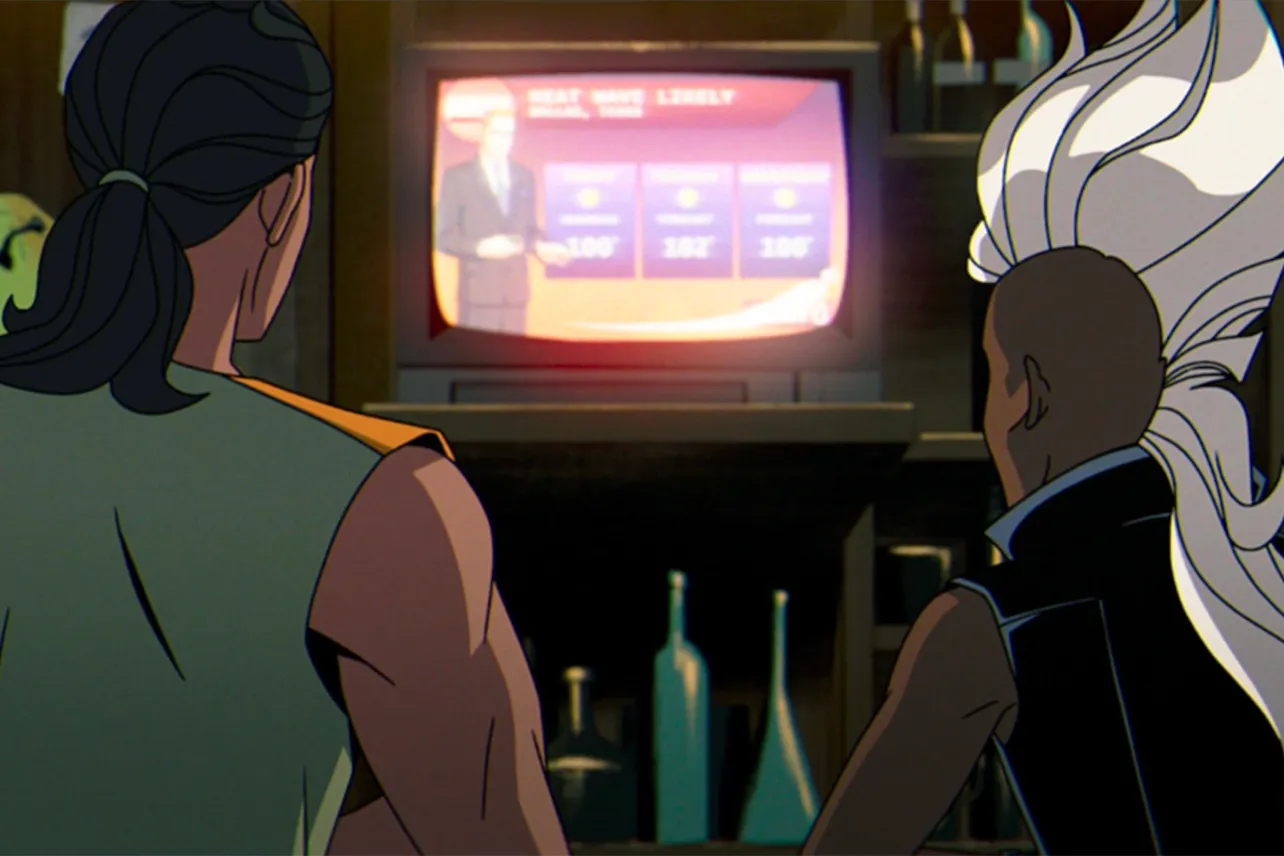
After losing her powers and setting out on her own at the end of “Mutant Liberation Begins”, Storm finds herself alone in Tequila Mockingbird, a dive bar somewhere in Texas. As the Weather Witch watches the weather report, a slim and sharply mustachioed stranger approaches her and introduces himself as Forge, “an old friend of Charles Xavier.” Indeed Forge appeared in 10 episodes of X-Men: The Animated Series, half of which involved the wonderful timey-wimey stuff that is part and parcel of the X-Men experience. However, the timing of his latest appearance suggests that he’ll have an all-new, all-different role in X-Men ’97 that will be based on Claremont’s run on Uncanny.
It’s no secret that Storm was one of Claremont’s favorite characters. Claremont was the first writer to recognize her true potential and begin developing her as a character. Much like in “Mutant Liberation Begins”, Storm lost her mutant powers after having been shot with a Neutralizer. In Uncanny X-Men #186, Storm began working with Forge to recover and, in the process, fell in love with the alpha-level technopath. Titled Lifedeath, the issue and and its follow-ups are well-revered as one of the great love stories in the pages of the X-Men’s extensive history. For those peeking ahead, Episode 4 of X-Men ’97 is titled “Motendo/Lifedeath-Part 1.” Yeah, the next episode is going to include Mojo but did you know it’s also going to explore one of the more intimate stories ever told about Storm?
While even those with passing knowledge of the comics know that Ororo was once married to T’Challa and was the Queen of Wakanda; however, few know about her romance with Forge. Fewer yet know that Forge, the mutant Maker, designed the Neutralizer that robbed the goddess of her powers. Given the raging popularity of X-Men ’97, it seems as though a whole new generation of people are about to find out and begin to understand why legions of ’90s kids adore Storm. Outside of Logan and Jean Grey, not many mutants have undergone the type of emotional development in the pages of Marvel Comics as Ororo has. Given Episode 4 is only Part 1 of Lifedeath, it seems as though DeMayo and crew intend to go against the X-Men: TAS grain to take their time and give the goddess her just desserts.
The first trailer for Lucasfilm’s upcoming Star Wars streaming series, The Acolyte, has put up some eye-popping numbers, tallying over 53 million views in its first 24 hours online, a record for a Star Wars Disney Plus series. The Acolyte will be the first live-action series set during the High Republic era and will introduce audiences to an entirely new cast of characters. That’s not to say there won’t be some winks and nods to the Skywalker Saga but more than any other project so far, The Acolyte seems poised to stand on its own merits, taking place roughly a century before the events of The Phantom Menace.
Series creator Leslye Headland was given a unique opportunity to shape the tail end of the era that precedes the Fall of the Jedi and if the trailer is a fair representation of the series, it seems she’s populated it with some interesting new characters. One such original character that has caught the attention of many is Jodie Turner-Smith‘s Mother Aniseya. Described by StarWars.com as “the leader of a coven of Witches who value their independence and the preservation of their beliefs and powers,” Aniseya’s role in the series has largely been kept secret. Who is Mother Aniseya and what ties might she have to pre-existing Star Wars canon? While we can’t supply any certain answers, we have a few ideas about the character’s true nature.
Though The Acolyte will be the first live-action depiction of the High Republic era, spanning from roughly 500 BBY until 82 BBY, Lucasfilm has already done a great deal of table setting through its publishing initiative. Through novels and comic books published by Marvel and Dark Horse, the glory days of the Republic and its expansion into the Outer Rim, have been chronicled to some extent. The Acolyte is set toward the end of the High Republic and the markers we do have for it would suggest it takes place around 132 BBY. For reference, Yoda would be 764 years old at that time and Sleepy Sheev Palpatine won’t be born for another 48 years. This time is truly a blank slate in terms of narrative possibilities…but that doesn’t mean there aren’t plenty of possible connections to events, people and places that existed both before and after 132 BBY.
The most intriguing revelation about Turner-Smith’s character is that she bears the title of Mother. Revealing Aniseya as a Mother and the leader of a coven of witches seems like an almost intentional nod to the Nighsisters of Dathomir; however, given what’s known about the Nightsisters, it seems unlikely that Aniseya is that kind of witch. Of course, the Nightsisters weren’t the only clan of witches native to Dathomir which allows for the potential that Aniseya may be the Mother of one of the similarly force-sensitive clans. The Blue Coral Diver Clan, the Singing Mountain Clan and the Howling Crag Clan have all been written into canon without any significant backstories. Aniseya may be the Mother of a witch coven from one of these clans that relocated from Dathomir sometime after its colonization.
Clues to another (and perhaps more intriguing) possibility could be found in the pages of a novel and comic books from Phase II of The High Republic publishing initiative. Set roughly 350 years before The Acolyte, the Phase II novel The High Republic: Path of Deceit introduces a group called the Path of the Open Hand. A cult whose members “believe the Force is owned by no one, and not to be wielded in the manner of the Jedi Order,” the Open Hand was led by Elecia Zeveron, known as “The Mother.” Zeveron taught her extremists that the use of the Force by the Jedi was responsible for death across the galaxy. Though they were defeated by the Jedi during a battle known as the Night of Sorrows, remnants of the Path founded both the Nihil and an offshoot known as the Elders of the Path.
The Nihil were one of the great threats to the Jedi during the High Republic era but were no longer at the height of their power by 200 BBY. Though they still existed until after the Battle of Yavin, they wouldn’t pose much of a threat by 132 BBY and nothing in the trailer for The Acolyte hints at their inclusion. The Elders of the Path, however, do have some interesting connections to what’s known about The Acolyte. One of the core beliefs of the Elders of the Path is that the Force should not be used but rather appreciated at a distance, something the elders of the group teach their students, known as…acolytes. This belief is at least partially reflected in Aniseya’s words in the trailer when she explains that whatever it is she’s being questioned about, likely by the group of Jedi she’s seen interacting with,“isn’t about good or bad. This is about power, and who is allowed to use it.”
Still, Ainseya remains almost completely shrouded in mystery. If Turner-Smith is to be believed, the character is no Jedi and she has no narrative ties to Amandla Stenberg‘s Mae, which probably means she’s also not a Sith. However, Turner-Smith has revealed that her character does weild the Force which puts her at least partially at odds with the the original doctrine of the Path. So while Aniseya may not be an Elder, there’s plenty of room for a branch of a cult to branch out further and for Mother Aniseya to pick up the mission of Order of the Path to free the Force from the Jedi. Of course, as is true any time one travels too far down the rabbit hole of speculation, one likely wanders further from the truth than intended and so it’s much more likely that Aniseya’s true nature is something far different than any of the guesses laid out above. Either way, there’s still quite some time before we find out as The Acolyte doesn’t hit Disney Plus until June 4th.
In Star Wars: The Acolyte, an investigation into a shocking crime spree pits a respected Jedi Master against a dangerous warrior from his past. As more clues emerge, they travel down a dark path where sinister forces reveal all is not what it seems….
The series stars Amandla Stenberg, Lee Jung-jae, Manny Jacinto, Dafne Keen, Charlie Barnett, Jodie TurnerSmith, Rebecca Henderson, Dean-Charles Chapman, Joonas Suotamo, and Carrie-Anne Moss.
Leslye Headland created the series, based on Star Wars by George Lucas, and serves as an executive producer along with Kathleen Kennedy, Simon Emanuel, Jeff F. King and Jason Micallef. Charmaine DeGraté and Kor Adana are the co-executive producers. Rayne Roberts, Damian Anderson, Eileen Shim and Rob Bredow are the producers.
Headland also directed the premiere episodes (Eps. 101 & 102). Directors Kogonada (Eps. 103 & 107), Alex Garcia Lopez (Eps. 104 & 105) and Hanelle Culpepper (Eps. 106 & 108) round out the directing duties on the series.
Award-winning composer Michael Abels, known for his work on Get Out and Us, scored Star Wars: The Acolyte.
When the First Family of Marvel Comics finally joins the MCU in 2025, it will have been a decade since Fant4astic Four was in theaters and TWO DECADES since Ioan Gruffudd, Jessica Alba, Chris Evans and Michael Chiklis brought the team into live-action for the first time in 2005’s Fantastic Four. With the 2007 film Fantastic Four: Rise of the Silver Surfer added in, Fox made three live-action films in 10 years and all fans got out of it were 2 awful Doctor Dooms, one cosmic fart cloud that was supposed to be Galactus and zero idea of just how fantastic the world of the Fantastic Four really is. Marvel Studios has been working on the project since 2019 and if there’s one thing they’ve hopefully kept in mind while doing so, it should be that working with the Fantastic Four means working with some of Marvel Comics most fascinating characters and ideas and enough storytelling capital to redefine the future of the Marvel Cinematic Universe.
Creating the MCU’s The Fantastic Four isn’t like creating a film in a solo franchise so that the characters in that film can show up in the next installment of The Avengers; creating the MCU’s The Fantastic Four is creating a film with characters, environments and themes so rich that they lead to their own “event films” within the FF’s corner of the MCU. Other characters should be so lucky as to crossover into future FF films rather than the FF being the guests. While the plot of The Fantastic Four is being kept locked away for now, FF mainstays Doctor Doom, Galactus and the Silver Surfer are all rumored to have some role in the (maybe) ’60s set film. That’s all well and good and the FF would not be the FF without those characters; however, for Marvel Studios to really set its adaptation apart from Fox’s (and to convince fans they know how to handle the property better than Fox did), they’ll need to tap into the very deep well of heroes and villains associated with the Fantastic Four and do some significant world-building. Fortunately, that’s something director Matt Shakman has experience with, having worked a bit on HBO’s Game of Thrones and a lot of Apple TV’s Monarch: Legacy of Monsters. With that said, should Marvel Studios and Shakman have the big picture and the long game in mind, here are XXXX characters they should be sure to sow the seeds for in The Fantastic Four.
Red Ghost
The artwork which served as the official casting announcement of Pedro Pascal, Vanessa Kirby, Joseph Quinn and Ebon Moss-Bachrach as the Fantastic Four hinted at a potential 1960s setting for The Fantastic Four. Furthermore, the photo of astronaut Ben Grimm in the background could also indicate that the Space Race may play some role in the film. If so, Ivan Kragoff would be an ideal candidate to appear in the film. Kragoff both fits the mold of many Marvel Studios villains in that his origins as a villain are uniquely tied to the heroes and he also has enough ties to other characters and potential storylines that he could be kept around and used again down the road. A brilliant Russian scientist, Kragoff was fascinated with Cosmic Rays and, following the exposure of the Fantastic Four to them built his own spacecraft, loaded it up with primates and intentionally exposed himself to Cosmic Rays as well. He and his simian sidekicks were all mutated by the exposure and took on the Fantastic Four on the Blue Area of the Moon. Everything about the character and his early exploits screams campy ’60s sci-fi and with the film reportedly looking to cast an older, male villain, Red Ghost makes as much sense as anyone!
Annihilus
If Marvel Studios fails to introduce the Negative Zone and Annihilus through either The Fantastic Four or a sequel, it will stand as a massive waste of a rich storytelling opportunity and an example of gross negligence on their part. Reed’s discovery of the Negative Zone and subsequent exploration of it taps into one of the core values of the Fantastic Four–they are a family of adventurers! Beyond that, the Bug King is one of Marvel Comics most fascinating villains and, in terms of the threat he poses, could stand on the level of Thanos. Among Marvel Studios unused villains, Annihilus stands alongside Magneto and Doctor Doom as having the most narrative potential. All it would take is for Shakman to make mention of the Negative Zone (he’s already shown a willingness to tease via Easter eggs and references over the course of WandaVision) and establish the potential for the anti-matter universe to matter down the road. As much as I’d like to see post-credit scenes disappear, an Annihilus stinger would get back to what was great about them in the first place.
Molecule Man
Jonathan Hickman did with Owen Reece what he does best and made him ten times more interesting through is arc in 2015’s Secret Wars. It’s not to say that the Molecule Man wasn’t already a notable character, however, only that the greater, multiversal purpose given to him by Hickman made him an essential Marvel Comics character. That version of him doesn’t need to exist here (though it sure would be a lot cooler if it did) but his connection to The Beyonder and the Beyonders, who could well end up being the new big bad of the Multiverse Saga, would make him a worthwhile addition to the film.
Mole Man
The Fantastic Four’s first villain, Harvey Elder needs to be given his due! In August 1961’s Fantastic Four #1, Elder and his army of monsters attempted to take over the surface world before being defeated by Reed, Sue, Johnny and Ben…and he never forgot it. As Mole Man stewed on his throne on Monster Isle, the rule of Subterranea and his moloids launched plot after plot against the Fantastic Four. Matt Shakman can find a way to work Mole Man into the script without taking too much time away from the main plot and by doing so, bring the kingdom of Subterranea to life for use in a future project.
The Wizard
Though he didn’t debut in the pages of a Fantastic Four comic, Bentley Wittman is as fantastic of a Fantastic Four villain as any. Another super genius, Wittman’s obsession with the Fantastic Four–especially with Reed’s intellect–makes him a fine inclusion while his potential for campiness and relative inability to provide a true threat to the team could also provide some comic relief. Including him in the first film might also open the door for the formation of The Frightful Four in a sequel (yeah, the timeline stuff may make that rough) which would be an incredibly fun group to bring into live-action. Ultimately a loser that the audience will learn to love, The Wizard really seems like a must. I wonder if Ben Stiller is busy?
The House of Agon
Whatever parts of ABC’s Agents of S.H.I.E.L.D. you might like to hold onto, the presentation of Inhumans and the subsequent disaster of a series that introduced the Inhuman Royal Family can’t truly be among them. Fortunately, Doctor Strange in the Multiverse of Madness established that somewhere in the Multiverse there’s an actual Black Bolt and if there’s one, there can be another and yes, The Fantastic Four might just be the best place to introduce whatever version of the Inhumans the MCU eventually wants to use (if they do at all). If The Fantastic Four is set in the 1960s, it actually provides the perfect opportunity to introduce the Inhuman Royal Family who first appeared in the comics in Fantastic Four #45. Like many of the characters on the list, the House of Agon wouldn’t need to take up much screentime in order to bring them into the MCU and allow for further use later. A mention of an encounter with them or a visit to their Great Refuge is all it would take to establish their existence within the MCU. Should the MCU really want to get funky, they could take their cues for the 616 Inhumans from Alex Ross’ Earth X series.
The Puppet Master
There’s no doubt that working Phillip Masters into the MCU would take some creative thinking on the part of Shakman and scribe Josh Friedman but if his daughter, Alicia, is going to be part of the plan down the road, then giving the Puppet Master some screen time shouldn’t be too much to ask. A weird dude, to be sure, he could provide a different, serial stalker kind of threat to the team.
Impossible Man
Deemed “too unusual and too frivolous” by his own creator, Stan Lee, The Impossible Man is a bit Mr. Mxyzptlk-ish and while he’s no villain, he’s a giant pain in the ass. Disruptive and obnoxious, he’s also served as guide to the heroes in their time of need and as a walking–sometimes floating–talking encyclopedia. If the FF are already established as heroes, as the artwork seems to indicate they are, a cameo by The Impossible Man would be…fanastic.
The Mad Thinker
A stereotypical mad scientist, the Mad Thinker could, like Bentley Wittman, provide an ongoing antagonist for the team without ever providing much of a threat. A ’60s setting is perfect for the Mad Thinker, whose obsession with robots and early A.I. could allow for some light-hearted moments, provide an antagonist for another member of the team who showed up in the artwork (H.E.R.B.I.E.) and, of course, lead to the inclusion of his greatest creation: Awesome Andy.
Blastaar
If the Negative Zone is going to truly make its way into the fabric of the MCU, than Annihilus can’t be the only would be conqueror to make his way to Earth. Reed’s exploration of the Negative Zone led him into contact with the one time King of Baluur who became a frequent foe of the Fantastic Four over the years. The Living Bomb-Burst also went on to play a major role in Marvel Comics Annihilation event before becoming King of the Negative Zone. He’s a wonderfully designed character who could really help set the Fantastic Four’s corner of the MCU apart from the rest.
A surprise Valentine’s Day announcement revealed the cast, release date, new logo and a slightly different title for Marvel Studios long-gestating The Fantastic Four. As an added bonus, the artwork that revealed Pedro Pascal, Vanessa Kirby, Ebon Moss-Bachrach and Joseph Quinn as the MCU’s First Family hinted at the film being set in the 1960s and that Aunt Petunia’s favorite nephew will be an astronaut giving fans hope that the film will take at least some inspiration from Stan Lee and Jack Kirby‘s original book.
Should the film–or part of it–ultimately take place in the ’60s (and in MCU’s 616 universe), there would be ample opportunity for Matt Shakman to curate some ties to the MCU by including cameos from existing MCU characters. To that end, here are a dozen characters listed alphabetically that could pop up in 2025’s The Fantastic Four.
Azzuri
The grandfather of T’Challa and Shuri, Azzuri would have been the Black Panther of Wakanda in the 1960s in the MCU. T’Challa made his first Marvel Comics appearance in the pages of Fantastic Four #52, so finding a way to include Wakanda and a Black Panther in The Fantastic Four would serve as a nice nod to that comic book history. So far, Azzuri has only been referenced but his sons, T’Chaka and N’Jobu, who were born in the ’50s, have been on screen in the MCU already. Having one of the brightest minds on the planet visit Wakanda would be a great way to add to the in-universe history of Wakanda and, as it was in the comics, provide an opportunity for the team to show their skills.
Bucky Barnes as The Winter Soldier
Given that he killed JFK in 1963, Bucky was out of stasis and active for at least some of the decade. Given the magazine cover of Lyndon B. Johnson in the artwork is from December 13th, 1963–just after LBJ took office–it could hint at either an appearance or name drop of The Winter Solider in The Fantastic Four.
Ulysses Bloodstone
The great monster hunter was just a crusty corpse when he appeared in Werewolf By Night, but Ulysses Bloodstone’s extra-long life means he was definitely doing his thing in the 1960s. Like many of the characters on this list, Bloodstone does have a shared comic book history with the Fantastic Four and the Fantastic Four have a long list of monsters they’ve squared off with over the years. While there’s certainly a primary antagonist and a primary mission in The Fantastic Four, if Shakman is taking the angle that the team is a known quantity, he could include a fun montage of some of their greatest hits which could include them teaming up with Bloodstone to take down a monster such as Diablo, like they did Tales of Suspense #9.
Peggy Carter
If Marvel Studios is going to go the route of including cameos in The Fantastic Four, Haley Atwell‘s Peggy Carter has to be considered the safest bet. S.H.I.E.L.D. was founded in the 1950s and there’s no way someone like Reed Richards would go unnoticed by Carter. Such a cameo could connect to Reed’s father, Nathaniel Richards, a brilliant scientist in his own right who was part of the clandestine Brotherhood of the Shield in the comics; should the MCU wish to go down that road, they could include bits of Jonathan Hickman’s S.H.I.E.L.D., which detailed the secret history of the organization which included Richards and another character included on this list: Howard Stark.
Cosmo
Since it’s taken so long for Marvel Studios to be able to roll out The Fantastic Four, Ben Grimm and his buddies won’t be the first space travelers fans of the MCU have met. Though Cosmo didn’t go to space until 1966, the Russians started their space program in 1955 so if the film is set in 1963, Cosmo could make a cameo if part of the story centers on the space race.
Namor
Everyone who has even a passing interest in Marvel Comics knows about Namor’s obsession with Sue Storm. The Fantastic Four provides ample opportunity for that obsession to work its way into the MCU, tie into the team’s potential interaction with Wakandans (it’s clear that the lineage of Black Panthers does not come with the promise of full disclosure of anything at all) and add to the story of why the MCU’s El Niño Sin Amor, who was born in 1571, is such a dick.
Hank Pym and Janet van Dyne
Hank Pym and Janet van Dyne have already been established to have worked for S.H.I.E.L.D. in 1970 and it wouldn’t take much creativity to have Pym working either with Reed Richards or his father, Nathaniel, in the 1960s. As Marvel Studios looks to reframe things moving forward, giving more screen time to two original Avengers who were shafted by the studio’s legacy issues could hardly be a bad thing!
Obidiah Stane
Sure, sure the MCU has a Tony Stark obsession and bringing Jeff Bridges’ Obidiah Stane into The Fantastic Four and the Multiverse Saga would certainly only add to that; however, Obi was working with Howard Stark and Anton Vanko as early as 1963 and with his son set to show up in Ironheart, it would be a fun way to connect the past and present of the MCU.
Howard Stark
If Peggy Carter is the safest bet for a cameo, Howard Stark is the clear second choice (and the two may very well be a package deal). Marvel Studios has an opportunity to do something fascinating here (see the Nathaniel Richards bit above), should they choose to do so; they could also apply the K.I.S.S. method and nobody would blame them. Either way, the studio has established Howard Stark as one of the greatest minds of the 20th century so if The Fantastic Four is set in the 616’s ’60s, it’s impossible to imagine Howard and Reed would not have interacted.
Anton Vanko
It always felt like Anton Vanko was supposed to matter a bit more than he did and, as it turns out, his defection to the United States occurred in 1963…the same year as the magazine read by Ben Grimm was published (in the real world). While his work with Howard on The Unit Project may have been important to the Infinity Saga, tying him into the Brotherhood of the Shield and The Fantastic Four could keep the character alive into the Multiverse Saga.
Arnim Zola
As far as major evil comic book organizations go in the MCU, only A.I.M. has been rendered less relevant than Hydra (unless you count Agents of S.H.I.E.L.D.). While a cameo certainly won’t settle that debt, an appearance by Toby Jones‘ Arnim Zola, who was definitely busy with Project Insight and building Hydra into the infrastructure of S.H.I.E.L.D. in the 1960s, would at least salve the wound a bit.
The Kang Dynasty is no more! In a move made to distance the next Avengers film from some significant bad juju related to the character played by Jonathan Majors before his dismissal from his Marvel contract, Marvel Studios is reportedly in theaeket for a new title for what was originally Avengers: The Kang Dynasty. Currently being written by Doctor Strange in the Multiverse of Madness and Avengers: Secret Wars scribe Michael Waldron, the film is currently slated for a May 1, 2026 (and could easily move off that date) release which means there’s no rush to retitle it; however, since they’re in the market for a new subtitle, we thought we’d toss out a few ideas.
Avengers: Secret Wars
But that’s the title of the sixth Avengers film!
As it stands Avengers 6, aka Avengers: Secret Wars is due out May 7, 2027 but there are a couple of scenarios in which Marvel could consider renaming Avengers 5 as Avengers: Secret Wars and then finding a new title for Avengers 6.
The most obvious–and honestly lest desirable–scenario would be to make the two-part finale to the Multiverse Saga a true Part 1 and Part 2. In that case, the 2026 film could titled Avengers: Secret Wars, Avengers: Secret Wars-Part 1 or Avengers: Secret Wars I. That would pave the way for the 2027 film to be retitled as Avengers: Secret Wars-Part 2 or, if they wanted to snag a title from a Marvel Comics event, Avengers: Secret Wars II, a 1985 follow-up to the original 1984 Secret Wars. Both of those events features the Beyonder, who could easily be worked into the Multiverse Saga as the true big bad rather than Kang.
Another option that could be paired with retitling Avengers 5 as Avengers: Secret Wars is to retitle Avengers 6 as Avengers: Heroes Reborn. The title will be familiar to comic readers as it was used first in 1996 and again in 2021. Depending on what’s in store for the heroes of the MCU’s 616 universe in Avengers 5, the idea of the heroes finding themselves in another universe unaware of their past deeds is fairly fertile ground for storytelling. It’s also the kind of thing The Beyonder might do should he become the main threat of the Multiverse Saga.
Avengers: Time Runs Out
Jonathan Hickman‘s 2015 Secret Wars seems to be providing at least some inspiration for Marvel Studios as they plot their course to Avengers: Secret Wars. While it’s still unclear just how much inspiration the film will take from Hickman’s sci-fi heavy event, the idea of incursions –which first appeared in Doctor Strange in the Multiverse of Madness–was lifted directly from the author’s Avengers/New Avengers run that led to Secret Wars. Told over 20 issues of Avengers and New Avengers, Time Runs Out was the prelude to Secret Wars. Depending on how the studio wants to play it, Avengers 5 could, at the very least, borrow the title and start the countdown to Avengers: Secret Wars.
Avengers Assemble
Marvel Studios could cash in a lot of chips should they choose to go with Avengers Assemble. The title of an animated series that ran for 5 seasons, a recent Jason Aaron limited comic book series and THE catch phrase of the team, Avengers Assemble would draw a lot of eyes and make a whole bunch of sense because right now, the Avengers aren’t really a thing in the MCU. A new team will have to come together to take on whatever threat the studio goes with and calling a film in which Avengers assemble Avengers Assemble is hardly the worst option.
Avengers: Battleworld
For fans of Marvel Comics, there’s really nothing more associated with the premise of Secret Wars than Battleworld. Whether created by The Beyonder in 1984’s Secret Wars or by Doctor Doom in 2015’s Secret Wars, the patchwork planet is the central setting where heroes fend for themselves against themselves as they figure out exactly what’s going down. Given the current trajectory, it would seem the MCU’s version of Battleworld might more closely resemble the 2015 version where universes that survived incursions merged into a planet full of weird, wild domains. No, this does not require the presence of Doctor Doom. This option best fits with the idea of the Multiversal War that fans have been expecting since Season 1 of Loki first teased it.
Avengers Forever
If the studio is looking to recast Kang the Conqueror and take him off the board ahead of Avengers: Secret Wars, they need look no further than Kurt Busiek and Carlos Pancheo’s 1998 Marvel masterwork, Avengers Forever. While a direct adaptation of the 12-issue limited series would be far too convoluted for a film, there’s a simpler version that can be pulled from the bones of Busiek and Pancheo’s book. The book pitted two Kang variants–The Conqueror and Immortus–against one another, pulled Avengers from different points in their timelines to create a new team and temporarily resulted in the Immortus variant being killed off. An adaptation of this would easily allow Marvel Studios to bring back Robert Downey Jr, Chris Evans and even Scarlett Johansson which would certainly result in a massive box office take. The studio could also opt to include Hugh Jackman‘s Wolverine on the squad along with one or more Spider-Man(s) and honestly damn near any other hero they want given the nature of alternate timelines.
Cookie Consent
We use cookies to improve your experience on our site. By using our site, you consent to cookies.
This website uses cookies
Websites store cookies to enhance functionality and personalise your experience. You can manage your preferences, but blocking some cookies may impact site performance and services.
Essential cookies enable basic functions and are necessary for the proper function of the website.
Name
Description
Duration
Cookie Preferences
This cookie is used to store the user's cookie consent preferences.
30 days
These cookies are needed for adding comments on this website.
Name
Description
Duration
comment_author_email
Used to track the user across multiple sessions.
Session
comment_author_url
Used to track the user across multiple sessions.
Session
comment_author
Used to track the user across multiple sessions.
Session
Statistics cookies collect information anonymously. This information helps us understand how visitors use our website.
Google Analytics is a powerful tool that tracks and analyzes website traffic for informed marketing decisions.
Contains information related to marketing campaigns of the user. These are shared with Google AdWords / Google Ads when the Google Ads and Google Analytics accounts are linked together.
90 days
__utma
ID used to identify users and sessions
2 years after last activity
__utmt
Used to monitor number of Google Analytics server requests
10 minutes
__utmb
Used to distinguish new sessions and visits. This cookie is set when the GA.js javascript library is loaded and there is no existing __utmb cookie. The cookie is updated every time data is sent to the Google Analytics server.
30 minutes after last activity
__utmc
Used only with old Urchin versions of Google Analytics and not with GA.js. Was used to distinguish between new sessions and visits at the end of a session.
End of session (browser)
__utmz
Contains information about the traffic source or campaign that directed user to the website. The cookie is set when the GA.js javascript is loaded and updated when data is sent to the Google Anaytics server
6 months after last activity
__utmv
Contains custom information set by the web developer via the _setCustomVar method in Google Analytics. This cookie is updated every time new data is sent to the Google Analytics server.
2 years after last activity
__utmx
Used to determine whether a user is included in an A / B or Multivariate test.
18 months
_ga
ID used to identify users
2 years
_gali
Used by Google Analytics to determine which links on a page are being clicked
30 seconds
_ga_
ID used to identify users
2 years
_gid
ID used to identify users for 24 hours after last activity
24 hours
_gat
Used to monitor number of Google Analytics server requests when using Google Tag Manager
1 minute
Marketing cookies are used to follow visitors to websites. The intention is to show ads that are relevant and engaging to the individual user.
Pinterest Tag is a web analytics service that tracks and reports website traffic.