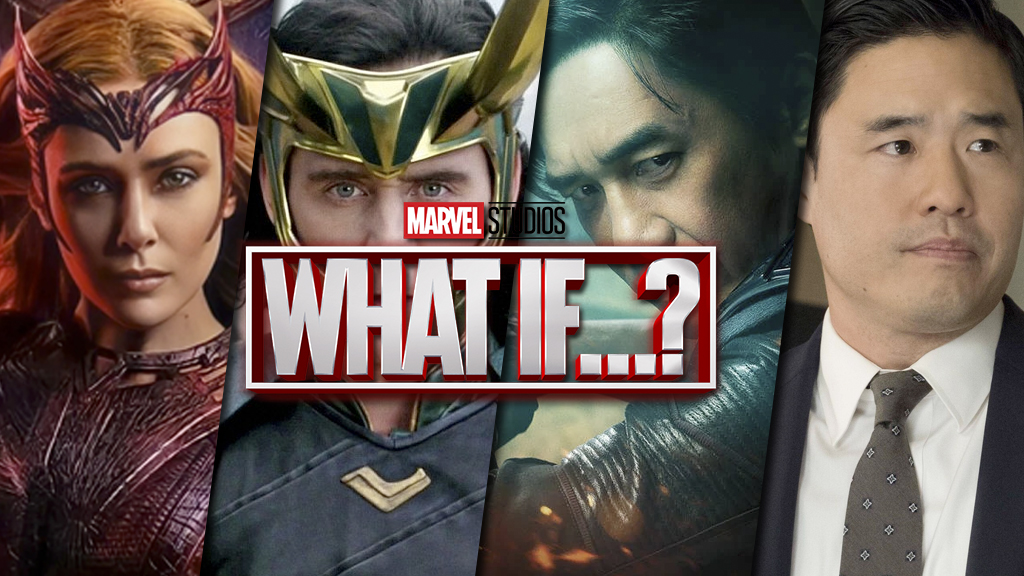
We’ve long been waiting for what the second season of What If…? has to offer, especially after a rather interesting first entry.. Not every episode was perfect, but overall the show did some really cool things. And with the recent news that fans will be treated to a first look at season 2 during Marvel Studios’ animation panel at SDCC, now is as good a time as any to take a look at what the future may hold for What If…?. As such, let’s take a look at five ideas for new episodes of pertaining to phase 4 of the Marvel Cinematic Universe.
What If… Wanda’s Hex Took Over The Tri-State Area?
This episode would act as a continuation of WandaVision. As Wanda’s hex expands, it takes over more and more land, which leads to more of the world being dragged into the ‘TV-Verse’ that Wanda created. It takes over the whole tri-state area, which would also include all of New York. As such, characters that live in the city like Doctor Strange, Wong, Spider-Man, and more would get dragged into this fictional world. While WandaVision played around with sitcoms, the hex’s expansion could open it up to embracing other TV genres. They can pay homage to big TV shows like Lost, Game of Thrones, The Sopranos, Westworld, The Walking Dead. Hell, they could even get meta and take some inspiration from The Mandalorian. Either way, more characters get involved and they have to figure out a way to stop Wanda.
What If… Loki Won The Tour de France?
In Loki, there’s a Variant that wears what appears to be a cyclist’s uniform and is holding a trophy. So, why not explore that very story on What If…? Instead of becoming Earth’s ruler by invading with an alien army, this Loki takes a different approach: gaining favor and popularity by winning the Tour de France. The episode plays out like a sports documentary, where Loki, an up-and-coming racer, has entered the race, but is unknowingly cheating using magic. And the heroes who will become the Avengers figure this out and decide they must stop him. This is how the Avengers form in this universe.
But they can’t fight Loki because he’s too popular, so they all join the Tour de France, hoping they can beat him. Captain America fairs pretty well against Loki, however, he and the Hulk get disqualified, due to “steroid usage”. Thor is also disqualified for riding his father’s 8-legged horse, Sleipnir. Iron Man builds a really good bike, but – similar to Ultron – it turns evil and fights everybody, so he’s out. Black Widow ultimately does the best against Loki, who resorts to brainwashing Hawkeye to take her out. In the end, Loki wins and uses his popularity to become Earth’s ruler.
What If… Wenwu Invaded Wakanda?
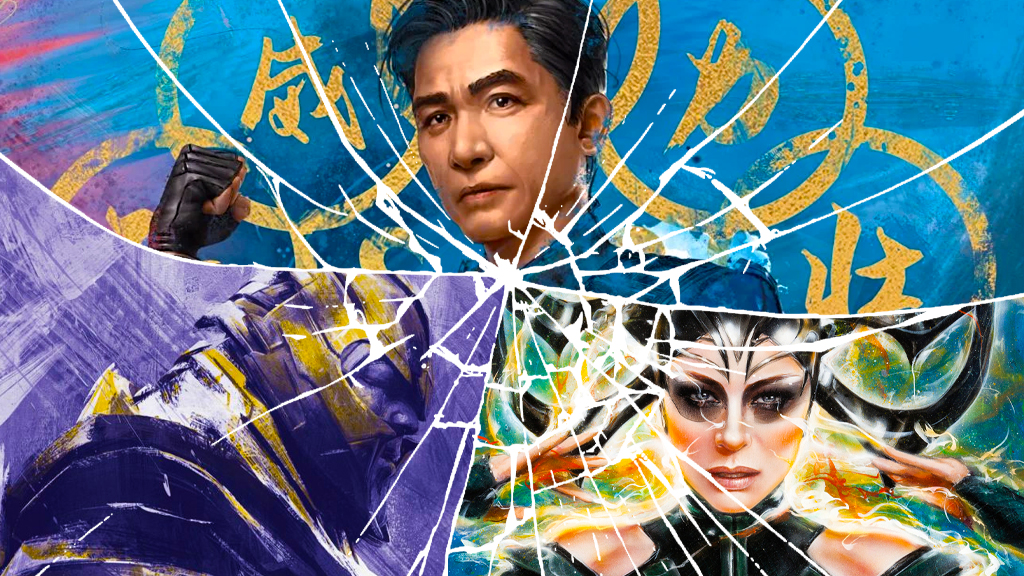
Shang-Chi‘s Wenwu is a very wealthy, knowledgeable, and worldly man, who is constantly exploring ways to expand his empire. He probably knows about Wakanda – especially if guys like Klaw will just tell you – and that it has some sort of connection to the afterlife via the Ancestral Plane. In this version of the story, Wenwu aims to conquer the country to get his wife back through the Ancestral Plane. One of the things that season 1 of What If…? did so well was that the fight scenes were terrific, especially when there was cool hand-to-hand combat. So, it would be super cool to see the Black Panther, the Dora Milaje, and all the Black Panther characters fight Wenwu, Razor Fist, and the rest of the Ten Rings army. It may be light on story but the spectacle would make up for it.
What If… Sylvie Grew Up To Be A Valkyrie?
There’s a theory out there that in Loki, Sylvie’s nexus event was that instead of wanting to become a ‘Loki’, she wanted to be a Valkyrie. Young Sylvie is shown to be playing with Valkyrie toys and that didn’t go with He Who Remain’s plan. In this version of the story, Sylvie gets to fulfill her dream of becoming a Valkyrie, where she also befriends Tessa Thompson‘s Valkyrie. They form a new team of intergalactic super viking-warriors; one that is able to successfully vanquish Hela when the time comes. Jane Foster could be the third member of the team when she becomes the Mighty Thor, especially because in the comics, Jane Foster is currently the leader of the Valkyries.
What If… Jimmy Woo Became Sorcerer Supreme?
In this version of the story, Jimmy Woo is recruited to Kamar-Taj by Wong after showing him a card trick. However, not long after, the entire sorcerer population is decimated by Mordo in his quest to eliminate all magic-users. But since Jimmy Woo’s ‘magic’ is just sleight of hand, he goes unnoticed by Mordo. With no one left to protect the Earth from mystical threats, he assumes the role of the Sorcerer Supreme. It’s a silly idea, but one of the great things about the What If…? comics is that at the end of the issue, there would be like a silly three-page story that wouldn’t make sense for a real book. A great example of this is ‘What If Ben Parker’s Nephew Was Galactus?’ from What If Vol. 2, #3. Something like that can be done here where Jimmy Woo is Sorcerer Supreme and he does close-up magic instead of actual sorcery.
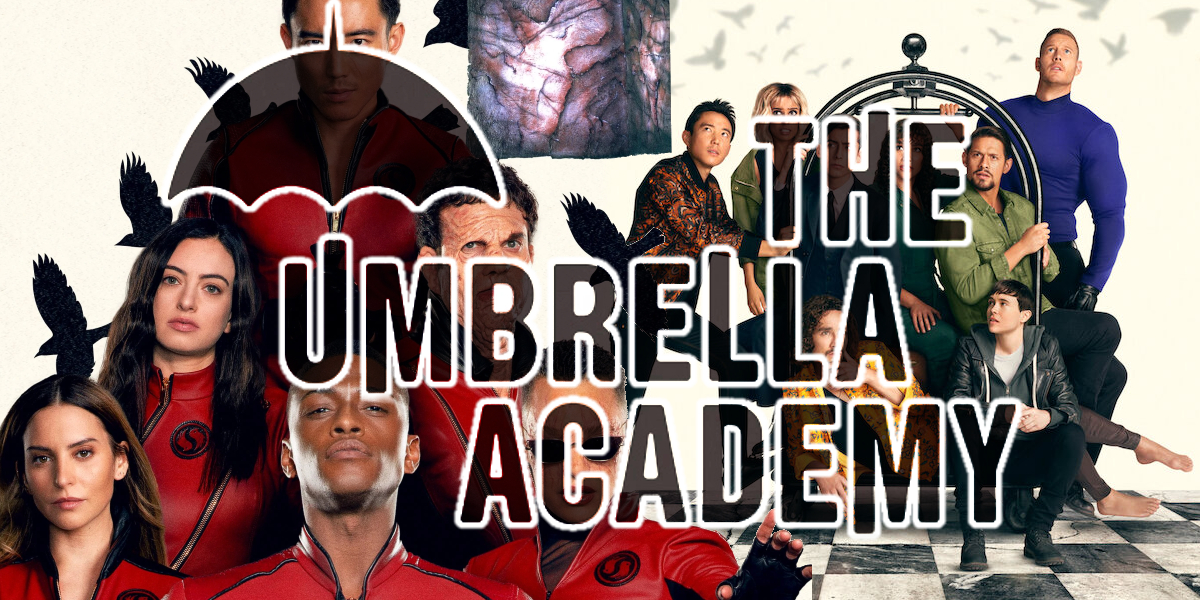
When the second season of The Umbrella Academy came to a close, fans were left on the edge of their seats as they’d believe the Hargeeves siblings had escaped the apocalypse that had brought them into the 1960s. Upon their return to what they thought to be their childhood home, the Hargeeves siblings were met with confusion. After all, their father Reginald Hargeeves, whose death brought the family back together in Season 1, was now alive and well. As it turned out, though, this Reginald was not their father. The place they’d thought to be their home was actually none other than the Sparrow Academy. The end of the season gave fans a glimpse at the Ben of their timeline, as well as silhouettes of the Sparrows.
With the tease of the Sparrows, fans were thrilled at what Season 3 might have in store. After all, it was a brand new mystery featuring a new set of mysteriously powered children born on Oct. 1st, 1989. As the Sparrows are the children that Reginald was unable to get in the original timeline, Season 3 seemed full of promise and quickly proved it would be unable to handle this new ground of characters as evident by Marcus being wiped from existence by episode’s end,
The show begins quickly doing away with many of the Sparrows as quick as they can, spacing it out so that it does not seem like they really want them gone. Marcus was the one member that actually showed some development as he was willing to work with the Umbrellas to try and fix what was going on, but the show didn’t seem to have someone else taking up precious screen time from any of the Umbrellas. Sure, his powers weren’t all that interesting, as he had similar abilities to Luther, minus the gorilla DNA that malformed Luther’s body.
Perhaps the biggest issue with many of the characters is how one-note most of them feel. In fact, many of them don’t get much development besides Ben and Sloane, with Ben constantly bumping back and forth like the writers weren’t fully committed to what they wanted to do with this new version of a previously beloved character. Alphonso , Fei, and Jayme are kind of just there to serve as the muscle and never really expanding behind that. We even see that, at one point, Alphonso is not as deformed as he once was, but the show does little to elaborate on that. This is in no way on the actors and actresses, as they all look great and do the best that they can with what they’ve been given.
Christopher was probably the biggest misfire of the season. Of course, he is a living flesh cube, but no one ever cares to ask why and the show doesn’t care to make any explanations. In some ways, it works, as none of them really give it a second thought after all the crazy shit they’ve all seen the past few days. That doesn’t excuse that he is solely used as a plot device here and there in the season.
Now of course, it is The Umbrella Academy and not The Sparrow Academy, so naturally, the focus would still remain on the main characters. However, it felt like such a major cop out with the Sparrows. The characters were hyped, and we were led to believe they’d be the main antagonists of the next season. Instead, they decided to completely pivot from what could’ve been a unique entry in the series with yet another apocalypse to try and fix.
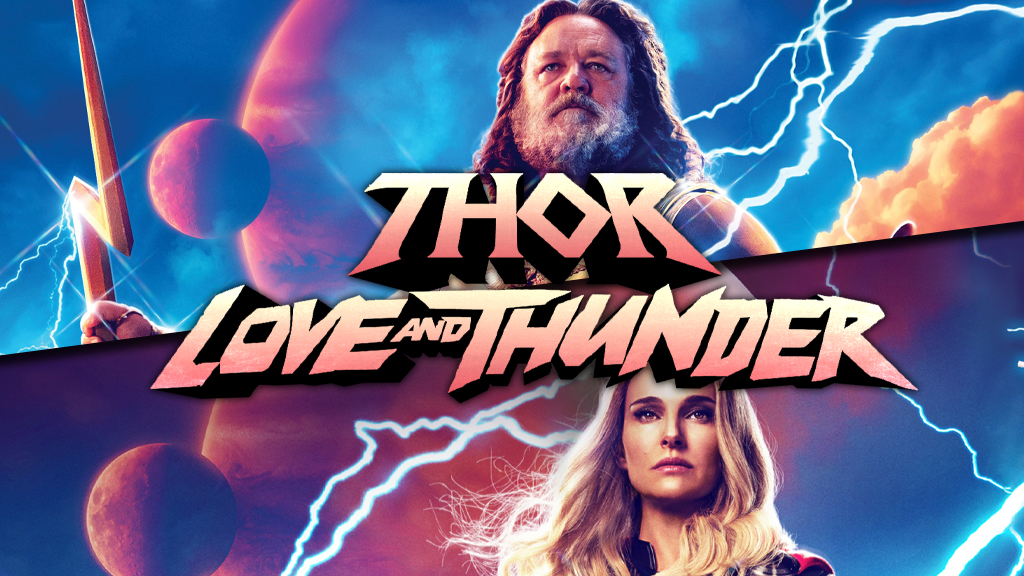
Marvel Studios has returned with another movie, which means another round of exciting post-credits scenes that fans can theorize on for years to come. Thor: Love and Thunder, like many of the Marvel Cinematic Universe films before it, features two extra tags at the end of it’s runtime. The first of these teases continues the tradition of introducing surprising new characters after the credits roll, while the second brings back a familiar face to put a nice little bow on the fourth Thor story. As always, there’s quite a bit to break down, so sit back and relax your brain while we do the work and explain what exactly is going on in those signature Marvel stingers.
Enter: Hercules
Well, if you’ve made it this far, you probably already know that Brett Goldstein is Marvel’s Hercules. About halfway through Love and Thunder‘s credits, the Ted Lasso star pops up as the Greek Prince of Power in a surprise reveal. The scene acts as a continuation of an earlier sequence in the movie where Chris Hemsworth‘s Thor confronts Russell Crowe‘s Zeus for refusing to act on the rise of Gorr the God Butcher, a conversation that would ultimately result in Zeus’ very public humiliation in Omnipotence City. After the chat between both Thunder Gods turns sour, a physical conflict begins, and Thor’s best buddy Korg is seemingly struck down by Zeus’ powerful lightning bolt. Korg turns out to be alive, but that doesn’t stop an enraged Thor from catching Zeus’ next bolt and chucking it right back to where it came from. The bolt goes through Zeus’ chest, and the renowned leader topples silently from his regal perch.
The mid-credits scene lets the audience know that Zeus is not dead, but is instead plotting his revenge on Thor while recovering from his wound. To do this, he enlists the aid of his son, Hercules. Following a dramatic monologue in which Zeus laments the lack of fear modern mortals have for gods, he asks Hercules to find Thor and prove that the gods are still a force to be reckoned with. The camera then cuts to Goldstein standing up in full comic book Hercules attire, complete with flowing chest hair and his fun little club weapon.
The character has long been rumored to be making his MCU debut in Phase Four, and Love and Thunder was such a perfect place for the entrance to happen it’s almost shocking it didn’t occur in the main story. In the comics, Hercules has encountered Thor many times, at first as an enemy but eventually as a longtime friend. When the two first meet, Thor is searching for Olympus alongside his brother Loki on a mission of peace, but Hercules’ natural desire to prove his strength leads to initial conflict. In fact, the concept of Herc and Thor duking it out to prove who is stronger would become a recurring thread in their relationship. Despite actually becoming quick pals, a friendly rivalry would remain for the rest of their days. As Herc himself would eventually say in Tony Isabella‘s Champions #1; “Whatever Thor canst do – Hercules can accomplish more mightily!“
The MCU’s introduction of the character implies a potential Thor 5 plot might revolve around Hercules and the Greek gods clashing with Thor and his Asgardian comrades. However, as previously mentioned, these two entities are often more in line with each other than they are in opposition. Not long after Hercules meets Thor, the former is tricked by the Enchantress into visiting Earth and attacking the Avengers. He’s swiftly snapped out of it, but his actions anger Zeus and, like Thor before him, he’s banished from his home on Olympus and forced to live among the mortals. Hercules then becomes an on-and-off member of the Avengers, later co-founding his own team called the Champions, and creating a new life for himself on Earth and pulling away from the Hercules known in Greek mythology.
Perhaps the post-movie setup is actually for a future team-up where Hercules attacks Earth’s Mightiest Heroes before having a change of heart, ultimately being banished by Zeus for not fulfilling his mission and becoming a regular mainstay of the MCU Avengers. Or, maybe, his assault on Thor will only last briefly, before the two partner up to take on a bigger threat. The duo have confronted massive villains like the Chaos King Amatsu-Mikaboshi and Herc’s Uncle Pluto together in the past. There’s a good chance one of those baddies lines up against the “God Squad” of Herc and Thor in another solo adventure down the line.
Valkyrie: Jane Foster
Once the credits have been completed, fans are treated to a short scene that could serve to either wrap up Dr. Jane Foster’s MCU story or open the door to an entirely new chapter. In Love and Thunder‘s final moments, Jane uses a crumbling Mjolnir to entrap the blade of Gorr’s God-slaying sword and destroy it for good. This effectively defeats the God Butcher and saves the lives of all gods, but it also robs Foster of the only thing keeping her alive. After her sacrifice, Jane dies contently in the arms of Thor, knowing the universe has been made a better place for everyone. The post-credits reveal that Jane, having died an Asgardian hero, has been granted access to an afterlife in Valhalla.
She’s welcomed to life-after-death by Idris Elba’s Heimdall, who previously perished in battle against Thanos and the Black Order. He’s happy to see Jane, who saved the life of his son after he was kidnapped by Gorr, and welcomes her to a post-mortem existence as both a warrior and a friend. The pair walk off together, gladly embracing whatever Valhalla may have in store for them. If Marvel so chooses, this could be the perfect ending to the tale of Jane Foster, especially if actress Natalie Portman decides she’s done with the superhero gig forever. However, it could also be teeing up an adaptation of a very recent comic run from legendary Thor scribe Jason Aaron.
Still ongoing at the time of this publication, Valkyrie: Jane Foster tells the story of Foster after she loses the power of The Mighty Thor. Forced to sacrifice a crumbling Mjolnir in a last-ditch effort to save the universe, Jane is blessed with the powers of a Valkyrie and becomes the first in a new generation of Asgard’s most elite group. She then accepts help from a recently deceased Heimdall, ultimately using her newfound abilities to aid a grieving Thor and take Heimdall’s spirit on one last adventure through the multiversal afterlife. Sound familiar? Love and Thunder establishes a close friendship, and possible romance, between Foster and Tessa Thompson’s Valkyrie. It’s not far-fetched to think Val might find a way to bless Jane with Valkrior power in a future MCU project, and the post-credits scene perfectly sets up the new friendship between Foster and Heimdall. If Portman and Elba are both down for another outing, this story could be adapted as a sub-plot in Thor 5 or as a Valkyrie spin-off series on Disney+. After all, Kevin Feige and company really do love their series spin-offs these days.
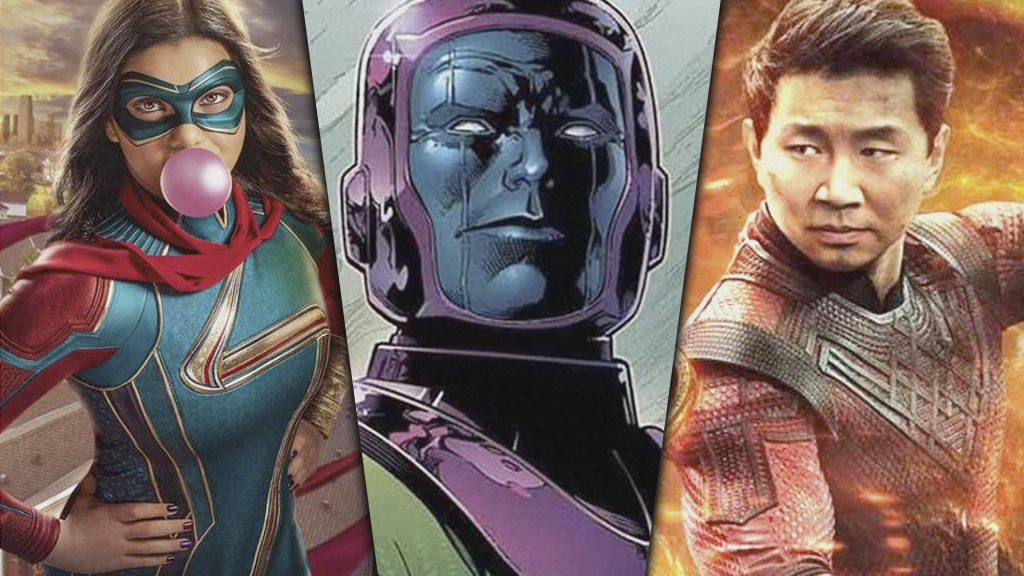
There have been many comments on a lack of connection between the various projects of the Marvel Cinematic Universe’s elusive Phase 4. While it’s echoing the days of when the MCU was in its infancy, long before anyone made heads or tails about Thanos’ brief grin at the tail end of Avengers, there has been a running theme going throughout the season. Many of the stories explored here are about identity and uncovering what we are capable of. There’s also the mystery set out in Shang-Chi and the Legend of the Ten Rings, as mysterious tools are appearing with uncertain origins. The same goes for the recent Disney+ series Ms. Marvel, where she uses bangles that are a mystery to even the Clandestine seeking them.
Yet, the latest episode introduced a surprising twist to a familiar aspect of Kamala Kan’s power. In the comics, she doesn’t actually shapeshift but rather borrows mass from herself throughout time. In the series, she actually gains the literal ability to travel through time and ends up during the Partition to help her own family’s history come true. It’s a rather surprising twist that not only gave us time to explore an important part of history but also continue to evolve Kamala’s power set. This does lead to more questions regarding the mysterious origins and how they might tie to the Kree, given it was on a blue arm and the Ten Rings logo.
Once I started thinking about the time travel implications in this series, the more I started to think about the loose connection at play here. We did have an entire scene where no one could connect the origins of the Ten Rings, a weapon that’s been part of MCU’s history long before we even witnessed it ourselves. How would technology that advanced find its way into the hands of Wenwu that not only give him seemingly eternal life but also the power to take down an entire army and how would it connect to the mysterious bangles passed down in the Khan family? The Disney+ series producers did hint that they adapted them for a bigger story, and perhaps they weren’t hinting at just The Marvels but even beyond that.
Well, there is actually one connective tissue that would tie it together. It’s not stated outright but I believe these two mysterious items are linked. In a way, they likely have a similar origin and that is one that doesn’t lie in the past. In Loki, we’ve met a Variant of the man that would be known as Kang the Conqueror to many. Time travel and dimensional travel have been at the forefront for most of the season, as the MCU cleverly tied these elements together to avoid having to explain two distinct sci-fi concepts.
Fittingly, both elements come together in this season of Ms. Marvel. Similar to the dimension introduced in Shang-Chi, the Clandestine are actually from another dimension they refer to as Noor and have been on Earth for a long time. Both projects feature a mysterious object that gives its wielder mysterious powers of an unknown origin that could potentially open up the MCU’s mythos in new ways. Perhaps these objects have these powers because they aren’t from any past civilization but rather originate from the future.
Kang the Conqueror has that name for a reason. With an arsenal unlike any other at his hand, it wouldn’t be too surprising that he’d also find a way to echo the words of Thor’s explanation of how Asgardians combine magic and technology. He’s found a way to harness exactly that to create an arsenal of weapons he used for his own conquering throughout history only to leave them behind when he made his jump. Moon Knight almost featured the man that was a pharao in another timeline, which further pushes a connection.
Perhaps Doctor Strange in the Multiverse of Madness introduced the only weapon that would be able to take him down, someone who can literally bend reality to her knees. Wanda may be the piece of the puzzle that won’t become apparent until much later. In a way, the unnamed bangles and Shang-Chi‘s Ten Rings are actually Phase 4’s new Infinity Stones. Instead of literal embodiments of powers, they are objects all hinting at one major threat and the power he truly holds. Kang the Conqueror doesn’t need to collect any stones to accomplish his goals, he already has done so in another time. Yet, his arrogance of leaving these objects in the past may also become his undoing.
My pick to helm Marvel Studios’ Fantastic Four film would be Deborah Chow. While someone like Peyton Reed, who has expressed his interest in helming a Fantastic Four film, would seem like a more ideal choice, Chow’s star has rightfully been on the rise in recent years. The director earned her first credit thanks to a short titled Daypass in 2002. She then followed it up with a short titled The Hill in 2004, followed by her first feature with 2010’s The High Cost of Living. It wasn’t until she stepped in to direct an episode of Copper that Chow truly launched her career in television. Like most, she built her resume by directing episodes of multiple CW shows, but once she stepped into the Marvel universe – courtesy of Netflix – Chow really proved that she had the ability to deliver something impressive. One has to imagine it was her work on shows like Jessica Jones and Iron Fist that ultimately led to her being hired to helm episodes on The Mandalorian before landing Obi-Wan Kenobi. Giving Chow the chance to shine on a big feature film such as Fantastic Four would be a pretty fantastic move. Obi-Wan proved Chow has the chops to play in a larger playground, it’s just a matter of giving her the chance to shine on a big-budget feature.
Jared Kirschenbaum on Justin Lin
The Fantastic Four can be defined by a single word: family. And if anyone is qualified for the task of ushering Marvel’s first family into the MCU, it’s Justin Lin – the director who made The Fast and the Furious into the massive franchise it is today. Lin helmed 5 Fast and Furious films (The Fast and the Furious: Tokyo Drift, Fast and Furious, Fast Five, Fast andFurious 6, and F9: The Fast Saga), so he knows his way around a big-studio blockbuster. However, it was Lin’s vision for the Fast and Furious films that transformed them from a streetcar racing movie series to a high-stakes global adventure series centered on a multicultural found family. Additionally, if a director’s time on the show Community is any indication of how well they’d do in the MCU, then Justin Lin should have no trouble directing Fantastic Four. Like the Russo Brothers, who are responsible for some of the all time greatest MCU films, Lin found great success on Community. Lin directed 3 episodes of the show, including the first paintball-centric episode “Modern Warfare”, one of the show’s best. With all of that, combined with his work on Star Trek Beyond, which had a vast ensemble acting as a surrogate family and reintroduced the series to its 60’s sci-fi roots of exploration and adventure, Justin Lin almost seems tailor-made to direct Fantastic Four.
Hunter Radesi on The Daniels
The Fantastic Four aren’t your average superheroes, and they deserve a pair of directors who aren’t so average either. The Daniels shocked the world this year with the release of their hit film Everything, Everywhere All at Once, crafting an incredibly entertaining tale about a family surviving their way through the unpredictable unknown. This is more or less exactly what a good Fantastic Four adaptation needs to be. Previous attempts at bringing Marvel’s First Family to life have failed in understanding the group thrives more on adventure than they do super heroics. The best tales typically involve Reed, Sue, Ben, and Johnny exploring the far reaches of space and time on some sort of wacky mission, not fighting thugs on the streets of New York. Kevin Feige and company would be smart to hedge their bets on an indie duo with a mastery in mixing outright weird with downright emotional.
João Pinto on Alex Garland
The upcoming Fantastic Four feature film will undoubtedly shape the Marvel Cinematic Universe (MCU) for years to come. Marvel Studios seems to be taking its time when it comes to the introduction of Marvel’s First Family and that alone shows us just how pivotal the project is set to become. Another aspect differentiating this project from most other recent MCU offerings is that the director’s chair is likely to be given to a more established director within the industry.
2. While no names have surfaced, multiple sources say while it’s a large mix of candidates, Feige and company are taking a lot of shots at some big names.
With the sheer volume of MCU projects that Marvel Studios is putting out each year, it comes with little surprise how Kevin Feige doesn’t want to have to oversee a shoot of this magnitude himself, thus allowing him to pay more attention to several other, smaller scale, projects.
One source close to process, “Kevin doesn’t want oversee entire shoot and after not having to worry about that with Raimi, he is very game to same outcome with this shoot.”
This shortens the list of possible directors, as many big names might not want to focus their energies on a sci-fi franchise, and those who would might not be the most accomplished of the bunch. One name that does come to mind, with an impeccable track record both in terms of writing and directing as well as being immensely versed in high-concept sci-fi, is that of British writer and filmmaker Alex Garland.
Garland, known for his work in Ex-Machina, Annihilation, and the fantastic miniseries Devs (as well as his contributions to 28 Days Later, 28 Weeks Later, Sunshine and Dredd) would surely bring the inventiveness of his approach to science fiction into the MCU, something a Fantastic Four feature film feels like the perfect vehicle for. He has the track record within the industry to be able to lead such a project and the creative freedom Feige is willing to give whoever ends up with the job could perhaps sit well with Garland, that is known to enjoy being in almost complete creative control of his directorial endeavors as he has written all five of them.
Charles Murphy on Steven Spielberg
As they’ve expanded from 3 movies per year to 4 movies and 3-4 streaming projects per year, Marvel Studios has had to learn on the fly. As it should be, learning is continuous and one lesson learned by Kevin Feige over the last year is that unlike Evelyn Quan Wang (now you see why this one falls in line after Hunter’s!), he cannot be EVERYWHERE all at once. Feige learned that lesson by finding someone he felt comfortable relinquishing some day-to-day control to on set in Sam Raimi. And that discovery has emboldened Feige to shoot for the stars as he looks to replace Jon Watts on Fantastic Four. If Feige is looking for a seasoned, successful person to usher the First Family into the MCU, he need look no further than Steven Spielberg. Spielberg can wear all the hats required to keep a production up and running, has proven his mastery of the sci-fi, action and humanistic genres and is comfortable working with any mix of practical effects and CGI.
Spielberg is a big fan of superhero films, with Marvel Studios Guardians of the Galaxyapparently at the top of of list (at least at one time). He was keen on working with DC on an adaptation of Blackhawk, but while the project is reportedly still alive, Spielberg’s attachment to it is now unclear. Imagine a high-concept sci-fi film (Minority Report) that captures a sense of adventure (Raiders of the Lost Ark) and explores the unknown (CloseEncoutners of the Third Kind) while keeping the focus on family (The Goonies) and you have what a true Fantastic Four film should be. And if you don’t think big name actors won’t be lining up to work with Spielberg on a Marvel Studios project, you aren’t paying attention.
MTF III on Rian Johnson
In Rian Johnson, Marvel wouldn’t just be getting a director with an art house sensibility who has experience within a mega-franchise, were they to choose him for Fantastic Four. The Star Wars: The Last Jedi director has demonstrated both the sci-fi bona fides (see Looper) and the ability to juggle a large ensemble with a wide range of character types (see Knives Out and its forthcoming sequel). And while we don’t know yet who will be cast to play Reed Richards, Johnson’s previous work with Joseph Gordon-Levitt (one of my top choices) shows that he can offer audiences a more cerebral protagonist than the standard wise-cracking square-jawed lead.
His Fantastic Four would have a smart, brisk script, visual flourishes (who could forget the Holdo Maneuver shot or the salt planet battle in The Last Jedi), and emotional depth, while still slipping in physical and situational humor. Admittedly, it wouldn’t be saccharine and sweet, as Johnson is always aware of and in dialogue with the genres he employs. He wouldn’t replicate the 1960’s-style exploratory science fiction of a Lost in Space or Doctor Who without also infusing it with self-awareness and recognition of how their familiar tropes have been employed, so that he can subvert them. And in my opinion, the key to a truly great Fantastic Four project in the 2020s will be a willingness to interrogate and subvert well-worn and traditional archetypes, so that modern audiences can engage with them on a deeper level. Johnson has shown the ability to do that, all while still making crowd-pleasing blockbusters.
Torbjorn Frazier on Peyton Reed
Something to consider for the Marvel Cinematic Universe’s Fantastic Four is that Kevin Feige and co. may want to play it safe with what could become the MCU’s flagship franchise and go with a more conventional take on the team for the first film. And with that in mind, Peyton Reed would be a logical choice to direct. First and foremost, it is known that Reed was involved with the creation of a Fantastic Four film in the early 2000s that never made it past development hell, so he at minimum has some sort of vision for these characters. Before discussing his involvement with Marvel Studios already, Reed’s direction of the season two finale of The Mandalorian showed that he has the ability to showcase characters and moments with great pathos that resonates greatly with audiences. And when it comes to the Ant-Man films, Reed has shown the ability to create relatable family dynamics that rank among the best in the MCU. Above everything else, Fantastic Four needs to establish the team as Marvel’s First Family, and I fully trust Peyton Reed to do that. And with Ant-Man and The Wasp: Quantumania releasing in less than a year, we will finally get to see what Reed can do in a high-scope and high-concept project that could be critical for the future of the MCU. While not the most appealing to fans at first blush, I truly believe that Peyton Reed would be a serviceable pick for the first Marvel Studios-produced Fantastic Four film.
There was a time when one of the top criticisms the Marvel Cinematic Universe faced was that the films had a “villain problem.” This wasn’t entirely inaccurate, because unlike with well-known heroes like Batman and Spider-Man, the earliest MCU films were about establishing who our long-term protagonists would be, more than establishing who would be their foils.
But as the quality of the offerings have improved, so too has Marvel’s ability to introduce heroes and progress their stories in the projects of others, leaving the films with more real estate to give their antagonists room to flourish. Add in the way that some villains’ stories intertwined with those of the heroes, and that has provided the ingredients for the introduction of villains who leave an impression on audiences even after they’re vanquished. And in a storytelling form that thrives on characters returning and resurfacing, that has been invaluable.
But what if someone were to scour the first 4 phases of the MCU and create a new and formidable villain, stitched together from antagonists past? From which five villains would you take component parts for this unholy union, and which parts would you use? This piece purports to answer that question. Behold, our Villain Frankenstein!
The Commitment of Thanos
For most fans, Thanos is either #1 or #1A on their list of favorite MCU villains. And why wouldn’t he? In Avengers: Infinity Warhe defeated the Avengers handily while throwing timeless verbal barbs in their direction — not to mention fragments of nearby moons. He humbled the Hulk, victimized the Vision, and laid waste to worlds, all in the name of balancing the universe through the eradication of half its sentient life. So thorough was his victory, and so committed was he to achieve that victory, that audiences couldn’t help but begrudgingly give him respect.
But beyond the respect for how formidable he was, audiences also considered, because of Thanos’ commitment to his vision for the universe, and his willingness to sacrifice and risk everything for it, the possibility that just maybe he had a point. Does the world warrant a biblical-style purge? Indeed, sometimes it feels like it does. Can the idea of killing half of everyone indiscriminately and leaving survivors to make a better universe in its aftermath seem oddly plausible? Yes! So we can understand a villain who takes years, stretched across multiple films, acquiring the MacGuffins and putting the pieces into place, doing so in service of a victory of that scale. That his Snap was ultimately reversed is immaterial; his impact is still being felt. Thanos showed that it was possible for the villain to win, and because it took five years for that win to be overcome, the MCU, and its audience, was forced to marinate in his message.
The Righteousness of Killmonger
Before “Thanos Was Right,” it was Erik “Killmonger” Stevens in Black Panther who articulated a worldview that resonated with audiences, despite being ultimately villainous. Colonization and oppression, particularly at the hands of Europeans, have ravaged the Global Majority, marginalizing them, and creating an underclass throughout the world who need to rise up and achieve liberation by striking back. And in the utopian nation of Wakanda reside the tools that could make this global revolution possible. By sitting back and letting all the horrors be visited on people of color throughout the world by imperial powers, Wakanda abdicated a responsibility that should have been a moral imperative. And if Killmonger led them, the formerly powerless would rise up worldwide and become a new power, a new empire, that would strike fear in the hearts of any that opposed them.
Yes, of course, that goes too far. But up until the point that it goes too far, we find ourselves nodding our heads in condemnation for the “comfortable” who sit idly by while others are oppressed. We admire the fact that a young boy left orphaned in an Oakland housing project was able to mold himself into a fierce fighter, a tactical genius, and an engineering wunderkind, with nary a Bat insignia to speak of. Instead, he wears on his body the scars of all the killing he had to do to put himself on the Wakandan throne — even the killing of his own people. And he scoffs at the fact that Wakandans debate intervention while innocents suffer and die in the imperial yoke. It’s a message that continues to resonate today, as the masses cry out for someone who will do whatever is necessary to defeat tyranny, including getting their hands dirty.
In our hearts, we know that Erik honed himself into something sharp and hard because his world wouldn’t let him be anything different, and when he does die in Black Panther, it’s tragic. But we also know that there are billions subjected to that same world, many making similar choices, because sharp and hard is what makes survival more likely than not. So villain or no, there’s something to the idea of the Wakandan spear that strikes at the heart of the powers that be in order to liberate the powerless. At times, we wanted to believe Killmonger could be that spear of righteousness, and it’s an epic villain whose cause is so sympathetic that you almost want to take it up alongside them.
The Resources of Wenwu
The Ten Rings organization was introduced to fans in the very first MCU movie, Iron Man as a shadowy terrorist network, yet we learn years later in Shang-Chi and The Legend of TheTen Rings that their roots stretch back millennia, and their origins lie in ten mystical artifacts of immense power, wielded by Xu Wenwu. With these Rings, Wenwu is able to take down kingdoms and annihilate armies singlehandedly and is granted near-immortality, inspiring the devoted and fanatical following which provides the foundation for his international criminal empire.
In the Ten Rings, Wenwu established a clandestine organization with the resources to rival Hydra, which for the most part had been able to prosper despite the existence of S.H.I.E.L.D., the emergence of the Avengers, and the rampage of the Ronin. And his identity as the head of the organization was secret enough that an actor could be installed as a figurehead with no one in law enforcement having a clue.
Although by the end of Shang-Chi, leadership of the Ten Rings organization has passed from Wenwu to his daughter Xu Xialing, and custody of the Rings themselves has passed to his son Shang-Chi, it should not be forgotten that for thousands of years, this martial arts master and criminal mastermind possessed ten of Earth’s most powerful weapons, and had an army of operatives at his disposal all over the world. It’s certainly disappointing that we mostly got to see the fall of Wenwu, rather than his rise and reign. But the glimpses we did see were of a formidable man who built an empire that was not to be trifled with. And there is a certain irony to the fact that his other defining characteristic, family man — exemplified by his desire to see his children extend his legacy — ended up being fulfilled in his death. He was a cruel and overbearing dad, and yet, he still managed to get his way. How villainous is that?
The Sex Appeal of Hela
Does a great villain have to be sexy? Of course not. However, great villains are often charismatic, confident, graceful, and lithe, and there’s something sensually appealing about a character who is uninhibited and unabashedly bad. From the moment she first steps out of the portal in Thor: Ragnarok like some kind of goth goddess, Hela was capable of stealing the spotlight from both the hunky and handsome Thor and the devilishly charming Loki, chewing scenery, smashing Mjolnir, and establishing her dominance. She laid waste to Asgard and looked fabulous doing it. Whether you’re male or female, a villain who can make you swoon, despite knowing that their intentions are far from pure…well, let’s just say that Tumblr exists for a reason.
The MCU was reluctant to have female villains for a long time, and I suspect part of the issue was presenting an antagonist who could convincingly present a physical threat to male heroes. Well in the Goddess of Death, Taika Waititi was able to give us all of that, as Hela stepped on the necks of every male character and dared them to beg for more. When she instructs them to take to their knees and submit to her will, we as an audience are kind of hoping she gets to do her worst. Every moment she strokes her hair, tilts her head back, and unleashes her thorny antlers becomes instantly iconic because she’s about to do Very Bad Things that we can’t wait to see.
There have been a lot of formidable villains in the MCU, but none other than Hela have served such looks while also serving up so much death and destruction. This goddess deserves her spot in the pantheon.
The Gravitas of the Kingpin
Wilson Fisk’s physical stature certainly looms large, and so does his influence. Whether he’s the Big Bad of Daredevilwilling to bash a head in for embarrassing him in front of Vanessa, or on Hawkeyetearing a car door off the hinges, the unbridled rage of the Kingpin is intimidating. However, even more intimidating is his soft-spoken, measured approach to getting his point across the other 90% of the time. As portrayed by Vincent D’Onofrio, Wilson Fisk is a man capable of conveying menace in an anecdote, inspiring fear in even the pauses between his words. You cross him at your peril, and Fisk speaks like a man who knows that, and most importantly, knows that you know it.
Kingpin is a villain that commands both our attention and our respect, even though he isn’t the most charismatic in his oratory. He isn’t going to drop a smooth one-liner or dazzle us with his charm. He is, however, going to be riveting in his determined and deliberate delivery of a dramatic monologue. And monologues are a great villain’s stock in trade.
Villainy is a complex stew. There’s not an exact formula that can be relied upon to create a timeless villain. But if you were trying to create a blueprint, so that you could build an elite supervillain in a lab, this would be a great starting point. We’ve got some great villains coming down the pipeline in the months and years ahead. Let’s see how they measure up.
In the show, Kamala meets the Red Dagger while in Karachi. When she is investigating the train station looking for answers about the train in her vision, she is attacked by the Red Dagger. He then reveals that he knew she was Djinn because he could sense the Noor energy she was using. When he found out she was related to Aisha, he took her to the base of the Red Daggers where she met fellow Red Dagger Waleed. He explained to her that Clandestines come from another dimension that exists all around ours, but with a veil of energy that separates the two.
Marvel Studios’ Ms. Marvel Episode 4
Marvel Studios’ Ms. Marvel Episode 4
Red Dagger and Kamala bond in civilian mode as he introduces her to his friends at a bonfire. Ultimately, by the end of Episode 4, the Clandestines had tracked down Kamala and attacked the group, seemingly killing Waleed before Kamala is transported to what appears to be a 1947 Karachi train station.
What They Kept From the Comics
Ms. Marvel #12 (2016)
Ms. Marvel #12 (2016)
Ms. Marvel #12 (2016)
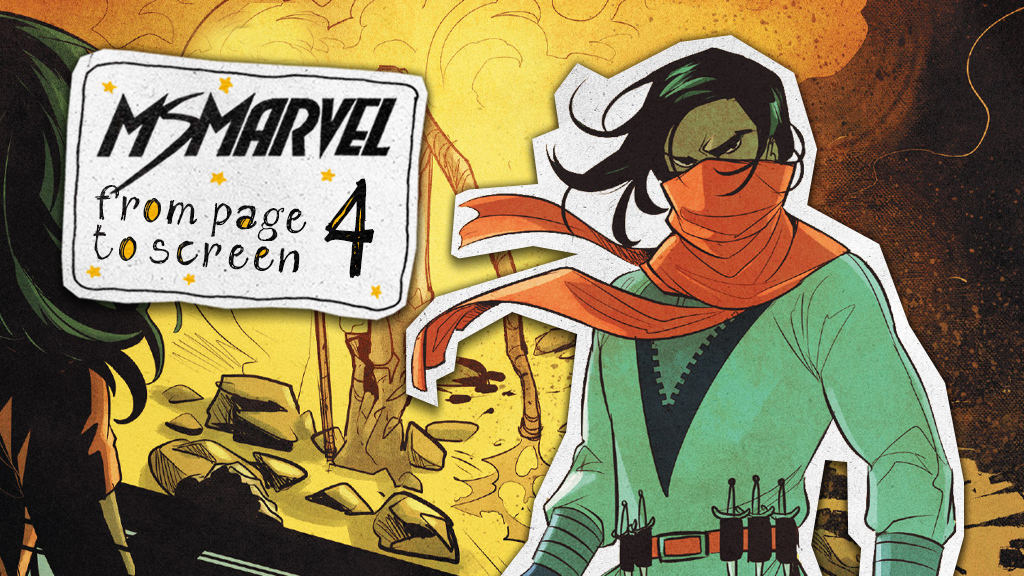
In Ms. Marvel, Kamala also meets Red Dagger while visiting Karachi. She does not know his true identity for quite some time, but his name is Kareem and he is a family friend. He acts as a vigilante in Karachi similar to how Ms. Marvel patrols Jersey City.
His look and skillset are incredibly comic accurate, and his role in Kamala’s life may track that seen in the comics. The two were introduced in both iterations when Kamala visited Karachi in an attempt to figure out who she was. In the comics, Kareem gave her a new and optimistic perspective on her role as a superhero in Jersey City. Here, he may ultimately be a significant spark in Kamala fully embracing her hero identity.
Ms. Marvel #23 (2017)
Kareem is also a romantic interest for Kamala in the comics, and subtle hints of that can be picked up in Episode 4. Kareem is an instrumental figure in advancing Kamala and Bruno’s romantic storyline—Kareem ends up living in Jersey City for some time, creating a love triangle—which is certainly a dynamic Ms. Marvel seems like it could lean into.
Ms. Marvel #23 (2017)
Ms. Marvel #29 (2018)
Ms. Marvel #29 (2018)
What They Changed
The most obvious difference between the live-action and the comics is that Ms. Marvel introduced the Red Daggers as a society with advanced technology working to protect people from things that cannot be seen. In Ms. Marvel comics, Red Dagger is simply Kareem, who is a solo vigilante-type hero. The dramatic expansion of Red Dagger in the live-action likely speaks to the need to aid and support Kamala’s mysterious and complex background/origin mystery. Introducing the Red Daggers certainly seems to have added to and advanced that aspect of the story, while still paying homage to the source material.
Marvel Studios’ Ms. Marvel Episode 4
Marvel Studios’ Ms. Marvel Episode 4
As to other differences, in Ms. Marvel, Kamala meets Kareem/Red Dagger extremely early on in her hero journey. She does not even have the Ms. Marvel mantle yet or donned a full costume. In the comics, she meets him as a well-established hero and Avenger struggling to come to terms with her self-identity and confidence as a hero.
In her meetings with Red Dagger, she learns humility when she botches a hero job in Karachi because she did not understand the workings of the area. In Jersey City, she struggled with feeling replaceable as Red Dagger immediately got the media’s attention after they stopped a runaway train.
Ms. Marvel #12 (2016)
Ms. Marvel #24 (2017)
The character’s story will continue throughout the rest of Ms. Marvel at least, but there is every reason to believe Red Dagger can serve as a sort of reflection point for Kamala like he does in the comics, but with more emphasis on her beginnings and growth into a superhero in the first place.
Marvel Studios’ Ms. Marvel Episode 4
The first four episodes of Ms. Marvel are now streaming on Disney+.
Part of what has made Ms. Marvel so enjoyable over the past four weeks is the genuine mystery that weaves throughout each episode and keeps viewers on their toes. It all stems from the fact that Kamala Khan does not appear to bring her Inhuman ties to the live-action Marvel Cinematic Universe. So, the source of her powers has left both casual viewers and comic book experts scratching their heads as to where the series is taking the beloved character. Even by the end of Episode 4, fans still aren’t entirely clear as to what’s happening. But we first looked at Kamala’s potential connection to the Quantum Realm and time travel after the series premiere, and more evidence of this theory just keeps rolling in.
Numerous aspects of Ms. Marvel could lean in this direction. A major theory suggests that the bangle that activated her powers is, in fact, a quantum band, which derives its powers from the Quantum Realm. There were hints of time travel via Kamala’s visions, and it could be important to remember that her comic powers operated based on constant time-traveling on a molecular level.
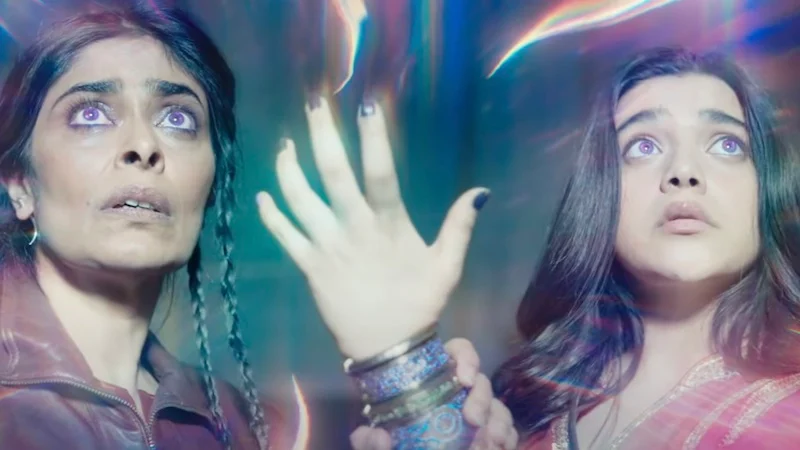
What we now know about Kamala’s origins and family history in Ms. Marvel is that her great-grandmother, Aisha, was a “Clandestine” or “Djinn.” While the “Djinn” designation turned out to be more of a red herring based on what we learned in Episode 4, we also know that the Clandestines come from the Noor Dimension, which is separated from the main reality by a veil of energy. Najma and her gang want Kamala to break through that veil, but it has been made clear that if she were to do so, the Noor Dimension would overtake and destroy Kamala’s reality.
We do not know much about the Noor Dimension other than that supernatural beings, identified in the past as “Djinn”, came from it and that Clandestines and the Red Daggers can sense the Noor energy that Kamala draws from the other dimension. In the MCU, we know about a few realms. Asgard is a great example, and it is even referenced in Episode 4 to help explain the Noor Dimension. Another “realm” we have heard of is the Quantum Realm, which is certainly creeping in as a major player in the future of the MCU.
As we know from Avengers: Endgame, the Quantum Realm, and quantum energy were the backbones of time travel. What Episode 4 possibly re-emphasizes is Kamala’s connection to time travel. By the end of Episode 4, Kamala seems very much in the 1940s in India after her bangle was attacked and went haywire. While it is not entirely clear yet whether she is actually, physically present there, the ending shots of the episode certainly made it easy to make that conclusion. Obviously, Episode 5 will keep her in that space for the purpose of explaining and resolving Aisha’s mysterious storyline, which is profoundly connected to the exact period Kamala is now in.
Still worth noting, Ms. Marvel has had quite the number of Ant-Man references. Obviously, Scott Lang and Hank Pym are the characters most associated with the Quantum Realm, and we next expect to see Ant-Man in Ant-Man and the Wasp: Quantumania. “Quantumania” alone should set the expectations for how important the Quantum Realm will be, but that film will also star the time-travelling villain Kang the Conquerer. Following Loki, the Kang Easter egg in Moon Knight, and Phase 4’s focus on the multiverse, Kang is very much set up to potentially be the next MCU saga’s Big Bad.
Overall, there’s enough evidence to form the theory that Kamala is utilizing some of the same general concepts that we have already been introduced to in the MCU. If the Noor Dimension is actually the Quantum Realm, that major piece of the universe would be served by being better developed in Ms. Marvel. It also could make Kamala’s story more interesting than if the Noor Dimension was a completely original concept that gets limited to her origin story and not much else. Obviously, there is more nuance to why Kamala or Aisha can utilize the bangle while others, like the Clandestines, cannot. We will likely learn virtually all of this information in the next episode, as all MCU DIsney+ series love spending the majority of their penultimate episodes resolving every mystery or question, and ultimately setting the hero up for the final battle fully embracing their identity.
The first four episodes of Ms. Marvel are now streaming on Disney+.
With Doctor Strange in the Multiverse of Madness now streaming on Disney Plus, MCU fans have the opportunity to rewatch the film-or at least certain parts of it at their leisure. And, according to some recent data, it looks like fans have turned it on more than either of the other two MCU films that also only had a 45-day theatrical window, Shang-Chi,and Eternals. The film is, for the most part, a fast-paced, wild ride through the multiverse, chocked full of crazy cameos and some of Marvel Studios’ most terrifying content to date. But will it, ultimately, be the kind of film fans go back to over and over again? Time will tell, but for now, let’s look at which films already do fit that category…and which don’t.
The 5 Most Rewatchable MCU Films
Ant-Man (2015)
Everyone loves Paul Rudd and his energy makes 2015’s Ant-Man one of the MCU’s funniest films. Of course, Rudd’s not alone in bringing the laughs as he’s joined by Michael Peña’s Luis, whose attention to all the wrong details in his stories makes for laughs every time. Finally, the father-daughter relationship between Rudd’s Scott Lang and his daughter, Cassie, hits home and adds a layer of sweetness to the film.
Avengers: Infinity War (2018)
While Avengers: Endgame was received better critically, Infinity War provides fans with a steady flow of rewatchable moments that make it the perfect MCU film to have on in the background. From Cap’s catch of Proxima’s weapon to Thor’s arrival on Earth to the many highlights of the Battles of Wakanda and Titan, Infinity War acts as a highlight reel for the shared cinematic universe.
Captain America: The Winter Soldier (2015)
From start to finish, Captain America: The Winter Soldier puts out a steady flow of some of the best action in any MCU film to date. Beginning with the raid of the Lemurian Star, continuing to the best car chase the MCU has seen and the beautifully shot battle in the streets between Cap and the Winter Solider and finishing up with the emotional battle in the Hellicarrier, the Russo brothers, with the help of a fantastic score, made fans FEEL the action. While the MCU has had some pretty successful action scenes since this film still feels like it’s the best of the best in that regard.
Guardians of the Galaxy (2015)
James Gunn changed an awful lot from the way these characters were depicted in the source material and one of them cements this film as one of the most rewatchable MCU films. By giving Peter Quill a Walkman, Gunn found an organic way to incorporate music into the film and from the moment fans saw the first teaser footage, it was the music that drew them in. It doesn’t hurt that Gunn’s strength as a director is dealing with interpersonal dynamics-and he certainly had a lot of fun with that here-but every time fans see Star-Lord dancing on Morag, the good feelings come rushing back.
Thor: Ragnarok (2015)
The most dumb fun ever put into one MCU film. Ragnarok began the process of making Thor a lot less Shakespearian and a lot more fun. Director Taika Waititi figuratively and, in one scene, literally, deconstructed everything fans thought they knew about Thor and Asgard, allowing for the Odinson to be reborn-though he certainly had to suffer before he got there. Between the comedy and the fun action, Ragnarok is rewatchable from beginning to end and stands at or near the top of the list.
The 5 Least Rewatchable MCU Films
Captain Marvel (2019)
A less than marvelous plot, run-of-the-mill action, and some really dull and poorly written characters combine to make this one tough to get through more than once. Sure, Ben Mendelsohn‘s Talos is pretty great, but for a film starring Brie Larson, Lee Pace, Samuel L. Jackson,and Jude Law, it really misses the mark. Like many MCU first films, this one does a lot of foundational work that will likely allow for a stronger sequel, but even there the film falls short by failing to really dive into the Kree-Skrull War, one of the comic’s longest-standing feuds, and making the Skrulls pretty boring.
Eternals (2021)
For a film based on one of Jack Kirby’s wildest ideas, very little is wild here and very little is Kirby here. Wooden and sleepy performances are everywhere in Eternals, with only Kumail Nanjiani and Don Lee escaping that trap. It also may have been a mismatch to put director Chloe Zhao, who works only with natural light, in charge of this group who, in the comics, are as bright and bold as any. Finally, the decision-making around how to adapt the Deviants to the MCU is as baffling as any, giving the name to some incredibly boring and very non-Kirby creatures. A missed opportunity for sure.
Guardians of the Galaxy Vol. 2 (2017)
As fantastically rewatchable as the first one is, the sequel never really comes near to that. While not necessarily a bad movie, outside of the big opening action sequence, it doesn’t recapture the charm of the first film, and parts of the second act can induce one to wonder what’s happening online rather than dig back in.
The Incredible Hulk (2008)
Other than introducing Banner and Thunderbolt Ross, this film has really had no reason for existing. Sure, we’re getting more of Abomination/Blonsky now, but adding cool characters to the shared universe doesn’t do enough save this one. As Captain Marvel, this film is full of talented names who fell victim to a story that was simply not that interesting. It’s probably for the best that it’s not available on Disney Plus, though it’s so unwatchable that it’s possible not many people even know it’s not there.
Spider-Man: Far From Home (2019)
Of all the films on this list, this is the hardest one to explain away. It has some of the MCU’s most memorable and creative action sequences, Jake Gyllenhall is a fantastic Mysterio and everyone loves Tom Holland; however, nothing about it screams “watch me again!”. Interestingly enough, the events of it are rendered completely meaningless by the end of NoWay Home, so if you find yourself forgetting the big reveal at the end, you’ll be in the same boat as the in-universe population of the MCU.
What 5 are you taking with you for a weekend retreat? What 5 are you retreating from? Let us know in the comments.
The fourth episode of Ms. Marvel just dropped and brought with it quite a lot of Kamala’s heritage and family history; not to mention some quality action sequences and Marvel Cinematic Universe world-building. But apart from the gradual exploration of what the series has dubbed the Noor Dimension, Ms. Marvel also debuted a connection to a future MCU project. In fact, it looks like a potentially major element of She-Hulk: Attorney At Law has had the foundation laid for it.
While the Department of Damage Control’s presence has faded since the first two Ms. Marvel episodes, their role in the story has carried on in a more subtle way. At the end of Episode 3, the DODC took the Clandestines into custody after the wedding fight. In Episode 4, we see the follow-up to that, as the Clandestine escape being brought into the DODC Supermax Prison. While we do not see any main area of the prison, we do see a shot of the outside of it. As it turns out, the DODC Supermax was the prison complex seen in the She-Hulk trailer.
By showing up in multiple projects, the Supermax has essentially been established as being a significant element in the MCU. While we got a taste of the Raft in Captain America: Civil War, that high-security prison has not been used since. The fact that the Supermax is run by the DODC is important for a few reasons. First, it means that, unlike the Raft, there is nothing secretive about it—it appears to be on land and is extremely visible and accessible.
Second, it means that the DODC is likely here to stay as an ongoing source of law enforcement and a thorn in the sides of superpowered people. This confirms the message in the second episode of Ms. Marvel that Damage Control is on a mission to target and incarcerate enhanced people. To what extent is unclear—surely some supers are allowed to operate, but we may find out more in She-Hulk.
Jennifer Walters, aka She-Hulk, is an attorney who specializes in superhuman law. We know from the She-Hulk trailer that she will deal with people like Emil Blonsky, otherwise known as Abomination. While we do not know for sure where Blonksy is being held, the DODC Supermax is now the top candidate. Practicing superhuman law requires either representing or suing superhumans. A great place to find clients or targets, then, would be a building where a bunch of superhumans is being held prisoner for alleged crimes.
So what do we know about the DODC Supermax Prison so far? Not a lot, aside from the fact that it is operated by the DODC. We can assume some relatively high-profile people, like Abomination, are there. If it is a sort of catch-all prison like it seems to be, a wide variety of supervillains should pass through. Despite being a Supermax prison, it clearly has terrible security. The Clandestine essentially walked out of that place. Plus, it is almost a given that prison breaks will pop up at least every now and again.
The first four episodes of Ms. Marvel are now streaming on Disney+.
Cookie Consent
We use cookies to improve your experience on our site. By using our site, you consent to cookies.
This website uses cookies
Websites store cookies to enhance functionality and personalise your experience. You can manage your preferences, but blocking some cookies may impact site performance and services.
Essential cookies enable basic functions and are necessary for the proper function of the website.
Name
Description
Duration
Cookie Preferences
This cookie is used to store the user's cookie consent preferences.
30 days
These cookies are needed for adding comments on this website.
Name
Description
Duration
comment_author_email
Used to track the user across multiple sessions.
Session
comment_author_url
Used to track the user across multiple sessions.
Session
comment_author
Used to track the user across multiple sessions.
Session
Statistics cookies collect information anonymously. This information helps us understand how visitors use our website.
Google Analytics is a powerful tool that tracks and analyzes website traffic for informed marketing decisions.
Contains information related to marketing campaigns of the user. These are shared with Google AdWords / Google Ads when the Google Ads and Google Analytics accounts are linked together.
90 days
__utma
ID used to identify users and sessions
2 years after last activity
__utmt
Used to monitor number of Google Analytics server requests
10 minutes
__utmb
Used to distinguish new sessions and visits. This cookie is set when the GA.js javascript library is loaded and there is no existing __utmb cookie. The cookie is updated every time data is sent to the Google Analytics server.
30 minutes after last activity
__utmc
Used only with old Urchin versions of Google Analytics and not with GA.js. Was used to distinguish between new sessions and visits at the end of a session.
End of session (browser)
__utmz
Contains information about the traffic source or campaign that directed user to the website. The cookie is set when the GA.js javascript is loaded and updated when data is sent to the Google Anaytics server
6 months after last activity
__utmv
Contains custom information set by the web developer via the _setCustomVar method in Google Analytics. This cookie is updated every time new data is sent to the Google Analytics server.
2 years after last activity
__utmx
Used to determine whether a user is included in an A / B or Multivariate test.
18 months
_ga
ID used to identify users
2 years
_gali
Used by Google Analytics to determine which links on a page are being clicked
30 seconds
_ga_
ID used to identify users
2 years
_gid
ID used to identify users for 24 hours after last activity
24 hours
_gat
Used to monitor number of Google Analytics server requests when using Google Tag Manager
1 minute
Marketing cookies are used to follow visitors to websites. The intention is to show ads that are relevant and engaging to the individual user.
Pinterest Tag is a web analytics service that tracks and reports website traffic.