Category: Features

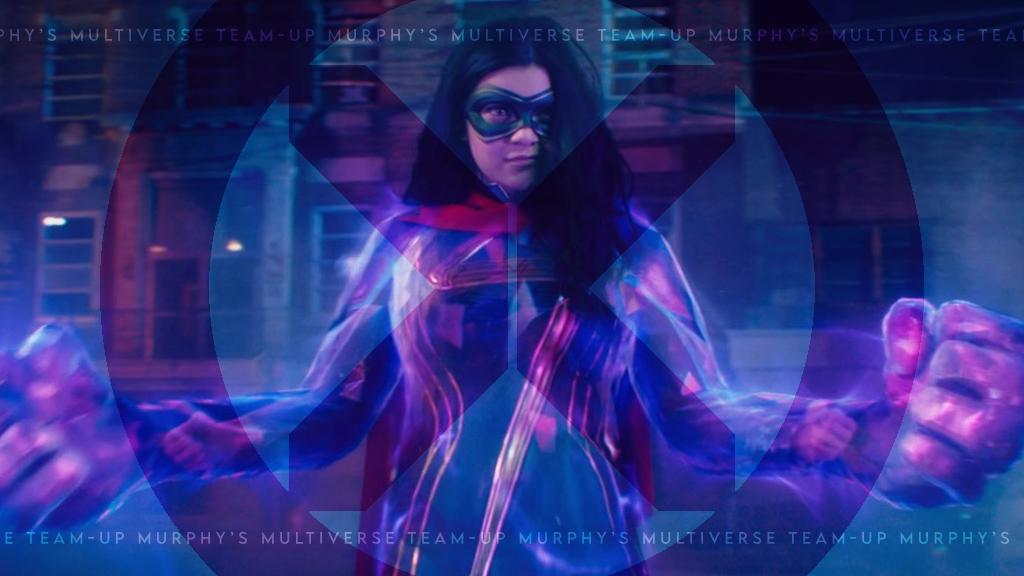
  • Murphy’s Team-Up Volume 23: Ms. Marvel’s a Mutant!

    Murphy’s Team-Up Volume 23: Ms. Marvel’s a Mutant!

    Torbjorn Frazier

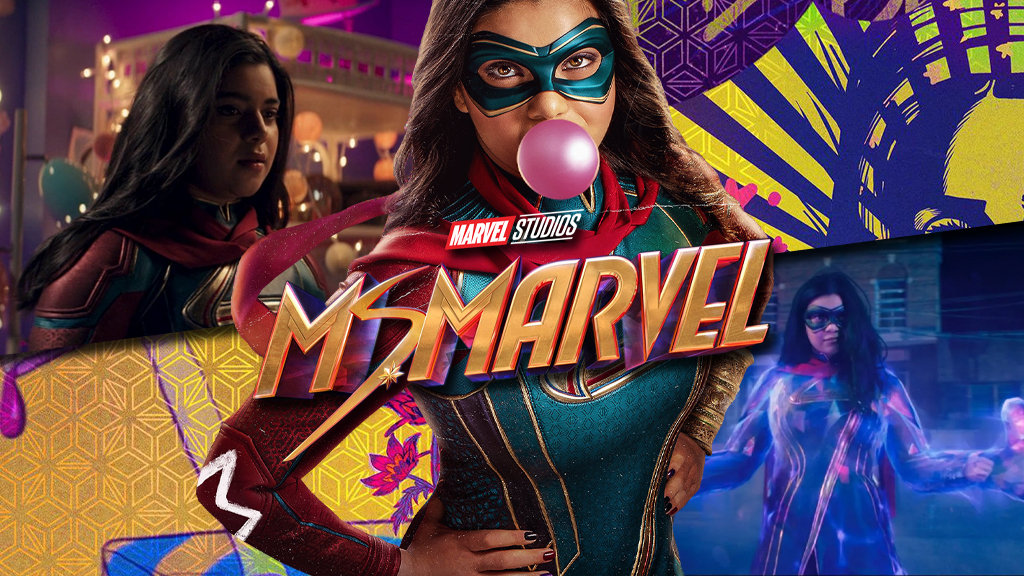
    For starters, this was the biggest surprise to have happened in the Disney+ era of Marvel Studios. Both in terms of what this means for the future of the Marvel Cinematic Universe and in the viewing experience. Kamala Khan being revealed as the audience’s first mutant in the MCU opens the door for endless possibilities of speculation and theorizing on how some of the most-anticipated characters will enter future projects. For the character herself, Kamala Khan makes all the sense in the world to be a mutant (as she very likely would’ve been in the comics if the X-Men film rights weren’t elsewhere in 2013). And having the first mutant story be distinctly about a government that fears and discriminates against super-powered individuals highlights that Kevin Feige and co. are good hands to shepherd the X-Men back to the big screen. With both Doctor Strange in the Multiverse of Madness and now Ms. Marvel this year giving early glimpses into the concept of mutants (and with X-Men ‘97 slated for 2023), the radar for Marvel Studios potentially announcing a mutant-related project at San Diego Comic Con or D23 has certainly increased.

    Anthony Canton III

    Ms. Marvel’s finale followed through on its series mission by giving us Kamala Khan and her world. That world was on display as good as any Disney+ series has had to this point. With that being said, the reveal of Kamala being a mutant laced with the X-Men: The Animated Series theme was an all time moment for the new MCU.

    This reveal is symbolism that Iman Vellani is a major player and rightfully so. Kamala has the keys to the MCU and you can slot her anywhere and she has an impact. In terms of representation in actuality and in this universe these are the new stories that the fandom claims to want. Now we have them and more. While we have more questions to answer with Carol Danvers, this was Ms. Marvel’s moment. Standing ovation.

    Dalbin Osorio

    Ms. Marvel is no worse than the third best Disney+ show. It would take a lot to supplant the WandaVision/Loki duplex, and Ms. Marvel came close, but an underwhelming villain choice stops it from that top tier. HOWEVER… this isn’t about the show as it is about the fact that, baby, there be mutants in the MCU! That’s right: Ms. Marvel is the MCU’s first mutant (that we know of, but more on that in a sec), and what a glorious reveal it was. You have to hand it to Kevin Feige: he said that everything will be revealed and Marvel didn’t really deviate from the Phase 4 plan even when people criticized it for its “aimless” trajectory. I think this change really grounds her firmly in the MCU’s history (hello Eternals and X-Men ’97 theme music), present (this post-Endgame world that’s rapidly becoming populated by enhanced individuals), and future (Kang is coming). Making her a mutant also makes her powers easy to explain because a mutation is much easier to explain than a Terrigen Bomb going off somewhere on Earth-616 and us never hearing about it. It, also, sets the stage for there being other mutants out there who are populating the world now, and clearly Damage Control won’t be the only ones after them. All in all, a great choice.

    Joseph Aberl

    Did not see coming that Ms. Marvel would end up being the one to set up the mutants in the Marvel Cinematic Universe. Marvel Studios perfectly baited us with WandaVision and a cameo in Multiverse of Madness to make many think we’d not get any hints until after Fantastic Four. Yet, here they are using a familiar theme to slowly build up their arrival and also use it as a way to connect Kamala Khan to a bigger universe; without the sacrifice of her personal journey. Can’t wait to see where it goes.

    Charles Murphy


    Let’s lay it right on the line. Bigotry and racism are among the deadliest social ills plaguing the world today. It’s totally irrational, patently insane to condemn an entire race—to despise an entire nation—to vilify an entire religion. Sooner or later, we must learn to judge each other on our own merits. Sooner or later, if a man is ever to be worthy of his destiny, we must fill our hearts with tolerance.

    Stan Lee, Stan’s Soapbox, December 1968

    Someone had to be the first mutant and I couldn’t be happier that it is Kamala. As Torbjorn pointed out, it’s incredibly likely that had Marvel already owned the live-action rights to the X-Men, she’d have been one in the comics. Kamala fits what Stan Lee and Jack Kirby imagined the original mutants to be when they developed them in the early 1960s as a metaphor for the hate and social injustice America was facing at the time. I’ve said for years that Kamala Khan is one of the most important characters Marvel Comics has ever created and now, as the MCU’s first mutant, she’s one of the most important characters in the future of the franchise.
  • Theory Thursday: What That ‘Thor: Love and Thunder’ Mid-Credit Scene Might Mean for the Future of the MCU

    Theory Thursday: What That ‘Thor: Love and Thunder’ Mid-Credit Scene Might Mean for the Future of the MCU

    Thor becoming the first Avenger to get a 4th film in their own series is actually a good thing given that there are still a few adventures for Odinson to go on, and make no mistake: this one leaves him in a very different place than any of the other three before it. The events of Thor left him on Asgard away from Jane and mourning the death of Loki. Thor: The Dark World had him leaving Asgard to be with Jane while again mourning the death of his mother and Loki…a second time. Then along came Ragnarok where he lost his father and sister and home but managed to escape Surtur. I think it is safe to say that no hero in the MCU has lost as much as Thor, and this fourth entry adds even more loss after adventures with the Avengers that saw him lose Coulson and Heimdall and Loki (again!) right in front of him. It should come as no surprise then that Thor’s latest movie ends with someone dying right in front of him then. Tragedy, it would seem, is what propels the God of Thunder forward into different adventures. It’s not just putting the Asgardian at the center of tragedy, though, that usually leads into the next big Avenger’s threat.

    It was Thor’s brother who arrived on Earth necessitating the Avengers to assemble initially, and it was the mind stone located inside Loki’s scepter that led to the creation of Ultron AND VIsion and the Scarlet Witch, which led to the Avengers reuniting. It was Thor sending Loki to light the eternal flame and unleash Surtur that also led to Loki stealing the Tesseract from Odin’s throne room, which drew Thanos to the refugee ship that the Asgardians were on. If you look back at the Infinity Saga, you can rightfully argue that Thor brought the Avengers face to face with their greatest villains (Loki, Ultron, and Thanos). The mid-credit scene of Thor: Love & Thunder hints at that continuing to be the case.

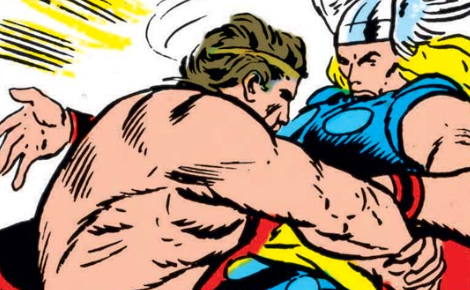
    Zeus, with a lightning-sized hole in his sternum, sends his son, Hercules, on a mission to knock the Odinson out of the sky, reclaiming glory meant for the gods instead of heroes. However, what if there’s more to this scene than meets the eye? What if what we are seeing play out isn’t really telling us everything? What if, to understand what’s really happening, we have to accept that someone else has paved the way?

    In the comics, one of Kang The Conqueror’s variants, Immortus, utilizes what are known as Space Phantoms to go after the Avengers by masquerading as famous heroes from different eras. This included heroes like Merlin, Goliath, and, yes, Hercules. This caused a team of villains led by Baron Zemo, who had enlisted Immortus’s help in defeating the Avengers, to go back in time to the moment where they accepted his help and, this time, refuse it. By introducing Hercules here, as an antagonist for Thor who arrives on Earth seeking the God Of Thunder out, it will undoubtedly bring the Olympian face to face with whoever the new group of Avengers is. What if the Hercules that arrives on Earth looking for Thor isn’t Zeus’s son, but a space phantom controlled by Immortus? Or, what if the Thor that Hercules finds isn’t the God of Thunder himself, but a space phantom?

    We are entering the world of secret invasions and variants. With Thor’s consistent connection to all of the Avengers-level villains, it stands to reason that we didn’t just see who Thor’s next antagonist would be, but that we just saw another piece of the puzzle being laid down by one of Kang’s variants. Hercules may be a son of Zeus, but he may also be a Space Phantom of Immortus.

  • What the ‘Ms.Marvel’ Finale Reveal Means for Inhumans in the MCU

    What the ‘Ms.Marvel’ Finale Reveal Means for Inhumans in the MCU

    The finale of Ms. Marvel gave fans more than they bargained for when it revealed Kamala Khan as the first mutant in the mainstream Marvel Cinematic Universe. For months, rumors, speculation and some spurious “leaks” all centered around Kamala being exposed to Terrigen Mist and learning of her Inhuman heritage during the finale. Instead, Marvel Studios chose to make Kamala a mutant, making her future in the MCU a complete unknown. It also seemed to spell the end of any hopes that the Inhumans would ever make their way into the stories of MCU’s Earth-616, but as it turns out, Kamala’s retcon isn’t quite the death knell for the Inhumans that it might first appear to be.

    In the comics, Kamala is a NuHuman: a branch of Inhumans created en masse when Black Bolt detonated a Terrigen Bomb, causing thousands of humans of Inhuman lineage to undergo Terrigenesis and developing their Inhuman gifts. The event, which occurred in the pages of 2013’s Infinity #4, came at a time when Marvel Comics was making push to elevate the Inhumans’ popularity and, seemingly, diminish the X-Men’s. At that time, Fox still owned the live-action rights to the X-Men and Marvel Studios was hard at work building the foundation their shared cinematic universe, still years away from being the self-sustaining juggernaut it’s since become.

    In hindsight, the NuHuman era was nothing short of a failure, with almost none of the characters created during that era now playing a major (or any) role within the Marvel Comics universe. In fact, the Inhumans have been rather absent from the comics in general for the past several years. Perhaps a little leave of absence will benefit the characters in the comics, allowing them to reenter the books at a later date and return to inhabit the very interesting niche they carved out after first appearing in the pages of Fantastic Four in 1965. And it’s this same niche that they could still find themselves inhabiting in the MCU, should Kevin Feige ever choose to introduce them to the 616-universe. And if that niche doesn’t quite work out, there’s another interesting option on the table as well.

    The Royal Family and The Universal Inhumans

    Should Feige and the Marvel Studios Parliament want to introduce the Inhumans to the MCU, the clearest path is to introduce them as the abandoned subject of Kree experimentation, as seen in the Marvel Comics. As the millena-long Kree-Skrull war raged on, the evolutionarily-stagnant Kree began experimenting on the native species of multiple plantes across the universe. In some cases, like on Earth, early life had already been experimented on by the Celestials and a latent gene that could spark the release of super powers was placed in their DNA. It’s this latent gene that eventually led to mutants on Earth and, after Kree experimentation, allowed for Terrigenesis to transform individuals. The Kree abandoned their projects across the universe following a prophecy that their experiments would produce a being that would end the Kree Empire, but not before successfully establishing metamorphic processes in place on 5 different planets: Earth, Centauri-IV, Lotlara, Kymellia and Wraithworld.

    Over time, the experiments on Earth produced an advanced race whose superiority to early man saw them demonized. Over time, they went into hiding in a secret city, Attilan, and then the Blue Area of the Moon. This line of Inhumans produced what is known in the comics as the Royal Family, which is typically presented as Black Bolt, his wife Medusa, her sister Crystal, Black Bolt’s brother Maximus, Gorgon, Triton and Karnak. Of these, it was Black Bolt, the Midnight King of the Inhumans, that the Kree believed to be the being of prophecy. On the other planets, four queens who ruled over their own Inhuman populations were fated to join the Midnight King in ending the reign of the Kree.

    It doesn’t take much to see that should Marvel Studios choose to pursue this path, there wouldn’t be much overlap with whatever Kamala Khan and the mutants get up to on Earth. Marvel Studios botched the Kree-Skrull War pretty badly in Captain Marvel and the history of early Earth pretty badly in Eternals. They could rectify both of those mistakes with an Inhumans D+ series that establishes a truer history of both and introduces the Inhuman Royal Family hidden away on the Moon. Rumors persist that the Universal Inhumans are set to make an appearance in The Marvels; if those rumors are true and Feige is introducing them to the MCU, the Royal Family should not be far behind. Make them as strange and Lee and Kirby intended them to be. Make them a hidden force in the universe. Make them what they once were before the NuHuman debacle. And should Marvel go this route, they could choose to adapt one of Marvel Comics’ best Cosmic events, War of Kings, down the road, making good on the prophecy.

    The Inhumans of Earth-X

    Marvel Comics has a long history of developing alternate universes where things are just a little different: let’s call this…the multiverse. One of the more dramatic reimaginings began in 1999 on Earth-9997, aka Earth X. Interestingly enough, the MCU has already dipped into Earth-X lore a bit for Eternals and they wouldn’t be wrong in wanting to further mine that territory for a different take on the Inhumans.

    During the 12-issue arc, Black Bolt released Terrigen Mists on Earth, mutating almost all of Earth’s population into Inhumans. The events of Earth-9997 are set in the future of a dystopian timeline, so this won’t quite work if the 616 timeline is going to keep moving ahed. However, setting up the Inhumans as the villains of a future project and having someone, perhaps the Fantastic Four, have to stop their plan would be a great way to separate the characters from Earth’s mutants. It’s worth noting that the Inhumans of Earth X were given major redesigns by Alex Ross and, if the MCU isn’t going to go the 616 route with the characters, the Earth X designs are the only other acceptable option and would really work well if Feige wanted to introduce them as villains.

    So while Ms. Marvel has all but put and end to any hopes that the NuHuman arc from the 2010s could ever work its way into the MCU, there’s still room for Black Bolt, Medusa and the rest to find a way there.

  • ‘RESIDENT EVIL’: Lance Reddick Teases His Take on Albert Wesker

    ‘RESIDENT EVIL’: Lance Reddick Teases His Take on Albert Wesker

    Fans of the Resident Evil franchise know that Albert Wesker is one of the big bads of the video games. While he did appear in the films, the films were never well-received by fans of the franchise. So, Netflix’s live action take on the games is a chance to right the wrongs, and one way is to put the focus on Wesker this time around.

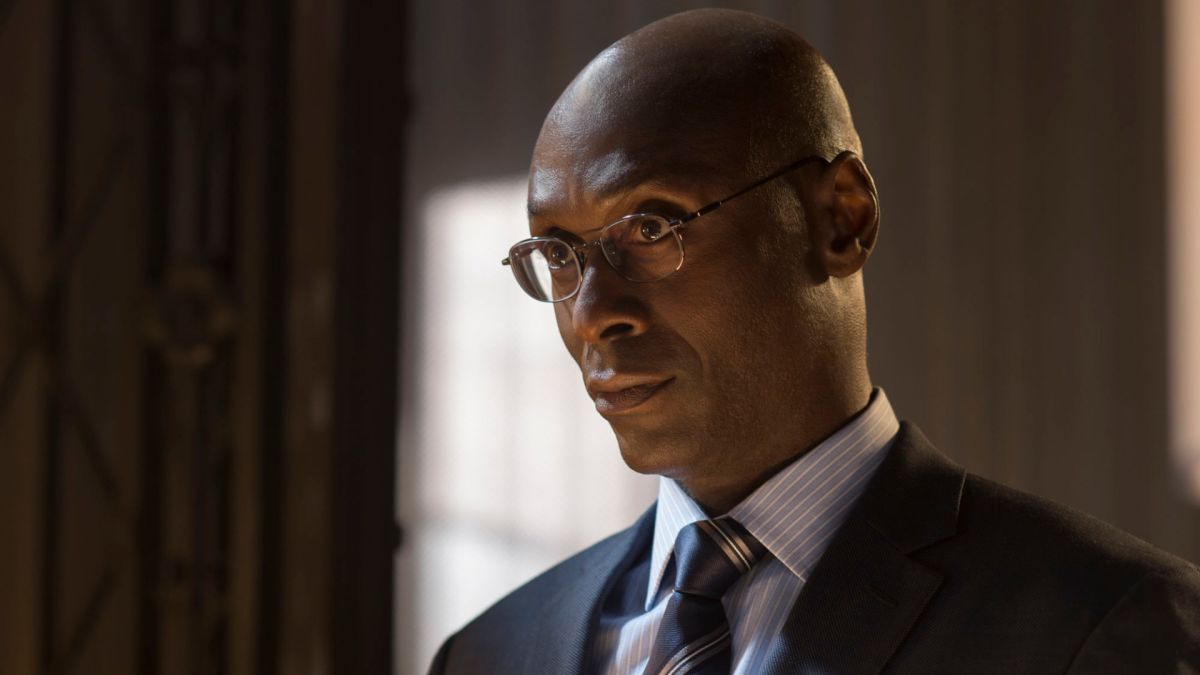
    For actor Lance Reddick, while he’s never really played the games, he did binge-watch the movies a few years ago before being cast. Admittedly not a huge fan of horror, Reddick was drawn to Resident Evil because of how “exciting” and “challenging” it was to bring Wesker to life. “What’s so fascinating to me about this show, in addition to how exciting and challenging the role is for something that is so action driven, it has so many nuanced, and three-dimensional characters,” the actor explained. “You care just as much about the drama of the journey of the characters as you do about the action or the scares or the monsters.”

    When it comes to Resident Evil, one of its biggest appeals is that it is for old fans and new fans alike. If you love the video games, there is plenty to take in – from the characters, to the production design and even some of the stories being told. It pulls heavily from its source material. However, it also takes the time to create something new that’ll help to entertain those not all that familiar with the games. While fans of the games have an idea of what to expect in terms of the t-virus and bioorganic weapons, for fans unfamiliar with the franchise, Reddick assures that he believes it is a good show for everyone – fan or not.

    “I wanted to do the show because I wanted to tell the story seems like a good endorsement,” says Reddick. “I like to tell the kinds of stories that I would want to watch. I read the first seven episodes, and I was like, “I want to watch that show, and because I want to watch it, I want to be in it.”’

    And for those that are fans of the games? Well, Reddick asks them to give the show a chance because there’s plenty in store for them. “The games are basically backstory for this and the thing that fans will understand, if they stick with it, once they get to the end of the season, is that the Wesker in the show …wait, I can’t tell you that.”

    Resident Evil debuts on Netflix on Thursday, July 14th. Be sure to check out our review here!

  • Ranking Marvel’s Phase 4 Villains

    Ranking Marvel’s Phase 4 Villains

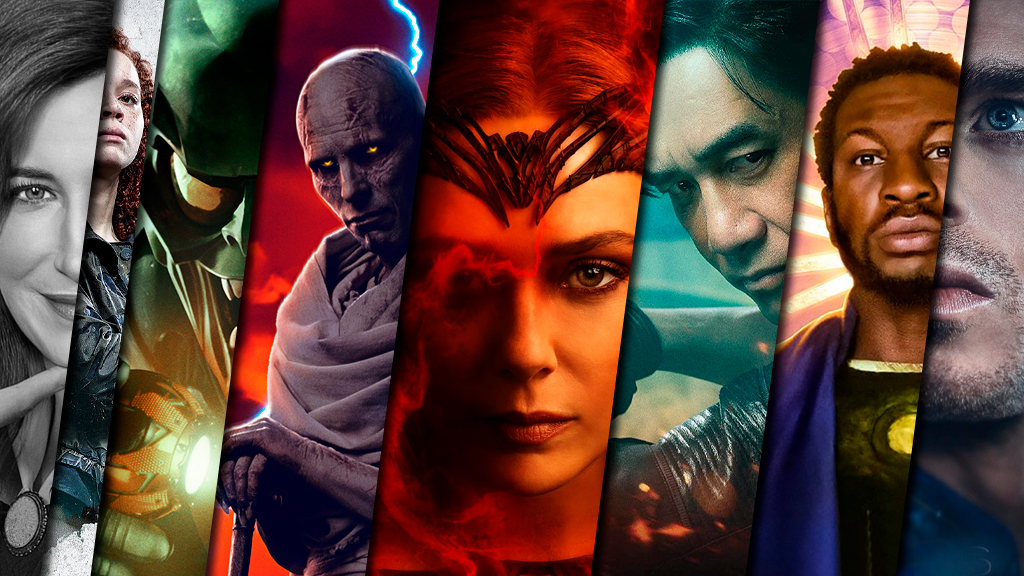
    13. Dreykov (Black Widow)

    The character of Dreykov isn’t so much the problem as was the fact that Ray Winstone played him with big grandpa-fell-asleep-on-the-toilet-again energy. A strange enough casting choice to begin with, Winstone’s take on the character makes his appearance in the film feel even more forced

    12. Damage Control (Ms. Marvel)

    While only slightly more menacing than Sleepy Dreykov, the Department of Damage Control still comes off as more of a joke than a threat. The ineptitude of what one would assume are at least relatively well-trained agents is rough to take. Being held at bay by some pitching machines and fire extinguishers doesn’t bode well for them taking any really violent powered people. And as the face of the DODC, Deevers is just paper-thin. Agents of S.H.I.E.L.D. had better antagonists.

    11. Arthur Harrow (Moon Knight)

    Ethan Hawke taking a villainous turn in a Marvel Studios project sounded like a match made in heaven. And then Moon Knight came and went without Hawke’s Arthur Harrow making much of an impression. Much the opposite of Dreykov, it wasn’t Hawke’s lack of effort that lead to this low spot on the list; in fact, Hawke made more out of the character than most could have. For all the great things about Moon Knight, the villain just wasn’t one of them.

    10. Flagsmashers (The Falcon and the Winter Soldier)

    Erin Kellyman owned the role of Karli Morgenthau, sharing the screen with MCU vets Anthony Mackie and Sebastian Stan and never taking a back seat. However, with so much attention on John Walker, Baron Zemo and Sharon Carter, the Flagsmashers as a group really never got enough time to develop into a threat on the level worthy of Captain America. This is a case of Marvel Studios kneecapping itself with the six-episode format. Adding an episode or two and letting the Flagsmashers develop would have done wonders. Not a bad group of villains by any stretch, but definitely underused.

    9. Gorr (Thor: Love and Thunder)

    Speaking of underused…adding Christian Bale to the fourth Thor film as one of the God of Thunder’s most terrifying villains was as can’t miss as it could get. And then they turned him into Gorr the Scary Party Clown. The lack of god butchering and the fact that the only time he was legitimately terrifying was telling a story to a bunch of kids in a cage makes Gorr a bit of a disappointment; however, Bale was all in on the character and while he’s not the guy from the comics, he’s still pretty great.

    8. Kingpin (Hawkeye)

    Vincent D’Onofrio’s casting as Wilson Fisk was a stroke of genius. A truly underrated actor, D’Onofrio inhabits every square inch of Kingpin. He gives every breath, every movement and every word his full attention to detail. So why isn’t he at the top of the list? Because Marvel Studios chose to pretend his reprisal of the role was a secret and introduced him…in a still frame captured on a 2004 potato.

    7. Agatha (WandaVision)

    Arguably nobody in the history of the MCU has had more fun in a role than Kathryn Hahn did as Agatha Harkness in WandaVision. Evolving as the series progressed, Hahn’s Agatha became one of the highlights of a fantastic series. Her performance in the flashback episode propelled her to the top, but the weak finale pushed her back down the list a bit. The great news is that Hahn gets to come back and give more to the role and nobody is going to be unhappy about that.

    6. Infinite Ultron (What If…?)

    Perhaps the only character who truly embodies the concept behind What If…?, Infinite Ultron was the highlight of the first season of the animated series and a greater threat than his live-action counterpart ever got to be.

    5. Ikaris (Eternals)

    You have to respect the man’s (robot’s) commitment. So committed to Arishem’s plan was Ikaris that he was willing to kill everyone he knew to allow it to come to fruition. Casting Richard Madden, who oozes charisma, in the role is a bit confusing given his very stoic performance, but the fact is that Ikaris does get better action sequences that everyone other than Wenwu and Green Goblin and a bit of redemption when he chooses to fly into the sun rather than go betray his mission. He can’t kill his friends, but he’d rather kill himself than allow them to succeed.

    4. Scarlet Witch (Doctor Strange in the Multiverse of Madness)

    The Scarlet Witch unleashed proved to be as deadly of a villain as any in Marvel Cinematic Universe history. As it turns out, having Sam Raimi take the helm of the story that allowed Wanda Maximoff to turn heel led to one of the most unsettling villain performances in Phase 4. Having portrayed the character for so long, Elizabeth Olsen masterfully hit all the notes and nuances that elevated the Scarlet Witch towards the top of the hierarchy of Phase 4 villains.

    3. He Who Remains (Loki)

    Only given one episode to shine, Jonathan Majors enormous talent propels this Kang Variant to top tier. Majors managed to outshine one of the MCU’s greatest stars in Tom Hiddleston, making a first impression unlike any other in recent MCU memory. Knowing he’ll be back (because he memorably told us all he would) lessens to blow struck by Sylvie. A truly haunting and fascinating performance by one of the best talents in Hollywood.

    2. Green Goblin (Spider-Man: No Way Home)

    As information trickled out about the plot of Spider-Man: No Way Home, it was tough to understand how Willem Dafoe’s Green Goblin could be the baddie of the piece, much less end up being one of the Phase’s most menacing. The bulk of the credit goes to Dafoe, who nearly 20 years later gave something more to both sides of Norman Osborn than he did in Sam Raimi’s Spider-Man. This time around, Dafoe’s Gobby was even more unhinged and got to go toe-to-toe with Spidey in one of the Phase’s best one-on-one fights. Killing May and then taunting Peter put the icing on the villain cake.

    1. Wenwu (Shang-Chi and the Legend of the Ten Rings)

    A villain so good that the movie should have been titled Wenwu and The Legend of The Ten Rings. Played masterfully by the legend Tony Leung, it’s Wenwu’s journey that truly propels the film. Shang-Chi is great in his own right and one of the MCU’s most likeable protagonists, but Wenwu isn’t just Phase 4’s best villain, he’s one of the MCU’s best yet.

  • ‘Ms. Marvel’ Post-Credit Scene Explained

    ‘Ms. Marvel’ Post-Credit Scene Explained

    Kamala Khan’s bangle has been front and center over the course of all six episodes of Ms. Marvel, but even after the series wrapped, the bangle’s story seemingly just got a lot more interesting. The shocking post-credit scene sees Kamala’s bangle take on a life of its own, apparently energizing on its own before mysteriously sucking Kamala away and leaving Carol Danvers in her place. While it all seems pretty confusing, turning to the comics can provide some understanding.

    As seen in the opening moment of Episode 3, “Destined”, the bangle worn by Kamala was originally taken from the arm of a blue being and is one of a pair of bands. Following Episode 3, it seemed pretty clear that the bangles were probably either the Quantum Bands or Nega-Bands from the pages of Marvel Comics. The events of the post-credit scene all but confirm that speculation as they showcase one of the capabilities associated with the Nega-Bands: the ability for the wearers to trade places with one another.

    In the comics the Nega-Bands were created by the Kree as replicas of the Quantum Bands and while they share similar powers, they aren’t exactly the same. Most importantly, the Quantum Bands draw their power from the Quantum Zone while the Nega-Bands draw their power from the Negative Zone. It seems incredibly likely that the MCU’s version of the bands are an amalgamation of the two. Able to create energy constructs like the Quantum Bands, they are also now capable of allowing people to swap places with one another, like the Nega-Bands, as seen in the post-credit scene.

    The swap seems to have been ripped straight from the pages of Marvel Comics where Kree hero Mar-Vell used the Nega-Bands to swap places with super-normie Rick Jones. Of interest to the process was that the swap always left one or the other of Mar-Vell or Jones trapped in the Negative Zone. Applying that comic book lesson to the events of the Ms. Marvel post-credit scene, it would appear that Carol makes the jump from either the already-established Quantum Realm or the soon-to-be-established-in-The-Marvels-Negative Zone. Whichever of those two places Marvel Studios chooses to call it, the implications are clear: when Carol jumped into Kamala’s room, Kamala jumped to wherever it was Carol was.

    It’s unclear if Carol was wearing what might have been the other band on her wrist (in the comics they haven’t always looked the same and have been reshaped over time), but it is clear that the bands will play a large role in the plot of next summer’s Captain Marvel sequel, The Marvels. Also of interest is how Kamala’s mutant genetics allow her access to the powers of the band. In the comics, the latent X-gene was implanted into early man’s DNA by Celestials, allowing for the possibility of super-powered evolution should they ever be activated. Given the alien nature of the bands, it’s possible they were created by the Celestials, or other Cosmic beings, and simply ended up on the arm of the deceased Kree seen in Episode 3.

    Whatever the nature and origin of the bands, they’ve changed Kamala Khan’s life forever and, much like the ten rings did to Shang-Chi, pushed her into a larger universe. It’s reasonable to assume that some of the first act of The Marvels will explain much more about the bands while resolving the issue of Kamala being trapped in another dimension. Fans will have to wait just over a year to find out more as The Marvels is currently set to hit theaters on July 28th, 2023.

  • ‘Ms. Marvel’: Major Finale Reveal Explained

    ‘Ms. Marvel’: Major Finale Reveal Explained

    Before audiences saw an episode of Marvel Studios’ Disney Plus streaming series Ms. Marvel, much had been made of the changes to the character from the comics that inspired the show. Sana Amanat, who co-created the character in the comics, moved to a position at Marvel Studios in order to shepherd Kalama Khan into the MCU. Amanat was among a group of creatives who worked to change Kamala’s powers, and indicated that the changes were made to allow them to link “to larger stories in the Marvel universe.” However, it’s safe to say that nearly nobody expected that link to be that Kamala Khan was a mutant.

    In an instant, Kamala Khan’s origin story went from a heartwarming story about family to a groundbreaking moment in the MCU. Kamala Khan is now the first mutant to appear on the MCU’s Earth-616 and she found out about it along with the audience. After Kamala’s brother learned that she was the superhero formerly known as Night Light, Amir requested that Bruno do some tests on him to see if he might have a trick or two up his sleeve. Following those tests, Bruno reconsiders his original hypothesis about why Kamala can use the bangle and when he takes a closer look, what he finds changes everything for Kamala and the MCU.

    As Bruno explains to Kamala, “there’s something different” in Kamala’s genes compared to the rest of the Khan family, “like a mutation.” With those words (and with the unmistakable theme from X-Men: The Animated Series chiming in their aftermath), everything changes for Kamala and for the MCU. And while fans may attempt to debate what the lines and the jingle may or may not mean, Marvel.com made it very clear: Kamala Khan is a mutant.

    Making Kamala a mutant rather than an Inhuman goes beyond any changes fans could have predicted for the character, but it also raises quite a few questions. For the moment, it seems that a lot of those questions won’t get answers for a while, but one thing made clear by Marvel is that her mutant genetics (and not being native to this dimension) were what allowed her to harness the power of the bangle when nobody else could.

    For now, Kamala stands as the lone known mutant on Earth, but that could (and will) change pretty fast. And while she’s the first to be revealed, she probably isn’t the first to exist. With a bomb like this being dropped in the finale, it’s safe to say fans can expect other mutants to emerge from the depths of the Marvel Cinematic Universe over the next year or two. The mutant-era of the MCU has begun and it has been ushered in by Kamala Khan.

  • ‘Resident Evil’ Showrunner Drew Inspiration from the Games and Movies

    ‘Resident Evil’ Showrunner Drew Inspiration from the Games and Movies

    On Thursday, Netflix is set to release its live-action adaptation of the beloved video game franchise, Resident Evil. The eight-episode first season stars Ella Balinska as Jade Wesker, Lance Reddick as Albert Wesker and Paola Nuñez as Evelyn Marcus. The series is a brand-new story within the Resident Evil mythology that is full of heart and horror. Leading up to the show’s release, Netflix conducted a sit-down interview with showrunner Andrew Dabb to discuss his inspiration for the series, as well as what he’s most excited for fans to see in the show.

    While the films – namely the Milla Jovovich-led films – were seen as poor attempts at bringing the games to life, Dabb notes that the games and the movies were able to deliver something different. “I was a huge fan of the games and the movies and I think they each scratch a different itch,” he explained. “The games are very immersive, fun and scary. And the movies are big, bombastic spectacles. So, the idea of being able to do something like this where we have a little bit of both was very exciting to me.”

    Like those films, and the 2021 attempt at a reboot, Netflix’s Resident Evil offers up a brand-new story for viewers. Yes, there are aspects from the games on display, but this is something that can stand on its own. In this case, Resident Evil is brought into the modern world – one in which COVID even exists. For Dabb, he’s excited for fans to see his expansion into a modern-day storyline and the characters they’ve helped bring to life on the screen. “For me, the most exciting thing about the series, as it is about any series, is the characters. These are some really great characters to explore. Some from the game. Some that the writers and I created. But, either way, I think they just have really compelling stories that I hope will really resonate with people.”

    As for why he went with Albert Wesker for this story, Dabb has a pretty simple reasoning. Wesker has a pretty ridiculous backstory in the video games. He was excited to explore more about Wesker for the series. “When I was sitting back and wondering who is the character that I am most curious about in the modern day in this new world? Wesker popped into my head,” he said. “But that character with his past and all of the weird things that happened to him as a child, opened up a path to explore him a little bit more which was really exciting to do. We also consciously didn’t want to overload this first season with cameos. We want people to get to know our original characters as well as some returning favorites.”

    The first season of Resident Evil debuts on Netflix this Thursday. You can read our review here.

  • Signs That ‘Ms. Marvel’ Will Have a Season 2

    Signs That ‘Ms. Marvel’ Will Have a Season 2

    Now that Marvel Studios has formally ventured into television, new questions arise about the future of characters and plots that debut in the Disney+ series format. While we know some series—such as WandaVision and The Falcon and the Winter Soldier—lead into feature films, the announcement of Loki’s second season has made fans interested in other series getting the same treatment. While no show besides Loki has been confirmed for a Season 2, there are many signs that Ms. Marvel could be the next. 

    To be fair, we know we will see Kamala Khan in The Marvels, so it would be easy to say that Ms. Marvel’s follow-up will be in that film. But The Marvels is a sequel to Captain Marvel and will feature, from what we know, three main leads. To think that Kamala’s individual story will be able to fully continue without her own solo project is brave. With only the finale to go, Ms. Marvel has left quite a lot of story on the table. Even a strong finale—which Marvel Studios is not known for—cannot reasonably wrap it all up. And that may very well be part of the plan to give Ms. Marvel a Season 2.

    First, Kamala’s entire high school-level plot has taken a backseat for the second act of the series. The last time we saw Nakia, she had just learned that Kamala was the masked hero and was no longer speaking to her. Bruno was jealous of Kamran and also told Kamala he was going to leave to attend CalTech. Kamran is clearly integrated into the superhero side of the plot, but the love triangle there is still up in the air. Many of these plot strings, particularly Nakia and Bruno, seem to come straight from Ms. Marvel comics and are nowhere near a resolution. Kamala’s personal life—the one she had before the bangle—has been set up for a longer journey than what the finale could handle. There is a very strong chance that the last episode will specifically leave these stories open and ready to explore in the future. And they would not make much sense in The Marvels.

    If Episode 5 of Ms. Marvel made anything clear, it is that the full extent of Kamala’s powers might not be explained in the series (or the first season). While we have come a long way since Episode 1, there are so many questions remaining about Kamala’s heritage and powers. The finale will without a doubt answer some of these. To be fair, it could answer them all. But when Kamala’s grandmother cut off the questioning as to how and why Kamala can do what she does to suggest it is all about how two people fell in love and made something bigger than themselves, it seemed like a way for the series to say, “don’t worry about it.” Regardless of what we learn in the finale, the implications of the Noor Dimension and Kamala’s bangle are surely things that cannot adequately be resolved yet. That’s where The Marvels may very well help out, but something even bigger remains elusive.

    Kamala has not yet become Ms. Marvel. She almost certainly will in the finale, but we will not have seen her be the masked hero of Jersey City in Ms. Marvel. The series has received high praise from critics, and audiences and Marvel Studios alike love Iman Vellani. The character will be part of future team-ups in the Marvel Cinematic Universe, but the idea that they would not explore her solo adventures more is both laughable and sad. Unlike Moon Knight, which does not appear to have plans for a second season, the lead character in Ms. Marvel has not actually been the titular superhero during the series. Also unlike Moon Knight, Ms. Marvel is based on much more beloved and popular comics. Kamala is relatively new to Marvel, but her stories of heroism in Jersey City have a broad audience and can likely be relatively easy to adapt into (more) series-based content. 

    MCU series have a troubled history with resolving their own stories by the end of their runs, but the many-lingering plots in Ms. Marvel might be by design. If, like Loki, a Season 2 has been part of the bigger plan, the series is free to set up ideas that will continue to be explored. The points surrounding Kamala’s teenage life and relationships are, arguably, a very clear sign that this is happening. In particular, her and Bruno’s long will-they-won’t-they romance is set up for the long haul. Kamala also deserves to spend time in the spotlight as a solo hero, Ms. Marvel, in a way that team-up films and events are suited for. So, don’t be too surprised if a Ms. Marvel Season 2 announcement comes soon. 

    The first five episodes of Ms. Marvel are now streaming on Disney+. 

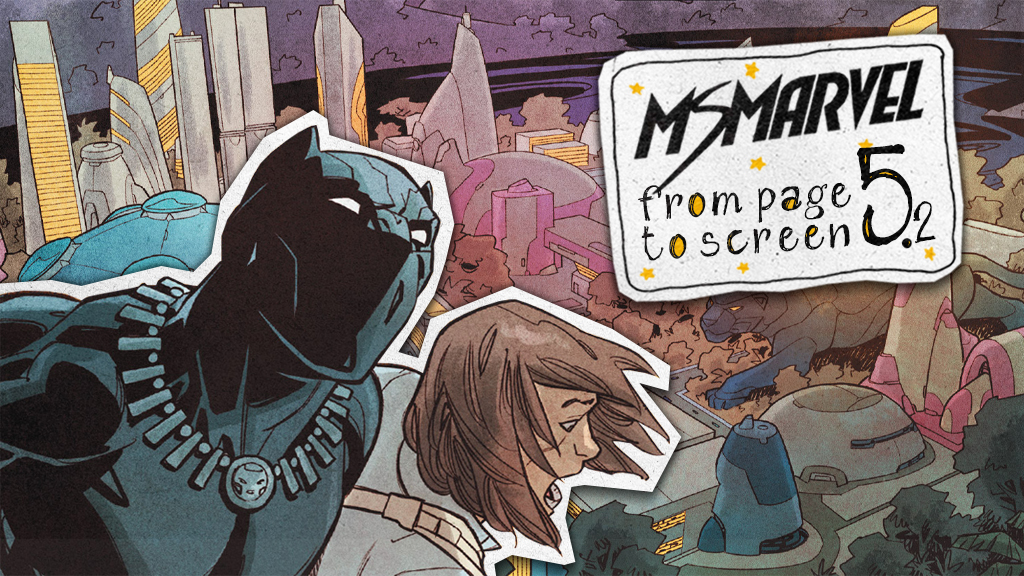
  • ‘Ms. Marvel’ From Page to Screen: Episode 5.2

    ‘Ms. Marvel’ From Page to Screen: Episode 5.2

    With Ms. Marvel’s Episode 5, entitled “Time and Again”, the series’ connection to Ms. Marvel comics continues to be present, even if sometimes in a more subtle way. In Episode 1, we looked at how the series adapted from the comics the moment Kamala’s powers were activated; for Episode 2 we delved into the comics’ and series’ introduction and handling so far of the character Kamranin Episode 3 we looked at the interesting source material for the series’ villains, the Clandestinesand in Episode 4 we went into how Red Daggers were introduced and how they compare to the comics’ Red Dagger. As for episode 5, following our dive into Kamala’s ancestors during Partition, we now focus not so much on what happened in the show, but on what future comic events it might be hinting at.

    Episode 5 of Marvel Studios’ Ms. Marvel ended on a somewhat weird note. If on one hand the Clandestines’ subplot was apparently swiftly resolved, the Damage Control threat somehow gained traction with the attack on Kamran and Bruno at the Circle Q. While there is no real perfect counterpart to this sequence in the comics, the aftermath could perhaps lead Bruno down an interesting, yet painful path, taken straight out of the comics.

    Marvel Studios’ Ms. Marvel Episode 5
    Marvel Studios’ Ms. Marvel Episode 5

    Leading up to Secret Wars, Kamala finally met her hero Captain Marvel as New York was soon to be destroyed by an incursion. This later led to Carol making Kamala the leader of a group they named the Carol Cadets. The Cadets were created following the discovery of an Inhuman named Ulysses, who through the use of mathematics could basically predict the future. They were made to go after criminals who were yet to commit any sort of crimes but that Ulysses deemed likely to end up doing so. This was something that began not to sit right with Kamala’s friends, around the same time she also began to fight back against the idea behind the creation of the Cadets by questioning their methods.

    This all led to Bruno trying to break into the Cadets’ facilities in order to set free who, in his eyes, happened to be detained there without a valid reason. Said break-in went wrong and Bruno had to deal with the consequences, being left bedridden with third-degree burns all over the left side of his body, losing the use of his left hand (his dominant one), and with serious doubts if he’d ever be able to walk again.

    Ms. Marvel #10 (2016)

    Once he finally regained conscience, and even though Kamala tried her best to stay by his side throughout his hospital stay, Bruno made it extremely clear that he held her responsible for the situation that left him in the state he found himself in. He considered she was focusing too much on her superhero life without regarding the consequences to the people around her who loved her, taking everyone for granted. He vowed to never want to see her ever again, and that his next step would be moving away to study at the Golden City Polytechnic Prep, in Wakanda.

    Ms. Marvel #18 (2017)

    Once there, he was involved in an attempted vibranium robbery, he met King T’Challa and eventually went back home when he realized that Kamala was who he wanted to be near. Unfortunately for him, Kareem, the Red Dagger, had by then stepped into the frame.

    Marvel Studios’ Ms. Marvel Episode 1

    It’s hard to predict if the Circle Q explosion might end up serving as the catalyst to a similar journey for the MCU’s Bruno. If it does, it would certainly be something worth going into in the second season (?) of the show, with perhaps Black Panther: Wakanda Forever being a possible project in which to feature a Matt Lintz cameo in the meanwhile.

    The first five episodes of Ms. Marvel are now streaming on Disney+.