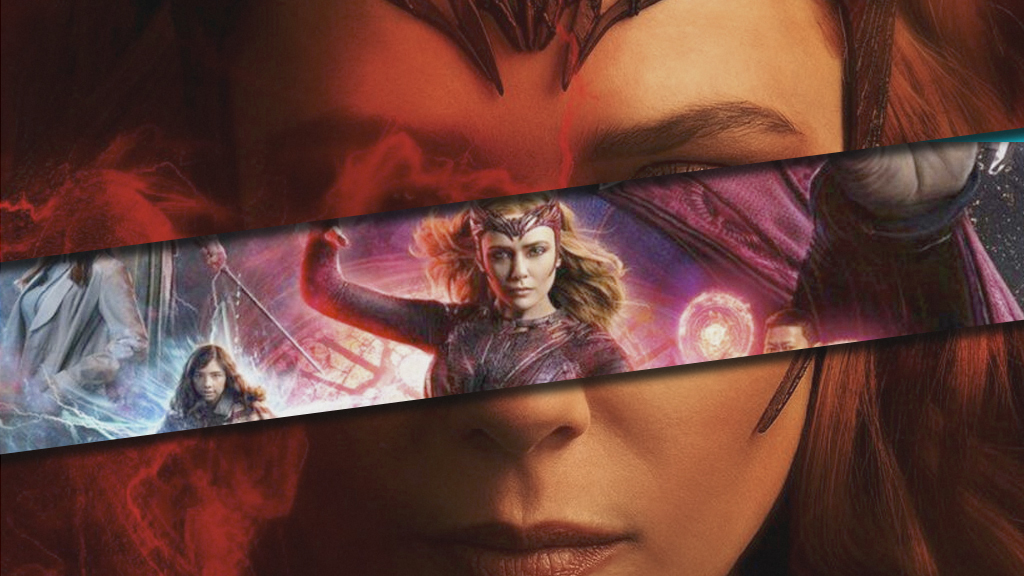
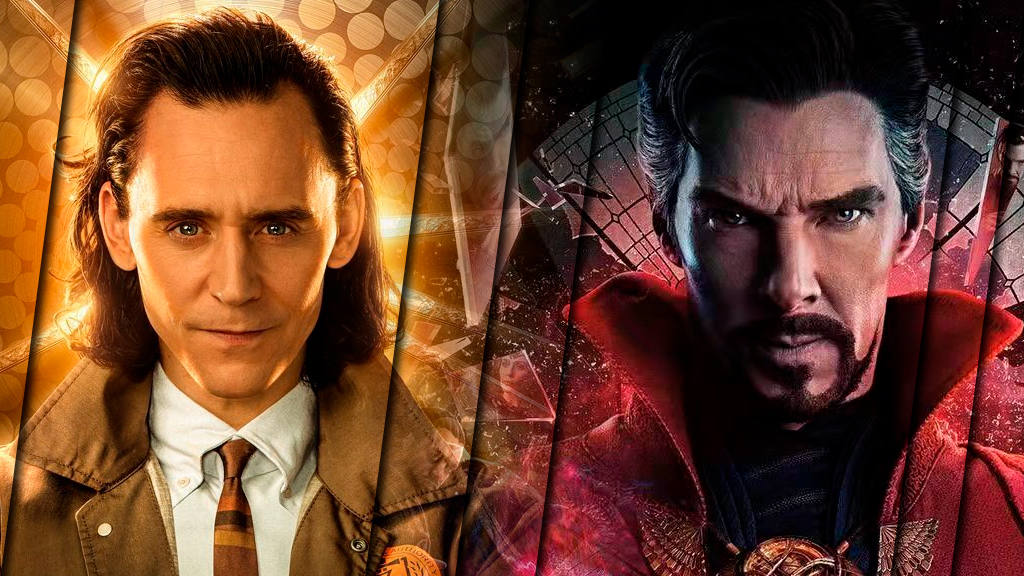
While Doctor Strange in the Multiverse of Madness focused on Benedict Cumberbatch’s titular hero for the first time since his 2016 debut film, the sequel undoubtedly put some other characters in the spotlight as well. Xochitl Gomez had a triumphant introduction as America Chavez, and some major cameos got quite a bit of attention. Still, it was Elizabeth Olsen’s Wanda Maximoff that stole plenty of scenes in the film, and her adversarial role as the Scarlet Witch was fantastic.
Wanda has been a fan favorite at least since her Disney+ series WandaVision, which saw the character (first introduced in Avengers: Age of Ultron) finally take on the Scarlet Witch mantle. With her popularity so high, fans have been clamoring for more. While a Scarlet Witch solo project seems likely, Olsen herself recently teased where the antihero’s story may go. Speaking to Extra, the actress stated:
There’s a couple different versions of what could happen at the end of this film. Mostly, I want to hear what the fans who know her best, what they would like to see from her next.
Elizabeth Olsen
While MCU actors are notoriously left in the dark about their character’s futures or pretend they are, Olsen seems to suggest that she has some substantial knowledge about her character’s potential future projects. It is also interesting that she seems to want fan input to influence the ultimate direction of the Scarlet Witch. One of the directions Olsen might be teasing could be an adaptation of the popular James Robinson’s 2015 Scarlet Witch solo series. But Wanda Maximoff is not short on major arcs and storylines in the comics.
In any event, it looks like Olsen just provided a bit more evidence that fans should expect the Scarlet Witch’s return in the MCU after the events of Multiverse of Madness.
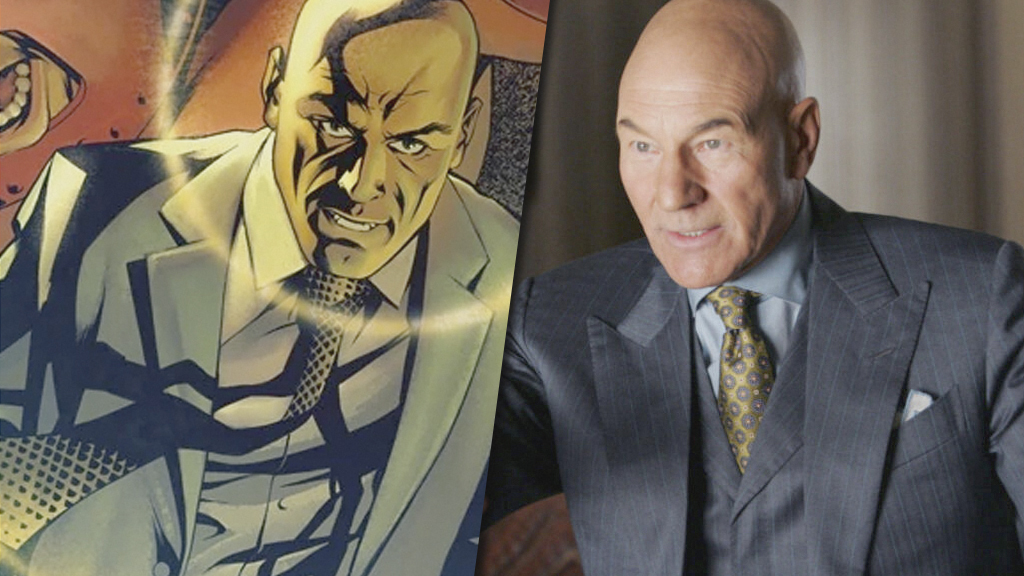
Doctor Strange in the Multiverse of Madness made big waves with some of its character inclusions. Perhaps most exciting for fans was the inclusion of Patrick Stewart’s return from the X-Men franchise as Charles Xavier. The inclusion of Professor X marks the first mutant we’ve seen in the MCU, as Disney only more recently acquired the film rights to the X-Men characters.
As a fan favorite in the X-Men movies, as well as his portrayal of the character in Logan, fans were overjoyed at his re-introduction as an alternate universe variant in the Doctor Strange sequel. Stewart himself was a little unsure about returning to the iconic role, but he just teased that there could be more to come. Speaking to Variety, Stewart said:
Charles Xavier? Yeah. There may be [more apperances]. You know, the whole X-Men comic series is so huge, so vast, there might be an opportunity in which he comes back. We’ll see.
Patrick Stewart
Marvel Studios is expected to eventually introduce previous 20th Century Fox-owned characters such as X-Men, Deadpool, and the Fantastic Four into its Marvel Cinematic Universe. As Stewart mentioned, the X-Men universe is incredibly rich and expansive in the comics, and Charles Xavier is one of the biggest characters in that realm. If the MCU does introduce an MCU live-action Xavier, it does not necessarily mean that he will be portrayed by Stewart. Only time will tell, but the acclaimed actor has put in decades of time with the character, and may not wish to return in a major way. Marvel Studios may also be interested in a younger character or simply starting from scratch.
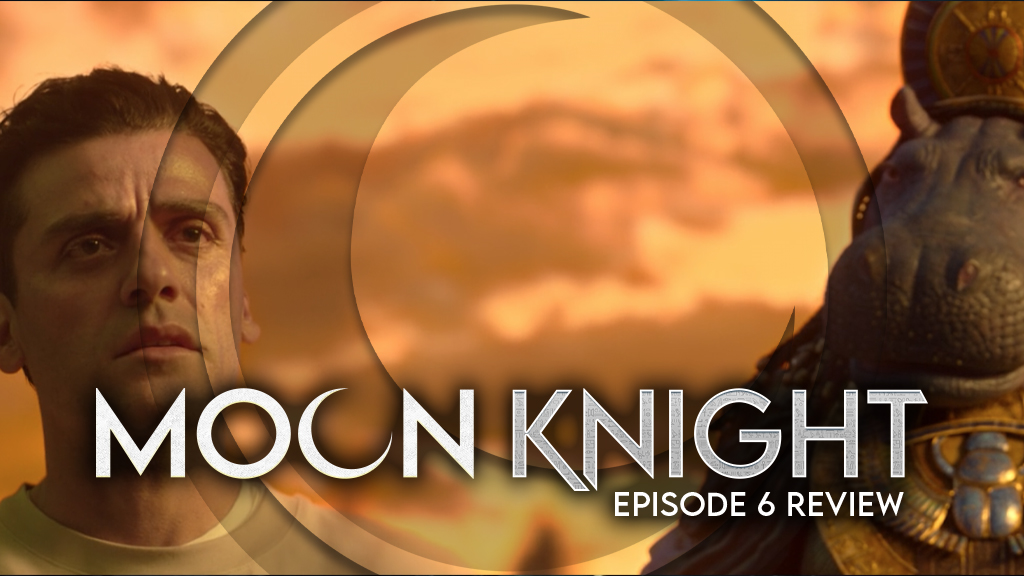
As Moon Knight’s six-part event came to a close on Wednesday, it left many fans wanting more. Oscar Isaac put in a stunning performance as Marc Spector and Steven Grant, while Layla El-Faouly became the MCU’s first Egyptian superhero. More importantly, though, by season’s end, a new corner of the Marvel Cinematic Universe that contains rich Ancient Egyptian mythology has just been broken open.
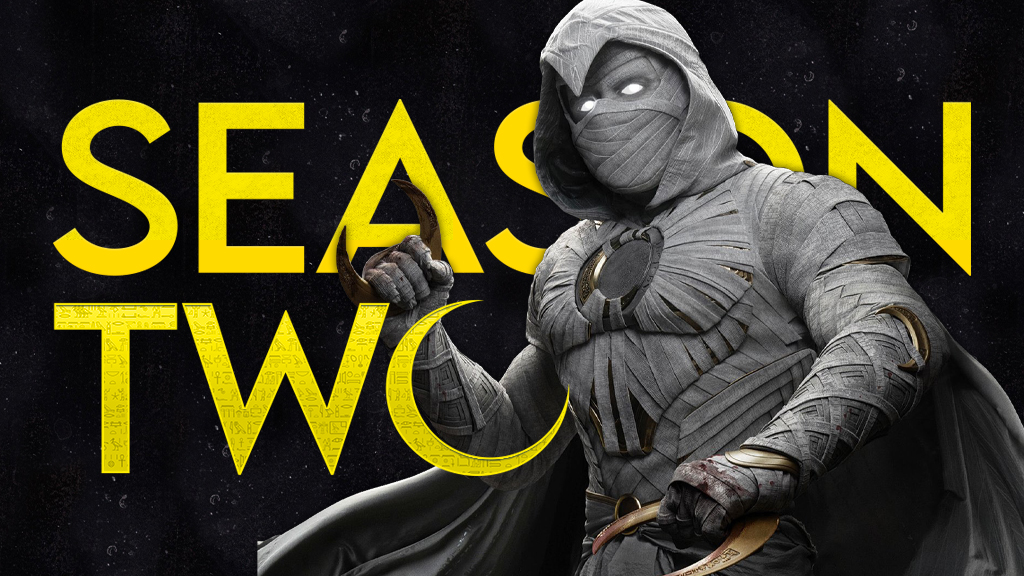
The finale of the Disney+ series also created more questions than perhaps fans were expecting of a limited series. For example, the mid-credits scene finally gave the first look at the third personality, Jake Lockley, and it was quite the cliffhanger to end the show. Similarly, we had no epilogue or resolution to Layla’s story after her grand moments in the final episode. It all leads the audience to wonder—will there be a Season 2?
It turns out that not even Moon Knight’s creators know the answer to that. In an interview with Deadline, director and executive producer Mohamed Diab said quite simply:
We don’t know if there’s a next season.
Mohamed Diab
The director elaborated that he knows just about as much as fans do when it comes to Moon Knight’s future:
I’m kept in the dark, just like the fans…Marvel doesn’t go with a conventional way, so even if they like the character and want to extend the world, it could be season 2, it could be a standalone film, or he can join another superhero’s journey…We never discussed it being a season 2, but one day there’s going to be an expansion, but I don’t know how it’s going to look like.
Mohamed Diab
Maybe the most interesting thing about Diab’s remarks is that a second season was never truly thought out. Obviously, Moon Knight was marketed as a limited series, so it is not surprising that Season 2 was never an absolute plan. But the fact that the creators of the show seem to have no indication as to where the character might be going is fascinating.
Executive produce Grant Curtis agreed with Diab’s statements as well, noting that he wants to know Moon Knight’s future just as much as fans do. He stated:
Where Moon Knight lands in MCU after this, I actually don’t know,” said Curtis, “As a fan, I want to know, because Oscar created such an engaging, emotional performance that people want to see more of the Steven-Marc-Jake story.
Grant Curtis
While even Marvel Studios creators are notoriously left in the dark about their own projects’ futures, Diab’s and Curtis’ comments certainly do not suggest that a Moon Knight Season 2 is a strong bet. Perhaps after the hype of the finale dies down, fans might get a better understanding of where the titular character is headed in the MCU future.
All episodes of Moon Knight are now streaming on Disney+.
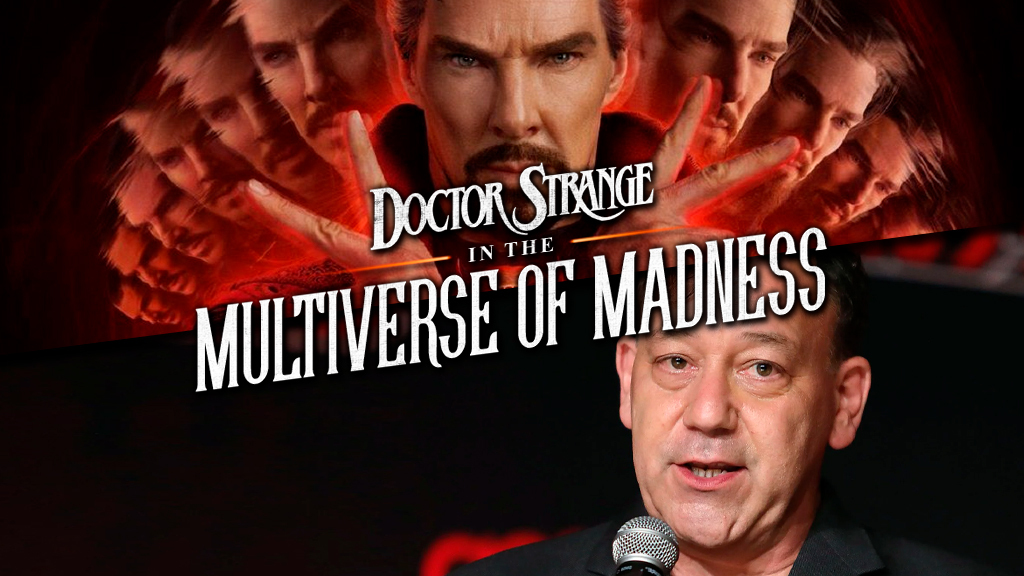
As Doctor Strange in the Multiverse of Madness prepares to blow fans’ minds, more information is coming to light about what it was like behind the scenes. Audiences are eager to witness director Sam Raimi’s return to the Marvel movie scene and what his signature flair will add to the horror-inspired film.
One aspect of the unreleased film that has caught people’s attention is the official run time. Conversations about run times seem to have increased dramatically in the past few years, and many have questioned whether the Multiverse of Madness’stwo-hour and five-minute run time is appropriate for the perceived scope of the film.
Raimi recently told Collider that the first cut of the film was indeed significantly longer than the final cut. Apparently, the final film was cut down from a two-hour and forty-minute run time. At that length, the Doctor Strange sequel would have been one of the MCU’s longest films to date. The final cut is actually right about the average length for an MCU film.
In explaining that there are a few deleted scenes he expects to make the eventual Blu-ray, Raimi commented on the film’s runtime:
Well, the first cut…I actually don’t remember the length of it…it was probably about two hours and forty minutes and it slowly came down even though we did the reshoots. We took out material even though the reshoots went in.
Sam Raimi
While the runtime is controversial despite the fact that general audiences have yet to see Multiverse of Madness, fans should trust that the filmmakers left out material for the good of the film. You can read our review as to why no one should worry about how long the sequel is.
Doctor Strange in the Multiverse of Madness releases in theaters on May 6, 2022.
Doctor Strange in the Multiverse of Madness is almost upon us. You can read our spoiler-free review here. The 28th Marvel Studios feature film will be the latest—and likely biggest—leap into the multiversal lore of Phase Four. The movie promises to be a bold and wild Sam Raimi-directed adventure that sees our titular character, with company from major characters like the Scarlet Witch and America Chavez, travel through the multiverse to prevent a great evil that threatens it.
Interestingly, Waldron recently told Digital Spy that he has some regrets about how rigidly he defined some of the “rules” of the multiverse in Loki due to its potential effects on future multiverse projects:
We worked pretty hard on Loki to make it as airtight as possible. But there were times when I was like, ‘Oh, shit, I wish I hadn’t have defined that so clearly. I don’t know why I had to be so specific in my time-travel television show about the rules of the multiverse.
Michael Waldron
Even though there may be some challenges in keeping multiversal mechanics consistent in the MCU as a whole going forward, Waldron still believes that his work on Loki greatly benefitted the writing process of Multiverse of Madness. He stated:
But, I was glad that I came in with institutional knowledge of the multiverse and was able to get the creative team of DoctorStrange on the same page as me on everything. Because like with Loki, that’s the most important thing when you’re dealing with this…You have to all have a shared language of all this stuff, otherwise it can get pretty confusing.
Michael Waldron
If Loki limited some of the creative direction of Multiverse of Madness with respect to the physics and understandings of the multiverse, it seems as though it still ultimately enabled the sequel to have a coherent and consistent tone with the MCU. A “shared language” about the multiverse will undoubtedly come in handy to both filmmakers and audiences going forward.
Doctor Strange in the Multiverse of Madness releases in theaters on May 6, 2022.
Over the course of its six-episode run, Moon Knight certainly turned heads at least a few times during its tenure. Some of Marvel Studios’ best television came through in the series, and Oscar Isaac left more than a lasting impression on the MCU with his performance. In a story with a near-infinite room to explore Ancient Egyptian gods and their relationships with humans, the Disney+ show ultimately proved that it can tell a phenomenal Marc Spector story. Moon Knight? Not so much—there is no joy in admitting that the Moon Knight finale failed to stick the landing and generally was an injustice to the aspects that the series that, up until this episode, were leading it to potentially be the best Marvel Studios series. This final episode likely takes the series out of that conversation.
The simplest way of describing what ended up being disappointing about the finale is bland. On one hand, every step of every character in this episode was met with zero resistance. All of the forgettable Arthur Harrow- or Ammit-related moves were too easy and predictable. Even the few positive moments were simply given the green light with no questions asked.
Where the big psychological twist of the series came in so beautifully for the character-based aspect of Moon Knight, the hard plot really could have benefitted from something similar. Where the series had raised mystery and intrigue, it revealed that there was nothing special behind it. With Harrow, the mildly interesting villain had no other goal than to simply take over the world, and having that be the hook, line, and sinker for the big ending felt as generic as it gets. Forcing through Harrow’s and Ammit’s world domination plan felt like the equivalent of a B-movie plot, and it lacked any genuine impact or even threat of impact.
In a realm where so much is possible, and where so much rich creativity has been presented, the series ultimately hung its hat on perhaps the most generic incantation of new gods and those fighting for them. So much more could have been toyed with in a way that would have fit well with the intricacy of the character-based elements, but ultimately those get drowned out in a sea of uninspiring CGI and conflict with practically zero nuance. Even giant silhouettes of Egyptian gods fighting over Cairo could not make up for how the actual conflict did not rise to any occasion.
Similarly, Khonshu remained a relatively minor character by the end of the finale. While the post-credits scene hints at more, the god often—and ultimately—felt like an excuse for Marc and Steven’s involvement in the overarching plot rather than a meaningful or genuine inclusion. There are countless ways that Khonshu’s personality and deception could have played into the series’ story.
The psychological exploration of Marc and Steven was the highlight of Moon Knight by far. It was so incredibly well-done that it almost made it more difficult for the series to have a grand ending on a more physical plot. Still, the residue of that character development is what kept the finale afloat. The tender moment between Marc and Steven in the Duat was one of the most emotional, and Oscar Isaac’s fantastic final execution of playing both roles with rapid switching was sincerely the most exciting part of the finale. The best parts of the action-heavy episode came when Moon Knight and Mr. Knight teamed up. Even with a finale that did not cement the series as all-in-all outstanding, nothing can take away from Moon Knight’scharacter masterpiece.
Another positive element to come out of the finale was Layla’s development into being an avatar of her own. This was perhaps the most unpredictable moment, yet her possible relationship with Khonshu was teased from the beginning. Still, she ultimately—easily—became Tawaret’s avatar in order to fight against Harrow and his disciples. Her superhero moments were the best superhero moments of the entire series. While Layla requested that she be a “temporary avatar”, this character is very much MCU-unique, so her status could have substantial ramifications down the line.
Lastly, Moon Knight finally introduced Jake Lockley, Marc’s third personality. After being the subject of much speculation over the course of the series, the character ends up being almost exclusively a post-credits tease. That is not too surprising, and it did have some positive impact on the ending of the series. We meet Jake right after Marc and Steven seem to be free from Khonshu and are living their normal lives together with two goldfish. But of course, Khonshu is still using Marc’s body as his avatar. This time, Jake Lockley seems to be taking on the “Moon Knight” mantle on his own.
Where the episode fumbles on this tease is that the series hinted at Jake being hyperviolent alter but never actually showed it. He had such a moment, in the end, to show that side of himself, to live up to Moon Knight’s violent expectations, and leave a strong lasting impression on viewers going forward. Instead, he simply shot at Harrow from the front seat of the comics-inspired SPKTR limo. It may have been a bit more intriguing if the audience got some sort of grasp of his personality as it differs from Marc and Steven.
Moon Knight will always be a memorable show. The character-based aspects and Isaac’s performance should go down as some of the greatest in the MCU. Nothing in the series finale takes away from those accomplishments, but the generally bland and generic ending does drown out some of it as the show came to an end. Ultimately, the wonderful twist and mind-bending energy that came with the psychological aspect of the show simply did not bleed into the main plot, and it was worse for it.
Marvel Studios has quite the week and weekend planned for fans, with both the premiere of Doctor Strange in the Multiverse of Madness and the finale of Moon Knight dropping within days of each other. Despite naturally needing to compete for attention from the highly-anticipated Doctor Strangesequel, Moon Knight has made a name for itself and fans are eagerly awaiting what the finale of the series has in store.
The Disney+ series’ finale remains mysterious, but the show’s focus on the character dynamics between Marc Spector and Steven Grant is likely to continue to be showcased. Oscar Isaac so far has been praised for his performance of the two characters, connected by Marc Spector’s dissociative identity disorder. In a recent interview with Collider, Isaac opened up even more about how he tackled the role. Interestingly, he described his take on Steven as being on the autism spectrum, something not acknowledged with respect to any other character in the MCU:
You know, I saw him as a bit on the spectrum. I actually loved watching Love on the Spectrum. That was like one of my favorite things to look at, because I just found it so moving and touching because it’s people that… All the same feelings we have in those situations, but they just haven’t developed all the masks to hide it all. So there was cues that I took from that. I imagined him as quite tall but wanting to feel smaller when he walks through rooms and things, and just played with the physicality and then just a very open face, which reminded me of my clown days back at school, where you play with the red nose and the way that it opens up your face, and then doing the opposite of that with Marc, making him, although much more present, like a marble in the middle of a room, but also tighter in the face and closed off. Lots of defenses up.
Oscar Isaac
For one, the significance of representing autism–even if not explicitly recognized in the series–is another example of how Marvel Studios is starting to open the door to a wider range of underrepresented groups in the universe. While this may have been more of a creative choice on Isaac’s part, the showrunners undoubtedly gave him that creative freedom. Obviously, in general, this allowed for a stunning performance by Isaac, and it crafted rich and well-developed characters to explore. It seems like a reason to be optimistic about creative freedom given to talent going forward in the MCU, which is a topic in many fans’ minds. In an event, it is another look at fan-favorite Steven Grant’s personality and how detail-oriented Isaac was in his performances.
The first five episodes of Moon Knight are now streaming on Disney+.
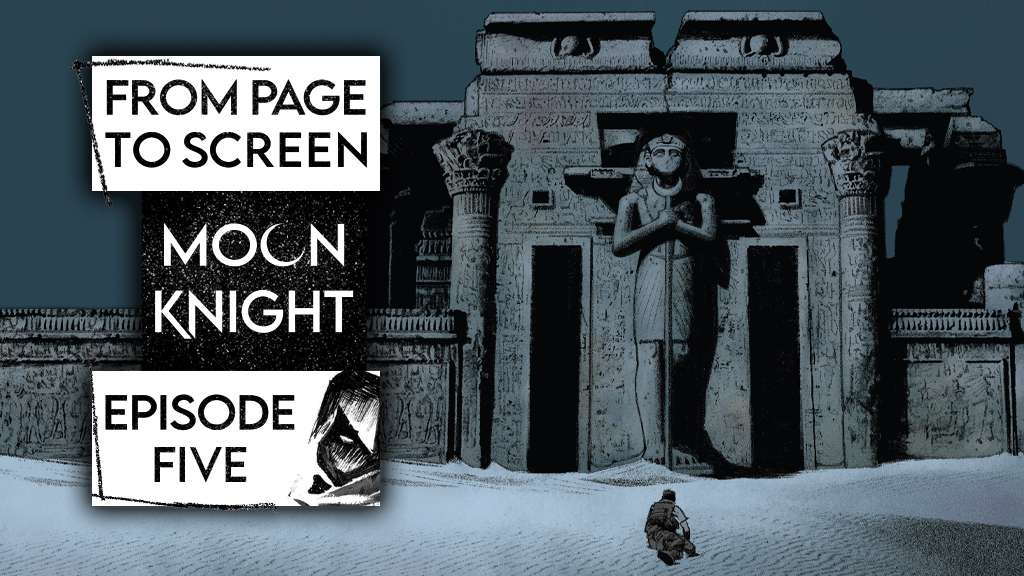
This week, for the penultimate Episode 5, we compare and contrast how Moon Knight’s most iconic moment was portrayed in the series and the comics. Specifically, we look at the scene where Marc Spector becomes Khonshu’s avatar and dive into the details of the show and three major Moon Knight comics run—the original 1980 run, the Lemire/Smallwood run, and the ongoing MacKay/Cappuccio run.
Moon Knight #14 (2017)
All iterations of the classic Moon Knight scene are incredibly similar. It is the type of moment that is so attached to the hero that it somewhat defines him. As we see in Moon Knight, Marc is mortally wounded during a tomb raid. His mercenary partner Bushman killed a team of archaeologists outside of a tomb, including Layla’s father. Marc crawls into the tomb and prepares to take his own life, but he is stopped by a voice that seems to come from the statute of Khonshu that he is underneath. Khonshu tells Marc it would be a waste for him to die, that Marc has a fractured and broken mind, and that the god believes he would be a worthy candidate to be his avatar. Our protagonist agrees, and Khonshu saves his life. The last thing we see is Marc summoning the Moon Knight suit.
Marvel Studios’ Moon Knight Episode 5
Marvel Studios’ Moon Knight Episode 5
There are many aspects that are entirely consistent across the live-action series and the comics. For one, all versions begin with Marc being a part of a tomb raid with Bushman, and the villain ultimately wounds Marc. It is also integral to every Moon Knight story that he is physically under Khonshu’s statue at the time he becomes his avatar.
Moon Knight #1 (1980)
Moon Knight #14 (2017)
Moon Knight #1 (2021)
It is unclear why he dragged himself into the tomb in the show. While the current MacKay/Cappuccio does not go into it, the way Spector winds up in the tomb itself varies slightly. The series seems to have taken more from the Lemire/Smallwood in terms of Marc literally dragging himself into it. In that comics run, he is apparently lured by Khonshu’s voice. In the original run, he roams the desert before eventually being taken into the tomb by Marlene and some survivors of the raid.
Moon Knight #1 (1980)
Moon Knight #1 (1980)
Moon Knight #14 (2017)
Moon Knight #14 (2017)
Similarly, Moon Knight is more similar to the Lemire/Smallwood run in terms of Khonshu’s role. In the original, there is no dialogue that the reader sees between the two—Marc simply comes back to life after lying dead under the statue for a small amount of time. The Lemire/Smallwood run, however, features a very similar conversation to what we see in the series. This is the same run where Khonshu is trying to break Marc’s “weak” and fractured mind in order to use the human body for himself. He tells a dying Marc in both iterations about the gig of the Fist of Vengeance. As Steven tells Marc in Episode 5, it is clear that Khonshu is taking advantage of a soon-to-die mercenary with some substantial mental health issues.
One aspect that is present in all three comics versions of the scene is missing in the series. In the comics, Marc Spector the mercenary grows a conscience during the raid. In both the original and Lemire/Smallwood runs, he seems to have an ethical awakening after Bushman kills the head archaeologist, Marlene’s father. In the MacKay/Cappuccio run, the scene is brief like it is in the series, but Mr. Knight does specifically mention that he grew a conscience while on the job. In Moon Knight, we see the aftermath of the violent raid but we do not know whether or not Marc had a true “change of heart”. It makes sense that he would have, but it is not as explicit as it is in the comics.
Moon Knight #1 (1980)
Moon Knight #13 (2017)
Moon Knight #1 (2021)
Another interesting difference in the series is that no one else seemed to be present in the tomb at the time. In both the original and Lemire/Smallwood runs, his future love interest Marlene (and others) are present when he comes back to life. In the current MacKay/Cappuccio take, it is not mentioned, and the only visual we get is simply Marc’s dead body below the statue. Layla (who is a much-improved Marlene in the series) was unaware of the details of her father’s death and Marc’s involvement in it prior to Arthur Harrow telling her in Episode 4, so that seems to confirm she was not there in the tomb. It begs the question in Moon Knight: how did Marc and Layla meet?
Moon Knight #14 (2017)
Perhaps the most interesting difference is subtle but fundamental. In all comics iterations far and wide, Marc Spector is resurrected by Khonshu before becoming Moon Knight. In Episode 5, Marc does not die. Khonshu apparently heals him and keeps him from dying, but there is no resurrection. This could perhaps be an oversight brought about by the ease of dialogue between the two characters if Marc is alive throughout the conversation.
Marvel Studios’ Moon Knight Episode 5
Marvel Studios’ Moon Knight Episode 5
Still, the idea of resurrection is a major theme for Moon Knight in the comics, and so it could be a very intentional and meaningful decision. After the events of Episode 4, it looks like Marc Spector is in need of resurrection—he has had at least two (three according to the MacKay/Cappuccio run) in the comics, but they have always been major character-changing events. If Moon Knight decided that a resurrection during the series should be the character’s only one, there are strong themes connected to the hero’s “origin” that would certainly make such a moment in the series finale carry much more weight than any resurrection in a flashback.
The first five episodes of Moon Knight are now streaming on Disney+.
A bombshell has just dropped, as Square Enix just sold its entire Western division for only $300M. With one single sale, the Japanese developer has sold every Western company under their umbrella alongside the many IPs that they work on. Yet, it also opens up the question of what exactly this means for the future of the Marvel games that are being developed by some of their studios.
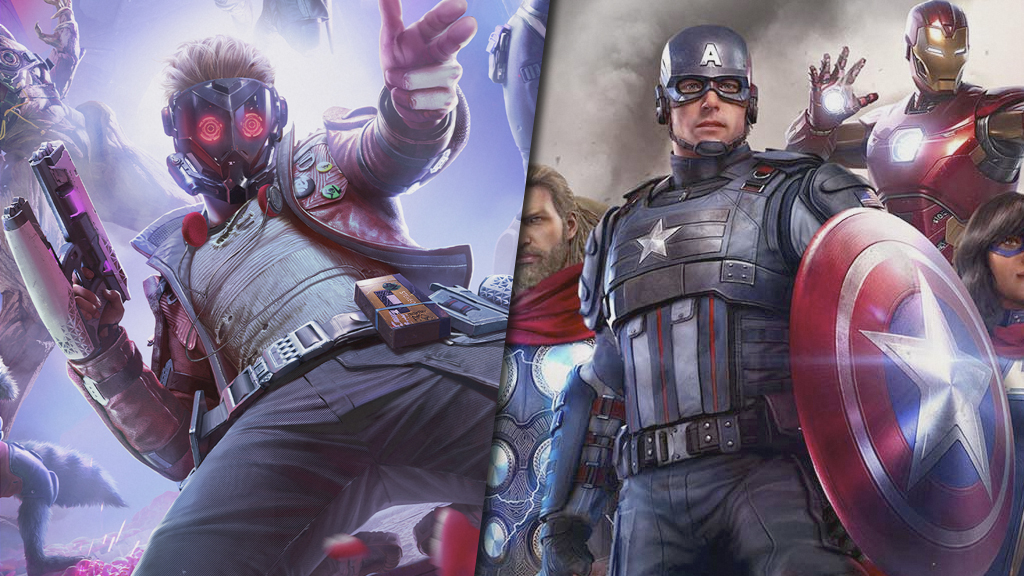
Initially, the deal made between Square Enix and Marvel would include four games. Two of those released in the form of Crystal Dynamics’ first venture into Games-as-a-Service with Marvel’s Avengers and the story-focused Guardians of the Galaxy by Eidos. During the press conference on the purchase, a statement was made on if the development of Marvel games would continue.
All games that have been developed by the studios are included in the deal. However, a number of external approvals are needed from external parties to close this transaction. And potentially, licenses as mentioned here could be one of those approvals needed.
Lars Wingefors
So, if Marvel or Disney decides not to renew the license, the games would potentially find their end. This news hits especially hard for Crystal Dynamics, which has been quite dedicated to making Marvel’s Avengers work as a service game. after its critical success, there was also a lot of hope that Guardians of the Galaxy would get a sequel. Yet, if they do not renew their deal with the new Embracer Group, it sadly could spell the end of these ventures once the deal is finalized.
Marvel Studios’ latest television series, Moon Knight, has been notable for plenty of things including Oscar Isaac’s performance, the focus on a relatively obscure Marvel character, the exploration of complex mental health issues, and the wacky journey into supernatural realms not yet seen in the Marvel Cinematic Universe. Another interesting aspect of the series is how distant it can be from its comics source material at times.
After the reference to Jean-Paul “Frenchie” Duchamp, multiple cameos from Bertrand Crawley, and Layla’s similarities to Marlene Alraune, a decent proportion of Marc Spector’s classic supporting characters have made some type of appearance in the live-action series. One of the biggest characters in Moon Knight’s history has been notably absent, but Episode 5 of Moon Knight dropped a quick reference to him.
‘Moon Knight’ (1980)
While Marc was revealing to Steven how he met Khonshu and became his avatar, they walked through the desert area where numerous people, including Layla’s archaeologist father, were killed. Marc explains to Steven that he was not responsible for the massacre and that his mercenary partner, Bushman, got greedy and killed the crowd. It is a single, quick reference, but it is the latest purposeful inclusion of Moon Knight’s classic characters.
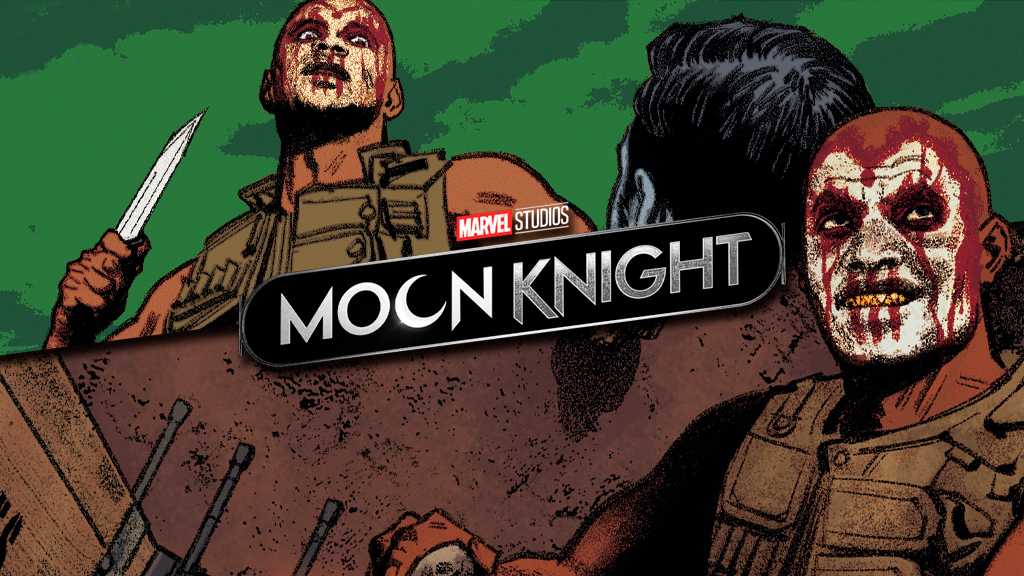
In the comics, Bushman (or “the Bushman”) is easily Moon Knight’s greatest enemy, and the villain appears many times over the decades of comics. As Marc mentions in the episode, he worked with Bushman while a mercenary, and Bushman killed those people in a tomb raid before nearly killing Marc as well. The superhero’s origin story in the comics is almost identical with respect to Bushman’s role in those events. Since then, Bushman remained iconic in Moon Knight comics and was a major part of numerous different arcs.
Marc did not need to say “Bushman” in Episode 5. But, obviously, the writers of Moon Knight included it for a reason. In a story that has not relied on the comics, these references were probably placed throughout the live-action series for a couple of reasons. On one hand, they could be simple nods to Moon Knight’s history and nothing more. While fan service can be great (and may sometimes be the best route), there are reasons to believe that the superhero’s supporting characters are being saved for future stories.
A couple of references to the comics stand out, but Bushman in particular should pique people’s interest. As mentioned, Bushman is an absolutely integral character in the Moon Knight comics. The villain’s actions and presence have influenced the costumed vigilante time and time again. Bushman’s importance goes far beyond the hero’s early days. Moon Knight’s arguably most violent moment came decades after his origin and involved Bushman (he tore off his face), which led into a severe depressive episode for Marc that changed the character’s course as well as heightened the mental health element of his stories.
‘Moon Knight’ (2006)
The point is that Bushman has always been an obvious choice for a live-action Moon Knight adversary. If the superhero gets more time in the MCU, he remains a clear choice. If the series wanted to totally avoid the character and his impact, he did not need to be name-dropped. Similarly, the Crawley cameos in Moon Knight make his future appearance seem more likely—not only did he make a physical appearance, but he has appeared across multiple episodes.
Moon Knight may very well be saving some of these classic characters for future stories with Oscar Isaac’s hero. As was clear from Episode 5, the live-action series is not making too big of a deal of Marc’s original meeting with Khonshu where he agrees to be his avatar. The Disney+ show is likely setting up its finale to be, for all intents and purposes, the Moon Knight origin in the MCU.
If that is the case, the character moving forward may likely take on a more traditional superhero role. With that role, a solid supporting cast is bound to follow. The basic setup in the live-action series could be signaling that the iconic comics characters will be around in the long run. And who knows? The Moon Knight finale could prove quite informative about the future of Marc Spector’s, Steven Grant’s, and Jake Lockley’s classic entourage.
‘Moon Knight’ (2016)
The first five episodes of Moon Knight are now streaming exclusively on Disney+.
Cookie Consent
We use cookies to improve your experience on our site. By using our site, you consent to cookies.
This website uses cookies
Websites store cookies to enhance functionality and personalise your experience. You can manage your preferences, but blocking some cookies may impact site performance and services.
Essential cookies enable basic functions and are necessary for the proper function of the website.
Name
Description
Duration
Cookie Preferences
This cookie is used to store the user's cookie consent preferences.
30 days
These cookies are needed for adding comments on this website.
Name
Description
Duration
comment_author_email
Used to track the user across multiple sessions.
Session
comment_author_url
Used to track the user across multiple sessions.
Session
comment_author
Used to track the user across multiple sessions.
Session
Statistics cookies collect information anonymously. This information helps us understand how visitors use our website.
Google Analytics is a powerful tool that tracks and analyzes website traffic for informed marketing decisions.
Contains information related to marketing campaigns of the user. These are shared with Google AdWords / Google Ads when the Google Ads and Google Analytics accounts are linked together.
90 days
__utma
ID used to identify users and sessions
2 years after last activity
__utmt
Used to monitor number of Google Analytics server requests
10 minutes
__utmb
Used to distinguish new sessions and visits. This cookie is set when the GA.js javascript library is loaded and there is no existing __utmb cookie. The cookie is updated every time data is sent to the Google Analytics server.
30 minutes after last activity
__utmc
Used only with old Urchin versions of Google Analytics and not with GA.js. Was used to distinguish between new sessions and visits at the end of a session.
End of session (browser)
__utmz
Contains information about the traffic source or campaign that directed user to the website. The cookie is set when the GA.js javascript is loaded and updated when data is sent to the Google Anaytics server
6 months after last activity
__utmv
Contains custom information set by the web developer via the _setCustomVar method in Google Analytics. This cookie is updated every time new data is sent to the Google Analytics server.
2 years after last activity
__utmx
Used to determine whether a user is included in an A / B or Multivariate test.
18 months
_ga
ID used to identify users
2 years
_gali
Used by Google Analytics to determine which links on a page are being clicked
30 seconds
_ga_
ID used to identify users
2 years
_gid
ID used to identify users for 24 hours after last activity
24 hours
_gat
Used to monitor number of Google Analytics server requests when using Google Tag Manager
1 minute
Marketing cookies are used to follow visitors to websites. The intention is to show ads that are relevant and engaging to the individual user.
Pinterest Tag is a web analytics service that tracks and reports website traffic.