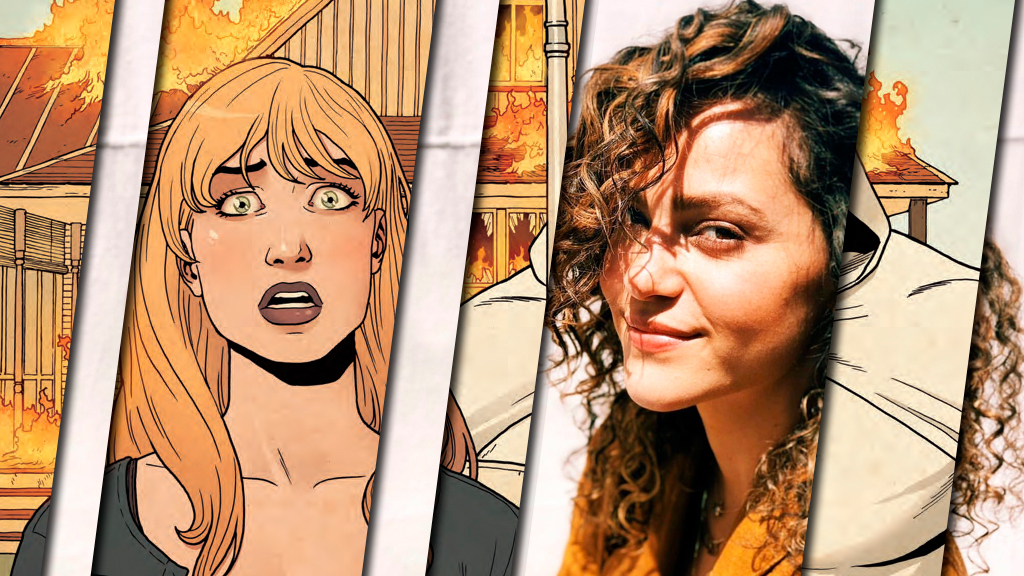
UPDATED: It looks like Moon Knight’s head writer has taken to Twitter to clarify that “Marlene was never part of our show.” While Layla’s character so far seems to have virtually the same background as the classic love interest from the comics, Jeremy Slater emphasized that the character (though not originally named Layla El-Faouly) was created in the first week of writing and it seems as though he is implying that the written character was never Marlene due to the team wanting a more diverse character. Previous reports (and May Calamwy’s interview) have said that the character was intially written as white, but perhaps there was some confusion as to whether they were referring to the comcis character being white.
Either way, the way Layla has been written clearly conjures up Marlene given both their fathers being archaelogists and killed in the process. At the same time, both are Marc Spector’s (and his alter’s) primary love interests from all we have seen so far. Slater seems to want readers to understand that the long-running comics character in her exactness was not intended for Moon Knight. You can read Slater’s statement in its entirity below:
It’s a great profile about the amazing May Calamawy, but I do want to clear up one inaccuracy. Marlene was never a part of our show. Diversity was incredibly important to our writers room, and Layla was created our very first week. (Although she was originally named Zayna Faoul.) https://t.co/fEJNjsW9F7
Now, the actress confirmed in an interview with ELLE that the original script was in fact written to include Marlene prior to Calamawy being cast opposite Isaac. In particular, she described how the series creators and Marvel Studios president KevinFeige worked to transform the original character into an Egyptian heroine:
It started even on the page as a white woman and when we came on board, me and [Moon Knightwriter Sarah Gohar], she was then changed into half Egyptian and we pushed it. Let’s make it into an Egyptian character and they welcomed that.
May Calamawy
Calamawy praised Moon Knight writers, director Mohamed Diab, and Feige for working to rewrite the character in order to avoid stereotypes and create an authentic take on the Eyptian actress’s Layla:
Anytime I felt uncomfortable, I would go talk to [Diab] and his wife and I love how Kevin Feige gave us the freedom to share that, let people know, ‘This is not what it’s like, if we do that it’s gonna be a stereotype.’ I realized quite early on this is a space where my voice was going to be heard and that’s the best feeling.
May Calamawy
Also important to the actress was for Layla to stand apart from other similar and well-known female characters of the past. Calamawy noted how important the “soft strength” of Middle Eastern women is to the character:
I was careful not to draw inspiration from someone in the West because they want me to bring my side. In the Middle East, I find women have such a soft strength to them. And I was like, ‘How can I bring this to her? Why should I sit and copy what I think Angelina Jolie would do?’ Every woman I know is a bunch of dichotomies, and I wanted to bring that.
May Calamawy
The series’ decision to cast Calamawy and rewrite Marlene’s character into Layla is surely one of Moon Knight’s strongest decisions. While it is unknown just how Marc Spector’s love interest was originally written, it is undeniable that Layla’s presence is a far cry from the fairly bland and often outdated damsel in distress in the comics. The fact that the series originally intended to feature another classic character from the comics, though, begs the question as to whether it has bigger plans for the iconic Moon Knight characters we have seen in cameos going forward in the Marvel Cinematic Universe.
The first four episodes of Moon Knight are now streaming exclusively on Disney+.
Once again, Saudi Arabia is refusing to show a major Marvel blockbuster. The Hollywood Reporter has officially confirmed the rumors that Doctor Strange in the Multiverse of Madness has been banned from playing in the Middle Eastern country, reportedly due to the inclusion of an openly LGBTQ character. This is the third time in recent memory that something like this has happened, with Marvel’s Eternals and Steven Spielberg’s West Side Story also receiving bans for endorsing the LGBTQ community. With Eternals, it was said that Marvel had been told the film could play in Saudi Arabian theaters if the studio cut a certain amount of unapproved footage, but Marvel and Disney declined and pulled the project from release instead.
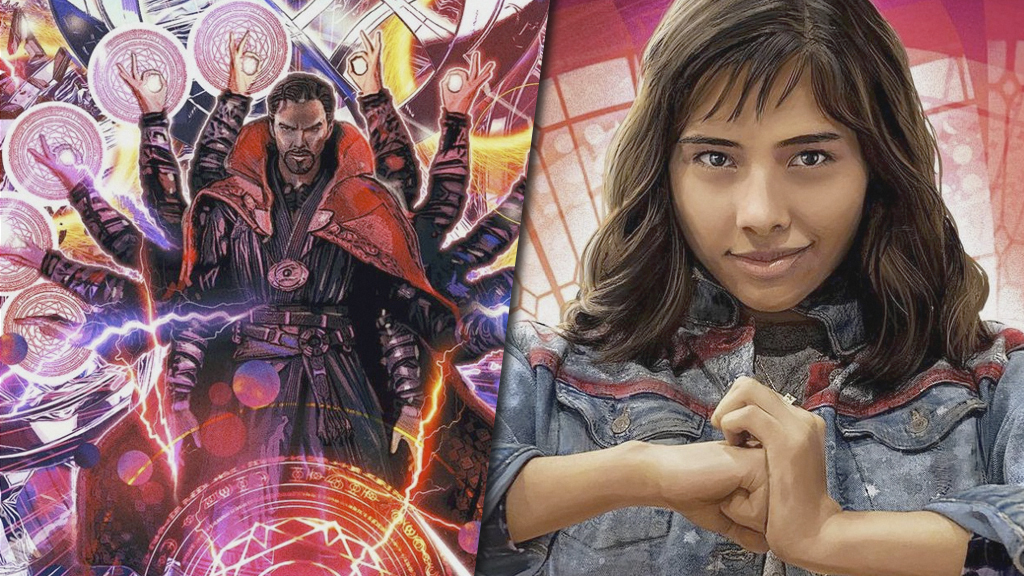
The LGBTQ character in Doctor Strange will be Xochitl Gomez‘s dimension-hopping America Chavez. Making her Marvel Cinematic Universe debut with this movie, Chavez originally appeared in the pages of Vengeance #1, created by Joe Casey and Nick Dragotta, in 2011. The character is known to be gay in the comics and is expected to be portrayed as such in the film, too.
While tickets are no longer available for purchase for cinemas in Saudi Atabia, Kuwait and Qatar, they are still available in the United Arab Emirates, suggesting that an edited version of the film could be shown there as was the case with Eternals.
DoctorStrangeintheMultiverseofMadness will hit theaters on May 6th.
While Summer isn’t exactly just around the corner, the Summer movie season is and 2022 is shaping up to be quite the season. The long-awaited sequel to 1986’s Top Gun, another Jurassic Park film and the Buzz Lightyear origin story you didn’t know you needed are among the choices audiences will have this Summer, but according to a poll by Fandango, it’s a pair of Marvel Studios’ films that have audiences most excited.
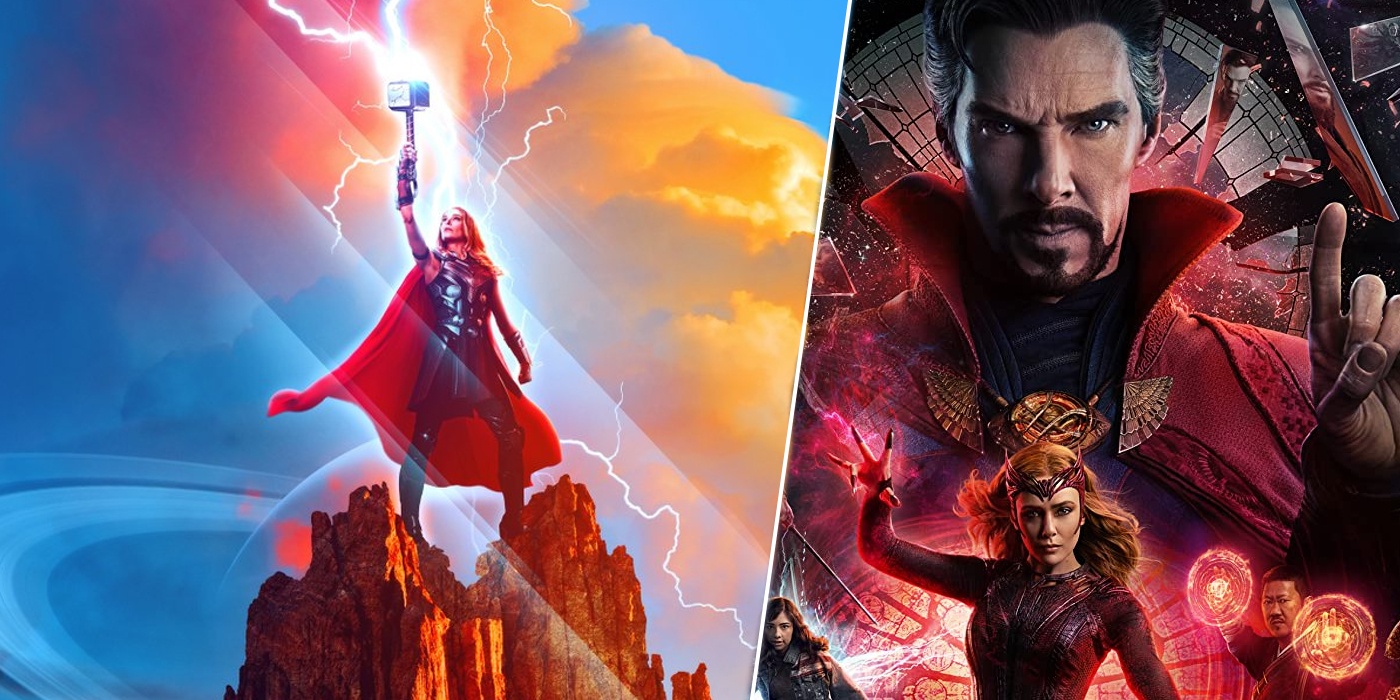
Doctor Strange in the Multiverse of Madness (May 6th) and Thor: Love and Thunder (July 8th) were the top two choices in a poll that was voted on by over 6,000 moviegoers. Jurassic Park: Dominion and Top Gun: Maverick were right behind, followed by two animated films in Pixar’s Lightyear and Dreamworks’ Minions: The Rise of Gru. Elvis, Jordan Peele’s Nope, Bullet Train and Downton Abbey: A New Era rounded out the top 10, all of which should be incredibly successful at the box office.
Even in a Summer where Tom Cruise’s return as Maverick is in the cards, it’s not surprising to see two Marvel Studios’ projects top the list. The Doctor Strange sequel’s perceived connection to the story of the wildly successful Spider-Man: No Way Home has driven advance ticket sales; meanwhile, the mystery surrounding the fourth Thor film hasn’t taken away interest. Even as critics continue to pump out think pieces about superhero fatigue, superhero films still top the list for audiences.
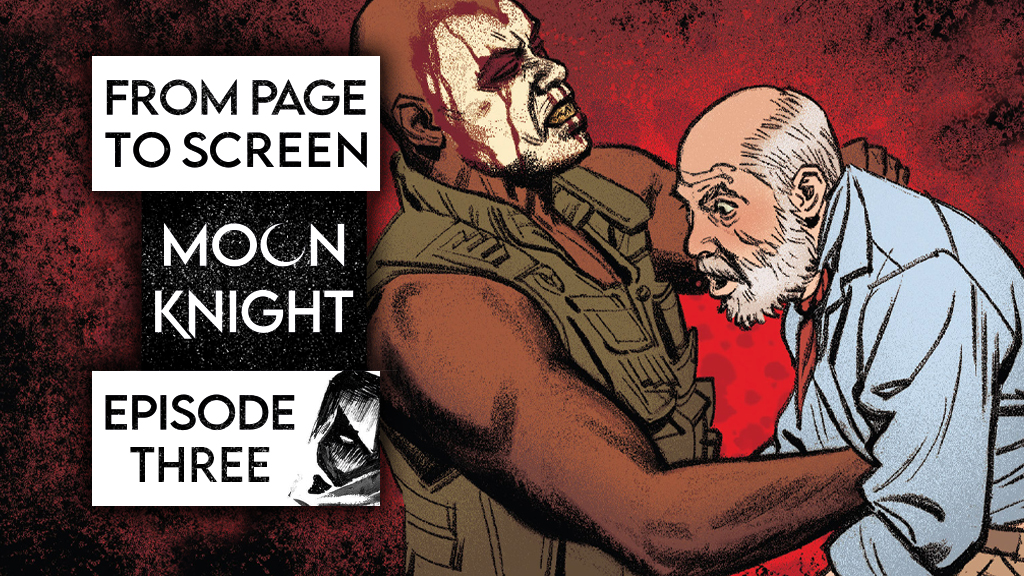
At the beginning of the episode, as Layla was getting her fake passport, we learn that her father was an archaeologist who was killed during an excavation in the desert. As Moon Knight clearly spends most of its time focused on Steven Grant and Marc Spector, it’s unclear how far back into Layla’s history the series will go. But the little we got is incredibly similar to the comics, and it also connects to Moon Knight’s origin. So, looking into what Episode 3 is referencing might give us a deeper understanding of Layla, Marc Spector, and Moon Knight.
Moon Knight #1 (1980)
Moon Knight #1 (1980)
Moon Knight #1 (1980)
Back in the day, when Marc Spector was still a mercenary, he worked for a man named Raoul Bushman, or the Bushman. He would become Moon Knight’s clear archenemy, but that is for another time. Bushman and Marc’s unit went on a raid of a newly discovered tomb in Sudan. Archaeologist Dr. Peter Alraune and his team—including his daughter Marlene—were the ones who discovered the tomb and were working at the site at the time of the raid.
Moon Knight #13 (2017)
Moon Knight #13 (2017)
Moon Knight #13 (2017)
While slightly varying versions of the events that took place to appear over the more than 40 years of Moon Knight comics, the traditional story finds Bushman murdering Dr. Alraune, and others, in front of Marlene. At this moment, Marc seems to have a moral crisis and is strongly opposed to Bushman’s murderous ways. Marc saves Marlene, who hates Marc at first, but is mortally wounded.
Moon Knight #1 (1980)
Moon Knight #14 (2017)
Moon Knight #14 (2017)
The next bit is, of course, at the core of all Moon Knight stories. In Moon Knight #1 (1980), Marlene brings Marc inside the tomb where he dies underneath a statute of Khonshu only to come back to life claiming to be the Fist of that same god. In Moon Knight (2016), Marc crawls into the tomb on his own without Marlene. After this, Marlene for some reason falls for Marc (and Steven, Jake, and Moon Knight) and they move in together in a Long Island mansion. Marlene supports Moon Knight’s vigilantism and they more or less (less) live happily ever after. In any event, the murder of Marlene’s father was always the connection between her and Marc.
Marvel Studios’ Moon Knight Episode 3
In Moon Knight, Layla is essentially a much-improved Marlene. So, the brief mention of Layla’s archaeologist father in Episode 3 is interesting for a few reasons. First, it could imply that Layla has a virtually identical backstory to Marlene’s in terms of the death of her father and connection to Marc Spector. However, Layla says that her father’s death was “lost to the sands”, implying that she does not know what happened. If that is the case, it begs the question of how she met Marc and whether she knows about his involvement with Bushman and the raid.
Moon Knight #4 (2016)
Whatever the case ends up being, it is fun to speculate elements of Moon Knight when the series makes clear references to the character’s or supporting characters’ comic book history. Layla’s father and his death may very likely play a significant role either in her relationship with Marc or in exploring the origin of Moon Knight in the series.
The first three episodes of Moon Knight are now streaming on Disney+.
Last week’s From Page to Screen for Moon Knight Episode 1 explored the history of Marc Spector’s dissociative identity disorder in the comics, given that Steven’s revelation that another person also existed inside his body was that episode’s primary focus. Episode 2, however, introduced the major player Mr. Knight. When live-action projects diverge significantly from the comics, it always manages to create quite the discourse among fans. If you’re curious about Mr. Knight, this article compares the live-action version of the character in Moon Knight to his comics counterpart.
Moon Knight #11 (2015)
The Similarities
While the live-action and comics version of Mr. Knight have major differences (see below), it is undeniable that they share significant features.
Moon Knight #1 (2014)
Marvel Studios’ Moon Knight Episode 2
The Look
Most obviously, the character’s appearance in Moon Knight looks like it was practically ripped from the pages of a Moon Knight comic. First introduced in the 2014 Warren Ellis and Declan Shalvey run, he stands out with his head-to-toe bright white attire. Unlike Moon Knight, he ditches the cape and cowl and opts for a pristine suit and a mask that gives off serial killer energy. As is obvious from Moon Knight, Oscar Isaac’s Mr. Knight looks virtually the same, other than his attire is more of a pale grey than Moon Knight artist Shalvey’s blinding white suitable for a whitening toothpaste commercial. They both also utilize their stick weapons quite often. Mr. Knight in the comics has consistently kept this nearly exact look in later runs such as the 2016 Jeff Lemire and Greg Smallwood run, and the ongoing Jed MacKay and Alessandro Cappuccio run.
Moon Knight #14 (2017)
Moon Knight #1 (2021)
Just a Smidge of His Personality
Before anyone gets up in arms over the suggestion that the two Mr. Knights have the same personality traits, the very clear differences are discussed below. However, it is worth noting that Moon Knight’s Mr. Knight still captures the essence of the comics’ character. Between his look and his more casual presence, Mr. Knight is always slightly goofier than Moon Knight. There is something odd about him, even compared to his caped Moon Knight alter. Steven Grant definitely checks off the “odd” box, but there’s something else. In the comics, Mr. Knight is much more sociable than Moon Knight. He walks the streets, visits crime scenes, works with police, interacts with ordinary people, and even goes to therapy. In Moon Knight, if anyone that we have met is going to fill that role in live-action, all bets are on Steven Grant, not Marc Spector.
Moon Knight #4 (2014)
Marvel Studios’ Moon Knight Episode 2
Moon Knight #7 (2022)
The Differences
Mr. Knight’s introduction in Episode 2 was divisive because he is, fundamentally, sort of an entirely different character. On one hand, in the comics, Mr. Knight is generally considered another separate personality of Marc Spector’s, not one of the others in a suit. In Moon Knight, obviously, Mr. Knight is very much Steven Grant. To be fair, Mr. Knight in the comics sometimes has no problem identifying as Marc, and quite frankly his personality is not overly divergent from Marc or Moon Knight.
Moon Knight #13 (2017)
Still, Moon Knight’s Steven Grant—who is also a dramatic departure from the comics—is much more of an even goofier persona, so live-action Mr. Knight is the same. Mr. Knight in the comics has plenty of comic relief moments and is not constantly entirely dark or serious, but he is still much more dark and serious than Moon Knight’s version so far. Again, Mr. Knight in the comics almost operates as a more down-to-Earth Moon Knight (no pun intended), so he still functions as a nighttime vigilante who will take down a crowd of villains with the same intensity Moon Knight might.
Moon Knight #1 (2014)
Moon Knight, though, explains Mr. Knight’s origin. Steven Grant, as awkward and British as he is, came up with that dapper outfit while trying to summon a lunar-god-granted “suit”. The inclusion of the mental state that would end up with Mr. Knight’s attire is one of the best parts of the live-action change. In the comics, Mr. Knight just sort of appears as a new identity in the Ellis and Shalvey revival of Moon Knight, few questions asked.
Moon Knight’s first two episodes are now streaming on Disney+.
While Steven Grant and Marc Spector grapple with the fact that they are two personalities living within the same body in Moon Knight, they have another presence to deal with. Often towering above them with a booming, rather demanding voice is F. Murray Abraham‘sKhonshu. While Episode 2 of the series gives only a very brief rundown of the Egyptian moon god, Khonshu is absolutely vital to Moon Knight’s character. Here, we give you a more in-depth look at Khonshu.
AvengersMoon Knight
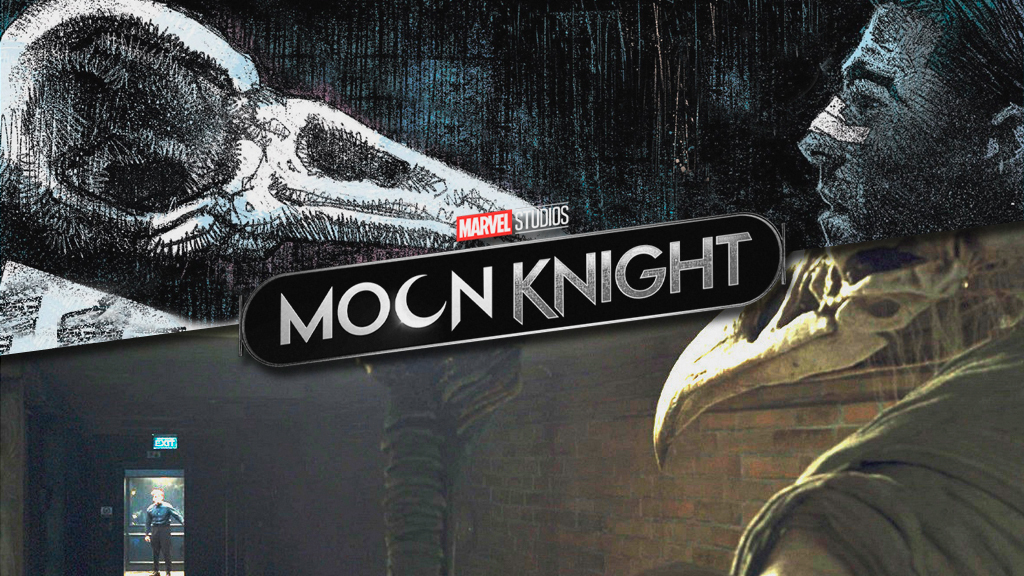
In Egyptian mythology, Khonshu is revered as the nocturnal God of the Moon, God of Vengeance, and the Shepherd of the Lost. He was a protector of travelers in the night. The nitty-gritty of Khonshu and other Egyptian gods in the comics is that these gods are members of the Heliopolitan race of gods who live in the Othervoid, an extradimensional realm adjacent to Earth and worshipped by the people of Ancient Egypt. Moon Knight has adopted a more modern take on the appearance of the character, specifically opting for the bird-like skull head that appears in many recent adaptations.
Moon KnightMarvel Studios’ Moon Knight
Because Khonshu, and the other gods, are unable to be physically present on Earth, they choose human avatars to carry out their will on Earth. For Khonshu, his chosen avatar is called the Moon Knight. As we know, Khonshu chose Marc Spector to be his avatar after Spector died and was revived under a statue of Khonshu.
For Marc Spector and his alters, being the “Fist of Khonshu” originally looked like standard vigilante work, and it still does generally. But lately, there is more emphasis on the protection of nighttime travelers. Khonshu often appears to Marc, but there are times when it is suggested that he may be a figment of Marc’s imagination. Khonshu often appears as himself, but Spector has seen him in many forms including the form of a faceless Bushman after Moon Knight tore the face off of the villain. Khonshu early on was more professional, and sort of seemed like a more traditional authoritative presence. But he has certainly developed a personality, whether as the actual god or as Spector’s mental projection.
So far in Moon Knight, Khonshu has been a bit rude, short, and “snotty”. As you can tell from the series so far, he has no problem calling Steven Grant “the idiot” or flat-out insulting or criticizing anyone. He does not appear to exhibit patience or empathy when dealing with humans. Likewise, in the comics, nowadays you can indeed expect him to be quite rude and often demanding. Sometimes this takes more of a sadistic and manipulative form (such as the Jeff Lemire and Greg Smallwood run in which he tries to break Spector’s mind completely), and in others, he is sarcastic, vulgar, and absurd (the page from Moon Knight #15(2006) below should say a lot).
Moon Knight #15 (2006)
Khonshu has a colorful, long, and detailed history in the comics, some unrelated to Marc Spector. For example, around 1,000,000 B.C., Khonshu was upset that he was not offered membership to the Stone Age Avengers. He chose his first Moon Knight in part to antagonize those Avengers on his behalf. Khonshu has taken over Spector’s physical body during Moon Knight’s time with the West Coast Avengers, and he revived Spector once again during the events of Marc Spector: Moon Knight (1989). In Jason Aaron’s recent arc, Avengers: The Age of Khonshu, Khonshu uses Moon Knight to defeat several Avengers in an attempt at taking over the world for the supposed purpose of protecting it.
Avengers
Whether Khonshu remains as a more passive companion throughout Moon Knight is yet to be seen. It is likely that we will not see too much Khonshu-specific storytelling in this series that focuses on Steven Grant and Marc Spector’s dissociative identity disorder and introduces Moon Knight as a concept. It is interesting that neither Marc Spector nor Khonshu have been truly explained in detail yet, and “Moon Knight” as a name has not yet been used. Still, Khonshu is likely to remain around as an integral part of Moon Knight.
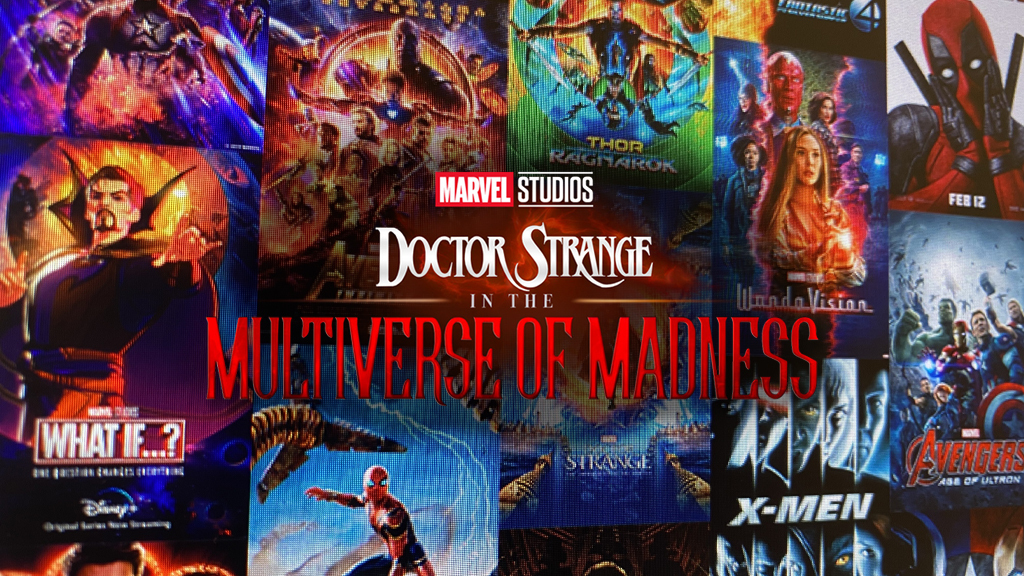
So, you are excited for Doctor Strange in the Multiverse of Madness. The sure-to-be memorable film is coming up quickly, and anyone who wants to prepare for it should probably start thinking about it soon. While most sequels only rely on the first film in terms of backstory, the Marvel Cinematic Universe’s 28th movie is a bit more complicated than that. This article is a comprehensive list of every movie or series you should — or might — want to watch in preparation for Multiverse of Madness. Because of the nature of this movie, the list has a four-tiered system. First, there are projects that are essential to watch before the Doctor Strange sequel. Second, there are projects that we would strongly encourage you to watch but likely are not strictly necessary. Third, there are extra stories that will no doubt heighten your Multiverse of Madness experience but may ultimately have very little impact on the film. Fourth, we list some of the Marvel properties relevant to the most rampant unconfirmed cameo/character appearance rumors.
Essential
The six projects — listed in order of importance — you should absolutely watch or rewatch before Multiverse of Madness are Doctor Strange, WandaVision, Spider-Man: No Way Home, the final episode of Loki, What If… ? Episode 4, and Avengers: Infinity War.
1. Doctor Strange
It should need little to no explanation why Doctor Strange is essential viewing for its sequel.
Doctor Strange
2. WandaVision
WandaVision marked the first time Wanda Maximoff truly got the spotlight. Not only did it expand upon and reveal the origins of her powers, but it also spent its 9-episode run on Disney+ giving her one of the most in-depth character development arcs of the MCU. Of course, WandaVision also debuted Wanda’s Scarlet Witch persona, and the end of the series revealed her connections to the Darkhold. Considering all of that plus the fact that Doctor Strange himself was originally meant to make a cameo, it is safe to say the events of WandaVision lead directly to Multiverse of Madness.
WandaVision
3. Spider-Man: No Way Home
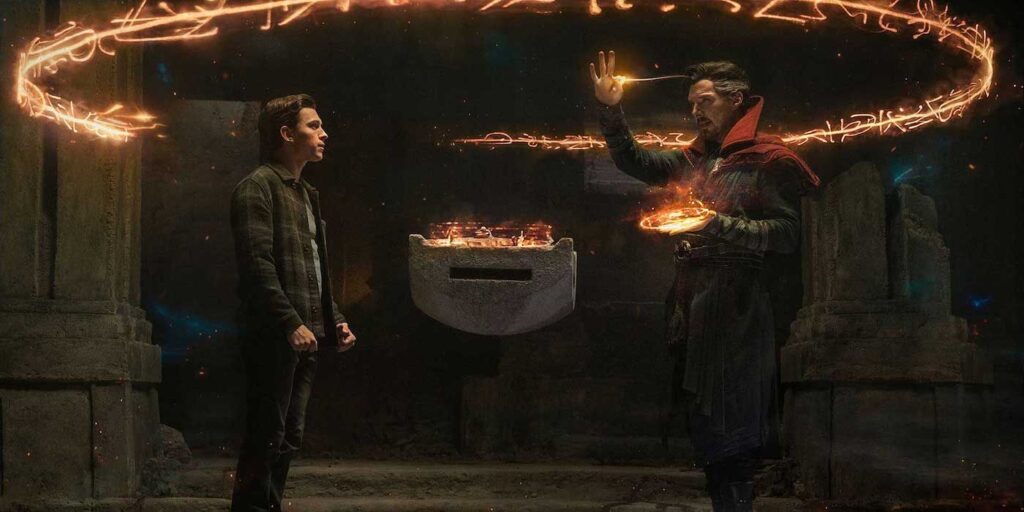
No Way Home has the most recent appearance of Doctor Strange in the MCU, and it also showcased the first major live-action multiverse storyline. The disruption of the multiverse was caused by the spell that Doctor Strange cast, so it is more than likely his activities in No Way Home will at least be a starting point in Multiverse of Madness.
Spider-Man: No Way Home
4. Loki Episode 6
The finale of the Disney+ series Loki was notable and memorable in a lot of ways. Important here, of course, is the fact that the multiverse was essentially created in this episode. It almost serves as an origin story for the MCU’s multiverse, and it has the best explanation of it yet, though Multiverse of Madness will surely dive deeper into multiversal lore.
‘Loki’ Episode 6
5. What If… ? Episode 4
If you are wondering why a What If… ? episode is so high on this list–you haven’t seen this episode. The fourth episode of the anthology series features a variant of Doctor Strange (Doctor Strange Supreme) who takes a darker path than our main Doctor Strange. This episode will feature so many similar themes to Multiverse of Madness, and Doctor Strange Supreme might even make an appearance. The film creators have even cited Episode 4 as inspiration for the live-action story. And, quite frankly, this is hands-down the best Doctor Strange story the MCU has given us.
‘What If… ?’ Episode 4
6. Avengers: Infinity War
Infinity War really toes the line between “essential” and “encouraged,” but overall there’s enough important content to call it essential. Doctor Strange is a major part of the plot due to his connection with the Time Stone. His character seemed to develop significantly between Doctor Strange and this movie. It also features his most intricate and visually-stunning fight scenes, showcasing how strong his sorcery can be. Infinity War also contributes to Wanda’s character development, serving as the bedrock for her grief in WandaVision. It also hints at how powerful she is, as she has the power to destroy the Mind Stone.
Avengers: Infinity War
Encouraged
If you are familiar with Doctor Strange’s and the Scarlet Witch’s major appearances and story arcs, you should be prepared enough to watch Multiverse of Madness without a problem. Still, there are several more major MCU outings that could enhance your understanding of the film’s main characters, major MCU events, and even just multiversal themes and mechanics. So, these five viewings are highly encouraged but likely not necessary.
Avengers: EndgameAvengers: Age of UltronCaptain America: Civil WarWhat If… ? Episode 8Shang-Chi and the Legend of the Ten Rings
1. Avengers: Endgame
Neither Doctor Strange nor Wanda Maximoff have much screentime or development in Endgame, because they were both snapped out of existence at the end of Infinity War. Still, it just seems odd not to recommend Endgame for any Phase Four MCU project–the events are just too significant. Plus, the Avengers’ time travel hints at the concept of alternate universes, and Steve Rogers’ ending certainly suggests that, even without the events of Loki, at least one other universe could have been created.
2. Avengers: Age of Ultron
Age of Ultron comes before Doctor Strange’s appearance in the MCU, but it is the first appearance of Wanda Maximoff, which is obviously significant. The Multiverse of Madness trailer also featured what looks like Ultron Sentinels, so that connection may be of some value as well.
3. Captain America: Civil War
The Scarlet Witch’s level of power will no doubt play a major role in the events of Multiverse of Madness. Civil War was really the first time her ability to control them was called into question, though WandaVision did later expand on that idea. The film also is part of Wanda’s on-screen character development in the MCU and hints even more at her growing relationship with Vision.
4. What If… ? Episodes 8 and 9
If Multiverse of Madness does anything, it will take our characters on quite the trip through the multiverse. The final two episodes of Disney+’s What If… ? heavily feature that concept. The visuals from the Watcher’s universe-shattering fight with Infinity Ultron might be the standard to look out for in live-action. Plus, these episodes brought the Guardians of the Multiverse, which in a sense was a glorified grouping of variant cameos. Audiences should certainly be prepared for some glorified cameos from MCU variants in Multiverse of Madness.
5. Shang-Chi and the Legend of the Ten Rings
Shang-Chi is another tricky one. While it is not particularly highlighted, the film definitely suggests that Ta Lo is an alternate universe, so the mechanics of traveling to and from it certainly implicate interesting multiverse questions. The film is also the most recent appearance of Wong (other than his three-second cameo in No Way Home). The post-credits scene with the Ten Rings beacon likely is not connected to Multiverse of Madness, but you never know.
Extra
At this point, if you have watched everything above, you almost certainly know everything that Multiverse of Madness wants or expects you to know going in. If you want to keep going, here are some extra suggestions that will likely add to your experience, but are not overly important.
Since Patrick Stewart is actually confirmed to be Charles Xavier in Multiverse of Madness, it does mean that viewers will get something out of being familiar with the character’s past in the general Marvel film universe. How much is hard to say–he could be a four-second cameo for all we know, and the variant might be nothing like the Professor X from the X-Men movies. Considering the wealth of cameo possibilities as well, maybe familiarity with other characters in the franchise will come in handy.
2. Thor: Ragnarok
Ragnarok features the final (in terms of this list) live-action Doctor Strange appearance in the MCU. So, if you are looking to check off all of those boxes, you should give this one a watch. His role is very minor and is more of a fun cameo, but still.
3. What If… ? Episode 5
Yes, there is yet another What If… ? suggestion. The Multiverse of Madness trailer features what looks like a zombie Doctor Strange, so this might be a fun one to be able to reference. It is also a pretty enjoyable episode, so there are not many drawbacks to adding this to your list.
4. The Rest of What If… ?
Multiverse of Madness is going to explore the multiverse. The only other MCU property to truly do that is What If… ?. It almost certainly will serve as a primer of some sort for the Doctor Strange sequel, but no particular plotline (other than Episode 4, as noted above) will likely have much influence on the events of the film. Captain Carter from Episode 1 is, however, very heavily and convincingly rumored to make an appearance in Multiverse of Madness. If you enjoyed the specific episodes higher up on this list, you might as well give the rest of the short series a shot.
Easter Egg Hunting
There is a certain point with Multiverse of Madness where the watchlist recommendations get overly complicated. Of course, the movie is rumored to have an inordinately large amount of cameos from across literally all of Marvel’s properties. If you want to be prepared for any possible cameo, you practically have to watch every Marvel (MCU and non-MCU) movie and series to date. Still, here’s a quick list of some films to watch based on some of the bigger and more popular (and unconfirmed) rumors that would not necessarily already be included in the films or series listed above:
Captain Marvel
Fantastic Four (2004)
Deadpool
X-Men Prequel Films
Inhumans
Daredevil (2015 series and/or 2003 movie)
Ghost Rider
Captain MarvelFantastic Four (2005)DeadpoolX-Me: First ClassInhumansDardevil (2015)Ghost RiderDaredevil (2003)
Doctor Strange in the Multiverse of Madness hits theaters on May 6, 2022.
One of Marvel Studios’ biggest films is just around the corner. Doctor Strange in the Multiverse of Madness will be breaking MCU barriers by heading into the the greater Marvel multiverse with both new an established characters. The Doctor Strange sequel will feature main characters Doctor Strange and Wanda Maximoff’s Scarlet Witch facing off against multiversal threats–including variants of themselves. But newcomer Xochitl Gomez portrays America Chavez, a new character who also has connections to the multiverse.
In an interview with Fandango, director Sam Raimi described Chavez’s “spirit of youth” and teases her tense relationship with Doctor Strange. But Raimi also confirmed that Chavez is from an alternate universe:
Well, she adds an exciting spirit of youth. She’s a newcomer to her powers and to our world. She actually comes from another universe. I think she brings a sense of lightness and youth. Benedict Cumberbatch’s Doctor Strange can be a very egotistical and stuffy character, a know-it-all. She just flies in the face of that. She doesn’t really have respect for him originally. She sees right through the fronts that he puts up. She’s much more down to earth and one of us, and she doesn’t take his attitude. I don’t think he likes that at first. So, she creates a contrast.
Sam Raimi
This is not too surprising, given that in the comics America Chavez’s traditional origin story is that she used her dimension-hopping powers to travel from a universe known as the Utopian Parallel after her mothers gave their lives to save that universe. So, Raimi’s confirmation suggests that the character might be at least somewhat comic-accurate. In any event, we should expect to see her as one of the first live-action leading characters from outside of the main MCU we are familiar with.
Doctor Strange in the Multiverse of Madness will hit theaters on May 6, 2022.
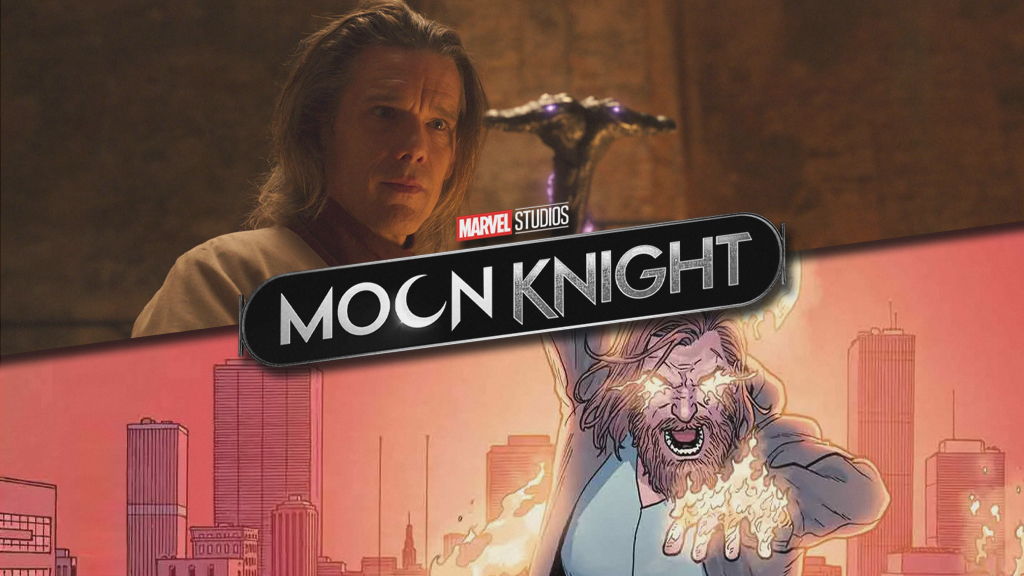
Ethan Hawke’s Arthur Harrow is a mysterious villain in Moon Knight. This is partly due to the fact that the show’s creators stated that they opted to invent an original villain rather than use a classic antagonist from the comics. Still, Hawke’s Harrow undeniably shares strong similarities with several villains seen in more recent Moon Knight comics. While this could simply reveal where the series’ writers got their inspiration for the character, it might also provide clues as to what could be revealed about Harrow as the series progresses.
Sun King
There was plenty of speculation that Hawke would be playing a version of Patient 86, also referred to as the Sun King. While being treated for bipolar disorder at Ravencroft Institute, a doctor introduced him to Egyptian mythology because she recognized similarities between Patient 86 and Marc Spector/Moon Knight, and she thought it might help him. He became obsessed with the Sun King Amon Ra and seemed to gain flame powers while institutionalized. He sought to destroy Moon Knight because of the contentious relationship between the two Egyptian gods they represented. The “Sun King” became a cult leader on a small island with a significant following.
Obviously, we know Hawke’s Harrow is quite the cult leader himself, as he’s seen seemingly leading a community of followers in the name of an Egyptian god. He also revealed he was the previous Fist of Khonshu, so he may have a specific or obsessive grudge against Marc Spector that hasn’t been fully explored. Speaking of, this brings us to the next inspiration from the comics.
Other Fists of Khonshu
There are times throughout Moon Knight’s history that Khonshu choosing other avatars comes into play. So far in Moon Knight, we know that Khonshu is interested in Layla as his next avatar. More importantly, though, we know that Harrow was a past Fist of Khonshu. A couple of somewhat similar situations have arisen recently in Moon Knight comics. Both instances involved the other “fist,” or wannabe’s fist, having a much different idea of Khonshu’s will or vengeance.
First, while it was ultimately a front, a psychologist Marc employed convinced Khonshu to allow her to be his avatar. Her cover story, at least, was that she and her family were victims of a genocidal war, and she sought the assassination of the General who was now leading the country. The main themes associated with this psychologist were that killing the General could prevent future deaths and that Marc Spector was too weak to do the type of preventative “justice” she imagined was required of a Moon Knight.
Hawke’s Harrow is completely set on preventative justice–his dedication to Ammit centers around ending evil before it can be committed. While the psychologist from the comics ultimately ended up being someone else, perhaps Moon Knight’s Harrow has a surprise reveal down the line that demonstrates his true intentions unrelated to Ammut.
‘Moon Knight’
In the current comics run of Moon Knight, another purported Fist of Khonshu emerged. Yet another doctor, went by the name of Hunter’s Moon and claimed to be the second “fist” (after all, people have two hands). Whether he actually was or not, he also called into question whether Spector was adequately carrying out Khonshu’s will. Hawke’s Harrow is slightly different, though, because he believes Khonshu’s approach the justice is simply wrong. But he does question Moon Knight’s values and likely seeks to turn him to his side. Still, Hunter’s Moon is so recent in the comics that it is highly unlikely the series had him in mind when writing Moon Knight.
Dr. Arthur Harrow and His Possible Connection to Another Major Villain
This one is a bit more of a stretch, but it could explain why Moon Knight decided to name its original villain after Dr. Arthur Harrow, a comics character that appeared in a single issue of a Moon Knight comic in 1985. Dr. Harrow was a scientist who used techniques from Auschwitz to research pain theory in horrific, illegal ways. A future Moon Knight villain, Ernst, is a Nazi, torturer, and serial killer that posed as a member of Marc Spector’s childhood Jewish community. Spector’s escape from Ernst is credited as a major event in terms of the development of his dissociative identity disorder. The connection between Dr. Arthur Harrow and Ernst could be their shared affinity for pain. Ernst later led the Société des Sadiques, a group that celebrates sadism and pain. For his part, Hawke’s Harrow does open the series by putting broken glass in his shoes to cause himself pain at all times.
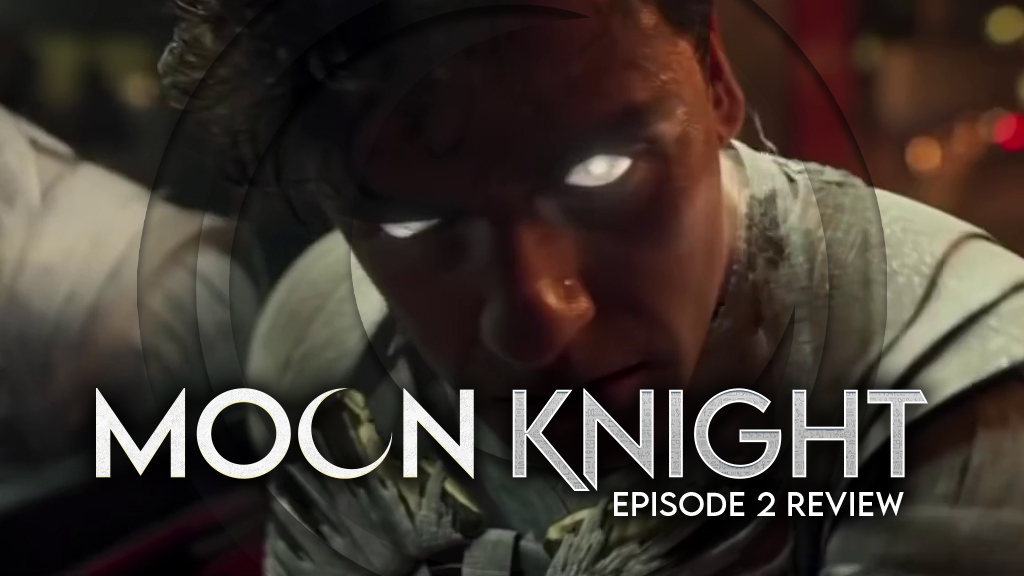
The second episode of Marvel Studios’ Moon Knight follows up Episode 1’s prologue with masterful pacing and at least the fundamental pieces of a plot. While the caped crusader’s concept might leave a bit to be wanted in this episode, Oscar Isaac absolutely shines in the main role as both Steven Grant and Marc Spector. While overall Episode 2 shows that the series has its rockier components, it truly excels as a character piece with the backdrop of a darker, peculiar story of Egyptian gods and their human employees.
While the last episode found Steven Grant in a mysterious and confusing situation, Episode 2 begins to lay out, presumably, the series’ plot. It does not spend much time mincing words that Marc Spector and Steven Grant exist in the same body. We learn that Marc and his (separated) wife, Layla, have been working together to track down the golden Scarab, which seems to act as a guide to the Egyptian god Ammut’s lost tomb.
All of that matters because Marc is the avatar of the Egyptian lunar god Khonshu. In other words, Marc is Khonshu’s muscle on Earth. Ethan Hawke’s mysterious cult-leader villain, Arthur Harrow, is apparently a former avatar of Khonshu’s. His disdain for Khonshu’s methods led him to worship Ammut, who supposedly can eradicate evil before it is committed. Harrow essentially embodies the classic debate of whether it is moral to punish someone before they do something if you know it’s coming. He has a magic cane at his disposal that seems to sense whether people are worthy of living and can also open up some sort of portal to the underworld.
We also get a glimpse of Khonshu’s personality—he’s not particularly respected by the other gods, likes to throw temper tantrums, but also chooses avatars with strong moral compasses. Marc and Khonshu seem to have a fairly rocky relationship, each resenting the other but seeing one another as necessary. Layla comes into play not only as a worthy partner in all of the madness but also as part of Marc’s motivation to serve Khonshu—apparently, the moon god is eyeing Layla as his next avatar and Marc’s replacement.
While all of that seems nutty to explain, what makes it even more interesting is that the Egyptian god plot is mostly the foundation that the true story about Steven and Marc plays out on top of. But yes, Marc does moonlight as a costumed hero-type, presumably known as Moon Knight. It is revealed that Moon Knight is merely a costumed Marc, rather than a separate personality like he often is in the comics. Plenty of fans may be a bit disappointed by that, but it highlights the Marc-Steven dynamic in such a strong way. As explained, Steven is also technically the Fist of Khonshu, but when he attempted to summon his Khonshu-divined armor, he ends up looking like an all-white bank robber in a suit.
Mr. Knight, who also isn’t actually named at this point, is similarly just a dressed-up Steven. Honestly, it’s a pretty genius way to fully develop the two personalities. Steven’s vigilante comes out as an odd, sort of awkward, out-of-place character in contrast to Marc’s hooded and caped persona. Both personalities get to play out as avatars of Khonshu, which makes their roles much more potent than if they were competing with a separate Moon Knight.
The great news about those roles being so meaningful is that Isaac is phenomenal in his portrayal of them. The use of mirrors and reflective surfaces is a smart way to allow Marc and Steven to be in constant bickering communication without awkwardly adding in another off-screen voice or bulking up the screen with a second “imaginary” Oscar Isaac. The way Isaac just changes his face while switching alters is exquisite. And he wears each face so convincingly, without much help from outside influences like makeup or effects. The two personalities also interact with each other in such a grounded, realistic, but intense way that seems appropriate for two people unhappily and unwillingly sharing the same body.
The pacing of this episode is absolutely phenomenal. It moves fast enough for everything to feel urgent and exciting, but it does not take all of its supernatural and complicated elements too far in any given moment. It does not seem like it would have been easy to make sure the human element stayed at the same solid stride with the gods, canes, and Scarabs. A major piece that is a bit off in the episode, though, is how much necessary Moon Knight background is completely skipped over. There’s definitely a benefit to not trudging through an origin story, but Khonshu and Moon Knight feel like somewhat minor side characters at times despite being—at least in theory—extremely important to Moon Knight.
The action scenes with Moon Knight and Mr. Knight also felt a bit off at times. There will probably be a lot of conversations about the quality of the visual effects, but overall the choreography at least felt decent. But the episode chose some odd moments to go into slow motion and it can come across as too forced. Mr. Knight fighting the invisible Jackal is fine until it isn’t, and eventually, Mr. Knight flailing around lost its charm without anything extra to sort of organize it. And yes—anyone dying to watch some “brutal” violence will likely not be satisfied.
While some of the major changes the series makes from its source material will almost certainly disappoint fans, Episode 2 demonstrated that Moon Knight’s own strengths are vying to make up for that. While a history lesson with respect to Marc and Khonshu feels much needed, the episode moved at a very smooth, steady, and lively speed that makes the story much easier to be a part of and much more enjoyable. Isaac brings something truly special to his now dual role as Steven and Marc, and their dynamic is undoubtedly the heart of the series.
Moon Knight is now streaming on Disney+.
Cookie Consent
We use cookies to improve your experience on our site. By using our site, you consent to cookies.
This website uses cookies
Websites store cookies to enhance functionality and personalise your experience. You can manage your preferences, but blocking some cookies may impact site performance and services.
Essential cookies enable basic functions and are necessary for the proper function of the website.
Name
Description
Duration
Cookie Preferences
This cookie is used to store the user's cookie consent preferences.
30 days
These cookies are needed for adding comments on this website.
Name
Description
Duration
comment_author_email
Used to track the user across multiple sessions.
Session
comment_author_url
Used to track the user across multiple sessions.
Session
comment_author
Used to track the user across multiple sessions.
Session
Statistics cookies collect information anonymously. This information helps us understand how visitors use our website.
Google Analytics is a powerful tool that tracks and analyzes website traffic for informed marketing decisions.
Contains information related to marketing campaigns of the user. These are shared with Google AdWords / Google Ads when the Google Ads and Google Analytics accounts are linked together.
90 days
__utma
ID used to identify users and sessions
2 years after last activity
__utmt
Used to monitor number of Google Analytics server requests
10 minutes
__utmb
Used to distinguish new sessions and visits. This cookie is set when the GA.js javascript library is loaded and there is no existing __utmb cookie. The cookie is updated every time data is sent to the Google Analytics server.
30 minutes after last activity
__utmc
Used only with old Urchin versions of Google Analytics and not with GA.js. Was used to distinguish between new sessions and visits at the end of a session.
End of session (browser)
__utmz
Contains information about the traffic source or campaign that directed user to the website. The cookie is set when the GA.js javascript is loaded and updated when data is sent to the Google Anaytics server
6 months after last activity
__utmv
Contains custom information set by the web developer via the _setCustomVar method in Google Analytics. This cookie is updated every time new data is sent to the Google Analytics server.
2 years after last activity
__utmx
Used to determine whether a user is included in an A / B or Multivariate test.
18 months
_ga
ID used to identify users
2 years
_gali
Used by Google Analytics to determine which links on a page are being clicked
30 seconds
_ga_
ID used to identify users
2 years
_gid
ID used to identify users for 24 hours after last activity
24 hours
_gat
Used to monitor number of Google Analytics server requests when using Google Tag Manager
1 minute
Marketing cookies are used to follow visitors to websites. The intention is to show ads that are relevant and engaging to the individual user.
Pinterest Tag is a web analytics service that tracks and reports website traffic.