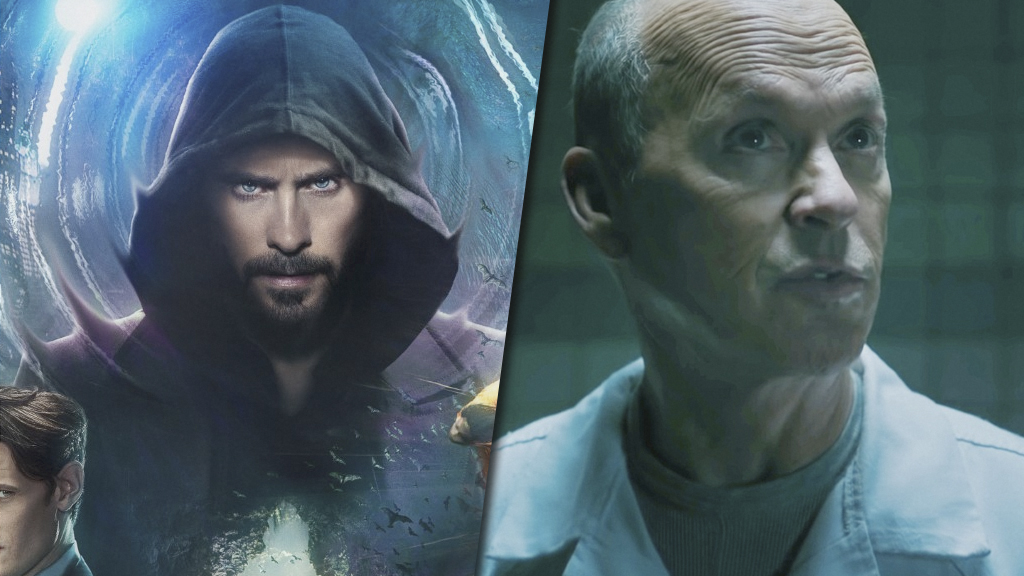
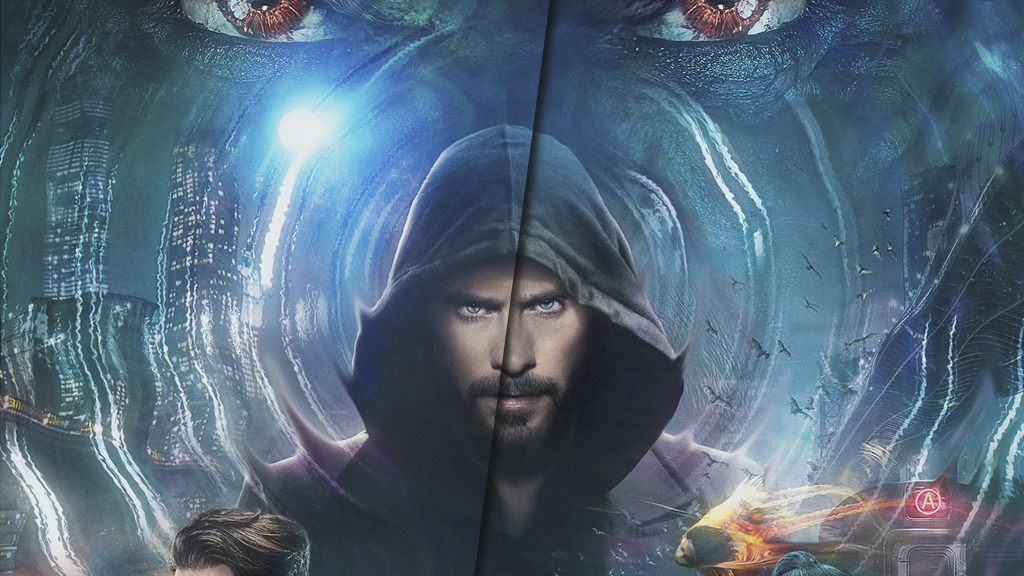
It’s more morbin’ time ahead of us, as Sony has dived into the meme that’s developed around the film Morbius. Jared Leto‘s first attempt at a superhero entry starring the Living Vampire, Michael Morbius, underperformed quite a bit at theaters. It only managed to pull in $163M and is now returning to theaters, as people have been enjoying a few memes playing around with the “Morb” aspect of the name. It even created a very passionate Discord community, and a fan just streamed the entire film on his Twitch.
It’s definitely strange to see a film like this earn its cult status, even if it is mostly ironic. The film will now expand to over 1,000+ theaters in the United States. Sony would let a chance slip by if they didn’t bank on its return to fandom online. While it may never break bank, it could live on to earn a status not too dissimilar from The Room. Touted as one of the worst films made, there are countless fan screenings with in-jokes which even led to Tommy Wiseau seeing a resurgence on YouTube.
Meme culture has given many films a life beyond what one would expect, and it’s always fun to see the unexpected happen in this industry. Only time will tell if Morbius has the makings of joining countless fan streaming as people shout out for a morbin great time while sitting in a theater with other Morbius fanatics. Morbius time has only begun, as a new morbin’ era is upon us.
For those that have watched Sony’s latest venture into building a separate Marvel Cinematic Universe, Morbius sets up a curious crossover between its various anti-hero characters. Somehow, MCU’s Vulture (Michael Keaton) lands in this new universe in the film’s post-credit sequence. Not just that, he even ends up meeting up with the newly minted vampire to pitch an idea of teaming up to face off against Spider-Man. Ignoring the fact that Spidey isn’t really a factor at any point in the film and its out-of-character, Keaton was a big part of the ongoing trailers. So, it’s strange he’s suddenly relegated to a post-credit sequence.
Director Daniel Espinosa got a chance to discuss the challenge of adapting to Spider-Man: No Way Home as the film introduced the concept of the live-action Spider-Verse. It also opened up the confirmation that Venom was part of a separate universe, which turns out was Sony’s idea. So, the fact they are now separate universes complicated matters and forced them to adapt elements of the story. To not overcomplicate things, they just added him at the end as a result.
The first thing that happened was that we had Michael Keaton because we were planning on doing this. But then when Spider-Man: No Way Home came out, it said, “This is how the visual effects are.” And then the idea of having him just encountering him in that universe seemed too complicated, and then we put it in the end.
Daniel Espinosa
A lot of the piece highlights the challenges they’ve faced throughout production. Morbius was originally going to release two years earlier. So, we may have faced a very different kind of connection between the MCU and Sony’s attempt at one. We’ll see if the physical release might include a hint at the original scenes and how Michael Keaton was originally going to fit into the story.
Jared Leto is well-known throughout the industry, but not for the reasons you’d expect. During his tenure as the Joker on David Ayer‘s Suicide Squad, the actor took “method acting” a step too far by sending his co-stars some questionable gifts. There’ve been rumors that he’s done something similar with his time on his latest feature Morbius, where he plays a character with a disability. Supposedly, he would walk around on crutches and remainin character even long after the camera’s stopped rolling As such, it would cost the production hours for him to just go to the bathroom as a result. Morbius’ director Daniel Espinosa has now confirmed his off-screen behavior in an interview with Uproxx.
Yeah. Because I think that what Jared thinks, what Jared believes, is that somehow the pain of those movements, even when he was playing normal Michael Morbius, he needed, because he’s been having this pain his whole life. Even though, as he’s alive and strong, it has to be a difference. Hey, man, it’s people’s processes.
Daniel Espinosa
As his focus on moving around with crutches became too much, they made a deal to have him sit in a wheelchair as it otherwise would’ve dragged production out even more. It certainly sounds like the director of films like Life and Safe House has faced some harsh challenges on set, especially how he generalizes the experience with actors. He even goes on to say that:
If you want a completely normal person that does only things that you understand, then you’re in the wrong business. Because what’s different is what makes them tick. It’s very hard to be able to say, “I can take this part away and I will still get the same stuff from him.” I don’t do that. I’m more to see like, “Hey, if you’re doing this, we have to do this.”
Daniel Espinosa
So, it sounds like directing a feature film, especially a high-budget one, is quite the challenge. He hints that there are many parties involved with these projects that had their own goals with the production. So, to top it off with actors that have very specific expectations and their own methods to tackle projects like these certainly adds to the pressure any creative has to go through in a competitive industry like Hollywood.
There have been many discussions on who exactly had what idea in setting up the future of the Marvel Cinematic Universe’s relationship with Sony’s Spider-Man Universe. While Tom Holland‘s run as the character stuck in the MCU after Spider-Man: No Way Home, we learned that the universe introduced with Venom was a completely separate timeline altogether. That set-up naturally bled over into Morbius, which existed in this separate timeline. The introduction of Michael Keaton‘s Vulture has added quite a lot of confusion to the story, but luckily director Daniel Espinosa revealed some details on how it came together.
Most theories pointed to Marvel Studios pitching the idea of a separate universe for Sony, but it turns out that wasn’t the case. According to Espinosa in an interview with Uproxx, Sony was the one that created the concept of this different timeline. Naturally, it led to some issues as the film was originally going to release two years earlier, way before No Way Home even entered production, but ended up having to change course after a constant barrage of delays. So, they had no idea what Marvel Studios was cooking up and Sony forced their hand to adapt. Still, this new timeline was their idea from the get-go:
But I think that the concept of having different timelines were, I believe, came from Sony, not from Kevin Feige. It was Sony that initiated that idea. I think that Miles Morales that you have in Spider-Verse, I would bet your life on that you would have Miles Morales from the Spider-Verse in the Marvel Cinematic Universe at some point.
Daniel Espinosa
It’s a curious reveal, but it may be a hint that Sony wanted absolute freedom to work within their own sandbox. Even if the forced introduction of Vulture made no sense and broke the rules set by the MCU film. Still, that has never stopped the studio from trying out different things as they are seemingly building up towards a villainous crossover against a version of Spider-Man we haven’t seen yet. For now, we’ll have to see where this is heading.it
Morbius has been welcomed by audiences with harsh critique, but even its negative reception by critics didn’t stop the film from still nabbing $39.1M at the domestic box office. The film opened across 4,268 theaters in the North America. It’s still a strong pull even for the film landing at 17% on Rotten Tomatoes, but it won’t break any records.
To put that in comparison though, Venom managed to pull in $80M back in 2018 before its sequel even went on to pull $90M during the pandemic. While it still remains an issue to this day, we’ve been seeing stronger openings for the usual crowd-pleasing films. Internationally, it hasn’t managed to break the $100M, as it was just shy with $84M.
To be fair, Sony hasn’t invested that much like other big blockbuster films this time around, as the production budget for Morbius was around $75M. The big test always remains how strong the holding is going into the second weekend, but with word-of-mouth being as it is, we might likely expect a considerable drop going in. For now, we can only theorize.
Morbius is a curious case of a film constantly getting pushed back even after it originally eyeing a release in January of 2020. After all that, it was welcomed by some harsh reviews and opened up to a 15% on Rotten Tomatoes. The film has now seemingly still managed to pull in $5.7M on a Thursday, which is half of what Venom: Let There Be Carnage got last year. It’s not a great opening but with a $75M budget it’s still nothing to get worried about for Sony.
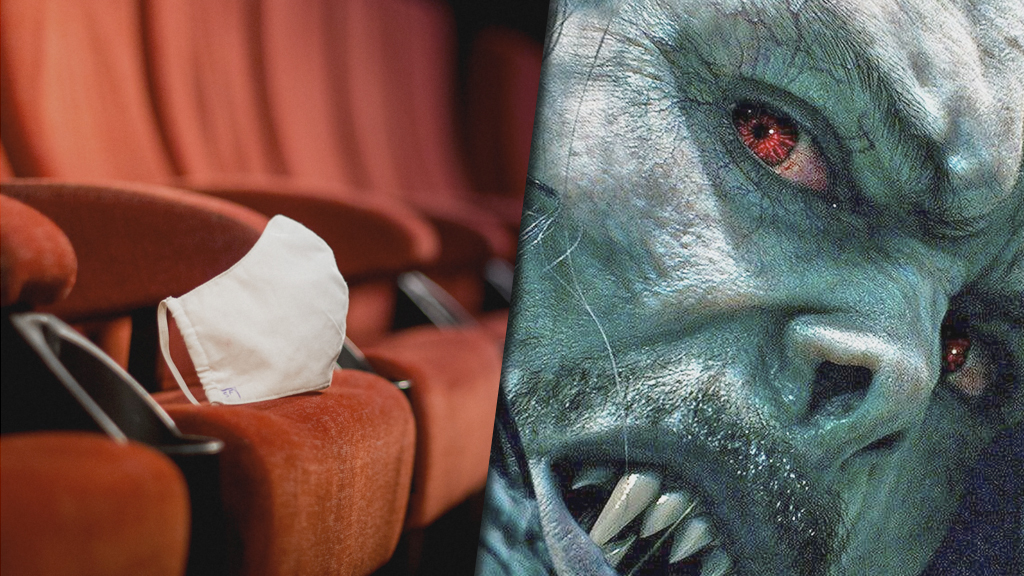
Still, the weekend will be the ultimate test, as photos of seemingly empty theaters are making the rounds and hints that the latest blockbuster entry may lose its momentum quite fast. While at best it could score around $45M, it might be closing in on $35M by the end of its weekend run. Early predictions did have it at potentially breaking $50M opening weekend early on, which could still be possible if it somehow picks up in its second weekend.
Sony wasn’t dumb and invested less into the picture knowing that Morbius isn’t a household name like Venom is. Most of its marketing put all its money on building up the connection to Spider-Man. We even got various hints at it either being part of the MCU, Maguire‘s universe or even the Amazing franchise. Yet, as director Daniel Espinosa openly leaked the post-credit sequences a week ahead of its release, it’s unclear if there are any expectations of the film moving forward.
In 1623, famed playwright William Shakespeare published a comedy about love and hijinks. Despite its lighthearted nature, the story dealt with a variety of themes that included heavier topics like deceit and the woes of an identity crisis. Its title, Much Ado About Nothing, was a play on the fact that, despite a rather complicated plot, the events of the story would ultimately be insignificant in the lives of its protagonists. Morbius, the latest entry in Sony’s universe of spider-adjacent characters, is a lot like Much Ado About Nothing. Like the aforementioned work, it deals with brotherly betrayal and the struggle of lacking control. The main difference between the two is that, while Shakespeare‘s play used “nothing” as a motif, Sony’s film uses the same concept as a plot device.
Over the course of nearly two hours, Jared Leto‘s new starring vehicle essentially just exists. Incidents occur, one after the other, but they come in what feels like a series of manufactured moments. There are sometimes interesting visuals, and on paper, there are developments that should serve to keep the audience invested, but somehow the movie never manages to achieve the sensation of being complete. Materially a paint-by-the-number, beats come and go like colorless shapes quickly filled with gaudy pigmentation, with the lines between sections still oddly discernable to the human eye. From really far away, with a squinty eye, it might seem like director Daniel Espinosa and his crew have constructed something worthwhile, but any further inspection reveals they were likely just making somebody else’s idea look as pretty as their minds could muster.
The production tries to fool you, and occasionally it verges on working. A triumphant score from Jon Ekstrand blasts over the loudspeakers as the titular antihero, surrounded by screeching vampire bats, rises from certain defeat to conquer his foe. Scenes transition to spectacular slow motion as Dr. Michael Morbius plays with the outer limits of his newfound power. An impressive neon-lit landscape functions as the backdrop to a passionate rooftop kiss. Classic movie moments, which have worked before and are certain to work again. Just not here. Any of these concepts could have performed perfectly had they been set up properly, but instead they are just thrown together without much glue to keep them intact.
To get a better sense of what I mean by this, just take a look at a few key plot points and examine how they’re executed in the film. For starters — and this is the official spoiler warning to skip to the next paragraph if need be — the first transformation of Morbius into the Living Vampire is not even shown on screen. After a couple of clunky time jumps between adult Morbius illegally collecting bats in Costa Rica and child Morbius delivering a lot of exposition to a new friend in the hospital (who should probably already know about his own rare blood disease), viewers are suddenly vaulted into the midst of the character finishing his experimental cure. Then, after a few more quick scenes, Morbius is already strapped to a chair on a boat in international waters, about to test his new creation on himself. An intrusion causes the camera to cut away, and moments later when it cuts back, Morbius is fully transformed and clinging to the ceiling, not having made a peep.
It’s an almost jarring shift in tone, with the music doing its absolute best to convince anyone watching that what just happened made sense. Although, once again, therein lies the problem. Events going on in the movie are simply happening, not as the result of any prior build-up or payoff, but purely because they’re what’s supposed to happen next. Skipping to the end of the movie, Adria Arjona‘s Dr. Martine Bancroft has been murdered by Matt Smith‘s predictable, yet admittedly kind-of-fun baddie, Milo. Mostly off-screen. Immediately after Milo has just killed an entirely different major supporting character. There’s not really any time to mourn either of them, even if the VFX department put a lot of money into the look on Morbius’ pained vampire face as he screams in emotional agony to convince viewers otherwise. Just one thing after the other, coming about as the plot deems it so.
These are two notable bookends, but it’s more or less how the entire film functions. When the credits began to roll, many of us in the theater found ourselves sitting there still waiting for more. Not because we thought there would be, but because our brains had not yet registered that a full movie had played out in front of us. We were still waiting for somebody to come in and paint over the visible lines. Instead, we were treated to a handful of sequel teases played at lightspeed, almost all of which violated previously established character arcs and universal rules for the sake of forcing future conflict. Truly just a mess, and hopefully one that never needs to be spoken of at length again. If Sony and Marvel wanted to forget that Morbius ever happened, it probably wouldn’t take much convincing for general audiences to follow suit.
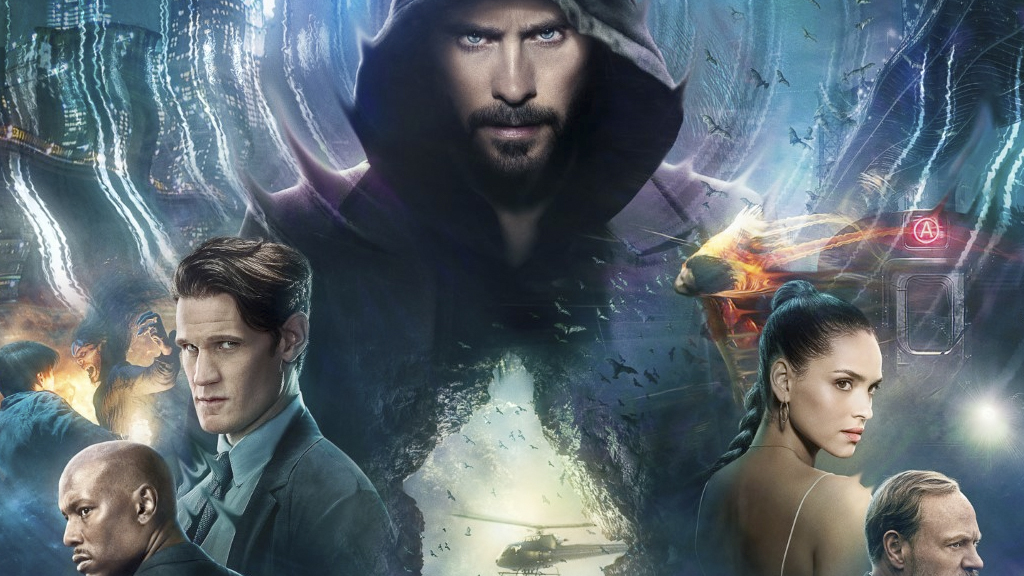
Sony’s latest entry in its Universe of Marvel Characters, Morbius, is finally set to hit theaters on April 1st. The film, which follows in the weirdly popular footsteps of Venom, will feature the origin story of its leading character, a pseudo-vampiric antihero by the name of Dr. Michael Morbius. With the casting of Jared Leto in the title role, and constant studio hints at some sort of coming crossover event, it’s likely the movie will set Morbius up as a major recurring player in the future of superhero cinema (or at least, Sony’s future of superhero cinema). Yet, despite the many years it spent in development hell, a solo Morbius flick was not always the plan for the character’s first live-action appearance. In fact, his cinematic roots date back over two decades to a franchise that helped start it all.
Blade, a 1998 Wesley Snipes vehicle based on the iconic Marvel character, is still a cult favorite with fans. Not only did it permanently redefine its titular vampire hunter, but it also ushered in a new generation of comic book adaptations that would eventually transform into the cultural powerhouse that it is today. It told the story of Blade, a vampire-human hybrid known as the “Daywalker,” who funneled his supernatural abilities and born hatred for the bloodsuckers into a lifelong war aimed at their extinction. Its success would lead to two sequels, Blade II and Blade: Trinity, before the franchise petered out and entered an extended hiatus. The trilogy’s chief creative, David S. Goyer, would eventually go on record to say that it was always his intention to craft a three-film saga, and a little-known deleted scene from the end of the first film might just prove it.
After defeating the villainous vampire lord Deacon Frost and getting his love interest, Dr. Karen Jenson, to safety, Blade is offered the chance to cure his vampirism and live a normal life. As the finished product goes, Blade rejects the offer and travels to Russia to continue his eternal war against the damned. However, an alternate version of the ending was filmed in which, after hearing Blade’s rejection, Karen looks across the rooftops to see a shadowy figure watching them from afar. Though the mystery man is not wearing any identifying clothing, he was meant to be none other than Dr. Michael Morbius – in the flesh.
The scene was available on YouTube for quite some time in low-quality, though it seems to have been recently removed. Obviously, the stinger would have laid the foundations for a sequel with Morbius as the big bad, long before the Marvel Cinematic Universe popularized this method of promoting films that haven’t been made yet. Unfortunately, the ending was cut in favor of the Moscow action bit, which Norrington later revealed to be the studio’s choice. While no real reason has ever been given for this, it’s likely that New Line simply wanted a safer epilogue in case the project flopped and the story was never continued.
Speaking on the cut scene after Blade‘s release, Goyer confirmed that Morbius was always his plan for the second installment. Though some have speculated that the change in directors between films resulted in a creative overhaul of Blade II that kicked Morbius to the curb, that doesn’t seem to be the case. When filmmaker Stephen Norrington, who actually played Morbius in his brief cameo, backed out of his involvement with the sequel, the idea was still for maestro Guillermo del Toro to use a version of the character in his movie. Plans only changed when Marvel told del Toro and New Line outright that they would not allow the use of Morbius in a Blade film, as they wanted to reserve the villain for another franchise. Ultimately, del Toro and Goyer would rewrite their script to replace Michael Morbius with an original villain named Jared Nomak, a genetically enhanced vampire who gives Blade quite a lot of trouble.
Though not revealed specifically, it would make the most sense if the “other franchise” Marvel referred to was its then-upcoming Spider-Man series with Sony. As the new films will probably spell out, Morbius is truly more web-head adjacent than he is connected to Blade, despite the evident vampire relation. Known as “The Living Vampire,” Michael Morbius made his debut in a Spider-Man comic as a scientist with a rare blood disease. A series of unfortunate events would lead to Morbius becoming less of a true mystical vampire and more of a failed biology experiment, but dangerous nonetheless. He’s spent the majority of his history both fighting and partnering with the wall-crawler on numerous occasions but has had a few notable encounters with Blade as a member of the Midnight Sons. In the comics, he’s even the one responsible for biting Blade and turning him into a “Daywalker,” an ability the character was shown to birth within the movies.
Whatever the case, the Spider-Man franchise would go through two reboots and multiple versions of the same villains without ever once using Morbius like they claimed might happen in 1998. Now, all these years later, Sony has retained the rights to the character and is giving him his own picture, with a big screen meeting between Living Vampire and Human Spider a fairly certain deal down the line. Meanwhile, Marvel Studios has given an official Blade reboot the go-ahead with Academy Award winner Mahershala Ali now wearing the famous leather ensemble. With the way the Marvel multiverse is going, it seems any character interaction is on the table, so perhaps fans may one day get to see Blade and Morbius duke it out in cinemas after all. Funny how that works out.
If you want to remain spoiler-free for Morbius then only continue at your own risk.
We’ve all been questioning why director Daniel Espinosa is spoiling most of the film’s major plot points a week ahead of Morbius‘ release. In an interview with CinemaBlend, he has pretty much confirmed that the trailer’s teased appearance of MichaelKeaton‘s Vulture is indeed the same version we saw in Spider-Man: Homecoming. Not only that, but he also pretty much confirmed that the character is recruiting people to join a team. CinemaBlend instantly made the Sinister Six connection, but while he won’t name them directly he does hint that this is what Sony is setting up.
"Well, he is recruiting teammates and he has enticed one already. So it sure looks like a start." – DE pic.twitter.com/MBcGtHLLds
It’s a bit head-scratching that Vulture is the one recruiting people. We don’t know if he still has the memory that Spider-Man is Peter Parker, or even why he’s in a different universe. Plus, he seemed to have no ill will towards the kid when he was confronted if he knows his identity. So, why would he gather a team of villains to take on Spider-Man, especially if he’s in a different universe where it isn’t even the version that he met.
The director teased that they have a different Spider-Man already roaming in this universe, and the logo of Daily Bugle does seemingly hint at it potentially being Tobey Maguire. But the trailer also included references to the Oscorp we saw in Andrew Garfield, which also seems like a possible option. We’ll have to see if Sony might reveal it at some point, but with their current strategy they might just flat-out announce it.
The director of Morbius talks about major spoilers ahead of the film’s release. If you want to remain spoiler-free, only continue at your own risk.
We just published the piece that the director of Morbius, Daniel Espinosa, confirmed that the film isn’t part of the MCU and is part of the same Venomverse we were introduced to in the 2018 film. Yet, it seems that that doesn’t mean we’ll get a crossover between the two franchises, as the director seems to imply that Michael Keaton‘s return as Vulture in the trailers is indeed the version we were introduced to in the MCU. He goes out of his way to confirm that it is indeed the one from Spider-Man: Homecoming and even gives away how he ends up in the film.
"… The events of NO WAY HOME had the effect of transferring Venom and Vulture (and maybe others ) back and forth between the MCU and the Venom Universe." – DE 2/2
So, it seems that No Way Home sent various heroes to other dimensions and accidentally also teleported Vulture in the process. Yet, that makes no real sense as the film was all about sending people back to their respective universes based on the fact that they knew Spider-Man is Peter Parker. It almost would imply that Vulture was already from a different dimension from the get-go, but that was never part of his story when we first meet him.
In a way, it seems like Sony wanted an excuse to have the character return and used the loophole surrounding the spell to explain why he’s part of Sony’s universe. We might expect them to pick and choose whoever landed in whatever universe so they can build whatever they are trying to attempt, but the fact they reveal it ahead of the release makes no real sense. Perhaps they have a trick up their sleeve once the film hits theaters, or they are banking on that connection selling the film.
We use cookies to improve your experience on our site. By using our site, you consent to cookies.
This website uses cookies
Websites store cookies to enhance functionality and personalise your experience. You can manage your preferences, but blocking some cookies may impact site performance and services.
Essential cookies enable basic functions and are necessary for the proper function of the website.
Name
Description
Duration
Cookie Preferences
This cookie is used to store the user's cookie consent preferences.
30 days
These cookies are needed for adding comments on this website.
Name
Description
Duration
comment_author_email
Used to track the user across multiple sessions.
Session
comment_author_url
Used to track the user across multiple sessions.
Session
comment_author
Used to track the user across multiple sessions.
Session
Statistics cookies collect information anonymously. This information helps us understand how visitors use our website.
Google Analytics is a powerful tool that tracks and analyzes website traffic for informed marketing decisions.
Contains information related to marketing campaigns of the user. These are shared with Google AdWords / Google Ads when the Google Ads and Google Analytics accounts are linked together.
90 days
__utma
ID used to identify users and sessions
2 years after last activity
__utmt
Used to monitor number of Google Analytics server requests
10 minutes
__utmb
Used to distinguish new sessions and visits. This cookie is set when the GA.js javascript library is loaded and there is no existing __utmb cookie. The cookie is updated every time data is sent to the Google Analytics server.
30 minutes after last activity
__utmc
Used only with old Urchin versions of Google Analytics and not with GA.js. Was used to distinguish between new sessions and visits at the end of a session.
End of session (browser)
__utmz
Contains information about the traffic source or campaign that directed user to the website. The cookie is set when the GA.js javascript is loaded and updated when data is sent to the Google Anaytics server
6 months after last activity
__utmv
Contains custom information set by the web developer via the _setCustomVar method in Google Analytics. This cookie is updated every time new data is sent to the Google Analytics server.
2 years after last activity
__utmx
Used to determine whether a user is included in an A / B or Multivariate test.
18 months
_ga
ID used to identify users
2 years
_gali
Used by Google Analytics to determine which links on a page are being clicked
30 seconds
_ga_
ID used to identify users
2 years
_gid
ID used to identify users for 24 hours after last activity
24 hours
_gat
Used to monitor number of Google Analytics server requests when using Google Tag Manager
1 minute
Marketing cookies are used to follow visitors to websites. The intention is to show ads that are relevant and engaging to the individual user.
Pinterest Tag is a web analytics service that tracks and reports website traffic.



![‘Morbius’ Will Set Up [SPOILERS] for Sony’s Spider-Man Universe](https://assets.murphysmultiverse.com/uploads/2022/03/thehellisgoingon.jpg)