Tag: Reviews

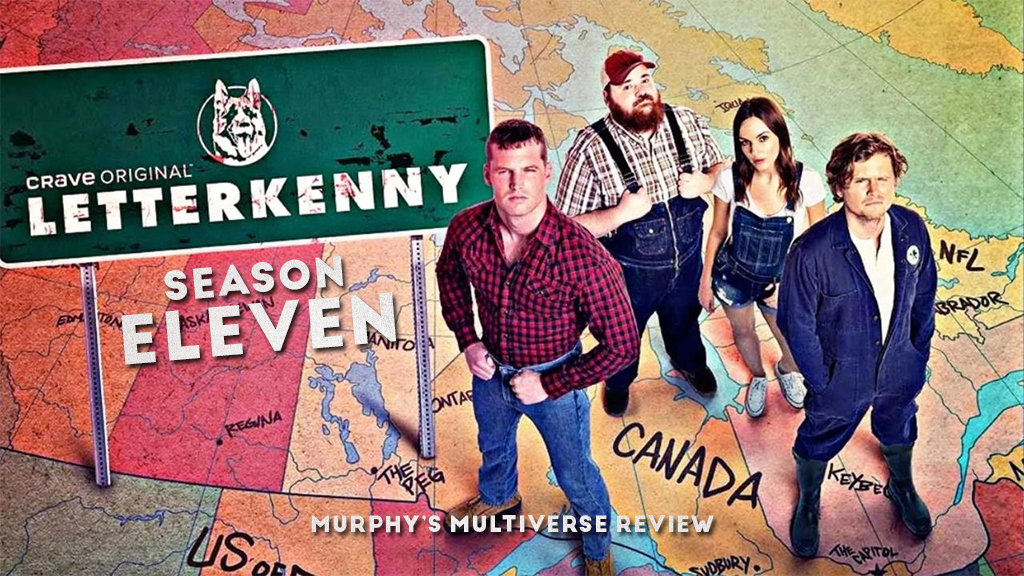
  • REVIEW: ‘Letterkenny’ Season 11

    REVIEW: ‘Letterkenny’ Season 11

    After leading man Jared Keeso took some time to focus on the Letterkenny spinoff, Shoresy, he has returned for Season 11 of Letterkenny and… it’s a mixed bag. Letterkenny has always been one of those shows that wasn’t designed for everyone. The humor can be crude. The characters can be hard to relate to. And the show can often feel like there’s no real point to it. In the end, though, Letterkenny always delights, even with its faults. Unfortunately, though, Season 11 takes a bit longer to get going and the episodes themselves never really feel cohesive.

    Letterkenny is a weird show. There’s no denying as much. It’s a weird show that is packed full of humor and proves Keeso, who helped to create both Letterkenny and Shoresy, is incredibly talented. However, following the excellent first season of Shoresy, it’s hard to return to Letterkenny as it is. Keeso as Shoresy is just excellent, and there’s something special about that character and his journey not to be such an asshole. Letterkenny, which does briefly bring back Shoresy this season, feels like much of the same. The ladies remain wonderful – especially Katie and Gail – and the Skids remain the best part of the series. But while those characters continue to grow – yes, even Stewart – it never really feels like Wayne and the others do.

    That isn’t to say Letterkenny is bad. It’s not. It’s still great, but Season 11 takes a bit to get going. The “Chips” episode feels pointless and is ultimately a weird choice to kick off the season. Had it been done as a special episode? That would’ve been great, but again, as a season opener, it feels like a poor decision. There’s no real value to be gained from the episode. Is it funny? Yes. Does it serve a purpose? Absolutely not. Thankfully, by episode three, the show regains its footing for the season and begins to build out a story across the remainder of the episodes. Said story focuses on the always crude Gail, played wonderfully by Lisa Codrington, and her questionable choices. One of Letterkenny‘s biggest strengths is that it always its female characters to be realistic and that includes allowing them to be sexual beings. Gail makes some poor decisions this season, that allows the rest of the characters to explore actual issues faced by women daily, and still finds a way to make it an important topic while keeping things light-handed. It’s one thing that Letterkenny does better than most shows these days. It isn’t afraid to let its female characters exist. Flaws and all.

    Once the season finds a real starting point, it’s smooth sailing from that point forward. The show brings back the always fantastic Glen, who is as ridiculous as ever, to work with Clark Backo‘s Rosie on finding a missing dog. The hilarity that ensues from that point on, courtesy of the Dicks, is a great reminder of what makes Letterkenny so great. But then the show takes a minor stumble yet again in the final episode of the season. As always, Wayne and company continue to have each other’s backs, which is great. However, there are only so many times a season can end with a big fight that is only briefly shown before it cuts to the end credits.

    And yet, with an uneven start and a finish that literally feels like an ending used before, Letterkenny‘s eleventh season isn’t as strong as those before it. However, with a strong first (?) season of Shoresy, one has to imagine Keeso and company still have plenty more in stock for the Letterkenny crew and can easily deliver a hell of a twelfth season. Because there’s no way a Season 12 isn’t on the horizon.
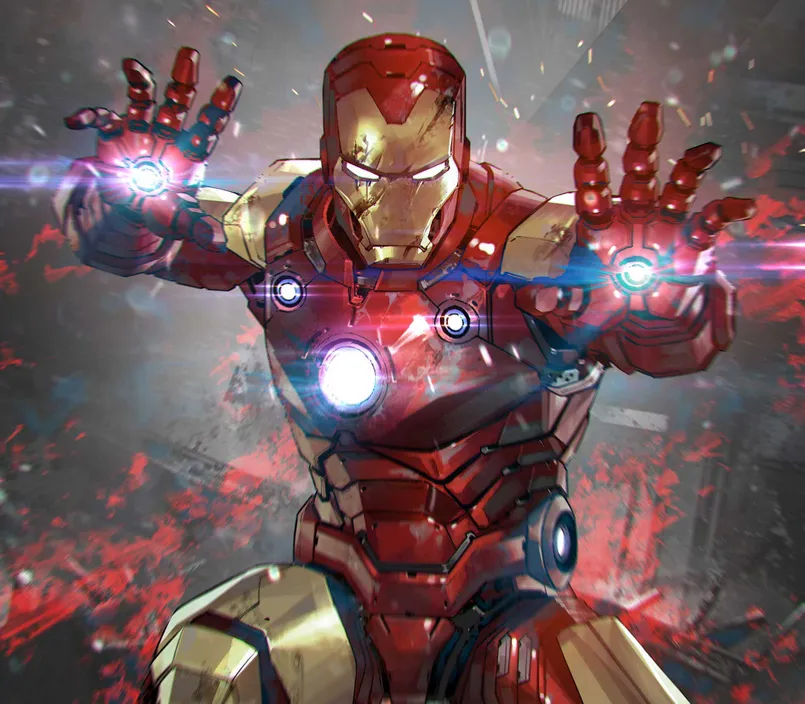
  • REVIEW: Invincible Iron Man #1 Back To Basics… Yet Again.

    REVIEW: Invincible Iron Man #1 Back To Basics… Yet Again.


    One of the most engaging elements in the Marvel line of comics has been the focus on history. Not in the sense more associated with DC, where legacy is so revered (arguably to a fault), but in the sense that character progression seemed to hold far greater priority than one might assume from a funny book. While Marvel was no better than DC in terms of their willingness to wriggle out of a set of circumstances through hokey, convoluted retcons, books like Iron Man were once celebrated for continuing a logical, building narrative across different writers and hundreds of issues.

    With Invincible Iron Man #1, Marvel heavy-hitter Gerry Duggan (who has been all over the mutant side of the MU in recent times) takes Ol’ Shellhead’s narrative to a tediously familiar stop. After a few pages recounting the basics of Stark’s 616 history (being a #1 issue, the book is undoubtedly aiming to be a starting point for the ever-elusive “new comic reader”) and the inciting incident of the story, we find Tony Stark at a point in his life where he’s feeling particularly guilty over mistakes that he’s made as a result of poor forethought, leading to other people getting caught in the crossfire. Gripping stuff. It could be argued that bemoaning an Iron Man title for focusing on what is debatably the very essence of Iron Man may be a little unfair, but the problems lie just as much in what the book doesn’t do.

    Quite a bit of the narrative weight Duggan tries to convey throughout this issue hinges on readers’ outright acceptance of the gravity of what has happened because Tony tells us it’s really affected him. This approach isn’t all that effective when the vast majority of input we get from Tony on these situations comes via first-person narration (framed as Tony working on his autobiography, from some unrevealed point in the future) that struggles to find an authentic voice. A lot of the verbiage sounds decidedly un-Stark, like Tony using the term “unhoused”, and a handful of similar instances of hyper-online wording.

    A moderately interesting mystery is competently established, and there’s certainly nothing offensively repellant about this book as it finds its footing. Juan Frigeri provides excellent visuals, and the book makes plenty of sense as a back-to-basics reset of sorts. Is it just too much to ask, after 60 years, for something a bit… fresh?

  • REVIEW: ‘Doom Patrol’ Episode 3 — “Nostalgia Patrol”

    REVIEW: ‘Doom Patrol’ Episode 3 — “Nostalgia Patrol”

    The third episode of Doom Patrol feels like a fairly self-contained, one-off outing on its surface throughout most of the episode. By the end of “Nostalgia Patrol”, though, it is clear that the episode is an integral part of the season’s moving plot. After the first two episodes’ focus on the 2042 apocalypse and the team trying to grab its footing immediately after the decision to be the Doom Patrol, the restart of the crew’s daily lives almost feels disconnected. The stuck-in-a-movie plot came across like a stand-alone bit in classic Doom Patrol side adventure charm, but it ultimately serves as a clear launching pad for a parallel overarching storyline for the season—Immortus will rise. 

    Doom Patrol is not known for answering open questions swiftly or without ambiguity. But even when the show goes to off-the-wall territory, it often stays strangely connected, and Season 4 may be no different. The concept of immortality has long tied many characters and elements together, some not as obvious as others. Immortus rising, then, is likely to bring back familiar faces and concepts from past seasons. And with a strong possibility (given the non-stop shakeups and breakups of HBO Max and the DCEU) of Season 4 being the show’s final season, bringing everything together in the end makes the most sense.

    The group’s first interaction with the adversary is passive, psychological, emotional, and successful. General Immortus promises to be a force this season that goes to the heart of the Doom Patrol, exploring the shady Immortus Initiative and Niles Caulder’s mildly disturbing actions that led to him collecting and experimenting on our main characters from the beginning. Notably, it seems likely that the fact that the main characters do not appear to age will be addressed, potentially giving viewers more opportunity to explore the cohesive force that bound such a misfit team in the first place. 

    The core plot of this episode—Rita and others being caught in her old movies—allowed it to be characteristically wacky while also giving it new color and texture that helps the series maintain its “comicbook-y” feel. But among the brevity of the concept was Doom Patrol’s defining emotional distress. Of course, Rita’s profession of love for her family despite her feeling fully rejected was the highlight, but Vic’s bittersweet and uncomfortable reunion with his old friends struck a competing, darker chord. Madam Rouge’s drunken monologue-montage of self-loathing, guilt, and desperation yet again shows this unlikely team member’s merit as a new character to get invested in. 

    At the end of the day, Doom Patrol has barely explored an actual, traditional superhero team because everything is personal in this series. The characters’ personal lives are constantly in the direct line of fire. Not many comic book or action properties take this kind of route. Instead, they opt for big world-saving heroics and ignore the detailed mechanics of the “humans” in the middle of the story. Doom Patrol, for that reason, is somehow one of the most realistic comic book shows at the same time it is easily “too weird” for many crowds.

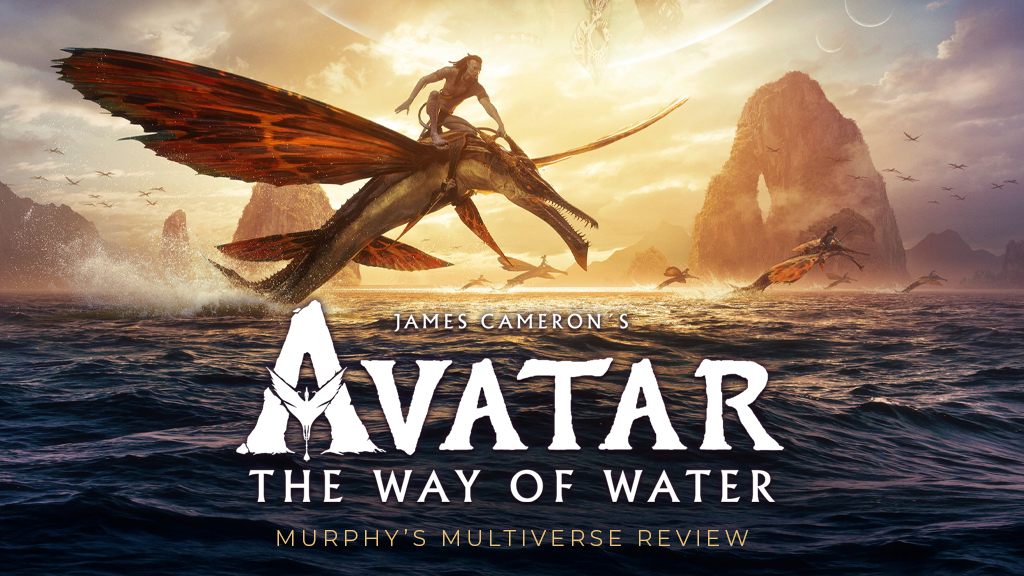
  • REVIEW: ‘Avatar: The Way of Water’ is Cameron’s Magnum Opus (For Now)

    REVIEW: ‘Avatar: The Way of Water’ is Cameron’s Magnum Opus (For Now)

    Never bet against James Cameron. The director’s latest, Avatar: The Way of Water, was a project over ten years in the making, something that gave many people an understandable hesitation leading up to its premiere. Cameron had spent that period of time essentially boasting about the film as a singularity, or at least, something more than just a sequel. It seemed he planned on the follow-up to 2009’s Avatar being so impressive, it demanded more time to gestate than any regular movie. An unspoken promise that, upon release, The Way of Water would be unlike anything ever before seen on a theater screen. That’s a very, very big expectation to meet, and plenty of folks were convinced it would simply be impossible for Cameron pull off. As it turns out, those folks were wrong.

    From a technical standpoint, The Way of Water is an astounding achievement. Without exaggeration, the film feels like it could be the next step in blockbuster evolution. The world of Pandora is so exquisitely realized, that there are several moments that are likely to make audience members try reaching out to touch it. It cannot be accurately stated just how breathtaking the visuals are able to materialize in full Dolby 3D. Seeing the glisten of minuscule water droplets on the skin of a computer-generated alien should not feel so real. In some ways, it’s sort of unnatural just how practical it appears when a neon-colored fish glides through refracting sunbeams over rippling subaqueous sand dunes. Pure cinematic wizardry, which can only be described as real-life magic. It’s very clear how much time and money were sunk into this project, which is – if one is hoping to get what they paid for – a really good thing for Cameron and his team.

    What will be truly interesting, however, is the long-term public reaction to the sequel’s plot. The Way of Water is clearly a movie meant to capitalize on the visual medium of the theatrical experience, with special effects that push the boundary of cinema far further than its actual storytelling. Of course, this is not to say the storyline is in any way bad. It’s actually pretty darn good. There are several crowd-pleasing moments, heartbreaking developments, and sequences that remind the viewer why they love going to the movies. It’s just, at the end of the day, nothing that happens is all that surprising. Historically, Cameron is remarkably skilled at taking fairly simplistic, predictable plots and stretching them to their full potential. This doesn’t change in the second Avatar.

    The Way of Water doubles down on every trope Cameron has relied upon in the past, and even brings back a few devices the director used in the previous outing. It’s a whirlwind of cornball MacGuffins storming through a sea of undeniably cool set pieces. In fact, it might just be the most James Cameron movie to ever exist, both optically and narratively, and persists in being so at a ridiculously high level. A movie does not always need to be unique, plot-wise, to be memorable. It’s possible to stand by and revolve around the Joseph Campbell theory of a hero’s journey and do it so well that the audience leaves the theater feeling fulfilled and refreshed. In this regard, The Way of Water is Cameron‘s magnum opus. It’s everything he has produced thus far in his career, only amped to the next degree of entertainment.

    A minor gripe may be the film’s slight lack of resolve in its closing moments. While the major plot points are sufficiently wrapped up and reliably executed, there are a handful of plotlines emphasized earlier in the three-hour runtime that slowly fade away by the time of its conclusion. Assumedly, these are ideas that will be picked back up in the multiple planned sequels, but it is a little frustrating to see Cameron lean ever-so-lightly into the messiness of modern franchise-ifacation when the rest of the film is so tight. Shockingly tight, it must be said, for a movie so notably long. The pacing is excellent, and allows for quite a few ideas to be packed into one picture, but it would have been nice if all of those ideas were more efficiently packaged in the end.

    Avatar: The Way of Water is flawed, yes, but at length, it’s a force to be reckoned with. The film meets nearly every expectation set before it. A wild ride full of heart and astonishment, which sets a high bar for the next films to follow. Its inconsistencies are so few and far between that they’re often lost to the overall grandiosity of the cinematic experience. Truthfully, it’s hard to comprehend the idea of watching it on anything other than the biggest, loudest screen a person can find. $250 million went into the production of this sequel and every penny can be seen in the details. If there was a lack of hype for the Avatar franchise before The Way of Water, there absolutely will not be once it’s available to the public. Again, and this is important to remember, never bet against Cameron.

  • REVIEW: ‘Andor’ Episode 10

    REVIEW: ‘Andor’ Episode 10

    Sacrifice for the greater good has always been a central theme of Star Wars. From Obi-Wan becoming one with the Force in his duel with Vader in a New Hope, to Luke doing the same in The Last Jedi and Ben Solo giving his life for Rey in The Rise of Skywalker, sacrifice has been consistently present in the franchise. Episode 10 of Andor, “One Way Out”, continues that thematic resonance while illuminating just how circumstantial the nature of sacrifice can be. Andor isn’t about a fantastic moment where a Jedi becomes one with the Force for the good of the Rebellion; it is in large part, about much less spectacular characters losing bits of themselves by the day. And no episode of Andor hammers that point home more than “One Way Out.”

    Thought the prison break serves as the beautiful center of the episode, it’s the back alley conversation between Luthen Rael and his Imperial spy, Lonni, that stands out not only in the episode and the series, but also the franchise as arguably one of the most inspired and impassioned explanations of the true cost of the Rebellion. At this point, it’s hard not to think of Rael, a character new to fans just a couple of months ago, as one of the most integral figures in the Rebellion. Per his own words, however, his choices have damned him and he knows that he is fighting “to make sunrise” he knows he will never see. So when the galaxy celebrates its heroes at the end of A New Hope, nobody will to be grateful to Rael, nor to poor Lonni, nor to Anto Kreegyr, who Rael is so willing to sacrifice to keep things on track. While it’s ultimately heroes such as Luke, Leia, Han and Chewy who become the face of the Rebellion, Rael now must stand as its backbone. Stellan Skarsgård‘s work as Rael is among the most complex and brilliant in recent memory in a franchise that has all too often dipped into the well of bringing back familiar faces. In Rael, Tony Gilroy has created a new character that’s given more the the future of the galaxy than anyone will ever know.

    As Rael readily accepts that there’s no way off the path he’s chosen, Mon Mothma finds herself at a crossroads from where it seems there is no gentle path for her to take. Desperate for funding, the Senator finds herself in league with the gangster Davo who proves more than willing to provide her with the money she needs, but in exchange for a detestable cost: the apparent betrothal of her daughter to Davo’s son. Though Mon is quick to dismiss it, Davo doesn’t believe she’s quite as disgusted as she puts on. The series has gone to some lengths to show that Mon’s work has already come at the cost of familial relationships but Episode 10 leaves the audience to wonder just how far she’ll go to finance the Rebellion. Andor’s creatives have done fascinating work with Mon. Originally a minor character who seemed to stand out as a beacon of everything bright and shiny about the Rebellion, the series has fleshed her out and painted her in a much different light.

    Given the way the episode laid bare grim repercussions for Rael and Mothma, Cassian’s time in prison hardly seems like much of a sacrifice at all. In fact, it’s Andy Serkis‘ Kino Loy who had the most interesting journey in the prison arc. Initially a “company man”, it’s Loy who makes the episode’s most grandiose example of sacrifice, risking his life to lead the prison break with the knowledge that the “one way out” meant he would never be free. Unable to swim, Loy stands back while the other, including Cassian and Melshi, who turns up alongside his escape buddy in Rogue One, swim to freedom. The final shot of the episode, which shows Cassian and Melshi running across barren plains, is rich with symbolism. Cassian has no prospects ahead of him as he runs from his past. He has no safe haven to which he can return. The entire galaxy is after him. What comes next over the final two episodes will almost certainly remedy that and cement his place in the Rebellion, but given the job the series has done setting up the fractured nature of the fledgling alliance, it’ll be most interesting to see in which group he finds his way.

  • REVIEW: First 2 Episodes of Netflix’s ‘Cabinet of Curiosities’ Offer a Promising Start

    REVIEW: First 2 Episodes of Netflix’s ‘Cabinet of Curiosities’ Offer a Promising Start

    The first two episodes have been released for Guillermo del Toro’s Cabinet of Curiosities and they offer a window into what the future of this horror anthology will bring to the table. The concept of horror anthologies is nothing new, may it be in TV form with The Twilight Zone, the V/H/S film franchise, or The ABCs of Death. There’s something special about exploring the genre from many different perspectives that explore the genre in many different ways. Luckily, Cabinet of Curiosities already teases that the series will offer exactly that.

    We are given two distinct episodes with Guillermo Navarro‘s Lot 36 and Vincenzo Natali‘s Graveyard Rats. The only true connection point is that each episode opens with Guillermo del Toro offering a small tease of what’s to come in the episodes with a trinket hinting at what the individual episodes have to offer. It’s a great little homage to classic horror anthologys where the host sets the right mood and del Toro is definitely the person you want to tell you what fears are heading your way.

    Lot 36

    Navarro‘s Lot 36 explores the story of Tim Blake Nelson‘s Nick. A man owing money to the wrong people and desperate enough to ensure he can make a quick buck off of forgotten storage units. The story is mainly carried by Nelson‘s performance as he offers us a man that is constantly on edge and just taking it out on the rest of the world. He’s definitely not meant to be likable but with the knowledge of it being a horror story, who knows what demonic things may be heading his way. Luckily, the episode offers a slow but satisfying build-up.

    The episode is best explained as a showcase of consequences. It uses an underlying mystery about a strange man performing strange rituals in front of his storage unit to make you question what may be included but doesn’t truly show all its cards. Making use of the base concept, a lot of what is hidden away in this storage unit hints at where the story is heading. The only drawback is that as great as the ending is, it goes by fast. The pay-off is definitely there in spades but it did feel like it could’ve used a bit more time to build tension.

    With a core mystery being the building blocks of the slow burn, it was a shame it didn’t build upon that some more. Just like Nelson‘s character, the ending wanted to get it done with. Even if the pathos was satisfying, there still is that feeling that it ends just as it’s getting good. It’s a very grounded story that has a great escalation, it just hit a satisfying ending a bit too early. Even so, it’s a great first episode and you can definitely see this was a passion project. Even with little scares, it’s definitely a memorable way to kick off an anthology.

    Graveyard Rats

    The second entry by Natali, Graveyard Rats, sees David Hewlett‘s Masson try his best to take care of his graveyard by stealing from the many patrons that remain buried there. The opening is actually a fun diversion as he stops two grave robbers only to turn out to be one himself. Just like Nick, we have another character down on his luck, who is desperately trying to get his hands on anything he can sell to get out of his debt. It’s a shame the general motivation for both episodes being baseline the same but the vibe is what makes this entry stand out.

    The project still isn’t as scary, it does act as a more comedic take on the genre. It doesn’t fully go Army of Darkness, but you can feel like there’s some fun with the project. Hewlett is a blast as the character and the project offers some really beautiful shots that are that perfect little “extra” to make it stand out from the previous entry. We also get to explore the character going through more of a journey, as things just continue to escalate for him.

    As the name implies, the core story is about rats, and without really spoiling anything, it does take a sudden left turn towards the end; a bit of a déjà-vu. It technically could’ve done without but it does add a bit more fun mythology to this one-off story. Who knows if perhaps they could revisit it similar to how Love, Death and Robots had a sequel episode to a previous season. Still, the main focus of the story is still prevalent, and plays around with some really great imagery and the fears that any of us.

    It still doesn’t quite scare you as much as it could, but it makes for a great little story. I do wish that the second entry would’ve been more distinct from the previous episodes but it still is tonally and visually distinct to distract from those surface-level similarities. If this is the direction they are going with this series, it’ll definite must-watch for anyone who loves the genre and wants to see some fun directions with it.

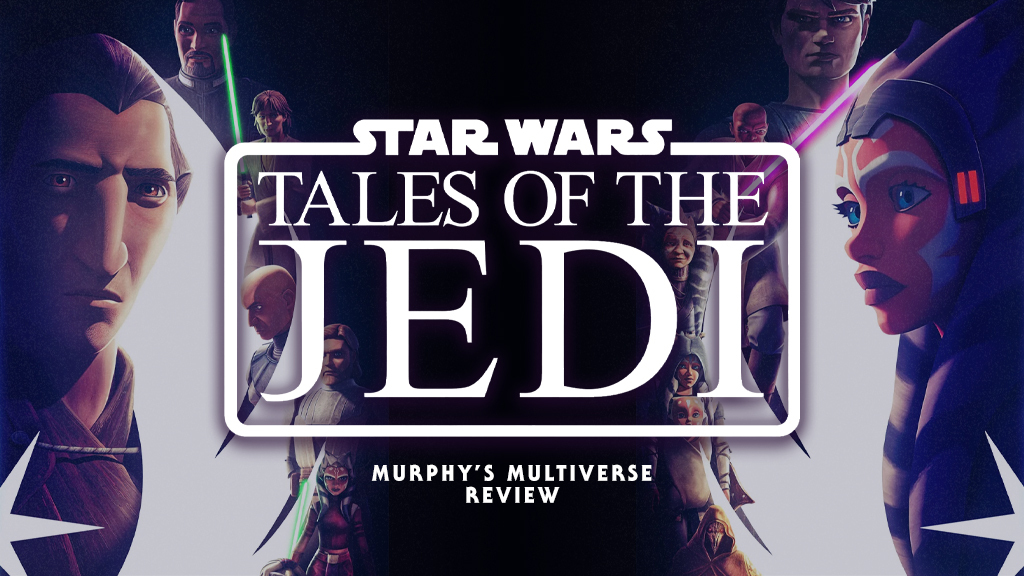
  • REVIEW: ‘Tales of the Jedi’ Is The Best Star Wars Animated Show Since Rebels

    REVIEW: ‘Tales of the Jedi’ Is The Best Star Wars Animated Show Since Rebels

    That the Jedi are the good guys in a Galaxy Far, Far Away is Star Wars‘ biggest lie. George Lucas dispelled that in his prequel trilogy. Dave Filoni examined the cracks of the Order in Clone Wars through the eyes of Anakin Skywalker. Rian Johnson brought it full circle in The Last Jedi when a disillusioned Luke Skywalker denounced the Order’s teaching. The streak to paint the Jedi as the galaxy’s most fallible figures continues as Tales of the Jedi puts the spotlight on one of the most underserved characters in the franchise, Count Dooku.

    The series, a precisely crafted six-episode anthology from Filoni, is split into two arcs. One explores Dooku’s fall from Jedi Master to Sith apprentice while the other chronicles various points of Ahsoka Tano’s life. Tales of the Jedi, in essence, is a masterclass on storytelling as Filoni compacts much depth and weight in a compact fifteen-minute format. In such a short amount of time, the stories explored evoke a sense of scale that eclipses some of the most important Jedi moments in Star Wars cinema.

    Much of that can be credited to the sheer scope of the storytelling. Both Dooku and Ahsoka’s journey span decades, exploring incidents in the far reaches of the galaxy that general audiences have yet to see. Like Lucas before him, Filoni brilliantly draws inspiration from other genres, giving certain episodes a distinct tonal feel. One episode that has Dooku investigating a kidnapping is inspired by mystery thrillers. Another episode that explores Ahsoka’s life in hiding after Order 66 taps into iconic Western tropes.

    The centerpiece of Tales of the Jedi is Dooku’s arc. Dooku’s fall from grace has long been a point of interest among fans and the show does a tremendous job of examining his disillusionment with the order. His episodes serve as one of the most straightforward indictments for the Jedi Order, delineating a clear line to where it all went wrong and why it went wrong. Dooku’s arc is tragic, regretful, and most of all, complex as it paints a portrait of a broken man on the brink of defeat. What used to be a character that was stunt-cased for the prequels is now one of the most compelling characters in the franchise.

    Ahsoka’s episodes, on the other hand, lack the intrigue of Dooku’s but make up for its familiarity. As one of the best characters in all of Star Wars, it’s always welcome to see Ahsoka’s story expanded, even through narrative minutiae. The opening of the season is her birth and how her tribe discovers her powers while the second is a vignette of her training under Anakin Skywalker. Both offer slice-of-life looks at the Jedi’s formative years. The kicker is her final episode which chronicles her life after Order 66. Without spoiling much, she ends up fighting the most badass Inquisitor ever created.

    Tales of the Jedi stands out as the best Star Wars animated series since Rebels. Even as its pacing and episode sequencing feel contrived, it showcases some of the best storytelling this side of the galaxy.

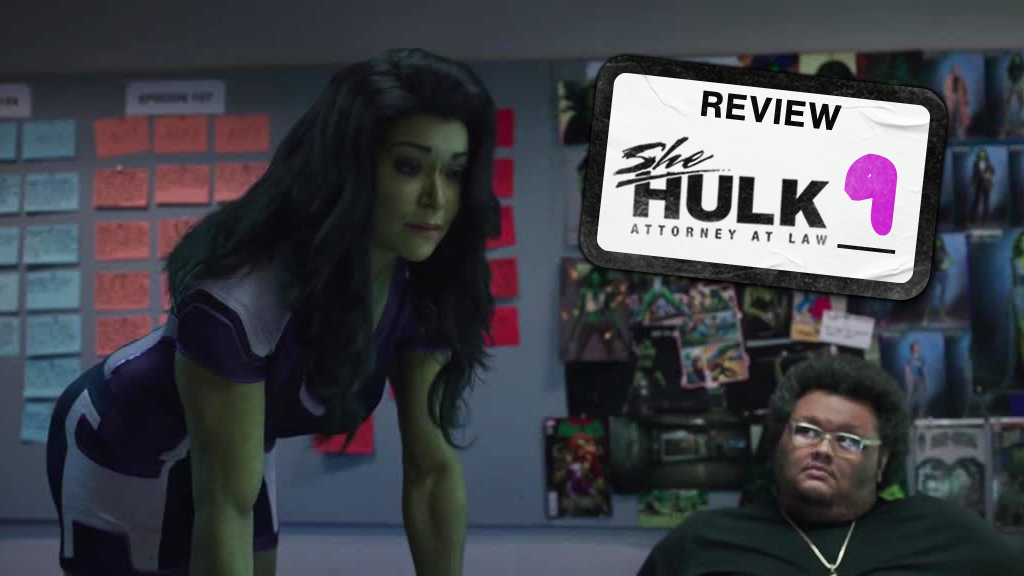
  • REVIEW: ‘She-Hulk: Attorney at Law’ Finale

    REVIEW: ‘She-Hulk: Attorney at Law’ Finale

    We have come to an end of yet another Marvel Cinematic Universe series, but this finale stands on its own. Since WandaVision, MCU series have been rather well known for either botching or just not following through with outstanding finales. How anyone feels about the She-Hulk: Attorney at Law finale is less straightforward than usual. While the word “unique” has been thrown around a lot in Phase Four, there is no other way to start the discussion.

    Even though it did not take up the entire runtime, the massive fourth wall break in the finale has to be an instantly iconic moment in the MCU. To not only take the audience out of “the show” but to spend time with the titular character in Marvel Studios’ headquarters is beyond bonkers. Of course, the jarring transition from the regular program to She-Hulk breaking out of the Disney+ screen is incredible, and it lives up to the comic book version of her doing the same decades ago. The core potential of the character is released in the finale, and there are very few moments in the MCU that can genuinely say the same.

    The humor stemming from the fourth wall break is not only laugh-out-loud funny, but it is peak She-Hulk. Throughout the season, the show makes jabs at tropes and the incessant presence of the internet’s yelling in every single moment of the contemporary MCU. Anyone on Twitter is familiar with this, and anyone with a brain knew that She-Hulk would provoke perhaps the most attention in that regard. Instead of winking at the audience about it, the artificial intelligence replacement for Kevin Feige (a joke worthy of its own review maybe) addresses it head-on. The MCU has an internet relations struggle. She-Hulk is a strong, confident woman. The two combined were meant to be together, but the way the finale actually embraces it is almost too good to be true.

    The fourth wall break, without a doubt, is the finale. It may even be She-Hulk. Still, that does not mean the finale as a whole deserves top marks. It is somewhat hard to separate the fourth wall break from anything else, both because of the inherent difficulty of that and because they addressed very different things. The break speaks to the essence and the heart of She-Hulk, and what better place to do that than in the finale? But the rest of the story is quite limited because of it.

    Yes, it brings home the point that this is She-Hulk’s show, but it also made it clear that She-Hulk’s story—at least in Season One—did not do much more than what we already saw before this episode. That is not inherently bad, especially considering the show really wants to call itself a legal comedy. Plus, fans should have learned their lesson after WandaVision to not expect series finales to become the crossover, universe-shattering moments of their dreams. To that, She-Hulk said: here is Skaar. But plenty of plotlines arguably deserved more time and attention, and a longer version of how Jen cleared her name would have been very welcome. That in particular is the biggest loss of the finale’s choice, but at the end of the day, the fourth wall break is always the preferred option.

    She-Hulk made waves as an MCU series. As one of the few MCU projects to feature a woman in the title role, it went beyond just basic representational work on that front. Women’s real experiences were either mentioned or actually discussed, and the first project the MCU felt comfortable throwing sex in was a project where a woman led that concept on-screen. But the series will also go down as the funniest Marvel Studios project to date and in many ways one of the most grounded in reality (which is ironic in plenty of ways). Jen was an actual, believable human, and the series made that the basis of everything, even the crazier elements. She-Hulk, arguably, was what many internet fans wanted Doctor Strange in the Multiverse of Cameos to be, and yet this was just the first season of a solo series. At the end of the day, there is not much else to say except: She-Hulk smashed.

  • REVIEW: ‘Werewolf By Night’

    REVIEW: ‘Werewolf By Night’

    One of Marvel Studios’ longest-kept “secrets” turns out to be perhaps one of the most triumphant projects of the Marvel Cinematic Universe’s Phase Four, if not the MCU as a whole. Formally announced only last month, Werewolf By Night is Marvel Studios’ first foray into the “Special Presentation” format (in this case, a one-off feature less than an hour long) and without a doubt, this project is, indeed, enormously special. Werewolf By Night shines for several reasons, but its brilliance as a standalone story is the most obvious.

    The first thing the viewer notices about Werewolf By Night is its aesthetic. Through its limited marketing, it is known that the feature was inspired by classic horror films of the 1930s and 40s. While the concept elicits immediate excitement from some, it of course risks overwhelming a story with a gimmick. Fortunately, the stylistic choices of this project were almost entirely in service of the story itself, and director Michael Giacchino achieves a near-perfect cocktail of stunning imagery, blocking, and overall texture. The use of black-and-white is an easy grab for an older or spookier look, but it was far more productive in Werewolf By Night than in most modern films that use the technique. The unique and rather all-consuming style certainly takes the viewer to a place easily associated with horror and monster stores, but it also removes one from the known Marvel universe. Consequently, the natural expectations the audience might place on the feature are almost reset, allowing a completely fresh experience.

    The greatest achievement of Werewolf By Night is surely its excellence as its own story, disconnected from anything else. Whether in the comic book genre or elsewhere, there is something extremely refreshing about a short story that is able to be thoroughly enjoyed and leave a memorable impact on the viewer. Despite a limited runtime and plenty of moving parts, the feature does a phenomenal job telling a full story without invoking virtually any backstory. The triumph of Werewolf By Night is captured in the feeling of simplicity and ease it executes despite clearly arising from a relatively complex technical foundation. At the end of the day, the project is a wonderful standalone think piece that invokes plenty of metaphors and themes regarding what makes a monster.

    However, given its inclusion in the MCU, there is little question that Werewolf By Night will ultimately be part of a larger narrative. Lucky for Marvel Studios, the feature doubles as an exciting introduction to a future Monsterverse considering it leaves the audiences with a litany of questions about the story’s and characters’ past and futures. If anything, Werewolf By Night could have benefitted from additional runtime purely due to the fact that there is enough action and intrigue to go around. An expanded rendition of the hunt itself would almost certainly be a riot, as a prolonged bottle-episode-type suspenseful action thriller would without a doubt rival the famous Daredevil hallway fight scene.

    In fact, a certain sequence in Werewolf By Night already does. The amount of violence in the feature has been a key talking point ahead of its release. The project features, objectively, some of the most violent, brutal, and gory scenes in the MCU. Where those are utilized are done so in a way that serves the story—Werewolf By Night is not filled to the brim with blood and violence, but it stands out when on display in the best way. Similarly, the feature gives off plenty of notes of horror, but it is not an overwhelmingly “scary” or frightening piece. It is, however, extremely tense, suspenseful, and even uncomfortable at times like any good horror film.

    Werewolf By Night further benefitted from its cast and character ensemble. Laura Donnelly as Elsa Bloodstone is, perhaps, the surprise standout of the feature. Not the title character and not given much fanfare, Donnelly’s portrayal comes off as effortless and she easily carries scenes in a way that cements Elsa as much more than she appears. Two rather different storylines crisscross throughout the special, and Elsa is the rock that holds them together. Gael García Bernal certainly hits the sweet spot as the mild-mannered and warm Jack Russell. The heart of the project resides in him, even if he were not (ultimately) the title character. Viewers should not worry about a “nice” Jack, as Bernal can flip the switch into the titular werewolf without a problem.

    The rest of the cast is stellar, and the character designs are so spectacular as to stand out in a generally visually-stunning project. Harriet Sansom Harris supplies the particular brand of sinister that Werewolf By Night needs to achieve its delicious end result. The monster at the heart of it all will surely go on to be a new fan-favorite creature of the MCU, but the special does not forget that he is, indeed, a monster.

    If Marvel Studios intended for Werewolf By Night to be a surprise, it is perhaps the best surprise a viewer could hope for. The special is incredibly unique on virtually all levels, and its short story format is one of the most fulfilling MCU experiences in years. Not all Marvel projects can benefit from, or achieve, the type of creative leap required to produce this feature. This special demonstrates that Marvel Studios should continue investing in “Special Presentations,” but Werewolf By Night is special enough on its own to be a one-and-done.

  • REVIEW: ‘Andor’ Episode 5

    REVIEW: ‘Andor’ Episode 5

    “Everyone has their own rebellion.”

    In an episode that feels very small in terms of scope, scale and what’s accomplished as far as advancing the plot, those words, spoken quietly to Cassian by Faye Marsay’s Vel Sartha may capture the larger essence of the Age of the Rebellion better than any spoken on screen in any Star Wars project to date. Episode 5 of Andor, brilliantly titled “The Axe Forgets” showcases some beautiful scenery and wonderful cinematography as the backdrop to Cassian’s struggle to forge bonds and build trust with his new team. In what feels like the calm before the storm, the episode’s team-building moments that make up the bulk of the runtime seem to echo classics like John McTiernan’s Predator and Peter Jackson’s Lord of the Rings: The Fellowship of the Rings.

    When they start their march, they are a team only in the loosest sense, united only because everyone, as it turns out, does have their own rebellion. And while they don’t initially trust nor much like one another, they are able to find common ground by understanding how each of them has been the tree on the receiving end of the Empire’s axe…and none of them have forgotten. And so while it may not feel like the larger plot of the 12-episode first season of Andor has moved along much by the end of Episode 5, for this group of people about to strike out against the Empire, nothing could have moved at all if not for the time spent together in it.

    The creative duo of director Susanna White and writer Dan Gilroy teamed up to illustrate the growing tensions not only amongst the team on Aldhani but also far away on Coruscant. Kyle Soller’s Syril Karn is hen-pecked by his insufferable mother, Eedy, while holding on to his hatred for Cassian; Denise Gough’s Dedra Meero continues to sense a growing threat, too random for anyone else to see; Mon Mothma’s work for the Rebellion is coming at the cost of her family; and Luthen Rael expresses anxiety that he may have overreached in his effort to strike back at the Empire. Though each of them only get a little time to shine in the episode, White and Gilroy make the most of it, carving each of their unique concerns out of the same material: the Rebellion, which now includes Cassian. And it’s Rael’s words in the episodes final moments that truly serve to frame just how tense of a moment the entire galaxy is on the edge of, even if only a few of them know it. As he says, what comes next may just be the start of it.

    In that sense, “The Axe Forgets” feels like the last bit of requisite exposition before the show switches gears. The characters have been developed, the costs to them made clear and their roles in it seemingly solidified. Episode 6 would seem to be the time for Andor to transform into the fast-paced action-adventure that fans certainly associate with the Star Wars franchise. But as the pace quickens, keep in mind that while each of the Rebels are trees who have been hit by the axe of the Empire, they’ve all been axes to the tree of the Empire and they are about to collectively take their biggest hack yet. And as the roots of the Empire extend to new parts of the galaxy, they’ll prove a tough tree to fell.