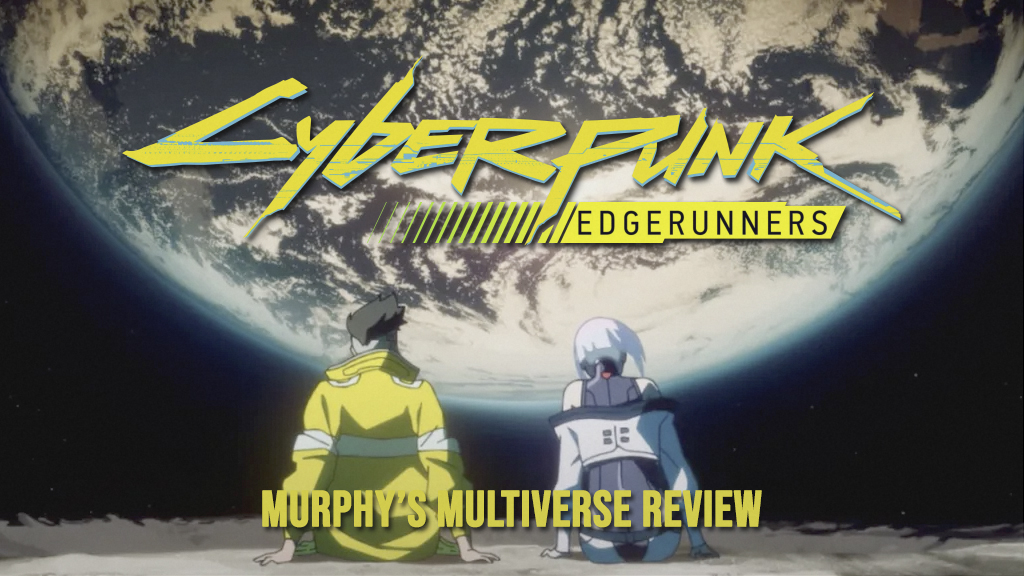
Trigger is a household name in the anime industry, and they’ve also built up quite the reputation for the kinds of projects they put out. So, many were naturally quite excited when it was announced that they are actively working on an animate adaptation of Cyberpunk 2077, which was for quite some time considered the most anticipated game release of all time. Sadly, it didn’t quite manage to stay true t that promise. A lot has happened since, but the anime under the title Cyberpunk Edgerunner revived the Cyberpunk hype. And that’s for a good reason.
From the moment Franz Ferdinand‘s “This Fffire” plays, you know you’re in for a dark tale. The opening doesn’t hide what’s about to come and sets you off perfectly for what’s about to unfold. Yet, there’s this glimmer of hope and optimism this series continues to hold throughout its run. In a way, it encompasses the game’s core philosophy better than even its original medium. Trigger’s greatest strengths are at play here bringing us their likely most “grounded” story yet.
We explore the story of David Martinez and the tragedy that unfolds his life as he finds himself in the underbelly of Night City. Even if the game wasn’t well-received, there’s definitely something beautiful and fascinating about the world they’ve created. Once you’re trapped in the nightscape of Cyberpunk, you can’t help but want to see more stories explored in this world.
It’s also very bloody and shows no restraints; just adds a little splendor to the already extremely well-animated sequences. The use of CG is also quite well-done as outside of some vehicles here or there, it was extremely well implemented into the more traditional animation. Though the highlight is the character details, something that they certainly made use of in a world filled with cybernetic enhancements.
Speaking of, they make good use of the world to tell their story and characters. We get some of the best insights into characters’ minds through the concept of cyberpsychosis. Episode 6 is a standout and heartbreaking in many ways that just adds so much to the concept of how this is familiar but also different. At the core of this story, it’s about these characters and their lives. And it does it wonderfully with the only complaint being that we don’t get more than 10 episodes.
There are some standout characters and the show knows you’ll get attached to them. Emi Lo‘s subdued Lucy offers something alluring and dangerous at the same time. You don’t blame Zach Aguilar‘s David for falling for her and taking a leap into a new world. Probably the biggest standout was Alex Cazares as the trigger-happy but delightful Rebecca, who commands the scene every time she’s around. You’ll get attached to this crew quite quickly.
There is a bit of a jump after a specific episode that feels like it could’ve used more time. While it made sense given how they were approaching the story, its 10-episode story structure felt a bit restrictive in how much time we could spend and how fast some aspects seem to pass by. You want to spend time with these characters and when the show starts taking jumps it sometimes can be distracting especially if characters go through some major overhauls in-between episodes. This isn’t House of the Dragon level of time skips but for one case it felt a bit surprising.
While CyberpunkEdgerunners tells its own self-contained story throughout this season, it would be a shame not to tell others. There’s something gripping about this world and Trigger seemed surprisingly at home here. We get a glimpse of this world and it feels like there’s just too much to explore. Yet, at the same time, this series feels perfect as a one-time release, and wouldn’t really say I#d be mad if that was the only one we get. It had me laughing, and crying throughout; what more can you ask for?
1993’s Hocus Pocus is a film that has unquestionably grown on people in the 29 years since its debut. Not well-received by critics at the time, audiences have come to embrace the film as an annual Halloween movie must-see. Whether its the over-the-top nature of Bette Midler’s performance, the quotability of it (“I smell children!), or simply the 90’s nostalgia dripping from the film, Millenials love it and have been pining for a sequel for the better part of three decades.
And after several starts and stops and rumors and failed attempts, Disney found the right time and the right place to unleash the Sanderson sisters once again in Hocus Pocus 2, a sequel that’s not only worth the wait but also a stronger film than the original. Directed by Anne Fletcher (27 Dresses, The Proposal) Hocus Pocus 2 smartly retains the loveable pieces of the first film’s DNA and upgrades it by telling a more coherent story that serves as both the heart of this film and retroactively makes the plot of Hocus Pocus a little more digestible.
Following in the footsteps of Hocus Pocus, the sequel opens in 17th-century Salem; however, in what turns out to be maybe the most important choice the creatives behind it made, the audience is introduced to Winifred, Sarah, and Mary as children, with Winifred acting as the guardian of her two sisters. And while the younger versions of the Sanderson sisters are already displaying their trademark traits, they’re not yet the monstrous, child-eating coven of witches they’ll turn out to be. Rather they are a group of young girls without parents who the town has grown to disapprove of, especially Winifred, whose family unit is threatened to be torn apart by the Reverend Traske. A distraction allows the young Sandersons to escape and leads them to the Forbidden Woods where they meet the Mother Witch who introduces them to Book and sets them on the path to becoming the witches hanged in Salem years later.
For all the laughs they gave audiences in the first film, the choice to go deeper into the past of the Sanderson sisters allows the audience to empathize with them, possibly for the first time and serves as an investment into an emotional arc that pays dividends in the film’s third act. The young Sanderson’s trip into the Forbidden Woods forges a bond between them and with the audience and interestingly deepens the mythology of what now looks like it might just be primed for a run as an expanding franchise.
The same Salem woods that serve to tell the true tale of the Sandersons also work as the primary setting of the present-day part of the tale. With the events of 1993 so far in the past, the true nature of them has been forgotten and the Sanderson sisters are looked at as a fun part of the local lore, with a Sanderson cosplay contest part of Salem’s Halloween celebration and a spooky store, run by Sam Richardson’s Gilbert, all coming into play over the course of the plot. Anchoring the events of the present are a trio of friends, Becca (Whitney Peak), Izzy (Belissa Escobedo), and Cassie (Lilia Buckingham) whose transition to high school has put a strain on their status as lifelong besties. Their struggles to stay close come to a head on Becca’s birthday, which happens to fall during a full moon on All Hallow’s Eve. Gilbert’s birthday gift to Becca sets the Sandersons free in Salem where they definitely want to hunt down more virgins and eat more kids, of course. However, the sisters also seek revenge on the Traske family who set them on their path to becoming monsters over 300 years ago.
And so the stage is set for another Halloween adventure, much like the events of the original Hocus Pocus, but whether it’s because it’s shiny and new or because it’s a more well-developed script, Hocus Pocus 2 plays as a much more charming, magical, heartfelt and easier-to-watch film than the original. The best fun, of course, comes from seeing Bette Midler, Sarah Jessica Parker and Kathy Najimy return as the Sanderson sisters, but it doesn’t come across as cheap fun and doesn’t seem to wear off as the film moves on. If fact, an argument can be made that the trio, especially Midler, bring something extra to the trio this time around. Yes, they revisit old jokes (when there aren’t enough brooms to fly, a Swiffer and some Roombas will do) and bust out a couple of musical numbers, but nothing here FEELS old or unearned. They even find enough for Doug Jones to do as Billy Butcherson to make his appearance more than just nostalgia for nostalgia’s sake
And ultimately, “more than just nostalgia for nostalgia’s sake” is probably the best way to describe what’s so wonderful about Hocus Pocus 2. Much like Top Gun: Maverick (settle down, I’m not comparing the quality of the movies here), Hocus Pocus 2 brings back familiar characters to a familiar setting to tell a somewhat familiar story, but also breaks new ground by choosing to spend a little more time developing the characters and drawing out what, in this case, probably should have always been the core of the story of this coven of witches: they are all each of them has. It seems that in taking its sweet time to deliver on the sequel, Disney stumbled into a Goldilocks goldmine in terms of timing: after Top Gun: Maverick and ahead of Avatar: The Way of Water. And while Hocus Pocus 2 won’t have a box office total and won’t be talked about as one of the best films of all time, its rewatchability is going to be pretty high and bring it back into the conversation every Spooky Season, just like its predecessor.
Hocus Pocus 2 will stream on Disney Plus beginning September 30th.
3 years of no Westeros coverage came and went in the blink of an eye. Even with how the last couple of seasons ended, The House of the Dragon was appointment television, and will continue to be throughout the duration of the show.
ONE BIG FLASHBACK
If you somehow stumbled upon the Season 1 Primer, you’re likely a little confused and that’s ok. It was expected that the series might start closer to the actual Dance of Dragons, which is around 129 AC. This entire episode, save the Great Council of Harrenhall at the very beginning, was in 109 AC, so the show is sowing seeds even earlier and deeper than expected, which is fantastic news considering the rush of Game of Thrones. It seems now that this series is going to be jumping back and forth. We should still expect to see a lot more of young Rhaenyra and Alicent to set up the conflicts and series. Slow burning plots are good news!
We saw the *arguably* greatest King in Targaryen history, Jaehaerys, during the opening scene, where the Great Council sided with Viserys, the male heir and the current king, over Rhaenys, the female with the better claim, and Corlys’ wife. This will set a precedent for the next 200 years in Westeros.
The creatives really nailed Viserys and his uneasiness over conflict. When the Hand of the King, Otto Hightower verbally sparred with Corlys and Daemon, they had slick camera work showing how it affected Viserys. He just wants everyone to get along and drink and party.
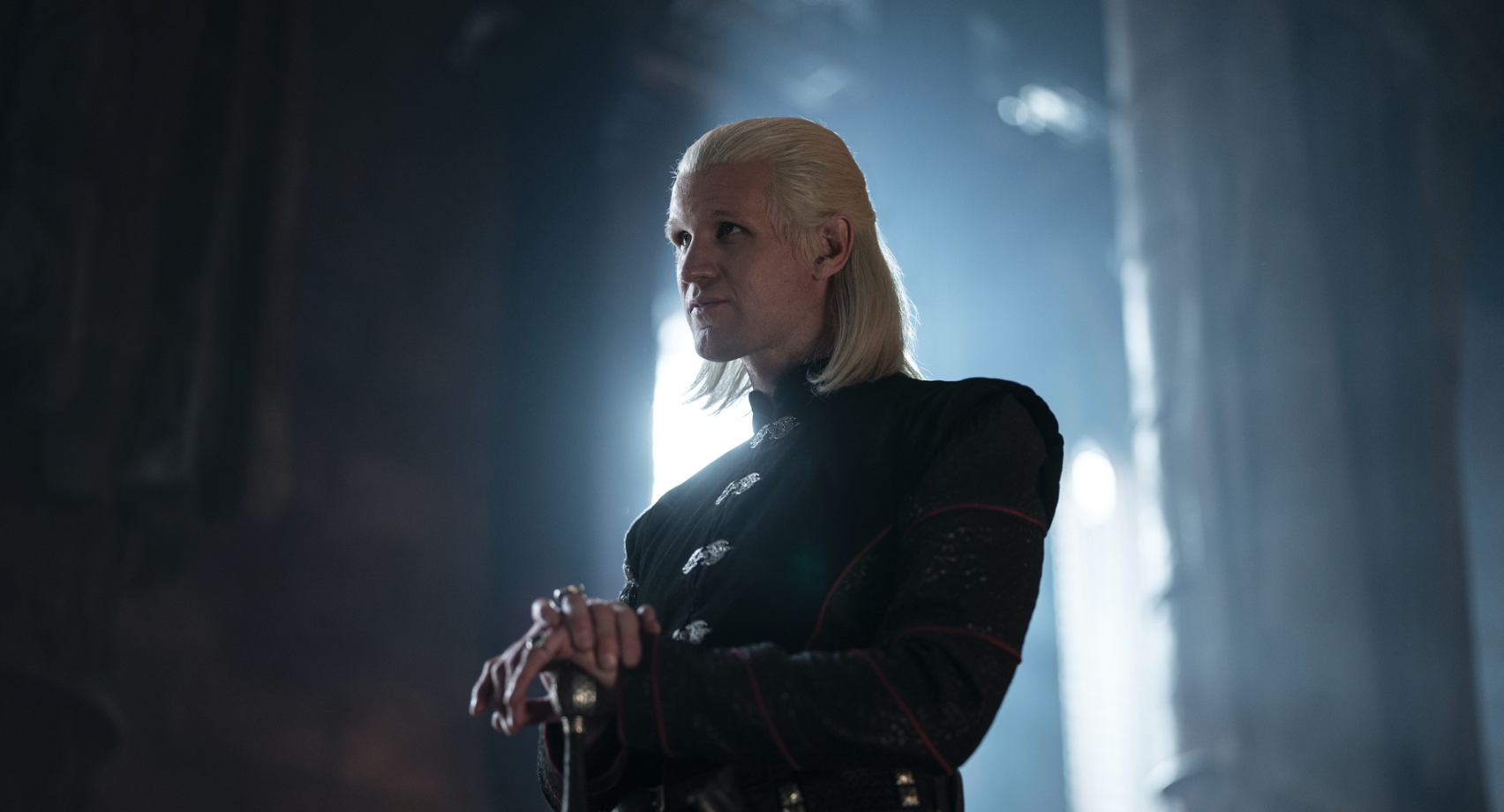
Young Rhaenyra is a bit of a mix of Arya and Daenerys. Willful and disobedient, she doesn’t really pay much attention to the gender norms of Westeros. Alicent is the Sansa of the duo, very proper and wary of toeing out of line. Daemon the Rogue Prince (Matt Smith) was every bit the violent, irrational character from the novel who always speaks before he thinks.
And we got Dragons! They seem to be a lot more colorful this time around, and they have some distinct individual features. Daemon’s dragon Caraxes has wings on its feet and a longer neck. Truly peak dragonshit.
Changes from Fire and Blood
House of the Dragon is adapted from a book the author George R.R. Martin wrote about the history of the Targaryen Dynasty. It’s pretty broad, so it’s up to the show to fill in the details between events. Below are changes that the show has made from the text.
Corlys Velaryon is black – This one sparked some controversy when the initial cast news came out. The Velaryons and Targaryens are both ancient Valyrian houses, obsessed with blood purity. It would make sense for them both to have the pale skin, platinum silver hair and violet eyes, but in the show only the platinum hair is shared between the two families. This will come into play later in the show, but for now it’s a detail that only will piss off the worst kind of people.
Rhaenyra and Alicent are the same age – In the book these two did not grow up as friends within King’s Landing. Alicent was 9 years older, and they weren’t as close as in the show. I like the change in the show, especially as these two drift apart trying to play the game of thrones.
Very small changes, and on the whole, this was as faithful an adaptation as the first few seasons of GoT.
Aegon’s Dream
When Viserys named Rhaenyra heir to the Iron Throne, he talked about the dream that Aegon had that motivated him to take the Seven Kingdoms: the long night and the White Walkers descending onto the continent, and how only the Targaryens could defeat it. This dream has been passed down from king to heir since Aegon, but it curiously does not reappear until Rhaegar (Dany’s brother and Jon Snow’s father) rediscovers it before getting his chest caved in by Bobby B. Does this dream never get passed down after the Dance? Makes you wonder.
Other Foreshadowings
Alicent and Viserys – Alicent was prodded by her father to put on a dress and “console” Viserys after his wife and son have died. This is hinting towards her father Otto from overreaching in the kingdom, as well as hinting towards their marriage.
Rhaenyra and Criston Cole – In the novel, Rhaenyra develops a massive crush on the newest Kingsguard, Criston Cole. He becomes her personal shield and bodyguard. It will be interesting to see how the showrunners handle this.
Corlys’s warning about the Stepstones – The Stepstones are the islands between Westeros and Essos, which is what Corlys warned the small council about – particularly the “Triarchy.” While nobody is worried about that right now, both Corlys and Daemon will team up to try and handle these islands.
All in all, it’s fantastic to be back in Westeros, and this is a great start to a series.
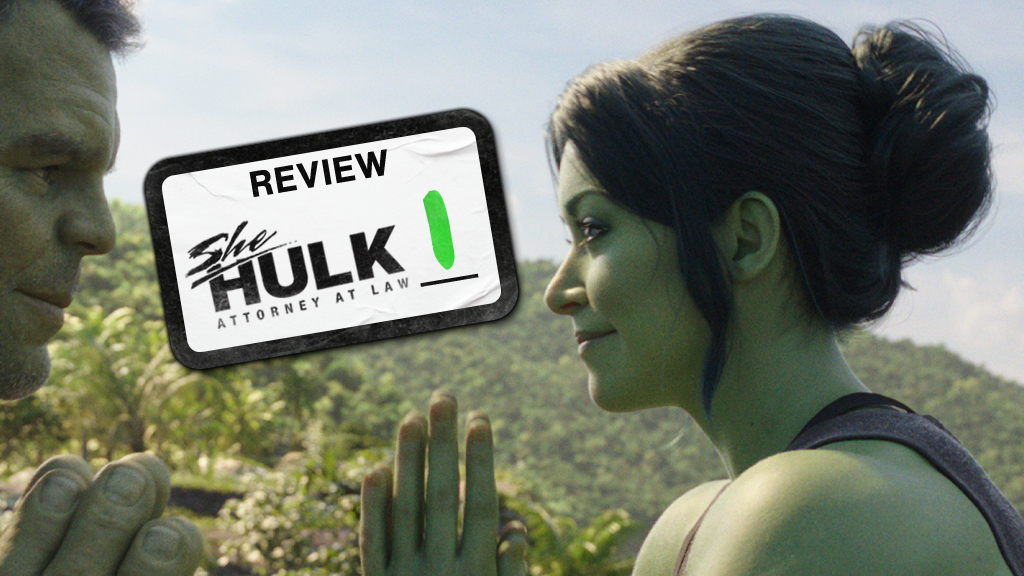
She-Hulk: Attorney at Law is about to be one of your new favorite Marvel Cinematic Universe projects. While much of the first episode was dedicated to establishing Jennifer Walters as an All-New, All-Different Hulk, all the elements are in place for a wildly delightful half-hour comedy series. She-Hulk takes the MCU to a place it honestly has not touched before now, which is somehow both smaller in scale yet feels like an A-list production in terms of its enjoyability and presence in the wider universe. The Marvel Studios universe has now expanded to a place where stories that seemed far-fetched a few years ago have a comfortable place in the MCU, and She-Hulk is opening the door for all of them.
As the “origin” episode, the premiere is not particularly representative of the rest of the series in terms of its structure. She-Hulk is, ultimately, an episodic show that focuses on week-by-week or case-by-case stories involving Jen’s legal career. Still, the amount of time spent on her origin and development as a Hulk with Bruce Banner manages to be thorough enough to connect Jen to a specific, growing section of the MCU and explain enough to allow the show to proceed without too many questions about who or what she is as distractions. In fact, the early fourth wall break serves to precisely lay out the intent of the episode yet still center everything within Jen’s non-superhero life.
The cast in the first episode is limited, but there is no question that Tatiana Maslany is an absolute star in the role. Criticism about She-Hulk’s CGI will not go away even with the final product, but any inability to accept it and move on is only to the detriment of the viewer. The visual effects take nothing away from Maslany’s performance, She-Hulk’s general character, or the ability to enjoy She-Hulk. Mark Ruffalo, who practically shares the episode with Maslany, is similarly phenomenal in his role here. In fact, it is arguably Ruffalo’s best portrayal of Bruce Banner in the MCU.
Because of how She-Hulk nestles itself within the MCU in such a specific casual-yet-important way, its uniqueness cannot be overstated. Quite frankly, after this series, the MCU can never go back to the all-encompassing tone it has had in the past. The show is the perfect final series of Phase Four, which generally felt like an experimental phase to diversify the types and styles of MCU projects. She-Hulk captures the self-awareness of the MCU alongside its tone of focusing on the more day-to-day reality of the universe. If any project has ever invoked feeling “comic book-y,” it is hands-down this one. The post-credits scene is perhaps a perfect example of the ground-level, casual-framing nature of this series. Gossip about Captain America’s virginity, or lack thereof, is now canon to the MCU, whereas before it mostly existed on Twitter.
She-Hulk has a comedic tone that isn’t slapstick or cheap. It feels more mature, real, and grounded in both reality and the universe it exists in. Billed as a half-hour comedy, it feels far from simply being a goofy and empty attempt at laughs. But the superhero elements in this episode do tip the scales a bit further away from truly feeling like an episodic comedy. A challenge going forward for the show will be allowing it to have its own comedic personality that rises above what it seeks to accomplish in terms of any larger MCU plot. For example, hints of a building Hulk universe are obvious in this episode. There are no indications yet that it cannot remain relatively self-isolated, and viewers should be prepared for the end of the “superhero origin” part of She-Hulk’s story early in the series, and perhaps this first episode served to cover and complete it.
It should also be recognized that even with only one episode as a reference, She-Hulk so far seems to be the MCU’s most successful attempt at a woman-led project. Maslany’s performance combined with the script itself is reminiscent of contemporary, quality non-comic book female-driven TV. Jen’s character has so much more texture as it is being written by women seemingly without any hesitation to be unceremoniously honest and genuine as to what Jen’s life (Hulk for or not) would look and feel like. Ms. Marvel also did a phenomenal job with Kamala Khan, but writing and portraying an adult woman with more mature themes feels incredibly fresh in the MCU, even if overdue.
In sum, She-Hulk’s premiere episode has every indication that the series will be a hit. The tone of the show is one that is designed to be simply fun, enjoyable, and even pander to fan service. Not every show or style of humor works for every person, but it is difficult to imagine any major widespread criticism (aside from the CGI) that is not based, in part, on some people’s unfounded discomfort with female superheroes or straight-up misogyny. The toxic “M-She-U” crowd will surely keep yelling into oblivion. But if She-Hulk exemplifies the “M-She-U”, it only proves that that universe is an excellent place to be.
Even as Marvel Studios approached Avengers: Endgame, the Marvel Cinematic Universe did not feel as grandiosely populated as it should have been. Franchises were siloed into their respective corners until they were called to unite while the granular civilian world of the MCU was all but forgotten. The MCU felt only reserved for its mightiest heroes and never the people living in it. In comes She-Hulk, a show that not only blasts the doors wide open by introducing a cavalcade of weirdos and superpowered kooks but a show that examines the impact of superhumans on its denizens. She-Hulk, in many ways, recontextualizes the U in MCU, instilling it with new meaning and giving audiences a new perspective on it.
At the heart of the show is lawyer Jennifer Walters, the hapless cousin of Bruce Banner who gets gamma-radiated after a bizarre car accident. When an attack on the courthouse forces her to use her newfound Hulk powers, Walters turns into an overnight sensation. The limelight quickly nets her a job as the face of the superhuman law division in a prestigious law firm. One would think that Walters’ connection to her cousin would make her a perfect fit but when her own celebrity gets in the way of the job, things don’t go as planned.
Whereas The Falcon and the Winter Soldier and Moon Knight are executed as 6-hour films, She-Hulk is one of the few Marvel Studios television shows to embrace the episodic format of the medium. Part-courtroom comedy and part-slice-of-life, episodes range from Wong suing a hacky magician for misappropriating the sling ring to She-Hulk’s firm prosecuting a shapeshifting Light Elf for catfishing a playboy. Head writer Jessica Gao displays a deep reverence for the sheer absurdity of living in a world populated by superheroes, examining heightened daily life while lampooning its blunders. Gao’s script is self-referential and keys heavily into present-day zeitgeist, reflecting the same comedic sensibilities as a culturally meta show like 30 Rock as it lampoons corporate culture, celebrity, influencers, and social media.
This coincidentally makes Liz Lemon and Jennifer Walters unlikely kindred spirits. Socially inept dweebs that have to navigate the corporate ladder and the insanity that comes with their profession. The ever brilliant Tatiana Maslany wields her wit with a gangly finesse that endears Jennifer Walters to every superhero faux pas she encounters. She’s never the coolest person in the room and she knows it. But like Tina Fey, Maslany’s wit and timing make her the funniest in the room in unexpected ways. The result is a Jennifer Walters that is goofy yet tenacious in her footing.
That Maslany succeeds in being funny is a feat on its own given how the breadth of her performance is at the behest of the VFX. She-Hulk has the disadvantage of being a painstakingly difficult character to bring to life. The show itself ends up being a dangerous tightrope act that threatens to fall into the uncanny valley, which it inevitably does from time to time. Director Kat Coiro struggles to find a visual identity for the show and often captures She-Hulk’s zany world through vapid TV lenses. This does the VFX team no favors as the She-Hulk model looks its worst in Coiro’s blandest compositions. The uncanny valley is most discernible in the office scenes, where plastic static walls and bright skylines glare in the frame. Nonetheless, the show’s VFX department does the commendable and thankless job of bringing the character to life. Their work begins to seamlessly blend into the world once the show begins to reach its farthest corners of its storytelling. There are fight sequences featuring Hulk and Wong that look plucked out of an Avengers film.
For a show that constantly pats itself on the back for its revolving door of exciting supporting character cameos, She-Hulk falls short of giving its own ensemble its legs to stand on. Ginger Gonzaga and Josh Segarra play Walters’ co-workers, Nikki and Pug respectively, and they aren’t given much to do. Despite the show insisting she’s She-Hulk’s best friend, Nikki barely feels like a character. There’s no sense of depth to their friendship nor does there seem to be any significant history between the two. Gonzaga pulls her weight in giving the character a semblance of life but the show’s in media res framing and focus on the larger cameos robs her of any real development. Pug, on the other hand, might as well not exist. Hot off the heels of Ms. Marvel, a show that features an ensemble whose characters are deserving of their spin-off, this is an unfortunate shortcoming.
Perhaps the show’s biggest strength is the trove of cameos and easter eggs that lord over each episode. She-Hulk does the incredible job of shouldering the granular world-building that many of the films and other TV shows have neglected to do. Superpowered characters that wouldn’t have otherwise existed in concurrent MCU efforts are proudly ushered in the show. Loose ends from films are purposefully referenced and examined in through the lens of the everyday civilian. Depending on one’s tolerance for cross-pollination, this may be a huge detriment to the show but to MCU fans longing for a more immersive look into the world, this show is a fever dream.
Ultimately, She-Hulk‘s meta-humor and wildly episodic case-of-the-week nature are sure to give viewers a refreshing change of pace. Imperfect VFX be damned, this show hilariously encapsulates the sheer insanity of the Marvel universe.
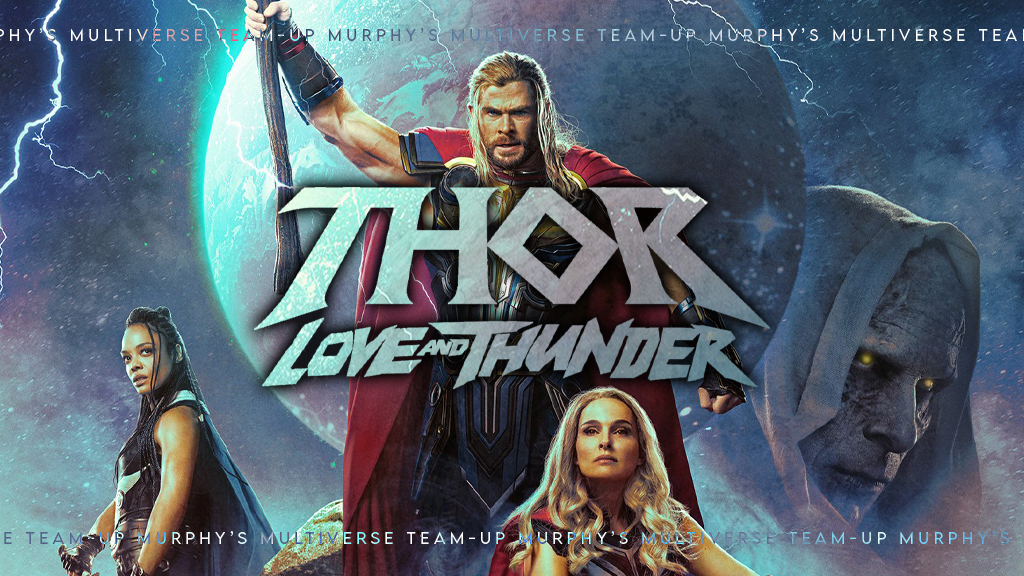
At the end of the day, while featuring a few outstanding elements well worthy of praise, Thor: Love and Thunder doesn’t quite deliver. Going beyond all the talk about wonky CGI and overuse of StageCraft technology (that honestly isn’t an issue at all), the main problems seem to have to do with both the plot and script, in terms of pacing and tone-specific verisimilitude. While understanding that this is a movie about space gods, space goats, and space dolphins you still want it to be engrossing and to make sense, even if only within its own specific set of rules. Also, the fact that the movie shied away from truly exploring what should have been at its core (Gorr and Godhood) in a more in-depth way comes off as a disservice to the comic story arc it loosely adapted.
There seems to be a lot of praise when referring to Thor: Love and Thunder as being very comic-booky mostly in the sense that it doesn’t take itself that seriously. That, in and of itself is not a bad thing, but it certainly doesn’t feel like the right approach when addressing the God Butcher storyline. Much like we got to see a different side of Thor following Ragnarok in Avengers: Infinity War (due to the more somber nature of the storyline) by choosing to make Gorr a central piece of Love and Thunder I’m not entirely convinced that the tone made sense. Jason Aaron‘s original Thor run eventually evolves into a more light-hearted tone (in my opinion the shift from Esad Ribic‘s art to Russell Dauterman‘s sort of exemplifies that) but a feature film adaptation of its beginning, the first arcs featuring Gorr, certainly deserved a more ominous approach in order to sell what made it one of the truly remarkable Thor storylines.
Not only does the tone feel a bit off but by doubling down on gags that already worked and had their time in Thor: Ragnarok comes off as lazy and downright dull at times, with the new Asgardian Theater scene being a prime example of that. Some other running jokes felt flat (looking at you sulking Stormbreaker) and remarkably little of that traditional Waititi sense of humor, clever wording, and comic timing felt fresh. While Ragnarok was mostly set on Asgard and Sakaar making Waititi‘s bonkers take have an otherworldly setting that meshed well together, the Love and Thunder action taking place in a more earthly New Asgard felt a bit cosplay-y, maybe explaining why the Omnipotent City sequence (a location that deserved a bigger spotlight and further exploration) worked a bit better with the established tone of the movie.
The fast pace that allows us to get straight into the action is, again, something that while not being a bad thing should really be used according to the specific situation. In other projects that seemed like the right approach. Again going back to Infinity War, everything started moving hastily since the main players’ motivations had been set up in previous features and there wasn’t really a need for a large amount of setup. But in Thor: Love and Thunder, regarding Gorr but especially regarding Jane Foster’s transformation into the Mighty Thor, everything felt rushed in a way that took some of the emotional punch out of the journey both characters went on. Jane Foster deserved to have her initial Mighty Thor transformation on screen, even if the comics themselves do not show it. But while the comics thrived on the mystery behind the character, as who was holding the hammer wasn’t revealed until later, Thor: Love and Thunder made that pretty clear from the moment the movie was announced, making a similar delayed reveal pointless and honestly a bit anti-climatic.
But not all was lost to the “bigger and louder and more bombastic” version or Ragnarok Waititi sold us on, as there are some hilarious gems spread out through the script (“Maybe your arm is in Valhalla!”) as well as being introduced to, in my opinion, the most obnoxious but also the more hilarious running joke on any Marvel Studios movie: Toothgnasher and Toothgrinder.
All in all, it’s hard not to wish that such compelling story arcs featuring Gorr and The Mighty Thor could have been given a bit more room to truly live up to their potential. What could have been an amazing Thor sequel, given the cast and characters, and especially following the tremendous success of the previous installment that reinvigorated the franchise, instead takes us back to pre-Ragnarok levels of interest in what the future might have in store for the character. Thor: Love and Thunder while aiming at being a Thor: Ragnarok 2.0 but doesn’t manage to go beyond a meager 0.5.
Or perhaps a 0.6. Because of the goats.
Mary Maerz
I liked it a lot more the second time I watched it. I’m a big fan of Taika Waititi’s vibe and the movie’s general goofy tone. Not every joke landed for me, but I will survive. I also love everything colorful and visually interesting so it was a good time for that. I’m not the VFX police, and I don’t think a movie that has Bao the god of dumplings in it needs those people in its life, but the tone of Love and Thunder is bold and wacky, so it really doesn’t need to look like an Avatar sequel. It was fun, and it had unexpected heart in the ending. It was the first MCU film I haven’t spoiled for myself in many years, and I am glad I didn’t.
That being said, and please don’t murder me, I think it was…too short. Gorr was a letdown for me on the first viewing. Once I accepted that into my heart, I could enjoy the second round more. But he felt underdeveloped, both in terms of character and actual villainy. The guy didn’t butcher gods. But his underlying motivation, conviction, and the critical thinking that comes along with it could have used some extra time. He felt like a hypothetical threat the whole movie rather than a real one. Bale is great though; without his performance, Gorr would have been one of the most forgettable villains in the MCU for me. I also wish Jane’s story got some more time. Her journey was abrupt and abbreviated. It makes sense in terms of her role in the Thor franchise, but the story itself deserved its own solo project so it felt disproportionate.
Charles Murphy
In 2017, Taika Waititi made a Marvel Studios movie. Thor: Ragnarok breathed new life into the character by undoing everything that had been done with him before. In 2022, Marvel Studios made a Taika Waititi movie. Thor: Love and Thunder, for better or for worse, was Waititi fully unleashed. And, unfortunately, it seems that Waititi took all the wrong lessons from the success of Ragnarok and spent too much time in Love and Thunder giving fans more of the same from Ragnarok while not spending enough time on the things that could have made this movie truly great. Love and Thunder isn’t a bad movie, but unlike its immediate predecessor in the Thor franchise, it’s far too forgettable and a bit disappointing.
The uneven nature of the film is summed up pretty well by what the audience gets (and doesn’t get) in the first 25 minutes or so of the film. The cold open introduces the film’s villain, Gorr, before he becomes the God Butcher, played wonderfully by Christian Bale. A tragic scene unfolds as Gorr’s daughter dies in his arms as Gorr’s god ignores his pleas. Summoned by the Necrosword, Gorr stumbles into an Eden-esque garden where the shiny gold god killed the dull black god that used to have the Necrosword, and then Gorr kills the shiny god with the evil weapon. Fairly quickly after that, one of the most balls-to-the-wall, insane action pieces in the history of Marvel Studios unfolds as Thor dispatches the evil bird people while also laying waste to the nice blue peoples’ planet.
As amazing as Thor’s action scene is, I have to wonder why we weren’t treated to an equally amazing action scene in the cold open. Rather than have Gorr stumble into the aftermath of the battle between the gods, why didn’t we see it? And that question, “why didn’t we see it?”, is the core of the film’s issues. Allegedly based on Jason Aaron’s legendary run, this film did little to honor it. Instead of seeing Gorr butcher gods in the opening act, his acts are relegated to stills that pop up on a low-quality monitor. In fact, the audience is told about Gorr more than they get to see him be terrifying. Instead of seeing Jane Foster’s first transformation in New Asgard (a scene we KNOW they shot, by the way), we have to listen to Jane tell Thor about it. And the frustration only mounts because I can’t reasonably understand why the time wasn’t taken to allow the audience to see things that would have enriched the story. Was it so we could get the shitty breakup flashbacks?
Magically, however, the mess coalesces into one of Marvel Studios’ ballsiest and best third acts. While the whole magic wish to kill gods isn’t really in line with the Gorr from the comics (he would never have cheated himself out of the pleasure of torturing and killing the gods personally), there are clear and high stakes as the final act begins. The final battle with Thor and Mighty Thor vs. Gorr is going to hold up well over time and the crazy idea to empower the kids worked better than it had any right to. And most importantly, Eternity looked GREAT. Thor has now lost pretty much everything he ever held dear to him and looks set to head in a totally different direction with Love at his side. And coming from the guy who hates post-credit scenes, the first one is an example of how they can still be done right.
Ultimately, Thor: Love and Thunder will go down as a missed opportunity. Not a bad movie, but a cautionary tale for Marvel Studios. It’s hard to judge a movie on what it could or should have been, but this one had all the opportunity in the world to be great and ended up good.
Anthony Canton III
Thor: Love And Thunder is a movie if I were looking for a sports comparison I’d say it were Shaquille O’Neal. A dominant player; one of the best we’ve ever seen. A unique force that changed the game. Yet, we always wished he gave a little bit more. Let’s break it down. Portions of Jason Aaron’s God Of Thunder and The Mighty Thor were adapted to this movie. Was that done well? I’d say it wasn’t really done at all.
When we hear about Gorr The God Butcher, we think of him torturing gods before he kills them. He kills one god. Not enough butchering. Christian Bale is excellent in the role with not enough screen time. Natalie Portman came back inspired as Jane here with a better energy. The action worked in ways that the story did not. I thoroughly enjoyed Russell Crowe’s comedic performance as Zeus. We did not get enough of Valkyrie. Hemsworth was solid. But again I needed more.
Is this a Taika fatigue issue? Perhaps. Ragnarok is one of the greatest MCU films of all time. This one? Solid, but there wasn’t enough meat on the bone to really get to the levels it needed to. Thor: Love and Thunder, meet Shaquille O’Neal. 7 out of 10. Extra half point for the goats.
Mister Anderson
I loved the latest chapter of Thor for several reasons. The character development was great for several of the characters, but I’m most impressed with the newfound depth they gave Thor. His evolution from aloof and aimless to a purpose-driven empathetic hero made this story completely worthwhile. Jane’s turn as The Mighty Thor also brought a lot of emotion and strength to the narrative as well, making Thor challenge a lot of his past decisions and helping him learn, like Xavier teaches Doctor Strange, “Just because someone stumbles and loses their path, doesn’t mean they’re lost forever.” We’re reminded through the movie of Thor’s previous stumbles, but this story really seems to set the hero back on a path with purpose and meaning.
Dalbin Osorio
I’ll get this out of the way right out the gate: I liked it a lot. Chris Hemsworth is Thor, and he owns every role. Natalie Portman was dope, and I wish she would’ve taken his place. That takes me to my one gripe with the film: I wish the God Butcher would’ve butchered a few more Gods onscreen. Namely, I wish he would’ve killed Hemsworth’s Thor. This Phase has been about the passing of mantles, so to speak, and having Gorr kill Thor (and Zeus, which would then set Hercules on a path to revenge for who he thinks is responsible), and then having Mighty Thor be the one to convince him to bring his daughter back would’ve made for a much better movie. Instead, we didn’t get much god killing, which kind of lessened Gorr’s appearance and a great performance by Christian Bale. It didn’t rise to Hela levels, but definitely another very good villain by Marvel. The two scenes at the end were both great, though, again, if you killed Thor, then I think the last scene hits different for people (in a good way). I give it a 7/10. Better than Black Widow and Eternals, for sure, but not as good as the cream of the crop in Phase 4 that was No Way Home, Shang-Chi, and Multiverse of Madness.
Torbjorn Frazier
For me, Thor: Love and Thunder has become ever-challenging to form a definitive opinion on. I certainly consider the film to be a net positive and an enjoyable watching experience, but also find a number of the dissenting opinions on Marvel Studios’ latest film to be at least understandable. A prime example of this notion is the comedy style of Taika Waititi: I greatly enjoyed a majority of the absurdist running gags, but understand those that felt it took away from further developing the fast-paced plot. Though my most overt qualm with the film comes from Christian Bale’s Gorr the God Butcher, who only butchers one god for the entire movie in his limited screen time (even one other god killing scene or montage could’ve rectified this).
My issues with Gorr tie into what is my biggest issue with this film: a lack of definition on the severity of stakes our protagonists are dealing with. I for one have zero issue with the idea of smaller scale stories in the Marvel Cinematic Universe (I’m a defender of Ant-Man and The Wasp for this reason), but the more personal mission of saving the Asgardian children could’ve been better served as a separate project away from the high-stakes, esoteric mission of stopping Gorr from reaching Eternity and killing all the gods. Especially with the rapid-fire pacing (which for the record, I’m a fan of), I struggled to connect with the overall story of Love and Thunder more than I did with Waititi’s Thor: Ragnarok.
Though I don’t want to just lay out my grievances without acknowledging the truly strong and interesting elements of this film. My personal MVP of the film is Natalie Portman, who gives a killer performance as the Mighty Thor and a Jane Foster who wants to be in the film she’s in. As well, Love and Thunder certainly leaves the Thor/Asgardian franchise and the Marvel Cinematic Universe at large with some compelling stories and status quo changes in its future. And even with my qualms, I remain appreciative of Marvel Studios being willing to take the larger creative swings in their recent projects as a means to tell different stories than before. I’d much rather view a film taking these types of swings than attempting to “play it safe” and lose a distinct creative vision.
I always am so excited when Disney releases a new project because they never fail to entertain me. Their latest project, BAYMAX! has done just that. In 2014 (when I was 6), Disney released Big Hero 6, a movie about a robot named Baymax and a group of heroes saving their city, San Fransokyo. Baymax started out as a personal healthcare companion and was designed to help people in need; however, he ended up being a superhero. BAYMAX! returns the character to his intended purpose and the result is one of the year’s best feel-good projects.
This show isn’t only hilarious it’s also very heartwarming which is one of the many aspects I like about it. Baymax is loveable here not only because he helps random people but also because he is very funny. As runs around San Fransokyo helping everyone, he heals not only their injuries but also helps them face their fears. And when Baymax finds himself in need of a helping hand, the show reminds us just how important good deeds can be.
Almost everything Disney produces seeks to teach a life lesson to the audience. This show is no different in that regard. At the forefront is the fact that if you are kind to others, others will be just as kind to you. Baymax helps all these people without them asking, and then they all help Baymax.
The series really shows who Baymax really is and it also shows us all who we could be if only we all had someone there for us like Baymax. It’s definitely the kind of show that needs to be out in the world and remind us all how important it is to be kind.
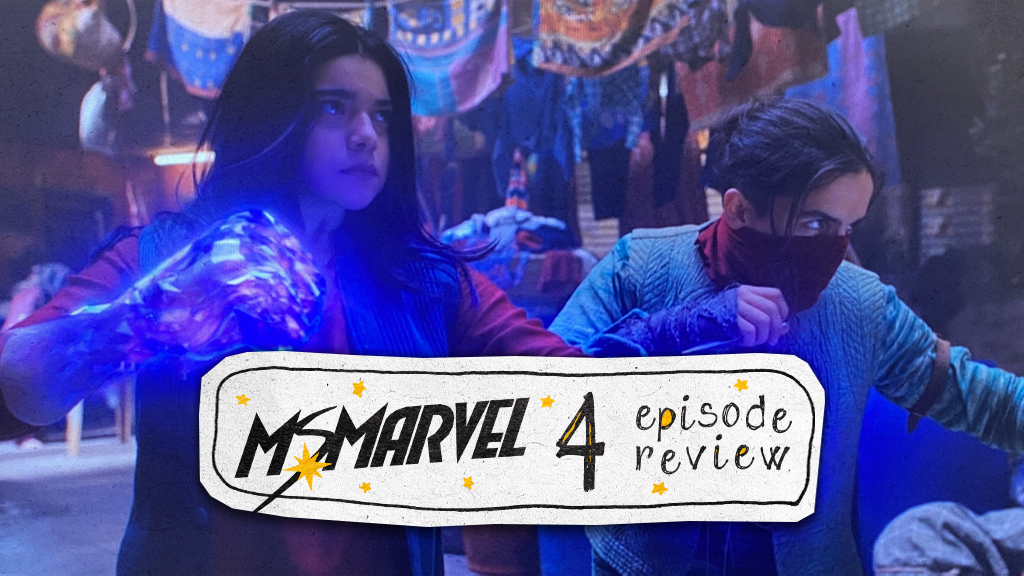
While Ms. Marvel still has to stick the landing in its final two episodes—something that Marvel Cinematic Universe shows tend to struggle with—its Episode 4 was yet another triumph for Kamala Khan’s series. In fact, it manages to follow the MCU series template for four episodes, but yet surpasses all expectations set by previous Disney+ installments. Ultimately, the conclusion, so far, on Ms. Marvel is that from inception to execution it is the highest quality MCU series to date. And it is not particularly close.
While the mystery of Kamala’s origin continues in Episode 4, it is still developing in more interesting ways in each episode. Quickly, we learn that there is much more depth and nuance to the “Djinn” classification we were introduced to in the previous episode, and we get a hint that the Noor connection may have stronger connections to the more traditional super-aspects of the MCU. What that connection actually is remains the driving energy of the series, and Ms. Marvel expertly stretches the reveal out much like Kamala can stretch out her own hard light energy.
But one of the most delightfully perplexing aspects of Ms. Marvel is uncovering why exactly this is so well played out. While many substantive aspects of Ms. Marvel are certainly unique from other MCU entries, the actual structure of the series is not. For example, virtually every MCU series has a major cliff-hanging plot twist-type ending to its fourth episode. In WandavIsion’s Episode 4, Wanda’s sentience in the Hex is formally revealed. In Loki, the titular character wakes up to different variants of himself at the end of time. In Moon Knight, Marc Spector is killed and is awakened in what appears to be a mental asylum. Here, in Ms. Marvel, Kamala seems to have been somewhat transported to the past, as she finds herself engulfed in the scene of the last train to Karachi the night her great-grandmother Aisha disappeared.
So while this sort of ending was not a true surprise—and the structure of the penultimate episode can likely similarly be guessed to an extent—Ms. Marvel executes it on an absurdly impressive level. The final shots are breathtaking and rely mostly on a realistic reimagining of the past rather than supernatural, magical, or fantastical elements. While the knowledge of Partition and Kamala’s family history has been known to this extent since the second episode, Episode 4 fully opened the door for what Kamala’s very human origin means to the character, and frankly, the world at large. Even Kamala is completely at a loss for words at the tragedy, suffering, and pain she sees around her.
Much of the beauty of the series’ focus on Kamala’s mysterious origin is the fact that, as emphasized and written in stone in this episode, Kamala’s origin is as much intertwined with traditional reality as it is with whatever inter-dimensional tie-in is. All superheroes carry the weight and strengths of their non-super past, but Ms. Marvel is unique in truly expressing that Kamala’s foundation is in her family and its history. The bangle is certainly the most important force in her superpowers, but it is every bit as important to Kamala’s character as is her relationship with her mother, her mother’s relationship with her mother, and whatever happened to Aisha during Partition.
In the midst of the incredibly rich storyline, even the action sequences of Episode 4 stand out. In particular, the extended chase scene could without a doubt be plopped into a feature film as is and no one would question it. While often in MCU series, even Ms. Marvel, action is rushed and sparing, this scene proved that that is a choice and not a necessity for these shows.
So, to go back to the earlier question of whyMs. Marvel seems to be ahead of the curve, there are numerous unique things that the show brings to the table. But it would not be fair to say that the series radically upended the Disney+ MCU model. Not everyone will personally prefer the series over all others, and no one has to. But at the end of the day, in all truthfulness, Ms. Marvel has been written and executed with such quality that it truly stands out. On no level is that an attack on other MCU shows, either—Ms. Marvelis simply that good.
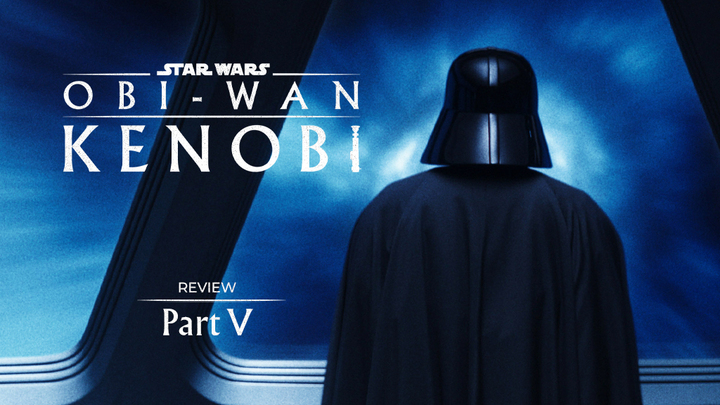
Darth Vader’s hunt for Obi-Wan Kenobi continues as we’ve entered the endgame for the Disney+ series. After a more lukewarm bridge episode, we’re back into the final confrontation as Darth Vader closes in on his former mentor and we finally unravel the secret of Reva’s obsession. While the episode keeps one wondering how exactly they’ll close out the series, it did offer a more thrilling experience than its predecessor. Yet, is it building up to become one of Star Wars best entire son Disney+?
Let’s get one thing clear from the get-go, Darth Vader is the definite highlight once again. The force of nature that is being showcased continues to stand out and there’s something haunting about the way he blindly follows his rage. Yet, he’s also showcased to be fully aware of his surroundings; no matter the distraction. The best part is how they finally gave us a sequence with Hayden Christensen out of the suit, showcasing a lesson he seemingly has still not learned to overcome.
Though as great as that sequence was, it once again highlighted just how many cuts are used to keep a flow going in this show. When we’re in the bunker under attack, the camera goes on a free-for-all and it sadly still is one of the show’s weakest parts. Yet, you can see the diamond under the rough when we get a final lightsaber showdown to cap off the episode. There’s a purpose for the camera work but it feels a bit too disjointed from the rest of the show’s more focused approach.
Speaking of, Reva finally getting the necessary reveal on her overly ambitious goals; which were perfectly hinted at through the posters as uncovered by our own Hunter Radesi. In a way, it was a bit predictable in how it connected to the opening of the series and she isn’t truly “redeemed” by the end. They play on her having a different kind of ambition than the rest of the Inquisitors, but she isn’t suddenly a good person saving Kenobi. She simply has her own goals and is willing to use anyone to accomplish them.
The stand out moment is an emotional one in the episode, which I don’t want to spoil. But, I will say I was surprised in how it did hit me and it was another highlight of the path that Kenobi has gone down in his life. There’s also a hilarious twist that kind of seemed obvious but still managed to keep people wondering if Obi-Wan Kenobi killed canon for weeks. Either way, it’s setting up what might be an exciting finale but does sometimes feel like they could’ve tightened the script up in some places, but it still was the best entry so far.
People are kind of stupid. They’re also smelly, anxious, stubborn, and unpleasant. It’s something we learn at an early age, that other human beings are packed full of everything we’d like to hide about ourselves. We’ve all been to the slumber party where one of the other kids lets a big one rip, followed by a moment of silence and an appalling scent filling the air. By all accounts, this should be the end of that child’s social life. Expelled for unrepentant nastiness. Yet, this is almost never the case. Instead, in the seconds following a loud fart, most of us do the unthinkable. We laugh. We laugh because we know deep down that we’re just as gross and silly as our friend who might need to change their pants, and, most importantly, we know that’s okay.
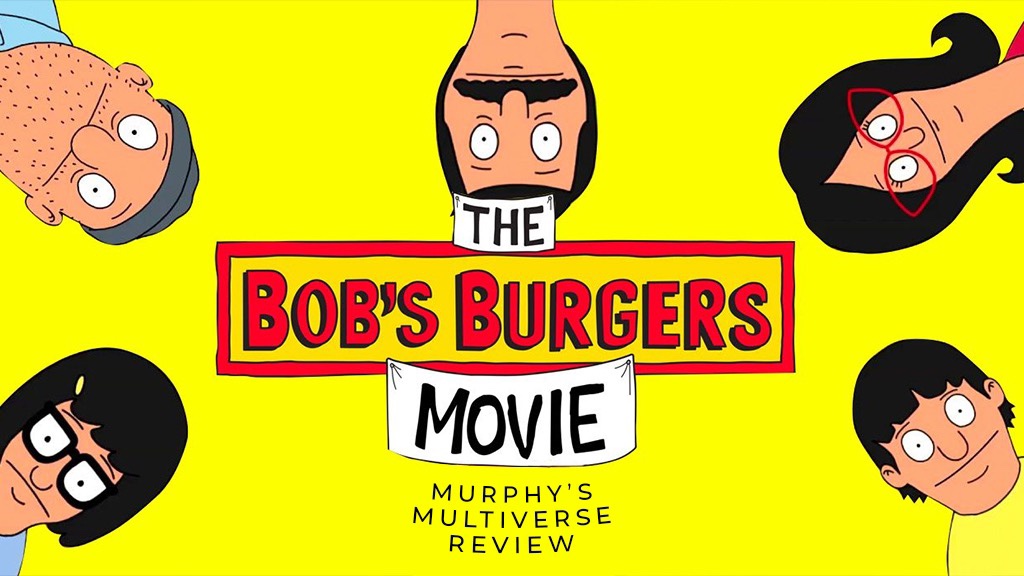
The Bob’s Burgers Movie succeeds because it engrains this knowledge into every crevice it has to offer. Loren Bouchard and Bernard Derriman weave a tapestry that, despite being made of comedy, comes together to create a beautiful image about family and all of its flaws. Don’t get me or my fancy wording wrong, the movie is still very much what you’d expect it to be. It has all the trappings of a typical Bob’s Burgers episode, right down to the daily special displayed on Bob’s chalkboard and the ever-changing business next door. There are goofy musical numbers, blink-and-you’ll-miss-them one-liners, visual gags, and all the familiar guest stars. However, the thing that truly helps the film soar is the major, aforementioned core trait that’s carried over from the series to the big screen – the lovable dysfunctionality of the Belcher family.
A lot of the story’s action takes place outside of the show’s normal environment, so the movie relies heavily on the group dynamics of everyone’s favorite burger-flipping brood. The story concerns a giant sinkhole opening in front of the Bob’s Burgers restaurant, preventing access to customers and threatening to close the joint for good. Bob and Linda form their own plan to raise money with the help of loyal patron Teddy, while the kids take a dramatically different path and try to solve a murder Louise is convinced will solve all their problems. Impressively, both plots work in equal measure, and the movie manages to organically sow them together in the kind of hilariously chaotic style only Bob’s Burgers could pull off. Every moment with more than one Belcher on-screen was guaranteed pleasure.
There’s a lot of humor from the jump in this film, and the jokes come at a relentless pace. Surprisingly, almost all of them land. There were several moments where I found myself cackling in the theater, something I haven’t done at a comedy showing in years. It’s often difficult in comedy to maintain that high of a joke rate without tiring the audience out. Sometimes, even if the comedy is well done, the schtick gets old by the time the credits begin to roll. Jackass Forever, for example, is a brilliant slapstick piece that almost became too much to laugh at as it crossed the finish line. Well done and actively funny, but most of my screening stopped laughing out loud about an hour in from fatigue. Conversely, The Bob’s Burgers Movie had everyone in their seats until the post-credits scene made us burst into laughter a final time.
It took me a while to figure out how this worked, but I think I finally came to a conclusion. As stated previously, the best kind of humor is typically rooted in truth. We can’t help but be amused by other people doing and saying stupid things, because really, we know we’re entirely capable of being just as dumb. Bob’s Burgers rattles off an endless stream of material, all of it based in characters being brainless, and more than once, I caught myself thinking “that feels like something I would do”, or, “that reminds me of [insert friend here]”. Because of this, I was completely engrossed the whole time, and let out an audible chuckle for every fart joke and nonsensical sentence the Belchers and friends emitted throughout.
Finally, to bring it all home, are the last few words from that opening paragraph. Bob’s Burgers never forgets that, no matter how empty-headed its protagonists can be, it’s all okay as long as they still love each other at the end of the day. This is a movie about embracing your weirdness and being comfortable in it because with any luck, you have other weird people around you to accept it. Even the overly-rich, eccentric landlord has an overly-rich, eccentric brother to understand him. The Bob’s Burgers Movie delights in cherishing stupidity, and the people who’ve allowed it to endure for millennia. Sometimes that’s enough to warm your heart, and it’s definitely enough to justify a trip to the movies.
Cookie Consent
We use cookies to improve your experience on our site. By using our site, you consent to cookies.
This website uses cookies
Websites store cookies to enhance functionality and personalise your experience. You can manage your preferences, but blocking some cookies may impact site performance and services.
Essential cookies enable basic functions and are necessary for the proper function of the website.
Name
Description
Duration
Cookie Preferences
This cookie is used to store the user's cookie consent preferences.
30 days
These cookies are needed for adding comments on this website.
Name
Description
Duration
comment_author_email
Used to track the user across multiple sessions.
Session
comment_author_url
Used to track the user across multiple sessions.
Session
comment_author
Used to track the user across multiple sessions.
Session
Statistics cookies collect information anonymously. This information helps us understand how visitors use our website.
Google Analytics is a powerful tool that tracks and analyzes website traffic for informed marketing decisions.
Contains information related to marketing campaigns of the user. These are shared with Google AdWords / Google Ads when the Google Ads and Google Analytics accounts are linked together.
90 days
__utma
ID used to identify users and sessions
2 years after last activity
__utmt
Used to monitor number of Google Analytics server requests
10 minutes
__utmb
Used to distinguish new sessions and visits. This cookie is set when the GA.js javascript library is loaded and there is no existing __utmb cookie. The cookie is updated every time data is sent to the Google Analytics server.
30 minutes after last activity
__utmc
Used only with old Urchin versions of Google Analytics and not with GA.js. Was used to distinguish between new sessions and visits at the end of a session.
End of session (browser)
__utmz
Contains information about the traffic source or campaign that directed user to the website. The cookie is set when the GA.js javascript is loaded and updated when data is sent to the Google Anaytics server
6 months after last activity
__utmv
Contains custom information set by the web developer via the _setCustomVar method in Google Analytics. This cookie is updated every time new data is sent to the Google Analytics server.
2 years after last activity
__utmx
Used to determine whether a user is included in an A / B or Multivariate test.
18 months
_ga
ID used to identify users
2 years
_gali
Used by Google Analytics to determine which links on a page are being clicked
30 seconds
_ga_
ID used to identify users
2 years
_gid
ID used to identify users for 24 hours after last activity
24 hours
_gat
Used to monitor number of Google Analytics server requests when using Google Tag Manager
1 minute
Marketing cookies are used to follow visitors to websites. The intention is to show ads that are relevant and engaging to the individual user.
Pinterest Tag is a web analytics service that tracks and reports website traffic.