AMC’s Interview with the Vampire is only two episodes into its first season but it has already begun building out what promises to be an expansive world. The studio has plans to use Rice’s Vampire Chronicles and Lives of the Mayfair Witches novels to develop their own shared universe, called the Immortal Universe. Interview with the Vampire is the first of what could be many adaptations of the Vampire Chronicles and it will be followed in January by the Alexandria Daddario-led Mayfair Witches series. Episode 1 of Interview with the Vampire briefly teased the family of witches being present in New Orleans when Louis and Lestat were active there; now a name drop in Episode 2 could start the process of detailing the very long and twisting history of vampires in the Immortal Universe.
In the opening minutes of Episode 2, “After the Phantoms of Your Former Self”, Daniel Malloy inspects one of Louis’ “rare” relics: a painting from an artist named Marius de Romanus. When Malloy mentions he’s never heard of the artist, Louis’ assistant mentions that little of his work survived and both Malloy and the audience moved on. However, if AMC’s plans for the Immortal Universe play out as expected, it’s likely the audience will hear much more about and from Marius at some point in time.
One of the oldest vampires in existence, Marius is over 2,000 years old, having been born as a bastard in 30 B.C. Turned by a vampire named Teskhamen, who served the first two vampires, Akasha and Enkil, Marius was immediately an incredibly powerful vampire whose strength grew over time. Eventually, Marius came to be the caretaker of Akasha and Enkil, known as Those Who Must Be Kept, who he looked after for centuries. Marius made several fledgling vampires, most notably Armand, whose path is destined to intersect with Louis’, perhaps even in this first season.
Marius plays a major role in many of Rice’s sequel novels to Interview with the Vampire and it would be shocking if he didn’t appear in some form in the first two seasons before taking on a major role down the road. So far, AMC has done a fantastic job of planting the smallest of seeds and giving them time to grow and bear fruit down the road. Will the trend continue in Episode 3?
Unlike nearly every other Marvel Studios project, Werewolf By Night took place entirely in its own corner of the MCU. No cameos. No callbacks. Just a self-contained special presentation that introduced a neatly retrofitted history of monsters and those who hunt them. As wonderful as it was, however, its ability to stand on its own (short of a 2-second reference to the Avengers) made it tough to determine just where it exists within the MCU’s ever-expanding timeline. Fortunately, Disney Plus has put it in its place.
Outside of a few dates on the graves of the Bloodstone family, there was really nothing given to place WHEN the events of Michael Giacchino’s project took place and the black and white presentation of it certainly makes it feel “longer ago” than when it actually was…which as it turns out, is right now in Marvel Studios’ present day. According to Disney Plus, the events of the night depicted in Werewolf By Night take place just around the same time as She-Hulk: Attorney at Law, Ms. Marvel and Thor: Love and Thunder. That means that not only does the MCU have a long history of monsters, it has a present which means it could have a future!
With Werewolf By Night’s timeline established, it leaves Black Widow as the only Phase 4 project set outside of the present day as its events took place prior to Avengers: Infinity War, making them part of the Infinity Saga. It’s of note that since Werewolf By Night does take place in the present day, the idea that the Bloodstone could play a role in the coming events in projects such as Avengers:The Kang Dynasty remains firmly on the table.
Marvel Studios Werewolf By Night debuted to praise from fans and critics alike, being hailed as a unique project for the studio in terms of both content and tone. The first of what’s expected to be many more Special Presentations for the studio, Michael Giacchino’s horror homage introduced a world of monsters and those that hunt them and was a little more violent than typical Marvel Studios’ fare. But being the first Special presentation and opening up a whole new world of characters and stories wasn’t all for the project as it also became the first Marvel Studios’ project on Disney Plus NOT to include some sort of post-credit tag.
Dating back to WandaVision, Marvel Studios has included at least one post-credit or mid-credit scene in every one of their Disney Plus streaming series, both live-action and animated. An argument can be made that the post-credit scenes have become a distraction, often taking away from the discourse around the body of the project and focusing on “what’s next.” And so despite rumors that actor Jaycob Maya would appear as lycanthrope Jake Gomez in a Werewolf By Night tag, he was nowhere to be found.
Giacchino recently stated that he had no intention of his project serving as a pilot for future horror installments, so it’s not entirely surprising that he put a bow on the story without teasing anything more. Sure, fans can wonder what Elsa, Jack and Ted might get up to next and exactly what the nature of the Bloodstone might be, but there were no promises made via a post-credit scene and that’s ok. Not even a “Jack will return” text appeared on screen. Too often, those promises aren’t kept or generate speculation that ultimately leads to disappointment. So while it might not mark the END of the tradition, it’s nice to see that the creators don’t feel beholden to it, allowing for them to use them as they see fit.
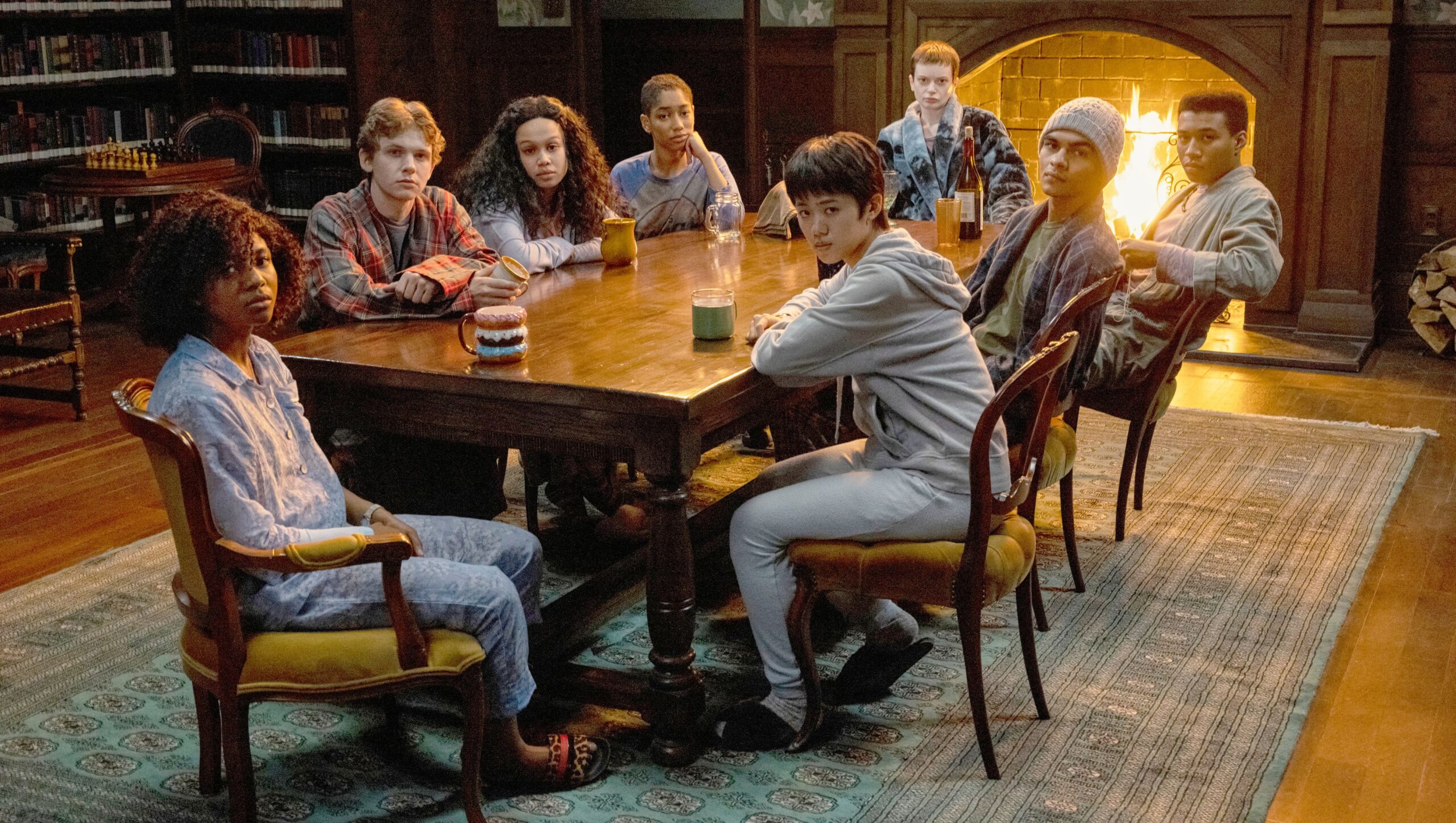
Mike Flanagan’s latest horror masterpiece, The Midnight Club, is now streaming on Netflix. The series, based on a novel by Christopher Pike, revolves around a group of terminally ill teenagers living at the (probably) haunted Brightcliffe hospice. Unbeknownst to the well-meaning staff, the mischievous kids sneak out of their rooms every night and meet in the library, where they tell each other ghost stories and think about life beyond the grave. It’s a fantastic premise, and it’s even better in execution. After a string of hits like the Haunting series and last year’s Midnight Mass, Flanagan delivers yet another exhilarating, endearing spookfest that’s worth everyone’s time and attention.
As a fan of frights and lover of good television, I had the distinct pleasure of experiencing The Midnight Club’s premiere episode on two occasions before it became available to the rest of the world. First, after receiving a screener from Netflix, I watched the pilot alone in my room. I set everything up the same way I would have for the rest of Flanagan’s projects. A bottle of wine sat beside my bed in dim lighting as I curled up under my sheets – fluffy pajamas and all – and hit play on The Final Chapter. For the next hour, I mostly just made a variety of noises. They included screeches, gasps, and pleas for the fear to stop. With nobody but myself around, I was free to do whatever was necessary to cope with the events playing out on the screen in front of me. Whether or not I also covered my ears to soften the blow of jump scares is private information.
Then, only a few nights later, I was lucky enough to watch The Final Chapter once more. For my second viewing, however, I was not alone. Instead, I found myself sitting amongst a large crowd of excitable horror fans at New York Comic-Con. The event was hosting the world premiere of the series, with the full cast and Flanagan in tow, and had pulled out all the stops. It was like a theater experience in that room, with the audience reacting loudly to every ghoulish moment and leaning forward in unison for each segment of emotional relief. We all took the bait together, metaphorically holding hands as we made our way down the murky path to Brightcliffe. It was an entirely different experience to the one I had lived through in my apartment. I no longer had my safety blanket, and instead was comforted only by the knowledge that everyone else in the room was as terrified as myself. It was group suffering, which is arguably the best kind of pain.
Following my time in the convention center, I was left with a curious thought – after watching The Midnight Club both alone and with a crowd, was either method better than the other? I think the definitive answer is a firm “no,” as the way one chooses to experience something is subjective and a matter of personal preference. However, I thought it interesting to at least explore the differences between the two. Watching by myself, I was struck by the way The Midnight Club was able to consume the space in which it was playing. With each movement of the score, or trick of the camera, it had the power to suck away all other energy from my room. Shadows began to creep, and my attention was pulled fully into the world of Brightcliffe. It made jump scares harder to take. A quiet nightmare interrupted by the ferocious, adrenaline-filled jolt of sudden monstrous faces. When it was over, I sat in silence. Contemplating the choices I had made up until that point in my life.
With an audience, it was altogether different. It didn’t matter that I already knew where the scares would be. The show is well-constructed enough to pull me in again, but this time, I had backup. There was a sense of relief after every fright, with myself and my fellow audience members even laughing at our own collective cowardice, in a somewhat successful attempt to clear the air of fear. Simultaneously, though, the scares felt bigger. With a full room reacting all at once, there was a sense of camaraderie in our terror. More of a rollercoaster ride than a personal attack. It was also a delight to watch the faces of the crowd as they lit up for each of the show’s best moments. There’s a certain pleasure one can take in knowing your seat partner is having just as much fun as you.
So, ultimately, watching The Midnight Club as a group was maybe more fun, but watching it alone was altogether the scarier experience. I’m not sure which is the one Mike Flanagan intended, but the show really works either way. Take note, if you plan on watching the show but aren’t sure how much you can really handle. It’s easier to put yourself through it if you have a nice little group together. If you’re a horror junkie, or a proverbial anxiety purist, lock yourself in a dark space and hit play with nothing to aid you but your favorite pillow. You’ll enjoy it no matter what. How you sleep after is entirely up to you.
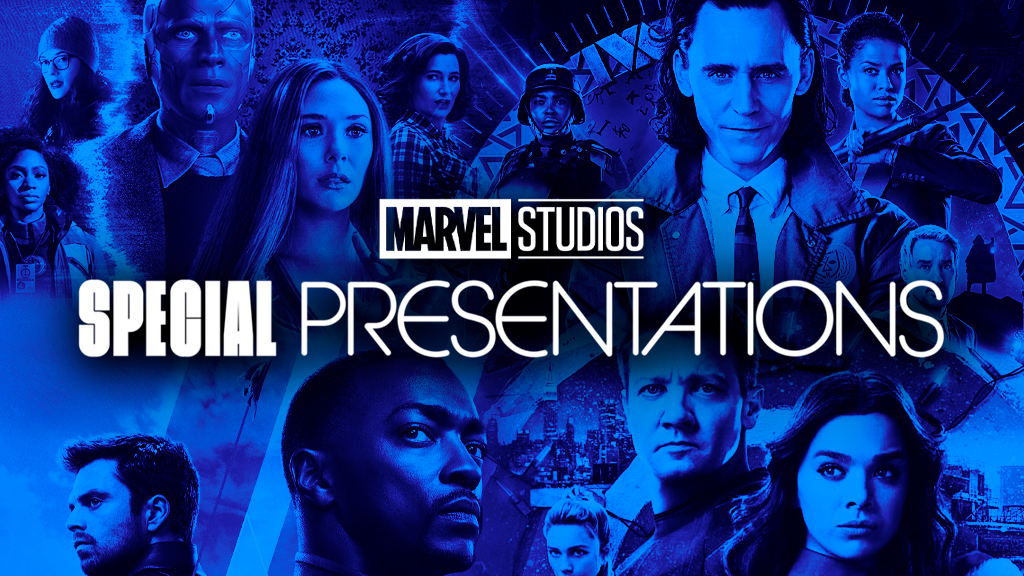
With the release of Werewolf By Night, Marvel Studios has given us yet another format in which to experience and further explore the MCU. Following feature films, one-shots, and TV shows, fans have now been treated to its first Special Presentation, with The Guardians of the Galaxy Holiday Special, Marvel’s second go at the format, just a few weeks away. And one thing is certain: if it ends up being as well received as Werewolf By Night has been, the demand for further projects within the same framework is bound to rise.
James Gunn has stated that his upcoming Holiday Special will be under 40 minutes in length and considering that Werewolf clocks in at around 48 minutes (not counting end-credits) the basic parameters for this kind of project seem to be fairly straightforward. Tv-episode-length with a higher budget, and a more concise and focused script than a feature film. Could this structure become the go-to format for Marvel Studios when it comes to their Disney+ content? As with many debates, the truth usually lies somewhere in the middle.
Considering how most Marvel Studios Disney+ shows have been a bit lackluster, there is no doubt that there is still work to be done when adapting the MCU to an episodic format. The Special Presentation type of show does allow Marvel to keep its feature film formula—a formula that works more often than not—a bit more intact, but while that may serve particular stories, there is still much that can be gained by giving certain characters and storylines additional room to breathe by going the 6+ episode route. If anything, Special Presentations allow Marvel to have a sort of middle-ground between a feature film and a TV show, so that when the story does ask for a shorter runtime but still not garnering sufficient relevance for the big screen there is still a way to make it work. It wouldn’t be hard to picture a series like The Falcon and the Winter Soldier being developed as a one-hour tv special, telling the story of how both Sam and Bucky went from Endgame to Captain America: New World Order and Thunderbolts, respectively. The same case could be made for Hawkeye that, as FatWS, would take advantage of previously established characters to streamline the narrative, swiftly leading into the next project. WandaVision would perhaps be the exception since it took the episodic format to heart and made it intrinsic to its essence. As for all Marvel Studios series introducing titular heroes, along with their own set of side characters, from Moon Knight to Ms. Marvel and She-Hulk, the longer runtime provided by several episodes seems completely warranted. Taking time to properly explore their origin, in their own corner of the MCU, without all the noise provided by the evergrowing mob of characters that will eventually engulf them seems fair.
But while the story itself should be the main reason when choosing what format to go with, there are also more specific points working in favor of the new format. For one: talent availability. With the success of the Marvel formula, the franchise is either attracting A-listers to its key roles or turning unknown actors into household names. In either case, unless previously signed contracts so dictate, it will become increasingly hard to get the desired names to be completely available for the time that it takes to shoot the usual 6 to 9 episodes of a regular Marvel Studios series. By having the Special Presentation format available, the studios could keep production schedules shorter, stars happier, and probably even bring about a bit more of that Strange Alchemy that the Russo Brothersvalued so much (something that happens when characters who never interacted in previous projects share the screen for the first time) by making everyone’s schedule a bit more team-up prone.
There is also another issue, especially relevant when it comes to streaming services, that the Special Presentation format sort of bypasses, not on its own but due to the sheer volume of premium original Disney+ content. The importance of keeping active subscribers all-year round is a big reason for investing in episodic series to be a good business model. But since Disney+ already has other equally massive franchises that are aiming at pumping out content frequently, there is no reason for Disney, when looking at the bigger picture, to not be ok with a few Marvel shows becoming glorified one-shots and not having to drive online discourse for several weeks since there are other shows that will keep subscribers busy for that same period.
What is perhaps a bit more dubious, but that could actually be a reality, is what the shorter runtime (when compared to a TV series) might do in terms of rewatchability and how that relates to the ease with which Marvel properties have been able to enter the cultural zeitgeist since 2008. For years Marvel Studios made…movies. Fans had to wait months in-between projects and what did they do when a new one was about to premiere? They rewatched the previous ones. And with that, everything about the movies permeated the discourse, from the biggest set pieces to the smallest of dialogue lines. It feels difficult for the same thing to happen when instead of 120 minutes that can be easily experienced over, and over again, fans have to sit through double that same amount of time, especially when there is always something new coming right up. By trimming the actual minutes of content being released, Marvel might be doing themselves a favor since instead of trending due to having constantly something new out, they might give fans the pause to reconnect with the material in a way that’s way more sustainable in the long run, thus imbuing Marvel Studios projects with what made them relevant to begin with.
As for what the future holds for the Special Presentation format, only time can tell. But things are seemingly on the right track for it to become an MCU staple on Disney+.
Marvel Studios Werewolf By Night might be the first time Man-Thing has been present in the action, but breadcrumbs, hints and Easter eggs of the existence of the creature have existed for the better part of a decade. With Man-Thing, who Jack so lovingly refers to as Ted, now in the spotlight, a brief look back at his history, both recorded and imagined, is in order.
Iron Man 3
No, you didn’t miss Man-Thing in Iron Man 3; however, clues to his origin story could be found. In the comics, Ted Sallis was a scientist working on Project Gladiator, one of a billion attempts to recreate the Super Solider Serum flowing in the veins of Steve Rogers. Sallis’ research partner and lover, Ellen Brandt, was turned by A.I.M. and eventually tried to steal the research. Ted said no, Ted drank the formula, she shot Ted and Ted fell into the swamp. When he emerged from the swamp, he had become Man-Thing, obviously. Ted and Ellen had a less than happy reunion that led to Ellen’s face becoming horribly disfigured by the touch of Man-Thing because, as we all know, whatever knows fear burns at the touch of the Man-Thing!
In an MCU that’s seen a few attempts at recreating the Super Soldier Serum, it wouldn’t be too surprising to find out that Project Gladiator went down at some point in time. More than that, however, A.I.M. agent Ellen Brandt had a gnarly facial scar and a missing arm that could easily be retconned to have been the result of an encounter with Man-Thing! Given that Iron Man 3 took place in 2013, we can deduce that Ted has been Man-Thing for at least a decade assuming Werewolf By Night takes place in the MCU’s present day of 2025.
Thor: Raganarok
Having (not really) established that Ted operated as Man-Thing as early 2013 really does little to explain away how his face ended up on the Grandmaster’s palace on Sakaar in Thor: Ragnarok. As the Grandmaster says, time works a little differently there, but what you can be sure of is that at some point before the events of Thor: Ragnarok, Man-Thing was one of the Grandmaster’s Champions. It’s not clear under what circumstances he found himself participating in the Contest of Champions, but from Jack’s dialogue in Werewolf By Night, it’s clear that Ted has a bit of a habit of getting himself captured. Perhaps he found himself unwillfully part of the Contest, became champion and won his freedom. Whatever the case may be, assuming Werewolf By Night takes place in the MCU’s present day, Manny eventually found his way back to Earth.
Werewolf by Night
Man-Thing finds himself the prisoner of the vile Verusa as the events of Werewolf By Night begin to unfold. And while he has his revenge on her by burning her up and tossing her body across the great room of Bloodstone Manor, what’s more important in giving us clues about Ted’s excellent adventure is his heart-warming relationship with Jack. Michael Giacchino did a fantastic job of retrofitting Jack, Ted, Elsa and other characters, both seen and unseen, into the MCU’s history. The timeline isnt’ clear, but Jack’s been around for a while and he’s known Ted long enough to not only become besties with him but also save his butt more than once.
What’s Next
The existing relationship between Jack and Ted makes one ponder what other monsters exist within the shared universe who have also been on the receiving end of Jack’s help. If saving monsters, like Ted, is what Jack does in the MCU, it seems like he, Man-Thing and their new friend Elsa, might be likely to team-up again at some point. Putting those 3 together is enough for the foundations of The Legion of Monsters.
It’s also possible that Marvel Studios chooses to explore Man-Thing’s identity as the guardian of the Nexus of All Realities, a gateway located at a point where all of the many realities of the multiverse interest and can be accessed. The Multiverse Saga has just begun and isn’t set to end for three more years, meaning further exploration of the concept is sure to happen. Perhaps Man-Thing could appear in a project such as Loki Season 2 in a little less-monstrous capacity.
Werewolf By Night’s debut on Disney Plus is extraordinarily timed. Not just because it’s a few weeks out from Halloween, but also because it comes at a time when the MCU is under heavy criticism from fans who can’t seem to get a handle on where “things are headed” in the Multiverse Saga. While the Special Presentation may not give fans any clarity on that issue, there is not doubt that Werewolf By Night knows EXACTLY what it is and, on a larger scale, what horror in the MCU could be.
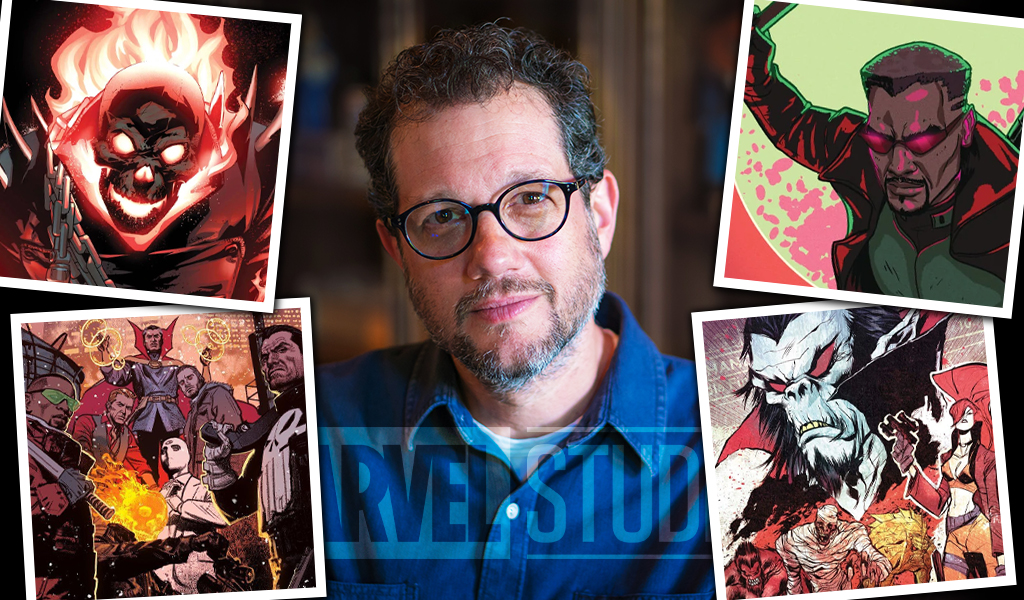
Michael Giacchino is a legendary composer, arguably the greatest of his generation; however, he had never taken the reigns as a director on a project as large as Werewolf By Night before. Given that relative inexperience, fans understandably questioned if the cut of his jib was right for a feature-length project. Now that audiences can see and digest the project, only the most contrarian of critics would make the argument that Giacchino didn’t just “handle it”, but put together one of Marvel Studios’ most unique and artistic projects in its impressive history. And he did so because he knew exactly what he wanted it to be.
A wonderful homage to the Universal Classic Monster films, Werewolf By Night reconciles century-old sensibilities into cinema’s modern-day monster. Giacchino is as much a fan of those old horror films as we all are of the MCU; they live inside his mind. The result of that is a finished product where nothing feels forced or out of place because it’s all an expression of a project that Giacchino not only wanted to make, but that he’d likely been making in his head, in some form or another, for years. And in true MCU fashion, he made something that serves not only as a one-off masterpiece but could serve to create a brand new corner of the MCU that’s populated with beautiful characters and stories for a decade. And if that is indeed the plan as laid out by Marvel Studios One-Above-All and the Parliament, then this project should have convinced them to allow Giacchino to be its architect.
Kevin Fiege and the Parliament are busy, busy people. The studio now produces a minimum of six projects a year and as we move further away from the COVID shutdowns of productions, that number could increase. In a situation like that, having an experienced person on a project can save each of the executive producers a great deal of time and Giacchino has as much experience as anyone. Should he write, direct and compose every horror project for Marvel Studios? Absolutely not. But he should write, direct and compose as many as he can and wants to and should be the point person for every one that he does not. Werewolf By Night has defined Marvel Studios’ horror in a very unique way, one that obviously can still be enjoyed by fans of all ages. To ensure that each subsequent horror project stays on brand, it would be wise to have Giacchino acting as at least a consultant, making sure there’s some continuity between them.
What’s next for the MCU in terms of horror? Beyond Blade, the studio has made no official announcements. Rumors of a Ghost Rider project have come and gone for years; the debut of Moon Knight has fans dreaming of the Midnight Sons; Werewolf By Night leaves the door open to a Legion of Monsters project. With Blade on the hunt for a director, could Giacchino quickly jump on board that project and help new writer Beau DeMayo craft a story that would fit seamlessly with Werewolf By Night? Would he even want to be? For Feige and company, there’s only one way to find out and at this point, it would seem they’d at least make an overture. Giacchino has created something that feels as important as any project Marvel Studios has put out in Phase 4. As they continue to bring back creatives from other projects to work on either successive or associated projects, it would be a shame if they didn’t do the same with Giacchino, who could be to horror what Michael Waldron is to the MCU multiverse.
Marvel Studios’ first Special Presentation, Werewolf by Night, introduced fans to an unknown world of monsters, and perhaps just as important, the secret cabal of hunters who’ve spent their lives tracking them down. As one might expect, this collection of killers is both terrifying and eccentric, quickly making their mark on the Marvel Cinematic Universe as a group not to be reckoned with. However, some of these menacing murderers are more masterly than others, begging the question of who might be the best of them all. As such, Murphy’s Multiverse – home of fandom’s spookiest minds – has taken the liberty of digging in and breaking down every Monster Hunter the special has to offer, ranking them by order of skill and appearance.
6. Barasso
Daniel J. Watts‘ quiet monster hunter is ranked dead last for a few reasons, but none of them have to do with performance. Watts is actually quite charming in the role when he has his brief moments of dialogue and interaction, but otherwise, he doesn’t get to do very much. Despite surviving longer than most of the other characters on this list, Barasso sort of just stands around for most of Werewolf by Night‘s runtime. When he finally does get to put his skills to use, he’s slaughtered by the titular monster pretty quickly. The fact he sort of just exists without doing anything especially memorable puts him behind the rest of the pack, but maybe one day he’ll get to make a return appearance in another project. After all, Marvel Studios is scheduled to do quite a bit of time-jumping over the next few years.
5. Azarel
Eugenie Bondurant‘s Azarel is in a similar boat to Barasso, but gets the slight edge for at least having a memorable character design. The David Bowie-esque monster hunter is striking, and has a looming presence through the entirety of Werewolf by Night. Although they don’t get to show off their fun scythe-like weapon until the special’s climax, and are promptly expired by Marvel’s wolf-man, they do seem to have a suspicious beat on Gael Garcia Bernal’s Jack Russell from the very start. That alone shows signs of Azarel being pretty sharp, a trait that any good hunter should possess if they hope to make an impact in their field. Unfortunately, Azarel doesn’t get to do much more than look great and die trying, so they fall toward the bottom of the list.
4. Jovan
Kirk Thatcher‘s bombastic Jovan boasts frequently about his fifty-seven confirmed monster kills. His big personality and entertaining role as Jack’s first on-screen foil earn him a higher spot on this list than his fellow fallen hunters, even if he wasn’t able to make it out of Bloodstone Manor’s intricate maze alive. The axe-wielding maniac certainly makes an impression by befriending Mr. Russell before immediately trying to chop him in half, and his delightful comments about wishing he had a signature look likely endeared him to fans right off the bat. Also, being the first person killed by Man-Thing in the MCU is a pretty nice thing to have on the ole’ monster-hunting resume – if he were still among the living for it to matter.
3. Verussa Bloodstone
The true big bad of Werewolf by Night. At first, Harriet Sansom Harris’ Verussa Bloodstone appears to only be a mouthpiece for her recently deceased husband. However, circumstance leads to the revelation that Verussa is quite capable of hunting monsters on her own, and might have even been the true mastermind behind the Bloodstone dynasty. She’s certainly the most bloodthirsty of the bunch and might have killed her own step-daughter if Man-Thing didn’t intervene. The Bloodstone matriarch ranks third on the list as a perfectly cheesy villain with some of the best shots throughout the special.
2. Liorn
Leonardo Nam’s Liorn got to the second spot on this list by way of being oddly interesting without too big of a role. Helping matters, he happens to have the best death in the entire special, and his cool factor is undeniable. Another mostly silent monster hunter, Liorn gets a full-blown fight sequence with Laura Donelly’s Elsa Bloodstone that’s equal parts grotesque and breathtaking. It ends with him losing a hand and taking his own arrow through his head, which is awesome. Of all the hunters in Werewolf by Night who aren’t being obviously set up for a future in the MCU, Liorn is the one who probably most deserved a little more screen time. Rest in pieces to a true legend.
1. Elsa Bloodstone
This was a no-brainer, but it’s still worth throwing out there. Laura Donnelly’s Elsa Bloodstone is the runaway Most Valuable Player of Werewolf by Night, which is saying something when one considers how good Bernal and Man-Thing are throughout. She has some of the best fight choreography the MCU has ever seen, and could probably rival either Black Widow in hand-to-hand combat. She’s also ridiculously charming in an Addams Family sort of way. Hopefully, there will be plenty of Elsa in Marvel’s future. The world deserves more of whatever her deal is.
Special Mention: Ulysses Bloodstone
Ulysses Bloodstone is dead by the time Werewolf by Night begins, but he deserves a special mention if only because he was supposedly the greatest monster hunter to ever live. Viewers never get to see him in action, but a manor full of mementos and a legacy that haunts the entire monster-hunting community is probably enough evidence to prove he was as good at killing monsters as he was at graveyard humor. The comic book version of Ulysses was just as prolific as his MCU counterpart, and while fans may never get to see him as more than a talking corpse in live-action, it’s worth giving him the nod here as a genuine player in Marvel’s mortuary scene.
Much has been said about the apparent lack of connecting tissue uniting most of the MCU’s Phase 4. Even though the climax for Marvel’s post-Endgame storylines being pretty straightforward from the moment the Multiverse came into play, most fans only came to terms with it in July 2022. This was when Kevin Feige announced the upcoming Avengers: Secret Wars, scheduled to be released on November 7, 2025, and in a single instant, it became easy to unite every separate storyline into a single narrative thread, in a way only the Multiverse can.
But there are levels to this. If on the surface, in terms of character movement, things should be moving in closer together for the foreseeable future, mimicking the final days of the Infinity Saga, there might be more assembling going on. And Werewolf By Night, even as detached from the usual look and feel of the MCU as it is, with little to no connection to other projects besides, you know, being set in the same universe, will probably have something to offer in that regard.
Marvel Studios’ Shang-Chi and The Legend of The Ten Rings (2022)
Phase 4 has been all about reinventing and reframing legacy characters all while introducing new faces, both heroes and villains, to an evergrowing canvas of intertwined stories. But it is also quietly revealing strange new artifacts, with apparent similar origins albeit vastly different capabilities, that might come together play a part in the multiversal war that is to come. And this is where Werewolf By Night’s Bloodstone comes into play.
Both in Shang-Chi and The Legend of The Ten Rings and Ms. Marvel, we’ve been introduced to relics that have been slightly reinterpreted from their comic book origins, all while bringing them together in terms of origin. As for the Ten Rings, they were seen as too much like the Infinity Stones, as each ring initially had its own color and ability, and so not only their look but their previously mentioned origin was significantly changed, with the Shang-Chi post-credit scene hinting at an alien origin. As for Ms. Marvel’s bangle, it became the item that ultimately unlocked Kamala’s powers, unlike in the comics where she develops her superpowers when the Terrigen Mists are released. The bangle is, like the Ten Rings, also hinted at as having an alien origin since it’s mentioned that Kamala’s ancestor initially found it on the arm of a blue alien.
Marvel Studios’ Ms. Marvel (2022)
As for the Bloodstone (a.k.a. the Bloodgem), its comic book origin is, you guessed it, also alien. It is said to be the fragment of a meteorite that crashed on Earth somewhere around 8250 B.C, and that eventually founds its way onto the hands of Ulysses Bloodstone, who became immortal by being in possession of the stone. This could fit the powers of the Bloodstone as mentioned by Ulysses’s widow, Verusa, in Werewolf by Night:
What aspect of the Blood Stone are we after exactly? The strength it lends? The protection? Oh… longevity.
Verusa
Marvel Studios’ Werewolf by Night (2022)
The stone is described as a powerful supernatural relic, a weapon unlike any other, something that fits the profile—and likely the origin—of the other two artifacts mentioned above. If the future of the MCU will bring them all together to serve as instruments in the conflicts to come, remains to be seen. But whereas the Infinity Stones were meant to be wielded together, working in unison towards one single goal, having the Ten Rings, Kamala’s Cosmic Bangle, and the Bloodgem doing the same, even if achievable, might be a bit more tricky. But also incredibly more entertaining.
Werewolf by Night is now streaming, only on Disney+
It’s awesome to see social media and friends’ reactions of what’s happening in House of theDragon. When an adaptation sticks as closely to the source material as House of the Dragon has, knowing what’s coming is a gift and a curse, especially trying to piece together how the show is going to adapt the book moving forward, and not spoiling stuff for you nerds. Let’s get into it.
Family Reunion
The episode opened in Driftmark, the seat of house Velaryon, where the Targaryens and Velaryons, and most of the King’s court have arrived for Laena Velaryon’s funeral. Very sad, very awkard, especially when Vaemond Velaryon started his funeral speech and monologued on about how they need to keep their blood pure and strong, a direct shot to Rhaenyra’s (possibly illegitimate, who could know!) children, prompting Daemon to chuckle loudly and put the attention on him instead of the kids. Good guy Daemon!
There was a lot of staring and tense conversations in the beginning of this episode, especially with Viserys (looking a hell of a lot better than last episode) trying to reconcile with Daemon and being spurned, Corlys seeing Laenor be drunk as hell waist-deep in the sea and basically screaming to Qarl to go get him, raising everyone’s attention, and ending with Viserys calling Alicent by his first wife’s name, Aemma. Get wrecked Alicent, you idiot.
Aemond and Jace’s brief reunion scene with the two of them standing awkwardly together, with Aemond seeming to try and start a conversation before walking off was of interest.. It’s a good addition, showing that the kids are being forced to hate each other by their parents, and their reluctance to do so.
Vhagar
Aemond has been pining for a dragon for a while now and refuses to wait any longer, especially with the largest dragon in Westeros there for the taking. The first ride looked like Aemond was trying to hang onto a 747 as it climbed higher and higher. Tom Cruise is probably asking for a dragon to ride for the next Mission: Impossible movie after seeing this episode.
Vhagar’s roars and flight wake up a number of people in Driftmark, specifically Rhaena and Baela, who in turn wake up Jace and Luke to confront who was riding the girls’ mother’s dragon. They meet Aemond in a tunnel coming from the beach and it’s pretty clear that a little power in the form of a flying nuclear weapon has gone straight to Aemond’s head. The four Velaryons start arguing in protest that Aemond stole Vhagar, starting a brawl that ends with everyone beating the hell out of everyone. It ends quickly after Aemond gets Luke by the throat with one hand, and a rock in his other ready to come down on Luke’s face. As he starts gloating and calling Jace and Luke bastards, Luke gets his hands on a knife it and slices Aemond, taking out his left eye. The Lore clearly states his right eye was taken out, so this episode is sadly a 1/10 on book accuracy.
Most importantly, the largest living dragon switched sides from the Blacks to the Greens, as pointed out by Otto Hightower. The results of this trade might become real sooner than you think.
Greens and Blacks
The brawl between the children brought both families together, screaming at each other, with the King trying to make amends. Viserys trying to patch things together and seeing everything slip out of his fingers is becoming a bit of a bad habit.
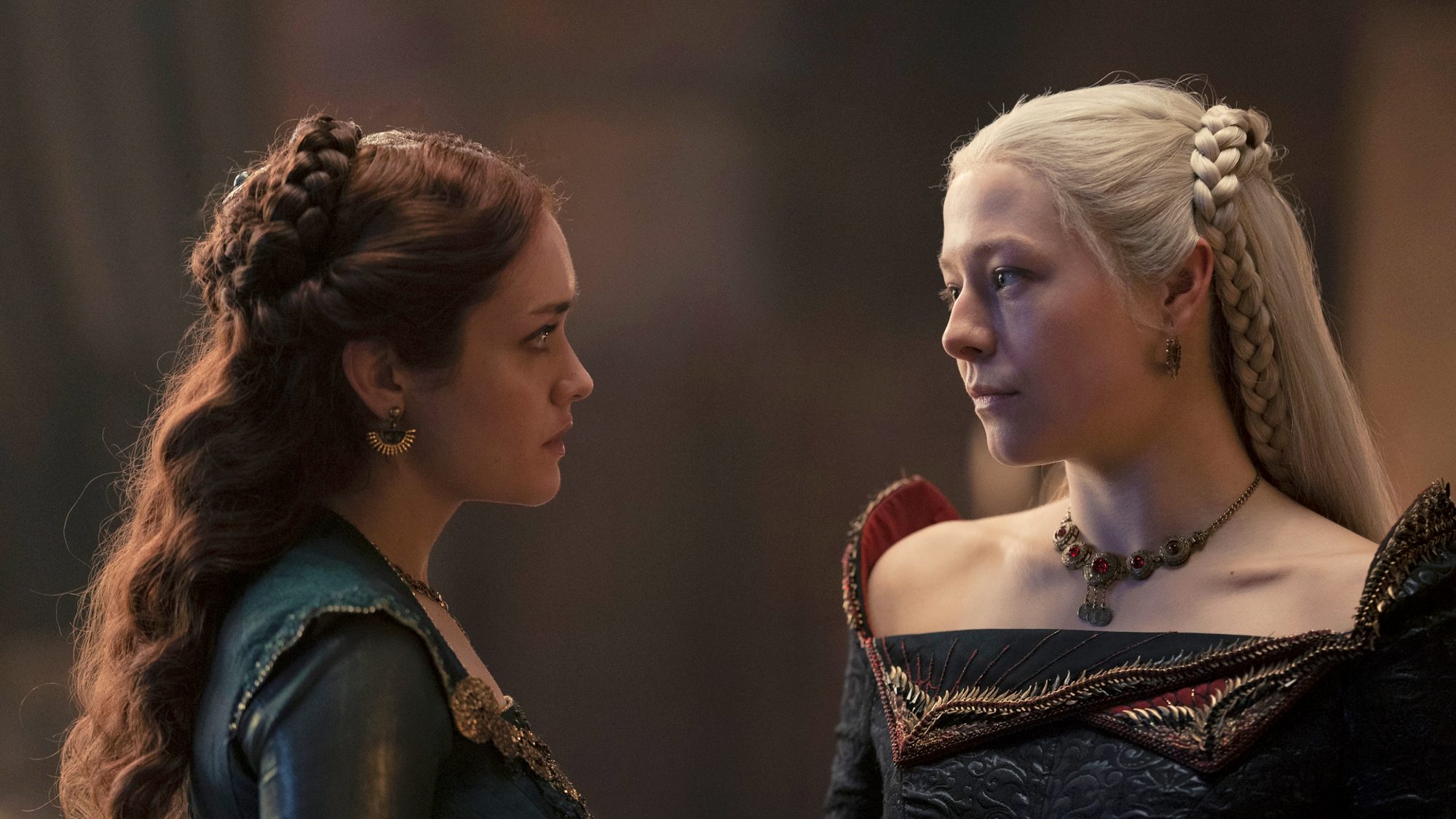
Jabs were tossed back and forth between Alicent and Rhaenyra, but the biggest was the allegation of who Jace and Luke’s father is. Aemond, being the little brother quickly blamed Aegon, who declared to the entire room that “Everyone knows. Just look at them.” Viserys quickly denounced these claims and put into law that anyone who is spreading these vile rumors will have their tongues out.
As the King went off to bed, Alicent went a little nuts and called for Criston Cole to bring her an eye from one of the boys. Smart guy Cole pointed out he’s sworn to protect her, not to maim children for her. Rageful, Alicent being the genius she is, decided to snatch Chekov’s dagger from Viserys and do it herself! Stopped by Rhanenyra, the two have a bit of word play that ended with Alicent slicing Rhaenyra’s arm, showing everyone in the room that she is a grade A psycho. Also, this is first blood to be spilled in the Dance, and it happens to be Aegon the Conqueror’s knife with the Targaryen prophecy forged into it.
This entire scene seems like a direct parallel to Season 1 of Thrones, where Joffrey is attacked by Arya’s direwolf. It ended with Robert succumbing to Cersei and ordering Ned to kill Sansa’s direwolf. Viserys however puts a stop to it. A stronger man than Bobby B.
After the showdown, Rhaenyra came to the conclusion that she needs strength from her husband, something she doesn’t currently have. But would with Daemon. They had a quick little romp on the beach for old times’ sake, and then they started their scheming. Daemon, in his henchman cloak, tossed some 30 pieces of silver to Qarl for the service of killing Laenor and escaping to Essos. And they did have a bit of a duel within Driftmark, where after Corlys and company find a burned body and mourned for Laenor…butour guy is revealed to have lived, those silver dreads shaved right off! Rhaenyra and Daemon are good guys!
Things to Come and Critiques
Helaena’s Dragon Dreams keep coming up, but what is it she’s prophesizing? Her prophecy from the previous episode paid off as she noted that Aemond would have to close one eye, which he happened to lose, in order to get a dragon. This episode she’s quoted as saying “Hand Turns Loom” (Could be literal, as Otto the hand has been creating a rift and seeds of war, spinning the loom) “Spool of Green, Spool of Black” (Back to the Loom. Green is Hightower, Black is Targaryen), and “Dragons flesh, Weaving dragons of thread” (More Loom! Targaryens creating war banners).
The show is leaning heavily into showing that the Blacks are the right side to cheer on, which is something that is a bit of a disappointment when it’s so clear that everyone on both sides sucks.
Laenor surviving and leaving his family seems a bit hypocritical. Earlier in the episode, he doubled down on his commitment to Rhaenyra; suddenly, he’s fine with leaving everyone, including his dragon Seasmoke? Throughout the books, the bond of a dragon and rider is for life. How is Seasmoke going to bond with a new rider when Laenor is still alive?
It seems as thought Episode 8 might see another time jump, aging the kids up for the Dance. The 9th episode of almost every Season of Thrones was where the shocking spectacles took place. Ned’s death, The Battle of the Blackwater, the Red Wedding, the Battle on the Wall, Dany and Drogon in the fighting pit, and the Battle of the Bastards were all EPISODE 9 events. Episode 8 is the deep breath before the plunge, and so far, there are no signs that House of the Dragon will be doing things differently.
“There are decades where nothing happens; and there are weeks where decades happen” – Lenin – ME
Cookie Consent
We use cookies to improve your experience on our site. By using our site, you consent to cookies.
This website uses cookies
Websites store cookies to enhance functionality and personalise your experience. You can manage your preferences, but blocking some cookies may impact site performance and services.
Essential cookies enable basic functions and are necessary for the proper function of the website.
Name
Description
Duration
Cookie Preferences
This cookie is used to store the user's cookie consent preferences.
30 days
These cookies are needed for adding comments on this website.
Name
Description
Duration
comment_author_email
Used to track the user across multiple sessions.
Session
comment_author_url
Used to track the user across multiple sessions.
Session
comment_author
Used to track the user across multiple sessions.
Session
Statistics cookies collect information anonymously. This information helps us understand how visitors use our website.
Google Analytics is a powerful tool that tracks and analyzes website traffic for informed marketing decisions.
Contains information related to marketing campaigns of the user. These are shared with Google AdWords / Google Ads when the Google Ads and Google Analytics accounts are linked together.
90 days
__utma
ID used to identify users and sessions
2 years after last activity
__utmt
Used to monitor number of Google Analytics server requests
10 minutes
__utmb
Used to distinguish new sessions and visits. This cookie is set when the GA.js javascript library is loaded and there is no existing __utmb cookie. The cookie is updated every time data is sent to the Google Analytics server.
30 minutes after last activity
__utmc
Used only with old Urchin versions of Google Analytics and not with GA.js. Was used to distinguish between new sessions and visits at the end of a session.
End of session (browser)
__utmz
Contains information about the traffic source or campaign that directed user to the website. The cookie is set when the GA.js javascript is loaded and updated when data is sent to the Google Anaytics server
6 months after last activity
__utmv
Contains custom information set by the web developer via the _setCustomVar method in Google Analytics. This cookie is updated every time new data is sent to the Google Analytics server.
2 years after last activity
__utmx
Used to determine whether a user is included in an A / B or Multivariate test.
18 months
_ga
ID used to identify users
2 years
_gali
Used by Google Analytics to determine which links on a page are being clicked
30 seconds
_ga_
ID used to identify users
2 years
_gid
ID used to identify users for 24 hours after last activity
24 hours
_gat
Used to monitor number of Google Analytics server requests when using Google Tag Manager
1 minute
Marketing cookies are used to follow visitors to websites. The intention is to show ads that are relevant and engaging to the individual user.
Pinterest Tag is a web analytics service that tracks and reports website traffic.