Tag: TV Features

  • REVIEW: ‘Willow’

    REVIEW: ‘Willow’

    NOTE: This non-spoiler review covers Episodes 1-7

    In 1972 when George Lucas first dreamt up what would eventually become the 1988 film Willow, the foundation of the story was the idea of propping up, in Lucas’ words, “a little guy against the system.” As a fantasy adventure releasing in the wake of giants such as House of the Dragon and The Lord of the Rings: The Rings of Power, Willow, the Disney Plus streaming series that serves as a legacy sequel to the film, is certainly just as Lucas conceived it. Not nearly as hotly anticipated as House of the Dragon or The Rings of Power, Willow comes to the party as an overlooked underdog that might seem to find itself facing a steep climb to success in comparison to those powerhouses. 50 years later, Willow remains exactly what Lucas envisioned it to be. While it takes a beat to prove its worth and is certainly not made to appeal to the same audience as the House of the Dragon or The Rings of Power, the elements of Willow coalesce into a fun, heavily 80’s-inspired series that finds its own way in the epic fantasy genre.

    The series navigates the familiar archetypes of a fantasy quest against a jaw-dropping array of scenery, with each episode moving from one spectacular, even if horrifying, setting to another. Shot in Wales, Willow takes full advantage of the varied geography of the country and some well-used CGI to fully realize the fantastical and familiar settings of Tir Asleen and Nockmaar while introducing some incredible (and spoilery) new places along the way. In terms of production value, Willow delivers from beginning to (almost) end. That extends beyond the settings to character designs that range from truly frightening (The Gales are going to give kids nightmares) to adorable (the mudmander that will give Falkor vibes to any 80’s kid).

    As with the settings, Willow’s cast of characters works to find a balance between familiar and new. Warwick Davis returns as High Aldin Willow Ufgood and Joanne Whalley has what amounts to an extended cameo as Sorsha, now the Queen of Tir Asleen who is without the love of her life, Val Kilmer’s Madmartigan. Madmartigan’s black hole-esque absence is central to the series’ main plot as it can be measured by the effect it has on those around it. No one feels the effects of it more than his children, Kit and Airk Tanthalos, played by Ruby Cruz and Dempsy Bryk, respectively. The children of Madmartigan feel both familiar to the character-Kit, as a restless adventurer, and Airk, as a prolific lover of ladies-but incomplete as they strive to find their own ways. They’re joined in the cast by fellow newbies Erin Kellyman as Jade, Ellie Bamber as Dove, Tony Revelori as Graydon Hastur and Amar Chada-Patel as Thraxus Boorman. Much like the audience, most of these new characters may have only an inkling of an idea of who the great sorcerer Willow is, making it easy for newcomers to the story to catch up along with them. While Davis brings so much more to the role than he did as a 17-year-old in 1988, it’s the young cast of characters that propels the plot from its center.

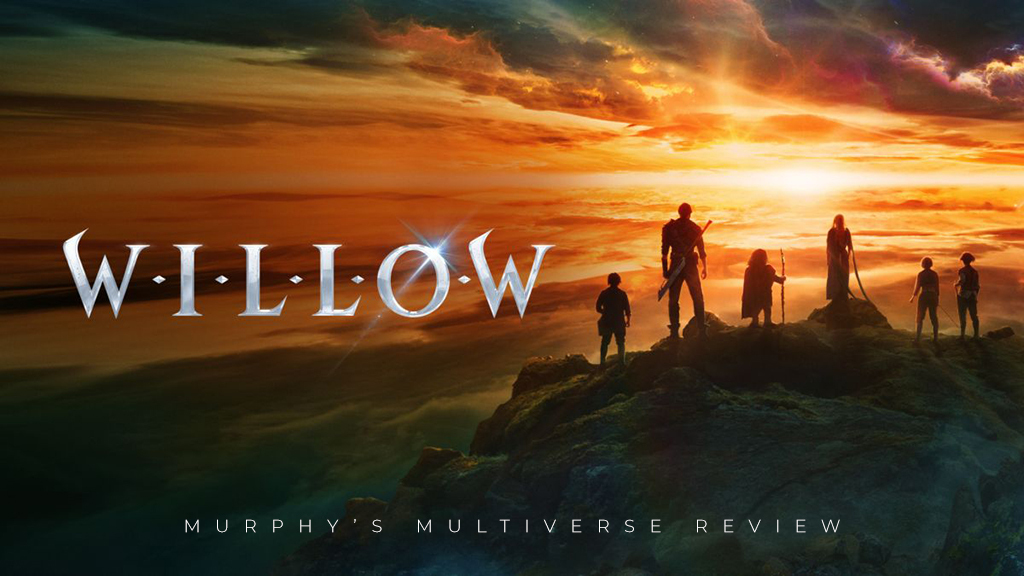
    (L-R): Graydon (Tony Revolori), Boorman (Amar Chadha-Patel), Dove (Ellie Bamber), Kit (Ruby Cruz), Willow Ufgood (Warwick Davis) and Jade (Erin Kellyman) in Lucasfilm’s WILLOW exclusively on Disney+. ©2022 Lucasfilm Ltd. & TM. All Rights Reserved.

    The center of that plot is, of course, a quest that not only puts the heroes in peril but also forces them to examine who they truly are. Without delving too far into spoilers, it’s fair to say that each of Willow’s new heroes questions who they are along the way and that each of them come to find out that they are not necessarily who they thought they were going to be.

    It’s no coincidence that the executive producer and head writer of a series that features people stepping out of the shadow of their father and discovering who they truly are is executive producer and writer Jonathan Kasdan. Just like the fellowship taking on the quest, the series takes time to find narrative coherence and that may be, in part, because Kasdan is undertaking a quest of his own, finding himself in the same way the new group of heroes does. Like Kit and Airk, Kasdan finds his way out from the shadow of a larger than life father (legendary screenwriter Lawrence Kasdan) over the course of the series. Like Kit and Airk, the series comes complete with echoes of the works of Kasdan the Elder (fans of Indiana Jones will find themselves reminded of some classic scenes); however, those echoes don’t define Kit and Airk nor do they define Willow. Rather like the heroes on the quest, Kasdan finds his own way while embracing the influence of the works of his father and others in the genre.

    Toth (Charlie Rawes) in Lucasfilm’s WILLOW exclusively on Disney+. ©2022 Lucasfilm Ltd. & TM. All Rights Reserved.

    It’s in respecting and understanding the genre, and the giants that built it, that Kasdan manges to build a series that while reminiscent of so many classics becomes content being its own thing. Each episode of Willow features exactly the kind of swashbuckling action fans of fantasy adventures would hope to see; each episode of Willow features some sort of dialogue of side quest that deepens the overall lore of the series; each episode of Willow features chivalry, honor and love. But the strength of the story is that in any given episode, any one of the fellowship may find himself/herself moving through the familiar tropes. Willow is not the traditional quest of one central hero surrounded by companions; in fact, the series provides enough time for each character to wear both titles.

    Willow continuously plays with the familiar tropes of the genre in ways that are both reflective of the 1988 film and imbued with a sense of modernity. Want a swashbuckling knight who falls in love with a princess? Willow has it. Want crusty trolls? Willow has them. Want terrifying Bone Reavers? Willow has them, too. However, Willow, much like the Nelwyn sorcerer for whom it is named, has plenty of tricks up its sleeve and, if given a chance, will come to surprise you. As has been shown over the past decade or so, success is not a given for a legacy sequel. Jonathan Kasdan seemed to be well-aware that any attempt at a successful sequel to 1988’s Willow, a cult classic whose charm has grown over the years, would have to be earned. He did so by cleverly balancing the series between the past and the present, putting together a series that while slow to start, will have fans anticipating the next installment by the end of Episode 3. Willow is a worthy successor to the film that, just like its delightful bunch of young heroes, carves its own path through familiar territory.

    Murphy’s Grading Scale: 8.0 (Very Fine)

    Source: The Cinema of George Lucas,
  • ‘Andor’ Season Finale Settles a Nearly 30-Year-Old Debate

    ‘Andor’ Season Finale Settles a Nearly 30-Year-Old Debate

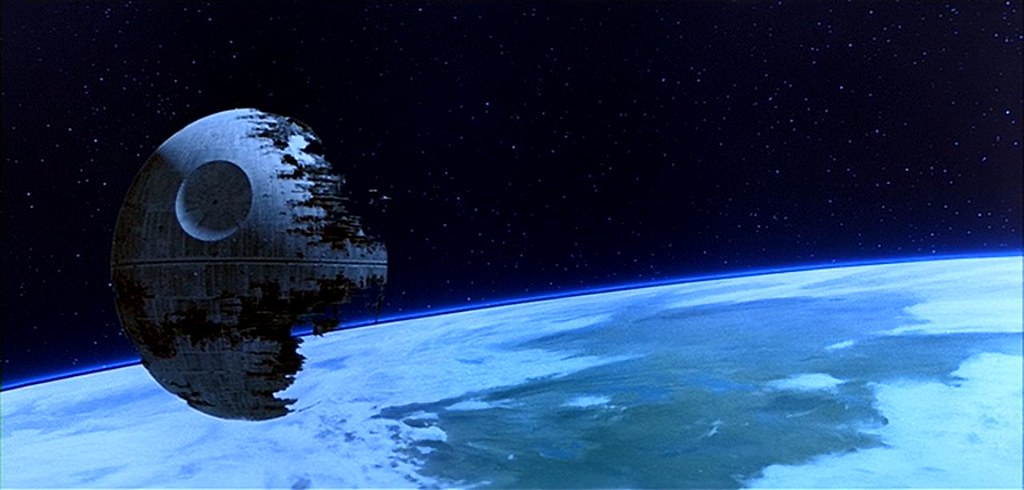
    The Season One finale of Andor cemented the series as one of Star Wars’ best projects to date and almost certainly the most complete of its offerings on Disney Plus. The episode also featured a post-credit scene that clarified a much-theorized plot point from earlier in the season as it showed to what end the parts being made in the prison on Narkina 5 were being used: to assemble the first Death Star. While that scene makes for yet another interesting connection to the events of Rogue One, namely why Cassian was willing to give his life to ensure the Death Star plans got to the Rebels after potentially learning he helped build the weapon, it also may end a long-standing debate first put forth nearly 30 years ago about the second Death Star.

    In Kevin Smith’s 1994 film Clerks, the film’s deuteragonists, Randal and Dante, enter into an ethical debate about the destruction of the second Death Star as seen in Return of the Jedi. Though DS-2 was, as the Emperor put it, “fully armed and operational”, it was still under construction when it was destroyed by Lando Calrissian. As Randal explained to Dante in Clerks, something about the attack “just never sat right” with him. As Dante questions him, Randal reveals that he believes a project of that magnitude would take more manpower than even the Empire could muster, meaning they must have brought in independent contractors to finish the job. Assuming they all died in the explosion, Randal believes they were innocent “casualties of a war they had nothing to do with” but Dante is not so sure. Though he doesn’t express it, Dante seems to believe that anyone willing to build a Death Star isn’t innocent. The debate is famously settled when a third party comes in and, while paying for his coffee, tells the pair that any real contractor thinks with his heart and “not his wallet.”

    The events of the post-credit scene of the season finale of Andor seem to render the debate moot. While Randal was likely correct in presuming that the Empire didn’t have enough manpower to build DS-2 so quickly, neither he nor Dante posited the possibility that the Empire simply employed droids. Given the fact that droids played an integral role in constructing DS-1, it stands to reason they’d play at least an equal role in the construction of DS-2 meaning that the number of innocent independent contractors who meet their doom at the hands of Lando. Maybe Smith can work the events of Andor into another film down the road.

  • What Bob Iger’s Return Might Mean for Marvel Studios’ Disney+ Future

    What Bob Iger’s Return Might Mean for Marvel Studios’ Disney+ Future

    There’s a lot happening over at Disney since Sunday’s announcement that Bob Iger will return as CEO and take back control of Disney after passing the torch to Bob Chapek. It’s not every day that a former executive just takes over a position shortly before the holidays and with an announcement on a Sunday of all things. Not even a day later, the development continued with Chapek‘s right-hand man, Kareem Daniel, leading the streaming revolution also leaving the company, someone who had much more control over projects than some might think.

    Now, the big question is what exactly this new direction means for Disney and especially Disney+. The streaming market has hit a bumpy road once things calmed down with the pandemic. In many ways, we saw a slight counter-development as people finally felt safer going out again, which lead to many doubts about the potential and profitability of the streaming market. Netflix hasn’t helped in that regard with them throwing as much money as they can against the wall to find their “next big franchise” for better and for worse.

    The rise finds demand also showed its fangs with Marvel Studios, who started producing a few Disney+ shows and started ramping up as demand during the pandemic skyrocketed. While some believe it turned into a “quantity over quality” matter, one cannot deny that Marvel made the best of the situation, as it filmed many of its projects during the pandemic with many restrictions holding them back. In a perfect world, the studio may have kept its originally planned course and developments but this isn’t about what ifs.

    What we are aiming to talk about is what will be, as Iger‘s return and Daniel‘s exit raise some interesting questions about what this means for Disney+ moving forward. The most important aspect is that creatives are back in the center, a significant showcase of what made his reign stand out as the company’s leading man. The dangers of algorithm-driven filmmaking have always shown their thorns throughout streamings history and this could rejuvenate hope in the market.

    Not just that, but it also likely hints at Marvel Studios gaining a bit more control over how they tackle the development of their series. At this point, Marvel Studios is capable of pumping out up to four or five series per year. Not a small undertaking for any production company in the markets even if it expanded to do just that. They made the best of the situation with some of Marvel Studio’s most out-there and creator-driven projects yet. Still, Iger’s return might mean the studio has a bit more control over just how much they produce.

    Many are quite concerned about R-rated content on Disney+, but that might not truly be an issue. The Star expansion internationally and a strong focus on more adult content were already put in motion before Iger left his position. He even highlighted Deadpool during the 20th Century Fox acquisition. We might still see some more family-friendly offerings in the future, but it doesn’t seem like he’ll suddenly force projects to become more PG-13, especially with how the studio has been growing with its new library. Of course, this is just speculation and nothing concrete outside of some fear of the old Disney model showing its hands.

    There is one major aspect that could see a shift; even if it won’t be noticeable immediately. Up until now, Chapek’s goal was to drive subscriber numbers as fast as possible. To do so, they needed to bet on their cash cow to do exactly that, which was Marvel Studios and even Lucasfilm. So, they faced the challenge of having to push out as much as possible to keep that number growing. While Marvel studios might have been just as ambitious, it’s hard to not think there was some growing demand internally to get out as much as possible.

    As noted, whatever the aftermath will be from Iger‘s return, we won’t see it for quite some time. Daniel leaving was the first signal that a new yet familiar era is set to return to the company and Marvel Studios will likely reflect that development. We might see them dial it back once the current projects that are already in production have been released. The Multiverse Saga is generally the Marvel Cinematic Universe going through its sophomore season and with post-Endgame blues affecting some, they can currently use the era to experiment.

    The Disney+ shows are a new venture for the production company, and Marvel Studios tried to take its cinematic experience into a new market; with the help of Marvel TV’s experience after merging with the division. One can feel about their consistency in quality one way or another, but it’s definitely been interesting to see Marvel go beyond its usual ventures in many ways. Special Presentations opened up the possibility to move away from high-budget series with unique ventures and who knows if we’ll see more of those moving forward.

    Iger‘s era is just about to begin, and we’ll very likely be stuck with many questions for some time. We don’t know if they’ll replace Davis and rebuild the streaming division, or potentially take a completely different direction moving forward. Perhaps Marvel will have more control over its own segments connected to the streamer, as originally envisioned when the Disney+ venture first started picking up steam. Whatever the future may bring, all eyes will be on Kevin Feige on how he’ll tackle this new direction.

  • 5 Avengers Too Wack for the MCU

    5 Avengers Too Wack for the MCU

    Once upon a time, it was hard to imagine characters such as Wonder Man, Jack Russell and Man-Thing could exist in the Marvel Cinematic Universe. Sure, all the characters are outlandish, dare I say comic book-ish, for one reason or another, but Marvel Studios has moved beyond the core group of Avengers and into the depths of the roster where some of their most

    Doctor Druid

    Marvel Studios toned down the weirdness of Doctor Strange’s adventures quite a bit in translating the Sorcerer Supreme from page to screen. But believe it or not, there’s another master of the mystic arts who has had even weirder adventures in the pages of the Marvel Comics: Doctor Anthony Druid. Doctor Druid actually predates Strange, having been created in 1961 and like Strange he sought out the Ancient One and learned some magic.

    It’s not so much that Druid himself is too wack for the MCU, though he does lean a bit too heavily into hypnosis sometimes; it’s more that the majority of his adventures in the pages of the comics took him to some locations that probably won’t end up being a bit part of the MCU. Trips to Deviant Lemuria, Weirdworld and Atlantis or all on his resume. He’s a little more occult than what we’ve seen in the MCU so far and though he has been an Avenger in the comics, it’s hard to imagine him holding down a spot on the roster in the future.

    Jack of Hearts

    Of all the characters on this list, the thought of Jack not ever making his way into the MCU is the one that’s toughest to take. The character first appeared in Deadly Hands of Kung Fu #22 after having been teased in previous issues. A human-alien hybrid, Jack’s powers came as the result of being exposed to an experimental fuel source, Zero Fluid, created by his father during an attack on his laboratory by the evil corporation known as…The Corporation.

    Even though Jack’s alien mother’s homeworld of Contraxia is already an established location within the MCU after having been visited in Guardians of the Galaxy Vol. 2, Jack is a tough character to imagine adapting to the screen, at least in any recognizable way. His origin story’s connections to an alternative fuel source would fit right into the modern world and the MCU, but his powerset would make him one of the most powerful characters in the shared universe. And then there’s his look. It’s an absolutely fabulous comic book design that just wouldn’t carry over to the big screen. So what is Jack of Hearts without his trademark look and his “my cells are full so I’m going to explode” timer always at risk of going off? He’s not Jack of Hearts, whatever he is. Too strong and too wack for the MCU.

    Sentry

    Nearly everything about Sentry sets up for a surefire blockbuster tentpole superhero flick, other than one key piece of his backstory: nobody within the Marvel universe remembers who he is. The origins of Robert Reynolds’ transformation into Sentry fit right into a key piece of the foundations of the MCU: the Super Soldier Serum. However, it’s not quite the fairy tale story of Steven Rogers. Methhead Roberty Reynolds broke into a lab and got into some serum that granted him the power of “a million exploding suns.” He went on to become one of Earth’s mightiest and most beloved heroes until The Void, an entity that bonded with Reynolds, took over and created chaos. With the help of a few of Earth’s heroes, including Doctor Strange, things were fixed up and the entire world, including Reynolds, forgot the Sentry ever existed.

    The reality of adapting Sentry to the MCU is that he’s simply too powerful to exist despite the fact that he would fit right into the modern MCU and the future. One of the great things about the character in the comics has been the exploration of how a character with his power could exist within society. He’s also a wonderful case study in mental health. They might adapt him for a film (there are rumors even now that he’s going to be the villain in Thunderbolts), but the TRUE Sentry, at the end of the day, however, he’s simply too wack to become a great character in the MCU. Enjoy him in the comics because that’s about as good as it’ll ever get.

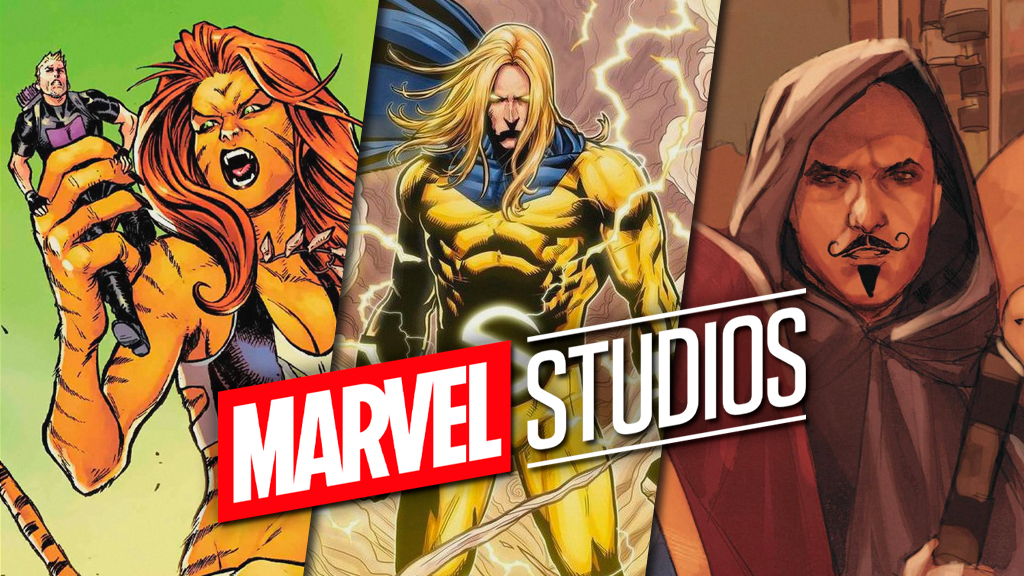
    Silverclaw

    Maria de Guadalupe Santiago’s backstory is probably as wack as any character in the Marvel Universe. Maria’s father held a deep belief in the old gods of Central America, specifically putting a significant amount of stock into the tales of the Volcano goddess, Peliali. After disappearing into the jungle for some time, Maria’s father came back with baby Maria, who he claimed was the daughter of Peliali. You can sort of compare Maria to DC’s Beast Boy in that she can change into a number of different animals, all native to Central America, of course. Over the years, she’s been an anaconda, a cheetah, a crocodile and…a sloth. Her powers manfiested uncontrollably when she was young and, after her father died, she found herself in an orphanage run by Catholic nuns who were none too happy to have a pagan werekid running around. Fortunately for Maria, Iron Man’s butler Edwin Jarvis saw a commercial for the orphanage, sponsored her and somehow she eventually ended up in America and became an Avenger.

    Thor, Black Panther and Moon Knight have already introduced different pantheons of gods to the MCU, so it wouldn’t be out of the question to have the Incan gods join them. However, it’s unlikely the Avengers are going to take on an abundance of werepeople. It’s also hard to imagine a non-mutant shapeshifter joining the team, especially one that, at first glance, looks like Gene Simmons. Silverclaw has never been a popular character (she has not been seen in the comics for a decade or so) and might be a touch to wack to find her way on an MCU-based Avengers team anytime soon.

    Tigra

    On one hand, if Jack Russell can exist in the MCU, Tigra can, too. Jack is a werewolf. Tigra is kind of like a werewolf, except she transforms into a cat…and wears a bikini. Greer Nelson has been an Avenger and a West Coast Avenger, a team that seems like it’s destined for the MCU sooner rather than later. She’s been an instructor at the Avengers Academy. She has some really great stories and has had important relationships with a lot of big players in the MCU, including Moon Knight. However, while a version of Grant Nelson/Tigra might bound into the MCU, it’s really hard to see where the tiger-striped, bikini-clad version fits in. At one point in time, the character was supposed to share the stage with Dazzler in an animated series for Hulu but, unfortunately, that never came to fruition. That may have been the best shot the weretiger had at the spotlight.

  • REVIEW: ‘Andor’ Episode 10

    REVIEW: ‘Andor’ Episode 10

    Sacrifice for the greater good has always been a central theme of Star Wars. From Obi-Wan becoming one with the Force in his duel with Vader in a New Hope, to Luke doing the same in The Last Jedi and Ben Solo giving his life for Rey in The Rise of Skywalker, sacrifice has been consistently present in the franchise. Episode 10 of Andor, “One Way Out”, continues that thematic resonance while illuminating just how circumstantial the nature of sacrifice can be. Andor isn’t about a fantastic moment where a Jedi becomes one with the Force for the good of the Rebellion; it is in large part, about much less spectacular characters losing bits of themselves by the day. And no episode of Andor hammers that point home more than “One Way Out.”

    Thought the prison break serves as the beautiful center of the episode, it’s the back alley conversation between Luthen Rael and his Imperial spy, Lonni, that stands out not only in the episode and the series, but also the franchise as arguably one of the most inspired and impassioned explanations of the true cost of the Rebellion. At this point, it’s hard not to think of Rael, a character new to fans just a couple of months ago, as one of the most integral figures in the Rebellion. Per his own words, however, his choices have damned him and he knows that he is fighting “to make sunrise” he knows he will never see. So when the galaxy celebrates its heroes at the end of A New Hope, nobody will to be grateful to Rael, nor to poor Lonni, nor to Anto Kreegyr, who Rael is so willing to sacrifice to keep things on track. While it’s ultimately heroes such as Luke, Leia, Han and Chewy who become the face of the Rebellion, Rael now must stand as its backbone. Stellan Skarsgård‘s work as Rael is among the most complex and brilliant in recent memory in a franchise that has all too often dipped into the well of bringing back familiar faces. In Rael, Tony Gilroy has created a new character that’s given more the the future of the galaxy than anyone will ever know.

    As Rael readily accepts that there’s no way off the path he’s chosen, Mon Mothma finds herself at a crossroads from where it seems there is no gentle path for her to take. Desperate for funding, the Senator finds herself in league with the gangster Davo who proves more than willing to provide her with the money she needs, but in exchange for a detestable cost: the apparent betrothal of her daughter to Davo’s son. Though Mon is quick to dismiss it, Davo doesn’t believe she’s quite as disgusted as she puts on. The series has gone to some lengths to show that Mon’s work has already come at the cost of familial relationships but Episode 10 leaves the audience to wonder just how far she’ll go to finance the Rebellion. Andor’s creatives have done fascinating work with Mon. Originally a minor character who seemed to stand out as a beacon of everything bright and shiny about the Rebellion, the series has fleshed her out and painted her in a much different light.

    Given the way the episode laid bare grim repercussions for Rael and Mothma, Cassian’s time in prison hardly seems like much of a sacrifice at all. In fact, it’s Andy Serkis‘ Kino Loy who had the most interesting journey in the prison arc. Initially a “company man”, it’s Loy who makes the episode’s most grandiose example of sacrifice, risking his life to lead the prison break with the knowledge that the “one way out” meant he would never be free. Unable to swim, Loy stands back while the other, including Cassian and Melshi, who turns up alongside his escape buddy in Rogue One, swim to freedom. The final shot of the episode, which shows Cassian and Melshi running across barren plains, is rich with symbolism. Cassian has no prospects ahead of him as he runs from his past. He has no safe haven to which he can return. The entire galaxy is after him. What comes next over the final two episodes will almost certainly remedy that and cement his place in the Rebellion, but given the job the series has done setting up the fractured nature of the fledgling alliance, it’ll be most interesting to see in which group he finds his way.

  • Netflix’s ‘One Piece’ is a Cinematic Ocean of Potential

    Netflix’s ‘One Piece’ is a Cinematic Ocean of Potential

    The following article exploring the potential cinematic potential of Netflix’s One Piece adaptation was inspired by chatting with some great people on the Discord fan page for the live-action adaptation. If you want to join the conversation, you can check out their Discord by clicking here or following @OPLAfandom on Twitter.

    Netflix has been anxiously looking for its next major hit by investing quite a bit into upcoming projects. Right now, Jonathan Entwistle has been quite busy developing a cinematic universe based on the popular Saban superhero team, the Power Rangers. They are actively looking for their next Stranger Things, as it not only became quite the rating hit in its fourth season but also is now set to build its own cinematic universe. With three candidates on their radar to take that duty, it does seem like the upcoming live-action adaptation of One Piece may be exactly what they are looking for.

    As of now, showrunners Matt Owens and Steve Maeda are working on the first season of the series with no announcement of future seasons hinted at so far. There have been talks of the budget for this series to potentially rival Marvel Studios’ outings, which hints at the hope for this project to become a tentpole of the streaming service. So, it does seem safe to assume that there’s hope to build more out of just the base series once the newly formed Straw Hat pirates enter the Grand Line.

    Netflix’s upcoming series will be an ambitious adaptation of a series that is currently still running and has over 1,000+ chapters under its belt. Eiichiro Oda has become well known for his ambition and love for worldbuilding which is reflected in his work. Even as we visit various islands alongside the Straw Hats’ journey, we also meet others that are following along on their very own journeys. These have commonly been slowly revealed with each new chapter release.

    The first season will seemingly include the cover story focused on Helmeppo and Coby’s adventures becoming Marines, as they’ve also announced the casting of Garp who doesn’t directly appear in the original East Blue Saga. Yet, there are some other stories that may not fit into the overarching storyline to further develop characters that become especially relevant later down the line. One of the most recent cover stories even managed to tie directly into the events that are unfolding in the story.

    In a way, some stories might be worth their own exploration as spinoff series or specials from the main storyline. Portgas D. Ace’s story after reuniting with Luffy in Alabasta could act as a bridge to his future appearance while also exploring his backstory as a member of the Whitebeard pirates. It would help further establish characters that usually only get a short amount of screen time while further building the mystique of who they are and what role they have in the story.

    There’s also the aftermath exploring what the Baroque Works members are up to after Alabasta, which could become its own project. While there’s no necessity to create a cinematic universe based around One Piece, the original manga sets up enough opportunities to do so. The Grand Line is filled with possibilities and it wouldn’t be too surprising if the potential of expanding this series might be a selling point for Netflix.

    If cinematic universes are what streamers are looking for nowadays, One Piece has the most potential based on the existing material alone. Its creator is also involved with the project and they could potentially establish their own stories that further expand the world we live in. Perhaps getting a chance to explore the different sides of the Marines with a series that introduces some of the recurring members we meet throughout the Straw Hat journey.

    The biggest challenge the series will face is establishing a completely new island with its own politics, history, and so much more. Perhaps taking some of that weight off by using spinoff projects to build up some elements that could muddy the experience. We don’t need to know the full structure of the Marines’ internal hierarchy if another project already covers the details through the lens of a member building his path through the ranks; potentially even hinting at a story element we wouldn’t see until further down into the New World.

    While the direction of this series also strongly depends on how popular the first season ends up being, there definitely is a potential to do so. The upcoming live-action adaptation will set the groundwork for where this project goes and how it adapts the original manga series. If the first season is a success and viewers end up falling in love with the world, there’s a lot more to show them why they should stick around to uncover all secrets of the Grand Line.

  • THEORY: Bob Odenkirk is the Main Villain in ‘Wonder Man’

    THEORY: Bob Odenkirk is the Main Villain in ‘Wonder Man’

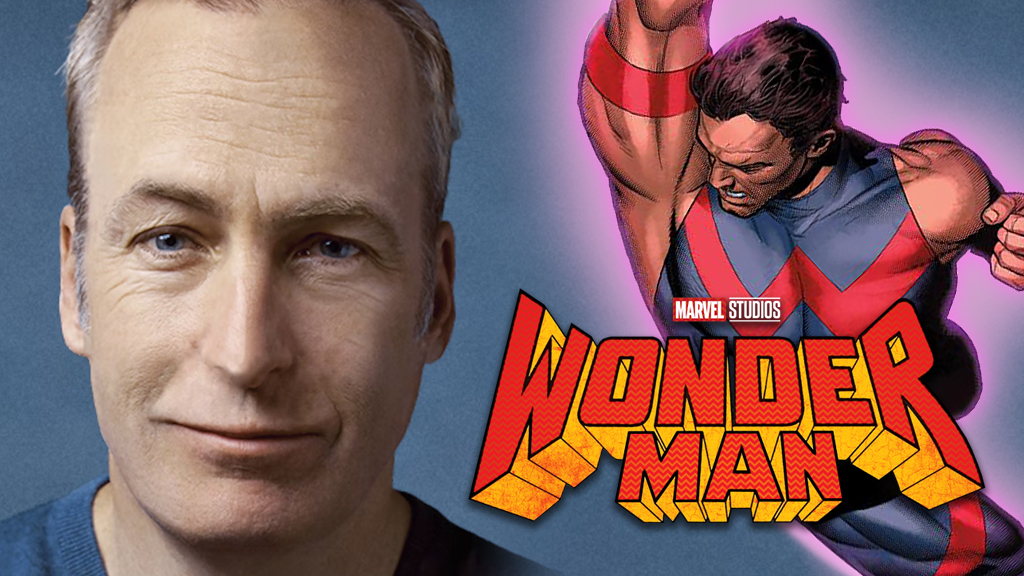
    Casting is underway for Marvel Studios’ Wonder Man, and it’s already insanely interesting. News broke recently that Aquaman breakout Yahya Abdul-Mateen II would star as the title character Simon Williams, a stuntman and actor with incredible ionic powers, and now it would seem Breaking Bad favorite Bob Odenkirk is in talks to play his manager. If this comes to fruition, Wonder Man would be coming out of the gate with two top-tier talents on board. Yet, it is a little odd to think that Kevin Feige and the folks at Marvel would sign such massively gifted performers for minor characters. Abdul-Mateen II would, of course, be around for the long haul, likely joining the Marvel Cinematic Universe for more than a few projects. Odenkirk appearing in the role of “Wonder Man’s agent,” however, almost feels like a downgrade following an award-worthy stretch on Better Call Saul. That is unless there’s more to the character than initially meets the eye.

    While not specifically named in the article revealing Odenkirk‘s potential casting, Wonder Man did have an agent in the comics that could also fill that role in the Disney+ series. Neal Saroyan, created by Gerard Jones and Jeff Johnson for Wonder Man’s second solo run in 1991, appeared as Simon Williams’ slimy talent manager for on-and-off stints over multiple years. At first, Saroyan was used mostly as a Hollywood caricature, designed to satirize the kind of awful behavior industry veterans have long been known for. For example, not long after becoming Simon’s agent, the established sleazeball purposefully orchestrates conflicts that endanger the lives of civilians so his client can look like more of a hero when he arrives to save the day. This style of promotion originates without Simon’s knowledge, but even after he learns the truth, Saroyan sticks around as a “this-is-how-the-business-works” foil for Wonder Man’s back-and-forth ethics.

    Neal spends nearly a decade in comic book obscurity, occasionally popping into Wonder Man stories as a means of driving the plot forward with his specific brand of chaos. Whether it be hiring Simon a fake sidekick to boost his image, booking appointments with supervillains, or trying to force Simon’s love interest to write a film based on tragic Avengers-based events – Saroyan was usually the man pulling the strings. It wasn’t until 2007 that he became something a lot more sinister than just a shady businessman. In a miniseries titled My Fair Super Hero, Simon’s third solo run, Neal steps up and quietly takes the part of main antagonist.

    Writer Peter David and artist Andrew Currie concoct a story in which Saroyan convinces Williams to star in a documentary reality show called – believe it or not – “My Fair Super Hero“. The premise stems from an earlier comic when Simon created a foundation known as “Second Chances”, where, being a former villain himself, he aids in the rehabilitation of criminals who want to be better. In My Fair Super Hero, Neal persuades Simon to publicly work with a superpowered assassin known as Ladykiller. Williams’ goal would be to reshape her image into a hero, under the new name “Ladyfair,” with the process being filmed as a way of bringing attention to both Wonder Man and Second Chances. A reluctant Simon agrees, and the remainder of the story revolves around Williams’ televised, eventually-romantic, relationship with Ladyfair as the duo fight off her dangerous former employers, “The Nobility”. The plot culminates in the surprise twist that Neal is not just a talent agent, but the secret leader of The Nobility and a hidden supervillain with brainwashing abilities. Saroyan waits until Simon brings Ladyfair into the presence of the Avengers, and then busts out his powers on the assassin in an effort to kill as many of the heroes as possible. Obviously, this doesn’t work, and only results in Neal’s untimely demise.

    My Fair Super Hero was not an overly memorable comic arc when it was released, but the notable casting of Bob Odenkirk as – possibly – Saroyan could mean it’s destined for an MCU makeover in the near future. Odenkirk excels at portraying fast-talking men with a secret, so it makes sense that Marvel might want him in a similar kind of role in Wonder Man. The fact that the studio would shoot for an actor of Odenkirk‘s caliber also indicates that “Wonder Man’s agent” will likely be a bigger factor in the series than originally imagined, and if that character is actually a live-action version of Saroyan, what better story to adapt than the one where he takes center stage? Depending on how Marvel chooses to implement Simon Williams’ origin in the MCU, My Fair Super Hero could actually be their best route in bringing a Disney+ series to life. It would only take some slight adjustments to fit perfectly in the context of the world they’ve established.

    Murphy’s Multiverse has already speculated that Abdul-Mateen II‘s hero could first debut as a villain in 2024’s Thunderbolts film. If this occurs, it will give Williams a genuine reason within the MCU to have founded an organization like Second Chances before aligning himself with a rather convincing representative of Hollywood. Furthermore, early reports on Wonder Man stated it was possible the series adapts the popular “mockumentary” style of television, another concept Murphy’s Multiverse got a jump on before its time. This idea was made more realistic by the hiring of Andrew Guest, a well-regarded mockumentary-style writer, to work on the show’s scripts. A My Fair Super Hero adaptation, which, as previously stated, sees Williams starring in a documentary reality series, would work naturally with this type of television.

    As for Williams’ partner and love interest in the arc, Ladykiller, Marvel Studios could choose to keep the character for the show. Alternatively, they could go for something a little bit bigger. My Fair Super Hero, the comic, begins with a discussion between Simon and Neal about the odds of Scarlet Witch’s redemption. At the time, her public image had just taken a turn for the worst, as it has recently done in the MCU. The conversation happens because Simon, who shares brain patterns with the Vision, is the other major romantic partner for Wanda Maximoff in the Marvel universe. So, putting all the pieces together, one comes up with quite the pitch for Wonder Man on Disney+ – Abdul-Mateen II’s Simon Williams founds Second Chances and hires Odenkirk’s Neal Saroyan as his agent to build upon a burgeoning career in Hollywood. Saroyan convinces Williams to create a documentary series in which he attempts to turn around the biggest public fall from grace in history and reestablish the Scarlet Witch as an Avengers-worthy superhero. Simon and Wanda begin to fall for each other as their mockumentary leads them on comical adventures around the MCU, culminating in a moment where Saroyan reveals himself as the villain and tries to force Wanda into once again losing it.

    Odenkirk gets his moment in the Marvel spotlight as a big bad, flexing his best entertainment muscles as a smooth-talker with the power of mental manipulation, and is more satisfyingly used in his one-off appearance. Simon develops his place in the MCU and solidifies his code of morals, while Wanda returns to superhero status. All wrapped in a fun, She-Hulk-style series on Disney+. It’s a win all around, and it only takes an obscure storyline from 2007 to get it done.

  • REVIEW: ‘Andor’ Episode 9

    REVIEW: ‘Andor’ Episode 9

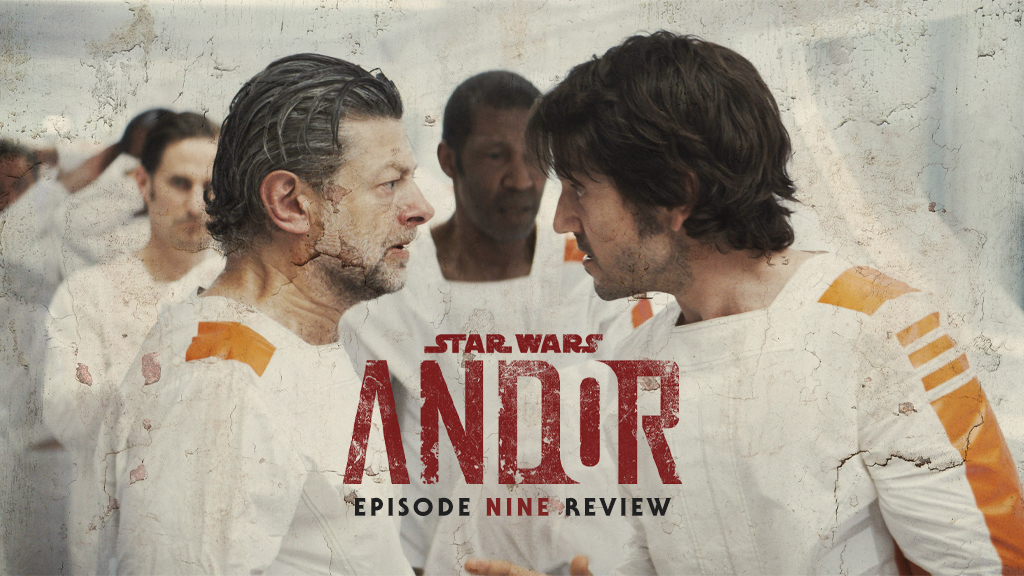
    Andor, a series built on mini-arcs, is in the midst of an arc that paints a bleak picture for the characters who have put themselves in the crosshairs of the Empire. Whether it’s Bix being tortured by the all-too-eager Doctor Gorst, Mon’s voice being ignored in the Senate or Cassian continuing along as a cog in the Imperial machine, Episode 9, “Nobody’s Listening” exists to show the extent of the Empire’s scope and power and contrast it against the Rebellion. Though Meero hasn’t caught the big fish she’s hoping to snag in her net, the fact that she and the Empire can do their work openly and without recourse, while the Rebellion has to strike from the shadows, serves to remind the audience that the galaxy is still a long way from openly embracing the Rebels. However, the events, which take place five years before the Battle of Yavin see in Star Wars: Episode IV-A New Hope, also work to show exactly why the Rebellion eventually grew into what audiences know it to be. In this way, Andor continues to be a prequel story worth telling and one that future generations of Star Wars fans will come to view as an essential piece of the overall story of the galaxy far, far away.

    The centerpiece of this arc, of course, is the very THX 1138-inspired prison where Cassian spends his days avoiding electrocution while serving as an Imperial laborer. While most of the prisoners seemed resigned to their fates, as best personified by Andy Serkis‘ Kino Loy, Cassian has recruited at least one fellow prisoner in an escape plan that, to put it nicely, is in its infancy. Despite his efforts to recruit Loy to assist in his efforts to escape, Cassian finds himself unable to break Loy free from the fear that the Empire is listening in on their conversations. Cassian’s tense conversation with Loy in their sleeping quarters is reminiscent of his conversation with Luthen Rael earlier in the series: the Empire isn’t listening because they don’t have to. They’ve come to believe themselves to be so omnipresent and omnipotent that they can simply rule through fear and intimidation. Meero is the face of that in Episode 9, though Cassian’s time in the prison only serves as an ironic display of the fact that the Empire has grown so large that they aren’t even aware that the person they’re searching for is already being held in one of their prisons. As Meero and the ISB scour the galaxy and leave behind a trail of dead and broken bodies, the man they’re attempting to catch is plotting his escape from them.

    With that in mind, it seems that the incident on Level 2 serves as the pivot point of the episode (and potentially the entire prison arc) as it is likely to ultimately lead to Meero and the ISB learning they already had Cassian in their grasp. The mass murder of the prisoners is sure to be a breaking point for Loy, but it also works as an example of exactly the type of behavior Rael hoped the Aldhani heist would provoke out of the Empire. The Empire’s dedication to swift and terrible retribution can’t be overlooked, even within the walls of a prison. Imagine the response if word were to get out…

    “Nobody’s Listening” stands as an incredibly strong episode because it allows the audience to feel the enormity of everything that has come before and what feels like is about to come next. Andor, both the character and the series, seems poised on a precipice that promises to lead to an exciting downhill ride over the next three episodes of the series. That’s built on season-long character development and intricate attention to detail in slowly tying together season-long plot threads. Once again, Andor proves that taking time to tell a story can be a brilliant choice as long as it’s a story worth telling.

  • ‘Warhammer 40K’ Remains an Untapped Cinematic Potential

    ‘Warhammer 40K’ Remains an Untapped Cinematic Potential

    The world has been ablaze with franchise adaptations from popular media left and right. We’ve seen the revival of Lord of the Rings with a new TV series, Game of Thrones‘ first spinoff has found its way to HBO while DC is trying to get its own universe together. Netflix is even hoping to create a cinematic universe based on the ever-popular Power Rangers to compete with other growing franchises. In all the discussions surrounding IP adaptations, there’s a noticeable lack of news on the adaptation of live-action Warhammer 40K.

    The table-top classic has quite the expansive lore and history that opens up many avenues for a cinematic universe like no other. While its stories are quite bleak, the variety its expansive books offer is nothing to ignore so easily. Surprisingly, there’s not been a big move like Netflix has done with its Power Rangers franchise but only news of Man in the Hgh Castle‘s Frank Spotnitz working on a possible series.

    The last we seemingly heard of this project was back in July of 209. The series would adapt the novels of Eisenhorn, the story of the Inquisitor of the same name, which was written by Dan Abnett. So far, it seems this is the only adaptation planned and maybe a way for Games Workshop to test the waters first. While the Warcraft adaptation had high expectations going in, its sequel setup never managed to really pick up any pace.

    At the moment, the attempt to adapt Warhammer 40K is less Marvel Cinematic Universe but more Detective Pikachu. Instead of focusing on the main storyline that many might know, Eisenhorn isn’t a classic Space Marine but a perfect vessel to offer an easy guide into the world of this franchise without overloading newcomers with the history of the Emperor of Mankind, Orks, Necrons, Old Ones, Warp, and so much more.

    It’s surprising that there isn’t more push in the heyday of streaming IPs, especially with many wanting to have the IP that becomes their flagship series to compete. Something as violent and bloody as Warhammer 40K definitely would stand out in the era of popular franchises like The Boys, House of the Dragon, Deadpool, and more.

    One very big fan of the tabletop game actually pointed out one of the reasons there hasn’t been such a rush to get these projects out. Henry Cavill, The Witcher and Man of Steel star, has been quite vocal about his love for the game and pointed out that Games Workshop is still very careful about adapting their IP with the uncertainty of how some end up.

    I think because Games Workshop have been very protective of their IP, and that’s a great decision, and very wise. There haven’t been just loads of TV shows and movies all done poorly. It needs to be handled perfectly. It needs to be handled to a Lord Of The Rings level. And if it’s not, I’ll be massively disappointed.

    Henry Cavill

    He jokingly pointed out that joining a Warhammer 40K project would be a dream come true, even if he won’t just take any role. He even jokingly call Eisenhower “a mere Inquisitor” when discussing what role he’d love to take on. He’d definitely be perfect as a flagship actor to push a dark dystopian world into the mainstream.

    The franchise has been slowly growing once again beyond its tabletop and literary roots, as there have been quite a few mainstream game releases throughout the years. They are even returning to the Space Marine franchise that was released back in 2011 with a sequel which was first announced in December of 2021. So, with it gaining more attention with new releases, it would be a shame that they don’t use the momentum to their advantage.

    Hopefully, Spotnitz‘s series will start to offer an update in the near future as once casting begins we’ll have a clearer picture of when we might expect the production to kick off. There’s a chance that the success of the first Warhammer 40K series could kick off further expansion exploring the vast galaxy and humankind’s seemingly neverending war. For now, we can only hope that news is just around the corner.

    Source: THR, Empire

  • ‘House of the Dragon’-Episode 10 Recap

    ‘House of the Dragon’-Episode 10 Recap

    After seeing how the Greens reacted upon learning of King Viserys’s death, acting on long-laid plans and instilling his son Aegon II as king, over Rhaenyra, Episode 10 took the story to Dragonstone.

    The Black Council

    The episode opened with Rhaenys serving as the bearer of bad news. Not only is Viserys dead, but Aegon had been named king in front of all of King’s Landing. Daemon point blank asked Rhaenys why she didn’t roast them alive when provided with the opportunity in the previous episode. Rhaenys said it wasn’t her war to start, which makes sense, but come on! They were right there!

    The shocking news of her father’s death sent Rhaenyra into labor with her third child with Daemon. She wasn’t due for months, and sadly lost the baby. While this wasn’t the final straw for her to declare war on her childhood best friend and half-siblings, it was just another thing to blame on the Greens.

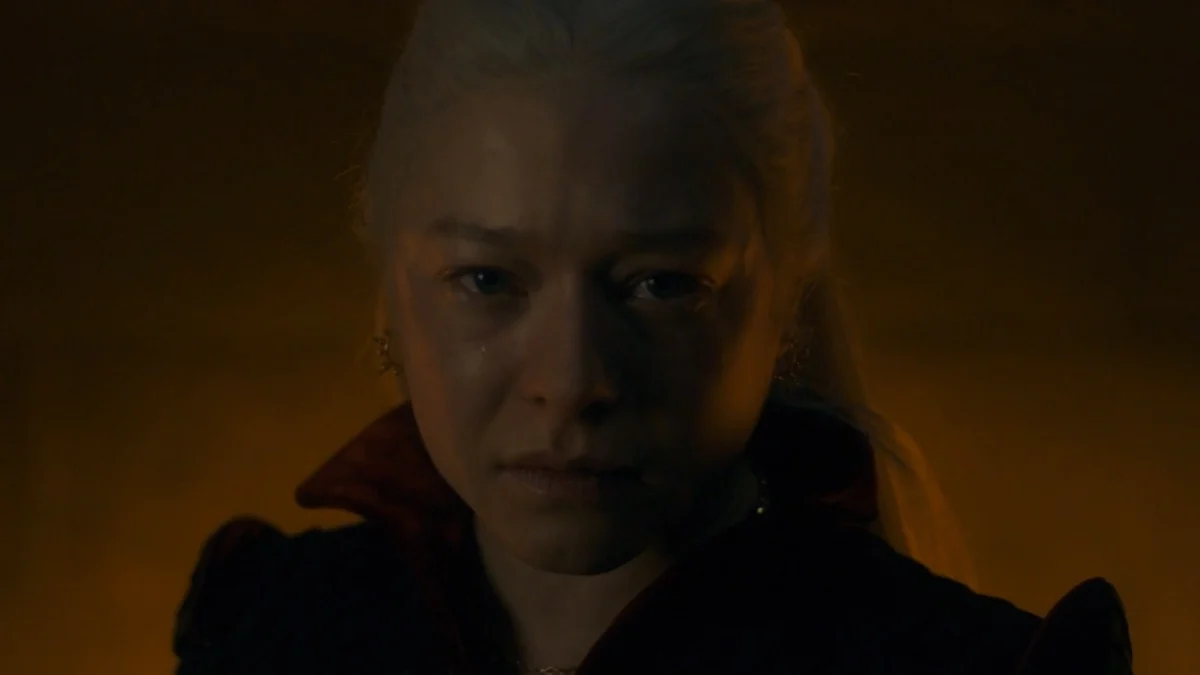
    Rhaenyra was very restrained in the war council, asking if it’s her duty to hold the realm together, or to tear apart the country to get to her throne. This moved Rhaenys, and in turn garnered both her and Corlys’s support and fleet, providing one of many lords and armies she’ll need to take the Iron Throne.

    Daemon

    Our warmongering rogue prince got up to his usual shenanigans. He’s eager to show Westeros who is the rightful heir to the throne, and he is willing to use dragons to do so. Damon addressed the many dragons that are still unclaimed and stated that the Blacks needed to find riders for them. Even with Vhagar’s sheer size, the Blacks having 13 dragons vs the Greens having 4 would make this war short-lived. But we see later in this episode what a dragon can do to another dragon. Is it worth the cost?

    A much-talked-about scene from the episode saw Daemon grab Rhaenyra by the throat and choke her. What forced this? We haven’t seen violence like this between Daemon and Rhaenyra, but he does have a history of murdering his wives. Well, turns out that even though Daemon was the heir before Rhaenyra was confirmed, he didn’t get all of the privileges that a Targaryen heir gets. He had no idea about Aegon the Conqueror’s vision, which is The Song of Ice and Fire (what the entire series is based on) when Rhaenyra brought it up. There’s a very good quote from Emma D’arcy, the actor that plays Rhaenyra, that might help explain the scene. “On the one hand, he can say that he doesn’t believe in prophecies. But he was never trusted to anyway.”

    This revelation that he was never really considered as the heir sent him off to try and bring out some of the unclaimed dragons, and we see him singing to Vermithor, the dragon to King Jaehaerys, who ruled before Viserys. Expect to see a lot more of these unclaimed dragons in Season 2.

    Storm’s End

    Having read Fire and Blood, I knew that this scene was coming, and I knew that the show had to nail this sequence. Aegon being crowned isn’t the catalyst that drove the realm into war. A woman being named heir over a male isn’t the catalyst. It is simply a young man with a vendetta and a nuclear weapon at his disposal that he can’t control.

    To set the scene, Rhaenyra was seeking to confirm who her allies are. By sending Jace north to the Vale, White Harbor, and Winterfell, as well as Luke being sent to Storm’s End, it sent a stronger message than just sending a raven. But when Luke gets to Storm’s End to treat with Borros Baratheon (who was chosen to lead, not to read), he finds Vhagar causing a ruckus outside, and Aemond the anime warrior with the sapphire eye already there. Luke was spurned by Baratheon and turned to leave to go back to Dragonstone. Aemond demanded justice, however, telling Luke to cut out his own eye and he’d let bygones be bygones. Borros stopped things and let Luke go. But he also let Aemond go.

    If you’re reading this, you saw the dragon fight, if you want to call it that. Vhagar is at least 5 times the size of Arrax, and it was not much of a battle so much a light snack for the oldest dragon in Westeros. But it also proved to be a major deviation from the book, and it might have some effects on the main series, Game of Thrones. Both Arrax and Vhagar disobeyed their riders, with Arrax shooting flame at Vhagar, and Vhagar going after him and killing both Luke and Arrax. With both Aemond and Luke repeatedly screaming for their dragons to stop and obey, it recalls a warning given by Viserys throughout this season that dragons are something that the Targaryens trust in too much, being that they are still uncontrollable wild animals at their heart. That came to life here. Aemond meant to just intimidate his nephew, and instead he started a civil war that will tear apart the Seven Kingdoms.

    Things to Come

    With the dragons acting on their own will in the ending sequence, I hinted that this may have further effects on Game of Thrones, in particular, when Dany burns King’s Landing to the ground. Could House of the Dragon possibly be trying to retcon this action, by placing the blame on Drogon instead of Daenerys? Something to think about.

    In Season 2, we’ll be seeing the Vale again, as well as Winterfell, where Jace will be traveling. We’ll also finally see Daeron, the third son of Viserys and Alicent, who has been in Oldtown for all of this season, along with his dragon Tessarion. He’ll have a large part to play in the coming war. Exciting things to come, and it was a great start to the show.