Tag: TV Features

  • ‘House of the Dragon’ – Best & Worst of ‘The Black Queen’

    ‘House of the Dragon’ – Best & Worst of ‘The Black Queen’

    Dreams didn’t make us kings. Dragons did.

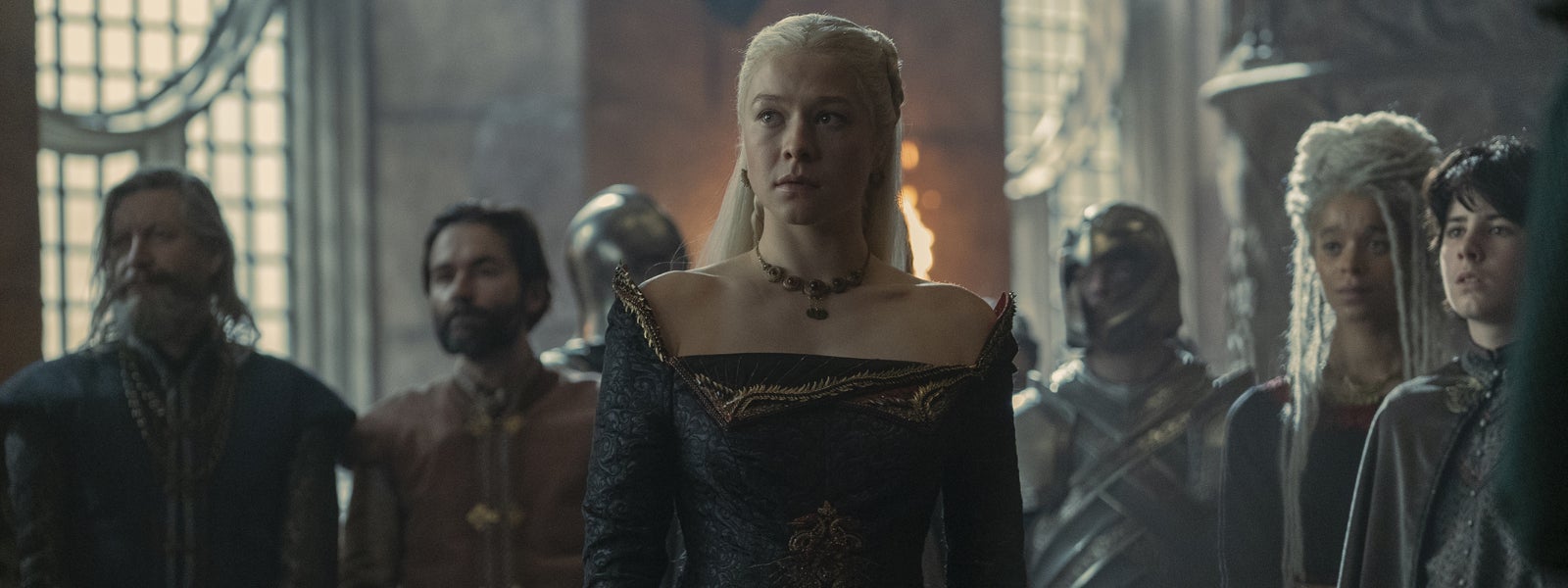
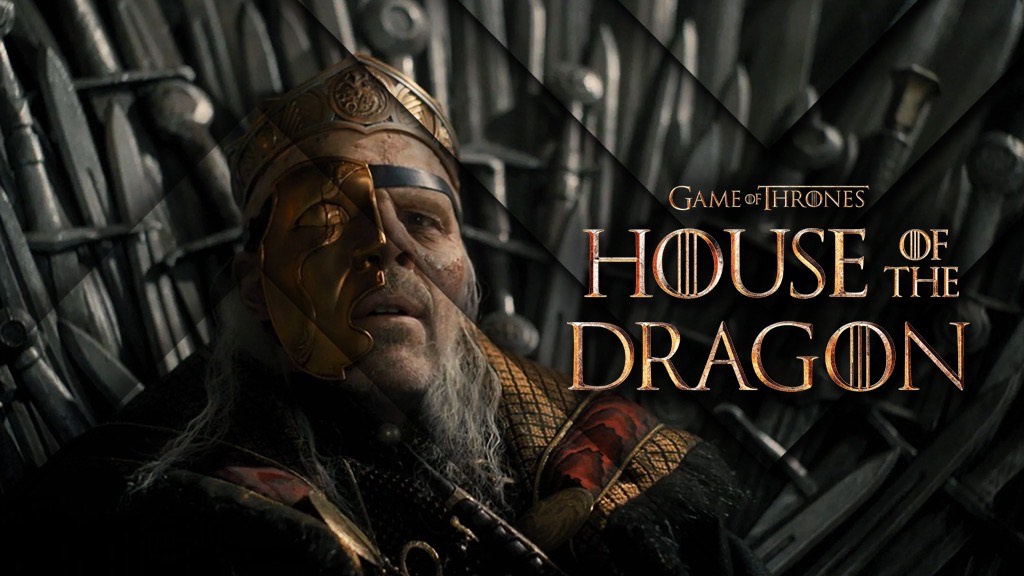
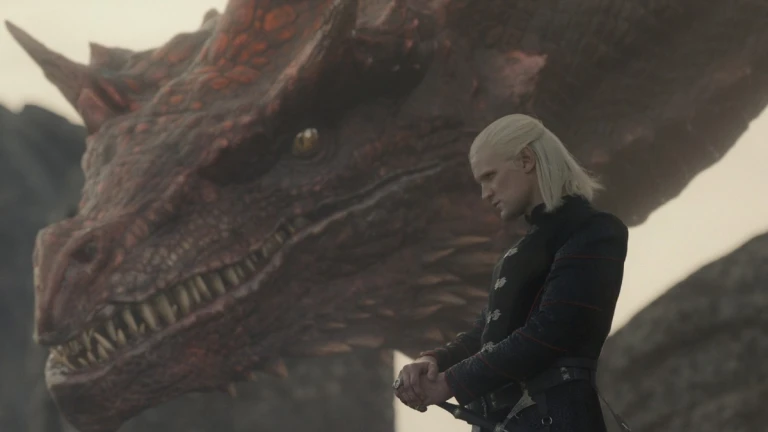
    These words, uttered by Matt Smith‘s Prince/Prince Consort Daemon Targaryen in a moment of raging spousal abuse, really set the tone for an unexpectedly intense season finale. House of the Dragon returned for another hour on HBO last night, it’s last of the year, and somehow managed to up the dramatic ante on a show that’s been pretty consistently melodramatic for ten-straight episodes. Titled The Black Queen, in reference to Emma D’Arcy‘s Princess/Queen Rhaenyra Targaryen, the finale stands as the series’ official boiling-over point in the conflict between members of the Targaryen family.

    With Tom Glynn-Carney‘s Aegon II Targaryen crowned King of the Seven Kingdoms against the proper line of succession, Rhaenyra and her supporters – known as the “Blacks” – must devise a game plan to win back the Realm. Unfortunately, as is often the case in Westeros, nothing really plays out all that smoothly. While Rhaenyra hopes to find a peaceful transition between rulers, Daemon goes rogue and begins plotting a full-scale war. Elliot Grihault‘s Prince Lucerys Targaryen and his brother Jacaerys (played by Harry Collett) head north in search of allies among the Starks and Baratheons, but a surprise confrontation with Ewan Mitchell‘s Prince Aemond Targaryen puts a major damper on Rhaenyra’s rallying cry.

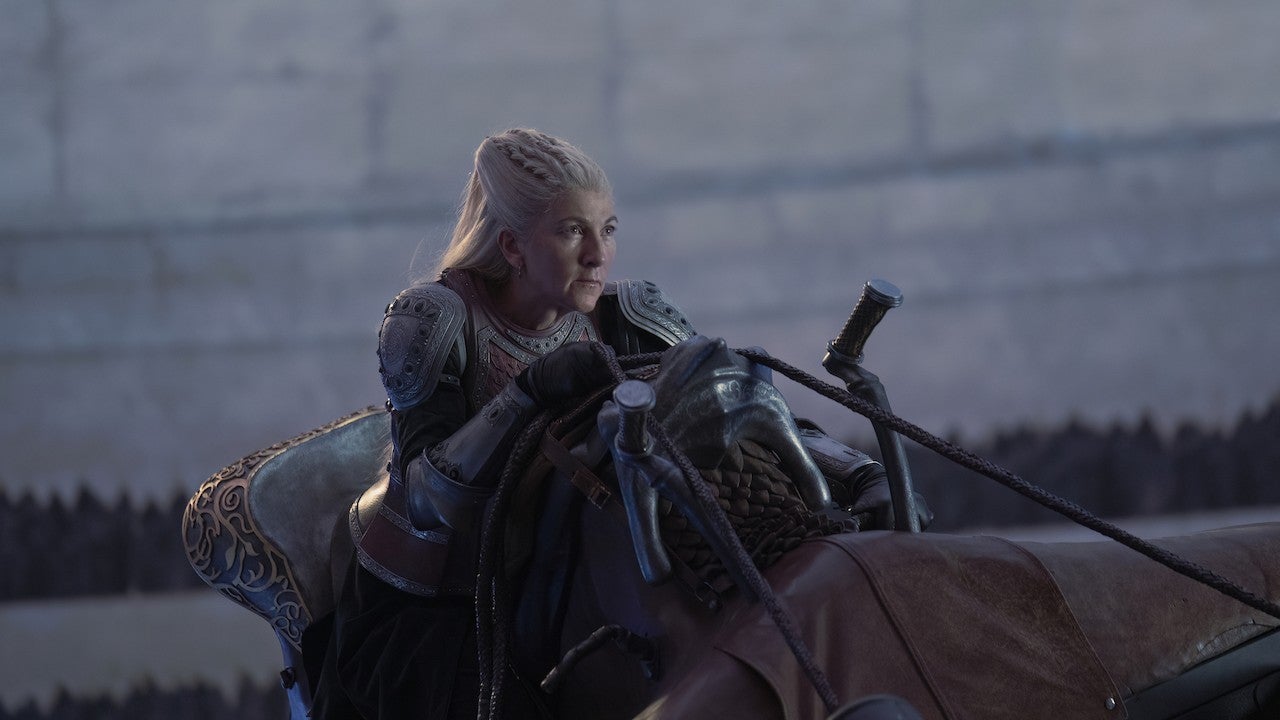
    In the only bit of good news, Steve Toussaint‘s Lord Corlys Valaryon is revealed to have survived his wounds. He and his much-smarter wife, Eve Best‘s Princess Rhaenys Targaryen, pledge their dragons and their navy to the Black Queen, setting up an action-packed second season with tensions high and hearts broken. As per usual, it’s a lot to break down. Luckily for the folks at home, Murphy’s Multiverse has already determined the best and worst moments that occur in The Black Queen.

    BEST – Deaths in the Family

    House of the Dragon‘s first season finale begins and ends with the deaths of Rhaenyra’s children. Both moments are fairly impactful in terms of viewing experience, but it’s Emma D’Arcy‘s performance in reaction that solidifies The Black Queen as one of the series’ best installments yet. At the top of the hour, Rhaenyra is informed rather abruptly by Rhaenys that her father has finally passed and that Aegon has been chosen to succeed him – in what could be considered a coup on the part of Olivia Cooke’s Queen Alicent Hightower. This shocks the pregnant, would-be Queen into a premature stillbirth, which she delivers on her own – standing up – before walking away to initiate her rightful rule of the Seven Kingdoms. It’s exactly as impressive as it sounds, and an incredibly powerful sequence that likely made it hard for fans to keep their jaws from dropping. The grace and capability with which Rhaenyra handles the situation is eye-opening and sufficiently proves she has the temperament to lead that Aegon does not.

    As if that wasn’t enough trauma for poor Rhaenyra, the hour concludes with the loss of a beloved son. Prince Lucerys travels to Storm’s End in an effort to sway Roger Evans’ Lord Borros Baratheon to his mother’s side, but when he arrives, he finds an uncooperative, and surprisingly rude, Borros has already aligned with Aegon at the behest of the latter’s brother, Aemond. The kindly Lucerys tries to leave peacefully on his dragon, Arax, but is pursued by his violently vengeful uncle in a gorgeous – *ahem* – dance of the dragons in the dark skies over Storm’s End. As beautiful and awe-inducing as the moment is, it also results in Aemond losing control over his dragon, Vhagar, with the beast killing both Lucerys and Arax in a shocking clamp of its teeth.

    Stylistically, the ending is one of the best to come out of the entire Game of Thrones franchise. Storm’s End and the lightning-filled clouds above it appear to be out of a 1980’s-style Jim Henson film, a la The Dark Crystal, and the visual effects on the dragons and their duel are stunning. There’s a lot to love. However, it’s the minutes following Lucerys’ death that resonate the most. Aemond, for the first time, seems to show some sort of compassion, and the look on Rhaenyra’s face when she learns of what happened can only mean one thing – The Black Queen now has a pretty good reason to be a little less reasonable. Perfect set-up for a second season.

    WORST – Otto Hightower Being Himself

    Truthfully, there wasn’t much to hate in The Black Queen. The episode sped along at an insane pace and was chock-full of buzz-worthy scenes. However, there was one moment that felt truly infuriating as a viewer, and that was the only one involving a Hightower. Rhys Ifans‘, as good as he is, continues to be one of the most obnoxiously vile characters on the show, with his Otto – Hand of the King – arriving in Dragonstone in an attempt to make Rhaenyra and Daemon swear fealty to their new King. Obviously, they do not, and Otto is forced to make several snide remarks before leaving ominously with the promise of death floating in the air. The best part of his brief appearance in the finale was when Rhaenyra removed his symbol of the Hand and tossed it off a bridge. Hopefully, he never gets it back.

    All 10 episodes of House of the Dragon are now streaming on HBO Max. A second season is unlikely to stream until 2024 or later.

  • Murphy’s Team-Up Volume 27: Marvel’s Best Streaming Series of 2022

    Murphy’s Team-Up Volume 27: Marvel’s Best Streaming Series of 2022

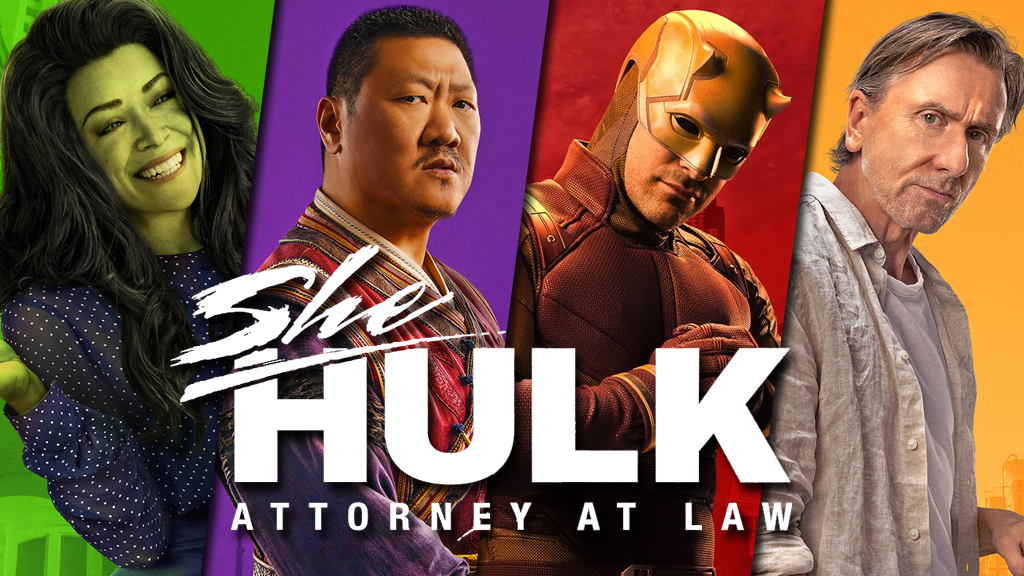
    With the conclusion of She-Hulk: Attorney At Law’s nine-episode run came the end of Marvel Studios’ streaming series for 2022. The year kicked off in March with a six-episode journey into the mind of Marc Spector in Moon Knight, starring Oscar Isaac; continued in June with Ms. Marvel, which also ran for six episodes and introduced Iman Vellani’s Kamala Khan to MCU; and concluded with Tatiana Maslany’s fourth-wall-breaking Jennifer Walters. Each series certainly had its own, distinct flavor and, as with all things, didn’t satisfy the palates of all fans. Team MM watched and covered them all, so with them now behind us, we thought we’d share which series were to our taste in the return of the Team-Up!

    Joao Pinto

    Moon Knight might not be the MCU series that better managed to stick its landing—especially not when compared to LokiMs. Marvel, or She-Hulk—but its build-up was indeed special. The character work developed by Oscar Isaac is likely to still be unparalleled in the MCU, and the psychological components made for an incredibly compelling experience ahead of the lackluster and uninspired finale. The weeks while the show was airing were incredibly stimulating both as an audience member and as someone who got to write about the show, perhaps in a way that I hadn’t yet felt, and likely haven’t since, when it comes to Marvel Studios Disney+ series.

    Being a fan of Jeff Lemire’s Moon Knight run it was wonderful to see so many elements from it being adapted to the small screen, as well as witnessing the unfolding of the future of the Gods in the MCU, with established connections to both Thor: Love and Thunder and the upcoming Black Panther: Wakanda Forever. The somewhat tedious series finale is unlikely to remain as the final Moon Knight chapter in the MCU. So being, the amazing work developed in the first five episodes will still surely be given a proper climax, one that highlights just how impressive the show really was…if you leave out the finale.

    Mary Rowe

    She-Hulk is my favorite MCU series of Phase Four. It introduced a main character that represented a very down-to-Earth person, whose super adventures only added to the baseline personal story. It was hilarious, the final two episodes were absolutely phenomenal and memorable, and Marvel seemed unworried about portraying very real women and not shying away from important topics and concepts that are often ignored because they shine a bad light on (a) reality for women, and (b) the “fandom” and general internet’s misogyny. But even without that, it was the most enjoyable show by far, and I can’t wait to see more of this kind of comedy and creative approach in the MCU going forward.

    Torbjorn Frazier

    My favorite Marvel Cinematic Universe series from Disney+ this year was She-Hulk: Attorney at Law with a bullet. While Moon Knight and Ms. Marvel both had fantastic high points, the latest series from Marvel Studios was most consistent with its high quality. Led by a phenomenal performance from Tatiana MaslanyShe-Hulk: Attorney at Law felt like the first MCU project to fully embrace its status as a television series within the greater universe. The stakes weren’t as catastrophic as many of Phase Four’s contemporaries, but they were very much real and resonate in the modern world (it truly was a marvel to watch the show so accurately predict the bad faith negative commentary that would come from toxic corners of the internet). And then of course, the back two episodes of the series provided Marvel’s creative high points of the year thus far. Daredevil had a natural transition from Netflix to the MCU-proper, and then the creative team provided a masterful adaptation of fourth-wall shattering akin to many seminal She-Hulk comic runs.

  • ‘House of the Dragon’-Episode 9 Recap

    ‘House of the Dragon’-Episode 9 Recap

    The penultimate episode of House of the Dragon did its best to match Game of Thrones‘ Episode 9s, let’s check into how they are preparing for the season finale.

    The Green Council

    After the initial discovery of Viserys’s death, the Hightowers quickly corraled anyone who would know about it, in order to keep things quiet while they did their scheming. Alicent told the council about her interpretation of Viserys’s last words, which she believed to mean that he wished that his son Aegon to succeed him as king. Stop naming your kids Aegon, please. Get creative.

    This was all the justification that the rest of the council needed, as it became clear that Otto and company have been planning to usurp the throne without Alicent’s knowledge. This knowledge seemed to paint her in an innocent light and not the mastermind of these plans. The only two to oppose the seizing of the throne were the Master of Coin, Lord Beesbury, and the Lord Commander of the Kingsguard, Harrold Westerling. Beesbury got his head caved in by our favorite guy, Criston Cole, for speaking out, but Westerling was let go after he tossed his white cloak off.

    The Search for King Aegon II

    Now, you can’t exactly place a new king on the throne without the king, so where was Aegon? Two search parties were sent out. One by Otto, led by the twins Erryk and Arryk Cargyll of the Kingsguard, and one by Alicent, led by Cole and Aemond. The race for Aegon was a little cloudy, but the root cause is that Otto will try to convince Aegon that Rhaenyra and her family must die in order for him to keep the throne while Alicent would try to offer mercy.

    After a romp through the bowels of Flea Bottom where Aegon spends a lot of time, we got a look at one of his bastards, as well as the child fighting pits that Aegon reportedly frequents. All this to prove that Aegon is a scumbag whereas Aemond studied the blade. Aegon was fiinally found being held captive by Mysaria, who was flexing her status as the true power of King’s Landing. She gave up Aegon’s location to Otto after negotiating the end of child fighting pits in Flea Bottom: a true hero to the smallfolk.

    Mysaria was ratted out by Larys the clubfoot, who shockingly has a fetish for normal-looking feet. In exchange for getting a look at Alicent’s piggies, he promised that Mysaria will die, and the information being fed to Otto through her will also end.

    After being freed from captivity, Aegon felt that he wasn’t truly worthy of the crown, being spurned by his father for Rhaenyra, as well as being a general screw-up in his family’s eyes. Only when he learned from Alicent that Viserys “wanted” him to ascend did we get the full Joffrey look in his eyes when he was toying with Aegon the Conqueror’s dagger. Alicent’s pleas to give Rhaenyra mercy fell on deaf ears as well. The smallfolk cheering for Aegon II had him puffing his chest out, until Helaena’s dragon dream from the last episode came to fruition.

    The Beast Beneath the Boards

    It turns out that Rhaenys and her dragon, Meleys, were the beast beneath the boards. Moments after Aegon was crowned, Meleys burst out of the floor of the dragon pit, killing and injuring a couple hundred/thousand smallfolk before giving the Greens a death stare. This fell really flat for me. Rhaenys knew that this act would lead to war, because she knew that Rhaenyra would not sit idly by while her half-brother steals her birthright. Her act of mercy to the royal family was pure plot armor, and had vibes of the later seasons of Game of Thrones. She had no problem with demolishing the smallfolk to get in a stare-down with Alicent, and then chose to fly away without royal bloodshed, to avoid being a kinslayer. Killing a couple hundred commoners, no problem, but if you choose to kill a distant third cousin, you’re DAMNED to eternity.

    I’m still convinced there is another beast between the boards, but that is likely being pushed to season 2. The rats will have a part to play, I guarantee it.

    Things to Come

    The Black council was omitted from this episode, but they’ll be taking over for most of the season finale. Rhaenys and Erryk Cargyll will be delivering the bad news, and we’ll get to see the reactions. Surely Rhaenyra and Daemon will handle things in a mature matter, right?

    This coming episode will not only see the Black Council’s planning but also the gathering of allies and dragons as well. We’ll finally see Storm’s End, where the Baratheons will have to decide which side to join, whether it be the Greens or the Blacks. No spoilers, but this meeting on Storm’s End will set the tone for the entire war in the seasons to come.

  • ‘Andor’ Episode 7 Featured a Major Character from Two of Star Wars Animated Series

    ‘Andor’ Episode 7 Featured a Major Character from Two of Star Wars Animated Series

    Through the first six episodes of its twelve-episode first season, Lucasfilm’s Star Wars streaming series Andor has fought the urge to drop character cameos into its developing story. Other than a reference here or there, the series has largely ignored the other goings on in the galaxy tied to the growing rebellion, choosing to focus on its own characters rather than name-drop or show-off characters from other Star Wars media. Episode 7 changed that in a fairly major way with the inclusion of one of the most memorable characters from one of Star Wars most beloved IPs.

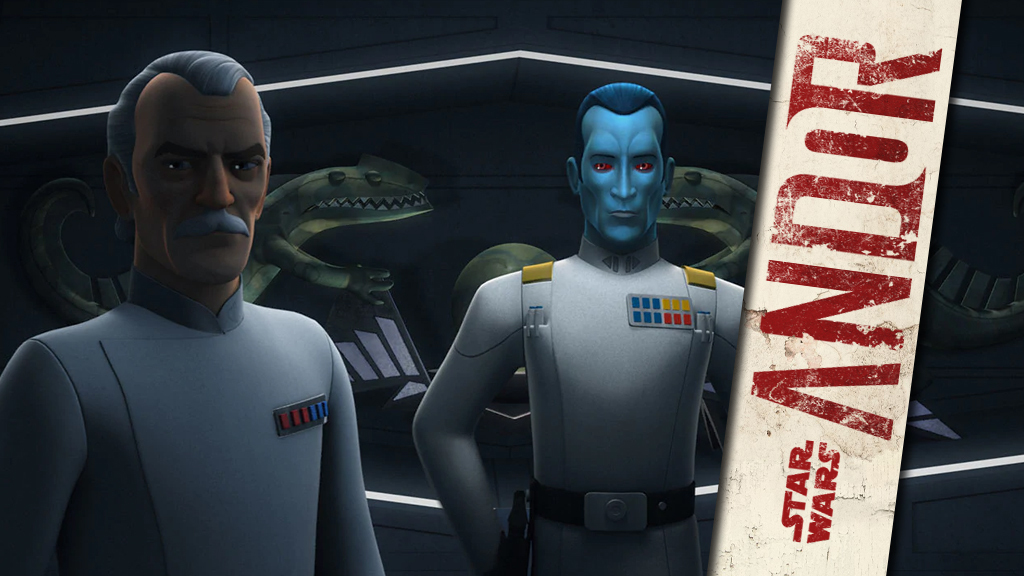
    As news of the heist on Aldhani spread throughout the galaxy, the Imperial Security Bureau convened on Coruscant to discuss their response. However, rather than Major Partagaz leading the meeting, a more senior officer was called in: Colonel Wulff Yularen. Fans of Star Wars: The Clone Wars will remember Yularen as the Republic Navy Admiral assigned to Anakin Skywalker. Though Yularen and Skywalker often disagreed, especially in their early endeavors together, the two grew to respect one another and became one of the Republic’s top teams.

    Though he’s most well-known from his nearly two dozen appearances in Star Wars: The Clone Wars, Yularen “first appeared” in Star Wars: Episode IV-A New Hope. While in actuality the character was unnamed, retcons over the years turned the character into Colonel Yularen of the ISB. Placing the Colonel in Andor during this time of galactic unrest, especially when the ISB will be facing major questions about its procedures, aligns with what’s known about the character. Canonically, after helping reform the ISB, Yularen took a post with the Naval Intelligence Agency during the events of Star Wars: Rebels. In his time there, Yularen helped Thrawn track down the traitor known as Fulcrum, who was revealed to be one of Yularen’s own students, Agent Kallus.

    Voiced by Tom Kane in Star Wars: The Clone Wars, Yularen is portrayed in Andor by actor Malcolm Sinclair. Given the character’s prominence in the time covered in Andor’s first season, Yularen’s appearance makes for a near-perfect cameo: one that isn’t too distracting fits the plot of the show and illustrates the connectivity of the series to the larger franchise. A+ for creator Tony Gilroy and team and Pablo Hidalgo, who works on keeping continuity between all the Star Wars projects.

  • A Look at Marvel Studios’ 10-Year Page-to-Screen Rule

    A Look at Marvel Studios’ 10-Year Page-to-Screen Rule

    New York Comic Con hasn’t really been known to be the kind of event where fans should expect huge reveals from Marvel Studios. Traditionally, it’s been a place for Marvel TV and Marvel Comics to take center stage and NYCC ’22 was comic-heavy. Jonathan Hickman revealed some of Valerio Schiti’s artwork from their mysterious new comic series, the 2022-23 event slate was revealed, including the Fall of X and numerous non-event series were teased or introduced. All in all, a great weekend for Marvel Comics.

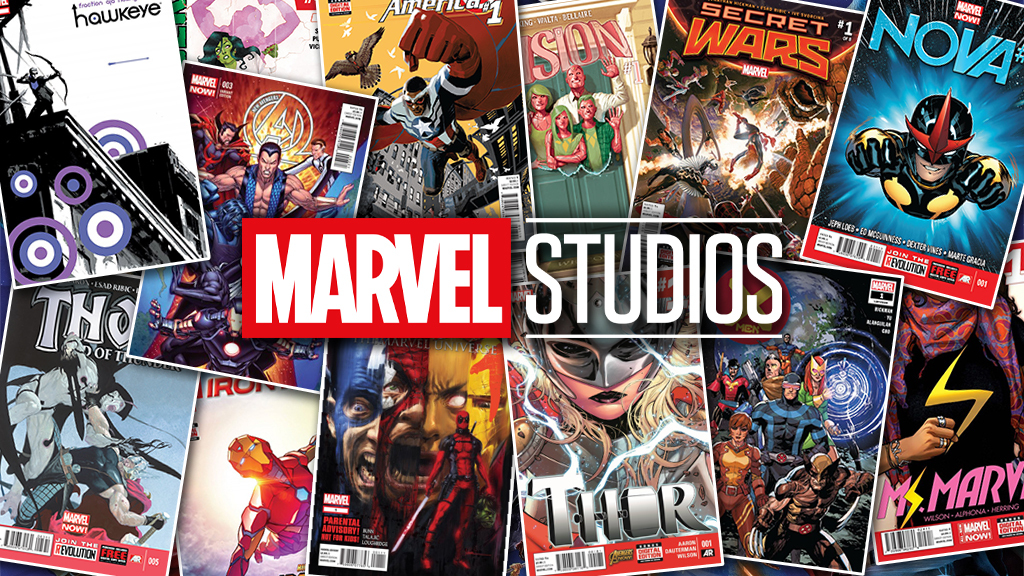
    However, during their Next Big Thing panel, Editor-in-Chief C.B. Cebulski dropped an interesting nugget of information about the relationship between Marvel Comics and Marvel Studios, both of which are now overseen by Marvel’s One Above All, Kevin Feige. According to Cebulski, Marvel Comics works to stay about “10 years” ahead of Marvel Studios. In essence, that means comic arc that are being told wouldn’t make their way into the narrative fabric of the MCU until 2032. On the flipside, it could also mean that Marvel Studios currently announced slate of projects is looking to draw on comic arcs from 2012.

    Though it’s clear and expected that not every project in 2022 is based on stories from 2012, interestingly enough, some of that flipside lines up. The end of 2021 saw Matt Fraction’s Hawkeye, which was published in 2012, adapted into a Disney Plus streaming series. Incursions, which were introduced to the MCU in Doctor Strange in the Multiverse of Madness, first appeared in issue #3 of Jonathan Hickman’s New Avengers in January of 2013. The idea of Wakanda at war with Atlantis, which is central to Black Panther: Wakanda Forever’s plot, came from the pages of the Avengers vs. X-Men event, which ran for most of 2012. Kamala Khan first hit the pages of a comic in 2013. Jason Aaron’s epic run on Thor, which introduced Gorr and Jane Foster as the Mighty Thor, characters seen in Thor: Love and Thunder, began in, you guessed it, 2012. It’s by no means a perfect predictor, but for the past year, there are enough hits to make one take the time to look at how the next (about) ten years of Marvel Studios projects could be shaped by the last (about) ten years of Marvel Comics.

    2023

    Riri Williams will make her debut in 2022’s Black Panther: Wakanda Forever before her solo series, Ironheart, streams on Disney Plus. The character first appeared in the comics in 2016, so this series is 7 years post. That’s not exactly 10, but it might prove informative later.

    2024

    Captain America: New World Order will hit theaters in 2024. Ten years earlier, Sam Wilson: Captain America hit newsstands. The Nick Spencer book could hold some clues as to what fans can expect in the film.

    A version of the Thunderbolts featuring Bucky Barnes appeared in the comics in 2016. Bucky and the Thunderbolts are headed for the big screen in 2024.

    Deadpool 3 hits theaters in 2024 and while nobody knows exactly what to make of the Ryan Reynolds/Hugh Jackman team-up, one theory is that it could adapt Marvel Comics Deadpool Kills the Marvel Universe, which came out in 2012.

    Fantastic Four. Announced in 2019, it’s taken a while to get made and is going to take a while longer. Whenever fans see it, it is likely to be heavily influenced by Hickman’s run on the characters which started in 2010.

    2025 and 2026

    Marvel has plans for two Avengers films over these two years. If you’re wondering who might be on the team, Marvel Comics All-New, All-Different Avengers, first published in November 2015, might be a decent resource.

    Beginning with 2022’s Werewolf By Night, monsters are now historically part of the MCU and more are on the way. In 2015, Marvel Comics published The Howling Commandoes of S.H.I.E.L.D.

    A Nova project continues to be in the works and The Human Rocket is likely to land on one of the dates slated for D+ in 2025 or 2026. A Nova comic series, featuring Sam Alexander, launched in 2013.

    In July, a pair of trademarks were filed for what are believed to be MCU solo projects for Hercules: Rise of the Gods and Black Knight: Origins. in 2015, comic series featuring both of those characters brought them back into the spotlight after some time away. Black Knight dove into the cursed nature of the Ebony Blade while Hercules told the story of the Greek godling making his way through the modern world. Both of these ideas are adaptable in the MCU given where the characters were left in their introductions in Eternals and Thor: Love and Thunder, respectively.

    An Illuminati project has been reportedly in the works at Marvel Studios for a few years now. In 2015, Marvel Comics published The Illuminati, featuring Parker Robbins, who will make his debut in Ironheart, Titania, who debuted in She-Hulk: Attorney at Law and the Enchantress, Sylvie Lushton, who seems to have a lot in common with Loki’s Sylvie.

    Avengers: Secret Wars was originally planned for 2025. While there have been multiple iterations of the story, it’s believed that with Michael Waldron writing it, it will be strongly influenced by Hickman’s version of the story.

    2026-2032

    Years back, Marvel Studios was looking for a pitch for a Secret Warriors project. While the first volume in the comics hit shelves in 2008, a second volume featuring Kamala Khan was released in 2017.

    Quite a bit of buzz continues to persist around Marvel Studios bringing the Midnight Sons to the MCU and a trademark was filed. In 2017, a Spirits of Vengeance mini-series was launched that featured many of the characters you’d associate with Midnight Sons in a war at the gates of hell.

    Marvel Studios trademarked Avengers: Eternity Wars. Marvel Comics published an Eternity War event in the pages of The Ultimates in 2017.

    With the X-Men not quite set to appear in the MCU for some time, the 2018 event Hunt for Wolverine might make a good adaptation at some point in the late 2020s, once the X-Men have become established.

    War of the Realms is one of the finer events Marvel Comics has produced in years. While it doesn’t seem like on the surface like a story that could be told in the MCU, remember the multiverse is in play and anything is possible, including giving Malekith a fair shake.

    Another property that could potentially take inspiration from Jonathan Hickman is an adaptation of Dawn of X. Hickman’s redefining take on mutants kicked off in 2019, meaning it could hit the low end of what Marvel considers about 10 years if an adaptation were to hit the MCU around 2026 or later, which actually seems about right.

    This is nowhere near comprehensive as there are so many unknowns about what projects are in development and nearing a green light, which are still slogging through and which have been shuffled to the back of the pile. However, it does give us a better idea of what about “10 years” means. It looks like characters and stories are fair game if they were about 7-12 years before the project is intended to release. Obviously, that window can expand either way and it is a lot more likely to expand on the side of more than 12 years than less than 7 years, but it provides a window through which we can potentially peer into Marvel Studios’ plans.

  • How the Rules of the MCU’s Multiverse Allow for Daredevil and Kingpin to Meet Again…For the First Time…For the Last Time

    How the Rules of the MCU’s Multiverse Allow for Daredevil and Kingpin to Meet Again…For the First Time…For the Last Time

    A half-dozen Lokis, including a woman, an old man, a child, one that looks just like Tom Hiddleston, and an alligator. Four Doctors Strange, including a zombie with a ponytail. Three Spider-Men. Three Peggy Carters. Two Kangs so far, including one referred to as a “warrior”, with more to come. Two Gamoras. Two Nebulas. Two Thanoses. Two Christine Palmers. And two Mordos and two Maria Rambeaus who hang out with three guys who have never before been seen in the MCU’s 616-universe. The Marvel Cinematic Multiverse is full of Variants and is sure to see more enter it as the Multiverse Saga continues over the next 4 years. So why is it, that in this vast multiverse, Matt Murdock and Wilson Fisk are expected to be the genuine Netflix articles when probability would dictate they probably aren’t?

    The rules of the Multiverse, as created by Michael Waldron and explained in Loki by Miss Minutes, allow for a tremendous amount of room in the creation of Variants. Nearly any event, no matter how great or small, from “creating an uprising” to just being “late for work” causes a Nexus Event which creates a branch from the Sacred Timeline. As Miss Minutes explained, one Nexus Event could “branch off into madness” creating an almost infinite number of Variants and the potential for a multiversal war. That multiversal war is coming in Avengers: Secret Wars, but it’s the more mundane sort of multiversal madness that’s relevant here. Given the relative ease with which a Variant can be created and the fact that the death of He Who Remains allowed the multiverse to branch off into madness, it’s statistically more likely that the Matt Murdock and Wilson Fisk who are on track to meet in Echo are Variants of the ones who appeared in the Netflix Defenders-verse shows.

    In addition to the relative ease with which the MCU can explain away the Variant nature of the two characters, according to Charlie Cox, it seems like that is the plan. Cox has been clear that he and Kevin Feige think of Daredevil: Born Again as Season 1, not Season 4, and recently called it “a whole new deal” that gave the studio a chance to start from scratch in some instances.

    What’s great about that is that we potentially get to tell some of the stories over and over again, in the same way that they do in the comics. Every now and then they start back in the beginning of Murdock’s journey as a little boy and they tell the whole origin story again, so maybe we’ll get to do that. I don’t know.

    Charlie Cox

    Herein lies the brilliance inherent in the simplicity of the multiversal rules. The MCU’s Matt Murdock and Wilson Fisk only need to be a little different from their Netflix counterparts in order to allow Feige, the Marvel Studios Parliament, and the creative teams of Echo and Daredevil: Born Again to keep much of what fans loved about the characters they met on Daredevil while also telling their MCU stories on their terms. And they never have to tell anyone how it happened. Just simply let it unfold on-screen.

    An infinite multiverse means infinite possible Variants of the characters. That means a Matt Murdock who can see, a Kingpin who never killed his father and any other version you can imagine exists somewhere. But in order for Marvel Studios to tell their version of the story, they don’t have to erase all those key points in the development of the character. Vincent D’Onofrio has spoken at length about how he’s playing Fisk as the same character and that makes perfect sense because all of the tragedy and abuse that he suffered when he “was a boy” can still be the backstory for the character.

    I mean, obviously, my character in Hawkeye is physically stronger and can take a lot more physical abuse. But my approach to him is exactly the same approach that I did on Daredevil. He is an emotional human being, he is a child and a monster simultaneously. The same things that are going on inside me when I’m playing the character, the events that I use, whether the joyful ones or sad ones or frustrating ones or angry ones, the events that I use from my life are the same ones that I used in Daredevil that I used to portray Fisk. So it’s connected, for sure. In my mind, for sure.

    Vincent D’Onofrio

    The rules of the multiverse absolutely allow for everything D’Onofrio said about the Fisk that showed up in Hawkeye to be true AND for the character to be different from the Defenders-verse character. How simple is it? Incredibly simple. If being late for work can create a Nexus Event and a new branch of the multiverse, any number of events could be used to explain how a Matt Murdock and Wilson Fisk who are nearly identical to the ones from Daredevil are co-existing in the MCU’s Hell’s Kitchen but have never met one another, much less become archenemies. Why would they do this? To give the MCU’s creatives a chance to tell the story of these two characters on their own terms rather than be forced to accept someone else’s interpretation. As Cox explained, it gives them the opportunity to retell stories as often happens in the comics when new authors take over.

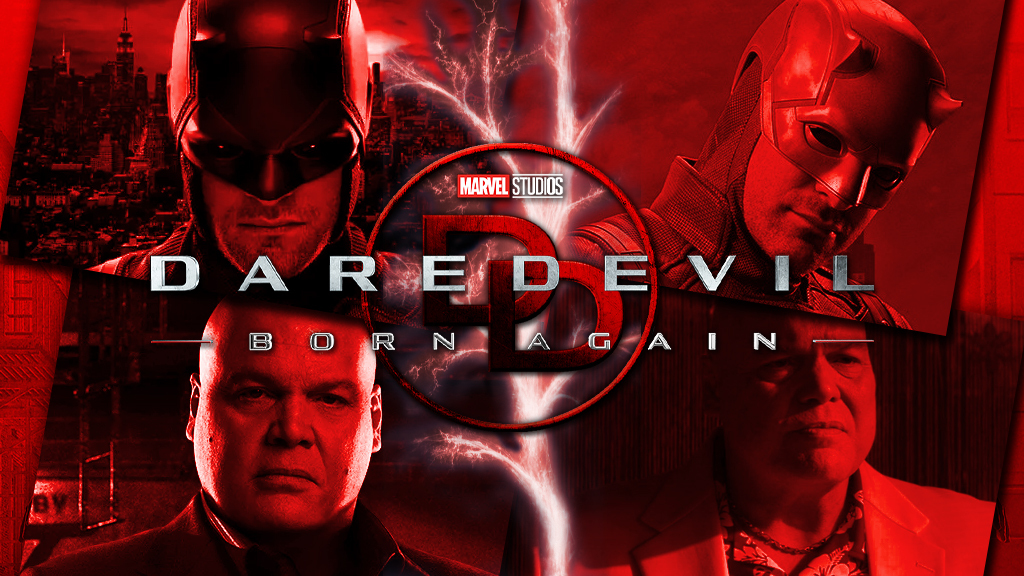
    What would this mean for the MCU? It would mean that to audiences, the characters would seem to be exactly the same, only a little different. Ketchup and mustard Daredevil seems to be, for the most part, the same as black mask Daredevil, except he’s a little different. His fighting style isn’t quite the same, he’s a bit more flippy and he doesn’t seem to hate being alive and is rather quite the ladies’ man. Hawaiin shirt Kingpin seems to be, for the most part, the same as stare-at-the-wall Fisk, except he’s a little different. He works out of a garage in relative anonymity and seems to be a walking tank.

    Using Variants provides the people who worked on Echo and are working on Daredevil: Born Again a tremendous amount of creative freedom. You like the way the story with Stick training Matt as a boy worked? Keep it. It happened before the Nexus Event. You don’t like the fact that Ben Urich is dead? Get rid of it. It happened after the Nexus Event that created this MCU Variant Daredevil. Characters can seemingly be brought back from the dead without ever having died. Don’t like the way the Hand storyline played out in Daredevil? Retell it. It happened after the Nexus Event that created this Variant. Giving the writers working on Echo and Daredevil: Born Again that type of flexibility will ultimately allow for a better final product. There are some hoops to jump through to ensure the chosen point for the Nexus Event follows continuity (so you don’t go the route of Fox’s X-Men films) but it can be done.

    At the end of the day, if fans can accept alligator Loki and are looking forward to seeing Jonathan Majors mold himself into multiple versions of Kang, it doesn’t seem as though it’s asking much to accept that in an infinite multiverse, other versions of their favorite characters can and do exist. Is this a definitive statement that these characters are NOT the Defenders-verse ones? Of course not. Only Marvel Studios can make that statement; however, they are better served in never making it, allowing the debate around the characters to carry on until their decision is revealed on screen, whether large or small.

    You want to believe these guys are your guys? Go for it, probability be damned. You want to believe these guys are Variants? Go for it, the evidence suggests they are. At the end of the day, these are stories meant to be enjoyed by audiences and much of that is determined by what you carry with you in your own mind and if you believe in it strongly enough, not even the multiverse can take it away from you.

  • How the MCU’s ‘She-Hulk’ Became Truly Savage

    How the MCU’s ‘She-Hulk’ Became Truly Savage

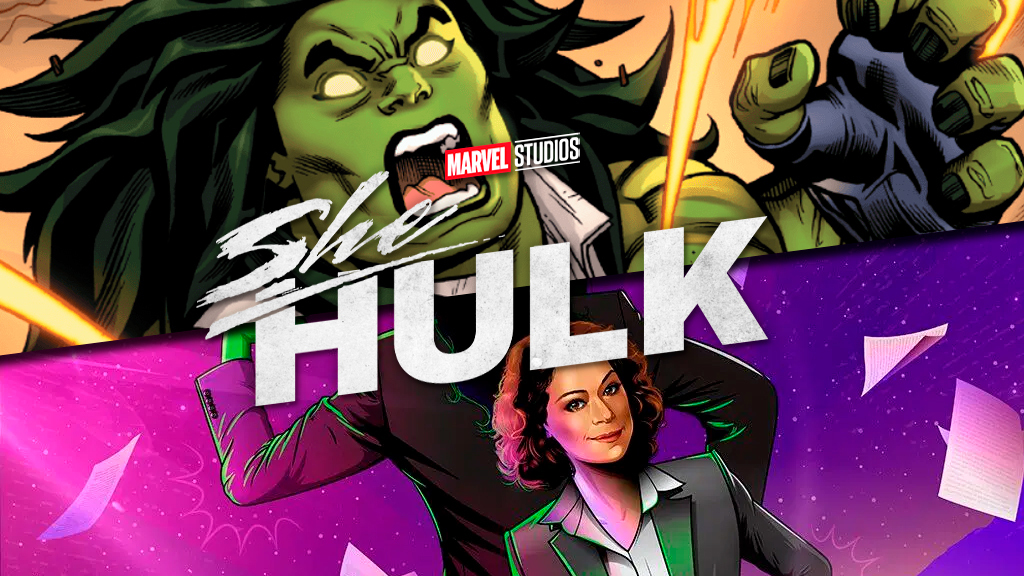
    The finale of Season 1 of She-Hulk: Attorney at Law opened with a great callback to the classic Bill Bixby and Lou Ferrigno series, The Incredible Hulk, that ran on network television in the late 1970s and early 1980s and spawned not one, not two but three made-for-tv movies in the late 1980s. The callback, which served as the recap of the series so far, ended with what’s become the norm for the series, a new, weekly title: The Savage She-Hulk. That title is, of course, the title of the first appearance of Jen Walters in Marvel Comics, The Savage She-Hulk #1, which hit newsstands in 1980. Ironically, through the course of the D+ series, Jen’s She-Hulk has been anything but savage for most of the time; however, the same can’t necessarily be said for the series itself.

    Language is an ever-evolving thing and, over the last decade or so, one word that has experienced some changes in its usage is “savage.” The way the kids are using it these days (these days being like 5-10 years ago), it means someone who has zero regard for the consequences of what they say when they rip into a person or a group of people. It’s in this way that Jessica Gao and the rest of the writers’ room on She-Hulk: Attorney at Law made the series one of the most self-aware and savage social commentaries in modern pop culture history.

    As the finale pointed out, Marvel Studios has an internet problem. No matter what project they churn out it wasn’t long enough, didn’t have enough cameos or didn’t include THAT character or THAT story that some fan was certain was going to be there. However, some projects have a bigger internet problem than others: the ones featuring female leads. From Captain Marvel to Ms. Marvel to Thor: Love and Thunder and now She-Hulk: Attorney at Law, female-led projects at Marvel Studios are described as “problematic” and “sloppy” before general audiences have seen a second of footage. And as Marvel Studios enters its second saga of stories and begins to introduce legacy characters, many of whom are female, the internet has come out swinging with chants of “Mary Sue” and “Thor is a name, not a title” as characters like Kamala Khan, Jen Walters and Jane Foster assume heroic mantles.

    It is in addressing these internet problems head-on that She-Hulk became truly, in the modern context, savage. The savagery really began in earnest in Episode 3, “The People vs. Emil Blonsky”, when Jen’s work at GLK&H began to garner more attention. In a brief sequence, the show called out anonymous and misogynistic social media influencers and YouTubers by making a mockery of their go-to commentary. “They took the Hulk’s manhood away, but then they gave it to a woman?” “So we gotta have affirmative action with superheroes?” “No more female superheroes plz.” “Why are you turning every superhero into a girl? Nobody asked for that.” “Why everything gotta be female now???” “So we have a #MeToo movement and now all the male heroes are gone?” Ridiculous only in their accuracy, these comments could have been (and most likely were) taken from real social media account from men decrying that “every hero” is now a female. Forget the fact that Thor: Love and Thunder featured both a man and a woman co-starring as Thor (and the female died), facts have no place in this dojo.

    To add an extra layer of verisimilitude to its social commentary on social media, She-Hulk: Attorney at Law brought the dudebro online community known as The Intelligencia to the forefront. While initial theories about who might run the group understandably centered on characters from the comics associated with the group, it turned out to be a collective of manbabies united by one thing: their insecurities. The creatives laid the satire on thick and in layers going so far as having Jon Bass‘ HulkKing scream “come at me bro” shortly after turning into Chris Kattan-Hulk.

    Between satirizing the ridiculous nature of online discourse around these projects and having Jen be the first MCU character to really explore dating and sex (she even smashes Matt Murdock on occasion), the Gao and the writers certainly had the very same people they were mocking clutching their pearls. And they did so by simply capitalizing on the very nature of the character pulled straight from the comics where she was Marvel’s first character to be aware that she existed inside of a story and interacted with the world that existed outside her story. So while Jen’s She-Hulk proved she was anything but the savage version her cousin Bruce thought she might be, Marvel Studios went full frontal savage and, in doing so, made their most socially relevant project to date.

  • ‘House of the Dragon’-Episode 8 Recap

    ‘House of the Dragon’-Episode 8 Recap

    Throughout the first season of HBO Max’s House of the Dragon, Viserys has been the buffer between the two factions of his house, headed by Alicent and Rhaenyra, respectively. Each of them knows that they can’t make any moves while Viserys still rules. While Alicent and Otto have been tiptoeing about up until Episode 8, Viserys had grown very weak and has given the keys to both of them to run his kingdom. About 6 years of time have passed between Episode 7 and this one. Time to get into some lore.

    Viserys

    This is the dying King’s finest hour. Viserys talked with Daemon in an earlier episode about how he felt he’d never been tested as a king, and how he wished he could prove his mettle. He did that in this episode, rising to the occasion to save his daughter and grandsons from losing Luke’s inheritance and legitimacy. His walk up to the throne is a top 5 scene from the Game of Thrones franchise, taking all of his effort, and only accepting help from Daemon in his climb. According to the director, the crown falling from his head and Daemon placing it back onto Viserys was unscripted, and it made the moment all the more powerful.

    The events of that scene were forced by Vaemond Velaryon, Corlys’s brother, trying to go around Viserys and Rhaenyra, straight to Otto and Alicent to secure his claim, reasoning that Luke is not a true Velaryon and has no right to Driftmark. Vaemond got taken out at the knees when Rhaenys, the matriarch of the Velaryons, put her chips in with Rhaenyra, agreeing in front of the court to marry Jace and Luke to her granddaughters, Baela and Rhaena. This sent Vaemond into a rage to call out that the boys are bastards and their mother is a whore. Viserys warned that anyone who questioned Jace’s and Luke’s parentage would get their tongues ripped out; however, Daemon took matters into his own hands, slicing half of his head off with Dark Sister, but he let him keep his tongue.

    With his family all under one roof for the first time in 6 years, Viserys hosted a dinner with all of them, where there were toasts all around and everyone was playing nice, with Alicent even telling Rhaenyra that she will make a fine queen. That seemed to indicate that the matter of succession was over. Yeah, in Viserys’s dreams. I am happy that in Viserys’s last moments before he was carted off, there was a small smile seeing his family happy all together. Even for all of his faults, he deserved a better family than the vultures he had. His last, muttered words were “My love,” pretty obviously in memory of his first wife, Aemma.

    It’s shown very explicitly that both Rhaenyra and Alicent have some differing parental styles. Rhaenyra is supportive in Jace’s learning of High Valyrian, and there has been no signs of mental or physical abuse towards her sons. Also, we got our first sighting of Aegon the Younger and Viserys, which are Daemon’s and Rhaenyra’s sons. There’s no denying that they are Targaryens with that platinum hair, and it’s great that Viserys got to see them before he died.

    The Children

    Speaking of Viserys’ terrible family, Alicent was shown to be abusive to Aegon, and this episode showed that it had been well deserved since he sexually assaulted one of the handmaidens and dismissed it as “Just a bit of fun.” But what did Alicent do? She covered it up, paying the girl and giving her moon tea to eliminate any chances of an unwanted pregnancy. She followed up by then slapping Aegon in the face and saying he’s no son of hers. Problem solved, put a band-aid on it!

    I noted that Alicent finally ceded to Rhaenyra and admitted to her being the next queen, but the seeds had already been sowed in Aegon and Aemond’s minds that they were above Jace and Luke, and deserved the inheritance. Aegon repeatedly asked Jace’s bethrothed, Baela, if she wanted to sleep with him right in front of everyone. Even after that, Jace raised a toast to Aegon and Aemond, hoping they could become friends as they once were. Aemond had a pig placed in front of him, a reference to when Aegon, Jace and Luke dressed up a pig as a dragon for Aemond. This really really pissed him off when Luke is seen to be laughing at him, so in retaliation he raises a toast, calling Jace Luke and Joffrey “Handsome, smart, brave….. and STRONG.” This sent the Blacks into a fury, only stopping when Daemon stood between Aemond and Jace and stared him down, sending him away with his tail between his legs. Aemond is trying so hard to be Daemon, but as of now, there is only one Daemon. There’s a showdown coming for those two in future seasons. Alicent and Rhaenyra have a touching moment after, where Alicent wants Rhaenyra to stay in King’s Landing. They’ve finally put their differences aside and want to be close again. If only.

    The Power of Prophecy

    Throughout all of this series, people have been driven by prophecy. The all-encompassing prophecy is The Song of Ice and Fire, which includes The Prince that was Promised as the messiah figure. If you watched Game of Thrones or read the series, you know there have been many, many people who believe that they were the chosen one, and each time war has broken out. Rhaegar’s belief that he or his children were the Prince, led to Robert’s Rebellion and the destruction of the Targaryens. Stannis’s belief that he was the Prince, led to the War of the Five Kings, and the destruction of the Baratheons. And finally, both Jon and Daenerys were led to believe they were the ones, and while they destroyed the White Walkers, it also led to thousands of people’s deaths. The question is always asked, is the prophecy always meant to come true, or is it the people’s actions after learning of it?

    House of the Dragon continues, or sets (?), this tread with Viserys unknowingly having fed this information to Alicent while delirious and moments from dying. He talked of Aegon the Conqueror’s dream and that this prophecy will save the kingdom, which Alicent took to mean that her son Aegon would be the one to save the realm. This was the straw that broke the camel’s back as Alicent believed she had no choice but to stand against Rhaenyra, fulfilling Viserys’s last wishes. The Westerosi version of telephone where it sent hundreds of thousands to their deaths.

    Things to Come

    With Viserys dead, there is now nothing to stand between the Greens and Blacks, and both of them feel they have the right to rule. Episode 9, if my predictions are correct, will send both sides into a full-scale war. While Aegon is the elder, Aemond will be the martial leader of the Greens, versus Daemon on the Blacks.

    A very small part of this episode showed that there are twin Kingsguards, Arryk and Erryk Cargyle. Their parents are absolute trolls naming them. This will come into play if the series follows the book, because one of these twins will be with Rhaenyra on Dragonstone, and the other with Alicent in King’s Landing.

    We also saw Mysaria again, who has contacts in the Red Keep that are keeping tabs on the royal family for her. She keeps popping up for small appearances, so she still has a part to play in the Dance.

    Also returning are more Helaena Dragon Dreams! During dinner, she muttered to herself, “Beware the beast below the boards.” As with most of her other dreams in this season, this was meant to be taken literally. If you watched Game of Thrones, you know that there are tunnels underneath the Red Keep where people can travel in secret throughout the castle. Tyrion, with help from Varys, used these to sneak into his father Tywin’s chambers to kill him. In that time, it was basically only Varys that knew these passageways, because the knowledge had been lost in time. In House of the Dragon, there are many people who know these tunnels, because they use men instead of cats as rat catchers. They’re not doing a very good job it seems, as there are rats seen throughout a lot of different episodes. What are they hinting toward? Wait and see.

  • Why ‘She-Hulk’ is Marvel’s Best Disney+ Series

    Why ‘She-Hulk’ is Marvel’s Best Disney+ Series

    Even before She-Hulk: Attorney at Law premiered on Disney+ this past August, the internet has had no shortage of jabronis voicing their complaints about the show. There has been so much media made about how She-Hulk is the worst TV show ever. All this negativity toward She-Hulk has led to some giving up on the show. However, with the final episode premiering later this week, now is the perfect time to get back on board so you can see what you’ve been missing, because She-Hulk: Attorney at Law is the best Marvel Cinematic Universe Disney+ show.

    She-Hulk is the First Marvel Disney+ Show That Knows How to be a Show

    There’s something to be said for a piece of media effectively utilizing the medium in which it exists. A common complaint among the Marvel Disney+ shows is that they feel like movies cut up into 6 pieces and thrown on Disney+. In some cases, it’s a fair criticism. Frequently, the episodes don’t feel like their own concise story, so while the episodes can be separated by certain storytelling functions or a change in location, it still feels like The Falcon and the Winter Soldier, Hawkeye, or even Ms. Marvel could’ve been better served by cutting out a bunch of the fluff and editing the entire story into a 2-hour long movie. Only What If…?, WandaVision, and Loki had done this right previously, but She-Hulk might be the best at it specifically because unlike What If…?, WandaVision, or Loki, She-Hulk is very explicitly a sitcom.

    Part of the charm of a sitcom is that while there are big, season-long arcs – like Diane warming up to Sam in Cheers or Mac getting fat in It’s Always Sunny in Philadelphia – the episodes themselves are largely disconnected and can be watched out of order. Once everything was set in motion, starting with episodes 3 and 4, the creatives on She-Hulk really managed to hit that balance. That balance can be pretty effectively highlighted by focusing on the legal aspect of the series. Every episode is another case. Every case presents a new challenge, introduces a few new characters, and after 22 minutes, everything is neatly wrapped up. Someone could watch episode 1 and then skip to episode 4, and they’d mostly get it.

    Some people don’t like this disconnect at the heart of the show, but it’s a feature, not a bug, and whether one likes everything about She-Hulk or not, it’s hard to deny that it’s living up to the promise of a superhuman law sitcom. If you don’t like the idea of sitcoms, then this was never going to work for you, but it’s difficult not to appreciate how She-Hulk is the first MCU show that has embraced the sitcom format.

    She-Hulk Expands on the MCU in Interesting Ways

    She-Hulk has introduced so many characters and concepts with barely any legwork. This can be attributed to the fact that She-Hulk is the first MCU show that is explicitly about a character dealing with the superhuman side of the universe that audiences don’t really see. Moon Knight had Egyptian gods. Ms. Marvel had Clandestines. They did not have, for instance, a sorcerer just show up; it wouldn’t have made sense and that’s fine. Thematically, it is consistent with the scope of the story. But it’s pretty wild that even though Earth is full of aliens, Asgardians, and all sorts of gods and enhanced people, outside of the Shang-Chi cage fight, there has not been an earthbound project where characters just bump into something weird or acknowledge the weirdness in the rest of the world. She-Hulk is the first MCU show to properly acknowledge the Celestial in the middle of the ocean – that’s incredible because one problem with Phase 4 is that – apart from Wong – it’s felt sort of disconnected. There aren’t those little moments where Coulson mentions a thing he has to deal with that signals to the audience that Thor also exists in this world, or where Bruce Banner name-drops Wakanda. Moments like those are necessary to keep everything balanced outside of the big team-up movies and ground the world in some shared reality, even if it is a weird one.

    Phase 4 has done a fair amount of world-building, but it was almost always providing context to past events from the last few phases, like Kamala telling the audience about the end of Avengers: Endgame or Hawkeye watching “Rogers: the Musical.” Fans have gotten plenty of context for things in the past, but what about the very recent past? There have been so many world-altering events that never get mentioned. Did anyone else experience the time Mr. Knight and Khonshu turned back time in the sky, or that kaiju fight from the end of the series? Those are examples just from Moon Knight. Nobody has brought up the Gargantos attack, any of the Statue of Liberty stuff, Hawkeye shooting goons in 30 Rock on Christmas, the Taskmaster chase, the attack on New Asgard, the Shang-Chi bus fight, and anything from Eternals…outside of acknowledging that Kingo exists. These things all happened in public, so the idea of a character who gets to react to them or a show that would not feel weird if it acknowledged them is a lot of fun.

    It’s clear that Phase 4 was jumbled by the pandemic. Lots of movies changed spots, so plenty of the direct references wouldn’t play, but a show like She-Hulk wraps a lot of that up at the end. It’s the last D+ project of 2022, so She-Hulk gets to be sort of a greatest hits of the phase. But even beyond that, She-Hulk’s world-building is really impressive because of how much the creatives trusted the audience. A Light Elf shows up – audiences have never seen or heard of them before, but the writers know if they look and act a specific way, audiences will infer that this is a Thor-related thing. Mr. Immortal just popped in for an episode. In the comics, he has the power to live forever and was the leader of the Great Lake Avengers at one point. This version of the character was certainly a different take on the hero, but it fits into the universe well. It’s great that they can do characters like this without explanation; it just makes the world feel so much bigger.

    Jennifer Walters is an Interesting and Likable Character

    There has been a lot of discourse pertaining to whether Jennifer Walters is an interesting character or not. Many seem to believe that Jen is not an interesting character because she has no flaws – she never does anything wrong and dismisses Bruce, her kind, older cousin. However, this is a wild misreading of the entire series. Jen’s biggest flaw is that she’s sort of arrogant – just like Tony Stark, Thor, Peter Quill, or Stephen Strange before her. Jen believes she’s will be better at being a Hulk than she actually is and dismisses people offering her help…that is, until she doesn’t. Though it does remain to be seen if Jen will learn her lesson by the end of episode 9, perhaps the other lawyer superhero will have something to say about the whole work/life balance thing.

    Another great element about Jen’s character is that she really feels like an adult. The idea of having to go on bad dates or attend a chaotic wedding is really relatable. That’s why the conversation that Jen has with Bruce in the beginning of Episode 1 feels apt. Jen talking about how Steve Rogers never got to have sex is both a fun conversation that all nerds have had at some point, but also an acknowledgment that the MCU’s second lead character never got to just slow down and date – at least, not so far as audiences have seen. She-Hulk exploring that is refreshing, especially since Tony Stark being a little playboy was one of the things that drew people to the MCU. Just like Tony, Jen has a sense of humor and feels human.

    And similar to how they’ve explored relatable adult relationships with Tony Stark, Thor, Peter Quill, and Stephen Strange, Jen and all of her supporting characters are great. The group dynamic between Jen, Nikki, and Pug is a lot of fun, and so are the little Nikki and Pug side adventures. What they’ve done with Mallory Book – a character who plays an important role in the Dan Slott comic run from 2004 – is also commendable. Additional standouts are Jen’s family, Wong and Madisynn, and Lulu, played by Patti Harrison.

    With She-Hulk coming to an end, give it a look with a pair of fresh eyes and appreciate it for what it is: a sitcom that’s grown the MCU in a creative way.

    The 9th and final episode of She-Hulk: Attorney at Law releases on Disney+ Thursday, October 13th.

  • ‘House of the Dragon’ – Best & Worst of “The Lord of the Tides”

    ‘House of the Dragon’ – Best & Worst of “The Lord of the Tides”

    As it turns out, a family naming all of their kids the same thing can be quite confusing. Not only is this true for viewers of HBO’s House of the Dragon, but it is apparently also problematic for the characters who inhabit its fictional space. This week’s episode, called The Lord of the Tides, is once again all about succession. Set six years after the end of the previous installment, Steve Toussaint‘s Lord Corlys Velaryon has supposedly suffered a grievous incident that has left his life hanging in the balance. Now, the future of his house and his title are in question, with Harry Collett‘s Prince Jacaerys Velaryon – the designated heir – deemed unfit to rule by many members of the royal family.

    The Lord of the Tides begins and ends with death. Wil Johnson‘s Ser Vaemond Velaryon loses half his head after claiming Emma D’Arcy‘s Princess Rhaenyra Targaryen mothered bastards, and Paddy Considine‘s King Viserys Targaryen takes his final breaths after a very odd family dinner. Suffice it to say, there’s a lot going on in this episode. Luckily for the folks at home, Murphy’s Multiverse was able to dig through the pile and come up with the best and worst moments The Lord of the Tides had to offer.

    BEST – King Viserys and the Family Dinner

    Surprising nobody, House of the Dragon was at its very best when the whole Targaryen clan gathered together to cause utter chaos as a familial unit. That closing dinner sequence, in which King Viserys makes it known one last time where he stands on the matter of his succession and the future of his kingdom, is the drama of Westeros at its peak. In only a few minutes of screen time, viewers are treated to a newfound truce between Rhaenyra and Olivia Cooke‘s Queen Consort Alicent Hightower, an absolutely grotesque look at Viserys’ tepid dying body, plenty of uncomfortable silence, and Ewan Mitchell‘s Prince Aemond Targaryen starting a brawl with his cousins and nephews. The way the scene is able to keep its audience on the edge of their seats without doing anything too gimmicky is impressive, and a testament to the way this show has sewn together its plotlines to create believable tension.

    Paddy Considine, in what will likely be his last appearance as the good King Viserys, should also be mentioned for an incredible performance as the husk of his former self. He was absolutely the standout of this episode, potentially leaving a greater mark on the Game of Thrones franchise in this hour than the rest combined. It’s deliciously ironic, too, that a character who has always been so clear in his desires should accidentally ruin the future of his name by speaking vaguely, in a fugue state, just seconds before expiring. All that insistence on Rhaenyra’s right to the Iron Throne, every moment of begging his family to get along, was thrown down the drain in a case of mistaken identity. Painful, and excellent.

    WORST – Lord Corlys’ Off-Screen Injury

    As great as House of the Dragon has been, there are some things that it could do much better. For example, in this episode, fans learn that Lord Corlys – a major character they’ve spent a lot of time with – is likely going to die, and the events surrounding his impending doom all happened off-screen. This isn’t the first time the show has convinced its audience to care about a character, only to do away with them quickly and unceremoniously for the sake of time jumps and speeding through the plot. The series has a lot of ground to cover, which is understandable, but it becomes frustrating when it takes moments that should feel big and makes them weirdly small. It was almost jarring when the episode opened with a line of dialogue that Corlys was kaput, and then little else was said in regard to his impact on the franchise at large. Even if he survives his wounds and returns to prominence, it would have been nice to see what happened so viewers could better relate and sympathize with whatever moves he makes next.


    Follow along on Twitter as we break down each new episode every Sunday.