Tag: TV Reviews

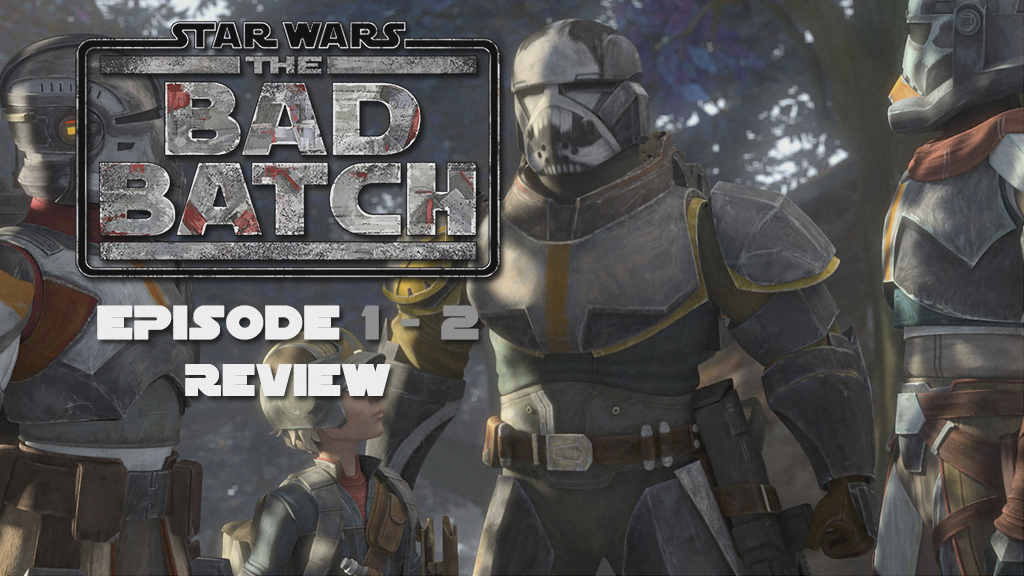
  • REVIEW: ‘The Bad Batch’ Season 2 Premiere Sets the Tone for an Even More Grim Second Season

    REVIEW: ‘The Bad Batch’ Season 2 Premiere Sets the Tone for an Even More Grim Second Season

    While Rebels and Andor tell the story of how the early days of the Rebellion, The Bad Batch tells a darker, more grim story: one of the early days of the Empire. Set around 19 years before the Battle of Yavin, The Bad Batch takes place right on the heels of Order 66 and the end of The Clone Wars and puts on full display how the Empire began to grow into the type of tyrannical rule that characters like Saw Gerrera and Luthen Rael would ultimately seek to end. It’s animated, sure, but it’s no kids’ show, and Season 2 reminds the audience of that over the course of its heavy two-episode premiere.

    After escaping from a mission gone wrong that serves to remind the audience of who is who on the team (and what their personalities are), the Bad Batch head back to their de facto headquarters on Ord Mantell. It’s a short reunion with Cid, their Trandoshan “benefactor”, as acting on a tip from Cid’s pirate friend, Phee (voiced by Wanda Sykes), the Batch finds themselves sent on a mission to a location familiar to fans of The Clone Wars: Castle Serenno, the home of Count Dooku and the now defunct (thanks to Vader) Separatist movement. With Dooku having lost his head, it seems the Empire has begun to collect his war chest and Cid wants her hands on whatever Clone Force 99 can get before it’s all gone. While Hunter isn’t too keen on the gig, the rest of the group is convinced it’s a job worth doing. Ultimately, Cid convinces Hunter with a bit of logic that sets the tone for one of the big themes of Season 2: the aggressive expansion of the Empire. With the Empire’s reach growing, this job could provide a big enough payday to get the team out of the game, giving them some freedom and providing a safe future for Omega.

    Omega in a scene from “STAR WARS: THE BAD BATCH”, season 2 exclusively on Disney+. © 2022 Lucasfilm Ltd. & ™. All Rights Reserved.

    “Our Lives Are Like This Because of Omega”

    While the Batch all agrees to head to Serenno, they aren’t all doing it for the same reasons. Echo agrees it was right to save Omega, but it has fundamentally changed their lives and while Hunter wishes to use the war chest to get out of the game to give Echo a better life, Echo believes the war chest should be used for…more war, only this time with Clone Force 99 taking it to the Empire. The Bad Batch aren’t the shining example of a modern family, but they are all each of them has and that includes Omega. The decision to keep Omega with them as they continue to run missions for Cid will certainly be a big part of the core of Season 2 and little time is wasted in reminding the audience that while she’s an enhanced clone (and still a big mystery), Omega is just a kid running the galaxy with some of its most wanted. To that end, Echo makes his point to Hunter that the life he’s trying to escape only exists because of Omega. Omega overhears and that sets into motion the events that lead to her being in danger quite a bit over the course of the two-episode premiere.

    Once the headquarters for the Separatist movement under Dooku, Serenno has, like Kamino before it, been decimated by the Empire. The Batch’s mission to Serenno nicely explores the blurred lines between good and bad in a galaxy where everything has recently been upended. Echo’s desire to use the war chest to wage war confuses Omega, who can’t quite seem to understand how that’s any different than Dooku’s goals. Echo’s response of “depends on how we use it” doesn’t offer Omega the clarity she needs, but it also sets up events to come over the sophomore season of the series.

    (L-R): Tech, Hunter, Omega, and Echo in a scene from “STAR WARS: THE BAD BATCH”, season 2 exclusively on Disney+. © 2022 Lucasfilm Ltd. & ™. All Rights Reserved.

    The mission goes a bit sideways, as you might expect, and the group gets split up. Omega, Tech and Echo find themselves in the company of Romar, a native of Serenno who survived the Empire’s ariel bombardment of the planet. Despite the extraordinary odds their facing, Omega’s insistence on completing the mission, which is a clear reaction to Echo’s comments about how she’s changed their lives, causes Romar to comment that this group of clones is much more like those still working for the Empire than they think. Romar continues to add some perspective to the group when he reminds Tech that he and many other inhabitants of Serenno were among Dooku’s first victims in building his rich war chest and that being a native of the planet makes him Serennian, not Separatist. Romar is a man, who like Hunter, can’t wait to put the past behind him, but that’s not something every Batcher is willing to do.

    The two-episode premiere ends with the return of Season 1’s villain, Rampart, and a reminder of just how far the Empire is willing to go to establish its own version of order and truth to the galaxy. Rampart’s willingness to cover up the events of the Season 1 finale that saw Kamino destroyed are just a microcosm of the Empire’s “at all costs” approach and something that will certainly be an ongoing plot point in Season 2. It serves as a grim reminder of what these clones are up against as they try to make their own way in the galaxy. And ultimately “Spoils of War” and “Ruins of War” do a fine job of detailing how achieving that goal will be the Bad Batch’s toughest mission yet. The Bad Batch isn’t peddling hope; it’s building the world that almost ran out of it.
  • REVIEW: ‘Doom Patrol’ Episode 5 — Youth Patrol

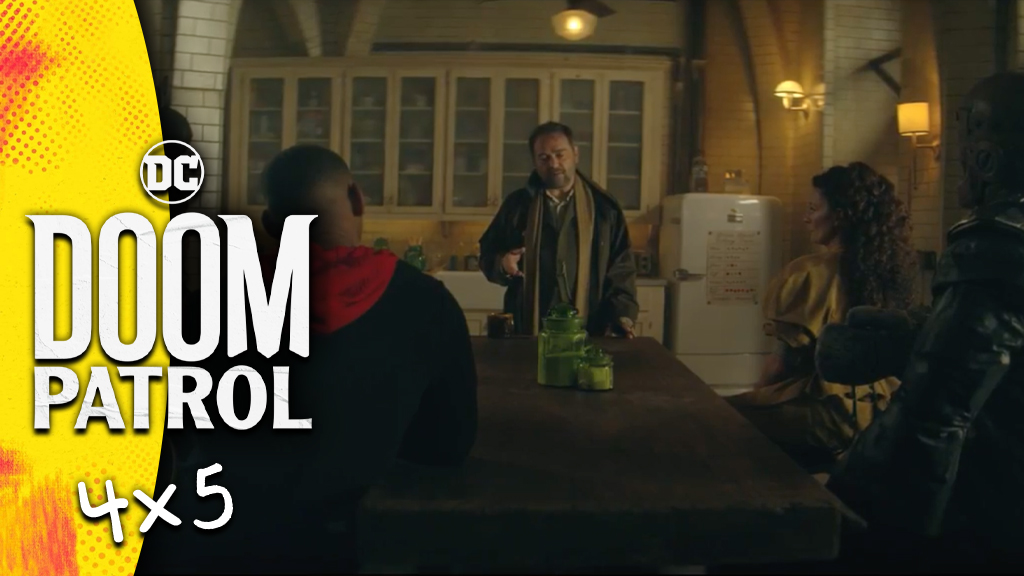
    REVIEW: ‘Doom Patrol’ Episode 5 — Youth Patrol

    Doom Patrol’s fifth episode of Season 4 provided much-needed plot leverage as the series nears its mid-season break. After the disconnected previous episode, it was satisfying to be back with our main team exactly where Episode 3 had left off. In this week’s episode, we finally received more of a concrete explanation of what the season is truly about. The plot pacing paired with definingly creative character moments made this episode a very strong inclusion in Season 4 thus far.

    Notably, Willoughby makes his genuine debut of the season to inform the group about what exactly “Immortus will rise” is all about. Rather than the General Immortus Doom Patrol comics fans may be more familiar with, Immortus in Doom Patrol is supposedly an interdimensional deity that can rip apart reality—and he wants to. What he needs, however, are certain shards of his that have been scattered around. Notable inclusions of these shards are Niles Caulder’s/Dorothy’s talisman and the miniature shards of it placed in Rita, Larry, Jane, and Cliff that gives them immortality. Immortus and his henchman are looking to extract immortality from them, and Dr. Janus succeeded in Episode 3 with Rita.

    In her aging panic, Rita sets free a poorly-designed de-aging spell that initially turns the team into teenagers. The gag is generally used to put the characters in the comical space of the classic dumb teenager trope, which, in the midst of trying to stop yet another apocalypse that they are somewhat responsible for, the fact that their priority becomes a pool party with other random youth is very classic Doom Patrol. It also ultimately delivered some phenomenal character moments.

    Jane’s teenagerhood is perhaps the most interesting, as she herself had never been one. Only created by Kay in young adulthood, Jane never experienced being a teenager. Prior in the episode, Jane gave in to her desire and began to masturbate, but seemingly knocked herself into the Underground subconsciously. The burden on Jane to protect Kay at all costs is extremely interesting when looking at it from the perspective of Jane as a full being. Jane, of course, was created in the aftermath of sexual abuse and trauma sustained by Kay. So naturally, it makes sense that Jane had a primary or major focus on avoiding that type of relationship. The fact that Jane struggles on her own to let herself feel any sexual pleasure is an interesting twist on the usual Jane-Kay narrative. In teenager form—perhaps the form that best symbolizes raw sexual desire and exploration—Jane has some form of hallucination where Kay tells her that Kay’s body is both hers and Jane’s body, leaving Jane with the suggestion that she may be more free to live as her own person. Considering Jane’s initial push this season was to find her purpose other than protecting Kay, this move toward autonomy certainly seems par for the course. However, the fact that Bunbury the magic rabbit appears to extract her immunity at the end feels a bit more pressing.

    The absolute standout moment of the episode, however, came from Rita and Laura. The two have been absolute masters both last season and Season 4 so far, but their bus top scene is every example of why. First, the two argue over Laura’s team leadership, but it devolves into the real issue between the two—Madame Rouge betraying Rita and having her boyfriend killed—and from there ends up at an extremely touching place. First, Laura has this important conversation with Rita’s now-child form, which amounted to a fully grown woman pleading with, apologizing to, and admitting again the extent of her shame and regret she will never be forgiven for to a child. When Rita tells her she cannot move past it, but misses her best friend, the dynamic between the innocent child who is hurt at her core and the adult who embodies all of the complexities of the relationship is remarkable. Finally, when Rogue beaks down so completely that she loses control and becomes her child form, the true level of pain, friendship, hate, love, and grief is beautifully captured in a near-perfect sequence.

    Elsewhere in the episode, Larry and Mr. 104 bond over each other’s shared traumatic pasts at the Bureau of Normalcy due to Kheeg’s role as wingman. Mr. 104’s connection to Lazarus is key to his motivation, but it is still a little unclear. However, there is no doubt this episode sets up a romantic connection that will quite possibly end up breaking many hearts. Larry’s loneliness is a constant theme for the character and the fact that there is not someone around who understands some of his hurt and can even safely be with him unwrapped is almost too good to be true. Add in the fact that Mr. 104 is a quite charming, handsome man for Larry (and the actors have that chemistry) it is just a recipe for love and warmth, but it does not feel safe in a series like Doom Patrol.

    Overall, Episode 5 is on par with the strength of the first three episodes of Season 4. It worked with its strongest elements while also pushing the boundaries of how successful that can make their character development. It is stunning that much of the development feels familiar, almost repetitive. Yet, despite the series’ best attempts to hammer a point home too many times, on the whole, each character and each line of personal development continues to consistently improve as if there is no ceiling. Next week’s Episode 6 will be the final episode of Part One of Season 4, so expect it to be action-packed with plenty of cliffhangers.

  • REVIEW: ‘Doom Patrol’ Episode 4 — “Casey Patrol”

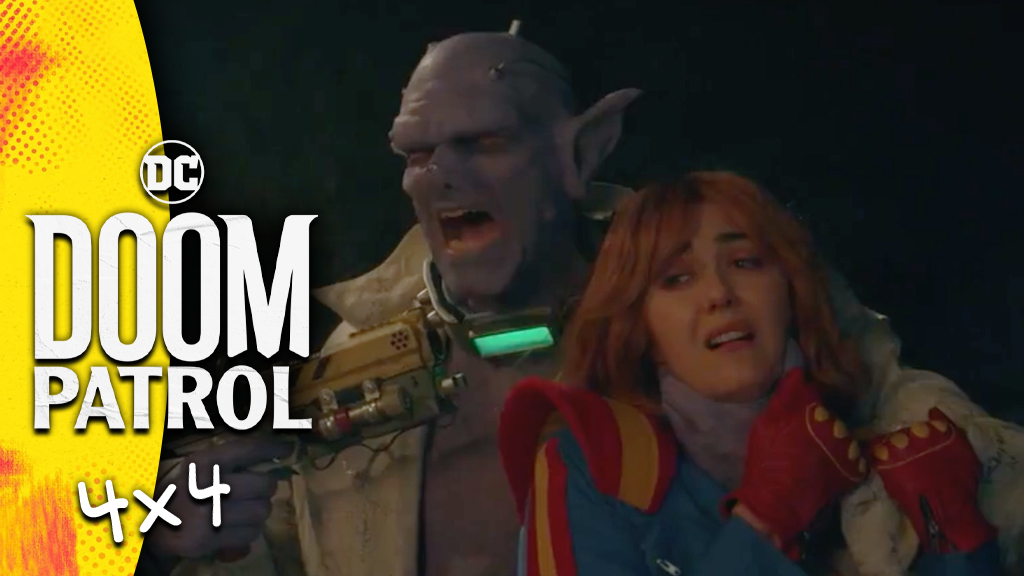
    REVIEW: ‘Doom Patrol’ Episode 4 — “Casey Patrol”

    The latest episode of Doom Patrol was probably the weakest of Season 4 so far. After three episodes of building up the main team’s dynamic, we take a hard detour back to Dorothy who we have not seen since the pandemic-induced Season 2 finale and Season 3 premiere. While Dorothy, Danny, and now Casey Brinke are certainly some of the most unique characters in the universe — which is saying something — they just were not that interesting here.

    Alan Mino Jr.’s return as Maura Lee Karupt simply was the best of the episode. Despite his character’s default supporting role status, the episode would have been devoid of interest and energy. Abi Monterey as Dorothy Spinner puts in a strong performance, but the character is never one that truly stuck the landing. Her presence throughout the second season constantly felt like a burden, and frankly, the character’s departure at the very beginning of the third season ushered in a new, bright, and reset era for Doom Patrol. Dorothy has always had, via the series’ writers, quite a lot to contribute to the plot. In this case, it feels a bit unwanted. Granted, Dorothy’s role is rather unknown at this time, but the first three episodes set up a solid foundation for the season that now seems at risk to be thrown into disarray.

    With relatively few episodes in the season, having Episode 4 be a complete departure from what came before it was unfortunately a bit disappointing. While Dorothy and Casey could in theory have the potential to truly break out, they do not have that much time. And assuming they will meet up with our main team sooner rather than later, it would be preferable for the strength of the main team to keep shining from their own self-contained merit. Adding a(pleasantly) bizarre character to the mix will surely shake the foundation — and it is just a strong one.

    Worries aside, Episode 4 still remained more or less a non-starter. Madeline Zima’s Casey Brinke is fine. The character clearly has the capacity to reach some more profound places personality-wise, and the innocent ignorance of many beloved Doom Patrol characters. Of course, we do not get to see her full form in just the introduction, but this episode struggled by essentially making itself an entire episode of side story exposition. It perhaps could have succeeded better by making it shorter and working it into the existing season better rather than taking a break from the strong momentum. Casey in particular seems like one who could interact well with the main group, but it can’t help but be wondered if there will be enough time and space in the remainder of the season to accomplish that, or if the character will feel like a constant distraction.

    One thing is still for sure: Immortus will rise. The fact that Casey’s comic book alien father person is somehow involved in the same scheme as Dr. Janus from the last episode is interesting. Will we see more obscure characters pop up until the mysterious man drawing comics has all the trinkets he needs to raise Immortus? Dorothy’s presence certainly teases that Niles Caulder could make some kind of an appearance yet again in the series. As discussed last time, his role in the Immortus Initiative in the first place is clearly significant. Time will tell how Episode 4 merges into Season 4, but the initial impression is that the season just got a lot messier.

  • REVIEW: ‘Letterkenny’ Season 11

    REVIEW: ‘Letterkenny’ Season 11

    After leading man Jared Keeso took some time to focus on the Letterkenny spinoff, Shoresy, he has returned for Season 11 of Letterkenny and… it’s a mixed bag. Letterkenny has always been one of those shows that wasn’t designed for everyone. The humor can be crude. The characters can be hard to relate to. And the show can often feel like there’s no real point to it. In the end, though, Letterkenny always delights, even with its faults. Unfortunately, though, Season 11 takes a bit longer to get going and the episodes themselves never really feel cohesive.

    Letterkenny is a weird show. There’s no denying as much. It’s a weird show that is packed full of humor and proves Keeso, who helped to create both Letterkenny and Shoresy, is incredibly talented. However, following the excellent first season of Shoresy, it’s hard to return to Letterkenny as it is. Keeso as Shoresy is just excellent, and there’s something special about that character and his journey not to be such an asshole. Letterkenny, which does briefly bring back Shoresy this season, feels like much of the same. The ladies remain wonderful – especially Katie and Gail – and the Skids remain the best part of the series. But while those characters continue to grow – yes, even Stewart – it never really feels like Wayne and the others do.

    That isn’t to say Letterkenny is bad. It’s not. It’s still great, but Season 11 takes a bit to get going. The “Chips” episode feels pointless and is ultimately a weird choice to kick off the season. Had it been done as a special episode? That would’ve been great, but again, as a season opener, it feels like a poor decision. There’s no real value to be gained from the episode. Is it funny? Yes. Does it serve a purpose? Absolutely not. Thankfully, by episode three, the show regains its footing for the season and begins to build out a story across the remainder of the episodes. Said story focuses on the always crude Gail, played wonderfully by Lisa Codrington, and her questionable choices. One of Letterkenny‘s biggest strengths is that it always its female characters to be realistic and that includes allowing them to be sexual beings. Gail makes some poor decisions this season, that allows the rest of the characters to explore actual issues faced by women daily, and still finds a way to make it an important topic while keeping things light-handed. It’s one thing that Letterkenny does better than most shows these days. It isn’t afraid to let its female characters exist. Flaws and all.

    Once the season finds a real starting point, it’s smooth sailing from that point forward. The show brings back the always fantastic Glen, who is as ridiculous as ever, to work with Clark Backo‘s Rosie on finding a missing dog. The hilarity that ensues from that point on, courtesy of the Dicks, is a great reminder of what makes Letterkenny so great. But then the show takes a minor stumble yet again in the final episode of the season. As always, Wayne and company continue to have each other’s backs, which is great. However, there are only so many times a season can end with a big fight that is only briefly shown before it cuts to the end credits.

    And yet, with an uneven start and a finish that literally feels like an ending used before, Letterkenny‘s eleventh season isn’t as strong as those before it. However, with a strong first (?) season of Shoresy, one has to imagine Keeso and company still have plenty more in stock for the Letterkenny crew and can easily deliver a hell of a twelfth season. Because there’s no way a Season 12 isn’t on the horizon.

  • REVIEW: ‘Doom Patrol’ Episode 3 — “Nostalgia Patrol”

    REVIEW: ‘Doom Patrol’ Episode 3 — “Nostalgia Patrol”

    The third episode of Doom Patrol feels like a fairly self-contained, one-off outing on its surface throughout most of the episode. By the end of “Nostalgia Patrol”, though, it is clear that the episode is an integral part of the season’s moving plot. After the first two episodes’ focus on the 2042 apocalypse and the team trying to grab its footing immediately after the decision to be the Doom Patrol, the restart of the crew’s daily lives almost feels disconnected. The stuck-in-a-movie plot came across like a stand-alone bit in classic Doom Patrol side adventure charm, but it ultimately serves as a clear launching pad for a parallel overarching storyline for the season—Immortus will rise. 

    Doom Patrol is not known for answering open questions swiftly or without ambiguity. But even when the show goes to off-the-wall territory, it often stays strangely connected, and Season 4 may be no different. The concept of immortality has long tied many characters and elements together, some not as obvious as others. Immortus rising, then, is likely to bring back familiar faces and concepts from past seasons. And with a strong possibility (given the non-stop shakeups and breakups of HBO Max and the DCEU) of Season 4 being the show’s final season, bringing everything together in the end makes the most sense.

    The group’s first interaction with the adversary is passive, psychological, emotional, and successful. General Immortus promises to be a force this season that goes to the heart of the Doom Patrol, exploring the shady Immortus Initiative and Niles Caulder’s mildly disturbing actions that led to him collecting and experimenting on our main characters from the beginning. Notably, it seems likely that the fact that the main characters do not appear to age will be addressed, potentially giving viewers more opportunity to explore the cohesive force that bound such a misfit team in the first place. 

    The core plot of this episode—Rita and others being caught in her old movies—allowed it to be characteristically wacky while also giving it new color and texture that helps the series maintain its “comicbook-y” feel. But among the brevity of the concept was Doom Patrol’s defining emotional distress. Of course, Rita’s profession of love for her family despite her feeling fully rejected was the highlight, but Vic’s bittersweet and uncomfortable reunion with his old friends struck a competing, darker chord. Madam Rouge’s drunken monologue-montage of self-loathing, guilt, and desperation yet again shows this unlikely team member’s merit as a new character to get invested in. 

    At the end of the day, Doom Patrol has barely explored an actual, traditional superhero team because everything is personal in this series. The characters’ personal lives are constantly in the direct line of fire. Not many comic book or action properties take this kind of route. Instead, they opt for big world-saving heroics and ignore the detailed mechanics of the “humans” in the middle of the story. Doom Patrol, for that reason, is somehow one of the most realistic comic book shows at the same time it is easily “too weird” for many crowds.

  • REVIEW: ‘Doom Patrol’ Season 4 Episodes 1-2

    REVIEW: ‘Doom Patrol’ Season 4 Episodes 1-2

    The opening two episodes of Doom Patrol, “Doom Patrol” and “Butt Patrol”, show that the series is still the best comic book adaptation on television. Amidst the DC Entertainment turmoil, Doom Patrol is a strangely shining beacon of hope despite being wildly underrated and skewing away from the comfortable tone and subjects adopted by most other projects. Season 4 proves that there is simply something overwhelmingly unique about the HBO Max show.

    After finally ending last season as the “Doom Patrol”, we briefly see the superhero team in some classic action. The time machine introduced in Season 3 could be a key player going forward—it is used to facilitate the hero antics, but it is clear after Episode 1 that it can have a much larger role. Time travel played a large role previously, and Episodes 1 and 2 leave it questionable whether Season 4 will expand or retract it. Considering the team is trying to prevent a future apocalypse, a lingering question about a person they collided with in the time stream, and a General Immortus prophecy tease, there is a strong chance Doom Patrol will be playing with time as much as it ever has.

    HBO

    Just as time never stops, there is a never-ending theme of doom in the series. Aside from, obviously, the title, the group is relentlessly in a state of “doomed.” Not only does this season appear to revolve around the Doom Patrol stopping an apocalypse they themselves caused, but the main characters have also already met their future dead and ghostly selves and have started to dig their own graves in the aftermath. The show is a lively spectator sport where the viewer is constantly rooting for the loser. But as much as we might think we want a win in Doom Patrol, does that feel natural?

    It all naturally leads to a consideration of how Season 4 could fall short, and the answer is stagnation. The three preceding seasons all felt like they were building to a larger moment where the group of misfits become the titular Doom Patrol. They did, but we certainly do not spend much time in that mode. Instead, the group generally falls back into its dysfunctional family routine. This is the irreplaceable heart of the show, but one wonders if this season will show more movement—with the conclusion of Season 3, the forming of the Doom Patrol, and the slow buildup to an expected “superhero team show”, settling back into old territory might not be enough.

    That being said, Doom Patrol is generally the antithesis of commonality or familiarity. The current story is certainly intriguing—and ties in previous hits from last season—but only time will tell if the show can for a fourth time bring fans to a place wildly outside of any comfort zone. Still, some of the foundations laid are stronger than others.

    HBO

    Jane’s story is perhaps the trickiest one to predict here. Historically, her inner workings have been an extraordinarily strong subplot throughout all seasons, but it seemed to come to a strong peak last season. Episode 2 suggests that this aspect could be winding down, but the lingering solo subplot of Jane unraveling the depths of hers and Kay’s psyches—regardless of its quality—is starting to feel tired.

    In any event, the cast remains yards above their peers. Diane Guerrero seems impossible to beat, pulling off multiple characters effortlessly. April Bowlby and Michelle Gomez are once again humble pillars of the show, both on their own and as a duo. While Rita in particular has become the closest character there is to a lead, her and Madame Rouge’s dynamic feels both grounded in traditional storytelling technique and entirely refreshing. Jovian Wade’s Victor is in quite an interesting place as a character—Cyborg without any of the cyborg. So far, it seems like Season 4 is in no hurry to “correct” that aspect and Wade shows promise of a very strong and nuanced performance over the season. The Brendan Fraser-voiced Cliff has some of the most emotional scenes of the first two episodes, and he and fellow faceless Larry (voiced by Matt Bomer) always find their way to being some of the most emotive characters in the series.

    In sum, the first two episodes of Doom Patrol’s Season 4 capitalize on all of the series’ wonderful elements that have propelled it in the past. So far, there is a seemingly extra-cohesive plot, which may help glue the season together better than some of those in the past that felt slipperier than perhaps ideal. Of course, the first episodes raise many questions about the plot, but the biggest question may be how far the series is willing to stretch its core concept of a misfit bunch of powered-up rejects toward what its title can represent.

  • REVIEW: Amazon Prime’s Three Pines Should Be Your Winter TV Binge

    REVIEW: Amazon Prime’s Three Pines Should Be Your Winter TV Binge

    The New York Times bestselling Inspector Armand Gamache novel series from author Louise Penny is what I would call a perfect winter read: cozy mysteries set in the fictional village of Three Pines, inhabited by a colorful, but lovable group of people who have found both friendship and refuge in each other, away from the bustle of surrounding Quebec. Imagine a quaint, wintry village where you can just as easily ice skate on the frozen pond in the square as you can enjoy a gourmet dinner and lively book discussion in front of a roaring fire at the local bistro. It’s easy to imagine Penny took her inspiration for the Three Pines from a Thomas Kinkade painting–if his paintings just happened to be filled with a whole bunch of murderers.

    Alfred Molina as Chief Inspector Armand Gamache

    Amazon Prime Video’s adaptation of the series, The Three Pines, promises all the coziness of those charming mystery novels, sure to delight fans of Agatha Christie and Hercule Poirot. But while the novels balance a delicate line of calculating thrill and disarming charm, the show suffers from pacing that is practically rocket-speed by comparison—every two episodes tackles the plot of one novel. That said, The Three Pines is a brilliant introduction to Inspector Gamache and viewers need no prior familiarity with Penny’s books to enjoy a series that’s perfect for your wintry evenings.

    The series opens with Chief Inspector Armand Gamache (Alfred Molina), head of Homicide for the Surêté du Québec, arriving in the Three Pines to investigate the murder of the incredibly unlikable CC de Poitiers. While this is surely meant to be a sort of punishment for the Head of Homicide after a recent dispute with superiors, Gamache seems nonplussed by the slight and dives into the case with his familiar team, Jean-Guy Beauvior (Rossif Sutherland) and Isabelle Lacoste (Elle-Máijá Tailfeathers). Bumbling, accident-prone Yvette Nichol (Sarah Booth) challenges the team’s patience as the local rookie detective. Molina is particularly likable as Gamache, whose level-headedness and insightful observations require a measured approach. Molina is incredible at depicting both empathy and patience onscreen, traits so unique to Gamache that he is often called a coward for his failure to react. But in a time when both the United States and Canada are plagued by overreactive police, it’s rather understandable to see how this makes Gamache an outlier.

    Arisawe (Georgina Lynn Lightning) and Kara Two-Rivers (Isabel Deroy-Olson) with other protestors at the MMIWG protest.

    Indeed, the series tackles some rather bold societal issues head-on. Years of systemic abuse towards Indigenous Peoples by Christians and the Canadian government forms the overarching mystery spanning all eight episodes. The series opens with the shouts from a protest by First Nations people who’ve gathered outside the Police Headquarters. They are calling for intervention in the cases of hundreds of Indigenous girls who go missing each year that see no resolution. Blue Two-Rivers (Anna Lambe) is one of those girls and it’s here Gamache meets her mother, Arisawe Two-Rivers (Georgina Lightning). Gamache and Lacoste, a Native herself, are haunted by the mother’s anguish and the seeming dead-end case. Georgina Lightning is powerful in this role as a fearless mother taking on the entirety of the Surêté du Québec. While the series might have been focused on monochromatic—read: White People—problems and centered entirely on the idyllic village of Three Pines, here it lifts its head towards a larger picture, aware of its own problematic Quebecois backyard and the longstanding racial troubles plaguing it. It’s this mystery that is perhaps the most compelling and with the highest stakes, and reason enough to binge all eight episodes.

    Chief Inspector Armand Gamache (Alred Molina) and Jean-Guy Beauvoir (Rossif Sutherland) interrupt a meeting of the Three Pines book club.

    That said, it’s the quirky and delightful villagers who will endear you to Three Pines, all of whom are suspects in the rather awful CC de Poitiers’ death: psychologist-turned-bookseller Myrna, strongly opinionated and fiercely protective played by Tamara Brown; sweet and sensitive artiste Clara Marrow (Anna Tierney); Olivier and Gabri, the oddly-matched gay couple who own and operate the bistro (Frederic-Antoine Guimond and Pierre Simpson); Bea Mayer, the indigenous art gallery owner (Tantoo Cardinal); and the delightfully obscene and strange reclusive poet Ruth Zardo, brilliantly played by Clare Coulter. Louise Penny has said she yearned for a sense of belonging and an end to loneliness, and so it makes good sense that The Three Pines is a sort of safe harbor for this found family, “only ever found by people lost.” The immediacy of the murder introduced in Whiteout Part One and Part Two (episodes 1-2) is also its challenge; it’s hard to connect to a bunch of murder suspects who all appear to be hiding secrets. But by episode three Gamache (and viewers) are part of the fold and the sense of magic that envelops the village.

    Ruth Zardo (Clare Coulter) and Myrna Landers (Tamara Brown) at the annual Three Pines curling match.

    The Three Pines is a compelling watch made even more likable by its own social awareness. Indeed, the case of the missing Blue Two-Rivers is echoed throughout each episode with haunting art installations in Be Calm, Bea Mayer’s art gallery. In one, striking red dresses hang from empty tree limbs, each one representing a missing Indigenous girl or woman. It’s hard not to draw comparisons to the striking visuals in Handmaid’s Tale. But where the latter is often heavy and difficult to watch with its dystopian vision, The Three Pines manages to balance its reality with a sense of hope. It’s an easily bingeable, enjoyable mystery series with a talented cast, perfect for cozy fireplace viewing. The first two episodes are available from Amazon Prime on December 2, with two new episodes released weekly until the finale on December 23.

    Louise Penny’s latest novel in the Inspector Gamache series, A World of Curiosities, is due out November 29.

  • REVIEW: ‘Willow’

    REVIEW: ‘Willow’

    NOTE: This non-spoiler review covers Episodes 1-7

    In 1972 when George Lucas first dreamt up what would eventually become the 1988 film Willow, the foundation of the story was the idea of propping up, in Lucas’ words, “a little guy against the system.” As a fantasy adventure releasing in the wake of giants such as House of the Dragon and The Lord of the Rings: The Rings of Power, Willow, the Disney Plus streaming series that serves as a legacy sequel to the film, is certainly just as Lucas conceived it. Not nearly as hotly anticipated as House of the Dragon or The Rings of Power, Willow comes to the party as an overlooked underdog that might seem to find itself facing a steep climb to success in comparison to those powerhouses. 50 years later, Willow remains exactly what Lucas envisioned it to be. While it takes a beat to prove its worth and is certainly not made to appeal to the same audience as the House of the Dragon or The Rings of Power, the elements of Willow coalesce into a fun, heavily 80’s-inspired series that finds its own way in the epic fantasy genre.

    The series navigates the familiar archetypes of a fantasy quest against a jaw-dropping array of scenery, with each episode moving from one spectacular, even if horrifying, setting to another. Shot in Wales, Willow takes full advantage of the varied geography of the country and some well-used CGI to fully realize the fantastical and familiar settings of Tir Asleen and Nockmaar while introducing some incredible (and spoilery) new places along the way. In terms of production value, Willow delivers from beginning to (almost) end. That extends beyond the settings to character designs that range from truly frightening (The Gales are going to give kids nightmares) to adorable (the mudmander that will give Falkor vibes to any 80’s kid).

    As with the settings, Willow’s cast of characters works to find a balance between familiar and new. Warwick Davis returns as High Aldin Willow Ufgood and Joanne Whalley has what amounts to an extended cameo as Sorsha, now the Queen of Tir Asleen who is without the love of her life, Val Kilmer’s Madmartigan. Madmartigan’s black hole-esque absence is central to the series’ main plot as it can be measured by the effect it has on those around it. No one feels the effects of it more than his children, Kit and Airk Tanthalos, played by Ruby Cruz and Dempsy Bryk, respectively. The children of Madmartigan feel both familiar to the character-Kit, as a restless adventurer, and Airk, as a prolific lover of ladies-but incomplete as they strive to find their own ways. They’re joined in the cast by fellow newbies Erin Kellyman as Jade, Ellie Bamber as Dove, Tony Revelori as Graydon Hastur and Amar Chada-Patel as Thraxus Boorman. Much like the audience, most of these new characters may have only an inkling of an idea of who the great sorcerer Willow is, making it easy for newcomers to the story to catch up along with them. While Davis brings so much more to the role than he did as a 17-year-old in 1988, it’s the young cast of characters that propels the plot from its center.

    (L-R): Graydon (Tony Revolori), Boorman (Amar Chadha-Patel), Dove (Ellie Bamber), Kit (Ruby Cruz), Willow Ufgood (Warwick Davis) and Jade (Erin Kellyman) in Lucasfilm’s WILLOW exclusively on Disney+. ©2022 Lucasfilm Ltd. & TM. All Rights Reserved.

    The center of that plot is, of course, a quest that not only puts the heroes in peril but also forces them to examine who they truly are. Without delving too far into spoilers, it’s fair to say that each of Willow’s new heroes questions who they are along the way and that each of them come to find out that they are not necessarily who they thought they were going to be.

    It’s no coincidence that the executive producer and head writer of a series that features people stepping out of the shadow of their father and discovering who they truly are is executive producer and writer Jonathan Kasdan. Just like the fellowship taking on the quest, the series takes time to find narrative coherence and that may be, in part, because Kasdan is undertaking a quest of his own, finding himself in the same way the new group of heroes does. Like Kit and Airk, Kasdan finds his way out from the shadow of a larger than life father (legendary screenwriter Lawrence Kasdan) over the course of the series. Like Kit and Airk, the series comes complete with echoes of the works of Kasdan the Elder (fans of Indiana Jones will find themselves reminded of some classic scenes); however, those echoes don’t define Kit and Airk nor do they define Willow. Rather like the heroes on the quest, Kasdan finds his own way while embracing the influence of the works of his father and others in the genre.

    Toth (Charlie Rawes) in Lucasfilm’s WILLOW exclusively on Disney+. ©2022 Lucasfilm Ltd. & TM. All Rights Reserved.

    It’s in respecting and understanding the genre, and the giants that built it, that Kasdan manges to build a series that while reminiscent of so many classics becomes content being its own thing. Each episode of Willow features exactly the kind of swashbuckling action fans of fantasy adventures would hope to see; each episode of Willow features some sort of dialogue of side quest that deepens the overall lore of the series; each episode of Willow features chivalry, honor and love. But the strength of the story is that in any given episode, any one of the fellowship may find himself/herself moving through the familiar tropes. Willow is not the traditional quest of one central hero surrounded by companions; in fact, the series provides enough time for each character to wear both titles.

    Willow continuously plays with the familiar tropes of the genre in ways that are both reflective of the 1988 film and imbued with a sense of modernity. Want a swashbuckling knight who falls in love with a princess? Willow has it. Want crusty trolls? Willow has them. Want terrifying Bone Reavers? Willow has them, too. However, Willow, much like the Nelwyn sorcerer for whom it is named, has plenty of tricks up its sleeve and, if given a chance, will come to surprise you. As has been shown over the past decade or so, success is not a given for a legacy sequel. Jonathan Kasdan seemed to be well-aware that any attempt at a successful sequel to 1988’s Willow, a cult classic whose charm has grown over the years, would have to be earned. He did so by cleverly balancing the series between the past and the present, putting together a series that while slow to start, will have fans anticipating the next installment by the end of Episode 3. Willow is a worthy successor to the film that, just like its delightful bunch of young heroes, carves its own path through familiar territory.

    Murphy’s Grading Scale: 8.0 (Very Fine)

    Source: The Cinema of George Lucas,

  • REVIEW: ‘Andor’ Episode 12

    REVIEW: ‘Andor’ Episode 12

    Andor writer and executive producer Tony Gilroy has a knack for creating unnerving tension in his projects. Whether in the Bourne franchise, Armageddon or his directorial debut, Michael Clayton, Gilroy’s works often resolve under incredibly stressful circumstances that leave the audience reeling while they process. The season finale of the first season of Andor, “Rix Road”, and in fact the entire first season itself, certainly fits that pattern, slowly using every tool at the creative’s disposal to simultaneously build tension within the audience and the characters nearly right until its final moments.

    On the surface, the finale is all about the convergence of nearly all of the series’ key figures on Ferrix where they hope to find Cassian returning for Maarva’s funeral. But what makes the episode carry so much weight is that it also works as a convergence of nearly all of the series’ key themes. This thematic convergence is much more impressive both in the way it is reflected by the key parties involved and also that it was possible at all, much less done so well given the scope of Andor. Has been oft-discussed, the 12-episode season was shot as “pods” of 3 episodes and each “pod” seemed to neatly tie up the themes that pervaded each of them. To have them all thunderously return here required significant planning and craftmanship by Gilroy and his team.

    Most prominent among those thematic echoes is the recurring idea that everyone has their own rebellion. That sentiment, first spoken by Vel Sartha to Cassian in “The Axe Forgets”, and the weight it rightfully carries in a galaxy where the Empire has now made it clear that there are no limits to what they’ll do to maintain “order”, come rushing back to mind during Maarva’s funeral march down Rix Road. During the holographic speech recorded before her death, Maarva powerfully reminded the people of Ferrix that they’ve been comfortably and somewhat selfishly ignoring the truth of the Empire. Calling it both a “wound that won’t heal” and a “darkness reaching like rust into everything”, Maarva uses her final moments to tell the people of Ferrix to wake up. Indeed her “last words” before B2 stops broadcasting are “Fight the Empire!”, inciting and inspiring the Rix Road revolution. Maarva Andor goes down in history as an OG Rebel by stirring the people of Ferrix to fight.

    Maarva’s words resonate with the words of another dead character who longed to see the Rebellion move ahead. Though he had a short arc in Andor, Karis Nemik’s manifesto, which Cassian read through when he first returned to Ferrix earlier in the episode, ultimately served more as a book of prophecies. Nemik’s beliefs that “the smallest acts of insurrection” advance the cause of the Rebellion, that “the Imperial need for control is so desperate because it is so unnatural”, that “authority is brittle” and that “oppression is the mask of fear” are all fully realized during Maarva’s revolt. It’s ultimately the act of an Imperial officer to stop Maarva’s speech that becomes the tipping point of a largely unarmed group of mourners (there is, of course, the bomb) choosing to charge into battalions of troops. The Empire’s devastating response ends in mass casualties but with so many survivors, including those who escaped, word of what happened on Ferrix will spread and can almost certainly be counted on to become a key point on the timeline of the formation of the Rebellion.

    Though Cassian hasn’t been the primary protagonist of every episode, the finale goes a long way in bringing him to the end of a long character arc that started with him simply in search of his long-lost sister. Cassian’s transformation comes in part when he seemingly comes to the conclusion that the audience has had all along: despite believing his actions only ever impacted him, he’s right at the center of the series of events that have caused so many unintended consequences for those he loves and those he’s never met. Seemingly inspired by the memory of Clem Andor’s words that “people don’t look down to where they should…they don’t look past the rust”, which connect directly to his words to Luthen Rael during their first meeting, Cassian changes the course of his entire life. Though he has ample opportunity to escape, Cassian chooses to seek out Rael and fully commit himself to the Rebellion. Sure of his worth, Rael smirks as he takes Cassian back into the fold, but as awesome as that is for Cassian, it’s likely problematic for some of the others involved and a likely plot point for an early arc in Season 2.

    Ultimately, Episode 12 of Andor is a remarkable standalone episode depicting what will certainly come to be known as one of the inciting moments of the Rebellion and a remarkable season finale that embraces the massive totality of Season One. So often finales miss by only serving one of these purposes but Gilroy served both purposes masterfully by resisting previously established themes, stirring a sense of tension that had been building for 12 episodes while also putting at the center of the episode an event that built on that tension while providing a release that will carry over to Season 2 for the audience and the characters.

  • REVIEW: ‘Andor’ Episode 11

    REVIEW: ‘Andor’ Episode 11

    Telling a story to which the audience already knows the ending certainly isn’t an easy task. It is, however, the task Tony Gilroy took on in Andor. Gilroy, who co-wrote the screenplay for Rogue One, which introduced Cassian Andor and followed him to his death on Scarif, found the secret formula for doing so and created a series that’s becoming increasingly integral to the history of the Star Wars universe. Episode 11, “Daughter of Ferrix”, is another stunning example of how while Andor keeps Cassian at the center of the plot, it’s not really his story at all.

    Episode 11 opens with Cassian and Melshi still working on their escape and ultimately sets Cassian on a course to return to Ferrix once he learns of Maarva’s death. Indeed the entire episode is, on the surface, about making sure anyone and everyone who has been involved in the key events of the series can come together on Ferrix in Episode 12. However, there’s no true tension surrounding Cassian’s actions. The audience knows he is meant to survive this series, though it’ll certainly be as a different man than the one that began it. The reason this episode, and the entire series, continue to grab the attention of the audience week after week is the investment by Gilroy and his writer’s room into other characters whose stories are less defined.

    While characters such as Bix and Mon Mothma have their share of tense moments in the episode, it’s Stellan Skarsgård’s Luthen Rael who, once again, finds himself at the center of the lion’s share of the best moments. Over the course of the series, Rael has gone from an unknown to unarguably one of the Rebellion’s most important figures and Episode 11 cements that status. While the Rebellion continues to exist in a less-than-perfect way, it’s clear that Rael has enough cache to put even the most radical of Rebels in his place. As such, the episode’s most intense scene involves Rael’s escape from the Empire on Segra Milo following his meeting with Saw Gerrera. It’s worth pointing out here that the escape from the tractor beam is almost certainly of the most “Star Wars” moments of the series and among one of the best-looking space sequences in recent live-action projects; it’s also worth pointing out that everything about the scene probably looks and feels the way it does because of how important of a character Rael has become not just to the series, but to the future of the galaxy.

    Ultimately, the strength of Andor (and of Rogue One) is the wealth of fascinating characters who inhabit the dark corners of the Rebellion. And so while the plot continues to revolve around Cassian and the final episode will certainly be about everyone going where he is going, Andor isn’t really Cassian’s story at all: it’s the story of the thousands of faceless, nameless people who may not have even known they were Rebels but whose otherwise insignificant lives and actions made the grand gestures of the Rebellion possible. It’s more of Rogue One in all the best ways.