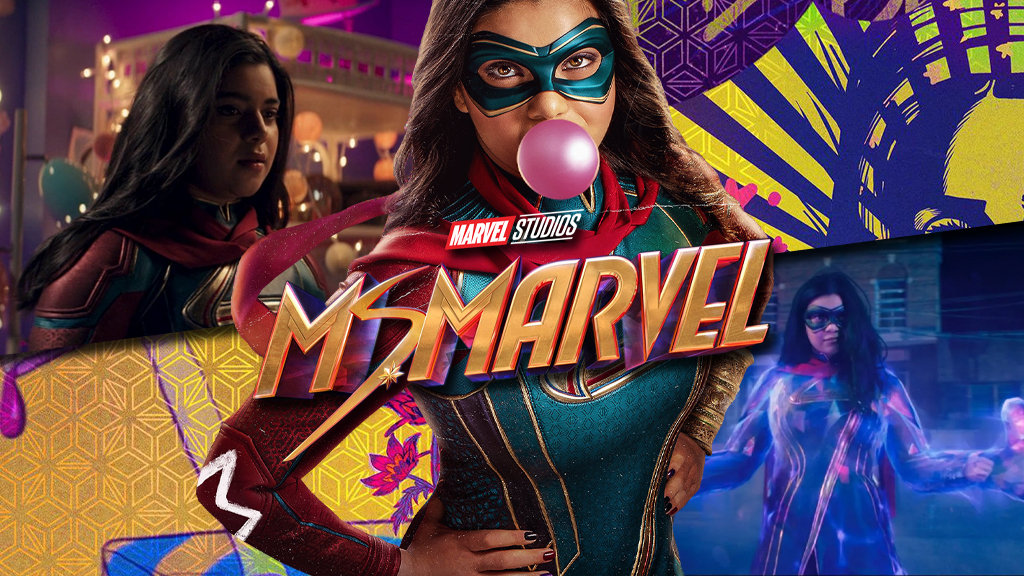
Kamala Khan’s bangle has been front and center over the course of all six episodes of Ms. Marvel, but even after the series wrapped, the bangle’s story seemingly just got a lot more interesting. The shocking post-credit scene sees Kamala’s bangle take on a life of its own, apparently energizing on its own before mysteriously sucking Kamala away and leaving Carol Danvers in her place. While it all seems pretty confusing, turning to the comics can provide some understanding.
As seen in the opening moment of Episode 3, “Destined”, the bangle worn by Kamala was originally taken from the arm of a blue being and is one of a pair of bands. Following Episode 3, it seemed pretty clear that the bangles were probably either the Quantum Bands or Nega-Bands from the pages of Marvel Comics. The events of the post-credit scene all but confirm that speculation as they showcase one of the capabilities associated with the Nega-Bands: the ability for the wearers to trade places with one another.
In the comics the Nega-Bands were created by the Kree as replicas of the Quantum Bands and while they share similar powers, they aren’t exactly the same. Most importantly, the Quantum Bands draw their power from the Quantum Zone while the Nega-Bands draw their power from the Negative Zone. It seems incredibly likely that the MCU’s version of the bands are an amalgamation of the two. Able to create energy constructs like the Quantum Bands, they are also now capable of allowing people to swap places with one another, like the Nega-Bands, as seen in the post-credit scene.
The swap seems to have been ripped straight from the pages of Marvel Comics where Kree hero Mar-Vell used the Nega-Bands to swap places with super-normie Rick Jones. Of interest to the process was that the swap always left one or the other of Mar-Vell or Jones trapped in the Negative Zone. Applying that comic book lesson to the events of the Ms. Marvel post-credit scene, it would appear that Carol makes the jump from either the already-established Quantum Realm or the soon-to-be-established-in-The-Marvels-Negative Zone. Whichever of those two places Marvel Studios chooses to call it, the implications are clear: when Carol jumped into Kamala’s room, Kamala jumped to wherever it was Carol was.
It’s unclear if Carol was wearing what might have been the other band on her wrist (in the comics they haven’t always looked the same and have been reshaped over time), but it is clear that the bands will play a large role in the plot of next summer’s Captain Marvel sequel, The Marvels. Also of interest is how Kamala’s mutant genetics allow her access to the powers of the band. In the comics, the latent X-gene was implanted into early man’s DNA by Celestials, allowing for the possibility of super-powered evolution should they ever be activated. Given the alien nature of the bands, it’s possible they were created by the Celestials, or other Cosmic beings, and simply ended up on the arm of the deceased Kree seen in Episode 3.
Whatever the nature and origin of the bands, they’ve changed Kamala Khan’s life forever and, much like the ten rings did to Shang-Chi, pushed her into a larger universe. It’s reasonable to assume that some of the first act of The Marvels will explain much more about the bands while resolving the issue of Kamala being trapped in another dimension. Fans will have to wait just over a year to find out more as The Marvels is currently set to hit theaters on July 28th, 2023.
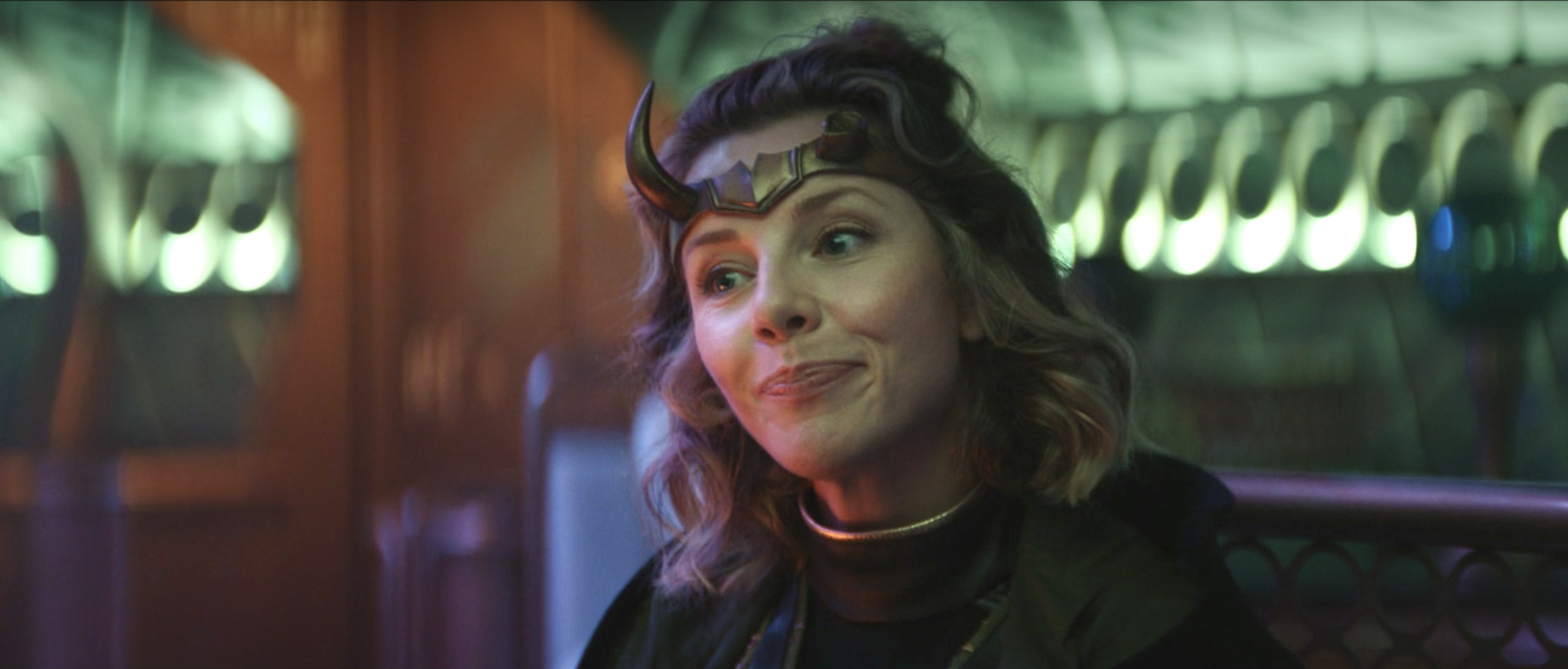
When we last saw Sylvie in the season finale of Loki, she had just unleashed all manor of chaos by killing He Who Remains. By killing He Who Remains, the Laufeydottir allowed for uncontrolled expansion of the multiverse and for the possibility of Kang the Conquerer to come into power. Struck with the implications of what she’d done, Sylvie fell to the floor of the Citadel at the End of Time.
With Season 2 of Loki now underway and set pics from the UK leaking out, it was only a matter of time before fans got a glimpse of what Sylvie has gotten up to since killing He Who Remains and, just as you’d expect, she went to McDonald’s. Set photos have hit Twitter that show Sophia Di Martino accompanied by Tom Hiddleston’s Loki leaving a McDonald’s in what appears to be the 1970s.
Without context, the most interesting thing about the photos is certainly that Sylvie’s lunch seems to be in an era-accurate non-biodegradable container. This is the second set of set photos that seem to be set in the 70s, raising the question of what is so central to that decade that it will be the setting of at least one episode of the second season.
Loki Season 2 is expected to hit Disney Plus sometime in 2023.
Before audiences saw an episode of Marvel Studios’ Disney Plus streaming series Ms. Marvel, much had been made of the changes to the character from the comics that inspired the show. Sana Amanat, who co-created the character in the comics, moved to a position at Marvel Studios in order to shepherd Kalama Khan into the MCU. Amanat was among a group of creatives who worked to change Kamala’s powers, and indicated that the changes were made to allow them to link “to larger stories in the Marvel universe.” However, it’s safe to say that nearly nobody expected that link to be that Kamala Khan was a mutant.
In an instant, Kamala Khan’s origin story went from a heartwarming story about family to a groundbreaking moment in the MCU. Kamala Khan is now the first mutant to appear on the MCU’s Earth-616 and she found out about it along with the audience. After Kamala’s brother learned that she was the superhero formerly known as Night Light, Amir requested that Bruno do some tests on him to see if he might have a trick or two up his sleeve. Following those tests, Bruno reconsiders his original hypothesis about why Kamala can use the bangle and when he takes a closer look, what he finds changes everything for Kamala and the MCU.
As Bruno explains to Kamala, “there’s something different” in Kamala’s genes compared to the rest of the Khan family, “like a mutation.” With those words (and with the unmistakable theme from X-Men: The Animated Series chiming in their aftermath), everything changes for Kamala and for the MCU. And while fans may attempt to debate what the lines and the jingle may or may not mean, Marvel.com made it very clear: Kamala Khan is a mutant.
Making Kamala a mutant rather than an Inhuman goes beyond any changes fans could have predicted for the character, but it also raises quite a few questions. For the moment, it seems that a lot of those questions won’t get answers for a while, but one thing made clear by Marvel is that her mutant genetics (and not being native to this dimension) were what allowed her to harness the power of the bangle when nobody else could.
For now, Kamala stands as the lone known mutant on Earth, but that could (and will) change pretty fast. And while she’s the first to be revealed, she probably isn’t the first to exist. With a bomb like this being dropped in the finale, it’s safe to say fans can expect other mutants to emerge from the depths of the Marvel Cinematic Universe over the next year or two. The mutant-era of the MCU has begun and it has been ushered in by Kamala Khan.
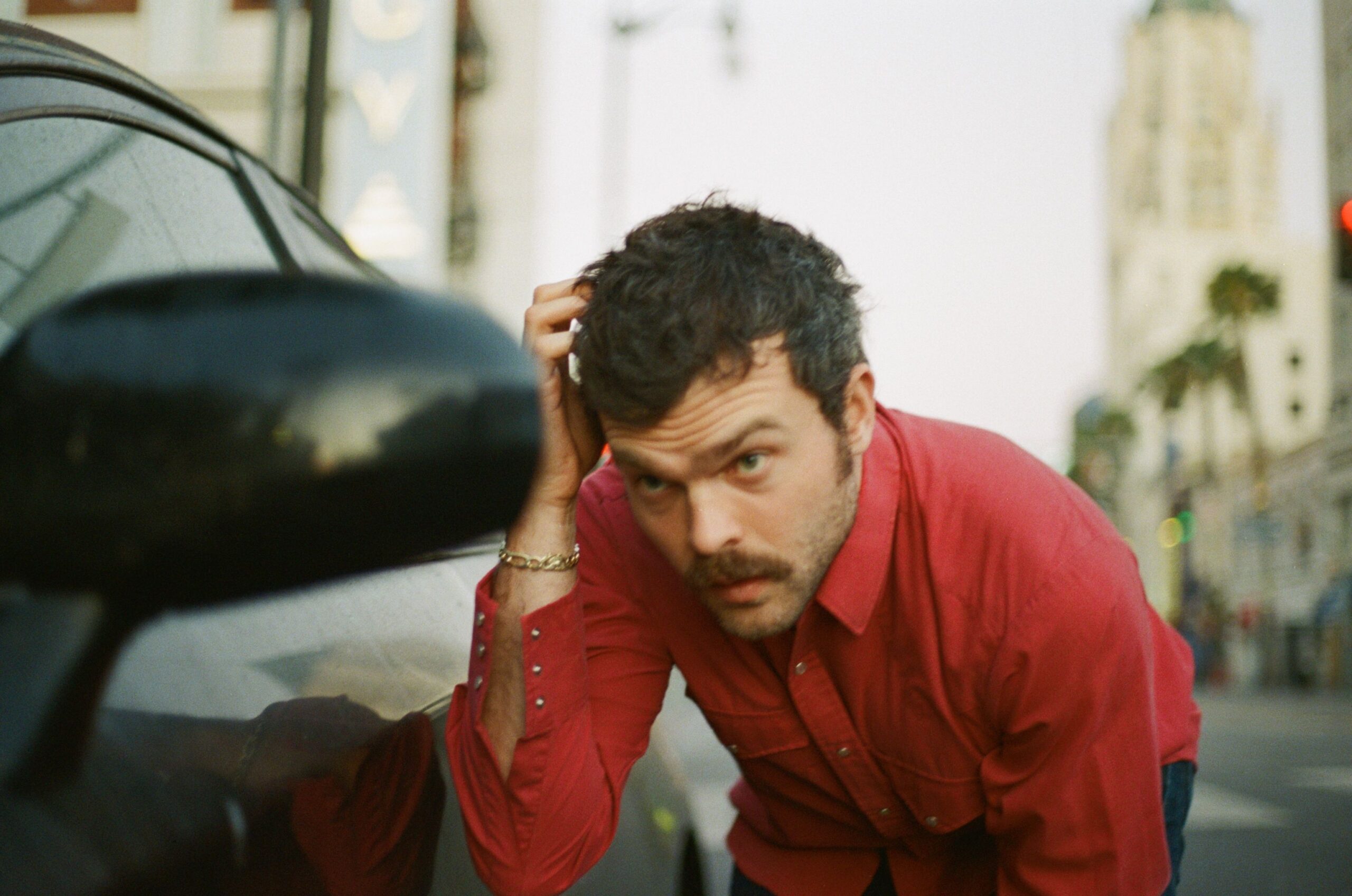
Alden Ehrenreich is heading to the Marvel Cinematic Universe. Per Deadline, the actor has joined the cast of Ironheart, which is currently in production in Atlanta. Details surrounding who Ehrenreich might play are currently unknown.
Ironheart follows Riri Williams, played by Dominique Thorne, a genius college student who goes on to be the first to develop a suit of armor as advanced as Tony Stark. Thorne will make her debut as Riri Williams, aka Ironheart, when Black Panther: Wakanda Forever hits theaters later this year.
Ehrenreich joins a cast that includes Thorne, Anthony Ramos (Hamilton), Manny Montana (Good Girls), and Harper Anthony. Rumors have suggested that Ramos is playing The Hood, which could mean that Ehrenreich is playing Obadiah Stane’s heir, Zeke Stane, who is expected to appear in the series, too.
Chinaka Hodge serves as the head writer on the Disney+ series, while Sam Bailey (Brown Girl) and Angela Barnes (One Day at a Time) are on board to direct episodes of the show. Black Panther’s Ryan Coogler is on board as a producer as part of his overall deal with Disney.
While a release date has not yet been announced for Ironheart, it is thought the series will hit the streaming service sometime next year.
In early July, Marvel Studios put out a casting call for a Mandarin-speaking actress to portray a character codenamed “Jin” for an untitled animated project. The synopsis for the project sets up the project as one in which “a secret society of humanoid aliens living on earth dispatches a team of spies across the world to collect a series of missing artifacts that threaten to influence mankind…” Marvel Studios has several animated projects in development such as X-Men ’97, Marvel Zombies and Spider-Man: Freshmen Year, but this synopsis does not seem to overlap with anything already known about those series. If that is the case, this casting call is the first indication that the studio has yet another production in the works and one that may have already started production. Taking a little closer look at the information that’s been made available and following and admittedly single-minded line of thought, it’s possible to connect the dots and wonder if Marvel Studios may just be making an animated Ten Rings prequel series for Disney Plus.
It’s worth noting that the casting call for “Jin” specified that the role was for the third episode in the series that would start in late July or early August, meaning it’s very likely they’ve already begun work on at least the first episode. If that’s the case, it’s totally possible that this series could be among the projects discussed during Marvel Studios’ first ever animation panel at SDCC on Friday, July 21st. So, right or wrong, speculation on the nature of the series could be short-lived.
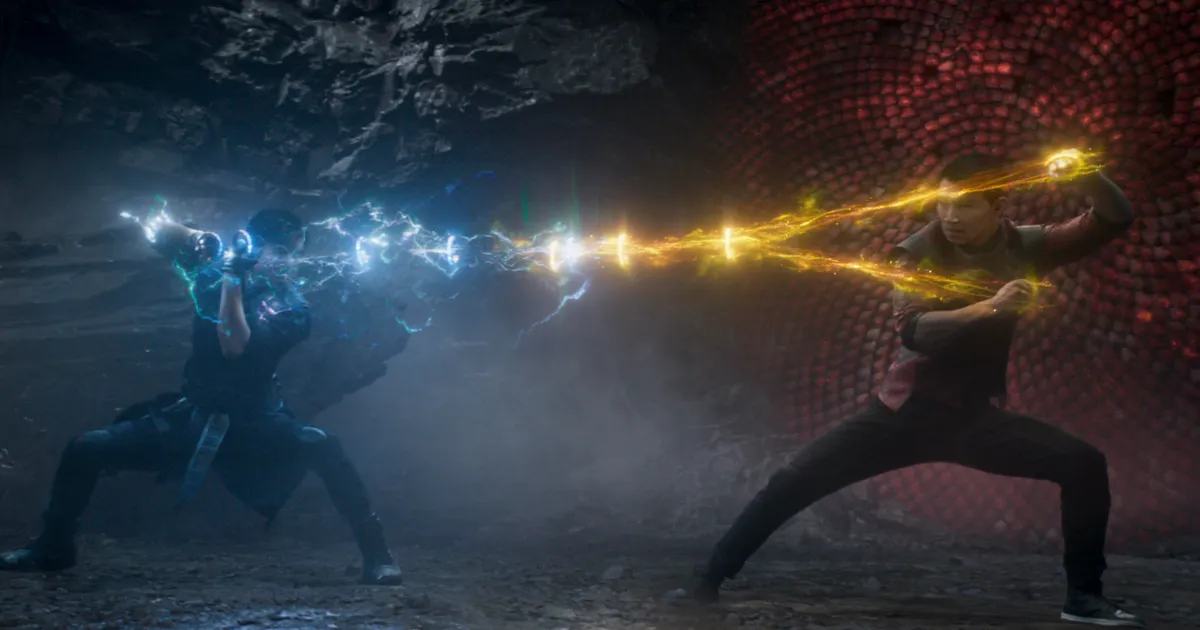
The origin of the Ten Rings was left intentionally vague during the opening of Shang-Chi and The Legend of The Ten Rings. By the end of the film, the audience only really knows that they are really powerful artifacts that are almost certainly alien in nature. Where they came from or how they got to Earth is left entirely unclear. In the comics, however, their origin is very clear and leads to the first clue that this animated series COULD explore how they came to be on Earth in the MCU. The synopsis mentions “a secret society of humanoid aliens living on earth” which ties nicely into the origin of the rings in the comics.
Retconned a few times over the decades, the story of how the ten rings arrived on Earth has always had one constant: a shape-shifting alien race known as the Makulans. Mostly known for being the race of Fin Fang Foom, Makulans are actually humanoid shape-shifters some of whom came to Earth at some point before the 8th century. Using their shape-shifting abilities, they infiltrated Chinese society with hopes over eventually conquering the planet. One of their number, Fin Fang Foom, voluntarily went into stasis, where he stayed for…a really long time. As told in the pages of Tales of Suspense #62, another Makulan, Axonn-Karr, arrived on Earth and, while looking very dragon-y, was attacked and mortally wounded. Karr was later found by The Mandarin, who before he killed him took from him 10 very powerful objects: the ten rings.
The animated series, much like the comics and Shang-Chi and The Legend of The Ten Rings, clearly takes place, at least in part, in China. “Jin” is described as a “Chinese warrior” and “perhaps the best trained martial artist in the world.” Her story begins, it seems, when another character named “Bosco” steals one of the series’ MacGuffin artifacts. With the history of the MCU’s ten rings yet to be revealed, there are plenty of scenarios that could result in the rings being scattered “across the world”, including perhaps different dimensions. For what it’s worth, “Jin” is just as likely to be Wu Ao-Shi, the Immortal Weapon of K’un Lun in the mid-1500s, as anyone else.
It’s possible that this series explores the history of the ten rings a little differently than they have been in the comics. As made clear by the synopsis, these artifacts (if they are the rings) have been scattered across the world. What the series might follow is the series of events that lead to them being collected by Makulans and then hidden away, in a tomb or a cave, BEFORE they are found by Wenwu. Marvel Studios has already shown that a tomb that was marked with the symbol of the Ten Rings organization that held the remains of what appeared to be a dead alien. Who’s to say that’s the only dead alien Wenwu left in the dirt?
Is anything presented above strong enough evidence that this series will tell the story of how the ten rings came to Earth and came to be in Wenwu’s possession? Absolutely not. However, there is one more piece of evidence available that could strengthen the case. The showrunner and executive producer of the series is Marvel Studios’ storyboard artist Todd Harris. Over the past 5 years, Harris has worked on 7 Marvel Studios films including, most recently, Shang-Chi and The Legend of The Ten Rings. It’s possible that during his time on Shang-Chi, Harris worked closely with director Destin Daniel Cretton on developing the backstory for the ten rings and that time spent on the story led to this animated series going into development.
Harris’ involvement doesn’t necessarily make the ten rings a lock to be the “missing artifacts” mentioned in the synopsis. Given the fact that the ten rings are just one of at least two alien artifacts hanging out on Earth (Kamala’s bangle being the other), it’s possible that over the next year or so before this animated series debuts, other alien tech will be uncovered in other projects. Ms. Marvel hinted at at least some level of connectivity to the rings, so maybe, as outlined here, the rings are just one of a group of Phase 4 MacGuffins connected to Variants of Kang. Whatever the case, it won’t be too long before Marvel Studios officially addresses the series and the implications of it.
Thor: Love and Thunder certainly set the table for a fifth film in the Thor franchise with a mid-credit stinger which revealed that the Olympian Prince of Power has been assigned with taking the Odinson down a peg or two. Given Zeus’ command that Hercules knock Thor from the sky and humiliate him, the fifth film has to at least BEGIN on Earth with the two titans trying to prove superiority. However, if you think the whole film is going to be Thor vs. Herc, you’re probably mistaken. The two are more likely to go the Brennan and Dale route from Stepbrothers and, by the end of the first act, realize that they are best friends who need to go on adventures together. With that in mind, here are five potential stories that could be adapted for Thor 5.
Thor: Fear Itself
In classic Marvel Studios fashion, Thor: Fear Itself would have very little in common with the comic event other than borrowing the name, which is damn catchy, and the main antagonist. Family dynamics have often been at the center of the best Thor stories in the comics and in the MCU. Thor: Love and Thunder took a bit of a break from that, but Thor: Fear Itself could return to that winning formula by introducing a pair of terrifying family members: Thor’s uncle Cul Borson and The Midgard Serpent, Jormungand, Thor’s…nephew?
Thor: Ragnarok introduced the idea of Odin keeping some pretty major secrets from everyone, an idea that could come back to haunt Thor and New Asgard. In the comics, Odin imprisoned his brother and Jormungand deep in the oceans of Earth. Having Cul, who becomes known in the comics as “The Serpent” team up with Jormungand, an actual serpent, and do battle with Thor and Herc would allow for some spectacular battle scenes fully in line with two-time director Taika Waititi’s heavy metal sensibilities. Having a long-lost uncle come into play would also give Waititi plenty of room to mess around with some comedy before an absolutely insane third act.
Thor: Journey Into Mystery
One of the greatest characters of Thor’s supporting cast that has yet to hit the MCU is Karnilla, the Queen of Norns. A part of Marvel Comics’ take on Norse Mythology since 1964, Karnilla’s alliances have shifted multiple times over the years, siding with many of Asgard’s enemies, but occasionally siding with Asgard when is served her. Karnilla was always a powerful sorceress and her connection to the Three Norns, the goddesses of fate, and their shared past with both the Asgardian and Greek pantheons could make her the perfect antagonist for Thor: Journey Into Mystery.
Pulling Karnilla into the fifth film could allow for some flashbacks to Asgard, the location of Karnilla’s home, the Nornkeep, during Thor’s younger days and MAYBE allow for Marvel Studios to FINALLY bring another major supporting character off the bench: Balder the Brave, Thor’s brother and Karnilla’s great love. As it turns out, the world of Nornheim already exists in the MCU and was visited by Thor and Loki in their younger days. Given that their trip their was only mentioned in passing during Thor, that trip to Nornheim could become whatever the writer and director of the film want it to be, including a convenient way to introduce a “dead” Balder by adapting a recent series of events from the comics that found him in Niffleheim as the ruler of Hel. With MCU’s Hel needing a new ruler in the absence of Hela, putting Balder on the throne and finding a way to make Thor and Herc end up there as part of a first act “destiny” plot wouldn’t be too hard to pull off.
It would be very Greek of Marvel Studios, and maybe pretty Norse as well, to have Thor and Herc’s partnership fated for them, even against the will of Zeus. Avengers: Age of Ultron teased the Norns a bit with the Water of Sight, so the studio has clearly considered using them, and by proxy their Queen. Given the right touch, Karnilla could be both one of Thor’s greatest villains to date and one whose true intentions the audience is never sure of.
Thor: The Last Days of Midgard
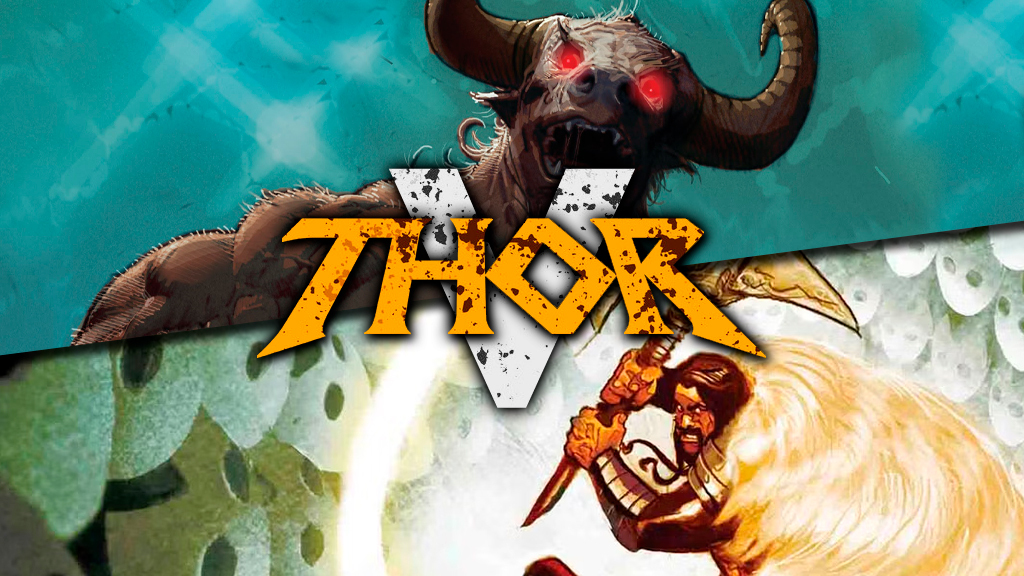
Another Earth-bound adventure worthy of the two heroes teaming up can be found in the same place from which Waititi was inspired to make Thor: Love and Thunder. Jason Aaron’s epic run on Thor introduced not only Jane Foster’s Mighty Thor and Gorr the God Butcher, but also the terrifying CEO of Roxxon oil, Dario Agger. Agger, of course, was gifted (or cursed, depending on your point of view) with the ability to transform into the mythological Greek Minotaur. You can do the calculus for yourself here: angered by Herc’s friendship with Thor, Zeus turns Agger into the Minotaur.
During Aaron’s run, Agger often teamed up with one of Thor’s oldest foes that has yet to make his way to the big screen, Ulik the Troll. In those comics, Thor teamed up with Jane’s Mighty Thor to take on these villains and he’s definitely going to need some help if the two team up to terrorize the MCU. Agger’s ties to Greece and Greek mythology make him the perfect baddie to follow up Zeus’ appearance in the MCU and square off against Hercules in Thor: The Last Days of Midgard. And Agger’s position as the head of Roxxon would also open the door for Waititi, should he return to direct the film, to use the film to bring environmental issues and the climate crisis to light, topics he’s been very vocal on in the past, making The Last Days of Midgard a haunting and appropriate subtitle.
Thor: When Meet the Immortals
Clearly any and all Marvel Studios adaptation of Marvel Comics are growing incredibly loose and this would be no different. Thor: When Meet the Immortals would take inspiration from an arc by Stan Lee and Jack Kirby that began when Thor and Hercules first met in Journey Into Mystery Annual #1 and continued as Journey Into Mystery became retitled as Thor. For the fifth entry into the Thor franchise, Waititi could work to adapt a 7-issue arc that ended with Thor #130.
This arc provides the best opportunity for Waititi to tap into the Stepbrothers-style relationship between Thor and Hercules while also giving them the type of near impossible challenge both have always thrived on in mythology and in the Marvel Comics. After being sent to Earth to humiliate Thor, The Lion of Olympus not only becomes best buds with Odinson but also falls in love with being a superhero. Enraged, Zeus enlists the help another of his offspring, the bloodthirsty Ares. Meanwhile, seeing his brother’s weakness exposed by Thor, Pluto/Hades plots against Zeus and looks to take over Olympus. Alliances change, and Thor saves the day in the third act by defeating Pluto in the “Netherworld.” An adaptation of this old arc allows for some serious god-on-god violence and provides a more appropriate place for Waititi’s trademark humor than Love and Thunder provided.
Thor: Now Ends the Universe
A common complaint about Thor: Love and Thunder was that when it was all said and done, the stakes seemed relatively low. What better way to counter that than to have the greatest stakes imaginable: the end of the universe? And what better way to spite Zeus than to have his son, who he sent to humiliate Thor, work alongside the God of Thunder as a superhero that saves the universe? And what better threat for them to take on than The Hatred Who Walks, Mangog.
While at face value the Mangog might seem like a redundant villain following Gorr the God Butcher, the character actually provides a path to redemption for the franchise following the luke warm reception to the antagonist of Love and Thunder. Just when Thor thinks he can turn the corner and look the the future, the past of his father (and, for the sake of the MCU, Herc’s father, too) comes back to haunt him in the shape of Mangog. In the comics, Mangog, the last of his race, is imprisoned by Odin after the King of Asgard slaughtered his people. We know from Ragnarok that Odin was quite the conqueror with quite few skeletons in the closet. Mangog, who is powered by the hatred of the billion billion beings slaughtered by Odin, would be quite the skeleton.
For the sake of the MCU, it would easy enough to have a cold open that showed Zeus teaming up with Odin to imprison Mangog a thousand years ago or so. Whether it be the destruction of Asgard that set the monster free or perhaps Zeus being weakened after Thor’s attack at Omnipotence City, the end result is that Mangog is free and on the hunt for the film’s MacGuffin: the Odinsword, which has the power to destroy the universe. Mangog’s sheer power makes him more than a match for Thor and Hercules and his absolutely wild appearance would make him an unforgettable antagonist. He seems perfect for Waititi and it’s surprising he’s somehow never made it to the MCU yet.
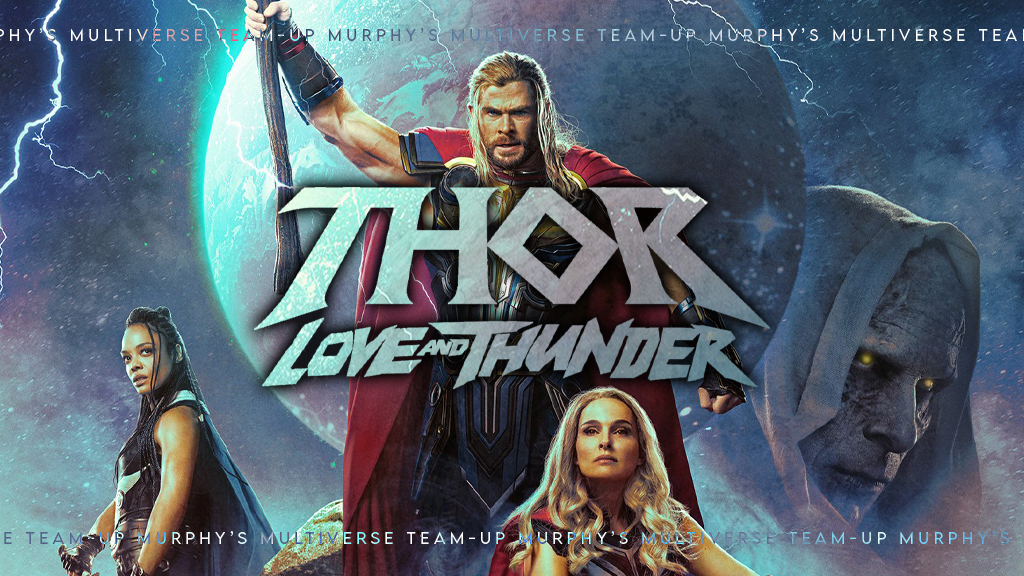
At the end of the day, while featuring a few outstanding elements well worthy of praise, Thor: Love and Thunder doesn’t quite deliver. Going beyond all the talk about wonky CGI and overuse of StageCraft technology (that honestly isn’t an issue at all), the main problems seem to have to do with both the plot and script, in terms of pacing and tone-specific verisimilitude. While understanding that this is a movie about space gods, space goats, and space dolphins you still want it to be engrossing and to make sense, even if only within its own specific set of rules. Also, the fact that the movie shied away from truly exploring what should have been at its core (Gorr and Godhood) in a more in-depth way comes off as a disservice to the comic story arc it loosely adapted.
There seems to be a lot of praise when referring to Thor: Love and Thunder as being very comic-booky mostly in the sense that it doesn’t take itself that seriously. That, in and of itself is not a bad thing, but it certainly doesn’t feel like the right approach when addressing the God Butcher storyline. Much like we got to see a different side of Thor following Ragnarok in Avengers: Infinity War (due to the more somber nature of the storyline) by choosing to make Gorr a central piece of Love and Thunder I’m not entirely convinced that the tone made sense. Jason Aaron‘s original Thor run eventually evolves into a more light-hearted tone (in my opinion the shift from Esad Ribic‘s art to Russell Dauterman‘s sort of exemplifies that) but a feature film adaptation of its beginning, the first arcs featuring Gorr, certainly deserved a more ominous approach in order to sell what made it one of the truly remarkable Thor storylines.
Not only does the tone feel a bit off but by doubling down on gags that already worked and had their time in Thor: Ragnarok comes off as lazy and downright dull at times, with the new Asgardian Theater scene being a prime example of that. Some other running jokes felt flat (looking at you sulking Stormbreaker) and remarkably little of that traditional Waititi sense of humor, clever wording, and comic timing felt fresh. While Ragnarok was mostly set on Asgard and Sakaar making Waititi‘s bonkers take have an otherworldly setting that meshed well together, the Love and Thunder action taking place in a more earthly New Asgard felt a bit cosplay-y, maybe explaining why the Omnipotent City sequence (a location that deserved a bigger spotlight and further exploration) worked a bit better with the established tone of the movie.
The fast pace that allows us to get straight into the action is, again, something that while not being a bad thing should really be used according to the specific situation. In other projects that seemed like the right approach. Again going back to Infinity War, everything started moving hastily since the main players’ motivations had been set up in previous features and there wasn’t really a need for a large amount of setup. But in Thor: Love and Thunder, regarding Gorr but especially regarding Jane Foster’s transformation into the Mighty Thor, everything felt rushed in a way that took some of the emotional punch out of the journey both characters went on. Jane Foster deserved to have her initial Mighty Thor transformation on screen, even if the comics themselves do not show it. But while the comics thrived on the mystery behind the character, as who was holding the hammer wasn’t revealed until later, Thor: Love and Thunder made that pretty clear from the moment the movie was announced, making a similar delayed reveal pointless and honestly a bit anti-climatic.
But not all was lost to the “bigger and louder and more bombastic” version or Ragnarok Waititi sold us on, as there are some hilarious gems spread out through the script (“Maybe your arm is in Valhalla!”) as well as being introduced to, in my opinion, the most obnoxious but also the more hilarious running joke on any Marvel Studios movie: Toothgnasher and Toothgrinder.
All in all, it’s hard not to wish that such compelling story arcs featuring Gorr and The Mighty Thor could have been given a bit more room to truly live up to their potential. What could have been an amazing Thor sequel, given the cast and characters, and especially following the tremendous success of the previous installment that reinvigorated the franchise, instead takes us back to pre-Ragnarok levels of interest in what the future might have in store for the character. Thor: Love and Thunder while aiming at being a Thor: Ragnarok 2.0 but doesn’t manage to go beyond a meager 0.5.
Or perhaps a 0.6. Because of the goats.
Mary Maerz
I liked it a lot more the second time I watched it. I’m a big fan of Taika Waititi’s vibe and the movie’s general goofy tone. Not every joke landed for me, but I will survive. I also love everything colorful and visually interesting so it was a good time for that. I’m not the VFX police, and I don’t think a movie that has Bao the god of dumplings in it needs those people in its life, but the tone of Love and Thunder is bold and wacky, so it really doesn’t need to look like an Avatar sequel. It was fun, and it had unexpected heart in the ending. It was the first MCU film I haven’t spoiled for myself in many years, and I am glad I didn’t.
That being said, and please don’t murder me, I think it was…too short. Gorr was a letdown for me on the first viewing. Once I accepted that into my heart, I could enjoy the second round more. But he felt underdeveloped, both in terms of character and actual villainy. The guy didn’t butcher gods. But his underlying motivation, conviction, and the critical thinking that comes along with it could have used some extra time. He felt like a hypothetical threat the whole movie rather than a real one. Bale is great though; without his performance, Gorr would have been one of the most forgettable villains in the MCU for me. I also wish Jane’s story got some more time. Her journey was abrupt and abbreviated. It makes sense in terms of her role in the Thor franchise, but the story itself deserved its own solo project so it felt disproportionate.
Charles Murphy
In 2017, Taika Waititi made a Marvel Studios movie. Thor: Ragnarok breathed new life into the character by undoing everything that had been done with him before. In 2022, Marvel Studios made a Taika Waititi movie. Thor: Love and Thunder, for better or for worse, was Waititi fully unleashed. And, unfortunately, it seems that Waititi took all the wrong lessons from the success of Ragnarok and spent too much time in Love and Thunder giving fans more of the same from Ragnarok while not spending enough time on the things that could have made this movie truly great. Love and Thunder isn’t a bad movie, but unlike its immediate predecessor in the Thor franchise, it’s far too forgettable and a bit disappointing.
The uneven nature of the film is summed up pretty well by what the audience gets (and doesn’t get) in the first 25 minutes or so of the film. The cold open introduces the film’s villain, Gorr, before he becomes the God Butcher, played wonderfully by Christian Bale. A tragic scene unfolds as Gorr’s daughter dies in his arms as Gorr’s god ignores his pleas. Summoned by the Necrosword, Gorr stumbles into an Eden-esque garden where the shiny gold god killed the dull black god that used to have the Necrosword, and then Gorr kills the shiny god with the evil weapon. Fairly quickly after that, one of the most balls-to-the-wall, insane action pieces in the history of Marvel Studios unfolds as Thor dispatches the evil bird people while also laying waste to the nice blue peoples’ planet.
As amazing as Thor’s action scene is, I have to wonder why we weren’t treated to an equally amazing action scene in the cold open. Rather than have Gorr stumble into the aftermath of the battle between the gods, why didn’t we see it? And that question, “why didn’t we see it?”, is the core of the film’s issues. Allegedly based on Jason Aaron’s legendary run, this film did little to honor it. Instead of seeing Gorr butcher gods in the opening act, his acts are relegated to stills that pop up on a low-quality monitor. In fact, the audience is told about Gorr more than they get to see him be terrifying. Instead of seeing Jane Foster’s first transformation in New Asgard (a scene we KNOW they shot, by the way), we have to listen to Jane tell Thor about it. And the frustration only mounts because I can’t reasonably understand why the time wasn’t taken to allow the audience to see things that would have enriched the story. Was it so we could get the shitty breakup flashbacks?
Magically, however, the mess coalesces into one of Marvel Studios’ ballsiest and best third acts. While the whole magic wish to kill gods isn’t really in line with the Gorr from the comics (he would never have cheated himself out of the pleasure of torturing and killing the gods personally), there are clear and high stakes as the final act begins. The final battle with Thor and Mighty Thor vs. Gorr is going to hold up well over time and the crazy idea to empower the kids worked better than it had any right to. And most importantly, Eternity looked GREAT. Thor has now lost pretty much everything he ever held dear to him and looks set to head in a totally different direction with Love at his side. And coming from the guy who hates post-credit scenes, the first one is an example of how they can still be done right.
Ultimately, Thor: Love and Thunder will go down as a missed opportunity. Not a bad movie, but a cautionary tale for Marvel Studios. It’s hard to judge a movie on what it could or should have been, but this one had all the opportunity in the world to be great and ended up good.
Anthony Canton III
Thor: Love And Thunder is a movie if I were looking for a sports comparison I’d say it were Shaquille O’Neal. A dominant player; one of the best we’ve ever seen. A unique force that changed the game. Yet, we always wished he gave a little bit more. Let’s break it down. Portions of Jason Aaron’s God Of Thunder and The Mighty Thor were adapted to this movie. Was that done well? I’d say it wasn’t really done at all.
When we hear about Gorr The God Butcher, we think of him torturing gods before he kills them. He kills one god. Not enough butchering. Christian Bale is excellent in the role with not enough screen time. Natalie Portman came back inspired as Jane here with a better energy. The action worked in ways that the story did not. I thoroughly enjoyed Russell Crowe’s comedic performance as Zeus. We did not get enough of Valkyrie. Hemsworth was solid. But again I needed more.
Is this a Taika fatigue issue? Perhaps. Ragnarok is one of the greatest MCU films of all time. This one? Solid, but there wasn’t enough meat on the bone to really get to the levels it needed to. Thor: Love and Thunder, meet Shaquille O’Neal. 7 out of 10. Extra half point for the goats.
Mister Anderson
I loved the latest chapter of Thor for several reasons. The character development was great for several of the characters, but I’m most impressed with the newfound depth they gave Thor. His evolution from aloof and aimless to a purpose-driven empathetic hero made this story completely worthwhile. Jane’s turn as The Mighty Thor also brought a lot of emotion and strength to the narrative as well, making Thor challenge a lot of his past decisions and helping him learn, like Xavier teaches Doctor Strange, “Just because someone stumbles and loses their path, doesn’t mean they’re lost forever.” We’re reminded through the movie of Thor’s previous stumbles, but this story really seems to set the hero back on a path with purpose and meaning.
Dalbin Osorio
I’ll get this out of the way right out the gate: I liked it a lot. Chris Hemsworth is Thor, and he owns every role. Natalie Portman was dope, and I wish she would’ve taken his place. That takes me to my one gripe with the film: I wish the God Butcher would’ve butchered a few more Gods onscreen. Namely, I wish he would’ve killed Hemsworth’s Thor. This Phase has been about the passing of mantles, so to speak, and having Gorr kill Thor (and Zeus, which would then set Hercules on a path to revenge for who he thinks is responsible), and then having Mighty Thor be the one to convince him to bring his daughter back would’ve made for a much better movie. Instead, we didn’t get much god killing, which kind of lessened Gorr’s appearance and a great performance by Christian Bale. It didn’t rise to Hela levels, but definitely another very good villain by Marvel. The two scenes at the end were both great, though, again, if you killed Thor, then I think the last scene hits different for people (in a good way). I give it a 7/10. Better than Black Widow and Eternals, for sure, but not as good as the cream of the crop in Phase 4 that was No Way Home, Shang-Chi, and Multiverse of Madness.
Torbjorn Frazier
For me, Thor: Love and Thunder has become ever-challenging to form a definitive opinion on. I certainly consider the film to be a net positive and an enjoyable watching experience, but also find a number of the dissenting opinions on Marvel Studios’ latest film to be at least understandable. A prime example of this notion is the comedy style of Taika Waititi: I greatly enjoyed a majority of the absurdist running gags, but understand those that felt it took away from further developing the fast-paced plot. Though my most overt qualm with the film comes from Christian Bale’s Gorr the God Butcher, who only butchers one god for the entire movie in his limited screen time (even one other god killing scene or montage could’ve rectified this).
My issues with Gorr tie into what is my biggest issue with this film: a lack of definition on the severity of stakes our protagonists are dealing with. I for one have zero issue with the idea of smaller scale stories in the Marvel Cinematic Universe (I’m a defender of Ant-Man and The Wasp for this reason), but the more personal mission of saving the Asgardian children could’ve been better served as a separate project away from the high-stakes, esoteric mission of stopping Gorr from reaching Eternity and killing all the gods. Especially with the rapid-fire pacing (which for the record, I’m a fan of), I struggled to connect with the overall story of Love and Thunder more than I did with Waititi’s Thor: Ragnarok.
Though I don’t want to just lay out my grievances without acknowledging the truly strong and interesting elements of this film. My personal MVP of the film is Natalie Portman, who gives a killer performance as the Mighty Thor and a Jane Foster who wants to be in the film she’s in. As well, Love and Thunder certainly leaves the Thor/Asgardian franchise and the Marvel Cinematic Universe at large with some compelling stories and status quo changes in its future. And even with my qualms, I remain appreciative of Marvel Studios being willing to take the larger creative swings in their recent projects as a means to tell different stories than before. I’d much rather view a film taking these types of swings than attempting to “play it safe” and lose a distinct creative vision.
My pick to helm Marvel Studios’ Fantastic Four film would be Deborah Chow. While someone like Peyton Reed, who has expressed his interest in helming a Fantastic Four film, would seem like a more ideal choice, Chow’s star has rightfully been on the rise in recent years. The director earned her first credit thanks to a short titled Daypass in 2002. She then followed it up with a short titled The Hill in 2004, followed by her first feature with 2010’s The High Cost of Living. It wasn’t until she stepped in to direct an episode of Copper that Chow truly launched her career in television. Like most, she built her resume by directing episodes of multiple CW shows, but once she stepped into the Marvel universe – courtesy of Netflix – Chow really proved that she had the ability to deliver something impressive. One has to imagine it was her work on shows like Jessica Jones and Iron Fist that ultimately led to her being hired to helm episodes on The Mandalorian before landing Obi-Wan Kenobi. Giving Chow the chance to shine on a big feature film such as Fantastic Four would be a pretty fantastic move. Obi-Wan proved Chow has the chops to play in a larger playground, it’s just a matter of giving her the chance to shine on a big-budget feature.
Jared Kirschenbaum on Justin Lin
The Fantastic Four can be defined by a single word: family. And if anyone is qualified for the task of ushering Marvel’s first family into the MCU, it’s Justin Lin – the director who made The Fast and the Furious into the massive franchise it is today. Lin helmed 5 Fast and Furious films (The Fast and the Furious: Tokyo Drift, Fast and Furious, Fast Five, Fast andFurious 6, and F9: The Fast Saga), so he knows his way around a big-studio blockbuster. However, it was Lin’s vision for the Fast and Furious films that transformed them from a streetcar racing movie series to a high-stakes global adventure series centered on a multicultural found family. Additionally, if a director’s time on the show Community is any indication of how well they’d do in the MCU, then Justin Lin should have no trouble directing Fantastic Four. Like the Russo Brothers, who are responsible for some of the all time greatest MCU films, Lin found great success on Community. Lin directed 3 episodes of the show, including the first paintball-centric episode “Modern Warfare”, one of the show’s best. With all of that, combined with his work on Star Trek Beyond, which had a vast ensemble acting as a surrogate family and reintroduced the series to its 60’s sci-fi roots of exploration and adventure, Justin Lin almost seems tailor-made to direct Fantastic Four.
Hunter Radesi on The Daniels
The Fantastic Four aren’t your average superheroes, and they deserve a pair of directors who aren’t so average either. The Daniels shocked the world this year with the release of their hit film Everything, Everywhere All at Once, crafting an incredibly entertaining tale about a family surviving their way through the unpredictable unknown. This is more or less exactly what a good Fantastic Four adaptation needs to be. Previous attempts at bringing Marvel’s First Family to life have failed in understanding the group thrives more on adventure than they do super heroics. The best tales typically involve Reed, Sue, Ben, and Johnny exploring the far reaches of space and time on some sort of wacky mission, not fighting thugs on the streets of New York. Kevin Feige and company would be smart to hedge their bets on an indie duo with a mastery in mixing outright weird with downright emotional.
João Pinto on Alex Garland
The upcoming Fantastic Four feature film will undoubtedly shape the Marvel Cinematic Universe (MCU) for years to come. Marvel Studios seems to be taking its time when it comes to the introduction of Marvel’s First Family and that alone shows us just how pivotal the project is set to become. Another aspect differentiating this project from most other recent MCU offerings is that the director’s chair is likely to be given to a more established director within the industry.
2. While no names have surfaced, multiple sources say while it’s a large mix of candidates, Feige and company are taking a lot of shots at some big names.
With the sheer volume of MCU projects that Marvel Studios is putting out each year, it comes with little surprise how Kevin Feige doesn’t want to have to oversee a shoot of this magnitude himself, thus allowing him to pay more attention to several other, smaller scale, projects.
One source close to process, “Kevin doesn’t want oversee entire shoot and after not having to worry about that with Raimi, he is very game to same outcome with this shoot.”
This shortens the list of possible directors, as many big names might not want to focus their energies on a sci-fi franchise, and those who would might not be the most accomplished of the bunch. One name that does come to mind, with an impeccable track record both in terms of writing and directing as well as being immensely versed in high-concept sci-fi, is that of British writer and filmmaker Alex Garland.
Garland, known for his work in Ex-Machina, Annihilation, and the fantastic miniseries Devs (as well as his contributions to 28 Days Later, 28 Weeks Later, Sunshine and Dredd) would surely bring the inventiveness of his approach to science fiction into the MCU, something a Fantastic Four feature film feels like the perfect vehicle for. He has the track record within the industry to be able to lead such a project and the creative freedom Feige is willing to give whoever ends up with the job could perhaps sit well with Garland, that is known to enjoy being in almost complete creative control of his directorial endeavors as he has written all five of them.
Charles Murphy on Steven Spielberg
As they’ve expanded from 3 movies per year to 4 movies and 3-4 streaming projects per year, Marvel Studios has had to learn on the fly. As it should be, learning is continuous and one lesson learned by Kevin Feige over the last year is that unlike Evelyn Quan Wang (now you see why this one falls in line after Hunter’s!), he cannot be EVERYWHERE all at once. Feige learned that lesson by finding someone he felt comfortable relinquishing some day-to-day control to on set in Sam Raimi. And that discovery has emboldened Feige to shoot for the stars as he looks to replace Jon Watts on Fantastic Four. If Feige is looking for a seasoned, successful person to usher the First Family into the MCU, he need look no further than Steven Spielberg. Spielberg can wear all the hats required to keep a production up and running, has proven his mastery of the sci-fi, action and humanistic genres and is comfortable working with any mix of practical effects and CGI.
Spielberg is a big fan of superhero films, with Marvel Studios Guardians of the Galaxyapparently at the top of of list (at least at one time). He was keen on working with DC on an adaptation of Blackhawk, but while the project is reportedly still alive, Spielberg’s attachment to it is now unclear. Imagine a high-concept sci-fi film (Minority Report) that captures a sense of adventure (Raiders of the Lost Ark) and explores the unknown (CloseEncoutners of the Third Kind) while keeping the focus on family (The Goonies) and you have what a true Fantastic Four film should be. And if you don’t think big name actors won’t be lining up to work with Spielberg on a Marvel Studios project, you aren’t paying attention.
MTF III on Rian Johnson
In Rian Johnson, Marvel wouldn’t just be getting a director with an art house sensibility who has experience within a mega-franchise, were they to choose him for Fantastic Four. The Star Wars: The Last Jedi director has demonstrated both the sci-fi bona fides (see Looper) and the ability to juggle a large ensemble with a wide range of character types (see Knives Out and its forthcoming sequel). And while we don’t know yet who will be cast to play Reed Richards, Johnson’s previous work with Joseph Gordon-Levitt (one of my top choices) shows that he can offer audiences a more cerebral protagonist than the standard wise-cracking square-jawed lead.
His Fantastic Four would have a smart, brisk script, visual flourishes (who could forget the Holdo Maneuver shot or the salt planet battle in The Last Jedi), and emotional depth, while still slipping in physical and situational humor. Admittedly, it wouldn’t be saccharine and sweet, as Johnson is always aware of and in dialogue with the genres he employs. He wouldn’t replicate the 1960’s-style exploratory science fiction of a Lost in Space or Doctor Who without also infusing it with self-awareness and recognition of how their familiar tropes have been employed, so that he can subvert them. And in my opinion, the key to a truly great Fantastic Four project in the 2020s will be a willingness to interrogate and subvert well-worn and traditional archetypes, so that modern audiences can engage with them on a deeper level. Johnson has shown the ability to do that, all while still making crowd-pleasing blockbusters.
Torbjorn Frazier on Peyton Reed
Something to consider for the Marvel Cinematic Universe’s Fantastic Four is that Kevin Feige and co. may want to play it safe with what could become the MCU’s flagship franchise and go with a more conventional take on the team for the first film. And with that in mind, Peyton Reed would be a logical choice to direct. First and foremost, it is known that Reed was involved with the creation of a Fantastic Four film in the early 2000s that never made it past development hell, so he at minimum has some sort of vision for these characters. Before discussing his involvement with Marvel Studios already, Reed’s direction of the season two finale of The Mandalorian showed that he has the ability to showcase characters and moments with great pathos that resonates greatly with audiences. And when it comes to the Ant-Man films, Reed has shown the ability to create relatable family dynamics that rank among the best in the MCU. Above everything else, Fantastic Four needs to establish the team as Marvel’s First Family, and I fully trust Peyton Reed to do that. And with Ant-Man and The Wasp: Quantumania releasing in less than a year, we will finally get to see what Reed can do in a high-scope and high-concept project that could be critical for the future of the MCU. While not the most appealing to fans at first blush, I truly believe that Peyton Reed would be a serviceable pick for the first Marvel Studios-produced Fantastic Four film.
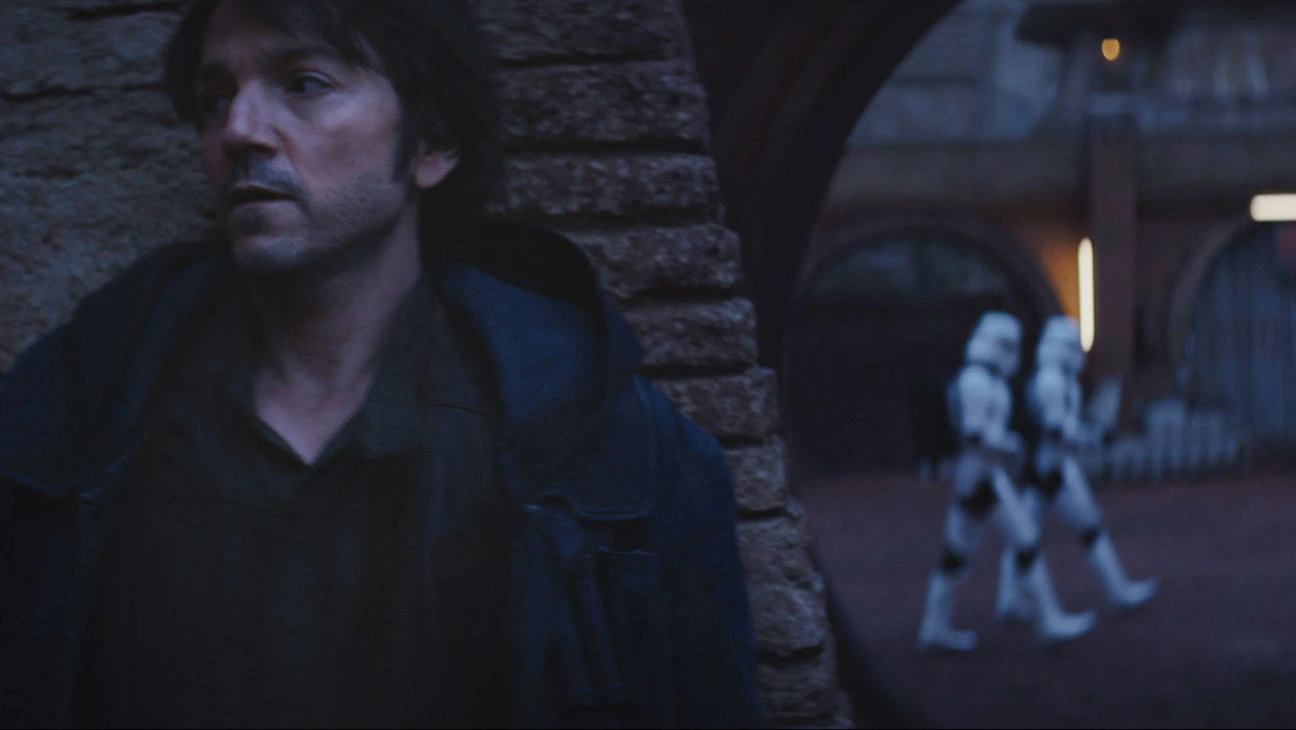
With Obi-Wan Kenobi now behind them, Star Wars fans have begun to focus on the next project headed to Disney Plus: Andor. Set to serve as a prequel to the events of Rogue One, the series will follow Diego Luna’s Cassian Andor as he navigates the galaxy in the early days of the Rebellion.
The first trailer for the 12-episode season got fans stirring about the grungy look of the series and given the time period in which it is set, fans have also had a blast speculating about which characters may show up for a surprise appearance. All those decisions, of course, rest in the hands of the creative team behind the show, and while Tony Gilroy oversaw its development as showrunner and served as one of the writers, he wasn’t alone. Now, thanks to an official release from Disney (via Bespin Bulletin), the full team of writers and directors has been revealed, along with an official synopsis.
The “Andor” series will explore a new perspective from the Star Wars galaxy, focusing on Cassian Andor’s journey to discover the difference he can make. The series brings forward the tale of the burgeoning rebellion against the Empire and how people and planets became involved. It’s an era filled with danger, deception and intrigue where Cassian will embark on the path that is destined to turn him into a rebel hero.
While the directors and writers of the series have been known for some time, the official release gives us a clear picture of how they split up the 12-part first season.
Episodes 1-3
Written by Tony Gilroy
Directed by Toby Haynes
Episodes 4-6
Written by Dan Gilroy
Directed by Susanna White
Episode 7
Written by Stephen Schiff
Directed by Benjamin Caron
Episodes 8-10
Written by Beau Willimon
Directed by Toby Haynes
Episodes 11 and 12
Written by Tony Gilroy
Directed by Benjamin Caron
Taken by groups of episodes, it presents an interesting window into how the series might shape up. While Lucasfilm has done a fine job of using multiple directors on projects so far, it does seem to fall into line that directors get to work through their own stories and, seemingly, work on episodes that play to their strengths. With that in mind, it’s interesting to see Caron listed on Episode 7, but then not return until the final two episodes while Toby Haynes is listed on 1-3 and then returns for 8-10. Something to keep an eye on when the series debuts on August 31st.
Since first meeting Najma and the Clandestines, the audience (and Kamala Khan) have learned an awful lot about the other-dimensional beings…and not all of it has been good. They’ve gone from a stranded family to a group of exiled refugees willing to destroy Earth in order to return home. The audience has heard their side of the story; the audience has heard Waleed’s side of the story. With Aisha’s side of the story still yet to be told, we asked director Sharmeen Obaid-Chinoy if we could close the book on the Clandestines as villains, or if there might be more to the story.
I think you have a lot left to uncover about who these people are and what their desire is and what they want to do. I will say this, that it was so important for us to sometimes look at villains as people of circumstances and that not all villains are black and white, that there are shades of grey in that. I think that with the Clandestines, there is a lot of grey.
Episode 5 of Ms. Marvel, which will likely resolve some of the untold bits of the Clandestine’s story, will stream on Disney Plus tomorrow.
Cookie Consent
We use cookies to improve your experience on our site. By using our site, you consent to cookies.
This website uses cookies
Websites store cookies to enhance functionality and personalise your experience. You can manage your preferences, but blocking some cookies may impact site performance and services.
Essential cookies enable basic functions and are necessary for the proper function of the website.
Name
Description
Duration
Cookie Preferences
This cookie is used to store the user's cookie consent preferences.
30 days
These cookies are needed for adding comments on this website.
Name
Description
Duration
comment_author_email
Used to track the user across multiple sessions.
Session
comment_author_url
Used to track the user across multiple sessions.
Session
comment_author
Used to track the user across multiple sessions.
Session
Statistics cookies collect information anonymously. This information helps us understand how visitors use our website.
Google Analytics is a powerful tool that tracks and analyzes website traffic for informed marketing decisions.
Contains information related to marketing campaigns of the user. These are shared with Google AdWords / Google Ads when the Google Ads and Google Analytics accounts are linked together.
90 days
__utma
ID used to identify users and sessions
2 years after last activity
__utmt
Used to monitor number of Google Analytics server requests
10 minutes
__utmb
Used to distinguish new sessions and visits. This cookie is set when the GA.js javascript library is loaded and there is no existing __utmb cookie. The cookie is updated every time data is sent to the Google Analytics server.
30 minutes after last activity
__utmc
Used only with old Urchin versions of Google Analytics and not with GA.js. Was used to distinguish between new sessions and visits at the end of a session.
End of session (browser)
__utmz
Contains information about the traffic source or campaign that directed user to the website. The cookie is set when the GA.js javascript is loaded and updated when data is sent to the Google Anaytics server
6 months after last activity
__utmv
Contains custom information set by the web developer via the _setCustomVar method in Google Analytics. This cookie is updated every time new data is sent to the Google Analytics server.
2 years after last activity
__utmx
Used to determine whether a user is included in an A / B or Multivariate test.
18 months
_ga
ID used to identify users
2 years
_gali
Used by Google Analytics to determine which links on a page are being clicked
30 seconds
_ga_
ID used to identify users
2 years
_gid
ID used to identify users for 24 hours after last activity
24 hours
_gat
Used to monitor number of Google Analytics server requests when using Google Tag Manager
1 minute
Marketing cookies are used to follow visitors to websites. The intention is to show ads that are relevant and engaging to the individual user.
Pinterest Tag is a web analytics service that tracks and reports website traffic.