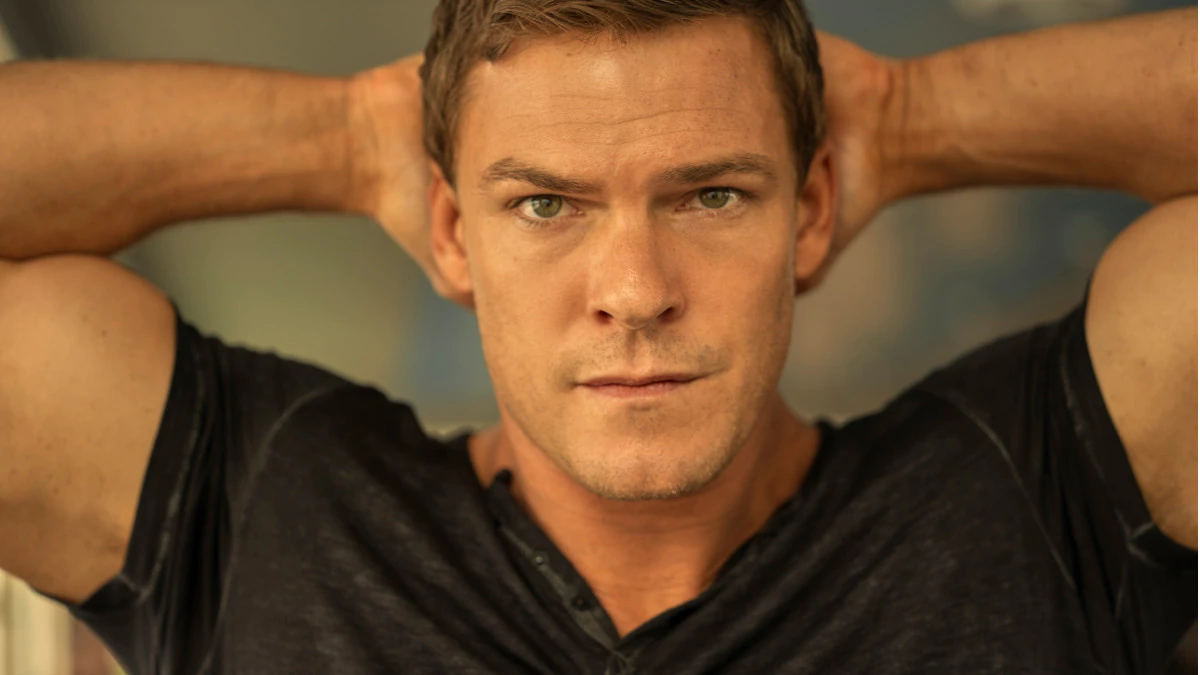
Jack Reacher star Alan Ritchson has joined the cast of Louis Letterier’sFast X, the 10th installment of the FastandtheFurious franchise. Ritchson, the one-time Aquaman, has found his groove as a violent action star in the Amazon Prime series and joins a cast that has already added Jason Momoa and Brie Larson.
The casting of Ritchson comes just as Letterier boarded the film as original director Justin Lin exited the film last month. Lin’s exit was ultimately the result of a clash between leading man Vin Diesel, who not only stars but acts as a producer on the film. Despite his exit, Lin will remain a producer on the film.
In recent years, Ritchson has added a fair amount of genre roles to this resume having played Raphael in the Teenage Mutant Ninja Turtles films and most recently starred as Hank Hall, aka Hawk, on DC’s Titans. Along with Fast X, the actor will next appear in Ordinary Angels alongside Hilary Swank for Lionsgate.
As of now, Fast X is slated to hit theaters on May 19, 2023.
Disney Plus has allowed Marvel Studios the unprecedented opportunity to create theatrical quality streaming series that expand the tapestry on which they can tell their shared narrative. For Marvel fans, there are now more “stories” being told than ever and that’s proved to be a double-edged sword as events from the D+ series carry over into films, sometimes leaving fans less than sure of exactly what’s happening.
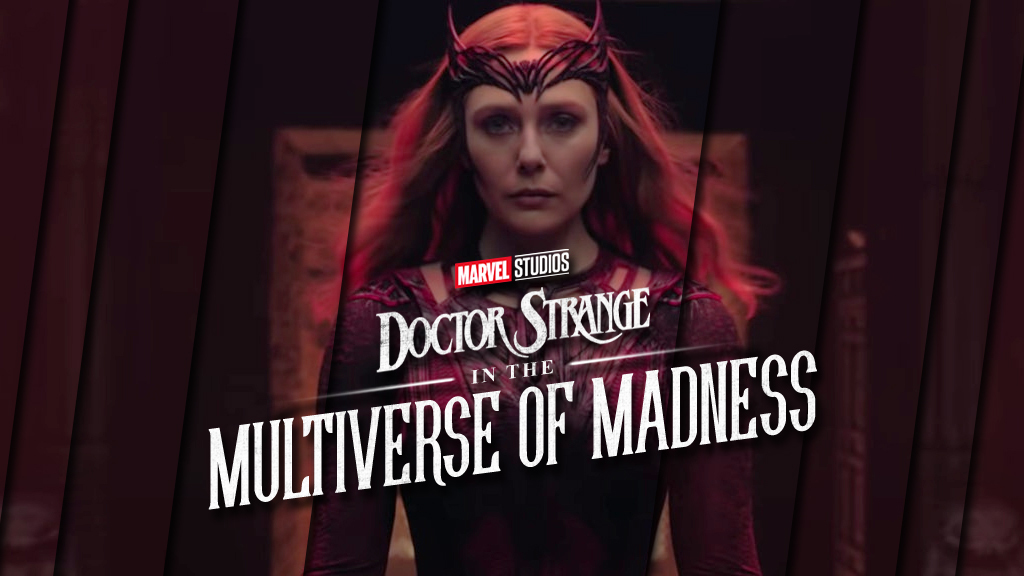
To date, no project has relied more on fans’ understanding of the events of the D+ series that Doctor Strange in the Multiverse of Madness. The motivations of the film’s primary antagonist, the Scarlet Witch, were explored in WandaVision and when fans first meet her in the film, they’re supposed to know that she had been studying the Darkhold and the dangers of doing so. The lack of understanding of Wanda’s journey has led some fans to express outrage and disappointment in her arc in the film, but at least there was a clear link between the two projects.
Fans were also clear on the idea that the events of Spider-Man: No Way Home, which featured Doctor Strange in a major role, would connect to the Strange sequel. In it, characters from other universes made their way into the MCU after a spell cast by Doctor Strange went awry. However, by the end of the film, everything seemed all nicely buttoned up and almost everyone and everything went back where it belonged.
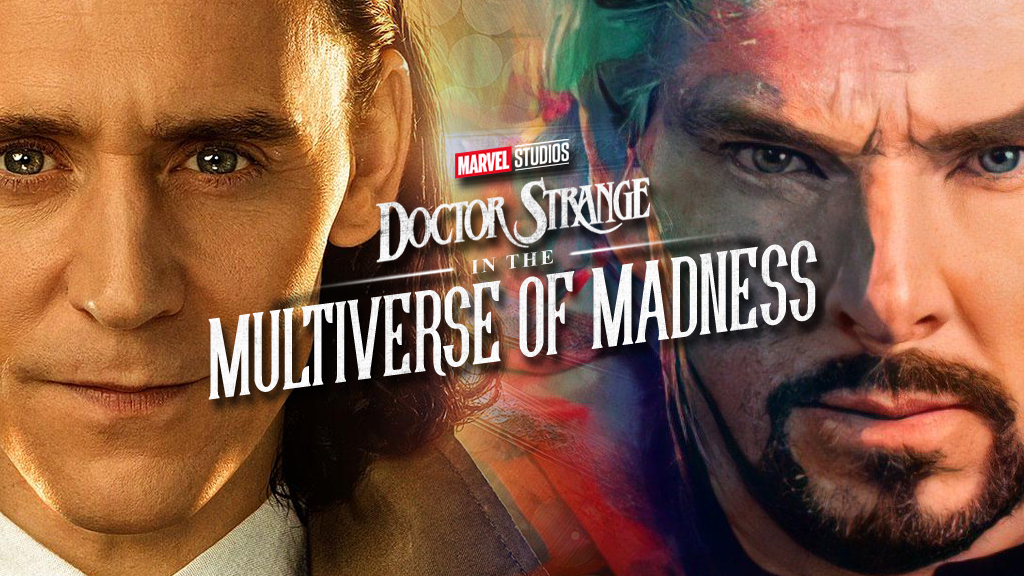
Less clear was the link between Multiverse of Madness and another Marvel Studios’ streaming project: Loki. The final episode of the 2021 streaming series saw Loki and Loki Variant, Sylvie, make their way to the Citadel at the End of Time and meet He Who Remains who, as it turned out, was responsible for managing the timeline. As He Who Remains warned them, if he died, the timeline would begin to branch wildly, creating a truly mad multiverse without oversight. Loki director Kate Herron’s wonderful explanation of the creation of the Multiverse, which you can see below, made sense of the seemingly complex set of circumstances and, as the series concluded, the audience saw some of the consequences of Sylive’s decision to kill He Who Remains.
Interestingly enough, it turns out that the old “It’s All Connected” maxim is now more true than ever, according to Marvel Studios One Above All, Kevin Feige. As Feige pointed out at the premiere of Doctor Strange in the Multiverse of Madness, and producer Richie Palmer further details in a new article at Marvel.com, the death of He Who Remains played a crucial role in No Way Home (it “allowed for the spell to go wrong“)and led to the madness Strange and America Chavez experienced as the traversed a multiverse that wouldn’t have been there if Sylvie had stayed her hand.
If the events of Loki never took place, if Sylvie didn’t do what she did, this movie and the events of Spider-Man: No Way Home wouldn’t have been able to happen. It was the activation of the Multiverse, or maybe the reactivation of the Multiverse at the end of Loki that really led to the possibilities that you see in What If…?, Spider-Man: No Way Home, and Doctor Strange in the Multiverse of Madness. At that moment, the Multiverse expanded indefinitely forward into the future, back into the past, sideways, left and right, to alternate realities we can’t even comprehend.
Richie Palmer
It’s truly fascinating to see a series of events, that take place over several projects, blend so smoothly together, even though it’s becoming increasingly harder to connect all the dots. Thankfully, Palmer summarized it nicely in one, concise statement: “If it wasn’t for Sylvie, we wouldn’t be here right now.“
Loki, What If…? and Multiverse of Madness seem to converge to form the tip of the multiversal iceberg. Over the next several years of projects, fans should expect more of that iceberg to be revealed and with it, as writer Michael Waldron hinted, the growing multiversal threats to become more clear. Fortunately, we can count of Marvel to help keep things cleared up…for now.
Doctor Strange in the Multiverse of Madness delivered what’s probably the most talked-about second act in the history of the MCU. As Doctor Strange and America Chavez went on their crazy multiversal journey, they found themselves prisoners of a team of power players from Earth-838 known as the Illuminati.
Marvel Studios has been rumored to be looking into developing a project around the Illuminati, which were created by Brian Michael Bendis in 2005, and that may still happen, but the Strange sequel introduced fans to them and then proceeded to have them systematically slaughtered by the Scarlet Witch.
Multiverse of Madness is a very different movie from the one that Marvel Studios set out to make when it was announced that Scott Derrickson, who directed 2016’s Doctor Strange, was returning to helm the sequel. When Derrickson and Marvel Studios amicably parted way, Kevin Feige turned to Loki head writer Michael Waldron to begin work on a new script. Waldron was quickly joined by Sam Raimi and the two embarked on a creative journey that was full of COVID delays and some much-discussed reshoots and additional photography. With so much time for the film to grow and evolve, I was curious if the Illuminati were always a part of the pitch, or if they were added later on. Here’s what Waldron had to say:
That came in the very first draft when we started over from scratch, what became the movie, they were in the first draft of that. They weren’t even in the outline, I think as I said. It was just me sitting in my living room…me feeling bored by my own second act.
Michael Waldron
Waldron went on to explain how his time on Rick and Morty helped shape the second act, which he described as where the movie “gets drunk”:
In Rick and Morty, Mike McMahon created Star Trek: Lower Decks, Solar Opposites…he was the showrunner on the season I wrote for. He coined a term, the “duck bill”, where it’s like the story circle, Dan Harmon’s story circle, but around like 7 or 8 o’clock on that story circle, we always try to do a duck bill, where it’s like the story doesn’t just proceed linearly or in a regular curvature way, it actually duck bills out and it’s like the movie gets drunk and that’s what it felt like we needed at that point and somehow it stayed in there the whole way. It’s a testament to Kevin, who got behind the idea and thought it would be cool, and Sam and our DP John Matheson and our editors.
Michael Waldron
For Waldron and Raimi, the second act couldn’t just be a cameo fest where some of Marvel’s most powerful characters came together to wave at the camera. So the creative team went to work:
It is ultimately a guy standing opposite several stationary characters. It takes a master of the camera like Sam to make that visually dynamic. Sam was always like, “I know the audience is gonna be excited to see these people but it can’t just be boring exposition. We’ve gotta figure out a way to make it visually dynamic.” And so they pushed me and we all pushed each other to make sure the scene was there for a reason.
Michael Waldron
With so much time between the first draft and the last day of additional photography, it was reasonable to assume that the final team, composed of Reed Richards, Black Bolt, Captain Carter, Captain Marvel, Mordo, and Charles Xavier, might not have been the original “dream team” pitched by Waldron. In fact, there were all kinds of wild rumors about who might be on the team with anyone from Balder to Magneto rumored at one time or another. When asked specifically about those two, Waldron gave a careful response, saying “There were lots of names discussed is all I’ll say.” Maybe those characters and more will show up down the road in another universe’s Illuminati.
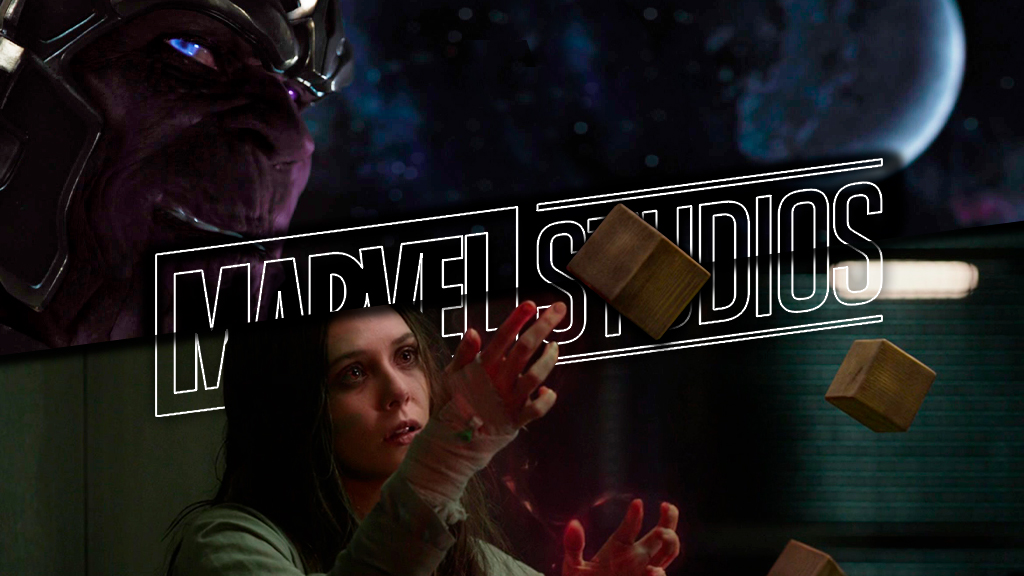
Multiverse of Madness writer Michael Waldron has gone on record saying that he envisioned the Scarlet Witch as the villain of the latest entry into the MCU right from the start. That decision hasn’t resonated with Wanda’s internet stans, many of whom feel it undoes her character’s arc in the Marvel Studios streaming series WandaVision. In an interview with Playlist, Waldron addresses their concerns and gives some insight into Wanda’s journey.
I guess I would say to the WandaVision fans, like, I get it. Watching a character you love do bad things sucks. That elicits a strong feeling, which is what we’re trying to do in the movies. We never would have done it if it didn’t feel like the next step in her character journey.
Wanda’s villainy is not unprecedented in the source material, where she was first introduced as a villain in 1964’s X-Men #4, nor in the MCU itself where she began as a Hydra experiment meant to counter the Avengers and was responsible for holding an entire community hostage in WandaVision. And while she ultimately freed the people of Westview, the series ended on an even darker note with Wanda studying the Darkhold, leaving fans to understand she hasn’t quite overcome the traumas she’s suffered, as Waldron points out.
To me, my interpretation of the story of WandaVision was, that Wanda is confronting her grief in that show, but I don’t think she’s necessarily conquering it. It’s a show about her living in denial to some extent and she’s conquering her denial, but I don’t think that she’s properly reckoning with her anger over what she’s endured, and that anger is what she carries with her as she walks away with the knowledge that she is the Scarlet Witch and with the Darkhold, this evil book. And I think it’s that anger that the Darkhold preys upon and pushes her on what is a, to me and I think to Wanda, a very justifiable, noble journey. She just wants her kids.
Wanda’s journey in the MCU has been nothing short of the universe’s most tragic. Defined almost entirely by what she’s lost, Wanda has rarely had time to breathe between tragedies. With Lizzie Olsen keen on continuing the character’s story, it’s worth considering that Wanda’s best days almost certainly lie ahead of her.
Doctor Strange in the Multiverse of Madness is in theaters now and you can stream all 9 episodes of WandaVision on Disney Plus.
Matt Lintz was one of the first actors to join the cast of Ms. Marvel, following Iman Vellani’s casting in the Fall of 2020. Lintz, who will portray Kamala Khan’s best friend, Bruno Carrelli, has made a name for himself with key roles in The Alienist and The Walking Dead, where played Kingdom resident Henry over 4 seasons. Now he’ll be stepping into an even larger role as one of the most important characters in Kamala Khan’s circle and one of the first of her friends to become aware of her secret identity as the costumed hero Ms. Marvel. In an interview with Empire, Lentz gave fans a little insight into the character.
He really cares for Kamala. If you look at the comics, he has that sidekick feel. He’s the Q, the Alfred.
In the comics, Bruno and Kamala shared a very complicated friendship. While both of them certainly had romantic feelings for one another, they awkwardly danced around those feelings for quite some time. Instead, their relationship became a bit more focused on her superheroing, where Bruno, who has a genius-level IQ, helped not only to protect her secret identity-especially from her parents-but used his expertise in chemical engineering to develop a polymer he called “super snot” that helped Kamala’s Ms. Marvel costume stretch and grow with her embiggening powers.
With Rish Shah’s Kamran set to capture Kamala’s eye in the upcoming series, it’s likely that Lentz’s Bruno will find himself going through some of those same awkward moments his character experienced in the comics. What’ll be more interesting to see, however, is how his character applies his genius to Kamala’s new power set, which has been greatly adapted for the MCU.
Ms. Marvel begins streaming on Disney Plus on June 8th.
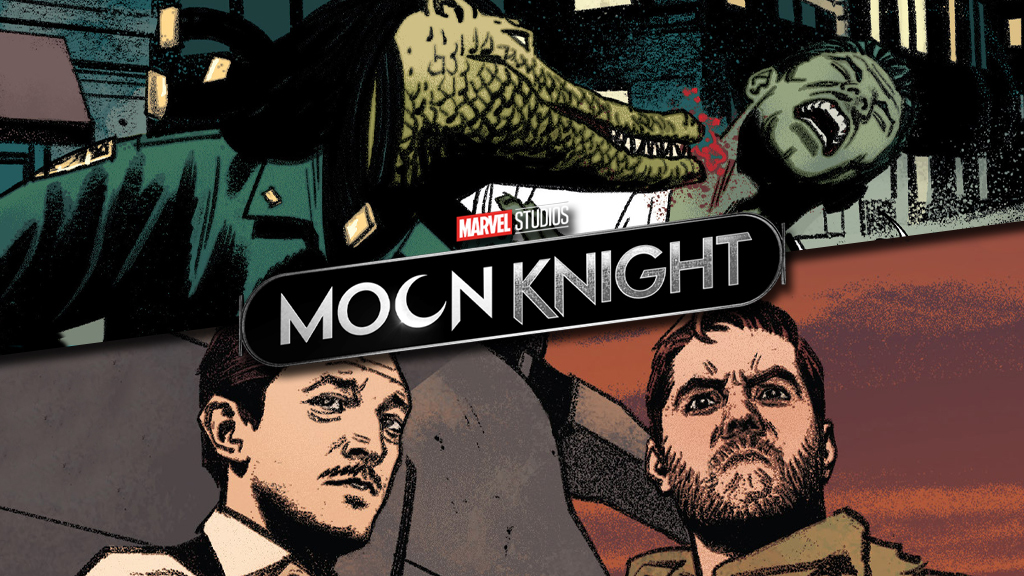
Over the course of its 6-week run, Marvel Studios Disney Plus streaming series Moon Knight introduced audiences to Steven Grant, Marc Spector, Moon Knight, Mr. Knight and Khonshu, all of whom co-existed within the fractured mind of one man. Each episode of the series also built in teases to another one of Spector’s alters, Jake Lockley, but held off on delivering on those teases until the post-credit scene of the finale. In an interview with The Direct, Moon Knight writer Jeremy Slater explains why they held of on introducing Jake, his relationship to Khonshu, the potential future of the character and more.
As it turns out, Slater was aware right from the beginning that introducing Jake to the story would be too much to tackle in a short time:
My initial pitch to Marvel was that three alters, three personalities sort of clashing with each other over the space of six hours is going to be way too chaotic and hectic. That it’s possible to tell a story like this and build a really strong emotional bond between two people, between Marc [Spector] and Steven [Grant], and really make the audience care about that relationship. But once you introduce a third into the fray, it becomes impossible. Like, Steven’s sacrifice at the end of 105 wouldn’t have any sort of weight to it if he had Jake there to sort of console him.
Jeremy Slater
Slater went on to say that Jake’s presence would take the attention off of the series’ key relationship: the one between Steven and Marc:
So right from the beginning, I said [that] the first season could only concentrate on these two and we’ll find fun ways to tease the existence of Jake so that the fans recognize it. Marvel was really supportive of that approach right from the beginning. Then, in the course of our [writer’s] room, we started talking like, ‘what’s the best way to tease Jake? What’s going to really get the audience about a potential season two, or a movie, or another appearance down the line.
Jeremy Slater
In the comics, Jake has always been willing to do some dirty work, more so than Spector’s other alters. While that’s what we see of him here, Slater is quick to caution the fanbase from judging him too quickly on one act:
The idea of bringing in Jake [Lockley], and not having him be evil, because I don’t—I’ve seen people on Twitter unhappy that they think Jake is sort of falling into sort of the evil-alter trope that you see in movies like Split and things like that. From my perspective, we don’t know nearly enough about Jake to make a determination like that… ultimately, whoever takes over the reins of the story next gets to decide that, but [also] from my perspective, the interesting question about Jake is, what is his relationship with Khonshu? Why is he so willing to do these horrible things in service of Khonshu. Why is he the one guy who sort of believes in Khonshu’s mission? What does he know that our heroes don’t? I think there’s a lot of questions like that that haven’t necessarily been answered.
Jeremy Slater
Slater continued, arguing that “Jake is bad” would be the LEAST interesting thing that could be done with the alter:
I think that making Jake a generic evil guy would probably be the least exciting, or least interesting, direction to take that character in the future. So, I have no idea where Jake goes from here, and which writers and directors will bring him to life, but, I think there’s a lot of potentials. I think we’ve only teased the existence of this character at this point. We kind of still don’t know anything about him… I don’t think he’s evil. It’s Marvel’s decision, not mine, but I think calling him evil would be a mistake at this stage in the game.
Jeremy Slater
As Slater points out, and as is often the case with MCU writers, while he’s put a lot of thought into developing Jake, the next steps for the character are out of his hands. At this point, with Moon Knight’s next appearance still undetermined or unannounced, fans can’t even be sure they’ll see Jake again. Let’s hope if we do, whoever has taken over for Slater shows the same care for the character.
Over the course of his Marvel Comics’ appearances, Marc Spector has traditionally chosen to keep his circle fairly small. Among those in that circle, there’s been very few constants, but Jean-Paul Duchamp, a fellow merc who has been buddies with Spector before his days as the Fist of Khonshu, is one of them.
Over the years, Duchamp, who Spector calls “Frenchie”, became an integral part of Spector’s work as the Crescent Crusader and when word broke the Marvel Studios was developing a Moon Knight series, comic fans expected he’d be among the supporting characters helping out Oscar Issac’s Lunar Legionnaire. Unfortunately, however, other than a tiny Easter egg, Frenchie was nowhere to be found in the series. According to writer Jeremy Slater, in an interview with Comic Book’s Adam Barnhardt, the lack of Frenchie wasn’t because of a lack of interest in using the character.
There were times where we had versions of Frenchie in the show. Because you look at it, Frenchie doesn’t make sense for those first two episodes because they’re all in London, they’re all from Steven’s perspective. And then we knew that once we were going to Egypt, we had to get them in the tomb pretty fast. And once wearing that final battle in the last two episodes, we’re spending most of that in the Egyptian underworld.
Jeremy Slater, via Comic Book
So with Frenchie crossed off the list for the early episodes and the later ones, it didn’t leave him much room at all, as Slater explained:
So we knew episode three was really the only chance we had for a Frenchie cameo. And it kind of wound up of him just being a pilot just flying them in. And it felt like a bad use of the character. Like it wasn’t a cool or memorable version of Frenchie. It was just sort of like, ‘Oh yeah, he’s the pilot in the background.’ So we made the decision of like, when we do Frenchie, let’s do him right. Let’s give him an actual role and an actual character and something to do in the storyline. So I think teasing his name on the phone was our way of letting Frenchie’s fans know like, ‘Yes, he exists in this world. He definitely has some sort of business relationship-partnership with Marc.’ And hopefully that is something we get to explore in future stories.
Jeremy Slater, via Comic Book
Frenchie fans can take solace in the fact that Slater was actively looking to do the character a solid by giving him a chance to matter. Whether or not he’ll get that chance down the road is no certainty, however, as Marvel Studios is being very secretive about the future of Moon Knight. Here’s hoping we see Duchamp flying the Mooncopter somewhere down the road.
In the months leading up to Moon Knight’s streaming debut, the level of secrecy around the project remained impressive. Very few accurate leaks made their way off the set of the series, but there were plenty of wild rumors about characters that would appear in the show. Daredevil, Bruce Banner and Blade were all, at one point or another, mentioned by “scoopers” as potential guest stars on the show; however, as it turned out, not only did none of those characters show up, no other pre-established MCU characters did, making Moon Knight one of Marvel Studios’ most self-contained projects to date.
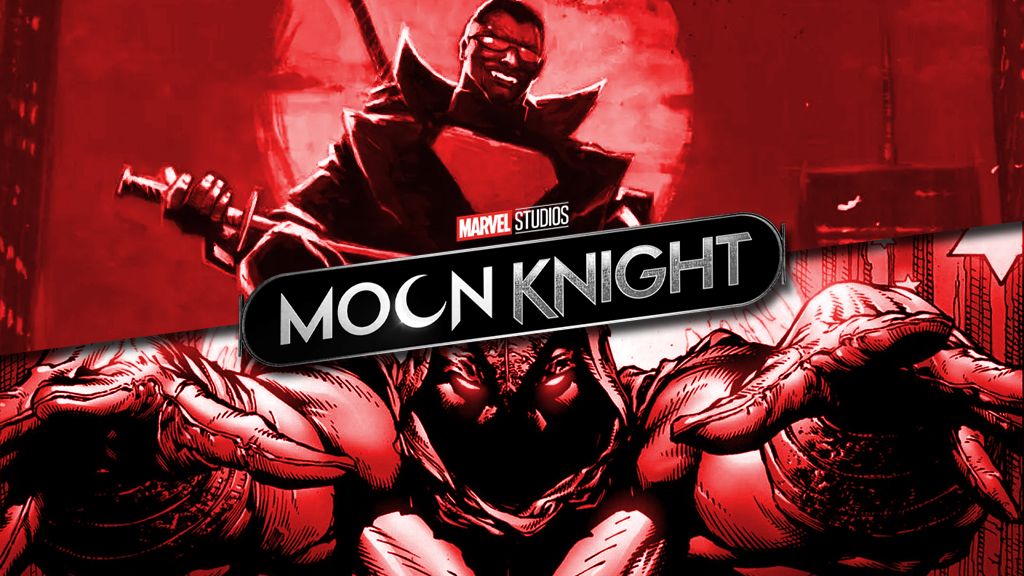
With so much information out there, it’s hard to know what to trust and what to ignore. More and more often, Marvel Studios creators are being asked to help fans sort through the rubble of rumors. In an interview with Comic Book, Moon Knight writer Jeremy Slater did just that. According to Slater, while Dane Whitman almost made an appearance in Marvel Studios Disney Plus streaming series Moon Knight, Blade was never in the mix.
We’re told in advance which characters are a little bit off limits. And I think at the time we were cracking Moon Knight, they were also kind of trying to crack the Blade story and try to figure out what that was. And so I think they wanted to keep them separately.
Jeremy Slater
As it turned out, there was no need for the Black Knight, Blade or anyone else to show up alongside Moon Knight in the series, given the very personal nature of the fight Oscar Issac’s character was taking on. And, of course, when he needed help, he found it in the form of May Calamawy’s Scarlet Scarab, an old comic hero that Slater and director Mohamed Diab gave new life as Marvel Studios’ first Egyptian superhero. Now that the first chapter of his Marvel Studios story has been told, it’s possible that Moon Knight could show up anywhere and team up with anyone and, given his dalliances with the supernatural in the comics, Blade is just as good a bet as anything.
The contents of the mid-credit scene of Doctor Strange in the Multiverse of Madness give the impression that this is the direction Marvel Studios will take the threequel. However, we also all thought a Doctor Strange sequel would include 616 Mordo hunting sorcerers and we definitely didn’t get that.
As Marvel Studios likes to do, they can lift the title right from an existing story. In 2011, Marvel Comics published a hardcover novel, written by Roger Stern, that saw Stephen Strange team up with Clea to overthrow her mother, Umar, in the Dark Dimension. The novel also included an appearance by the Black Knight and really laid out some nice mythology around his sword and the Dark Dimension. Of course, Marvel Studios isn’t much for direct adaptation, so there’s plenty of room to change it up, but a film that really explores the Dark Dimension and the nature of the Faltine could be quite a ride!
Doctor Strange: Sorcerer Supreme
Doctor Strange, Sorcerer Supreme #80 (1995)
With Clea making her way into the MCU, there’s really one other major character in Strange’s circle that feels like a must: Jericho Drumm. Brother Voodoo was rumored to appear in Doctor Strange in the Multiverse of Madness, but obviously never showed. It’s time to get him off the sidelines and, if you’re going to bring him in, you might as well do it right.
Multiverse of Madness ends with Strange developing a particularly nasty case of an extra eye, thanks to his use of the Darkhold. Doctor Strange: Sorcerer Supreme could be a really great cautionary tale about the warning issued by Mordo in the first film: the bill comes due. And in Strange’s case, the Vishanti are probably collecting.
In the MCU’s present, Wong is the Sorcerer Supreme but fans have expected Strange to fill the role and eventually, he probably will. What would be fascinating would be for him to finally be named as Sorcerer Supreme only to have the title ripped away from him and handed over to another of Earth’s most powerful magic wielders: Jericho Drumm.
Marvel Studios could adapt War of the Seven Spheres (making a few changes along the way of course) and introduce the major Mystic principalities of the multiverse. In that arc, Strange renounced his powers after refusing to participate in the War, causing him to be stripped of many of his powers. If that were to happen in the MCU, the Vishanti would need a new Sorcerer Supreme. It’s not as glamorous as some others on the list, but it could introduce some other magic users (Doctor Druid, Salome, Cadaver, Kaluu, and more) as avatars of the principalities and turn out to be a pretty trippy film.
Strange Tales
Doctor Strange #13 (2016)
Multiverse of Madness included one very important detail about Stephen Strange’s origins that was cut from 2016’s Doctor Strange: the drowning death of his sister, Donna. While this might have seemed inconsequential, it could have been a hint to the future of the franchise. While this isn’t an adaptation of a specific arc, it’s absolutely bringing the comics to the screen.
Scott Derrickson always wanted Nightmare to be part of the Strange franchise and, to be fair, he’s arguably one of Strange’s most important villains yet to be adapted. The film could see Strange haunted by nightmares of failing to save his sister, orchestrated by The Lord of Darkness. Parts of the film could visit the Dream Dimension, of which the Nightmare Realm is a corner ruled by Nightmare. It could also introduce Sleepwalker and allow for Sam Raimi to really continue to deal with some of the really off-the-wall visuals he dished out in Multiverse of Madness.
Doctor Strange: Triumph and Torment
Marvel Graphic Novel #49 Dr. Strange and Dr. Doom: Triumph and Torment (1989)
An adaptation of the 1989 graphic novel Triumph and Torment would take the most set up ahead of its release, but it could also have the biggest payoff of any of the potential story lines Marvel Studios might adapt for Doctor Strange 3. Triumph and Torment sees Doctor Strange team up with one of the Marvel Universe’s most powerful sorcerers: Victor Von Doom. The two good doctors, Strange and Doom, travel together to Hell to free the soul of Doom’s mother from her captor, Mephisto.
As stated above, it would take some set up to get here, especially since Doom doesn’t exist in the MCU yet. Much like the do with the Fantastic Four, Marvel Studios has a big job to do in making sure that their version of Doom stands apart from Julian McMahon’s version and even farther apart from Toby Kebbell’s “Hacker Doom.” One way for them to ensure that is to develop the side of Doom’s character that Fox always ignored: his mastery of the mystic arts. Over the years, the retconning of Doom’s origin story has refined it into one of Marvel Comics’ most well-developed. If any villain deserves his origins to be told, it’s Doom, and Marvel Studios could do so through a D+ series that could serve as the precursor to this film. Of course, audiences who don’t watch it might miss out on a few finer points, but if they beginning of Doctor Strange: Triumph and Torment explains that the two Doctors are headed to Hell to save Doom’s mom, it’ll be enough. Assuming Benedict Cumberbatch isn’t going to be around the MCU forever, this is the chance for the MCU to team up two major mystical powerhouses and bring one of Roger Stern’s best stories to the screen.
Doctor Strange and The Defenders
The Defenders #3 (1972)
I’ll never NOT want to see the original comic book Defenders lineup together on screen. By the time a third Doctor Strange film heads to theaters, the trio that first formed the Defenders in the early 1970s will all have been introduced into the MCU, with Namor set to debut in Black Panther: Wakanda Forever later this year. Clea and Valkyrie, who were also often members of the non-team, are also on the board, leaving only really the Silver Surfer as a well-known member who isn’t quite yet primed to appear.
If Raimi is going to return for the third film, the original Defenders’ arc (which was spread out over issues of Doctor Strange, Sub-Mariner, and The Incredible Hulk) would be easily adapted and allow Raimi to work with the Lovecraftian concepts that inspired him to make Within the Woods (which allowed him to make The Evil Dead) and that he revisited in Doctor Strange in the Multiverse of Madness. In that arc, the Defenders came together to battle an invasion of the Undying Ones, a collection of ancient demons who existed between worlds and served The Nameless One. Adapting the arc would even allow for Raimi to introduce the MCU’s version of the Necronomicon, which would serve as the bridge from Strange to Namor, whose people could have a history with either the book or the Undying Ones themselves.
In 2008, fans who stuck around through the credits of Iron Man found themselves treated to a tease of greater things to come. At the time, given the nebulous state of the future of Marvel Studios, the tease came without a promise that we’d ever see the Avengers Initiative come to fruition on the big screen. 4 years later, it paid off in The Avengers, rolled out its own post-credit scene that set the stage for the larger narrative that would develop over the next 15 MCU projects. That run, which became known as the Infinity Saga, ended with 2019’s Avengers: Endgame which, ironically, was the first Marvel Studios film to run without a post-credit scene. Now, with the future of Marvel Studios more secure than it has ever been, it’s time for the post-credit scene to die.
Marvel Studios’ Iron Man (2008)Marvel Studios’ Spider-Man: Far From Home (2019)
After skipping out on the tradition in Endgame, Marvel Studios brought back the post-credit scene in Spider-Man: Far From Home, the final Phase 3 film. In hindsight, it’s a tradition they should have left behind as they moved into Phase 4. Once a fun source of “water cooler” conversation, the idea has grown beyond itself and evolved into something that’s become part of a parasitic online conversation where the scenes that come AFTER the movie generate more interest and conversation than the movie itself. It’s not a phenomenon limited just to Marvel Studios-Sony used the post-credit scene to Venom: Let There Be Carnage to market the movie-but Marvel Studios started it and now they need to end it.
The conversation around the post-credit scenes poses a multi-faceted problem for Marvel Studios. While they still provide a fun tease of upcoming events, in recent years, more than one post-credit tease hasn’t paid off. For example, after the credits rolled in 2016’s Doctor Strange, audiences learned that Mordo was on a mission to eliminate magic users, especially those who violated natural law. Surely that would mean he’d cross paths with Wanda Maximoff, right? 616-Mordo was nowhere to be seen in Doctor Strange in the Multiverse of Madness, his role rumored to have been snipped from the film’s final cut. And what about the great Adrian Toomes/Mac Gargan scene at the end of 2017’s Spider-Man: Homecoming? With Doctor Strange’s spell erasing the memory of Peter Parker from everyone’s mind, it seems like the Vulture/Scorpion team-up will never come to pass. Will the tease of Venom in the MCU, set up in the post-credit scene to Spider-Man: No Way Home, have the same fate?
Marvel Studios’ Doctor Strange (2016)Marvel Studios’ Spider-Man: Homecoming (2017)
The fervor around the content of the post-credit scenes has grown to a point where fans are often more concerned with it than the film itself. Driven by leak culture, the knowledge of the contents of the latest Marvel Studios’ post-credit scene is often a more valuable commodity (more talked about) than the film itself. In fact, after recently attending the premiere of Doctor Strange in the Multiverse of Madness, almost everyone who asked me about the movie started off by asking, “How many post-credit scenes are there?” and “What’s in them?” It’s concerning that a post-credit scene that may have been shot over a few hours is of more interest than the billion-dollar films the studio is rolling out. And in this case, Marvel Studios delivered one of its worst post-credits scenes to date, though it featured a huge casting spoiler for a big star entering the MCU. But will she? Or will her cameo and the promise it carries be as empty as Mordo’s sorcerer hunt?
As mentioned above, Multiverse of Madness’ post-credit scene, despite featuring 3-time Academy Award-winning actress Charlize Theron as one of Strange’s most important supporting characters, Clea, doesn’t quite carry the same weight as Fury’s post-Iron Man appearance. Despite Theron looking fantastic as Clea, it seemed hastily put together and didn’t really seem to line up with the film’s own ending, making it one of the worst efforts for the studio. What’s more, the drop in quality seems to be a trend in Phase 4 with none of the offerings so far coming near the thrills of introducing the Maximoff twins after The WinterSoldier.
Truly, the post-credit scenes have lost their novelty and have become an unnecessary distraction. Jake Lockley could have easily been put in the body of the final episode of Moon Knight. Sharon Carter’s phone conversation after the credits of the final episode of The Falcon and The Winter Solider may have done more harm than good, causing fans to speculate and theorize wildly about who was on the other end; as has been demonstrated over and over again, this will lead to faux outrage down the road when the speculation turns out wrong and fans will feel slighted. Will Starfox, or any of the Eternals ever be heard from again? No idea, but Harry Styles caused more of a buzz than the actual film. What was once a wink-wink-nudge-nudge to the comic book fans in the audience has become something general audiences are hungrier for than the films to which they are attached. Marvel Studios would serve themselves well by ditching the post-credit scenes. And if fans are still hungry for more, perhaps the studio could bring back One-Shots as a streaming alternative.
Given they distract from the movies, aren’t always followed through on and the disturbing trend in their quality, it really is time for the Marvel post-credit scene to be retired. We’ll always have that kiss between Jane and Thor…before Jane disappeared for a decade.
Cookie Consent
We use cookies to improve your experience on our site. By using our site, you consent to cookies.
This website uses cookies
Websites store cookies to enhance functionality and personalise your experience. You can manage your preferences, but blocking some cookies may impact site performance and services.
Essential cookies enable basic functions and are necessary for the proper function of the website.
Name
Description
Duration
Cookie Preferences
This cookie is used to store the user's cookie consent preferences.
30 days
These cookies are needed for adding comments on this website.
Name
Description
Duration
comment_author_email
Used to track the user across multiple sessions.
Session
comment_author_url
Used to track the user across multiple sessions.
Session
comment_author
Used to track the user across multiple sessions.
Session
Statistics cookies collect information anonymously. This information helps us understand how visitors use our website.
Google Analytics is a powerful tool that tracks and analyzes website traffic for informed marketing decisions.
Contains information related to marketing campaigns of the user. These are shared with Google AdWords / Google Ads when the Google Ads and Google Analytics accounts are linked together.
90 days
__utma
ID used to identify users and sessions
2 years after last activity
__utmt
Used to monitor number of Google Analytics server requests
10 minutes
__utmb
Used to distinguish new sessions and visits. This cookie is set when the GA.js javascript library is loaded and there is no existing __utmb cookie. The cookie is updated every time data is sent to the Google Analytics server.
30 minutes after last activity
__utmc
Used only with old Urchin versions of Google Analytics and not with GA.js. Was used to distinguish between new sessions and visits at the end of a session.
End of session (browser)
__utmz
Contains information about the traffic source or campaign that directed user to the website. The cookie is set when the GA.js javascript is loaded and updated when data is sent to the Google Anaytics server
6 months after last activity
__utmv
Contains custom information set by the web developer via the _setCustomVar method in Google Analytics. This cookie is updated every time new data is sent to the Google Analytics server.
2 years after last activity
__utmx
Used to determine whether a user is included in an A / B or Multivariate test.
18 months
_ga
ID used to identify users
2 years
_gali
Used by Google Analytics to determine which links on a page are being clicked
30 seconds
_ga_
ID used to identify users
2 years
_gid
ID used to identify users for 24 hours after last activity
24 hours
_gat
Used to monitor number of Google Analytics server requests when using Google Tag Manager
1 minute
Marketing cookies are used to follow visitors to websites. The intention is to show ads that are relevant and engaging to the individual user.
Pinterest Tag is a web analytics service that tracks and reports website traffic.