Author: João RP

  • Star Wars’ ‘THE MANDALORIAN’: Who is Cobb Vanth?

    Star Wars’ ‘THE MANDALORIAN’: Who is Cobb Vanth?

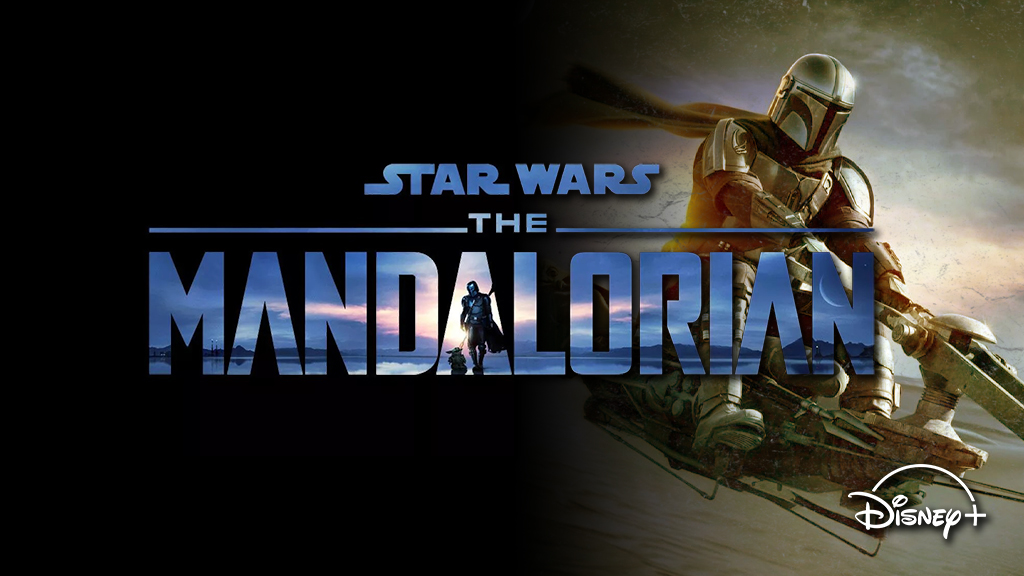
    Ahead of The Mandalorian’s season 2, we give quick introductions to characters that have yet to debut on a live-action Star Wars project, but that most likely will show up on the Disney+ hit series in the coming weeks.

    Cobb Vanth was a character introduced in the Aftermath trilogy, written by author Chuck Wendig. He has yet to make his official live-action debut, but that seems to be changing with the second season of The Mandalorian. He is a former slave that managed to free himself and rise to the rank of Sheriff in Tatooine’s Freetown (formerly known as Mos Pelgo), even if self-appointed, after the events of Return of the Jedi. He still bears a star-shaped scar on his back, meaning that at some point during his life he was someone else’s property. This makes it obvious that what he had to endure in the past is still very much a part of what drives him even after achieving his freedom.


    During this time, he came in contact with a chest of Mandalorian armor said to have been retrieved from the wreckage of Jabba the Hutt’s sail barge. This heavily implies that this is the armor that once belonged to Boba Fett, since Jabba’s sail barge was destroyed while at the Sarlacc pit, the place we last saw the bounty hunter, with no other Mandalorians in sight. He then committed his life to keep the people of Freetown safe from all outside threats.

    Cobb, unlike Boba, wears said armor not at the bidding of crime lords but on the side of justice, trying to maintain Freetown a lawful place, with crime syndicates at large, while maintaining a somewhat troubled relationship with the Tusken Raiders. In season one’s 5th episode he probably already made an uncredited cameo, when finding the dead body of Fennec Shand.


    For more details regarding The Mandalorian season two aswell as other Star Wars projects, check out the dedicated feature focused on the future of the Star Wars Universe.

  • ‘UNCHARTED’ Film Set Gets a Surprise Visitor

    ‘UNCHARTED’ Film Set Gets a Surprise Visitor

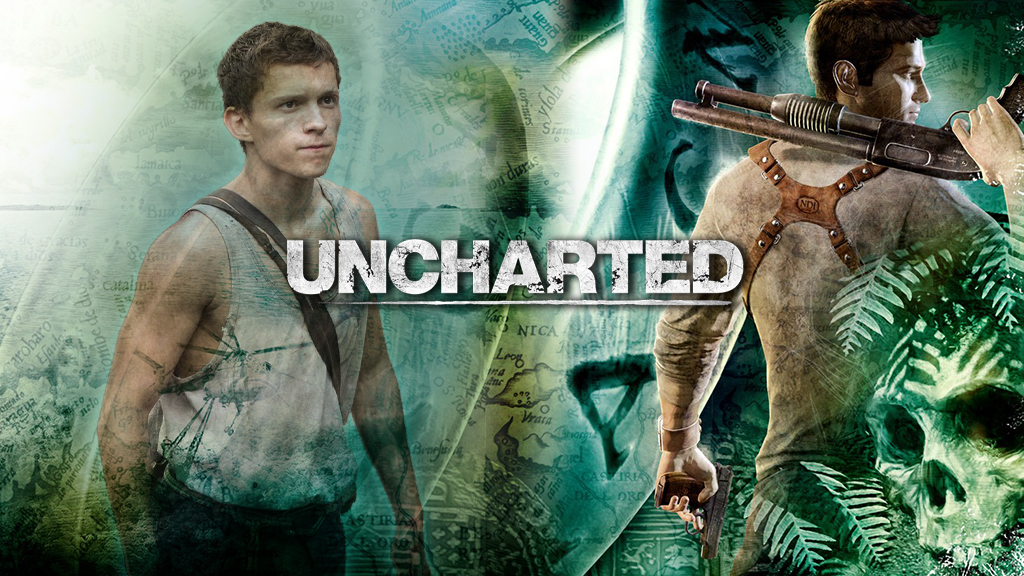
    If you’re familiar with the Uncharted videogame franchise the name Nolan North should ring a bell. He’s the actor that brought Nathan Drake’s voice to life, with incredible performances throughout the series.

    With principal photography on the movie adaptation currently well underway, Nolan was invited for set visit where he got to hang out with Tom Holland, that will be responsible for introducing his own version of Nathan Drake to a new audience.

    This set pictures also might give us a little glimpse of what the plot of the movie might be all about. In the open book, we see a picture of Fernão de Magalhães (Ferdinand Magellan), a Portuguese explorer that was the leader of the first successful circumnavigation of the Earth. Back then Europeans had only reached the West Indies through the Cape of Good Hope in South Africa. The Spanish expedition that he lead tried to reach the same territory by traveling west, instead of east, which was, at the time, a tremendous breakthrough. Unfortunately, he didn’t get to live through the entirety of the expedition, having died in battle in the Philippines, struck by a bamboo spear.

    If his journey is to be a part of the upcoming movie, only time will tell.

  • ‘PAPER GIRLS’ Adaptation Shifts Into Gear at Amazon

    ‘PAPER GIRLS’ Adaptation Shifts Into Gear at Amazon

    Back in July, Amazon gave the green light to Paper Girls, a series based on the Brian K. Vaughan and Cliff Chiang comic that was published by Image Comics from 2015 to 2019. Now, a new casting call has surfaced that is anything but surprising, but that shows that development on the show is probably ramping up, with more details sure to surface in the coming weeks.

    The comic centers on the time-traveling adventures of a group of four young, you guessed it, paper girls, back in the year 1988. Erin, Mac, KJ, and Tiffany don’t start off as the best and closest of friends, but through their shared experiences of fighting to save the world and trying to travel back home, that will undoubtedly change.

    The new casting call lists the four characters as being 11-12 years old, with their backgrounds, ethnicity, and personalities fitting the comics’ to perfection. Erin, Asian American, the group’s new girl. Mac, tough as nails, raised in an abusive home, a survivor. Karina, the wealthy, over-protected white girl that dreams of rebelling and that loves sports. Tiffany, African American, the brains in the group, addicted to videogames. These were always to be the four characters the show could not deviate from, so it’s only natural they are the first priorities when it comes to the casting process. Hopefully, we’ll get some more updates sooner rather than later, as production should be eyeing a March start date.

    This is a show that is sure to make a huge impact in the way Stranger Things did back in 2016. As such, the comic it’s based on was listed here in Murphy’s Multiverse as one that could make for an amazing small-screen adaptation.

  • New ‘THE MANDALORIAN’ Season 2 Exclusive Look

    New ‘THE MANDALORIAN’ Season 2 Exclusive Look

    There’s brand new The Mandalorian footage out, as the marketing campaign for the hit Disney+ series enters its final stretch ahead of the October 30 premiere date.

    This season we’ll reunite with some familiar faces such as Cara Dune, Greef Karga, and Moff Gideon, introduce live-action Ahsoka Tano and Sabine Wren, as well as welcome Boba Fett back to the live-action Star Wars universe.

    This past September saw the release of the long-awaited first trailer and in the last few weeks we got a couple of TV spots as well as a few promotional stills. Now, with just eleven days until October 30, it won’t be long until we find out what’s next in the adventures of Din Djarin and The Child, aka Baby Yoda, as they seek new information about both the infant’s rightful home and an order of sorcerers called.. the Jedi. 

    You can find out more info on the show’s Season 2 right here.

  • 10 Comics That Could Use The Film and TV Treatment

    10 Comics That Could Use The Film and TV Treatment

    With the release of the Invincible trailer reminding us that there are still many amazing comics out there that haven’t been picked up by major production companies, here is a list of ten non-Marvel and non-DC properties that would make for great projects either for the big or small screen. I tried to keep it a bit varied, both in terms of tone and genre, with books that left their mark when I first read them.


    BLACK SCIENCE (2013-2019, 43 issues)

    Both Marvel and DC seem to be diving headfirst into their own Multiverses in the coming years, with WandaVision, the Doctor Strange sequel, and The Flash. But it’ll be hard to top what Black Science achieved in that regard for six straight years.

    Here we follow Grant McKay, a member of the Anarchist League of Scientists, his family, and his team of scientists and military personnel as they try to maneuver through a seemingly infinite number of universes (the “Eververse”) tapped into following the creation of the device they call “the Pillar”. These “Dimensionauts” have then to deal with a malfunctioning Pillar, that much like we saw in Quantum Leap, throws them into random worlds challenging them every step of the way, as they try to make their way back home, and back to each other.

    Why it could work: I have a hard time trying to figure out if this project would lend itself to TV or cinema. Its visual spectacle deserves the biggest screen possible, but the storyline would make for an enthralling series through several seasons. What I do know is that the best stories, with the most fantastic premises, are only as good as the human elements presented to the audience. And Black Science is not only one of the best science-fiction stories I’ve ever read but also one of the most human, with all our dreams and flaws painstakingly presented, where family and friendships are the centers of one’s universe. And sometimes you just need to fight your way to get to them. What is more relatable than that?

    THE MASSIVE (2012-2014, 30 issues) 

    After an earth-shattering event, we follow the environmentalist crew of the ship The Kapital as they search the world for their missing sister ship, The Massive. With the world falling apart, we question what is there still to fight for, what is there to protect but the ability to rise above it all, as the tides did to dry ground.

    Why it could work: The biggest challenge we face as a species is for how long can we keep our planet our home. Earth won’t die, nature will adapt, we just have to make sure we are along for the ride. This book isn’t that optimistic as it shows us the worst-case scenario, where not only our home but our humanity is gone. At a time when every help in addressing global warming is a welcome one, that alone would make this a relevant show by making us look in the mirror at a time when everything we see is still avoidable.


    PAPER GIRLS (2015-2019, 30 issues)

    Stranger Things meets Back to the Future. A coming-of-age story about a group of four 12-year-old girls that due to unforeseen circumstances become involved in a war between two factions of time travelers. Unlike most other books and movies, here they have no problem in meeting up with their past and future selves, as they need any help they can get trying to get back home to 1988 while saving the world at the same time.

    Why it could work: Stranger Things was and still is, a phenomenon. But this show has the potential of going a step further in the cultural zeitgeist. Meshing 80s nostalgia with any other era’s they happen to choose (Time Travel!!) while keeping that Goonies vibe and throwing in Generation X and Y growing pains, it is something that can work on so many levels, on so many demographics, that in the world we live in of constant reboots and sequels it quite baffling that we haven’t yet gotten the chance to get this original project going. 

    THE PAYBACKS (2015-2016, 8 issues)

    A superhero comic with a twist. When heroes borrow money to finance their gadgets and genetic enhancements, there comes a time when that money must be paid back in full. When that doesn’t happen, it’s time to call The Paybacks, a team of bankrupt superheroes that work as repo men in order to pay their own debts. But this time, the hunters become the prey, and someone is coming to collect.

    Why it could work: Superhero stories rule the world. This isn’t necessarily a good thing, but from the Marvel Cinematic Universe to the hottest streaming show right now (The Boys), it’s hard to say otherwise. So, right off the bat, this shows would seem like a safe bet. It would work as a sort of middle-ground between the more mainstream superhero movies and the TV-MA we sometimes get, a different take on the superhero gig where things aren’t as black and white as in other projects, but a lot lighter than being choked to death by a giant penis.

    PUNK ROCK JESUS (2012-2013, 6 issues)

    What if we could bring Jesus back to life through cloning? With the discovery of a sample of his DNA, that’s exactly what the entertainment company OPHIS did. But to make matters worse, they decided to raise him inside a Reality TV show with the entire world watching. Like many teenagers, most in far better circumstances, he rebels and turns to punk rock, with great religious and political consequences.

    Why it could work: Back in 2003 Dan Brown’s The Da Vinci Code took the world by storm as it tried to put into question centuries-old dogmas. Most people aren’t really big fans of reading, but that didn’t stop it from becoming a worldwide phenomenon that transcended reading habits and got everybody talking about the what-ifs Brown presented. A TV show that brought that same sort of discussions to an even more mainstream audience through an engaging storyline filled with modern cultural references would dominate our cultural climate, especially in the times we live in where everything can be a reason for outrage.


    SEVEN TO ETERNITY (2016-PRESENT, 13 issues, so far)

    A Lord of the Rings-style epic, set in a fantasy world filled with wonder, demons, witches, and Gods. We follow Adam Osidis, along with an order of magical warriors, on his quest to free the world of the God of Whispers’ enchantment that keeps everybody engulfed in despair and suspicion. He must then choose between doing what’s right, and following his own heart’s desires.

    Why it could work: This sort of fantasy epics have proven to have an audience, no matter the times we live in. The Lord of the Rings was as relevant at the beginning of the 20th century as it had been when JRR Tolkien first wrote the novel almost 50 years earlier. Game of Thrones became a cultural juggernaut for the entirety of its run and people are still clamoring for George RR Martin to finish the books. Seven to Eternity, unlike Thrones, has an ending within sight, and with a much less grounded setting, it would seem to be able to fill a thematic void The Witcher also managed to tap into.


    SHIRTLESS BEAR FIGHTER (2017, 5 issues)

    There’s really not much to say about this series that isn’t in its title. He’s a brawny bearded guy raised in the forest by bears. He’s shirtless (and sometimes naked). He likes to punch bears because they betrayed him. And he loves flapjacks. While not being innovating in any shape or form, this book has the potential to become the most entertaining 10-minute cartoon episode you’ll watch all day. Every day.

    Why it could work: In a world where short-form content gets all the views (unless you’re called Quibi), a cartoon with short episodes but with above-average laughs-per-second could go The Simpsons‘ way as they rose beyond The Tracey Ullman Show. Production costs should be low and being able to share it through social networks daily could help it grow beyond expectations. I mean, who wouldn’t like to see a (sometimes) naked lumberjack-type throw some bear-punches?


    THESE SAVAGE SHORES (2018-2019, 5 issues)

    Ever since it came out, if anyone asks me for a non-Marvel, non-DC comic to try out, this is my only answer. And with the right director, it would make for an amazing full-length motion picture.

    Set in the seventeen hundreds, as the British look into establishing themselves as an influential economic power in India, working behind the scenes to try and manipulate local rulers into wars only they would benefit from. This faraway territory also served as an escape for whoever needed to run away from western civilization, expecting never to be seen again. But when that someone is a monster that thinks of this as merely a new playground on which to feast, it’s hard to remain both unnoticed and unscathed. After all, there are monsters everywhere.

    Why it could work: Movies are supposed to transport us to different realities with a familiar starting point to help us identify with the events to come. This story, while not taking us to outer space or the far future, makes us connect with a period and location left mostly untapped in western film productions that still manages to keep you at the edge of your seat. Taking familiar horror elements and reshaping their food-chain status when faced with new foes can help audiences get away from the familiar tropes and dive into a new world of possibilities when it comes to fantastical beings.


    THE WAKE (2013-2014, 10 issues)

    This would make for an incredible couple of movies, as the story itself is already pretty much divided into two parts, one set in the present, the other in the far future. Think The Abyss meets Waterworld. We follow a team of scientists as they discover an aggressive new species locked away in the oceans below us since ancient times. This unstoppable alpha predator knows no rest and quickly conquers the planet, leaving little room for humanity to thrive.

    Why it could work: This is the blockbuster of the bunch. And there is always room for another one of those. The scope of the story and the incredible visuals lends themselves to an incredible cinematic experience and having the first movie end on such a sour note would make the anticipation for the sequel mimic what people felt in-between Infinity War and Endgame.

    WE STAND ON GUARD (2015, 6 issues)

    Independence Day meets Red Dawn. One hundred years in the future, Canada relies on a group of freedom fighters to protect its territory from a foreign threat. The United States of America. And so the USA becomes the faceless enemy, the technologically superior foe with the skewed ideals, looking to steal the natural resources it’s lacking (due to intentional oversight) from a more refined society.

    Why it could work: Growing up with mostly American-centered movies, there is always something refreshing when the USA (that like all other countries in the world, isn’t always on the right side of history) is shown as the antagonist. As in Dances with Wolves, we experience an invasion through a new perspective, making us question the authority behind military force, and how with great power comes great responsibility.

    (I can’t believe I just wrote that.)


    BONUS: DEADLY CLASS (2014-PRESENT, 44 issues, so far)

    I ended up wanting an extra stop on the list to get Deadly Class in here. Unlike the other series, this one has already been adapted to the small screen, having premiered in late 2018 on SyFy. It only lasted one season, being canceled after 10 episodes, but it was glorious and it deserved a second go. It’s set in the 80s and its plot revolves around Marcus, a disenfranchised orphan who enters a school for assassins, where the kids of the world’s most dangerous criminals look to live up to their families standards. But Marcus doesn’t care about any of that. All he wants is to try and kill the man he holds responsible for his parent’s death. President Ronald Reagan.

    From Hunter S. Thompson-style road trips to comic book stores, from severed heads to punk rock, it’s all there, as we explore the ethos and aspirations of the late 80s counterculture. It’s a shame we’ll never get to see what was to come in the following seasons on the small screen, but we’ll always have the unbelievable source material created by Rick Remender and Wes Craig to dive into, the way it was always meant to be experienced.

    Why it could work: Just go and watch the first season because.. it did work. If you like it, and since we won’t get more episodes out of it, go read the comics. Seriously.
  • ‘THE MANDALORIAN’ Season 2 Trailer Arrives

    ‘THE MANDALORIAN’ Season 2 Trailer Arrives

    The first season of Lucasfilm’s The Mandalorian brought us smaller scale stories in the world of Star Wars. But that’s all about to change. Season 2 is bringing us the first live-action appearance of fan-favorite Ahsoka Tano, the return of Boba Fett, as well as the introduction of several other characters coming in from the novels and animated projects, making the adventures of Din Djarin, aka The Mandalorian, a bit more crowded.

    And finally, after the release of several pictures, we’ve now got our first glimpse at some footage from Season 2, with the debut of the long-awaited trailer.

    Many have stated that the future of Star Wars should be in streaming shows, and season 2 of The Mandalorian may prove to be the springboard that helps launch several other live-action series whose protagonists will initially be introduced to audiences starting this October 30th only Disney+, when The Mandalorian season 2 is set to premiere.

  • Tracking the Multiple Realities Created in ‘AVENGERS: ENDGAME’

    Tracking the Multiple Realities Created in ‘AVENGERS: ENDGAME’

    Avengers: Endgame brought into the MCU the use of time travel on a massive scale. The theatrical releases had already toyed with the concept when it came to Doctor Strange’s use of the Time Stone both in his solo outing and in Avengers: Infinity War, but it was only in 2019 that we got to see it put to proper use. When doing so, movies usually tend to detail the mechanics of the whole thing, forcing themselves into establishing strict ground rules in which they get to play around for a couple of hours, and Endgame wasn’t any different. But even that didn’t keep fans from theorizing around what could have truly happened in the movie and what it all meant for the future of the MCU. There was enough exposition in the movie to help people understand how it all worked, but even that didn’t stop people that were actually involved in the making of it to have very different opinions on what time travel in the MCU was really like.

    In an interview with Fandango, writers Christopher Markus and Stephen McFeely were quoted saying:

    We are not experts on time travel, but the Ancient One specifically states that when you take an Infinity Stone out of a timeline it creates a new timeline. So Steve going back and just being there would not create a new timeline.

    And at the same time, co-director Joe Russo is on the record for saying:

    Both Ancient One and Hulk were right. You can’t change the future by simply going back to the past. But it’s possible to create a different alternate future. It’s not a butterfly effect. Every decision you made in the past could potentially create a new timeline. For example, the old Cap at the end movie, he lived his married life in a different universe from the main one. He had to make another jump back to the main universe at the end to give the shield to Sam.

    They can’t both be right. But instead of trying to figure out who’s right and who’s wrong based solely on their status in the making of the movie, let us focus on what should really matter: What does the movie tell us?

    In this regard, the first key moment is the Banner and Rhodey discussion just before Clint test runs the quantum suits. It’s here that we find out that you can’t change your past even if you travel back in time. What you can do is relive past situations, that become intrinsically different just because of your presence. The time flow should therefore split, creating a new branch reality. This is all basically confirmed once we get to witness the team’s time travels. Even though they all try to stay out of sight while there, and considering some of their interactions don’t actually negate events we’ve known to have occurred in the MCU, several incidents simply cannot have happened on what we might now call the MCU’s Prime Timeline. And once that becomes obvious, you understand that this now applies to every timeline created, on every trip each member of the Avengers makes, since you cannot have different mechanics to essentially the same type of actions. So now, even the most innocuous interaction in a different time stream, should make for a slightly different future than the one we’ve known to have happened in the Infinity Saga.

    So where might these new timelines take the MCU moving forward? The narrative opportunities coming from these new timelines are immense, with new characters rising, and not so new characters developing in new ways. You can now nullify the status quo that has been built through the years using these new timelines, launching into storylines that have become increasingly unlikely to occur in the Prime Timeline.

    So, what realities could we find developing in the branches Avengers: Endgame created in the time flow? Let’s being with the first of these new timelines to ever be created:

    CLINT TRAVELS BACK IN TIME TO HIS FAMILY FARM

    The date here is speculative, but considering how Clint’s daughter looks basically the same as she did in 2018, it shouldn’t be too far off.

    This served as a simple test for the missions to come, so Clint didn’t have the time to impact this new timeline in any meaningful way. He took his kid’s baseball mitt back to 2023, and that’s about it. The Butterfly Effect might turn this into some world world-shattering event but that would be unlikely.


    TONY, STEVE, BANNER, AND SCOTT TRAVEL BACK TO THE BATTLE OF NEW YORK

    Steve’s interactions with Rumlow, Sitwell, and 2012’s Cap could probably all be accredited to 2012’s Loki impersonating him, making it easy to imagine the timeline wouldn’t be that impacted. What is not so easy to sweep under the rug is the fact that Loki got away with the Space Stone. The consequences are huge since now Thor isn’t able to take both his brother and the stone back to Asgard, directly influencing the events of Thor: The Dark World as well as everything that came after that.


    THOR AND ROCKET TRAVEL BACK TO ASGARD

    Thor and Rocket’s actions could actually fit into what we saw happening on Asgard in Thor: The Dark World. All it takes is for Frigga to have kept her conversation with her son to herself and continue on with her day as if it never took place. But since a new timeline was created, things could have evolved through a different path. Frigga didn’t want to hear what her son was about to tell her about her future, but who’s to know if she didn’t end up taking precautions after he left? Maybe she didn’t die that day. Maybe someone else did. This could be an interesting path going forward, making for a different Asgard that wouldn’t be so pervious to Hella a few years later, of that could maybe even allow for her showing up ahead of schedule. Ragnarok could turn out to have a very different outcome.


    NAT, CLINT, RHODEY, AND NEBULA TRAVEL TO MORAG

    Nat and Clint then fly to Vormir, still in 2014’s timeline.

    Even if the Power Stone was to be returned in a way that allowed Quill to retrieve it as was saw in Guardians of the Galaxy, the events of that movie would still be impossible to replicate moving forward. Peter Quill would never meet Gamora since she left this timeline with Thanos and so the Guardians of the Galaxy would never come to be (at least the team we’ve come to know). And with 2014’s Thanos traveling to 2023 and dying there, this timeline wouldn’t have the Mad Titan pulling the strings, orchestrating his future pursuit of the Infinity Stones. This would mean that Xandar wouldn’t be destroyed and that the entirety of the Nova Corps would still be alive. The ramifications of Thanos going missing could be felt on even on earth because, without the events of Avengers: Infinity War, the Avengers would never get back together the way they did after the events of Captain America: Civil War, amongst other things.


    TONY AND STEVE TRAVEL TO CAMP LEHIGH

    In the new timeline, Steve stealing the Pym Particle vials from Hank’s lab, could make Pym even more paranoid than he was when it came to the way S.H.I.E.L.D. tried to control his genius and intrude into his research. This could expedite him leaving the organization, all but making sure Janet van Dyne wouldn’t disappear after going sub-atomic on a mission in the ’80s.

    Also, maybe Howard Stark became a more present father after that conversation with Tony. The “No amount of money ever bought a second of time.” that Howard once passed on to his son, and that was now said by Tony back to his dad, could help to mold a different version of Howard, that could eventually give a young Tony a different childhood. And that could end up being what makes him not becoming Iron Man down the line. Perhaps he wouldn’t use B.A.R.F. in the way he did, and that piece of technology wouldn’t get the name he gave it. Quentin Beck would have fewer reasons to hate Tony and the idea of Mysterio wouldn’t come to fruition allowing Peter Parker to enjoy a nice little trip to Europe with his friends like he always wanted.


    STEVE GOES BACK TO PEGGY

    The script Marvel Studios submitted for BEST ADAPTED SCREENPLAY had both the place and date Steve traveled to on it. Since it wasn’t in the movie they might very well change that in future projects, but for the sake of discussion let’s take that as what happened.

    There was a line spoken by Banner, just after Steve left and didn’t return to 2023 as scheduled, which made it absolutely clear that Cap had indeed spent his entire life, not on the same timeline he had left behind.

    Sam: Where is he?
    Banner: I don’t know, he blew right by his timestamp. He should be here.

    This would mean Steve went beyond Banner’s present, having had to travel back in time to 2023, to the moment he knew his friends would be there, by the lake. This also shows us that, since Steve went back to 1949 to be with Peggy and not to mess with the Infinity Stones, that you don’t need to remove one of them to create a new time stream. What the Ancient One told Hulk back in 2013 was that by removing a stone, that reality would be left in disarray, for being unbalanced. Once Banner said he’d make sure the stones would be returned, that reality would still continue to exist, just not shrouded in darkness.

    And so, since Captain America crashed into the Arctic sometime in 1945, so this would mean that, from 1949 onwards, there would be two Steve Rogers in this new timeline. One living his best life besides Peggy Carter, the other frozen inside a Nazi aircraft until being found several decades later.

    Knowing what major events the future would bring, 2023’s Steve would have the possibility to try to prevent whatever he felt should be prevented. And it’s then only natural that the more he tampered with this new timeline, the more it diverged from his own. Being this, as far as we know, the furthest back someone traveled back in time, this is the timeline that could make for a more distinct 2023. The possibilities are too many to even consider.


    So this is where the MCU stands at the moment. At least seven active timelines in constant evolution, and even though we are focused on the Prime Timeline for the foreseeable future, there is nothing stopping characters from the other ones from dropping by for a visit. Marvel already teased the possibility of a character being from another earth in Spider-Man: Far From Home, it’s only a matter of time they do it for real. Maybe sooner than we realize.


  • Obi-Wan to Face Commander Cody in Upcoming Series

    Obi-Wan to Face Commander Cody in Upcoming Series

    There have been rumblings for quite some time, but now, and according to Corey and Noah over at the Kessel Run Transmissions, Hayden Christensen is indeed returning to the Star Wars universe to play Anakin Skywalker in the yet-untitled Obi-Wan Kenobi series. Christensen has been very involved in Star Wars fan events in the past few years, so it comes as no surprise that the next step would be to bring him back to the iconic role that he first played almost 20 years ago. And even though this piece of news alone allows for a lot of speculation on what the plot of the series is concerned, it’s the confirmation that Clone Commander Cody (and his 212th) is also set to come back to live-action that seems to bring it all together.

    Even since the series was officially confirmed back in August 2019 (and even before that) that fans have been wondering what could an Obi-Wan centered production, set between Revenge of the Sith and A New Hope, as this one is, be about. The last time we saw the character in Episode III he was delivering baby Luke to his uncles on Tatooine, and at the beginning of Episode IV he was still there, having spent almost two full (earth) decades looking out for young Luke, making sure the wrong people didn’t get to him. So would a Kenobi series have to be set in Tatooine since it’s plausible Obi-Wan didn’t leave the planet during that extended period? Yes and no.

    Obi-Wan-and-Anakin

    Having Anakin Skywalker in the series will mean that the show, while set between the previously mentioned theatrical releases, will likely feature several flashbacks to a time before Obi-Wan settled down in Tatooine, before Luke was born and before Anakin turned into Darth Vader. Events in the series’ present-day may serve as the catalyst to these flashbacks, mirroring past events and allowing us to go deeper into Obi-Wan’s memories. But for those events to trigger Kenobi’s memories they would have to be pretty meaningful. And this is where someone familiar to him, from his past, would come into play.

    Anakin, now Darth Vader, would probably be choice number one. But even though Vader is also set to show up in the series (and there’s ‘probably a 50/50 chance of having Christensen in the role – either he will or he won’t), them coming together probably wouldn’t fit into the overarching storyline. When they both met in A New Hope, Vader said “When I left you I was but the learner, now I am the master.” And it’s doubtful Anakin doesn’t see his transformation into Darth Vader as the moment he finally became more than Kenobi was.

    twin-suns-kenobi-maul-tall

    Darth Maul would also be an interesting choice. Since we found out he didn’t die in Episode I, we’ve learned of his obsession with Kenobi, and how he sees as his destiny to finally overcome him in battle. But his appearance would undermine everything Star Wars Rebels achieved when addressing their conflict. And, as Vader, we have already seen the way he dies. This could remove most of the tension that should be integral to such confrontations.

    But Commander Cody could be it. We last saw him turning against the Jedi in the final act of Episode III, when Cody was Jedi General Obi-Wan Kenobi’s subordinate. They lead the 212th Legion, a military battalion of the Grand Army of the Republic, during the Clone Wars, having developed a friendly relationship being the implementation of Order 66 (that commanded all clone troopers to kill their Jedi officers) what turned them into enemies. This means that there would be some personal feelings involved if these two would even come face to face in the series, making it all the more meaningful.

    The plot for the series, as the guys at Kessel Run Transmissions confirmed, seems to focus on a hunt for Obi-Wan Kenobi. If making Darth Vader lead such an endeavor would probably feel like overkill, having someone that fought alongside Kenobi, that earned his confidence and respect, that probably knows him better than most, makes the most sense. So being, we will probably witness a search for the former Jedi Knight, orchestrated by Vader but led by Commander Cody. And having to face such an old ally may lead Obi-Wan to relive some moments from The Clone Wars where both Anakin and Cody were beside him, and this is where he might end up finding the answers he needs to overcome the ordeal facing him in the present.

  • The Underwhelming Use of Songs in ‘CAPTAIN MARVEL’

    The Underwhelming Use of Songs in ‘CAPTAIN MARVEL’

    Twenty-three movies in and there have been some incredible composers lending their talent to the Infinity Saga’s theatrical releases, from Ramin Djawadi (Game of ThronesWestworld) to Alan Silvestri (Back to The FuturePredator) and Michael Giacchino (LostThe Incredibles). Also, the brilliant Ludwig Göransson (set to return to score season 2 of The Mandalorian), who had an amazing 2019 as his work on the Black Panther soundtrack and Donald Glover‘s This Is America gained him both popular and critical acclaim as well as an Academy Award and a couple of Grammys to go with it.

    1

    But even though the MCU has tried to follow a somewhat more classical path when it comes to its soundtracks, with orchestral leitmotifs throughout, there have been several movies where songs, not the score, have taken a step forward and gained significant importance to the plot and the characters themselves. I mean, little did we know that the use of ACϟDC’s “Back in Black” (1980) in the very first scene of the very entry in the franchise would have such an emotional pay-off more than eleven years later as it springboarded Spider-Man back into action. “I LOVE LED ZEPPELIN!”

    But it was 2014’s Guardians of the Galaxy that became the epitome of song usage in the MCU, something made very clear from it’s first few minutes. We got to see the young Peter Quill listening to 10cc’s “I’m Not In Love” (1975) outside his mother’s hospital room to try and cope with the weight of the moment, and then his older self dancing through a Morag temple while singing along to “Come and Get Your Love” (1974) by Redbone, in stark contrast to the eeriness around him. We later learned that the songs Quill kept with him were part of a mix-tape his mother gifted him with her favorite songs from the 60s and 70s. For him, those songs became an escape, something to brighten up his days, a constant presence in his life, a reminder of better times, and a way to keep his mother’s memory alive. And since music mattered so much to Quill, at such a raw and relatable level, it became relevant to the audience as well. The same happened in the previously mentioned scene from Spider-Man: Far From Home, when the audience likely mimicked Happy Hogan’s reaction, in all its nuanced glory. And this is when you know that the use of songs, often a gimmick to shoehorn a random ambiance in specifics scenes, is adding to the story in a way that feels earned.

    2

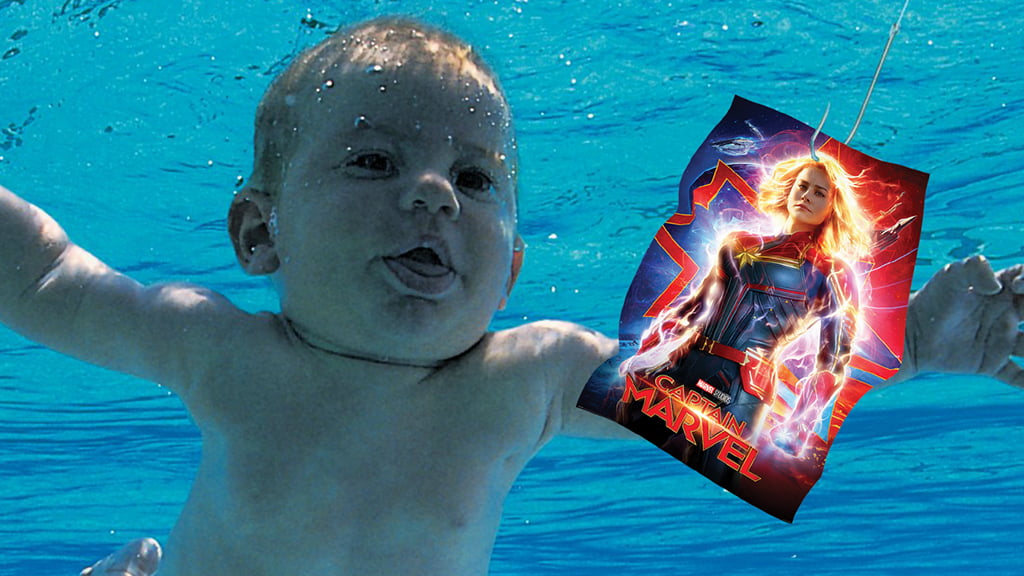
    By choosing such a specific timeline to introduce Carol Danvers, it was obvious from the start that Captain Marvel would try banking on 90s nostalgia. The very first trailer started with Vers crashing into a Blockbuster and the callbacks were omnipresent throughout the movie itself. Giant cell-phones, pagers, and dial-up internet made for an inverted technology shock, as both Carol and the audience had to adapt to such an archaic landscape. But even with all these references, the real hook was to be the music. As James Gunn realized, that’s where the emotional response from the audience could easily pay dividends later on. By adding that extra level of relatability to Carol it could help make the character even a bigger fan favorite than she ended up being. But even though the songs were there it all felt a bit disconnected both because of the way they were used and Danvers’ (non-)reactions to them. It all made for a somewhat disappointing experience since it had the potential to become something truly magnificent, perhaps even surpassing the response to Guardians’ accomplishments in this specific area.

    The approach seems to have been to simply insert 90s songs into the movie, highlighting their presence and trying to get an audience reaction, but sadly bypassing their importance to the characters. As co-director Anna Boden stated during an interview with AMC:


    We can’t compete with Guardians of the Galaxy. [That] was its own special thing. But we do have a movie that takes place in the 90s, and you will hear some 90s music, hopefully stuff that reminds you of the past. We’re playing a lot with songs that we forgot about or just haven’t heard in a long time, but that really bring us back to a certain moment.


    Guardians was clearly something special. But not trying to accomplish something equally noteworthy seems to have been the first step to not getting there in the first place. Most of the song choices were from the 1992-1995 era, being R.E.M.’s “Man On The Moon” (1992) one of the earlier releases but seeing that Carol had left Earth in 1989 this meant that there would be no reason for her to have any sort of connection to them. When they showed up in the movie it always felt a bit bland. The audience could even be connecting with the songs, but once the main character felt so removed from them that could even almost retract that initial nostalgic feeling. There wasn’t even really any effort to try and make Carol connect with them, since she never really acknowledged the ones that happened to be playing in the background. This all felt a bit out of character since throughout the movie, and if you leave out the Air Force Flightsuit and her Kree uniform, she basically is just seen wearing shirts with band logos on them, from Nine Inch Nails to Guns N’ Roses and Heart, meaning she wasn’t oblivious to the art form.

    The final confrontation with the Supreme Intelligence late in the movie, just before Carol goes Binary for the first time, always felt like the perfect example of the way musical callbacks were mishandled. This was an interface where, as stated in the movie, characters mostly only found what they took there, so there would be little point in having Nirvana’s “Come As You Are” (1992) playing since Carol probably didn’t even know the band, that was just releasing their first album at the time she was abducted. And even if you could argue that it was the Supreme Intelligence the one responsible for choosing the song, that wouldn’t be that intelligent as the eventual reaction it was trying to get out of Carol would be as empty as the lies she kept in her mind.

    3

    Halfway through the movie, the scene where Fury meets up with Carol at Pancho’s Bar makes for a great metaphor for the way songs were used in the movie. When asked to prove she isn’t a Skrull, and without blinking, Carol’s choice is to blow up a jukebox using a photon blast. The same jukebox that probably provided her numerous nights of entertainment at that same bar with Maria Rambeau, as we caught a glimpse through flashbacks. If music was supposed to help with her amnesia and help to bring the old Carol back, if it was supposed to bring the audience closer together to relive the 90s through her eyes, it just died a very painful death. With a photon blast to the face.

  • COVID-19 Restrictions Unlikely to Delay Season 3 of ‘THE MANDALORIAN’

    COVID-19 Restrictions Unlikely to Delay Season 3 of ‘THE MANDALORIAN’

    Amid the turmoil most production companies are experiencing due to the COVID-19 pandemic, one thing the implementation of health and safety guidelines might lead to is an increase in the number of entertainment projects set underwater or in outer space (or in any other setting where a protective suit and helmet would be mandatory, really), making for settings where cast and crew would inherently be a bit more safeguarded. A similar security blanket, unique to the show, will likely also ensure that the production of the third season of The Mandalorian will remain largely unaffected and on schedule. 

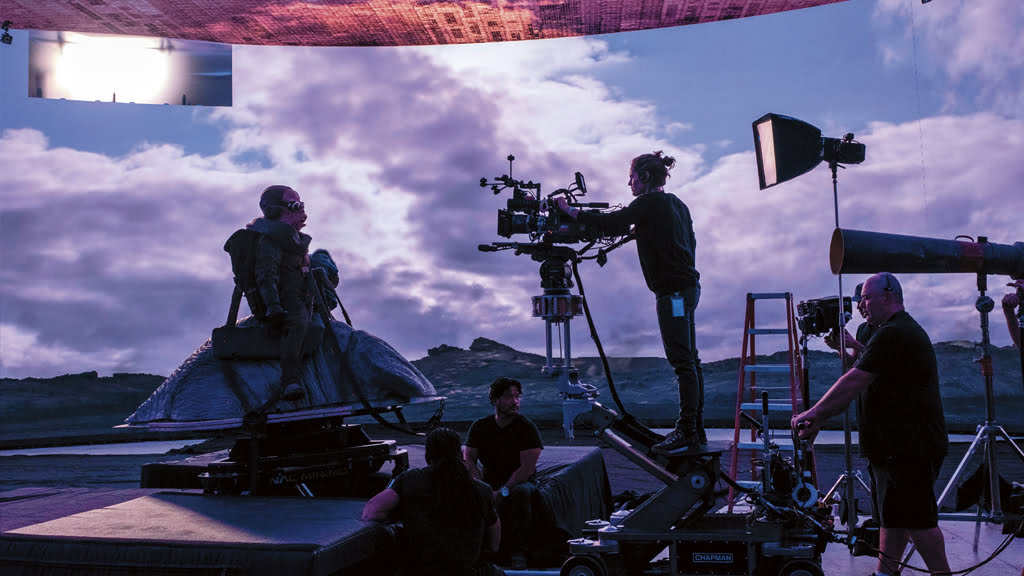
    As Murphy’s Multiverse referenced a couple of months ago the groundbreaking technology used in the making of Star Wars’ first live-action tv series could be of great use during these trying times for the entertainment industry. In an interview with The Hollywood Reporter, when asked about the challenges that the show might have to face when the time comes to shoot season 3, executive producer Jon Favreau had this to say:


    The fact that the set is much more contained is a benefit, because you can limit the number of people. A lot of the people controlling it are doing it remotely from what we call the Brain Bar, which is a bank of gaming computers, essentially. The amount of people near the camera could be much smaller than [usual]. We also shoot a lot outside, which is helpful, too. We build to a moment in filming more like an animated production, where we have a lot of storyboards, a lot of discussions and scouting in virtual reality. We use cinematic tools in VR much the same way we did for The Lion King and The Jungle Book. A lot of times the actors you are seeing on the screen aren’t actually there on set.


    So being, “The Volume” (the name given to the soundstage where most of The Mandalorian is shot) proves to be ahead of its time, in more ways than one. It was initially conceived as a way to streamline the shooting of a show that involves a whole lot of VFX and off-world locations, and the ability to change environments at the click of a button revealed itself to be tremendously effective, making it a winning play for Lucasfilm as the show’s tremendous reception reflected. It has also demonstrated that having such a tool that allows to reduce location shooting while creating a protective bubble around cast and crew alike is surely invaluable in today’s landscape, especially at a time when the limitations productions are facing are still far too many and most are playing catch-up, trying to understand what crews can and cannot do with the current health concerns.