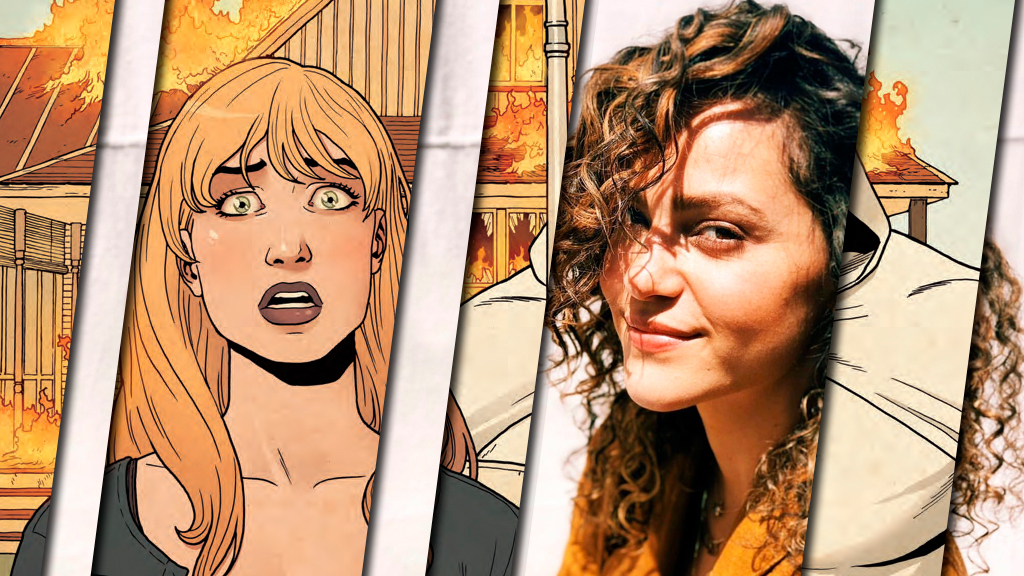
UPDATED: It looks like Moon Knight’s head writer has taken to Twitter to clarify that “Marlene was never part of our show.” While Layla’s character so far seems to have virtually the same background as the classic love interest from the comics, Jeremy Slater emphasized that the character (though not originally named Layla El-Faouly) was created in the first week of writing and it seems as though he is implying that the written character was never Marlene due to the team wanting a more diverse character. Previous reports (and May Calamwy’s interview) have said that the character was intially written as white, but perhaps there was some confusion as to whether they were referring to the comcis character being white.
Either way, the way Layla has been written clearly conjures up Marlene given both their fathers being archaelogists and killed in the process. At the same time, both are Marc Spector’s (and his alter’s) primary love interests from all we have seen so far. Slater seems to want readers to understand that the long-running comics character in her exactness was not intended for Moon Knight. You can read Slater’s statement in its entirity below:
It’s a great profile about the amazing May Calamawy, but I do want to clear up one inaccuracy. Marlene was never a part of our show. Diversity was incredibly important to our writers room, and Layla was created our very first week. (Although she was originally named Zayna Faoul.) https://t.co/fEJNjsW9F7
Now, the actress confirmed in an interview with ELLE that the original script was in fact written to include Marlene prior to Calamawy being cast opposite Isaac. In particular, she described how the series creators and Marvel Studios president KevinFeige worked to transform the original character into an Egyptian heroine:
It started even on the page as a white woman and when we came on board, me and [Moon Knightwriter Sarah Gohar], she was then changed into half Egyptian and we pushed it. Let’s make it into an Egyptian character and they welcomed that.
May Calamawy
Calamawy praised Moon Knight writers, director Mohamed Diab, and Feige for working to rewrite the character in order to avoid stereotypes and create an authentic take on the Eyptian actress’s Layla:
Anytime I felt uncomfortable, I would go talk to [Diab] and his wife and I love how Kevin Feige gave us the freedom to share that, let people know, ‘This is not what it’s like, if we do that it’s gonna be a stereotype.’ I realized quite early on this is a space where my voice was going to be heard and that’s the best feeling.
May Calamawy
Also important to the actress was for Layla to stand apart from other similar and well-known female characters of the past. Calamawy noted how important the “soft strength” of Middle Eastern women is to the character:
I was careful not to draw inspiration from someone in the West because they want me to bring my side. In the Middle East, I find women have such a soft strength to them. And I was like, ‘How can I bring this to her? Why should I sit and copy what I think Angelina Jolie would do?’ Every woman I know is a bunch of dichotomies, and I wanted to bring that.
May Calamawy
The series’ decision to cast Calamawy and rewrite Marlene’s character into Layla is surely one of Moon Knight’s strongest decisions. While it is unknown just how Marc Spector’s love interest was originally written, it is undeniable that Layla’s presence is a far cry from the fairly bland and often outdated damsel in distress in the comics. The fact that the series originally intended to feature another classic character from the comics, though, begs the question as to whether it has bigger plans for the iconic Moon Knight characters we have seen in cameos going forward in the Marvel Cinematic Universe.
The first four episodes of Moon Knight are now streaming exclusively on Disney+.
Disneynature’s newest wildlife documentary, Polar Bear, is an astounding achievement. It is directed by Alastair Fothergill and Jeff Wilson, the team behind Disneynature’s Penguins, and narrated by two-time Academy Award nominee Catherine Keener. While it accomplishes what it set out to be—a beautiful and engaging family-friendly film—it also manages to go a bit deeper due to the inescapable reality of climate change on the film’s subjects.
Polar Bear is almost as true to its title as any film could get. The documentary follows one specific female bear for over 15 years in the Arctic. While it is somewhat framed from the perspective of this bear when she is a mother herself later in the film, most of the runtime seems to explore her coming of age. Indeed, perhaps the most memorable moments of Polar Bear come from her youth when she is living and learning from her mother alongside her twin brother. The true artistry of the story comes from the meticulous process of selecting a bear and committing to her for well over a decade. While she ultimately has a cub of her own, her journey is permanently set against the backdrop of her adventures with her own mother and the documentary emphasizes how significant ice bear heritage is to the continued survival of the species, both in the short- and long-term.
Polar Bear is undoubtedly a family-friendly movie that does not “talk down” to a younger audience. The pure joy of watching furry, cuddly-looking cubs play and learn new behaviors is a basic treat in and of itself. The majesty and power of watching adult bears in their native environment is captured brilliantly by the filmmakers. The visuals and cinematography are absolutely stunning. From the close-ups to the aerial shots, Polar Bear does not leave anything wanting in that space. Much of what makes the documentary special is that it captures polar bear behavior never before seen on camera. And while that might not be obvious while watching it, some moments are undeniably special, and the visuals, score, narration, and more work together in unison to paint those moments in an unforgettable light.
While the documentary is clearly an engaging and fun family-friendly movie, as a wildlife documentary Polar Bear does inevitably include somber moments. One of the most powerful aspects of the film ae the occasional flash-forwards to our bear with her cub, navigating an Arctic environment drastically changed by climate change since her youth. Despite the unavoidable presence of climate change, Polar Bear does not spend much time detailing or unpacking it. The documentary is the story of our bear—but the story of our bear cannot be told without showing the environment she is raising a cub into. The film ends on a noticeably much more optimistic and resilient note than it feels in the most recent footage. While the bear (through narration) struggles through harsh new terrain, she proclaims that her daughter will learn to be a great ice bear and will survive.
Polar Bear is a strong installment in the Disneynature collection. The documentary’s ability to capture scenes in such an extreme environment over such an extreme period of time undoubtedly paid off in the final product. The result is a memorable look at the lives, behaviors, and environments of one of the most charismatic species on the planet.
Disneynature’s latest documentary, Polar Bear, tells the story of a new mother whose memories of her own youth prepare her to navigate motherhood in the increasingly challenging world that polar bears face today. While the film has many uplifting and joyous moments, it takes place against the background of climate change in the Arctic that is threatening the survival of polar bears.
Still, Polar Bear ends on a noticeably optimistic note, with the mother bear (in the form of the voice of two-time Academy Award nominee Catherine Keener) expresses that she and her cub will persevere and survive the changing and dangerous environment. In an exclusive interview with Murphy’s Multiverse, directors Jeff Wilson and Alastair Fothergill were asked why they chose to end Polar Bear in that way. Wilson stated:
I think it’s important for our audiences to have a sense of empowerment and hope at the end of the film, because we believe that that’s the greatest emotion that will drive people to take action. And that really helps us get our message across.
Jeff Wilson
Wilson went on to describe one particular moment in the film that embodies that spirit of hope and resilience:
[The] extraordinary images of the mother bear climbing the iceberg…it’s so impossibly beautiful that you’d never imagine that would happen. But when you film something like that—and you realize at that moment in time when you’re filming it—the power of those images, and the power of the metaphor of what is happening there, you do suddenly the chemistry of script and narration and music and and just the serendipity of capturing that unique moment. [It] gives you the power to take hope, and plant it firmly in the audience’s lap and say, hey, look, this, there is hope here. But you know, there’s also uncertainty.Jeff Wilson
Viewers can enjoy the documentary’s story and powerful moments when it releases on Earth Day. Disneynature’s Polar Bear launches exclusively on Disney+ on April 22, 2022.
Moon Knight has certainly put the spotlight on Steven Grant and Marc Spector as two different personalities. While Episode 1 opened the series from the perspective of Steven Grant, Marc Spector is the one originally connected to Khonshu and the titular Moon Knight. While Marc is the original personality in the comics, the Disney+ series has been purposefully ambiguous when it comes to suggesting which personality is the original.
While it would be a bold departure from the comics to have anyone other than Marc be the original identity, the series has not been shy to depart from the comics. Below we’ve compiled some of the strongest evidence that Moon Knight has presented that either Steven or Marc is the original.
Steven Grant
Marvel Studios’ ‘Moon Knight’
One of the biggest flags for Steven’s character is that he is supposedly in frequent contact with his mother. While there are plenty of reasons to be skeptical about the postcards he received from her and the fact that we’ve never heard her speak back to him on the phone, if he does have a relationship with his mother that would suggest she knew him as a child and that he was very often in control of the body.
Moon Knight as a show officially adopts Steven as its protagonist. Not only is he who we follow for nearly the entirety of Episode 1, but the actual synopsis for the series only mentions Steven.
Speaking of control, from what we know, Steven has been in primary control for at least several months. Spector seems to be able to take control when Steven falls asleep, but clearly he has had a difficult time manifesting his personality.
When Marc did take control at the end of Episode 2, Steven was extremely uncomfortable being “in the mirror”. Marc had clearly gotten used to it, but Steven acted like he had never been there before and was totally unfamiliar with the feeling.
Steven seems to have a life with a foundation. It is nothing overly intricate, but he does have his own flat and job, and it seems as though the people he works with have known him for some time.
He also has quite a wealth of knowledge on all things Ancient Egypt. That would take some time to acquire, which suggests a significant amount of time in control. Marc does not have any of this knowledge, and the depth of his intelligence suggests it is definitely something Steven must have studied for years.
Marc Spector
Marvel Studios’ ‘Moon Knight’
The easiest and strongest evidence that Marc is the original is that, in the comics, he is. There is nothing stopping Moon Knight from twisting that, but it is a strong bet that the original character would remain the same.
Marc is also the personality that had the connection to Khonshu and Moon Knight. His alter obviously meets Khonshu in the series, but even in suit form he is Mr. Knight, not Moon Knight. It would only make sense that Moon Knight is the original personality in Moon Knight.
There’s also plenty of evidence that Marc had periods of time where he was in consistent control. He is married, and although it might be ending and we don’t know how long it lasted, presumably that relationship took some time. And, as we learned in Episode 3, Layla had no idea that Steven existed.
Marc also told Layla in that same conversation that he “had it under control until recently”. That suggests that Steven’s time in control could be recent and unprecedented.
One thing that raises more questions than answers is that Marc was aware of Steven while Steven was not aware of Marc. This could suggest that Marc knew because Marc was the original, but there are no obvious reasons why Steven would have absolutely no clue about Marc’s existence.
Moon Knight might very well not never resolve the question of who is the original, just to keep the ambiguity and mystery alive. Or, in the next couple of episodes, we learned more about our characters and their pasts. This could be a confirmation of Marc as the original, or a dramatic reveal that it is Steven instead. Or, who knows, another personality altogether could be revealed and take on that role.
With the big twist at the end of Moon Knight Episode 4, the series is telling us to question everything we thought we knew. While Steven and Marc’s mental health certainly will come into play, it’s worth noting that the door is open for certain elements of the show to be drastically different from what we thought up until now. My guess is that the villain Moon Knight has set up so far, Arthur Harrow, is actually a red herring for the Big Bad of the series—Khonshu.
It would be pretty bold to throw a villain twist in after the “what is reality?” twist we just got, but it could be fantastic. For one, it could easily work with what looks like a Lemire-Smallwood comics-run-inspired psych ward twist. But Khonshu as the series’ ultimate villain has a strong foundation in the comics, and it would improve upon the still vague and generic-feeling Arthur Harrow.
Marvel Studios’ ‘Moon Knight’
So first, why would Khonshu be the villain? As you know from Moon Knight, the lunar god isn’t exactly warm and fuzzy. He was banished and is now imprisoned by the other Egyptian gods of the Ennead. While his imprisonment was framed as a situation where Khonshu tried to do the right things while the others just ignored what needed to be done, perhaps there is much more going on. Weirdly, Harrow told the Ennead that Khonshu was actually the one who had him start looking for Ammit. Accusing Khonshu of now working due to jealousy and paranoia towards stopping him.
While Harrow is obviously not looking like a good guy, he is a big advocate of honesty. Either way, the fact that we still know little to nothing about the Khonshu-Harrow relationship is suspicious. There is a very good chance whatever that Ammit-related history between the two is, it could fundamentally change how we look at Harrow’s mission and Khonshu’s interest in stopping him.
So, yes, there are some shady open questions. But Khonshu has been helping Marc and Steven this whole time, right? From what we’ve seen, the god has not acted against either personality, but we know that Khonshu is actively interested in Layla as his next avatar. In that way, he does not seem overly enthused or pleased with Marc. I think that Moon Knight can and will reveal that Khonshu’s motives are similar to the god’s in the Lemire-Smallwood comics run—the same run that clearly inspired the end of Episode 4.
Long story short, Khonshu puts Marc through psychological warfare because he wants to break Marc’s mind completely in order to take complete control of his body so that he would essentially have a direct presence on Earth. Moon Knight actually already teased this idea if we look back at what the series has told us so far.
After Khonshu was banished, Harrow gives a dramatic speech to Khonshu’s stone statue. He specifically says to Khonshu, “if you hadn’t broken me completely, I never would have learned the value of healing.” So, the concept of Khonshu breaking his avatar “completely” has already been introduced. During the “trial” in the Pyramid of Giza, Harrow also suggested that Khonshu is taking advantage of Marc, who is clearly suffering from a dissociative identity disorder. That tracks with the theory that Khonshu, like in the comics, chose Marc because he knew his mind was “weak”, so he knew he had a better chance of breaking or controlling him.
‘Moon Knight’ (2016)
Basically, Khonshu could be revealed as the ultimate or final villain in the next two episodes. It would be another dramatic twist, and it would make a more interesting story than Arthur Harrow. Don’t get me wrong, Ethan Hawke puts in a phenomenal performance, but Harrow and his motivation are unfortunately a bit generic. While that could just be something the rest of the series has to develop, it also would make Harrow a perfect red herring. Considering he has been killing people because a cane told him to, it’s less likely that he will be a surprisingly good guy.
His goals and actions might just take a backseat to whatever Khonshu is up to—as noted above, there is something missing regarding the Ammit plot. We have not seen any version, memory, or depiction of Ammit. Harrow is a devout follower despite not being her avatar and never communicating with her considering she has been imprisoned for thousands of years. Khonshu is apparently the one who set Harrow on his Ammit-obsessed path in the first place. Whatever Khonshu’s interest in Ammit is, he might want control over Marc’s human body to carry out his own plans.
The biggest issue with this theory, in my mind, is that Khonshu is currently imprisoned. It is not exactly clear who would set him free—my guess is Layla—but presumably, the god might be needed to resurrect Marc from the water he died in before the Episode 4 twist. The water resurrection is a whole theory of its own, but it assumes that everything that happened before the psych ward was not simply imagined and that Marc will come back to that “reality” eventually. If Khonshu does resurrect Marc, though, doesn’t that seem like he is friendly? Not necessarily if he still wants to use Marc as a seemingly “weak” mind to break—especially after Marc might go through the psych ward twist.
‘Moon Knight’ (2016)
This theory also matches up with a common theme in Moon Knight comics. Often, Marc is at odds with Khonshu and his influence. He alongside Moon Knight (to the extent they can) leave Khonshu behind. The human and god are so connected that Khonshu always comes back again, but Marc frequently recognizes how toxic his guardian can be and tries to better his life by leaving him behind. In doing so, he continues to be Moon Knight. At a certain point, the hero/fighter/vigilante is in his personality, and he always wants to continue it. He just wants to do it on his own terms. That could be a perfect jumping-off point for MCU Moon Knight—Marc/Moon Knight saying goodbye to Khonshu to become the hero they actually want to be.
‘Moon Knight’ (2016)
The first four episodes of Moon Knight are now streaming on Disney+.
The search for Marc Spector’s third classic comics personality Jake Lockley continues through Moon Knight‘swild fourth episode. Clues and evidence in Episode 1, Episode 2, and Episode 3 honestly feel like enough of a confirmation that a third personality is coming. But we still have yet to be formally introduced. There may be fewer clues in Episode 4, but one in particular almost cannot be interpreted in any other way than… that’s Jake. While everyone knows that nothing is confirmed until it is confirmed, let’s take a look at perhaps the most unambiguous and in-your-face clue of the entire series.
The Extra Sarcophagus
When Marc wakes up in some sort of mental institution or psych ward-looking place, he eventually escapes the room where the now Dr. Arthur Harrow appeared to be his psychologist. On his run through the halls of the institution, he comes upon a room with a lone sarcophagus. Someone inside was screaming for help and shaking it, trying to get out. Turns out Steven was trapped in there, and he and Marc hug when they reunite–it’s very sweet.
Flash forward about one minute, and they pass a room that has a very similar sarcophagus. They do not seem to notice it, but it is also moving as if someone was trapped inside. Considering Marc and Steven now both have bodies, it is easy to say that whatever place this institution is, it is not “real.” So, if Marc’s other personality Steven sort of manifested as being trapped in a sarcophagus in a room here, what other conclusion is there to draw from the fact that there was another? It is the least ambiguous hint Moon Knight has provided and the most psychologically symbolic as well that a third personality does in fact exist in this series.
While Moon Knight arguably “confirms” here that Marc and Steven are not the only personalities, it still is yet to be seen whether a third will actually make an appearance in the series. Hopefully Jake has some grand entrance, but it could be the series’ way of acknowledging the comics’ history and being coy with it, while maybe waiting to introduce Jake in another project considering Moon Knight already has many demanding moving parts to balance. Still, there have been so many hints over these four episodes, that it would definitely feel like a letdown if they did not lead to an actual appearance by the end of the series.
Only time will tell. But the first four episodes of Moon Knight are not streaming on Disney+.
Film studio Disneynature is gearing up for the release of its newest documentary, Polar Bear. Narrated by two-time Academy Award nominee Catherine Keener, the film tells the story of a new mother bear whose memories of her own youth prepare her to navigate motherhood in the increasingly challenging world that polar bears face today.
Murphy’s Multiverse recently sat down with directors Alastair Fothergill and Jeff Wilson, who previously directed Disneynature’s 2019 Penguins. While following the same bear over the course of 15 years, Polar Bear undoubtedly brings the effects of climate change on the Arctic into the spotlight. Interestingly, Fothergill noted that the goal of the documentary was not to make it “an environmental movie”, but it was impossible to tell the story of a polar bear without climate change playing a major role. He stated:
[T]he movie isn’t an environmental movie, we hope it’s an entertaining and engaging family movie. It’s impossible today, honestly, to make a movie about polar bears without telling the story of the challenges they face. And that’s why we very deliberately chose to tell the story of a female bear looking back at the last 15 years…there’s been an enormous amount of change over that time period.Alastair Fothergill
Both directors described moments in the film where they were able to catch footage of polar bear behavior that had never been documented before. But the environmental challenges the bears face created scenarios that even the veteran wildlife filmmakers were surprised by. Fothergill elaborated on that factor:
There was a very moving moment where a mother and her cub are literally going into too thick, melted mud, you know and struggling to get to make it. Now that that is reality of climate change, but we didn’t expect to film it…And a lot of moments like that were fresh. We knew the climate change was going to be the basis of the whole story. Because polar bears are [] at the cutting edge, so we expected to see it. But we were surprised by some of the detail of what we filmed.
Alastair Fothergill
Disneynature’s Polar Bear launches exclusively on Disney+ on Earth Day—April 22, 2022.
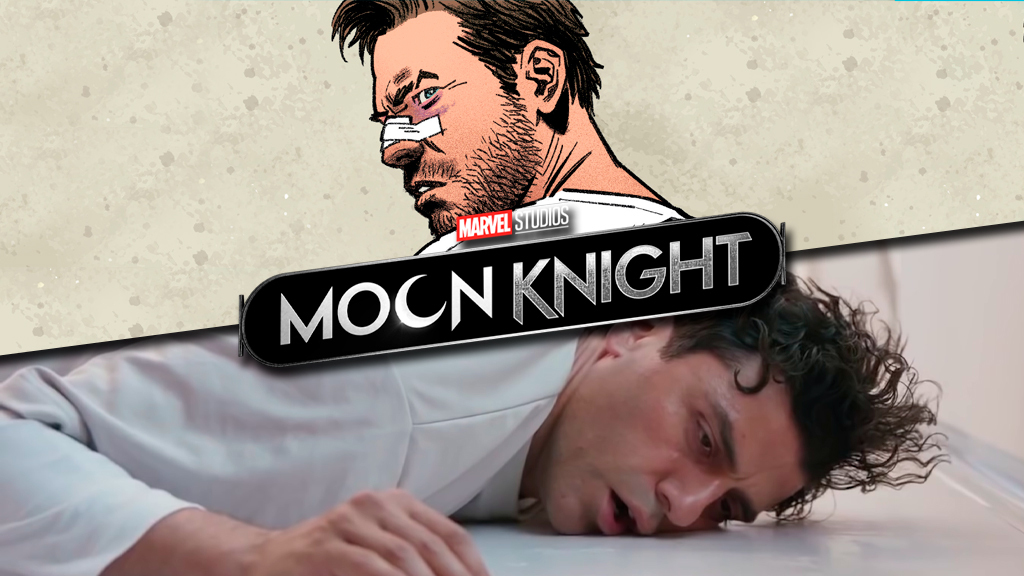
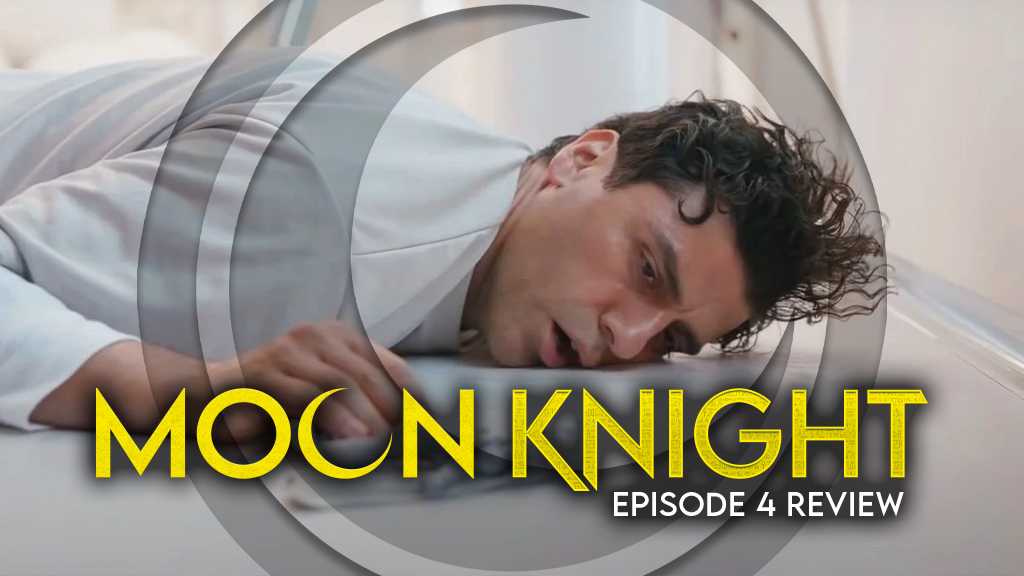
If you happened to see reactions from critics and members of the press who were able to see the first four episodes of Moon Knight, you undoubtedly saw a lot of people praising and hyping up the fourth episode. Now that you’ve watched it, you now know why. Here, we break down what happened and look into clues from the source material as to what this might all mean for the series.
We will spoiler details from the fourth episode. So, if you haven’t watched it yet only continue at your own risk.
Recap
After Moon Knight spends the vast majority of four episodes building up a now-relatively grounded story involving adventuring through Ancient Egyptian lore, artifacts, pyramids, tombs, and whatever else the franchise can get its hands on. Of course, Arthur Harrow appeared the be the main villain in his quest to serve/free Ammit to judge souls based on future wrongdoing. At the same time, our protagnosists are attempting to save the world from Harrow as the avatar of Ancient Egyptian lunar god Khonshu, which allowed them to summon divinely-granted suits—they still have not actually been named yet, but we know them as Moon Knight and Mr. Knight.
Most importantly, perhaps, is that our original protagonist, Steven Grant, learned he had another identity/personality named Marc Spector. The Marc reveal brought Steven into this fast-paced and dangerous plot as Marc was the one in contact with Khonshu and served as his Fist of Vengeance. The psychological implications of Steven and Marc’s dissociative identity disorder have been a loud-and-clear focus of Moon Knight so far. And it looks like it may very well increase the focus after Episode 4.
In this episode, Steven and Layla find the tomb of Alexander the Great. With it, they also have finally uncovered Ammit’s stone statue, which is similar to that we saw Khonshu get imprisoned in. Harrow swiftly catches up, and ultimately shoots Marc (who took control at this point) and seemingly kills him. We watch Marc float down through dark waters almost endlessly.
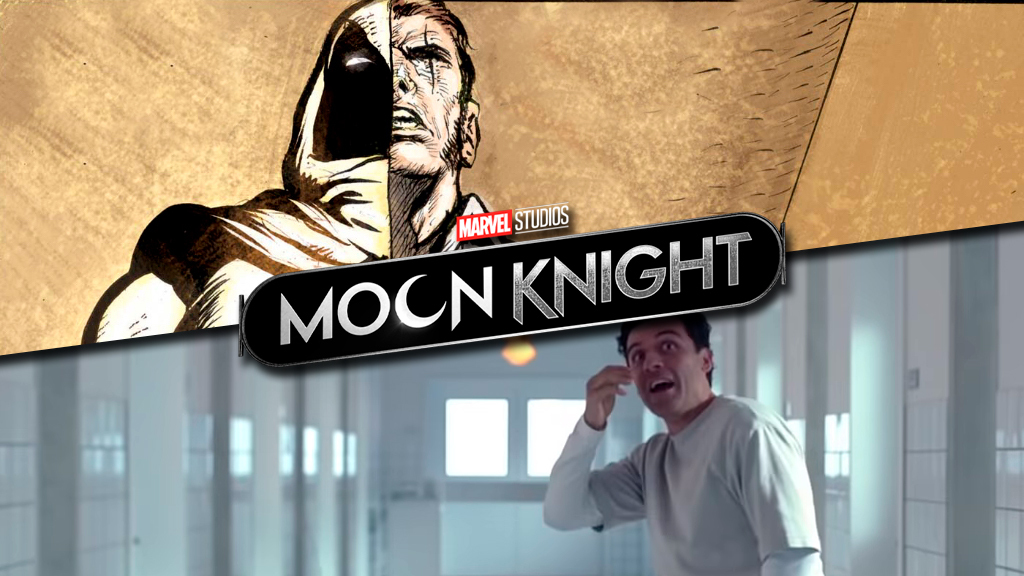
Suddenly, we cut to what looks like a direct-to-VHS movie where a young boy and an impressive adventurer and archaeologst by the name of Dr. Steven Grant are looking for atrifacts related to an Aztec lunar god. Marc then wakes up in what looks like a psych ward or mental institution with many callbacks and familiar faces. For example, random objects from early episodes (like cupcakes and a goldfish) appear in this place. Characters like Layla, Crawley, and Donna are also patients in the institution. And, of course, Dr. Arthur Harrow is Marc’s psychologist. There are numerous other Easter eggs involved, but the point is clear: did Marc simply imagine the “reality” we previously saw?
What Just Happened?
If you’re fresh off of Moon Knight Episode 4, the title question might be stuck in your mind. You are supposed to be confused, excited, and anxious to find out what comes next. If you enjoy the surprise and the mystery, this is good news for you, and you might want to avoid reading this whole article if you want to stay as unspoiled as possible. If you hate feeling confused, there is also good news for you if you keep reading this article.
Marvel Studios’ ‘Moon Knight’
So, let’s get into it. This is the point of Moon Knight where the viewer is now supposed to question absolutely everything. Obviously, the fact that Marc wakes up in a psych ward does much of that work, but how the last ten minutes or so of Episode 4 progress makes it even more complicated. It is clear from the later scenes after Marc wakes up that he is not simply in a typical psych ward having completely made everything up. Plenty of things are not quite right, but of course, he encounters Steven trapped in a sarcophagus, and the two personalities exist in separate bodies in the same place. If that isn’t enough to debunk much of the psych ward “reality”, the two come across goddess Taweret, a hippo-appearing being, who we saw as a stuffed animal in Episode 1’s gift shop.
Marvel Studios’ ‘Moon Knight’
Just in case it was not clear before—yes, you should be confused. Moon Knight has now gone out of its way to essentially discredit every “reality” it has presented audiences with. The “main reality” where we first met Steven—was everything one giant delusion of a mentally ill man based on some of his surroundings in the psych ward? If it was not entirely in Marc’s imagination, was some of it, such as Khonshu, real? We are now suddenly introduced to this “psych ward reality”—is it real? Probably not, but are the images of Steven and Taweret, for example, more delusions?
If you are dying for answers or at least some guidance, the solution may lie in the Moon Knight comics run you may have already heard a lot about. While looking at the source material for Moon Knight is certainly not “spoilers”, if the series adopts more of the comics’ plot lines, that could potentially ruin some surprises for the last two Moon Knight episodes. With that word of caution of the way, let’s look at what possibilities the Jeff Lemire and Greg Smallwood run coult hint at for the home stretch of the live-action series.
Lemire-Smallwood’s Inspirational Run
Moon Knight (2016) is one of the most popular comic runs of the Fist of Khonshu, but it also clearly inspired the creators of the Disney+ series plenty. After more than three decades of Moon Knight stories, Marc Spector wakes up in an insane asylum and gives evidence that he had been there since he was twelve. As such, all aspects of his Moon Knight life had been in his head. The comic run by Lemire and Smallwood jumps from perceived reality to perceived reality. We see versions of Marc Spector, Steven Grant, and Jake Lockley living their own lives, but the story jumps around in a way where each one questions their memories and realities. Like where Moon Knight seems to be going, the comics are entirely founded on the concept that Marc Spector’s mind (inlcuding his other identities) is complex, confusing, and potentially a rabbit hole of reality-beding.
This article is not the place to try and summarize the entire run or give every possible detail that connects the live-action series to that run, but it’s worth noting what Moon Knight has already clearly borrowed from. In both, Marc Spector wakes up and realizes he is in an all-white psych ward with some of his friends as other patients. His psychologist in the comics is Dr. Emmet, whereas in live-action it is Dr. Arthur Harrow. Still, Dr. Emmet is “revealed” to be a manifestation of Ammit, who we know Arthur Harrow is a follower of. Even the pair of orderlies, Bobby and Billy, made their way into Moon Knight. The appearance of Taweret at the end of Episode 4 also looks a lot like some of the Ancient Egyptian imagery that the Moon Knight comics highlight. Even more, Marc and his personalities were able to co-exist in different bodies in the comics.
Speaking of Ancient Egyptian lore connecting to the mental institution, much of the run presents Marc with a situation where the psych ward reality morphs into a version of New York City that appeared to be taken over by the Egyptian god Seth. So, Dr. Emmet would often take the form of Ammit, the orderlies as jackals, Marc makes deals with Anubis, he travels to the Overvoid, and more. At the same time, he would find himself back in the psych ward “reality” and being given electroconvulsive therapy or chastized by Dr. Emmet.
Moon Knight (2016)
The ultimate adversary in the comcis run is actually Khonshu, not Seth. Turns out, much of the mental dismay and reality confusion is Khonshu’s doing, and the moon god is trying to completely break Marc’s mind so that Khonshu can essentially just use his body as his own. So, the run beautifully explores the dimensions of Marc/Steven/Jake’s minds and memories as they try to persevere through Khonshu’s cruel games and defeat the god they have been attached to for so long. The run ends with Marc taking control of his personality and defeating Khonshu, telling the deity that they do not need him to be Moon Knight. While Marc ends in a place where he stil cannot be sure if he is in true reality, he notes it is good enough for him, Steven, and Jake.
Moon Knight (2016)
Where is Moon Knight Going?
Since Moon Knight is clearly taking a lot of inspiration from at least the very beginning of the Lemire-Smallwood run, there is always a chance the series will adapt even more from it. At the same time, Moon Knight has not otherwise been following a story that is clearly inspired by any particular run. That could mean that whilethe previously mentionedone may have some influence, the live-action series will ultimately remain a hybrid of decades of comics and new material. Considering that both the series and the comics want you to question virtually every aspect of reality, it would be naive to assume that Episodes 5 and 6 of Moon Knight will be predictable.
The first four episodes of Moon Knight are now streaming on Disney+.
Viewers finally got to see the Moon Knight episode that creators and critics have been teasing for weeks. The series’ fourth episode packs quite a lot into its runtime, but the only part that viewers are going to cling on to going forward is that twist of an ending. It was quite the exciting changeup, and it truly revamps the narrative on multiple levels and allows the psychological mystery setup to pay off dramatically. Comic book fans might recognize how eerily similar the psych ward at the end of the episode is to the popular Jeff Lemire-Greg Smallwood run, but it does not need that connection to carry its excitement forward. It does beg the question—between where the episode left the previous “reality” and where this new reality could go, how can Moon Knight possibly wrap this story up in a satisfying way with only two episodes left?
The episode pre-twist was notable for several reasons. It brought with it its own genre because with Khonshu out of the picture it turned into a more recognizable adventure a la Indiana Jones or Tomb Raider. Admittedly, it was not the most thrilling plotline the MCU had ever explored, but the wealth of Egyptian lore in Episode 4 was extremely interesting and packed a lot of potential into the series. Still, the pre-twist episode spent time adding major detail to not only the main story but also several of the characters. Had the episode not ended in a twist, there would have been a great deal of speculation leading out of this episode purely on the Arthur Harrow and Ammit plot. But, as we know, Harrow seemingly kills Marc Spector who drifts away through water only to reawaken someplace very different.
While the information in the pre-twist episode still, hopefully, brings value to the series later, it is difficult to expect any viewer to truly pay attention to that when Marc wakes up in what looks like a mental institution or psych ward. Everything we thought we knew is turned upside down, which brings the theme of wondering what is real and what isn’t back into the spotlight after the first episode. Moon Knight gave a sense of security with the reveal of Marc and Khonshu, and nothing had really suggested that they were not real or that the story was not taking place in reality. Now, Episode 4 spends its last ten minutes or so trying to convince you that none of it was real—sort of. The odd amount of Egyptian imagery and, of course, what looks like Egyptian goddess Taweret (whose stuffed animal we saw in the gift shop in Episode 1) suggests that this mental institution is not simply the true reality either.
So now Moon Knight is genuinely and beautifully under the “What is real?” umbrella. The already-phenomenal psychological aspect of the series will take center stage in a grand way going forward without a doubt. A psych ward—or some kind of projection of it—is the perfect place to dive deeper into the Marc/Steven psyche. There are many obvious Easter eggs (such as the cupcakes, Gus, maps, the adventure film, etc.) to suggest that what we watched of the series so far may have actually all been in Marc’s head. There is also a very eager extra sarcophagus like the one Steven was found in that has to be the most obvious tease of another personality of the entire series. Given how the episode ended, it looks like the next episode could have an escape-oriented theme with Marc and Steven working together as two different bodies. This is a perfect way to “bring to life” to both alters the amazing performance that Oscar Isaac has already put in with the characters so far. Watching them interact may very well be the highlight of Moon Knight.
While previous episodes felt as though they sometimes gave too little information or background on the major subjects of Marc Spector and Khonshu, it is almost certain that the events of Episode 4 and what it teases is coming will blow that whole issue wide open. We end in such an introspective place where the pieces of Marc’s life and mind are literally just scattered around him. It could be a perfect opportunity to journey into his mind and past.
As mentioned, the twist looks a whole lot like the Lemire-Smallwood run. That might mean the last two episodes of Moon Knight borrowed heavily from it. But even if the series does attempt a direct adaptation of the comic—which it almost certainly will not—it is not reasonable to fit that into two episodes. Even if the series seeks to merge elements of the Lemire-Smallwood story with the very original plot from the series so far, it still seems unlikely that two episodes is enough time. Overall, it is hard to picture how a twist of this magnitude could lead to a comprehensive and satisfying ending so quickly. Moon Knight could be another victim of the MCU Disney+ series curse of not quite sticking the landing. Or, it could keep surprising us like it has been.
In any event, Episode 4 might have just been the biggest “twist” of the entire MCU. Obviously some fans of the Moon Knight comics might feel less lost than those unfamiliar with them, but nearly the entirety of the first four episodes of Moon Knight were a far cry from how it looks like the series might try to tell the story from here on out. The jarring transitions between the two was one of the most enjoyably “What the f***?!” moments in MCU memory. It means that the series has to take the character’s psychological origins and backgrounds seriously story-wise and that requires going to places that other projects are usually uncomfortable with. There is certainly something wildly unnerving about what just happened in this episode. It is not unreasonably optimistic to think that the final two episodes of the series will make Moon Knight one of the most triumphant MCU installments.
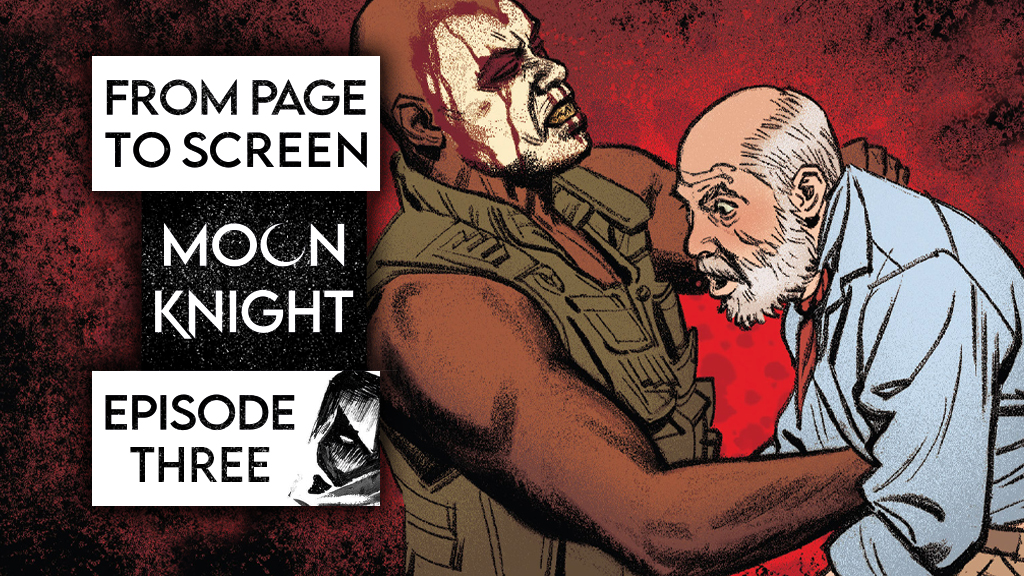
At the beginning of the episode, as Layla was getting her fake passport, we learn that her father was an archaeologist who was killed during an excavation in the desert. As Moon Knight clearly spends most of its time focused on Steven Grant and Marc Spector, it’s unclear how far back into Layla’s history the series will go. But the little we got is incredibly similar to the comics, and it also connects to Moon Knight’s origin. So, looking into what Episode 3 is referencing might give us a deeper understanding of Layla, Marc Spector, and Moon Knight.
Moon Knight #1 (1980)
Moon Knight #1 (1980)
Moon Knight #1 (1980)
Back in the day, when Marc Spector was still a mercenary, he worked for a man named Raoul Bushman, or the Bushman. He would become Moon Knight’s clear archenemy, but that is for another time. Bushman and Marc’s unit went on a raid of a newly discovered tomb in Sudan. Archaeologist Dr. Peter Alraune and his team—including his daughter Marlene—were the ones who discovered the tomb and were working at the site at the time of the raid.
Moon Knight #13 (2017)
Moon Knight #13 (2017)
Moon Knight #13 (2017)
While slightly varying versions of the events that took place to appear over the more than 40 years of Moon Knight comics, the traditional story finds Bushman murdering Dr. Alraune, and others, in front of Marlene. At this moment, Marc seems to have a moral crisis and is strongly opposed to Bushman’s murderous ways. Marc saves Marlene, who hates Marc at first, but is mortally wounded.
Moon Knight #1 (1980)
Moon Knight #14 (2017)
Moon Knight #14 (2017)
The next bit is, of course, at the core of all Moon Knight stories. In Moon Knight #1 (1980), Marlene brings Marc inside the tomb where he dies underneath a statute of Khonshu only to come back to life claiming to be the Fist of that same god. In Moon Knight (2016), Marc crawls into the tomb on his own without Marlene. After this, Marlene for some reason falls for Marc (and Steven, Jake, and Moon Knight) and they move in together in a Long Island mansion. Marlene supports Moon Knight’s vigilantism and they more or less (less) live happily ever after. In any event, the murder of Marlene’s father was always the connection between her and Marc.
Marvel Studios’ Moon Knight Episode 3
In Moon Knight, Layla is essentially a much-improved Marlene. So, the brief mention of Layla’s archaeologist father in Episode 3 is interesting for a few reasons. First, it could imply that Layla has a virtually identical backstory to Marlene’s in terms of the death of her father and connection to Marc Spector. However, Layla says that her father’s death was “lost to the sands”, implying that she does not know what happened. If that is the case, it begs the question of how she met Marc and whether she knows about his involvement with Bushman and the raid.
Moon Knight #4 (2016)
Whatever the case ends up being, it is fun to speculate elements of Moon Knight when the series makes clear references to the character’s or supporting characters’ comic book history. Layla’s father and his death may very likely play a significant role either in her relationship with Marc or in exploring the origin of Moon Knight in the series.
The first three episodes of Moon Knight are now streaming on Disney+.
Cookie Consent
We use cookies to improve your experience on our site. By using our site, you consent to cookies.
This website uses cookies
Websites store cookies to enhance functionality and personalise your experience. You can manage your preferences, but blocking some cookies may impact site performance and services.
Essential cookies enable basic functions and are necessary for the proper function of the website.
Name
Description
Duration
Cookie Preferences
This cookie is used to store the user's cookie consent preferences.
30 days
These cookies are needed for adding comments on this website.
Name
Description
Duration
comment_author_email
Used to track the user across multiple sessions.
Session
comment_author_url
Used to track the user across multiple sessions.
Session
comment_author
Used to track the user across multiple sessions.
Session
Statistics cookies collect information anonymously. This information helps us understand how visitors use our website.
Google Analytics is a powerful tool that tracks and analyzes website traffic for informed marketing decisions.
Contains information related to marketing campaigns of the user. These are shared with Google AdWords / Google Ads when the Google Ads and Google Analytics accounts are linked together.
90 days
__utma
ID used to identify users and sessions
2 years after last activity
__utmt
Used to monitor number of Google Analytics server requests
10 minutes
__utmb
Used to distinguish new sessions and visits. This cookie is set when the GA.js javascript library is loaded and there is no existing __utmb cookie. The cookie is updated every time data is sent to the Google Analytics server.
30 minutes after last activity
__utmc
Used only with old Urchin versions of Google Analytics and not with GA.js. Was used to distinguish between new sessions and visits at the end of a session.
End of session (browser)
__utmz
Contains information about the traffic source or campaign that directed user to the website. The cookie is set when the GA.js javascript is loaded and updated when data is sent to the Google Anaytics server
6 months after last activity
__utmv
Contains custom information set by the web developer via the _setCustomVar method in Google Analytics. This cookie is updated every time new data is sent to the Google Analytics server.
2 years after last activity
__utmx
Used to determine whether a user is included in an A / B or Multivariate test.
18 months
_ga
ID used to identify users
2 years
_gali
Used by Google Analytics to determine which links on a page are being clicked
30 seconds
_ga_
ID used to identify users
2 years
_gid
ID used to identify users for 24 hours after last activity
24 hours
_gat
Used to monitor number of Google Analytics server requests when using Google Tag Manager
1 minute
Marketing cookies are used to follow visitors to websites. The intention is to show ads that are relevant and engaging to the individual user.
Pinterest Tag is a web analytics service that tracks and reports website traffic.